
Hangzhou has four distinct seasons. In January, the coldest month, average highs are 8.6°C and lows 2.2°C; in July, the hottest, average highs reach 34.0°C with lows of 25.6°C. The wettest time is the June plum rains, with about 258 mm of precipitation, while October and November are the driest, each averaging around 75 mm. As a general packing guide: wear a down jacket or heavy coat from December to February, layer light jackets in March, April, October and November, and stick to short sleeves from May to September—but always carry rain gear and sun protection.
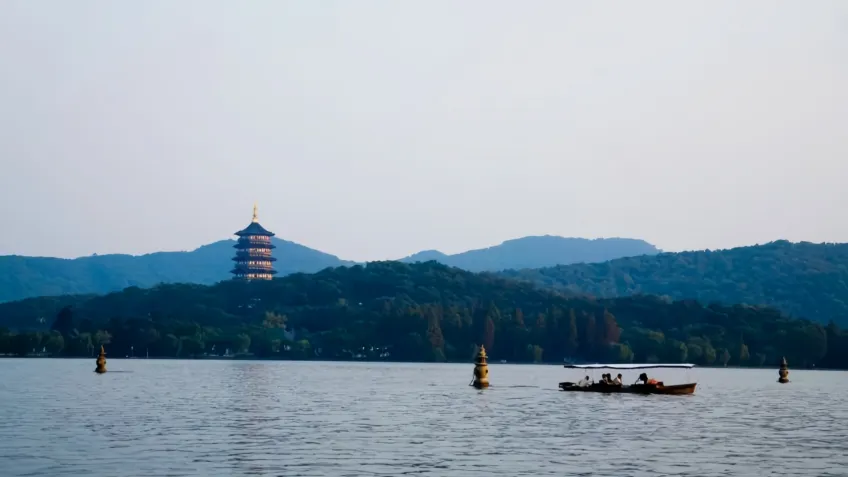
This travel guide combines Hangzhou's temperatures, rainfall and packing tips for all 12 months, using 1991–2020 climate normals from the China Meteorological Administration's Hangzhou station. Averages describe typical conditions, so check the forecast a week before your actual travel dates. We also have detailed month-by-month guides for winter, spring and autumn—links to the published ones are listed below.
Hangzhou weather and what to wear by month
January: Average high 8.6°C, low 2.2°C, about 93 mm of precipitation and roughly 12 rainy days. It's the coldest month of the year with a biting damp chill and occasional snow. Wear a down jacket over thermal base layers, bring a scarf and gloves, and choose waterproof shoes. For more details, see Hangzhou weather and what to wear in January.
February: Average high 11.1°C, low 4.0°C; about 90 mm of rain over roughly 12 days. Still winter temperatures, and it gets crowded around Chinese New Year. Keep wearing a down jacket or heavy coat; you can switch to a thick jacket when it warms up at the end of the month. See What to wear in Hangzhou in February for details.
March: Average high 15.9°C, low 7.6°C; about 136 mm of rain over roughly 15 days. It warms up quickly but temperatures swing, and rainy days increase. Wear a light down jacket or windbreaker with a sweater, add a layer in the morning and evening, and switch to waterproof shoes on rainy days. See What to wear in Hangzhou in March for details.
April: Average high 22.1°C, low 13.0°C; about 117 mm of rain over roughly 14 days. The most comfortable month of spring, and tea season begins. A long-sleeve shirt with a light jacket works well—just a long-sleeve top during the day, plus a knit layer at night. See What to wear in Hangzhou in April for details.
May: Average high 26.9°C, low 18.0°C; about 127 mm of rain over roughly 13 days. Early summer arrives, with daytime highs often reaching 27–28°C. Stick to short sleeves and light pants, bring a thin jacket for mornings and evenings, and start using sun protection.
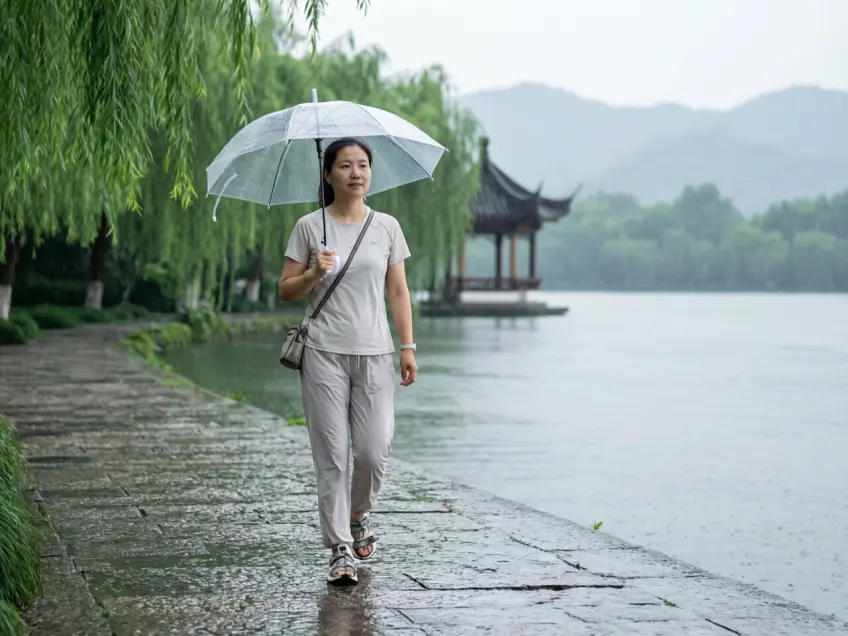
June: Average high 29.2°C, low 21.8°C; about 258 mm of rain over roughly 15 days. Plum rain season—muggy, humid and wet. Quick-dry short sleeves, sandals or waterproof shoes, and an umbrella every day. Keep a light long-sleeve layer at your hotel for strong air conditioning.
July: Average high 34.0°C, low 25.6°C; about 168 mm of rain over roughly 12 days. The hottest month of the year, often with consecutive heat waves after the plum rains end. Wear the most breathable shorts and short sleeves, plus a hat, sun-protective clothing and sunglasses. Stay indoors in the afternoon if possible.
August: Average high 33.4°C, low 25.4°C; about 177 mm of rain over roughly 14 days. Still hot and humid, with frequent afternoon thunderstorms and typhoon rain. Same as July, plus a sturdy folding umbrella and water-friendly shoes.
September: Average high 28.7°C, low 21.4°C, about 113 mm of rain over roughly 11 days. The first half is still hot; the second half starts to cool off as a prelude to osmanthus season. Wear short sleeves and bring a light jacket; pack a raincoat for typhoon days. See Hangzhou September weather & what to wear.
October: Average high 23.6°C, low 15.8°C, about 74 mm of rain over roughly 8 days. Crisp autumn weather with the fewest rainy days, but the busiest crowds during National Day. Wear long-sleeve T-shirts or shirts with a light jacket—temperatures swing between morning and evening, so layering is key. See Hangzhou October weather & what to wear.
November: Average high 17.7°C, low 10.0°C; about 75 mm of rain over roughly 11 days. Late autumn—the month for red leaves and ginkgo trees—but it turns cold late in the month. Wear sweaters or hoodies with a trench coat or light down jacket, and pack a heavier coat for late November. See Hangzhou November weather and clothing for details.
December: Average high 11.3°C, low 4.3°C; about 64 mm of rain over roughly 10 days. Winter sets in—damp and chilly, with occasional snow. Wear a down jacket or heavy coat over thermal underwear. The temperature difference between indoors and outdoors is small, so don't expect to warm up as soon as you step inside. See Hangzhou December weather and clothing for details.
If you only need one table to pick your dates: if you dislike both heat and cold, April and October are your best bets; for snow and plum blossoms, choose January or February; to avoid crowds, just skip the Spring Festival, Qingming, May Day, and National Day holidays.
Quirks of Hangzhou's weather
Winter means "damp cold". Hangzhou's winter temperatures don't look extreme—the average low in January stays above freezing—but humidity often exceeds 70%, and the wind makes it feel far colder than the numbers suggest. Homes, old shops, and many small restaurants in Jiangnan lack central heating and rely on air conditioning for warmth, so stepping indoors won't give you that instant blast of heat like in northern China. Visitors from Taiwan and Hong Kong tend to underestimate this most. When visiting Hangzhou in winter, pack as if it were one notch colder than back home.
Spring swings between cold snaps and warm spells. In March, average temperatures climb from single digits early in the month to the mid-teens by the end, but a cold front can drop them by 10°C in a single day. March is also one of the rainiest months of the first half of the year, averaging about 15 rainy days. For a spring trip to Hangzhou, packing layers you can add or remove is more practical than bringing one heavy jacket.
The plum rains and summer heat. Statistics cited by GreenTourAsia show that Hangzhou's plum rain season typically begins around June 8 and ends around July 8, bringing an average of about 405 mm of rain—though this varies widely each year, with the earliest start recorded in late May. Once the plum rains end, the dog days begin: average highs in July and August reach 33–34°C, with extremes topping 41°C. During this period, it's best to plan outdoor activities for early morning and evening.
Typhoons in late summer and early fall. August and September are when typhoons affect Hangzhou the most. Hangzhou isn't on the coast, so typhoons usually hit as strong wind and heavy rain; severe ones can cancel flights and high-speed trains. During the Mid-Autumn Festival holiday in September 2024, Typhoon Bebinca made landfall in Pudong, Shanghai, disrupting travel across the entire Yangtze River Delta.
Fall is the most stable season. October averages only about 8 rainy days with plenty of sunshine, making it the best month to visit Hangzhou all year. November has slightly more rain, but the temperatures are comfortable, and both the red leaves and ginkgo trees peak this month.
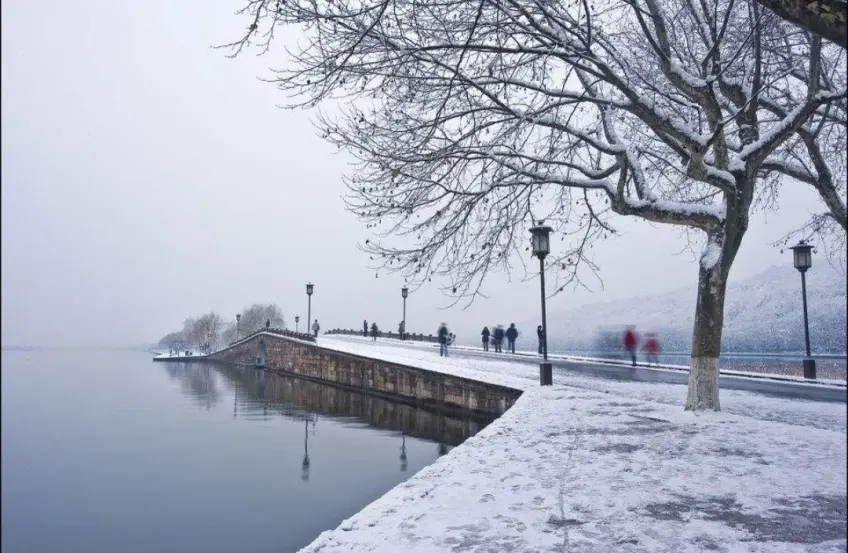
Winter (December–February): Damp cold matters more than low temperatures
Daytime highs in Hangzhou's winter mostly stay between 8 and 11°C, dropping to 2 or 3°C in the morning and evening, and below zero during cold snaps. According to China Meteorological Administration data, December through February average about eight snowy days combined, but days when snow actually sticks around West Lake—enough to see the famous "Lingering Snow on Broken Bridge" scene—are rare, often just once or twice a winter, or not at all. In late January 2024, downtown Hangzhou got its first snow of the year, and another decent snowfall hit the lakeside in early February. Those few days drew bigger crowds than a typical weekend.
How to dress in winter: thermal base layer, a sweater or fleece in the middle, and a hip-length down jacket on the outside. Choose waterproof ankle boots or thick-soled sneakers for shoes—the drizzly winter rain in Jiangnan means canvas shoes stay wet all day. Winter also brings Chinese New Year and the Lantern Festival, each with different crowds and scenery. For monthly details, see our guides for December, January and February.
Spring (March–May): Layers, rain gear and tea season
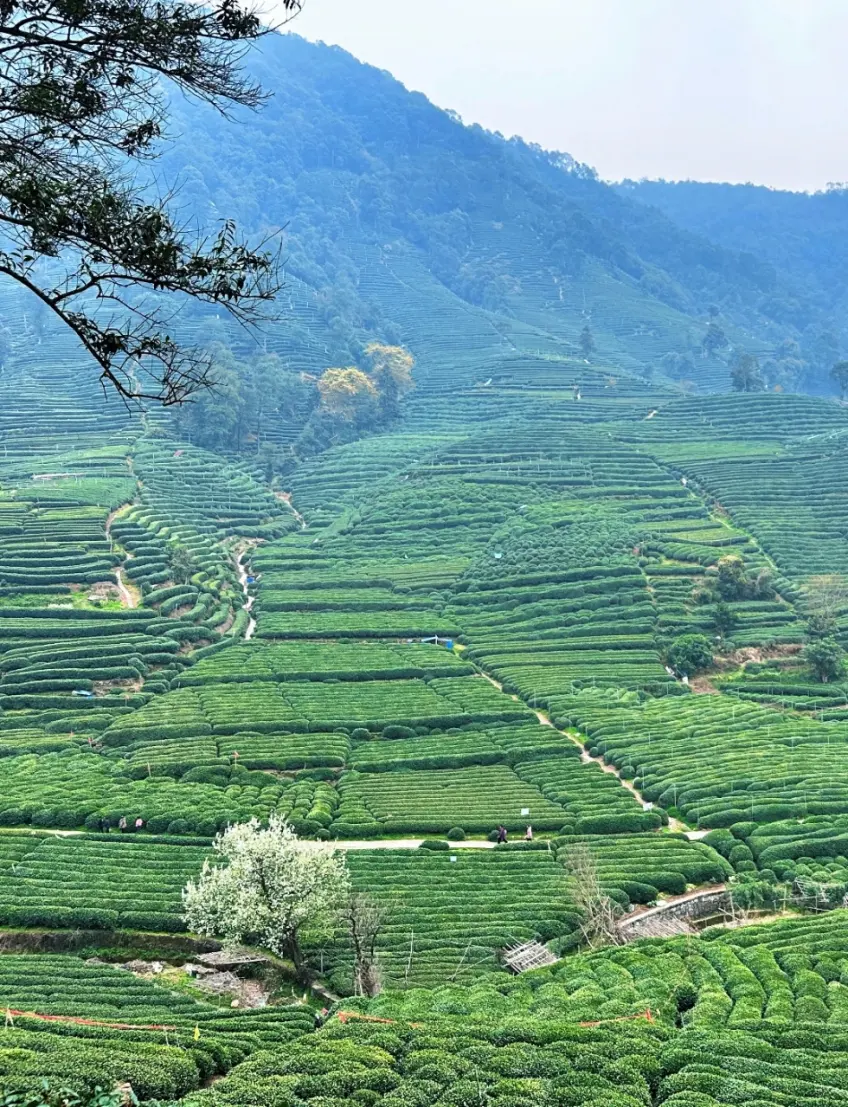
In Hangzhou, the average high is 15.9°C and low 7.6°C in March, rising to 22.1°C and 13.0°C in April, then 26.9°C and 18.0°C in May. Across the three months there are over 40 rainy days on average, but most are light showers—you can still explore with an umbrella. In March, enjoy peach blossoms, willows, cherry blossoms and tulips. April is West Lake Longjing tea-picking season, and the tea hills are busiest around Qingming. For details, see our March and April guides.
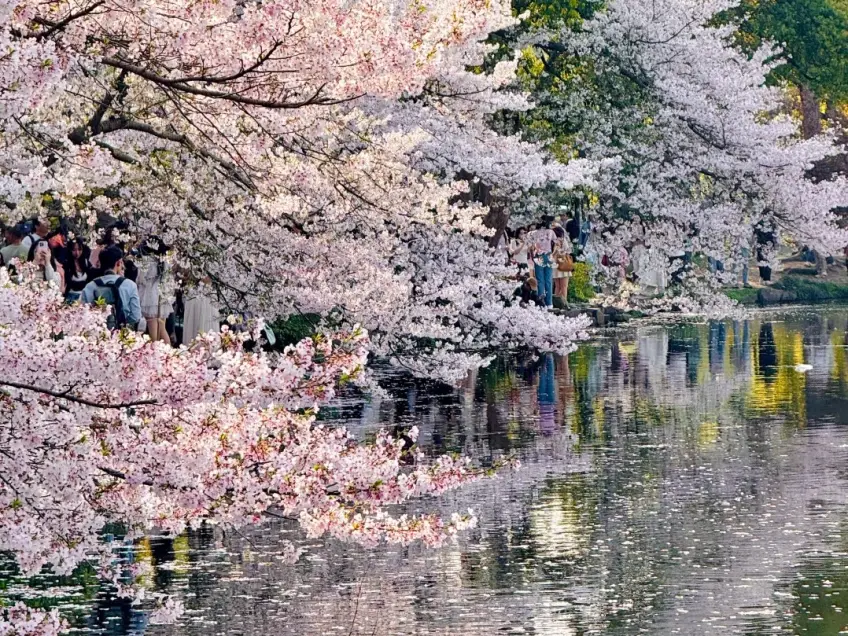
A few extra words about May. May in Hangzhou is already early summer. Daytime temperatures often reach 27–28°C and occasionally top 30°C, while mornings and evenings hover around 18–19°C—a short-sleeve shirt plus a light jacket is just right. It rains on about 13 days in May, with roughly 127 mm of precipitation, slightly more than April, and it starts to feel muggy toward the end of the month. Two things to watch for this month: first, the May Day holiday brings huge crowds to West Lake, Lingyin Temple and Hefang Street, and the Hubin and Longxiangqiao areas stay packed from morning till night; second, UV rays get noticeably stronger—half a day walking by the lake or through the tea hills can leave you sunburned, so start carrying sunscreen, a hat and sunglasses.
What's good to do in May: the greenery around West Lake is at its richest, with the tree shade along Su Causeway and Yanggong Causeway forming a continuous canopy, making morning walks by the lake very pleasant. The Flower Festival at Xixi Wetland often runs into early May, and taking a boat through the waterways is cooler than walking. Spring tea season is winding down, but you can still drink the current year's fresh tea in Longjing Village and Meijiawu. The weather gets stuffier day by day in late May, so if you're traveling with older adults, schedule outdoor activities before 10 am and after 4 pm.
Summer (June–August): plum rain, heat and typhoons
June is Hangzhou's rainiest month of the year, with about 258 mm of precipitation, rain on more than 15 days on average, and humidity close to 80%. Average highs are 29.2°C and lows 21.8°C—that doesn't sound too hot, but the heavy moisture means your clothes stick to you after just a short walk. Wear quick-dry short sleeves and light long pants, choose sandals or sport sandals that can get wet, and bring a spare pair of socks. During the plum rain season, West Lake takes on a misty, hazy beauty—it's stunning in a different way, just protect your camera when shooting. Hotels, malls and the metro blast the air conditioning, so keep a thin long-sleeve layer in your bag.

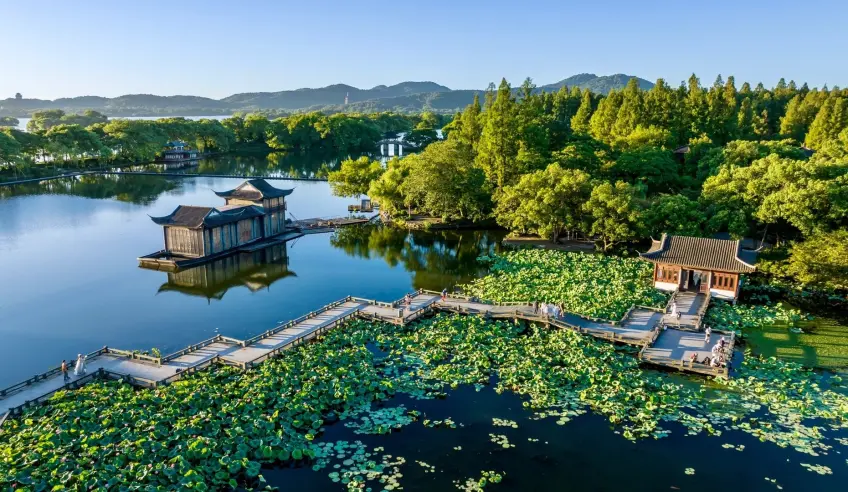
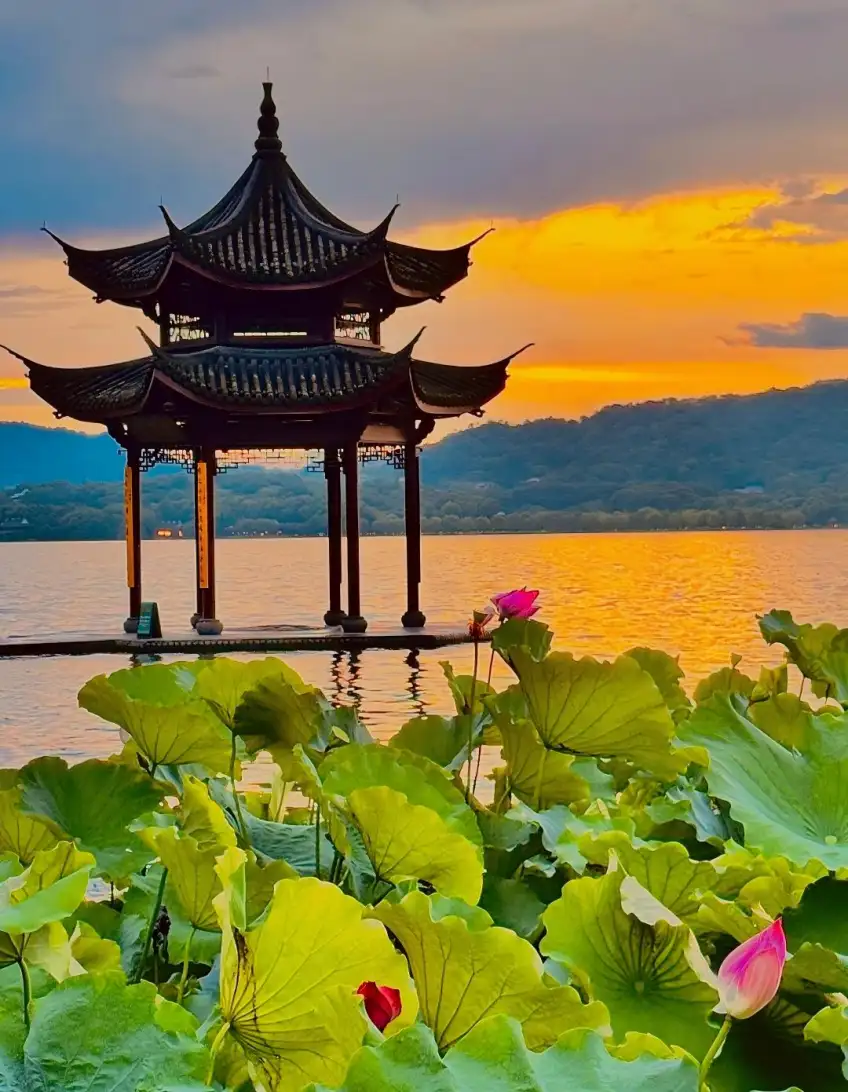
July is the hottest month of the year, averaging 34.0°C highs and 25.6°C lows. Once the plum rain ends, sunshine peaks for the year and there's almost no shade by the lake at noon. Wear the most breathable clothes you have, put on a wide-brimmed hat and carry a dual-use sun-and-rain umbrella. Schedule outdoor activities before 8 am and after dusk, rest at your hotel midday, or head to air-conditioned spots like museums and malls. July is also when the lotuses at Quyuan Fenghe (Breeze-Ruffled Lotus at Quyuan Garden) are at their best—go early in the morning when the crowds are thin and the flowers look freshest.
August is about as hot as July, with an average high of 33.4°C, but it's rainier, with about 177 mm of precipitation for the month, mostly from afternoon thunderstorms and typhoons. Thunderstorms come and go quickly—if you're caught in one by the lake, duck into a nearby pavilion for half an hour. For typhoons, check the forecast in advance; if there's a typhoon warning, skip boat rides and mountain trails that day and head to indoor attractions instead. Summer vacation brings lots of families with kids, so reservations at popular spots get tighter.
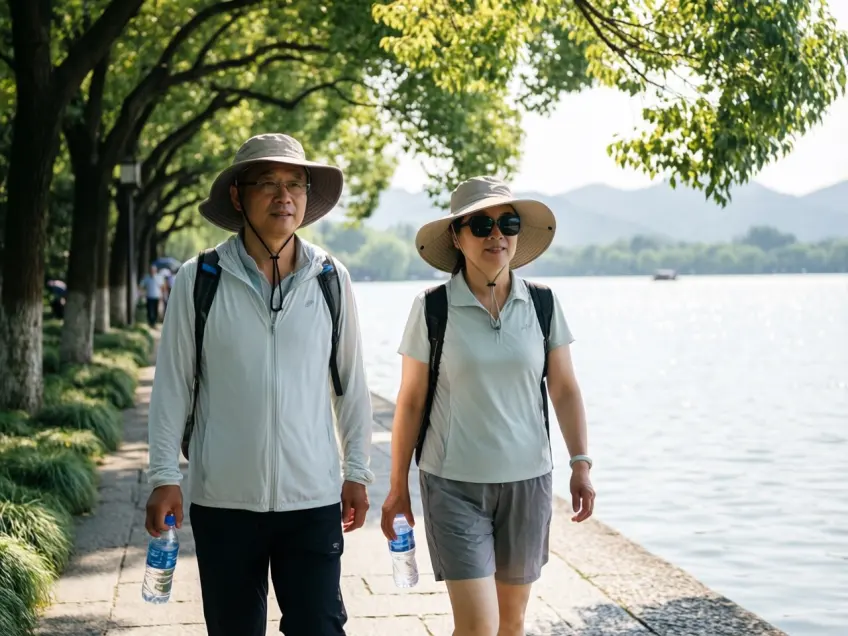
A common question in summer is "Should I even go?" You can—just change your pace: plan only one or two outdoor stops a day, head out early morning and evening, rest at midday, and bring plenty of water and heatstroke prevention gear. Seniors and kids are more sensitive to the heat, so drink water before heading out and find shade to sit down every hour along the way.
Fall (September–November): The best season to explore Hangzhou
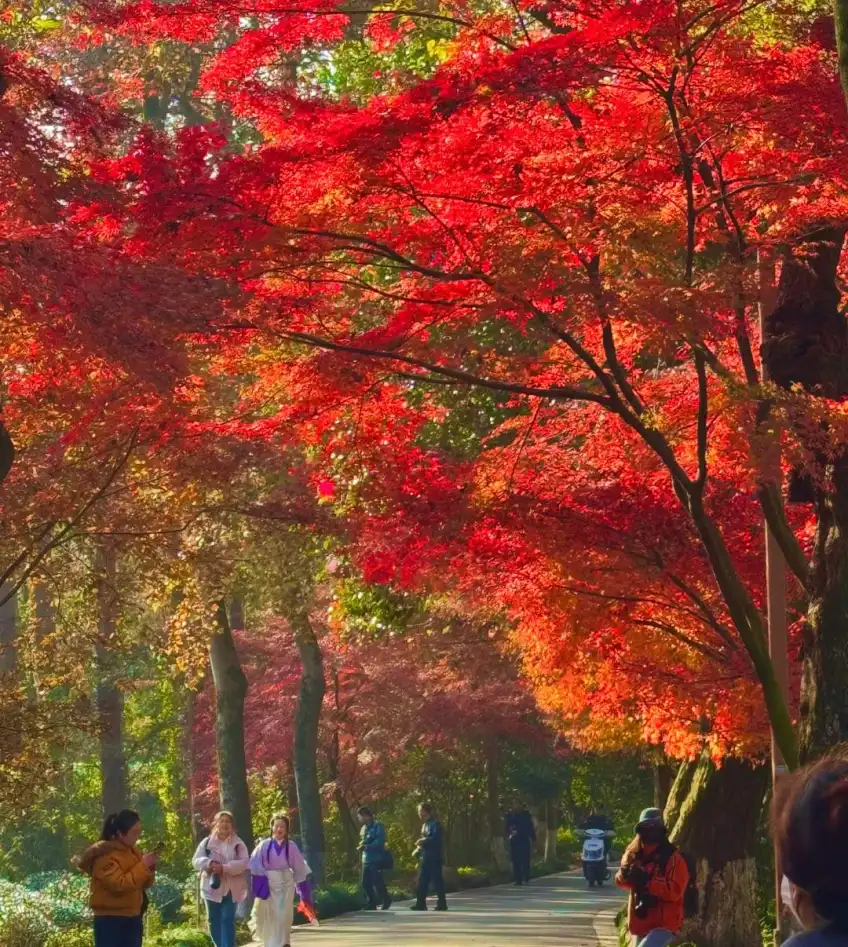
The first half of September is still summer, with an average high of 28.7°C; it only starts to cool down in the second half. Osmanthus usually blooms from late September through October, but in 2025, due to a hot, dry summer, Hangzhou's osmanthus was delayed by about 40 days, blooming all at once in late October and early November—year-to-year differences like this are worth noting. October averages a high of 23.6°C and a low of 15.8°C, with the least rain of the year. November averages a high of 17.7°C and a low of 10.0°C, when red maples and ginkgo trees look their best in mid-to-late November. For monthly details, see September, October and November.
How to pack your suitcase
Year-round essentials: a folding umbrella (for both the plum rain season and winter drizzle), a pair of non-slip walking shoes, and a power bank. Sightseeing in Hangzhou is mostly on foot—a full loop around West Lake is over 10 kilometers—so shoes matter more than clothes.
Winter extras: thermal underwear, a down jacket, a knit hat and gloves, and hand warmers. If you're staying at a hotel, you can ask the front desk for an extra-thick comforter. For guesthouses converted from old buildings, confirm in advance whether they have heating or an electric blanket.
Summer extras: sun-protective clothing, a hat, sunglasses, quick-dry shirts, and insect repellent. Mosquitoes are plentiful in wooded, waterside spots like Xixi Wetland and Nine Creeks.
Spring and fall extras: a light windbreaker and a knit sweater—handy for chilly mornings and evenings as well as warmer afternoons.
Traveling with seniors or kids: In winter, bring knee pads and non-slip shoes for older travelers; the stone paths and steps around West Lake get very slippery after rain. Kids feel the cold and heat more than adults, so pack an extra change of clothes.
How weather changes your itinerary
The same Hangzhou itinerary doesn't need many seasonal tweaks. In winter and during the plum rain season, the most exhausting part is waiting in the rain while shuttling between lakesides, stations and parking lots. Handing spread-out spots like West Lake and Lingyin Temple over to a Hangzhou private car links them together, with the driver dropping you at the pickup point closest to each entrance and saving you plenty of time outdoors. In midsummer, keep outdoor sightseeing to mornings and evenings, and save the midday heat for indoor museums or shows. To really understand the stories behind West Lake and Lingyin Temple on a rainy day, hire a Hangzhou tour guide to lead you along a route that alternates between indoors and out. Your whole Jiangnan trip should be planned around flower seasons, tea harvests and holidays—check out Hangzhou custom tours and share your dates and group size with a travel consultant. Coming from Shanghai? See Shanghai to Hangzhou private car.
Best of Hangzhou 3 days 2 nights: West Lake north and south routes, Leifeng Pagoda, Dream Town, Xixi Wetland, Yuewang Temple guided tour and Hu Xueyan's Former Residence cultural discovery leisure tour
A 3-day, 2-night private tour exploring just one city, Hangzhou: Yuewang Temple and a boat ride on West Lake, Lingyin Temple and Feilai Peak, Dream Town and Xixi Wetland, plus Hu Xueyan's Former Residence and a stroll along Hefang Street. Airport transfers included, with vehicle, guide, hotel and admission tickets. An English-speaking guide is available upon request.

Feilai Zen Realm Day Tour: Hangzhou and Lingyin Temple
Private day tour in Hangzhou: climb Leifeng Pagoda, take a 45-minute boat ride on West Lake, and visit Lingyin Temple and the Feilai Peak grottoes in the afternoon. Pickup and drop-off at Hangzhou East Railway Station or Xiaoshan Airport included, along with transportation, guide and admission tickets. English, Japanese and other language guides available upon request. Choose your own date.

8-day Jiangnan private car tour | 9-seat vehicle with guide-driver
Start and end in Shanghai on this 8-day exclusive Jiangnan private car tour. Your guide doubles as the driver, so you and your family or friends can travel at your own pace without joining strangers. The route links West Lake, Wuxi, Nanjing, Yangzhou, Suzhou and Puyuan in Wuzhen, showcasing lakes and mountains, ancient towns and Shanghai's cityscape. Itinerary and stops can be arranged in advance. This is a private car service only — hotels, attraction tickets and meals are not included, so you can choose accommodation and activities to suit your preferences.
For visiting details, see the West Lake page; for how to reserve Lingyin Temple, see the Lingyin Temple page. For an overview of Hangzhou attractions, visit the Hangzhou city page.
FAQs
Which month is best to visit Hangzhou?
Based on climate averages, October is the safest bet: average highs of 23.6°C and lows of 15.8°C, with only about 8 rainy days all month. April is also great, with average highs of 22.1°C and the start of tea season. Just note that early October brings the National Day holiday and early April brings Qingming Festival—the two busiest periods—so avoid them if you can.
Is there central heating in Hangzhou in winter?
No, there's no central heating. Hotels and malls rely on air conditioning for heat, while older buildings, small shops and some guesthouses may only have AC or no heating at all, making it feel damp and chilly. Pack clothes that work both outdoors and indoors. If you get cold at night, bring hand warmers or ask your hotel for an extra blanket.
Does it snow in Hangzhou in winter?
Yes, but not much. Based on 1991–2020 averages, snow falls about 1.4 days in December, 4.2 days in January, and 2.8 days in February. Days when it actually accumulates by West Lake are even rarer—pure luck if you catch one. If you want to see the snow scenery, keep a close eye on the forecast before your trip.
Is Hangzhou still worth visiting during plum rain season?
It is, as long as you accept daily rain. June averages over 15 rainy days, but they're usually just passing showers, and West Lake and Lingyin Temple have a special charm in the rain. Wear water-friendly shoes, pack quick-dry clothes, and keep an indoor backup plan for each day so the rain won't ruin your trip.