
In September, Hangzhou averages a high of 28.7°C and a low of 21.4°C, with about 11 rainy days and 113 mm of rainfall for the month. The first half is still summer, and it only gradually cools down in the second half. Wear short sleeves and light pants or a skirt during the day, and bring sunscreen and a compact umbrella. In late September, add a light jacket for mornings and evenings; if a typhoon hits, pack a raincoat and water-friendly shoes.
Three things in Hangzhou are worth planning your trip around in September: Mid-Autumn Festival moon viewing, Qiantang River tidal bore watching, and osmanthus blossoms. In 2027, the Mid-Autumn Festival falls on September 15, and the tidal bore peaks around the 18th day of the eighth lunar month, roughly September 18. Osmanthus blooming depends on the weather that year but usually starts in late September. September is also still typhoon season. Below is a guide to September temperatures and what to wear, based on 1991–2020 averages from the China Meteorological Administration's Hangzhou station. For a year-round comparison, see Hangzhou Weather & What to Wear Overview.
September weather: summer in the first half, autumn in the second
“It’s still summer in September” is how many people describe Hangzhou. The average high is 28.7°C, but daytime temperatures in early September often top 30°C. Records show a September high of 39.4°C, and in a typical year the hottest day still reaches around 34°C. The so-called “autumn tiger”—lingering heat waves after the Start of Autumn solar term—often lasts here until mid-September.
The shift usually comes in mid-to-late September. After a few cold fronts or a typhoon passes, mornings and evenings cool noticeably, dropping below 20°C at dawn while daytime highs settle around 25–26°C and the air turns drier. The record low for September is 12.0°C, and the coolest day each year averages around 16°C. By month’s end, you’ll want long sleeves in the morning.
For rainfall, September averages 11.2 rainy days and about 113 mm of precipitation—much less than August—but humidity stays at 76%, making it one of the more humid months of the year, with muggy, sticky conditions in the first half. Rain comes from two sources: afternoon thunderstorms that arrive and pass quickly, and widespread heavy downpours brought by typhoons that can last a day or two with strong wind and rain.
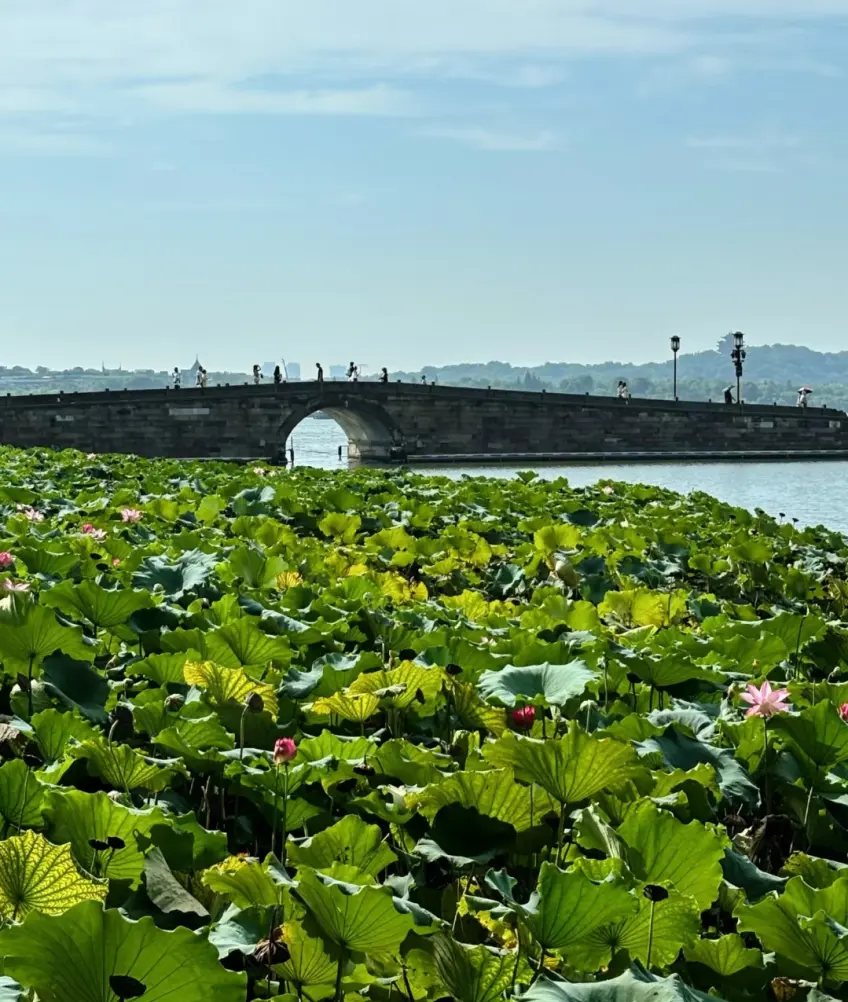
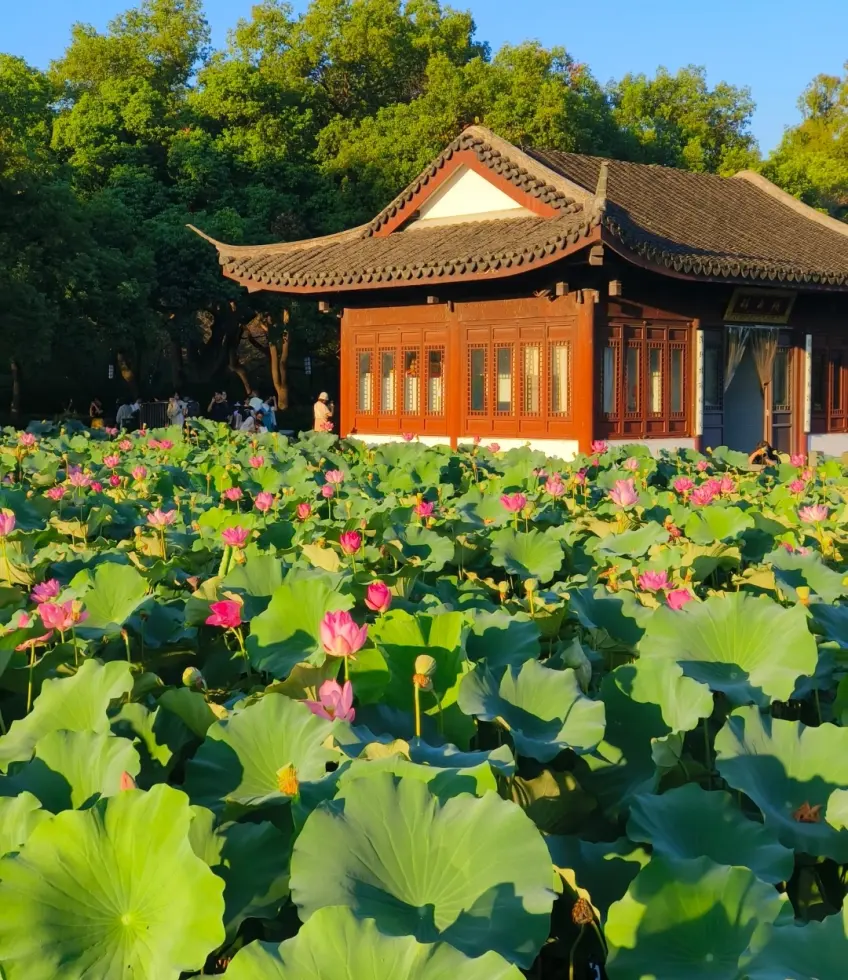
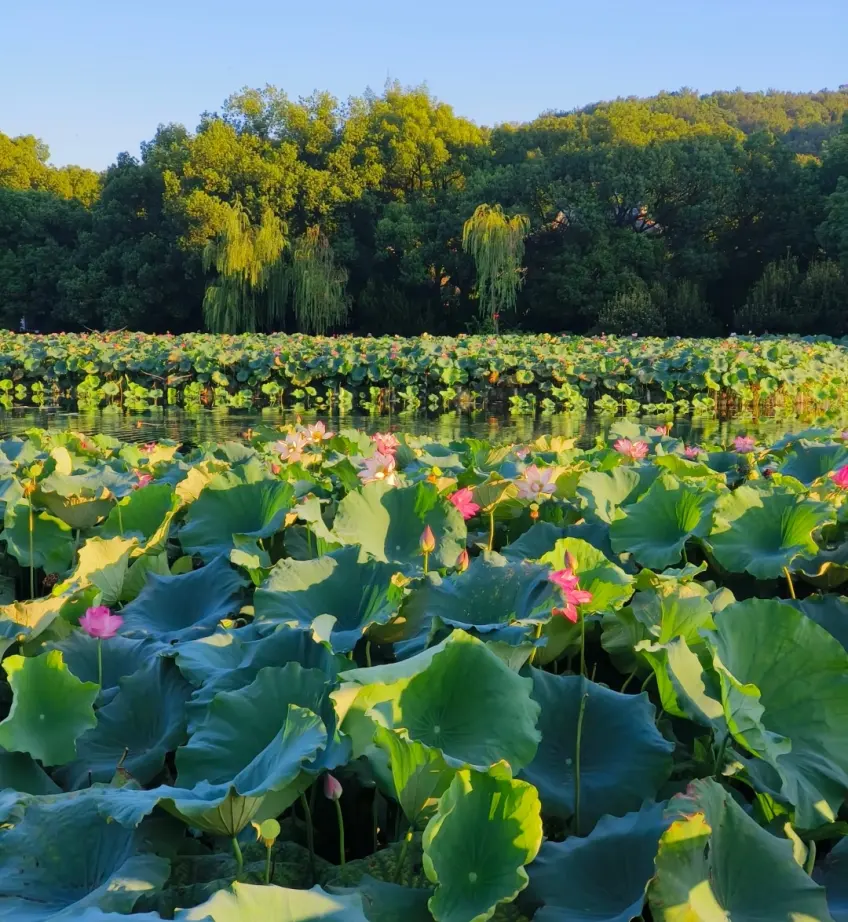
West Lake in early September still holds onto summer: lotus leaves blanket the water at Quyuan Fenghe (Breeze-ruffled Lotuses at Quyuan Garden) and near Broken Bridge, with the occasional late bloom, and their edges only start to yellow in late September. Head to the lake around 6 or 7 a.m., when temperatures are under 30°C and a light mist hangs over the water—it’s the most pleasant time in early September and helps you avoid the midday crowds and heat.
What to wear in September
Early September: Dress for summer. Breathable short sleeves, shorts or light pants—quick-dry fabrics are best. Bring a hat, sunglasses and sunscreen; the lakeside is still scorching at noon. Attractions and malls blast the AC, so keep a thin long-sleeve layer in your bag.
Mid-September: Short sleeves during the day, but mornings and evenings start to feel cool, so pack a light jacket or shirt. If you're watching the moon by West Lake on Mid-Autumn Festival night or waiting for the tidal bore, you'll be standing a while—the lake and river breezes can feel chilly, so bring a light jacket.
Late September: Long-sleeve tees or short sleeves with a shirt during the day, plus a light jacket or cardigan in the morning and evening—one of the easiest times of year to dress for. If you head into the hills to see the osmanthus or hike Jiuxi, the woods are cooler than the lakeside, so add another layer.
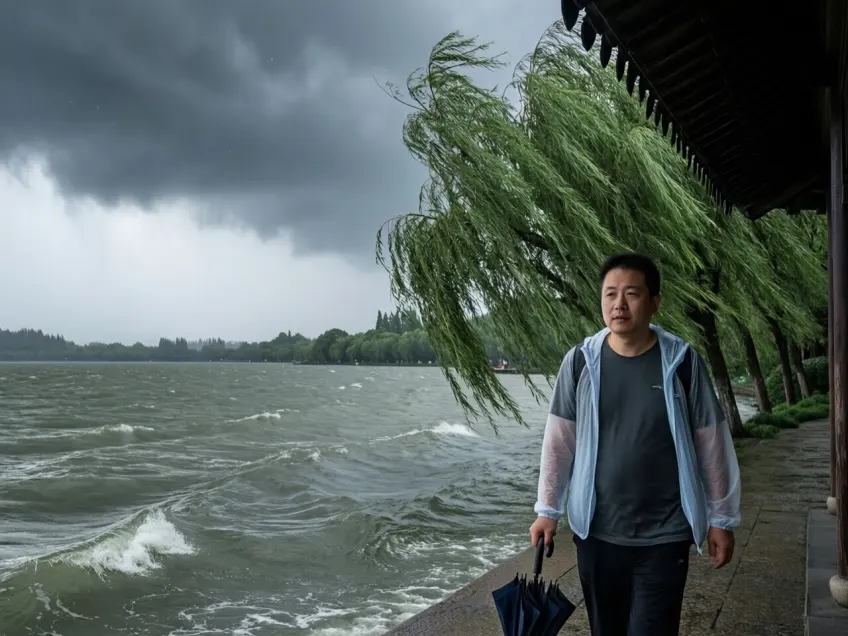
Rainy and typhoon days: Carry a sturdy folding umbrella for thunderstorms. During typhoons the wind is strong and umbrellas flip inside out easily, so a raincoat is more practical. Choose sport sandals that can get wet or waterproof sneakers. Low-lying roads flood after typhoon rains, so skip canvas shoes and leather shoes.
Indoors: Most indoor spaces still run the AC in September, so a thin long-sleeve top is perfect on the subway, in malls and at museums. It's muggy outside and chilly inside, and that temperature swing is the easiest way to catch a cold.
Traveling with seniors and kids: Early September can still be hot, so plan outdoor activities for mornings and evenings, return to the hotel at noon to rest, and carry water. Tide-watching spots get very crowded—keep seniors and children toward the back in a safe area, stay away from the riverside railings, and agree on a meeting point in case you get separated.
September packing list: Four or five short-sleeve shirts, light long pants or skirts, one light jacket and one long-sleeve shirt; sun hat, sunglasses and sunscreen; a sturdy umbrella and a lightweight raincoat; water-friendly sport sandals plus a pair of sneakers; insect repellent—mosquitoes are still active around Xixi and Jiuxi in early autumn.
Moon viewing for Mid-Autumn Festival: September 15 in 2027
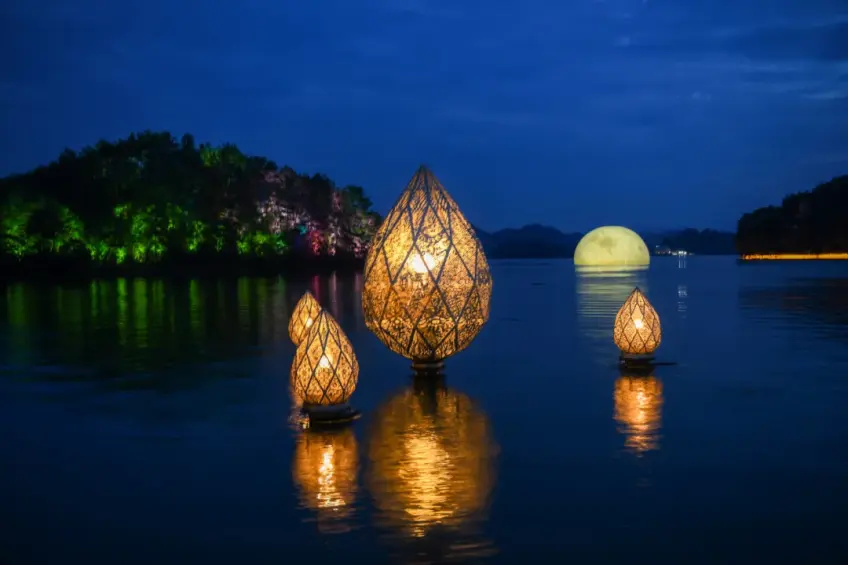
In 2027, the Mid-Autumn Festival falls on Wednesday, September 15. It doesn't connect to a weekend, but West Lake will still be packed with moon-gazers for several nights before and after. Hangzhou locals have favorite spots around West Lake: Autumn Moon over the Calm Lake (Pinghu Qiuyue) at the foot of Solitary Hill is open and right by the water—one of the Ten Scenes of West Lake dedicated to admiring the autumn moon. Three Pools Mirroring the Moon keeps the tradition of lighting candles inside the stone pagodas on Mid-Autumn night, with moonlight, lanterns and lake reflections blending together. If you want to take a boat out onto the lake to view the moon, check the cruise schedule for that evening in advance.
Moon viewing also depends on the weather. The weather in Hangzhou around Mid-Autumn is changeable, and typhoons or cold fronts sometimes bring clouds and rain. Pick any clear night within two or three days of the festival instead of insisting on the exact evening. Even on a cloudy night, the lakeside lights and crowds create a festive atmosphere.
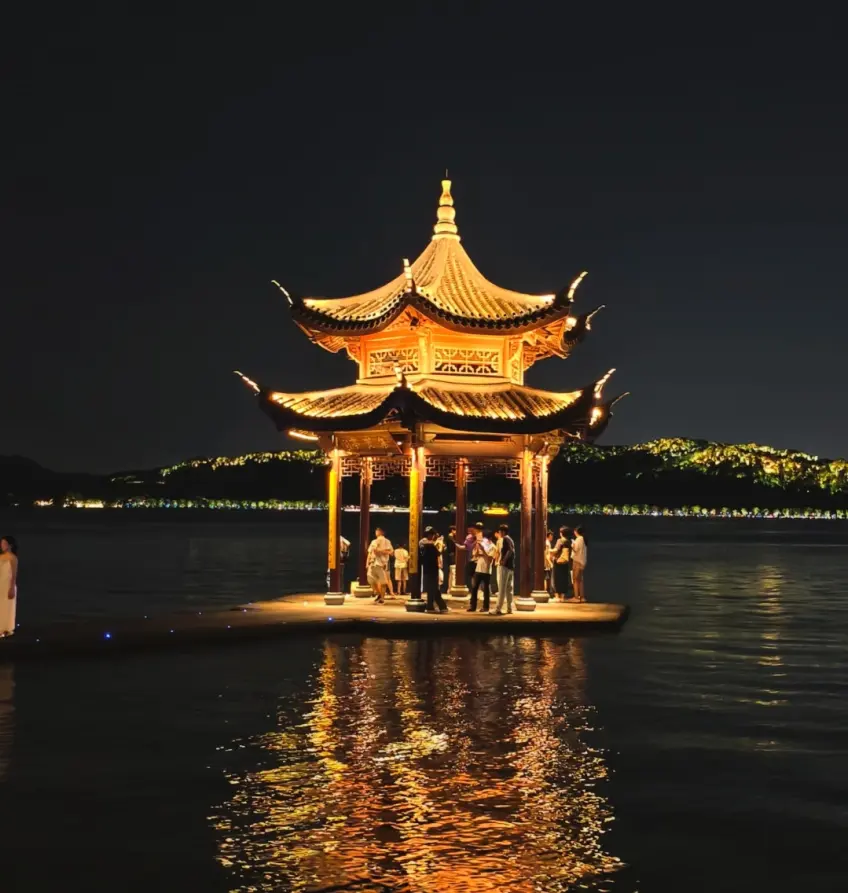
Sunset in September is around 6:00 PM, moving up to about 5:50 PM by month's end—over half an hour earlier than midsummer. For moon viewing or night scenery, head out a bit earlier to secure a spot by the lake before the moon rises.
Qiantang River tidal bore: Around the 18th day of the eighth lunar month
The Qiantang River tidal bore is the most spectacular natural sight in Hangzhou during autumn. The period around the 15th to 18th of the eighth lunar month is considered the best time to watch it, which falls around September 15–18 in 2027. There are several viewing spots: Yanguan in Haining is the classic place to see the "one-line tide"; the Meinv Dam area in Xiaoshan, Hangzhou often offers views of the returning tide and the skyward tide; and along the river near Jiuxi in Xihu District you can also catch the returning tide with relatively convenient access.
Keep three things in mind when watching the tide. First, check the tide schedule: tide times change daily, with both daytime and nighttime tides. Follow the forecasts issued by local water and meteorological authorities, and arrive an hour early. Second, stay in safe areas: the tide comes in extremely fast, and the returning tide can surge over the embankment. Always stay within the designated area behind the railings and never go down onto the riverbank for photos. Third, plan your transportation ahead: during the Tide Watching Festival, popular spots may limit crowds and require reservations, and nearby roads might be restricted, so figure out your round-trip travel in advance.
From downtown, the Jiuxi and Xiaoshan viewing spots are both within Hangzhou city limits, about 30 minutes to an hour away by taxi or car. Yanguan is in Haining, Jiaxing, about an hour's drive from downtown Hangzhou, making it suitable for a half-day trip. Nighttime tides are harder to navigate than daytime ones—there are more cars and people when it ends, so it's best to book your return ride in advance.
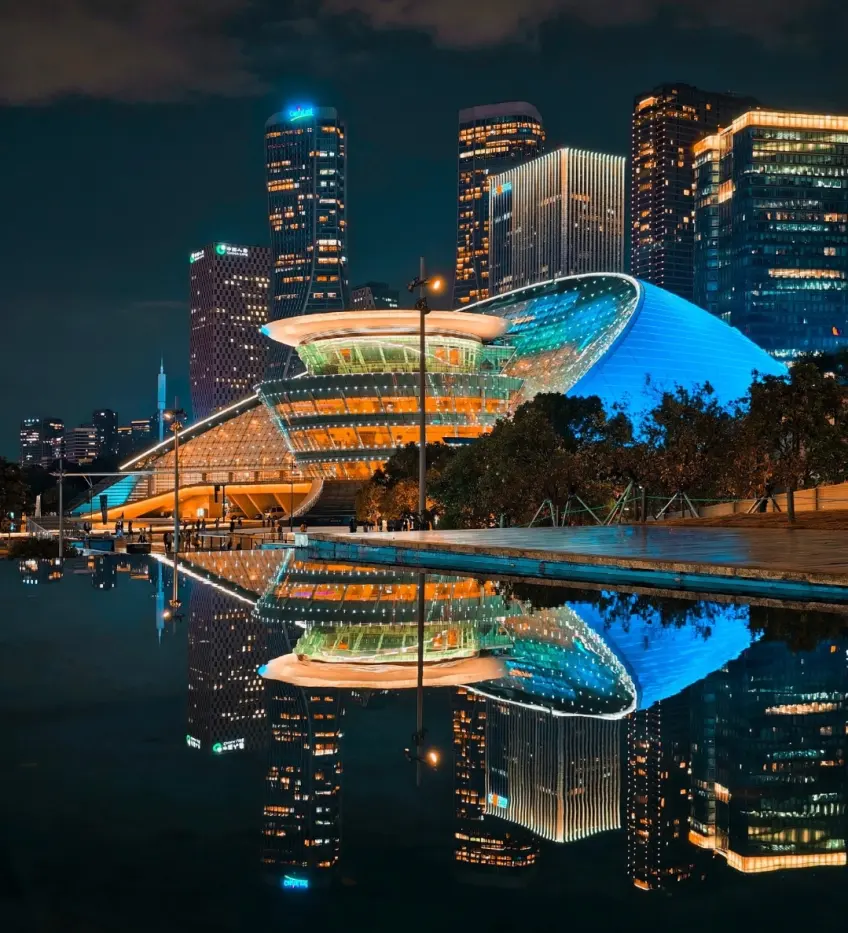
Sweet osmanthus: usually blooms in late September, but depends on the weather
The sweet osmanthus is Hangzhou's city flower, planted all over town. It typically blooms from late September to early October. Manjuelong is the most famous spot for enjoying the blossoms—the phrase "Manlong Guiyu" (sweet osmanthus rain at Manjuelong) describes the flowers falling like rain. Lingyin Temple, the botanical garden, and the shores of West Lake also have groves of osmanthus trees. When they bloom, you can smell their sweet fragrance just walking down the street.
However, sweet osmanthus is very sensitive to temperature: the hotter and drier the summer, the later it blooms. 2025 was a case in point—scorching midsummer heat combined with little rain delayed the city's osmanthus by over a month, and the fragrance didn't fill the air until late autumn. If you're visiting Hangzhou in September specifically for the osmanthus, check local bloom updates a week before your trip. In years with a late season, you might only catch a faint scent here and there in September.
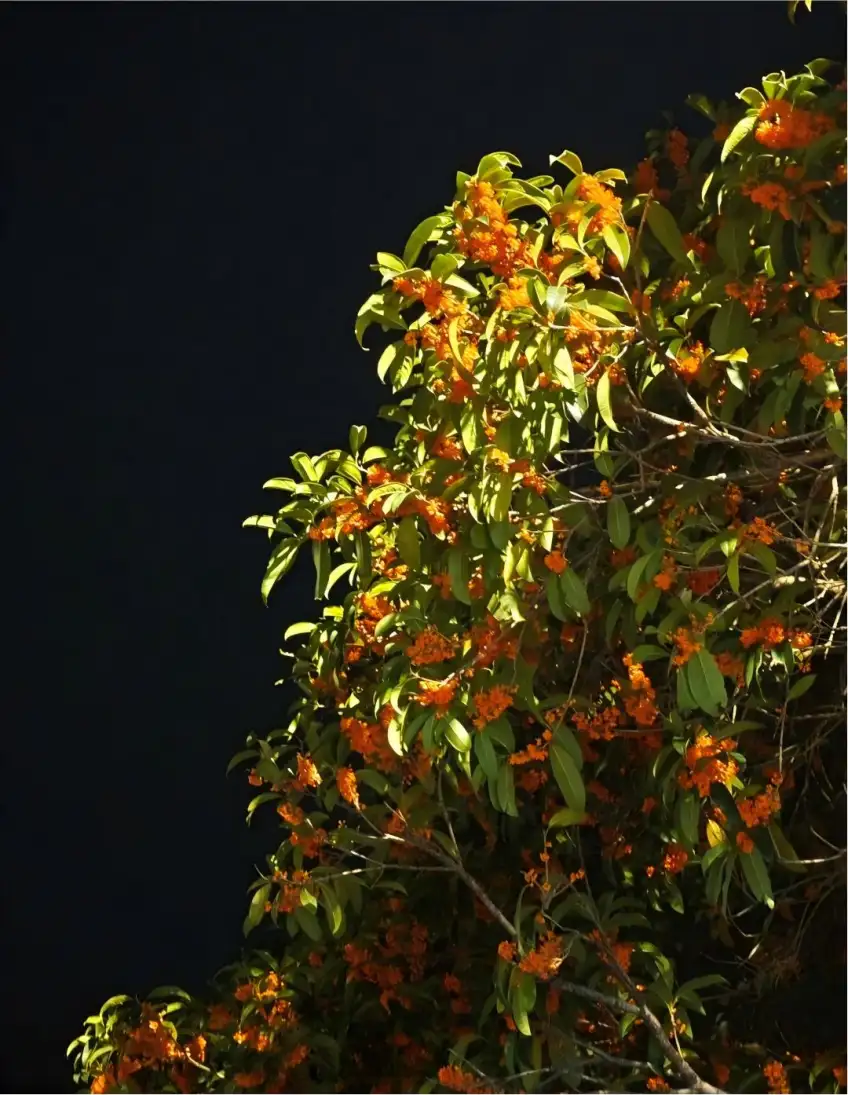
Xixi Wetland is also lively at this time of year. Persimmon picking starts in early autumn, and the park's fire persimmons hang red on every tree. For admission and boat ride info, see the Xixi Wetland scenic page.
Typhoons: the weather to watch most in September
August and September are when typhoons affect Hangzhou the most. Hangzhou is some distance from the coast, so by the time a typhoon arrives its winds have weakened. The main impacts are widespread heavy rain and gusts, which in severe cases can lead to flight cancellations, high-speed train suspensions, and temporary attraction closures. On September 16, 2024, right during the Mid-Autumn Festival holiday, Typhoon Bebinca made landfall in Pudong, Shanghai, disrupting travel across the Yangtze River Delta.
What to do if a typhoon is forecast: three to five days before departure, track its path via the China Meteorological Administration and Zhejiang meteorological authorities. If a typhoon will hit Hangzhou directly, cancel boat rides, mountain hikes, and tidal bore viewing that day and switch to indoor activities. When flights or trains are suspended, contact your airline or railway operator immediately to rebook. Also budget for an extra night at your hotel. After a typhoon passes, there's often a day or two of clear, cool weather with exceptionally crisp air—perfect for making up any outdoor plans.

Crowds: the post-school lull, Mid-Autumn Festival, and pre-National Day
Once summer vacation ends and school starts in September, Hangzhou sees noticeably fewer visitors. Weekdays in early and mid-September are relaxed times to visit West Lake and Lingyin Temple—a great window to beat the crowds. Around the Mid-Autumn Festival and in late September just before National Day, numbers climb again. The National Day holiday begins on October 1, so book high-speed train tickets and hotels for the last few days of September well in advance. Lingyin Temple doesn't charge admission, but you must first reserve a named time slot on the mini program. Slots fill fast around the Mid-Autumn Festival and before National Day—see the Lingyin Temple scenic page for details.
If you're driving, note that traffic restrictions are often in place around West Lake on weekends and holidays starting in September. Check the latest traffic police announcements for specific rules. The easiest option is to park at an outer lot and take a bus or the metro into the lake area.
Alternatives for hot and rainy days
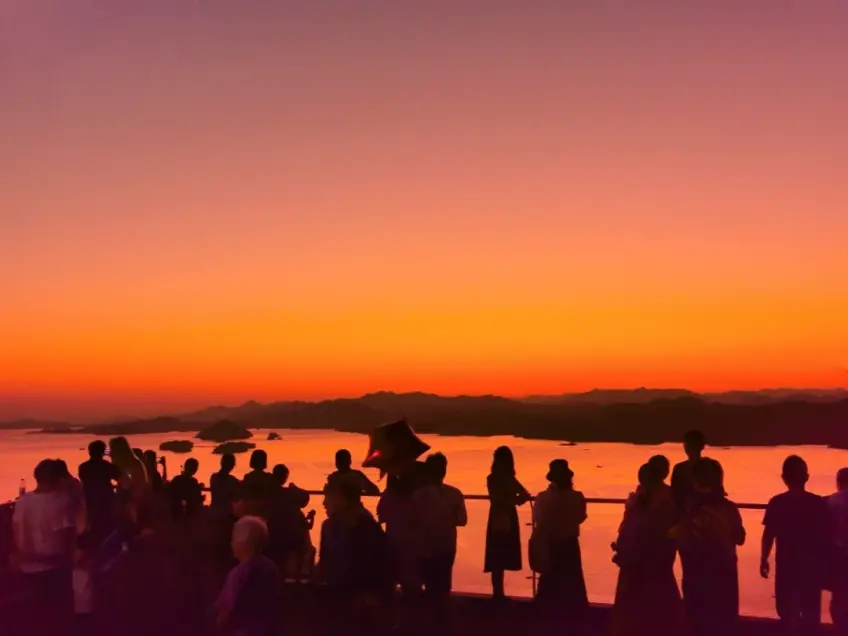
On hot midday hours, visit old residences with covered walkways like Hu Xueyan's Former Residence, or head to museums and indoor shows. For Songcheng's indoor show, see the Songcheng Romance of the Song Dynasty show guide; for Hu Xueyan's Former Residence, see the Hu Xueyan's Former Residence scenic page. On rainy days, Lingyin Temple is a great choice—the halls are connected by covered eaves, and the forest feels cool in the rain. If you want to leave the city, Qiandao Lake is wide open in early autumn, and crowds gather for sunset. However, boats stop running during typhoons, so check the weather first.
How to plan a day in hot sun or after a typhoon
Hot sunny days: Head out at 7 or 8 AM while it's still cool to visit Su Causeway, Bai Causeway, or Lingyin Temple. From 11 AM to 3 PM, rest at your hotel or stay inside a museum or mall. Go out again after 5 PM to watch the sunset by the lake, then take an evening stroll along Hubin. Around the Mid-Autumn Festival, this is also the best time for moon viewing.
After a typhoon: The first clear day after a typhoon brings blue skies and cool air—the best outdoor weather in September. It's a great time to hike Jiuxi, climb Baoshi Hill, or take a boat tour on the lake. Just watch out for broken branches and puddles on mountain paths, and check whether any trails are temporarily closed before you go.
September vs. October: which to choose
Both September and October are great times to visit Hangzhou. The first half of September is still hot and typhoons are possible, but there are fewer tourists, and the Mid-Autumn Festival and tidal bore viewing happen only this month. October is cooler and drier with the fewest rainy days of the year, and osmanthus flowers are usually in full bloom—but the week before the National Day holiday gets extremely crowded. If you dislike heat or typhoons, pick mid-to-late October. If you want to see the Mid-Autumn moon and the Qiantang River tidal bore, go in mid-September and pack late-summer clothes. For October details, see Hangzhou October weather and what to wear.
How September weather affects your itinerary
Two things can ruin a September trip: long walks during the lingering summer heat, and travel disruptions from typhoons. Events like the Mid-Autumn Festival and tidal bore viewing often overlap with peak crowds, and the bore-viewing spots are outside the city, making it hard to hail a taxi when they end. Families traveling with seniors can hand the bore viewing, moon gazing, West Lake, and Lingyin Temple over to a Hangzhou private car, adjusting departure times based on the tide and weather—and switching to indoor activities on typhoon days. To understand the stories behind the "Qiantang River Tidal Bore" and "Autumn Moon over the Calm Lake," hire a Hangzhou tour guide. Plan pre-National Day itineraries early; see Hangzhou custom tours. For more attractions, visit the Hangzhou city page; for West Lake info, see the West Lake scenic area page.

Feilai Zen Realm Day Tour: Hangzhou and Lingyin Temple
Private day tour in Hangzhou: climb Leifeng Pagoda, take a 45-minute boat ride on West Lake, and visit Lingyin Temple and the Feilai Peak grottoes in the afternoon. Pickup and drop-off at Hangzhou East Railway Station or Xiaoshan Airport included, along with transportation, guide and admission tickets. English, Japanese and other language guides available upon request. Choose your own date.

Enchanting Wuzhen 3 days 2 nights quality group tour
Group tour joining other travelers, meeting in Hangzhou at 14:00: daytime visit to Wuzhen West Scenic Zone plus an evening lantern-lit stroll, usually staying overnight in Wuzhen; next day Xitang (boat ride included, except on public holidays) and Lingyin Temple Feilai Peak; final day West Lake. Includes admission tickets, upscale or luxury hotel, 2 breakfasts and 1 meal, Chinese-speaking guide.

Qiandao Lake day tour: Chengzhong Lake and Tianyu Scenic Area
Want to travel from Hangzhou to Qiandao Lake for a boat ride? This private day tour takes you cruising the lake by yacht, then up Tianyu Mountain for panoramic views of the islands before returning to Hangzhou East Railway Station or the airport the same day. Includes transport, guide and attraction tickets, with an English-speaking guide available on request. You choose the departure date.
FAQs
Is Hangzhou still hot in September?
The first half of the month is still hot, with daytime temperatures often above 30°C, so pack summer clothes and sun protection. The second half cools down to around 25–26°C during the day, and you'll need a light jacket in the mornings and evenings. In September, the average high is 28.7°C and the average low is 21.4°C.
Do I need a jacket for Hangzhou in September?
Bring one light layer. You won't need it outdoors during the day in early September, but indoor air conditioning is strong and it's breezy by the lake at night. By late September, mornings and evenings are already cool, so a light jacket or cardigan is essential.
Will I encounter a typhoon if I visit Hangzhou in September?
It's possible. August and September are when typhoons most often affect Hangzhou, but they don't make a direct hit every year. Check the typhoon forecast a few days before your trip. If one is coming, switch outdoor plans to indoor activities and rebook your flights or high-speed trains promptly.
When is the Qiantang River tidal bore viewing season in 2027?
The best viewing period is around the 15th to 18th of the eighth lunar month, which falls on approximately September 15–18 in 2027. Tide times vary daily, so follow the local tide forecasts. Popular viewing spots may require reservations.
Can I see osmanthus flowers in Hangzhou in September?
They usually start blooming in late September, but it varies greatly from year to year. In 2025, due to a hot, dry summer, the osmanthus didn't reach full bloom until late October or early November. If you're traveling specifically for the flowers, check local bloom updates before you go.