
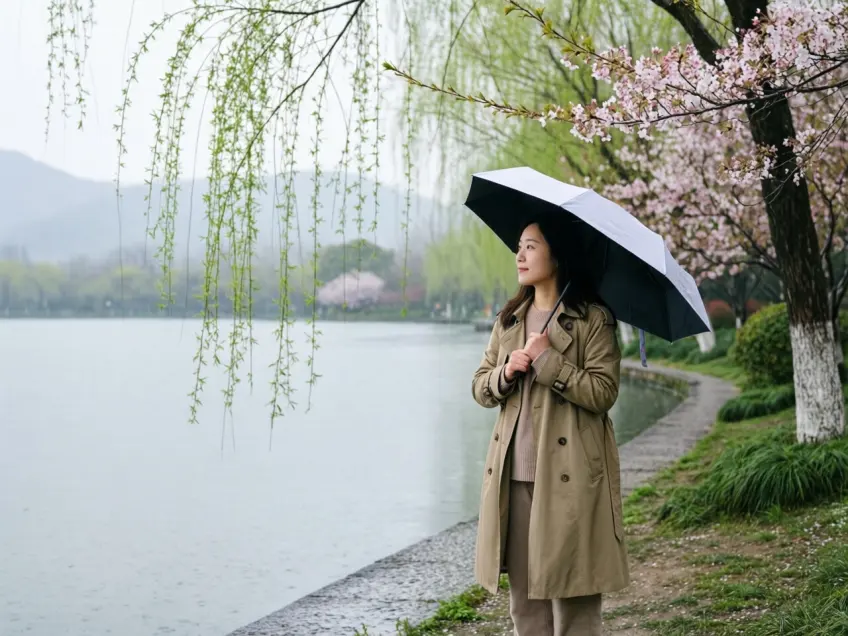
In March, Hangzhou averages a high of 15.9°C and a low of 7.6°C. It rains on about 15 days with 136 mm of precipitation, making it the wettest spring month, and temperatures swing up and down. In early March you'll still need a light down jacket or heavy coat; by mid-to-late March switch to a trench coat or jacket over a sweater. Carry an umbrella daily, wear waterproof shoes, and keep an extra layer handy for mornings, evenings, and rainy spells.
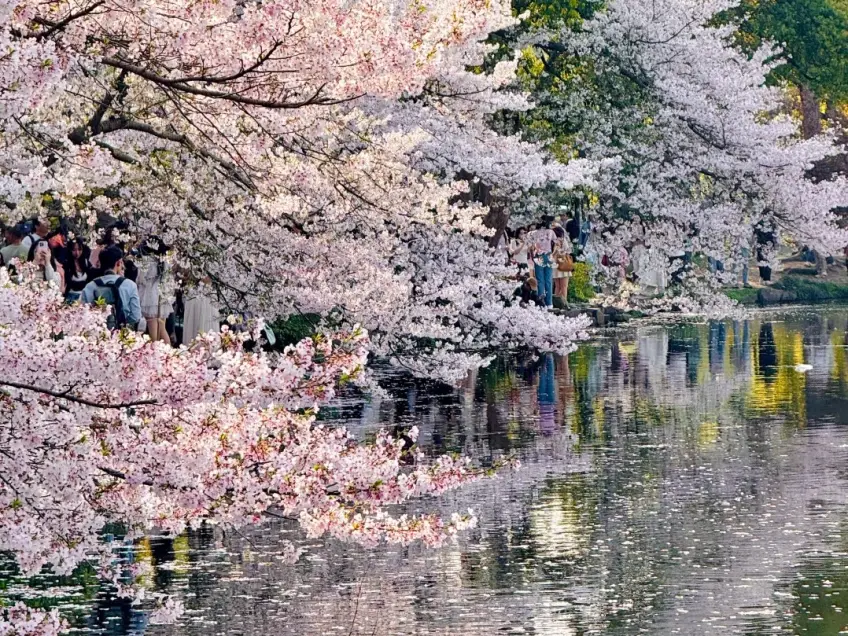
March is when Hangzhou leaps from winter into spring: plum blossoms linger into early March, tulips and cherry blossoms take over mid-month, peach blossoms and willow buds appear along Su Causeway by month's end, and the new Longjing tea harvest begins. But this is also the most fickle month weather-wise—you might photograph cherry blossoms in short sleeves one morning, only to be chased back into your down jacket by a cold afternoon shower. Below, using 1991–2020 averages from the China Meteorological Administration's Hangzhou station, we cover how warm or cool March gets, what to wear, which flowers to see, and how to plan around rain. For a full-year comparison, see Hangzhou Weather & What to Wear Overview; for last month, see Hangzhou February Weather & What to Wear.
March weather: two seasons in a single day
Average temperatures in March climb from single digits at the start of the month to around 15°C by the end, with a monthly average of 11.1°C. But that "average" hides big swings: the historical high for March is 34.0°C, and the warmest day each March averages 25.7°C; the low has dropped to -3.5°C, with the coldest day averaging about 0.8°C. In other words, it's not unusual to get a short-sleeve-warm day and a frosty morning in the same month.
The back-and-forth between warm and cold happens because cold air masses and warm, moist southern winds tug-of-war across Jiangnan. When the warm, moist air wins, it feels muggy and humid, often with light rain. Once a cold front arrives and the north wind picks up, temperatures can drop 10 degrees in a single day, and snow occasionally flurries—on average, March sees about 0.8 snowy days. Old Hangzhou locals say "bundle up in spring, toughen up in fall," and March is the perfect time to follow that advice: don't pack away your heavy clothes just because you see one warm day.
Rain is the theme of March. It rains on an average of 14.9 days, with about 136 mm of precipitation—roughly 50% more than February, trailing only the plum-rain June and midsummer July and August. Still, March rain is mostly a fine drizzle, steady but light, so you can easily walk around with an umbrella. Raindrops on new leaves and petals are exactly what spring in Jiangnan looks like. Sunshine increases compared to winter, totaling about 120 hours for the month, and West Lake already glows with bright spring colors on clear days.
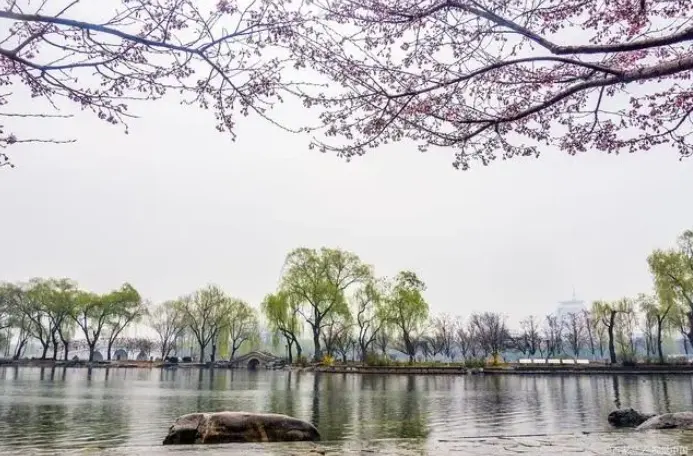
What to wear in early, mid, and late November
Early March (1–10): Basically still late winter. Wear a light down jacket or heavy coat over a sweater during the day; add thermal base layers in the morning and evening. If you hit a warm day, swap the sweater for a long-sleeve T-shirt and leave your jacket open.
Mid-March (11–20): Daytime temperatures often hover around 15°C, so a trench coat, jacket, or shell works well over a sweater or hoodie; pull out your light down jacket when a cold front hits. This is when layering matters most—three thin layers beat one thick one.
Late March (21–31): Warm days become more frequent, and a long-sleeve shirt plus a light jacket is usually enough during the day—it can even feel hot at noon on sunny days. But rainy days and evenings stay cool, so keep a cardigan or light hoodie handy.
Rainy days: It rains almost every other day in March, so an umbrella is a daily essential. Choose a water-resistant jacket and avoid pants that are too long so they don't drag on the wet ground. Wear waterproof sneakers or ankle boots—the paths along Su Causeway and Bai Causeway, as well as the dirt trails in the tea plantations, get slippery after rain. If you're wearing light-colored shoes, be prepared for them to get dirty.
Indoors: Indoor spaces in March are often colder than outdoors, especially in old buildings and stone halls, which feel damp and chilly on rainy days. Hotel air conditioning can be set to heat, so keep warm at night. Museums and malls may have already turned off their heating, so don't take off your jacket too soon.
Traveling with seniors and kids: Months with fluctuating temperatures make it easy to catch a cold. Seniors should check the day's low temperature before heading out and bring an extra layer just in case. When flowers bloom, pollen levels rise, so those with allergic rhinitis or asthma should bring medication and wear a mask if needed. Kids playing among flowers and on lawns will need a clean change of clothes and insect repellent—bugs start appearing by the lakeside in late March.
March packing list: One light down jacket (essential for early March), one trench coat or windbreaker, one or two sweaters and hoodies, several long-sleeve base layers; one pair of waterproof sneakers and one spare pair of shoes; a folding umbrella; masks and allergy medication (for pollen season); lip balm. Spring is humid, so pack quick-dry fabrics that are easy to wash and dry.
What flowers to see in March: A timeline
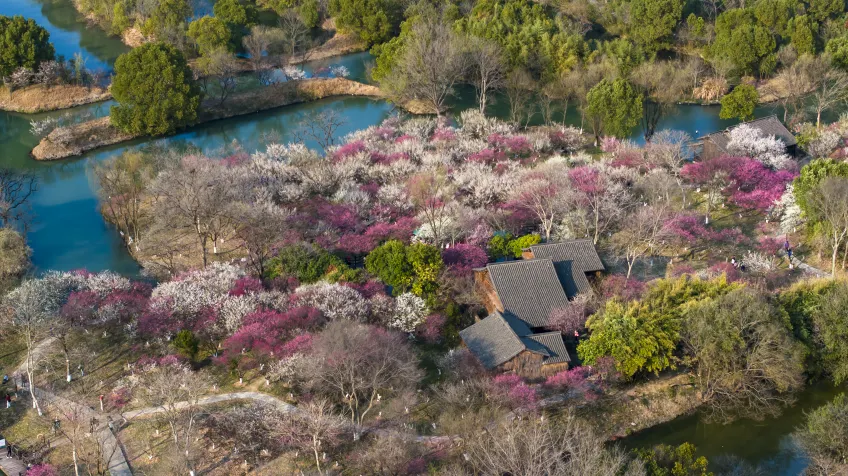
Early March: The tail end of plum blossoms. Plum blossoms at Chaoshan, Lingfeng, and Xixi usually peak in February, but in early March you can still catch late-blooming varieties. As petals begin to fall, the "plum blossom rain" is beautiful in its own right. The Xixi Plum Blossom Festival generally runs through March, and blooms can still be seen around Xixi Meishu Villa and Meizhu Mountain Villa.
Mid-month: Tulips at Prince Bay Park. Prince Bay Park (Taiziwan Park) south of West Lake holds a tulip exhibition every March. The 2025 show runs from March 7 to April 13, and the 2024 show ran from March 8 to April 14—over a month in total. Timed reservations are required during the exhibition, and weekend slots fill up fast. Tulips peak two to three weeks after the opening, and the park's cherry blossoms follow in late March.
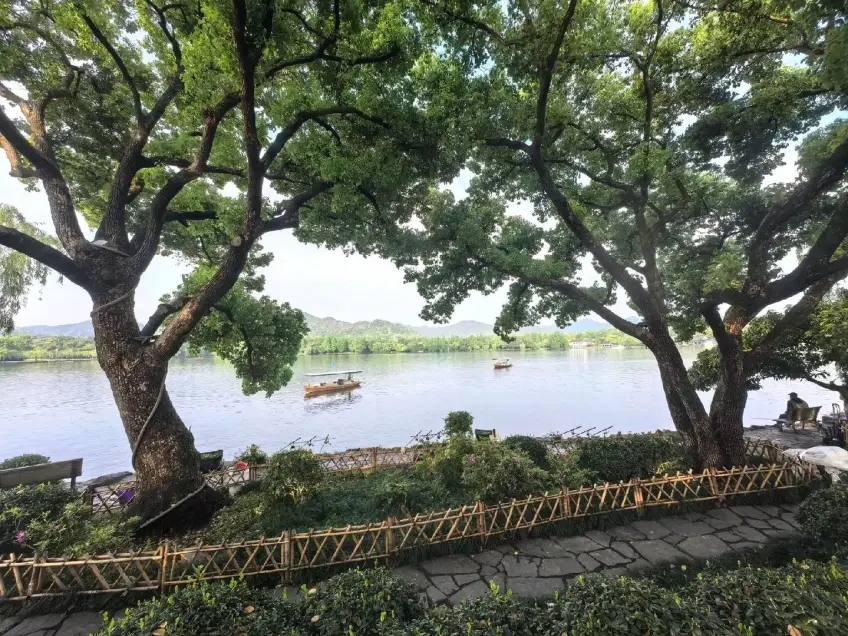
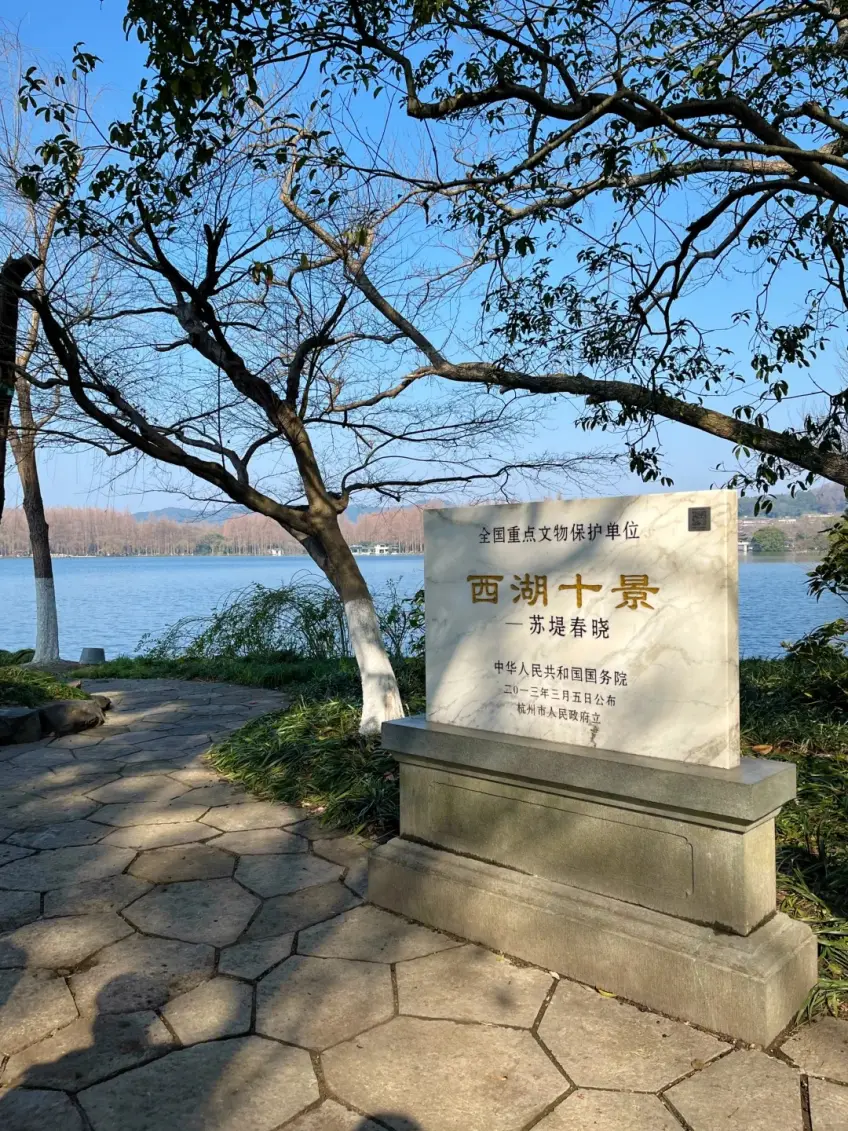
Late month: Cherry blossoms and Spring Dawn at Su Causeway. Hangzhou's cherry blossoms mostly bloom in mid-to-late March, with good spots at Prince Bay Park, along West Lake, and in the Botanical Garden. By late March and early April, peach blossoms and willow buds appear together on Su Causeway, creating "Spring Dawn at Su Causeway," the top scene among the Ten Scenes of West Lake. Walking the six bridges of Su Causeway from north to south covers about 3 km and takes just over an hour with stops.
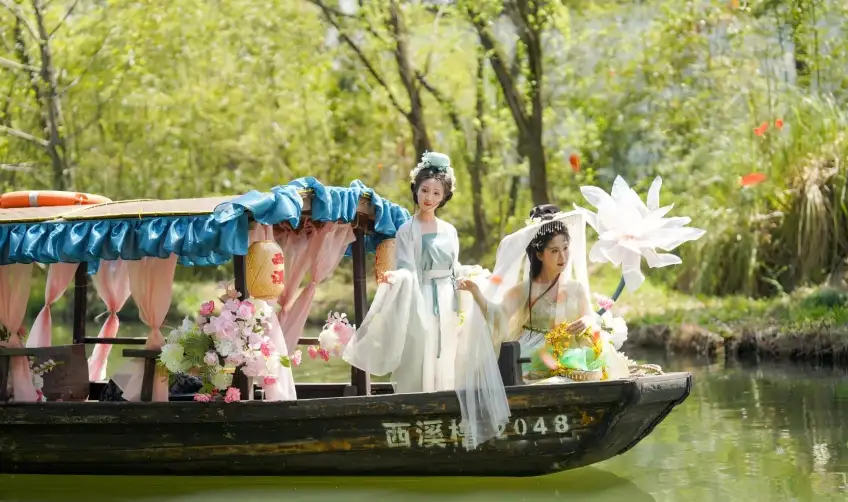
Late month: Xixi Flower Festival. The Flower Festival at Xixi Wetland usually runs from late March to early May, featuring flower deity parades and various floral displays—perfect if you love traditional Chinese style. Admission and boat tickets at Xixi Wetland are sold separately; see the Xixi Wetland scenic area page for details.
Bloom times shift by a week or two each year depending on temperatures. In warm winters, cherry blossoms and tulips arrive early; in years with a sudden cold spell in spring, they're delayed, and one cold rain can knock down a whole patch. Checking recent bloom updates and the exhibition reservation page before you go is more reliable than any "standard bloom calendar."
Longjing harvest: Tea hills in late March
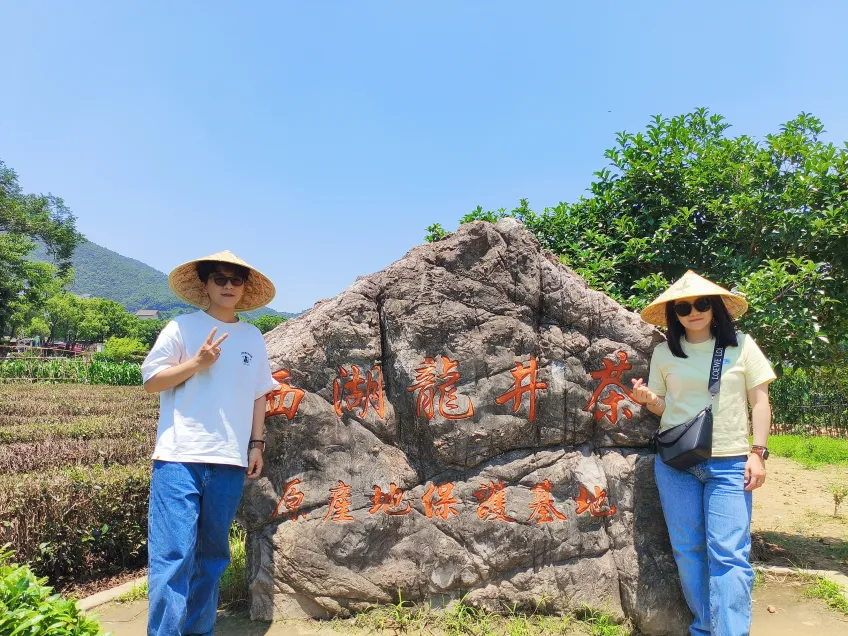
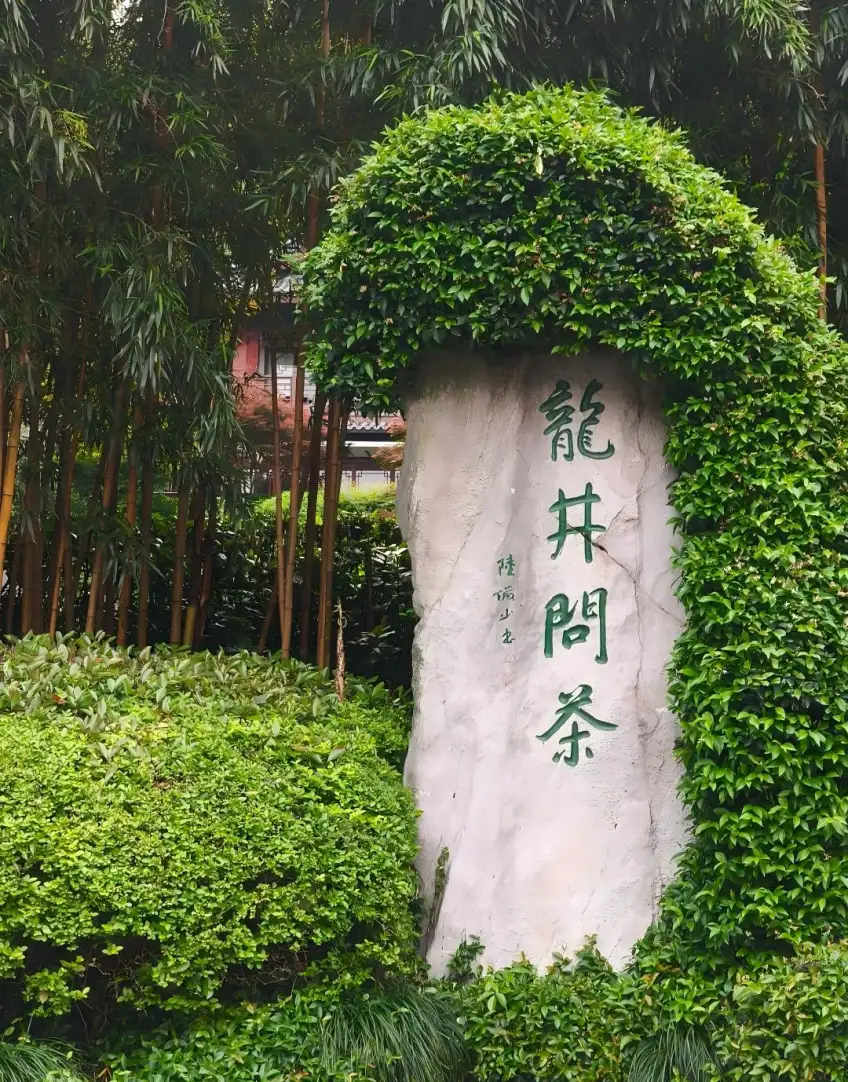
March is also harvest season for West Lake Longjing tea. In 2026, picking for the early-ripening Longjing No. 43 variety officially began on March 19, followed by the older Quntizhong variety later in the month. Leaves picked before Qingming Festival (April 5 in 2027) are called "pre-Qingming tea" and are the most sought-after of the year. Visit Longjing Village, Meijiawu, or Wengjiashan in late March to see farmers picking tea on the hillsides and smell freshly roasted tea drifting through the villages.
Tips for visiting the tea hills: the plantations belong to local farmers, so don't walk into the tea rows or step on them—stay on the paths when taking photos. The hills are cooler than the lakeside and get slippery after rain, so wear non-slip shoes. To learn about tea history and varieties, visit the China National Tea Museum first, then head to a village for a cup of fresh tea.
Three spring half-day routes
Hunan route: Prince Bay Park – Su Causeway – Viewing Fish at Flower Pond. Enter Prince Bay Park during your reserved time slot in the morning to see tulips and cherry blossoms; it's still quiet before 9:30am. Afterward, access Su Causeway from its southern end, walk north toward Yingbo Bridge, then detour to Viewing Fish at Flower Pond to see the koi and peony garden. The entire route is flat, making it great for older travelers. If it rains, shorten the Su Causeway section.
Tea hill route: Longjing Village – Meijiawu. Once picking begins in late March, head to Longjing Village in the morning to watch farmers harvest tea and settle into a local teahouse. After noon, move on to Meijiawu, a village set along a stream valley with terraced tea plantations climbing the hillsides. A road connects the two villages, but mountain paths get slippery after rain, so wear non-slip shoes.
Botanical Garden route: Lingfeng – Yuquan – Breeze-ruffled Lotus at Quyuan Garden. In early March, catch the last plum blossoms at Lingfeng; by mid-to-late March, cherry blossoms and magnolias bloom throughout the botanical garden. Afterward, walk through the Yuquan area to Breeze-ruffled Lotus at Quyuan Garden on West Lake. The lotus leaves haven't sprouted yet, but the willows along the shore are already bright green. This route draws fewer visitors than Prince Bay Park, ideal if you prefer a quieter experience.
Crowds: no long holidays, but weekends are packed
There are no public holidays in March, so visiting West Lake and Lingyin Temple on weekdays is much more relaxed. But on weekends during the flower season, locals and visitors from nearby cities flock here. Prince Bay Park, Su Causeway, and the Botanical Garden get very crowded after 9 a.m. on Saturdays and Sundays, and flower show reservations fill up fast. Choose a weekday if you can; if you must go on a weekend, arrive before 8 a.m.
The Lingyin-Feilai Peak Scenic Area is free, but you need to book with your real name on the "Hangzhou Lingyin Feilai Peak" mini program. Spots fill up fast on spring weekends, so reserve before heading out. See the Lingyin Temple scenic area page for details. Toward the end of the month, Qingming Festival approaches, bringing both tomb-sweeping and spring outings, so roads out of Hangzhou get busier.
For accommodation, hotels near West Lake fill up quickly on flower-season weekends, especially around Hubin, Beishan Street, and Nanshan Road—book as soon as your dates are set. Staying near a metro station makes getting around much easier on rainy days. If you want to photograph flowers at Prince Bay Park or Su Causeway early in the morning, stay on Nanshan Road or near Hubin so you can walk there and skip the hassle of hailing a cab at dawn.
March weather risks
Late cold snaps: The most common March pitfall. After several warm days, a cold front can plunge temperatures back to winter levels, sometimes bringing rain or snow. Pack for the colder end of the spectrum, and don't leave your down jacket at home before mid-March.
Spring thunderstorms and showers: Thunderstorms begin around the Jingzhe (Awakening of Insects) solar term, and short bursts of heavy rain occasionally hit in the late afternoon in late March. If you're by the lake or in the hills when lightning strikes, avoid standing under tall trees or pointed pavilion roofs—head indoors right away.
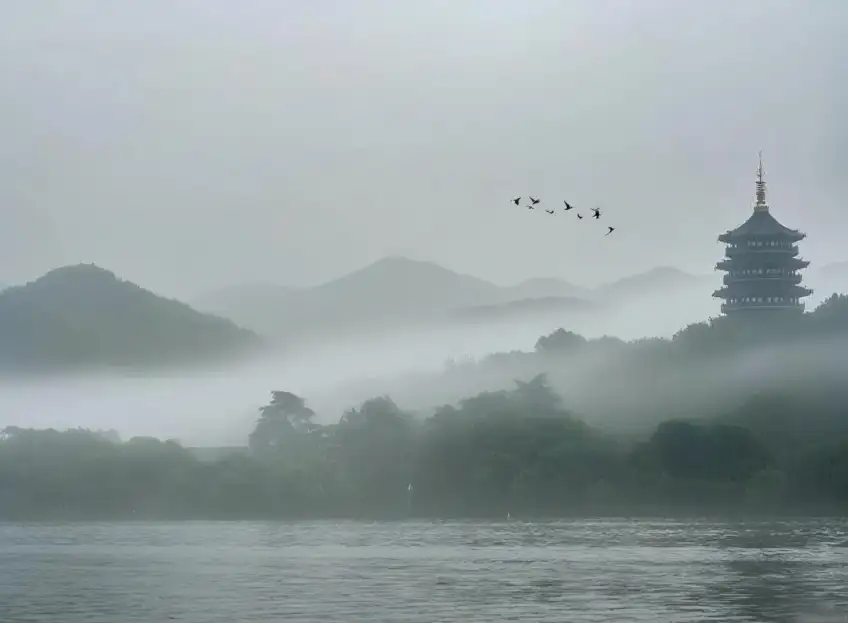
Fog: Spring mornings are humid, and fog often rolls over the lake and into the hills. Misty West Lake is beautiful, but build in extra time if you're catching an early flight or high-speed train.
What to do on rainy days
March has plenty of rainy days, so instead of waiting for the rain to stop, build it into your plans. In a light drizzle, you can still visit West Lake—Su Causeway and Bai Causeway are less crowded in the rain, and the willows and blossoms look even more vibrant. When the rain is heavy, switch to indoor spots: most courtyards and corridors at the Former Residence of Hu Xueyan have eaves for cover (see the Former Residence of Hu Xueyan attraction page); at the China National Tea Museum you can browse exhibits and sip tea; in the evening, catch an indoor show at Songcheng—details in our Songcheng Romance travel guide. The halls of Lingyin Temple also have covered walkways, and a drizzly morning brings fewer crowds, perfect for a leisurely stroll.
March vs. April: which to choose
March and April are both flower seasons in Hangzhou; the difference is the temperature and the crowds. March is colder and wetter, so pack more layers, but there are fewer tourists, and plum blossoms, tulips, and cherry blossoms are all in bloom. In April, the average high rises to 22.1°C, so you can dress lightly, and the tea season is at its peak—but crowds around Qingming Festival and May Day are much heavier than in March. To see tulips and cherry blossoms, pick a weekday in mid-to-late March. If you dislike the cold, want pre-Qingming tea, and hope to avoid the Qingming holiday, go in the last week of March. For April details, see Hangzhou weather and what to wear in April.
How March weather affects your itinerary
Bloom times and weather in March are unpredictable, so the best approach is to keep your itinerary flexible. Peak bloom often lands on a weekend, when shuttling between Prince Bay Park, Su Causeway and Longjing Village means long taxi queues and scarce parking. Families traveling with seniors can hand these stops over to a Hangzhou private car service, reshuffling the order on the fly based on the day's weather and blooms, or ducking indoors if it rains. To understand the story of Su Dongpo behind "Spring Dawn at Su Causeway" or the origins of Longjing tea, hire a Hangzhou tour guide. To combine Hangzhou's flower season with Suzhou's gardens and Wuzhen's water town in one spring trip, check out Hangzhou custom tours. For more attractions, see the Hangzhou city page; for West Lake details, see the West Lake attraction page.
Best of Hangzhou 3 days 2 nights: West Lake north and south routes, Leifeng Pagoda, Dream Town, Xixi Wetland, Yuewang Temple guided tour and Hu Xueyan's Former Residence cultural discovery leisure tour
A 3-day, 2-night private tour exploring just one city, Hangzhou: Yuewang Temple and a boat ride on West Lake, Lingyin Temple and Feilai Peak, Dream Town and Xixi Wetland, plus Hu Xueyan's Former Residence and a stroll along Hefang Street. Airport transfers included, with vehicle, guide, hotel and admission tickets. An English-speaking guide is available upon request.
Jiangnan elegance 3-day 2-night tour: Hanshan Temple, Lingering Garden, Feilai Peak and Lingyin Temple, West Lake boat cruise, Flower Harbor Park, tea plantation photo shoot
A 3-day 2-night private tour starting in Suzhou and ending in Hangzhou: Hanshan Temple and Shantang Street, the Lingering Garden and Pingjiang Road, then Lingyin Temple and Feilai Peak in Hangzhou in the afternoon. On the last day, enjoy a West Lake boat cruise and a tea plantation photo shoot. Includes transport, guide, two nights at an upscale or luxury hotel, and admission tickets, with an English-speaking guide available.

3 days 2 nights in Wuzhen: Wuzhen West Scenic Zone, Xitang, Feilai Peak, West Lake boat ride and Songcheng show
A 3-day, 2-night private tour with Hangzhou transfers: spend the first night in Wuzhen with a complimentary lantern-lit evening stroll in the West Scenic Zone, afternoon tea and a hanfu experience. Day two covers Xitang, Feilai Peak and the Romance of the Song Dynasty show at Songcheng, followed by a West Lake boat ride on the final day. Transport, guide, hotel and tickets included. An English-speaking guide is available on request.
FAQs
What to wear in Hangzhou in March?
In early March, dress for late winter: a light down jacket or heavy coat over a sweater. From mid to late March, a windbreaker or jacket with a sweater or hoodie works well. The average high in March is 15.9°C and the low is 7.6°C, but temperatures swing widely, so bringing an extra layer you can easily add or remove is the most practical approach.
Do I need a down jacket for Hangzhou in March?
Before mid-March, bring a light down jacket—it comes in handy during sudden cold snaps or chilly rainy days. In late March you usually won't need one; a windbreaker or jacket over a sweater is enough. Check the week's forecast before you leave, and pack it if a cold front is coming.
Does it rain a lot in Hangzhou in March?
Yes. It rains on about 15 days on average, with roughly 136 mm of precipitation for the month, mostly as light drizzle. Carry an umbrella every day, wear waterproof shoes, and keep an indoor backup option in mind each day.
When do the cherry blossoms and tulips bloom in Hangzhou?
Cherry blossoms usually peak from mid to late March. The Taiziwan tulip exhibition generally opens in early March and runs through mid-April, with the best blooms two to three weeks after opening. Timing varies each year depending on temperatures, and reservations are required during the exhibition.
Can I try fresh Longjing tea in March?
Late March works. In 2026, Longjing No. 43 will be picked starting March 19, and the Quntizhong variety in late March. Tea harvested before Qingming is called pre-Qingming tea. You can enjoy this year's fresh tea at teahouses in Longjing Village or Meijiawu.