
November is the transition from autumn to winter in Shanghai. From 1991 to 2020, Xujiahui Station recorded an average high of 17.8°C and low of 11.4°C, with about 61 mm of rainfall over 9 rainy days for the month. In early November, a long-sleeve shirt plus a trench coat or denim jacket is enough. From mid-month on, switch to a sweater and a heavier coat, and by late November, a light down jacket will give you peace of mind.
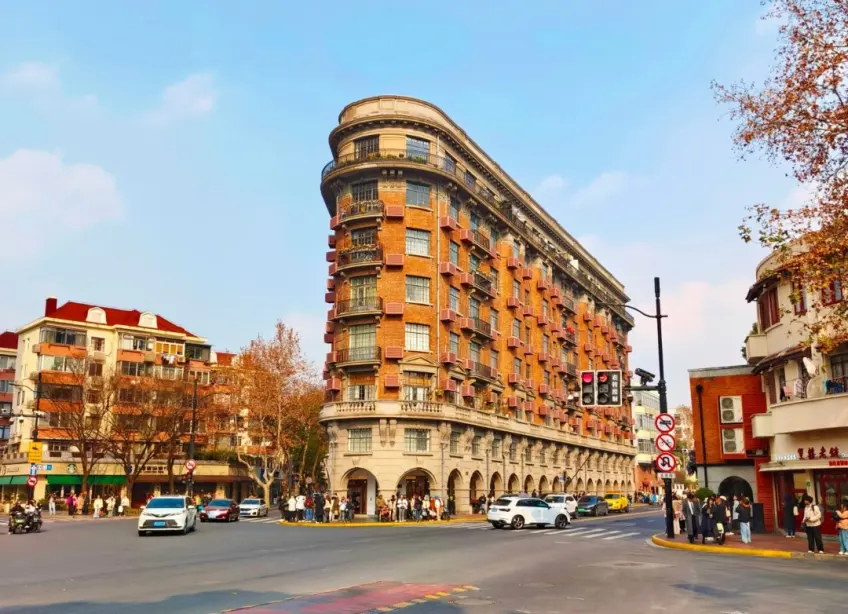
For a year-round comparison, read Shanghai Year-Round Weather & What to Wear; for winter clothing details, see Shanghai December Weather & What to Wear. Below we focus on November: how to pack when temperatures swing nearly 10 degrees within the same month, when the plane trees and ginkgos turn yellow, and how to plan a red maple trip from Shanghai.
November weather: two seasons in one month
The averages look mild, but the reality feels like a slide. Early November carries over October's crisp sunshine, with afternoons often around 20°C; Xujiahui Station's November record high is 28.5°C. By mid-to-late November, cold air masses from the north arrive every few days, each one dragging temperatures down another notch. Over the past 30 years, the average low on November's coldest day was 4.9°C, with an extreme low of -4.2°C. By meteorological standards, Shanghai doesn't officially enter winter until early December, but late November mornings already feel like it.
Rain is the good news this month. 61 mm of precipitation across 9 rainy days is low for Shanghai—usually just light to moderate rain as a cold front passes, clearing up in a day or two. After the rain come several dry, cold sunny days with crystal-clear skies, perfect for photographing plane trees, ginkgos, and The Bund architecture. Relative humidity is 71%, with about 131 hours of sunshine—30 hours less than October. Days get noticeably shorter, and by late November it's dark around 5 PM.
For readers from Taiwan and Hong Kong, think of it this way: early November in Shanghai feels like Taipei's most comfortable days in December. By late November, the morning and evening chill approaches what Taipei feels like during a cold snap, with dampness in the wind.
Early, mid, and late November: how to adjust your clothes
Early November (highs around 20°C, lows around 14°C)
During the day, wear a long-sleeve T-shirt or shirt with a trench coat, denim jacket, or light jacket; add a knit cardigan if you head to the riverside at night. Breathable sneakers are fine for shoes. These ten days are much like late October—the best time of the month to be out and about.
Mid-November (around 17°C high, 10°C low)
Wear a long-sleeve base layer with a light sweater or hoodie, and swap your jacket for a slightly heavier trench coat, blazer, or fleece. When a cold front arrives, it gets windy and a scarf comes in handy. Daytime and nighttime temperatures differ by 6–7°C, so add an extra layer if you head out after dark.

Late November (around 14°C high, 7°C low)
Sweaters are your mainstay. Add a lightweight down jacket or heavy coat on top, and bring a thin scarf and gloves. On mornings when a cold snap passes through, lows can drop to just 3–4°C. If your trip falls at the end of the month, it's safer to pack as if it were early December.
The three tiers above are estimates based on monthly averages and typical conditions for each period, not exact statistics. Cold fronts arrive at different times each year—some years people still wear short sleeves in mid-November, while others see temperatures near freezing by late November. Check the forecast a week before departure and decide whether to bring a down jacket based on the predicted lows.

Layering tips: indoors vs. outdoors, rainy days, and shoes
Indoors: Most indoor spaces in Shanghai don't have heating turned on yet in November, and many hotels require guests to switch the air conditioning to heat mode themselves. Temperatures inside garden halls and old villa museums are about the same as outside, so they can feel chilly by late November. Subways and malls get stuffy when crowded, so choose outerwear that's easy to slip on and off—avoid thick pullover sweaters as your outermost layer.
Rainy days: Cold fronts often bring rain, and temperatures drop noticeably afterward. A folding umbrella and a water-resistant jacket are enough—more convenient than a raincoat. Wet plane tree leaves stick to the pavement and get slippery, so watch your step on stone paths and downhill sections.
Shoes: Wear comfortable sneakers in early to mid-November, then switch to waterproof shoes late in the month. Leaf-peeping means lots of walking—strolling around Wukang Road and Hengshan Road easily adds up to several kilometers. Don't wear brand-new shoes for the first time on these walks.
Traveling with seniors and kids: The biggest concern is the temperature swing between morning and evening, not the daytime chill. Seniors should bring a down vest to layer under their coat when it gets cold. No need to head out too early—wait until after 9:00 AM when the sun is up. Kids are active, so dress them lighter during the day, but keep a hat and a thick jacket in your bag to add as soon as the wind picks up in the evening.
November's unique scenery: plane trees, ginkgos, and Jiangnan's red maples
Plane trees and ginkgos downtown
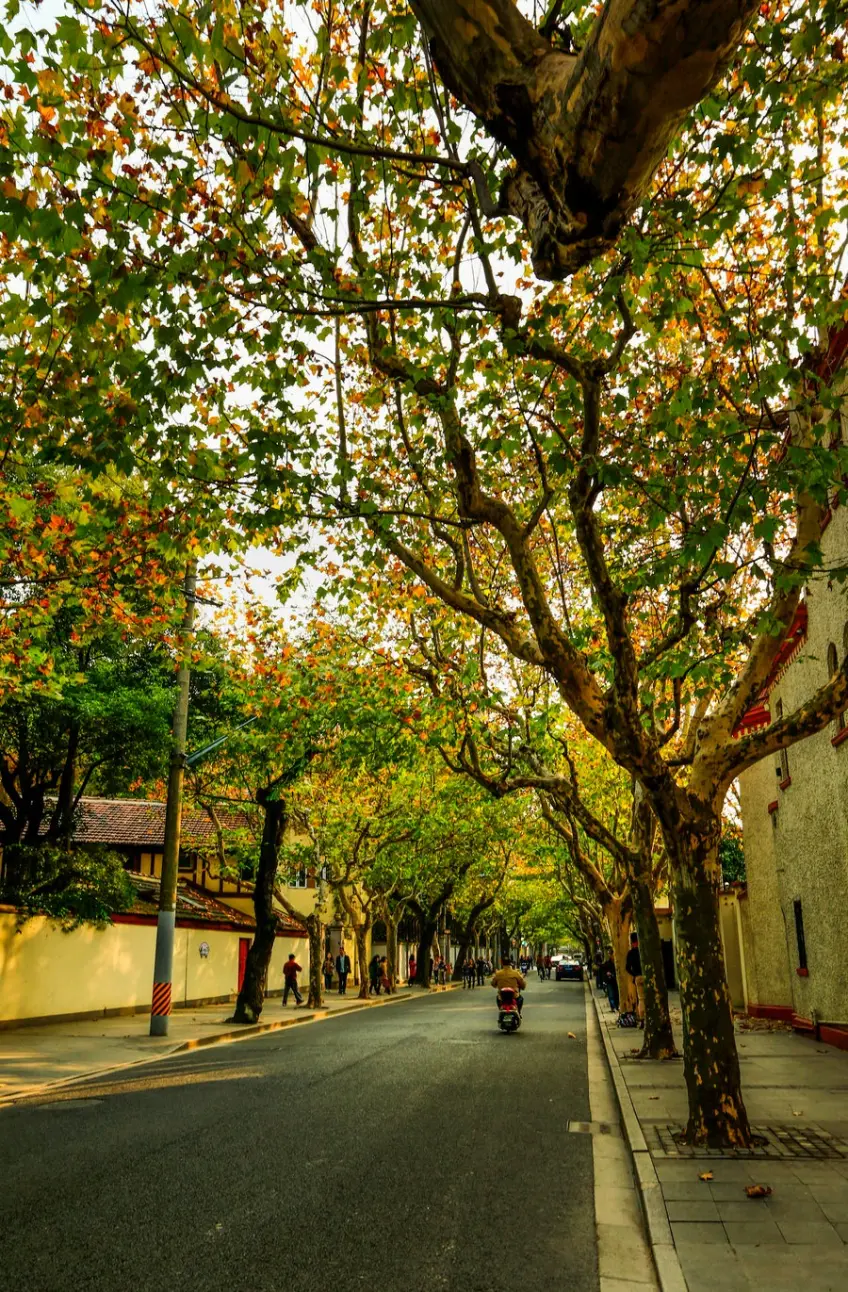
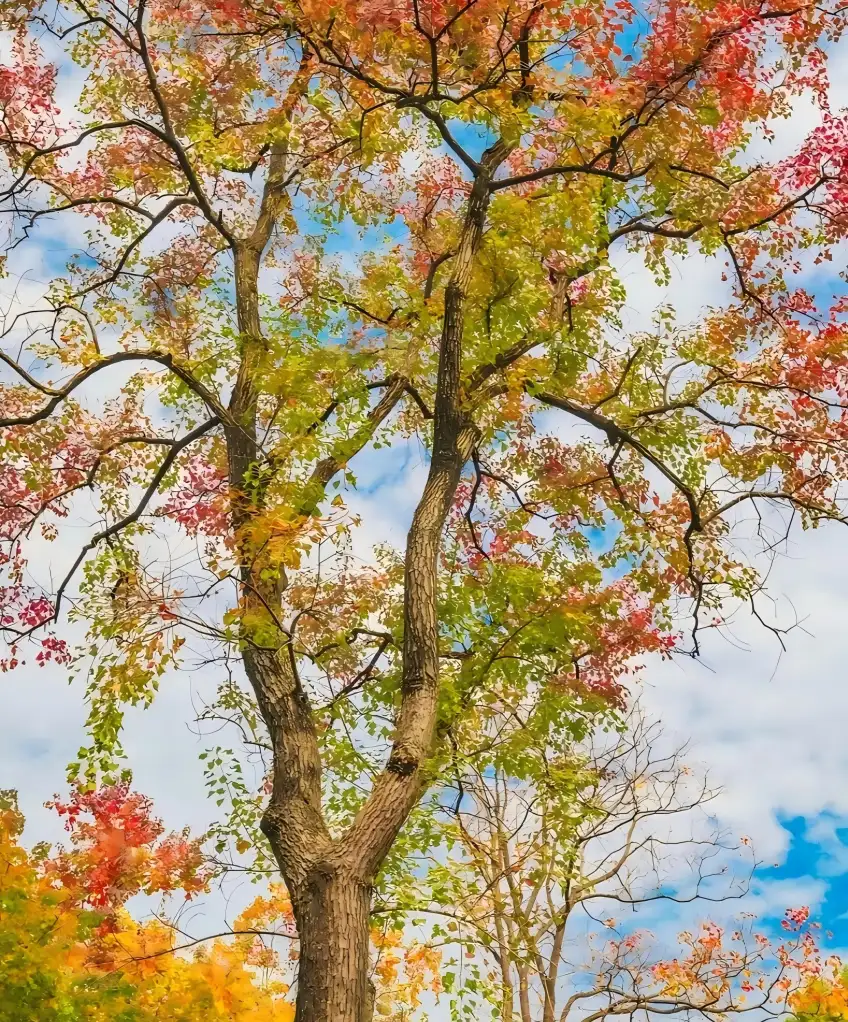
Autumn colors arrive later in downtown Shanghai than in the mountains of Jiangnan. Plane trees, ginkgos, and zelkovas usually start turning yellow in mid-November, peaking from late November to early December. Each year, the Shanghai Municipal Administration of Landscaping and City Appearance releases a list of "leaves left unswept" scenic streets. On November 24, 2025, 44 streets across 14 districts were announced; some districts started that same day, while others continued until December 25. The 2026 list typically comes out in late November.
The classic route starts near the Former Residence of Soong Ching Ling, then strolls along Wukang Road, Anfu Road, and Hengshan Road. Old Western-style houses framed by yellow leaves make the most iconic autumn scene in Shanghai. The residence is closed on Mondays and open 9:00–17:00 on other days—you can tour it first, then explore the streets. For the route, see our Wukang Road and Anfu Road walking tour. The Wukang Mansion intersection gets crowded on weekends, so go on a weekday morning for unobstructed photos.
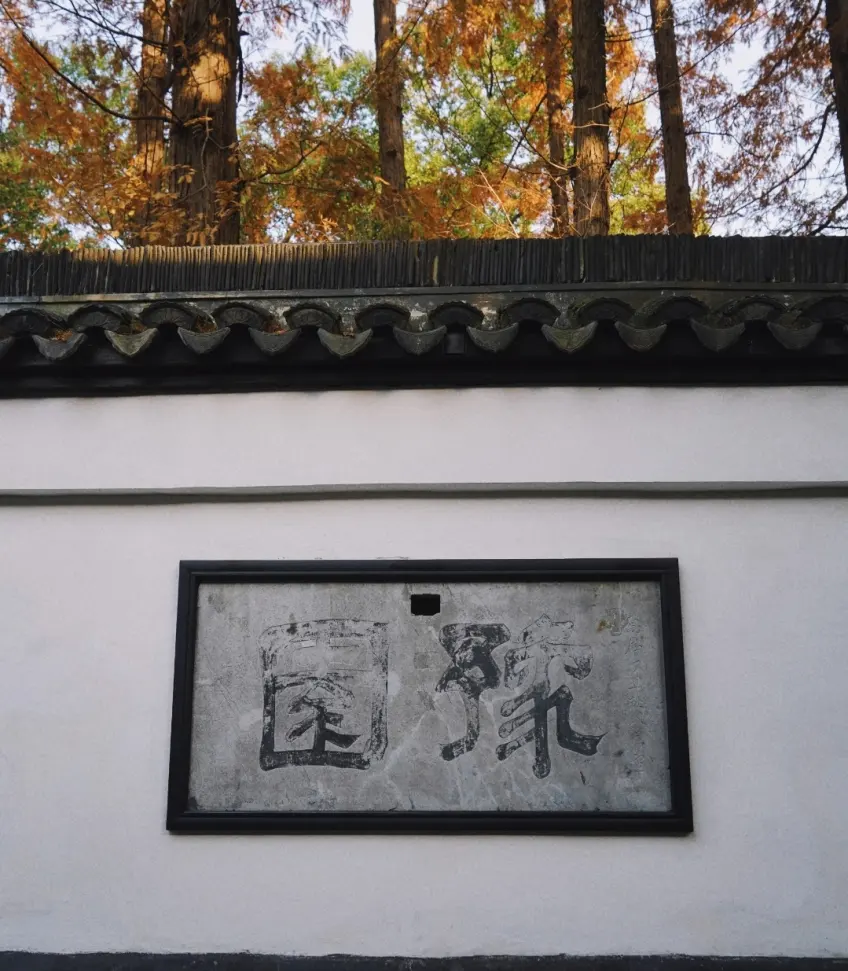
Yu Garden also has several large ginkgo trees, whose yellow leaves in late November look stunning against the white walls and dark tiles. Yu Garden still charges peak-season prices in November and closes at 16:30. This is the last stretch of good weather before winter, so mornings get busy—we recommend arriving right at opening.
Autumn at The Bund
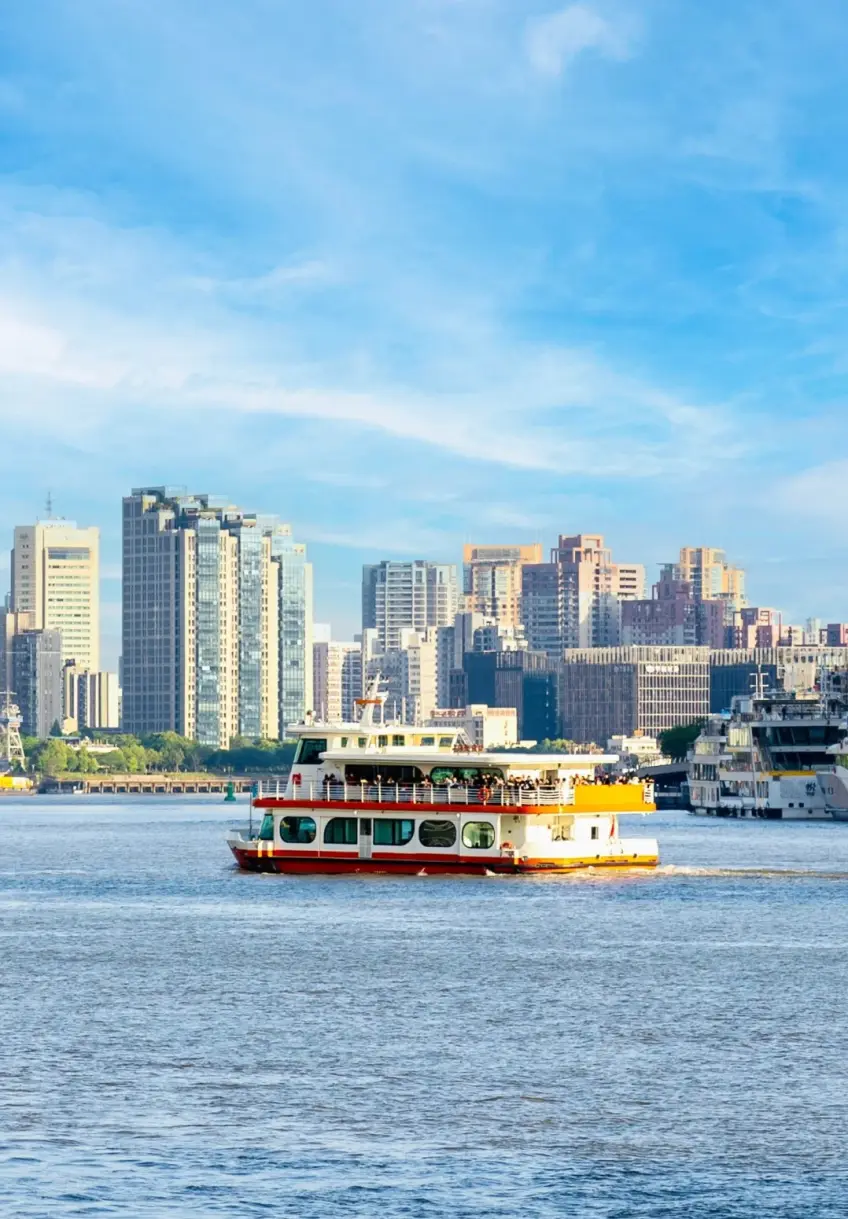
November brings little rain and clear air, making it one of the best months to see The Bund and the Lujiazui skyline. During the day, walk along The Bund from Waibaidu Bridge to Shiliupu, then take a public ferry across the river. In just a few minutes you can view both banks from the water — see our Bund ferry guide for route tips. By late November it gets dark early, so the lights come on just after 5 pm and you won't be out too late after enjoying the night view.

Red maple trips from Shanghai
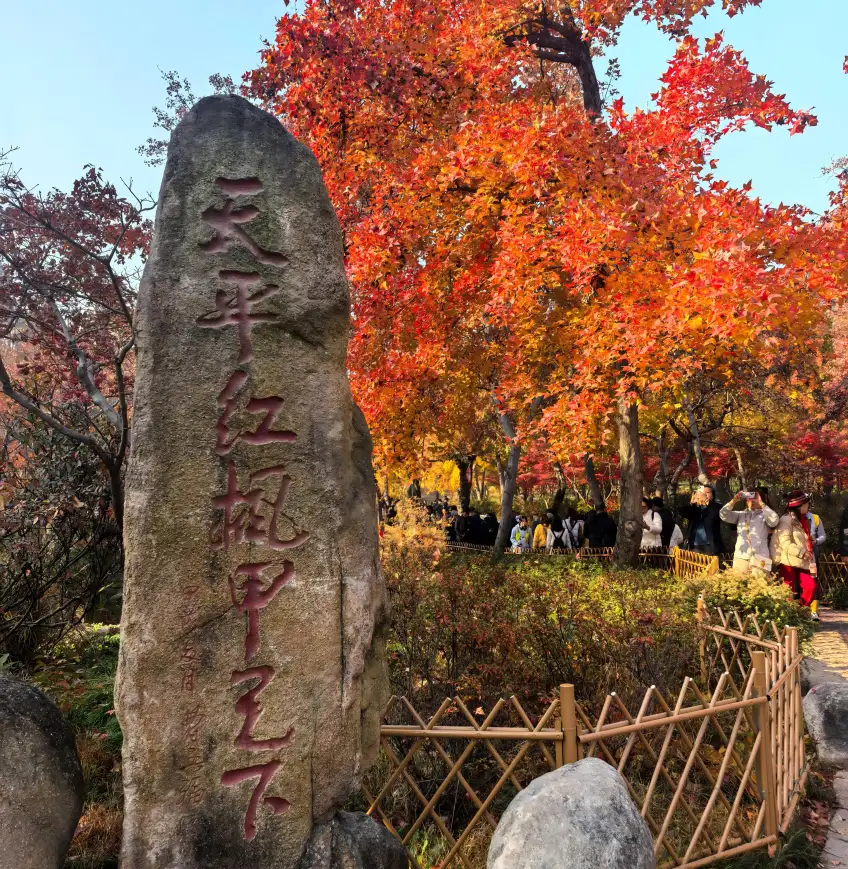
Downtown Shanghai is mostly yellow in autumn; for sweeping red maples you need to head to the surrounding area. The closest classic spot is Tianping Mountain in Suzhou. Peak color usually falls between mid-November and early December. For the 2025 red maple season (November 1 to December 7), the park opens early at 7 am, and on weekends a dedicated shuttle bus connects Mudu Metro Station in Suzhou to the site. Check the park's official announcements for 2026 details. For directions and tips on visiting with older family members, see How to get to Tianping Mountain and Viewing red maples at Tianping Mountain with your parents.
Best time and light for leaf photos
The yellow leaves look best on sunny days from 9 to 11 a.m. and 2 to 4 p.m., when sunlight slants through the canopy and makes the leaves glow. The west-facing facade of Wukang Mansion gets better light in the afternoon, while the plane tree tunnel is ideal in the morning, with fewer cars and people. Overcast shots tend to look gray, but leaf color saturation stays more consistent, making it good for close-ups. The first sunny day after rain brings the clearest air, with fallen leaves covering the sidewalks—one of the rare best times of the year—though the ground can be slippery, so keep a firm hold on older travelers.
Tianping Mountain gets extremely crowded on weekends. If you're doing a day trip from Shanghai, it's best to go on a weekday and arrive early in the morning, then visit the gardens in downtown Suzhou afterward.
Late autumn in the gardens of Suzhou and West Lake in Hangzhou
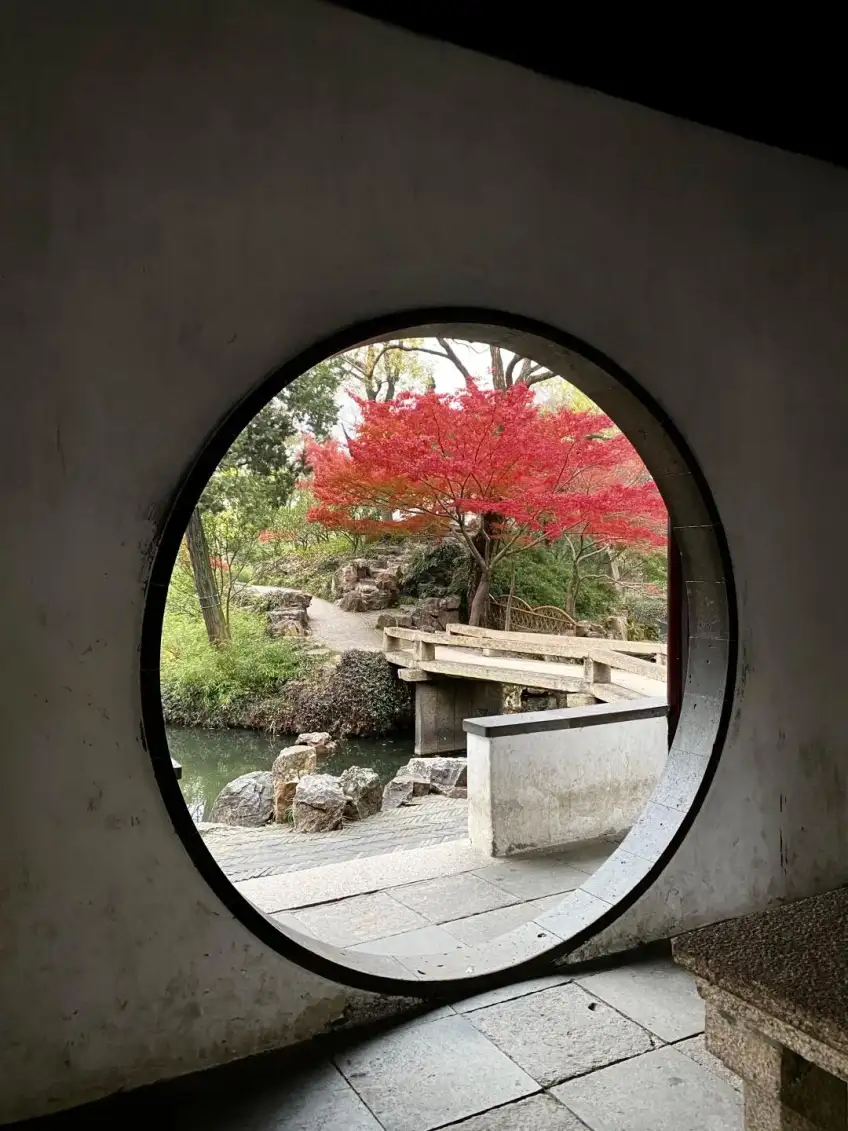
Beyond Tianping Mountain, the gardens in downtown Suzhou also have scattered red maples in late November. At Humble Administrator's Garden, moon gates and lattice windows frame the red leaves, creating a completely different vibe from spring and summer. You can combine it with Tianping Mountain in one day: view the maples in the mountains in the morning, then head into the city to explore the gardens in the afternoon. A bit farther out, it takes about an hour by high-speed train from Shanghai to reach Hangzhou, where the ginkgo, dawn redwood and sweetgum trees around West Lake also change color at this time—perfect for a two-day, one-night trip. The halls in Jiangnan gardens don't have heating either, so dress warmer in late November than you would in downtown Shanghai. On days spent near water or in the mountains, pack rain gear and a thick jacket in the car before heading out.
CIIE in early November
In early November each year, the China International Import Expo is held at the National Exhibition and Convention Center in Qingpu. In 2026, it runs from November 5 to 10. During the expo, hotels near Hongqiao Airport and Hongqiao Railway Station fill up fast, and some roads are subject to traffic controls. If your travel dates overlap with the expo, try to book accommodation downtown and allow extra time for getting to and from Hongqiao.
Crowds in November: no long holidays, just busy weekends
With no public holidays in November, it's one of the more relaxed months of the year in Shanghai. On weekdays, Yu Garden and The Bund are far less crowded than during the October National Day holiday, and hotels are easier to book. Crowds mainly gather in three places: Wukang Road and Anfu Road on weekend afternoons, Tianping Mountain during peak foliage season, and the Hongqiao area during expo week. Visit these spots on weekdays for a much better experience.
If you're taking the kids to Shanghai Disneyland, weekday lines in November are generally shorter than in summer or during holidays. Daytime temperatures in the teens are comfortable, but it gets windy inside the park during the evening fireworks show, and temperatures can drop below 10°C, so bring hats and jackets into the park. Ticket prices vary by date—check the official price calendar.
Weather risks: cold fronts and morning fog
Cold fronts: the main event in November. When a cold front passes through, it often brings rain and northerly winds, dropping temperatures by 7 to 10°C within a day or two, followed by dry, cold sunny weather. If a cold front is forecast, reschedule riverside walks and outdoor photoshoots for warmer days or after the rain stops, and stick to indoor activities on the day temperatures drop. The coldest moment is usually early the next morning—under clear, calm skies, heat escapes quickly from the ground, and you might even see frost in the suburbs. Dress one layer heavier that morning than the day before.
Morning fog: dense fog occasionally appears in the mornings during the autumn-winter transition, affecting airport operations and expressway travel. Allow extra time if you're catching an early flight or taking an early train to Suzhou or Hangzhou. Fog usually clears gradually after 9 or 10 a.m. and rarely affects sightseeing downtown—just schedule outdoor attractions for after 10 a.m.
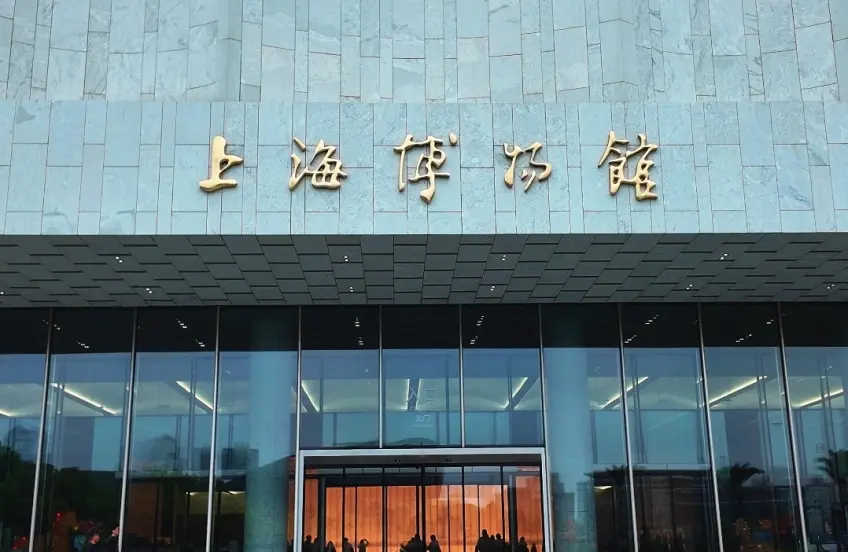
Indoor backups: on rainy or windy days, visit the Shanghai Museum East Campus or People's Square Campus, the Natural History Museum, or the indoor observation decks of the Oriental Pearl Tower. The East Campus is in Pudong and can be combined with Lujiazui and the waterfront for a full-day itinerary.
November itinerary: time your leaf-peeping right
Days are short in November and attractions are spread out. Leaf-peeping is best in the morning light, so hailing rides and transferring between transit lines eats up the most time. If you want to see the plane trees on Wukang Road, the ginkgo trees at Yu Garden and the evening view of The Bund all in one day, booking a Shanghai private car to stop at each spot in order is far more reliable than catching cabs during rush hour. For a day trip from Shanghai to Tianping Mountain, a Shanghai to Suzhou private car lets you skip the weekend shuttle bus lines. To learn the stories behind the old garden villas and Yu Garden, hire a Shanghai private guide—they can switch to a museum route if the temperature drops or it starts raining. November is also peak season at Yu Garden, so book tickets ahead of the weekend.

Shanghai 1-day tour: Shanghai, Oriental Pearl Tower
Private day tour with Shanghai airport transfers: walk the 259-meter glass corridor on the second sphere of the Oriental Pearl Tower, visit the Former Residence of Soong Ching Ling, and explore Yu Garden. Ideal for layovers or short stays in Shanghai. Includes vehicle, guide and admission tickets. English-speaking and other foreign-language guides available on request.

Suzhou Dream 2 Days 1 Night: Lion Grove Garden + Shantang Street free time for food and strolling + Tianping Mountain + Canglang Pavilion + Lingering Garden
A 2-day, 1-night private tour with pickup at Suzhou Railway Station: Lion Grove Garden, Hanshan Temple, Shantang Street and Tianping Mountain on day one, then Canglang Pavilion and Lingering Garden on day two. Ideal for travelers who want to see several gardens. Includes transport, a guide, 1 night in an upscale or luxury hotel, and admission tickets. An English-speaking guide is available on request.

Dreamlike Jiangnan 6 days 5 nights: Hangzhou (West Lake + Xixi Wetland + Hu Xueyan's Former Residence) + Suzhou Zhouzhuang + Wuzhen East and West Scenic Zones, no shopping
A 6-day, 5-night private tour starting and ending in Shanghai: Wuzhen East and West Scenic Zones, Zhouzhuang, Humble Administrator's Garden and Shantang Street, a boat ride on West Lake and Hu Xueyan's Former Residence in Hangzhou, then Xixi Wetland, finishing with The Bund and Nanjing Road. Includes airport transfers, transport, guide, 5 nights' hotel and admission tickets. English-speaking guide available.
Packing by departure date
Departing in early November: 3–4 long-sleeve T-shirts, 1 thin sweater or hoodie, 1 trench coat or denim jacket, 2 pairs of long pants, 1 pair of sneakers, plus a folding umbrella.
Departing in mid-November: Build on the list above, swap the thin jacket for a heavier trench coat or jacket, and add one more sweater and a light scarf.
Departing in late November: 2 sweaters, 1 lightweight down jacket, 1 set of thermal underwear, 1 pair of waterproof shoes, plus a scarf and gloves. If you're heading to Tianping Mountain or a water town, pack an extra pair of thick socks.
FAQs
Do I need a down jacket for Shanghai in November?
It depends on your dates. In early and mid-November, a heavier trench coat or jacket with a sweater is enough. In late November, especially toward the end of the month, bring a lightweight down jacket—when a cold snap hits, mornings and evenings drop to just a few degrees.
When are Shanghai's plane trees and ginkgo trees at their best in November?
In the city center, peak color usually runs from late November to early December, with leaves starting to turn yellow in mid-November. Timing varies each year, so keep an eye on the "leaves not swept" street list released by the Greening and City Appearance Bureau in late November, along with recent leaf-viewing updates.
Does it rain often in Shanghai in November?
Not much. The 30-year average is about 9 rainy days and 61 mm per month, mostly a day or two of light rain as cold fronts pass through, followed by stretches of clear skies. A folding umbrella is all you need.
Is it cold at Shanghai Disneyland in November?
Daytime temperatures are usually in the teens (°C), so waiting in line isn't too uncomfortable. But it gets windy during the evening fireworks, and temperatures can drop below 10°C—colder still at the end of the month. Bring a hat, jacket, and a change of clothes for kids, and check the forecast before entering the park.
Where should I go from Shanghai to see autumn leaves in November?
The closest spot is Tianping Mountain in Suzhou. Peak season in past years has been mid-November to early December. Weekends get crowded, so weekday mornings are best. Within the city, the main attraction is the yellow foliage of plane trees and ginkgos.