
Tianping Mountain lies west of Suzhou's old town and north of Mudu Ancient Town. The most common route for independent travel is taking Metro Line 1 to Mudu Station, then transferring to a bus or taxi. On weekends and holidays during maple season, the attraction runs a Red Maple Shuttle from the metro station and outer parking lots; drivers must park in the outer lots first and transfer. Crowds are heavy during maple season, so arriving early is the most important tip: in 2025, the attraction opens at 7:00 AM during maple season. If you're traveling with seniors or kids, or making a day trip from Shanghai, booking a private car or taking the high-speed train with door-to-door pickup is the most hassle-free option.
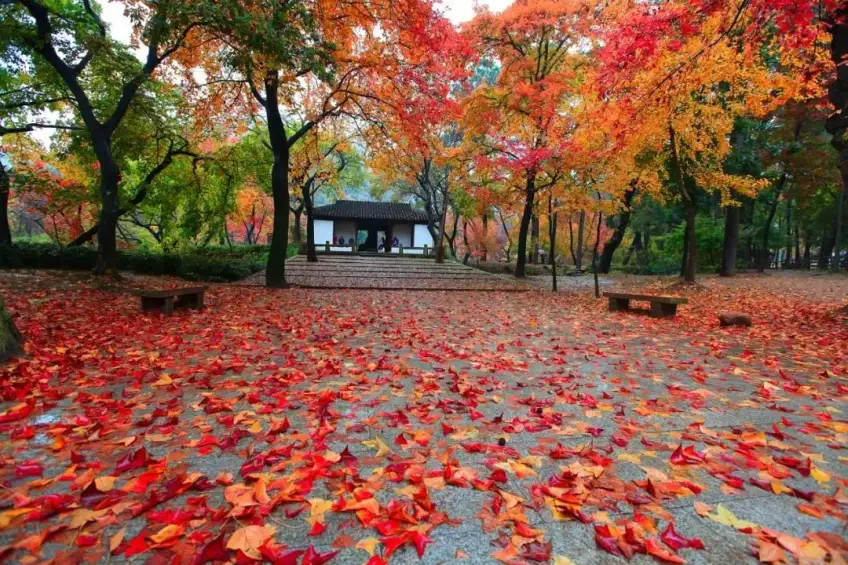
Where is Tianping Mountain: A bit far from the old town—don't group it with the gardens
Tianping Mountain is west of Suzhou's old town, near Mudu Ancient Town. It's part of the mountainous scenic area in western Suzhou, not in the same direction as the Humble Administrator's Garden and Pingjiang Road in the northeast. Many people plan "gardens in the morning, Tianping Mountain in the afternoon," only to waste time on the road. A better plan is to combine Tianping Mountain with other western attractions like Mudu Ancient Town and Lingyan Mountain on the same day.
Tianping Mountain is famous for two things: its red maples and Fan Zhongyan. The ancient maple forest on the mountain consists of sweetgum trees brought from Fujian Province during the Ming Dynasty by Fan Yunlin, the 17th-generation descendant of Fan Zhongyan—they're now about 400 years old. At the foot of the mountain stands a memorial temple for Fan Zhongyan and Gaoyi Garden. Every late autumn during maple season, Tianping Mountain sees its busiest crowds and heaviest traffic of the year.
Fan Zhongyan was a renowned official of the Northern Song Dynasty. The famous line "Be the first to worry about the world's troubles, and the last to enjoy its pleasures" comes from his "Memorial to Yueyang Tower." Tianping Mountain is the site of the Fan family's ancestral cemetery, and the Fan Gong Temple and Xianyou Houle Archway at its base are both connected to him. So beyond viewing maple leaves, Tianping Mountain is also a great place to explore Suzhou's cultural heritage—and if you bring kids, it's a perfect chance to share this famous quote.
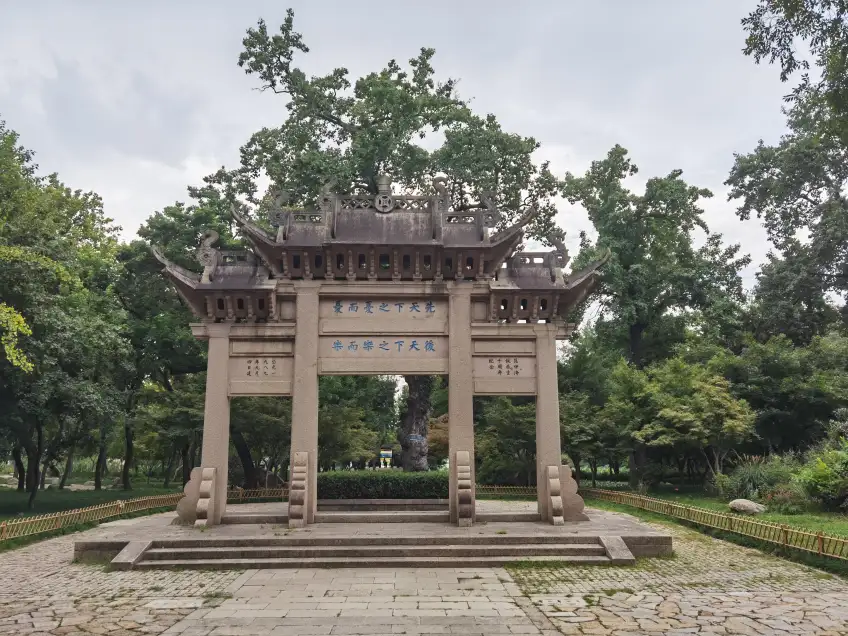
For tickets, the attraction page currently lists ¥30 (including Tianyun Temple). Discount policies and the latest prices are subject to official announcements from the attraction. It usually opens from 8:00–16:30 as shown on the attraction page, but hours often change during red maple season, so be sure to check that year's notice before you go.
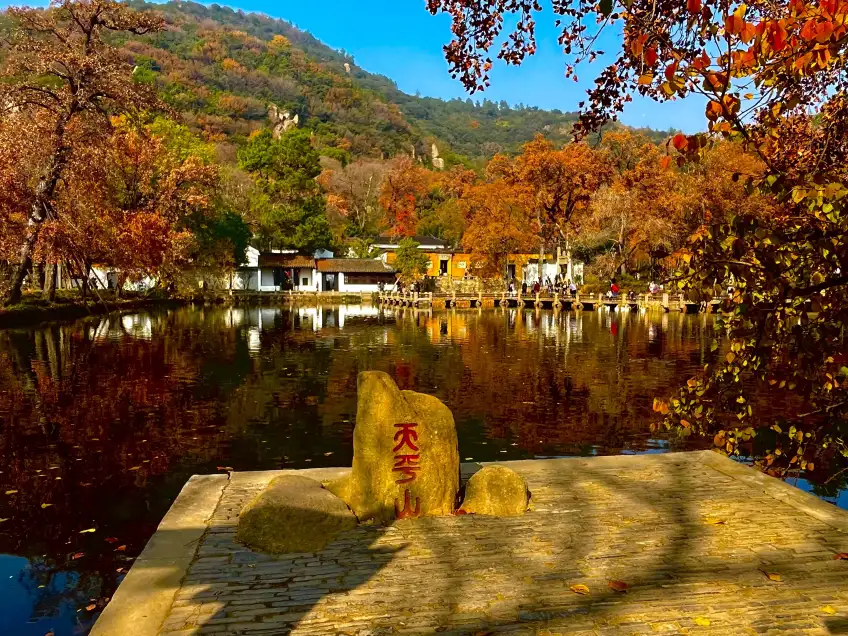
How to get there normally: metro plus bus or taxi
Outside of red maple season, getting to Tianping Mountain is easy. By metro, take Suzhou Metro Line 1 to Mudu Station, then transfer to a bus or take a taxi to Tianping Mountain. Mudu Station is still some distance from the attraction, and bus routes change occasionally, so it's safest to check real-time routes on a map app before you go. A taxi takes about ten minutes.
From Suzhou Railway Station or Suzhou North Railway Station: Suzhou Railway Station is north of the old town. Take Metro Line 2 to Guangji Nanlu Station and transfer to Line 1 to Mudu. From Suzhou North Railway Station, take Line 2 into the city first and then transfer, which takes longer. If transferring with luggage is inconvenient, taking a taxi or booking a station pickup is much easier.
Whether to take a taxi or a bus depends mainly on your group size and schedule. For one or two people who aren't in a hurry, the bus is cheapest. For three or four people, the per-person cost of a taxi is about the same as the bus, but you save time waiting and walking. The taxi ride from Mudu Station to Tianping Mountain isn't long, but traffic controls are often in place near the attraction on weekends during red maple season, so taxis may not be able to drop you right at the entrance.
From Shanghai: Take a high-speed train to Suzhou Railway Station or Suzhou North Railway Station, then transfer as described above. The whole one-way trip takes over two hours. Booking a private car from Shanghai gives you door-to-door service, taking 1.5 to 2 hours under normal traffic conditions. See Shanghai to Suzhou private car for details.
If you're coming from Nanjing or Hangzhou, take a high-speed train to Suzhou Station first, then transfer to the metro or take a taxi. Note that some trains from Nanjing stop at Suzhou North Station, so check the station when booking your ticket.
Driving: On regular days, you can navigate directly to the scenic area parking lot. However, traffic controls are usually in place on weekends during red maple season, so you'll need to park in an outer lot and transfer. More on that below.
Getting there during red maple season: shuttle lines, outer parking lots and opening hours
Red maple season is when transportation to Tianping Mountain is most strained. Taking 2025 as an example, the scenic area and transport authorities made several arrangements. Previous years were broadly similar, but always check the official announcements for the current year:
Early opening: From November 1 to December 7, 2025, the scenic area opened daily at 7:00 and closed at 17:00, encouraging visitors to arrive early and avoid peak crowds. From December 8, opening time returned to 8:00.
Red maple shuttle lines: Starting November 15, four red maple shuttle lines operate on weekends and holidays. Line 1 connects Wangjia Village P6 Parking Lot with the scenic area's P1 Parking Lot and links to Mudu Metro Station—take Metro Line 1 to Mudu Station Exit 3, walk about 200 meters to P6 Parking Lot, and transfer to Red Maple Shuttle Line 1 straight to the scenic area. Lines 1, 2 and 3 depart from their respective starting parking lots between 8:30 and 16:30, with return trips from the scenic area's P1 Parking Lot between 9:00 and 17:00; Line 4 runs in a loop from 8:30 to 17:00.
Outer parking: Parking lots near the scenic area fill up fast on weekends during red maple season. Drivers should follow directions to park in outer lots and take a shuttle into the scenic area. Since the earliest shuttles leave at 8:30, if you want to catch the 7:00 opening, either drive there even earlier or book a ride in advance to drop you right at the entrance.
Which of the four shuttle lines should you take? If you arrive by metro, look for Line 1 connecting to Mudu Station. If you drive, park in whichever outer lot the traffic police or scenic area staff direct you to, and board the shuttle departing from that lot. On your return, board at Parking Lot P1 inside the scenic area and check the route number on the front of the bus so you don't end up at a different lot. Shuttle fares and exact stops are subject to the current year's announcements.

Practical tips for red maple season
First, choose a weekday if possible. On weekends and holidays during red maple season, Tianping Mountain draws huge crowds, meaning long lines to enter and exit the scenic area and to board the shuttles. Weekdays are far less crowded and traffic flows smoothly. Second, arrive early. The soft morning light is best for photographing the red maples, and there are fewer people; crowds pick up noticeably after 9:00 AM. Third, head back early. Between 3:00 and 4:00 PM is peak departure time, with lines for both shuttles and taxis. If you're traveling with seniors or children, start heading out a bit earlier.
The red maples usually reach peak color from mid-November to early December, though the exact timing varies each year depending on temperatures. Check the leaf-color updates posted by the scenic area before you go. Even before the leaves turn fully red, the mix of colors creates beautiful layers, so you don't have to wait for peak red.
Fourth, rainy days work too. Light rain means far fewer visitors, and wet red leaves appear deeper in color, giving photos a special mood. Just avoid climbing the mountain since the stone steps get slippery—stick to viewing the maples at the foot of the hill. Fifth, don't overpack your itinerary. Transportation is unpredictable during red maple season, so plan just one or two nearby attractions alongside Tianping Mountain that day instead of rushing off to the classical gardens in the old town.
At the scenic area: getting from the parking lot to the ancient maple forest
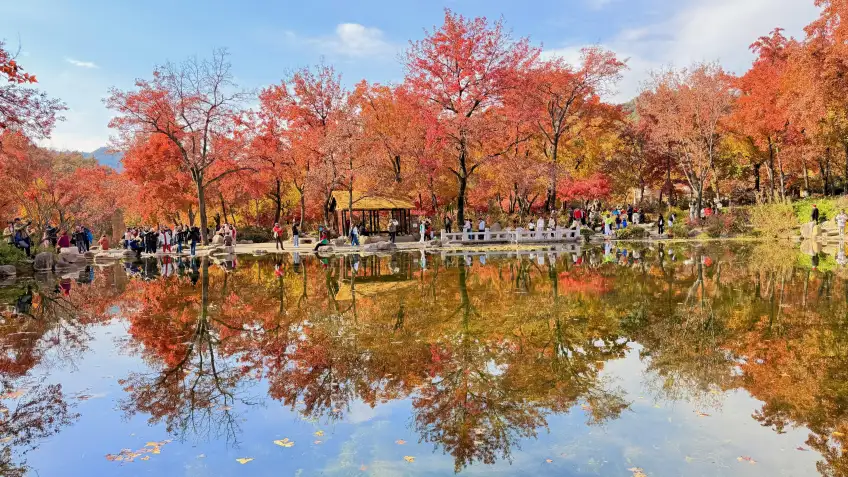
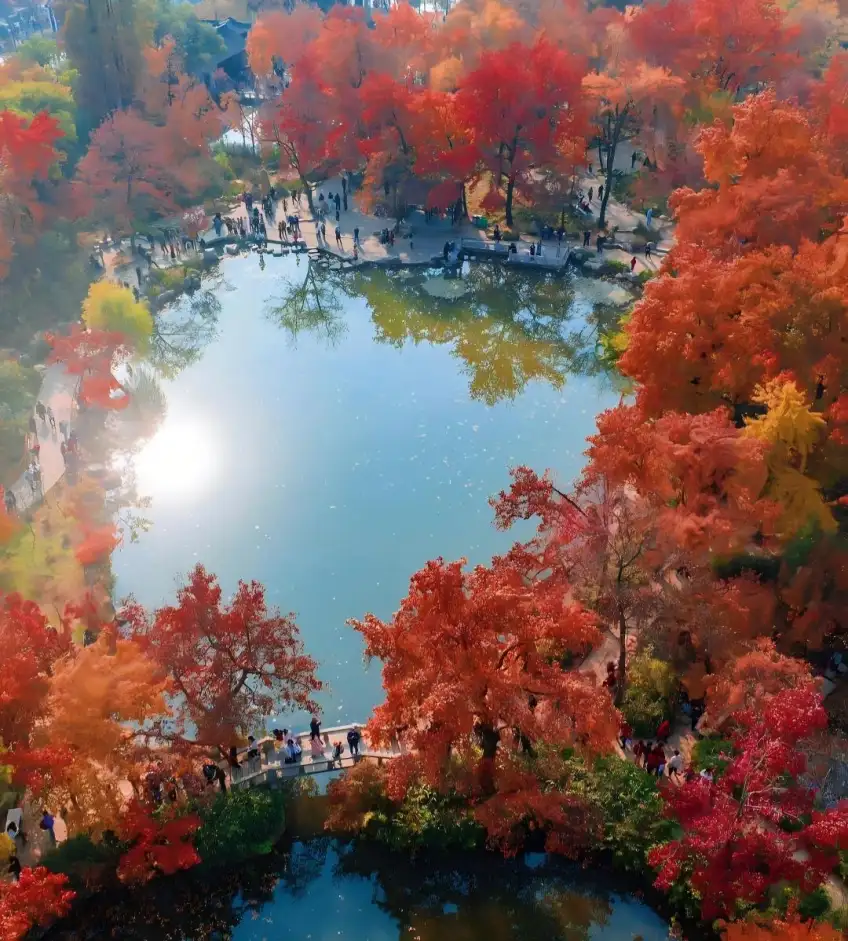
Whether you take the shuttle bus or drive, once inside the scenic area, the core maple-viewing zone is at the foot of the mountain: Guye Maple Forest, Shijing Pond, Gaoyi Garden and Fan Gong Temple are all down here. The paths are mostly flat or gently sloping, so you can see everything in an hour or two at a leisurely pace—no climbing required. Many people think you have to reach the summit when visiting Tianping Mountain, but the densest red maples are actually right at the base.
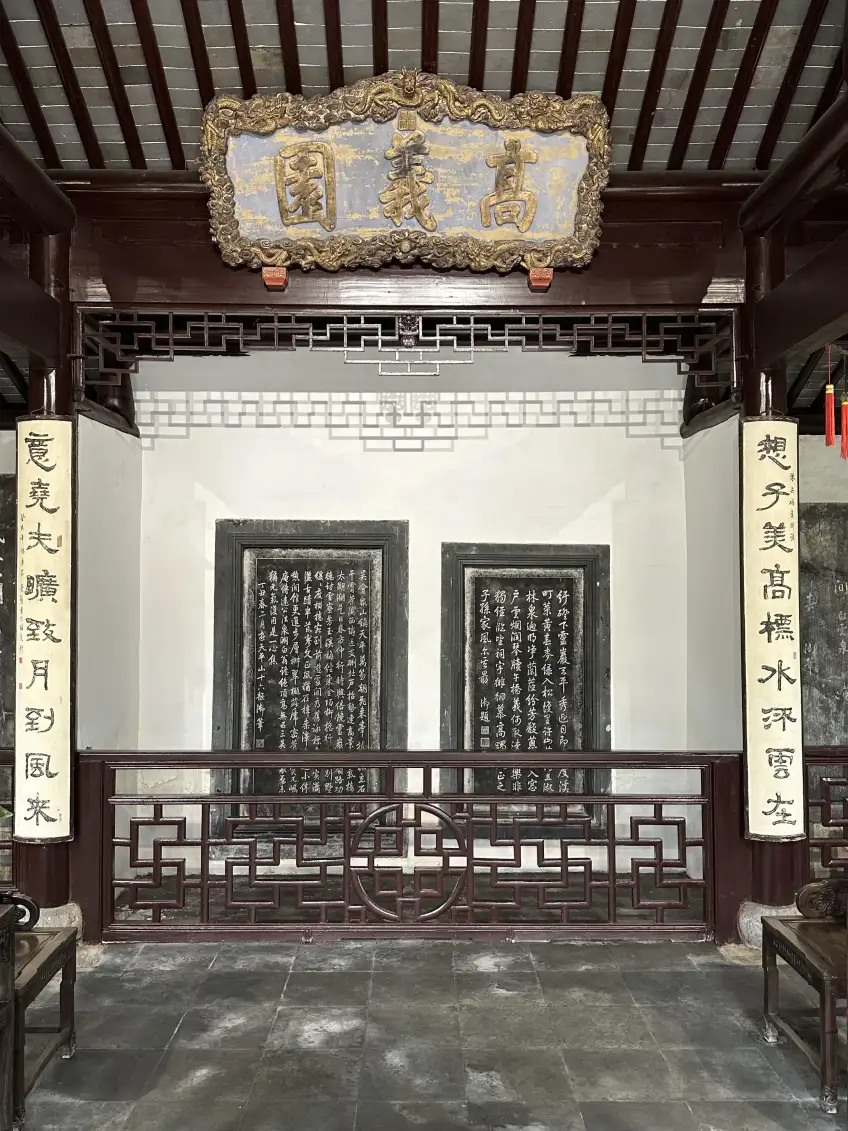
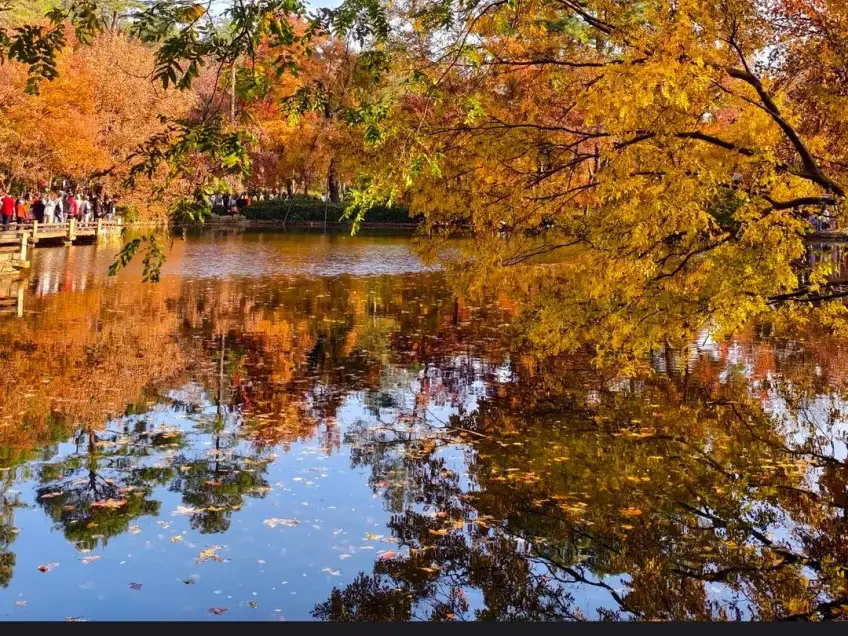
There are several spots worth lingering at the foot of the mountain: Guye Maple Forest has the highest concentration of red maples, with centuries-old sweetgum trees so tall and thick their canopies merge overhead; Shijing Pond is the classic spot for photographing maple reflections; Gaoyi Garden was named by Emperor Qianlong during his southern tour to honor Fan Zhongyan for establishing a charitable estate to support his clan. These spots are just a few minutes' walk apart—follow the signs to link them up.
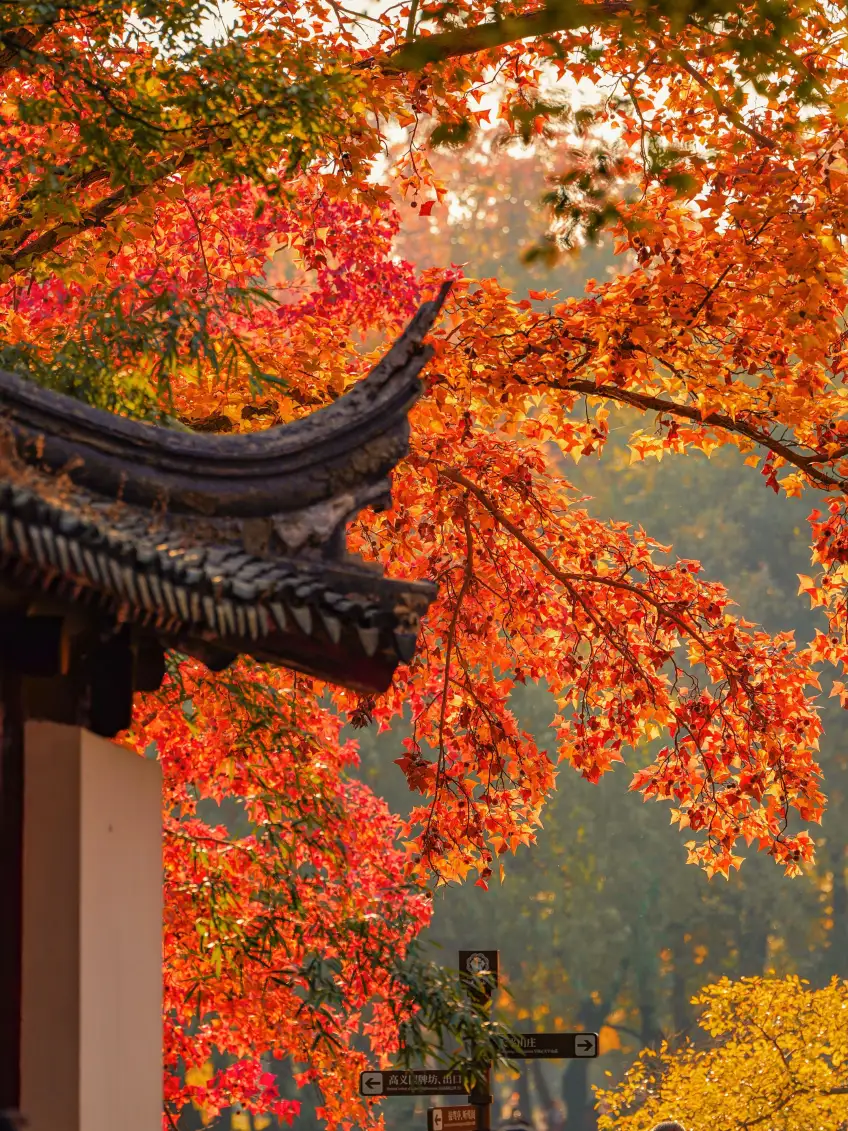
Next to Guye Maple Forest stands Tianping Villa, built by Fan Yunlin in 1615 (the 43rd year of the Wanli reign of the Ming Dynasty). It's one of the best surviving examples of a mountain garden in Suzhou. Many visitors focus only on photographing the leaves and walk right past the villa without going in, but its pavilions framed by ancient maples create the most Jiangnan-flavored scene on Tianping Mountain.
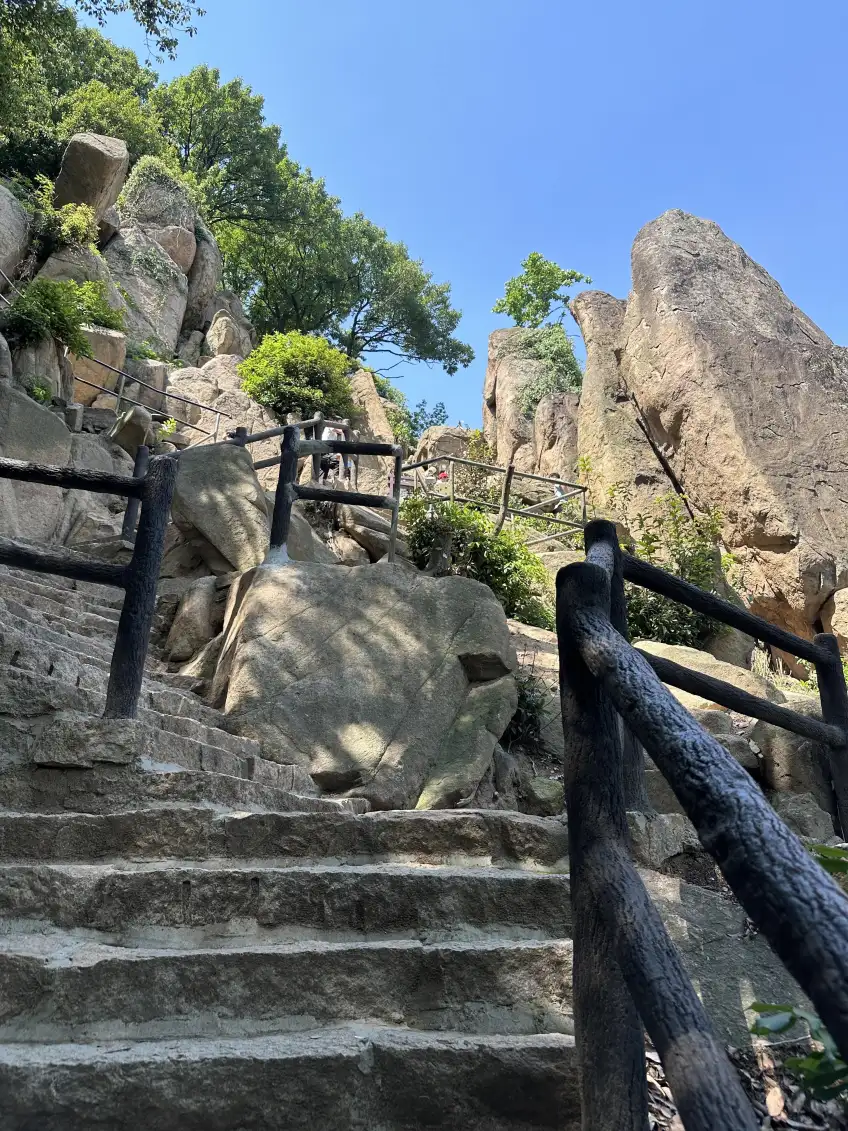
If you want to hike, head uphill from the base. Along the way you'll pass sights like Baiyun Spring and Yixiantian (One-Line Sky). The mountain isn't very high, but the stone steps are steep and some sections require squeezing through rock crevices—a fit young person needs about one to two hours for the round trip. If you're traveling with seniors or kids, enjoying the red maples at the base is plenty; hiking up to Baiyun Spring and turning back is a good compromise.
The hiking route leads first to Baiyun Spring, said to have been rated "the finest water in Wuzhong" by Lu Yu, the Sage of Tea—it's a nice place to rest. Continuing upward, you pass through Yixiantian, a rock crevice so narrow only one person can squeeze through at a time. From the summit, you can look out over the mountains and waters west of Suzhou. The stone steps are uneven, so wear shoes with good grip.
The scenic area has pavilions and teahouses where you can rest. During red maple season it gets crowded and seats are hard to find, so bring some water and snacks and take a break wherever you find a good spot.
Nearby stops: how to combine Mudu Ancient Town and Lingyan Mountain
The attractions in western Suzhou, where Tianping Mountain is located, are close together and easy to fit into one day. The most popular combo is Tianping Mountain plus Mudu Ancient Town: arrive at Tianping Mountain early to see the red maples, leave before noon, spend the afternoon strolling the old streets and garden estates of Mudu Ancient Town, and head back downtown in the evening. Mudu is right near Mudu Station on Metro Line 1, so getting there is easy. It sits just south of Tianping Mountain, so going back and forth involves no detours.
Another option is Lingyan Mountain. It's also near Mudu, and Lingyanshan Temple sits on its summit. Legend has it that King Fuchai of Wu built the Guanwa Palace here for Xi Shi during the Spring and Autumn period. If you're fit, you can hike Lingyan Mountain in the morning and head to Tianping Mountain for the maples in the afternoon. But both spots get packed on weekends during red maple season, and climbing two mountains in one day is tiring—not recommended if you're traveling with older family members.
If you're doing a day trip from Shanghai or Nanjing, stick to just Tianping Mountain and Mudu and leave plenty of time for the return journey. For a more relaxed multi-day Suzhou itinerary, spend day one exploring the gardens in the old city, day two in the western hills, and day three visiting a water town like Zhouzhuang.
Getting there: metro shuttle, private car, or station pickup?
Metro plus shuttle bus: If you're traveling light with one or two people and have a flexible schedule, take Metro Line 1 to Mudu Station and transfer to the shuttle bus or a taxi. This is the cheapest option, best for early risers who don't mind waiting in line.
Private car within Suzhou: If you're traveling with seniors or kids, as a family, or want to combine Tianping Mountain with Mudu Ancient Town and Lingyan Mountain in one day, a private car is the most hassle-free choice. The driver picks you up and drops you off at agreed locations, so you don't have to hunt for parking lots or shuttle stops. See How to book a private car in Suzhou for details.
High-speed train pickup plus private car: If you're taking the high-speed train from Shanghai or Nanjing to Suzhou for just one day, you can arrange a pickup at Suzhou Railway Station or Suzhou North Railway Station, head straight to Tianping Mountain, and get dropped back at the station afterward—saving two or three transfers along the way.
Let's do the math: traveling independently from Shanghai to Tianping Mountain by high-speed train, metro, and shuttle bus often takes 2.5 to 3 hours one way, and even longer during red maple season when lines are long. A private car goes door-to-door in about 1.5 to 2 hours, with no waiting in line for the ride back. The more people in your group—and the more seniors and kids you bring—the bigger the advantage of a private car.
Add a guide: Red maples aren't the only highlight at Tianping Mountain. Hearing the stories of Fan Zhongyan and the Fan family, plus the history of Gaoyi Garden and the ancient maple trees, makes a huge difference compared to exploring on your own. See How to hire a guide in Suzhou; if you'd like help planning your entire multi-day Suzhou itinerary, see Suzhou custom tours.
Suzhou dream 2 days 1 night: Suzhou, Canglang Pavilion
A 2-day, 1-night private tour with pickup at Suzhou Railway Station: Lion Grove Garden, Hanshan Temple, Shantang Street and Tianping Mountain on day one, then Canglang Pavilion and Lingering Garden on day two. Ideal for travelers who want to see several gardens. Includes transport, a guide, 1 night at an upscale or luxury hotel, and admission tickets. An English-speaking guide is available on request.
For tickets and opening hours, see the Tianping Mountain scenic area page; for the best viewing spots and stories behind the ancient maples, check out our Tianping Mountain maple viewing travel guide.
FAQs
How do I get to Tianping Mountain by metro?
Take Suzhou Metro Line 1 to Mudu Station, then transfer to a bus or take a taxi after exiting. On weekends and public holidays during the red maple season, you can exit via Exit 3 of Mudu Station, walk about 200 meters to the Wangjiacun P6 parking lot, and transfer to Red Maple Express Line 1 directly to the scenic area. Please refer to the official announcements for that year.
What time does Tianping Mountain open during the red maple season?
During the 2025 red maple season (November 1 to December 7), the park opens at 7:00 and closes at 17:00 daily. Starting December 8, opening hours revert to 8:00. Schedules may change each year, so please refer to the official announcements for that year.
Is it easy to park if I drive to Tianping Mountain?
On regular days, you can park in the scenic area's parking lot. During weekends in the red maple season, traffic is heavy, and you'll usually need to park in an outer lot and transfer to the express shuttle. For a hassle-free trip, book a private car—the driver will pick you up and drop you off at designated spots.
When are the autumn leaves at Tianping Mountain at their reddest?
Generally from mid-November to early December, though the exact timing varies each year depending on temperatures. Before your trip, check the leaf color updates posted by the scenic area. Weekday mornings are the least crowded time to visit.
How much is the entrance ticket for Tianping Mountain?
The ticket currently listed on the attraction page is ¥30 (including Tianyun Temple). Please refer to the attraction's official announcements for discount policies and the latest prices.