
Google Maps opens in mainland China, but it isn't very useful. On local networks, Google services usually can't connect. Even if you get online via roaming, the place data is outdated, bus and subway transfers are incomplete, and the blue location dot often drifts away from the actual road. As of November 2026, the smoothest navigation apps in China are Amap (available in English and other languages) and Apple Maps (whose mainland map data is provided by Amap). The location and ride-hailing features in WeChat and Alipay also rely on domestic maps.
This article answers the questions most often searched by readers in Taiwan, Hong Kong and overseas: Can you use Google Maps in mainland China? Which maps should you use in China? How do you use them to ride the subway, find exits, hail a car and locate hotels? All examples are set in Shanghai, Hangzhou and Nanjing, verified on November 10, 2026.
Why Google Maps doesn't work well in mainland China
First, the network. When using a local SIM card or hotel Wi-Fi in mainland China, Google services are generally inaccessible—the map won't load and searches return nothing. If you roam with your home number or use a data eSIM from an overseas carrier, your traffic routes through an overseas gateway and Google Maps will open. That's why many people think it "works."
Second, the data. Even when it loads, place information on Google Maps in mainland China is updated slowly. Newly opened malls, restaurants and subway entrances are often missing. Bus and subway transfer options are incomplete, there's no real-time traffic or arrival info, and you can't hail a ride directly.
Third, coordinate offsets. By regulation, maps in mainland China use encrypted coordinates. Foreign map apps often show a mismatch between their road layers and your phone's satellite positioning, so the blue dot may appear in the next block or in a river. The narrower the lanes in old town areas, the easier it is to go wrong.
Our advice: keep Google Maps for checking your saved places and matching English names, but switch to a domestic map app for actual navigation, finding subway stations and hailing rides.

What map to use in China: three options
Amap: One of the most popular map apps in China. It launched an English version in January 2025, available on the App Store and Google Play. Attractions, restaurants, and hotels display English names and descriptions, while features like lane-level navigation and traffic light countdown timers are retained. In July 2025, 14 more languages were added, including Spanish, French, German, Japanese, Korean, Thai, Malay, Indonesian, and Vietnamese. The English version also integrates ride-hailing, so you can book a car directly and see estimated fares and driver details. The Chinese version has the most complete features, so if you read Chinese, use that one.
Apple Maps: Built into every iPhone, with an interface available in English or Traditional Chinese. Apple Maps uses Amap's data for mainland China, so there's no coordinate offset, and bus and subway routes work well. For readers from Taiwan and Hong Kong, there's no need to install another app—just open it and go. It's the easiest option.
Baidu Maps and Tencent Maps: Baidu Maps is primarily in Chinese but has rich location data, making it ideal for readers who know Chinese and want to check user reviews. Location sharing and sending your pin in WeChat use Tencent Maps, which makes it easy to share your location with travel companions, family members, or drivers.
We recommend installing Amap (English or Chinese version) alongside your phone's built-in Apple Maps to cross-check routes. When meeting someone, just share your location in WeChat. If the two maps suggest different routes, follow the one with shorter walking segments and fewer transfers. Once you reach an attraction entrance, rely on the on-site signs instead, because the entrances, ticket offices, and exits of large attractions are often in different locations.

Three things to do at home before you leave
Save your destinations in Chinese. On Chinese map apps, searching in Chinese is the most accurate. Save or screenshot the Chinese names and addresses of your hotels, attractions, and restaurants in advance—such as "The Bund," "Yu Garden," "Lingyin Temple," and "Confucius Temple"—so you can just tap to navigate when you arrive. English names and pinyin sometimes work, but they can also lead you to a different place with the same name.
Allow location access for the app. When you open it for the first time, allow location access "While Using the App." Otherwise, navigation and ride-hailing pickup points will be inaccurate.
Try it out at home. Use Amap or Apple Maps to search for directions from Shanghai Hongqiao Railway Station to The Bund. Get familiar with how subway transfers, walking segments, and exit signs are displayed so you won't feel lost on the ground.
Understanding Chinese addresses
Addresses in mainland China are written from largest to smallest: province, city, district, then street name and building number, such as "No. XX, XX Road, Huangpu District, Shanghai." In street names, "Lu" (road), "Jie" (street), and "Dadao" (avenue) are the most common. Building numbers usually run odd on one side and even on the other. On very long roads, a difference of a few hundred numbers might mean two or three subway stops apart, so don't assume you're just a short walk away because the street name matches.
Shanghai addresses often include the word "nong," which refers to a lane or alley branching off a main road. For example, Tianzifang is located in a nong off Taikang Road. When navigating to an address like "X Road, Nong Y," first find the building number on the main road, then look for the lane entrance. Inside the lane, there are often sub-lanes and additional building numbers. The old town areas of Hangzhou and Nanjing have similar alleys and lanes, so once you reach the entrance, slow down and check the door numbers.
Large malls, office buildings, and hotels often have several entrances, and the pin on the map might be on the opposite side. When meeting someone or calling a car, specify exactly which gate or exit—for example, "North Gate of XX Plaza" or "Main Entrance of XX Hotel"—which is much more reliable than just sending an address.
Common Chinese words on maps
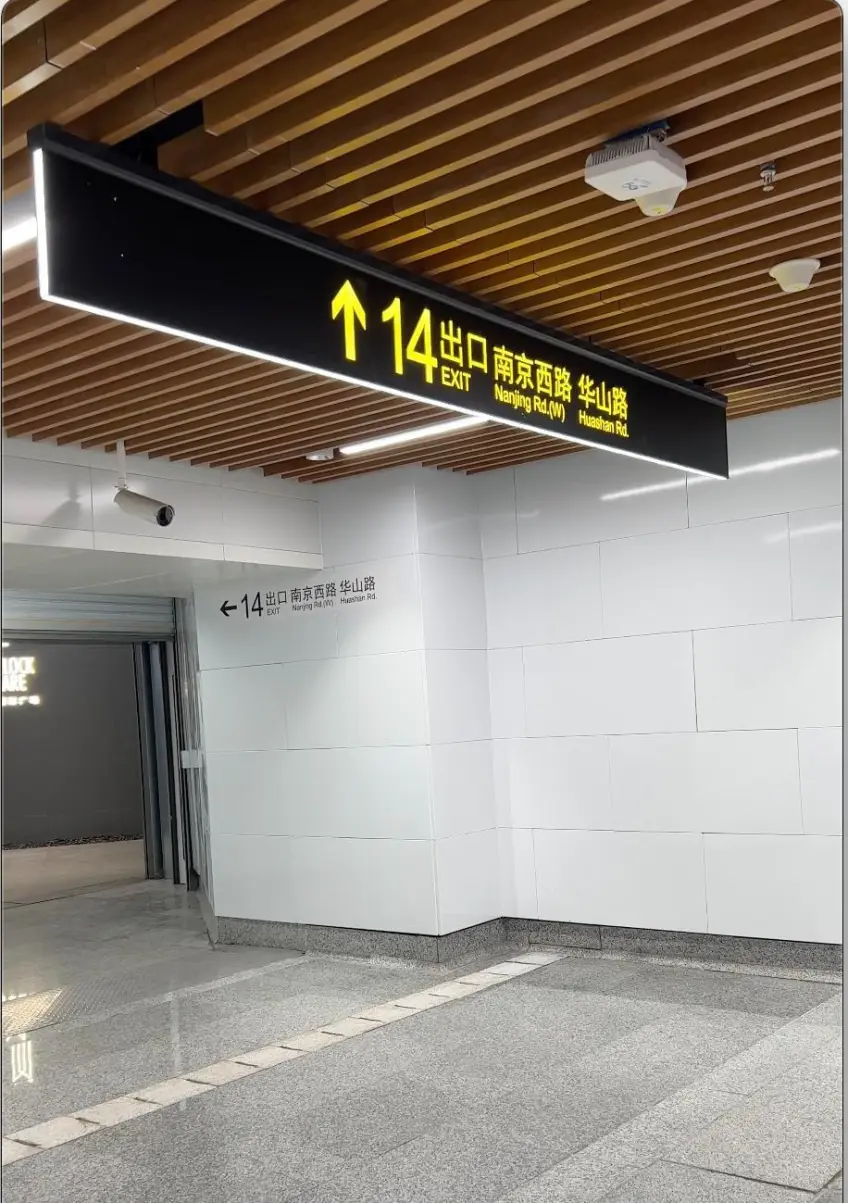
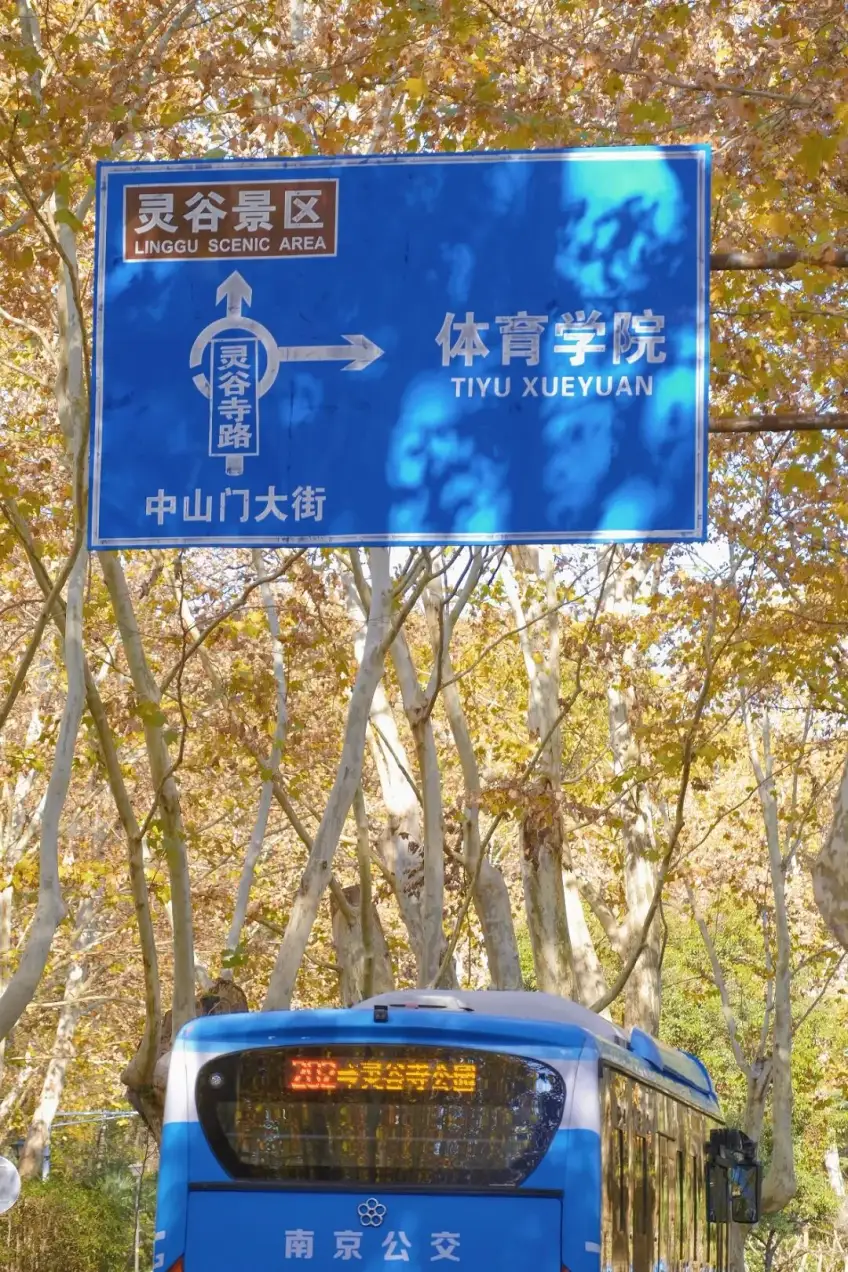
When using a Chinese map or reading station signs, knowing just a few words is enough: "出口" (exit) marks a subway exit, followed by a number; "换乘" (transfer) means switching lines at the same station; "步行" (walk) shows walking distance; "公交" (bus) means public bus; "上车点" (pickup point) is the agreed spot when hailing a ride; "打车" (hail a ride) means calling a taxi or ride-hailing car; "景区" (scenic area) refers to the attraction grounds; and "游客中心" (visitor center) is where you can ask for directions or store luggage. On street signs, "east, south, west, north" are read together with the road name. For example, "East Nanjing Road" and "West Nanjing Road" are the eastern and western sections of the same road, divided around People's Square.
Using maps on the subway: watch the exits, not just the lines
Subway signs in Shanghai, Hangzhou, and Nanjing are in both Chinese and English, and lines are distinguished by numbers and colors. Route suggestions on maps usually tell you: which station to board at, which line to take, where to transfer, and which exit to use. Most people follow the first three steps, but the exit is the easiest to overlook. Major stations in Shanghai can have over a dozen exits. People's Square Station is an interchange for Lines 1, 2, and 8, and walking underground between exits can take up to ten minutes. If you take the wrong exit and have to come back up to find your way, you'll often end up taking a big detour.
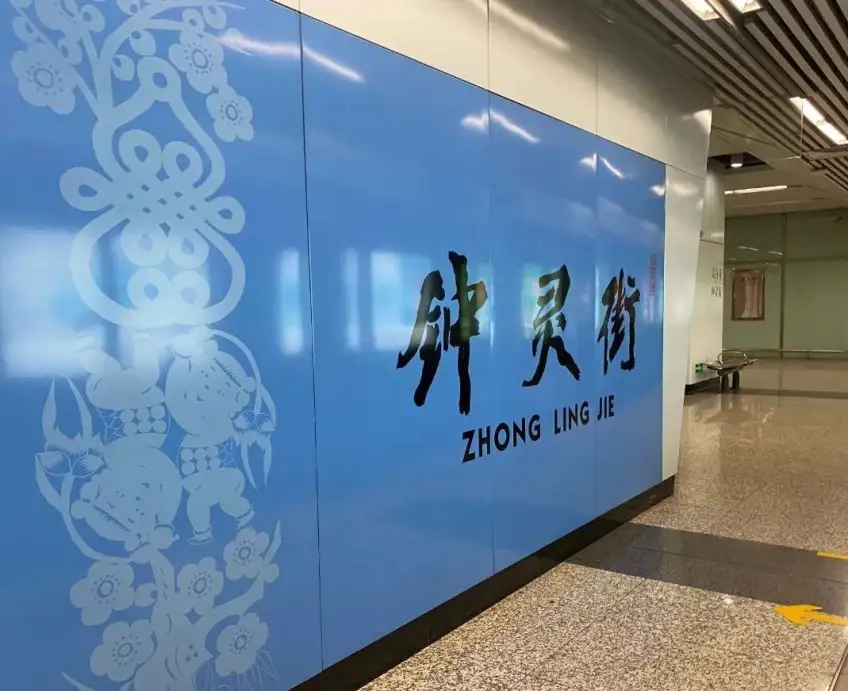
A few common examples: for Nanjing Road Pedestrian Street, take Line 2 or 10 to East Nanjing Road Station, or go to People's Square Station and use the exit toward West Nanjing Road and the pedestrian street. In Hangzhou, to reach the lakeside of West Lake, get off at Longxiangqiao Station on Line 1 and walk a few minutes to the water; the station also has signs pointing to buses for Lingyin. In Nanjing, heading to Sun Yat-sen Mausoleum and the Zhongshan area, take Line 2 to Muxuyuan Station or Zhonglingjie Station, then transfer to the scenic area shuttle. Follow the map's suggestions and the signs inside the station for the exact exit.
You don't need a map to pay at the gates: in Shanghai, you can tap a Visa, Mastercard or other bank card directly at the turnstile; in Hangzhou and Nanjing, you can claim a subway QR code in the "Transport" section of Alipay. For payment methods, see How to use Alipay and WeChat Pay without a Chinese bank card.

Walking navigation: pay extra attention in old town areas
On major roads like The Bund and Lujiazui, walking navigation is very accurate. But in old neighborhoods like Yu Garden Old Street, Pingjiang Road in Suzhou, or Laomendong in Nanjing, the alleys are narrow and buildings stand close together, which blocks satellite signals and makes your blue dot jump around. In these areas, rely on street signs and shop names, and use the map only for general direction.
Be extra careful when crossing the street: Chinese cities have a lot of electric bikes that move fast and make little noise. When the map tells you to "go straight through" an intersection, check the traffic lights and look both ways first. If you're traveling with seniors or kids, using a pedestrian overpass or underpass is safer.


A complete example: from Shanghai Hongqiao Station to a hotel near The Bund
Say you arrive at Shanghai Hongqiao Station by high-speed train and your hotel is near The Bund. Open your map before leaving the station, enter the hotel's Chinese name as the destination, and select "Public transit." The map usually offers two options: take Metro Line 2 or Line 10 toward downtown, get off around East Nanjing Road Station, then walk to your hotel. Pay attention to the exit number and walking distance listed in each option—if you have a lot of luggage, pick the one with the shorter walk and fewer transfers.
Follow the "Metro" signs inside the station to the subway. In Shanghai, you can tap your bank card directly at the gate to enter. Once on board, watch the screens and listen to the announcements—stops are called out in both Chinese and English. When you arrive, leave through the exit number shown on the map, and it will switch to walking navigation. If you're hauling two large suitcases or traveling with seniors, it may be easier to simply grab a taxi or ride-hailing car at the pickup area in Hongqiao Station—the map will also tell you which level the pickup point is on.
Using maps to book rides and find pickup points
You can book a ride-hailing car directly through the Amap (Gaode) English app, Alipay, or WeChat. When you place an order, the map will suggest a pickup point. Airports, train stations, and large malls usually have designated ride-hailing pickup zones, and the map will direct you to a specific parking lot or exit. Follow the instructions instead of hailing a car from the roadside. For full details on booking a ride, see How to get a taxi in China.
When taking a taxi, showing the driver your destination's Chinese name and address is far more reliable than saying it in English. You can also tap the destination on the map and hand your phone to the driver.
What to do without signal or battery
Maps need both data and battery. Always carry a power bank, and save the day's destinations in your map app before heading out. Subway stations, malls, and most coffee shops offer Wi-Fi for quick route checks. If you get truly lost, head to a subway station or a large hotel, where you'll find bilingual signs and service desks. You can also call the city's 12345 government hotline for help; Shanghai's 12345 offers English service.
Your connectivity plan determines which maps you can use: with a mainland SIM card, Google Maps won't load, but with roaming or an overseas eSIM, both work. For a comparison of options, see China travel SIM cards and eSIMs.

Spend less time on maps by letting someone else navigate
Attractions in East China cities are often spread across different districts, requiring several subway transfers in a single day. If you're traveling with seniors or kids, or have limited time, plan your daily route before heading out. For Shanghai's attraction layout, start with the Shanghai tourist map. If you'd rather not hunt for exits in subway stations or pickup points at intersections, Shanghai private car, Hangzhou private car and Nanjing private car services can all be booked by the day. Drivers know the parking spots, so you'll step out right at the entrance.


Oriental Pearl Tower and Disneyland 3-day, 2-night Shanghai tour (Nanjing Road, The Bund, Yu Garden Bazaar, City God Temple, Disneyland, Oriental Pearl Tower), no shopping stops
A 3-day, 2-night private tour with airport transfers in Shanghai: Nanjing Road, The Bund and Yu Garden on day one, a full day at Shanghai Disneyland on day two with an evening fireworks show (canceled in rain or if the show is suspended), and the Oriental Pearl Tower on the final day. Includes transport, guide, two nights' hotel and admission tickets. English-speaking guide available.

Best of Hangzhou 3 days 2 nights: West Lake north and south routes, Leifeng Pagoda, Dream Town, Xixi Wetland, Yuewang Temple guided tour and Hu Xueyan's Former Residence cultural discovery leisure tour
A 3-day, 2-night private tour exploring just one city, Hangzhou: Yuewang Temple and a boat ride on West Lake, Lingyin Temple and Feilai Peak, Dream Town and Xixi Wetland, plus Hu Xueyan's Former Residence and a stroll along Hefang Street. Airport transfers included, with vehicle, guide, hotel and admission tickets. An English-speaking guide is available upon request.

Jinling Dream 3-day 2-night tour: Nanjing and Niushou Mountain
Three days to explore Nanjing at a relaxed pace: Great Bao'en Temple and Sun Yat-sen Mausoleum, Niushou Mountain, Confucius Temple, Presidential Palace, Six Dynasties Museum and Laomendong, with the final half day saved for Nanjing Museum. This private tour includes airport transfers, vehicle, guide, 2 nights' hotel and admission tickets, with an English-speaking guide available.
Related preparation: What to prepare for your first trip to China, How foreigners can buy Chinese high-speed rail tickets; for city info, see Shanghai, Hangzhou and Nanjing.
FAQs
Does Google Maps work in China?
It usually won't load on mainland networks. It works over roaming or an overseas eSIM, but location data is outdated, transit options are incomplete, and positioning is often off. We don't recommend it as your main navigation app.
Which map app is best for navigating China?
Amap (available in English and other languages) and Apple Maps are the most convenient. Apple Maps uses Amap's data in mainland China, so iPhone users don't need to install another app. Use Amap if you need ride-hailing or more detailed location info.
Do map apps in mainland China have an English version?
Yes. Amap launched an English version in January 2025 and added 14 more languages in July; Apple Maps can display an English interface. Baidu Maps is primarily in Chinese.
Is Apple Maps accurate in mainland China?
Fairly accurate. Apple Maps uses data from Amap in mainland China, so its coordinates match local maps without the offset you see on Google Maps. You can also use it for bus and subway transfers.
I'm used to Google Maps in Taiwan and Hong Kong. Do I need to switch when visiting mainland China?
We recommend switching. If your phone's system language is set to Traditional Chinese, Apple Maps will display a Traditional Chinese interface, though place names follow mainland China's Simplified Chinese spelling. Searching with Traditional Chinese characters usually still works. The Chinese version of Amap uses a Simplified Chinese interface, but you can switch to the English version if you prefer.
Do I need to type in Chinese to navigate in China?
Searching by Chinese name gives the most accurate results. Before your trip, save the Chinese names and addresses of your hotel and attractions on your phone, then just copy and paste them when searching.