
As of November 2026, the easiest way for foreign visitors to get a ride in China is using the ride-hailing feature in Alipay or WeChat: open "Transport" or "Travel Services," enter your pickup point and destination, and you'll be matched with a ride-hailing car or taxi from platforms like DiDi. Payment is automatically charged to your linked overseas bank card when the trip ends. You can also download the DiDi app separately and register with an overseas phone number and bank card. Street-hailed taxis are everywhere too—you can scan a QR code or pay cash, and many taxis in Shanghai also accept overseas cards.

This guide is for readers from Taiwan, Hong Kong, and overseas who plan to hail their own rides in Shanghai, Hangzhou, and Nanjing: which ride-hailing apps are available in China, whether foreigners and overseas phone numbers can use DiDi, where to catch a ride at airports and train stations, how to pay, and how to avoid communication hassles. It's based on the 2026 edition of official inbound travel guidelines and public information from each platform, verified on November 10, 2026.
Common ways to get a ride in China
Ride-hailing in Alipay: Find "Ride-hailing" on the home screen or under "Transport," then enter your pickup address and destination to book. For travelers with an overseas card already linked, this is the easiest option—no extra app needed, and payment goes through Alipay automatically.
Ride-hailing in WeChat: Tap "Me" > "Services," then request a ride under "Travel Services" or "DiDi Ride." The process is similar to Alipay, and payment goes through WeChat Pay.
DiDi app: Official guidelines state that the DiDi app supports registration with overseas phone numbers and bank cards. Once registered, you can choose Express, Taxi, Premier, Luxe, and other services. The interface can be switched to English, making it ideal for frequent riders who want to track their trip history.
Amap English version: Since 2025, it has integrated an English ride-hailing service. When booking a ride, you can see the estimated fare, pickup point, and driver info. It's handy to navigate and book a ride at the same time.
Street taxis: Taxis are plentiful in big cities. If the "vacant" light on the roof is on, just wave one down. Fares are charged by the meter.
Uber, familiar to readers from Taiwan, doesn't work for hailing rides in mainland China; the ride-hailing apps commonly used by Hong Kong readers only cover Hong Kong. Once you're on the mainland, any of the options above will do. Our suggestion: use Alipay or WeChat as your primary option since payment is already linked, and keep the DiDi app as a backup. If you can't get a ride on one platform, try the other—it often works. Both methods usually connect you to the same pool of drivers and cars, with little difference in price.
Can I use DiDi with a foreign phone number?
Yes. You can register for DiDi with a foreign phone number as long as it can receive SMS verification codes in China, so enable international roaming before you leave, or use a dual-SIM phone to keep your original number. If you book through Alipay or WeChat, it uses the phone number you registered those apps with.
One thing to note when using a foreign number: if the driver can't find you, they'll call, and your foreign number might not receive the call, or you may not understand the driver's dialect. A better approach is to message them in the app's chat window after booking—many platforms support Chinese-English translation in chat. Choose a conspicuous pickup spot, such as the hotel's main entrance, a specific mall gate, or a subway exit, and write down the license plate number.
If you buy a local SIM card in China, you can also update your contact number in the app to a mainland number, making it easier for drivers to reach you. For tips on choosing a SIM card, see China travel SIM cards and eSIMs.

How to hail a ride step by step
Step 1: Confirm your pickup point. Once you open the ride-hailing feature, the app will auto-locate you and suggest nearby pickup points, usually shown as small dots or flags on the map. Don't just rely on your blue location dot—drivers often can't pull over along major roads, at intersections, or under pedestrian bridges. Pick one of the suggested points and walk there to wait.
Step 2: Enter your destination. Searching in Chinese is the most accurate, for example "The Bund," "Yu Garden," "West Lake lakeside," or "Confucius Temple." For hotels, enter the full Chinese name, then double-check the address after it appears—many chain hotels share the same name.
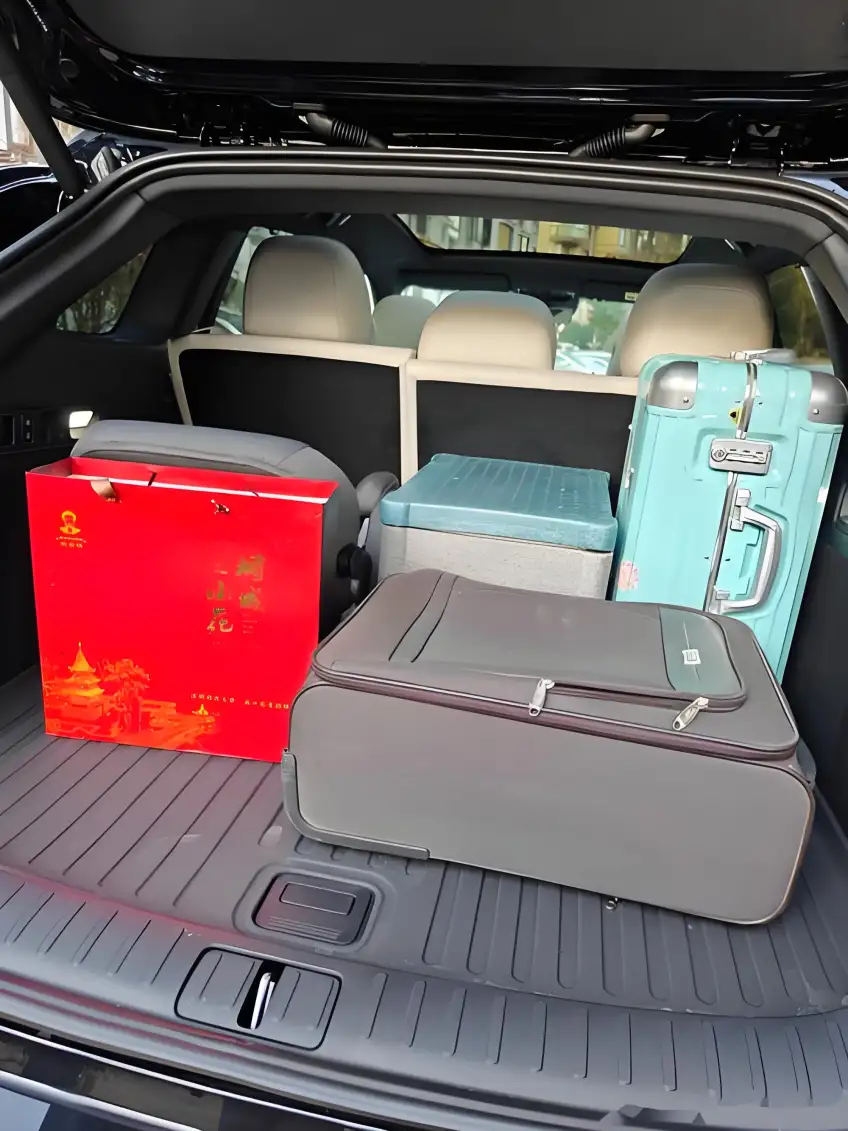
Step 3: Choose a vehicle type. Express rides are the cheapest; Premium and Luxe cars are roomier; taxis charge by meter. If you have more than two large suitcases or a group of five or six, choose a 6-seater or business vehicle, otherwise they won't fit in the trunk. You'll see an estimated fare before booking—go with what the app shows.
Step 4: Verify the car. After a driver accepts, the app displays the license plate, car model, color, and driver info. When the car arrives, check the plate before getting in. Once inside, the driver will usually ask for the last four digits of your phone number to confirm you're the right passenger.
Step 5: Arrive and pay. The trip ends when you arrive, and the fare is automatically deducted from your linked payment method. Tolls and parking fees are charged separately according to platform rules.

What to do if you can't get a ride or the driver can't find you
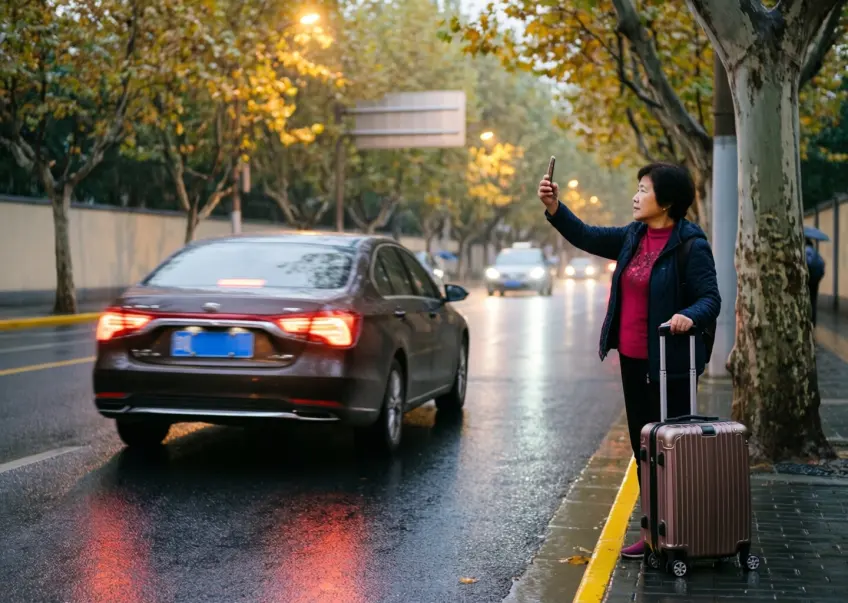
No one accepts your request: This often happens during morning and evening rush hours, on rainy days, or when crowds leave a scenic area. Try selecting multiple vehicle types at once (express, taxi, premium), or walk to a nearby intersection where cars can stop more easily and request again. If you still can't get a ride, head to the nearest subway or bus station—it's usually faster than waiting in place.
You can't understand the driver's call: Send a message in the app's chat window, or hand your phone to a nearby shop clerk or security guard to help explain. Agree on an obvious landmark, such as "the hotel entrance" or "subway Exit 3," which works better than describing what you're wearing.
Want to cancel after booking: Canceling shortly after a driver accepts is usually free. If you cancel later or after the driver has arrived, you may be charged a cancellation fee—check the platform's rules for details. If you selected the wrong pickup point, try changing it in the app instead of canceling and rebooking.
Catching an early flight or train: book in advance
Ride-hailing apps have a "schedule" feature that lets you book a ride for early the next morning. Enter your time, pickup point, and destination, and the platform will assign a driver ahead of time. Taxis are scarce on the streets late at night and early in the morning, so if you're catching a 7 or 8 AM flight or train, scheduling a ride is much safer than hailing one on the spot. Pudong Airport is far from downtown, so allow plenty of travel time.
Inter-city rides are also possible—for example, taking a car directly from downtown Shanghai to Suzhou or Hangzhou. However, the distance is long and involves expressways. Passengers usually cover toll fees, and some platforms also charge for the driver's empty return trip. For these distances, high-speed trains are typically faster and cheaper; see How foreigners buy China high-speed train tickets for how to book. If you have lots of luggage or a large group, a private car door-to-door is more convenient.
Airports and train stations: go to the designated pickup area
At major transport hubs like Pudong and Hongqiao airports, Shanghai Hongqiao Station, Hangzhou East Station, and Nanjing South Station, ride-hailing cars and taxis have designated pickup areas, usually in parking lots or on specific floors. After landing or exiting the station, follow the signs for "ride-hailing" or "taxi." Ride-hailing apps will also show you the exact pickup point.
Taxis have dedicated queuing areas. Board in order, and don't follow anyone who approaches you at the arrivals hall offering a ride. Queued taxis charge by the meter, and you can confirm with the driver before getting in that they'll use it.
If your flight lands late, or you're traveling with elderly family members and lots of luggage, waiting in the taxi line at the airport can take a while. Book an airport pickup in advance so the driver waits for you at arrivals and takes you straight to the parking lot. See Shanghai Airport Transfers. Trip.com's international version also supports direct payment with foreign bank cards for airport transfers, which can likewise be booked in advance.


How to pay when hailing a taxi on the street
Taxis charge by the meter, and there are several ways to pay: scan the QR code posted inside the car using Alipay or WeChat; pay in CNY cash. In Shanghai, many taxis have POS machines that accept foreign cards like Visa and Mastercard—look for the corresponding sticker on the car, or ask the driver before getting in. If you need a receipt, tell the driver before you get out.
When telling the driver your destination, showing them the Chinese name and address is far more reliable than saying the English name. Most taxi drivers in Shanghai, Hangzhou, and Nanjing speak Mandarin, but their English varies, so saving a screenshot of your destination on your phone is the safest bet.

A few Chinese phrases for your driver
Don't worry if you don't speak Chinese. Save these phrases in your phone's notes app and show them to the driver when needed: "Shifu, qu zheli" (Driver, please go here — show a screenshot of your destination); "Jiu zai zheli ting, xiexie" (Stop right here, thanks); "Mafan kai yixia houbeixiang" (Please open the trunk); "Qing kai yixia kongtiao" (Please turn on the AC); "Wo xuyao fapiao" (I need a receipt). When addressing a taxi or ride-hailing driver, "shifu" is the most natural term. Say "xiexie" (thanks) when you get out, and your driver will appreciate it.
Differences between Shanghai, Hangzhou and Nanjing
Shanghai: Taxis and ride-hailing cars are plentiful, and hailing one downtown is usually easy. But during weekday rush hours or rainy days, wait times near The Bund, Nanjing Road and Lujiazui can be longer. The subway is often faster to these spots; taxis work best for late-night trips back to your hotel or when you have luggage. Shanghai's taxis belong to different companies with different body colors. Licensed cabs have a roof light, a meter and a driver ID card inside.
Hangzhou: Roads around West Lake are narrow, and both traffic and crowds swell on weekends and holidays. Traffic controls near scenic areas are common, so ride-hailing cars may not be able to drop you off exactly where you want. For Lingyin Temple and other attractions around West Lake, take a taxi to a nearby spot and walk, or ride the subway to the Longxiangqiao area and transfer to a bus.
Nanjing: Major attractions are spread out. Sun Yat-sen Mausoleum and Ming Xiaoling Mausoleum are in the eastern suburbs on Zijin Mountain, while Confucius Temple and the Presidential Palace are downtown. Taxis are convenient between attractions, but within the Zijin Mountain scenic area you'll need to switch to a sightseeing shuttle or walk.

Safety and a few details
Sit in the back seat and buckle up. Ride-hailing cars and taxis in China generally don't provide child safety seats, so families traveling with kids should be prepared. For long-distance or intercity trips, we recommend booking a private car so you can communicate your needs in advance. If you're traveling alone at night, you can share your trip with companions in the app; ride-hailing apps also have an emergency help button.
If you leave something in the car, you can contact the driver or customer service through your order in the app. When taking a taxi, remember to ask for a receipt or take a photo of the license plate to make it easier to track down later. If you run into trouble, you can also call the 12345 government hotline in your city — Shanghai's 12345 offers English service.

When is booking a private car easier?
For short trips within the city, ride-hailing plus the subway is plenty. But in the following situations, a private car saves more hassle than hailing rides one by one: visiting four or five attractions in a day, where you'd have to rebook and wait for a car at every stop; traveling with seniors and kids who need a car waiting nearby at all times; moving between cities, such as from Shanghai to Hangzhou, Suzhou or Nanjing, when you want to go straight from one hotel door to the next; or having lots of luggage or very early or late flights.
For these needs, check out Shanghai private car, Hangzhou private car and Nanjing private car. For intercity trips, see Shanghai to Hangzhou private car.



8-day Jiangnan private car tour | 9-seat vehicle with guide-driver
Start and end in Shanghai on this 8-day exclusive Jiangnan private car tour. Your guide doubles as the driver, so you and your family or friends can travel at your own pace without joining strangers. The route links West Lake, Wuxi, Nanjing, Yangzhou, Suzhou and Puyuan in Wuzhen, showcasing lakes and mountains, ancient towns and Shanghai's cityscape. Itinerary and stops can be arranged in advance. This is a private car service only — hotels, attraction tickets and meals are not included, so you can choose accommodation and activities to suit your preferences.

Shanghai day tour: Shanghai, Oriental Pearl Tower
Private day tour with Shanghai airport transfers: walk the 259-meter glass corridor on the second sphere of the Oriental Pearl Tower, visit the Former Residence of Soong Ching Ling, and explore Yu Garden. Ideal for layovers or short stays in Shanghai. Includes vehicle, guide and admission tickets. English-speaking and other foreign-language guides available on request.

Dreaming of Jinling 6 Days 5 Nights: Confucius Temple, Sun Yat-sen Mausoleum, Presidential Palace, Linggu Temple, Meiling Palace, Xuanwu Lake, Nanjing City Wall, Yangzhou morning tea, Slender West Lake, Ge Garden, Daming Temple - no shopping stops
A 6-day, 5-night private tour starting and ending in Shanghai: Slender West Lake, Dongguan Street, Ge Garden and Daming Temple in Yangzhou, then Confucius Temple, Sun Yat-sen Mausoleum, Linggu Temple, the city wall and Xuanwu Lake in Nanjing, finishing with Ming Xiaoling Mausoleum and Meiling Palace. Includes airport transfers, vehicle, guide, 5 nights' hotel and admission tickets, with an English-speaking guide available.
Related preparation: How to use Alipay and WeChat Pay without a Chinese bank card, Which map apps to use for navigation in China, What to prepare for your first trip to China.
FAQs
What ride-hailing apps are available in China?
Tourists most often use the ride-hailing features built into Alipay and WeChat, or the DiDi app. The English version of Amap (Gaode Maps) can also book rides. Uber doesn't work in mainland China.
Can foreigners sign up for DiDi with an overseas phone number?
Yes. Official guidelines state that the DiDi app supports registration with foreign phone numbers and bank cards, as long as the number can receive SMS verification codes while you're in China.
How do foreigners pay for taxis in China?
Ride-hailing fares are automatically charged to your linked Alipay, WeChat, or bank card when the trip ends. For regular taxis, you can scan a QR code or pay cash, and many taxis in Shanghai also accept foreign bank cards.
Does DiDi have an English version?
Yes. The DiDi app can be switched to an English interface, allowing you to book rides, view driver details and track your trip in English. You can text the driver through the chat feature, and some platforms offer Chinese-English translation.
Should I tip when taking a taxi in China?
No. Tipping taxis and ride-hailing cars isn't customary in mainland China—just pay the amount shown on the meter or in the app. If the driver helps with a lot of luggage, a simple thank you is enough.
How do I get a taxi at Pudong Airport?
After exiting the arrivals hall, follow the "Taxi" or "Ride-hailing" signs to the designated pickup area. Taxis line up and charge by the meter; for ride-hailing cars, go to the pickup point shown in the app. Don't follow anyone soliciting rides at the arrivals exit.