
If you want to see a famous garden and stroll an old street in Suzhou in one day, Lingering Garden plus Shantang Street is a smooth combo: both sit near Changmen Gate in the northwest of the old city. Lingering Garden is on Liuyuan Road just outside Changmen, while the east end of Shantang Street starts at Duseng Bridge by Changmen. Metro Line 2's Shilu Station and Shantang Street Station are right next to each other. The garden has fewer crowds and better light in the morning, and the old street lights up at dusk, so you won't backtrack all day. If you have the energy, you can keep walking west along Shantang Street to Tiger Hill.

The order of the day: Lingering Garden in the morning, Shantang Street at dusk
Here's a one-day plan for average fitness levels. Feel free to shift the times around:
Morning | Lingering Garden. Arrive soon after opening and follow this route: entrance corridor, central landscape, eastern halls and Cloud-Capped Peak, then western hills. Two to three hours is a relaxed pace. For the detailed route inside, see the Lingering Garden half-day tour route; for tickets and opening hours, check the Lingering Garden scenic area page; for how to get there from Suzhou Railway Station, Suzhou North Railway Station or Shanghai, see How to get to Lingering Garden.
Noon | Lunch at Xiyuan Temple or nearby. Xiyuan Temple is very close to Lingering Garden—just a short walk away. Stroll through the temple, then have a bowl of vegetarian Guanyin noodles. See how to combine Lingering Garden and Xiyuan Temple and food near Lingering Garden.
If you stop by Xiyuan Temple at noon, head into the Arhat Hall to "count arhats": start at any statue, count forward by your age, and check the name of the one you land on for good luck. The West Garden inside the temple has a release pond and a mid-lake pavilion. It's shady and quiet—perfect for sitting a while after lunch before heading to Shantang Street.
Afternoon to evening | Shantang Street. Head east from Lingering Garden back toward Shilu and Changmen—that's the eastern section of Shantang Street. Spend the afternoon browsing old houses and small shops, then wait for the lanterns along the canal to light up at dusk, when Shantang looks its best.
Optional | Tiger Hill. The west end of Shantang Street leads all the way to Tiger Hill, ideal if you have the energy and plenty of time in the afternoon. If you prefer an easygoing day, Lingering Garden plus Shantang Street is already plenty.
Here's a rough schedule (for reference only): from opening until 11:30 AM at Lingering Garden; 11:30 AM to 1:30 PM at Xiyuan Temple for lunch; 2:00 to 5:00 PM strolling the eastern section of Shantang Street; after 5:00 PM, wait for the lanterns to light up for the night view—this is also the best time for a sculling boat ride. If you want to add Tiger Hill, shorten your time on Shantang Street and head west earlier in the afternoon.
What to see at Lingering Garden in the morning: don't miss these spots
Lingering Garden was first built in 1593 (the 21st year of the Wanli reign of the Ming Dynasty) and underwent several renovations and expansions during the Qing Dynasty. Along with Humble Administrator's Garden, the Summer Palace in Beijing, and the Mountain Resort in Chengde, it is known as one of China's four great classical gardens. In 1997, it was inscribed on the World Heritage List as part of the Classical Gardens of Suzhou. The garden is famous for its ever-changing architectural spaces. Focus on these highlights during your morning visit:
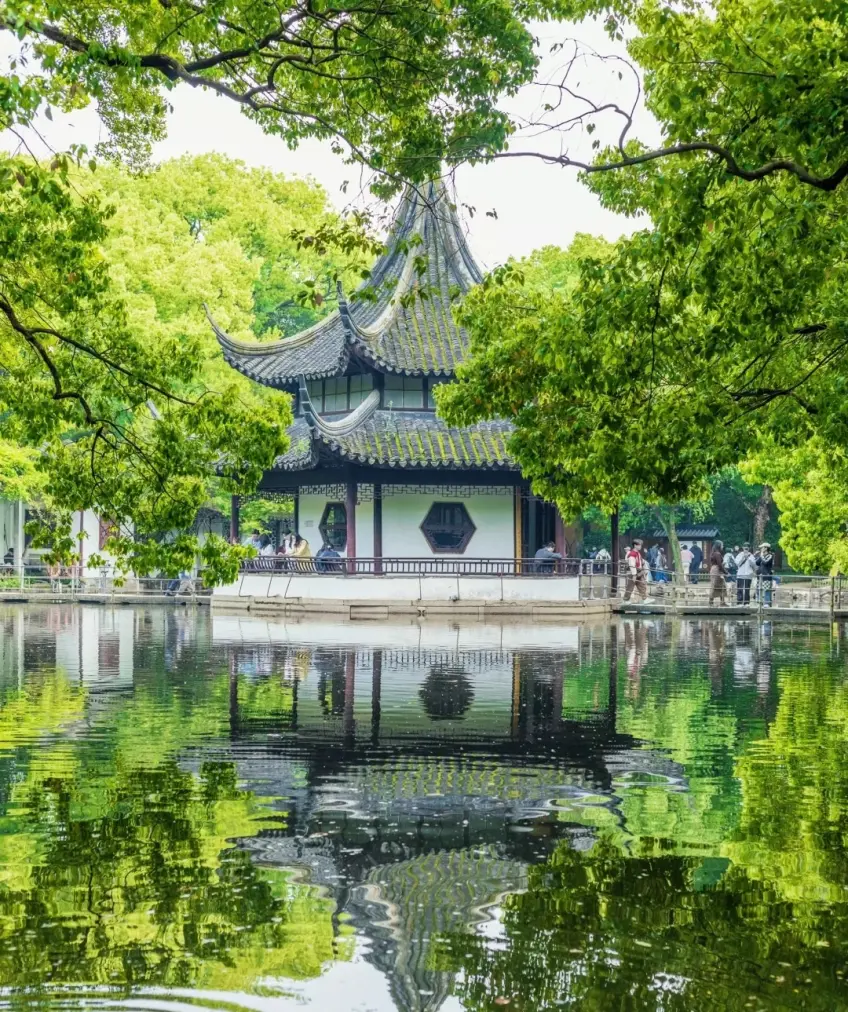
Central landscape: Hanbi Mountain House and Mingse Tower are built right by the water, while Wenmuxi Fragrance Pavilion on the rockery north of the pond offers a view over most of the garden.
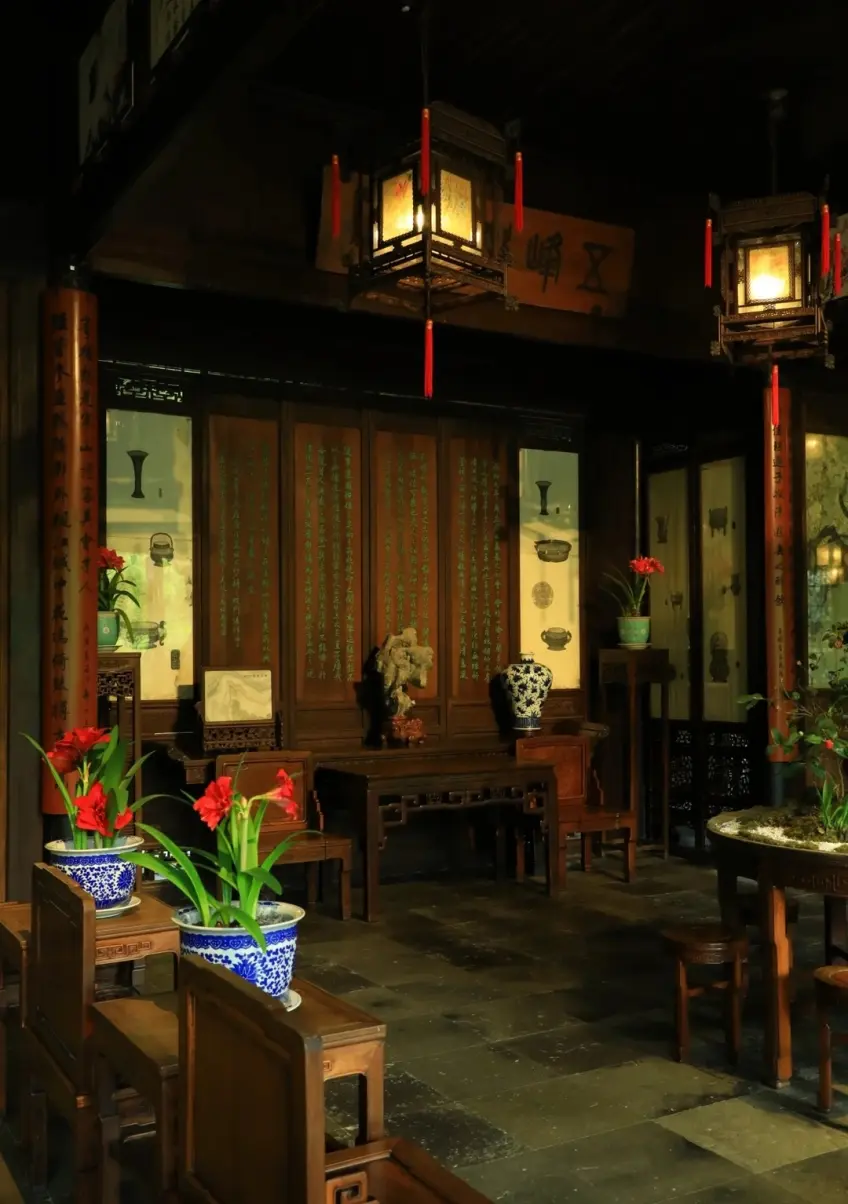
Wufeng Immortal Hall: The largest hall in the garden, commonly known as the Nanmu Wood Hall. Inside are two of Lingering Garden's three treasures: a marble screen depicting "Clear Sky After Rain" and a fish fossil with natural landscape patterns. When you enter, don't just look at the furnishings—be sure to hunt for them.
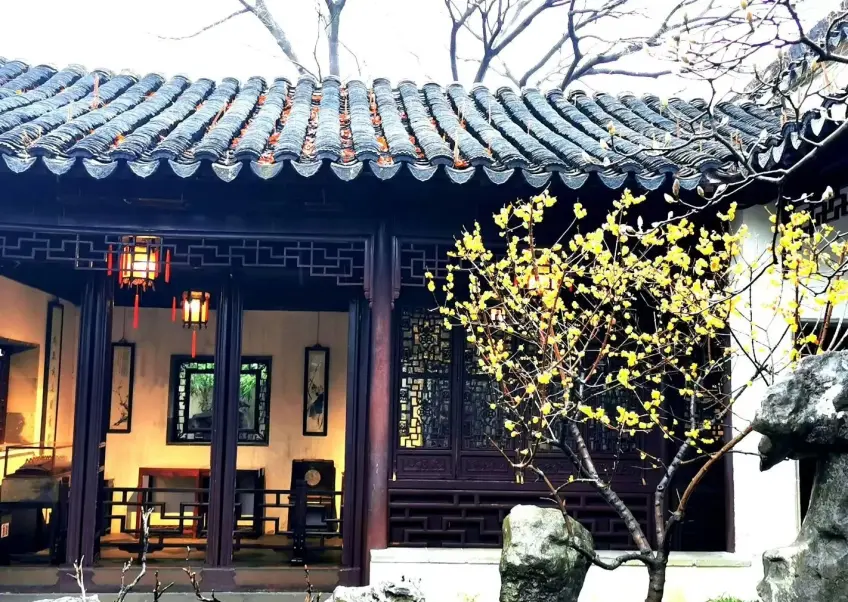
Eastern courtyards: This is the most spatially varied group of buildings among Suzhou's classical gardens. In front of Wufeng Immortal Hall, the rockery, Crane Lodge, Shilin Small Courtyard, and Yifeng Pavilion follow one after another. Bamboo and stones lean against walls, banana palms frame windows, and small courtyards nest inside each other—perfect for slowing down and wandering through.
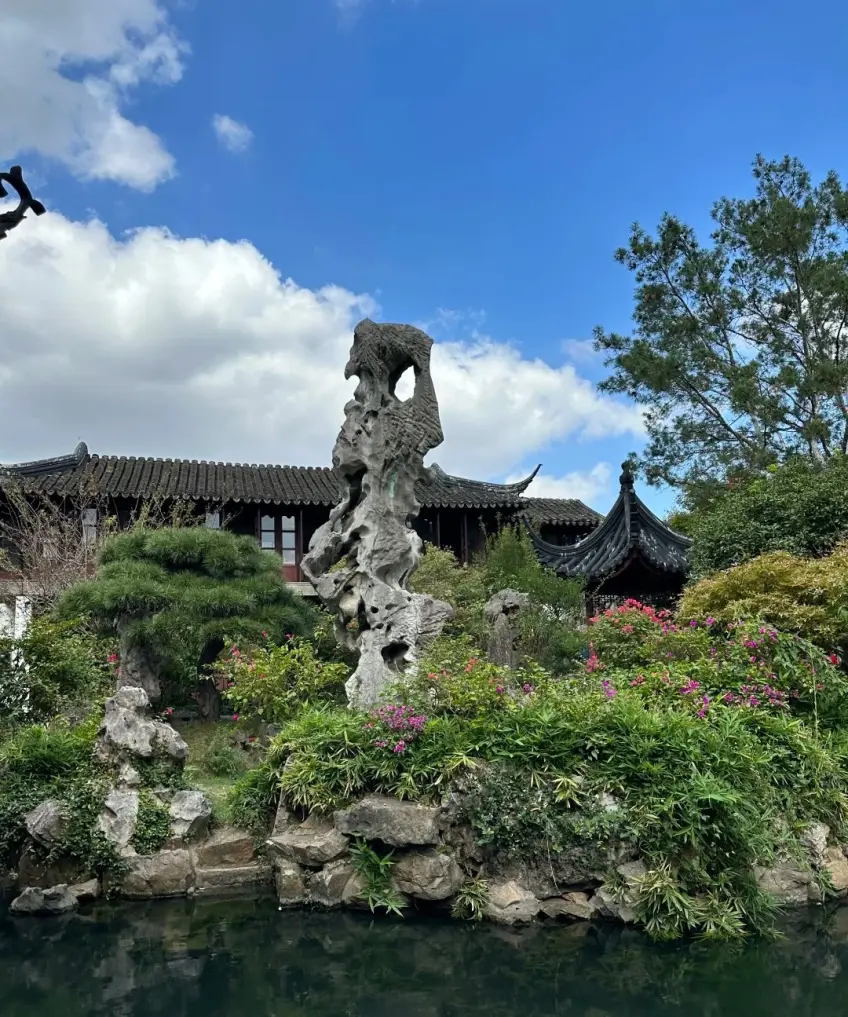
Cloud-Capped Peak: A Lake Tai stone about 6.5 meters tall and the treasure of Lingering Garden, combining the prized qualities of being slender, wrinkled, perforated, and translucent. Two smaller peaks, Ruiyun and Xiuyun, stand on either side. Linquan Qishuo Hall in front of the peak is a mandarin-duck hall; sitting inside facing the three peaks gives you the best rock-viewing spot in the garden.
Western hills: The western section features earth-and-stone rockeries and large trees, much wilder than the halls and courtyards in the east. Climb up to Shuxiao Pavilion to look out over the treetops—the red maples are at their best in autumn. "Huopopo Di" by the water is a waterside pavilion, a great place to wrap up your visit. There's also a bonsai garden to the north with rows of ancient stump bonsais; if you're into bonsai, allow an extra ten minutes or so.

The garden's winding corridors stretch over 700 meters, with more than 300 stone calligraphy carvings from various dynasties set into the walls—collectively known as the "Lingering Garden Calligraphy Rubbings." Take a look at the walls as you walk through. If you want to understand these landscaping techniques and historical allusions, hiring a guide will save you a lot of effort; if you'd rather read up on the history first, check out Lingering Garden History and Culture.
The main difference between hiring a guide and exploring on your own comes down to "getting it": why the entrance to Lingering Garden is so narrow, requiring you to walk through a dim passage first; how lattice windows and moon gates frame a corner of the courtyard into a painting; what exactly to look for in the "slender, wrinkled, porous, and translucent" qualities of Lake Tai stones; and which famous calligraphers created the stone strips on the corridor walls. It's easy to walk right past these details on your own, but a quick explanation from someone beside you brings the whole garden to life. A guide is well worth it if it's your first time in Suzhou or if you're traveling with older relatives or kids who are interested in classical gardens.
How to get from Lingering Garden to Shantang Street
The two spots aren't far apart. Here are three common ways to get there:
Walk: Head east from Lingering Garden along Liuyuan Road, cross Guangji Bridge back toward the Shilu and Changmen area, and you'll reach the east entrance of Shantang Street. It takes about 20 minutes and is best when the weather is nice and you're not in a hurry.
Metro: Shilu Station and Shantang Street Station are next to each other on Line 2—just one stop away.
Taxi or private car: The easiest option when traveling with seniors or kids, or in hot or rainy weather. A private car has another perk: you won't need to hunt for a ride when heading to Xiyuan Temple at noon or Tiger Hill in the evening.
How to explore Shantang Street
Shantang Street runs from Duseng Bridge at Changmen Gate in the east to Wangshan Bridge at Tiger Hill in the west. It stretches about seven li (roughly 3.6 km), which is why it's known as "Qili Shantang" (Seven-Li Shantang). During the Tang Dynasty, poet Bai Juyi served as the prefect of Suzhou and oversaw the excavation of the Shantang River and the building of embankments along it, creating this classic street-and-canal layout.

During the Ming and Qing dynasties, Shantang Street was one of Suzhou's busiest commercial districts. Guild halls, shops and homes lined the canal, buzzing with activity all the way from Changmen Gate to the foot of Tiger Hill. The eastern section you see today was restored in phases starting in 2002, preserving the classic street-and-canal layout with its white walls, dark roof tiles, stone bridges and embankments.
The eastern section, near Changmen Gate, has the highest concentration of old residences, shops and snacks—perfect for first-time visitors. The western section is quieter and leads all the way to Tiger Hill. Sculling boats cruise the Shantang River, and riding one after dark to see the lanterns lit up on both banks is a highlight.
Shantang Street is an open neighborhood you can enter anytime. Boat rides and some exhibitions inside charge separate fees; check prices on site. Time-honored brands like Caizhizhai and Rongyanglou line the street—great places to pick up Suzhou-style candies and pastries as souvenirs. When you need a break, teahouses and snack stalls along the canal are everywhere.

Want to add Tiger Hill? Check your stamina first
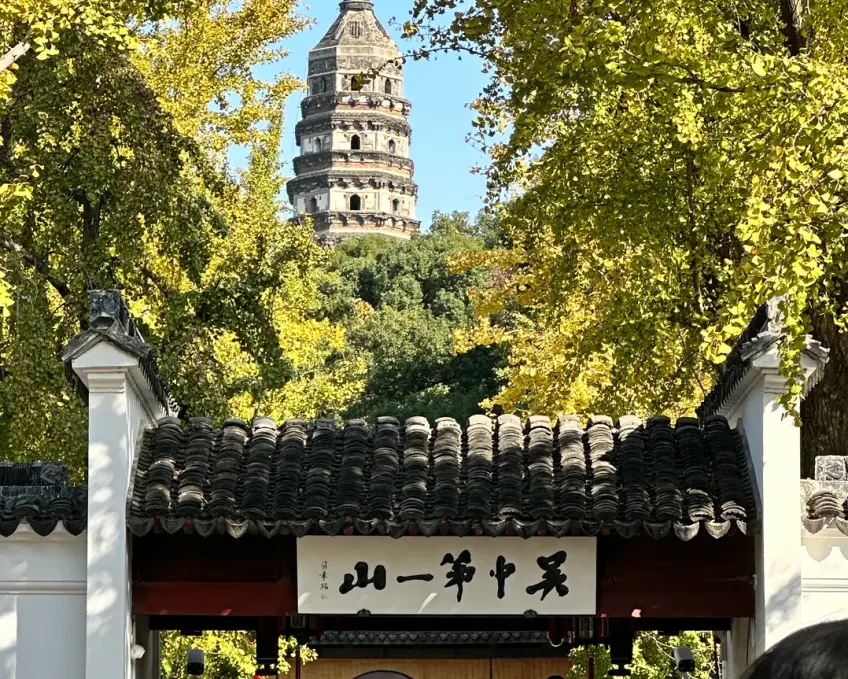
Tiger Hill sits at the west end of Shantang Street. The Yunyan Temple Pagoda on the hill, commonly known as Tiger Hill Pagoda, is an ancient pagoda that leans slightly to one side, and the cliff inscriptions around Sword Pool are another popular sight. Visiting Tiger Hill involves climbing and plenty of walking, so if you go after Lingering Garden and Shantang Street, it's best to head out early in the afternoon. If you're short on time, save Tiger Hill for a separate day. Ticket prices and opening hours for Tiger Hill are subject to the attraction's official announcements. Walking from the eastern section of Shantang Street all the way to Tiger Hill covers about seven li and takes over an hour. If you're not up for that much walking, stroll part of the way first, then take a taxi or bus.
Where to eat and where to shoot
You don't need to hunt for food: the Liuyuan Road area has local restaurants like Changshou Restaurant and Wuji Xiaoyuanlou, Xiyuan Temple serves vegetarian Guanyin noodles, and Shantang Street has even more snacks and teahouses. For detailed recommendations, see Food near Lingering Garden. For a more relaxed pace, have lunch at Xiyuan Temple or on Liuyuan Road and save dinner for Shantang Street.
For photos, the light at Lingering Garden is soft in the morning—lattice window frames, the reflection of Mingse Tower, and Cloud-Capped Peak are all best shot early when there are fewer people. The most photogenic time on Shantang Street is the 20 to 30 minutes after sunset, when the sky isn't fully dark yet and the lanterns have just been lit, making reflections on the stone bridges and river clearest. Tripods are awkward in crowded lanes, so your phone's night mode will do the job.
Getting back to your hotel
The eastern section of Shantang Street is close to both Shantang Street Station and Shilu Station. Take Metro Line 2 north one or two stops to Suzhou Railway Station, which makes catching a high-speed train back to Shanghai or Nanjing easy. If you're staying in the eastern part of the old town, transfer to Line 4 at Suzhou Railway Station or just take a taxi. At night when it's busy, expect a line for taxis outside the attraction. If you've booked a private car, arrange the pickup spot with your driver in advance—it's the most hassle-free option.
How to split it over two days
Suzhou's attractions fall roughly into two clusters: in the northeast of the old city, Humble Administrator's Garden, Suzhou Museum, Lion Grove Garden and Pingjiang Road are all within walking distance of each other; in the northwest, Lingering Garden, Xiyuan Temple, Shantang Street and Tiger Hill can be linked into a single route. If you have two days, the easiest approach is one cluster per day: spend day one at Humble Administrator's Garden, Suzhou Museum and Pingjiang Road—see our Suzhou day tour travel guide; on day two, follow this article to visit Lingering Garden, Xiyuan Temple and Shantang Street, adding Tiger Hill if you have the energy. For a fuller 2-day itinerary, see our Suzhou 2-day tour travel guide.
What to expect in different seasons and weather
In spring, the camellias, crabapples and the wisteria at Xiaopenglai in Lingering Garden are at their best; in summer, lotus flowers bloom in the central pond—go early in the morning to avoid the afternoon heat; in autumn, look for ginkgo and red maples, and enjoy the scent of osmanthus near Wenmuxixiang Pavilion; in winter, there are fewer visitors, wintersweet blooms against the white walls, and the garden feels especially peaceful. Shantang Street is worth visiting year-round. Around Chinese New Year and the Lantern Festival, it's hung with red lanterns and festive lights, and gets particularly lively in the evening.
Don't cancel your plans just because of rain: Lingering Garden's covered corridors stretch over 700 meters, so you can reach most sights under cover, and the lattice windows and pond look even more atmospheric in the rain. Along Shantang Street, there are plenty of riverside shops where you can take shelter, though evening boat rides depend on the weather. Summer afternoons can be hot, so save Shantang Street for the evening and rest longer at Xiyuan Temple or in a café around midday.

Group tour or private car: which to choose
Group tours: Some of our no-shopping small group tours already combine Lingering Garden and Shantang Street on the same day. For example, on day two of Jiangnan Highlights 3 Days 2 Nights, you'll travel by coach from Yangzhou to Suzhou to visit Lingering Garden and stroll Shantang Street; on day three of Jiaxing & Shanghai Dream 5 Days 4 Nights, you'll explore Lingering Garden and Shantang Street before heading to The Bund and Nanjing Road in Shanghai. For a shorter 2-day option, check out Suzhou Dream 2 Days 1 Night: Shantang Street on day one, then Canglang Pavilion and Lingering Garden on day two. If you'd rather not plan your own itinerary and don't mind fixed meeting times, these routes are ready to book. To compare more Suzhou options, see our Suzhou group tours.
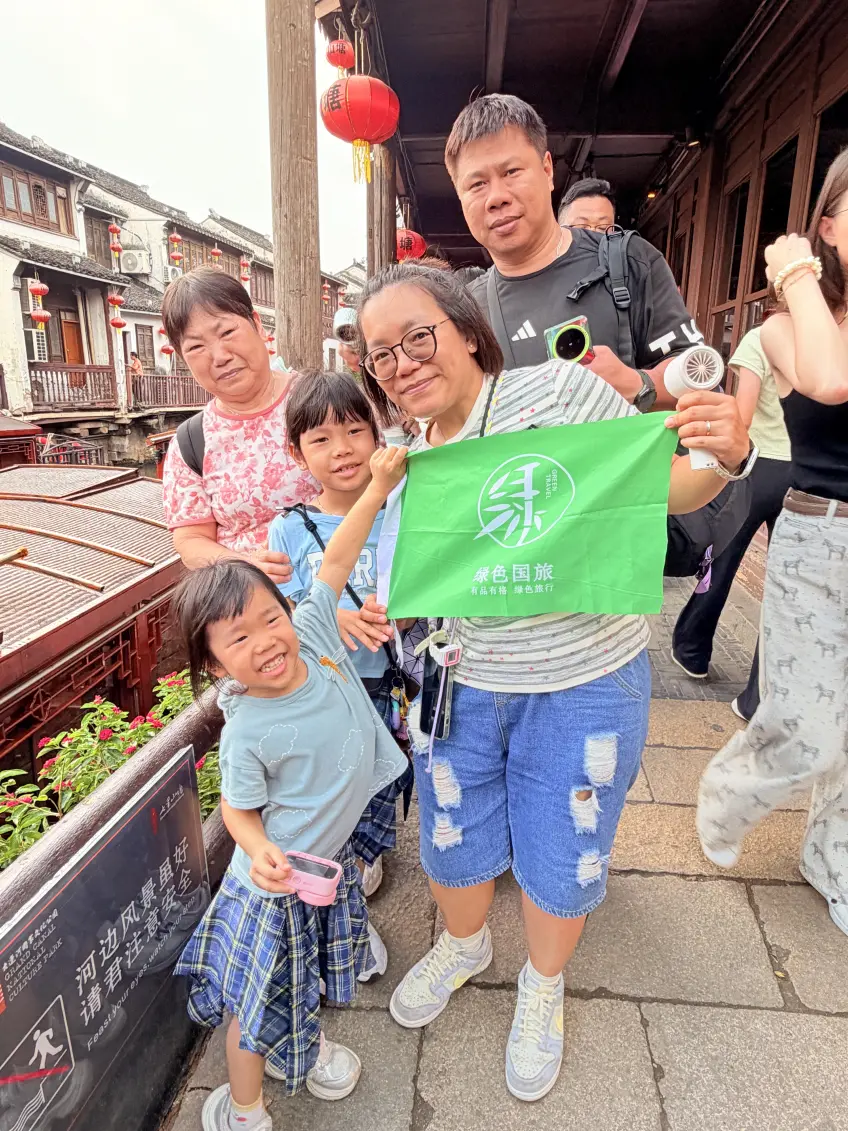

[Jiangnan Highlights 3 Days 2 Nights] He Garden + Dongguan Street + Lingering Garden + Shantang Street + Panmen Three Scenes
[Top Attractions] He Garden, Dongguan Street, Lingering Garden, Shantang Street, and Panmen Three Scenes! [Comfortable Stays] Choose between 4-star and 5-star hotels! [Thoughtful Service] Dedicated custom vehicles and experienced East China drivers for a worry-free trip! [No Shopping Stops] No-shopping group tour for a truly relaxing journey—memories that last a lifetime! [Free Bonus] One bottle of branded mineral water per person per day!
Private car plus guide: If you want to go at your own pace—say, spend more time at Lingering Garden in the morning and wait until Shantang Street lights up at dusk, or add Xiyuan Temple and Tiger Hill—booking a private car by the day is more flexible. Need commentary inside the gardens? Add a private guide. For multi-day trips where you want transport, guiding and hotels arranged together, try our custom private tours.
FAQs
Is it far from Lingering Garden to Shantang Street?
Not at all. Both are near Changmen Gate, about a 20-minute walk apart. On Metro Line 2, it's just one stop from Shilu Station to Shantang Street Station.
Can I visit Lingering Garden, Shantang Street and Tiger Hill in one day?
You can, but it will be rushed. Lingering Garden takes two to three hours, a leisurely stroll along Shantang Street takes another two to three, and Tiger Hill involves some climbing. If you're not super fit, we suggest doing just Lingering Garden and Shantang Street, and saving Tiger Hill for a separate half day.
Which should I visit first, Lingering Garden or Shantang Street?
Lingering Garden first, then Shantang Street. The garden has fewer crowds and better light in the morning, and it closes early. Shantang Street looks best after the lanterns come on at dusk, making it the perfect way to end your day.
How long should you spend at Lingering Garden?
Two to three hours is a comfortable pace, giving you time to explore the central rockery and water features, the eastern halls and Cloud-Capped Peak, and the western wooded hills. If you only want to see the highlights, an hour and a half will do.
Do you need a ticket for Shantang Street?
Shantang Street is an open neighborhood, so no admission ticket is required. Sculling boat rides and some of the exhibition halls along the street charge separate fees; check the prices posted on site.
When is the best time to visit Shantang Street?
From late afternoon until dark. Spend the afternoon exploring the old houses and shops, and after sunset, when the lanterns along the canal light up, take a sculling boat to enjoy the night views.
Is this route suitable for seniors and kids?
Yes. Lingering Garden has halls and covered corridors everywhere to sit and rest, and Shantang Street is flat, so you can set your own pace. As long as you don't add a hike up Tiger Hill, it won't be too tiring for a full day. If anyone has limited mobility, using a private car to connect each stop makes things much easier.
Is this route suitable for rainy days?
Yes. Most attractions in Lingering Garden are connected by covered corridors, and the lattice windows and pond look especially charming in the rain. Shantang Street has plenty of riverside shops where you can browse while staying dry—just note that evening boat rides depend on the weather.
Are there group tours that include Lingering Garden and Shantang Street?
Yes. Both Jiangnan Joy 3 Days 2 Nights and Jiaxing & Shanghai Dream 5 Days 4 Nights schedule Lingering Garden and Shantang Street on the same day, while Jiangnan Elegance 3 Days 2 Nights visits Shantang Street on day one and Lingering Garden on day two. Please check the tour page for exact itineraries.