

Beating the crowds in Xitang: how to start a slow, off-the-beaten-path visit
Xitang is worth a dedicated trip, but don't just crowd into Misty Rain Corridor, the main streets of Nanbei Zha, and Bar Street. The real off-the-beaten-path slow travel means walking into Shaoxianggang, the deep lanes off Tawan Street, Zuiyuan Garden, and Ni Residence, watching locals wash clothes, hang quilts to dry, and sip tea by the river. Admission tickets, boat schedules, and night tour times are subject to the scenic area's daily notices. Set expectations for avoiding peak hours first, then compare with the group tour "Xitang Dream Day Tour," or use private custom travel and station transfers to arrange door-to-door service.

At dusk, canals converge while red lanterns and warm window lights reflect on the water. The sections below follow "districts → old lanes → culture → night lights on the water → food, stays & souvenirs → FAQ," delivering the travel guide first and our services second.
When you're ready to book: for an easy Hangzhou-to-Xitang day trip, check the group tour "Xitang Dream 1-Day Tour"; to avoid crowds and set your own pace for boat rides and hotels, plan your route with custom private travel; for the stories behind the lanes and the details of the old halls, we recommend hiring a guide; for door-to-door service from Jiaxing Station or Jiashan South Station, choose a private car; and if you're arriving or departing by high-speed train, book station transfers in advance.
First, tell the commercial streets from the residential areas
A poor experience usually comes from sticking only to the popular main routes: identical shops, heavy crowds, and photos full of other people's heads. Commercial streets are good for a quick look; residential areas are better for sitting and observing. The off-the-beaten-path rule is simple: don't rush, don't tick off every spot, and don't copy the same poses. Weather-wise, overcast days, light rain, early morning mist, and post-rain evenings yield better photos and more peace than bright sunshine; specific opening hours and capacity limits are subject to on-site notices.
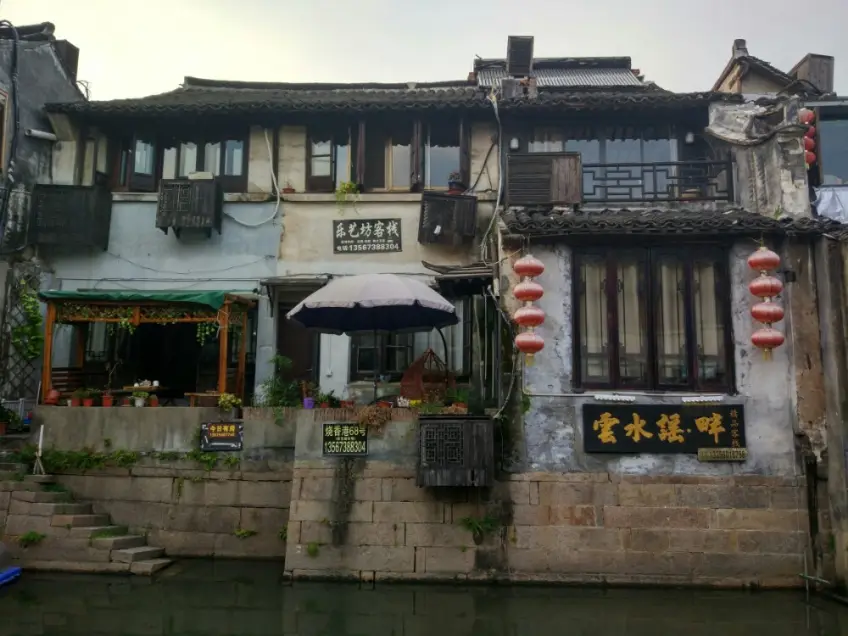
Umbrella seating at riverside inns and signs like "Yunshuiyao" remind you that you've entered the tourist zone—go deeper, and you'll find quieter, everyday waters.
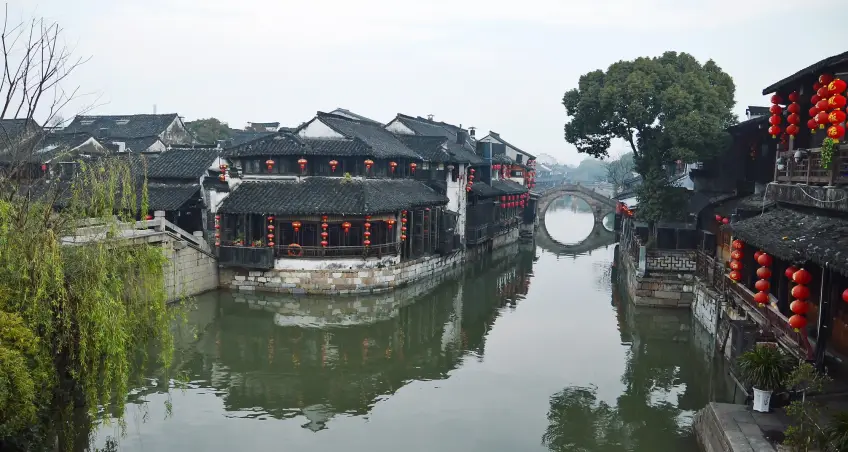
An arched bridge and willow reflections on an overcast day, with hardly anyone around—that's what slow travel off peak feels like: soft light, still water, perfect for figuring out which area is which first.
Hidden old lanes: Shaoxianggang, Tawan Street and narrow alleys of light and shadow
Shaoxianggang: authentic life by the water
Many people have heard the name but never venture deeper. The Shaoxianggang area is relatively free of over-commercialization, with Ming and Qing dynasty homes built right along the water. The canals are clean and there are stone steps everywhere to sit on. It's perfect for sitting quietly and watching boat shadows glide by or locals washing clothes—just keep your voice down. If you need door-to-door service with minimal walking, you can book a private car to the nearest entrance and walk in from there.
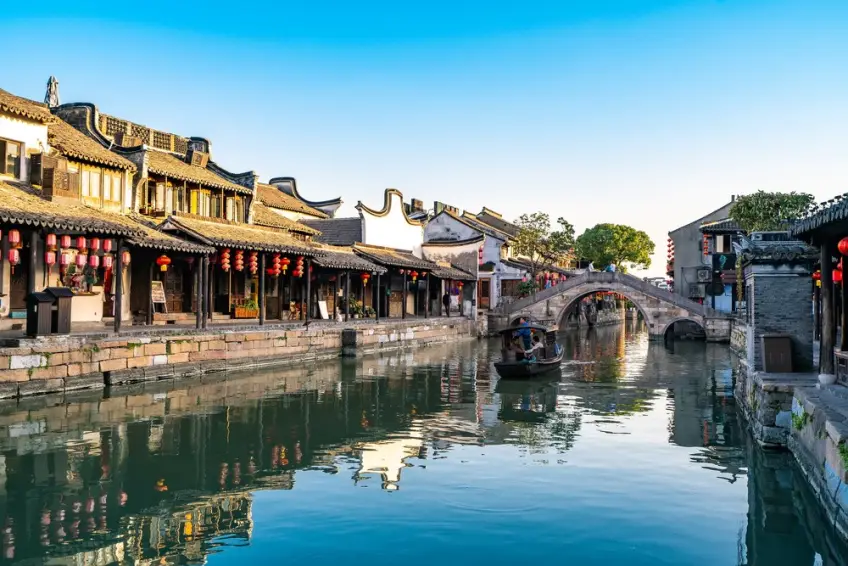
On sunny days, Wupeng boats drift slowly beneath the covered corridors, flanked by white walls and gray tiles. This is the everyday waterscape near Shaoxianggang, much closer to the rhythm of local life than Bar Street.
Tawan Street: busy main road, hidden depths
The main road of Tawan Street is bustling, but the real hidden gems lie deep in the side alleys: secluded old houses facing the water, small stone steps, and potted plants on windowsills. You can use the plaques at the entrances of the covered corridors to get your bearings. Once inside the alleys, slow down and make way for residents going about their day.
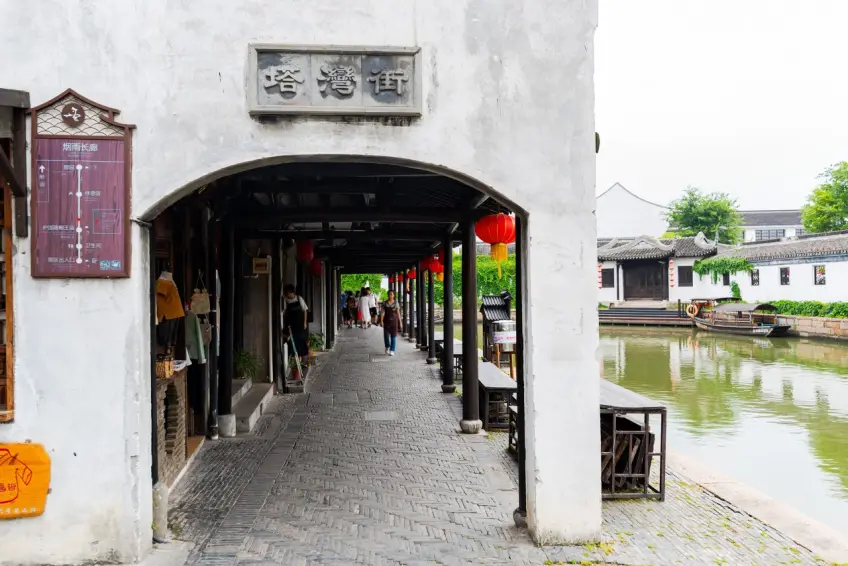
The "Tawan Street" plaque and bluestone path at the entrance of the covered corridor are easy to spot. Find the entrance first, then explore the alleys—it saves more time than blindly following a tour guide's flag.
Light and shadow alley: dappled history one meter wide
Scattered around the main scenic area are unnamed narrow alleys about a meter wide, where flagstones and high walls create dappled light and shadow. Noon and the slanting light of sunset are the best times for photos, but please don't block the path for long. To hear the stories behind the lanes and old halls in depth, you can hire a private guide; if you want to set your own entry and exit points, use our custom travel service.
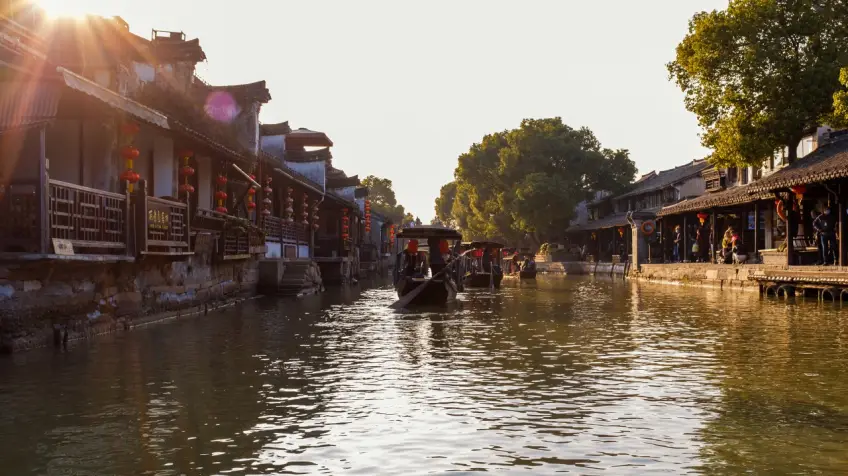
Sunset gilds the covered walkways and Wupeng boats gold. The exits of the narrow alleys often open right onto water like this—light, shadow and everyday life all in one frame.
Off-the-beaten-path culture: Zuiyuan Garden, Ni Residence and traditional woodwork
Zuiyuan Garden: a quiet, uncrowded private garden
Xiyuan Garden is often packed with tour groups; Zuiyuan Garden is smaller and quieter, with moon gates and vine-covered stone paths perfect for a slow stroll. Opening hours and whether a separate ticket is required are subject to on-site information. Never climb walls or cut through private homes.
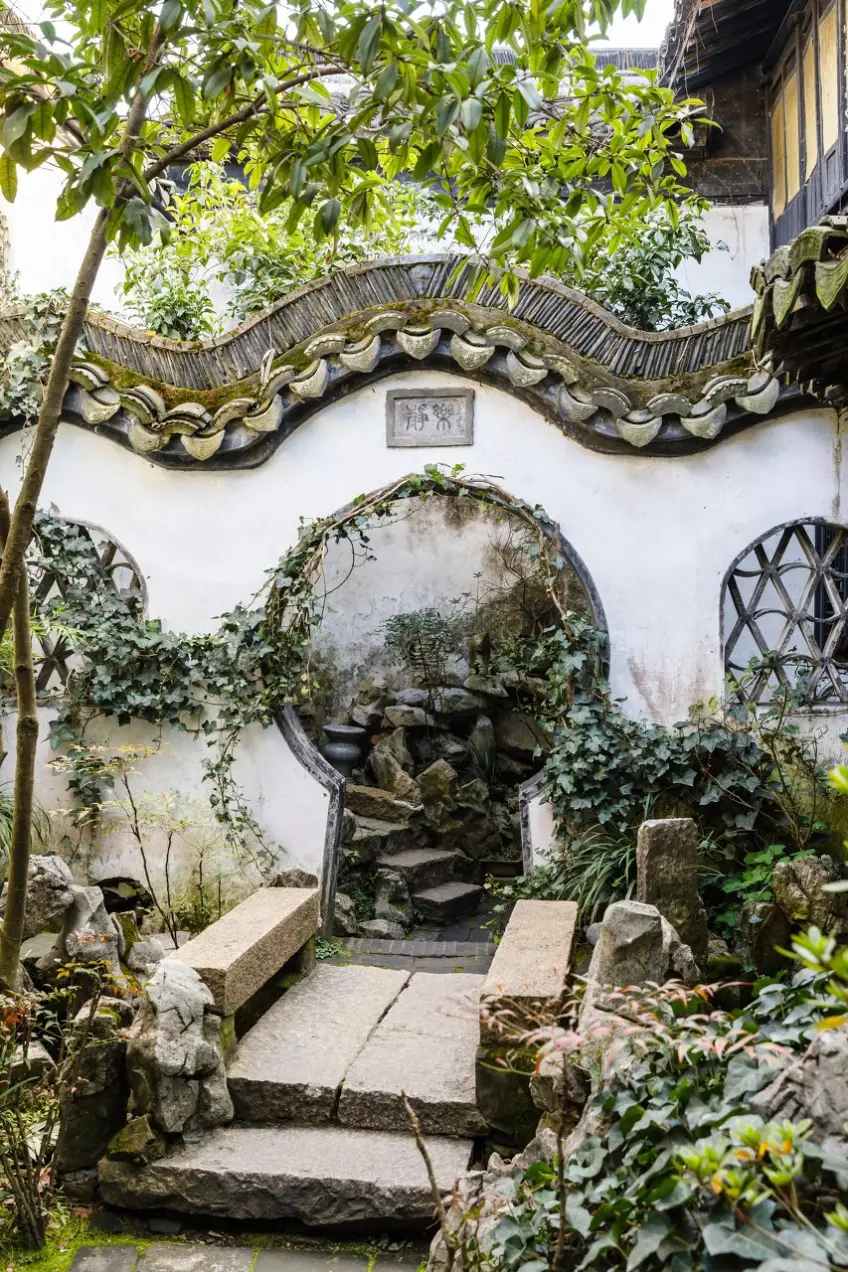
The vines and stone paths inside and outside the moon gate are one of the most recognizable scenes in Zuiyuan Garden. This vertical image is for illustration only; follow the actual paths once inside.
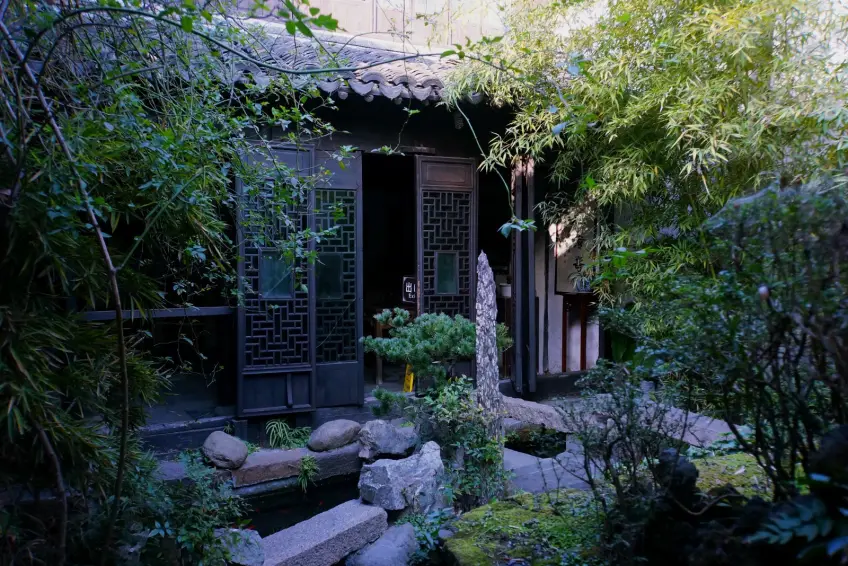
Bamboo shadows and rock plantings screen a small courtyard with a wooden door—the perfect place to slow your pace. After taking photos, remember to clear the way for residents and staff.
Ni Residence and Yuqing Hall: woodwork details of a prominent family estate
Ni Residence preserves a relatively complete Ming-Qing elite family layout, with distinctive stone carvings on the gate tower and a deep open entrance. In halls like Yuqing Hall, you can see plaques, altar tables, and carved partition screens. Whether it's included in the combo ticket and if guided tours cost extra are subject to on-site announcements. To fully understand the family history and woodwork stories, consider hiring a private guide.
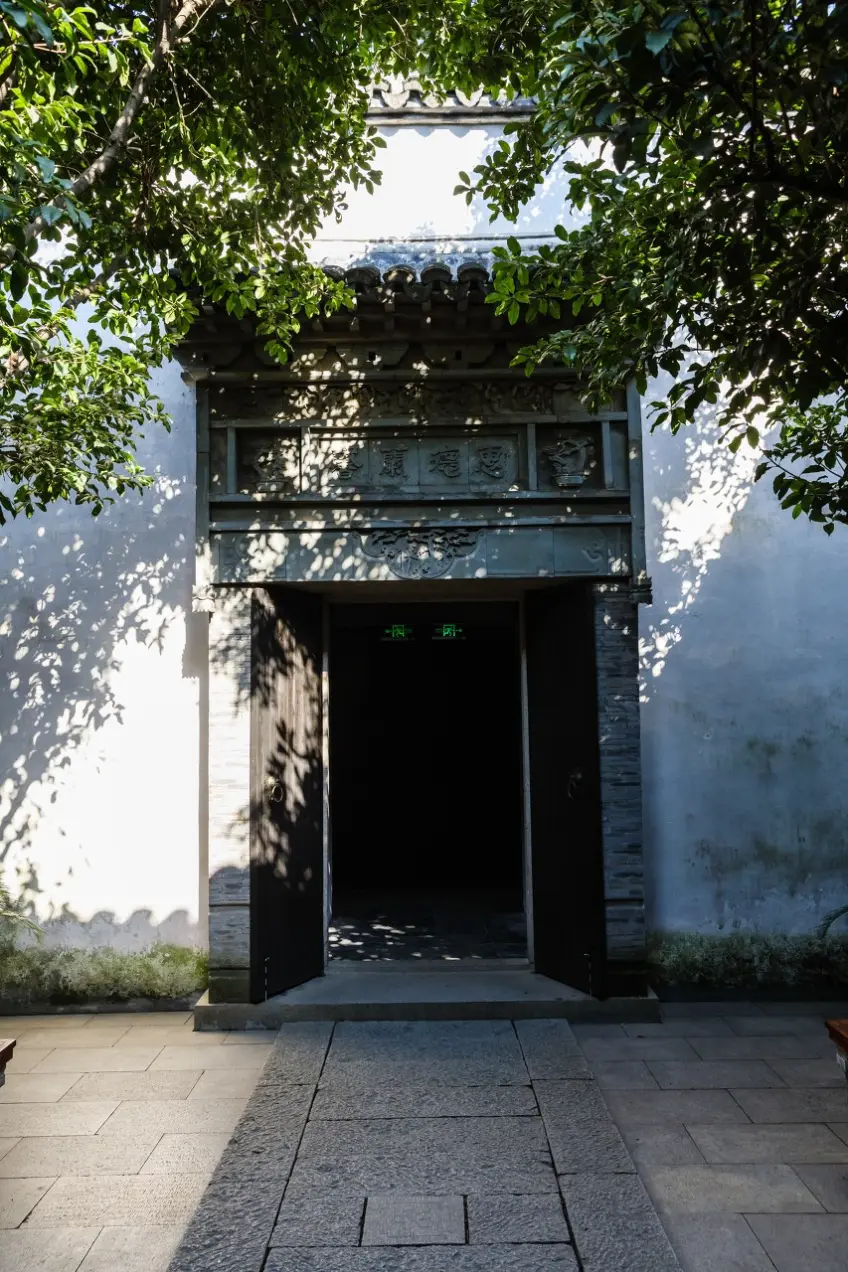
White walls, a stone gate tower, and the open doors of a deep courtyard, with tree shadows falling across the lintel—this vertical image illustrates the character of the facade. Which specific courtyards you can enter depends on the areas open on-site.
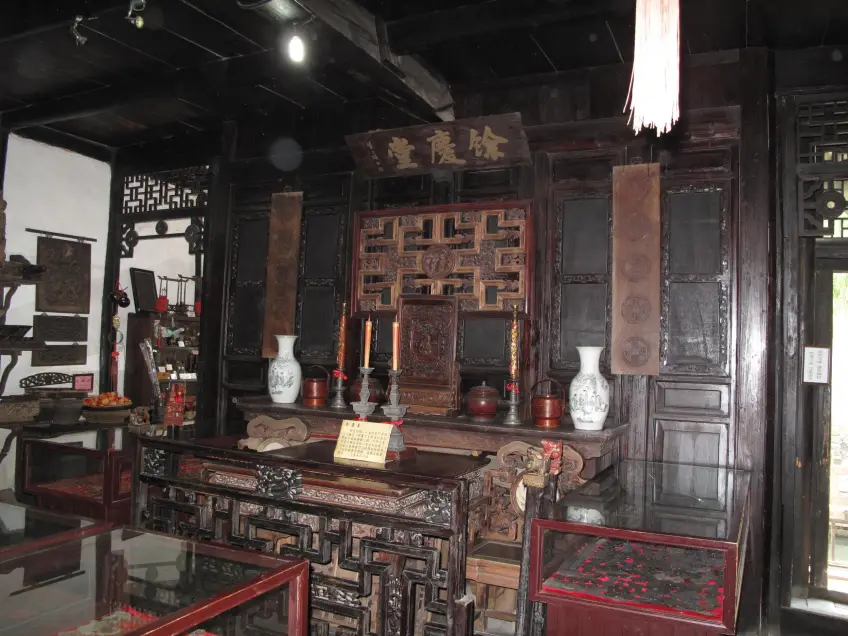
Beneath the plaque in Yuqing Hall, the offering table, candlesticks, and carved lattice screens appear together in one frame. It's best appreciated through the lens of "woodwork and ritual etiquette," rather than just snapping trendy social media shots.
Unwinding by the water: stone steps, bridge shadows, slow boats and night lights
Stone steps and bridge shadows: slowing down means sitting still
The riverside stone steps and bridge stairs are where locals go to unwind: anti-slip carvings, cloud-scroll balusters, and a breeze off the water. Avoid the peak photo-op crowds in the middle of the bridge—sitting to the side is safer. Seniors and children should watch out for slippery surfaces; on rainy days, head indoors to a traditional hall or covered corridor instead.
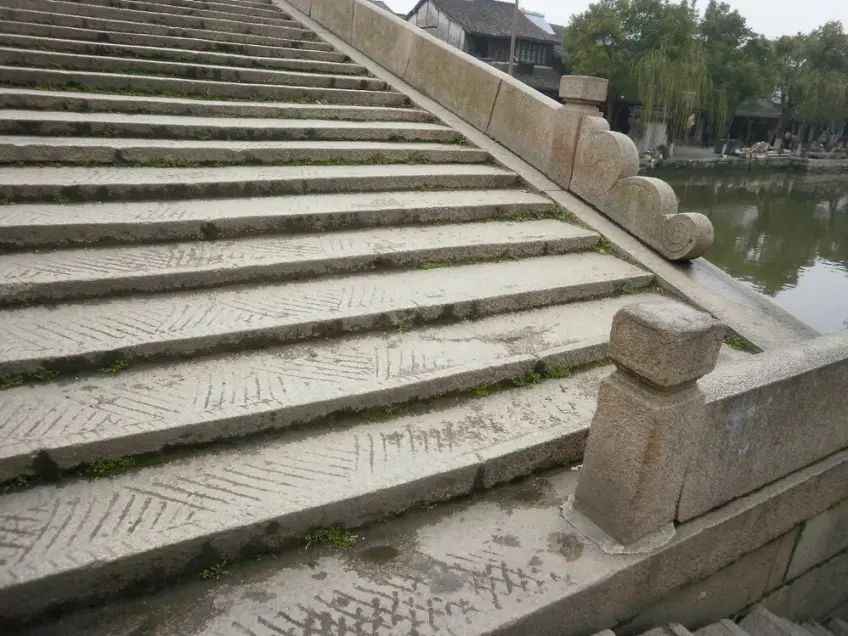
This close-up of the stone bridge's anti-slip steps and cloud-scroll balusters is a reminder that "sitting still" captures Xitang far better than standing in the middle for a selfie.
Slow boats at dawn and still waters at dusk
Boats on the main canal often mean long lines and noise; the off-the-beaten-path experience is a slow morning boat on a side channel or an evening cruise on still waters—watching greenery around old houses and shore lights flicker on one by one. Boat tickets, piers, and last departure times are subject to daily operational notices; don't trust verbal promises of the "lowest charter price." To weave a boat ride into a private itinerary, use private custom travel; if you just want to hit the highlights, check out the group tour day route.
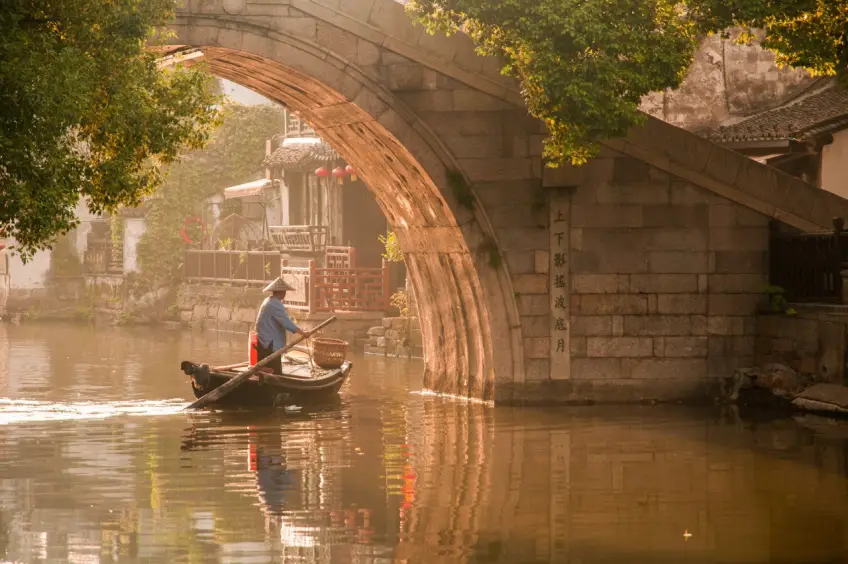
A boatman in a conical hat sculling under a stone bridge is the most common sight on an early morning slow boat ride—and with fewer people around, the reflections are much clearer.
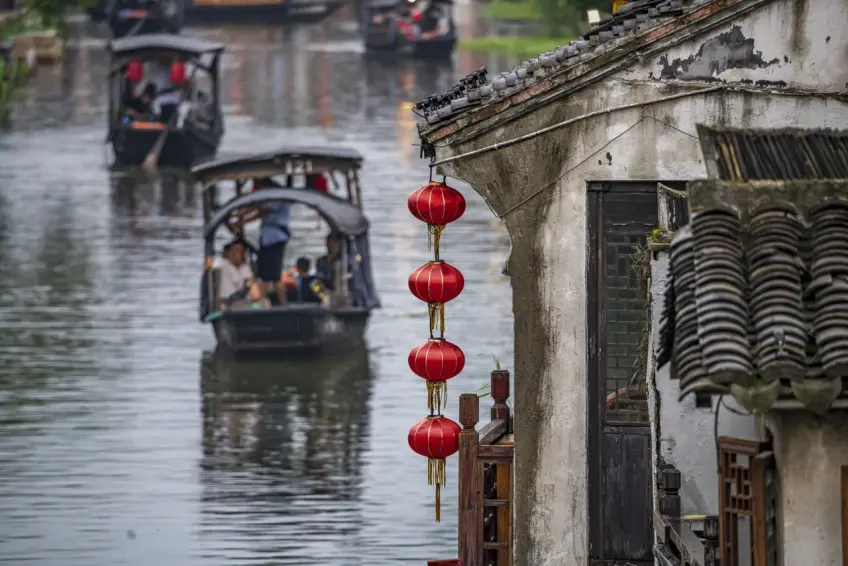
Framing the red lanterns under the eaves with the Wupeng boats in the distance feels like watching the locals' daily waterway routines: dredging, commuting, washing clothes, and fetching water all happen on this same river.
Night-lit covered walkways: gentler beats louder
Don't just crowd into Bar Street at night. The reflections of red lanterns along the covered corridors and side canals are much better for a slow walk. Night tour programs, light shows, and security patrol times are subject to posted notices. Stay inside the town to enjoy the night lights; for high-speed rail arrivals and departures, book station transfers in advance.
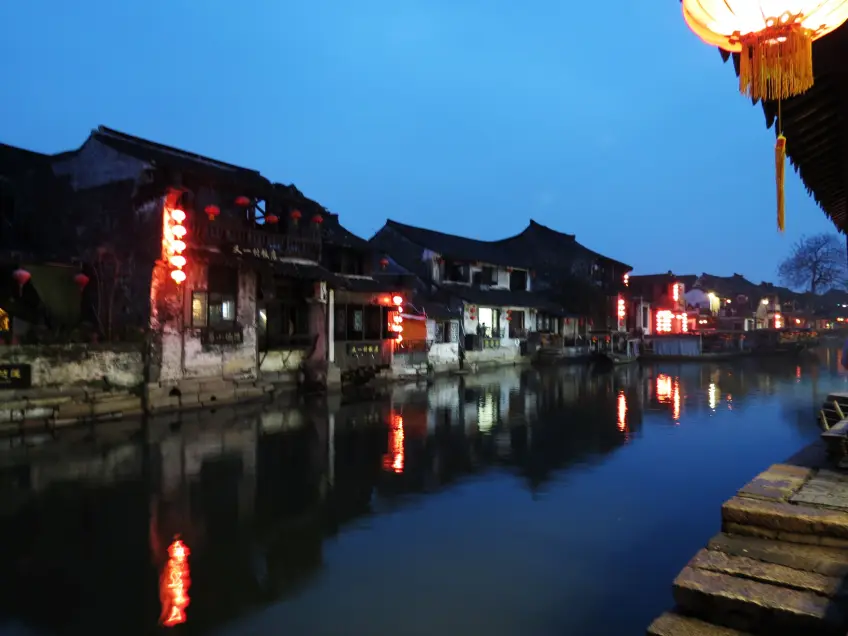
At night, red lanterns cast long reflections on the canal while warm yellow light glows from the windows of waterside buildings—this is "slow everyday life," not a noisy bar scene.
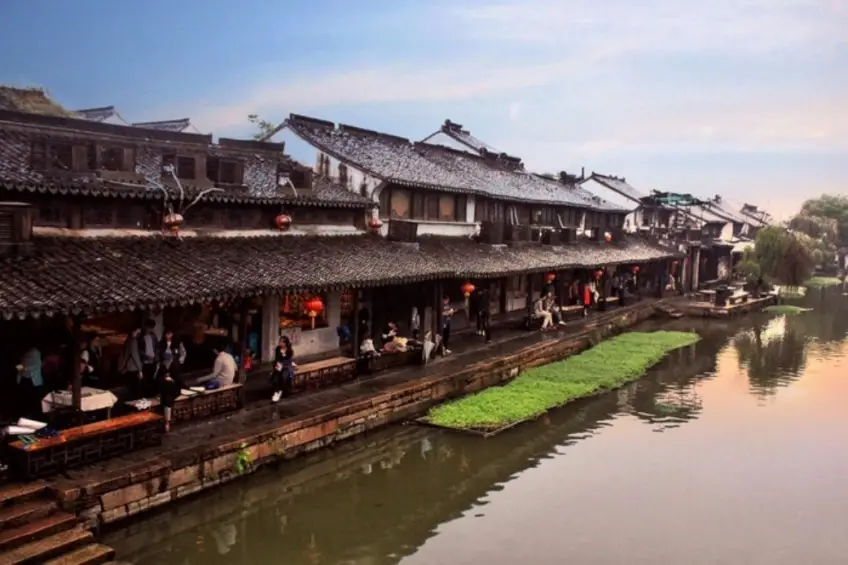
The riverside seats under the covered walkways still see passersby, but they're far quieter than Bar Street—perfect for sipping tea and watching boats rather than rushing off to check in at your next stop.
Intangible heritage and local life: crafts, pastries and rice wine
Tea whisking, paper cutting, bamboo weaving, Gorgon fruit cakes and frog buttons are hands-on niche experiences in Xitang, but always confirm shop credentials, reservations and prices on site.
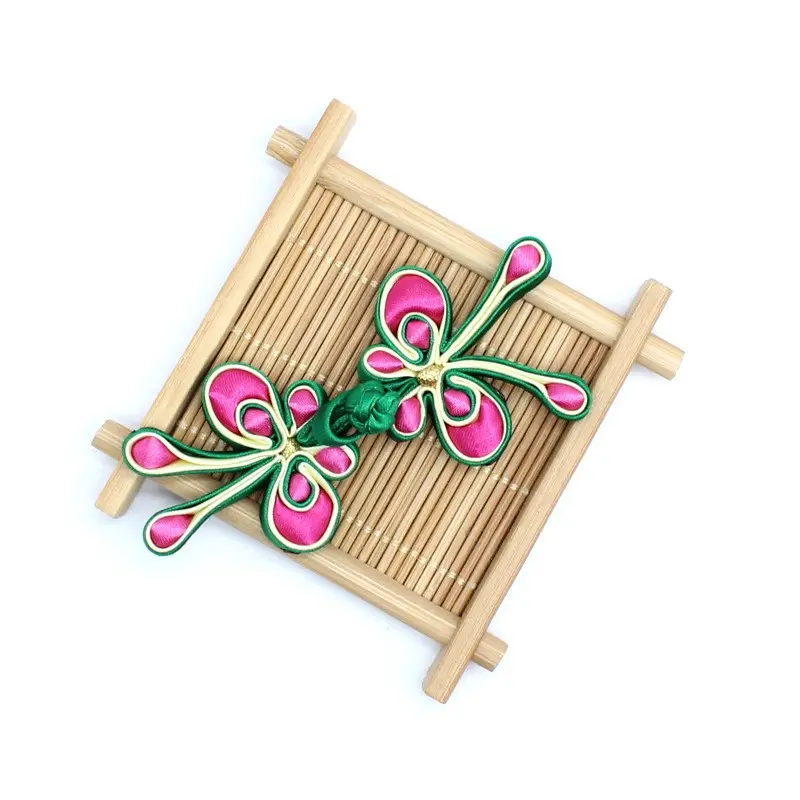
Pink and green frog buttons laid out on a bamboo mat are a common handmade souvenir here—ask about the material and whether the dye is colorfast before buying.
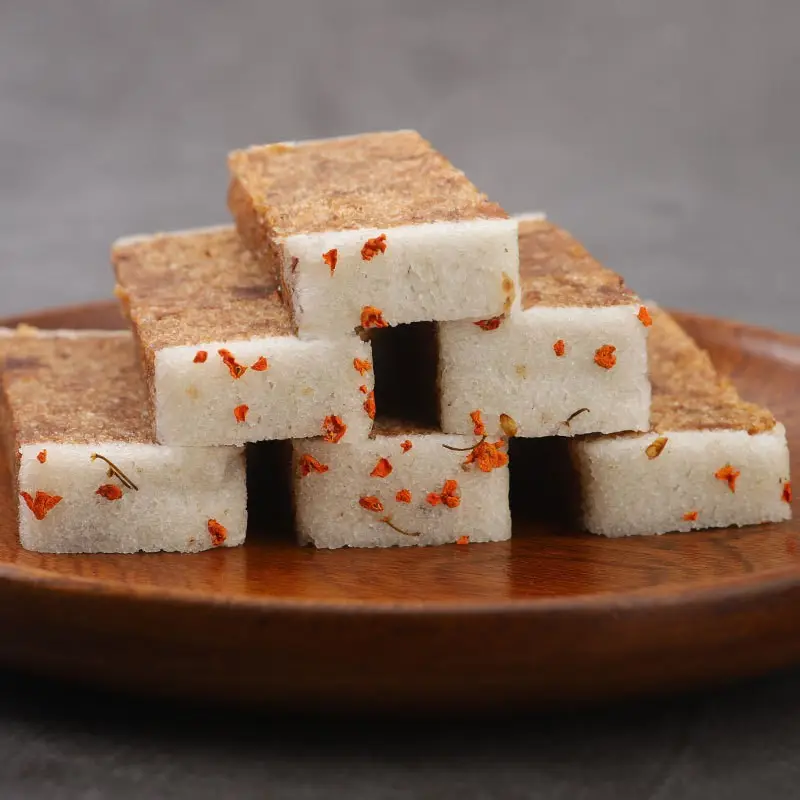
The two-tone osmanthus cakes on the wooden plate represent the gentler side of water town sweets; freshly sliced Gorgon fruit cakes focus more on texture, so go by what's coming out of the window that day.
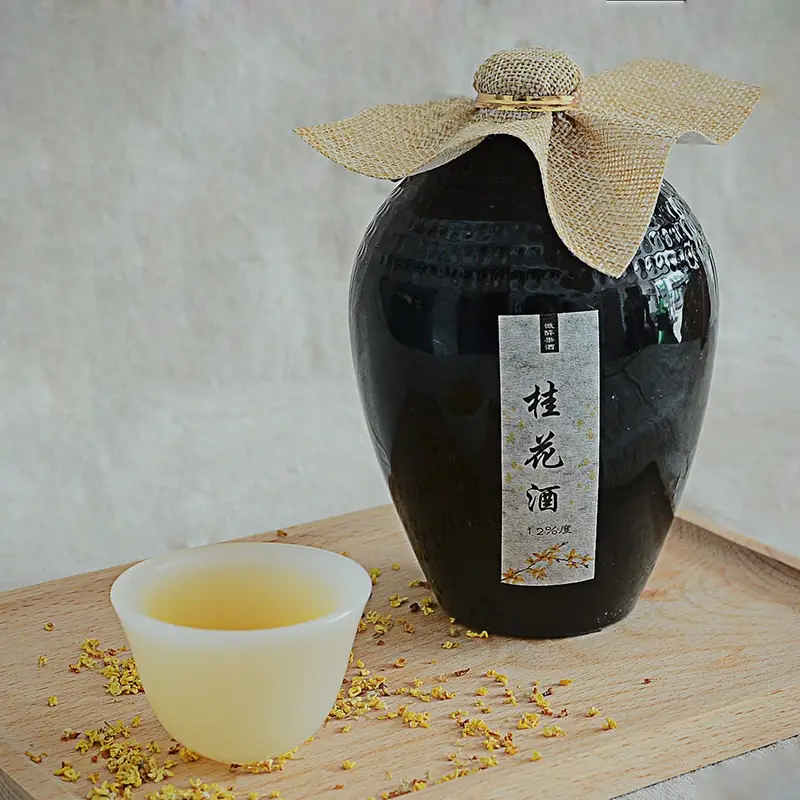
Ceramic jugs of osmanthus wine and small cups with crushed osmanthus blossoms make great souvenirs—no pressure to drink. Check with the shop for alcohol content and sales restrictions.
Avoiding accommodation and dining pitfalls vs. group tours
Stay: a riverside window should be quiet, but easy to get in and out
To catch the dawn, dusk, and night lights, we recommend staying one night in the town; for quiet, avoid rooms directly opposite Bar Street, and for local charm, pick a riverside window room but ask about soundproofing. Whether the room rate includes admission and if late-night entry/exit is allowed are subject to the hotel's daily policies. For deciding how many nights to stay or adding Jiaxing/Wuzhen to your route, use private custom travel; for just getting to and from the high-speed rail station, use station transfers.
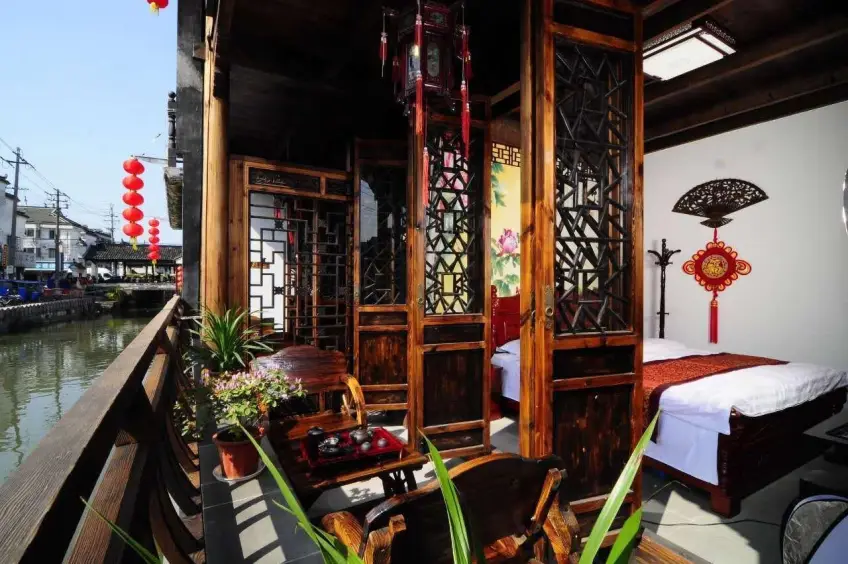
A tea set sits on the balcony of this riverside guesthouse; push open the lattice doors and you're in the bedroom overlooking the canal. The point of staying here is to settle in and relax, not just to check another bed off your list.

The view of the long waterway from under the corridor eaves at dusk is what you'll see outside many riverside rooms. When booking, check whether the photos are real and whether the room faces the main channel, which can be noisy.
Eat: skip the cookie-cutter snack streets
The snacks along the main streets are largely the same. A safer bet is local home-style dishes: fish, shrimp and river snails with greens, or a noodle shop or teahouse tucked in a deep alley. Dietary restrictions, spice levels and per-person costs depend on the day's menu. If you're traveling with seniors or kids, pace yourselves—you can schedule lunch after the boat ride.
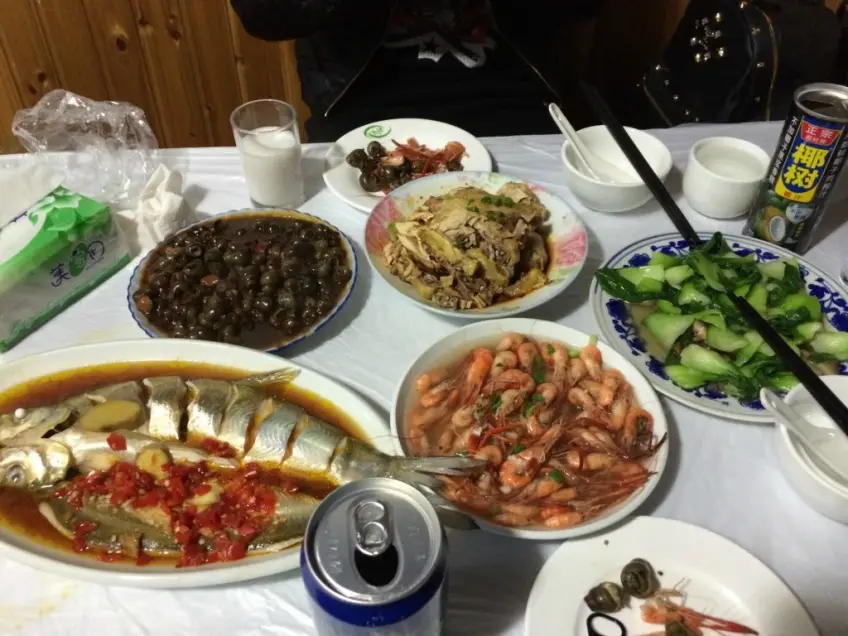
A table covered in steamed fish, river shrimp, river snails and greens is the most direct proof of water-town life—far closer to what locals actually eat than any Instagram-worthy plating.
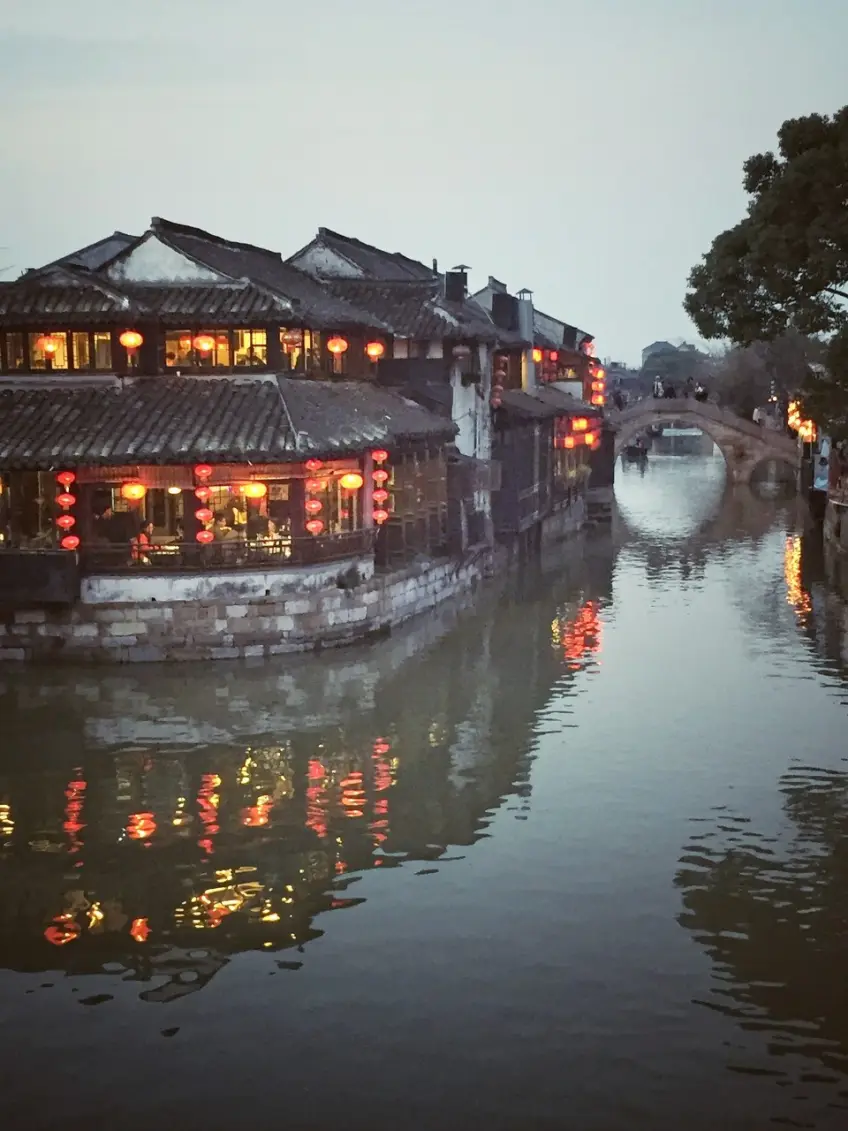
Lantern reflections at a waterfront restaurant at dusk—the vertical photo is just for atmosphere. Reservations and opening hours depend on the venue that day, so don't rely solely on promo videos.
Group tour day trip vs. custom slow travel
If you're short on time and want a hassle-free trip from Hangzhou, check out the group tour "Xitang Dream Day Tour" (from about ¥71.67, subject to the booking page). For a quieter visit off-peak with an early-morning boat ride and an overnight stay in town, go with custom private travel; if you just need a car and driver, choose a private car; to really dig into the local stories, add a private guide.
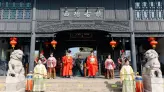
[Xitang Dream 1-Day Tour] Hangzhou, Xitang Ancient Town
[Water Town Route] Single water town stroll, premium no-shopping tour [Thoughtful Service] Makes your trip easier [Service Guarantee · In-depth Stroll] No shopping stops, expert guide, one bus throughout, relaxed vacation pace, worry-free travel [Bonus] One bottle of branded mineral water per person per day!
The cards above are itinerary references; prices and schedules are subject to real-time info on the booking page. They complement the off-the-beaten-path route in this article rather than replace it.
FAQ
When is the best time to visit Xitang to avoid crowds?
The most comfortable times are weekday mornings and evenings after rain. Avoid the main streets at noon on weekends and public holidays. Overcast days and light drizzle make for better photos. Crowd-control measures and ticketing policies are subject to the day's announcements. If your dates aren't set, use custom private travel to lock in a travel consultant first, or check group tour schedules.
How do you explore off-the-beaten-path routes without feeling rushed?
Suggested order: residential alleys (deeper into Shaoxianggang / Tawan Street) → Zuiyuan Garden or Ni Residence → zone out on the riverside stone steps → slow boat on a side canal → covered corridor night lights. Use the main streets only to pass through, not for photo ops. If you want commentary and pacing control, consider hiring a private guide.
How do you choose boat tickets and night cruises without getting ripped off?
By day, admire the bridge arches and building facades; by dusk, watch the lantern reflections. Pick side routes or quieter hours, and confirm the dock, duration and whether rain gear is included. Prices and schedules are subject to the day's operating notices. To fit a boat ride into a private itinerary, use custom private travel; some group day tours also include a boat ride—check the booking details.
What's the easiest way to get to Xitang from Jiaxing Station or Jiashan South Station?
High-speed trains usually arrive at Jiaxing Station / Jiashan South Station, where you can transfer by bus or taxi. If you have lots of luggage, are traveling with seniors, or want to catch an early-morning boat, book station transfers or a same-day private car for door-to-door service. If driving, check parking lot locations and posted fees.
How do I choose between a day tour and a custom itinerary?
For a hassle-free Hangzhou-to-Xitang day trip, check out the group tour "Xitang Dream Day Tour". To avoid crowds, enjoy privacy, and arrange your own hotel and boat, choose custom travel. For flexible transport only, use a private car; for station transfers only, fill out the station transfer form.
Is it suitable for a slow-paced trip with seniors and kids?
Yes, but keep the pace easy: skip the narrowest alleys, avoid crossing too many bridges in a row, and mix in boat rides and teahouse breaks. When the stone paths are slippery, stick to the covered corridors. Not sure about the pace? Ask a travel consultant or hire a private guide; use station transfers from the station to the entrance to cut down on walking.
Turn this off-the-beaten-path travel guide into an itinerary
This guide recommends starting with the residential areas and lesser-known cultural spots to set expectations, then choosing a group tour for a hassle-free day trip, or custom travel for a private, crowd-free experience. Hire a private guide for the local stories, book a private car for door-to-door transport, and fill out the station transfer form for high-speed rail arrivals and departures (the form already includes the consultant ID).
Xitang's charm lies in its stone steps and side canals. Once you've picked your dates and group size, tell your travel consultant whether you're staying in town and if you'd like a slow morning boat ride, and you'll be ready for the next step. Ticket prices and schedules are subject to the day's announcements—double-check before you set off.