

A winter food map of Wuzhen
Here's how to eat through Wuzhen West Scenic Zone (乌镇西栅) in winter. Head to the Water Market (水上集市) early to join the morning tea crowd with paopao wontons and Dingsheng cake. During the day, snack as you walk on pork rice cakes from Yongping Rice Cake Shop (永平粉团铺), fresh-baked flatbreads from Qiaoliqiao and sticky rice cakes from Jinji Pastry Shop (锦记糕点铺). In the evening, find a small riverside restaurant for a clay-stove hot pot, and before bed, stop by the lingkao boat for a cup of rice wine.

To try the rice cakes, the ladled rice wine and the clay-stove hot pot in one day, with someone to explain the dishes and help you order, hire a private guide as your food guide. Most shops in this article are in the West Scenic Zone, which needs an admission ticket (reference price ¥150 as of November 2026; check the official announcement). Wuzhen's official ticket rules say entry is by SMS QR code or Chinese ID card, so passport holders should keep their booking text message and go to the service window at the West Scenic Zone Visitor Center to get in.
Yongping Rice Cake Shop
Location and popularity
On the main street of the West Scenic Zone is a small shop selling traditional Jiangnan rice cakes: Yongping Rice Cake Shop. It's tiny, but it's one of the pastry shops in the scenic area that usually has a line.
What the rice cakes taste like
At the end of the flagstone lane, steam drifts into the dusk. When the steamer lid comes off, the white pork rice cakes are still too hot to hold, their juices soaking into the soft, dense dough. It's a recipe the shop has made for decades.
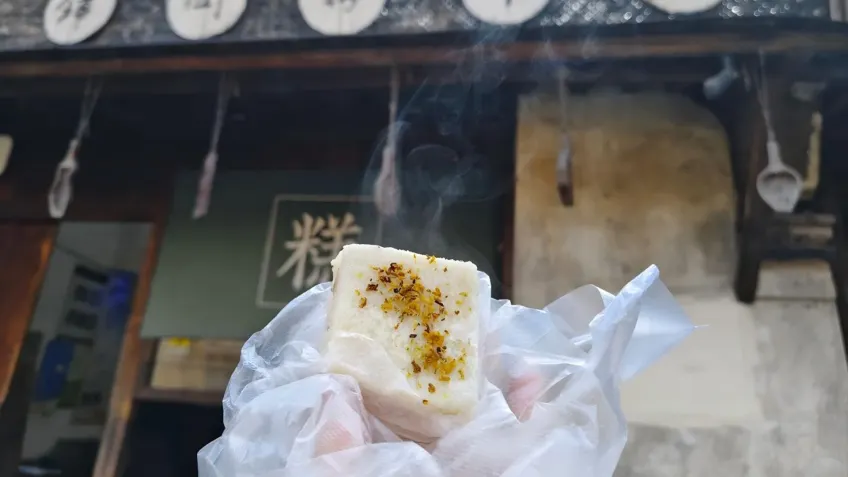
To fit the rice cake shops into a half-day walk, check the West Scenic Zone walking route in our Wuzhen travel guide.
Qiaoliqiao flatbread shop
Around the corner at Qiaoliqiao Shaobing Shop, fresh flatbreads come out of the oven onto greaseproof paper. They crackle when you bite in, full of sesame and toasty flavor from the charcoal fire.
The shop is inside the West Scenic Zone. Its flatbread comes from the traditional incense-season shaobing. The Wuqing Town Gazetteer notes that these came in salt-and-pepper, dried vegetable and sesame flavors and were sold only during the temple incense season. Because they're flaky, crisp, easy to carry and good hot or cold, they later became a year-round snack.
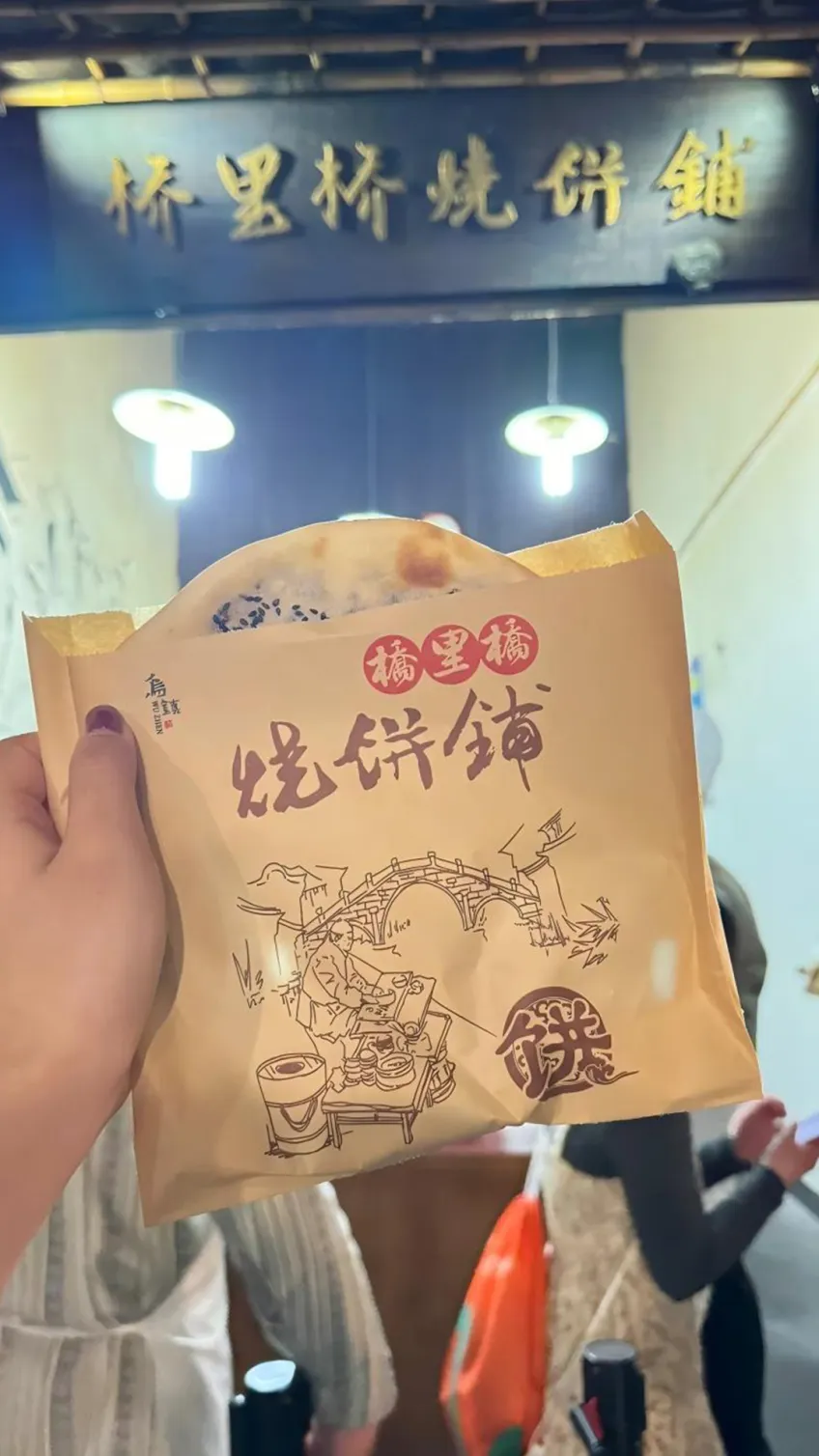
The flatbreads are easy to carry and good for eating as you walk.
Wuzhen pastries: Jinji Pastry Shop
Address
Address: 318 West Scenic Zone Main Street, Wuzhen.
Wumifan (black rice)
Jinji's wumifan (black sticky rice) has a deep, glossy color from a plant dye. It's soft and chewy, with a light scent of osmanthus and bamboo leaf, moderately sweet and filling.
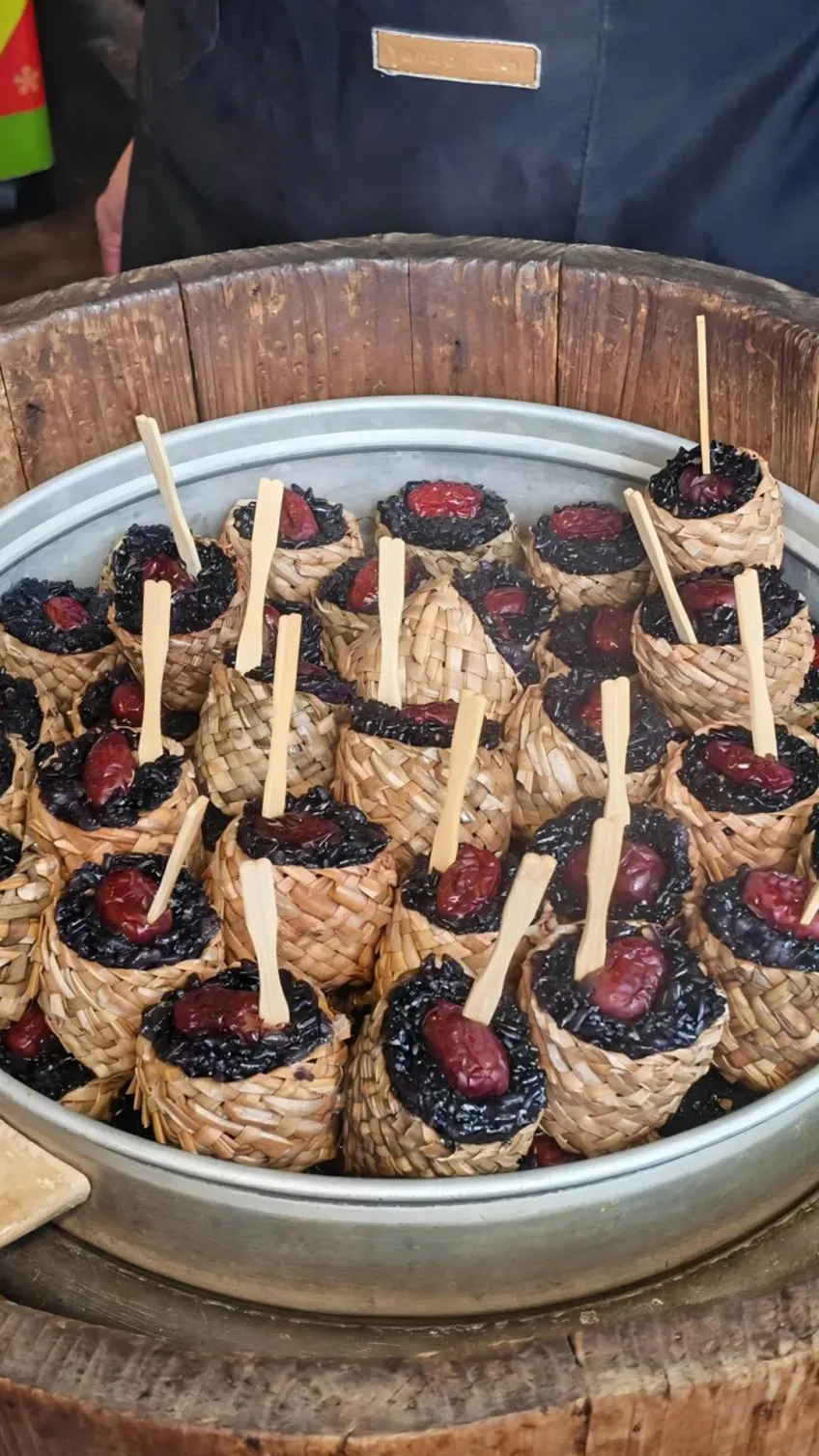
Black rice topped with red dates is a good energy boost halfway through your walk around the West Scenic Zone. Visitors often take it home along with the Dingsheng cake below.
Limited supply: Dingsheng cake
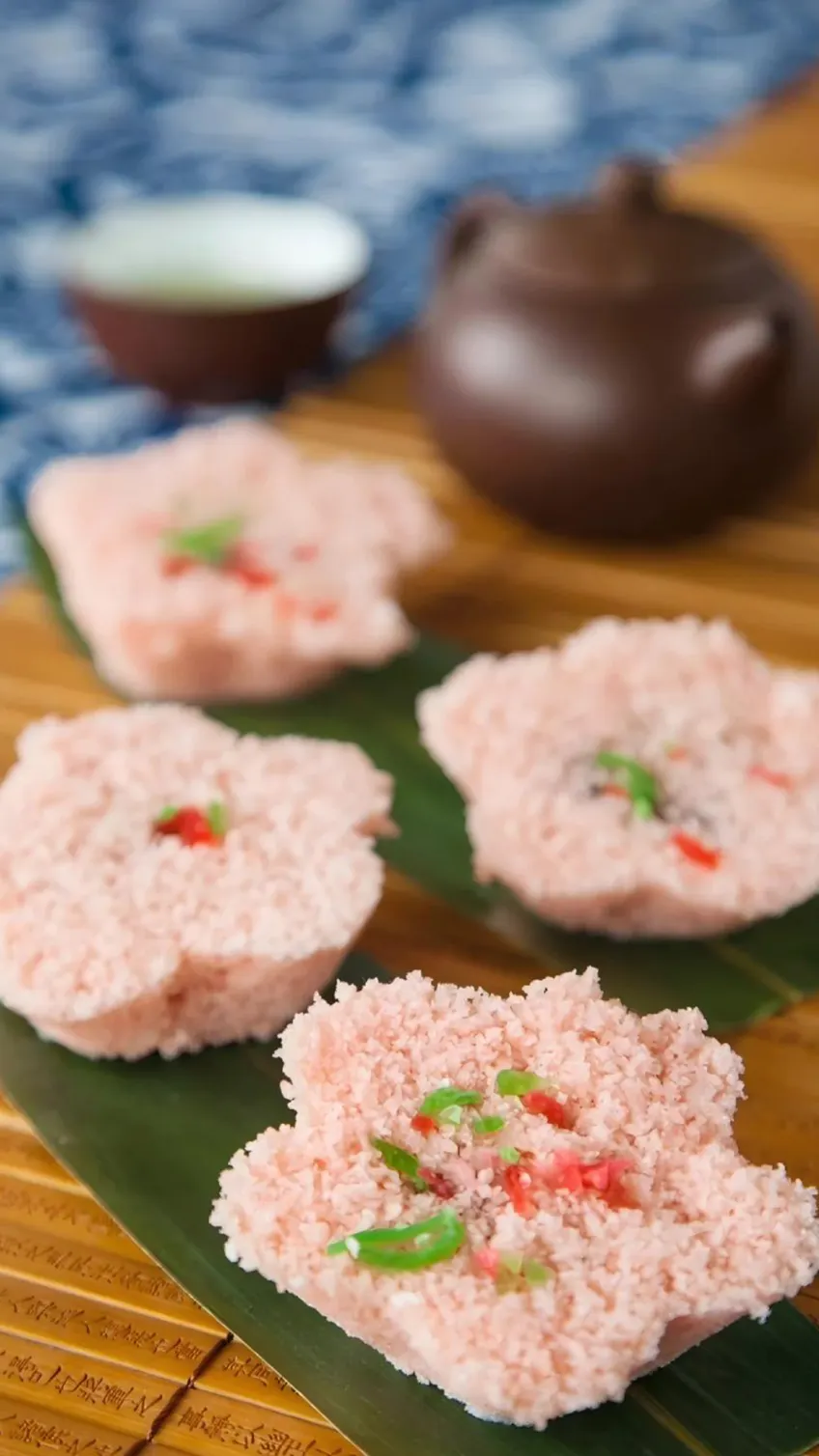
Besides black rice, Dingsheng cake is a house specialty. The red stamp on top looks like fresh cinnabar ink, and the soft, sweet cake carries a wish for success from the days of the imperial exams.
The story of Dingsheng cake
The name carries a wish passed down in Wuzhen for generations. Legend says that in the Southern Song dynasty, people made these cakes to send off General Yue Fei's troops and named them dingsheng, meaning sure victory. Wuzhen has always prized learning, so families also steamed a few baskets for relatives leaving to take the imperial exams, wishing them a top result. One small cake carries a wish for victory on the battlefield and in the exam hall.
Mu Xin's boyhood breakfast
In Wuzhen, food has never been just a local product. It's living local history. Taste something hot and fresh here and you'll see how the town turns simple ingredients into something memorable over a plain kitchen fire. Want to come to Wuzhen and try Mu Xin's boyhood breakfast? Let our travel advisor plan the trip first.
Mu Xin's "A Boy's Breakfast"
In Wuzhen, there is a poem written about breakfast.
Early morning sunlight / lights up a corner of the high wall / magpies chatter / the courtyard flowerbeds lush and green / a maid softly announces breakfast is served / four dishes set on a round rosewood table / Gusu soy-braised duck / Pinghu wine-preserved egg / shredded steamed bamboo shoots / diced dried tofu tossed with malantou (Indian aster greens) / a bowl of warm, pearly white fragrant rice porridge / nothing is gentler than porridge
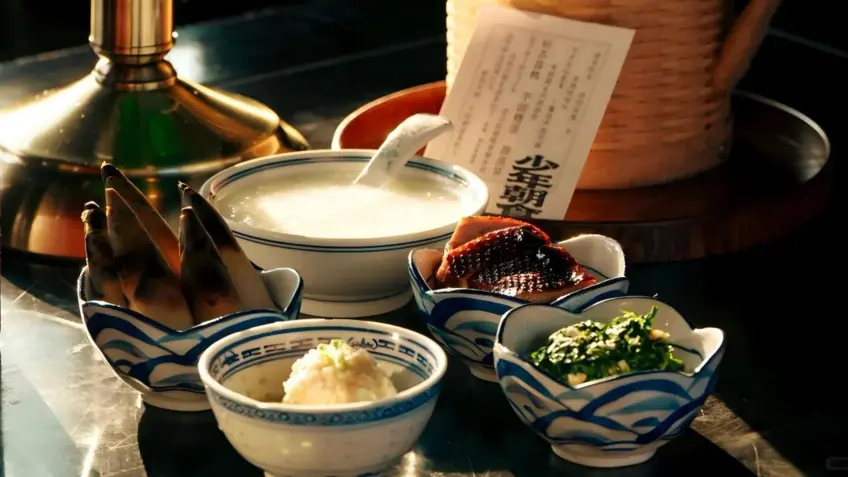
This poem describes the breakfasts Mu Xin ate as a boy in his family's old house in Wuzhen. Back then he was the young master of the Sun family, living in the old family home on Dongda Street. Every morning he woke to chattering magpies, and a maid would quietly announce that breakfast was ready. Dish after dish was laid out on the round rosewood table: richly sauced Gusu soy-braised duck, soft, jiggly Pinghu wine-preserved eggs, crisp hand-torn steamed bamboo shoots, and diced dried tofu tossed with malantou greens, all with a bowl of warm, pearly white rice porridge. This was the taste of Wuzhen in Mu Xin's memory.
A winter breakfast in Wuzhen
In the Wuzhen morning, braised duck, wine-preserved eggs, steamed bamboo shoots and malantou bring the warmth of the water town to the table. Add fragrant rice porridge and breakfast is served. At the Mu Xin Literature-themed Space, eating becomes another way of reading.
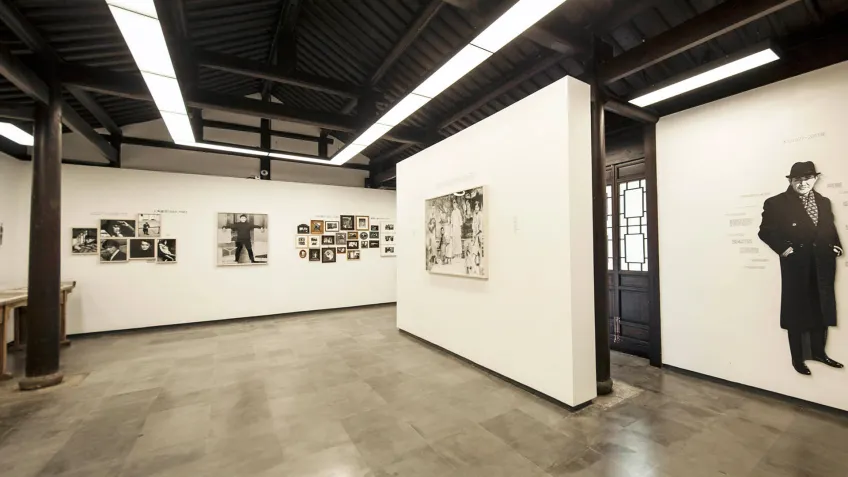
The steam from the rice porridge carries an echo of Mu Xin's poem Slow Days Gone By, and each bite feels like a footnote to it. A Wuzhen morning feeds both the stomach and the spirit.
Lingkao: buying just what you need
What is lingkao?
In Wuzhen you can find a nearly forgotten custom, lingkao. It isn't on store shelves but on hand-rowed boats and in old street shops. In the Wu dialect, kao means to ladle or scoop, and lingkao means buying small amounts, measured out as needed.
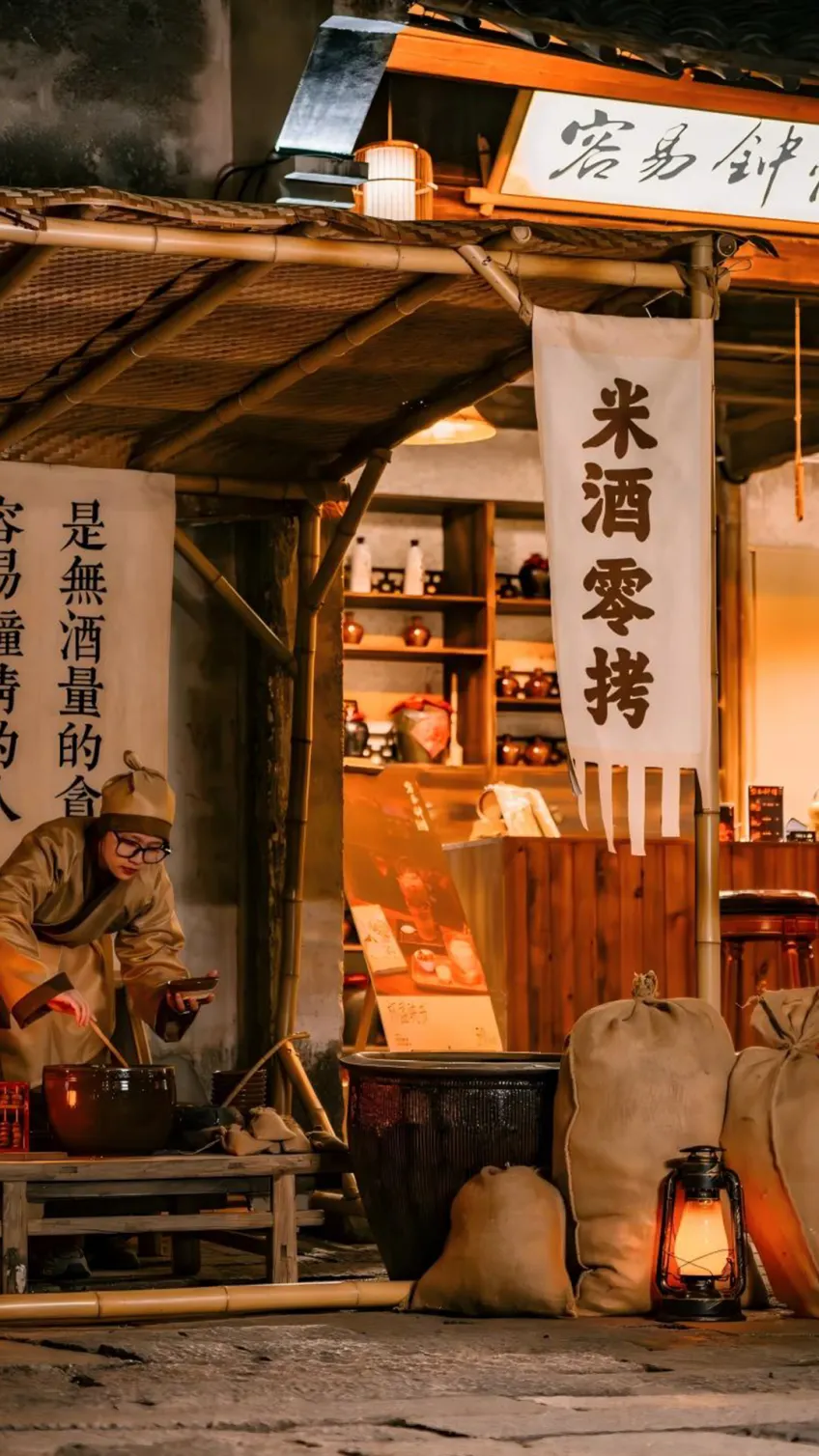
In the past, people in Wuzhen bought soy sauce, wine, vinegar, rice, and oil by lingkao. When a bottle at home ran empty, they would go to the shop and ask for "half a jin of soy sauce." The shopkeeper would dip a bamboo ladle into the jar and pour it through a funnel into the bottle without wasting a drop—ladling out exactly what the customer asked for, to be carried home in their own bottle.

Walk up to the lingkao boat and the old brewer will tell you it's newly harvested sticky rice, fermented the traditional way. The warm wine is sweet and smooth, made the way it has been for centuries. At dusk the boat ties up at the bank, and the riverside lights come on as the smell of rice wine drifts up.
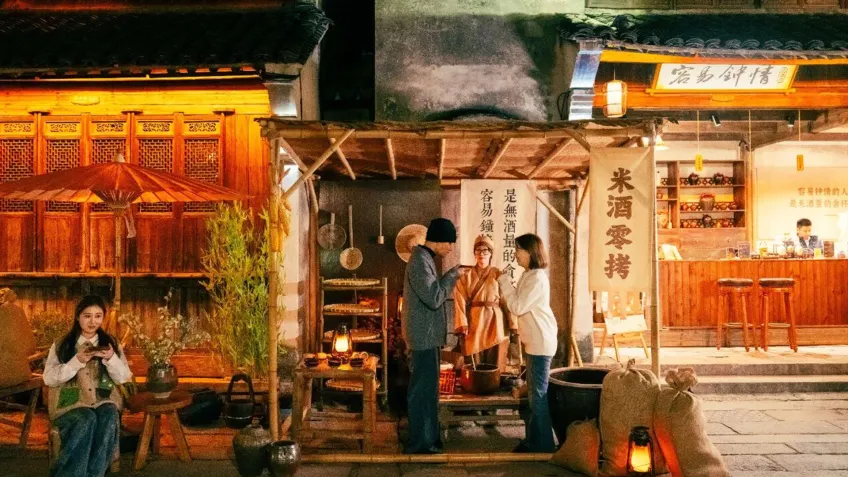
Xuchang Soy Sauce Workshop (叙昌酱园) is one of Wuzhen's oldest sauce makers, more than 100 years old. Rows of big vats fill the courtyard under woven bamboo covers, dusty from sun and dew. Inside, a shop assistant ladles pickles from an old vat. Sun by day and dew by night, she says, is the old way.
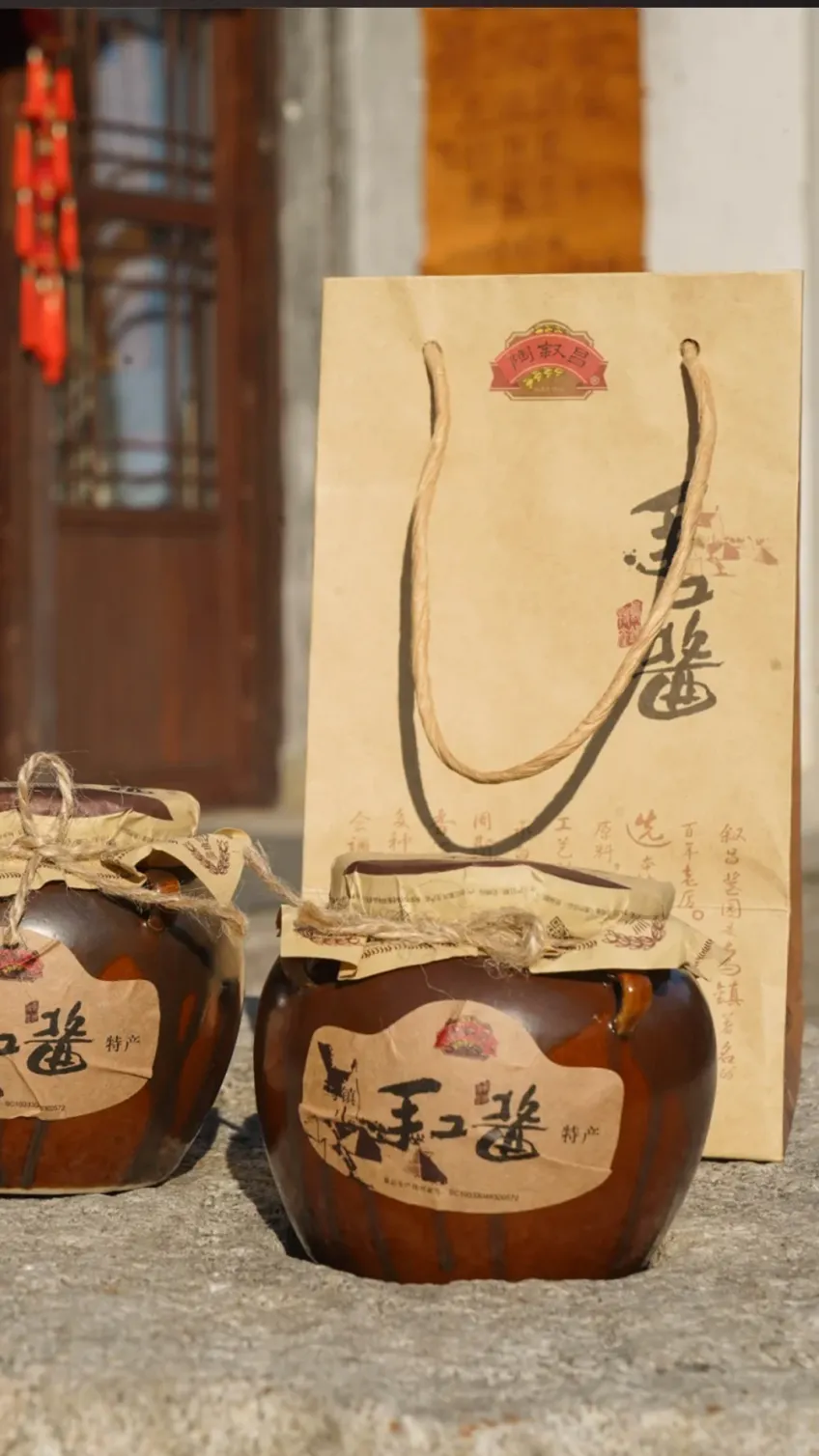
Handmade sauces in paper gift bags make good souvenirs. To add a Wuzhen intangible heritage craft workshop in the afternoon, ask our travel advisor through the inquiry form.
Exploring the Tippler's Map
Pick up a special empty cup here to start the Tippler's Map trail.
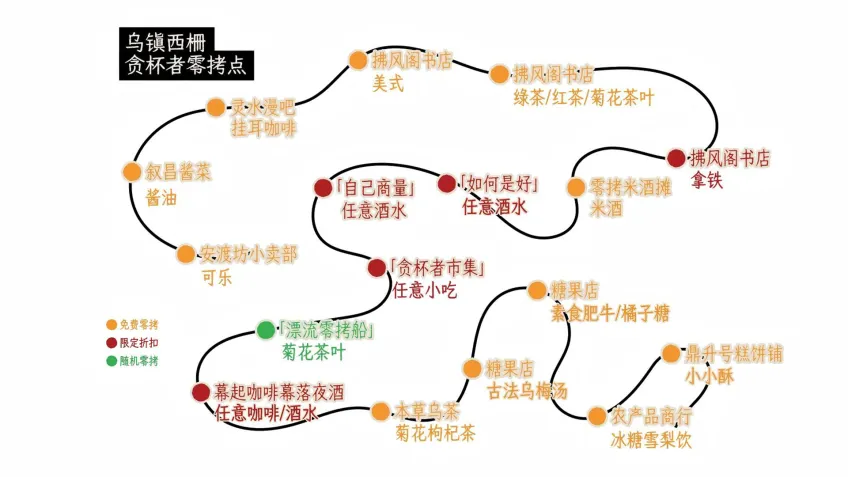
The Tippler's Map is a drinks trail the scenic area designed for visitors. Instead of ticking off sights, it links bars, taverns and traditional wine shops across the West Scenic Zone, so you can enjoy another side of Jiangnan over a drink as you stroll.
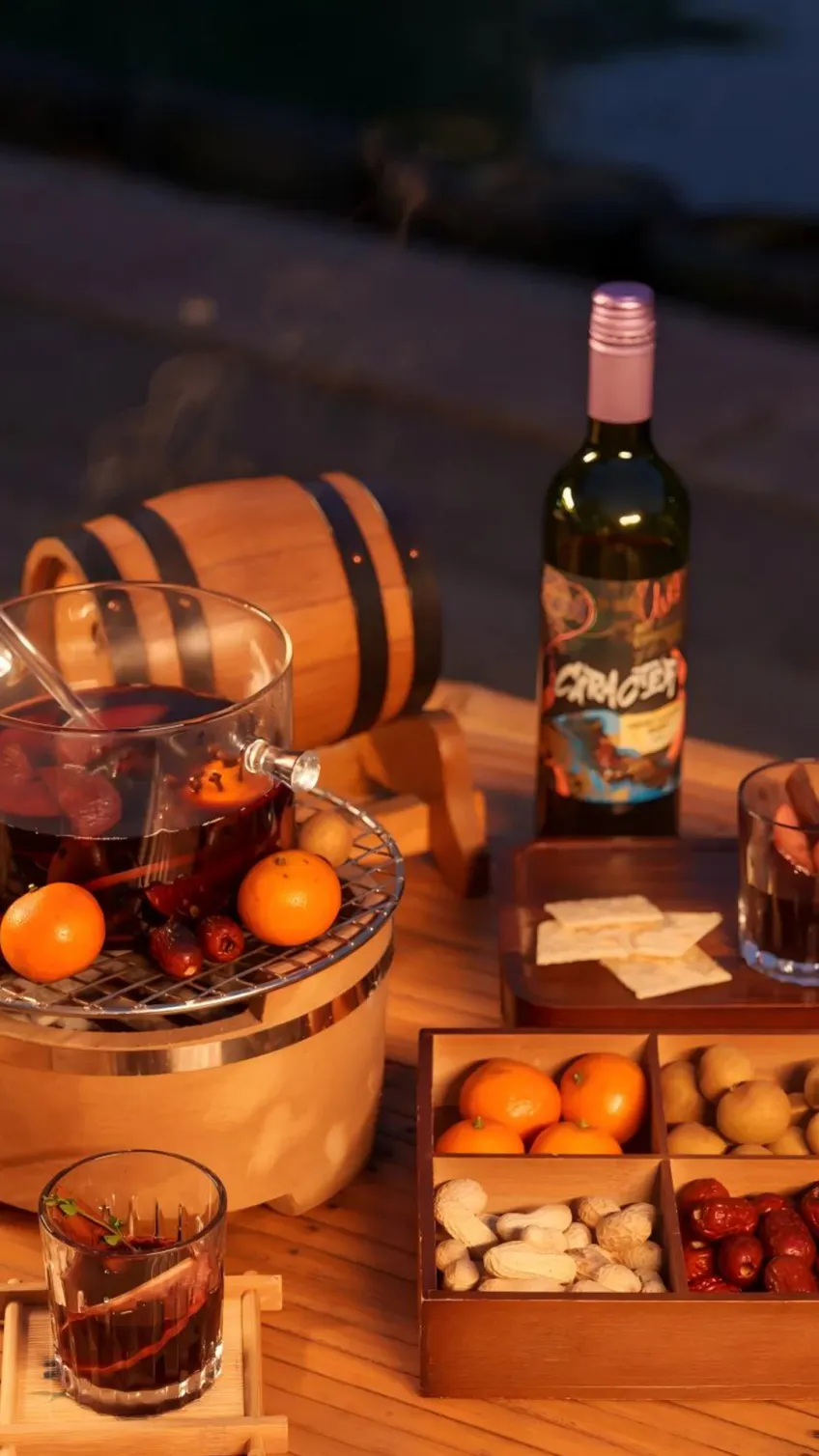
Open a blind box at Rongyi Zhongqing Hot Wine House and you might randomly find a book by Mu Xin. Order a "Slow Sunlight · Warm Jujube Honey Wine" — Wuzhen rice wine, red dates, and honey simmering slowly over a small clay stove, warming your hands right through. At Ruhe Shihao Tavern, use the "Twelve Tipsy Prescriptions" as inspiration to mix yourself a warm winter drink.
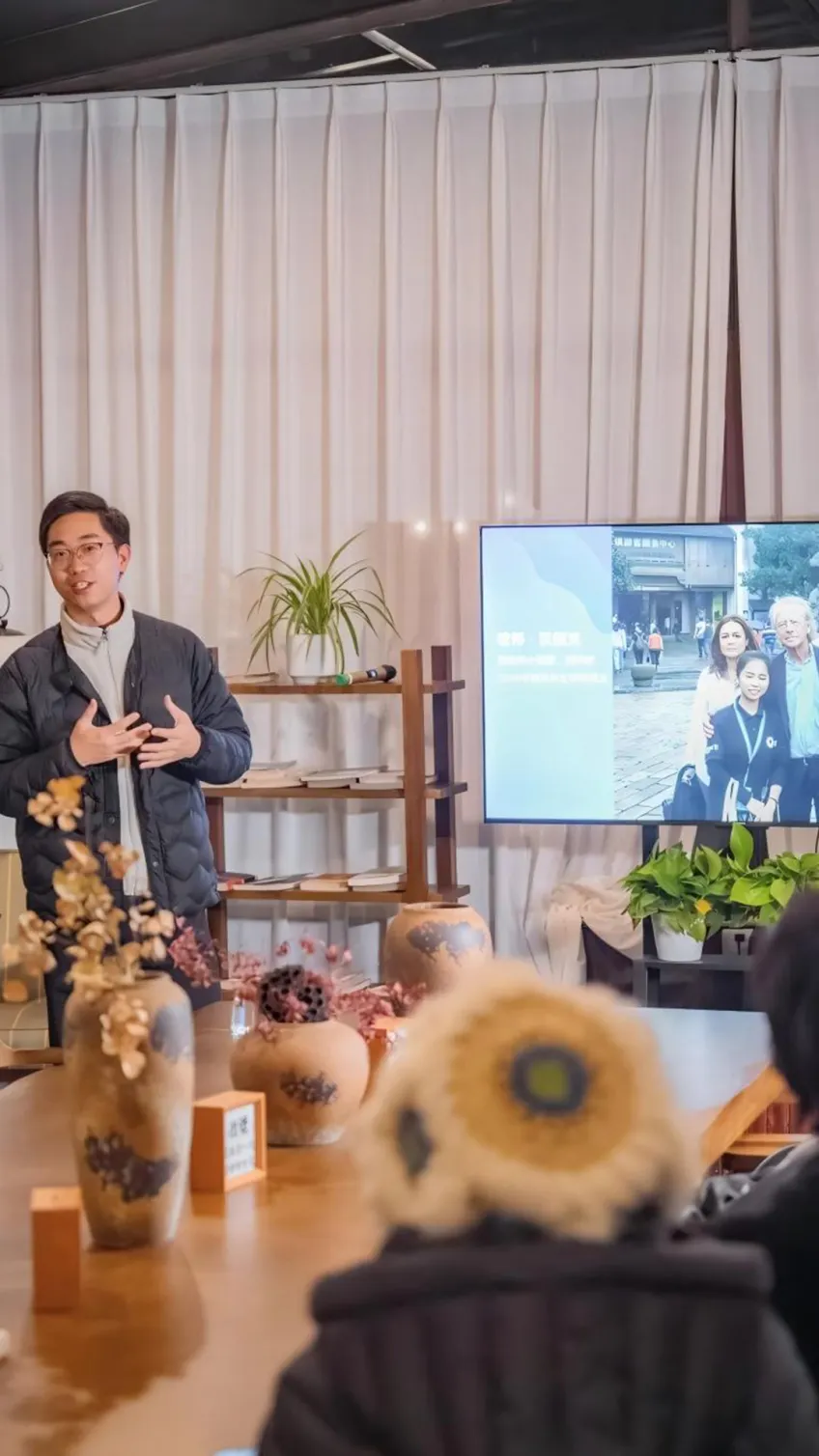
At Muqi Coffee & Muluo Night Bar, sit with strangers for an unscripted Wuzhen Talk session. Staff step out of their usual roles and, over a drink, talk honestly about their lives, skills and passions. It's not a canned scenic-area introduction but real stories full of the town's character.
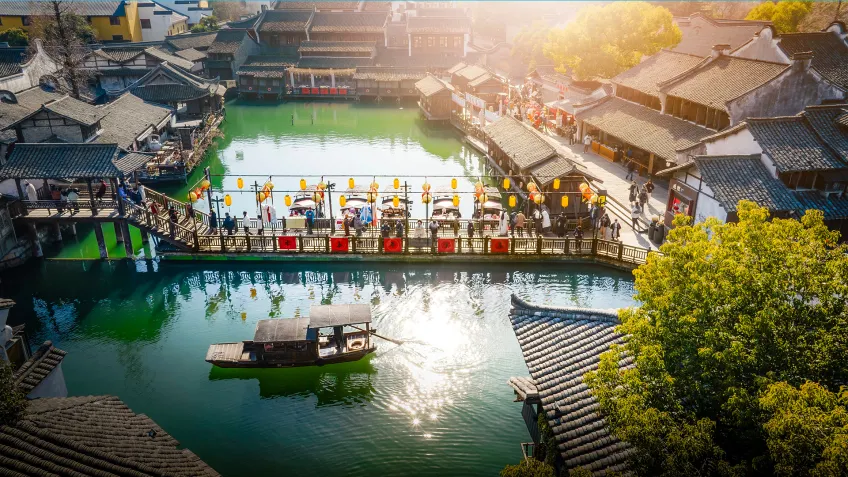
They may talk about keeping up the family sauce vats, sunned by day and left out to the dew at night, or the sound of water under the oars, or how they came here from elsewhere and settled on these flagstone lanes. It's not a standard tour script but real moments told in the voices of craftspeople. To fit the night walk and a drink into one evening, pair it with a slow-paced Wuzhen retreat stay.

Winter in Wuzhen: clay-stove hot pot
The heartiest winter meal
When the lanterns light up one by one, the real highlight begins. Find a small waterside shop and order a traditional clay stove hot pot. With charcoal sizzling, the clay pot simmers tender lamb shank, bone-in lamb, and offal that tastes better the longer it cooks.
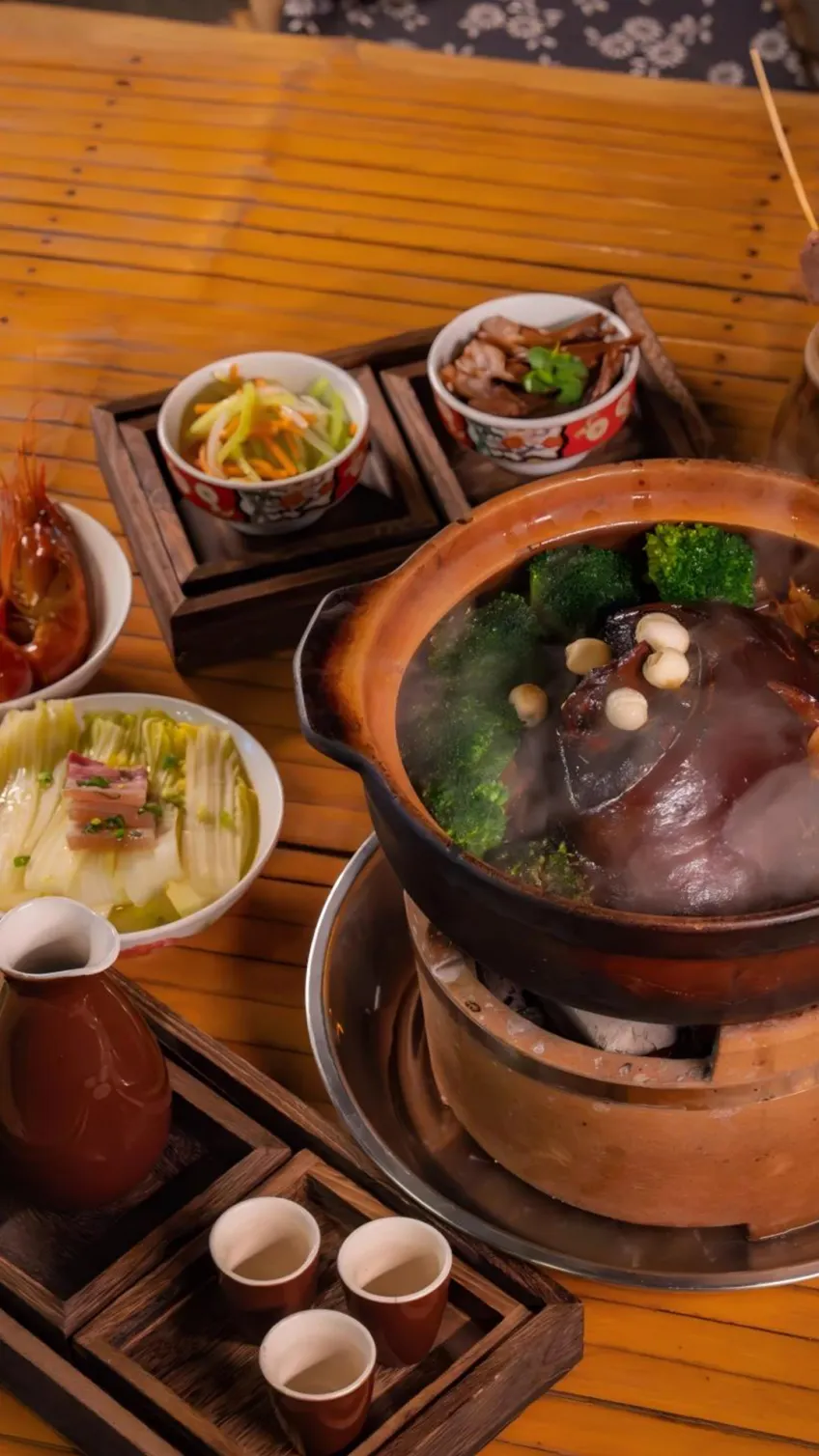
A table set with a hot pot, warmed wine, and small dishes quickly drives the chill away. Smaller groups can order a half portion; if you don't eat beef or lamb, ask for a mushroom and vegetable pot instead—just check what the broth is made of first.
Where to eat clay stove hot pot?
Plenty of places in Wuzhen serve clay-stove hot pot, and the small riverside ones are best. There are a few on the old street in the West Scenic Zone, with small fronts and window seats over the water. At night, with the lanterns lit, you have the river and lights outside and charcoal warmth inside.
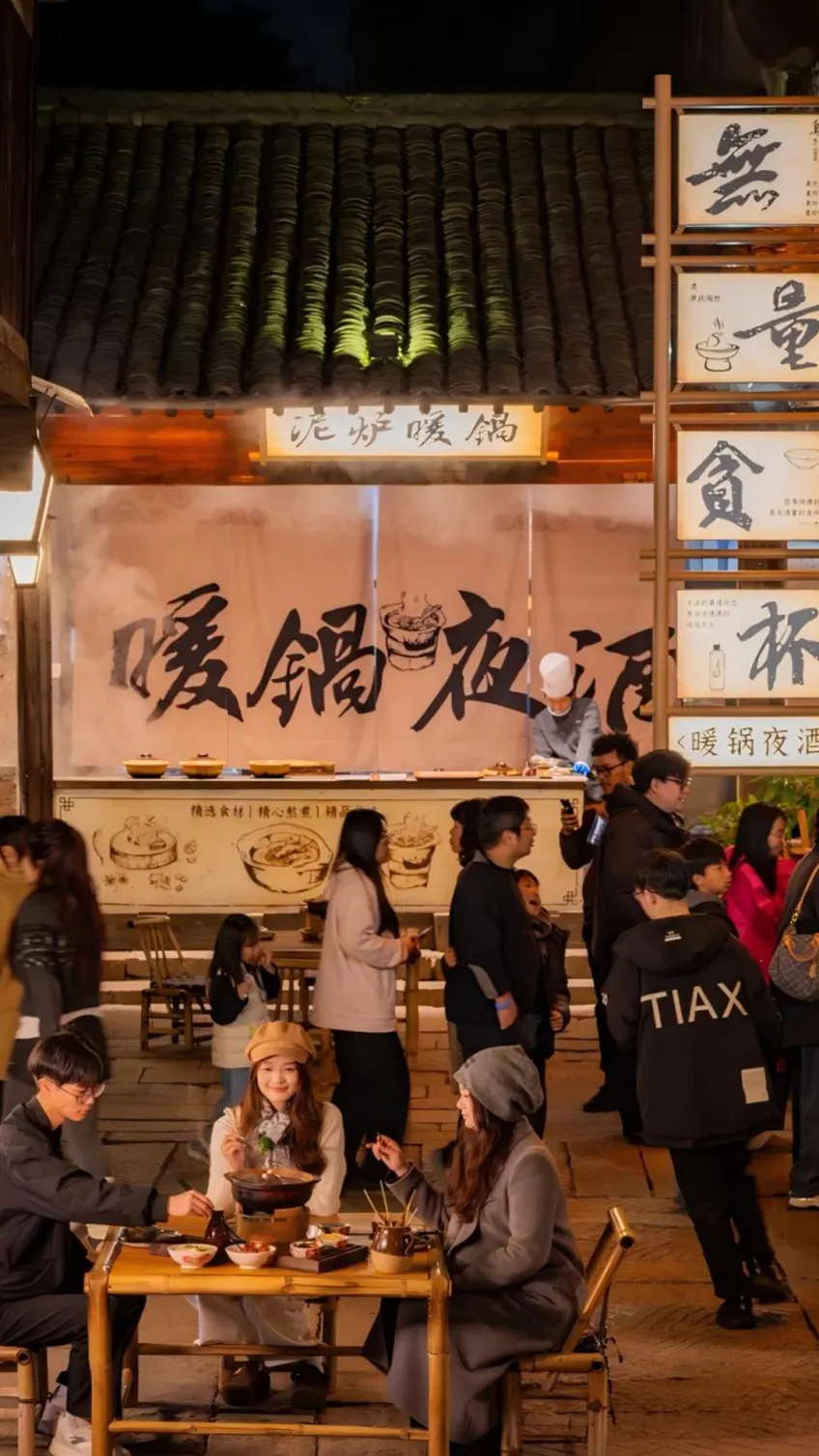
Sip warm Wuzhen rice wine, chat with friends and watch the night outside. Faces turn red in the steam, as if everyone at the table is taking part in an old ritual. The little red clay stove of Bai Juyi's poem is still here in Jiangnan.
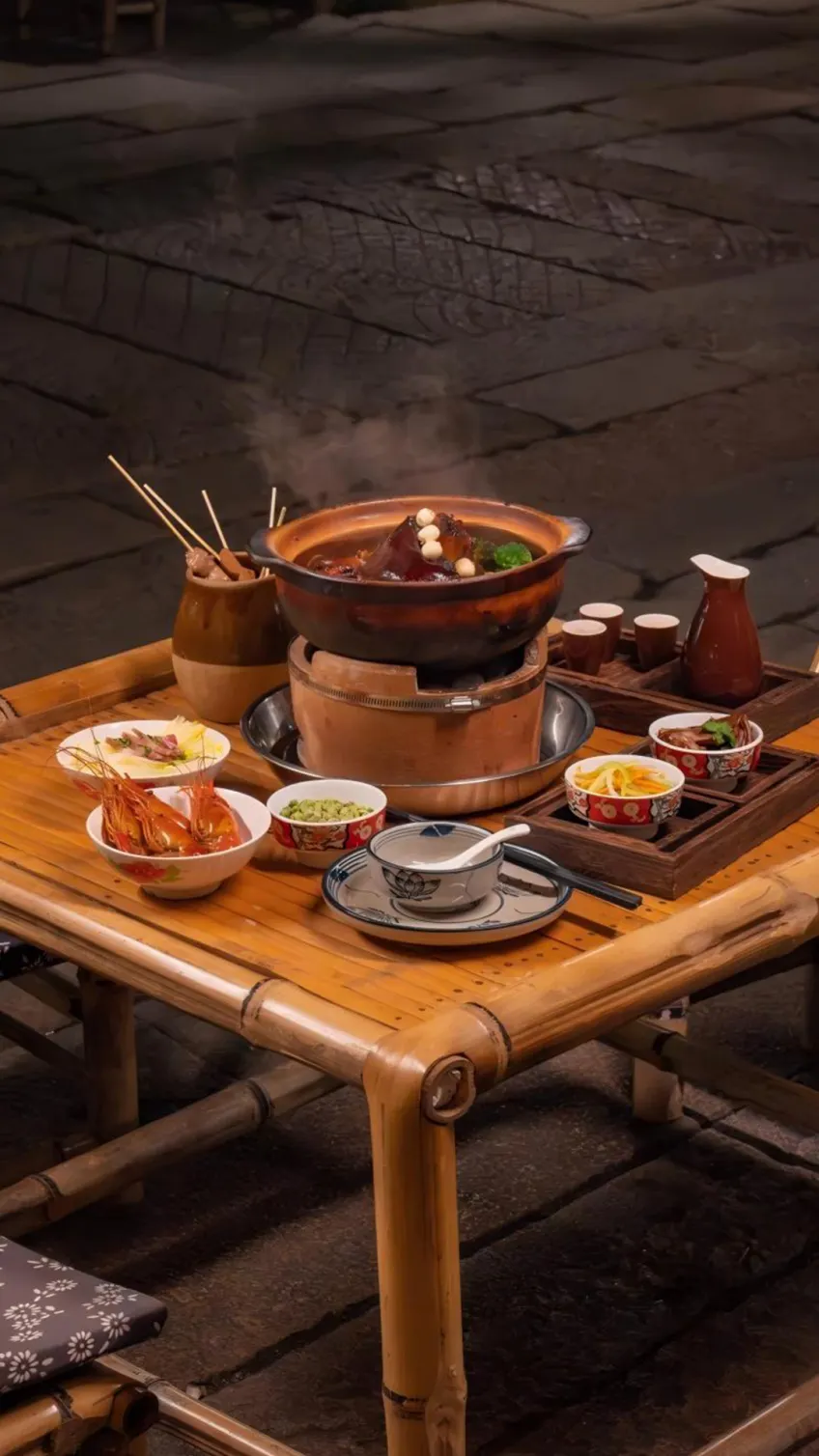
Step into the light-and-shadow dreamscape of Lingshuiju, or gather around a stove in the Mushroom House courtyard for idle chat, and you'll understand: the "slowness of days gone by" in Mu Xin's poem isn't just about carriages, horses and mail. It lives in the patience of ladling wine from the barrel, the warmth of a pot of heated wine, and the leisure of a single meal.
The "slowness" in this poem isn't just about time—it's a state of mind. The patience of dipping and lifting the bamboo ladle when scooping wine, the unhurried warmth of charcoal in a clay-stove hot pot, the calm of laying out breakfast dish by dish. That kind of slowness is still alive in Wuzhen.
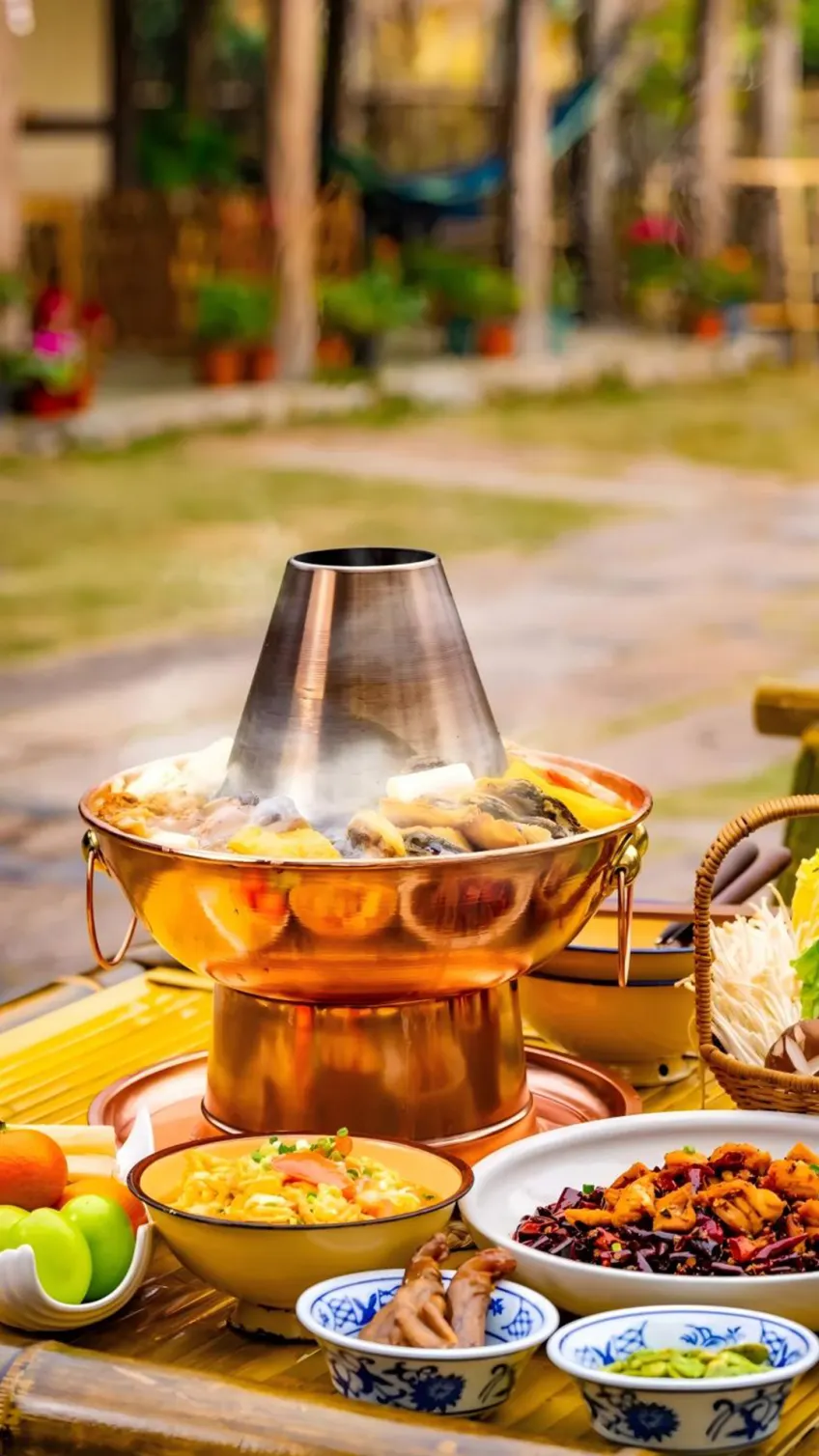
The courtyard copper-pot hot pot is better suited for lunch or group meals, offering a different vibe from the nighttime clay-stove hot pot.
Morning tea in Wuzhen
Staying inside the scenic area may be the best way to get to know Wuzhen. The old town is only quiet before the crowds arrive in the morning and after they leave in the evening. Under scenic-area rules, guests at the West Scenic Zone's own hotels can get a temporary pass at the front desk with their room card and ID, for free entry and exit during their stay. If your room doesn't include admission, you still need a ticket for your first entry.
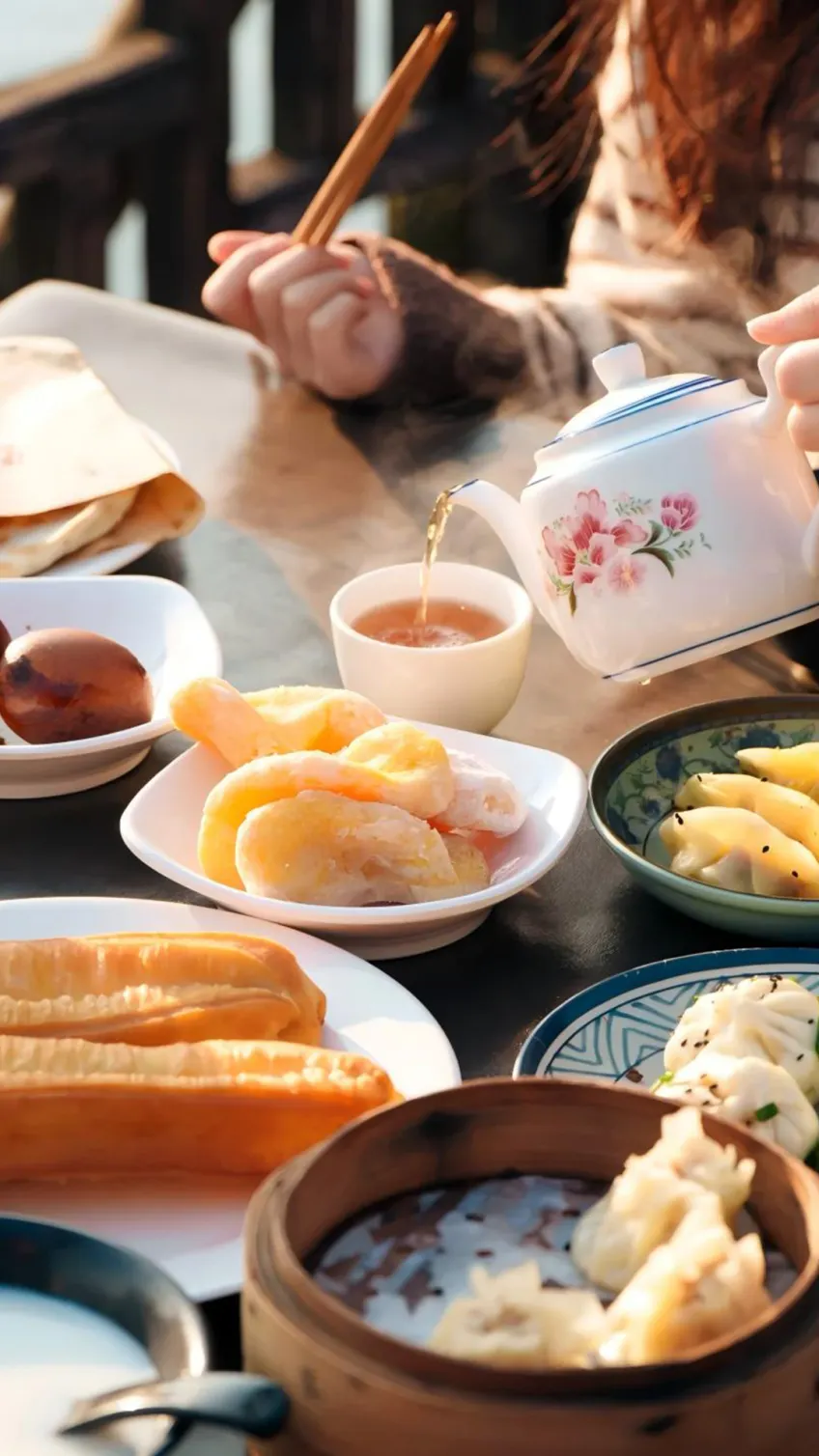
A pot of hot tea with youtiao and pastries is the most relaxed way to start a winter day in Wuzhen.
Be a morning tea guest in Wuzhen
In winter, the Morning Tea Guest breakfast starts at 7:30 a.m. Head out early while the market is waking up: steam rises from the stalls, vegetable sellers lay out fresh greens, and the seats in front of the opera stage are still empty.
The morning tea guest experience isn't just a meal—it's how locals in Wuzhen start their day.
Elsewhere, mornings are rushed—catching buses, hurrying to work. In Wuzhen, mornings can be slow: find a seat at the Water Market, order a pot of tea, a plate of Dingsheng cake, and a bowl of Paopao wontons, then eat and sip at your own pace. Watch the boats drifting by on the river, listen to Huagu opera on the stage, and chat now and then with strangers at the next table.
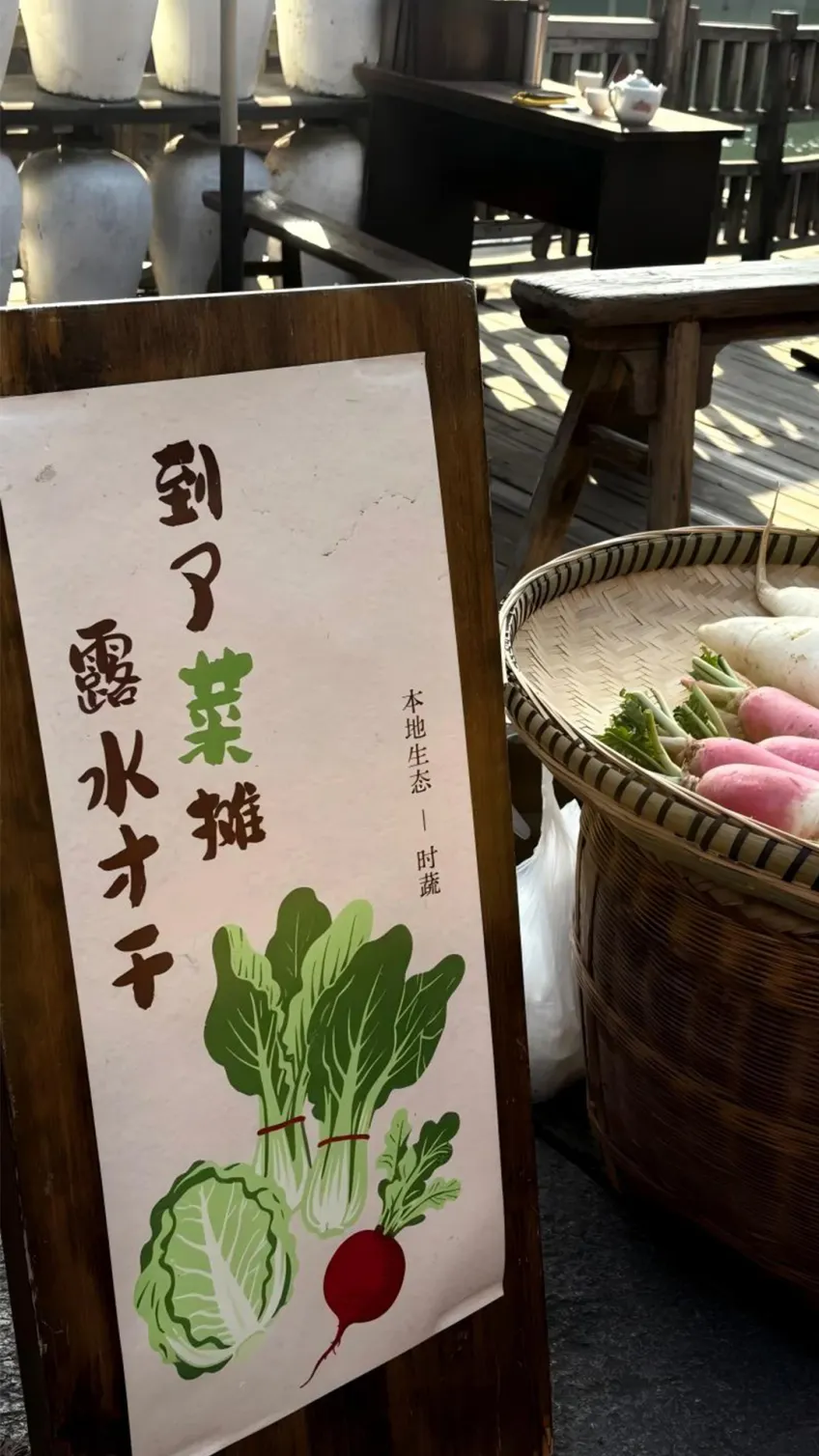
"By the time you reach the vegetable stalls, the dew has just dried"—the market sign reminds you that the morning tea guest rhythm wakes up with the dew. There are no hurried lines for food, just the freedom to stroll and pause as you please.
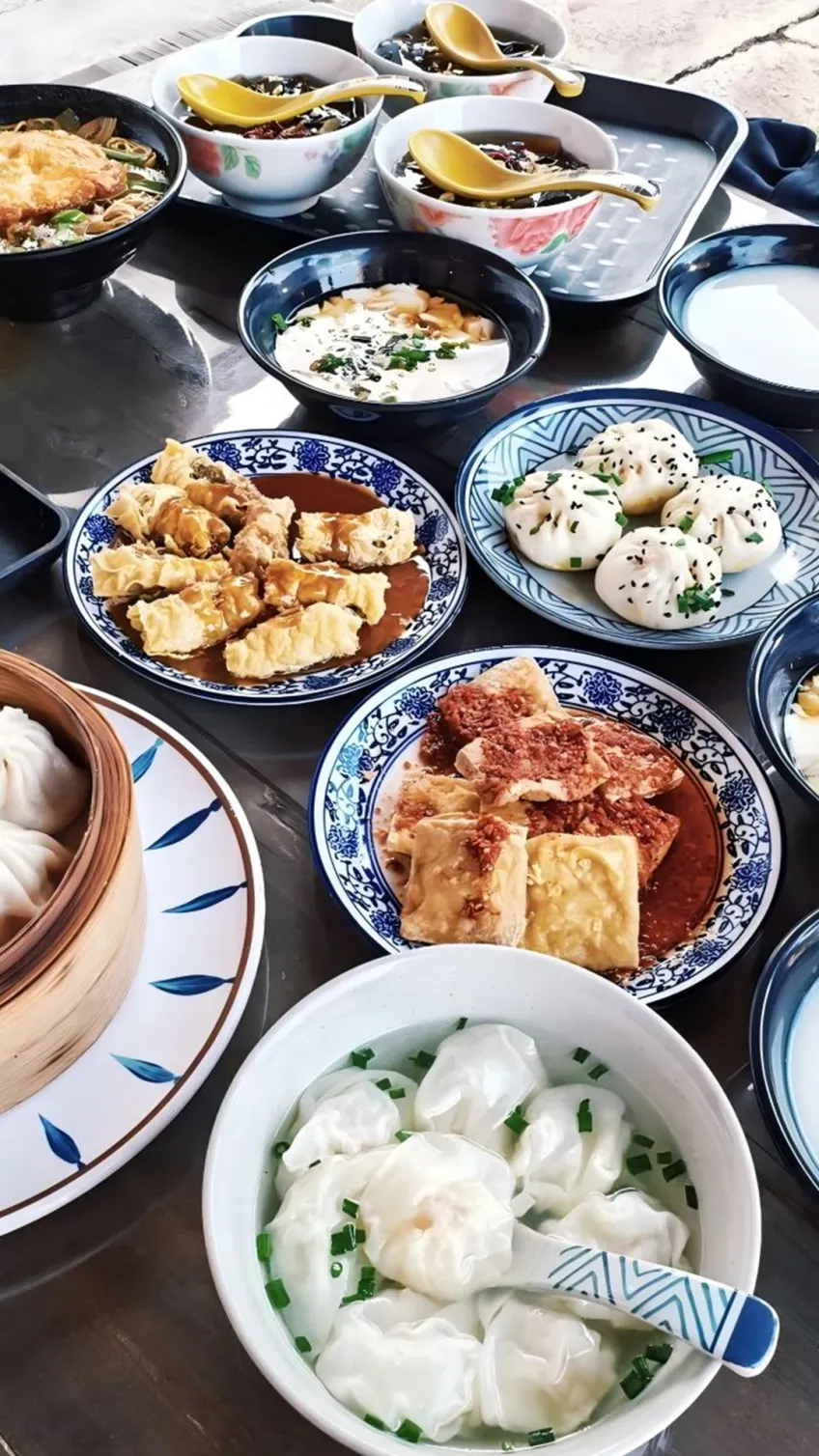
The morning tea spread is rich: freshly fried Youtunzi (savory doughnuts) with salty soy milk, pork and bamboo shoot shumai bursting with juice when you bite in, and a few spoonfuls of Paopao wontons with their delicate, floating wrappers. Stay at a hotel inside the scenic area and you can take your time tasting it all. Sitting beneath the opera stage in the early light, eating slowly, feels like stepping into the easygoing daily life of the locals.
Try a bowl of Shusheng lamb noodles
At noon, have a steaming bowl of Shusheng lamb noodles in the shade. Sunlight fills the courtyard, warm enough to make you squint. Everything is clean and orderly, almost dreamlike.
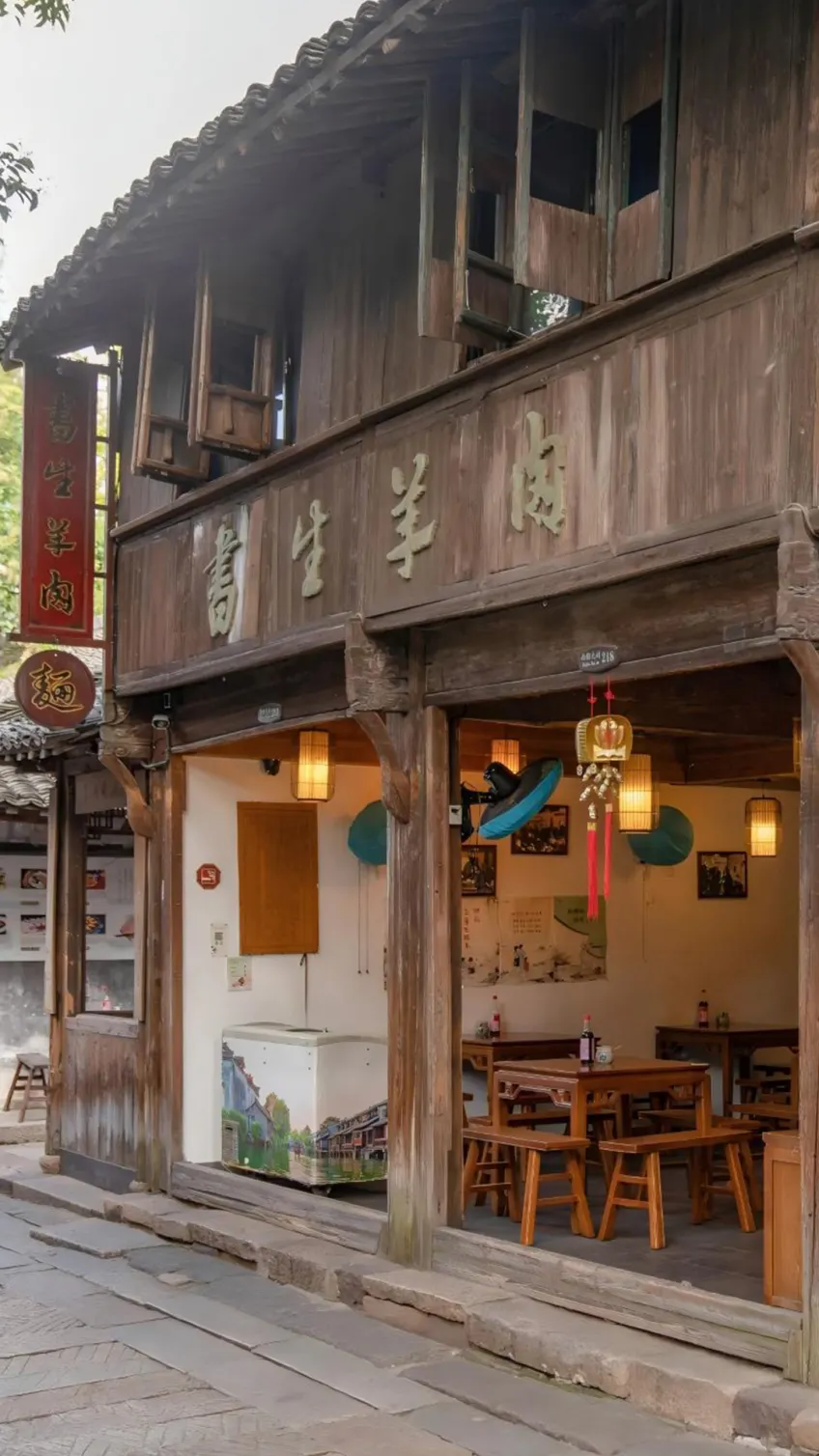
The wooden storefront is easy to spot. With the street noise softened and everyday life carefully recreated, the place feels warmer than real life, and that's exactly how many people picture an old water town at its best.
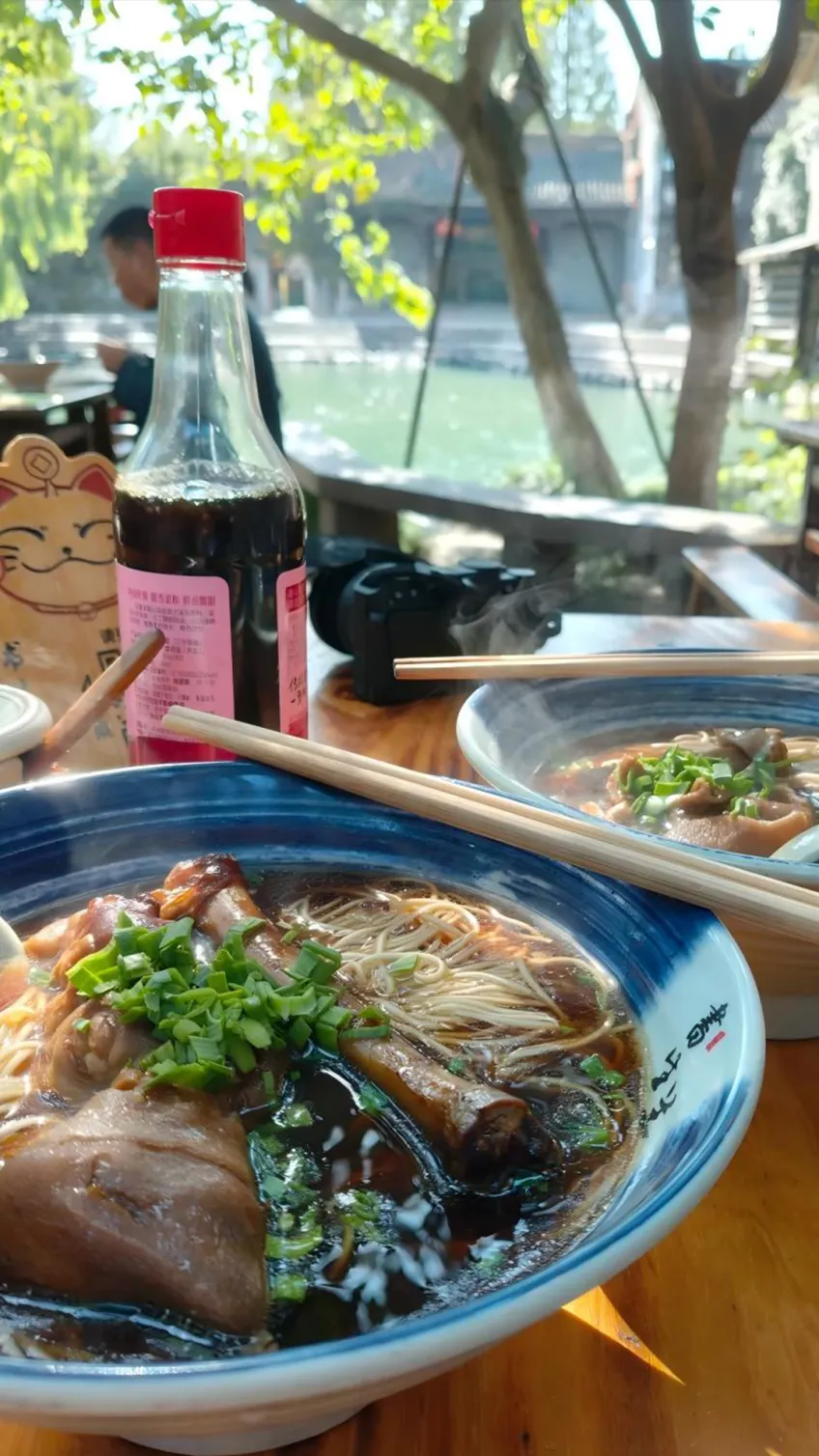
A steaming bowl of lamb noodles by the river is the simplest way to warm up in a Wuzhen winter. At dusk, take a gently rocking hand-rowed boat. The setting sun turns the white walls gold, and the creak of the oar and lap of water fade into the background. As the boat slips under a bridge, you feel the pace of Jiangnan, slow enough to hear time pass.
Wuzhen, a slow life you can take home
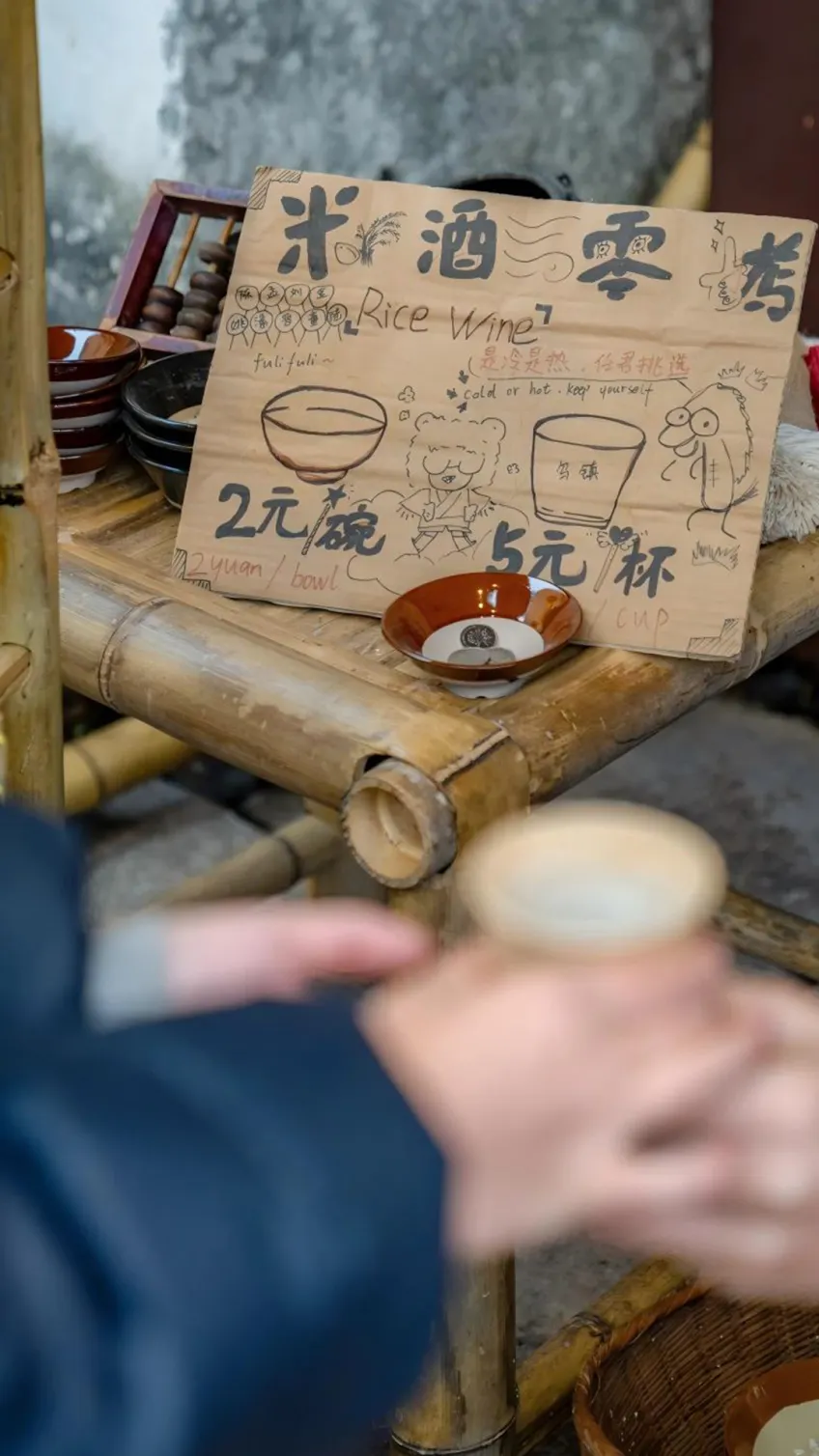
This winter, take a weekend to step away from the cold city. Visiting Wuzhen isn't just about a bowl of noodles or a pot of wine—it's about immersing yourself in a kind of "slowness" you can touch, taste, and carry home with you. Here, everyday charm isn't just in the air; it's in the warm cup you fill yourself, savoring the true flavor of life.
This route is a food trip through Wuzhen and a taste of Jiangnan you'll remember. Want to follow it?