

Hidden Nanxun Experience: Three-Course Tea and Pingtan at the Silk Guild Hall
Many visitors to Nanxun only see Xiaolianzhuang and Baijianlou. In fact, the old town streets are free to enter, and inside the Silk Guild Hall at 90-91 Nan East Street lies an even quieter local ritual: for about the price of two milk teas, you can sip the Nanxun three-course tea (sweet tea, smoked bean tea, and plain tea) and listen to Wu-dialect Pingtan storytelling. Performances start on the hour from about 13:00 to 20:30 daily, each lasting around 30 minutes. In the evening, you can also catch the Nanxun Night Banquet at Yiyuan Garden and a night tour of Baijianlou.
For round-trip travel from the Jiaxing or Huzhou high-speed rail stations, the most hassle-free option is door-to-door station transfer or a private car. To combine Nanxun, Xitang and Jiaxing into a one-day or multi-day trip, check out the private tour Xitang day tour or three-city history tour. If you prefer to set your own pace, use custom private travel or hire a guide. For an overview of our China routes, see the China travel guide.
Tell us your group size, dates, high-speed rail station and whether you want an evening banquet or night cruise, and our travel consultant can help time your visit to match the hourly Pingtan shows and evening performances.
Nanxun Ancient Town: The Cover of Jiangnan, China
Nanxun lies south of Lake Tai. Founded during the Chunyou era of the Southern Song Dynasty, it has a history of over 770 years. It thrived on the silk trade in the Ming and Qing dynasties, giving rise to the local saying "four elephants, eight oxen, and seventy-two golden dogs" to describe its wealthiest families. Back then, people said, "The whole city of Huzhou can't match half of Nanxun town."
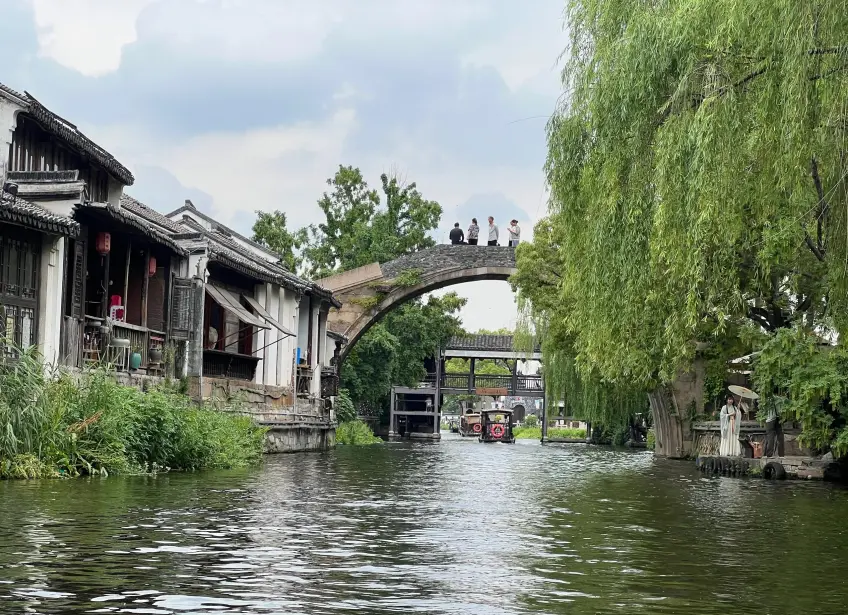
What makes it special is the blend of Chinese and Western styles: silk merchants brought back Western lifestyle elements and wove them into Jiangnan halls and window lattices. In 2014, Nanxun Ancient Town was inscribed as a UNESCO World Heritage site as part of the Grand Canal, making it China's first Jiangnan water town to earn this status. For architectural details, see Nanxun Architecture Walk and Nanxun Ancient Town Overview.
Where is the Silk Guild Hall?
A must-visit: Silk Guild Hall, No. 90-91 Nandong Street, Nanxun Ancient Town. The wooden layout, courtyard, corridor pillars, and carved doors and windows remain intact. Today it serves as a teahouse where you can listen to Pingtan storytelling and enjoy Three-Course Tea.
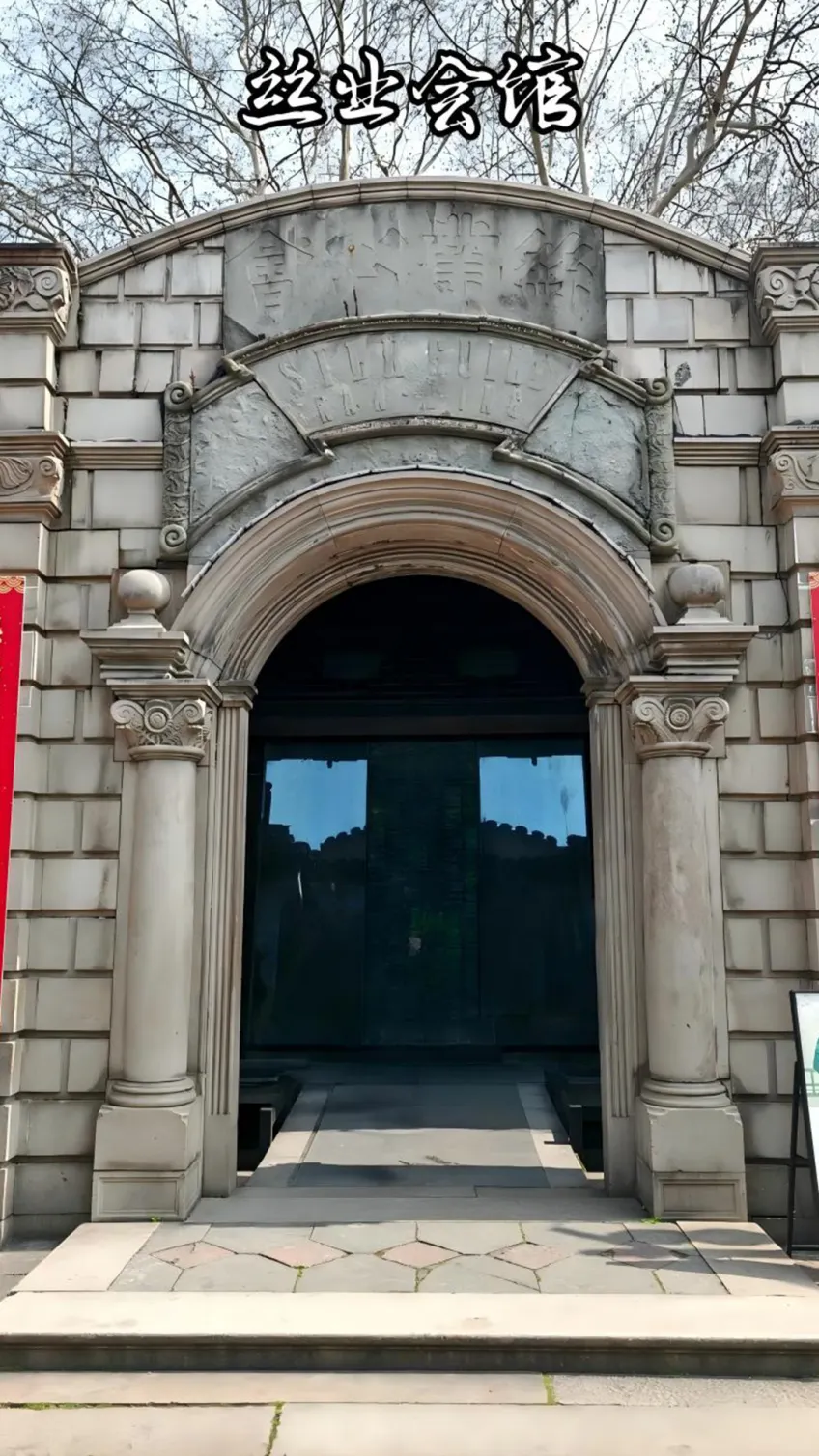
On the gate tower, you can see the stone carving "丝业会馆 / SILK GUILD".
Silk Guild Hall: Enjoy a Pingtan performance
In the storytelling hall, performers sing Jiangnan folk tunes and Wu-dialect ballads, often adding "Silk Ballad" and "Jili Silk", singing tales of silkworm blossoms and silk reeling in the soft Wu dialect—here, Pingtan takes on an extra layer of "silk" meaning.
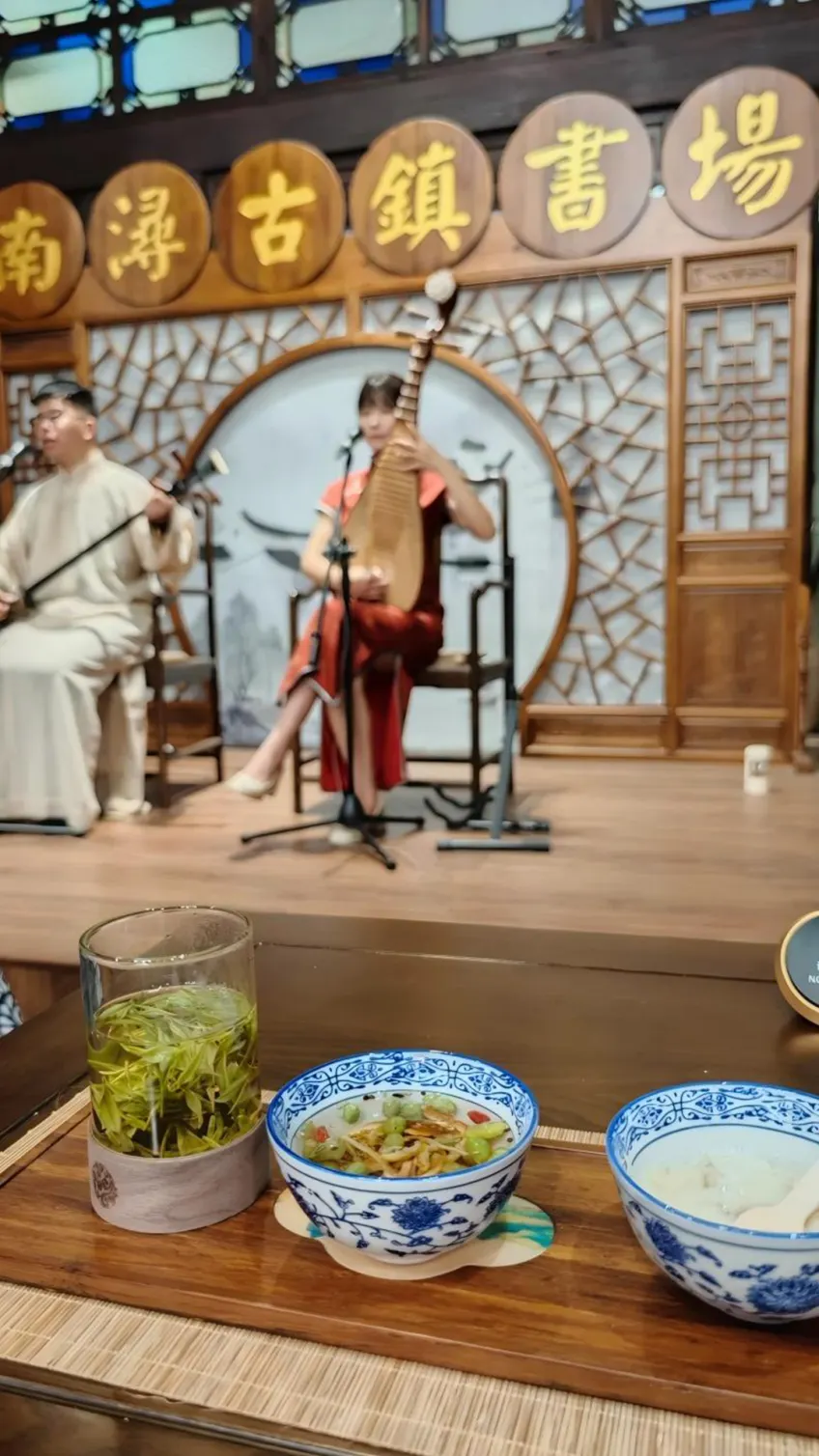
Pingtan storytelling is performed on stage, with a three-course tea set in front. Limited seating, first come, first served; most tables and chairs are traditional baxian tables and long benches, so you can watch the performers up close.
Pingtan performance schedule (subject to on-site confirmation)
Performance times
Typical schedule: 13:00–20:30 daily, shows start on the hour.
Performance duration
Each show lasts about 30 minutes with 4–5 songs. Tea-and-music packages are usually based on a 1-hour tea seat.
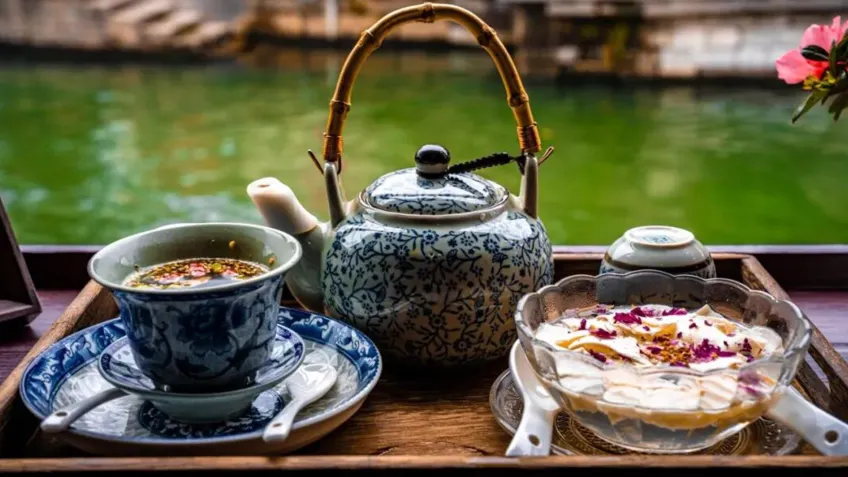
You might also come across tea and snack photo setups along the canal, but for the authentic Sandaocha (three-course tea) ceremony, we recommend sitting down at the Silk Guild Hall for a full session.
Two ways to experience the Silk Guild Hall
1. Just tea and music
Common front-desk package: tea and music for about ¥68 per person (subject to posted prices that day). Includes a 1-hour tea seat plus a full Pingtan performance. Tea choices usually include Nanxun Three-Course Tea, Hangzhou white chrysanthemum with goji berries, rose, Anji white tea, and West Lake Longjing.
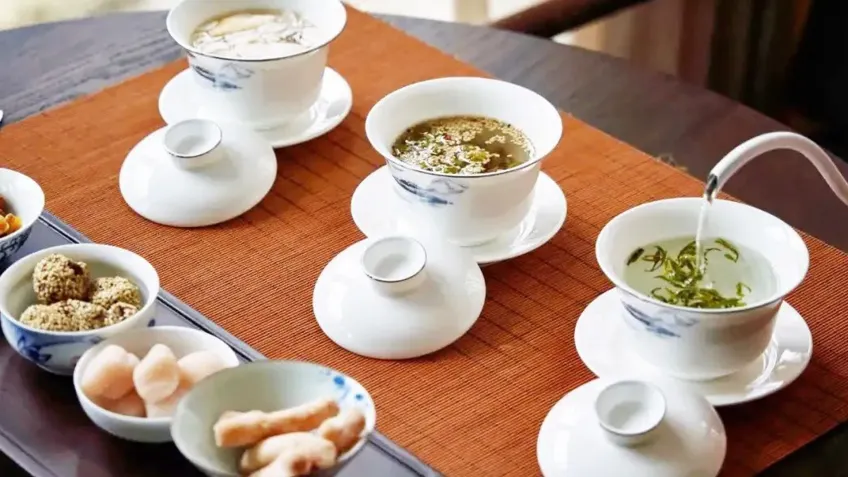
Lidded bowls and snack platters are a common sight at the tea seats. If you just want a light experience without visiting the paid gardens, this option is all you need.
2. A combo ticket is better value
If you want to visit ticketed sites like Xiaolianzhuang, Zhang Shiming's Former Residence, and Liu's Ladder House, you can choose a combo ticket for the attraction pass plus Pingtan tea seating (the adult pass covers Xiaolianzhuang, Jiaye Library, Zhang Shiming's Former Residence, Liu's Ladder House, Zhang Jingjiang's Former Residence, and Shen Yinmo Art Museum, plus tea seating at the Silk Guild Hall with three-course tea). Prices are subject to official announcements by the scenic area. Stroll the gardens during the day, then head inside in the afternoon to rest and enjoy the music.
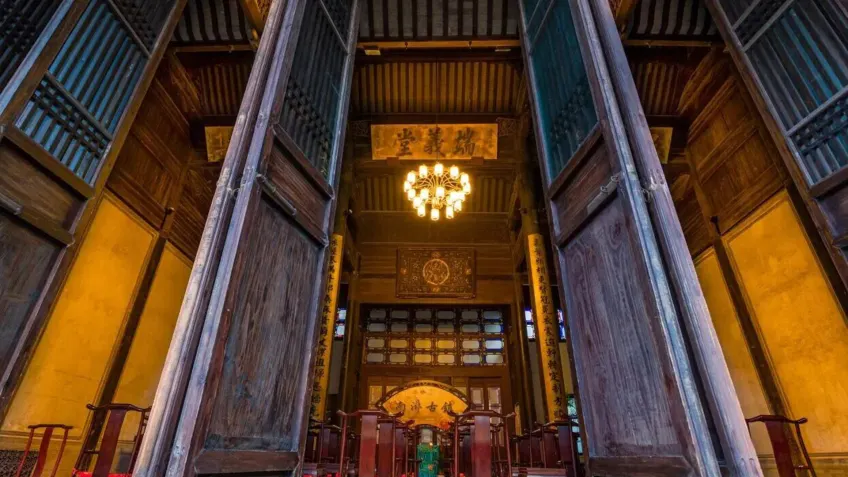
The hanging lights on the wooden beams in the inner hall of Duanyi Hall make for great photos.
What is Nanxun three-course tea?
First course: sweet tea (fengxiao tea)
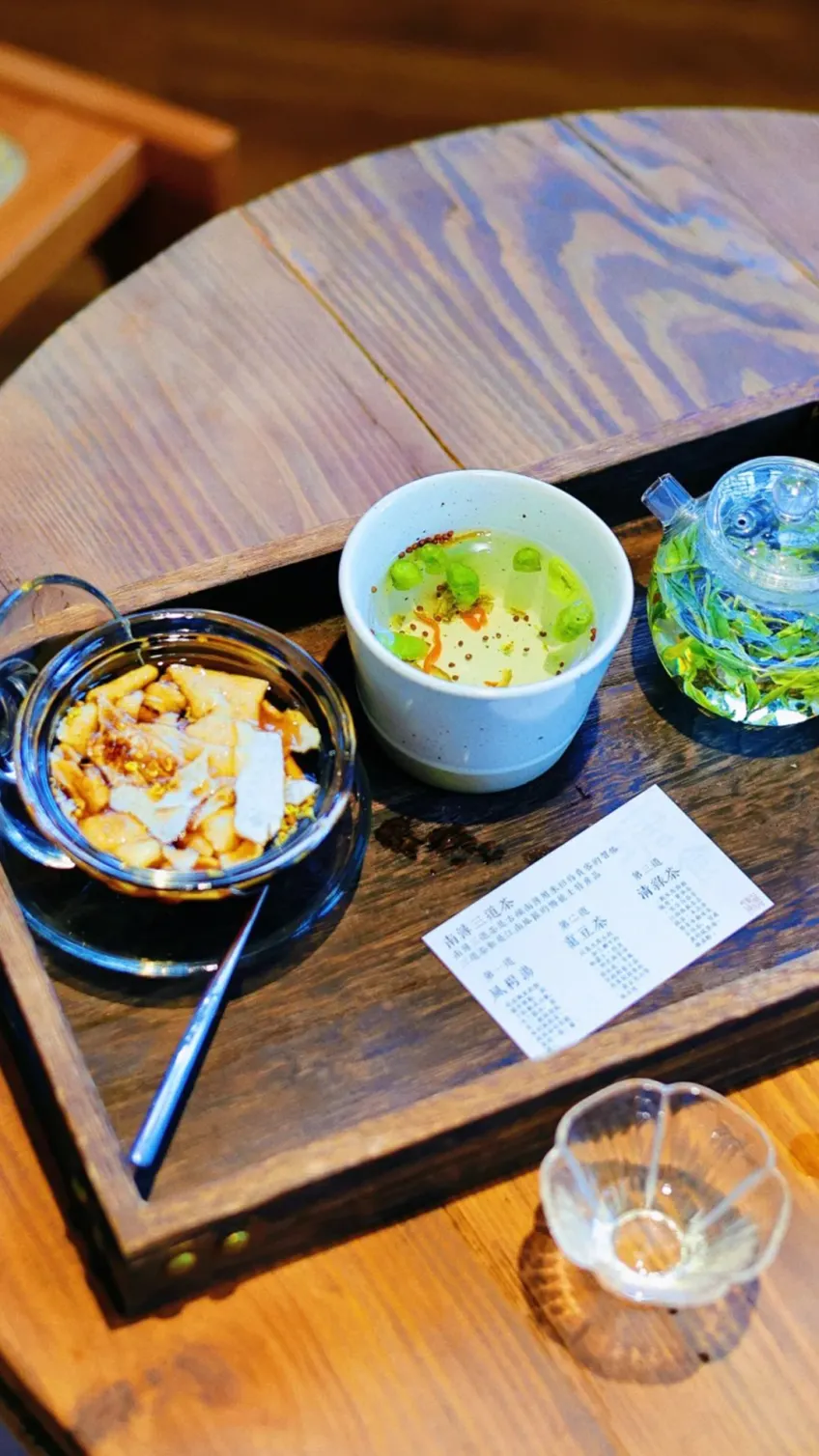
The first course is fengxiao tea (sweet tea): crispy glutinous rice wafers are placed in a bowl with white or brown sugar, symbolizing sweetness—a must when hosting guests during Chinese New Year.
The three teas on the table at the Silk Guild Hall are usually, from left to right, fengxiao soup, smoked bean tea, and a pot of green tea, often with an explanation card.
Second course: salty tea (smoked bean tea)
The second course, smoked bean tea, takes the most work: "Niutabian" soybeans dried over a wood stove, usually paired with dried carrots and sesame seeds, sometimes with dried tangerine peel and goji berries. The first sip brings out the sesame aroma, then the bean flavor, followed by the sweet aftertaste of the tangerine peel.
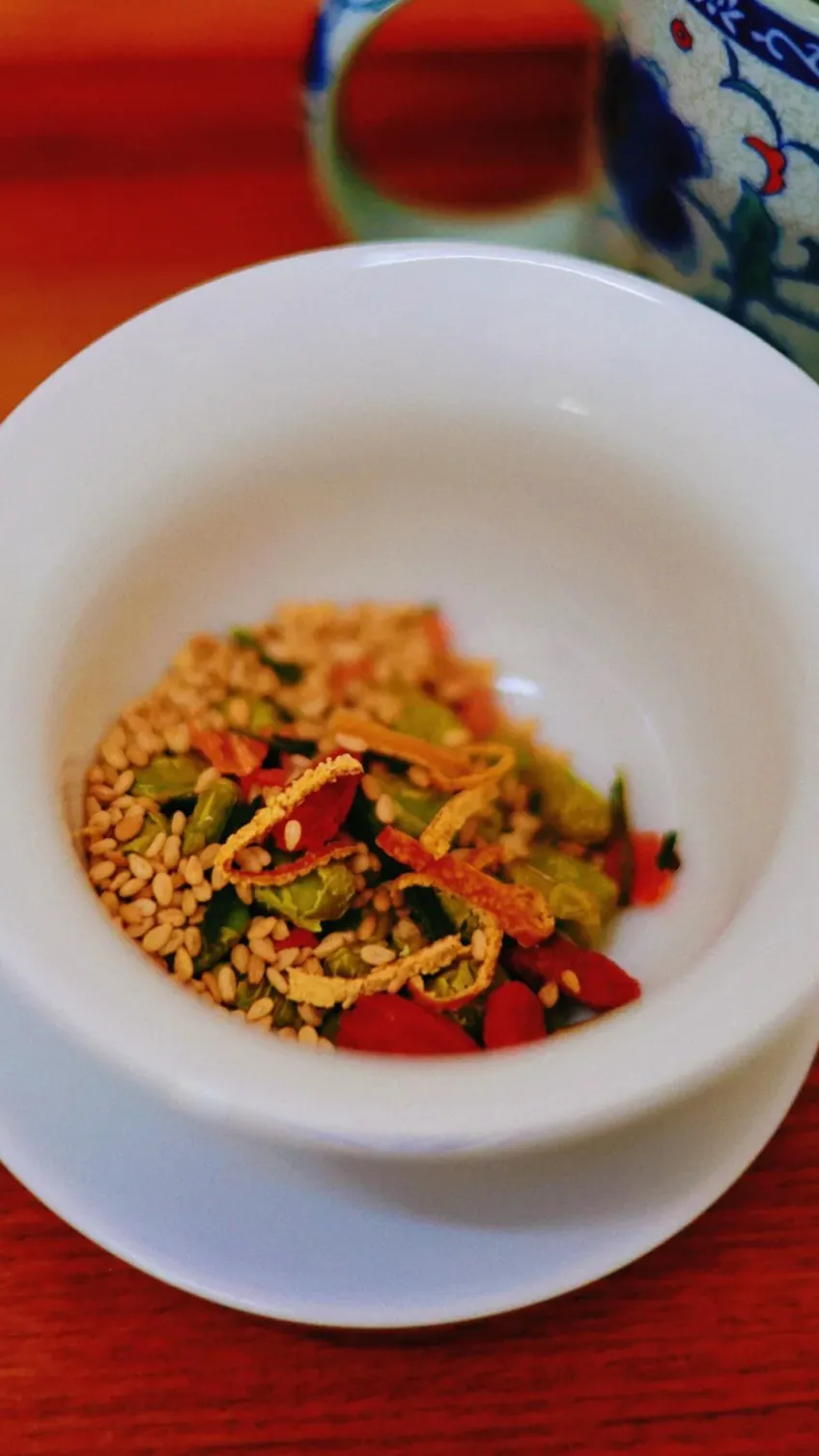
A close-up of the dry ingredients clearly shows the green beans, sesame seeds and goji berries. When hosting guests, the traditional order is sweet first, then salty, then plain.
Third course: plain tea
The third course, plain tea, is often Anji white tea or similar: clear and bright in color, slightly bitter at first with a sweet finish. The custom is sweet tea to welcome guests, salty tea for conversation, and plain tea to see them off.
The rhythm of life in three-course tea
Locals often compare the three-course tea to life: sweet at the start, full of flavors in middle age, and mellowing out in later years. Sitting amid the lingering notes of Pingtan storytelling and the play of light on the canal, moving from sweet to salty to plain feels like experiencing a condensed version of local hospitality—take it step by step, no need to finish it all at once.
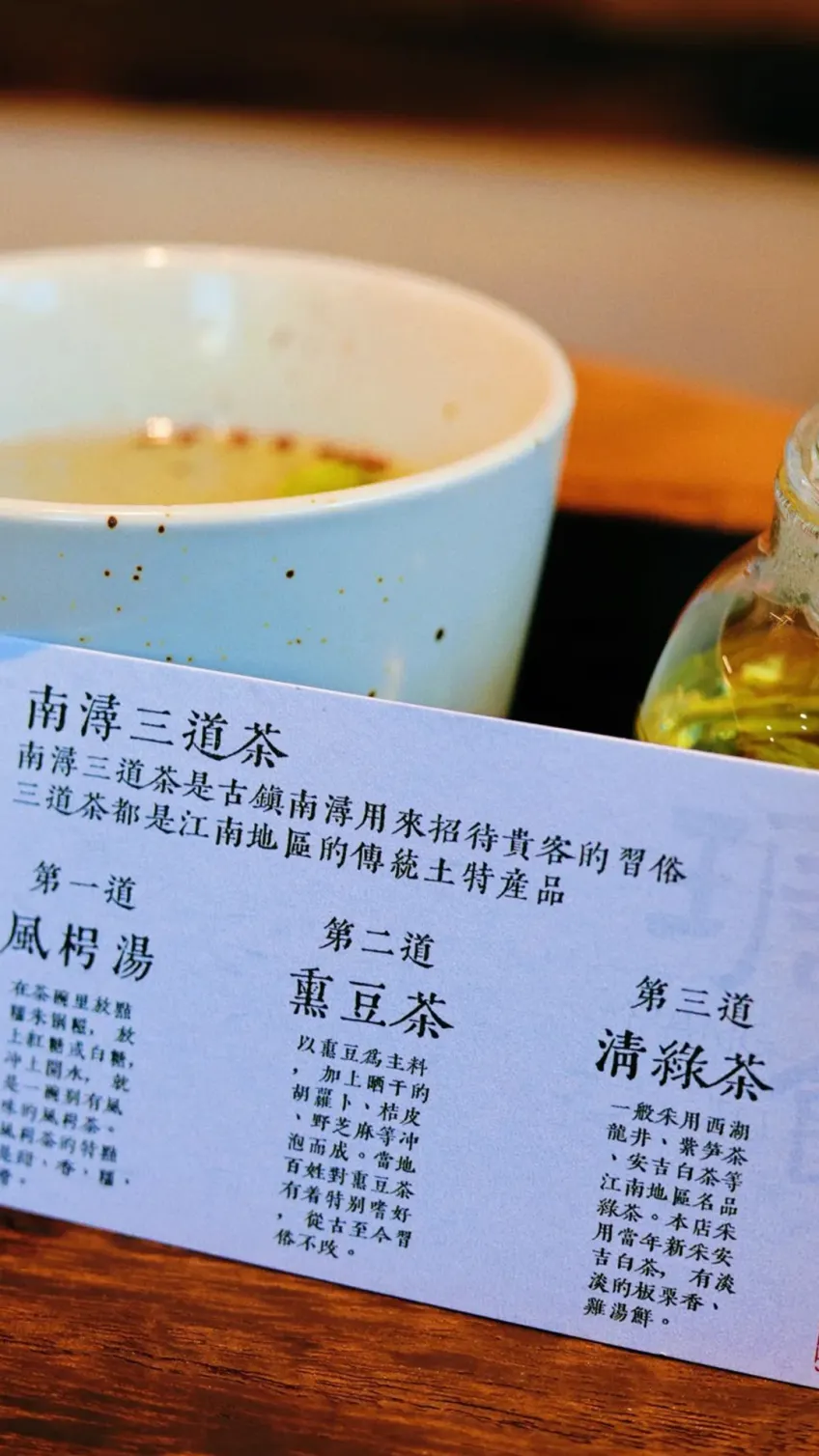
The info card clearly lists the three teas, making it easy for first-time visitors to identify what's in their cup. If you'd also like to explore Jiaxing snacks, see our Jiaxing food guide.

Huzhou 3-day 2-night private tour | Nanxun Ancient Town, Moganshan, Cloud Meadow
A 3-day 2-night private tour with pickup and drop-off at Huzhou Railway Station: Day 1 in Nanxun Ancient Town, taking a sculling boat on Zhegu Creek and visiting Feiying Pagoda; Day 2 at Moganshan; final day at Anji Cloud Meadow. Two nights in Huzhou, including car, guide, hotel and admission tickets. An English-speaking guide can be arranged.
The itinerary card above is for Lakes & Hills Leisure Walk (including stops like Nanxun). For the multi-city cultural route, see Three-City History Tour.
After tea: Jili Silk Museum
A tea seat lets you feel the "charm" of silk. To touch its "soul," head to the Jili Silk Museum for exhibits or even hands-on workshops (opening hours and workshop availability subject to on-site conditions).
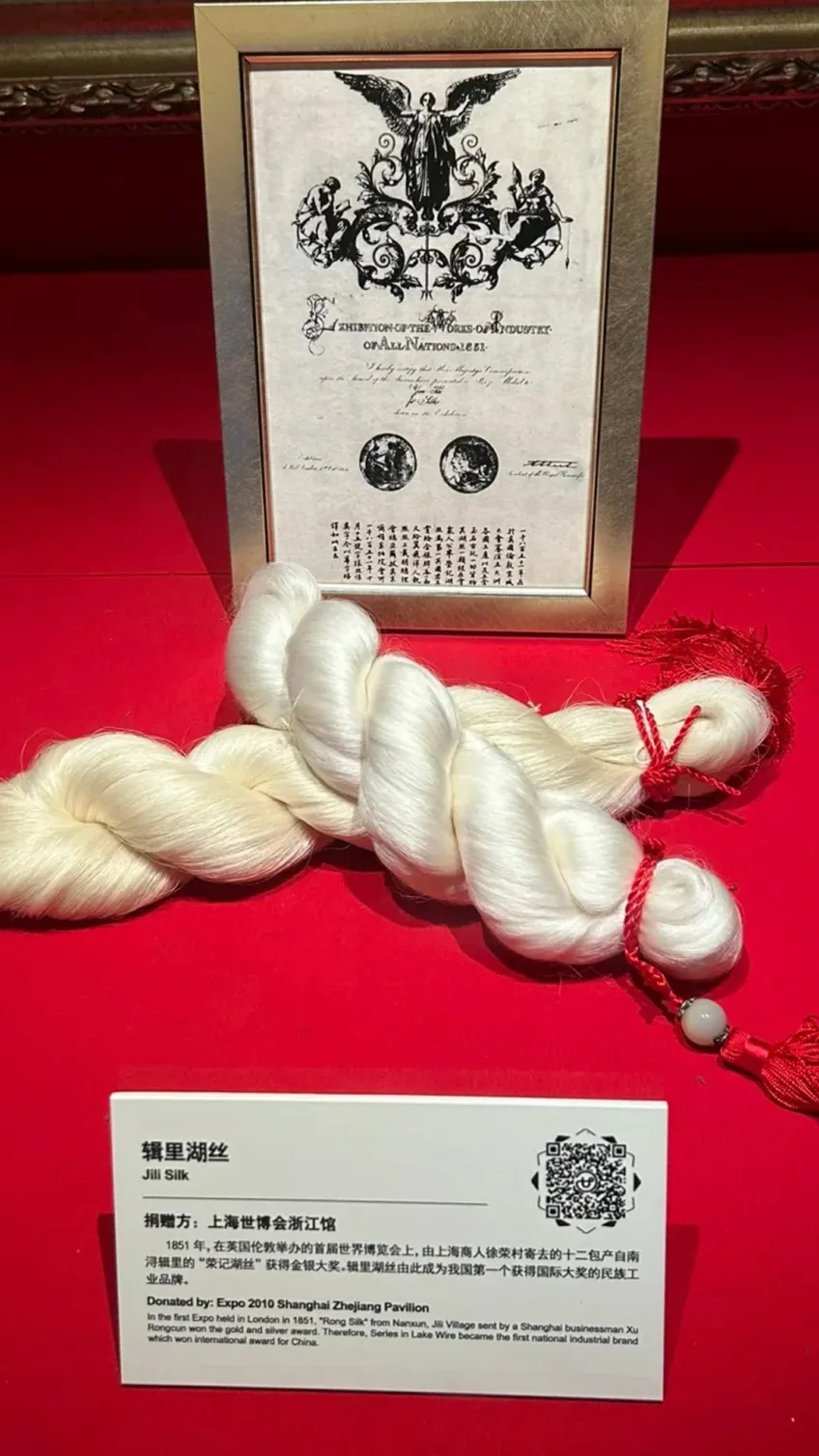
The exhibits include Jili silk donated to the World Expo, along with notes on the 1851 London Great Exhibition. As evening falls, you can head to Yiyuan Garden for the Nanxun Night Banquet.
Nanxun Night Banquet: A Feast Spanning a Millennium
The Nanxun Night Banquet is staged at Yiyuan Garden after dark, weaving Huzhou silk and Huzhou brushes into a light-and-shadow performance. With scenery changing at every step, it's a night tour option beyond the daytime teahouses.
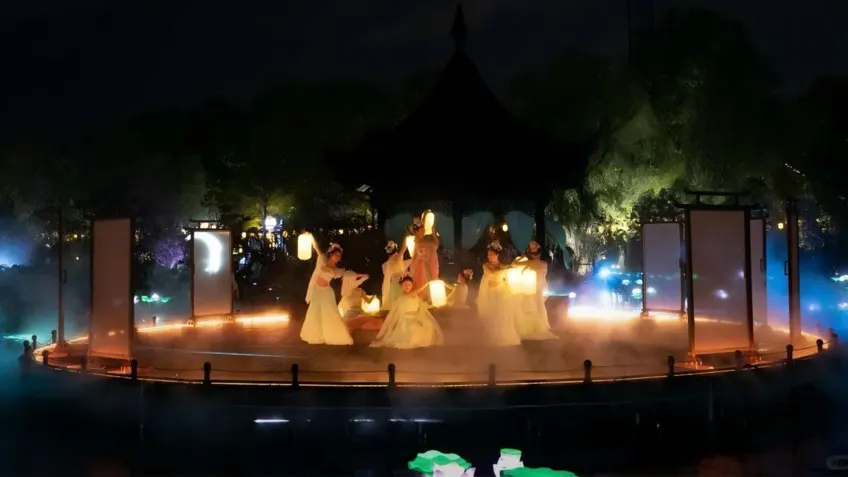
The water lantern dance is a common opening scene of the Night Banquet, perfect for building anticipation before the main program begins.
Flying Flower Goddess
The main stage in the East Garden often features "Flying Flower Goddess", inspired by Jili silk, with dances depicting mulberry picking and silk reeling—the story of "one thread holding up a town."
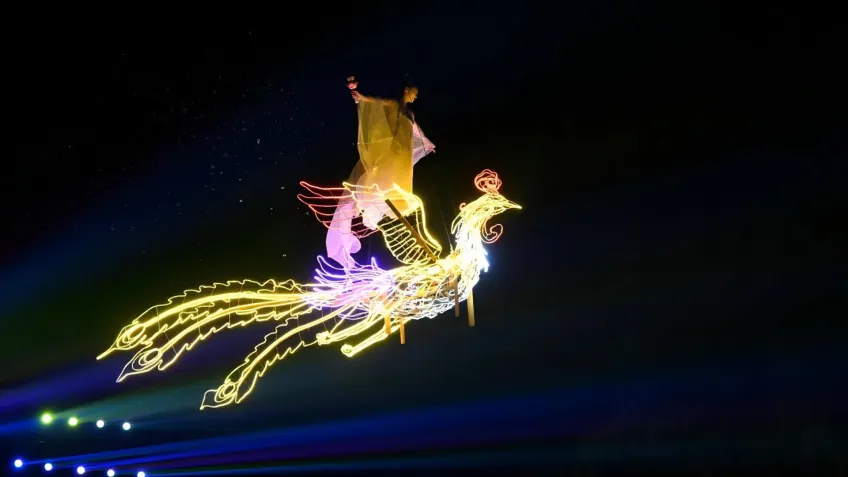
The neon Flying Apsara display is great for photos. Remember to turn off your flash and follow staff instructions.
Lake-center water screen
The lake-center stage uses water screens and lasers to tell the story of Huzhou brushes, from selecting the hair to finishing the brush. The show runs about ten minutes.
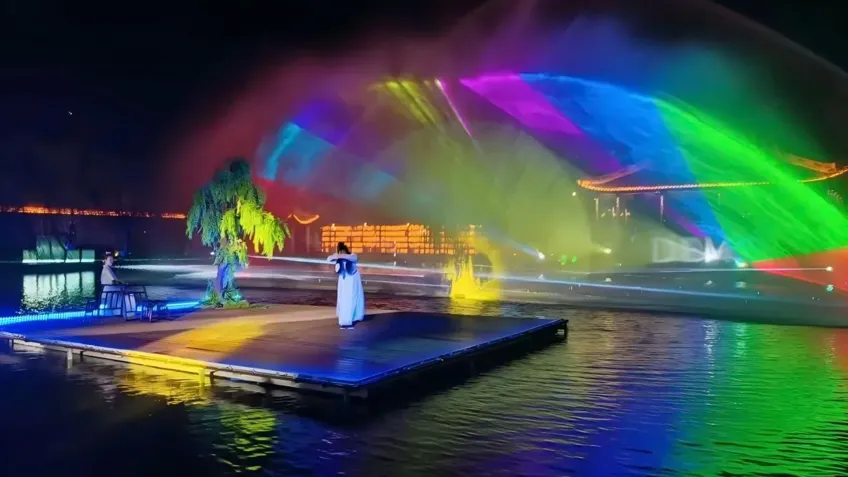
The rainbow water screen reflects on the lake, one of the visual highlights of the evening show.
Three-course tea experience
For some shows, guests are invited on stage to experience the Three-Course Tea in order: sweet guoci tea → smoked bean tea → plain tea, reflecting the local hospitality tradition of "sweet first, then salty, then mild." Whether each show includes this interaction is subject to on-site conditions.
During the night tour, you may also encounter interactive activities like poetry matching.
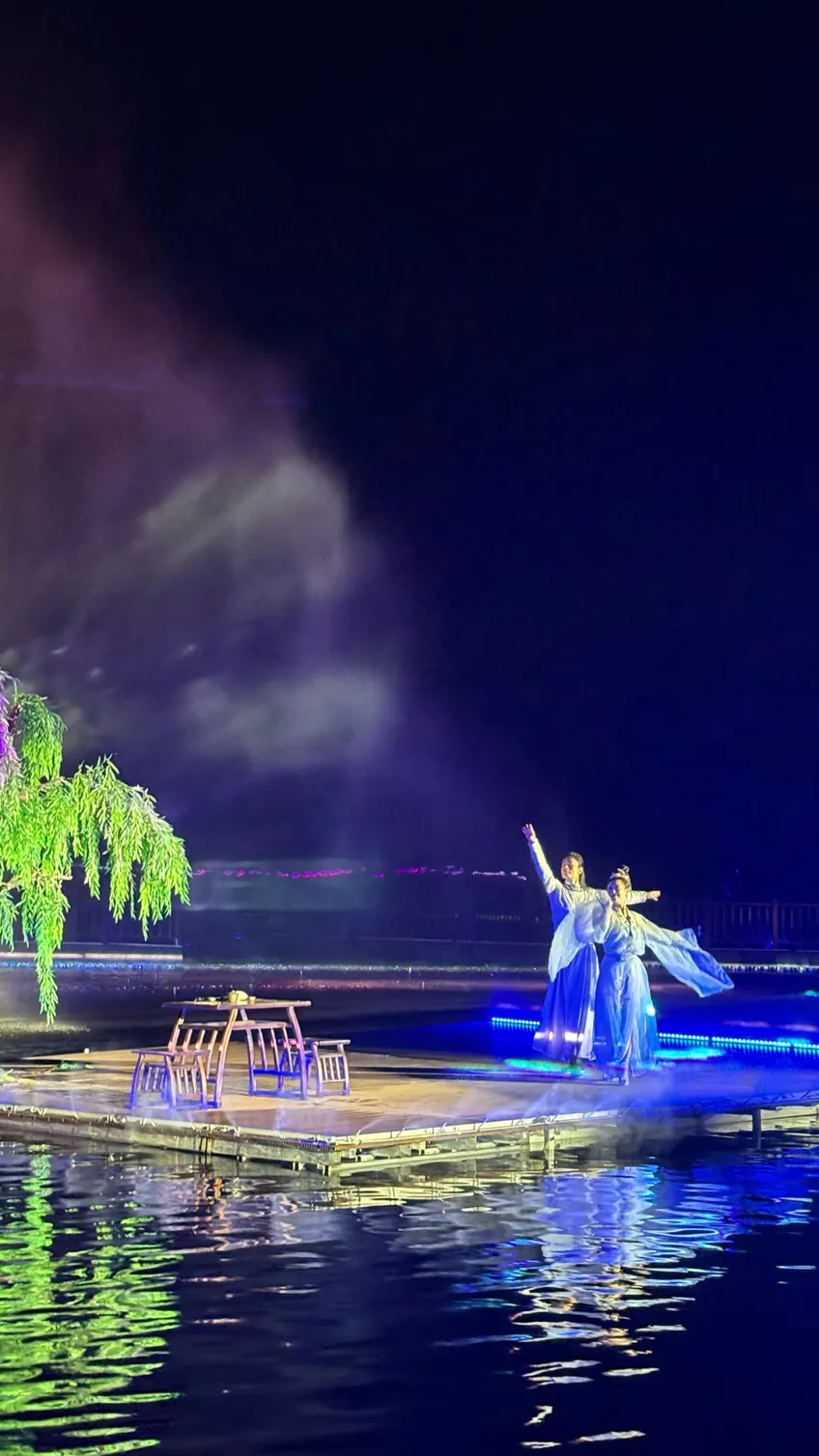
The floating tea setting and dancers are the stage expression of the banquet's "tea" theme.
Garden Night Tour
The night tour winds through the century-old Yiyuan Garden (built by Pang Yuanji in the late Qing Dynasty and named for being pleasant in all four seasons). Strip lights guide the way while rockeries and tree shadows blur softly—a new view with every step.
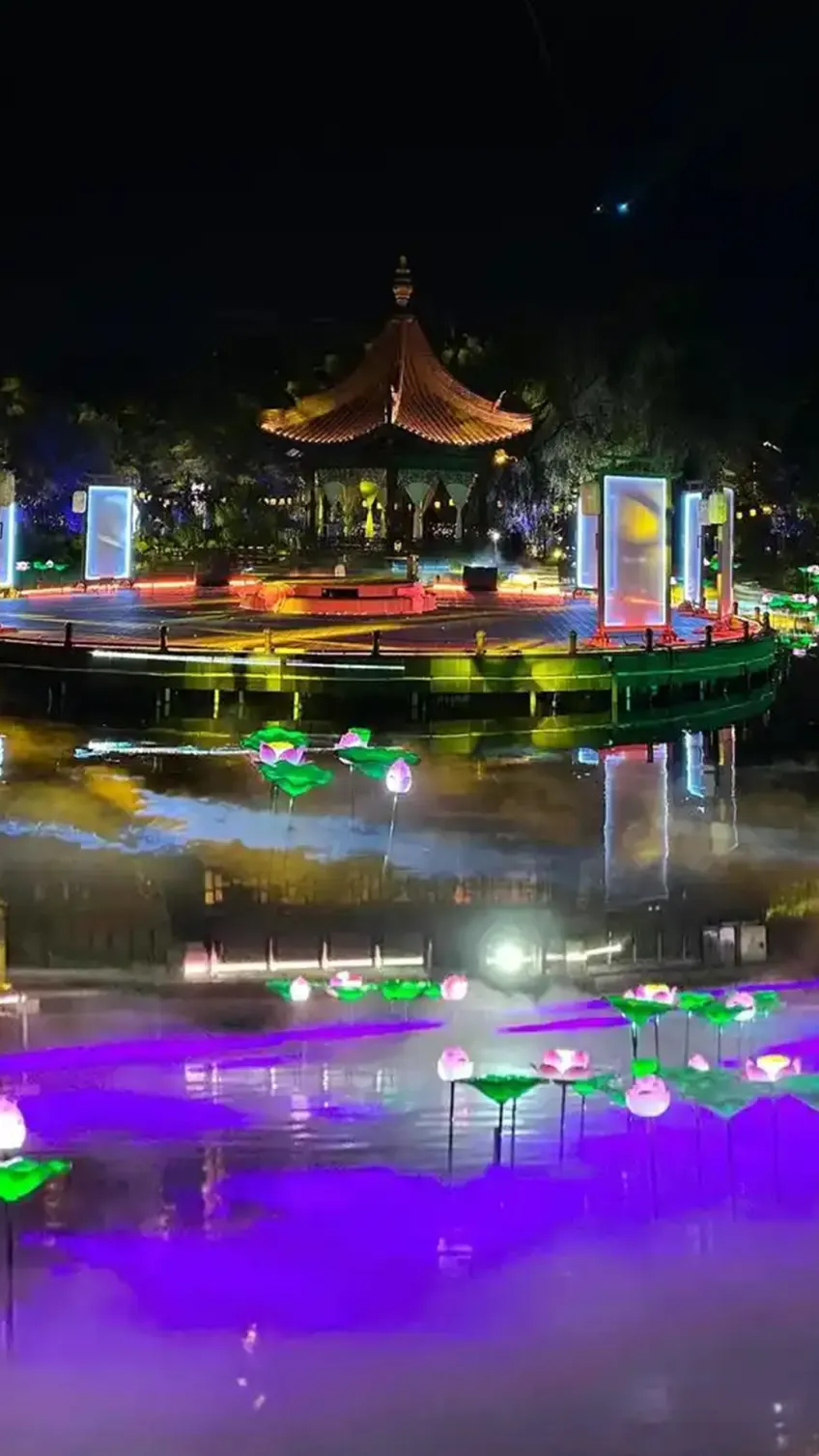
Lotus lanterns and waterside pavilions are common sights at the end of Yi Garden's evening session.
Water Town Nanxun: Baijianlou
Baijianlou is said to be a row of riverside residences built by Dong Fen, the Ming Dynasty Minister of Rites. Take a sculling boat during the day and watch the white walls and dark tiles reflect on the water—a classic stretch where "the boat glides over green waves while you drift through a painting."
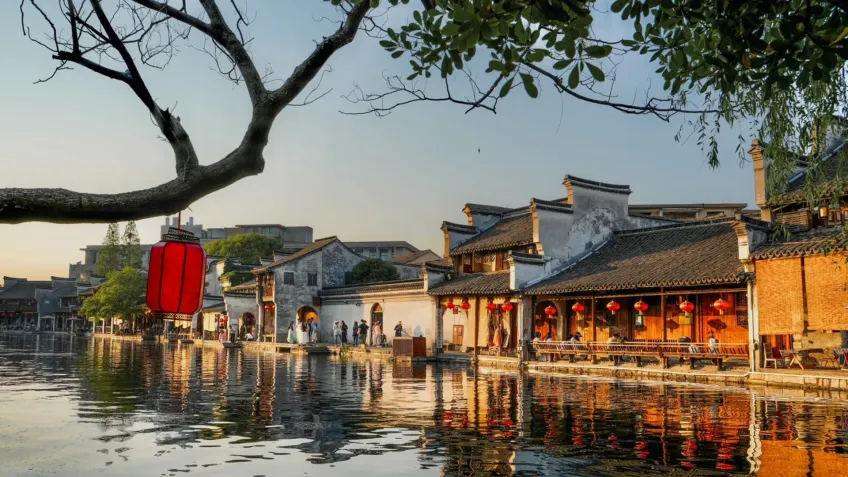
After the red lanterns light up at dusk, the reflections on the river make for better photos. Boat schedules and ticket prices are subject to the notices posted at the pier.
How to enjoy a night tour in Nanxun?
By day, discover tea and silk; by night, take in the water and lanterns. Heading north from the piers near Xiaolianzhuang or Guanghui Bridge, the route usually ends at the covered arcade of Baijianlou (routes are subject to daily operations).
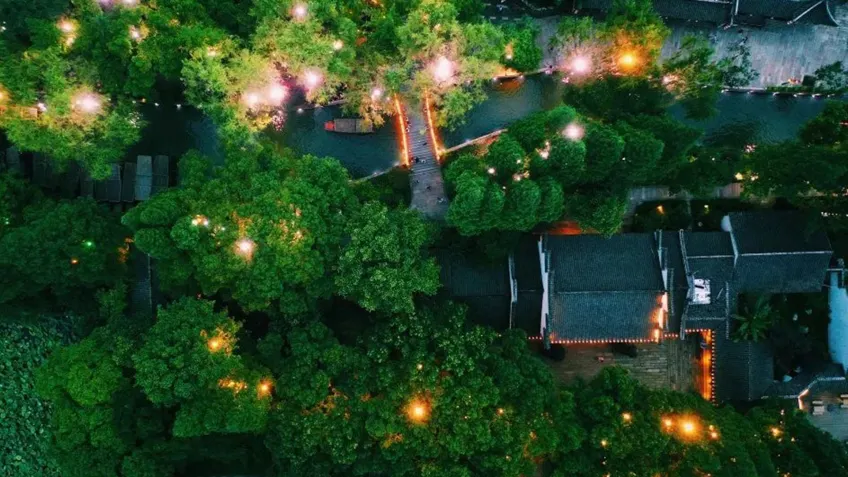
For the night views of the lantern-lit bridges and riverside trees, it's best to walk along the bank first before deciding whether to board a boat.
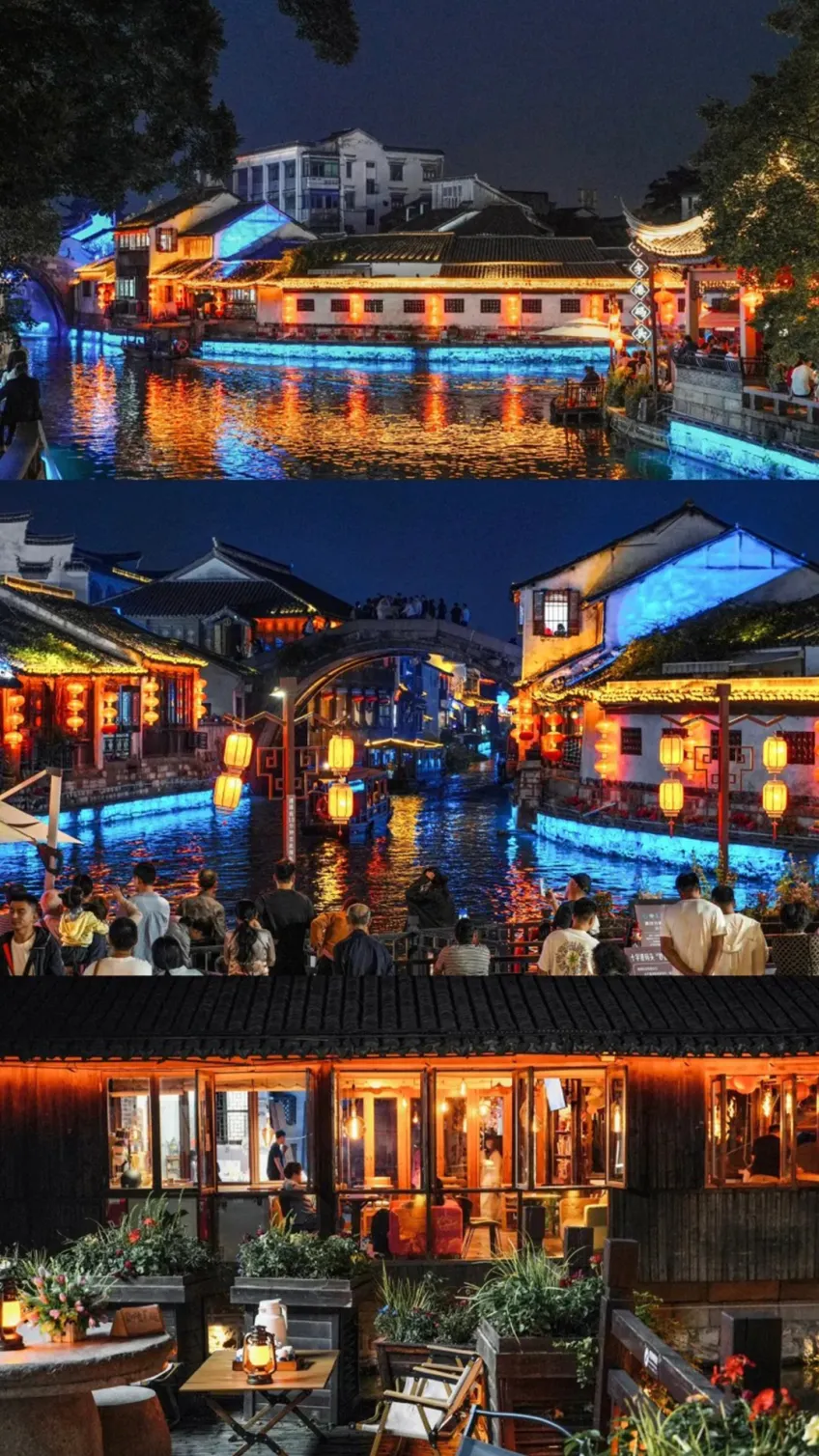
At night along Baijianlou, the boats, bridges and riverside lights each offer their own charm.
Choosing a service: group tour, station pickup, or custom
The highlight of Nanxun's hidden gems is the three-course tea and Pingtan performance at the Silk Guild Hall, plus the night banquet and Baijianlou night tour if you have the energy. For custom itineraries, you can also read Custom Travel first.
Ticket prices, showtimes, and opening hours are subject to official or on-site information on the day. This article does not replace ticket purchase or safety instructions.