
Nanxun's "Four Elephants and Eight Bulls": how to read the silk merchant legends
"Four Elephants, Eight Oxen, and Seventy-Two Golden Dogs" was a late Qing dynasty slang for ranking the wealth of Nanxun silk merchants: fortunes over 10 million taels were "elephants," over 5 million taels were "oxen," and over 1 million taels were "golden dogs." The "Four Elephants" usually refers to the Liu, Zhang, Pang, and Gu families. They made their fortunes trading Jili Lake silk, and the Chinese-Western mansions and gardens they left behind—such as the Little Lotus Garden and the Former Residence of Zhang Shiming—are still the most worthwhile places to visit in Nanxun Ancient Town.
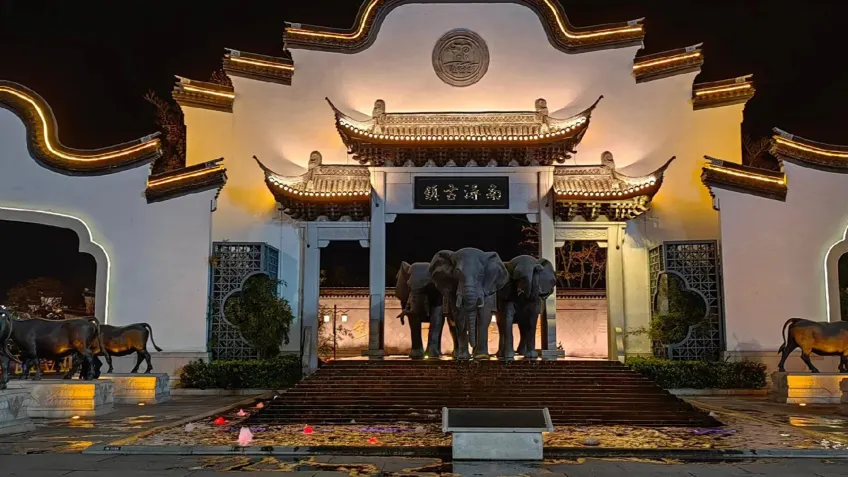
The elephant and ox sculptures in front of the gate at night turn the "Four Elephants and Eight Oxen" into photo-ready landmarks.
After reading this guide, use these tips when you arrive: to visit both Nanxun in Huzhou and Moganshan in one trip, check out the private tour "Lakes & Mountains Stroll"; if you want to set your own number of days and how deep you go into the mansions and gardens, use custom travel to plan a route around the silk merchant heritage; for the stories of the Four Elephants and Eight Oxen and the Chinese-Western mansions and gardens, we recommend hiring a private guide; use a private car to get around outside town; and book station transfers in advance for high-speed rail or airport arrivals and departures.
What are the Four Elephants and Eight Bulls: how wealth was ranked
In Qing dynasty records and local Nanxun lore, animals were used as metaphors for family wealth: fortunes over 10 million taels of silver were called "Elephants," those around 5 million taels or more were "Oxen," and those near 1 million taels were "Golden Dogs" (exact thresholds and how silver was measured vary across public sources). The "Four Elephants" usually refer to the Liu, Zhang, Pang, and Gu families; the "Eight Oxen" were the next tier of wealthy merchants.
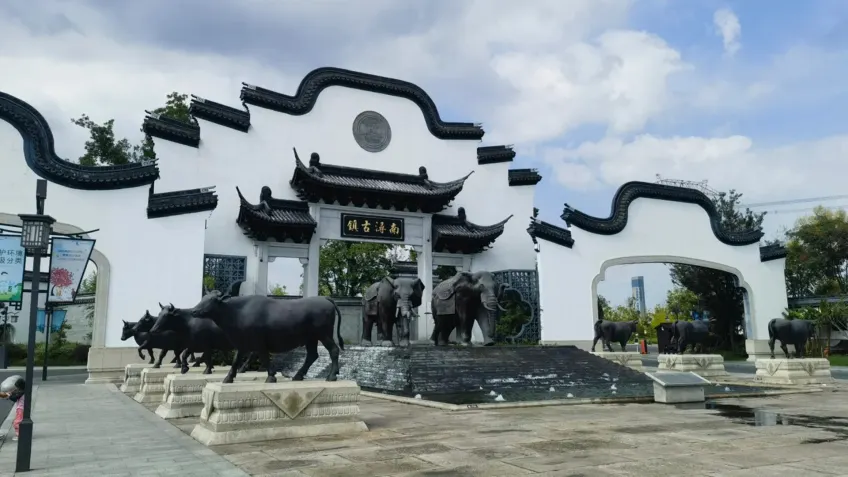
The elephant and bull sculptures and fountain at the daytime entrance are the first "visual leaderboard" visitors encounter—easy to photograph, but understanding the silk merchant history behind them requires a guide.
The foundation of a silk empire: Jili silk
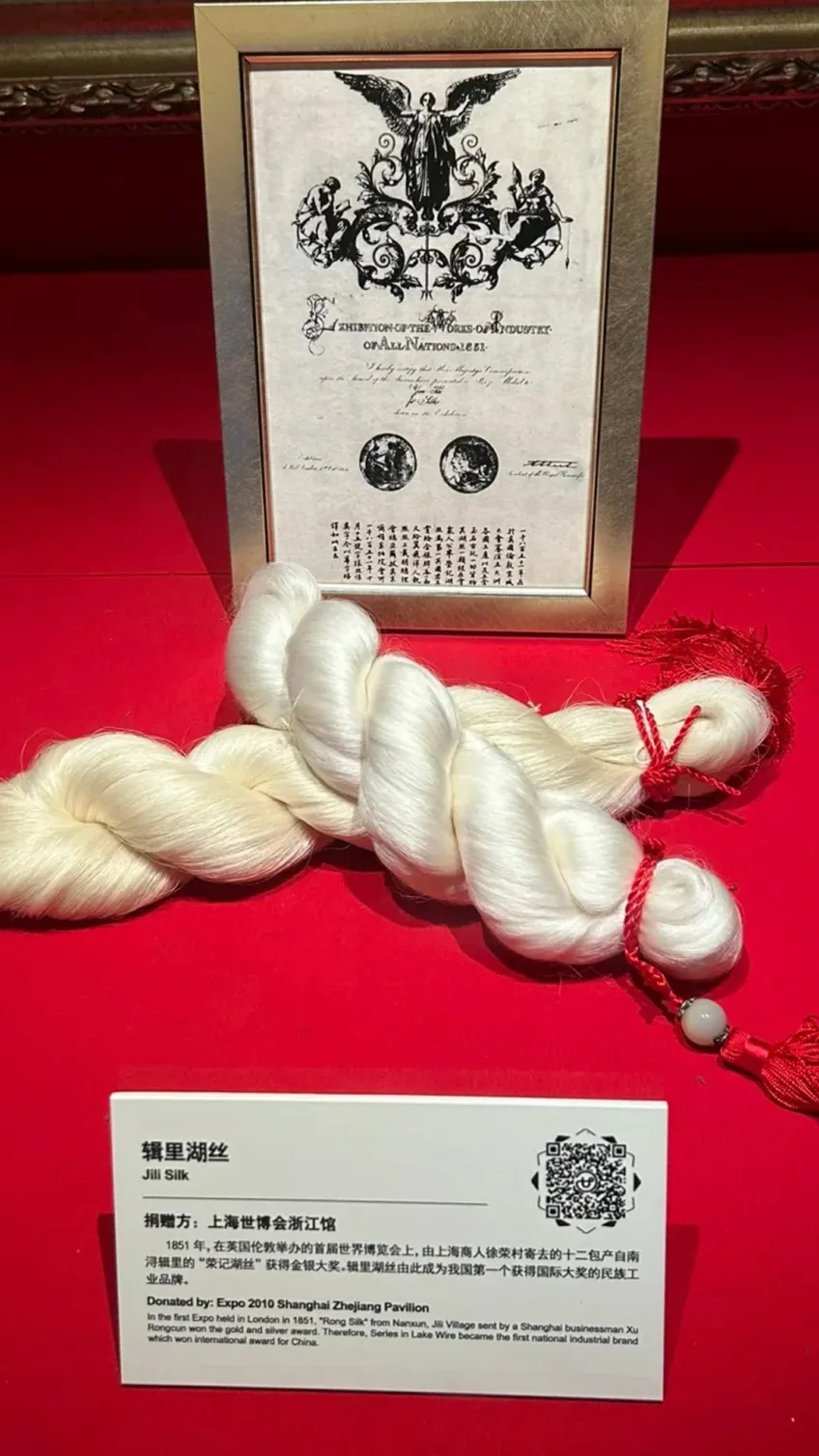
The "Four Elephants and Eight Oxen" of Nanxun mostly built their fortunes on Huzhou silk. Huzhou has long been a major silk-producing region, and Jili silk was renowned for its pure white color, fine texture, and elasticity. Historically, it served as tribute silk and a key export (including tribute silk during the Three Kingdoms period, exports in the Southern Song dynasty, and shipments to Europe and America in modern times).
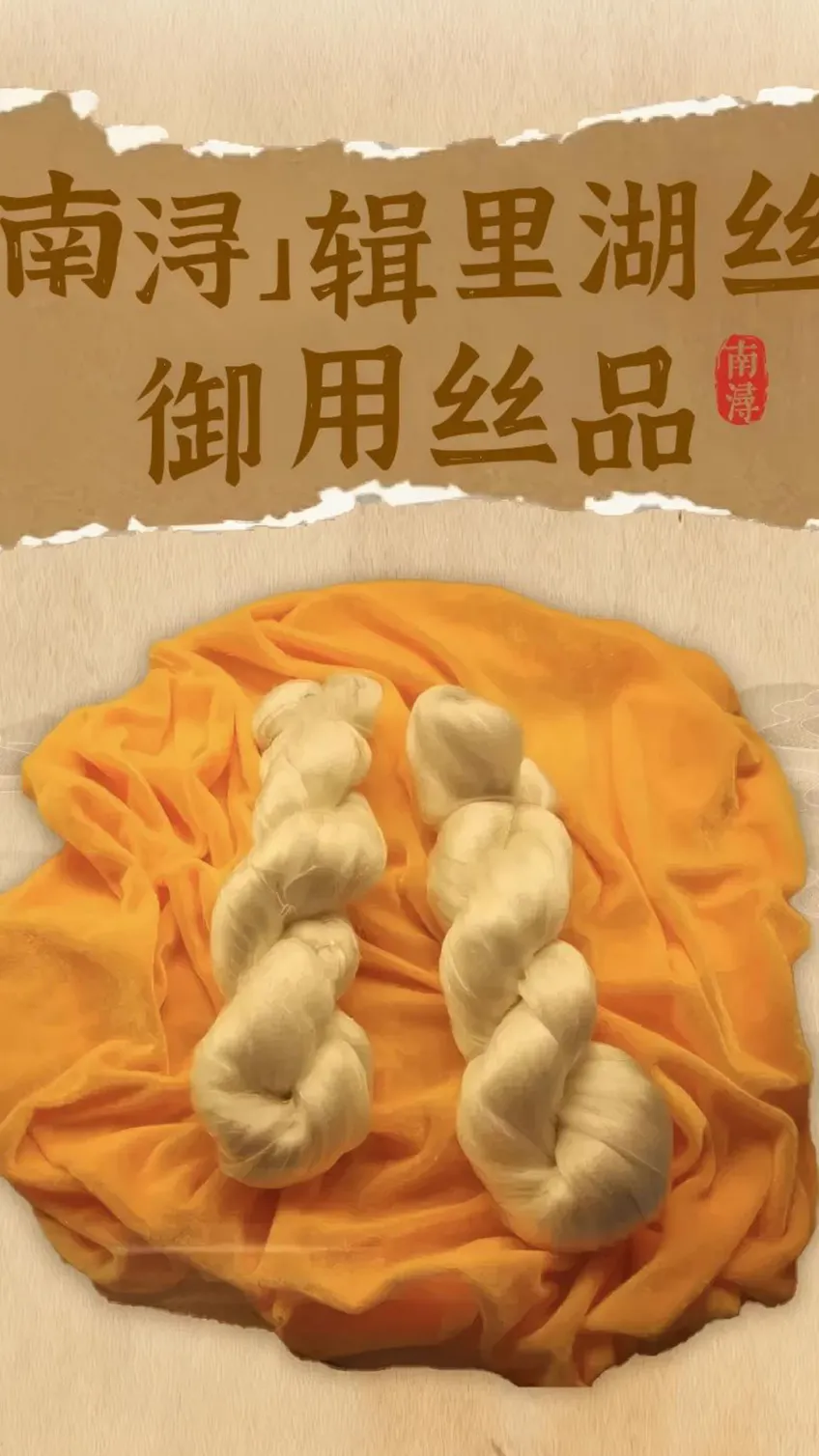
Jili Lake silk was once used by the Qing imperial court. The color of the real silk and the exhibits are subject to what you see on site.
After Shanghai opened as a treaty port in the modern era, Nanxun—just over 100 kilometers away and connected by canal—saw the export route for Huzhou silk shift from Guangzhou to Shanghai. Travel distance and costs dropped sharply, and silk merchants rapidly accumulated capital. To deal with foreign traders, some Nanxun merchants learned foreign languages and opened trading firms, marking the small town's deep involvement in China's modernization.
Come to Nanxun to read half the modern capital history of Jiangnan: a sketch of the Four Elephants
Locals have an even more colloquial summary: the Liu family's silver, the Zhang family's scholars, the Pang family's prestige, and the Gu family's mansions. These four parallel phrases capture the distinct character of each family's wealth.
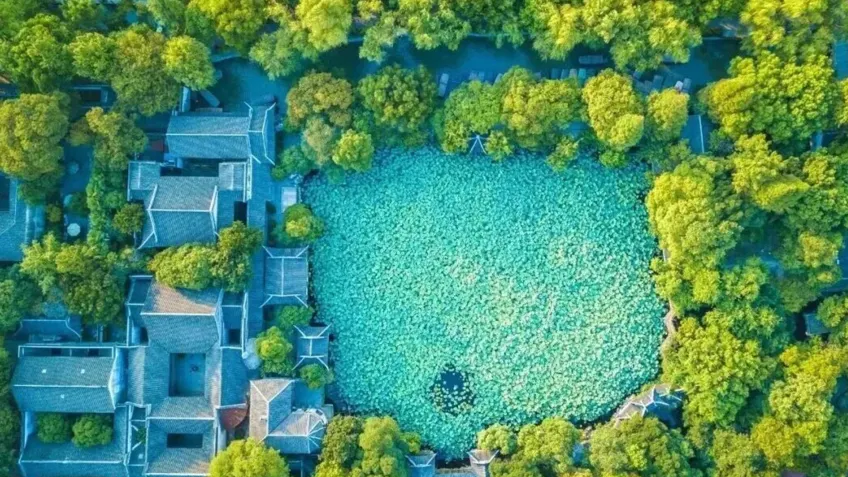
An aerial view of the estate garden's lotus pond and gray-tiled rooftops—wealth ultimately settled into gardens and mansions you can walk through today, which is how visitors now "read history on foot."
The Liu family's silver: first among the Four Elephants
The Liu Yong family is often called the wealthiest of the "Four Elephants." Local lore puts their fortune at around 20 million taels of silver. Liu Yong started out as a coppersmith and a cloth shop apprentice before making his fortune in the Huzhou silk trade. The Xiaolianzhuang Garden, Liu Family Ancestral Temple, and charity estate his family left behind are the most complete and readable examples of how that silver was turned into architecture in Nanxun.
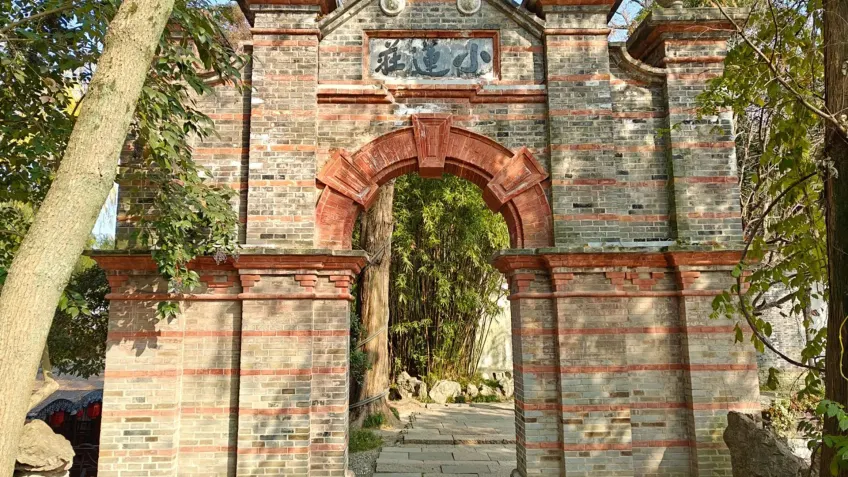
The inscription on the brick archway of Xiaolianzhuang is still clearly legible, and the bamboo shadows inside frame a lovely scene. For the Liu family section, we recommend entering through this gate to reach the lotus pond in the outer garden and the rockery in the inner garden.
The Zhang family's talents: Zhang Shiming and Zhang Jingjiang
The Zhang Songxian family made its start in silk, and by the Guangxu reign their wealth also reached tens of millions of taels. Grandson Zhang Shiming focused on collecting calligraphy, paintings, and bronzes, while Zhang Jingjiang was praised by Sun Yat-sen as a key financial backer of the revolution. The Zhangs may not have been the richest of the "Four Elephants," but their social influence was immense. Their representative building is the Former Residence of Zhang Shiming (Yide Hall).
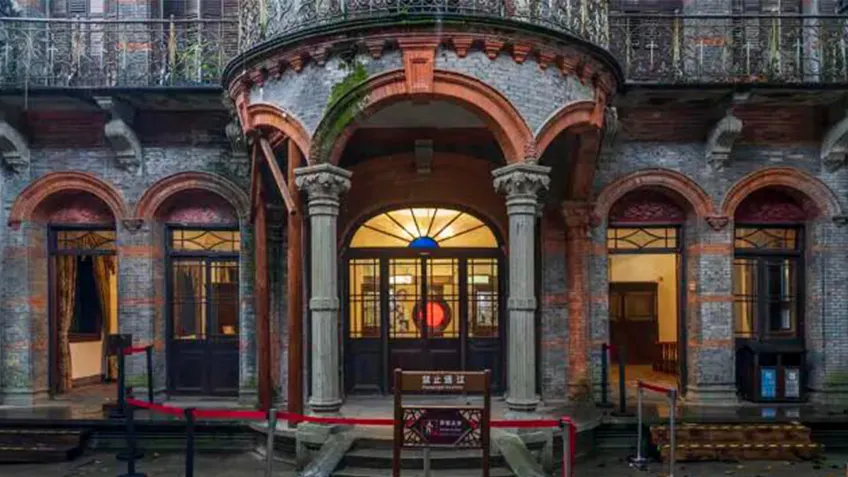
The East-meets-West archway, white columns and stained glass offer a glimpse of the Zhang residence's "Chinese exterior, Western interior" style. The ballroom, wrought ironwork and decorative windows are worth slowing down for alongside a guide's commentary.
The Pang family's prestige: official networks and Pang Zide
Beyond business, the Pang Yunzeng family excelled at cultivating ties with officials, reportedly befriending figures like Hu Xueyan, Zuo Zongtang, and Li Hongzhang. He also modeled a pharmacy after Hu Qing Yu Tang, opening the Pang Zide traditional medicine shop and pharmaceutical workshop in Nanxun. Whether old storefronts still stand along Baoshan Street depends on what you see on the day. Representative buildings include Chengpu Hall and the Pang family residence, which blend Chinese and Western styles.
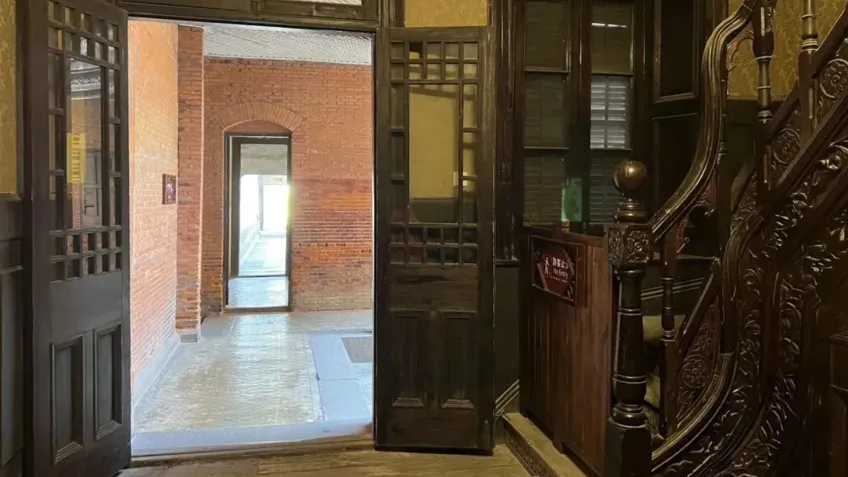
The wooden stairs, brick corridors and wooden doors inside remind you: Nanxun's grand mansions aren't just about the facades. The interior layouts and decor also reveal their owners' "face" and Western lifestyle habits.
The Gu family houses: real estate and wharves
After making a fortune in silk, the Gu Fuchang family shifted into real estate and wharf operations. Local accounts mention later generations getting involved in urban landmarks like Shanghai's Paramount Ballroom, as well as port businesses such as loading and packing at the Jinliyuan Wharf. What's easier to compare on-site in Nanxun is how each family's mansions fit a traditional Chinese axial layout together with a Western-style parlor in the same courtyard.
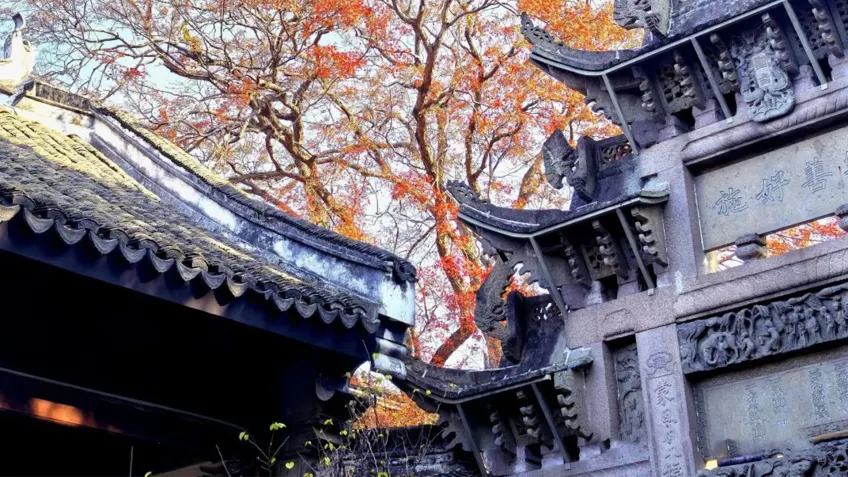
The stone arch inscription "Joy in Doing Good" framed by autumn leaves — charity estates, good deeds and ancestral temples were common once silk merchants struck it rich, and they're a page you shouldn't skip when reading these "houses."
East-meets-West mansions and gardens: physical archives left by the Four Elephants
The figures and buildings of the "Four Elephants and Eight Oxen" are more than symbols of wealth—they are a readable archive of modern East-West cultural exchange. A recommended route is Xiaolianzhuang Garden → Former Residence of Zhang Shiming → Liu Family Ti Hao/Ancestral Temple → Baijianlou Water Lane. Whether these are covered by a single combo ticket or charged separately depends on the notices posted on the day.
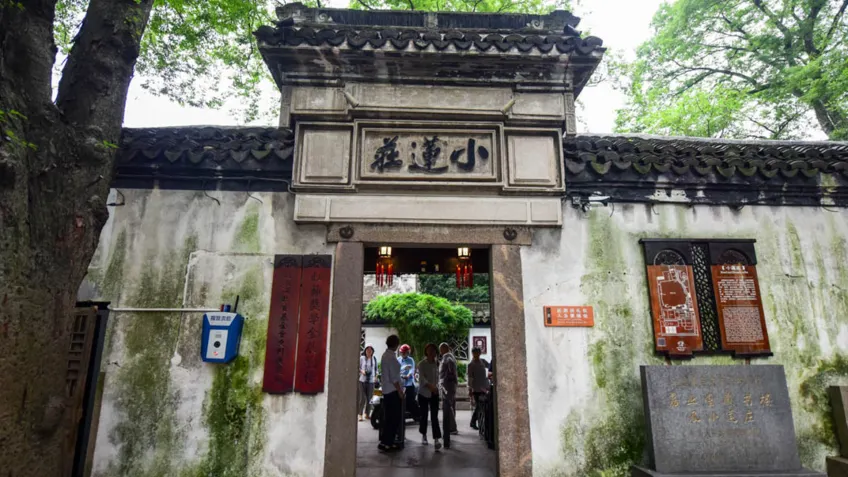
Xiaolianzhuang and the Liu Family Ancestral Temple
Xiaolianzhuang Garden (Liu Garden) includes an ancestral temple, a charity estate, and gardens. Built during the Guangxu reign of the Qing Dynasty, it was named after Zhao Mengfu's "Lotus Garden," which the owner admired. The outer garden centers on a lotus pond, while the inner garden features rockeries made of Taihu rock. The ancestral temple faces south, with a complete sequence of a shadow wall, stone archway, and entrance hall.
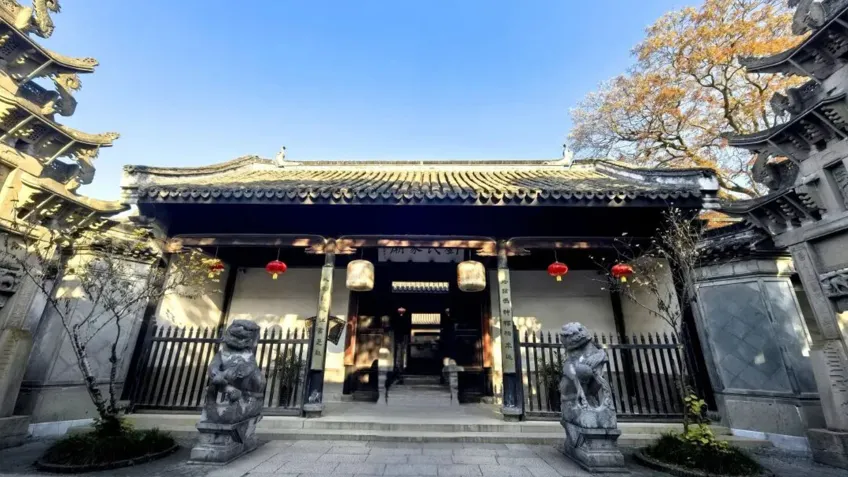
The stone lions and memorial archway in front of the family temple show exactly where "silver" was converted into ritual space—perfect for covering the Liu family section and the garden section together.
Zhang Shiming's former residence: the grandeur of Jiangnan's finest private home
The Yide Hall complex is large and well preserved, often called the finest private residence in Jiangnan. The compound includes traditional Chinese buildings, Western-style structures, and a rear garden. The Baroque ballroom, French stained glass windows, Roman columns, and ironwork clearly reflect the Zhang family's openness to Western culture.
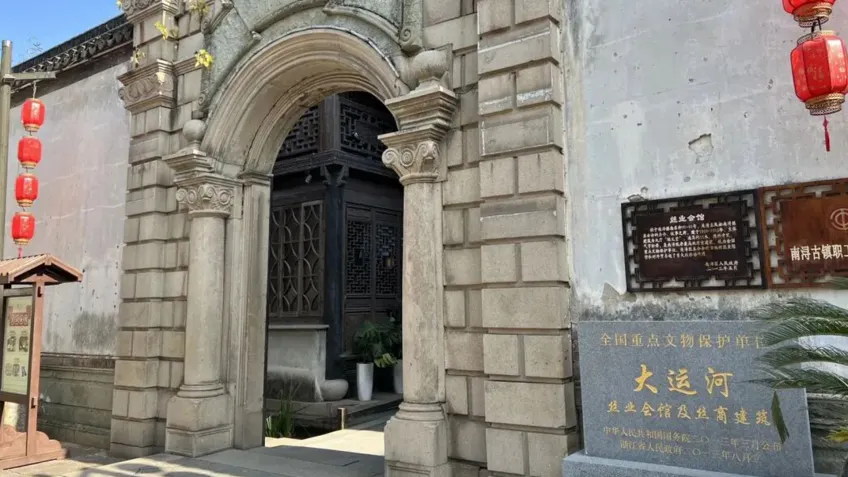
Liu Family Red House and glimpses of its Western-style mansion
Around the Liu Family Ladder House you'll spot Western touches like fountains and red-brick arcades that contrast sharply with the white walls and dark tiles. Note: Jiayetang Library was built by Liu Chenggan, grandson of Liu Yong, and sits next to Little Lotus Garden. Whether the library is open and requires a separate ticket depends on on-site notices.
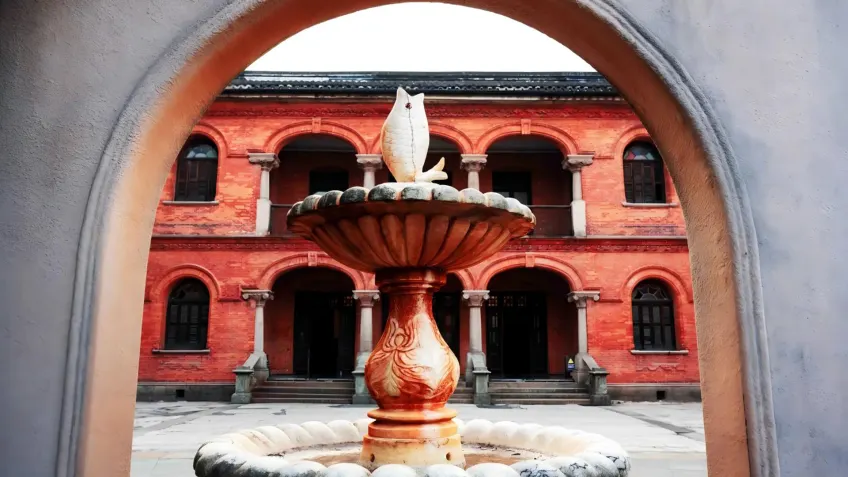
The fountain and red-brick Western-style arcade perfectly illustrate the "Chinese outside, Western inside" concept: the exterior retains Jiangnan architectural vocabulary, while the interior incorporates European living rooms and plumbing systems.
Architectural commonalities: axes, Chinese exteriors with Western interiors, and garden aesthetics
Spatial layouts strictly follow traditional Chinese axes; exteriors mostly feature white walls and dark tiles, while interiors incorporate European living rooms, ballrooms, stained glass windows and fireplaces. Brick and wood carvings blend auspicious motifs with Western geometric patterns, and private gardens carry on the classic landscape aesthetic. Once you grasp these commonalities, touring each residence won't feel overwhelming.
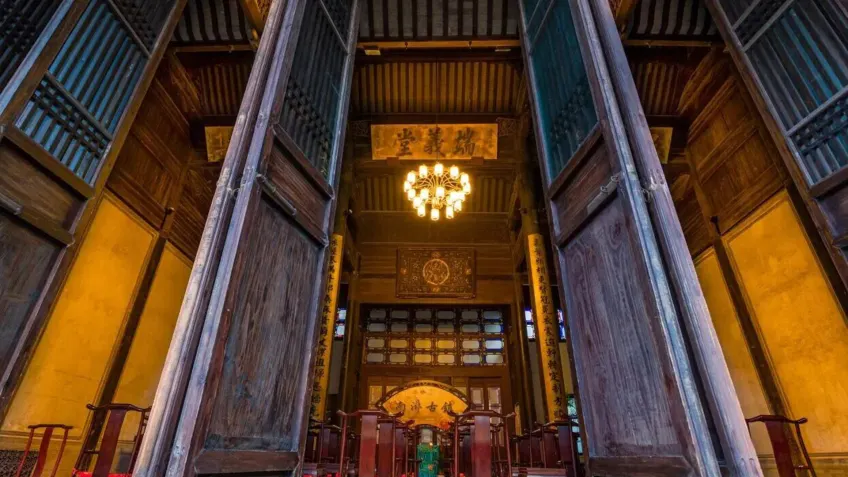
The wooden beams and plaques in Duanyi Hall's main room invite you to look up at the structure and down at the furnishings—the ceremonial hall is often the "heart" of a traditional Chinese axis.
How to explore Nanxun: routes, water buses & transport
How to plan a day tour route
A popular route: South Gate Visitor Center → Jiayetang Library → Xiaolianzhuang Garden → Liu Family Residence (Red House) → Zhang Shiming's Former Residence → Shizigang → Baijianlou. If you're short on energy, skip some of the residences and prioritize Xiaolianzhuang Garden and the Zhang residence.
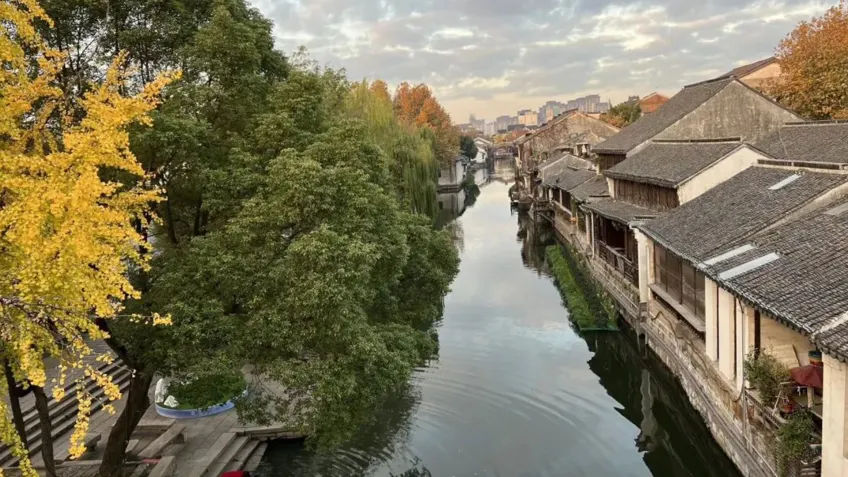
Autumn leaves along the canal and reflections of waterside houses are the most common "water town backdrop" along the route—you don't need to enter every residence. Save time for a stroll along the bank, and the stories will stick with you better.
Huzhou 3-day 2-night private tour | Nanxun Ancient Town, Moganshan, Cloud Meadow
A 3-day 2-night private tour with pickup and drop-off at Huzhou Railway Station: Day 1 in Nanxun Ancient Town, taking a sculling boat on Zhegu Creek and visiting Feiying Pagoda; Day 2 at Moganshan; final day at Anji Cloud Meadow. Two nights in Huzhou, including car, guide, hotel and admission tickets. An English-speaking guide can be arranged.
How to take the water bus
The Nanxun water bus has become popular in recent years (reviews say it launched in 2023). Official info usually states: about ¥3 per person one way, running between Shizigang Wharf and Silk Wharf, valid for the day; service runs roughly 9am to 4pm, about every 30 minutes, with a 10-minute ride (schedules and fares are subject to on-site confirmation).
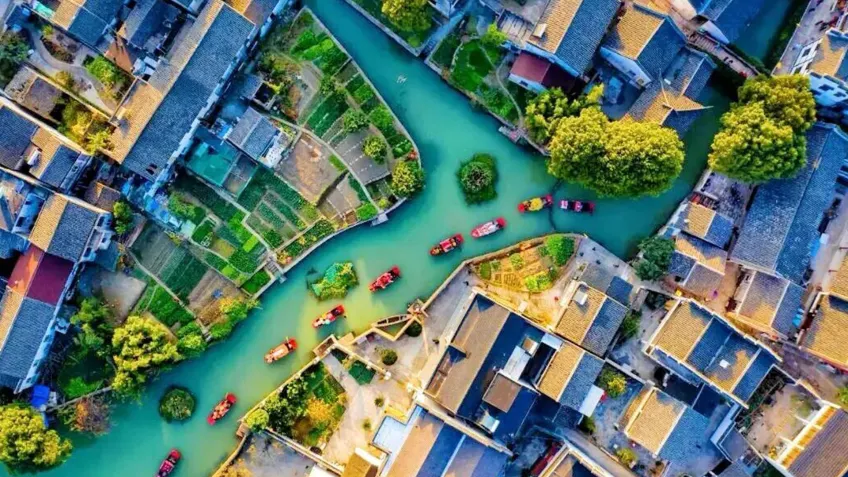
Getting there & parking
High-speed train: The usual option is to take a bus or shuttle from Nanxun Station to the ancient town. Driving: Navigate to peripheral lots such as "Nanxun Ancient Town South Gate Parking Lot"; about 2.5 hours from Shanghai and 1.5 hours from Hangzhou. No motor vehicles are allowed inside the town, so you must park outside and walk. Intercity buses also offer direct routes from Shanghai, Hangzhou, and other cities.
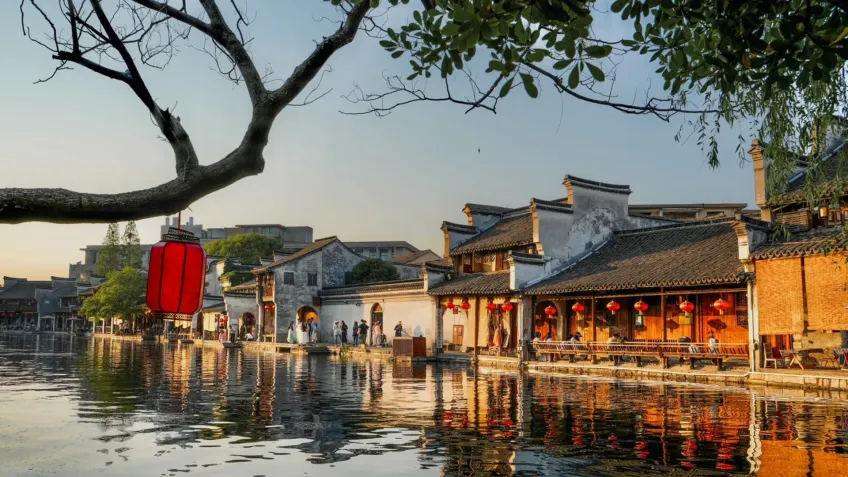
The dusk lights reflecting on the canal at Baijianlou often make a perfect finale—if you plan to shoot night scenes, confirm opening and lighting hours in advance and arrange your return transfer ahead of time.
What to eat: Shuangjiao noodles, three-course tea and xunti
Shuangjiao noodles: Signature toppings are usually crispy pork and fried fish; Nanxun three-course tea: the traditional hospitality sequence of Fengxiao tea, smoked bean tea and plain tea; Shanlian chili oil wontons and xunti are also highly recommended. Shops and prices change frequently.

Short videos help set expectations before your trip, but once you sit down, the day's menu is what counts.
FAQ
Do the Four Elephants and Eight Oxen refer to animals or merchants?
These terms describe merchants' wealth tiers, not actual elephants or cattle. The "Four Elephants" were mostly the Liu, Zhang, Pang and Gu families, while the "Eight Cattle" were the next tier of silk merchants. Public figures for the wealth thresholds vary, and on-site plaques may differ slightly from what guides say.
Is one day enough for Nanxun? Where should I start?
A tight one-day itinerary can cover Xiaolianzhuang Garden, Zhang Shiming's Former Residence and Baijianlou, plus the water bus if you have the energy. Two days let you split up Jiayetang Library, the Liu Family Residence and the night views.
How do I buy tickets, combo passes and water bus rides?
Entry to Nanxun Ancient Town is free. Whether attractions like Little Lotus Garden and the Former Residence of Zhang Shiming require a combo ticket, and whether the water bus costs extra, depends on the day's ticket window info and official notices. Travelers often report the water bus costs about ¥3 one way, but confirm this on site.
How do I get there from Shanghai or Hangzhou? Can I drive inside the town?
After taking the high-speed train to a Nanxun station, transfer by bus or shuttle, or drive and park in an outer lot near the South Gate; no motor vehicles are allowed inside the town. Direct buses from Shanghai and Hangzhou are also available.
Do I need a guide? How do I choose between a group tour and a custom trip?
If you just want photos, self-guided works fine; but to really understand the Four Elephants figures, the Chinese-Western mansions and gardens, and the silk industry exhibits, hiring a private guide is well worth it. For an easy trip linking Huzhou, Nanxun, and Moganshan, choose a private tour; to tailor the route to your interests, add night views, or set a family-friendly pace, use custom travel.
Nanxun's depth isn't just in its small bridges and flowing water—it lies in the figures and estates behind the horse-head walls that shaped modern China's economy. Save these notes on the "Four Elephants and Eight Oxen," then pick a day to dive deep or take a leisurely lake-and-mountain stroll. The scenery is right before you; the stories run deeper.