
In November, Nanjing's average daytime high is about 16.6°C and the average nighttime low is about 7.7°C. Total rainfall for the month is around 52 mm over seven or eight rainy days, making it one of the drier, sunnier months of the year. A long-sleeve shirt and a light jacket are enough during the day, but in the mornings, evenings, and late in the month you'll want a thicker coat or a light down jacket. Keep a folding umbrella handy.
The best reason to visit Nanjing this month is the city's plane trees and the autumn colors on Purple Mountain. Below, we break things down by temperature, what to wear, scenery, crowds, and weather risks, followed by a few frequently asked questions. For an overview of visiting Nanjing year-round, see our Nanjing four-season travel guide.
November in Nanjing: still autumn early on, winter by the end
According to the China Meteorological Administration's 1991–2020 climate normals, Nanjing's average temperature in November is about 11.5°C, but that figure blends two very different feels. Early in the month, sunny days often reach around 20°C, and basking in the sun on Purple Mountain at noon can even make you sweat. By late November, after a cold front or two passes through, highs drop to just above 10°C and morning lows of 5–6°C are common. So even though both count as "visiting Nanjing in November," what you pack at the start of the month differs from what you need at the end.
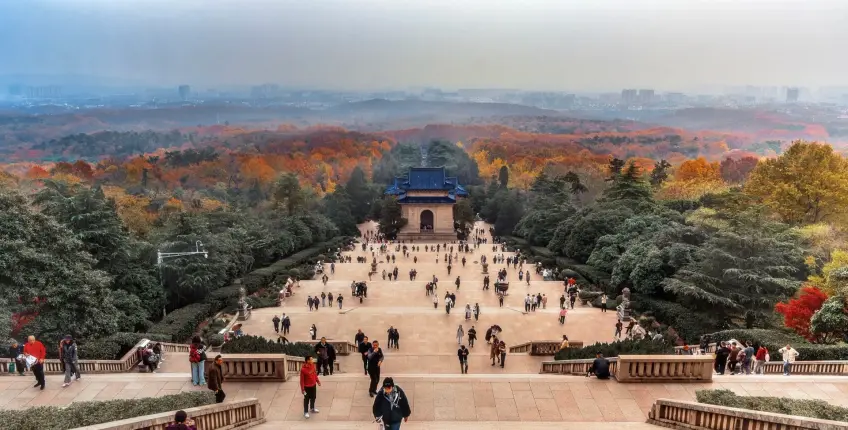
The temperature swing is what you need to watch most this month. The gap between the average daytime high and the average nighttime low is nearly 9°C, and it's even more obvious on sunny days: you'll work up a sweat climbing the steps at Sun Yat-sen Mausoleum at noon, but feel an instant chill by Xuanwu Lake in the evening breeze. Historical records show November highs of 29.2°C and lows of -6.3°C, meaning that in unusual years, early November can be warm while late November brings freezing weather. Checking the forecast three to five days before departure is more reliable than packing based on "averages." If your trip could fall in either late October or early November, see our guide on October clothing and National Day crowds at Nanjing October Weather & Clothing.
Rain isn't much of an issue. November averages 52.3 mm of precipitation over about 7.7 rainy days, mostly light rain or overcast skies—rarely all-day downpours. Humidity hovers around 70%, moister than northern China but far fresher than summer or the plum rain season. With roughly 145 hours of sunshine, the share of clear days ranks among the highest of the year, making it great for photos and walking.
What to wear: pack separately for daytime, mornings and evenings, rainy days, and indoors
Daytime: In early November, a long-sleeve T-shirt or shirt with a light jacket or knit cardigan is enough. By mid to late November, switch to a hoodie or light sweater under a windproof outer layer. Nanjing gets plenty of sunshine this month, but it turns chilly as soon as the wind picks up, so choose a jacket that blocks the wind rather than just a thick one.
Mornings and evenings: If you head out at 7 or 8 a.m., or return to your hotel after seeing the Qinhuai River night views, temperatures often drop into single digits. For late November, bring a lightweight down or fleece jacket that packs into your backpack, and layer it under your outerwear when it gets cold. If you run cold, add a scarf—it's more flexible than an extra sweater.
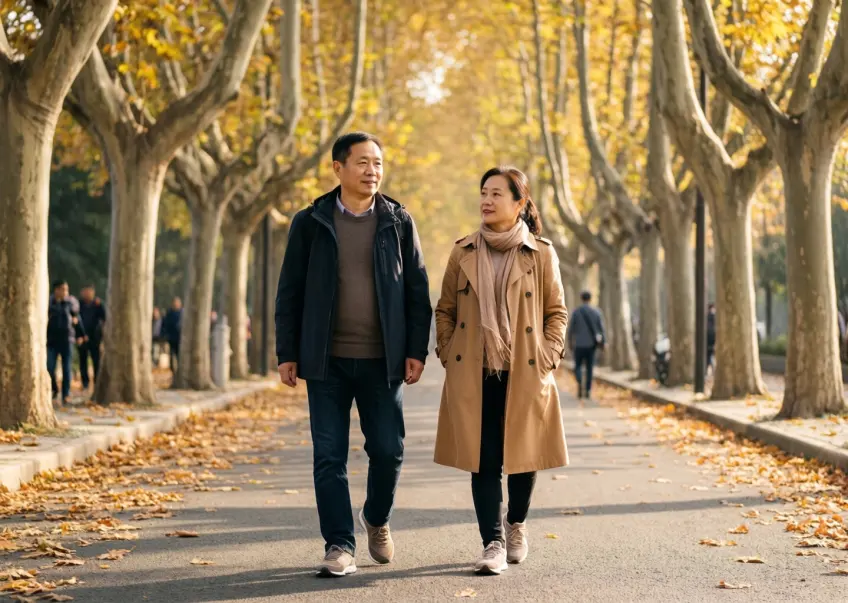
Rainy days: Rain this month is usually light drizzle, so a folding umbrella is generally enough; a water-repellent outer layer makes things even easier. During leaf-fall season, wet cobblestones and steps get slippery, especially on the Sacred Way at Ming Xiaoling Mausoleum, the mountain paths at Linggu Temple, and the city wall ramps, so wear shoes with good tread.
Indoors: Like other cities in Jiangnan, homes and many older buildings in Nanjing have no central heating, so going inside in late November won't warm you up right away. Hotels, malls, subways, and museums usually have air conditioning, though staying too long can feel stuffy. Keep your base layers light and use your outerwear to adjust—it's the easiest approach.
Shoes: Sun Yat-sen Mausoleum has 392 steps from the Bo'ai Archway to the Memorial Hall, and you'll also do plenty of walking on the Ming City Wall—easily over 20,000 steps in a day. Wear broken-in sneakers or soft-soled hiking shoes, and skip new shoes and heels.
Traveling with seniors or kids: Older travelers are more sensitive to temperature swings, so choose a jacket that zips open easily and bring an extra hat. Many paths in the Zhongshan Scenic Area go uphill and downhill, so seniors with limited stamina can take the scenic area shuttle instead of walking the whole way. Kids sweat a lot, so keep their base layers thin and change them promptly if they get damp—they're most likely to catch a chill when temperatures drop in the evening.
Extra packing tips if you're traveling from Taiwan or Hong Kong
In November, Taipei and Hong Kong average temperatures in the low 20s°C, but Nanjing is about 10 degrees cooler, with a drier kind of cold. Travelers used to subtropical autumns often make the mistake of bringing only a light jacket, ending up shivering by the Qinhuai River at night. Pack at least one medium-weight windproof jacket, a thermal base layer you can wear next to your skin, and a scarf. The air in Nanjing is drier than in Taipei or Hong Kong, so toss lip balm and moisturizer into your luggage too.
Planning by period: early, mid, and late month differences
Early November: Often sunny around 20°C—you might even use short sleeves with a light jacket. Ginkgo leaves are just starting to turn yellow while plane trees stay mostly green. Mid-November: Days reach 15–16°C, mornings and evenings drop to 8–9°C. Switch to long sleeves with a hoodie or light sweater under a jacket. Both ginkgos and plane trees hit their peak colors. Late November: Once cold fronts arrive, mornings may only be 3–4°C. Bring out the lightweight down jacket and scarf. Plane trees turn their brightest yellow and Qixia Mountain starts turning red. It also gets dark early—around 5 PM—so schedule outdoor attractions before 4 PM.
Seasonal sights: plane trees, ginkgos, red leaves, and chrysanthemum shows
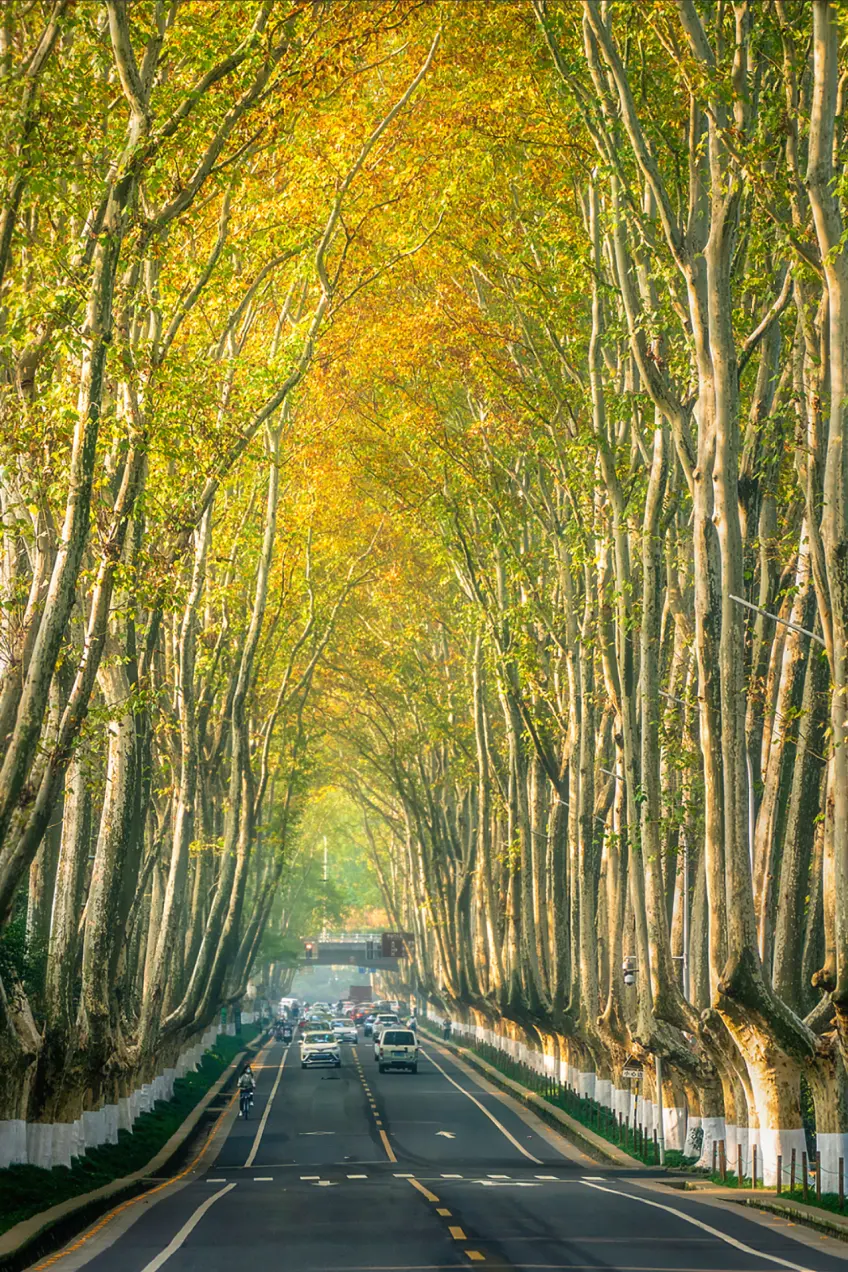
Plane trees: peak gold from mid-to-late November through early December
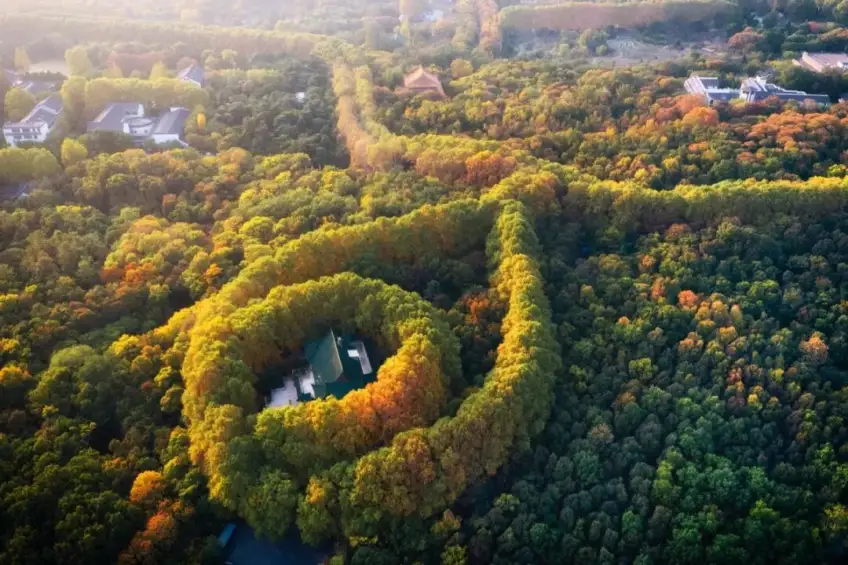
For locals, "autumn" in Nanjing largely means those few weeks when the plane trees change color. According to viewing timelines compiled by local media, the city's plane trees are usually at their most golden from mid-to-late November through early December. The most famous spot is Lingyuan Road inside the Zhongshan Scenic Area: exit Muxuyuan Station on Metro Line 2 via Exit 1 and walk east—the plane trees on both sides arch overhead to form a leafy tunnel. Xiaohong Hill, where the Meiling Palace sits, is also surrounded by plane trees. From above, the yellow leaves encircle the green glazed roof, earning it the nickname "the necklace." For highlights and opening hours, see this Meiling Palace travel guide.
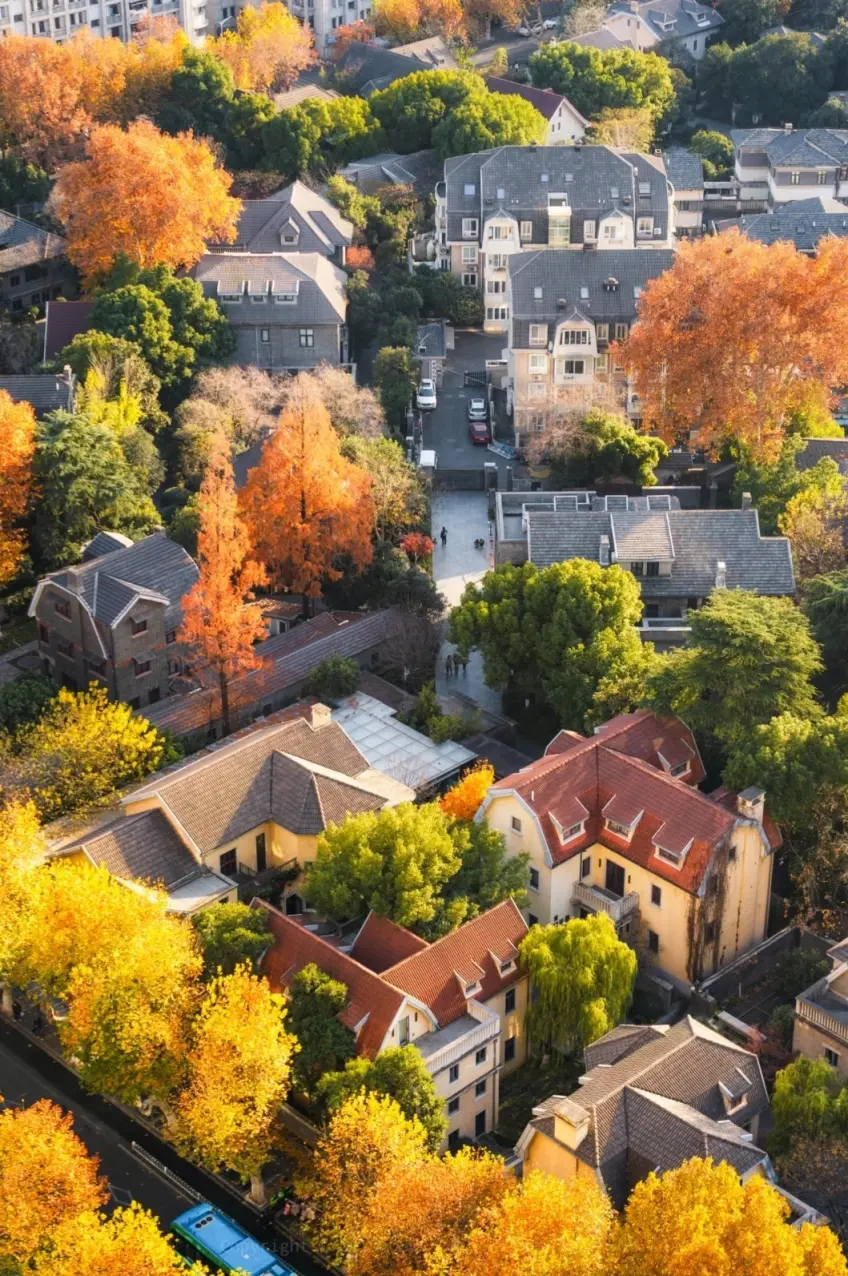
Yihe Road in the west of the city offers a different perspective: Republic of China-era mansions and small villas hide behind the plane trees, perfect for a leisurely stroll. Since this is a residential neighborhood, don't block residents' doorways when taking photos.
Ginkgo and dawn redwood: turning yellow in the first half of the month
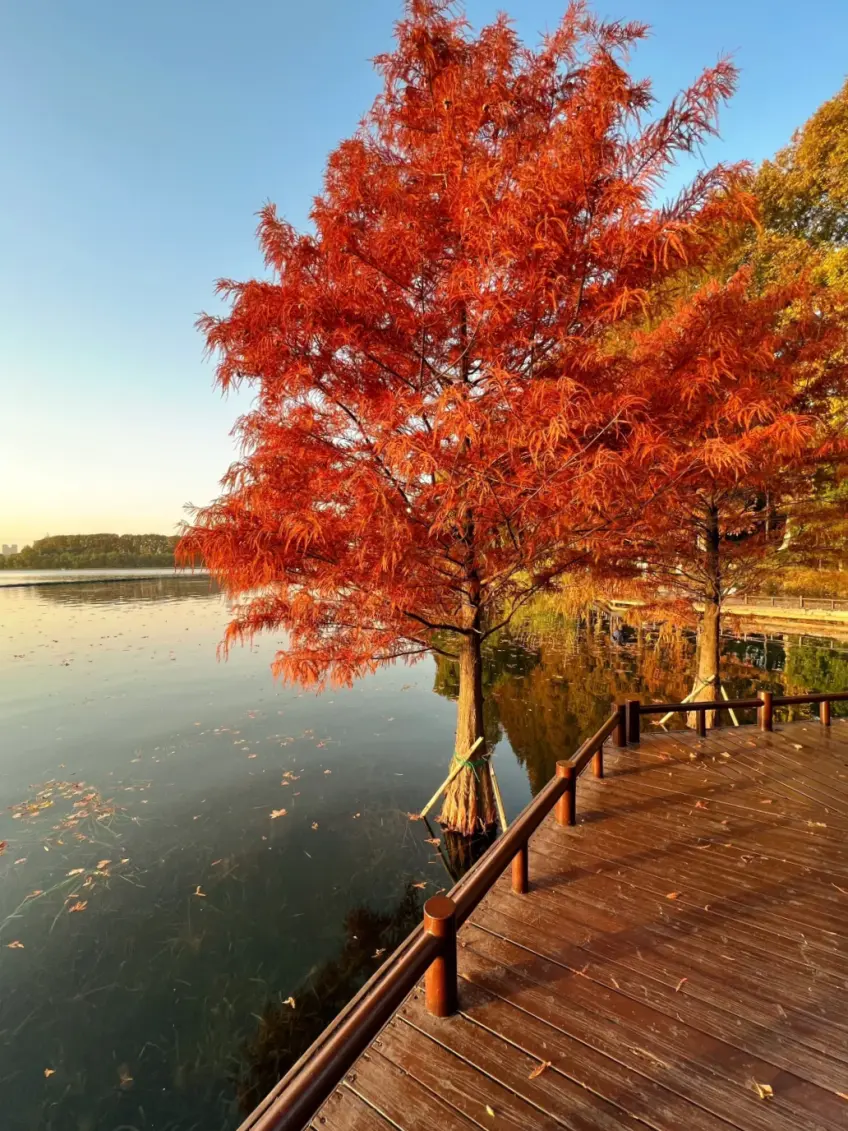
Ginkgo turns earlier than plane trees, usually starting to yellow in late October and still visible through mid-November. The highlights for the first half of the month include both sides of the Sacred Way at Ming Xiaoling Mausoleum, the Ginkgo Avenue on Liangzhou Islet in Xuanwu Lake, and the old ginkgo tree in the courtyard of the Presidential Palace. In November, the bald cypresses near Yanque Lake by Gate 3 of Ming Xiaoling Mausoleum turn reddish-brown and reflect in the water—locals call this scene "Cloud Spruce Water Mirror." It's about a 300-meter walk from Muxuyuan Station. For a suggested route through Ming Xiaoling Mausoleum, see our Ming Xiaoling Mausoleum day tour travel guide.
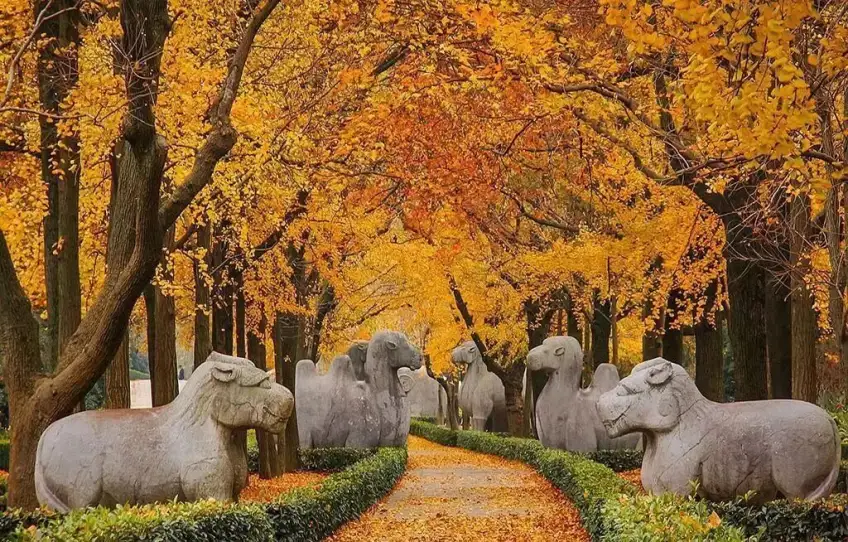
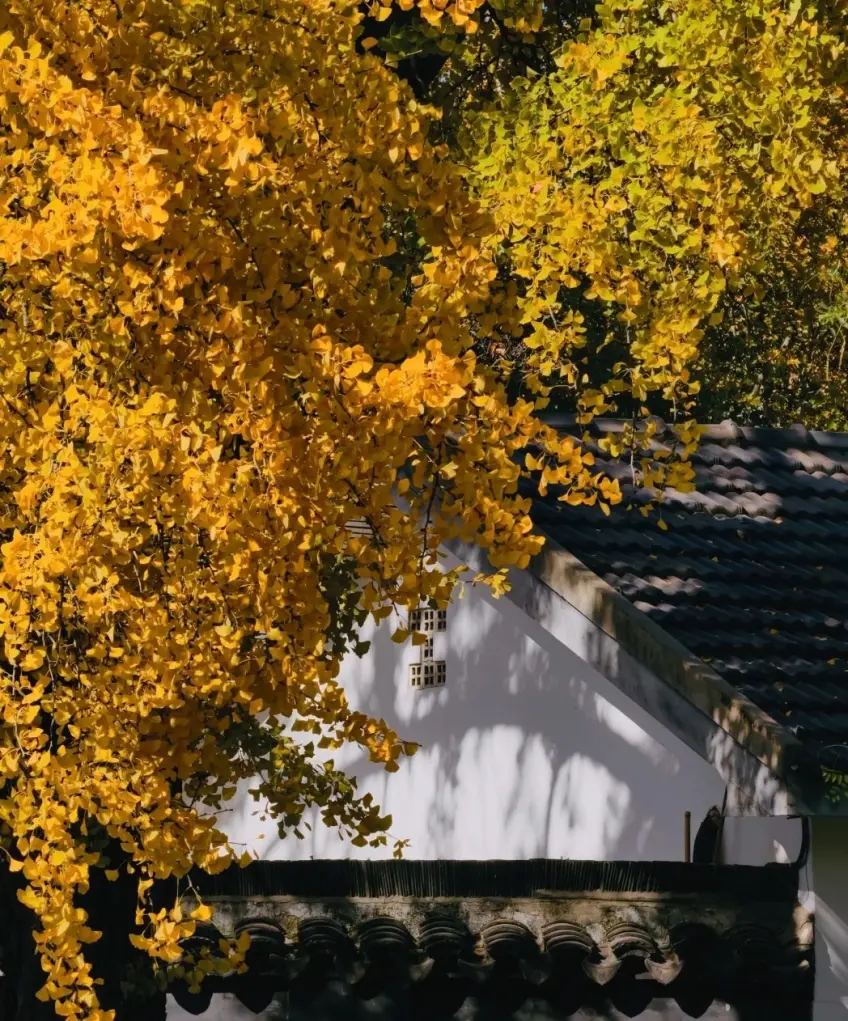
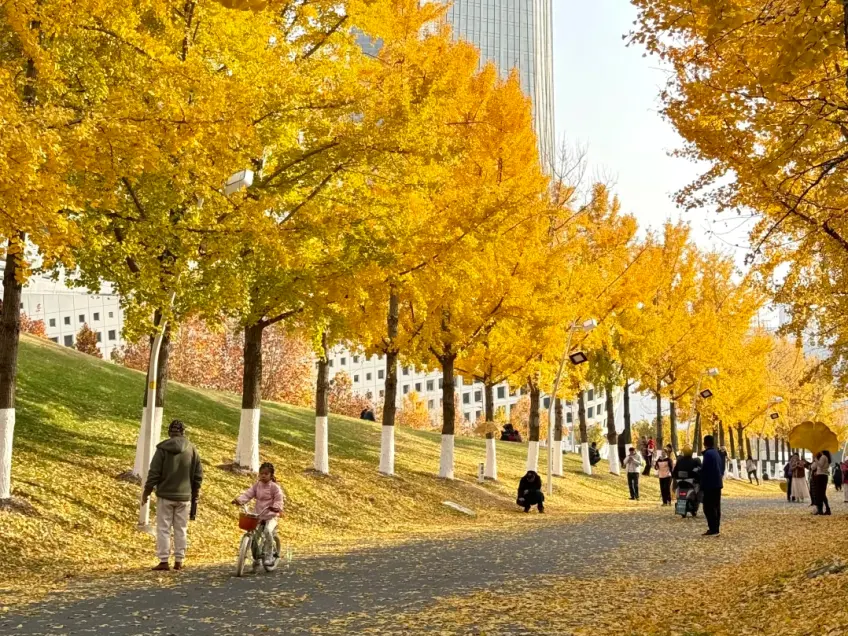
Photograph the ginkgo early: it turns yellow fast and drops its leaves just as quickly. After a strong wind or cold rain, half the branches may be bare within a day or two. Still, the days when the leaves cover the ground are beautiful too—when the Ginkgo Avenue on Liangzhou Islet is carpeted in yellow, many locals come specifically to crunch through the fallen leaves and take photos.
Qixia Mountain red leaves: color change depends on that year's temperatures
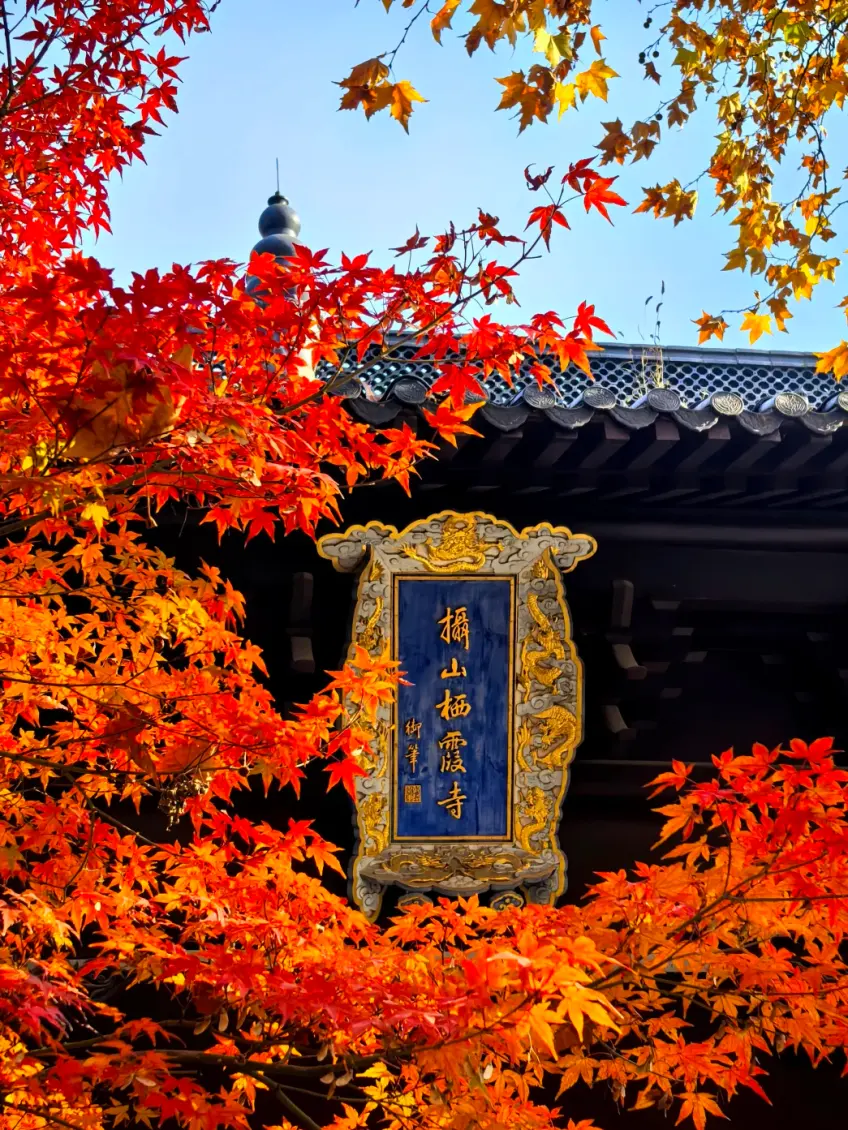
Qixia Mountain in the northeast of the city is Nanjing's most famous spot for autumn leaves, often described by the local saying "spring at Niushou, autumn at Qixia." Metro Line 6 goes straight to the foot of the mountain. The leaves usually start turning red in mid-to-late November, but in recent years the color change has come later: in 2025, local media reported that the red maples at Qixia Mountain didn't reach peak viewing until mid-December, and extra bus routes were temporarily added for the season. In 2026, the red maple events run from the Double Ninth Festival on October 18 through mid-to-late December. So if you visit in early November, Qixia Mountain will likely still be mostly green with hints of yellow. For a hillside full of red, late November or early December is a safer bet—check the leaf color updates posted on the scenic area's official WeChat account before you go.
Xuanwu Lake Chrysanthemum Exhibition and Linggu Temple Autumn Colors
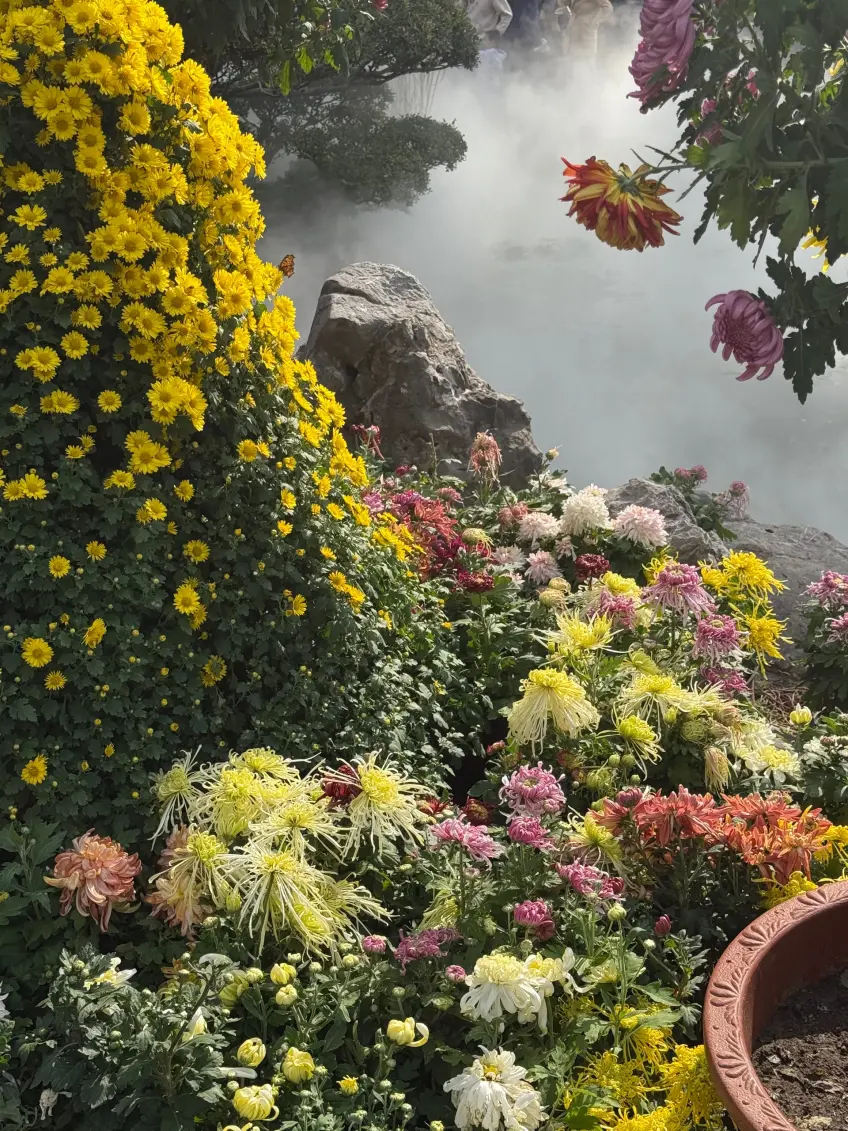
Xuanwu Lake is free to enter. In autumn, Liangzhou Island hosts a traditional chrysanthemum exhibition; in 2025, for example, it runs from October 25 to November 30, so visiting in the first half of November usually works. Check Xuanwu Lake's official announcements for the exact dates each year. Note that starting in November, the five islands in the lake are open from 6:00–21:00, closing one hour earlier than in summer. What to do at Xuanwu Lake in all four seasons is covered in Xuanwu Lake in Four Seasons. On the east side of Mount Zhong, the woods around Linggu Temple are dense, with sweetgum, Chinese tallow and ginkgo trees growing together—the colors look best on sunny afternoons when the light hits them at an angle.
Crowds & Reservations: Weekend Bottlenecks at Fall Foliage Spots
There are no long holidays in November, so it's much quieter overall than during the National Day holiday in October. But on autumn foliage weekends, crowds concentrate along Lingyuan Road, at Meiling Palace, Qixia Mountain and Ming Xiaoling Mausoleum. Parking near Lingyuan Road and Meiling Palace is very hard to find around midday on weekends. Since October 1, 2025, Zhongshan Scenic Area has required advance reservations for vehicle parking, so drivers need to book a day ahead via the "Nanjing Zhongshan Scenic Area" WeChat official account. Taking the metro to Muxuyuan or Xiamafang Station and then walking or catching a sightseeing shuttle is usually faster than driving.
Sun Yat-sen Mausoleum is free, but you must reserve in advance with your real name via the "Zhongshan Scenic Area" WeChat official account. Ming Xiaoling Mausoleum, Meiling Palace, Linggu Scenic Area and the Music Stage require tickets, though combo tickets are also available. Both the Nanjing Presidential Palace and the Nanjing Museum require real-name reservations and are closed on Mondays, so don't schedule them for that day. On autumn foliage weekends, morning time slots at the Presidential Palace fill up first—booking a few days ahead makes things much easier.
The easiest way to avoid crowds is to head out early. Lingyuan Road and the area around Meiling Palace are open roads. At 7 or 8 a.m., the light is low and there are few pedestrians, making it the cleanest time to photograph the plane trees. Tour groups start arriving after 9 a.m., and it gets most crowded around 11 a.m. The same goes for climbing the Nanjing City Wall: go up at 3 or 4 p.m. and come back down after sunset. There's no shelter on the wall, and the wind turns biting as soon as the sun sets.
Weather risks: cold fronts, rain, and morning fog
The most common weather change in November is cold fronts. A day or two before one arrives, it's often warm or even muggy. As it passes through, north winds blow and temperatures drop noticeably within a single day, sometimes with light rain. If you see "temperature drop" or "strong winds" in the forecast, pack a light down jacket. It's windier outdoors on the city wall and at the top of Qixia Mountain than downtown.
Fog occasionally rolls in during late autumn mornings, limiting visibility at the peak of Zijin Mountain and along the Yangtze River. It usually clears by 10 a.m., so save your hilltop views for the afternoon. On rainy days, group indoor attractions together: Nanjing Museum's six halls can easily fill half a day, many exhibition halls inside the Presidential Palace are indoors, and the Six Dynasties Museum on Changjiang Road is nearby. For tips on planning your time at Nanjing Museum, read Is Nanjing Museum worth visiting?
Factor in the temperature for evenings on the Qinhuai River too. On a painted boat cruise in November, the river wind hits you directly once the boat starts moving, feeling several degrees colder than on shore—especially in late November. Zip your jacket all the way up and wear a scarf before boarding, and bring an extra hat for kids. For night cruise routes and lighting times, check out our Confucius Temple night tour travel guide.
Plan your November itinerary this way to save energy without missing the foliage
The weather this month affects your itinerary most through chilly mornings and evenings and the crowds at autumn leaf spots. A smooth plan: on sunny mornings, head to Purple Mountain first while it's quiet to walk Lingyuan Road, Meiling Palace and Ming Xiaoling Mausoleum; after noon, visit reservation-based, mostly indoor places like Presidential Palace or museums; in the evening, go to Confucius Temple and Qinhuai River for the night views, ducking into shops whenever you get cold. If you're traveling with parents or want to cover both Purple Mountain and Qixia Mountain in one day, switching subways gets tiring. Use a Nanjing private car to link the stops together so you spend less time waiting by the road and save your energy for walking. To hear more about Republic of China history and the origins of Ming Xiaoling Mausoleum, hire a Nanjing tour guide to join you—they can also handle reservations and lines. More city itineraries are on the Nanjing city page.
Jinling Dream 3-day 2-night tour: Nanjing and Niushou Mountain
Three days to explore Nanjing at a relaxed pace: Great Bao'en Temple and Sun Yat-sen Mausoleum, Niushou Mountain, Confucius Temple, Presidential Palace, Six Dynasties Museum and Laomendong, with the final half day saved for Nanjing Museum. This private tour includes airport transfers, vehicle, guide, 2 nights' hotel and admission tickets, with an English-speaking guide available.

Dreaming of Jinling 6 Days 5 Nights: Confucius Temple, Sun Yat-sen Mausoleum, Presidential Palace, Linggu Temple, Meiling Palace, Xuanwu Lake, Nanjing City Wall, Yangzhou morning tea, Slender West Lake, Ge Garden, Daming Temple - no shopping stops
A 6-day, 5-night private tour starting and ending in Shanghai: Slender West Lake, Dongguan Street, Ge Garden and Daming Temple in Yangzhou, then Confucius Temple, Sun Yat-sen Mausoleum, Linggu Temple, the city wall and Xuanwu Lake in Nanjing, finishing with Ming Xiaoling Mausoleum and Meiling Palace. Includes airport transfers, vehicle, guide, 5 nights' hotel and admission tickets, with an English-speaking guide available.
Nanjing Day Tour Two Museums Route: Presidential Palace, Nanjing Museum
A private day tour with pickup and drop-off at Nanjing Railway Station, focusing on two sites: Presidential Palace and Nanjing Municipal Museum, with no shopping stops. If Presidential Palace is fully booked or closed on Monday, it will be replaced by Yuejiang Tower or the Six Dynasties Museum. Includes vehicle, guide and admission tickets, with an English-speaking guide available.
FAQs
Do I need a down jacket for Nanjing in November?
You usually won't need one in early November—a light jacket over long sleeves is enough. For mid to late November, bring a lightweight down jacket; you don't have to wear it as an outer layer, just throw it on in the morning and evening or when a cold front hits. Real heavy down jackets aren't needed until December. See Nanjing December weather and clothing for what to wear then.
When are Nanjing's plane trees at their best in November?
According to local media, the city's plane trees turn their brightest yellow from mid-to-late November into early December. Ginkgo leaves peak earlier, from late October to mid-November. The red maples on Qixia Mountain depend on that year's temperatures—in recent years they've often peaked in late November or even mid-December.
Does it rain in Nanjing in November? What rain gear should I bring?
It rains on about seven or eight days on average, mostly lightly. A folding umbrella and non-slip shoes are enough—no need for rain boots. Fallen leaves and stone paths get slippery after rain, so take it slow on the stairs.
Is November a good time to visit Nanjing?
It's a great time to visit. November has little rain and plenty of sunny days, without the huge crowds of the National Day holiday. The autumn colors at Zhongshan Mountain, Xuanwu Lake, and the city walls are at their best. The only thing to prepare for is the temperature swing: midday and evening can differ by 10 degrees on the same day. Pack in three layers—long sleeves, a jacket, and a light down vest—and you'll be fine.
Do I need to book Sun Yat-sen Mausoleum and Presidential Palace in advance in November?
Yes. Sun Yat-sen Mausoleum is free but requires real-name booking via the "Zhongshan Scenic Area" WeChat official account. Presidential Palace and Nanjing Museum also require real-name booking and are closed on Mondays. During autumn foliage season, we recommend booking a few days ahead for weekend visits.