
How to spend a day at the Ming Xiaoling Mausoleum
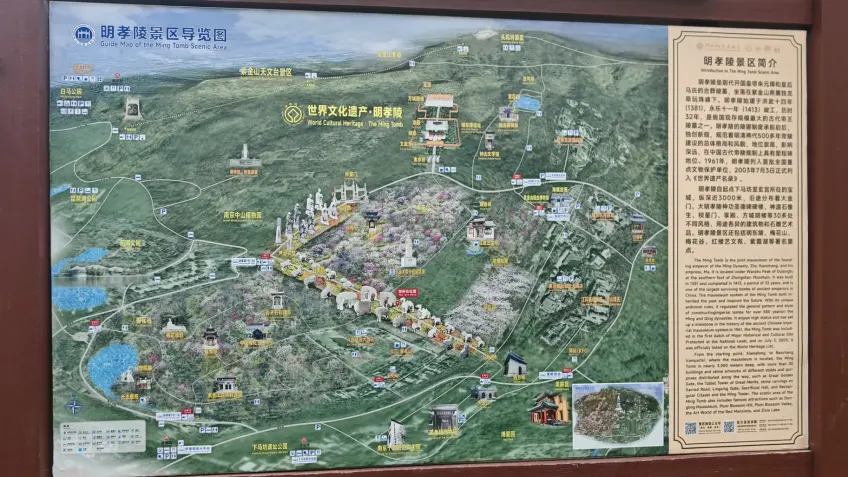
Ming Xiaoling Mausoleum (明孝陵) lies on the southern slope of Purple Mountain (钟山) in Nanjing. It is the joint tomb of Zhu Yuanzhang, founding emperor of the Ming dynasty, and Empress Ma, and became a UNESCO World Heritage Site in 2003. Its best-known stretch, Stone Elephant Road (石象路), is a sacred way about 600 meters long, lined with 24 stone animals of six kinds: lions, xiezhi (a mythical beast), camels, elephants, qilin and horses. Walking from Xiamafang Archway past Sifangcheng Pavilion, Stone Elephant Road and Wengzhong Road to the Sacrificial Hall and the burial mound takes two to three hours.
Adult tickets are ¥70, and the Purple Mountain (Zhongshan) Scenic Area combo ticket is ¥100 (covering Ming Xiaoling Mausoleum, Meiling Palace, the Linggu area and the Music Stage). Both are reference prices from November 2026; check the scenic area's notices for current prices. Tickets and Sun Yat-sen Mausoleum bookings are both handled in the scenic area's WeChat official account (钟山风景区), which you can find by searching its name in WeChat. The park's official guide lists passports as valid ID for real-name registration. For Hong Kong, Macao and Taiwan permits, check the booking page. Opening and closing arrangements follow the scenic area's notices.
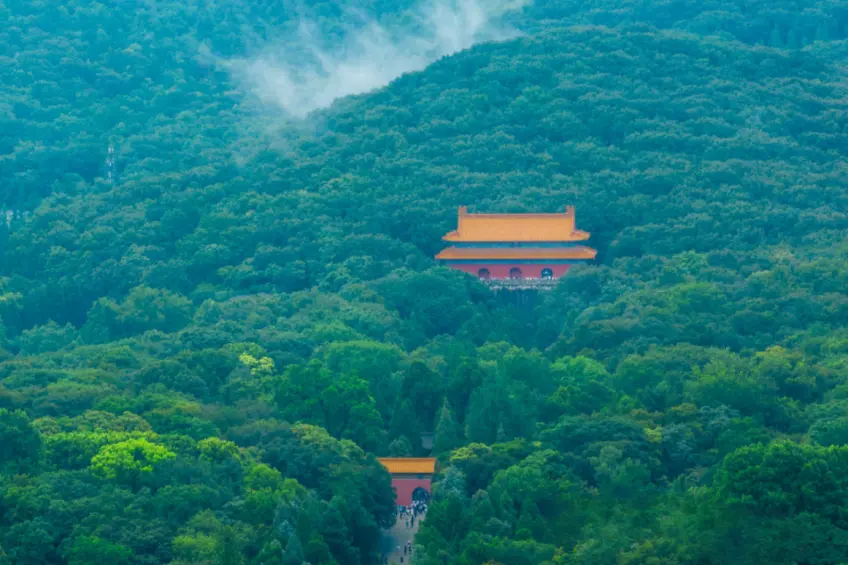
If you arrive by high-speed train at Nanjing Station (南京站) or Nanjing South Station (南京南站) and want to link several Purple Mountain sights with fewer transfers, look at a private car.
The classic route
Ming Xiaoling covers a large area, and if you wander you can easily miss the best parts. The classic route that locals and history fans follow is: Xiamafang Archway → Dajinmen Gate → Sifangcheng Pavilion (Stele of Divine Merit and Sacred Virtue) → Stone Elephant Road → Wengzhong Road → Lingxing Gate → Golden Water Bridge → Wenwu Fangmen → Stele Hall → Sacrificial Hall → Fangcheng Minglou Tower → Baocheng wall and Baoding mound. The whole walk takes two to three hours at an easy pace.
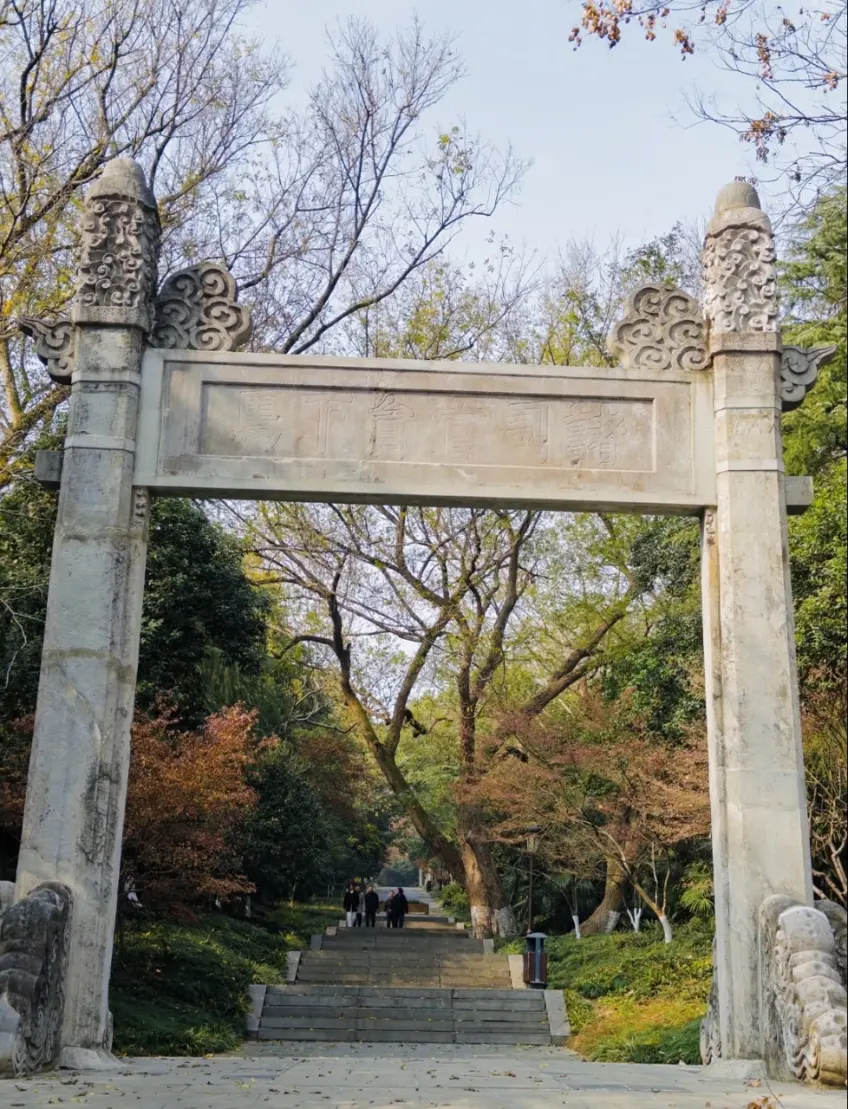
Xiamafang Archway and Dajinmen Gate
Xiamafang Archway: where officials dismounted
Just inside Ming Xiaoling stands Xiamafang Archway, a stone gateway. Its inscription roughly says that officials must get off their horses here and continue on foot (check the exact wording on site). From the entrance on, the tomb is laid out by imperial rules.
Dajinmen Gate: the old main entrance
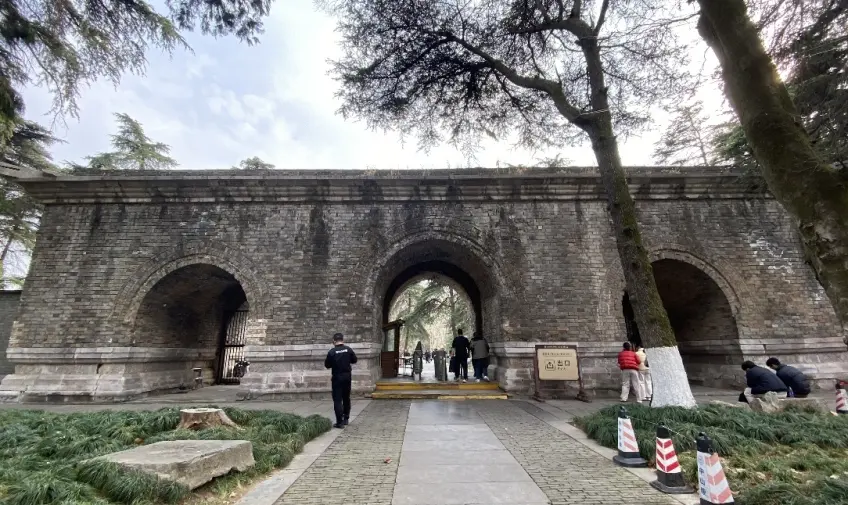
Past Xiamafang Archway you come to Dajinmen Gate, the ruins of the mausoleum's main entrance. Today mostly broken walls and arches remain, the roof is long gone, and you can sometimes spot craftsmen's names on the bricks. It still feels solid and grand.
Sifangcheng Pavilion and its great stele
The giant stele inside Sifangcheng
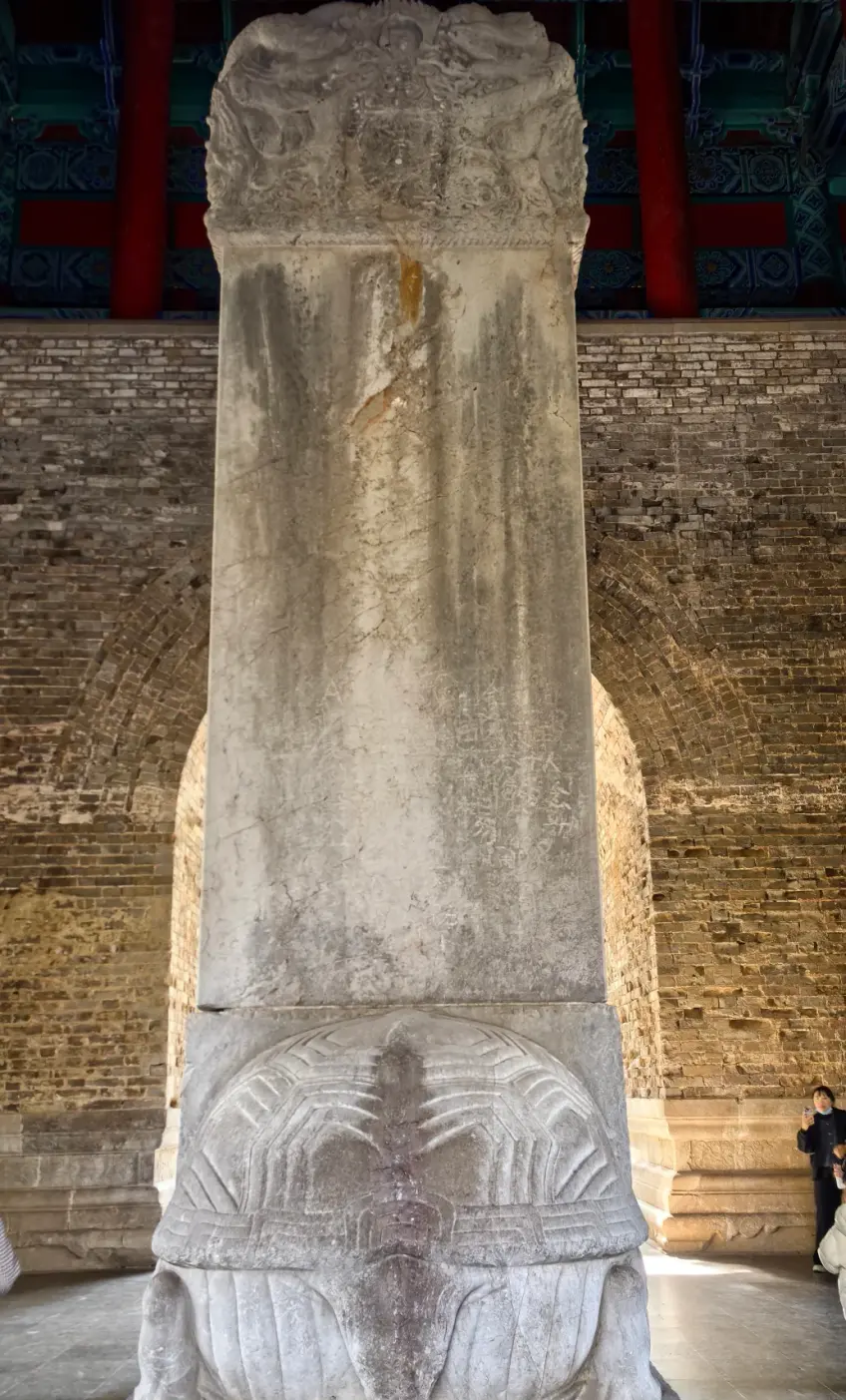
Beyond Dajinmen Gate is Sifangcheng Pavilion, which houses the Stele of Divine Merit and Sacred Virtue (locals often call the whole pavilion Sifangcheng). The inscription mostly records Zhu Yuanzhang's achievements, and the stele is huge. Stories about the giant stone blanks at Yangshan Quarry give useful background. Check on-site notices for details. Look up at the stele, then down at the bixi, the turtle-like creature carrying it. That's the key view here.
Hidden details in the inscription
Read the inscription closely and you'll find accounts of Zhu Yuanzhang's early life and battles. Zhu Di's decision to put up the stele is also often read as political propaganda, though historians disagree.
The guardian beasts of Stone Elephant Road
What to look for in the stone animals
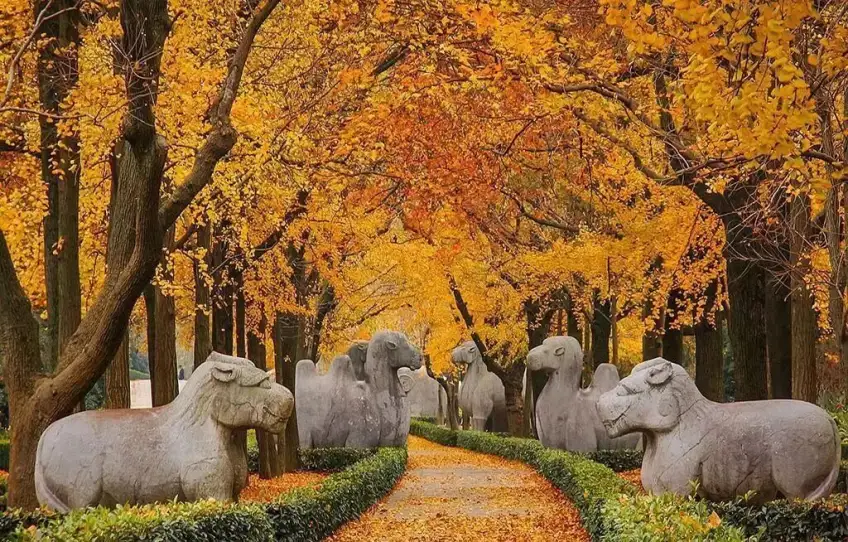
Leave Sifangcheng, turn the corner and you're on Stone Elephant Road. Along this sacred way, about 600 meters long, stand six kinds of stone animals: lions, xiezhi, camels, elephants, qilin and horses. There are two pairs of each, one pair lying down and one standing, 24 in all. Each has its own meaning, and this is the most photographed part of the mausoleum.
Better photos in autumn
In autumn, ginkgo and red maple leaves cover the path, and the light falls on the stone animals. At busy times, arrive early.
Civil officials and military generals on Wengzhong Road
What are wengzhong?
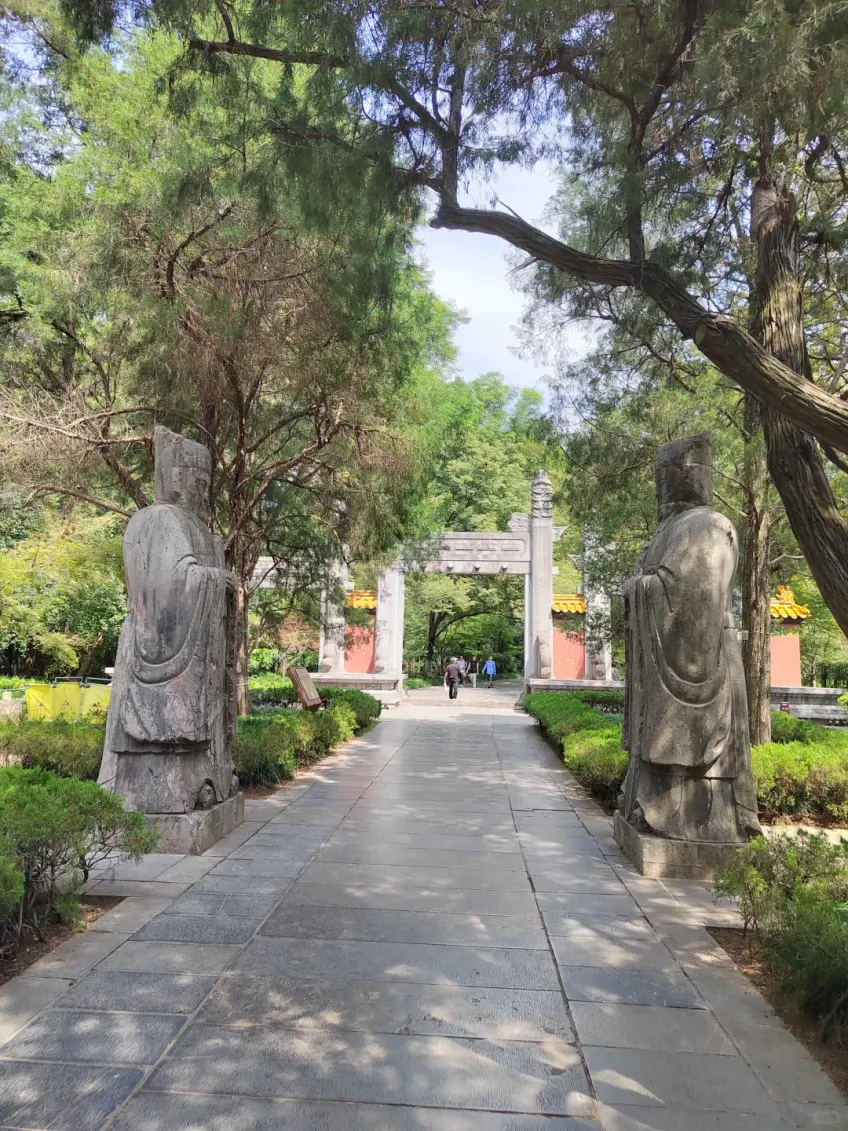
After Stone Elephant Road comes Wengzhong Road, where two pairs of stone generals and two pairs of civil officials face each other. The officials hold court tablets and the generals rest their hands on their swords, a stone honor guard for the tomb.
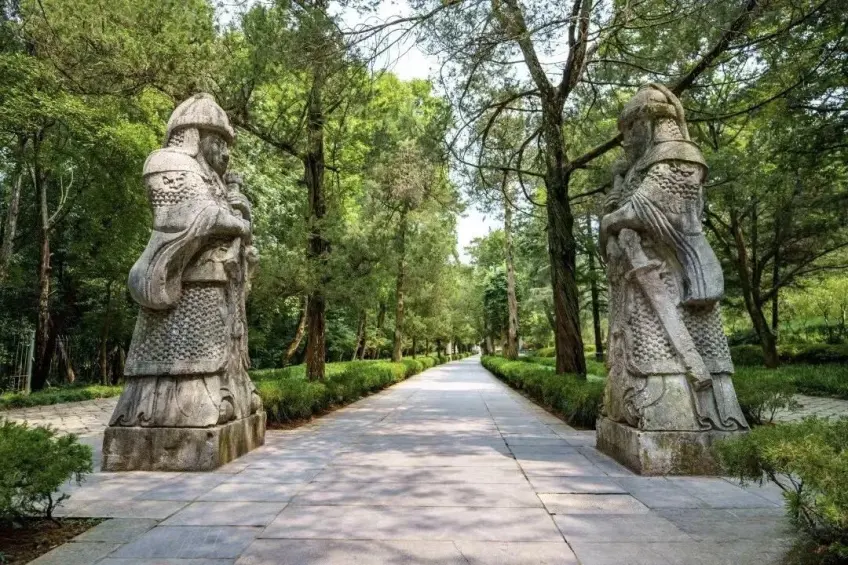
Craftsmanship in the details
Fabric folds, armor plates and even whiskers are carved in crisp detail. These fine touches reflect imperial grandeur. Please don't climb on the statues when taking photos.
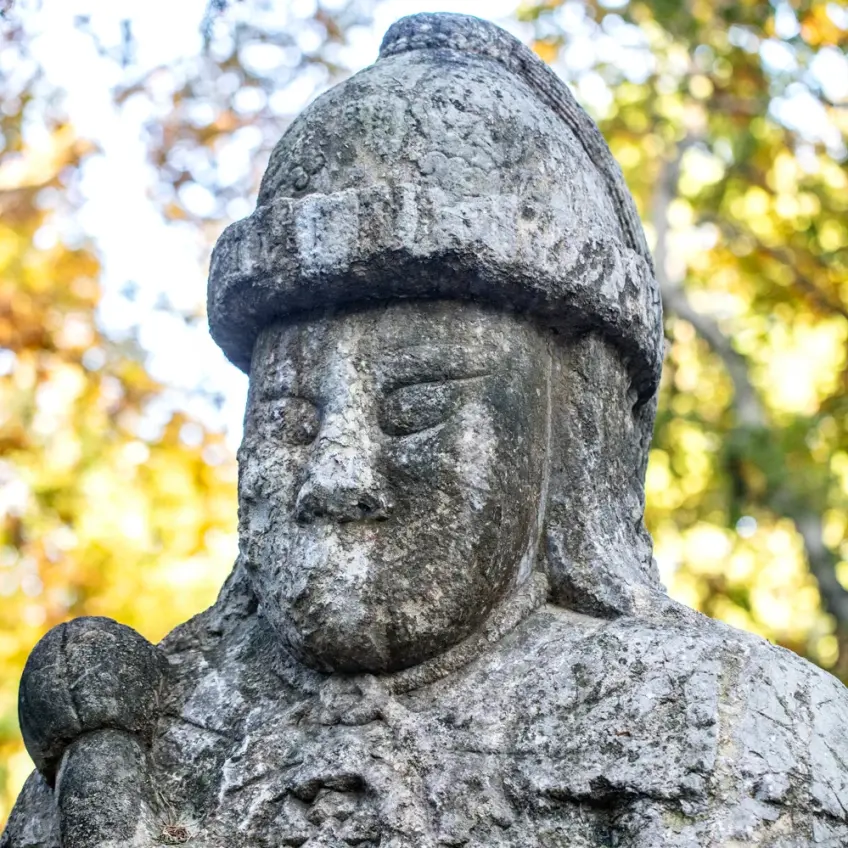
From Lingxing Gate to Golden Water Bridge
Lingxing Gate: entering the core area
At the end of Wengzhong Road stands Lingxing Gate (also called Dragon and Phoenix Gate). In the Ming Dynasty, the central gate was reserved for ceremonial processions; today visitors can walk through it. Beyond the gate, you're closer to the core of the mausoleum complex.
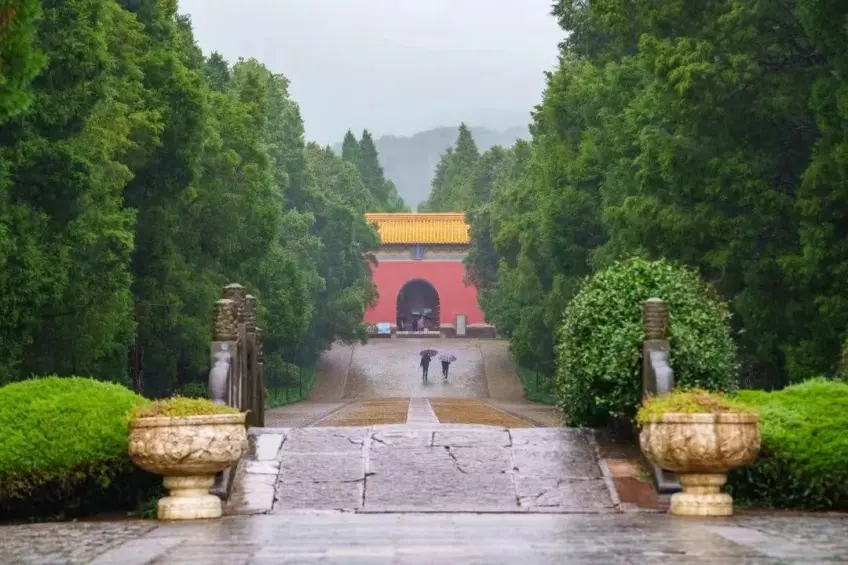
Golden Water Bridge: one step closer
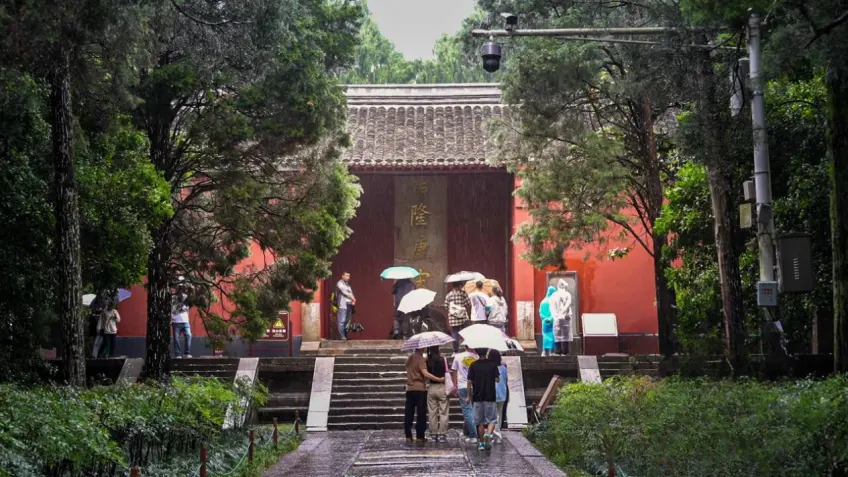
Past Lingxing Gate, you soon reach the Golden Water Bridge and the entrance to the tomb palace. The bridge crosses the imperial moat, and the stone path, shown here on a rainy day, leads to the red-walled gate tower.
Wenwu Fangmen and Stele Hall
Wenwu Fangmen
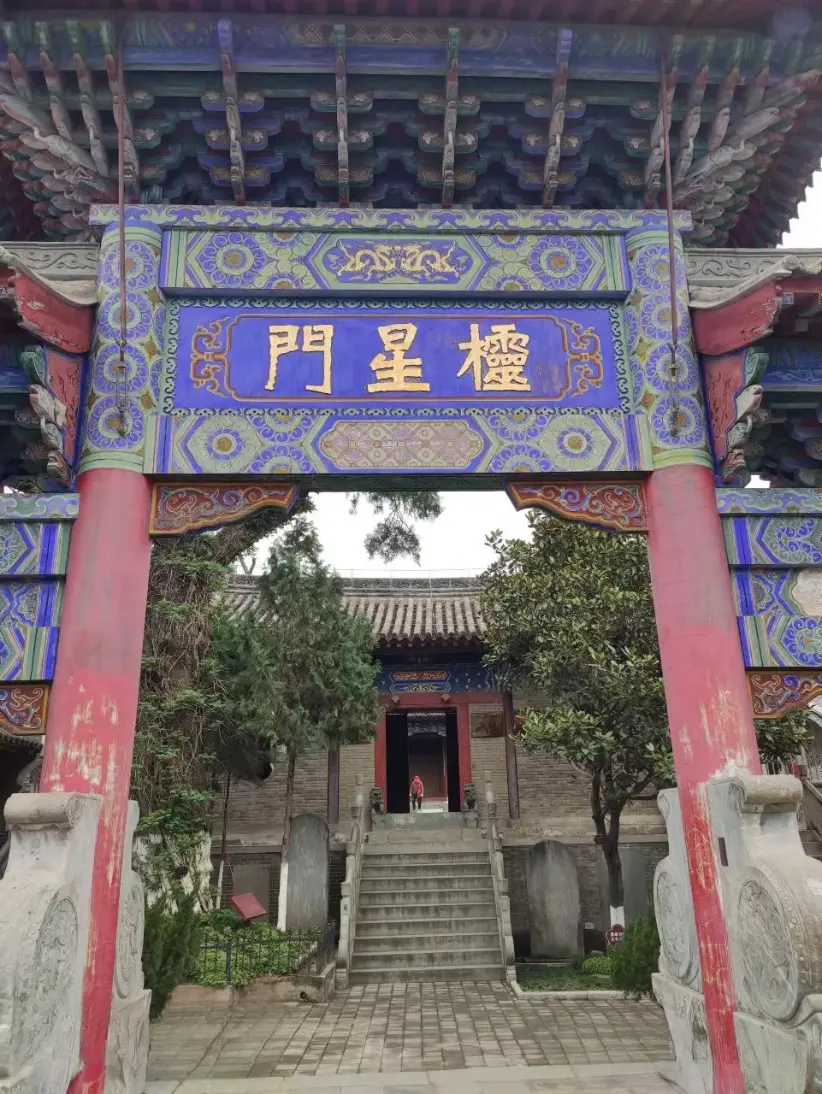
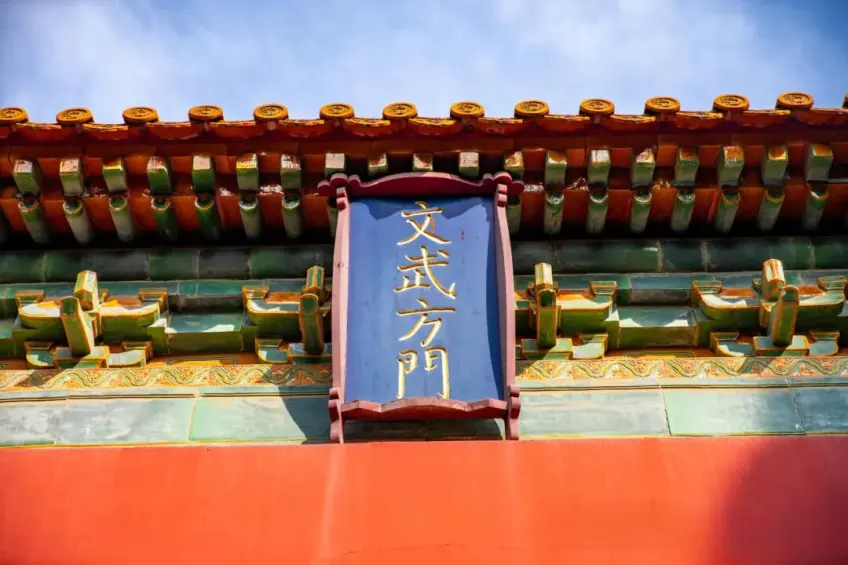
Cross the bridge to Wenwu Fangmen, where the plaque over the gate reads "Wenwu Fang Men." Inside is the courtyard of the tomb palace, with the Stele Hall and the Sacrificial Hall lined up behind it.
Stele Hall and "Zhi Long Tang Song"
The Stele Hall is best known for the inscription "Zhi Long Tang Song" (roughly, rule surpassing the Tang and Song) written by Emperor Kangxi. Other inscriptions are inside too. Watch your step on rainy days, as the floor gets slippery.
Sacrificial Hall (Xiangdian): the main ritual hall
The hall today
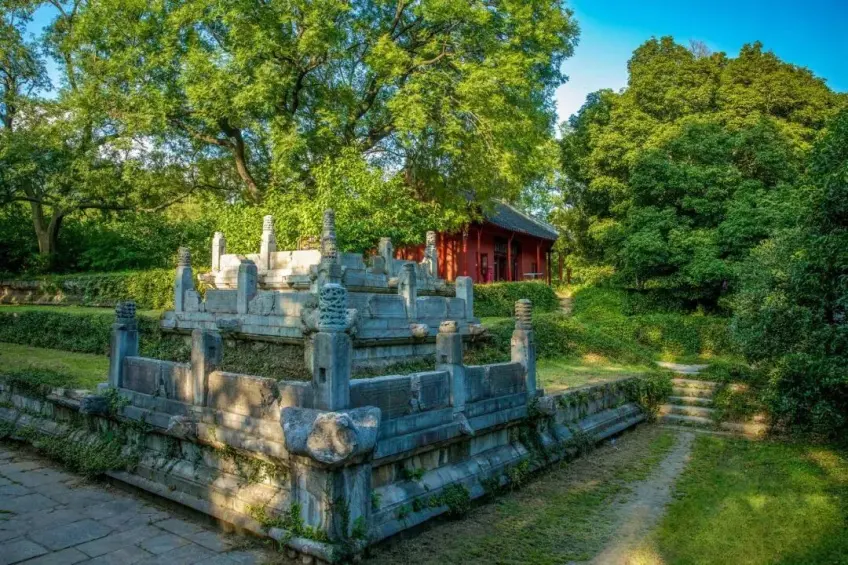
Beyond the Stele Hall is the Sacrificial Hall. In the Ming dynasty it was the main hall for ceremonies. What stands today is a smaller hall rebuilt later. The size of the platform still shows how big the original was.
How to read the remaining stone pillars
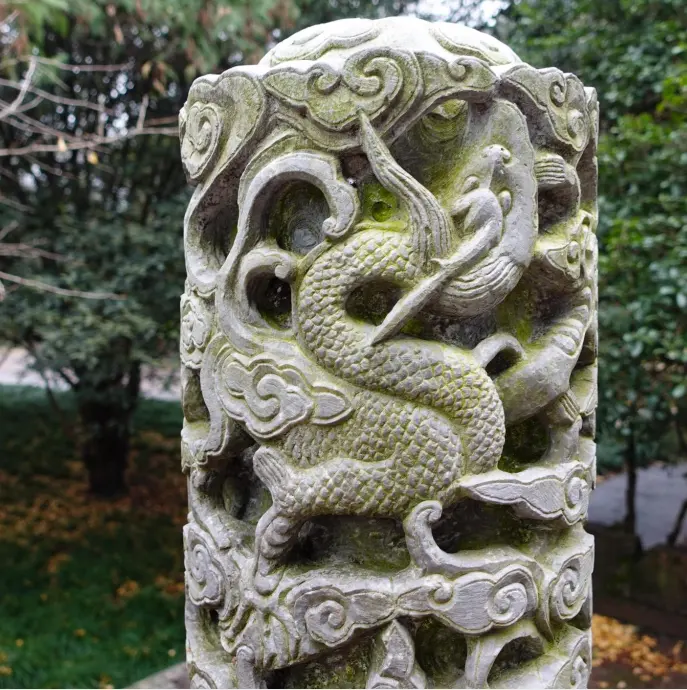
On the platform, you can spot remnants of stone pillars and balustrade carvings from the great hall. Even the ruins tell a historical story—please don't climb on them or carve into the stone.
Fangcheng Minglou Tower and the burial mound
Fangcheng Minglou Tower
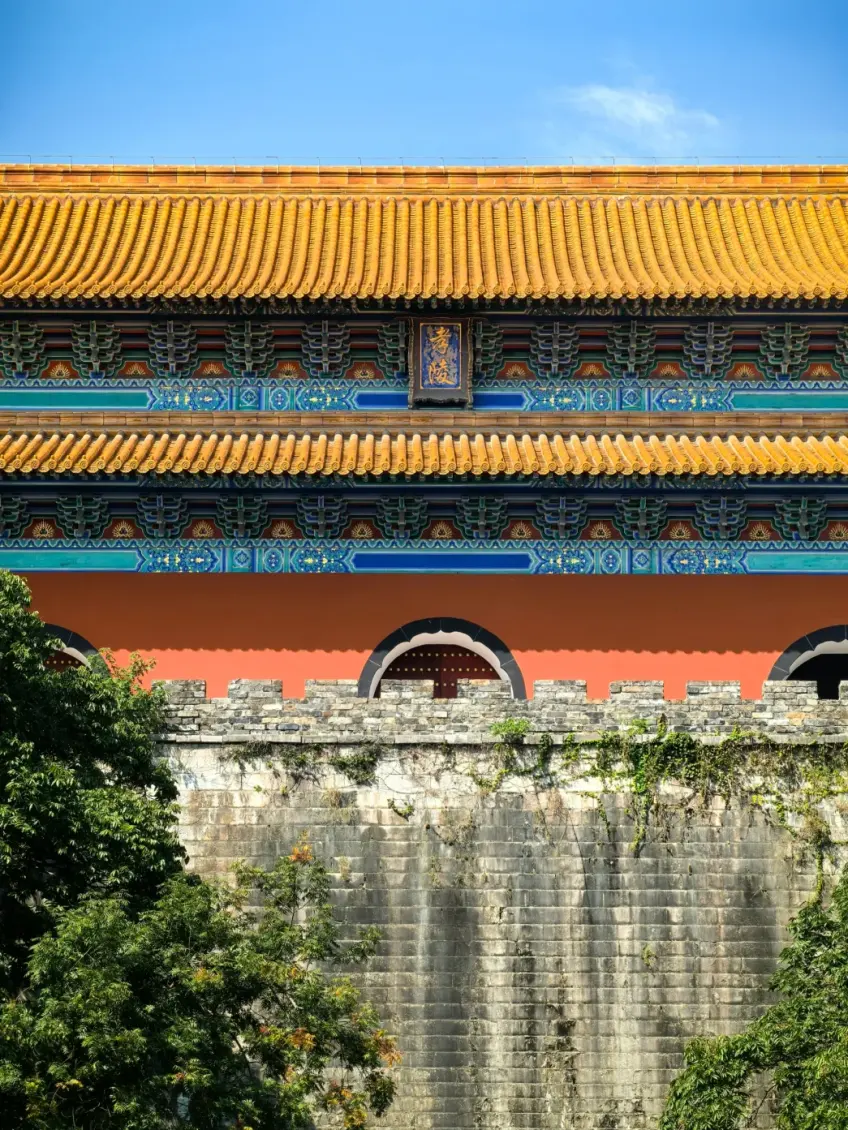
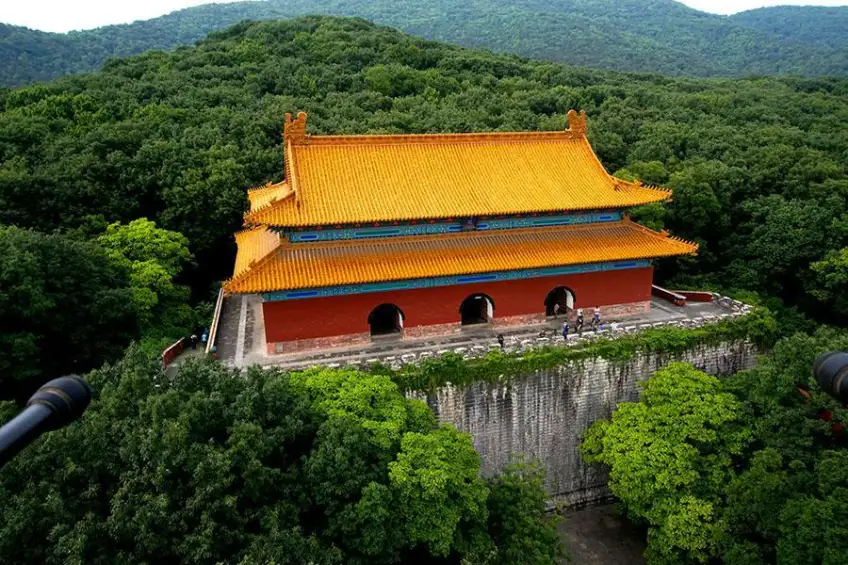
Behind the Sacrificial Hall is Fangcheng Minglou Tower: a square brick-and-stone fortress topped by the Ming Tower, with striking yellow tiles and red walls. You can climb the terrace to look out over the tomb and the outline of Purple Mountain (check on site whether the top is open).
Baocheng wall and Baoding mound
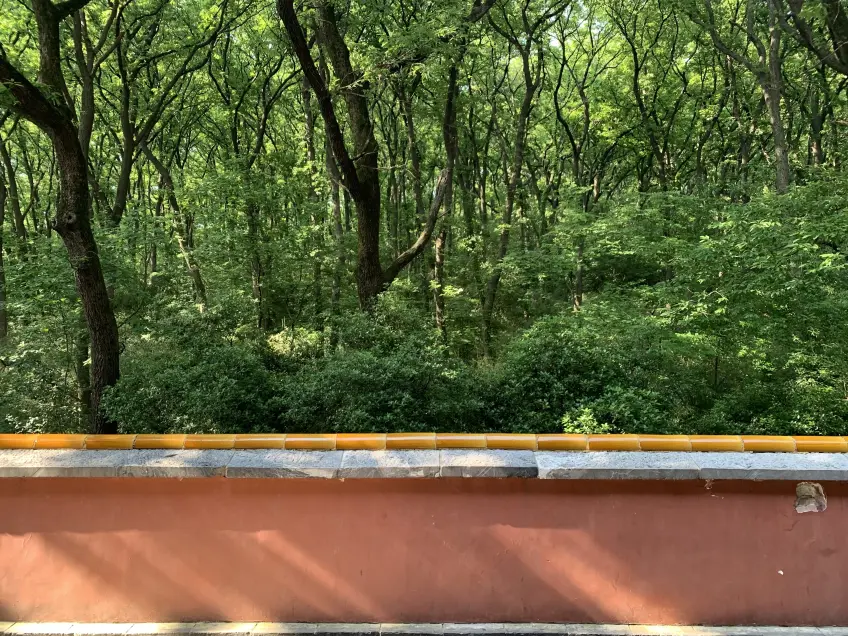
The Baoding is a huge earth mound enclosed by the Baocheng wall, and the underground palace lies beneath it. The underground palace is not open to visitors, so ignore rumors that it has been dug up. The day route ends here, by the wall, looking at the mound. Check on-site notices for opening and security rules.
Nearby stops you can add
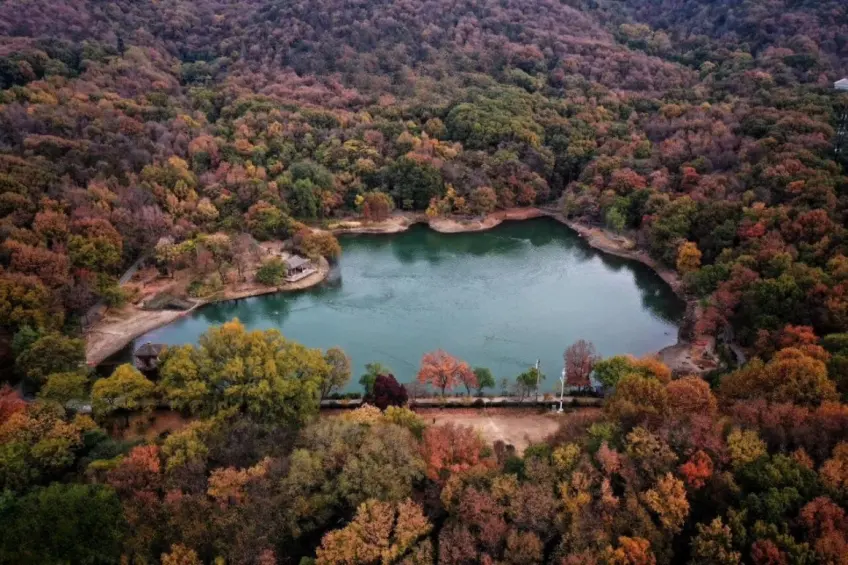
Zixia Lake lies northeast of the Ming Xiaoling Mausoleum, perfect for a stroll by the water; Plum Blossom Hill is ideal for plum blossoms in early spring. Both belong to the Purple Mountain scenic area and can be combined with Sun Yat-sen Mausoleum, but don't try to cram everything into one day.
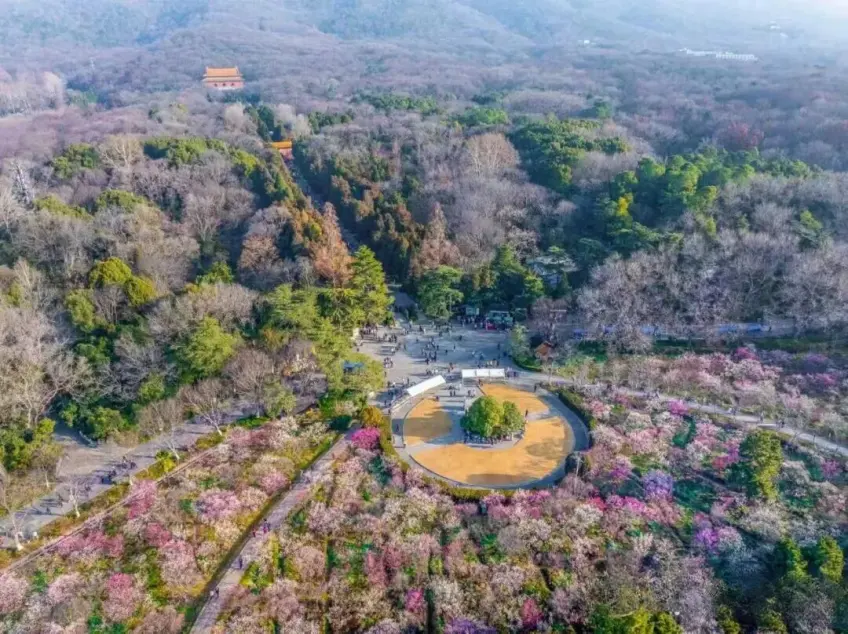

Purple Mountain (Zhongshan) Scenic Area
Purple Mountain (Zhongshan) Scenic Area is located on Purple Mountain in Nanjing and was among China's first national scenic areas. It features core attractions such as the Ming Xiaoling Mausoleum, Sun Yat-sen Mausoleum and Linggu Temple, blending mountains, water, city and forest.FAQ
What's the best route through Ming Xiaoling Mausoleum?
A common route: Xiamafang Archway → Sifangcheng Pavilion → Stone Elephant Road → Wengzhong Road → Sacrificial Hall → Fangcheng Minglou Tower → Baoding mound. Half a day is enough.
Where can I check tickets, reservations and opening hours?
Ming Xiaoling Mausoleum tickets are ¥70 for adults. The Purple Mountain Scenic Area combo ticket is ¥100 and covers Ming Xiaoling, Meiling Palace, the Linggu area and the Music Stage (November 2026 reference prices). Sun Yat-sen Mausoleum is free but needs an advance booking. Tickets and bookings are both handled in the scenic area's WeChat official account, and the park's official guide lists passports as valid ID for real-name registration. Seasonal opening hours follow official notices, and our travel advisors can help you check the rules for your date.
How do I get from the high-speed rail station or airport to the Ming Xiaoling Mausoleum?
Most visitors set off from Nanjing Station, Nanjing South Station or the airport. For door-to-door service, choose a station transfer. To see several sights in a row, add a private car. Just tell us your flight or train number and group size.
Is Stone Elephant Road suitable for seniors and kids? Do I need a guide?
Stone Elephant Road is flat and easy, good for families. Fangcheng Minglou Tower has more steps. To understand the carvings and the tomb layout, add a private guide or book a whole custom private trip and leave the planning to us.
Group tour or custom private tour: which should I choose?
If you prefer fixed schedules and fewer decisions, check out the Nanjing private tour (our "Nanjing Classic Day Tour"). If you want to adjust the itinerary to your own pace, use our custom private travel. If neither works, just book a private car or hire a guide.
What info should I prepare before contacting us?
Please prepare: your date, number of travelers (including seniors and children), departure point/station/airport, whether you want to visit the Stone Elephant Road (Sacred Way)/Baoding, and whether you need a guide. Once sent, our travel consultant will reply with a feasible itinerary and any details to confirm.
Summary
Think of Ming Xiaoling Mausoleum as a key to understanding Nanjing. You don't need to study up. Just follow Stone Elephant Road to the burial mound, and you'll come away with plenty.