
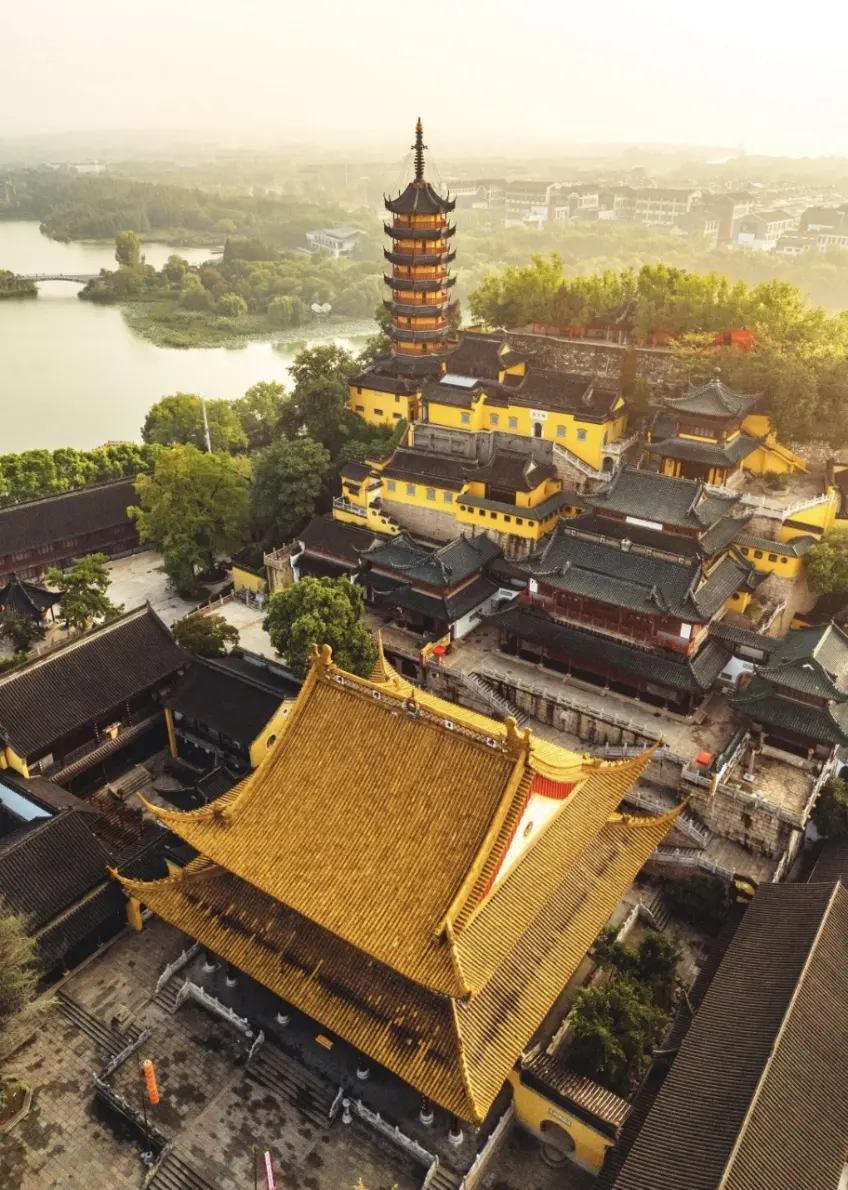
Jinshan Temple in Zhenjiang is famous for more than just the Legend of the White Snake. Founded during the Eastern Jin Dynasty, this ancient temple has over 1,600 years of history and is considered the birthplace of the Buddhist Water-Land Dharma Assembly. Emperor Kangxi of the Qing Dynasty named it "Jiangtian Zen Temple," and during the Qianlong era, Wenzong Pavilion was built here to house the Complete Library of the Four Treasuries. Architecturally, it's known for its "temple wrapping the hill" design, with halls and pavilions covering all of Jinshan Hill. Once you understand these threads, you'll know exactly where to pause when visiting Fahai Cave and Cishou Pagoda. To truly grasp the stories behind it all, hiring a guide familiar with Zhenjiang's history is the easiest option.
1,600 Years: From Zexin Temple to Jiangtian Zen Temple
Jinshan Temple was founded during the Eastern Jin Dynasty and was originally called Zexin Temple. It went by several names over the dynasties until Emperor Kangxi of the Qing Dynasty inscribed "Jiangtian Zen Temple" during his southern tour, which remains the temple's official name today. Still, for over a thousand years, people have kept calling it Jinshan Temple, and that name is far better known than the official one.
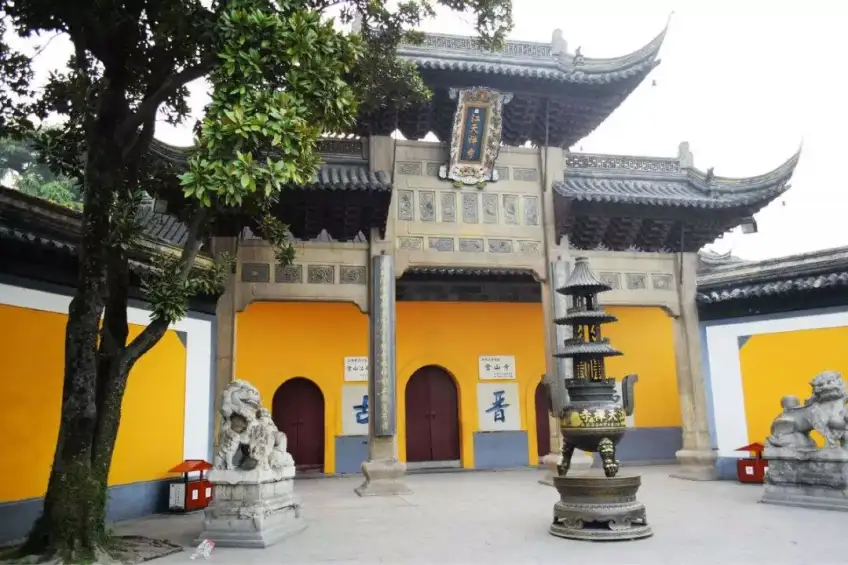
Emperors Kangxi and Qianlong both visited Jinshan Temple during their southern tours, leaving behind many inscriptions and legends. The temple's name "Jiangtian" (River and Sky) captures the scene of Jinshan standing in the river with the water and sky blending into one. Today, there is still a pavilion on the hill related to the phrase "Jiangtian Yilan" (a sweeping view of river and sky). Back then, looking out from the hill meant seeing nothing but water, which made the name perfectly fitting. Now the river has receded, and you can only imagine what it once looked like.
To understand Jinshan Temple, you first need to know how the geography of Jinshan Hill has changed. In ancient times, Jinshan was an island in the middle of the Yangtze River. The temple was built on this island, surrounded by water on all sides, so pilgrims and scholars had to take a boat to reach it. That is why classical poems about Jinshan always mention the "river's heart" or "midstream." Later, as the river shifted north and silt accumulated, Jinshan finally connected to the south bank around the end of the Guangxu reign in the Qing Dynasty, becoming the small hill you see in the park today. Standing at the summit and looking north, the Yangtze is now far away.
The temple has been destroyed and rebuilt many times throughout history. Its greatest modern disaster was a fire in 1948 that burned down the Mahavira Hall, the Sutra Library, Miaogao Terrace and other buildings. Many of the halls you see today were gradually rebuilt afterward. When visiting, don't worry too much about whether something is "original." The true value of Jinshan Temple lies more in its location, layout and the stories it has gathered over more than a thousand years.
Ancestral home of the Water-Land Dharma Assembly: Jinshan Temple's place in Buddhist history
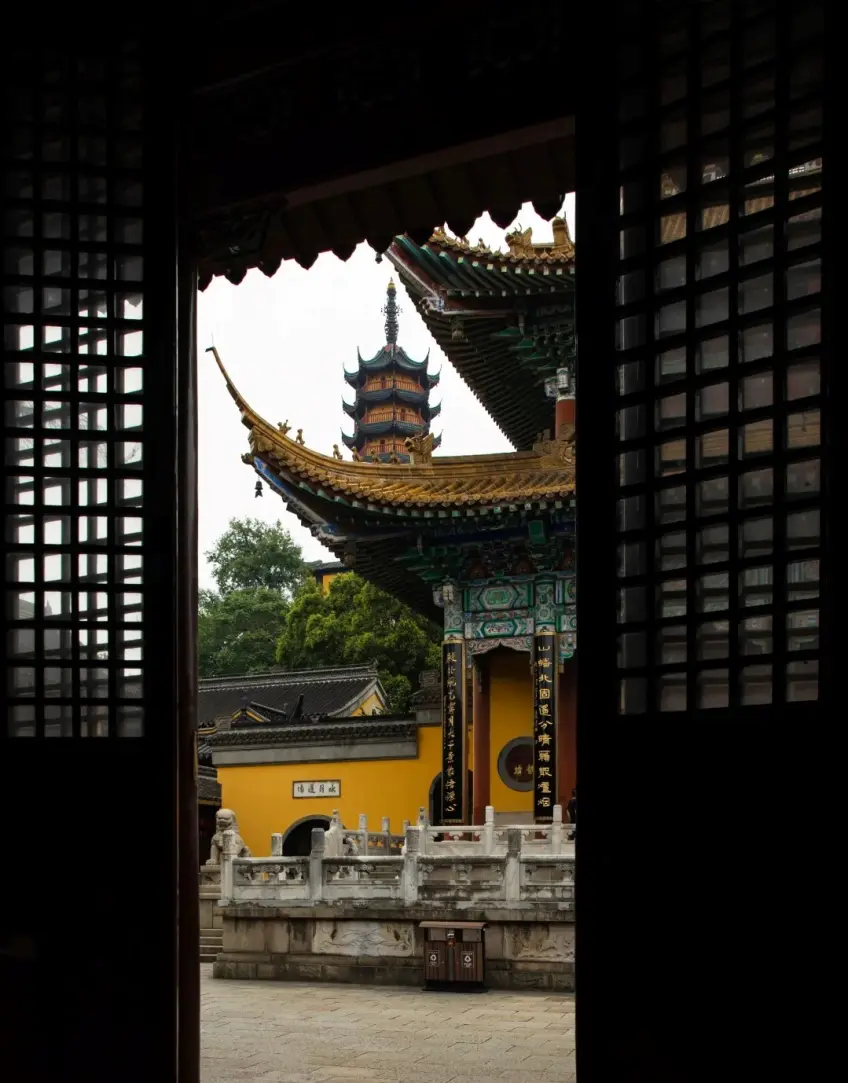
Jinshan Temple's status in the Buddhist world comes largely from the Water-Land Dharma Assembly. This is one of the largest rituals in Chinese Buddhism, involving offerings, sutra chanting and repentance ceremonies to deliver the souls of all beings on land and in water. Records show that in the fourth year of the Tianjian era of the Liang Dynasty (505 AD), Emperor Wu of Liang presided over a Water-Land Dharma Assembly at Jinshan Temple. The ritual then spread across the country, and Jinshan Temple came to be regarded as the ancestral home of the Water-Land ceremony.
Beyond the Water-Land Dharma Assembly, Jinshan Temple also holds a high position in Chan Buddhism. Many eminent monks served as abbots here over the centuries, and the temple was known for its rigorous meditation practice. Historically, Jinshan Temple and Jiaoshan Temple, two ancient monasteries along the Yangtze in Zhenjiang, maintained close ties. Looking at them together makes it easier to understand Zhenjiang's significance in Jiangnan Buddhism.
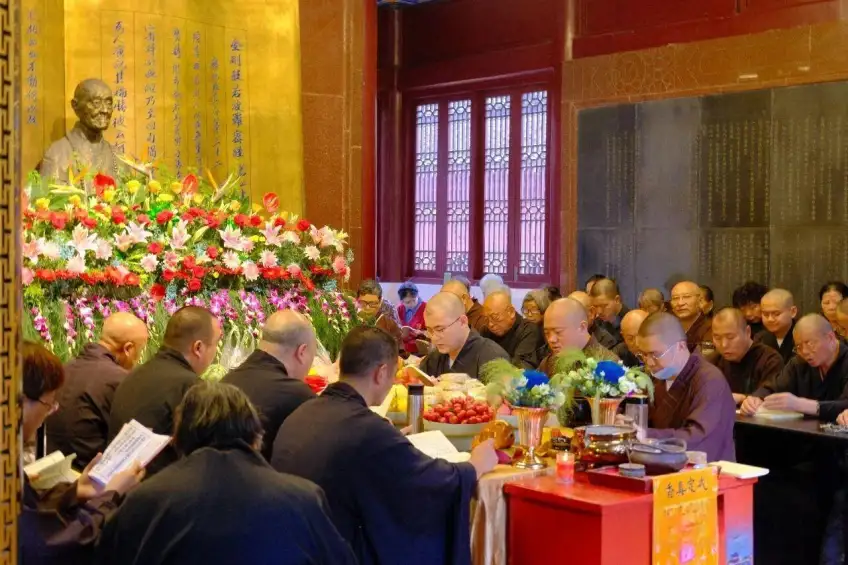
Jinshan Temple is still an active monastery where monks practice, and it holds Buddhist ceremonies on major religious holidays. If you happen to visit during a ceremony or morning/evening chanting, feel free to quietly watch and listen from outside the hall. Don't enter the ritual area to take photos or talk loudly. This kind of atmosphere is something you simply can't experience in a museum.
For international visitors, think of Jinshan Temple as one of China's "classic" Buddhist temples: it was famous long before the Legend of the White Snake. The legend chose Jinshan Temple as its setting precisely because it was already a household name. Seen this way, myth and history connect perfectly.
Temple wrapping the mountain: understanding the layout
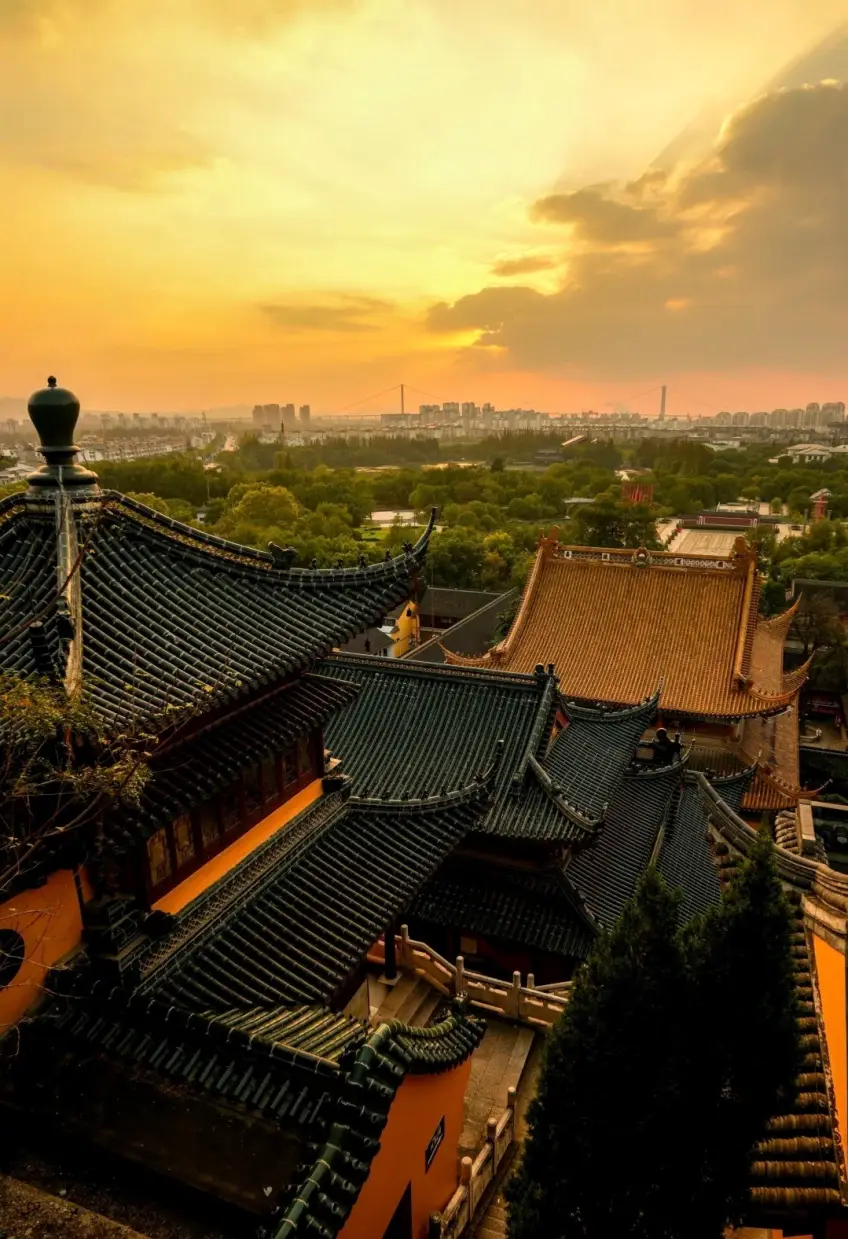
There's an old saying in Zhenjiang: "Jinshan Temple wraps the mountain; Jiaoshan Mountain wraps the temple." At Jinshan Temple, halls, pavilions, towers and corridors climb all the way from the foot to the summit. From a distance, you see only the temple and not the hill, as if the buildings have wrapped around it. Jiaoshan is the opposite: its temple hides deep in the woods, so from afar you see only a green hillside with the temple tucked inside. Both sit along the Yangtze River, yet their layouts are complete opposites—a classic contrast in Chinese temple architecture.
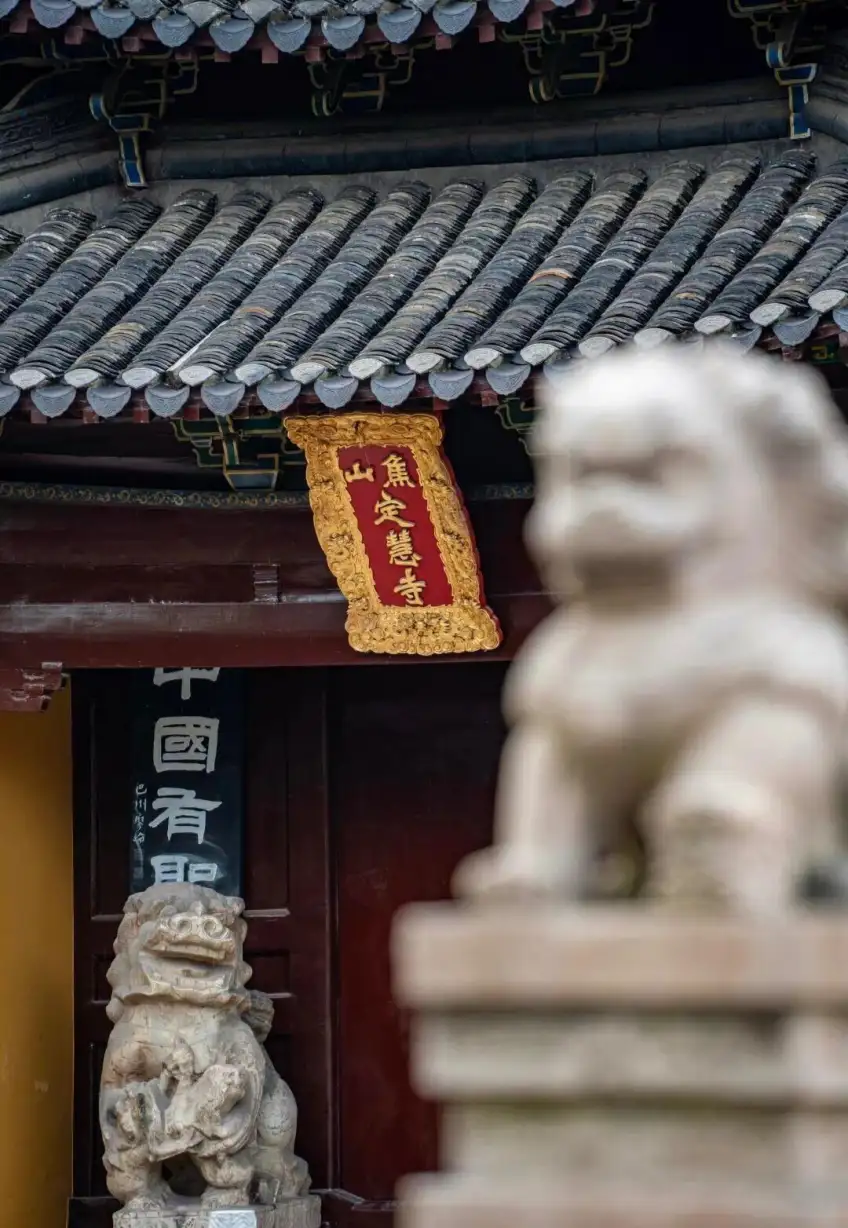
A walk through Jinshan Temple makes the "temple wrapping the mountain" concept clear: almost every few steps bring another flight of stairs, flanked by halls and corridors, and each turn reveals another courtyard. This layered design gives the temple great depth, but also means plenty of stair climbing. Halfway up, pause and look back at the path you've taken—the roofs stacked one above another best capture that "wrapping" effect.
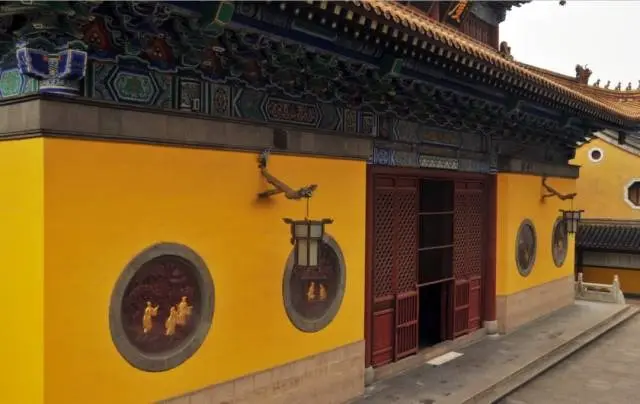
To see the full silhouette of the "temple wrapping the mountain," the best spot isn't inside the temple but by the lake in Jinshan Park. Looking back from across the water, the yellow walls, temple roofs and Cishou Pagoda at the peak merge into one, with the hill itself barely visible. Many visitors climb straight up through the temple and leave as soon as they descend, missing this view entirely. After your visit, take a stroll around the park to the lakeside for a look.
Cishou Pagoda, Wenzong Pavilion and several caves
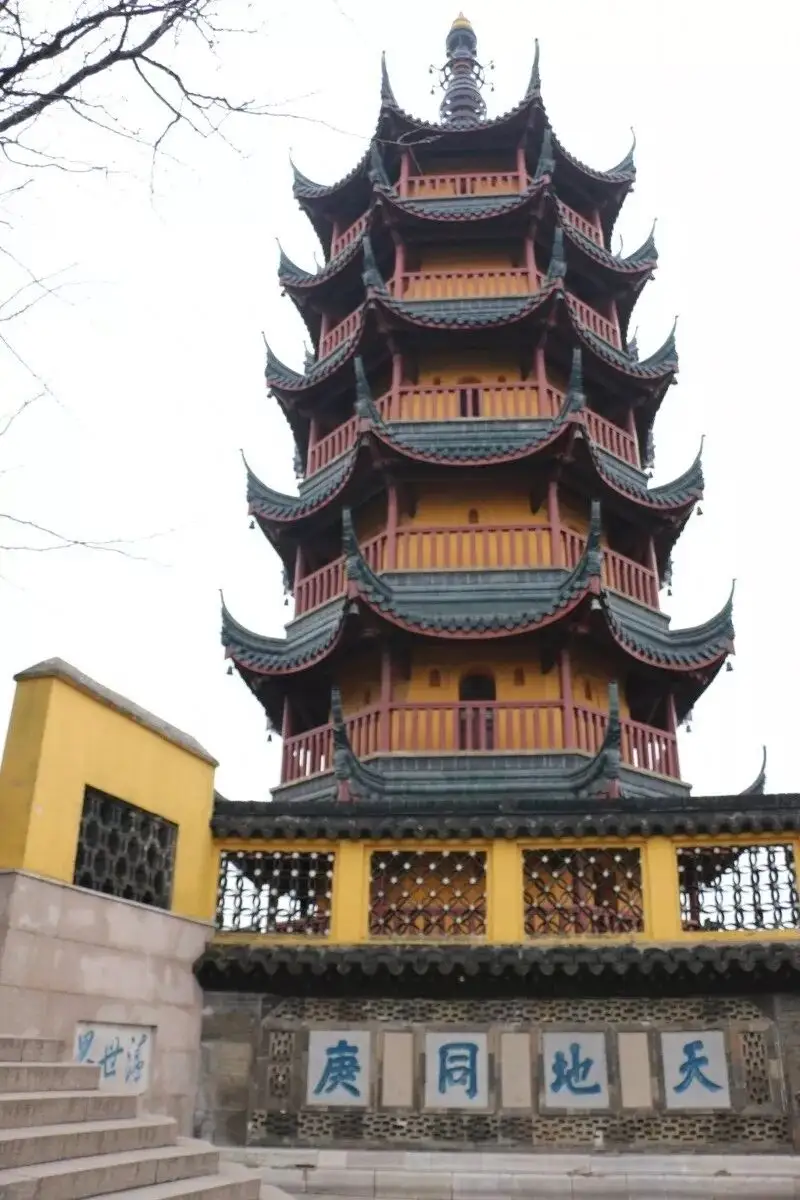
Cishou Pagoda stands on the summit of Jinshan Hill. Seven stories tall with eight sides, it is the landmark of Jinshan and visible from far away. The pagoda has a long history; the current structure was rebuilt during the Guangxu reign of the Qing Dynasty. From the top you can overlook Jinshan Park and downtown Zhenjiang, and on clear days even spot the Yangtze River. Whether the pagoda is open for climbing depends on on-site notices.
Wenzong Pavilion is a library building. After the Qianlong Emperor of the Qing Dynasty completed the Siku Quanshu (Complete Library of the Four Treasuries), seven handwritten copies were stored across the country. Three were kept in Jiangnan: Wenzong Pavilion at Jinshan in Zhenjiang, Wenhui Pavilion in Yangzhou, and Wenlan Pavilion in Hangzhou, collectively known as the "Three Southern Pavilions." Wenzong Pavilion was later destroyed by war, and what you see today is a reconstruction. Qianlong chose Zhenjiang because it was a key transport hub where the Grand Canal met the Yangtze River.
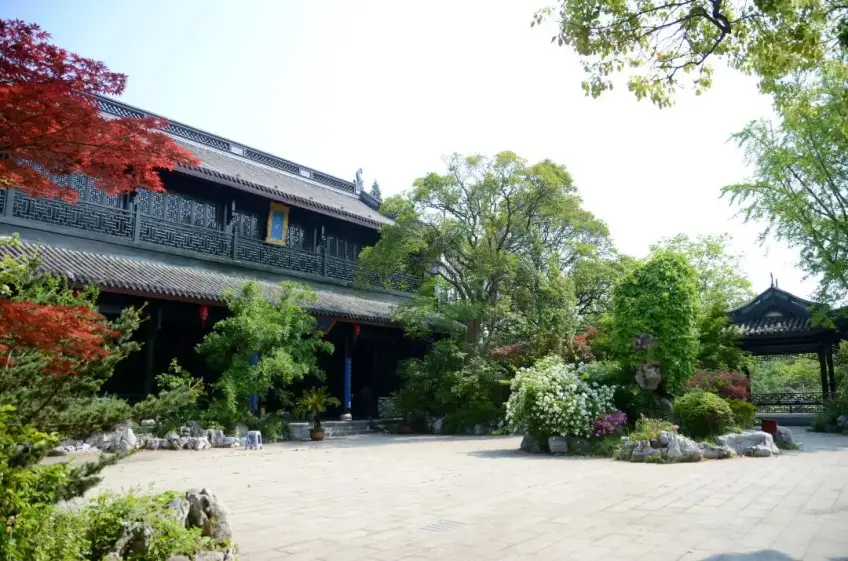
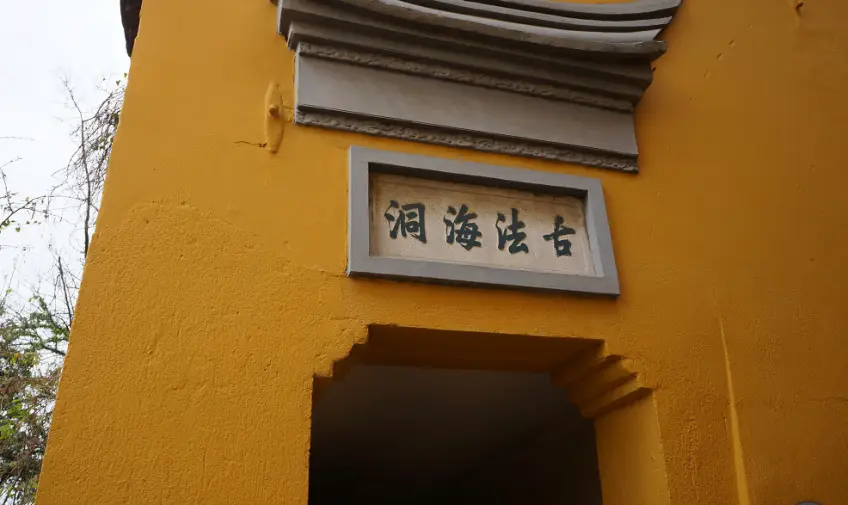
There are also several caves on the hill. Fahai Cave is said to be where the monk Fahai practiced; a statue of him is enshrined inside. In the Legend of the White Snake, Fahai is the villain, but at Jinshan Temple he is revered as a high monk on par with the founding abbot—this contrast makes for the most interesting part of any guided tour. Bailong Cave, near the foot of the hill, is where Lady White Snake supposedly came and went. Miaogao Terrace is said to be where Su Dongpo danced while admiring the moon on the Mid-Autumn Festival and where Liang Hongyu beat the war drum against the Jin army. It was destroyed by fire in 1948, and the current structure was rebuilt in 1991.
Another story linked to Su Dongpo involves a "jade belt." Legend has it that Su Dongpo had a Zen debate with Master Foyin of Jinshan Temple and, after losing, left his jade belt at the temple. Whether such anecdotes are true is hard to verify, but telling them to visitors turns Jinshan Temple from just a temple into a place with characters and conversations.
At the foot of Jinshan Hill is Zhongling Spring, often mentioned along the way. In ancient times, this spring was in the middle of the Yangtze River, making it difficult to draw water. It was reportedly named the "First Spring Under Heaven" during the Tang Dynasty, and scholars through the ages would come to Zhenjiang to taste its water and brew tea. Today the spring is on land and has become a feature in a park. Guides often explain it alongside the story of how Jinshan Hill shifted "from the river to the shore."
Seeing it all together in Zhenjiang: Jinshan Hill, Jiaoshan Hill, Beigu Hill and Xijin Ferry
Many stories about Jinshan Temple only make full sense when placed in the context of Zhenjiang. Ancient Zhenjiang, known as Jingkou, sits where the Yangtze River meets the Grand Canal and has long been a key north-south transport hub. That's why three famous hills—Jinshan, Jiaoshan and Beigu—stand along the river, each home to renowned temples and historic sites.
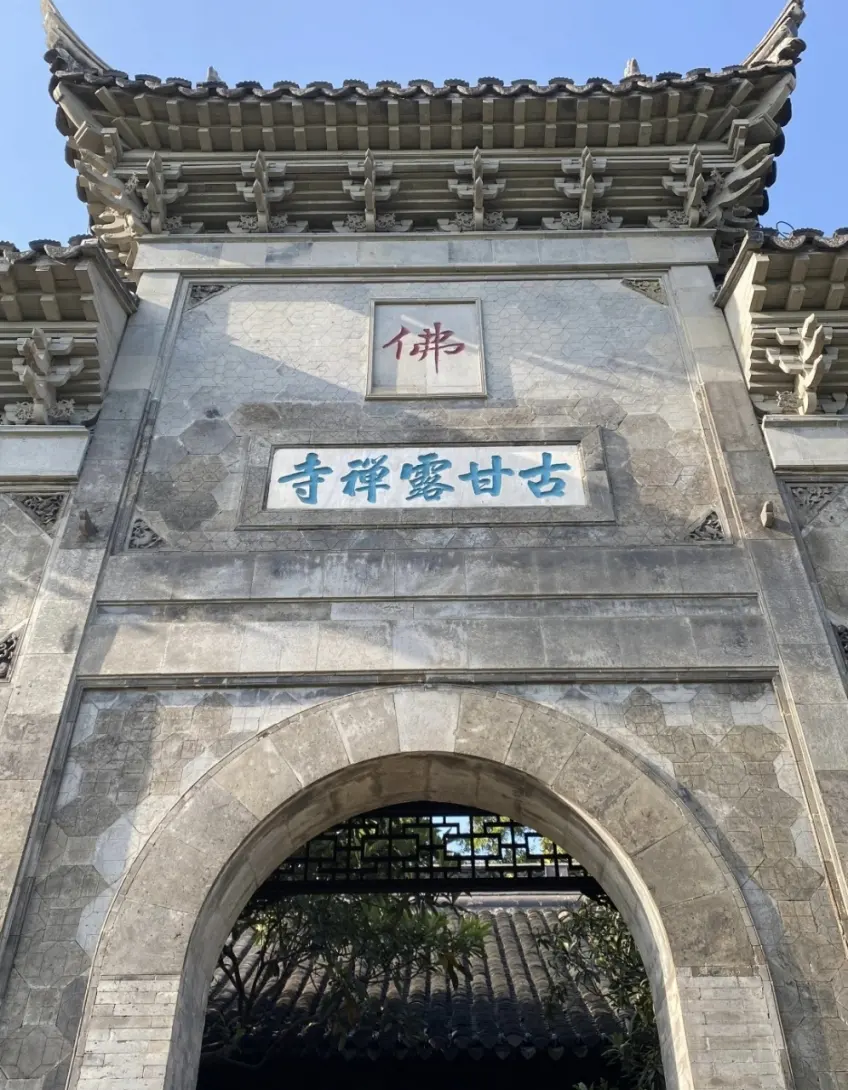
Jiaoshan Hill remains an island in the Yangtze, accessible only by boat, preserving the look Jinshan once had as an "ancient temple in the river." Its Dinghui Temple and Forest of Steles are well known; calligraphy lovers travel specifically to see the cliff inscriptions there. Beigu Hill lies east of Jinshan Hill. Its Ganlu Temple (Sweet Dew Temple) is the setting for the "Liu Bei's marriage proposal at Ganlu Temple" episode in Romance of the Three Kingdoms—like the Legend of the White Snake at Jinshan, another pairing of a famous temple with a famous legend. Xijin Ferry was an ancient river crossing just over a kilometer from Jinshan Hill. People used to take boats from here to Jinshan; today it's a 10-minute walk.
Told together, Zhenjiang's "hills, temples, river and ferry" form a complete story: Jinshan Hill went from a river island to dry land, Jiaoshan Hill still stands in the river, Beigu Hill guards the riverbank, and the Xijin Ferry wharf was left behind in the city as the shoreline moved north. Visiting all four in one day is far more interesting than seeing a single temple.
Hiring a guide: what they cover and how long it takes
The highlights of Jinshan Temple are scattered across the foot, middle and top of the hill, and there are so many stories that exploring on your own often leaves you remembering only "a lot of stairs." Hiring a guide lets you build a route around your interests: history buffs can focus on the Water-Land Dharma Ceremony, Wenzong Pavilion and how Jinshan's geography changed; legend lovers can hear about the Legend of the White Snake plus tales of Su Dongpo and monk Foyin; families with kids can have Fahai Cave and White Dragon Cave woven into one complete story; and if you're bringing foreign friends, the guide can start by explaining basic Buddhist concepts and Chinese temple layout.
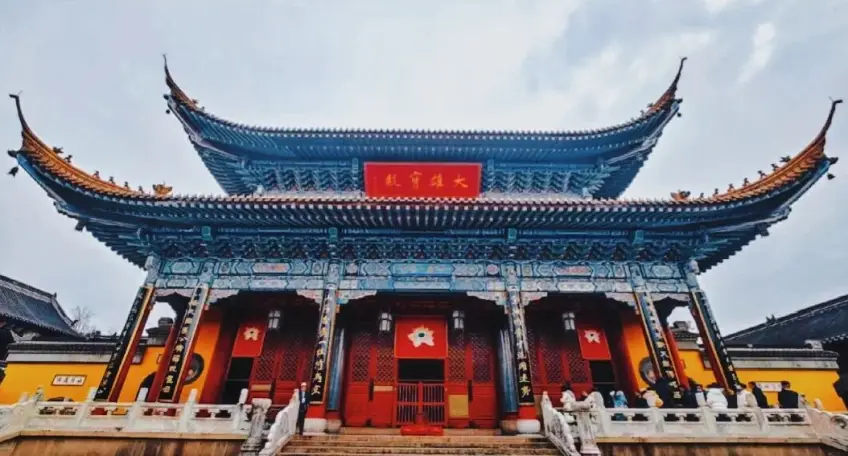
A typical guided route goes like this: outside the mountain gate, learn where the temple's name comes from and how Jinshan went from an island to dry land; inside the Mahavira Hall, hear the temple's history and about the Water-Land Dharma Ceremony; climb the steps to Fahai Cave and White Dragon Cave for the Legend of the White Snake and the two sides of Fahai; stop at Wenzong Pavilion for the Complete Library of the Four Treasuries and the Three Southern Pavilions; finally reach Cishou Pagoda at the summit, take in the view, and wrap up with the idea of "the temple wrapping the hill." If time allows after coming down, walk to the lake for a panoramic view of the temple. This route covers history, legends and architecture all in one go.
As for language, Chinese tours can lean on poetry and historical allusions, while English tours should use fewer proper nouns and more stories and comparisons—for example, describing the Water-Land Dharma Ceremony as a grand prayer ritual and Wenzong Pavilion as a branch of the imperial library makes things much easier for foreign visitors to grasp.
Tours usually last 1.5 to 2 hours. There are plenty of steps on the hill, so guides pause at good spots to rest and talk rather than rushing you along. Our guides can be booked on their own or arranged together with Zhenjiang private car service, covering both Jinshan Temple and Xijin Ferry in one day. For rates, see Zhenjiang private guide prices; for a comparison of guides, private cars and group tours, see How to hire a guide in Zhenjiang.
Which to choose
On your own: If you already know a bit about Buddhism and Zhenjiang's history, read this article first and follow the route from the foot to the middle to the top of the hill—you'll understand most of what you see.
Hire a guide: A guide is worth it if it's your first visit, you're traveling with foreign friends or kids, or you want the legends and history clearly explained.
Group tour or private car: To see Jinshan, Jiaoshan, Beigu Mountain and Xijin Ferry all in one day, book a private car with a guide or join a Zhenjiang day tour to skip the hassle of connecting everything yourself.
Zhenjiang day tour private group | Jinshan Temple, Beigu Mountain, Xijin Ferry
Pickup and drop-off at Zhenjiang Railway Station. Spend a day visiting Jinshan Temple, Beigu Mountain and the old street at Xijin Ferry. All three are in the city center, so the pace is relaxed. This private tour is just for your group and includes transportation, a guide and admission tickets. An English-speaking guide is available on request — feel free to ask about dates.
For how to get to Jinshan Temple and link it with Xijin Ferry, see Where is Jinshan Temple and how to get there; for opening hours and tickets, see the Jinshan Temple scenic area page; for what each hall enshrines and temple etiquette, see the Jinshan Temple prayer guide.
FAQs
Why is Jinshan Temple so famous?
First, it has a long history, dating back to the Eastern Jin Dynasty. Second, it holds an important place in Buddhism as the birthplace of the Water and Land Dharma Ritual. Third, the "Flooding Jinshan Temple" episode from the Legend of the White Snake made it a household name. Fourth, its unique layout of "the temple wrapping the hill" is one of a kind.
What does "Jinshan Temple wraps the hill, Jiao Hill wraps the temple" mean?
The halls and pavilions of Jinshan Temple rise from the foot to the summit, so you see the temple but not the hill. The temples on Jiao Hill are hidden among the trees, so you see the hill but not the temples. Both sit along the Yangtze River in Zhenjiang, yet their layouts are exact opposites.
How long does a guided tour of Jinshan Temple take?
Usually 1.5 to 2 hours, depending on whether you climb Cishou Pagoda or visit the mid-hill caves. If you're traveling with older family members, you can stick to the base and mid-hill areas to save time.
Is the Fahai enshrined in Fahai Cave the same monk from the Legend of the White Snake?
Legend has it that Fahai Cave is where the monk Fahai practiced. In folk tales, Fahai is the one who separated Lady White Snake and Xu Xian, but in the temple's history, he is a revered high monk. The difference between legend and history is exactly what makes this spot worth paying attention to during your visit.