

It's tea-picking season again. The Longjing Village tea farmer experience my family had been talking about for so long finally happened: our whole family traveled together to Hangzhou and spent a day in Longjing Village picking tea, brewing tea around a stove, and hand-roasting tea leaves, escaping the hustle and bustle and soaking up family time in the fragrance of tea.
My family wanted to try a Longjing Village tea farmer experience: tea picking, brewing tea around a stove, and hand-roasting tea leaves, all arranged in one smooth itinerary. To adjust the pace for seniors and kids and coordinate tea garden reservations, we recommend prioritizing a private custom trip; use station transfers for arrivals and departures at Hangzhou Railway Station or the airport. To see more of West Lake and other Hangzhou highlights, check out the Beautiful Hangzhou group tour; to connect multiple scenic areas, book a private car, and add a standalone guide for tea culture commentary. Just tell our travel consultant your travel dates, group size, departure city, and preferred pace for seniors and kids.
One-day itinerary: tea picking, stove-side brewing & tea roasting
Half a month ago we contacted Ajie, a local Hangzhou guide, to finalize the plan: hand-pick tea in the plantation in the morning, brew tea around a stove and enjoy farmhouse dishes in a hillside courtyard at noon, and roast fresh tea at an intangible cultural heritage workshop in the afternoon. Ajie sent us a tip: temperatures vary widely in the hills and the soil is damp, so wear non-slip flat shoes and bring a sun hat. To combine West Lake, Lingyin and Hangzhou into a multi-day trip, check our group tours:
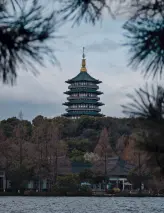
[Most Beautiful Hangzhou 3 Days 2 Nights] Hangzhou, Hu Xueyan's Former Residence
[In-depth Hangzhou] An in-depth, no-shopping experience in Hangzhou alone—slow living, slow Jiangnan. Spend three days exploring one city and skip the rushed sightseeing! [Quality Promise] 100% genuine no-shopping with no shopping stops. Enjoy every corner of Hangzhou's slow-paced lifestyle! [Bonus Perks] Hear your guide recount the heroic deeds of Yue Fei and visit the Jiangnan garden mansion of Hu Xueyan, the legendary "red-topped merchant"! [Comfortable Stays] Carefully selected hotels across various standards to suit different travelers, ensuring a good night's sleep after a day of fun! [Thoughtful Service] Excellent guides and drivers make your five-star journey worry-free!
To avoid tourist traps at Hangzhou's top attractions, you can also watch this short video for reference:

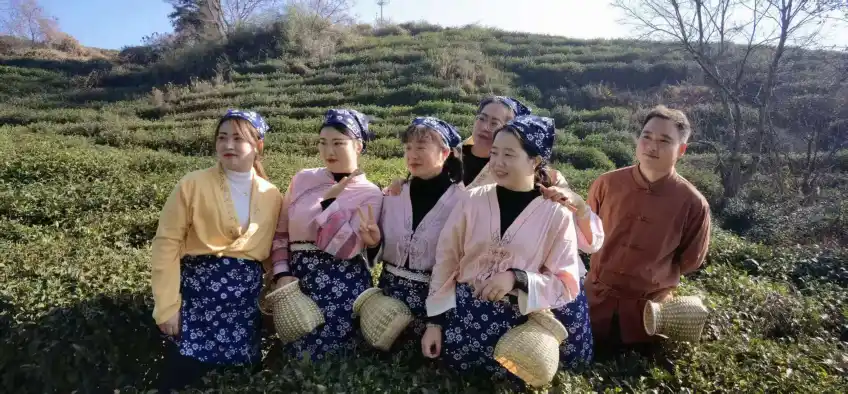
We put on blue calico headscarves and aprons, hung bamboo baskets at our waists, and stood among the tea rows for a family photo. Our tea farmer experience began right here.
Meeting at the village entrance and why we chose Ajie as our guide
We arrived at the West Lake Longjing Village archway just after 8 AM, where Ajie was already waiting. Dressed in simple cotton-linen clothes and carrying a tea culture booklet and a map, he first did a headcount and gave us tips for walking in the mountains. He has spent eight years immersed in West Lake Longjing tea culture and knows the four major production areas—Shi, Long, Yun, and Hu—inside out, especially the core tea gardens of Shifeng Mountain (Lion Peak Mountain). That's exactly why we chose him as our private guide. If you'd prefer to book commentary and route planning separately, see our hire a guide page.
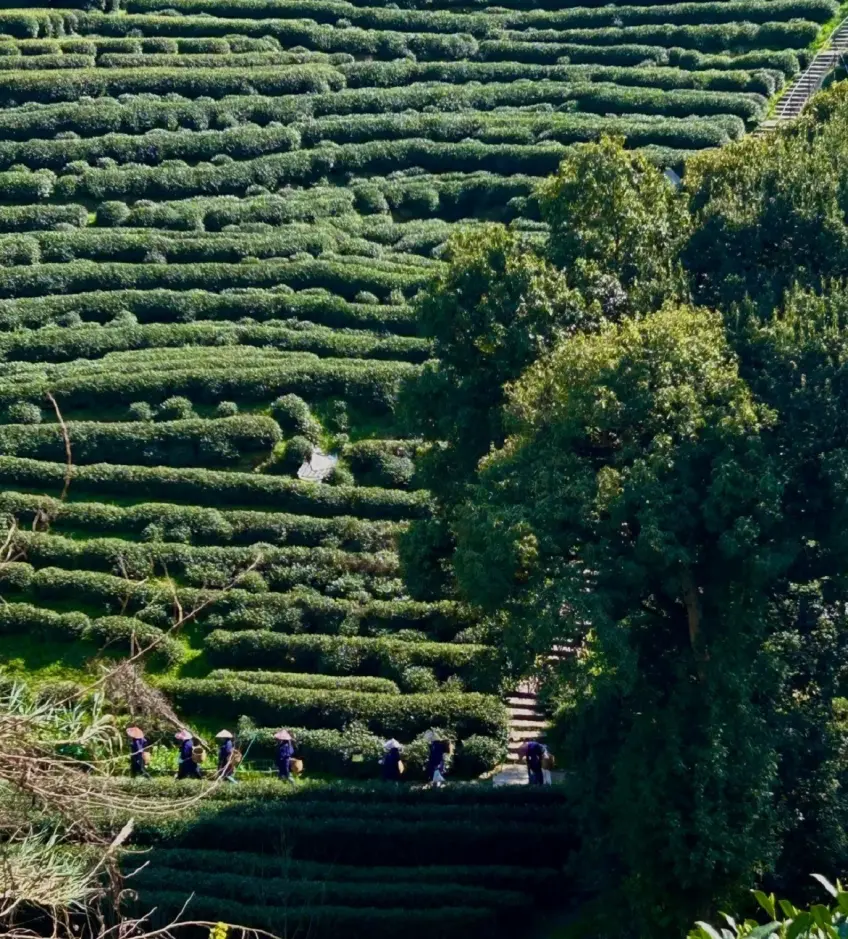
The terraced tea rows follow the contours of the hillside, with a line of tea pickers visible in the distance—the scale of Longjing Village is clear at a glance.
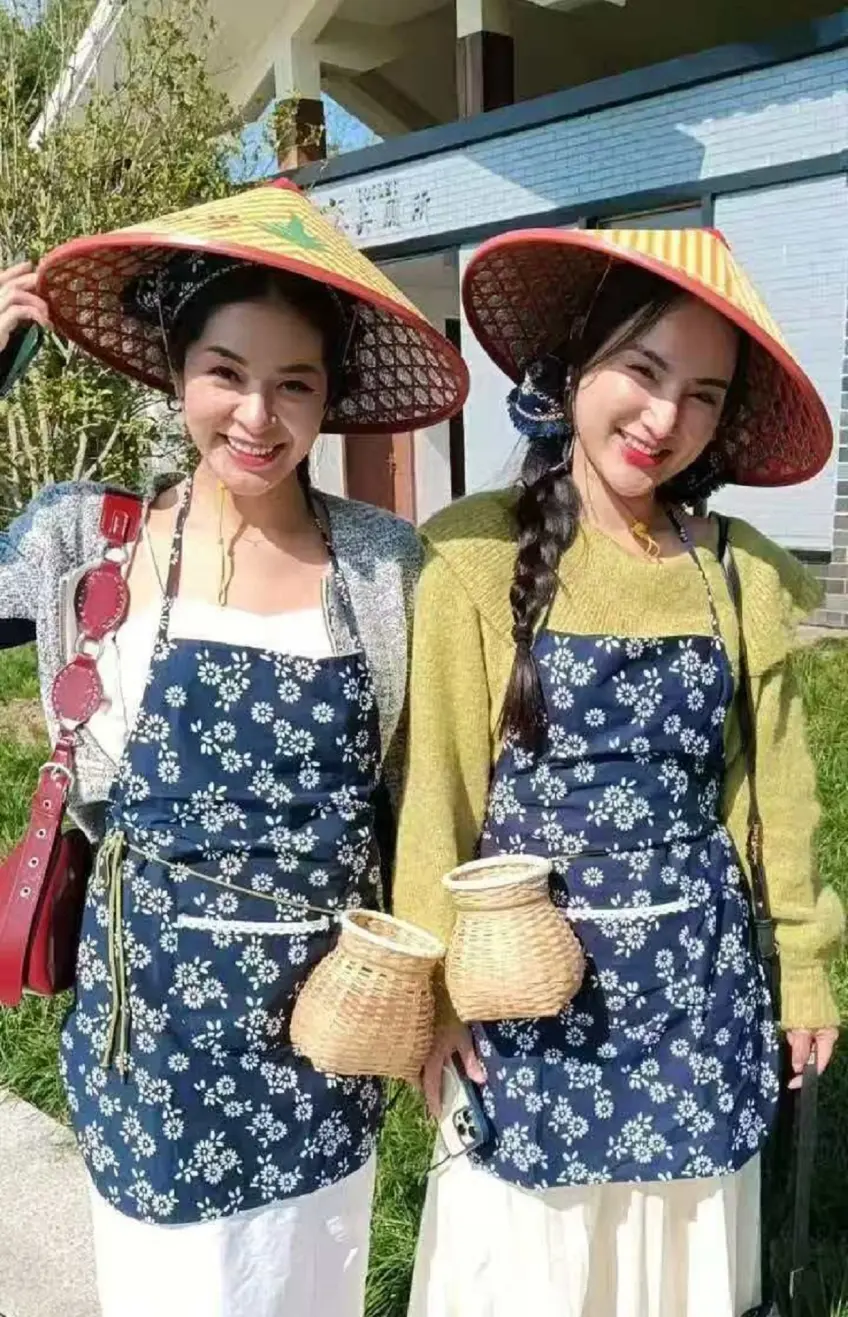
With conical hats, blue aprons and waist-tied tea baskets ready, the two sisters snap a "pre-work" photo before heading into the tea garden to get started.
Strolling through Longjing Village and hearing the story of West Lake Longjing tea
Follow the bluestone path deep into the tea gardens, past scattered white-walled, dark-tiled teahouses, with streams and terraced tea bushes unfolding layer by layer. As they walk, Ajie explains that West Lake Longjing tea has been cultivated for over 1,200 years. Longjing Village sits at the foot of Shifeng Mountain, where the misty microclimate and sandy white soil create its signature bean and chestnut aromas; Mingqian tea (picked before Qingming Festival) has tender buds and a very limited yield. The grandparents keep asking about how the tea bushes are tended while the younger generation snaps photos along the way.
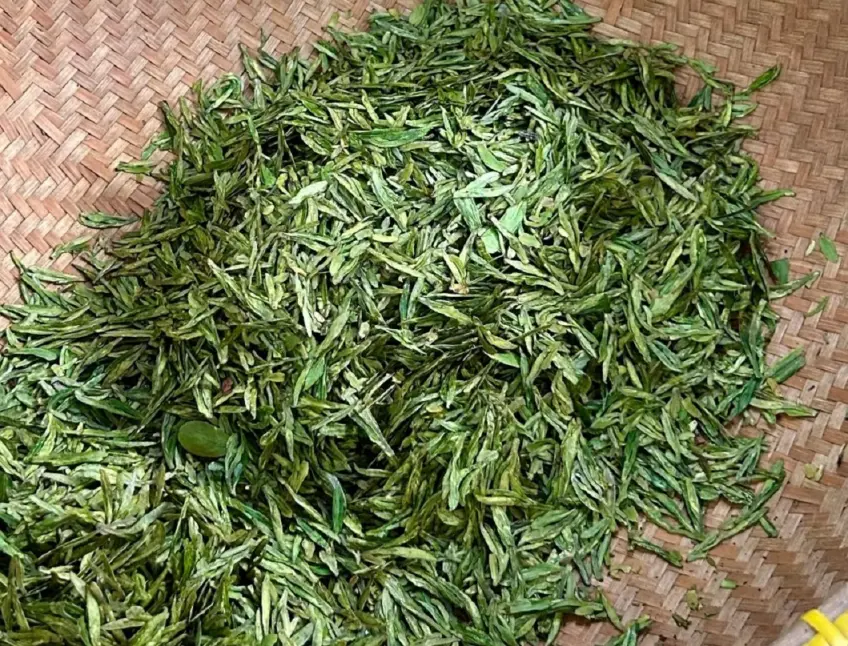
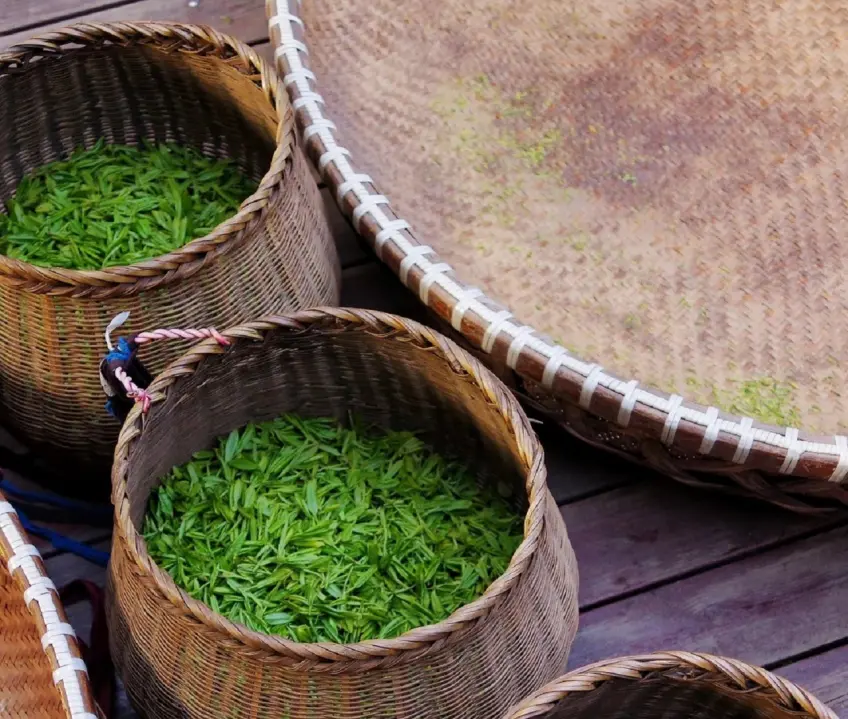
Freshly pan-fired, flat Longjing leaves are spread across a bamboo tray, bright emerald green—this is the final form you'll create yourself in the afternoon workshop.
Private tea garden: costume change and hands-on picking
When we arrived at the private tea garden, headscarves, aprons and woven bamboo baskets were already laid out. Once everyone changed into gear, the whole plantation came alive. Before picking began, Ajie and a veteran tea farmer demonstrated the technique: one bud with one leaf, or one bud with two leaves. Pinch the base of the bud between your fingertips and lift gently—never snap it with your nails, as bruised stems turn black during roasting.
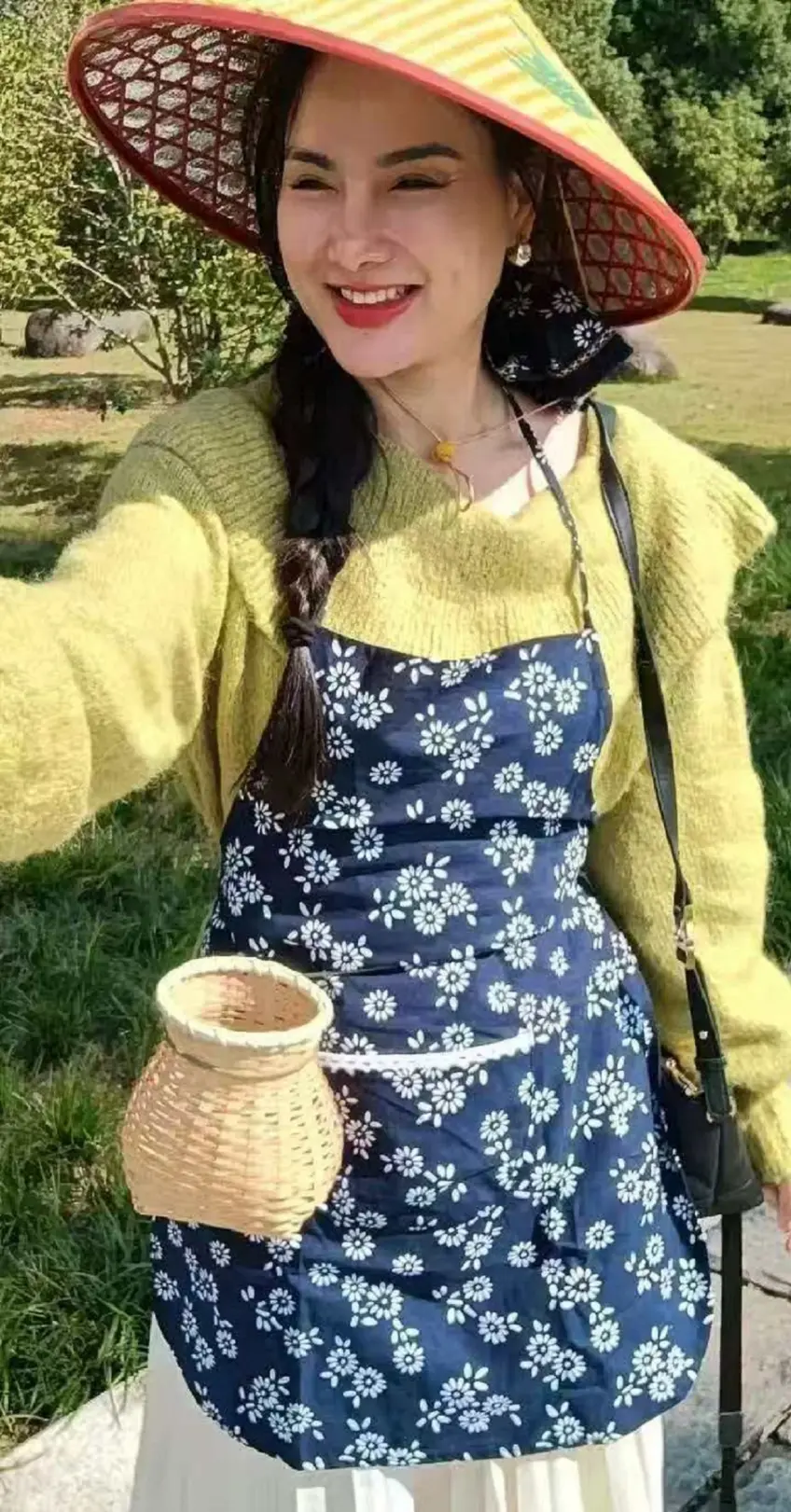
A close-up of the solo outfit: a conical hat for shade and a basket at the waist, making it easy for older guests and kids to copy the moves.
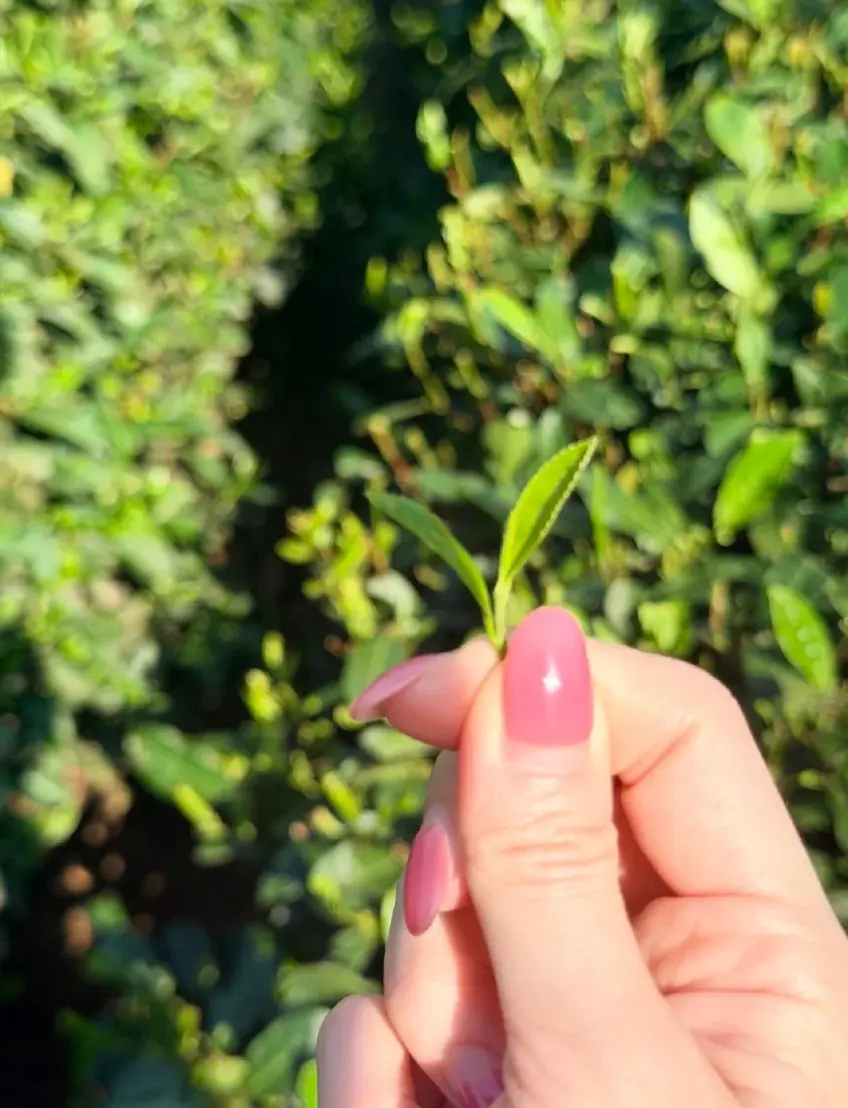
Pinch one bud and two leaves between your fingertips and lift gently—the standard move Ajie and the farmers corrected over and over.
A full basket: joy mixed with backaches
The ladies hunted for tender shoots and posed for selfies, while the uncles complained of sore backs after half an hour, sitting on the field ridges joking that "drinking tea is easy, picking it is hard." Ajie explained that sun-facing slopes yield a stronger chestnut aroma, while shaded slopes produce a fresher taste. After about three hours, our family had picked nearly seven jin of fresh leaves, saved for the afternoon roasting session.
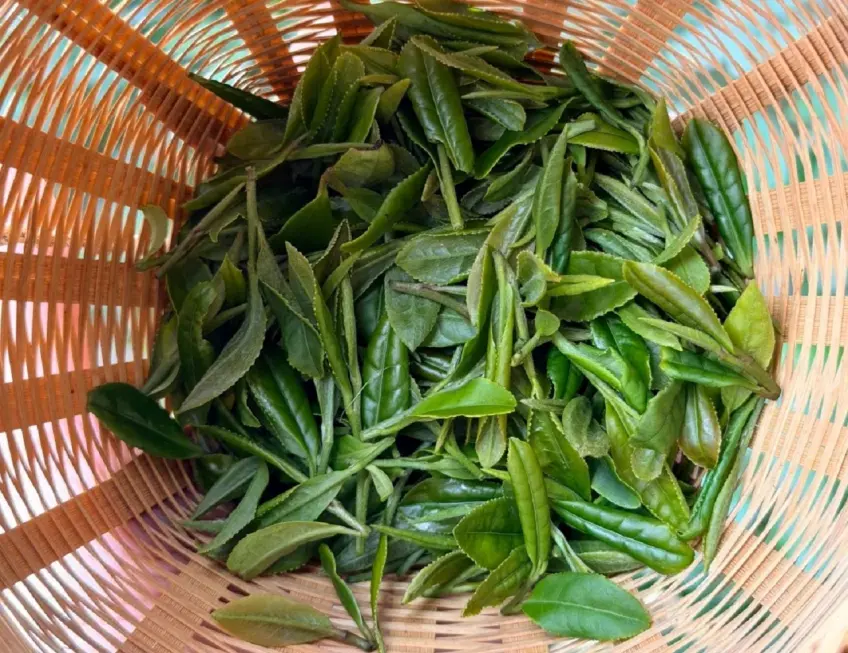
The basket slowly fills with "one bud, one or two leaves," and the gentle pinch between your fingertips sticks in your memory better than any travel guide.
The two baskets are lined up side by side for weighing. Leaves picked in the morning can hit the wok that same afternoon.
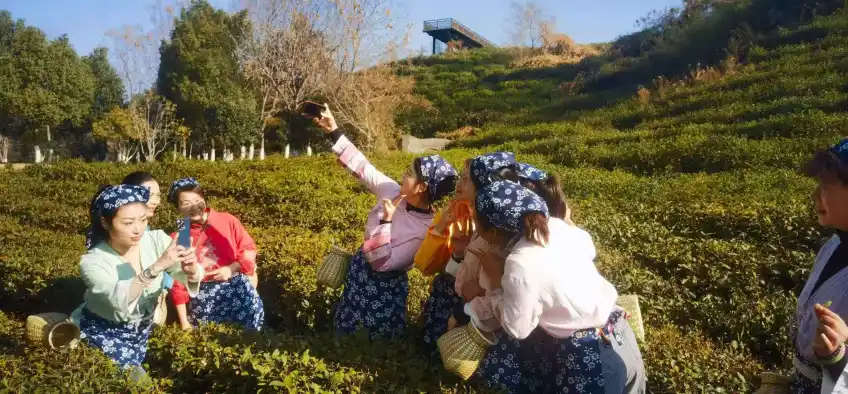
Laughing through selfies in the tea fields, your camera roll fills up with blue headscarves and emerald rows—a better souvenir than any bag of tea you could buy.
For the picking-to-roasting stretch: if time is tight or your group is large, try a group tour that includes Hangzhou; to rearrange around tea farm schedules and dietary needs, go with a custom private trip. Using a private car between the village entrance, the tea fields and the workshop saves your legs; settle your luggage at the station before heading into the hills with a station transfer. To learn about the Shifeng growing area and roasting techniques, add a private guide.
Farmhouse courtyard: fireside tea and rustic dishes
At noon, we moved to a courtyard halfway up the hill: bamboo fences, a raw-wood long table, and a charcoal stove. Push open the door and the tea plantation is right there. Ajie asked about dietary restrictions in advance, and the dishes for the elders were cooked tender and easy to eat. Before the meal, we gathered around the stove: warming the teaware, adding the leaves, pouring the water, with snacks roasting on the iron grate and fruit mingling with the scent of tea. The elders listened to tips on avoiding tea-buying pitfalls while the kids ran around the yard holding roasted sweet potatoes.
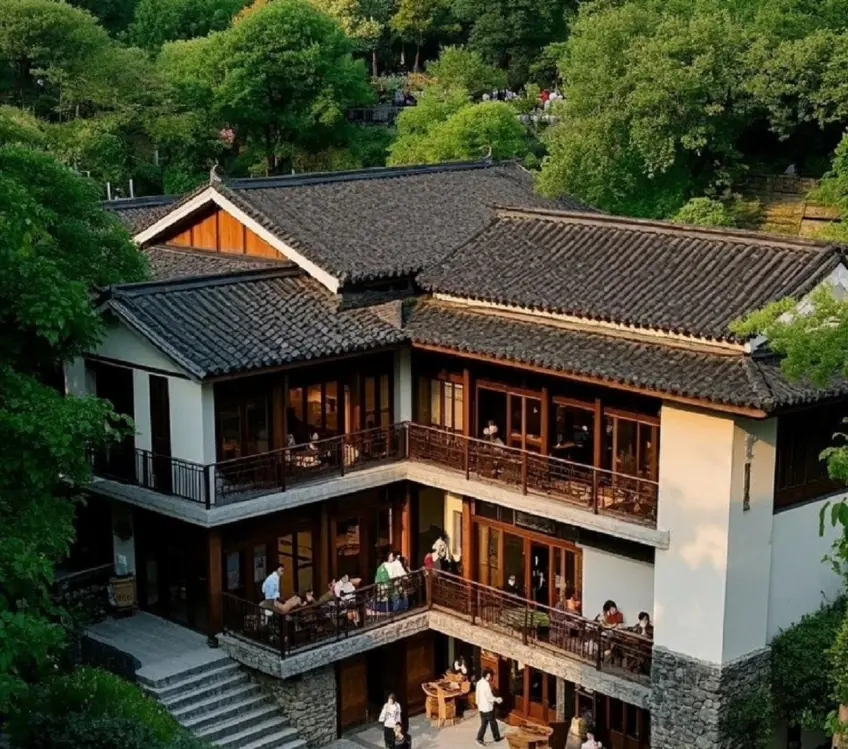
The white-walled, dark-tiled courtyard halfway up the hill hides among the tea bushes. This is where we stopped for our midday tea gathering and farmhouse lunch.
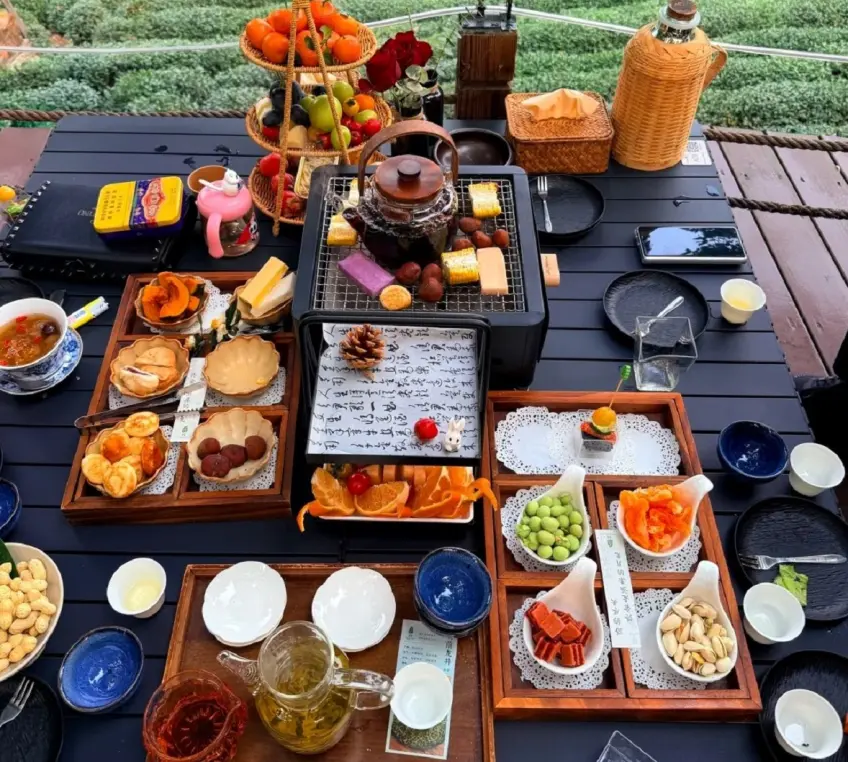
Gathering around the stove on the balcony: the charcoal kettle, snacks and tea plantation views all in one frame—enough to keep both elders and kids happily seated.
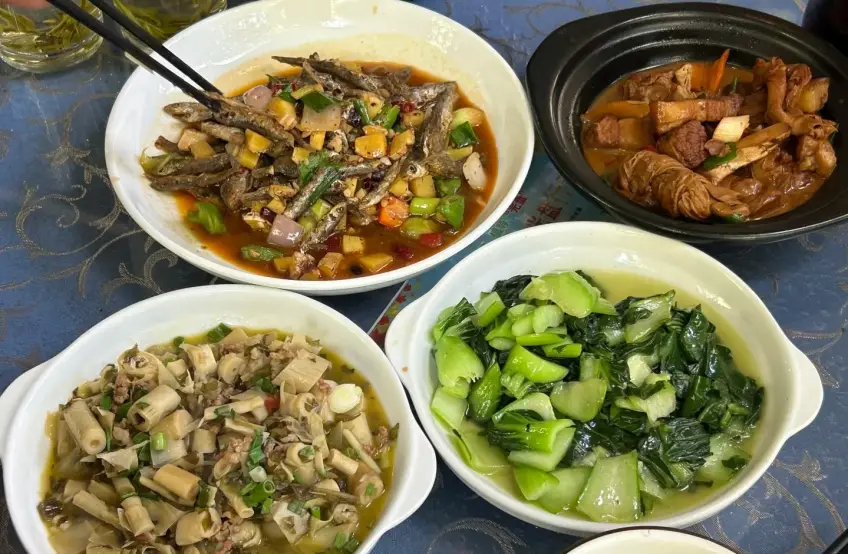
A table of small fish, braised pork belly, bamboo shoots and greens. Dietary restrictions were arranged in advance, with extra-tender dishes saved for the elders.
Intangible cultural heritage workshop: hand-roasting tea with ten techniques
In the afternoon, we walked about ten minutes into the village to a tea-roasting workshop. Fresh leaves must first be spread on bamboo trays to wither; the morning's picked leaves had already been resting for about three hours. A master roaster demonstrated the ten essential hand techniques: shaking, folding, spreading, pressing, tossing, grabbing, pushing, squeezing, grinding, and hooking. The wok temperature is adjusted in stages, and the leaves are roasted bare-handed—the very essence of handmade Longjing tea. Ajie guided each of us on heat control and pressure.
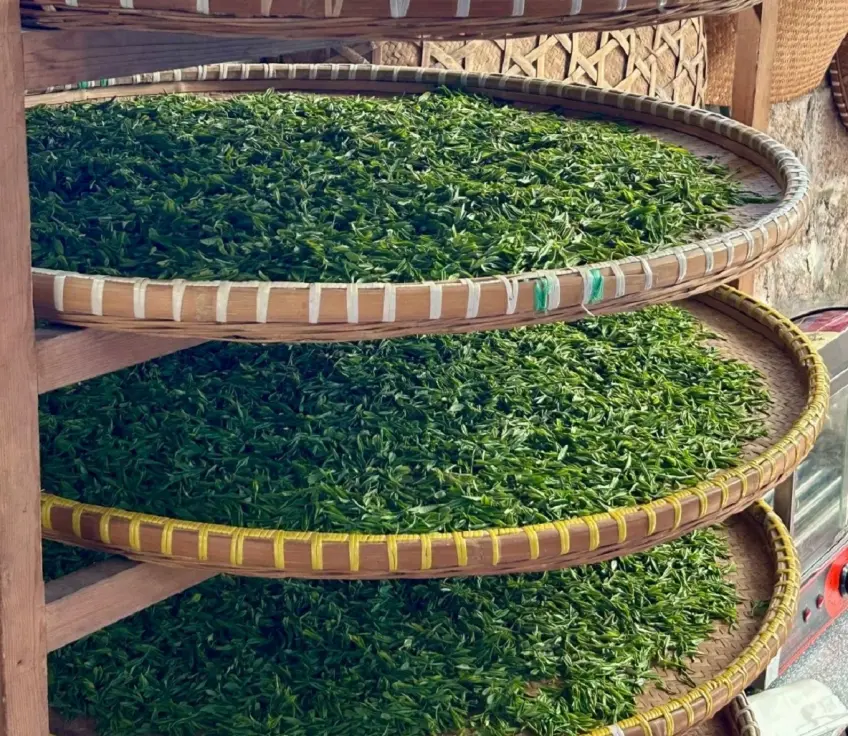
Fresh leaves are first spread on bamboo trays to wither and release their grassy scent before they go into the iron wok for bare-handed roasting.

A close-up of a basket brimming with fresh leaves. Their color and bud shape remind everyone that pre-Qingming tender buds are rare, so handle them gently.
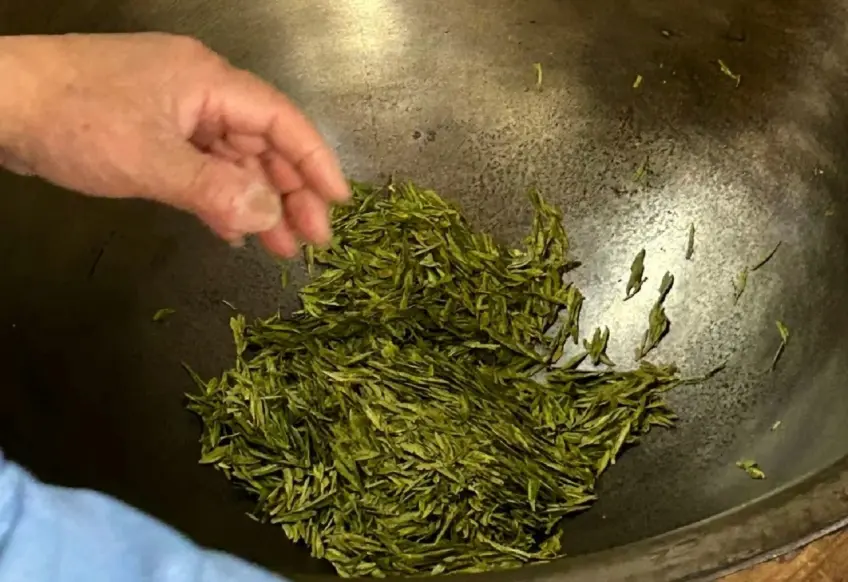
Shaking, pressing, and grinding the leaves bare-handed in the iron wok as the temperature shifts in stages, the flat, straight dried tea slowly takes shape.
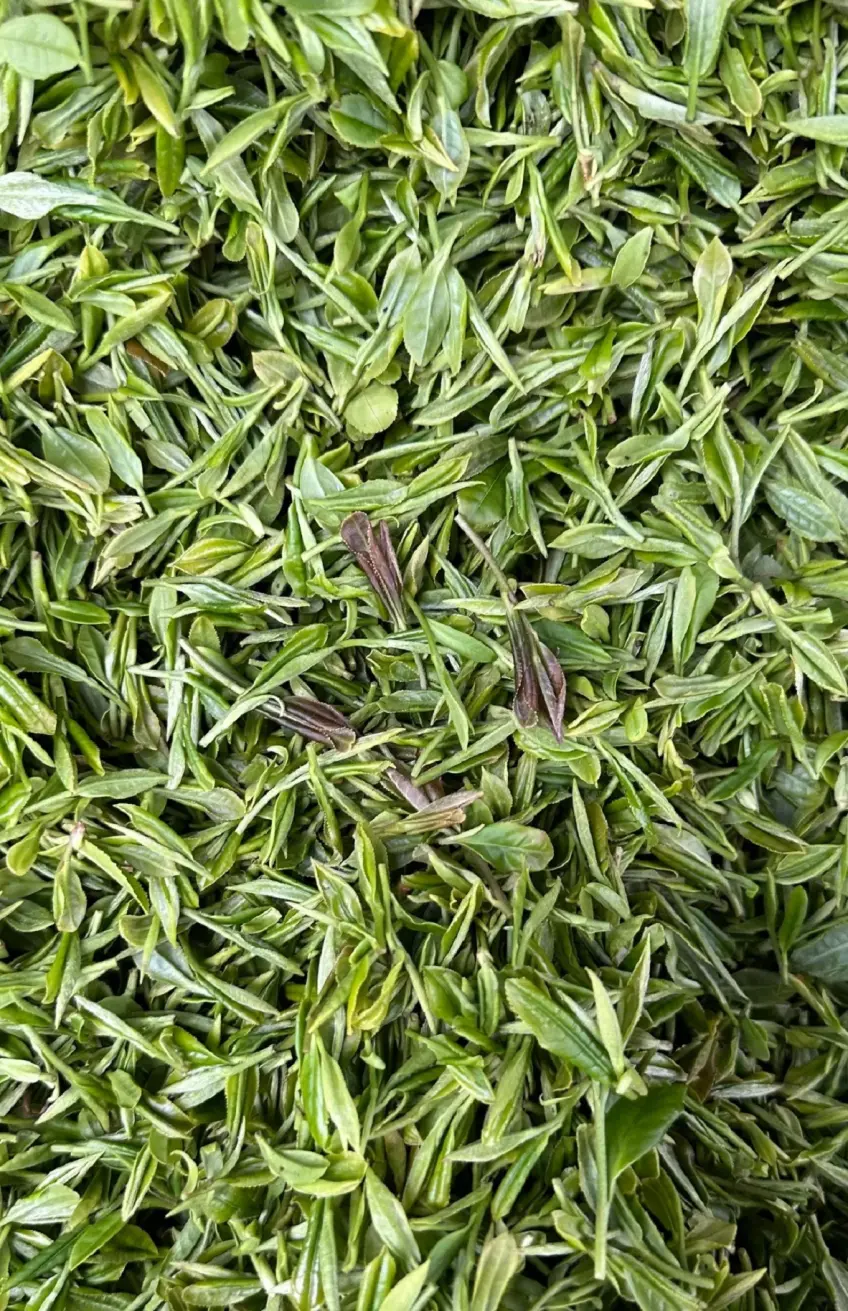
Take one last look at the fresh leaves waiting to be roasted—the whole family already had a good idea of how much finished tea seven jin of raw leaves would yield.
Packaged to take home: 1.2 jin of homemade Longjing
The seven jin of fresh leaves ultimately produced about 1.2 jin of finished tea, divided into small tins so everyone got a share. The master tea maker brewed it on the spot: the liquor was tender green, with a fresh, sweet aftertaste and a hint of chestnut aroma. Before we headed back, Ajie helped us pack up and recommended some good-value tea shops along with reasonable price ranges for pre-Qingming tea—no hard selling, which was what our family appreciated most.
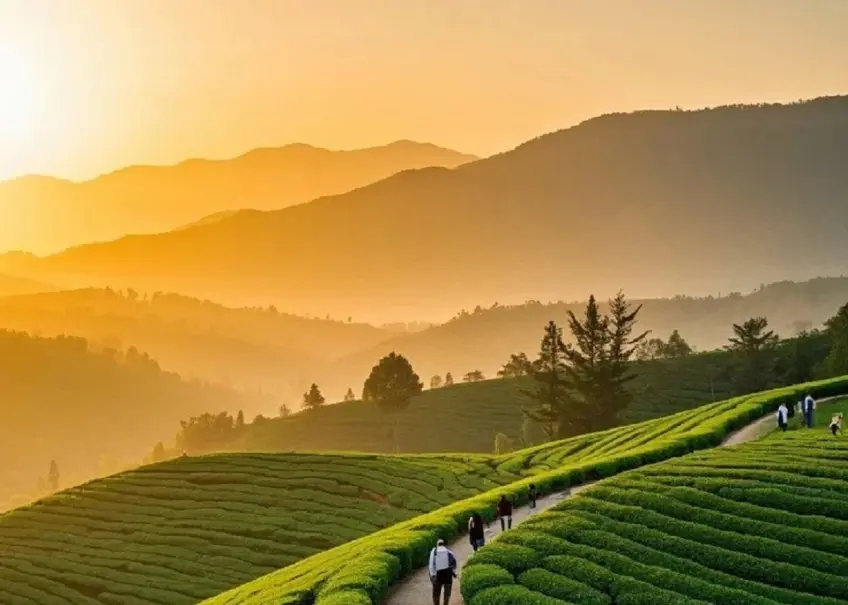
The setting sun turned the tea terraces a warm gold. As our day as tea farmers drew to a close, our steps along the mountain path slowed down too.
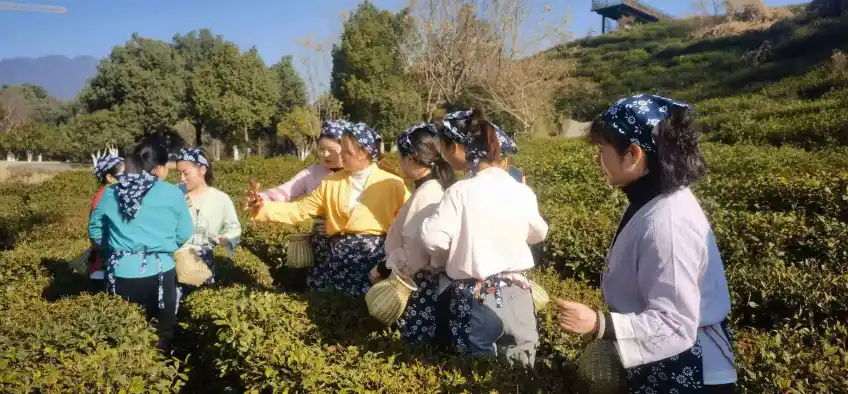
Listening to instructions and mimicking the hand movements among the tea rows, the chatter of over a dozen family members blended with the scent of tea into one lively scene.
A relaxed pace: even seniors can manage it
Ajie kept the pace manageable: tea picking left room for photos, the fireside tea session avoided the crowds, and tea roasting skipped the workshop rush. When the elders got tired, they rested nearby. Our old impression of group tours as rushed sightseeing was completely rewritten by this professional, attentive, and practical local guide. If you want the same standard of service, submit your request via custom travel planning.
FAQs
Traveling to Hangzhou with family—how do you plan a Longjing tea farmer experience?
A typical one-day itinerary: morning tea picking in the plantation (about 2–3 hours), midday fireside tea brewing and farmhouse lunch in a courtyard, and afternoon hand-roasting tea at an intangible cultural heritage workshop. For groups of ten or more, reserve plantation and workshop spots in advance. To adjust the pace for seniors and kids, go with custom travel planning; to add West Lake over several days, check out our group tour.
Do I need to book the Longjing Village tea farmer experience in advance?
Private tea gardens, stove-brewing packages and tea-roasting workshops mostly operate by reservation. Spots fill up fast during tea-picking season (especially before Qingming), so book at least a few days ahead. Exact schedules, fees and whether fresh-leaf roasting is included are subject to confirmation by your travel consultant and the tea garden on the day. Your consultant can also arrange a custom private tour to handle everything together.
How do I get from Hangzhou Station or the airport to Longjing Village?
From Hangzhou East Railway Station, Hangzhou Railway Station or Xiaoshan Airport to Longjing Village, you can take buses or ride-hailing cars (transfer details depend on real-time traffic). If you have lots of luggage or are traveling with seniors who find transfers difficult, prioritize station transfers or a daily private car straight to the village entrance. If joining a tour, check whether the group tour includes transfers.
What happens to the Longjing tea farmer experience if it rains?
On light rain, wear non-slip shoes for a short picking session and spend more time on workshop tea roasting and indoor tasting; moderate to heavy rain cancels outdoor picking but keeps the fireside gathering and roasting (subject to the tea garden's notice). Need a last-minute change? Contact a travel consultant to arrange a custom private trip or same-day private car dispatch. If you've already booked a group tour, follow your guide's arrangements.
Seniors and kids need a slower pace—how do we customize a day with the tea farmers?
Shorten tea picking to brief stretches where you can sit and rest, and extend the fireside gathering and workshop briefing. Mention dietary restrictions, strollers and restroom locations in advance. A custom private trip is the safest bet; if you want commentary that keeps up with your questions, add a private guide; use a private car to link the stops around the village.
Can we take home the Longjing we make? Is there any forced spending?
On an experience tour, you can usually take the roasted dry tea home in small jars (the yield depends on how much the fresh leaves lose when dried; final weight is measured on site). A reliable guide won't push you into tea shops. For pre-Qingming Longjing prices and tips on avoiding tourist traps, follow the advice of your on-site consultant. To ensure the quality of your experience, you can specify "no forced shopping" when booking a private customized trip.
If you want to cover picking, the fireside gathering and roasting in one day with minimal hassle: book a custom private trip tailored to your group size and pace; use station transfers or a private car for arriving and departing Hangzhou. Want to combine West Lake, Lingyin Temple and Longjing into a multi-day itinerary? Check out our group tours; for in-depth tea culture commentary, hire a private guide. Just send your dates, group size and departure city to a travel consultant.
A great guide does more than lead the way—they set the mood. It was Ajie's professionalism and thoughtfulness that made our family's Longjing tea-picking trip an unforgettable spring memory. We'll be back for next year's spring tea.