
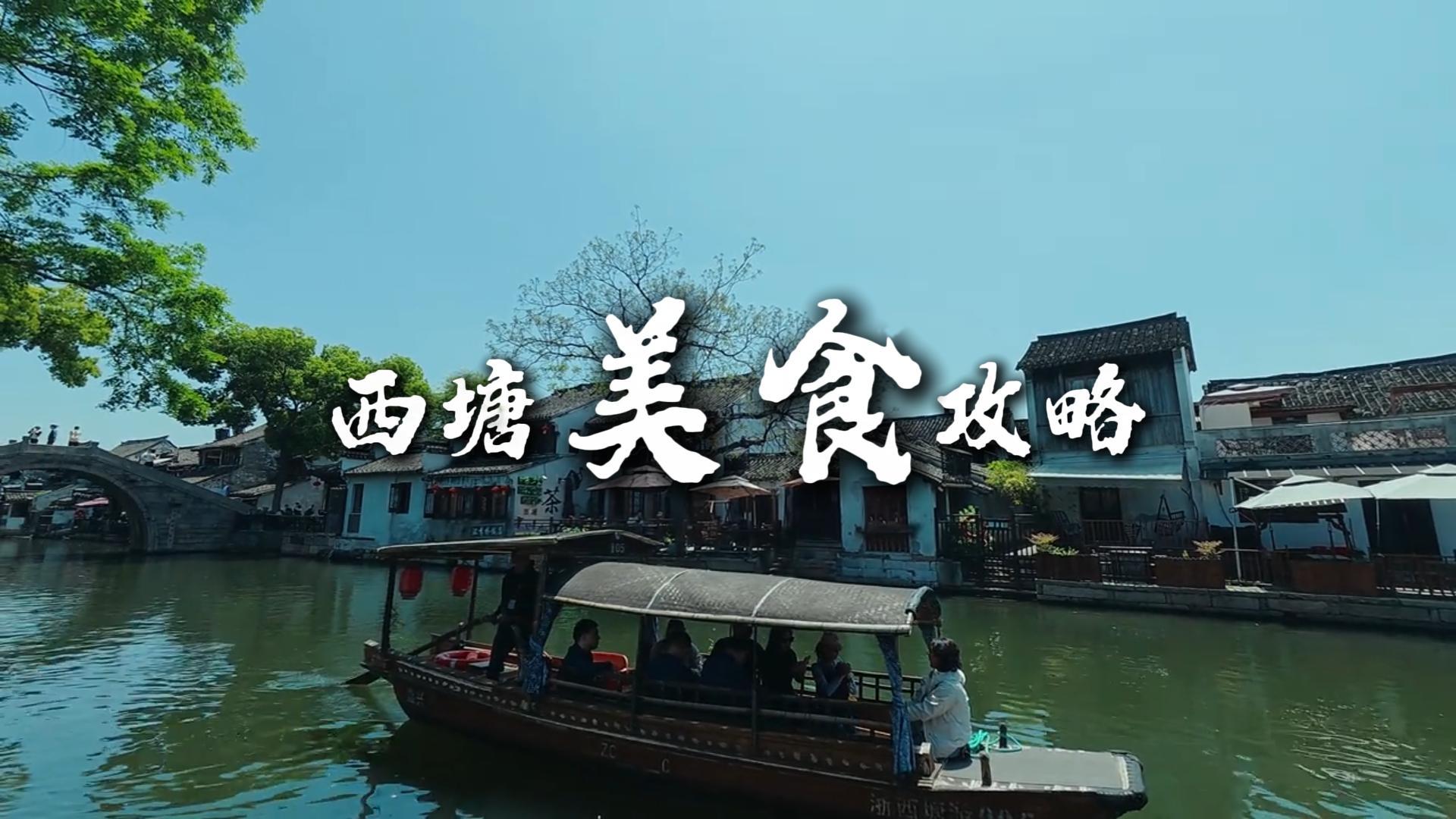

What's good to eat in Xitang? Six century-old Zhejiang flavors compiled
Video highlights
- The stinky dried tofu near Yongning Bridge is very popular, with long lines at the Tangdong Street stalls in the evening.
- The gorgon fruit cake in the middle section of West Street is sliced and sold fresh, steamed from gorgon fruit and glutinous rice.
- You can use wooden sticks to pull your own malt sugar candy in the lanes of Xitang.
- Crab roe noodles are a limited-time autumn specialty in Xitang, made with roe from local hairy crabs.
- The wonton stall on West Street cooks fresh over a wood-fired stove, a popular local breakfast.
- Lotus leaf steamed pork with rice flour, straw-tied pork, hawthorn spare ribs, and lion's head meatballs are also Xitang specialties.
Video transcript
Auto-generated from the video audio, some words may be inaccurate
View full transcript
As awning boats ripple the waters of Xitang River
and warm light glows on the wooden pillars of the Misty Rain Corridor,
the lanes of Xitang become a natural stage for local delicacies.
Three signature flavors unfold along the bluestone paths,
letting you taste a thousand years of water-town life in a single bite.
The stinky dried tofu at the stone-paved entrance of Yongning Bridge
is the most popular snack on the whole street.
The authentic flavor hides deep in a narrow lane—
look for the shop with the imitation thatched awning near the entrance.
In bubbling hot oil,
the tofu cubes puff up quickly,
fried golden outside while staying soft and tender inside.
Drizzled with the vendor's secret sauce,
they burst with juice the moment you bite in.
As crowds gather on Tangdong Street at dusk,
the lines at the stalls add to the lively street vibe.
Strolling along the Misty Rain Corridor toward the bridge,
you'll see small stalls everywhere selling osmanthus sweet fermented rice with glutinous rice balls.
Tiny glutinous rice balls are slowly simmered in aged osmanthus rice wine,
yielding a sweet, mellow taste with a hint of wine aroma.
In autumn and winter,
holding a warm bowl under the corridor while watching the mist over the river is pure comfort.
These stalls tuck into the corners of the covered walkways to avoid sun and rain,
making them the top choice for travelers to rest and snack.
Gorgon fruit cake in the middle section of West Street
is made fresh, sliced and sold on the spot.
Steamed from a base of gorgon fruit and glutinous rice,
the cake is soft, mildly sweet and never sticky.
The vendor slices and packs it neatly,
reflecting the gentle charm of these snack lanes.
Malt sugar pulling candy in Xitang's alleys
is a nostalgic street snack.
Stalls display jars of golden malt syrup
with two thin wooden sticks for visitors to pull their own.
Keep twisting and winding the sticks,
and the syrup slowly thickens from liquid to chewy,
turning more translucent as you go.
It tastes naturally sweet without being cloying.
Stir-fried river snails in soybean paste
are a staple main dish in the lanes.
Made with fresh local river snails from Xitang
and stir-fried in Jiangnan's secret sauce,
the rich, savory paste highlights the snails' umami.
This hands-on eating experience is a favorite among diners.
Around Qingming Festival,
the snails are plump and meaty.
Beside the woks of old shops on Beizha Street,
cooking smoke mingles with the river breeze.
Along the riverside lanes,
steamed whitefish uses simple steaming to lock in the fish's delicate natural flavor.
Riverside tables face the scenery of Xitang River,
where the freshness of the ingredients perfectly matches the water-town setting.
Buildings line the water,
so when you look up during your meal,
awning boats drift slowly past—
the ancient streets and fresh ingredients complement each other beautifully.
Lotus leaf steamed pork in the southern part of West Street
wraps pork belly and rice flour in a whole lotus leaf before steaming.
The lotus fragrance seeps into the rice, cutting through the fat
so the meat turns meltingly tender without feeling greasy.
When the steamer lid lifts, the aroma rises,
and the bluestone path catches the warm steam.
Rustic buildings framed by the steamer's haze
give this dish both visual and flavorful appeal.
Crab roe noodles are a limited-time autumn specialty in Xitang
and a signature noodle dish of Jiangnan water towns.
Fresh local hairy crabs are handpicked for pure roe and meat,
then simmered into a thick, golden crab-oil broth.
Chewy handmade thin noodles are boiled, drained,
and evenly coated in the rich crab roe sauce.
No extra seasoning needed—
one bite delivers an explosion of umami.
The small wonton stalls on West Street
stick to traditional wood-fired stove cooking.
Wonton wrappers are paper-thin with delicate fillings,
served in bone broth topped with dried shrimp and scallions for extra flavor.
In the early morning, before the mist clears from the lanes,
it recreates the everyday breakfast scene of Jiangnan.
Straw-tied pork belly with rice along the stone paths
features pork belly tied with straw and slow-braised until the sauce reduces.
Rich in soybean flavor, the meat is so tender it falls off the bone.
Spoon the thick gravy over white rice and mix well.
From the simple stoves at street stalls,
the aroma of slow-braised pork drifts down the alleys—
perfect for a solo traveler's filling meal,
delivering all the rustic comfort of hearty staples.
Braised pork knuckle, a classic Jiangnan main course in Xitang,
is the finale dish at town banquets and family tables,
and an authentic must-try when visiting Xitang.
You'll mostly find it in proper restaurants along the riverside old streets,
the first choice for locals gathering and travelers looking for a real meal.
It's the most comforting, soul-soothing flavor in Xitang's culinary scene.
Hawthorn pork ribs are a uniquely creative Jiangnan dish in Xitang.
Unlike traditional braised flavors, they're sweet and tangy, light and refreshing—
a hugely popular specialty main course on local tables.
Fresh spare ribs are stewaded until fall-off-the-bone tender,
then simmered with natural hawthorn over low heat to reduce the sauce.
The hawthorn's slight tartness perfectly balances the richness of the meat
while tenderizing it,
giving the ribs a glossy reddish hue and a sweet-sour, juicy bite.
Lion's head meatballs are another Xitang must-eat.
Made from pork with the right fat-to-lean ratio mixed with seasonings,
hand-rolled into balls,
deep-fried until golden to set the shape,
then slow-simmered over low heat.
They turn out glossy red, crispy outside and tender inside, rich but not greasy.
Their round shape symbolizes reunion and happiness,
making them a must-order dish at water-town banquets.
Half the gentleness of water-town Xitang lies in its flowing rivers and ancient lanes,
and half in the buzz of its street food.
Authentic snacks, fresh river flavors, comforting staples and classic main courses
hold the tastes this ancient town has kept unchanged for centuries.
Wander the bluestone lanes, eat your way from one end to the other—
every bite is Jiangnan.
This is Xitang's most touching warmth.