

There are thousands of water towns in Jiangnan, but only Xitang carries such a warm, down-to-earth vibe. It lacks the noise of over-commercialization and the contrived feel of social media hotspots—it's a living, thousand-year-old town truly meant for slow walks, slow looks, and slow moments. Whether it's your first short visit or a deeper trip to unwind, Xitang lets you leave the rush of daily life behind and immerse yourself in Jiangnan's signature small bridges over flowing water, ancient lanes and covered corridors, and scenery that transforms from day to night.

If you're coming from Shanghai, Hangzhou or Jiaxing, check out station transfers first. To spend a full day exploring Xitang water town, compare the Xitang Dream Tour group tour, or book a private custom trip tailored around the covered corridors, gardens and night cruise.
Where is Xitang Ancient Town?
Xitang Ancient Town is located in Jiashan County, Jiaxing, Zhejiang Province, right between Jiangsu, Zhejiang, and Shanghai, giving it a prime location among the water towns of the Yangtze River Delta. As a national 5A-rated scenic area with over a thousand years of history, the town has preserved its overall layout and traditional way of life completely—making it very different from many newly built, purely commercial imitation ancient towns.
Xitang was first settled during the Spring and Autumn period, when it was just a small village by the river and people gradually made their homes along the waterways. By the Song dynasty, water transport had become more convenient, bringing more travelers and slowly forming a regular market. Over time, it evolved into the Xitang we know today.
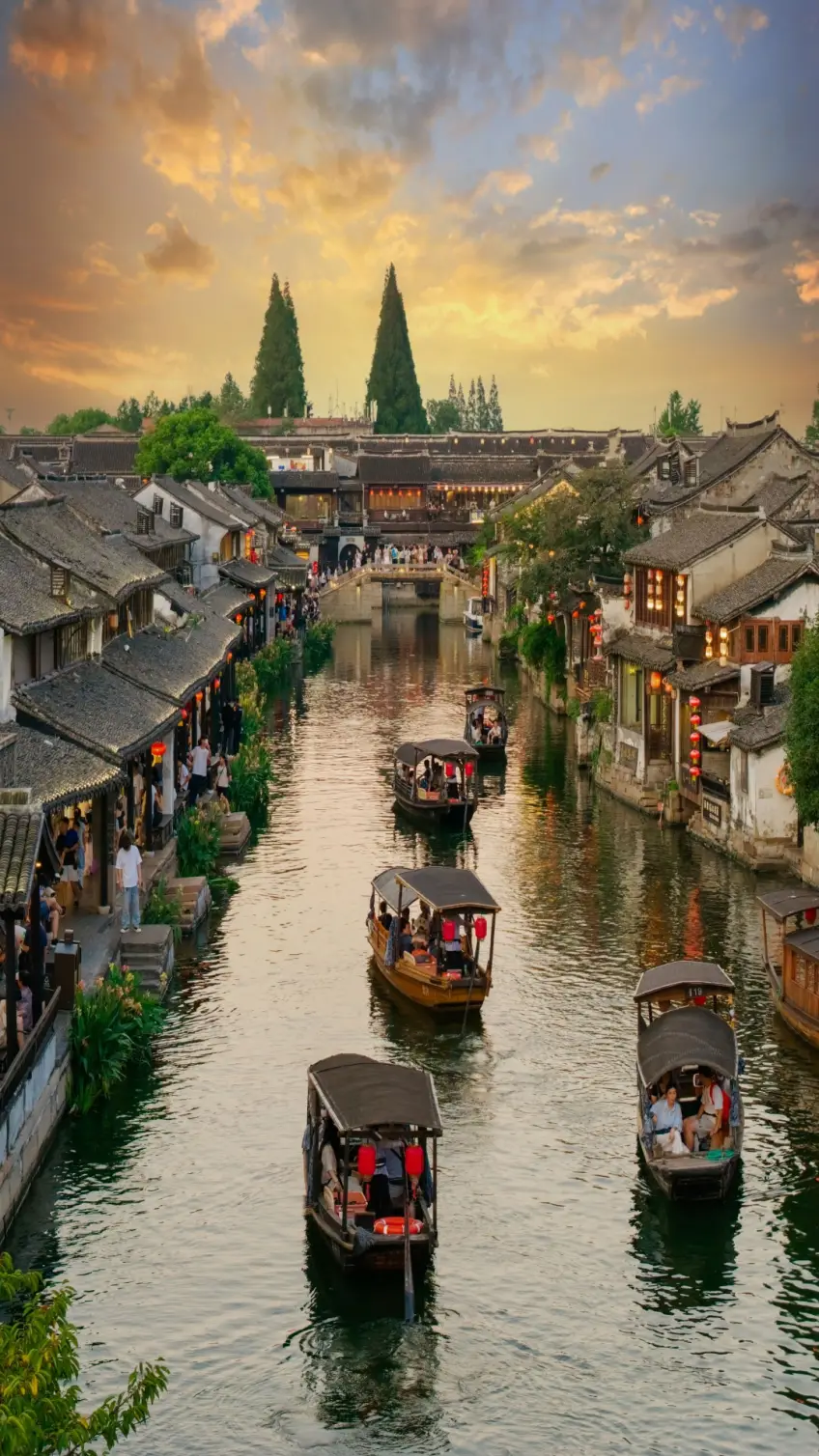
At dusk, Wupeng boats on the canal framed by lanterns on both banks are the first taste of water-town charm you get after entering Xitang.
Overall features of Xitang Ancient Town
Stone bridges
Compared with other Jiangnan water towns, Xitang has very distinct features. Simply put, it has more bridges, more lanes and more covered corridors — the biggest differences between it and ancient towns like Wuzhen and Zhouzhuang. The town still has 27 well-preserved old stone bridges connecting waterways large and small. Rivers link to bridges and bridges lead to roads, forming a classic water town layout.
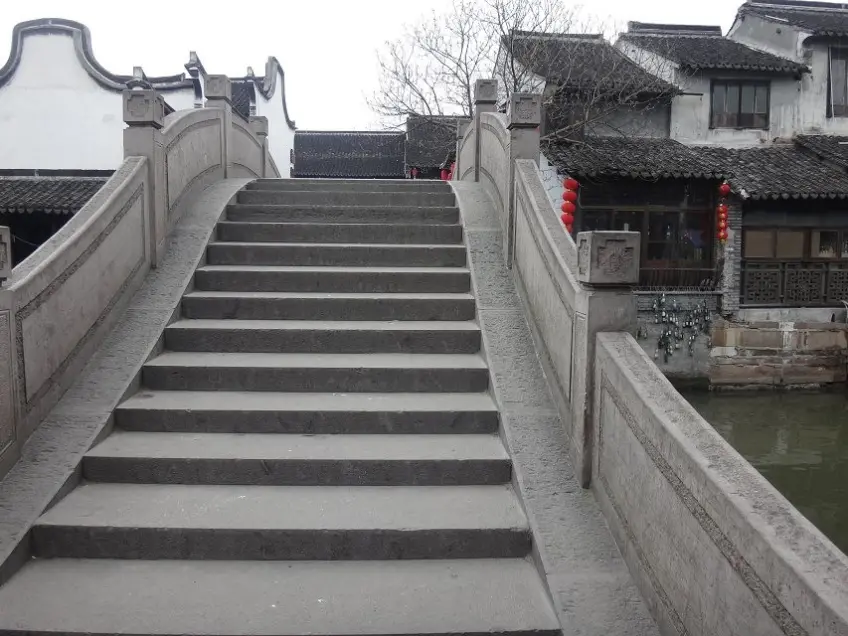
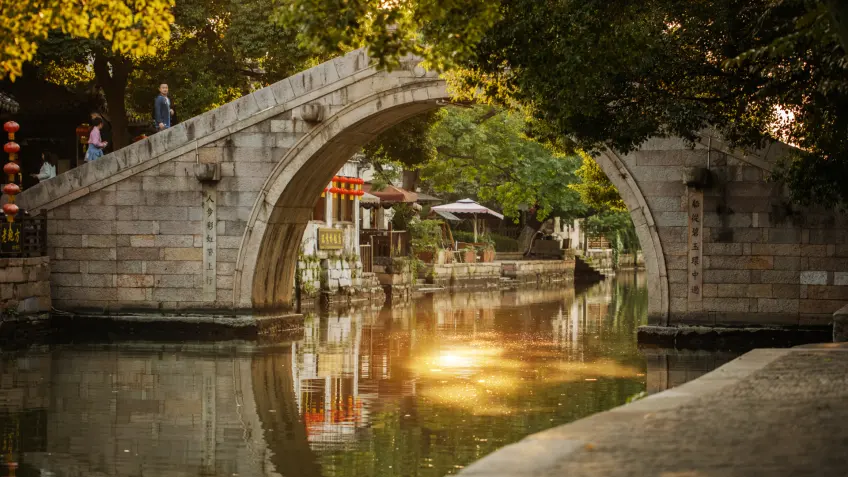
Twenty-seven old stone bridges link the waterways in the ancient town, so every few steps give you a new bridge's perspective.
Original lanes
The town also has 122 original old lanes of varying lengths and widths, crisscrossing densely through every area. Walking into them, you wind through narrow passages full of old-world charm. Xitang also features the Misty Rain Corridor, stretching over 1,000 meters along the river — the longest and best-preserved riverside covered corridor in the Jiangnan region.
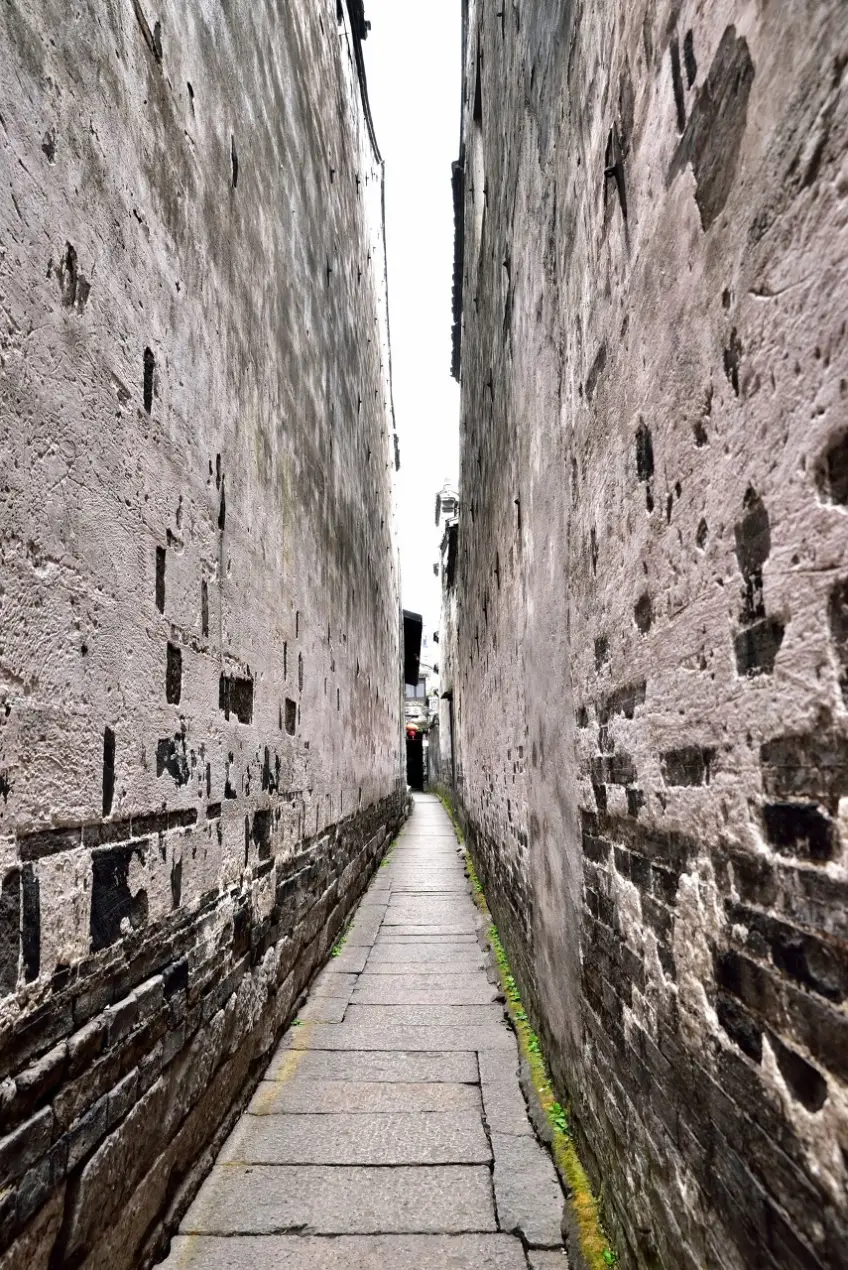
More than 100 old alleys vary in width, winding as you duck inside—the best way to experience the authentic feel of the streets and lanes.
Must-Visit Core Attractions in Xitang Ancient Town
The Soul Landmarks of Xitang
The Misty Rain Corridor is the most famous and iconic spot in Xitang, and a unique architectural feature of Jiangnan water towns. It winds along the entire riverbank for nearly 1,000 meters. Built right against the water, the corridor has the flowing river on one side and local homes and street shops on the other. The whole stretch is connected from end to end without any breaks.
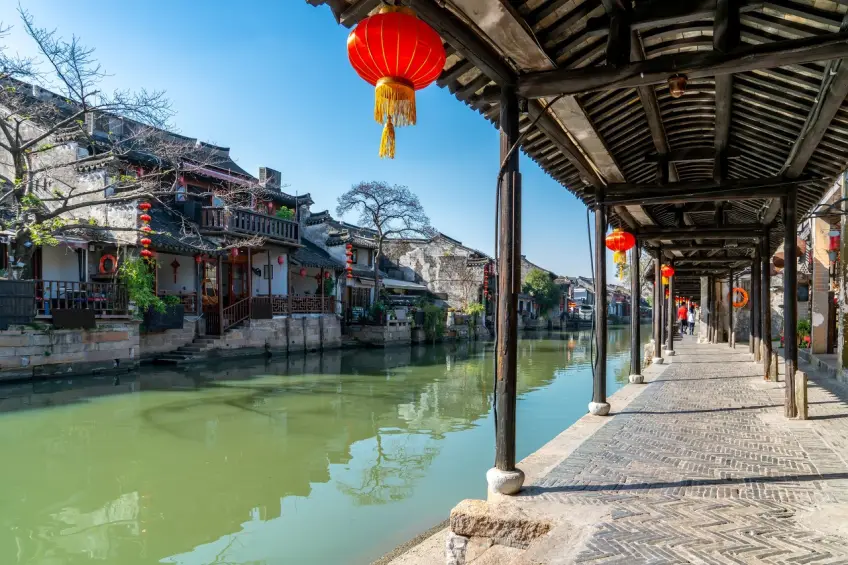
The corridor's wide roof offers great coverage. Whether it's blazing sunshine or pouring rain, you can walk through it without an umbrella or sunshade—you won't get burned or soaked. That's what makes it so practical and thoughtful. Many wooden benches line the wall for visitors and locals to rest. When your legs get tired, just sit down, watch the ripples on the water, see small boats drift by, and feel the breeze off the river. You'll instantly feel relaxed.
This scenery captures Jiangnan at its finest. Follow this itinerary and step into the beauty of Xitang.
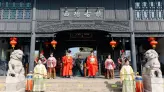
【西塘醉梦1日游】水乡西塘 纯玩休闲一日游
【水乡专线】单水乡漫游,优质纯玩 【贴心服务】让您出行更便捷 【服务保障·深度漫游】纯玩,精讲型导游,1车到底,度假风慢行程,出行无忧 【超值赠送】品牌矿泉水每人每天一瓶!
The Narrowest Ancient Alley
Shipi Lane is the most famous and distinctive old alley in Xitang, as well as the longest and narrowest lane in the ancient town. It stretches 68 meters in total, narrowing to just 0.8 meters at its tightest point—two people walking toward each other have to turn sideways to pass, which is the alley's most unique experience. The ground is paved with 216 thin bluestone slabs, polished so fine they look like peeled stone skin, giving the lane its name (Shipi means "stone skin"). After centuries of wind, rain, and footsteps, the slabs have been worn perfectly smooth, bearing traces of time everywhere.
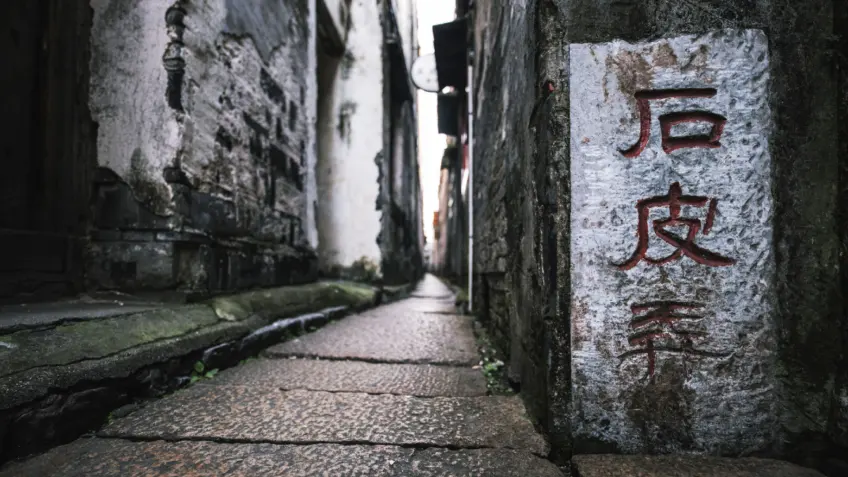
Shipi Lane narrows to about 0.8 meters at its tightest point—you have to turn sideways to pass, which makes the word "lane" feel perfectly apt.
Ancient Bridges for Good Luck
Songzi Laifeng Bridge is an old stone bridge built during the Ming Dynasty. Made up of three arches, it is one of the most iconic ancient bridges in Xitang and carries many folk traditions passed down through generations. The bridge's design is unique: one side has steps while the other is a smooth ramp. This contrast is its most distinctive feature. Locals have long believed that each path brings a different kind of good fortune, so many visitors make a point of crossing the bridge to make a wish.
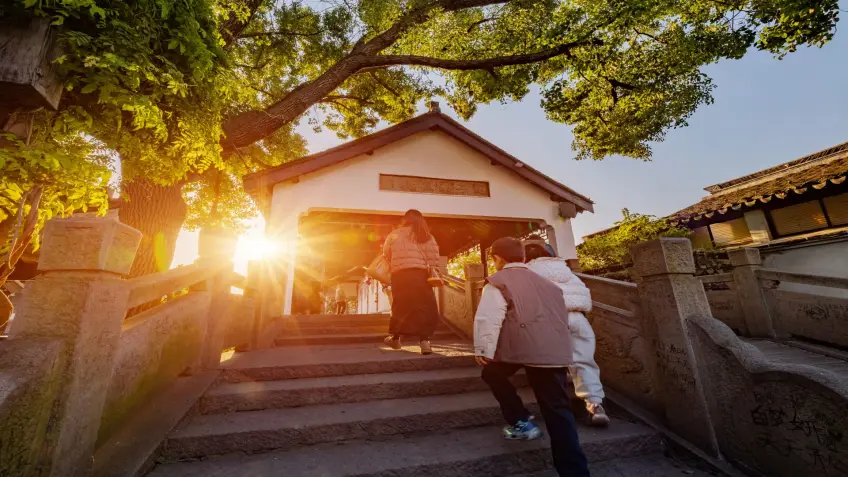
Songzi Laifeng Bridge dates back to the Ming Dynasty with three arches—steps on one side and a ramp on the other—and local legends still live on here.
Best Viewing Spots
Yongning Bridge sits right in the center of Xitang Ancient Town and offers the best views in town—many visitors call it the top viewing spot in Xitang. Centrally located with nothing blocking the view, the bridge lets you take in the entire water town scenery along both banks of the Xutang River. Looking out from Yongning Bridge, you can see the winding river running through the ancient town, with slow-moving boats gliding across the water and bringing life to the peaceful scene.
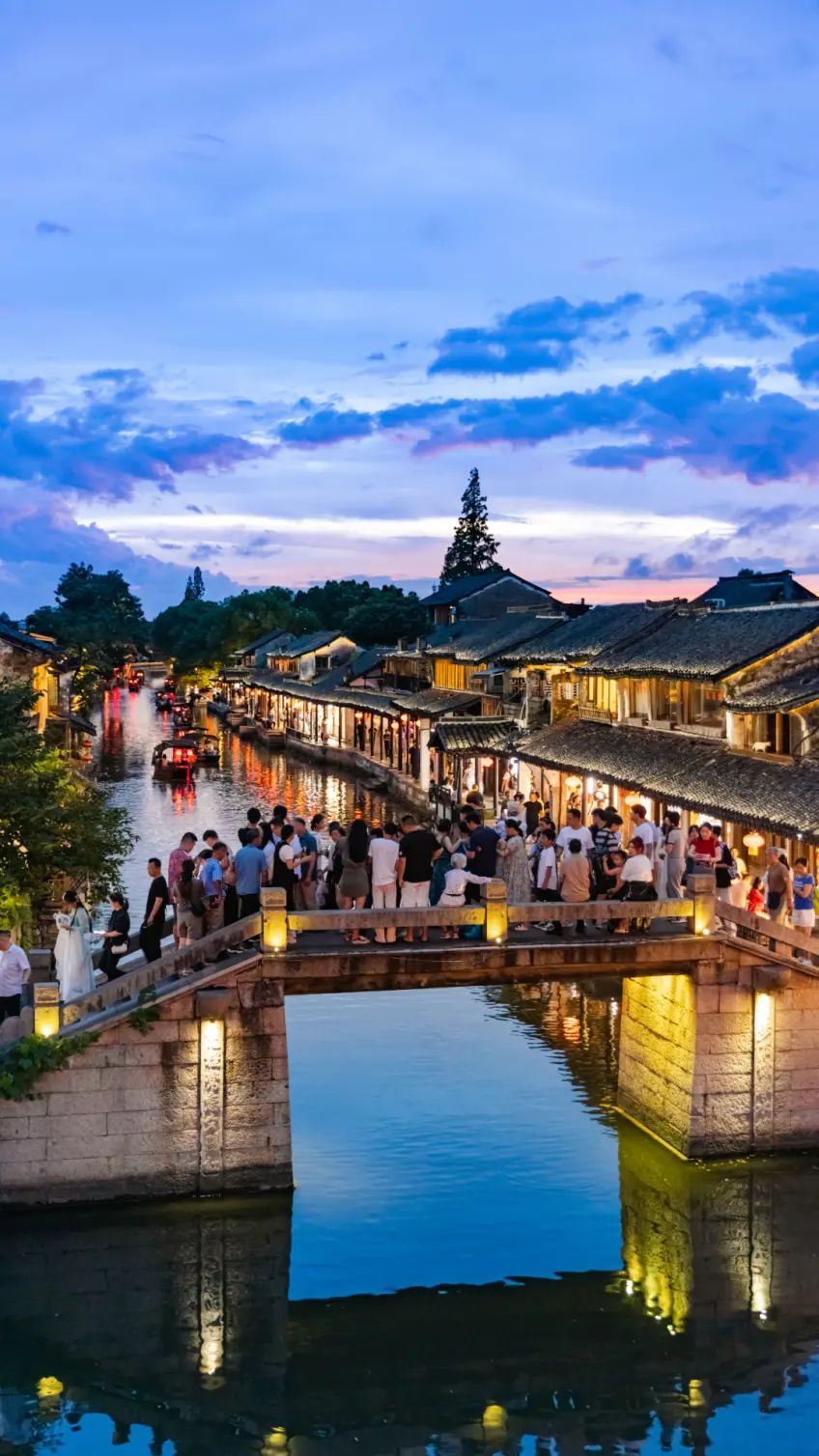
Yongning Bridge sits in the center with an unobstructed view—the river bend by day and lantern lights by night—making it many people's favorite viewing spot.
Jiangnan Private Gardens
Xi Garden is the largest and most prestigious traditional Jiangnan garden in Xitang. Originally built as a private residence for a wealthy local family during the Ming Dynasty, it features high construction standards, a well-planned layout, and deep historical charm. The entire garden follows the classic Jiangnan style, with pavilions, towers, rockeries, and ponds evenly distributed in a balanced, layered arrangement. At set times each day, the garden also hosts Pingtan performances—a traditional Jiangnan art form—with beautiful, melodious vocals.
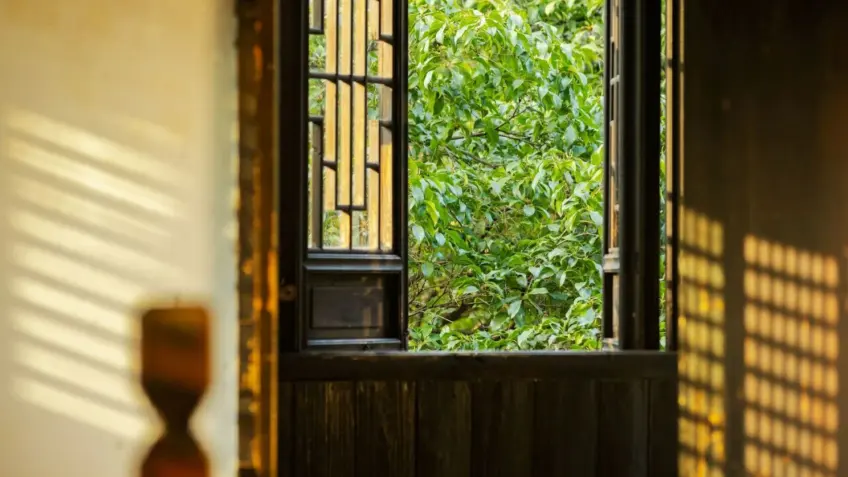
Xiyuan Garden is one of the higher-grade Jiangnan gardens in the ancient town, where wooden windows frame the greenery like a painting.
Ming Dynasty miniature garden
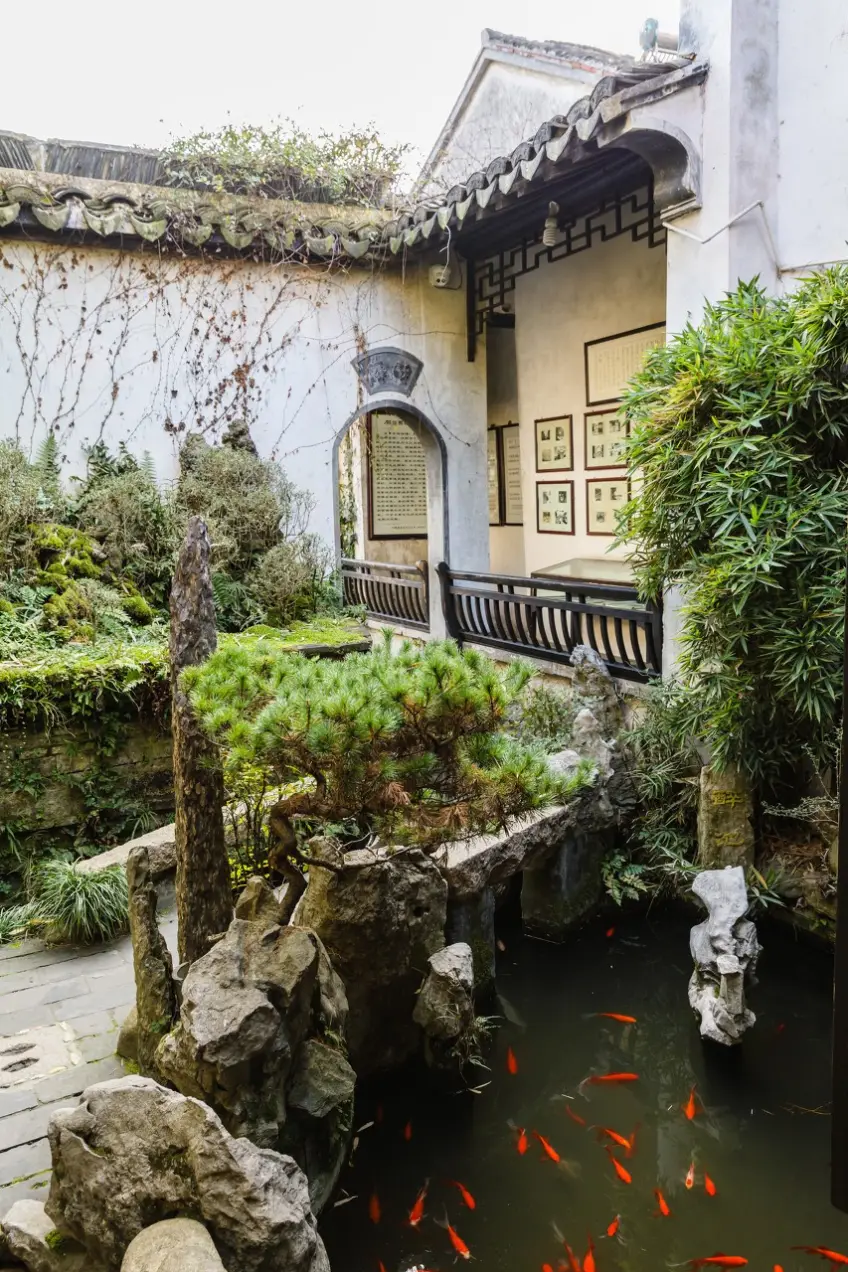
Zuiyuan Garden is a distinctive small garden in Xitang that has existed since the late Ming and early Qing dynasties. It originally served as a side courtyard for a prominent local family. Though compact, every detail is meticulously designed, making it a classic example of an exquisite Jiangnan garden. Tucked away deep in the ancient town and off the busy main streets, it offers a quiet, peaceful setting. The garden also features a dedicated printmaking exhibition area displaying many traditional Jiangnan woodblock prints—rustic in style and rich in content—giving visitors insight into this traditional craft.
The ancient town's alleys are long and the evening sights are spread out. If you have a lot of luggage or want fewer transfers, ask about private car service; if you'd like commentary on the covered bridges, gardens and local customs, you can also hire a guide.
Guide to Xitang Ancient Town's cultural museums
Button Museum
Xitang isn't just a famous water town—it's also one of China's best-known button production hubs. With a long history of button making, the town is home to hundreds of button factories, and many buttons on clothing across China come from here. The Button Museum is dedicated to showcasing Xitang's button history and culture. Its extensive collection covers the evolution of buttons from ancient times to today. Inside, you'll see shell, jade, and bone buttons from antiquity alongside modern metal, plastic, and resin ones—buttons of every era and material are on display here.
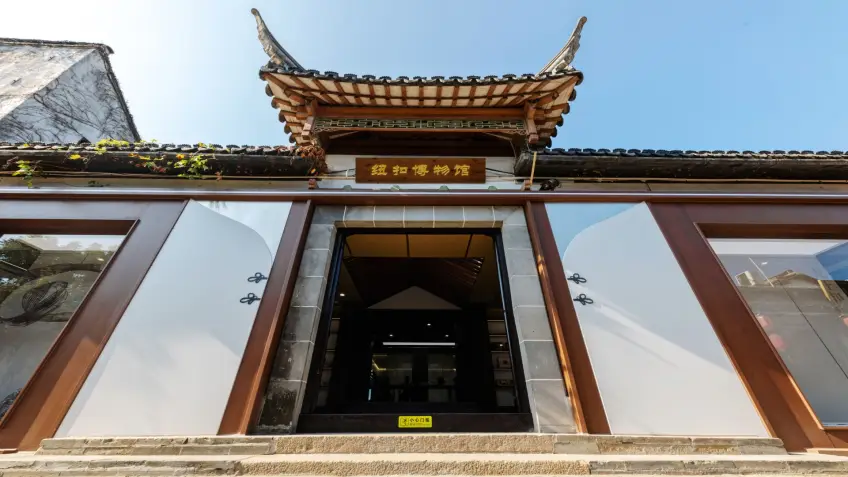
A gold plaque stands out above the entrance of the Button Museum, while glass cases inside display the history of the local button industry and traditional knotted buttons.
Wine Culture Experience Hall
Jiashan rice wine is a famous local drink in Jiangnan with over a thousand years of brewing history. Smooth and rich in rice aroma, it's Xitang's most iconic local specialty. The Wine Culture Experience Hall introduces the history of rice wine and showcases its brewing process, giving visitors an up-close look at Xitang's winemaking culture. You can sample warm local rice wine for free here to experience its flavor and aroma firsthand. The hall also sells bottled rice wine in various sizes—perfect for enjoying yourself or bringing home as a souvenir that captures the authentic taste of Xitang.
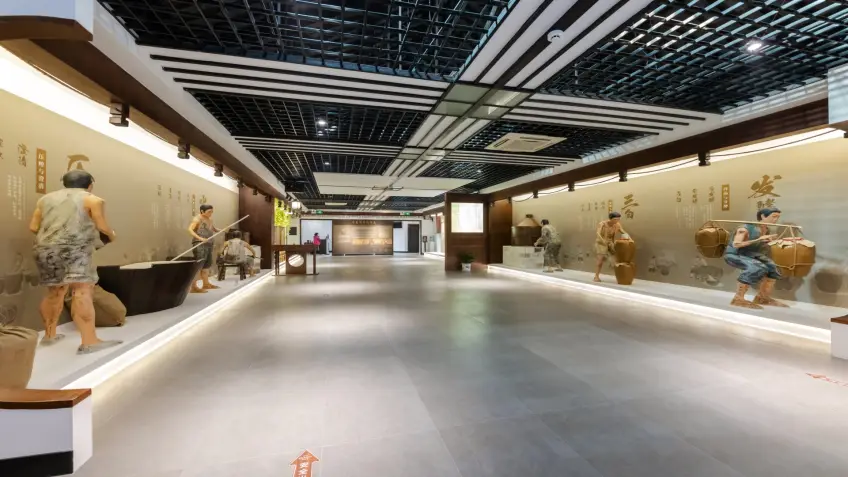
The Wine Culture Experience Hall uses wine jars and brewing statues to recreate the Jiashan rice wine process, and you can sample some while you're there.
Huguo Suiliang Wang Temple
Built in the late Ming Dynasty, Huguo Suiliang Wang Temple is a heartwarming folk temple in Xitang that carries centuries of local gratitude and folk belief. The story behind this temple is truly touching. During a famine long ago, when people were starving, a grain transport official surnamed Jin took pity on the suffering locals and opened the government granary without permission. The people never forgot his kindness, and when the imperial court later recognized his good deed by granting him an honorary title, the locals pooled their money to build this temple to honor him for generations to come.
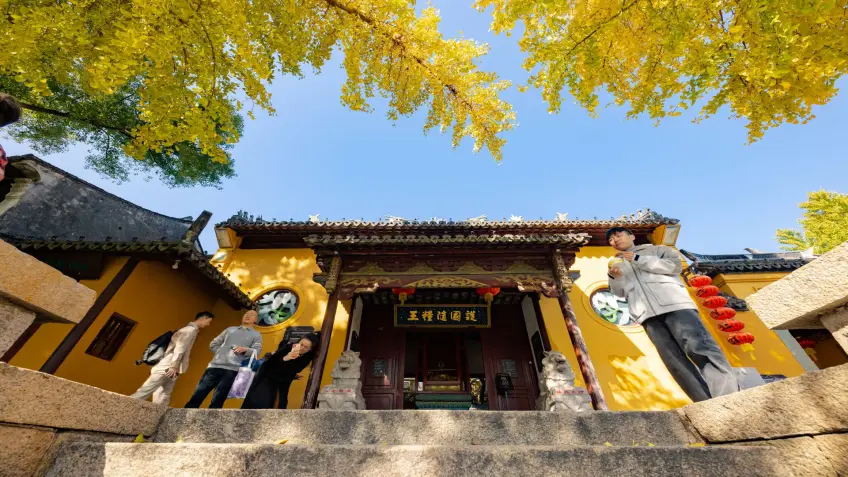
Huguo Suiliang Wang Temple records the story of a grain transport official who helped the people. In autumn, the ginkgo trees make the gate tower glow even more golden.
What are the night attractions in Xitang Ancient Town?
The blend of night lights and flowing water
Huanxiu Bridge is one of the best spots to enjoy the night view in Xitang and a must-visit for an evening stroll. Here you can see the stunning combination of water town lights and flowing water. The lights reflect on the calm river surface, swaying gently with the ripples, creating a soft, dreamy nighttime atmosphere. Standing on Huanxiu Bridge, you get a full view of the canal's nightscape. Small boats glide slowly across the shimmering water at night, their oars gently stirring the river and breaking up the reflections—a lively, beautiful scene like a moving painting.
Huanxiu Bridge is the highlight of a night tour, with lights falling on the river and the covered corridors on both banks glowing together.
Nightlife blending tradition and modernity
Tangdong Street is the liveliest and most popular area in Xitang at night, and the ancient town's only bar street. It perfectly blends the charm of old architecture with a modern leisure vibe. The entire street is lined with well-preserved Ming and Qing dynasty buildings hung with rows of red lanterns, giving it a classic look, while inside you'll find casual bars of all styles.

Tangdong Street layers Ming and Qing-era houses with live bar music, and its night market lantern stalls make it the liveliest block after dark.
An immersive water town night experience
A Wupeng boat night cruise is the most worthwhile evening activity in Xitang, and the most comfortable, enjoyable way to take in the ancient town's nightscape. The small, lightweight wupeng boats are rowed by hand by boatmen, moving slowly and steadily so as not to disturb the quiet night. Some boatmen even hum local Xitang folk tunes—the gentle singing paired with the sound of water and oars creates an unforgettable atmosphere.
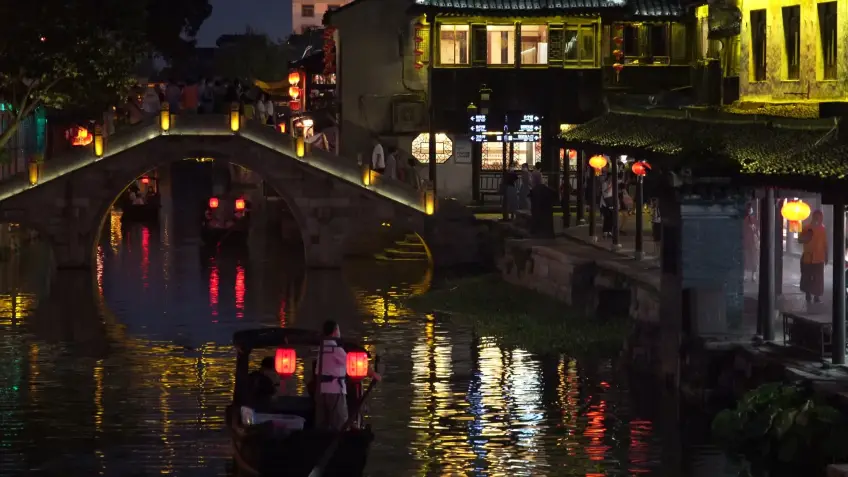
A Wupeng boat night cruise moves slowly with the lights close by, and the boatman occasionally hums a folk tune for a truly immersive evening.
Hidden Gem Attractions in Xitang Ancient Town
Wang Residence
Wang Residence, also known as Zhongfu Hall, sits right next to Shipi Lane. It is the best-preserved Qing dynasty mansion of a wealthy family in Xitang and a textbook example of a grand Jiangnan estate. A plaque inscribed by an ancient Hanlin Academy scholar hangs in the main hall, symbolizing virtue and blessings for future generations—a reflection of the family values of wealthy households in old times. The entire residence follows a neat, symmetrical layout typical of traditional Chinese courtyards, divided into a front hall, central courtyard, and inner courtyard with clear layers and distinct functions. The mansion retains its original Qing dynasty appearance: carved windows, wooden beams and pillars, white walls, and dark tiles are all perfectly preserved, and every detail reveals the refined taste of a prosperous family.
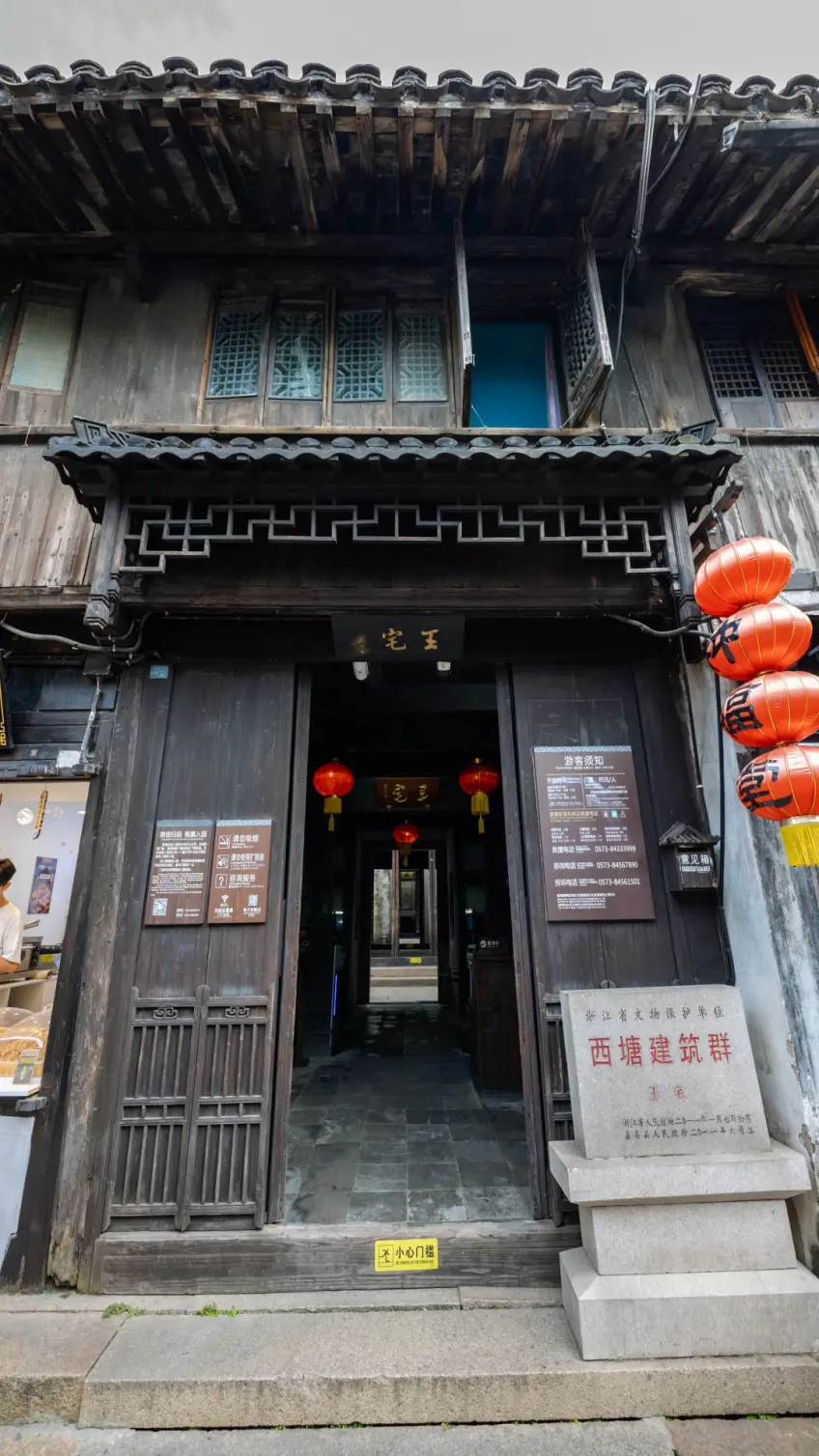
Wang Residence (Zhongfu Hall) sits right next to Shipi Lane, and its Qing-dynasty gate tower and heritage marker are easy to spot.
Zhang Zheng Root Carving Art Gallery
Zhang Zheng Root Carving Art Gallery was converted from an old Republican-era building, so the structure itself has plenty of vintage charm. Inside, it exclusively displays original works by root carving artists, making it one of Xitang's most artistic hidden gems. Using superb carving skills, craftsmen transform ordinary tree roots into lifelike figures, animals, and landscape ornaments. Every piece features clever design, fine craftsmanship, and meticulous attention to detail, bringing the wood to life and showcasing the brilliance of traditional folk artistry.
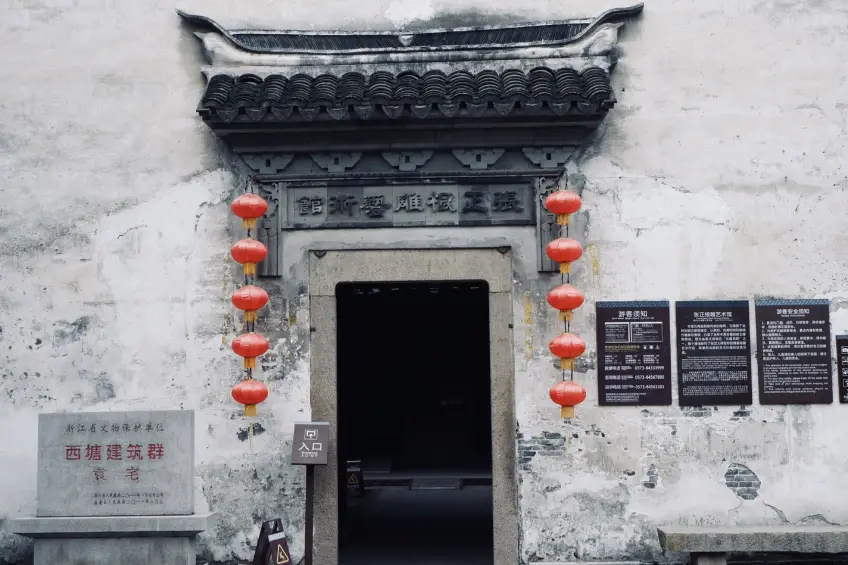
Zhang Zheng Root Carving Art Museum is housed in a Republican-era building. The red lanterns on the lintel make for great photos, and inside you can view original root carvings.
Wu Guniang Park
Wuguniang Park is a relaxing park in Xitang with its own local legend. It's also a quiet, uncrowded hidden gem perfect for unwinding. Far from the busy main scenic area, the park offers a peaceful and comfortable environment with lush greenery, clean river water, well-placed bridges and walkways, and beautiful natural scenery. The park gets its name from the long-told local folk love story of Wuguniang (the Fifth Maiden). This touching tale reflects the locals' longing for true love and is a unique part of Xitang's folk culture. After exploring the bustling ancient town attractions, you can come here to stroll, enjoy the breeze, and take a break away from the crowds. Relax in peace while learning about this exclusive local folktale and experiencing a different side of the ancient town.
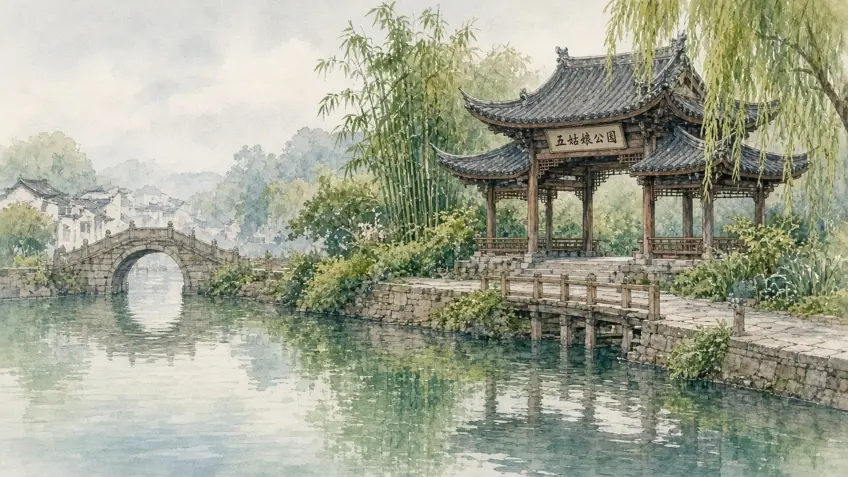
Wuguniang Park is quiet with few visitors. The small bridges, greenery, corridors and pavilions are perfect for resting and enjoying the breeze, far from the bustle of the main street.
Best time to visit Xitang Ancient Town
Xitang has a mild southern climate with moderate temperatures year-round and distinct seasons, making it a great destination any time of year. Each season offers its own unique scenery. Considering temperature, scenery and overall comfort, April to May and September to November are the best times to visit Xitang.
By season
In spring, Xitang's weather is neither too hot nor too cold. Flowers, grass, and trees sprout and bloom throughout the ancient town, turning everything lush green and full of life—a refreshing and soothing sight. In autumn, the weather is dry and pleasant, free from heavy rain and summer heat. With clear skies and soft light, it's the best time of year for both sightseeing and photography.

Spring and autumn bring comfortable temperatures and soft light, offering the clearest aerial views of the layered waterways, covered corridors and stone bridges.
By time of day
From 6:00 to 8:00 AM, there are very few visitors. A thin mist drifts over the ancient town, creating a peaceful atmosphere perfect for capturing crowd-free photos. After 4:00 PM, the sunlight softens as the sunset slowly envelops the town. At night, the lights gradually come on, and the transition between day and night scenery creates rich layers and an exceptional viewing experience.
How to get the best deal on Xitang Ancient Town tickets?
The Xitang adult combo ticket costs ¥95. One ticket grants access to eleven paid attractions inside the ancient town, including gardens, exhibition halls, and historic residences—the core cultural sights—making it great value. Students can buy half-price tickets with a student ID to save on travel costs. The scenic area also offers flexible free-entry hours, perfect for visitors who just want to stroll the lanes and enjoy the water town scenery. After 4:30 PM on weekdays, after 8:30 PM on holidays, and before 7:00 AM every day, you can enter the main streets of the ancient town for free, though the paid exhibition halls and garden attractions are closed during these times.

A combo ticket costs about ¥95 and covers eleven paid attractions; students get half price. Check the scenic area's posted prices on the day for exact details.
Recommended Xitang itineraries
If you only have one day and don't want to plan much, just book a group tour. For station transfers to the scenic area entrance, ask about pick-up and drop-off service or a private car for a hassle-free trip.
The Xitang day tour route is ideal for short-trip visitors with just one day. It flows smoothly without backtracking, letting you see all the core attractions in one go. Enter through the scenic area gate and visit Misty Rain Corridor, Songzi Laifeng Bridge, Yongning Bridge, Xi Garden, and Shipi Lane in order. In the evening, enjoy the night view from Huanxiu Bridge, and at night, stroll down Tangdong Street. This way, you experience both the daytime and nighttime charm of the ancient town in a single day. The Xitang 2-day tour has a more relaxed pace, perfect for those who want to explore in depth. On the first day, focus on the free open attractions: stroll along Misty Rain Corridor, check out the popular ancient bridges, and take in the daytime water town scenery. In the evening, take a boat ride and enjoy the panoramic night views. On the second day, visit the paid attractions, exploring cultural sites like Xi Garden, Zuiyuan Garden, the Button Museum, and Wang Residence to learn about Xitang's history, culture, and garden landscapes, fully unlocking everything the town has to offer.
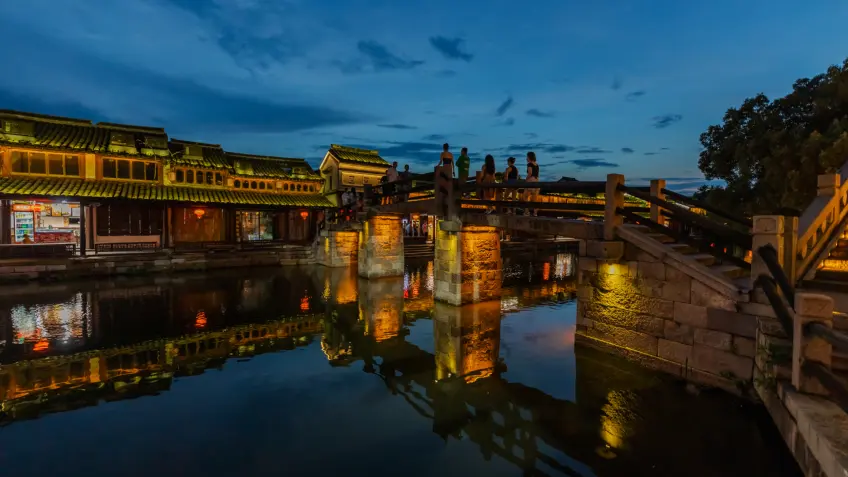
A one-day route can cover Misty Rain Corridor, Laifeng Bridge, Yongning Bridge, Xiyuan Garden, and Shipi Lane, with Huanxiu Bridge and Tangdong Street at night.
Explore Xitang with a private group tour
Overall, Xitang is a Jiangnan water town with ancient scenery by day, a lively atmosphere at night, everyday life in its streets and alleys, and deep historical and cultural roots. From the iconic covered corridors and old bridges to exquisite traditional gardens, distinctive cultural museums, quiet hidden gems, and atmospheric nighttime lights, every scene carries Xitang's unique gentle charm. Feel free to book a custom small-group tour of Xitang. Your dedicated guide will help you choose the best season to visit, share photography and outfit tips, and plan a sensible itinerary so you can easily avoid the crowds, travel worry-free, and fully experience the unique charm of this thousand-year-old water town.
FAQs
Which core attractions in Xitang are must-sees?
Prioritize Misty Rain Corridor, Shipi Lane, Songzi Laifeng Bridge, and Yongning Bridge, plus Xiyuan Garden or Zuiyuan Garden. Save Huanxiu Bridge and Tangdong Street for the evening; a Wupeng boat night cruise is optional.
How to get the best deal on Xitang tickets?
The general adult combo ticket is about ¥95 and covers eleven paid attractions; students get half price with a student ID. Some areas let you enter the town for free, and you can buy tickets at the checkpoints as needed. Check the site's posted prices for the day.
How do I get to Xitang — group tour or private car?
Xitang is in Jiashan County, easy to reach by Shanghai–Hangzhou high-speed rail or by car. If it's your first visit and you just want a full day of sightseeing, a group tour is the most hassle-free option; for an itinerary built around your interests, try a custom private trip. For station transfers, ask about station pickup and drop-off or private car only; for commentary, you can hire a guide separately.
When is the best time to visit?
You can visit year-round, but for overall comfort, April to May and September to November are best. For a single-day trip, aim for 6:00–8:00 AM to photograph empty lanes, then after 4:00 PM for dusk and night views.
Who is this travel guide for?
It's perfect for travelers who want to stroll through a water town at a relaxed pace, photograph the covered bridges at night, or take family on a short trip. If piecing together a travel guide feels like too much work, use our custom private trip service to arrange the covered corridors, gardens and night tours all at once.
Tell customer service your group size, departure point and the sights you want to see for a custom trip; for scheduled Xitang routes, see our group tour, and add station transfers or a private car.