

Travel notes on Xitang Ancient Town, Zhejiang
Xitang Ancient Town is in Jiashan County, Jiaxing, Zhejiang. Admission is a flat ¥95, valid for the day. The three best spots for hanfu photos are: Shipi Lane, where the narrowest point forces two people to turn sideways to pass—slanting light is best from 9–11am or 3–5pm; the Yanyu Corridor along the river, which looks great in sun or rain; and the Ming-dynasty Songzi Laifeng Bridge, which splits into two separate lanes. During the Hanfu Culture Week in autumn, the town also hosts dynasty parades and lantern night tours.
Hanfu shoots and multi-spot routes depend on your needs: for a hassle-free way to hit multiple sights, choose a group tour; if you have lots of gear and many locations, a custom private trip works better. For travel to and from the station, use a private car or station transfer. To find the best light and angles in the old town, you can also hire a guide. Not sure about timing or routing before your shoot? Contact customer service and we'll plan it for you.

There are many ancient towns in Jiangnan, but most feel like exquisitely mounted album pages. Xitang, however, is like a manuscript page that slipped from an artist's hand by chance—the ink still wet, carrying the warmth of everyday life. Here, the water flows not merely to mirror whitewashed walls and dark tiles, and the bridges do more than connect two banks; they bow beneath the misty rain, listening to the thoughts of every heart that passes by.

Discover the Classic Chinese Water Town in Zhejiang
Scenery at Huanxiu Bridge in Xitang
If you asked me what Jiangnan looks like, I would point you here: before the morning mist has even lifted, Xitang slowly unfurls itself like a long scroll of xuan paper.
This is no metaphor. When you stand on Huanxiu Bridge and look out, the silhouettes of dark roof tiles blur softly in the drifting mist, a figure with an umbrella flashes briefly across the white-washed walls, and every line eventually flows into that hazy expanse of water. The landscape ideal of classical paintings—meant to be walked through, gazed upon, explored, and lived in—turns out to have a real home, breathing this way day after day.

Must-Visit Attractions in Xitang, Zhejiang
Here, scenery isn't framed—it shifts with every step you take. Step forward, and Shipi Lane slices the sky into a thin ribbon of blue; step back, and the covered corridors draw the bustle of daily life into a long, deep perspective. Xitang's aesthetic code lies in this unfolding scroll-like logic: the entire ancient town is the paper, the flowing water is the ink, and the voices and lives of its people are the colors.

Xitang Attraction Guide: Shipi Lane, the "One-Line Sky"
Origin of Xitang's Shipi Lane
Shipi Lane gets its name from the paving stones, which are as thin as leather. It is laid with 166 granite slabs, each only 3 cm thick. Of the 122 lanes in Xitang, it is the narrowest and the best preserved. Look up inside the lane and the sky becomes a slender strip, earning it the nickname "One-Line Sky." Two people meeting face-to-face must turn sideways to let each other pass. Think it's a design flaw? No—it's the wisdom of adapting to the terrain and the ultimate expression of Jiangnan scale.
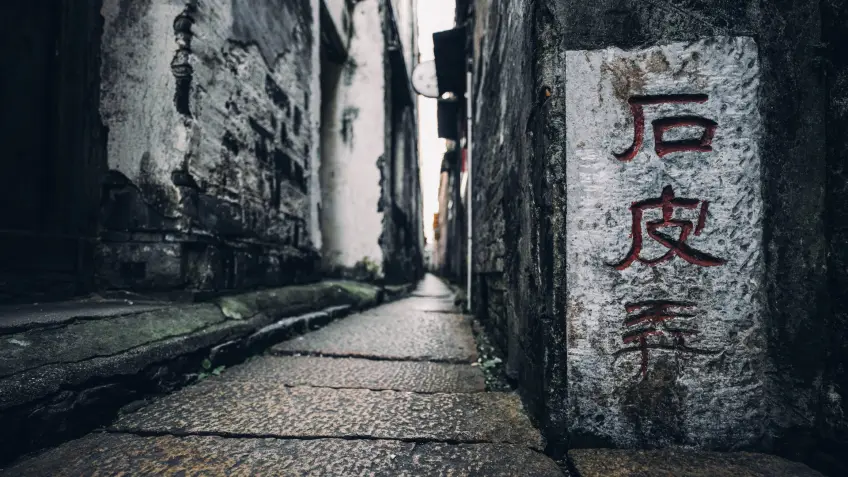
Location of Shipi Lane in Xitang
Built in the late Ming and early Qing dynasties, Shipi Lane is located on Lower West Street in Xitang, just west of "Zhongfu Hall." It is an open-air alley squeezed between two residences.
Enter through the scenic area gate and walk down West Street until you find "Zhongfu Hall." Shipi Lane is just west of Zhongfu Hall, with Zhongfu Hall on one side and Zunwen Hall on the other—both were once part of the Wang family estate.
Ticket tips
Shipi Lane itself is free, but you'll need to buy a ticket to visit Zhongfu Hall or Zunwen Hall next door.
Xitang Hanfu photography guide
The light and shadow through the "One-Line Sky" above are stunning. Wear hanfu and capture a shot looking back over your shoulder; pair it with the caption "In Shipi Lane, even time grows narrow" to freeze the moment forever. Yet this extreme 'narrowness' needs extreme 'separation' to protect it. Look up at the stepped gable walls rising more than ten feet above the rooftops—they are the guardians that have kept Shipi Lane standing for four hundred years.
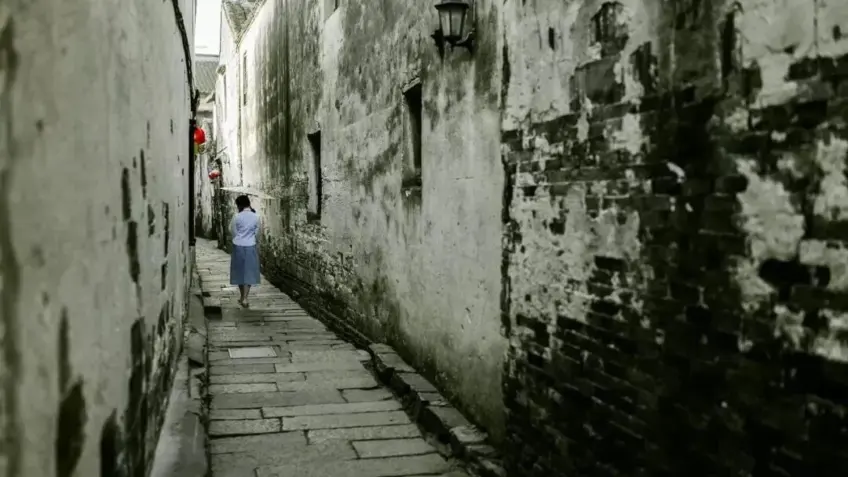
Best time to photograph Shipi Lane
Shipi Lane is one of the most photogenic spots in Xitang for hanfu—no other ancient town turns "narrow" into such a compelling story. Go between 9:00 and 11:00 AM or 3:00 and 5:00 PM. The light is best during these windows, slanting into the alley and casting long shadows across the flagstones for striking contrast.

Xitang Hanfu Culture Week travel guide
Hanfu Culture Festival dates
Xitang Hanfu Culture Week is usually held in autumn each year. Check the official announcement for the exact dates and duration.

Must-see events at Hanfu Culture Week
The Dynasty Carnival is the highlight of Culture Week. From the Zhou to the Ming dynasty, hanfu-clad processions parade through the ancient town along the stone-paved streets and under the covered riverside corridors — it's an incredible sight. There's also a waterborne version: Wupeng boats carrying hanfu-dressed performers line up along the canals while crowds gather on both banks to take photos.

The intangible cultural heritage lantern parade is the main event after dark. Once night falls, thousands of lanterns light up as people stroll through the ancient town carrying them, their glow reflecting off the canals until all of Xitang shines. You can also try tea whisking, flower arranging and incense burning, or shop using "jiaozi" replica currency — living a day exactly like someone from the Song dynasty.
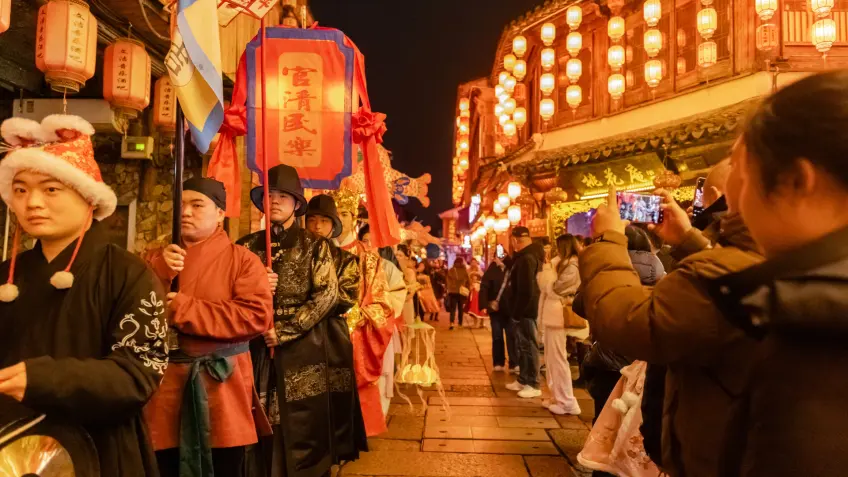
Xitang's twin highlights: covered corridors and ancient lanes
Introduction to Xitang Covered Corridors
The ancient town preserves well-kept Ming and Qing dynasty building clusters, with its covered corridors and old lanes considered two unique highlights full of distinctive charm. In Jiangnan water towns, shops along the streets often set up awnings in front of their doors to shelter merchants and customers from rain and sun. Over time, some were built as permanent covered corridors, with one end attached to the ground floor of a shop and the other extending over the street edge, supported by wooden pillars and topped with roof tiles, becoming an extension of the storefront. This interplay of open and enclosed, light and shadow, creates the breathing rhythm of the ancient town.

After dark, the full moon reflects off the canal. From a wide angle, the stone embankments and distant lights merge into a glowing ribbon. Stand on a bridge or by a dock to frame your shot slowly, capturing both the night and the moonlight.

[Enchanting Qiandao Lake 6 Days 5 Nights] Hangzhou (West Lake + Lingyin Feilai Peak) + Two Classic Water Towns (Wuzhen West Scenic Zone + Xitang) + Qiandao Lake Pure Fun Tour
[Quality Promise] Relax and enjoy your trip! [Famous Attractions] Wuzhen East & West Scenic Zones, Xitang Ancient Town, Lingyin Feilai Peak, West Lake Scenic Area, Hefang Street, Qiandao Lake and more—a trip worth taking! [Comfortable Stays] One night outside Wuzhen to experience the town day and night! [Bonus] One bottle of branded mineral water per person per day!
In Jiangnan water towns, covered corridors aren't unusual, but Xitang's covered corridors stretch about 877 meters, making them quite large. Walking under the covered corridors, you're shaded on sunny days and sheltered from rain, so wind or rain won't stop you from strolling around — a unique feature of the ancient town.

How many lanes does Xitang have?
Xitang isn't just known for its covered corridors—it also has many ancient lanes, with 122 lanes in total. They vary in length and width: the longest is 236 meters and the shortest only 3 meters, making them fun to explore.
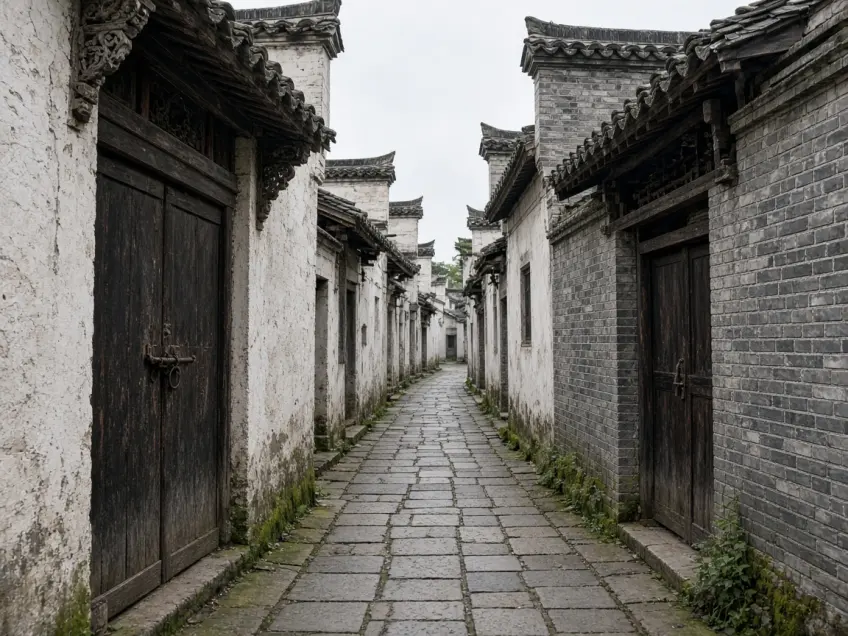
The first type is the inner-house lane, which is part of a building and not open to outsiders. Locals call it a "pei nong" (side lane). These lanes are usually very dark. As you walk through, thick walls rise on both sides and roof beams stretch overhead, with only a little light filtering in from either end.
The second type is the water lane, opening onto a street at the front and a river at the back. Built by riverside households, these lanes made it easy for family members to wash vegetables and clothes by the water or board boats.
The third type is the connecting lane, linking two parallel streets. Walking down one lets you pass from one street to another—a handy shortcut for locals.

These two marvels stand side by side not to outshine each other, but to reconcile a certain architectural philosophy. The covered corridors teach us how to "open up," embracing the flowing water, passing travelers, and the changing seasons; the ancient lanes show us how to "hold close," tucking family histories, artisan spirits, and the sighs between bricks and stones safely into a sliver of shadow.
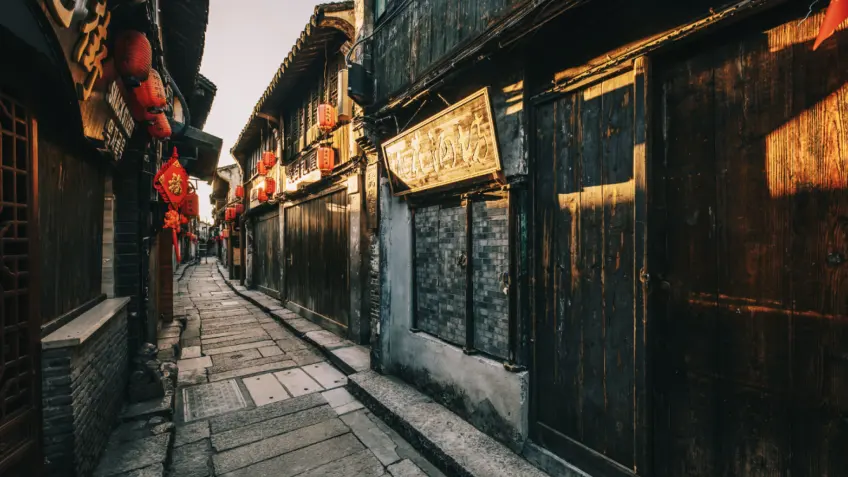
Scenery of Xitang Ancient Town, Zhejiang – Rainy View
Jiangnan is known for its misty rain. If it happens to be raining when you arrive, stand beneath the covered corridor and listen to the layers of sound: rain tapping the tiles up close, falling into the river in the distance, dripping at your feet. The water's surface is pocked with countless tiny dimples, and the whitewashed walls across the river blur into pale gray, yet under the corridor everything feels calm. A candy vendor shifts her stall; a tea drinker gets a refill. People sheltering from the rain reach out a hand to feel the drops, and children's laughter rings especially clear. The air is damp, carrying the scent of stone slabs and wood. Eaves drip onto the flagstones, carving small hollows at an unhurried pace.
No rush—wait until the rain eases before moving on. This is the most authentic everyday scene along the Misty Rain Corridor.
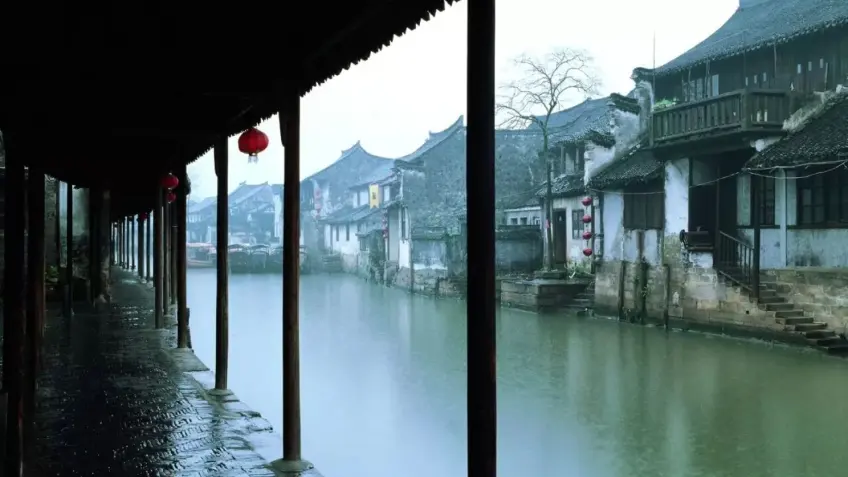
When the rain lightens, sunlight slips through the clouds and makes the wet tiles gleam. The whole ancient town comes alive, pulsing between openness and shelter like an old scroll slowly breathing.

The name "Misty Rain Corridor" (Misty Rain Corridor) only truly makes sense on a rainy day. Jiangnan gets plenty of rain, and it rains in Xitang for one-third of the year. On rainy days, a thin mist rises from the water like smoke, drifting over the ancient town's canals. Sitting under the covered corridor and looking out, the whole world seems hazy. Misty rain around the corridor, and the corridor amid the misty rain—that's why it's called the "Misty Rain Corridor."
Once the rain clears, the Misty Rain Corridor reveals its kilometer-long stretch of gray-tiled eaves, shading you on sunny days and keeping you dry when it rains, with the bluestone paving always dry underfoot. It isn't a scenic decoration—it's an "outdoor living room" that grew naturally out of a thousand years of daily life in Xitang.
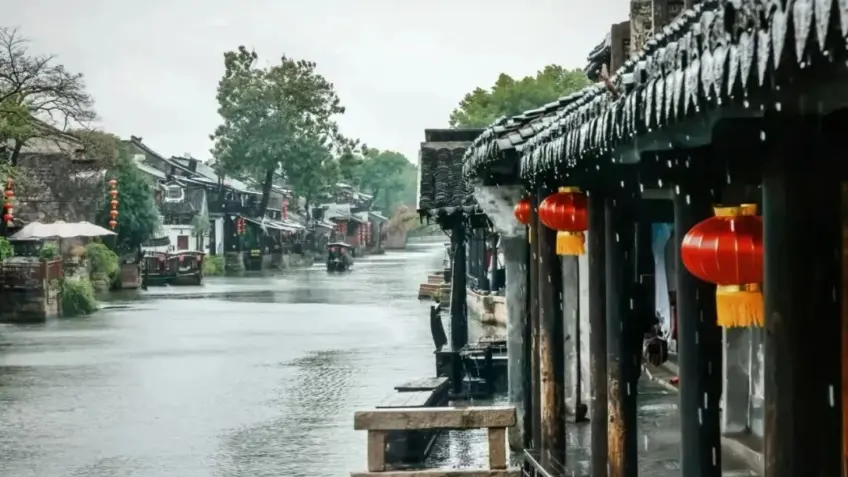
Xitang's Blessings – Songzi Laifeng Bridge
The Ancient Legend of Songzi Laifeng Bridge
Continuing west along the corridor brings you to Songzi Laifeng Bridge on the east side of Xiaotong Street. This is Xitang's most famous bridge, and locals have long passed down a legend about its origins.
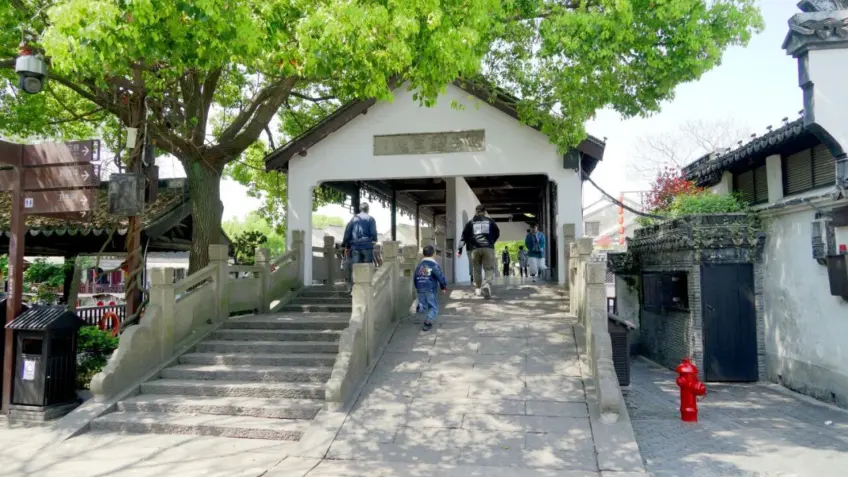
Legend has it that long ago, a couple in town had been married for years without children. The wife went to the temple every day to burn incense, praying for a child. One day, while resting on the bridge on her way home, she suddenly saw a colorful phoenix descend from the sky and land at the bridgehead. The phoenix called out three times, then flew away. Soon after, the wife became pregnant and gave birth to a healthy baby boy. From then on, the bridge was known as "Songzi Laifeng Bridge," meaning "delivering a son and bringing a phoenix." Ever since, locals getting married or hoping for children walk across the bridge for good luck.
A Fun Journey Through Time
This ancient Ming Dynasty bridge has two separate paths. In the old days, following the rule of "men on the left, women on the right," newlyweds would each walk one side and meet in the middle, symbolizing the blessing of "delivering a son and bringing a phoenix." Today, visitors still enjoy the fun of walking separate paths and meeting on the bridge, treating it as a playful ritual. Couples strolling hand in hand feel as if they've sealed a vow across time.
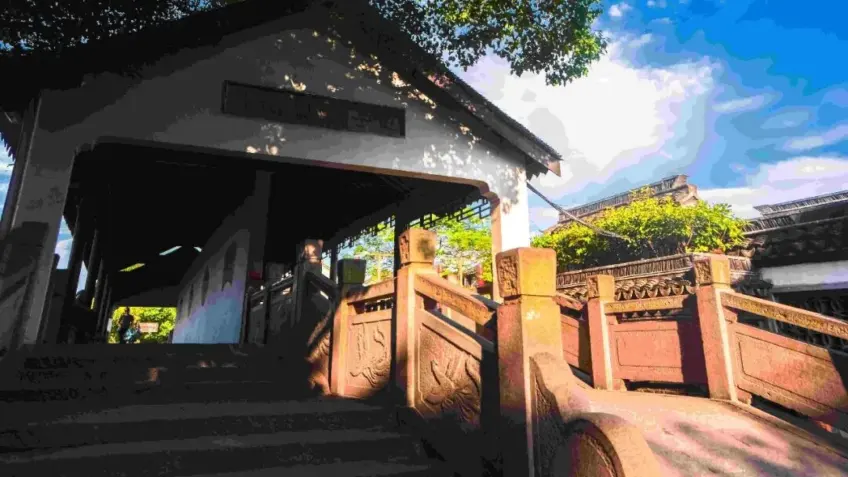
Exploring Xiyuan Garden on a Jiashan Trip
Strolling through Xitang Ancient Town, Xiyuan Garden is the soul of the place and not to be missed.
It is not only the largest surviving private garden in Xitang, but also a chapter-by-chapter history of Jiangnan culture written in pavilions and waterside terraces—from the original layout of the Zhu family's private garden in the Ming Dynasty, to the passionate literary gatherings of the Nanshe Society during the Republic era, right up to today's unique blend of three museums and thriving arts.
The garden perfectly traces its transformation from a "private retreat" to a "public cultural landmark." Unlike Suzhou gardens, which pursue aesthetic perfection, Xiyuan Garden's value lies in its tangible cultural texture.
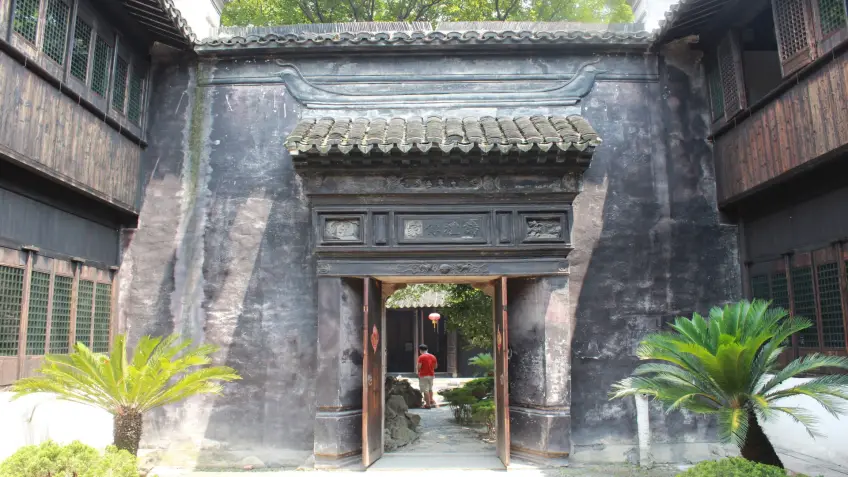
Introduction to Xiyuan Garden in Xitang
Xiyuan Garden sits at the end of West Street in the ancient town and is the best-preserved and largest private garden in Xitang. It was originally built by the Zhu family during the Ming Dynasty and was then called "Zhu Family Garden." Though small, it had everything—pavilions, towers, rockeries, and ponds—making it a classic Jiangnan scholar's garden. After changing hands several times, it was bought by a merchant surnamed Wang in the late Qing Dynasty, who expanded it and renamed it "Xiyuan Garden."
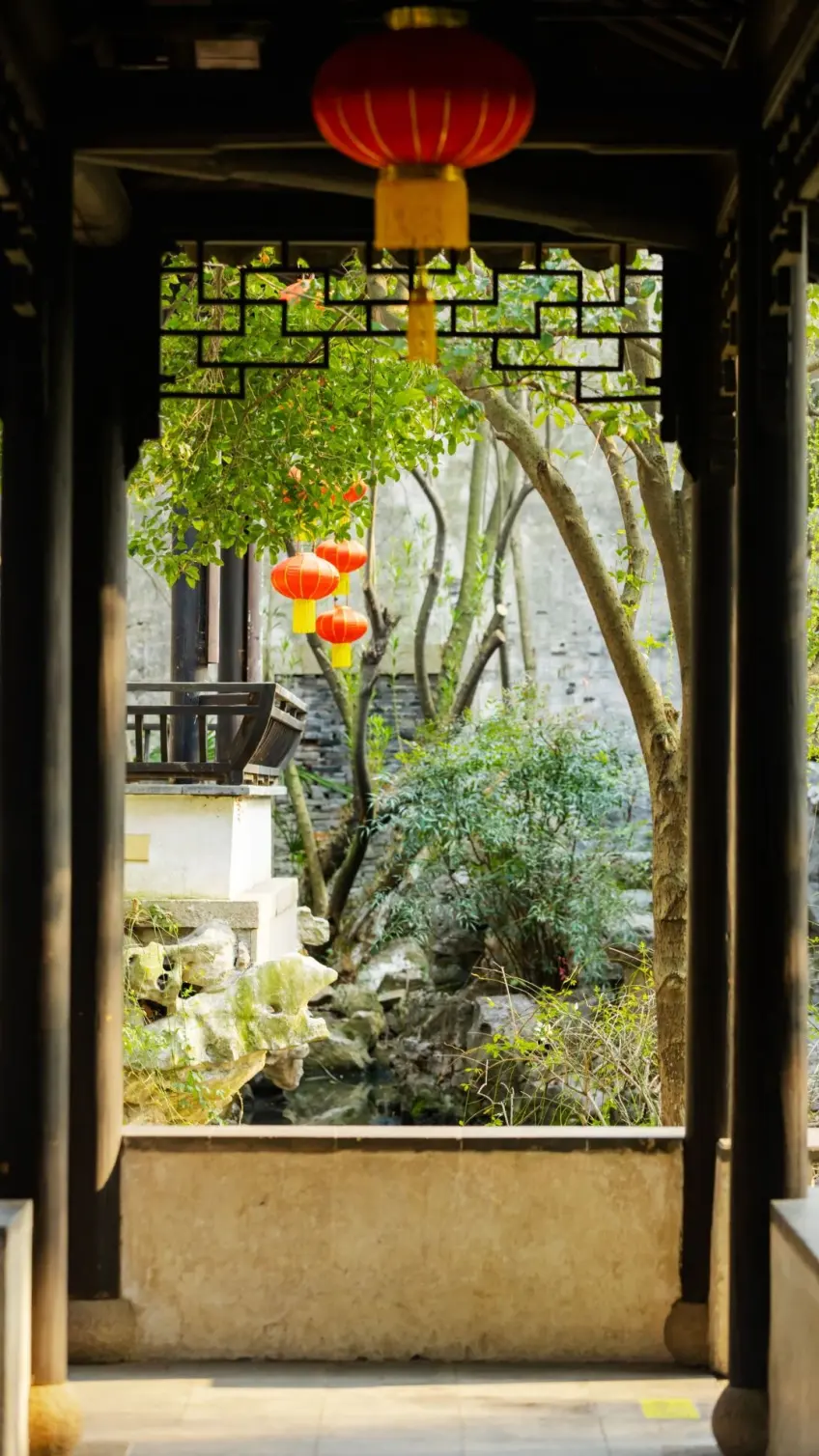
Looking out from under the corridor, the layered greenery of Xiyuan Garden's courtyard is clearly defined. The pillars and eaves frame a quiet patch of green—perfect for hanfu portraits, whether standing or glancing back over your shoulder, capturing both architecture and plants in one shot.
Today, the garden's three main exhibition halls—the Zhu Nianci Gold Miniature Calligraphy Fan Hall, the Hundred Seals Hall, and the Nanshe Society Exhibition Room—distill calligraphy, seal carving, and revolutionary literature into something you can see, feel, and reflect on. Xiyuan Garden thus transcends the usual "viewing" purpose of a classical garden, becoming a cultural space you can step into and engage with.
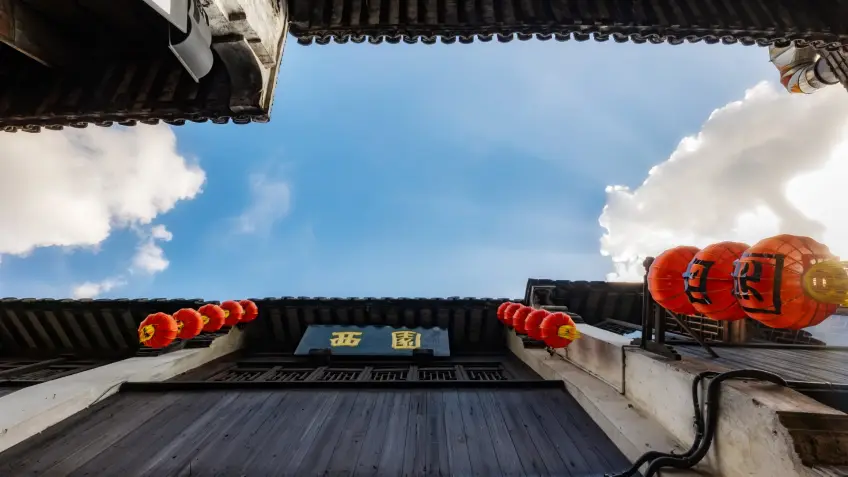
If you want to truly understand the layered stories of this garden, a guide well-versed in local history and culture acts like a "cultural translator." For any questions before your trip, just contact customer service for answers.
A guide can point out the scholarly charm hidden in the rockeries and the historical marks on architectural details, and can also arrange a Pingtan performance or a small seal-carving workshop in the right season, turning you from a visitor into a participant in this elegant gathering.

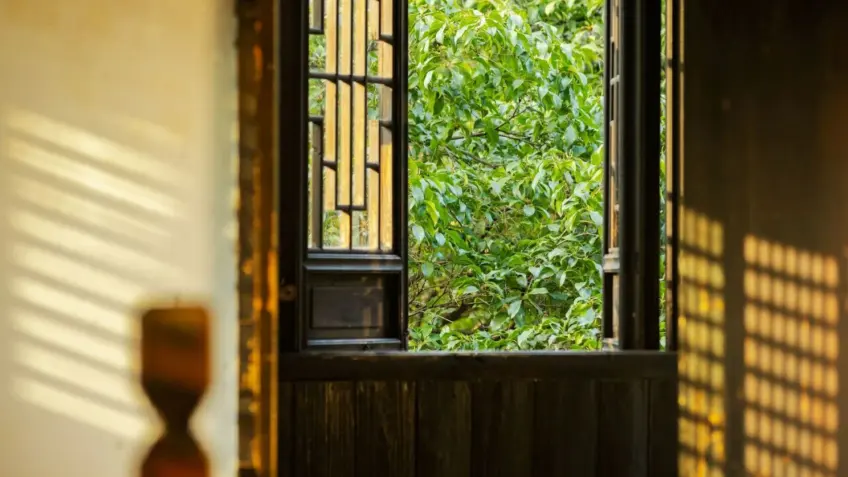
Sit for a while at Zuixue Pavilion and watch sunlight filter through the lattice windows onto the water — what makes Xitang most captivating is never the static scenery, but the moments you step into it.