

Best time to visit West Lake
When is West Lake most beautiful?
No single season is best at West Lake (西湖), because its Ten Scenes are arranged by season and time of day. Walk Su Causeway (苏堤) in late March or early April for peach blossoms and willows, see the lotus at Quyuan Garden in July, wait for sunset at Leifeng Pagoda (雷峰塔), watch the moon at Autumn Moon over the Calm Lake, at the foot of Gushan Hill, on autumn nights, and go to the Broken Bridge (断桥) on the first clear day after winter snow. Below, we go season by season.
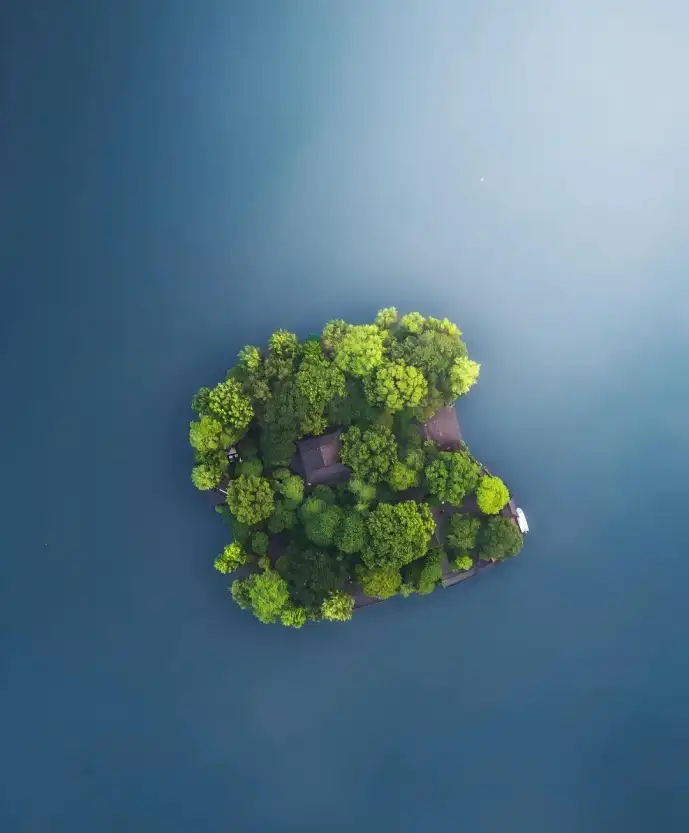
Timing your West Lake visit
West Lake changes with the seasons; it isn't a still painting. Rather than asking which season is best, think of each season as opening a different window onto the lake. Whenever you go, there's something to see.
It's hard to see all of West Lake in one visit. Many people can recite names like Spring Dawn at Su Causeway, Breeze-ruffled Lotus at Quyuan Garden, and Three Pools Mirroring the Moon, but figuring out where they are and what they look like usually takes a full loop around the lake before everything clicks into place.

The Ten Scenes have one special feature: they're arranged by season and time of day. People long ago settled which place to see in which season and when the light is best. So rather than argue whether spring or autumn is better, this article groups the ten places by season so you can see which appeals to you.

Spring: Spring Dawn at Su Causeway
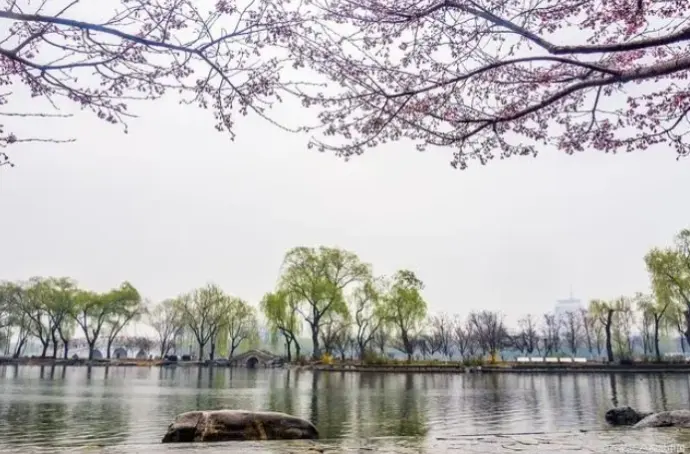
Besides the traditional Ten Scenes, a new set of ten has been chosen in recent years, and Spring Dawn at Su Causeway usually comes first among the ten. In late March and early April, the peach blossoms are out and the willows hang low. The green is fresh and the pink is pale: soft colors rather than the bold tones of a painting, elegant and understated.
Take a leisurely stroll along Su Causeway from north to south. There are six bridges, and if you stop at each one and look back, the view changes depending on where you stand. A moment ago the hills on this side looked clearer; cross the bridge and look again, and the water over there seems brighter.
Stand somewhere different and the view changes too. That's what people mean when they say "a new scene with every step."
The lake is still, and so are the hills, but as you walk, they shift little by little before your eyes, like someone slowly unrolling a scroll painting. Once you've crossed all six bridges, you've gone from the north end to the south. Look back at the path you've taken: Su Causeway stretches long and slender across the water, with the lake on both sides, sky above, and flowers and willows all along the way. Suddenly you realize that one walk through a place like this just isn't enough.
Spring: Orioles Singing in the Willows
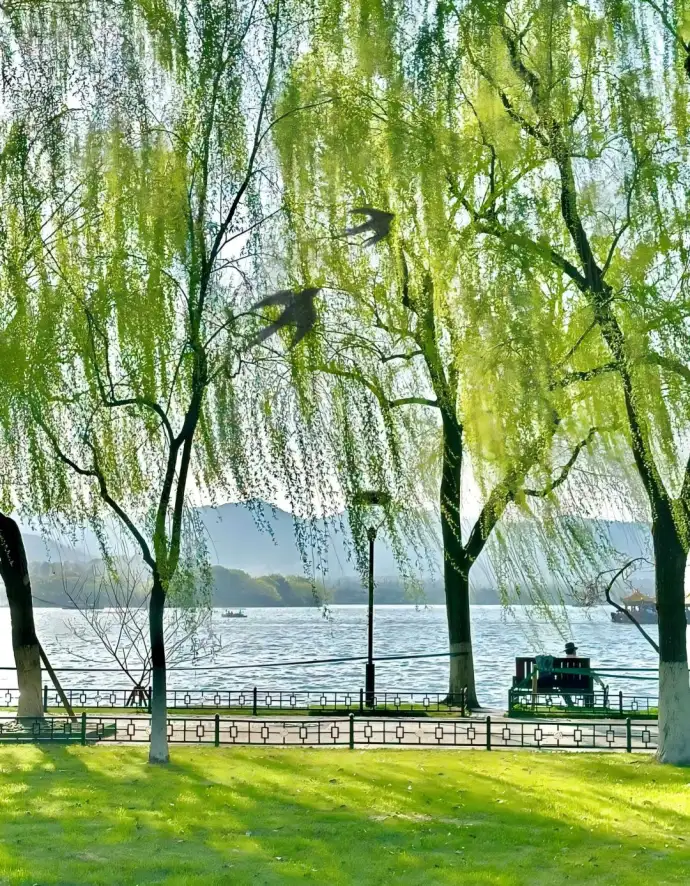
Orioles Singing in the Willows is another spot best visited in spring. It stands on the former site of Jujing Garden, a Southern Song imperial garden, and grows several varieties of willow, including weeping, drooping and lion willows. When a breeze blows, the branches ripple like waves. Today it is an open public park where people practice tai chi, walk their birds and play chess early in the morning. On misty mornings before the fog lifts, the willow fronds hang low over the water, making for the most photogenic scenes.
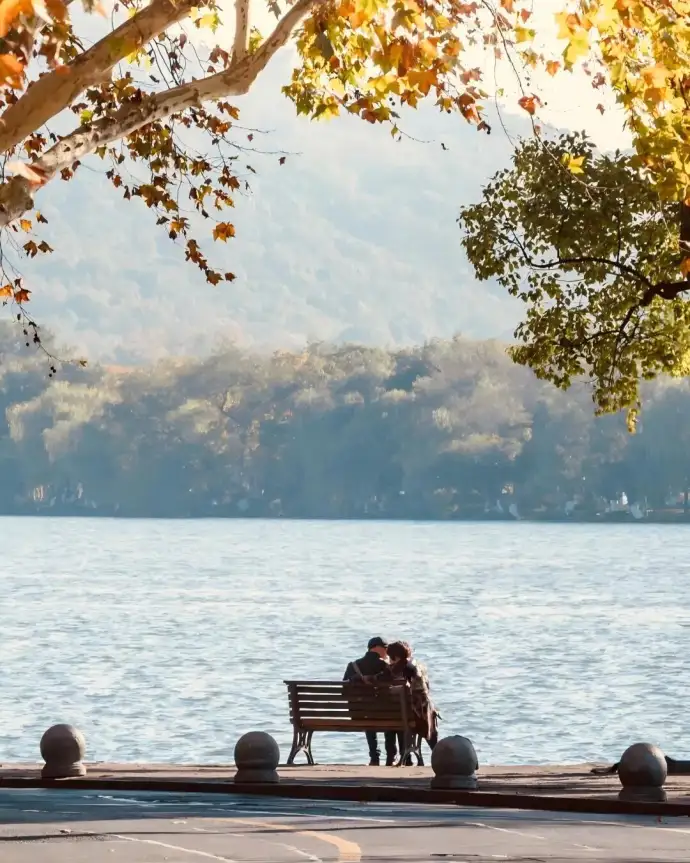
The benches along the lake face the water with willows behind them. When the wind blows, the branches brush your shoulders while boats drift slowly in the distance. In a place like this, even an entire afternoon doesn't feel too long.

West Lake
Hangzhou West Lake is located in downtown Hangzhou, surrounded by mountains on three sides. Known as "paradise on earth," it is a World Heritage Site and a national 5A scenic area.Summer: Breeze-ruffled Lotus at Quyuan Garden
Lotus season at Quyuan Garden
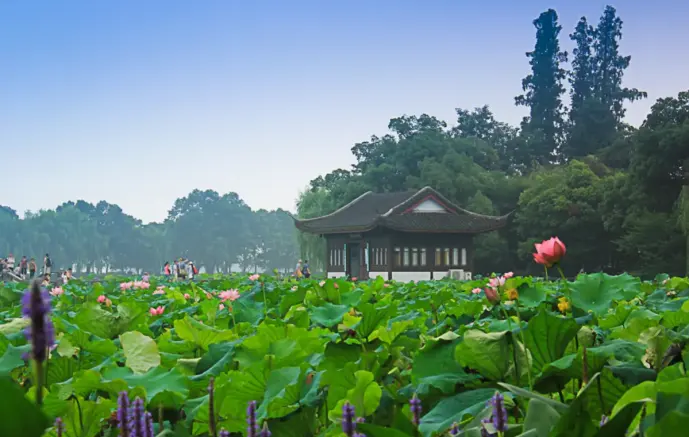
Breeze-ruffled Lotus at Quyuan Garden (曲院风荷): even the name sounds cool. In the Southern Song, this was the Quyuan, an official brewery, and the air carried the scent of wine and lotus.
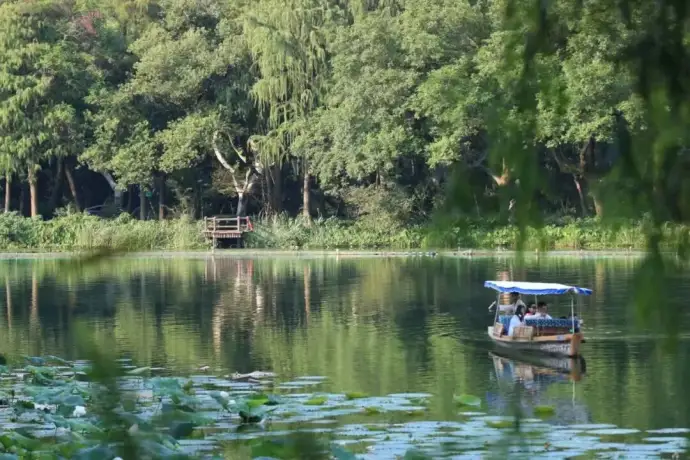
Come in July and pink and white blooms, tall and short, crowd across half the lake. When a breeze passes, the leaves flip and the flowers sway, and the scent of the whole lake drifts with the wind, catching in your nose and clinging to your clothes. The brewery is long gone, but the lotus still seem to know that breeze, and their scent follows visitors along the paths.
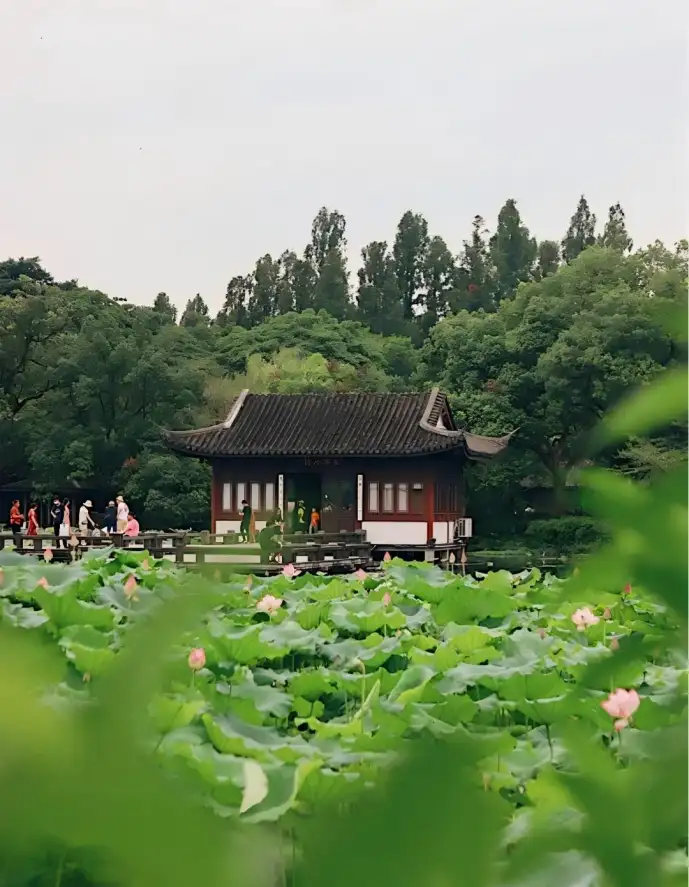
Lotus scent on the breeze
When the wind picks up, the lotus leaves flip to reveal their pale green undersides, releasing a faint, delicate fragrance. Unlike the showy blooms in a flower shop, lotus flowers are subtle. Their scent arrives only when the breeze carries it—sometimes just a brief, clean whiff that fades as soon as you notice it, leaving you standing there waiting for the next gust. So this is what "waiting for the wind" really means.
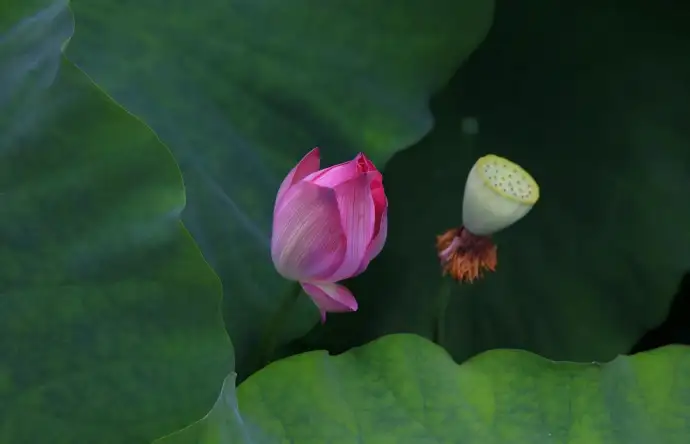
Lean on the railing and you'll see that the lotus in the pond are all different. Some are still tight buds; others are open, their petals spread flat around a small seed pod. The colors are quiet, the pink not loud, the white not cold, standing still among the leaves. Looking over a lake full of lotus and hearing the wind rustle the leaves, you understand that the name Breeze-ruffled Lotus at Quyuan Garden is about more than the view. It's also the shape of the wind, the whisper of the leaves and a rare bit of cool on a summer day.
When to see Leifeng Pagoda at sunset
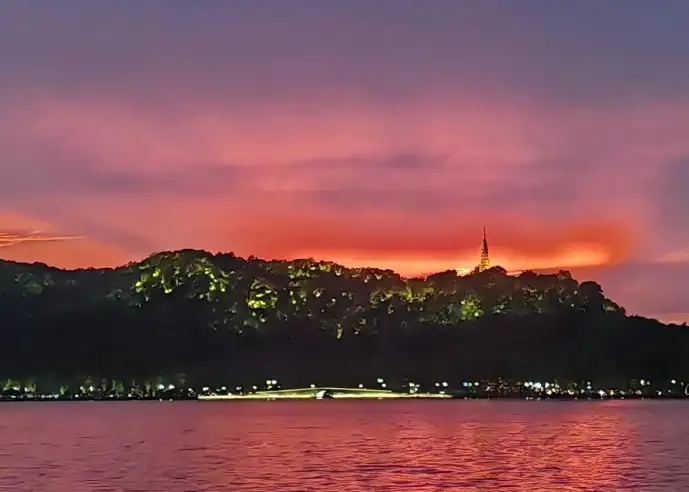
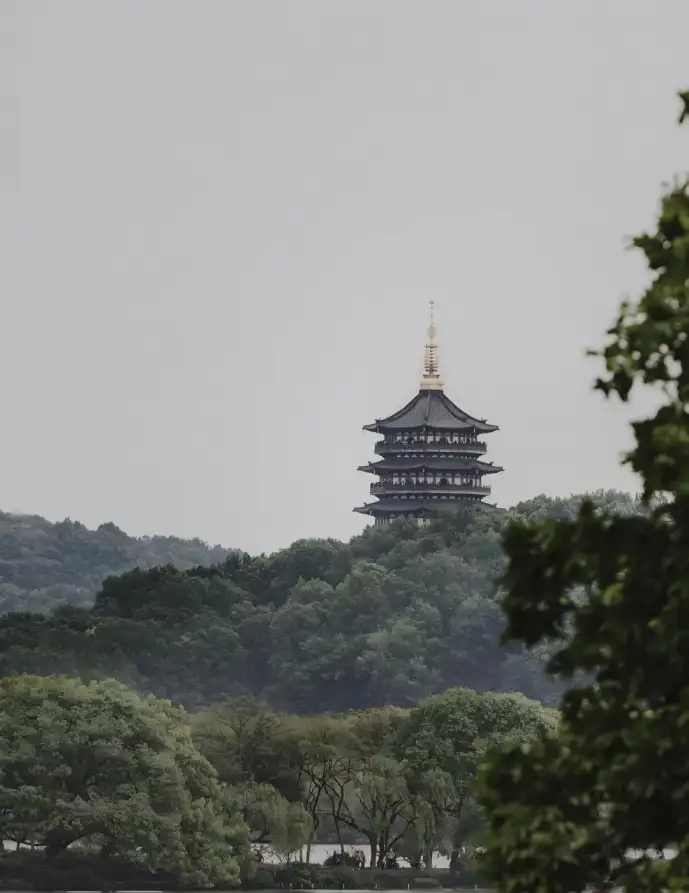
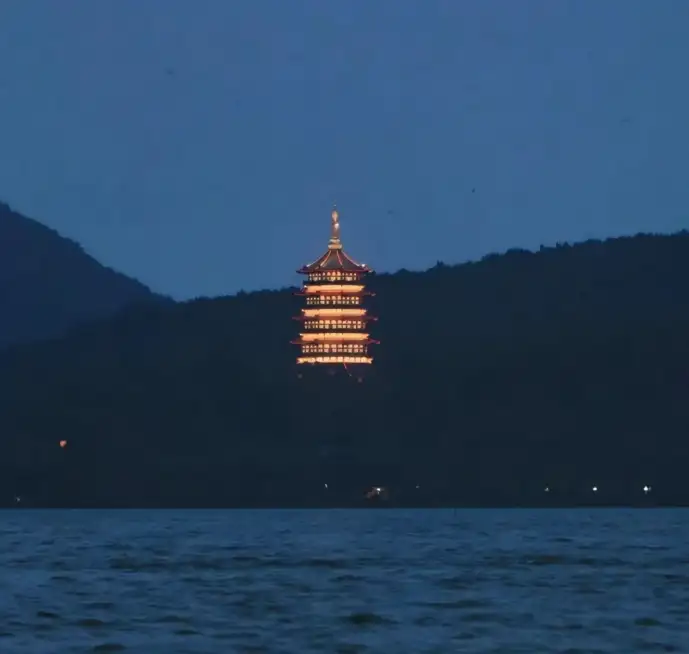
Leifeng Pagoda in Evening Glow is a dusk scene. Around sunset, the light turns the pagoda a warm yellow, not glaring but soft, like an old photograph, and its reflection in the fish-release pond is lovely.
You can walk there along Nanshan Road. If you arrive just as the setting sun hits the pagoda, the brick walls glow with warm light layer by layer. After buying a ticket, take the elevator to the top floor. West Lake lies right below you, and Su Causeway stretches across the water like a jade ribbon.
Leifeng Pagoda
What's inside Leifeng Pagoda?
The base of Leifeng Pagoda is old and the upper part is a rebuild. The ground level holds the ruins of the original pagoda, and the second floor has a copper relief, Building the Pagoda in Wuyue, showing how it was built. The best part is a full Legend of the White Snake carved in Dongyang woodwork, from the lovers' meeting at the Broken Bridge to the flooding of Jinshan Temple and the White Snake's imprisonment under Leifeng Pagoda. Walk around it and it's like watching a whole TV series.
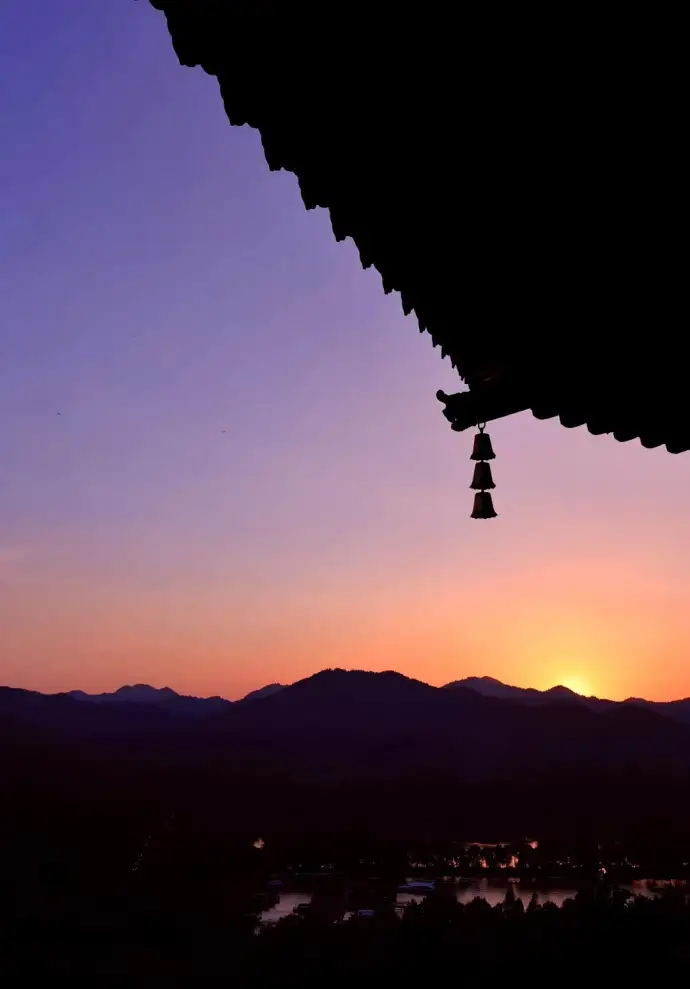
Huiwenxuan next to Leifeng Pagoda holds treasures excavated from the underground chamber, including the Ashoka Pagoda that once contained a relic of the Buddha's hair and gilded bronze Buddha statues. They're well worth a look.
If you just want the view, seeing it from a distance works too. Leifeng Pagoda across the water in the evening light looks just like an old painting.
Autumn: Autumn Moon over the Calm Lake
Moon viewing in autumn
Pinghu Qiuyue (Autumn Moon over the Calm Lake) sits at the foot of Gushan Hill. In autumn, the lake is as smooth as a mirror, making it a great spot for moon viewing during the Mid-Autumn Festival. There's nothing blocking the view—just a wide expanse of water stretching out before you.
In the early evening, before it's fully dark, the lake is as flat as a mirror with barely a ripple. That's the "calm lake" of the name, and you can see what old writers meant by "a vast calm lake, washed in moonlight."
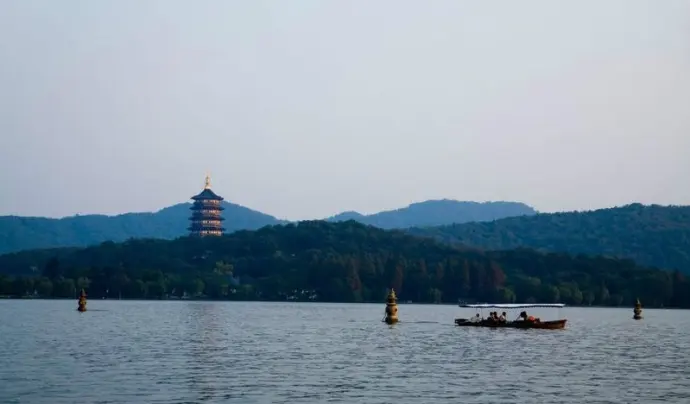
Iconic sights of West Lake
Next up is one of West Lake's most popular sights: Three Pools Mirroring the Moon, the scene printed on the back of the ¥1 bill. You need to take a boat to get there. Three stone pagodas stand in the middle of the water. Legend has it that on Mid-Autumn Festival nights, lanterns are lit inside them, and the reflections of the pagodas, the moon, and the lights overlap—hence the name "Mirroring the Moon."
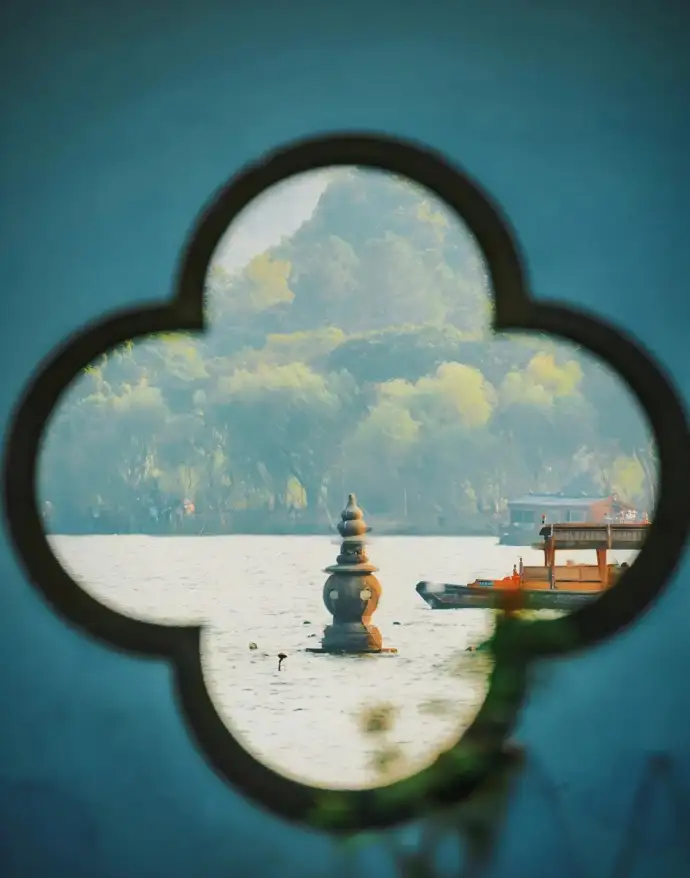
You won't see any reflected moons if you visit during the day, but the boat ride there is worth it on its own. As the boat leaves the shore, the sounds of the city fade away, the lake opens up, the breeze turns cool, and the sky seems to lower. Once you dock and walk along the zigzag bridge, you suddenly understand why the ancients built a place like this in the middle of the lake—not to climb high and gaze far, but to simply clear your mind.
Winter: Lingering Snow on the Broken Bridge
Is "Broken Bridge" actually broken?
On a clear winter day after a snowfall, the ice and snow on the sun-facing side of the bridge melt away, revealing the brown surface, while snow still covers the shaded side. From a distance, the bridge looks half broken, half whole. A stretch of brown, a stretch of white—the brown stands out, and the contrast makes the bridge appear "broken." Only when you get closer do you see that the bridge is still intact; the sunshine and snow have simply split it in two, half winter and half spring.
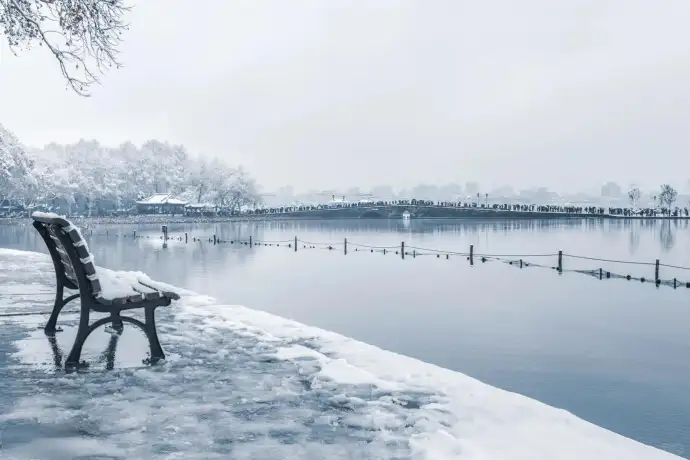
People admired this same sight 800 years ago. In the Southern Song, Hangzhou's residents also came out to see the snow, stood by this lake and saw the bridge look broken yet whole. The book Wulin Jiushi (Old Stories of Wulin) recorded the view and named it Lingering Snow on the Broken Bridge. Later, the painter Ma Yuan painted it.
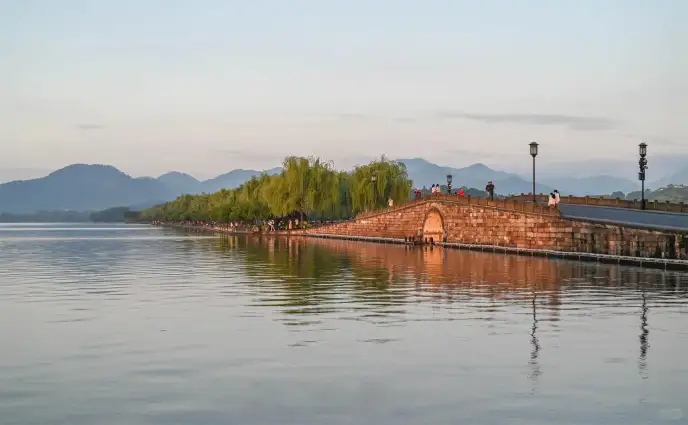
What the ancients saw back then and what we see today is the same bridge, the same snow, the same light. The bridge has never broken; it was only the light and shadow that made it look broken for a moment.
Come see the magic of light and shadow on Broken Bridge after a snowfall yourself, and you'll understand how much romance is hidden in that word "broken".
Evening Bell Ringing at Nanping Hill isn't tied to any season. It refers to the bell of Jingci Temple at the foot of Nanping Hill. On late autumn nights, the deep tolls drift across the lake, distant and solemn.
Viewing Fish at Flower Harbor
Watching carp nibble petals
Viewing Fish at Flower Harbor is lively year-round, but spring is best: fallen blossoms float on the pond and red carp rise to nibble the petals. It's easy to stand by the water for half an hour.
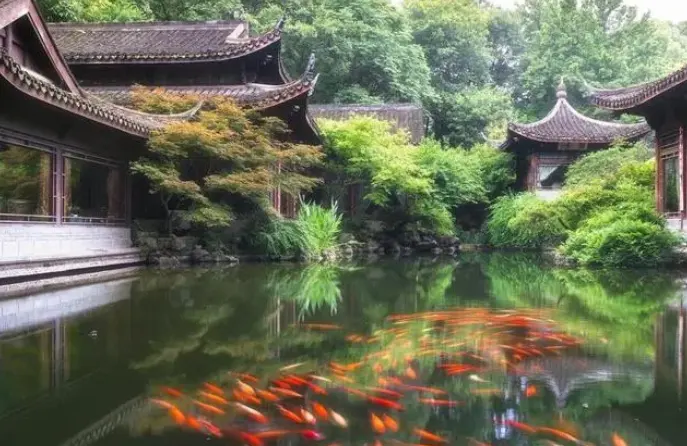
This place dates back to the Southern Song, when it was called Lu Garden, a private garden built by a court eunuch named Lu at the foot of Huajia Hill. He brought in water from West Lake to raise colorful fish. People back then probably leaned over the railings just like this, and perhaps they also lost track of time watching the fish nibble the petals.
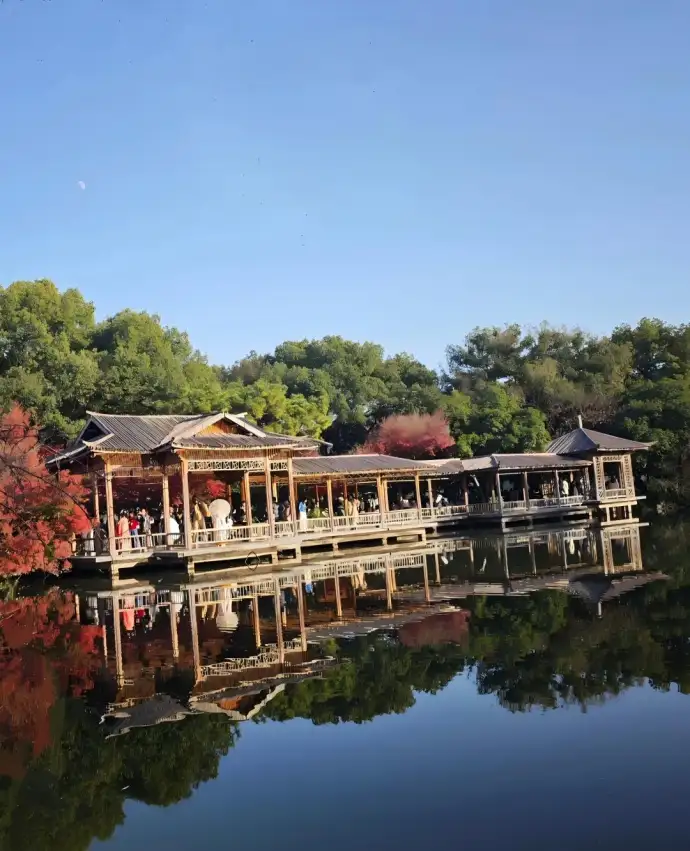
When Emperor Qianlong visited Hangzhou on his southern tours, he wrote a poem about Viewing Fish at Flower Harbor. The spot, in the southwest corner of West Lake, is named for the Huagang stream that flows down from Huajia Hill, its banks planted with flowering trees whose blossoms often drift into the water. One line of the poem reads "flowers rest on the fish, and the fish nibble the flowers," and the scene repeats here every spring.
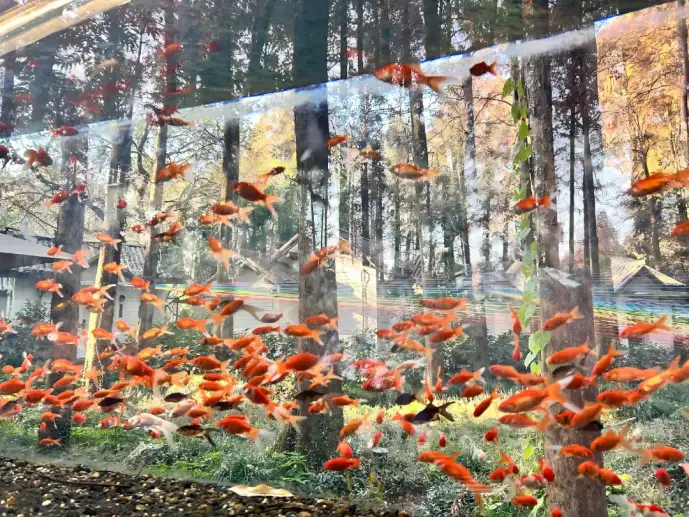
Nearly three hundred years have passed. The pond is still the same pond, the fish have been replaced generation after generation, and the flowers fade and bloom again. When spring comes, petals still fall onto the water, and the fish still tilt their heads up to nibble at them. In fact, the beauty of West Lake lies precisely in these things that never change.
Twin Peaks Piercing the Clouds
Twin Peaks Piercing the Clouds depends on weather, not season
Twin Peaks Piercing the Clouds is best seen right after rain during the transition from spring to summer, or on a late autumn morning.
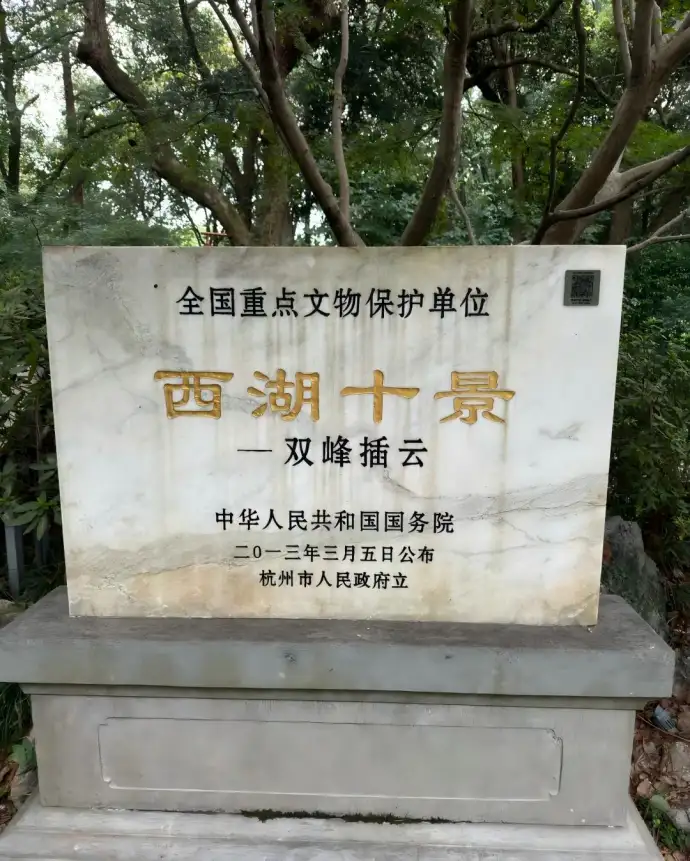
Specifically, during the plum rain season in May and June, after several days of continuous rain when the sky has just cleared—or hasn't quite cleared yet—the moisture is at its peak. At this time, clouds and mist roll up from the valleys, blanketing the foot and mid-slopes of the mountains, leaving only the two peaks floating above.
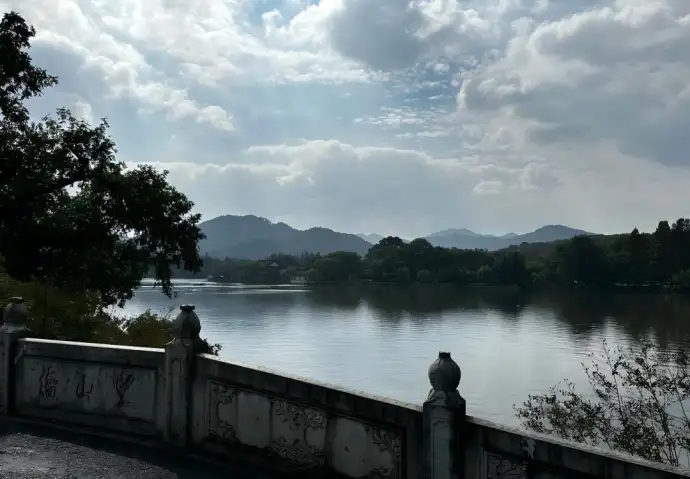
Another window is late October to early November, after an autumn rain, around 5 or 6 a.m. before the sun is fully up. The temperature difference between the lake and the hills creates mist. It's thinner than in spring, but enough.
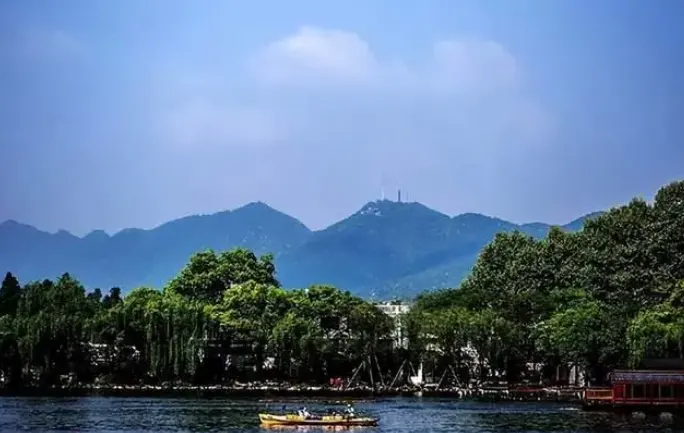
It's not impossible to see it in other seasons, just far less likely. Summer is too sunny—the moisture evaporates as soon as the sun hits it. Winter is cold and dry, so clouds can't linger. In autumn, unless it's a post-rain morning, you'll get clear skies where the mountains are mountains and the clouds are clouds, sharply separated.
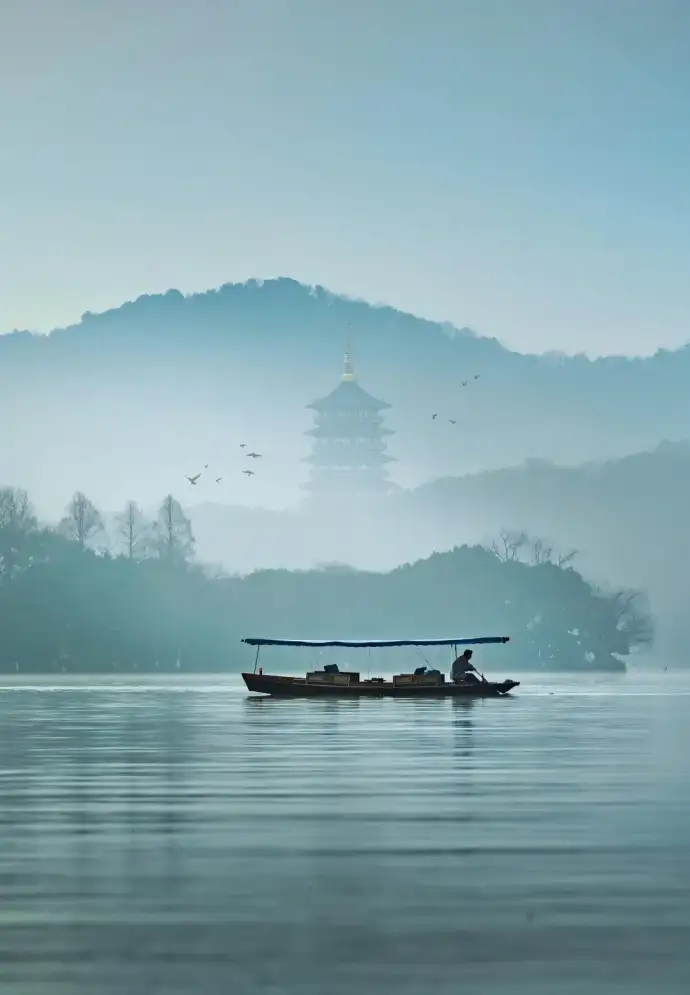
So if you want to see this scene, you need both luck and good timing: wait around for a few days during the plum rain season, or get up early in autumn. After that, it all depends on whether the clouds cooperate.

So you see, these West Lake scenes are actually arranged by time of day and season. In spring, walk Su Causeway and visit Viewing Fish at Flower Harbor; in summer, head to Leifeng Pagoda at dusk; in autumn, wait for Autumn Moon over the Calm Lake at night; in winter, cross Broken Bridge after a snowfall. Twin Peaks Piercing the Clouds doesn't care about seasons—it depends on the plum rains, the early mornings, and whether the clouds feel like coming down.
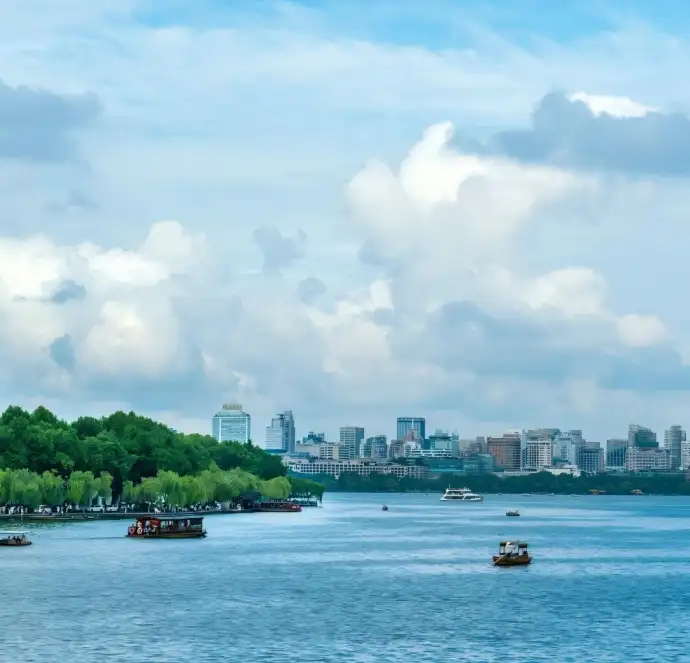
Planning your West Lake trip
To fit these sights into your trip by season, tell us how many days you have and what you'd like to see and eat, and our travel consultant will plan it. Or start with Hangzhou private custom tours.
FAQs
What's the best season to visit West Lake?
West Lake has something to see all year; the key is matching the spot to the season. In spring, walk Su Causeway and visit Viewing Fish at Flower Harbor and Orioles Singing in the Willows. In summer, see Breeze-ruffled Lotus at Quyuan Garden; in autumn, Autumn Moon over the Calm Lake; and in winter, Lingering Snow on the Broken Bridge after a snowfall. Late afternoon is the time for Leifeng Pagoda in Evening Glow.
When is the best time to see Spring Dawn at Su Causeway on West Lake?
The best time to visit Spring Dawn at Su Causeway is late March to early April, when peach blossoms are in bloom and willow branches hang down in soft, elegant colors. We recommend walking slowly from north to south across the six bridges on Su Causeway, pausing at each one to look back and enjoy a new view with every step.
When is lotus season at Quyuan Garden?
Breeze-ruffled Lotus at Quyuan Garden is best in July, when pink and white blooms fill half the lake and the breeze turns the leaves and carries their scent. In the Southern Song it was an official brewery, and today it is West Lake's classic summer scene.
What is there to see inside Leifeng Pagoda on West Lake?
The base of Leifeng Pagoda preserves the ruins of the original. The second floor has the copper relief Building the Pagoda in Wuyue and a full Legend of the White Snake in Dongyang woodcarving. Next door, Huiwenxuan displays the Ashoka Pagoda and gilded bronze Buddhas found in the underground chamber. Entry to the pagoda needs a ticket; check the official price.
When can you see Twin Peaks Piercing the Clouds on West Lake?
Seeing Twin Peaks Piercing the Clouds depends on the weather. The best chances are right after rain clears during the plum-rain season in May and June, or around 5–6 a.m. after an autumn rain from late October to early November, when mist wraps the mountainsides and only the two peaks remain visible. It is much less likely to appear in other seasons.
You don't need to see all ten scenes in one trip. Pick the right season and time of day, and you'll catch each one at its best.