

When visiting West Lake in Hangzhou, it's more rewarding to first understand the history and soul of this lake: from Li Bi digging the six wells and Bai Juyi building the causeway, to Su Shi dredging the lake and creating Su Causeway, plus the legends behind Melting Snow on Broken Bridge, Three Pools Mirroring the Moon, and Leifeng Pagoda. Follow in the footsteps of the ancients and slowly come to understand the historic beauty of West Lake.
The History of West Lake
Did you know? The earliest mayor to develop West Lake in Hangzhou was neither Bai Juyi nor Su Dongpo, but this "most awesome Taoist" of the Tang Dynasty, who single-handedly created West Lake in Hangzhou.
This former mayor was Li Mi.
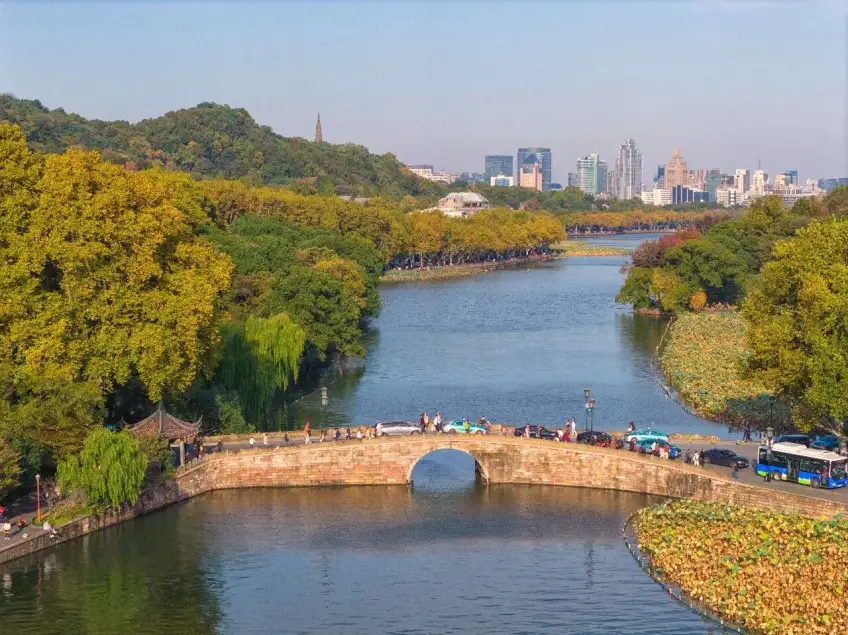
The transformation of West Lake began with Li Mi
Let's go back to 781 AD, during the reign of Emperor Dezong of the Tang Dynasty, when Li Bi arrived in Hangzhou to serve as prefect. The city had just emerged from a shallow bay, and its biggest problem was "salty, bitter springs". The groundwater was too bitter and salty to drink, making life extremely difficult for residents and hindering the city's development. He came up with a solution: channel water from West Lake.
After Li Mi arrived, he dug six wells in the city, which were actually six pools, and used bamboo pipes to channel water from West Lake so that everyone in the city could drink clean fresh water. This practical achievement wasn't as conspicuous as building dikes or creating scenic landscapes, but it was these six wells that truly made Hangzhou livable. All the later bustle around West Lake started here.
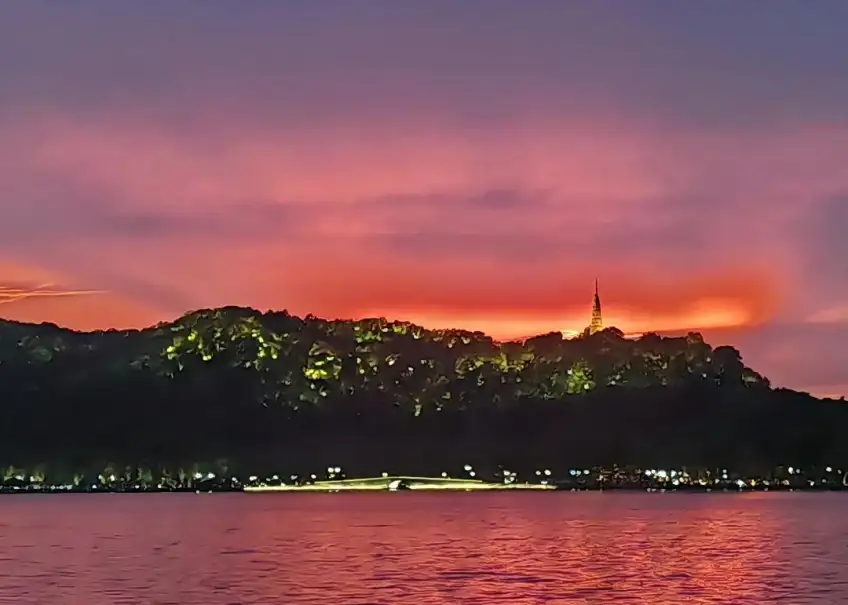
How did he divert the water from West Lake?
How exactly was it done? Six large wells were dug in the area from Yongjin Gate to Qiantang Gate. These six wells weren't ordinary water wells; they were "diversion wells." The bottom of each well connected to a ditch, and the ditches connected to West Lake. Water from West Lake flowed along the channels into the wells, and when locals drew water from them, what they got was fresh water.
And so Li Mi made clean, fresh water available to everyone in the city.
Which six wells were they? Historical records are clear: Xiangguo Well, West Well, Square Well, White Turtle Well, Small Square Well, and Golden Ox Well.
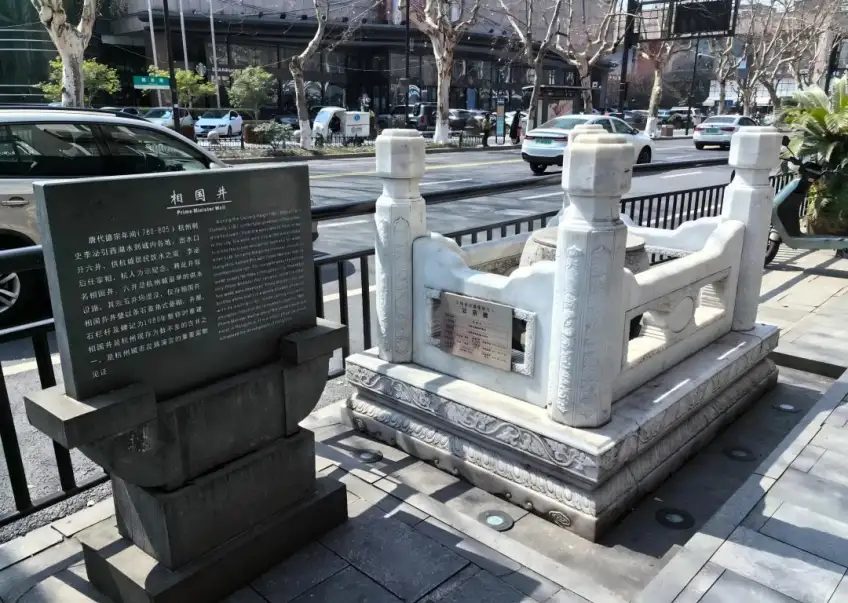
Today, only one remains. At the intersection of Jiefang Road and Huansha Road stands a pavilion with a well inside and a stone tablet beside it inscribed "Xiangguo Well." Few passersby notice it, and even fewer know its story.
Li Mi Secured West Lake's Lifeline
How long did Li Mi stay in Hangzhou? Not long—just two or three years. He was later recalled to the imperial court, became prime minister, and was enfeoffed as Marquis of Ye County. The people of Hangzhou never forgot him. They called the wells he built "Prime Minister Li's Wells," recorded his story of channeling water into local gazetteers, and passed it down from generation to generation.
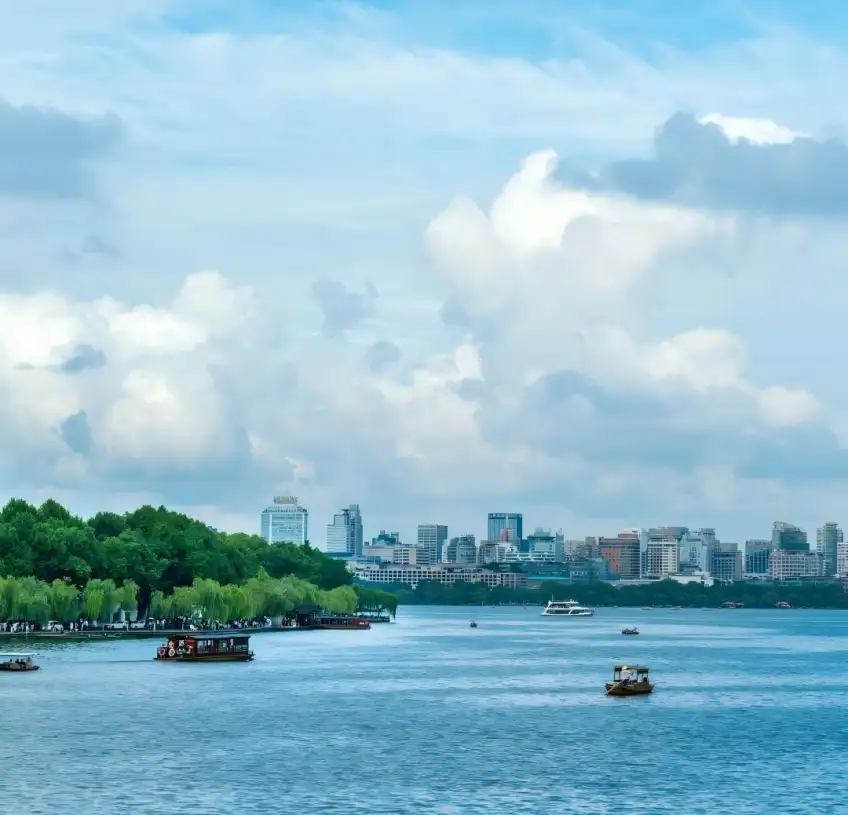
Some people in the Southern Song Dynasty even called West Lake "Xianzhe Lake" (Lake of the Sages), because everyone felt it wasn't a natural wonder but something shaped by generations of effort. Li Bi dug six wells so the people of Hangzhou could drink fresh water; Bai Juyi built a causeway to store water and irrigate thousands of acres of farmland; Su Shi mobilized 200,000 workers to dredge West Lake, piling the silt into that long causeway. It was precisely because wise governors like Li Bi, Bai Juyi, and Su Shi managed it—each one keeping an eye on the lake and finding ways to bring it to life.
It turns out the soul of this lake is hidden in centuries of water projects, and drifts through misty folk legends.
Walking along Su Causeway reveals Su Dongpo's clever water management. Many people think Su Causeway is just a place to enjoy spring, but it was actually Su Dongpo's "public works project". Su Shi found that half of West Lake was blocked by silt and would turn into a swamp if left unrepaired. He organized local residents to dredge the silt and piled it up into a long causeway. This saved the massive effort of transporting the mud away and shortened the trip between the north and south shores by dozens of miles—a true benefit to the people.
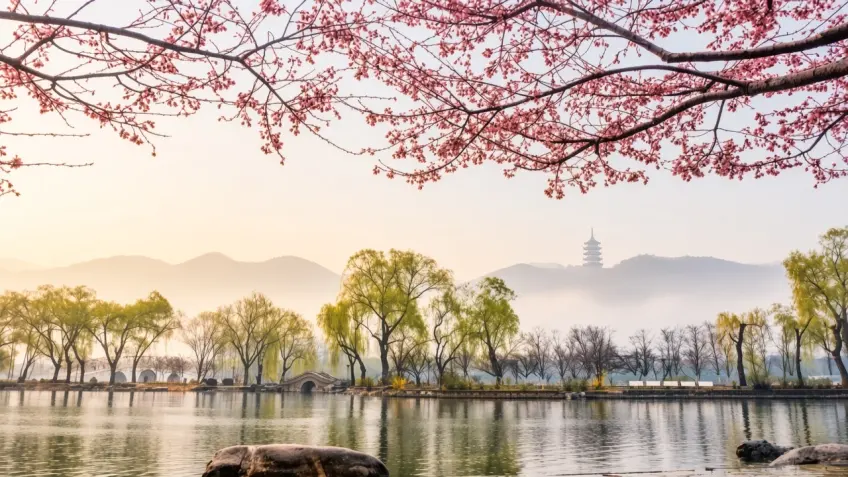
In this way, the lake was cleared and a road was built. With willows and hibiscus planted along the causeway, the scene known as "Spring Dawn at Su Causeway" was born. Su Causeway is perfect for a leisurely stroll to experience the poetic lifestyle of the ancients—it's wonderful any time of year, and every step feels relaxing.
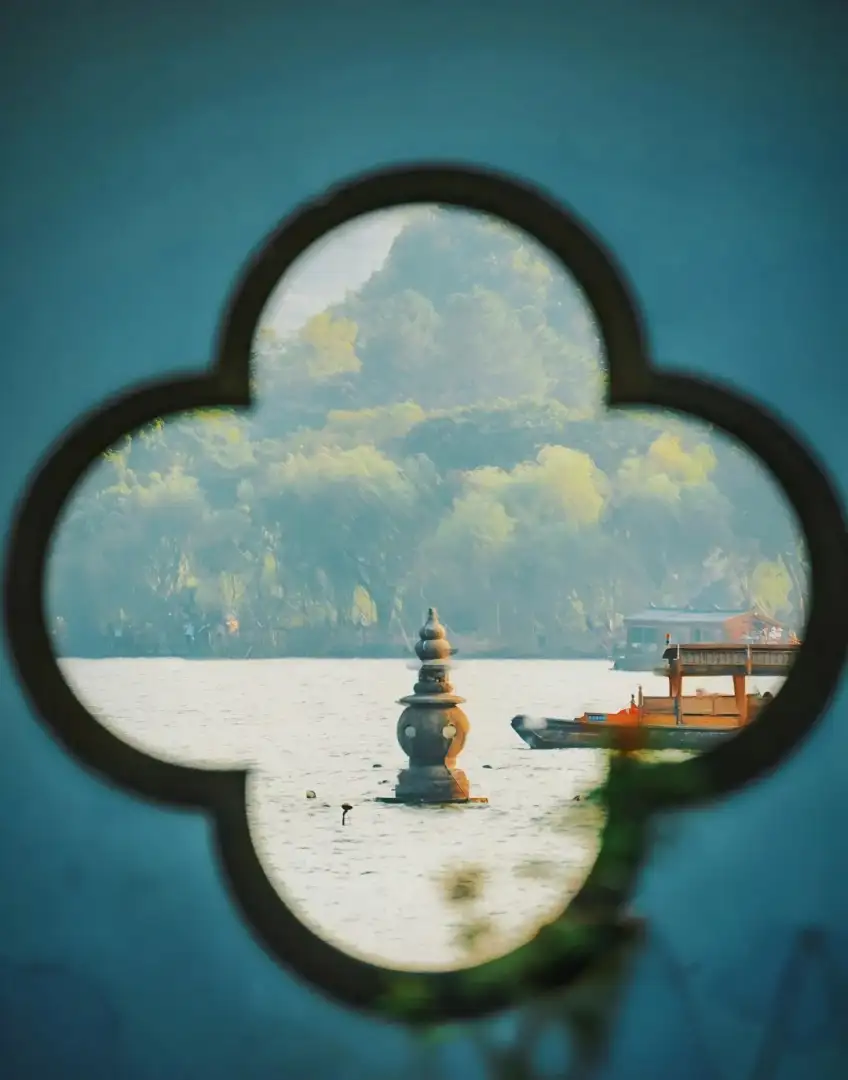
Su Shi also erected three stone pagodas in the lake to mark an area where silt could no longer accumulate. This is the origin of "Three Pools Mirroring the Moon".
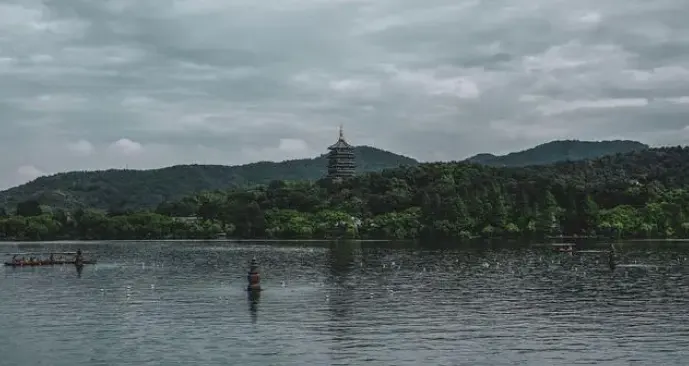
If Su Causeway is the "backbone" of West Lake, then the Legend of the White Snake is its "tenderness." Standing on Broken Bridge on a rainy day, you can almost see Xu Xian handing Bai Suzhen an oil-paper umbrella. "Broken Bridge is not broken" isn't just a visual illusion—it also means fate can never be severed. Look, not far away stands Leifeng Pagoda, holding their story within.
Hangzhou travel tips: Why is it called West Lake?
Origin of the name West Lake
Most importantly, historically it was Li Bi's water diversion that allowed Hangzhou to develop. As West Lake grew more important and became the lifeline of the city, it needed a name. Locals simply called it "West Lake" based on its location. Bai Juyi already used "West Lake" in his poems, and Su Dongpo officially used "West Lake" in his memorials to the emperor. That's how the name caught on.
Hangzhou travel recommendation: Explore West Lake through the eyes of ancient poets
The ancients already scouted out the best views of West Lake for us. Today, I'll take you on a tour of West Lake following in their footsteps to see which sights inspired those famous poems and legends.
Bai Juyi's connection to West Lake
"Spring Stroll by Qiantang Lake" by Bai Juyi (Tang Dynasty) North of Gushan Temple, west of Jia Pavilion, the water's surface just levels as clouds hang low. Early orioles vie for sun-warmed branches in a few spots; whose new swallows peck at spring mud? Wildflowers gradually dazzle the eye, while short grass barely covers the horses' hooves. Most beloved is the east side of the lake, where I can never walk enough—white sand causeway shaded by green willows.
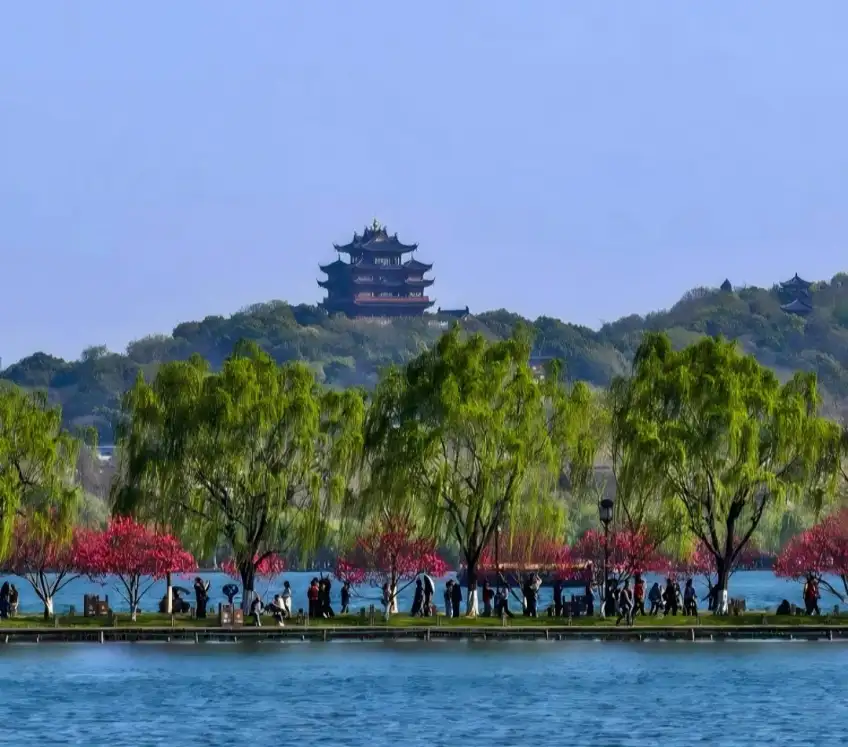
The poem contains a charming misunderstanding. Many people think Bai Juyi built the White Sand Causeway, but he didn't. Historical research shows he built "Baigong Causeway" outside Qiantang Gate, running from Shihan Bridge to Wulin Gate, used for storing water for irrigation. That causeway disappeared long ago. Later, locals renamed the White Sand Causeway "Bai Causeway" in his honor—a name that has stuck for over a thousand years.
Bai Juyi's poem reveals he followed a route around the lake. Gushan Temple sits on Solitary Hill, and Jia Pavilion was nearby—that was his starting point. From there, he took in the water, the clouds, the orioles and swallows, and the flowers and grass. Finally, he walked to the "east side of the lake," the area northeast of Solitary Hill, where he spotted the White Sand Causeway shaded by green willows.
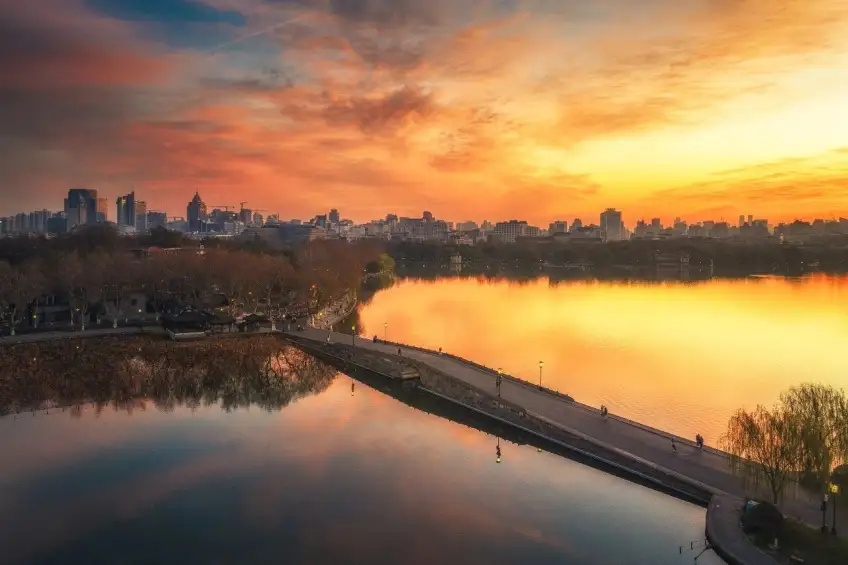
Walking Bai Causeway today—starting at Broken Bridge, crossing Jindai Bridge, and ending at Autumn Moon over the Calm Lake—follows the very stretch Bai Juyi once walked. Based on the timing in his poem, spring is the best time to go: the willows are just sprouting, a tender green, their branches swaying gently in the breeze. When the causeway isn't crowded, take a slow walk—the water on both sides gleams and the distant mountains look hazy, and you'll truly understand what he meant by "never enough."
Su Shi's Connection with West Lake
Another great poet with deep ties to West Lake was Su Shi. In his poem "Drinking on the Lake: First Sunny, Then Rainy," he wrote: "The shimmering water is at its best on sunny days; the mist-shrouded hills are wondrous in the rain. If you compare West Lake to Lady Xizi, she looks perfect whether lightly or heavily made up."
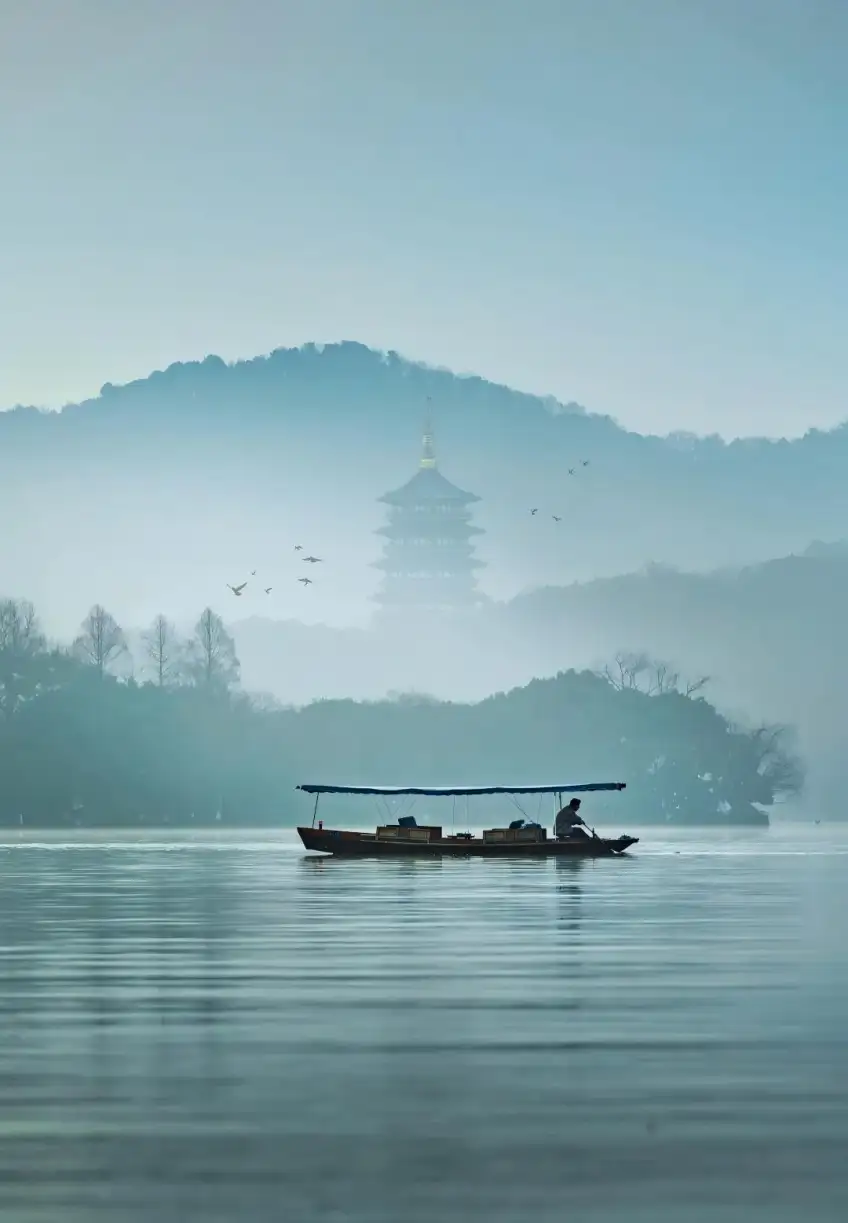
This poem is widely known in China. "The misty mountains are wondrous in the rain" describes how, when it rains, the distant mountains become hazy as if veiled—and West Lake looks just as beautiful then. This shows Su Shi was inspired by a rainy scene. "If you compare West Lake to Lady Xizi, she looks perfect in light or heavy makeup" directly compares West Lake to the legendary beauty Xishi, saying it's gorgeous with or without makeup.
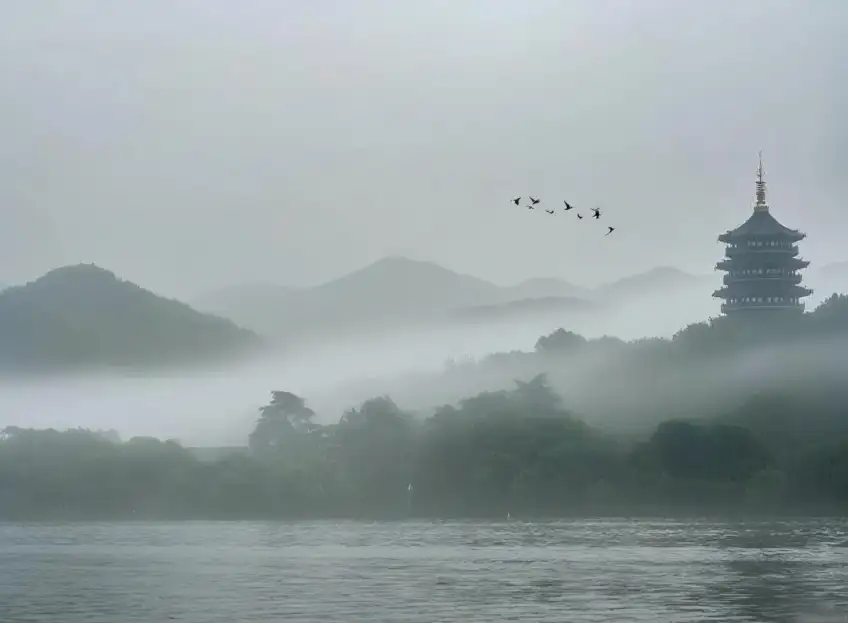
His idea was that West Lake is beautiful in both sunshine and rain, each with its own charm. That's what set Su Shi apart from others. He wasn't picky about the weather or the time of day—any visit to West Lake felt right to him. He later wrote another poem that captures this mindset even better: "West Lake is a wonder for all the world; visitors come wise or simple. Each takes away what they find, but who can grasp it all?" It means that no matter who visits West Lake, they see what they want to see—but who can claim to have seen everything it has to offer?
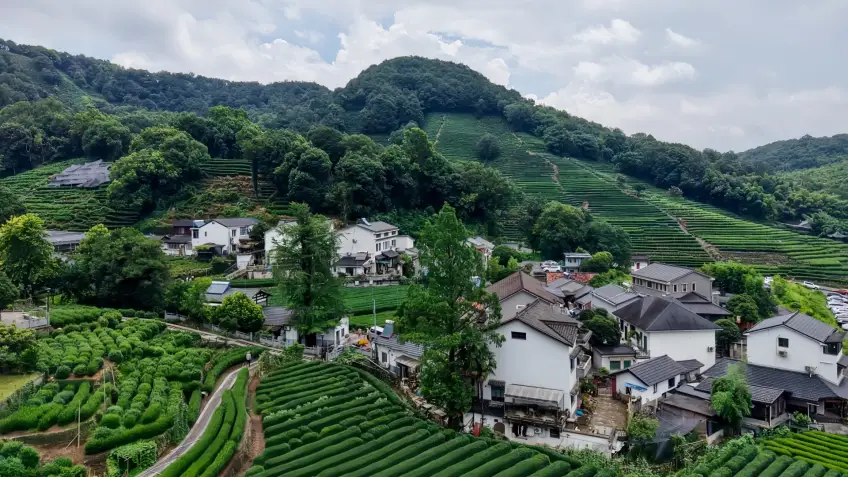
Lin Yutang said Hangzhou was Su Shi's second hometown, and that the happiest days of his life were spent there. What did Su Shi himself say? "I have no home to return to, so where else would I go? My hometown has no lakes and mountains like these." He had no home to return to, and even if he did, his hometown couldn't match such scenery. It shows just how deeply the beauty of West Lake captured the hearts of scholars and poets!
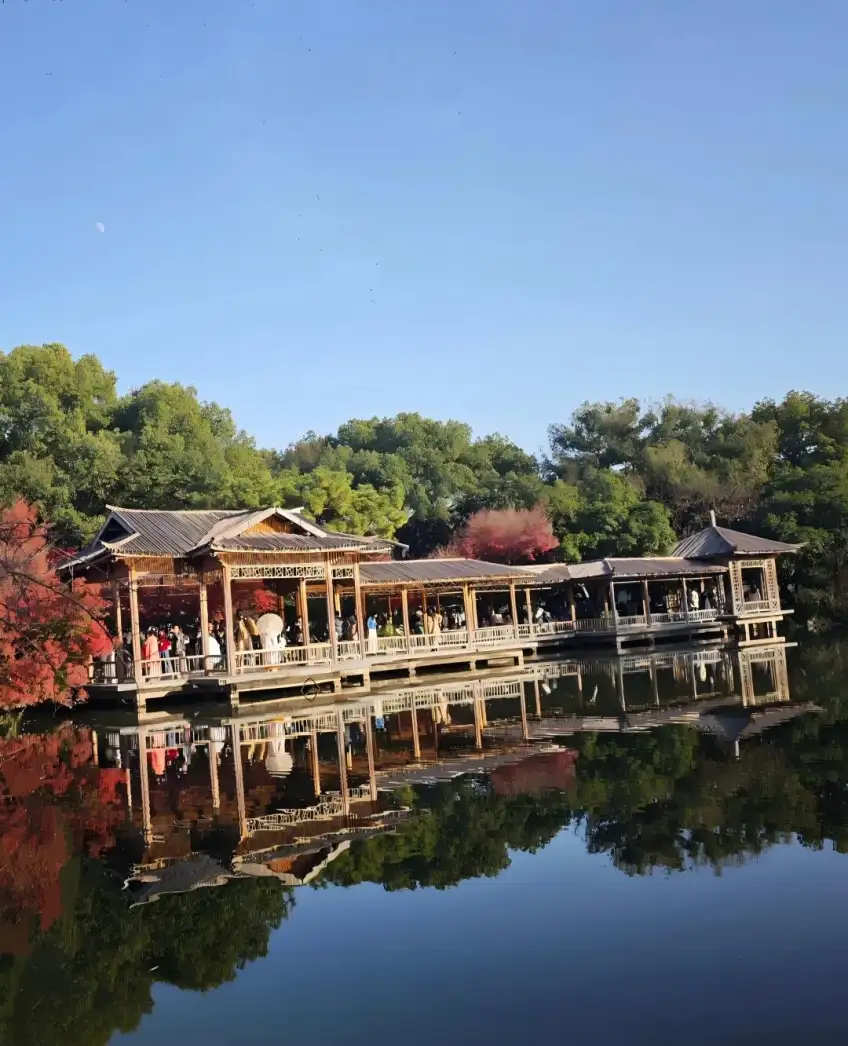
Let's start with the scenery in the poem. To truly feel "the shimmering waters are at their best on sunny days," pick a clear day and take a boat ride, or stroll along Su Causeway. Looking out over the lake from the causeway, you'll see the water sparkling in the sun—that's exactly what it means. To experience "the mist-shrouded hills are wondrous in the rain," you need a rainy day. Head to Bai Causeway, look north toward Baoshi Hill and south toward Nanping Hill, and you'll see the mountains veiled in misty rain. That's the feeling.
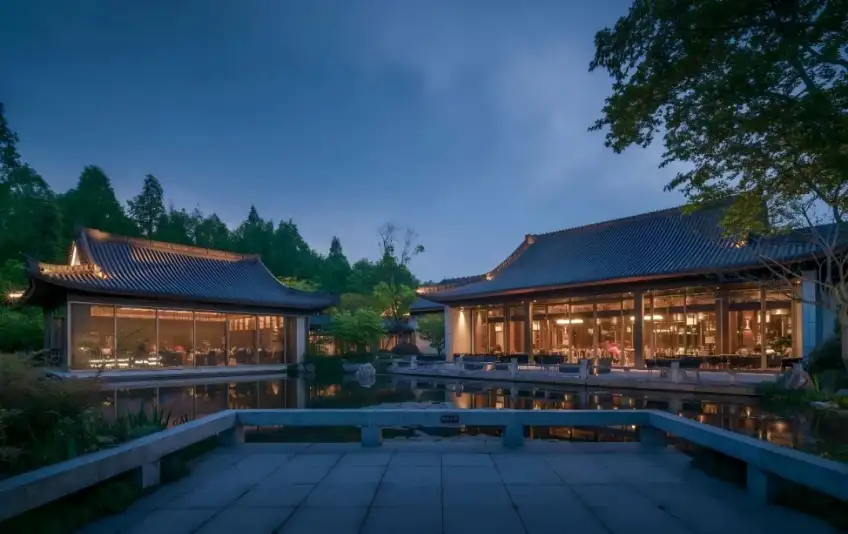
So as you can see, Su Shi's bond with West Lake was about more than just writing a poem. He wrote about West Lake, and he also restored it. He compared West Lake to Xi Shi, one of ancient China's legendary beauties, and later generations began calling it Xizi Lake. On his first visit to Hangzhou, he said, "I must have been here in a past life." On his second visit, he declared, "I consider myself a native of Hangzhou."
Hangzhou attractions: exploring West Lake through its legends
Now that we've come this far, let me share some of the legends behind West Lake. There have been countless stories about it since ancient times, but if you want to explore West Lake through its legends, I only recommend these few.
The scene of "Lingering Snow on the Broken Bridge"
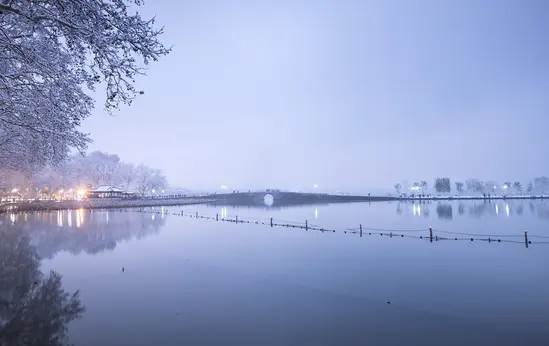
The Broken Bridge isn't actually broken. Scenically speaking, after a winter snowfall, the south side of the bridge gets plenty of sun and the snow melts quickly, revealing the grayish stone surface. The north side stays in the shade, still covered in white snow. From a distance, the mix of brown and white makes the bridge look like it's snapped in two — this is Lingering Snow on the Broken Bridge.
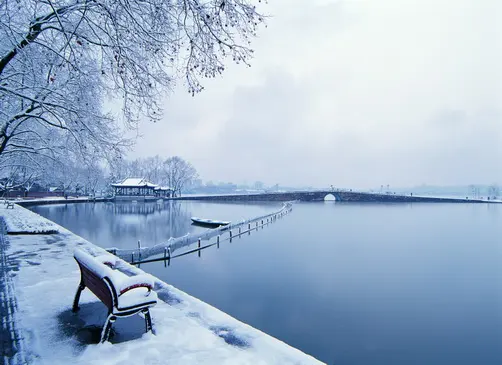
Lingering Snow on the Broken Bridge and the Legend of the White Snake
Folk tales include the Legend of the White Snake. Lady White and Xu Xian met here when they shared an umbrella, and reunited here after surviving a disaster. Legend says humans and spirits cannot be together, separated by Leifeng Pagoda, yet the "Broken" Bridge never truly breaks their bond.
The stone bridge was perfectly fine to begin with; it only "broke" in the story. Yet generation after generation listened and passed it down. Perhaps the deepest unbroken thing is this: even if heaven and earth stand between you, longing still finds a way across. The most compelling stories often carry a touch of "imperfect perfection." The bridge is called "Broken," but neither the bridge nor the love ever broke.
The Story of Leifeng Pagoda
Most people know this pagoda on the shore of West Lake as Leifeng Pagoda, and they know the story of Lady White. In fact, hardly anyone can tell you its original name.
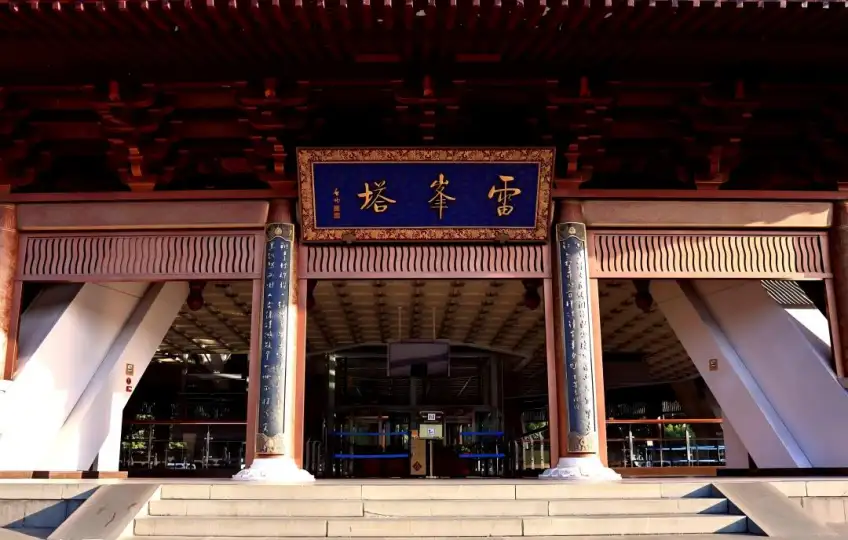
This pagoda first brings to mind the Legend of the White Snake, Xu Xian, and Fahai. But it wasn't originally called Leifeng Pagoda at all—its real name was Huangfei Pagoda (Royal Consort Pagoda). It was built to honor Sun Taizhen, the consort of Qian Hongchu, the last king of the Wuyue Kingdom. Because it stood on Leifeng Peak, locals casually called it Leifeng Pagoda. Later, the Legend of the White Snake claimed the pagoda imprisoned Lady White, and its original name faded away. I only learned this through the history of the Wuyue Kingdom while watching the recent hit drama "Year of Peace."
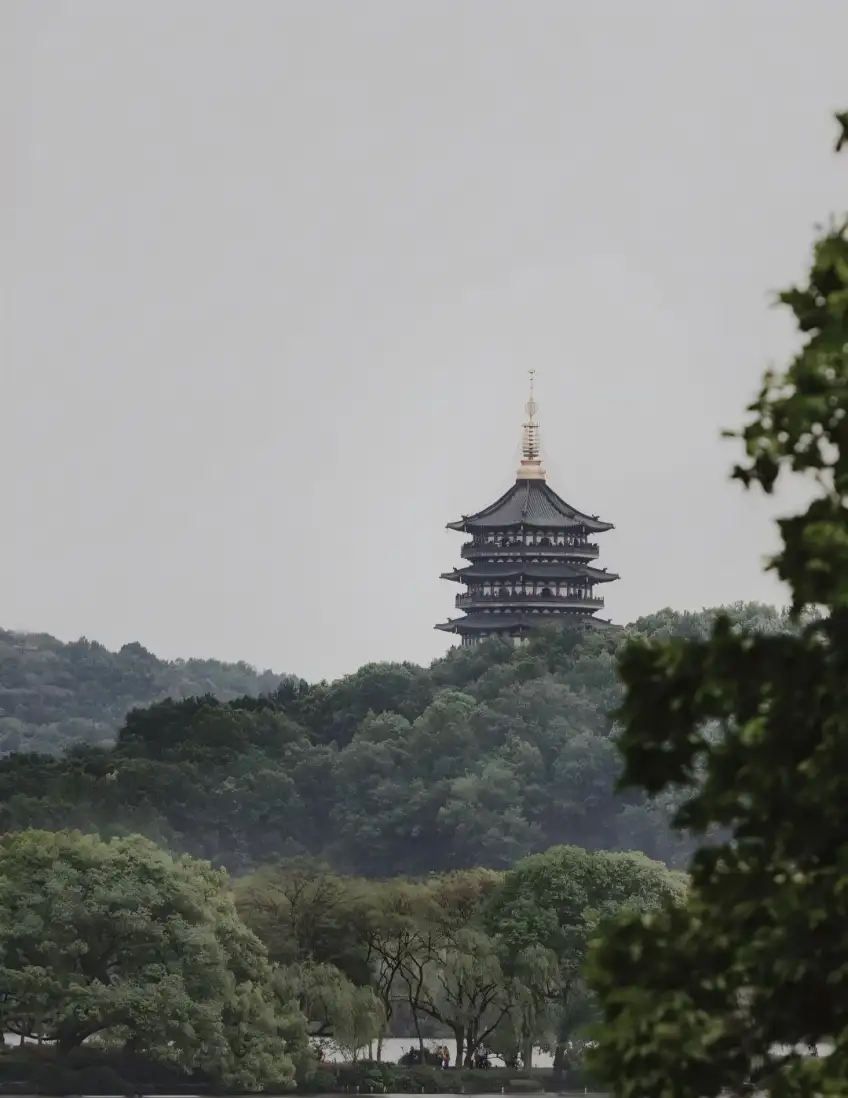
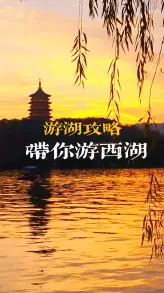
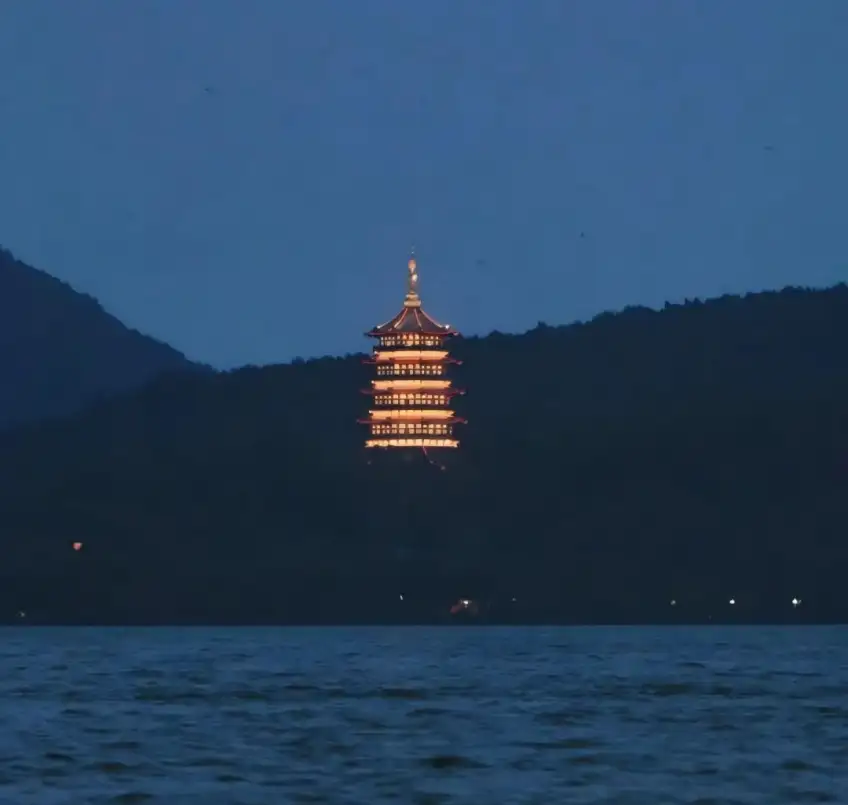
In fact, Leifeng Pagoda collapsed in 1924, and the current one was rebuilt in 2002. The ruins of the old pagoda are preserved inside the new one, and you can take an elevator up. How should you explore it? Check out the old pagoda ruins on the first floor, then ride the elevator to the top for a panoramic view of West Lake. If you'd rather not go up, the pagoda looks best from afar at dusk, when the setting sun bathes it in light — the famous scene known as Sunset Glow over Leifeng Pagoda.
Hangzhou West Lake must-visit route
History and stories of West Lake
The historic route I recommend features both Su Shi's water management legacy and the romance of "Legend of the White Snake." It's a route that weaves together history and storytelling.
Spring dawn views on Su Causeway at West Lake, Hangzhou
In the morning, start at the "Evening Bell Ringing at Nanping Hill" stele pavilion in front of Jingci Temple. The bell here has echoed for a thousand years, its sound reverberating through the valley ring by ring.
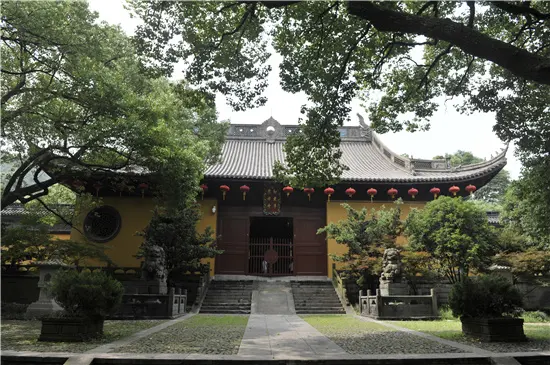
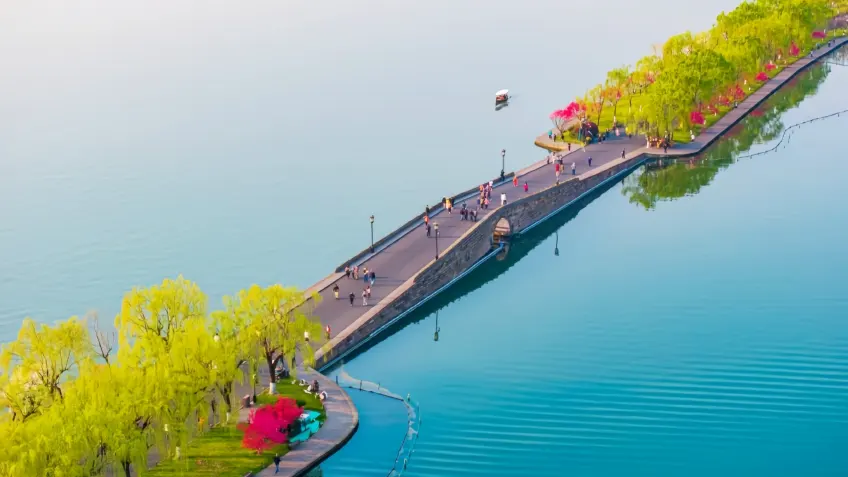
Once on the causeway, keep an eye out for the six bridges underfoot: Yingbo, Suolan, Wangshan, Yadi, Dongpu, and Kuahong. Every step offers a new view, and each bridge frames a different scene—perfect for exploring as you stroll.
Three Pools Mirroring the Moon at West Lake, Hangzhou
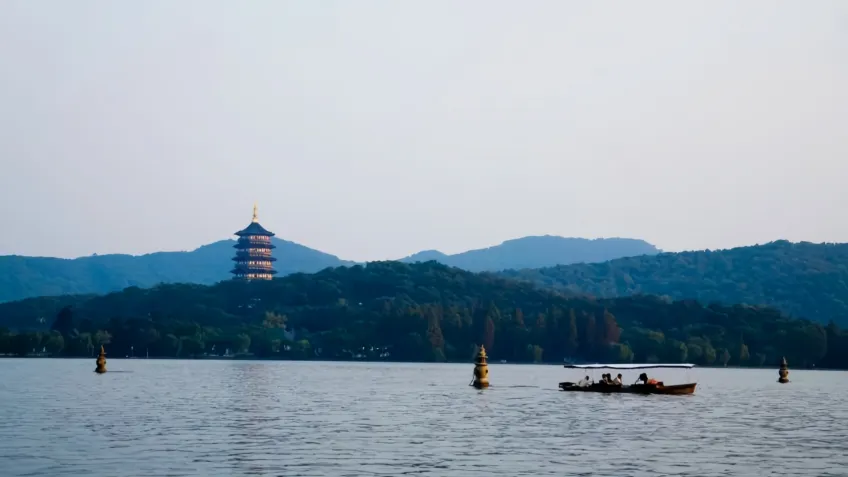
After walking Su Causeway, take a boat from the "Viewing Fish at Flower Harbor" pier to Xiaoyingzhou Island. On the lake south of the island stand three stone pagodas arranged in a triangle. These boundary markers were originally set up by Su Shi. Viewing them is a great way to check out Dongpo's water conservancy legacy. On moonlit nights, candles are lit inside the pagodas, and their glow blends with the moon's reflection on the water — this is the famous scene known as "Three Pools Mirroring the Moon."
Don't Miss Lingering Snow on the Broken Bridge at West Lake
Return from Three Pools Mirroring the Moon to Su Causeway or the lakeside, then take a bus or taxi to Broken Bridge at the eastern end of Bai Causeway. Beyond its scenic beauty of "melting snow on a broken bridge," this spot is also where Xu Xian and Lady White Snake first fell in love — sharing a boat in the rain and bonding over a borrowed umbrella in the Legend of the White Snake.
A Thousand-Year Dialogue at Leifeng Pagoda in Hangzhou
From Broken Bridge, it takes about 15 minutes by car along Beishan Road and Nanshan Road to reach Leifeng Pagoda. Legend says this is where Fahai imprisoned the White Snake, but in reality it is a gem of Wuyue Kingdom Buddhist culture, and the relics unearthed from its underground palace are national treasures.
By the end of this route, your day won't just be about checking off a few West Lake landmarks. You'll have completed a historical dialogue spanning a thousand years, touched Su Shi's water management legacy firsthand, and stepped into the romantic tale of the Legend of the White Snake.
So if you want this trip to be more than just "been there"—if you want to truly "understand" West Lake—send your travel dates, group size, departure point, and the legends you want to see to a travel consultant. For a hassle-free loop of Su Causeway, Three Pools, Broken Bridge, and Leifeng Pagoda, check out the group tour; to set your own pace, choose a private custom trip; use a station transfer for arrivals and departures by train or plane, and a private car for multiple stops around the lake. For deeper storytelling, hire a private guide to help you truly experience the historical beauty of West Lake.
FAQs
Who first developed West Lake in Hangzhou?
The first person to manage West Lake and make Hangzhou livable was Li Bi of the Tang Dynasty. In 781 AD, as prefect of Hangzhou, he dug six wells in the city and used bamboo pipes to channel water from West Lake, giving residents access to fresh drinking water. Later, Bai Juyi built a causeway to store water, and Su Shi dredged the lake, turning West Lake into the lifeline of Hangzhou.
How did Su Causeway on West Lake come about?
Su Causeway was a public works project led by Su Shi. When he found that half of West Lake was clogged with silt, he organized locals to dredge it and piled the excavated mud into a long causeway—clearing the lake and building a road at the same time. Willow trees and hibiscus were planted along it, creating the "Spring Dawn at Su Causeway" scene. The causeway features six bridges: Yingbo, Suolan, Wangshan, Yadi, Dongpu, and Kuahong.
Was Bai Causeway on West Lake built by Bai Juyi?
No. Bai Causeway was originally called Baisha Causeway. The "Baigong Causeway" built by Bai Juyi stood outside Qiantang Gate, running from Shihan Bridge to Wulin Gate to store water for irrigation, and it no longer exists. Later generations renamed Baisha Causeway to Bai Causeway in his honor. Today's walk from Broken Bridge over Jindai Bridge to Autumn Moon over the Calm Lake follows the route described in his poem.
Can you go up Leifeng Pagoda at West Lake?
Yes. Leifeng Pagoda collapsed in 1924, and the current structure was rebuilt in 2002, preserving the ruins of the old pagoda inside. You can view the ruins on the first floor, then take the elevator to the top for a panoramic view of West Lake. If you don't go up, it looks best from afar at dusk—when the setting sun lights up the tower, it creates the famous scene "Leifeng Pagoda in the Sunset."
How do you spend a day exploring West Lake through its legends?
In the morning, start at the "Evening Bell Ringing at Nanping Hill" stele pavilion in front of Jingci Temple, then walk along Su Causeway to see its six bridges. Next, take a boat from the Huagang Park pier to Xiaoyingzhou Islet to see Three Pools Mirroring the Moon. After returning, take a bus or taxi to Broken Bridge at the east end of Bai Causeway. Finally, travel about 15 minutes from Broken Bridge along Beishan Road and Nanshan Road to Leifeng Pagoda.