
Wuzhen at a glance
Is Wuzhen (乌镇) worth visiting? It depends on what you want. The East Scenic Zone (东栅) keeps its old streets, workshops and the former home of writer Mao Dun, and you can see it in 2–4 hours by day. The West Scenic Zone (西栅) stays open until 10 p.m. Most of the night lighting, rowboat rides and hotels are here, and it looks best after dark. Summer evenings are cool and the canals are green, but days are hot and humid and school holidays bring crowds, so enter the West Scenic Zone in the afternoon and stay into the night. West Scenic Zone tickets are ¥150 and an East + West combo ticket is ¥190 (reference prices as of November 2026; check the official site).
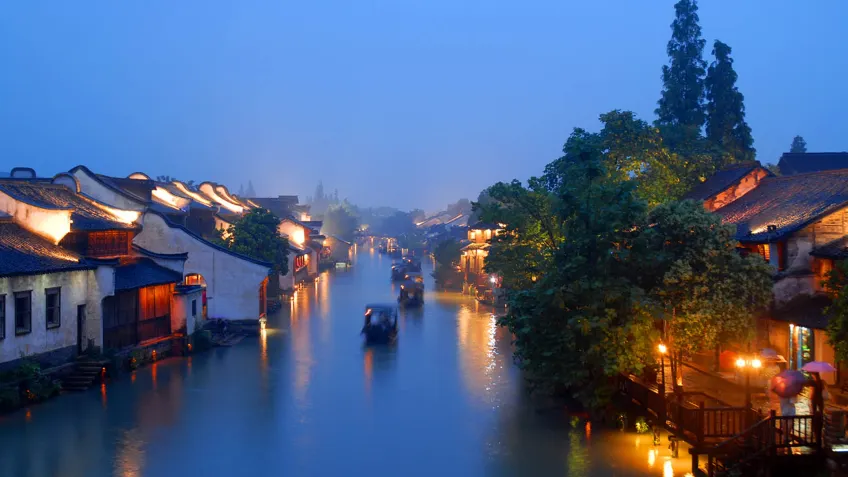
Wuzhen is a water town in Jiangnan, the region south of the lower Yangtze. Its history of settlement goes back more than 7,000 years, and the town itself is 1,300 years old. It sits between Suzhou to the north and Hangzhou to the south, which gave rise to the saying: "Above is heaven, below are Suzhou and Hangzhou, and Wuzhen sits on the water in between."
A cross-shaped network of canals divides the town into four quarters, which locals call the east, south, west and north zha. Wuzhen was among the first towns named a National Famous Historical and Cultural Town, and it has also been listed as one of China's ten most charming towns.
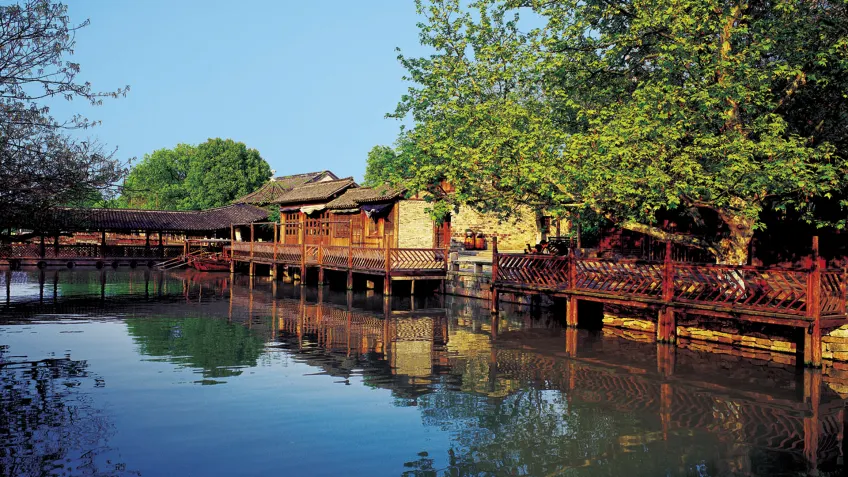
Water pavilions (shuige)
For more than a thousand years, Wuzhen's streets and houses have been built along its rivers and streams. Some riverside houses jut out over the water: wooden piles or stone pillars are driven into the riverbed, beams are laid across them and planks go on top, making a light, open room above the river. This is a water pavilion (shuige).
A water pavilion truly "rests its head on the river." It has windows on three sides, boats pass beneath them and water flows under the floor, so you can take in the whole river from inside. Wuzhen's water pavilions are a classic example of Jiangnan water-town homes and are on the Zhejiang Provincial Intangible Cultural Heritage List.
China's last homes on the water
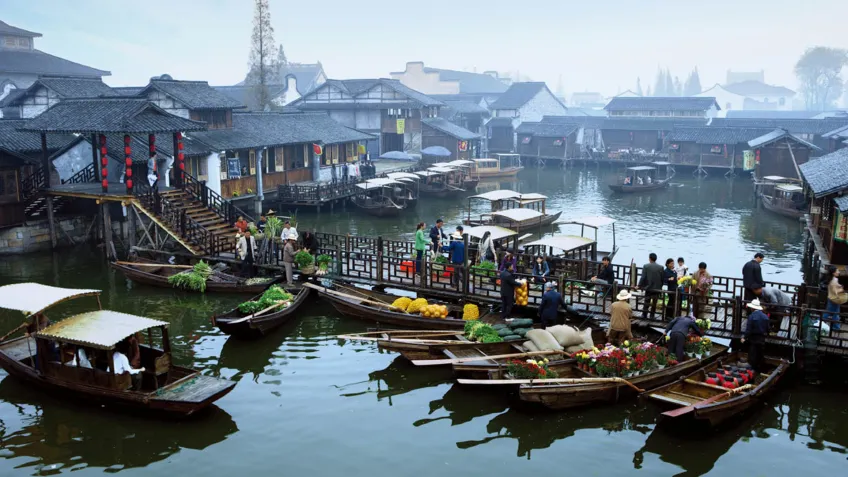
Every family in Wuzhen once got around by boat. Villagers from the countryside rowed their vegetables and livestock into town and called out to sell them, and this grew into a water market. Generation after generation, Wuzhen people lived and slept beside the water, and the town became known as "China's last homes on the water."
Wuzhen's four quarters
Nanzha (南栅) and Beizha (北栅), the south and north quarters, are where local residents still live. Old wooden doors, weathered walls and everyday routines make everything feel slower as soon as you step in. The East Scenic Zone has a strong sense of history and shows a thousand years of Jiangnan culture. The West Scenic Zone keeps Wuzhen's traditional look but adds modern touches, with old buildings and modern facilities side by side.
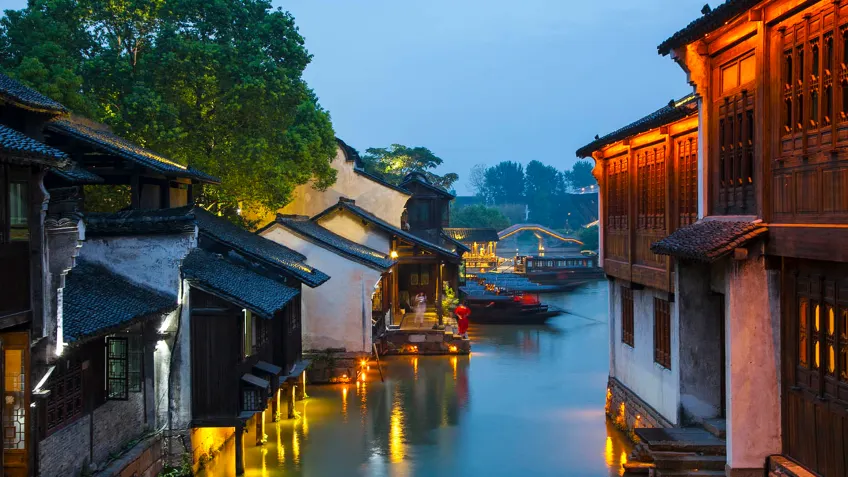
Not all of Wuzhen is free to enter. Nanzha and Beizha are free, but the East and West Scenic Zones both need tickets, and that's where most of the best scenery is.
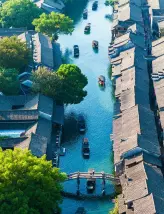
4-day 3-night private tour of Wuzhen, Xitang and Tongli | Stay in Wuzhen, Nanhu Lake in Jiaxing, Lingering Garden in Suzhou
A water town private tour starting in Hangzhou and ending in Suzhou: spend the first night in Wuzhen to see the West Scenic Zone and East Scenic Zone; on day two visit Nanhu Lake, the Red Boat and Yuehe Street in Jiaxing; on day three explore Xitang and Tongli; finish with the Lingering Garden in Suzhou. Includes transport, guide, 3 nights' hotel and admission tickets. English-speaking guide available.
Visiting Nanzha and Beizha
Tickets: Nanzha and Beizha are free, with no reservation needed. Just walk in.
Time needed: Nanzha and Beizha are about 2.3 km apart, roughly a 10-minute drive. Visit both on the same day and allow about 6 hours.
Suggested route: Nanzha entrance → Xiqiao Bridge → Wuzhen Island → Town Qipao → Zhu Family Old House → Fuchang Bridge → back to Beizha → Beizha Silk Mill → walk along the river → Beihua Bridge → Yingjia Bridge → Zhang Tongren Old House. Then go on to the East or West Scenic Zone.
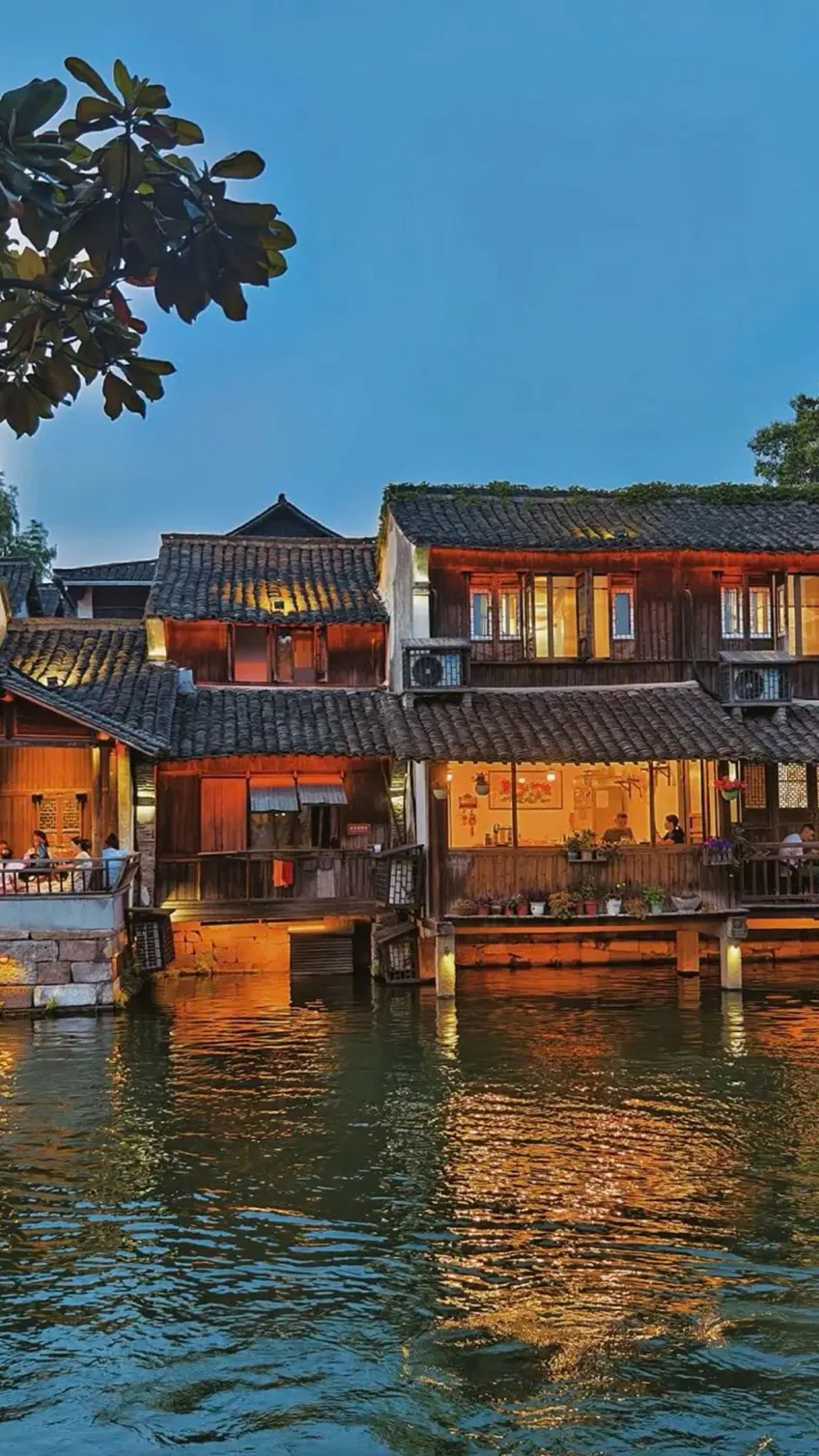
Tickets for the East and West Scenic Zones
Wuzhen West Scenic Zone ticket: ¥150 per person. East + West Scenic Zone combo ticket: ¥190 per person (valid for the day). For the East Zone single ticket, check the official price. If you have time for both zones, buy the combo ticket and book ahead. Tickets are sold on the official Wuzhen booking site, ewuzhen.com. The site says entry is by SMS QR code or Chinese ID card and doesn't mention passports. If you're traveling on a passport, keep your booking SMS. Take the SMS details, the booker's name and phone number to the service window at the West Zone visitor center or Window 1 at the East Zone, and staff will issue a backup entry code.
Opening hours: East Scenic Zone 7:20 a.m.–5:30 p.m.; West Scenic Zone 9 a.m.–10 p.m.
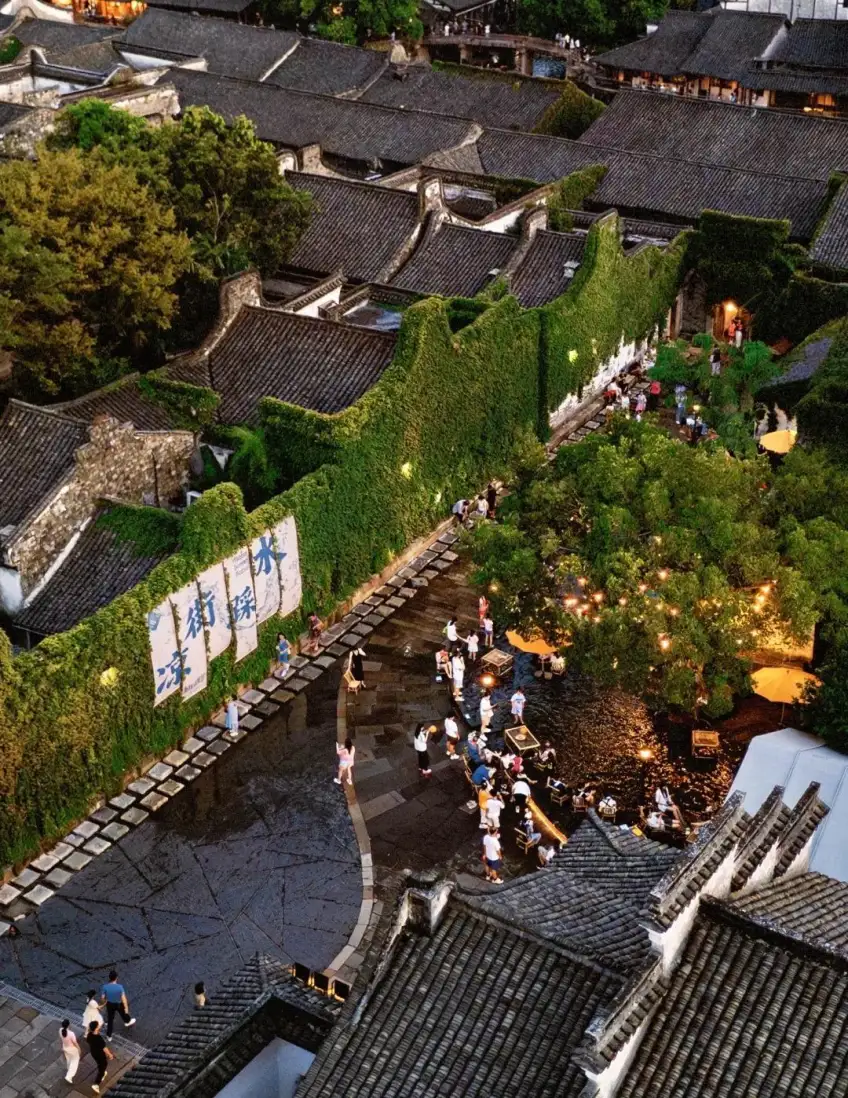
Getting between the East and West Scenic Zones
The East and West Scenic Zones are about 1.5 km apart. You can walk or take the free shuttle bus.
The shuttle runs 9 a.m.–4:30 p.m., about every 30 minutes.
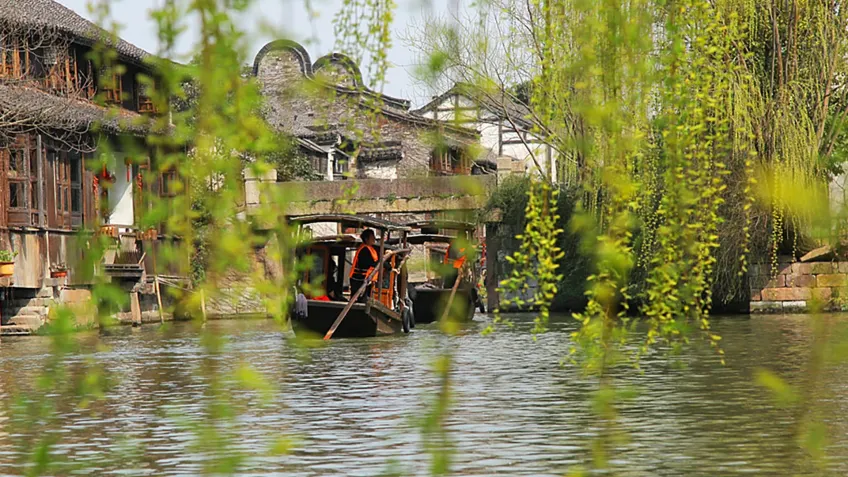
Wuzhen East Scenic Zone
The East Scenic Zone is at 18 Ziye Road, Wuzhen, and was the main filming location for the TV drama Fleeting Time. Part of it is quiet homes over the water; part is busy everyday life around the bridges.
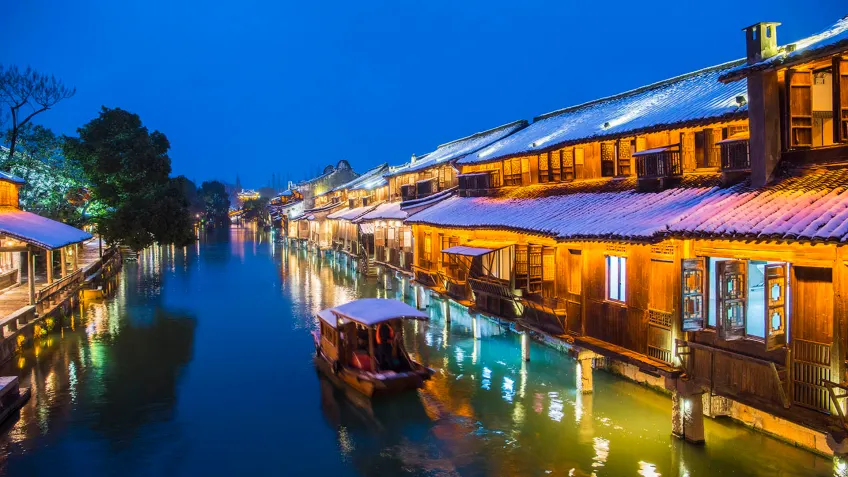
The East Scenic Zone keeps most of its original buildings, with little commercial makeover. Old houses, streets and stone bridges look much as they always have, and workshops, traditional homes and the former homes of well-known people sit close together. Walking here gives you a direct feel for old water-town life. It is quiet at night, but busy and lively during the day.
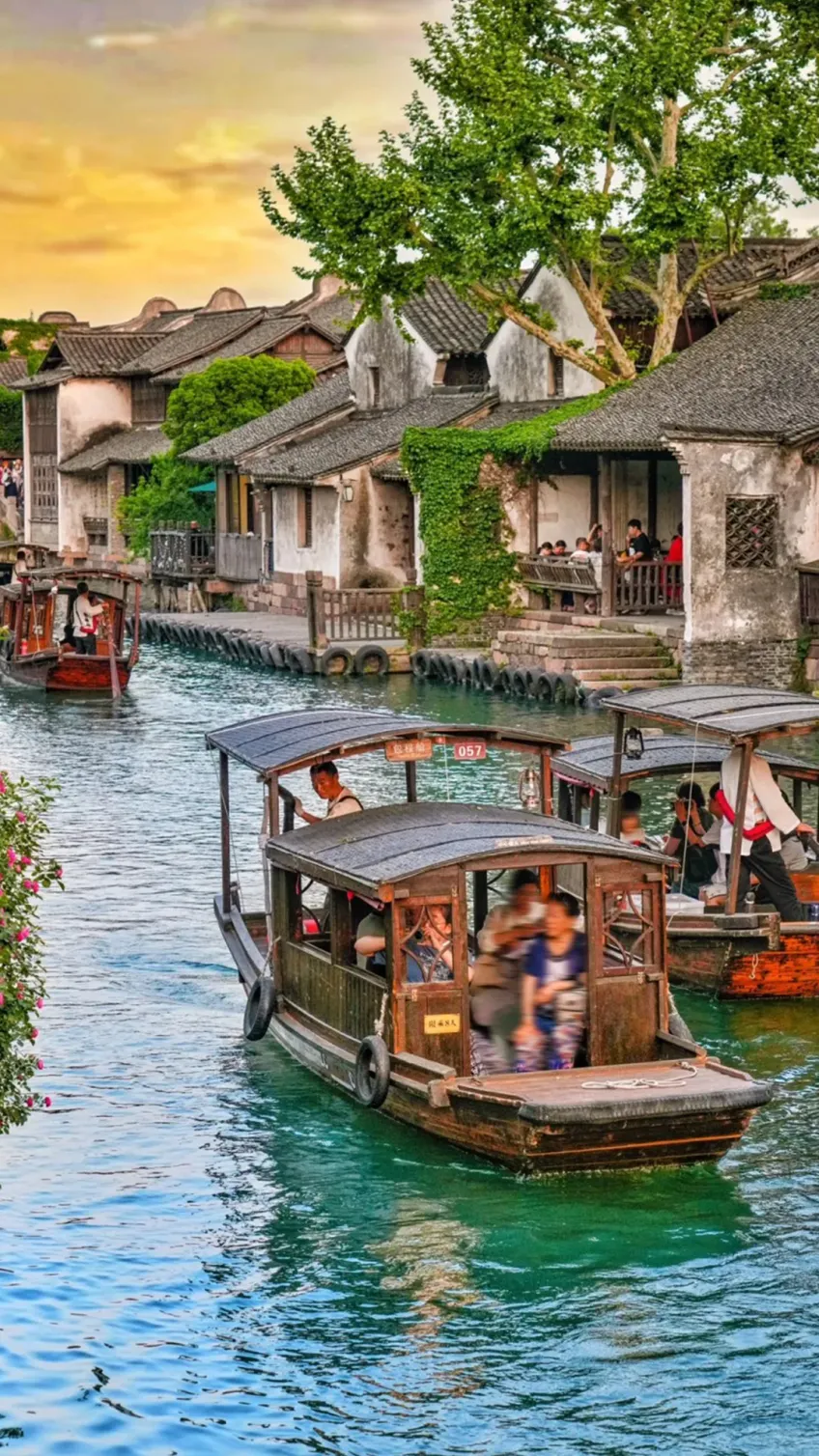
Small bridges over the water, white walls and dark tiles, and rowboats drifting slowly along the canals give the place a lived-in, old-Jiangnan feel. The workshops and shops are run by local residents, so alongside the traditional crafts you get real neighborhood life.
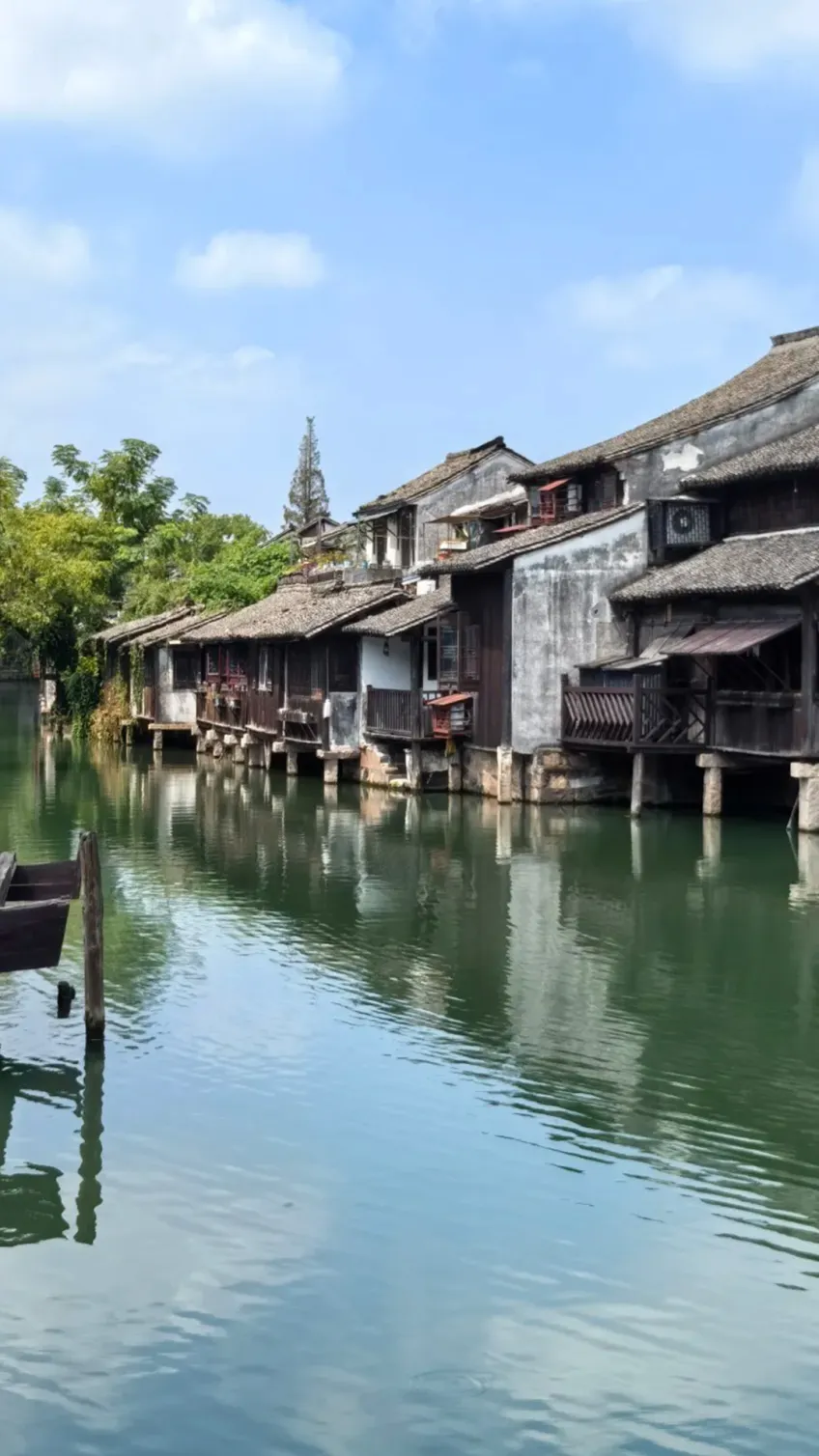
Things to do in the East Scenic Zone
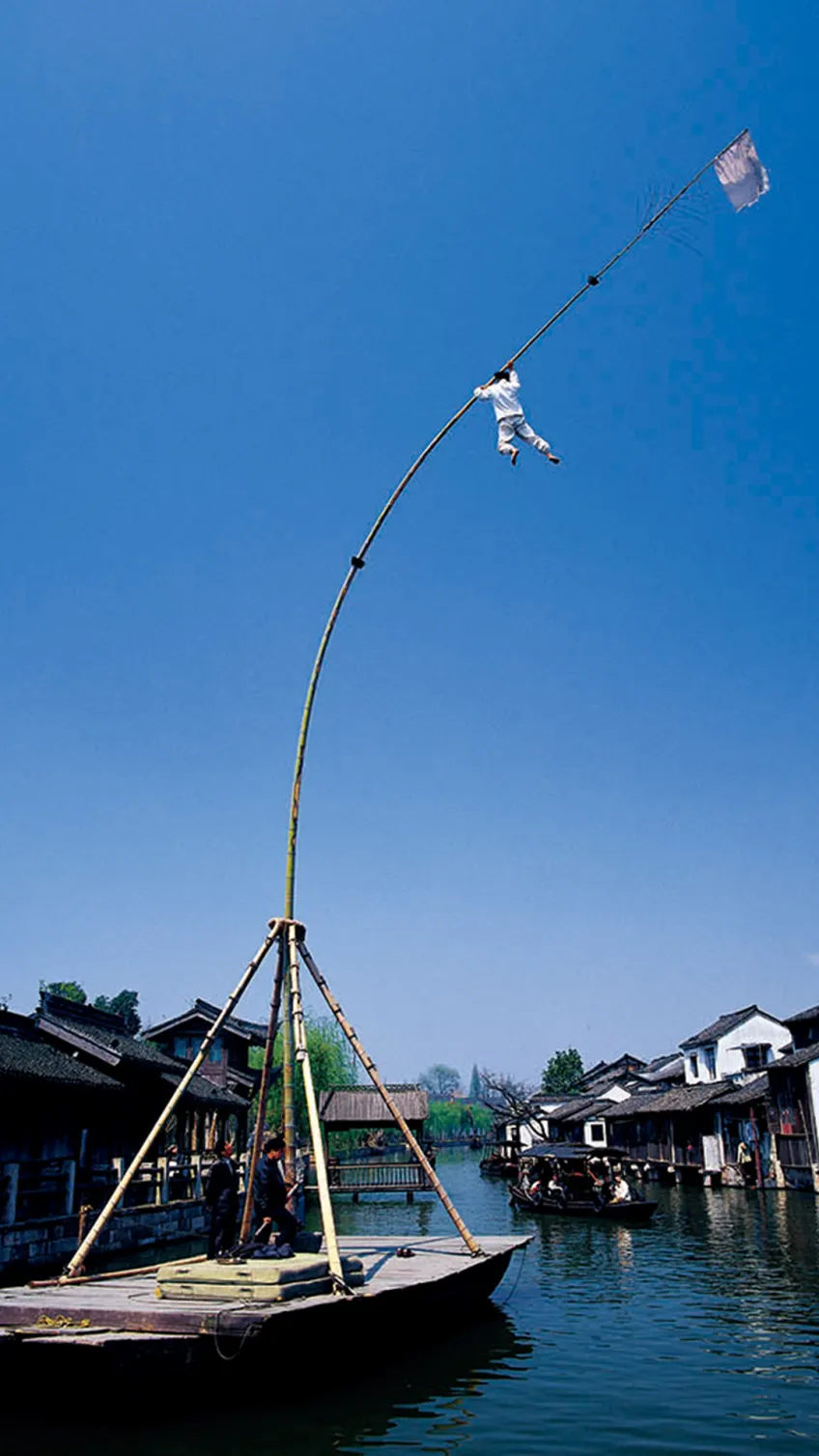
Sights in the East Scenic Zone include Mao Dun's Former Residence, Xiuzhen Taoist Temple and the Mu Xin Former Residence Memorial Hall. Folk shows such as the Fist Boat (martial arts on a moving boat) and the Tall Pole Boat (acrobatics high on a bamboo pole) are staged at set times and places. At the Hongyuantai Dye House you can try traditional Chinese fabric dyeing.
Showtimes: Fist Boat 10:30–10:40 a.m. and 2:30–2:40 p.m.; Tall Pole Boat 1, 2, 3 and 4 p.m. (20 minutes each).
Suggested route through the East Scenic Zone
Allow 2–4 hours for the whole East Scenic Zone. This route avoids backtracking:
East Scenic Zone Visitor Center → Fengyuan Twin Bridges (with performances) → along the canal: Caishen Bay → Xiangshan Hall → Jiangnan Hundred Beds Museum → Folk Custom Museum → Sanbai Wine Workshop → Hongyuantai Dye House → Jiangnan Wood Carving Museum → Yu Liuliang Coin Museum → Mao Dun's Former Residence → Xiuzhen Temple → Ancient Stage → Hanlin Mansion → Huiyuan Pawnshop → exit
Wuzhen West Scenic Zone
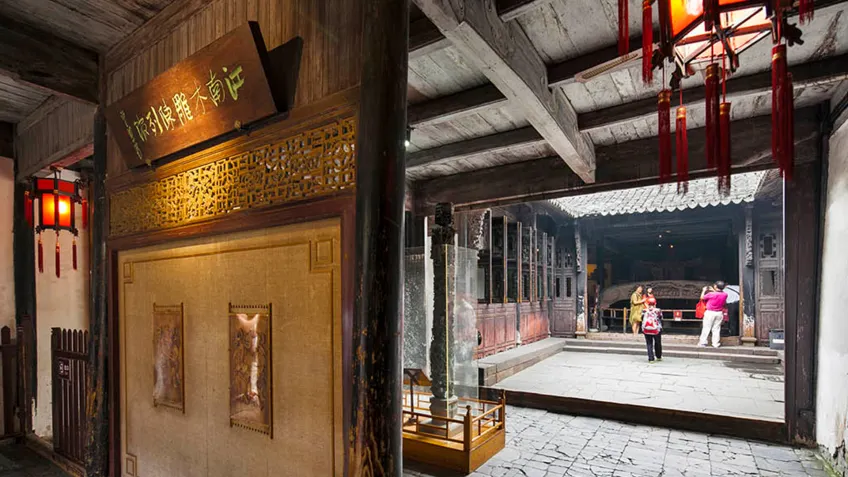
The West Scenic Zone is the most carefully restored and managed part of Wuzhen.
If the East Scenic Zone is an old book you can only read, the West Scenic Zone is a place you take part in: ride a boat, listen to storytelling, see an exhibition or stay right by the water.
Things to do in the West Scenic Zone
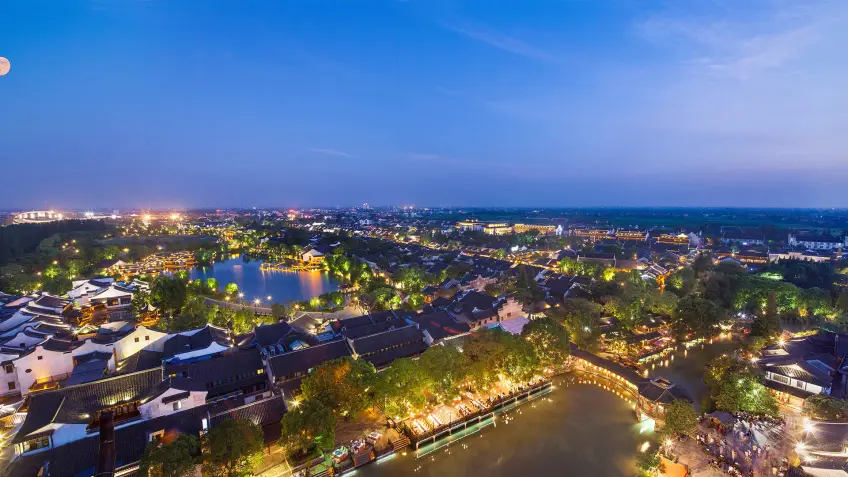
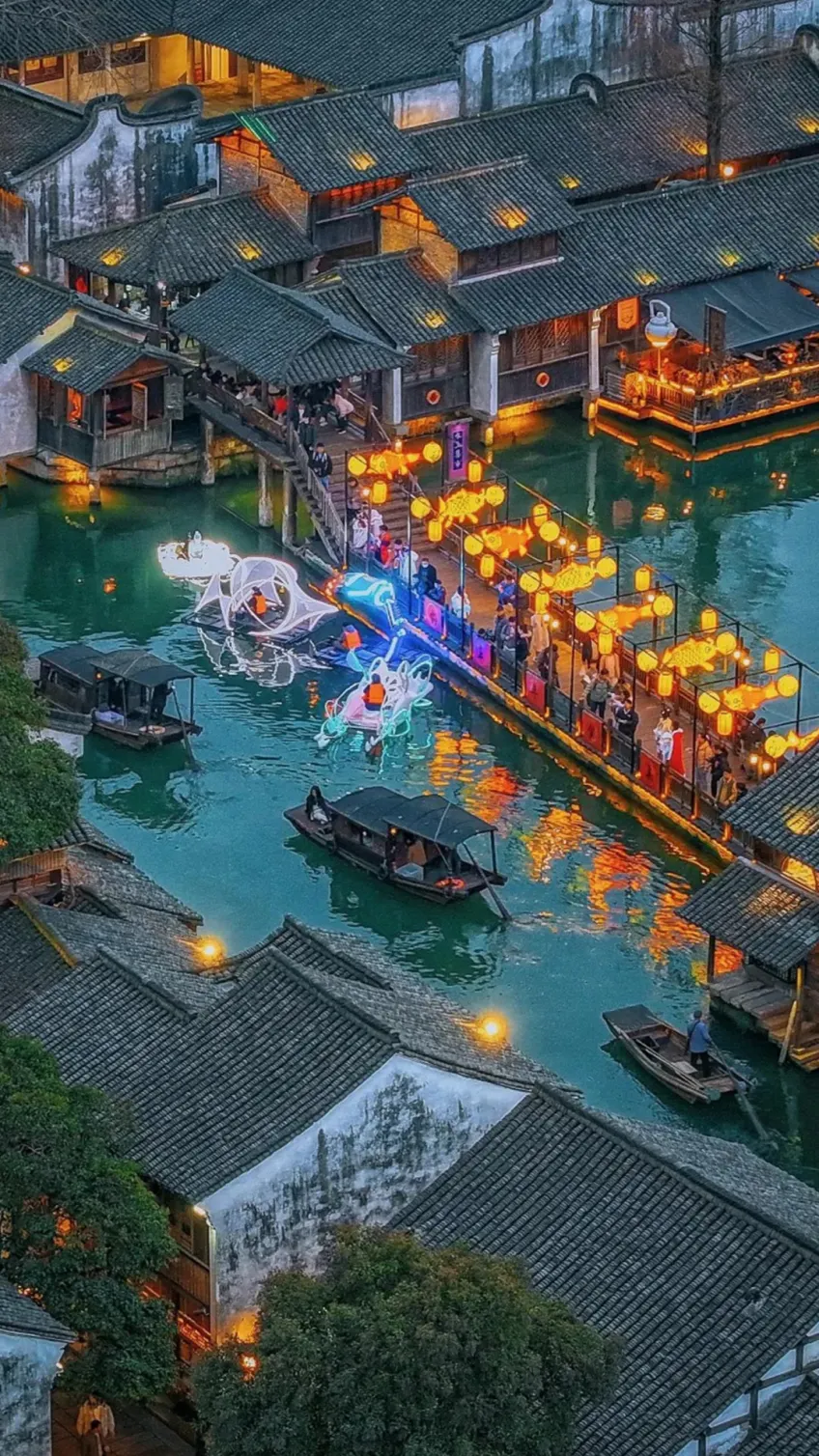
The West Scenic Zone is made up of 12 islands ringed by water and linked by 72 old bridges, so it has more canals and stone bridges than most Jiangnan water towns.
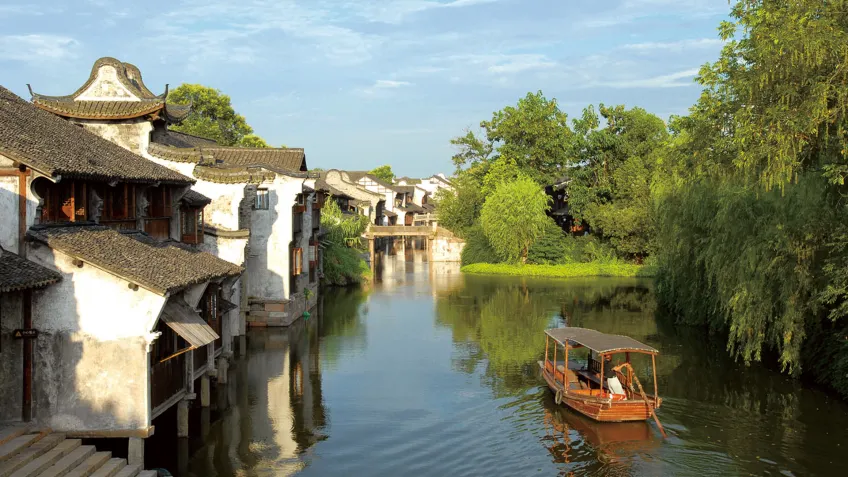
The West Scenic Zone is far larger than the East, but its layout is well spaced.
Its streets also keep many Ming and Qing buildings and old lanes. While preserving the look of a Jiangnan water town as much as possible, it has added hotels, boutique guesthouses, restaurants, cafes, bars and theaters in selected spots. Compared with the East Scenic Zone, it is more of a place to relax and stay.
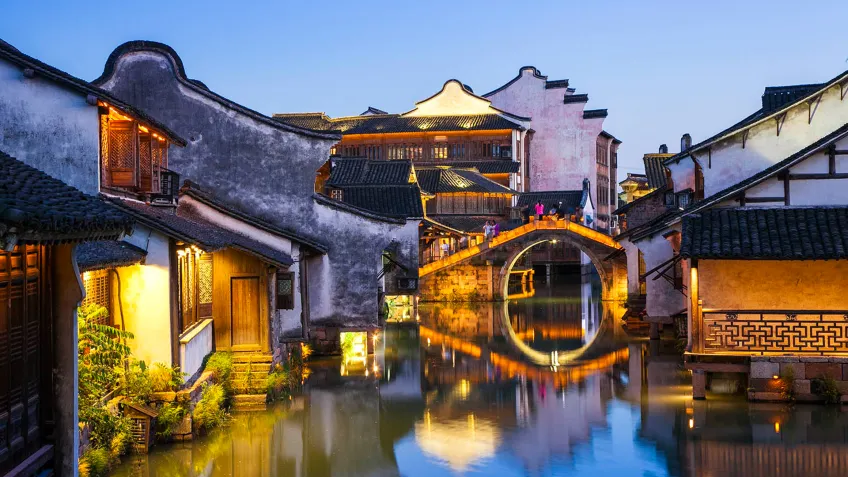
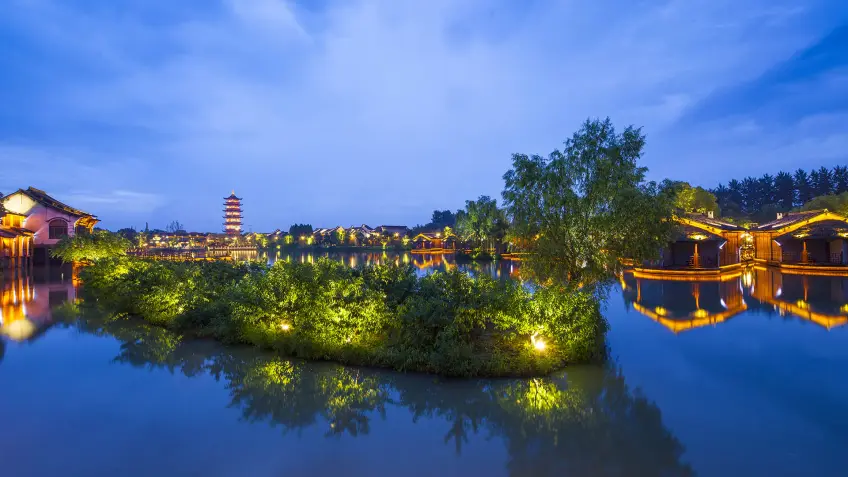
Here you can take a rowboat through the canals, listen to Pingtan, the region's soft sung storytelling, or just wander: spend an afternoon in an art gallery, or try a traditional craft such as blue calico printing or bamboo weaving. At dusk the lights come on along the banks one by one. Have a drink by the water, cross a bridge with a lantern, sit on the stone steps by the river or float a few lotus lanterns, and you'll get a quiet sense of what life by the water feels like.
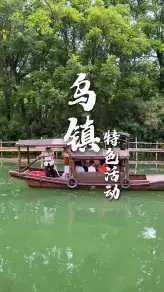
So the West Scenic Zone feels less like a tourist site and more like a quiet water town far from the city.
Shows and activities in the West Scenic Zone
Open-air old movies: Films are shown at Riyue Square in the West Scenic Zone on a vintage film projector, with a weathered whitewashed wall as the screen. Weather permitting, black-and-white classics such as Tunnel Warfare, Landmine Warfare and San Mao the Little Vagabond play every night at 7 p.m.
Night watchman: The West Scenic Zone keeps up the old custom of the night watch. Weather permitting, from 7 to 9 p.m. every evening on West Street, a watchman strikes his clapper at set spots and calls out the old warning: "Dry weather, mind your candles and fires."
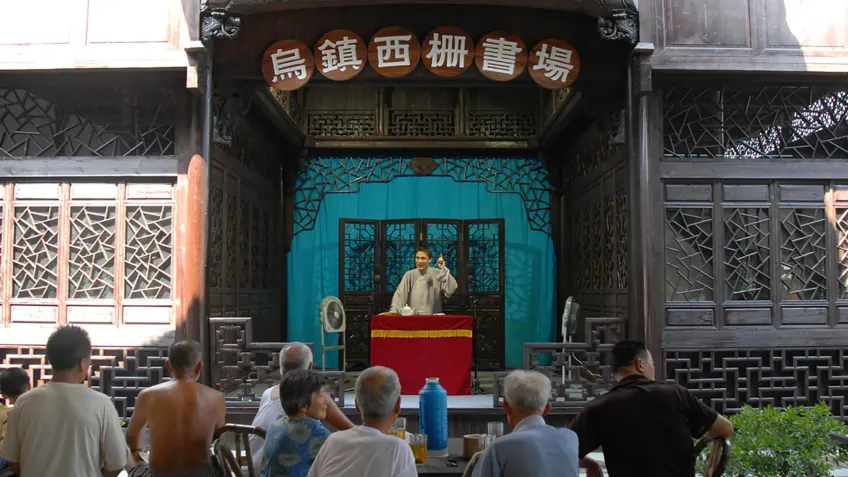
Storytelling hall: Performers present Suzhou Pingtan live all year at Riyue Square in the West Scenic Zone. It's sung and spoken in the Wu dialect, but you can enjoy the melodies without understanding the words. Step in and sit for a while if you're curious.
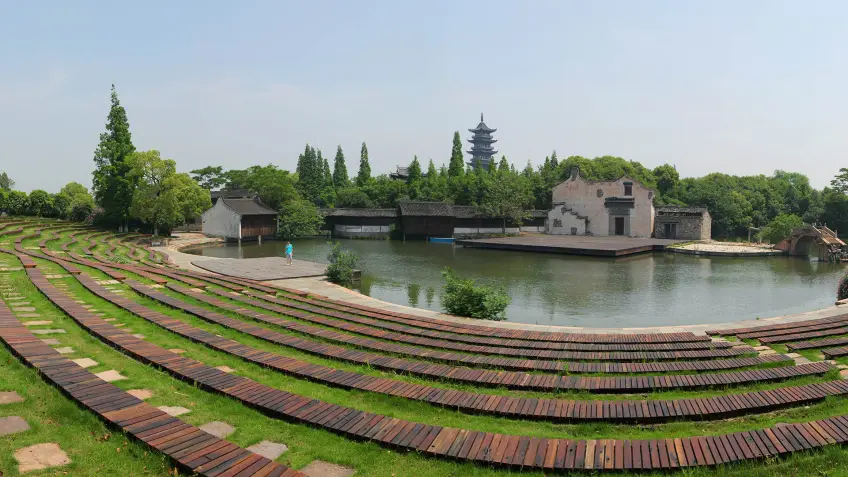
Huagu opera (flower-drum opera): At the water market in the West Scenic Zone, short huagu opera shows based on local Wuzhen legends run daily on a set schedule, usually one in the morning and four in the afternoon, half an hour each.
Suggested route through the West Scenic Zone
Wuzhen Grand Theater → Caomu Bense Dye House → Xiqing Hall → Xuchang Soy Sauce Workshop → Yichang Iron Works → Water Market → Mao Dun Memorial Hall → Dingsheng Bridge → Zhaoming Academy → Yudu Bridge → Three-Inch Golden Lotus Museum → Xu Changmin Painting Academy → Wuzhen Post Office → Open-Air Cinema → General Wu Temple → Yida Silk Shop
Wuzhen at night
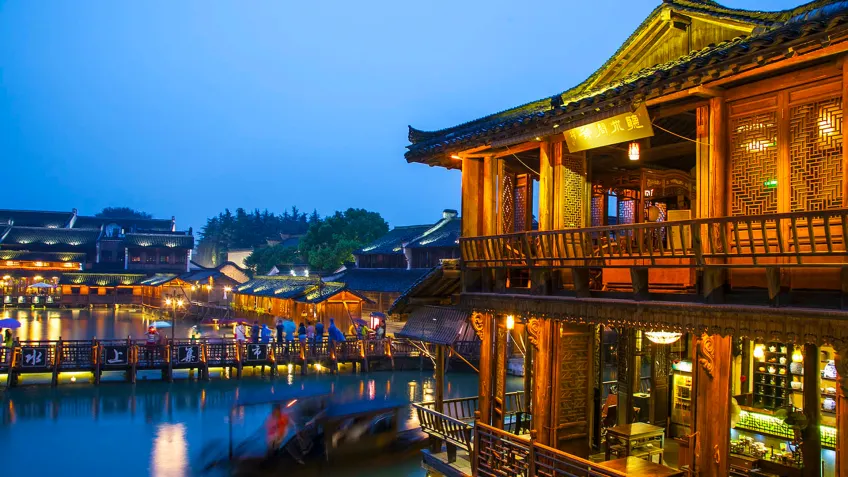
Unlike other Jiangnan water towns, Wuzhen at night feels like a trip from the past into the present.
Night visits center on the West Scenic Zone, where the main draws are the lights and the rowboat rides. The lighting is carefully designed: warm and cool lights in dots, blocks and lines trace the stepped gable walls, roof ridges and upturned eaves, while lanterns from guesthouses and restaurants fill in between. The whole place glows like a palace.
Night boat rides
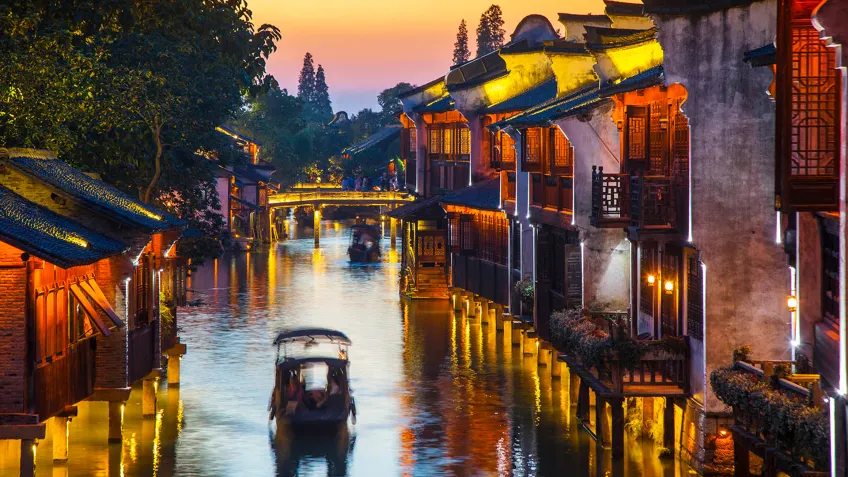
Several piers in the West Scenic Zone offer rowboat rides.
Piers: Visitor Center Pier, Ruyi Bridge Pier, General Wu Temple Pier and Andufang Pier.
Suggested route: Andufang Pier → Ruyi Bridge Pier. It's the longest rowboat route in the West Scenic Zone and the classic one for night views.
Boats are shared or private, and a one-way ride takes about 25–30 minutes. Check the official site for fares.
Wuzhen Theatre Festival
Wuzhen's thousand-year-old waterscape makes a unique stage, and the town has the facilities to host big events, so it has drawn theater masters, artists and film and TV stars from China and abroad. TV dramas such as Fleeting Time, Tianxia Liangcang, Nai Niang and Daughter of Water were filmed here. Chen Xianghong, Huang Lei, Stan Lai and Meng Jinghui went on to co-found the Wuzhen Theatre Festival.
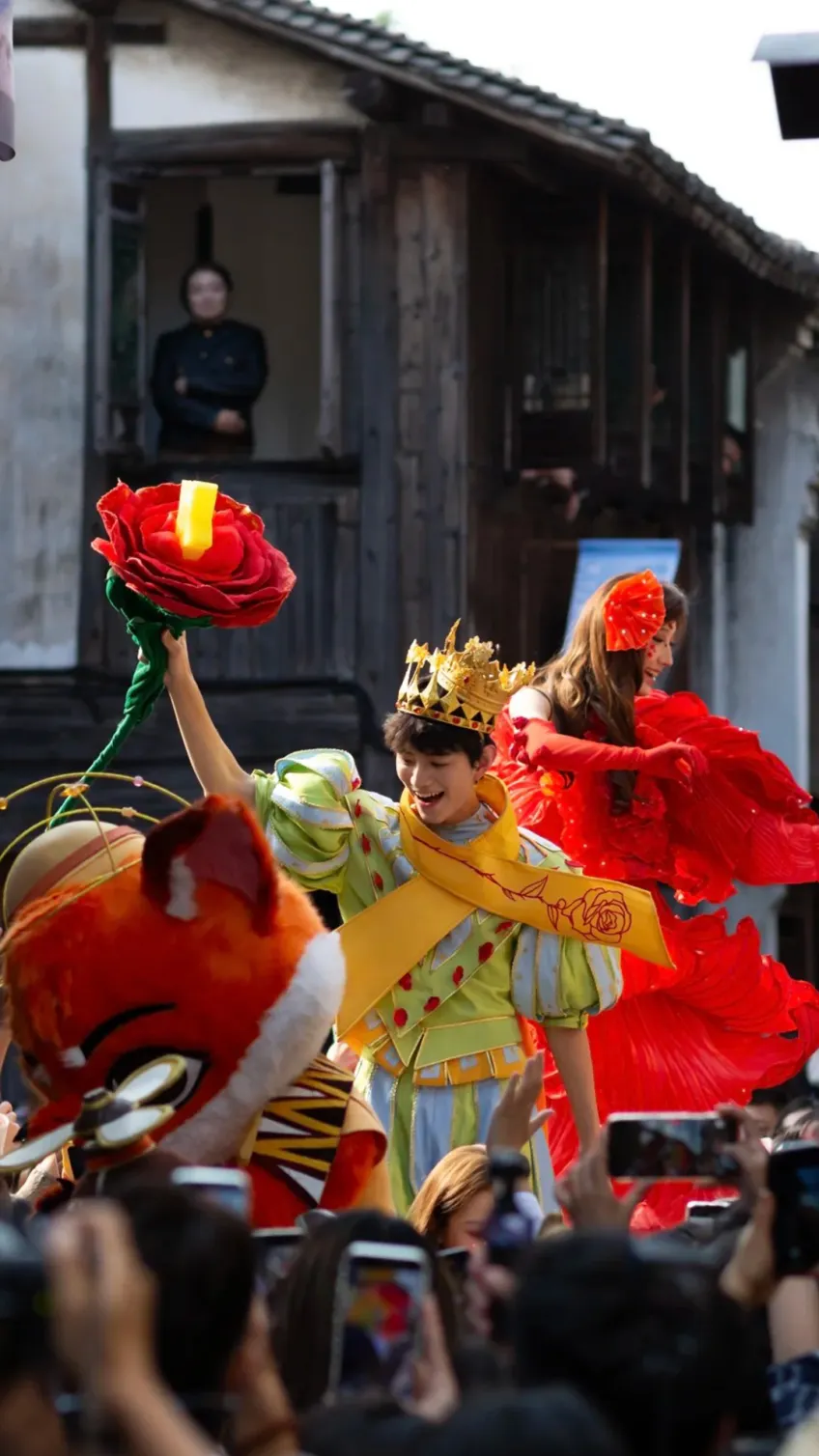
The Wuzhen Theatre Festival was founded in 2013 and is held every year in mid-to-late October in Wuzhen, Zhejiang.
The festival is built around four main programs: Invited Plays, Youth Competition, Ancient Town Carnival and Town Dialogues. Set in Wuzhen's 1,300-year-old waterscape and its many theaters, it draws hundreds of thousands of people from all over each year.
The Wuzhen Grand Theater, designed by architect Kris Yao, mixes water-town imagery with a distinctive modern style. It has become Wuzhen's signature cultural landmark and draws many theater and architecture fans.
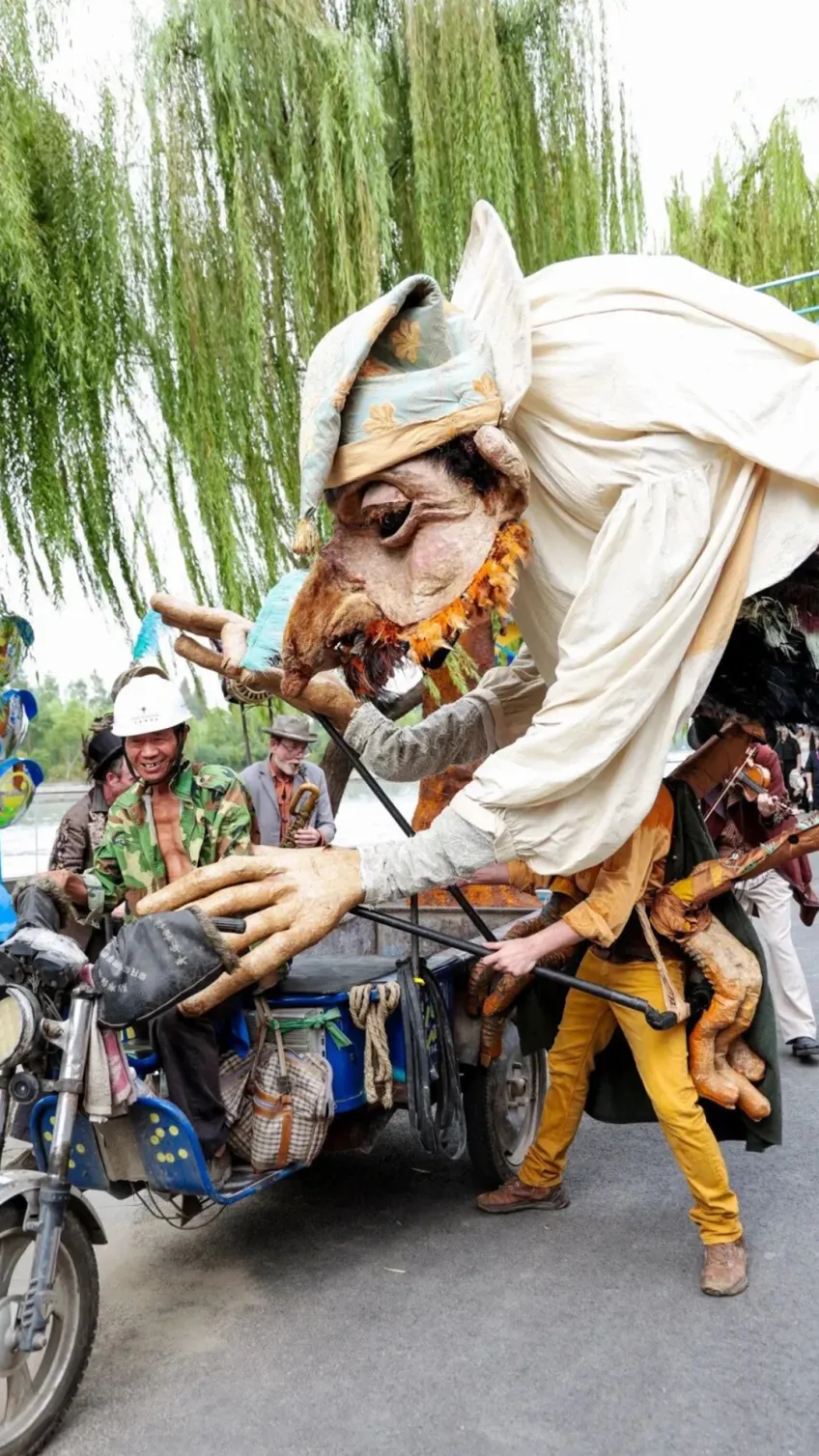
Festival dates and tickets
When: Every year in mid-to-late October, for 11 days.
Programs: The four core programs are Invited Plays, Youth Competition, Ancient Town Carnival and Town Dialogues. Newer additions include the Theater Market, Dream Granary and Starting Line Theater.
Tickets: During the festival, a West Scenic Zone ticket gets you into many events, including the Ancient Town Carnival and Town Dialogues. Invited Plays and the Youth Competition need separate tickets, sold mainly on the Damai ticketing app or the festival's official website. Scan your e-ticket to enter. If you want a paper ticket as a souvenir, print one at the self-service machines at the Wuzhen entrance.
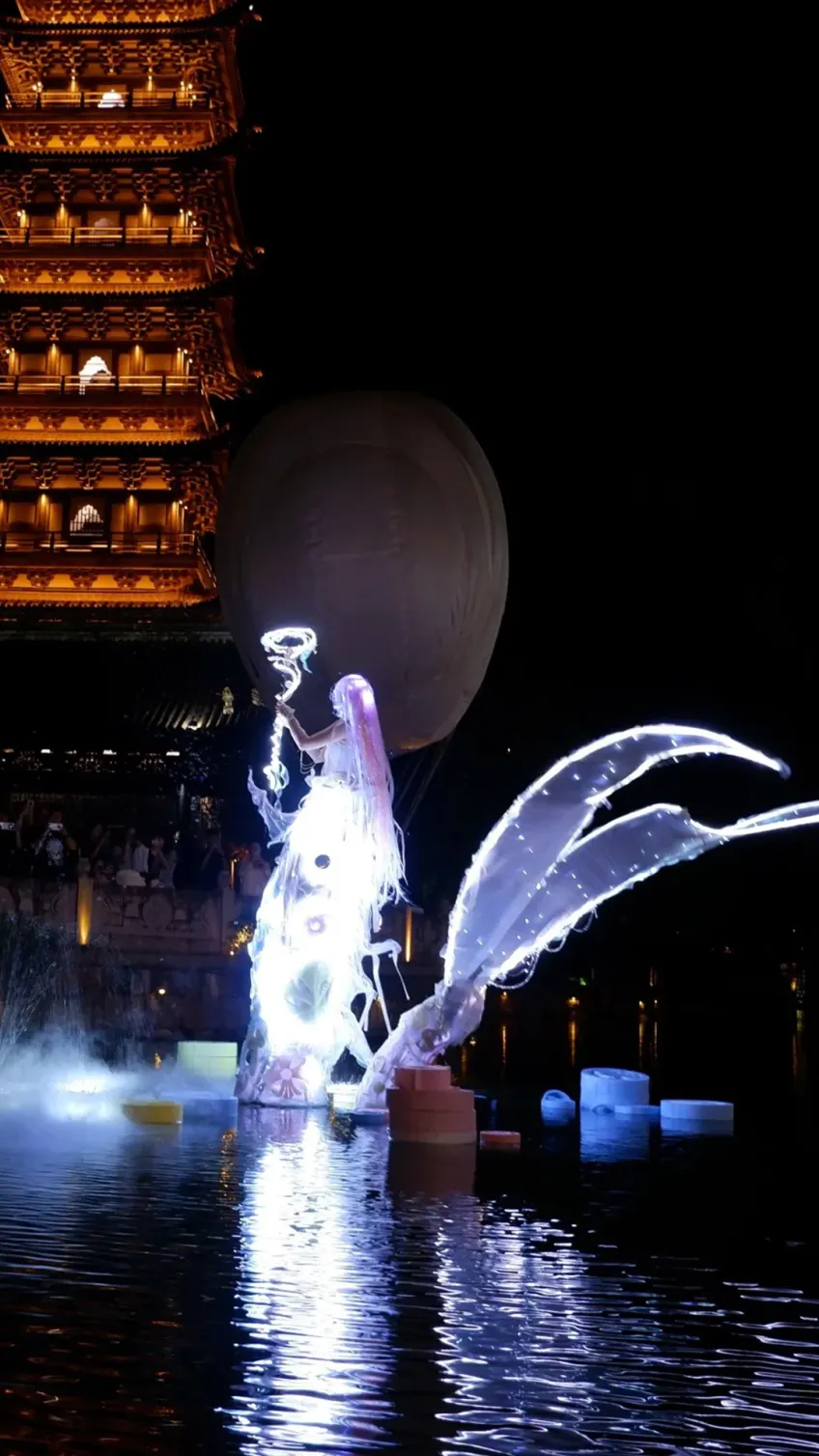
First time visiting and want a hassle-free way to see Dongzha, Xizha and the nearby water towns? Try the private tour in this article. To customize your hotel and night tour order around your family's pace, choose custom private travel or private car only. Need station transfers when you arrive, or want a guide inside the scenic area? You can hire a guide separately. A professional itinerary ties together transport, routes and ticket timing so your Wuzhen trip is more than just checking in.
Wuzhen is best taken slowly. If you'd like help with a plan, tap the service card below and tell us what you need.
FAQs
How much are Wuzhen tickets?
West Scenic Zone tickets are ¥150 per person and an East + West combo ticket is ¥190, valid for one day. For the East Scenic Zone-only price, check the official site. Nanzha and Beizha are free and need no reservation.
What's the difference between Wuzhen's East and West Scenic Zones?
The East Scenic Zone keeps more of its old streets, bridges and workshops without commercial makeovers. It's busier by day and takes about 2–4 hours. The West Scenic Zone is larger, with 12 islands and 72 old bridges plus hotels, guesthouses and theaters. It's more of a place to relax and stay overnight, and it's where the night scene is.
How do I get from the East to the West Scenic Zone?
They're about 1.5 km apart. Walk, or take the free shuttle bus, which runs 9 a.m.–4:30 p.m. about every 30 minutes.
How do I see Wuzhen at night?
Wuzhen's night scene is mainly in the West Scenic Zone, with the lights and rowboat rides as the highlights. Take a boat from Andufang Pier to Ruyi Bridge Pier, the longest route in the zone and the classic one for night views. The one-way ride takes about 25–30 minutes; check the official site for fares.
When is the Wuzhen Theatre Festival held?
Founded in 2013, the festival runs for 11 days each year in mid-to-late October. A West Scenic Zone ticket gets you into events such as the Ancient Town Carnival and Town Dialogues; Invited Plays and the Youth Competition need separate tickets.