

A Hidden Gem in Wuxi: Rong Family Plum Garden
The Rong Family Plum Blossom Garden lies in the western suburbs of Wuxi. Built by Rong Desheng in 1912, it's just a short walk from Meiyuan Kaiyuan Temple Station, the western terminus of Metro Line 2. Highlights include a century-old wisteria, Lake Tai stones said to have once belonged to Mi Fu, Xianghai Pavilion, Songbin Hall, the stone millstones and tables in front of Lenong Villa, and Nianqu Pagoda. The back hill features the plum blossom viewing area and Kaiyuan Temple. Please check on-site notices for current opening hours and ticket prices.
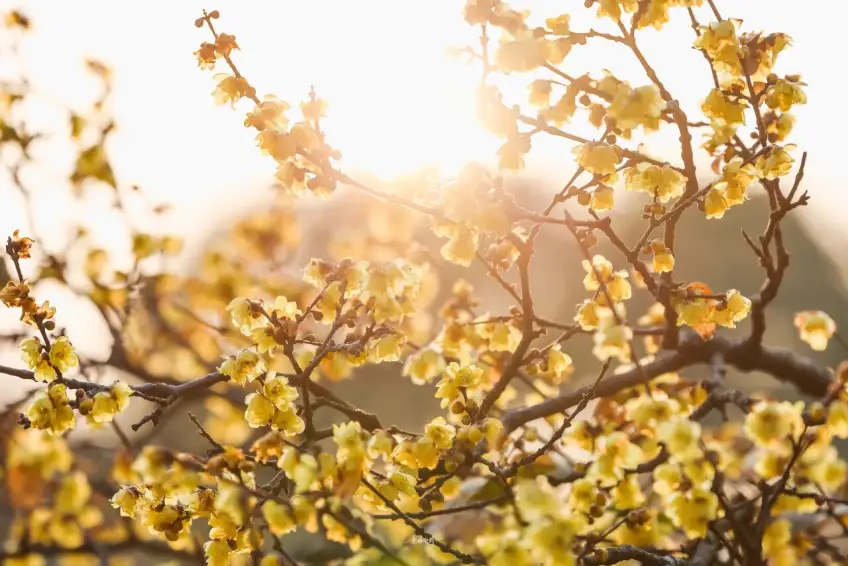
To hear the stories behind Meiyuan Plum Garden without any hassle, choose a private tour on the Jiangnan route. For an in-depth look at the Rong family history and stone carvings, add a private guide. Use station and airport transfers, or book a private car to combine your visit with Yuantouzhu (Turtle Head Isle) or Lingshan. You can also customize your entire trip. Just send your travel dates, group size, departure city and preferred attractions to our travel consultant.
Route guide to Wuxi Plum Garden
Getting to Wuxi Plum Garden
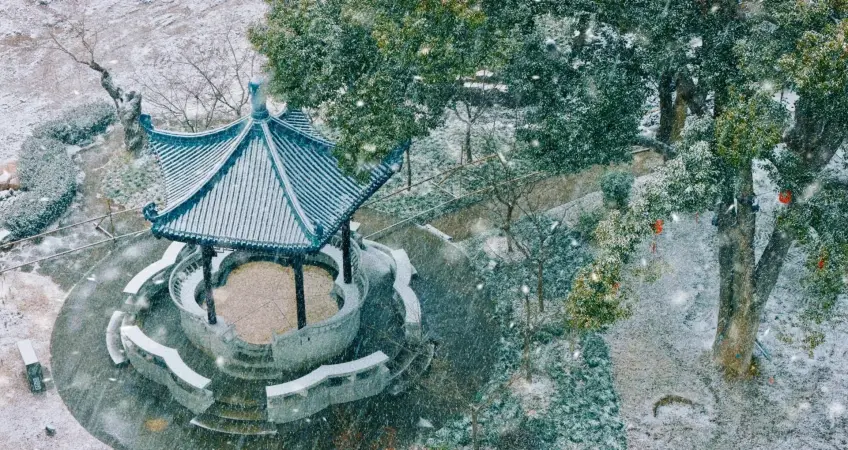
Take Metro Line 2 to its western terminus, Meiyuan Kaiyuan Temple Station. Exit via Exit 5, turn left, and walk about 50 meters to reach the garden entrance. From Wuxi Railway Station, take Line 1 to Sanyang Plaza and transfer to Line 2; Wuxi East Railway Station is already on Line 2.
Routes into Wuxi Plum Blossom Garden
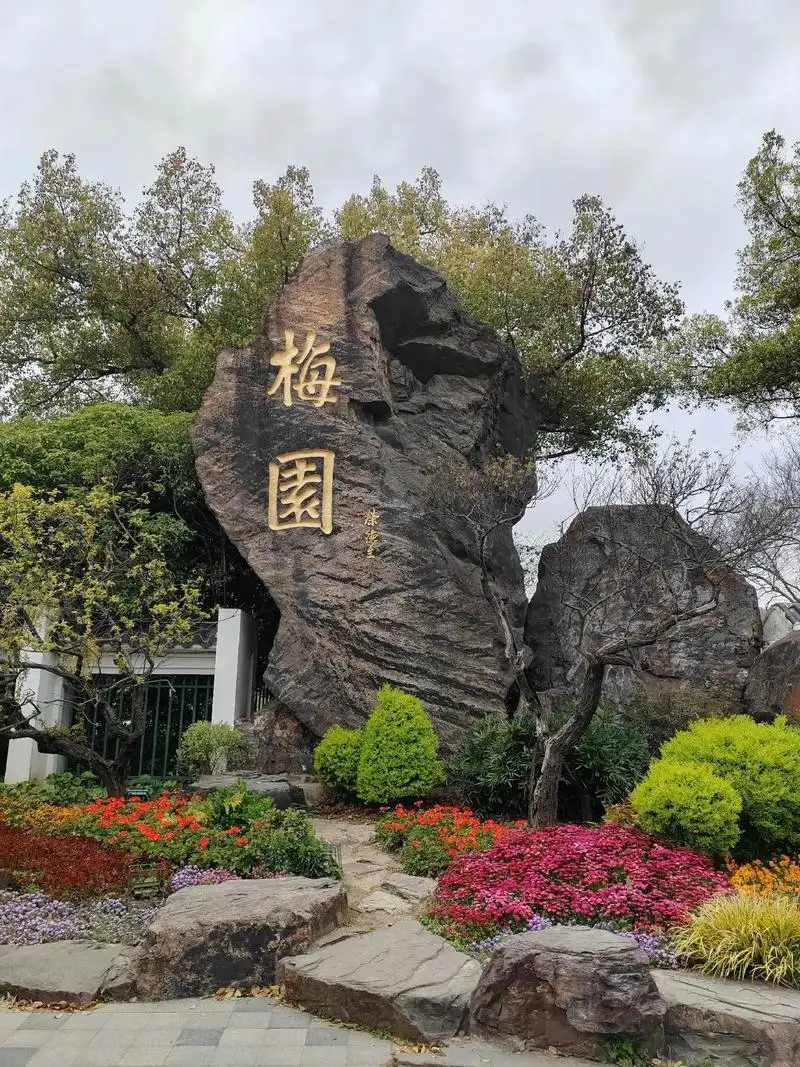
After passing through the ticket gate, turn left toward the stone engraved with "Rong's Plum Blossom Garden," then follow the path for 150 meters to reach the old main gate built by Rong Desheng in 1912. The characters "Plum Blossom Garden" on the lintel were written by his own hand. Due to the garden's expansion, the current main gate has been moved about 100 meters east, while the old gate preserves the original appearance of Plum Blossom Garden.
Rong Desheng's Open Philosophy
Traditional Chinese gardens were private estates of the wealthy, hidden behind high walls and closed to outsiders. Owners kept the beauty locked inside for themselves, their families, and their friends. Why did Rong Desheng break with this tradition from the very start? As a boy, he had seen the beautiful private gardens of Wuxi but couldn't enter them, which left him deeply regretful. Later, when he visited Lingering Garden and Xiyuan Temple in Suzhou, he was profoundly moved, and a wish took shape: he wanted to build a different kind of garden—one that belonged not to an individual, but to everyone.
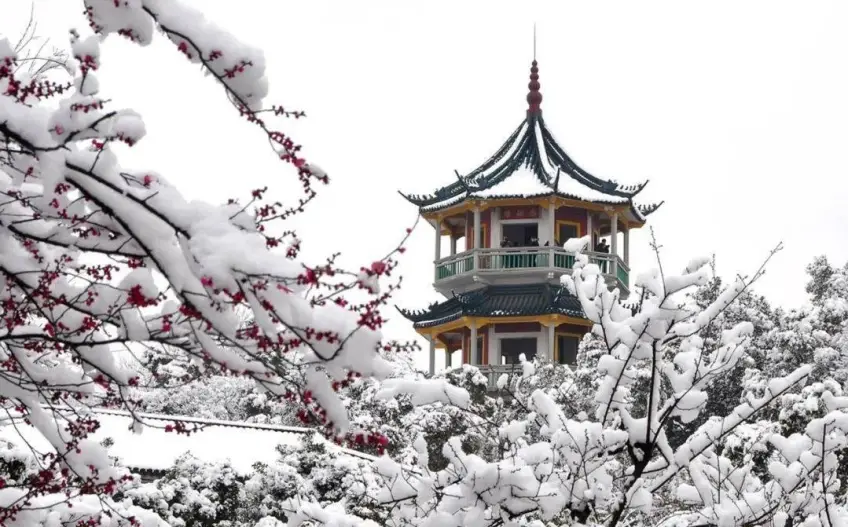
In 1912, when he bought land on the shores of Lake Tai to plant plum trees, this idea became reality. From the day it was founded, Meiyuan Plum Garden had no walls and charged no admission—it was open to everyone for free. Anyone could enter, whether officials or merchants, scholars or villagers from nearby.
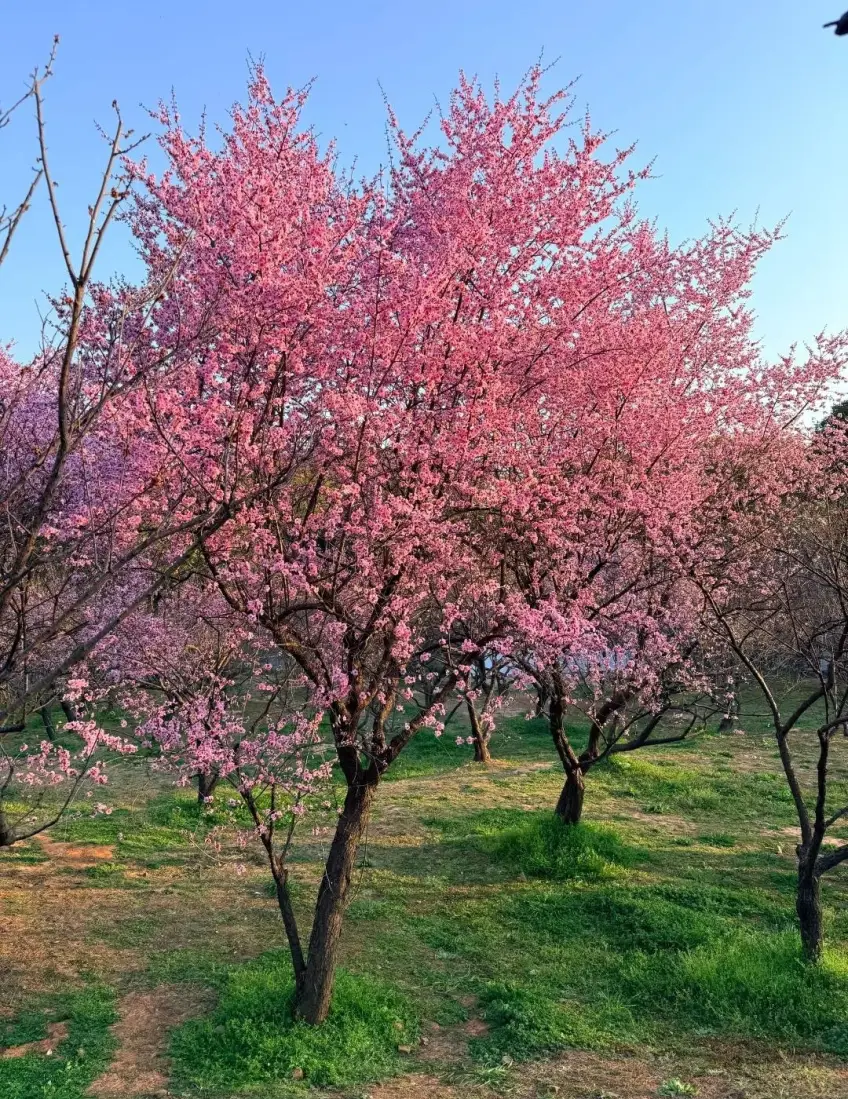
He planted plum trees not just for himself to admire, but to share that beauty with the world. He built the garden not just for his own enjoyment, but so that every ordinary person could share in the joy.
The century-old wisteria at Meiyuan Plum Garden in Wuxi
Walk through the old main gate of Plum Blossom Garden, and at the foot of the east wall on your right stands a vigorous ancient vine. Its trunk is as thick as a python, its roots tangled, winding and climbing across the trellis. Every mid-to-late April, clusters of purple flower spikes hang down like a waterfall or rosy clouds, filling the garden with fragrance. This wisteria has been growing quietly here for over a hundred years.
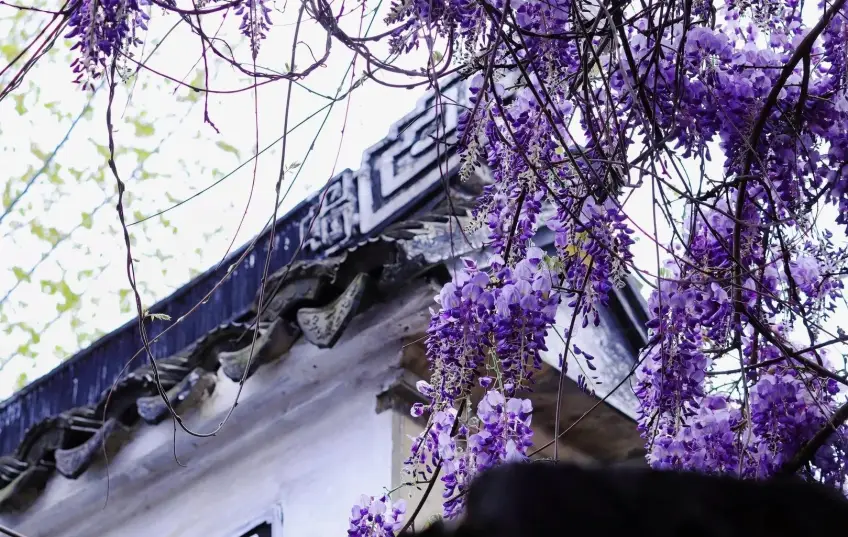
It was planted when the garden was first built, making it as old as Meiyuan. Planted at the foot of the east wall, it symbolizes "purple qi arriving from the east." In Chinese culture, "purple qi" represents auspicious energy, and "arriving from the east" means coming from the east. Planting the wisteria beneath the east wall signifies that good fortune and luck will descend upon this garden from the east, blessing every visitor. Through more than a century of wind and rain, this wisteria has witnessed the entire journey of Meiyuan, from a barren hill to a sea of flowers, and from a private garden to a public park.
Lake Tai stones at Meiyuan Plum Garden in Wuxi
In the center of the Plum Garden lawn stands a unique rock.
It isn't tall, but it rewards close inspection. Its surface is covered with holes of all sizes and depths. The magic of this stone is that if you light an incense stick at its base, the rising smoke will curl out through all 81 holes, swirling upward like clouds or mist—a truly spectacular sight.
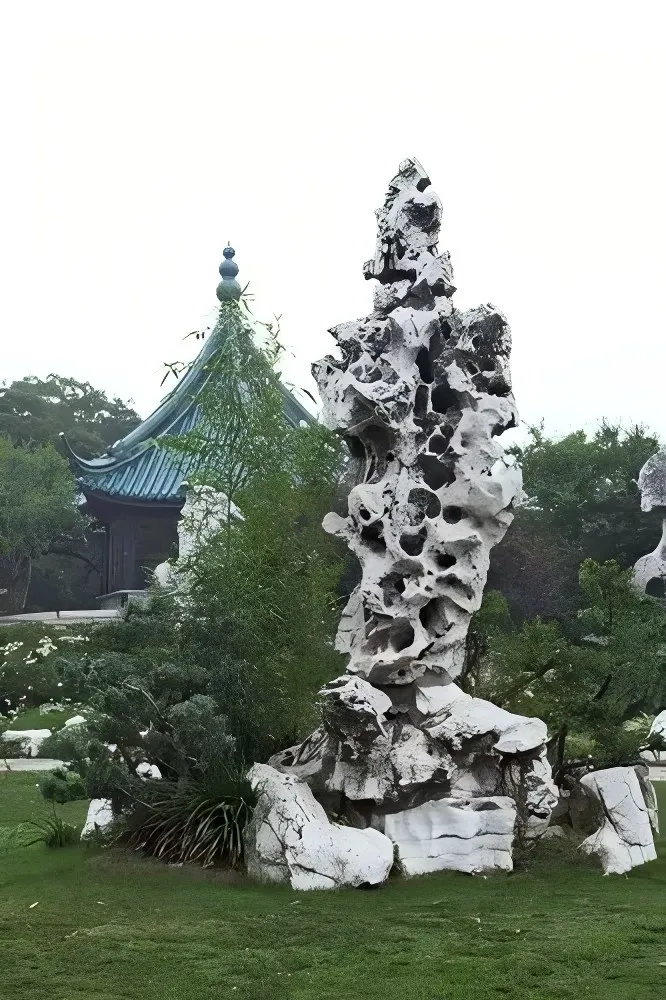
Even more precious is its story. Legend has it that this stone once belonged to Mi Fu, a great calligrapher of the Northern Song Dynasty. Mi Fu was obsessed with stones—he would bow to unusual ones and call them "Brother Stone." What a character! This 81-hole stone is said to have been one of his prized possessions, admired and handled time and again. It is a living fossil of China's ornamental stone culture and a piece of history you can touch.
The Three Stars Stones at Meiyuan Plum Garden
Deeper into the lawn, three massive Taihu rocks stand side by side. They share their name with the Three Stars Stones below Tianxin Terrace and also symbolize "fortune, prosperity, and longevity," but these three are larger, more rustic, and richer in form. Mr. Rong Desheng personally gave the middle "Fortune" stone an ethereal name, "Xu Yun" (Exhaling Clouds), meaning that when you look at it, it seems to breathe clouds—a testament to its imposing presence.
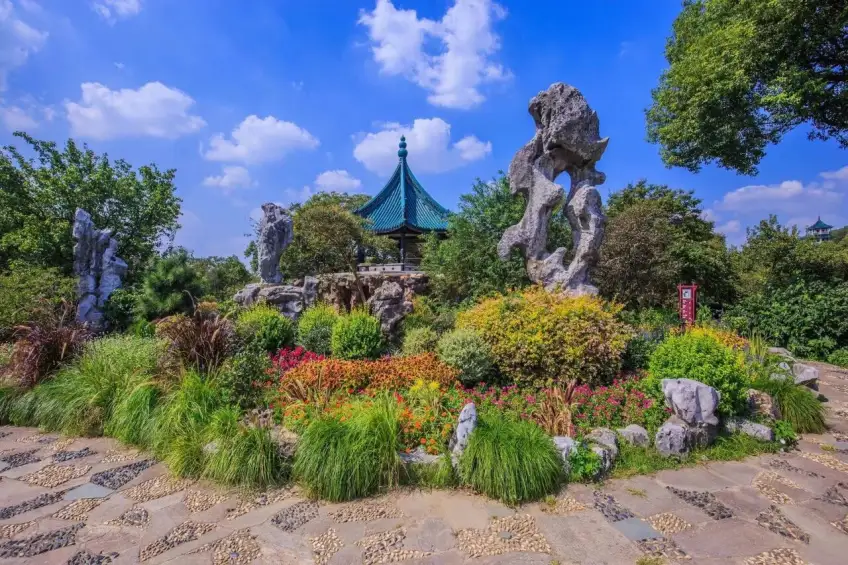
The Chinese often say "the Three Stars shine bright," referring to the stars of fortune, prosperity, and longevity. These represent the simplest wishes of the Chinese people: health and long life, career success, and lifelong happiness. The three Taihu rocks embody these wishes. Dredged from the depths of Lake Tai and sculpted by nature over millennia, they now quietly watch over everyone who passes by on this lawn. Leaving the century-old wisteria and the Taihu rocks behind, continue deeper into Meiyuan Plum Garden. There are two buildings where you must pause to truly understand Meiyuan Plum Garden: one named after flowers, the other inspired by poetry.

Xianghai Xuan is a place named after flowers
Xianghai Xuan is a building with a story inside Plum Garden, acting somewhat like its "living room." It has always been the best spot for plum blossom viewing. Sit inside, push open the window, and you'll see a "fragrant sea of snow" outside—that's how it got its name.
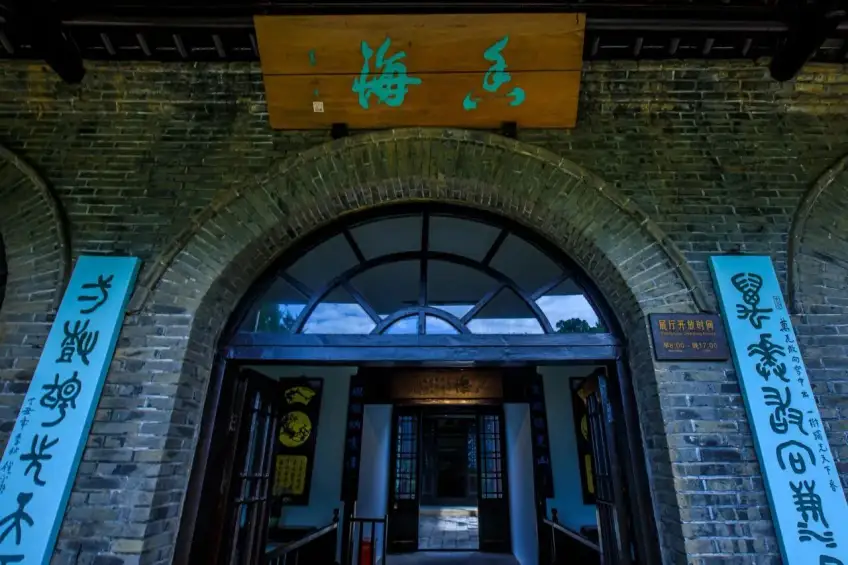
"Fragrance" is an experience for the nose. The beauty of plum blossoms can be seen with the eyes, but even more so smelled. In early spring, when the blossoms are in full bloom, their faint scent drifts in and out—neither heavy nor strong, yet deeply refreshing. When the Chinese say plum blossoms carry a "floating hidden fragrance," they mean this subtle beauty that requires you to quiet your mind and savor it slowly.
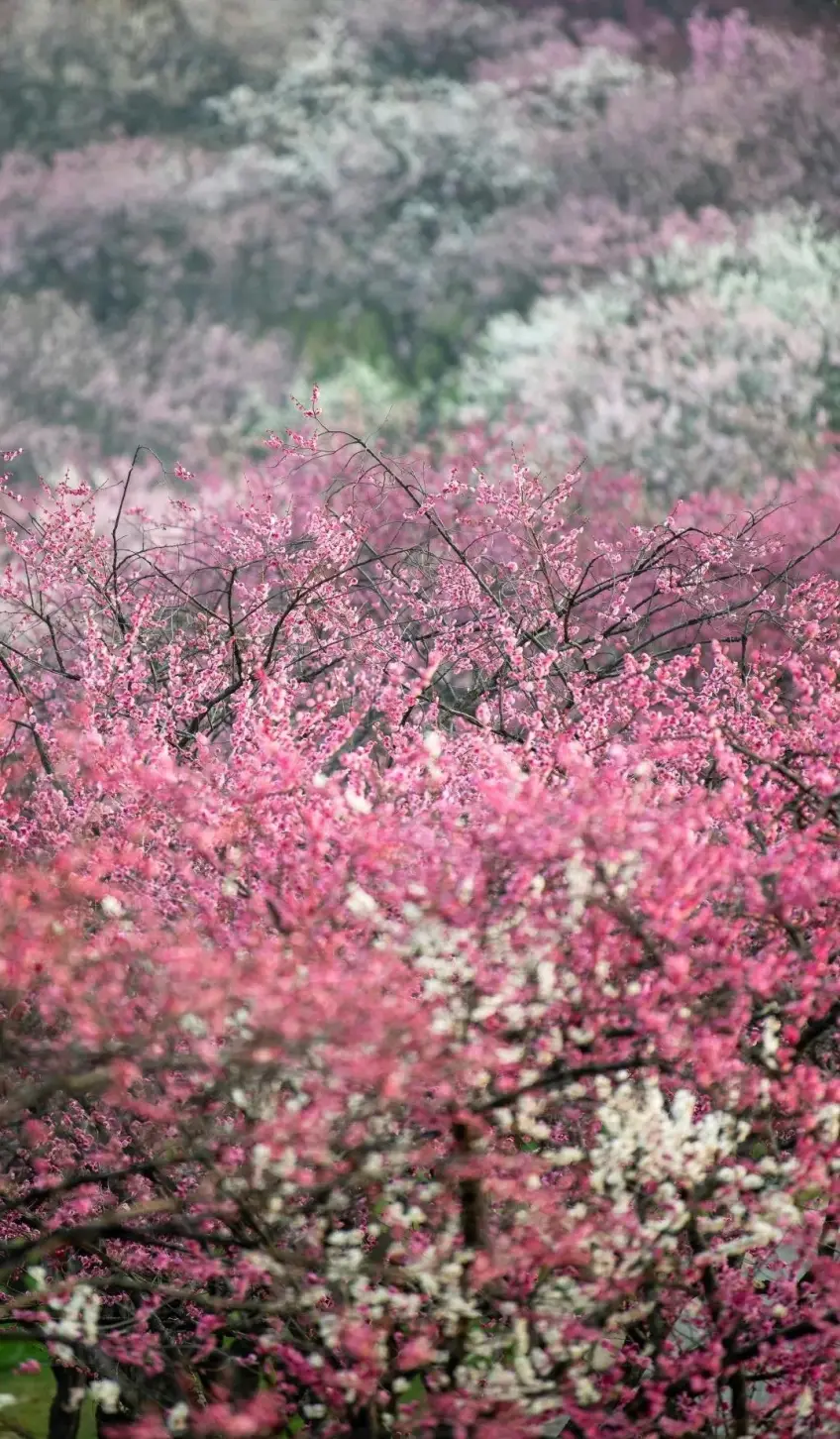
"Sea" here describes a spatial experience. A single plum blossom, no matter how beautiful, is still just "one tree." But when thousands bloom at once, covering the hills in an unbroken expanse, they become a "sea." This word captures momentum, scale, and a breathtaking grandeur.
So the name itself paints a picture: standing on the hillside and looking out, you see a vast white blanket of plum blossoms, like snow covering the earth. A faint, delicate fragrance drifts to you on the breeze. The scent and the white blossoms stretch into the distance, boundless as the sea.
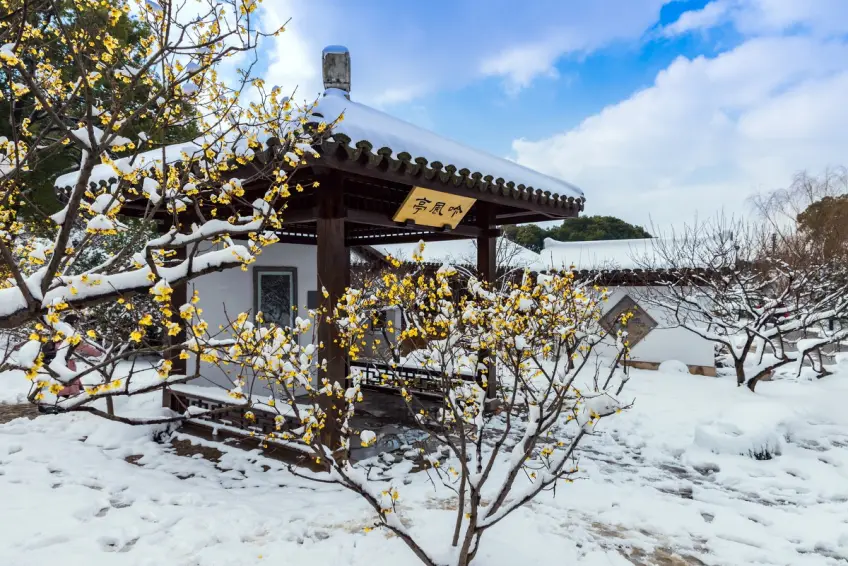
This is how Chinese scholars see plum blossoms: they appreciate not just the beauty of a single flower, but the momentum of an entire grove; not just the color, but also the fragrance; not just what lies before them, but also what stretches into the distance.
Songbin Hall at Wuxi Plum Garden
Continue past Xianghai Xuan through the plum grove, and you'll suddenly find the view opening up before you. A hall with gray tiles and white walls stands quietly, solemn yet simple. This is Songbin Tang, the most important building in Meiyuan.
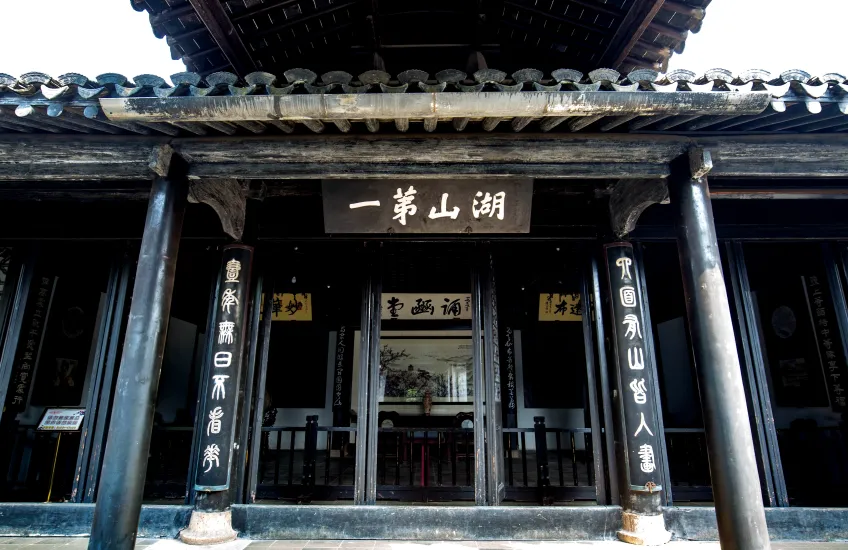
The name "Songbin" comes from the Book of Songs, China's oldest poetry anthology. The "Odes of Bin" are folk songs from the Bin region during the Zhou Dynasty 3,000 years ago, singing about farming and daily life following the rhythm of the seasons—spring plowing, summer weeding, autumn harvest, and winter storage.
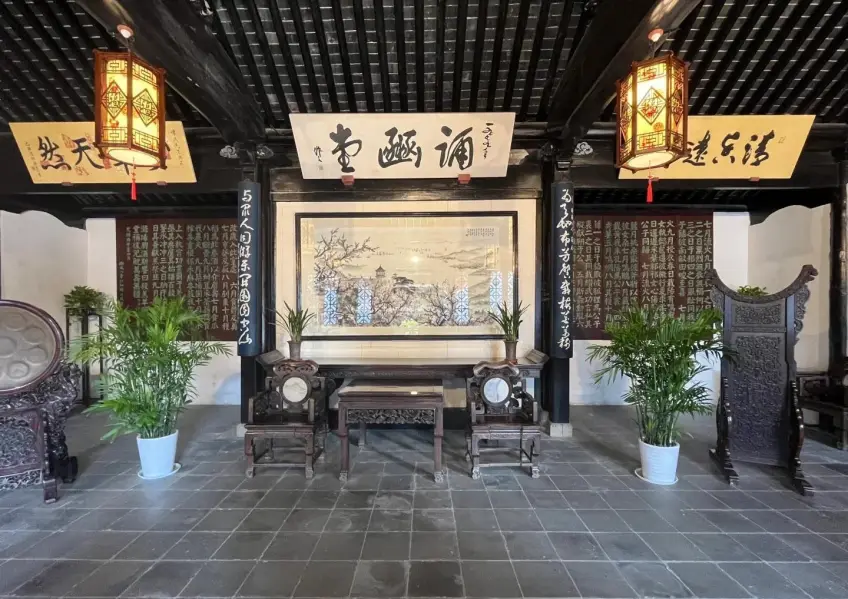
The garden's owner wasn't just showing off his refinement. He was reminding himself and his descendants that no matter how far they went, they should never forget their roots or how they succeeded. The Rong family started in the flour business and became the renowned "Flour Kings." Yet he always knew that flour comes from wheat, wheat from the land, and the land from farmers who toil day and night. Without their hard work, none of today's good life would be possible.
The surprisingly frugal "Flour King"
In a quiet corner of Plum Garden stands an unassuming two-story building. With its gray bricks and dark tiles, it looks as plain as an ordinary house—this is Lenong Villa. The stones at the entrance have a fascinating origin, offering a glimpse into the history of the Rong family.
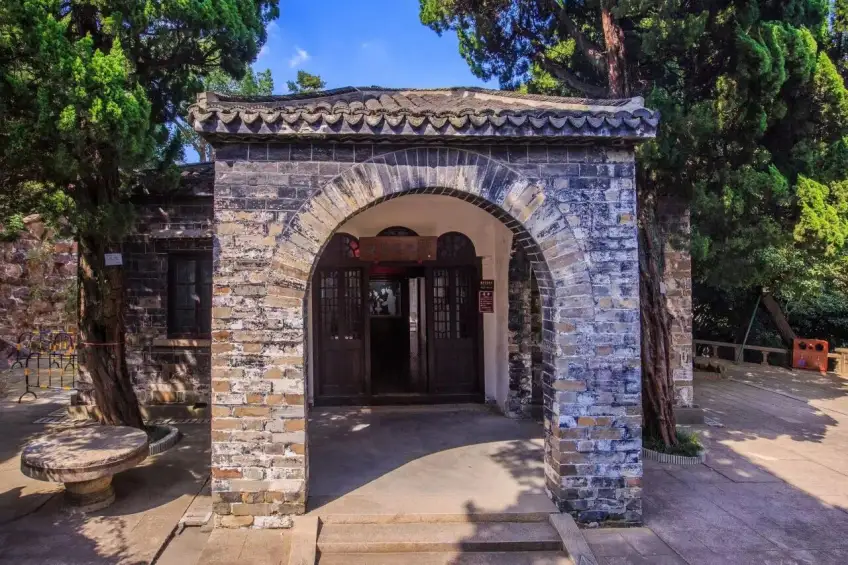
But if you look closely, you'll notice these stone tables are somewhat unusual. The tabletops are thick and heavy, and the stone differs from ordinary bluestone. More importantly, each tabletop has a round hole right in the center—they were originally millstones imported from France. When the Rong family founded the Baoxing Flour Mill in 1901, it was these French millstones that ground its very first batch of flour.
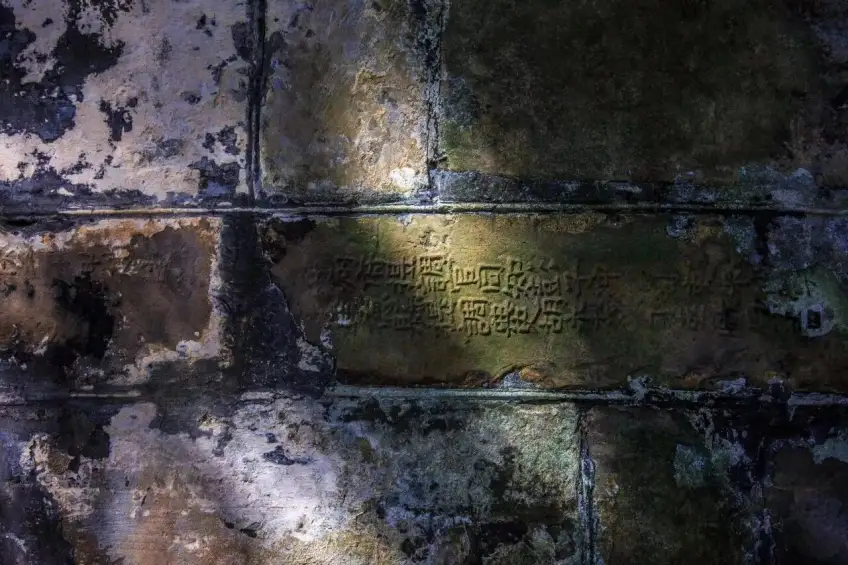
As times changed and technology advanced, stone mills were gradually replaced by more modern steel rollers. But Rong Desheng could never bring himself to throw these millstones away. They were like the "founding fathers" of the family, witnessing every difficult beginning and grinding out their first pot of gold.
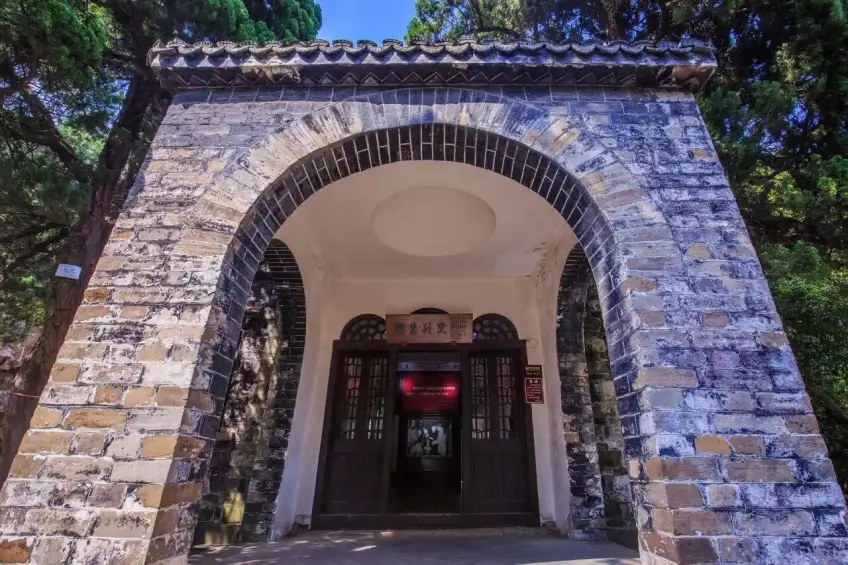
In 1915, Rong Desheng moved these eight millstones into Plum Garden and converted four of them into round stone tables placed in front of Lenong Villa. Why are there only four left in Plum Garden today? Because the other four were collected by a museum so more people could see them. These stone tables are not only the "heirlooms" of the Rong family, but also "living fossils" of China's national industry.
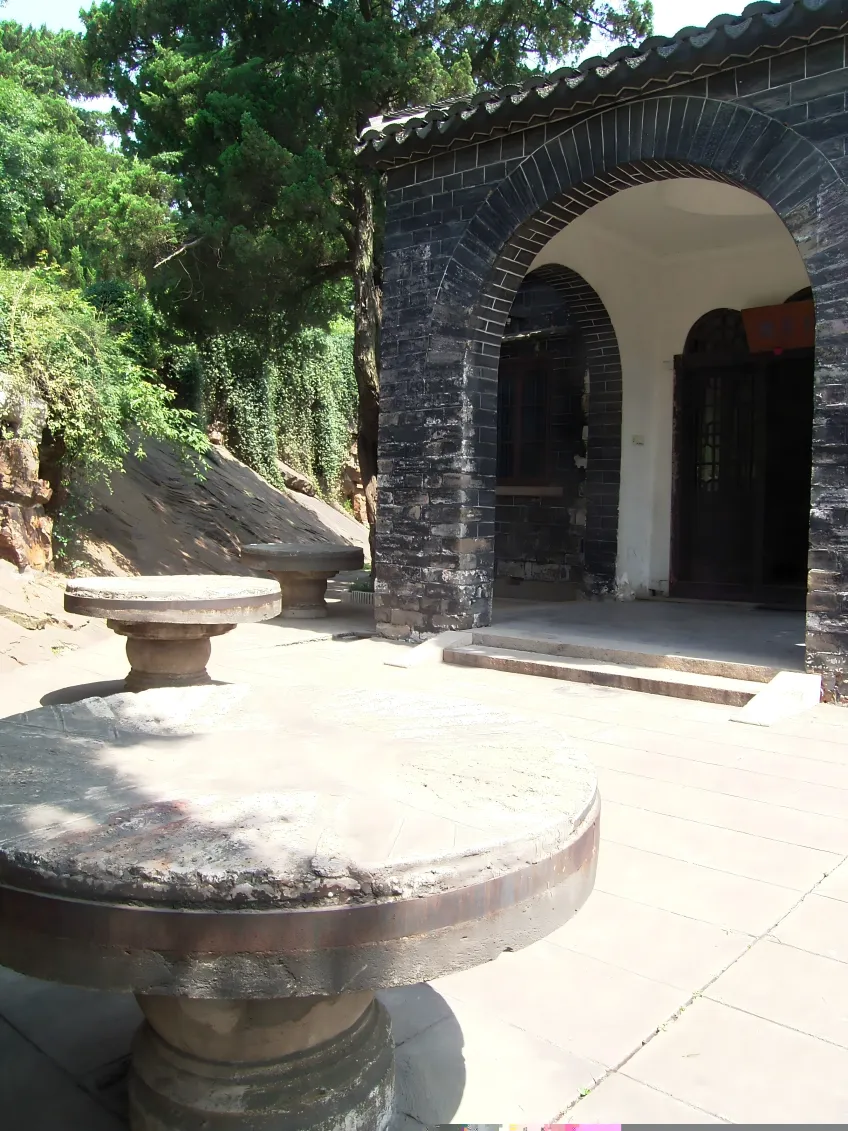
Here you will witness a kind of generosity—the generosity of sharing joy with everyone. Rong Desheng did not lock these "meritorious" relics of his business in a warehouse for his descendants to admire alone. He placed them in the garden so that every ordinary person could touch them and rest beside them.
Nianqu Pagoda: A pagoda, a lifetime of gratitude to parents
In the northwest corner of Meiyuan Plum Garden, you'll find a hexagonal brick pagoda called Nianqu Pagoda. Its design blends traditional Chinese pagoda architecture with Western building techniques. The hexagonal shape is drawn from ancient Chinese pagodas, but its proportions are more slender than most. The upturned eaves are light and graceful, capturing the elegance of Jiangnan architecture while retaining a sense of dignity.
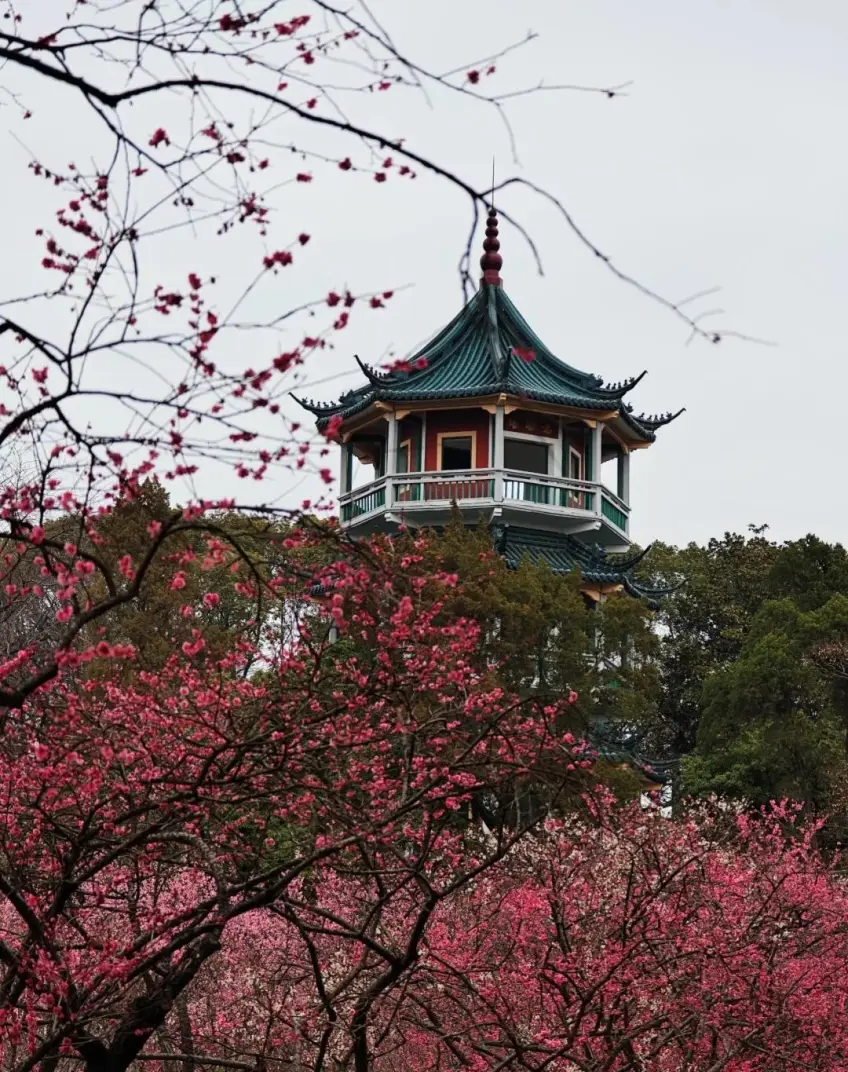
This pagoda was built in 1930 by Rong Desheng to honor his mother and express gratitude for his parents' hard work. By erecting a pagoda at the highest point of Meiyuan, he lifted his longing for his mother high into the sky. Looking south from the pagoda, you can see the vast, misty waters of Lake Tai.
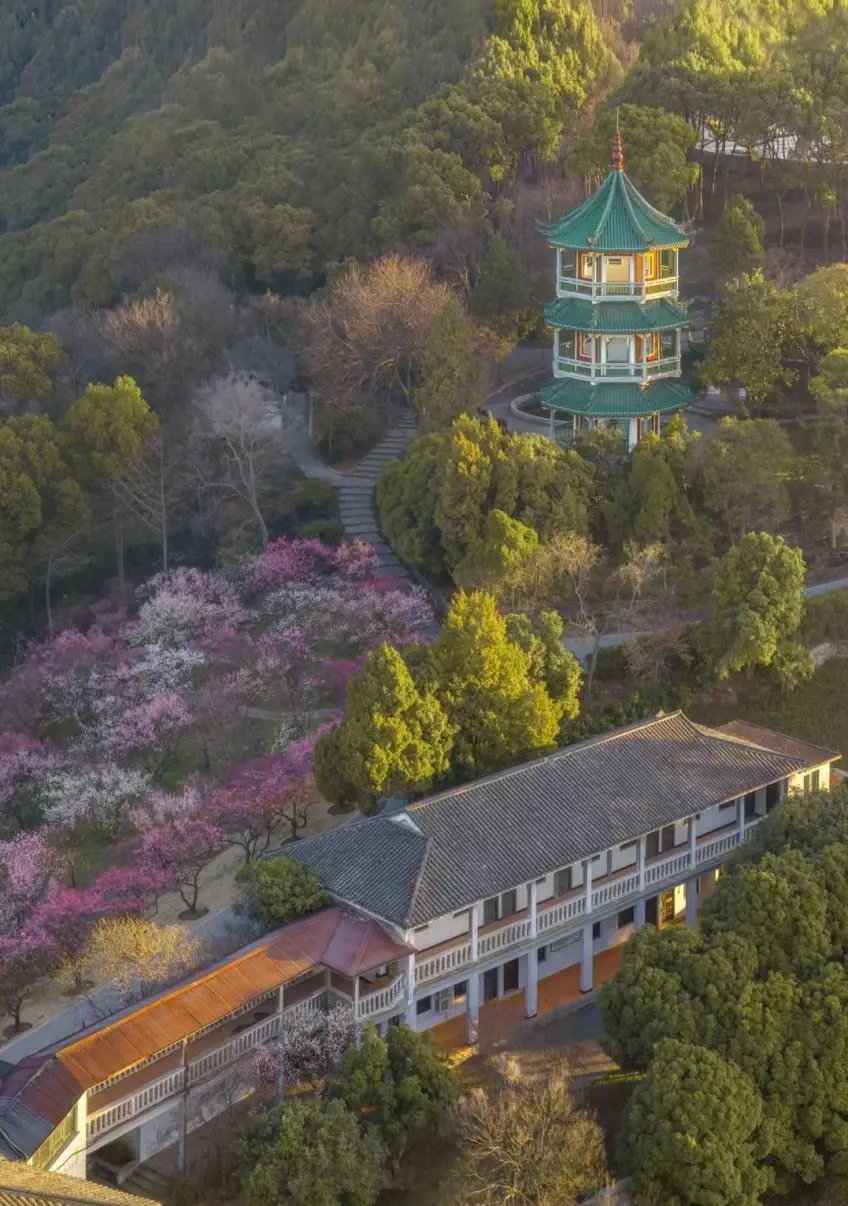
The barren hill Rong Desheng bought back then is now a "sea of fragrant snow." To the west lie the rolling peaks of the Longshan Mountains, offering different scenery with each passing season. To the north is Rongxiang, where he was born and where his mother raised him. Nianqu Pagoda takes its name from that direction.
Wuxi Meiyuan Plum Garden Blossom Viewing Travel Guide
Continue past Nianqu Pagoda toward the back of the hill, and the view ahead is breathtaking. Plum blossoms blanket the slopes in layer upon layer, rolling all the way to the horizon. This isn't just one or two trees, or even a few hundred—it's several thousand plum trees covering 200 mu of forested hills.
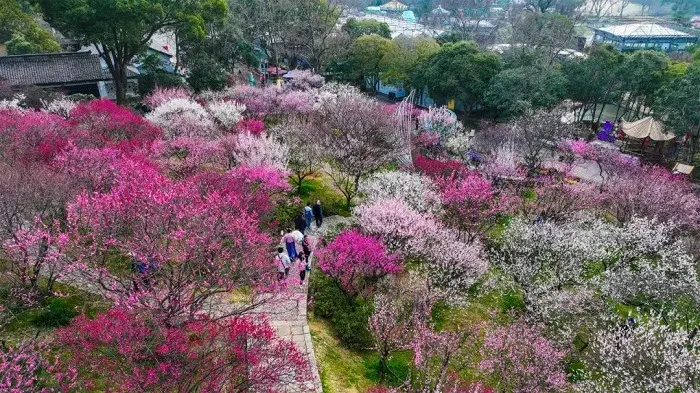
This area can be called the "heart" of Plum Garden, and it is also China's largest base for preserving plum blossom varieties. Every plum tree here has a variety label. For regular visitors, the most interesting thing to do on the back hill is "reading the labels"—you can see dozens of different plum blossom varieties here.
Hidden gems on the back hill of Meiyuan Plum Garden in Wuxi
Continuing west from the back hill of Meiyuan Plum Garden through a wooded area, you'll find an ancient temple with yellow walls and dark tiles. This is Kaiyuan Temple, a Tang dynasty temple restored by Rong Desheng, and a hidden gem in the Meiyuan Plum Garden scenic area that many people overlook.
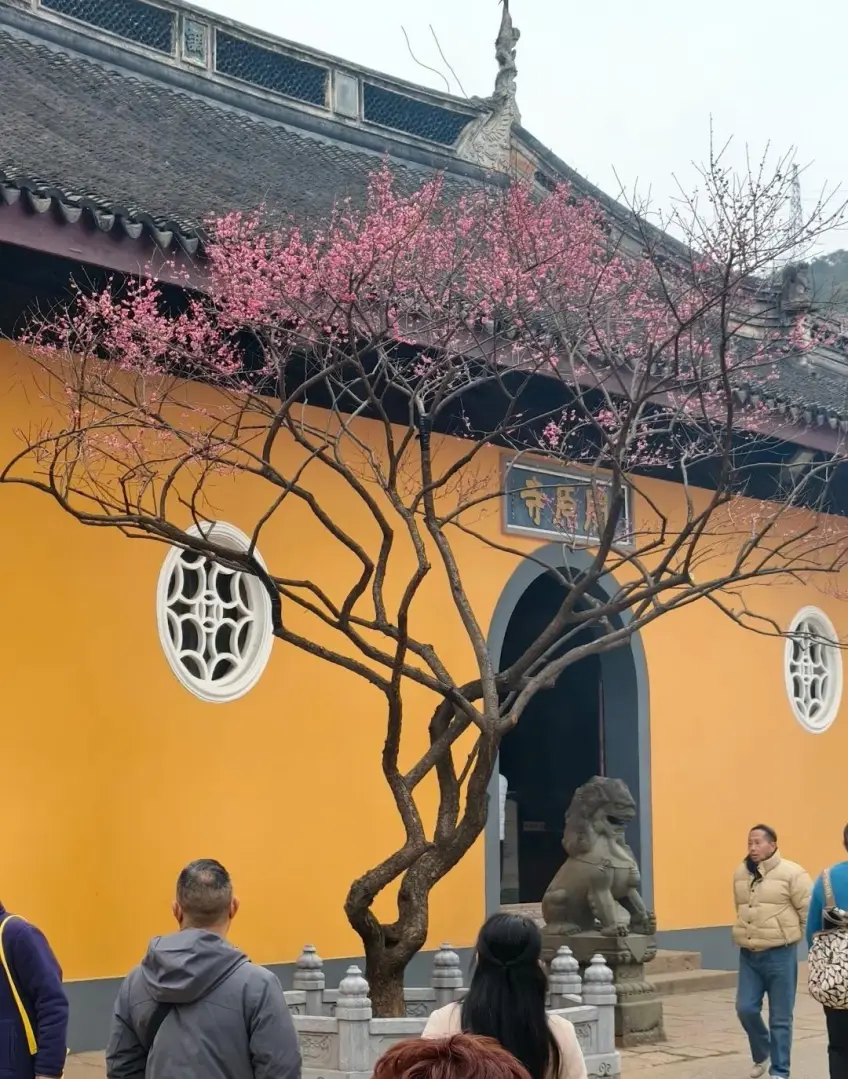
The temple was built following the traditional layout of Han Chinese Buddhist temples. Along the main axis from south to north, you can visit the Hall of Heavenly Kings, Pilu Hall, Mahavira Hall, and the Sutra Library. There is also a Jade Buddha Tower to the northeast.
Wuxi and Nanjing 3-day 2-night private tour | Yuantouzhu (Turtle Head Isle) · Nanjing Museum · Niushou Mountain
A 3-day 2-night private tour starting in Wuxi and ending in Nanjing: Day 1 features a boat ride on Lake Tai at Yuantouzhu (Turtle Head Isle), Plum Garden and Nanchang Street; Day 2 covers Huishan Ancient Town followed by the Nanjing Museum; Day 3 visits Niushou Mountain. Includes transportation, guide, two nights of hotel accommodation and admission tickets. Flights or trains are not included. An English-speaking guide is available upon request.
When should I visit Meiyuan Plum Garden in Wuxi?
By now you're probably wondering: when is the best time to visit Meiyuan? The answer is anytime. Wuxi Meiyuan truly lives up to the saying "not a day goes by without flowers to admire." The garden is worth visiting in all four seasons—beyond the plum blossoms, there are osmanthus in autumn, and azaleas and tulips in spring. At the Wuxi Rong Family Meiyuan, 365 days a year, there are always flowers in bloom and scenery waiting for you.
Rong's Plum Garden best time to visit
Great year-round, with something special in every season:
Spring (March–May): The plum blossoms at Plum Garden have just fallen, while magnolias and cherry blossoms bloom one after another in the temple, with yellow walls setting off the flowers.
Summer (June–August): Ancient trees tower overhead, casting deep shade—a perfect spot to escape the heat and find some peace.
Fall (September–November): Clear skies, fragrant osmanthus, and the especially resonant sound of the temple bell.
Winter (December–February): Wintersweet blooms and snow blankets the ancient temple, creating a deeply Zen atmosphere.