

Origins and naming of Wuxi Plum Garden (Meiyuan)
Meiyuan (Plum Garden) in Wuxi was built in 1912 by industrialist Rong Desheng, who planted plum trees on a barren hill in the western suburbs of Wuxi. He initially bought 1,300 plum saplings from Suzhou, later expanding to over 3,000, and opened the garden to local residents from the very beginning. In 1955, Rong Yiren donated Meiyuan to the state in accordance with his father's dying wish. The story begins on a winter day in 1907. While admiring plum blossoms in Suzhou, Rong Desheng was moved by their spirit of "blooming alone before the world's spring," and recalled a shared dream with his good friend Xu Ziyi: to create a garden for lectures, philosophical discussions, and communion with nature.
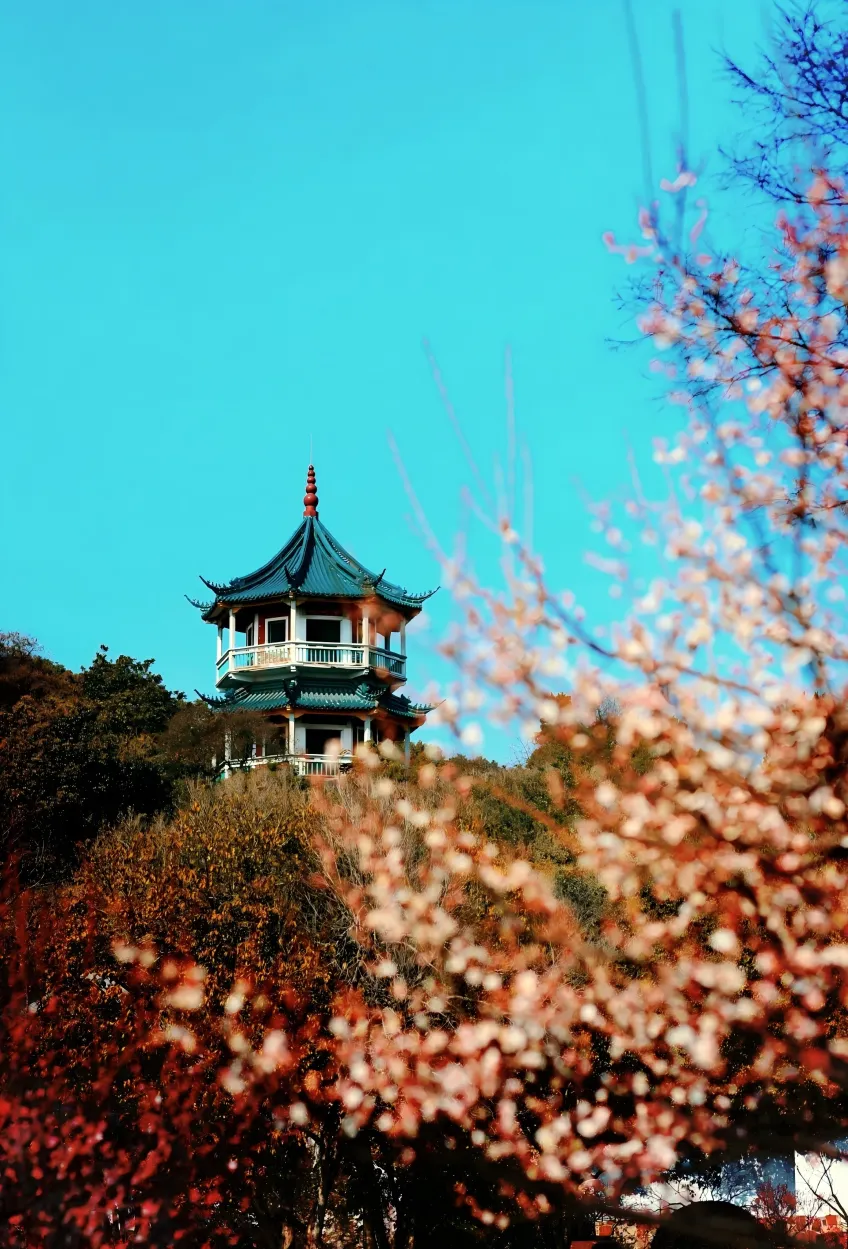
In today's Plum Garden, the shadows of plum branches still often frame Nianqu Pagoda—the garden began with a simple obsession: planting plum trees on a hillside.
To truly understand Rong's Plum Garden in Wuxi, start with a private tour that includes the garden (routes like Xishang Shanyi link Yuantouzhu (Turtle Head Isle) and Plum Garden). To hear the full stories behind Xixin Spring, Sanxing Stone and Songbin Hall, we recommend hiring a private guide to walk with you at your own pace. Need station or airport transfers, or want to visit both Plum Garden and Yuantouzhu (Turtle Head Isle) with a private car? For an itinerary built entirely around your interests, choose a custom private trip. Just tell your travel consultant your travel dates, group size, departure city and what you'd like to explore in the garden.
Five years later, this dream began to take shape.
As time passed, the former peach orchard had long fallen into neglect, but the natural landscape remained intact. He purchased 1,300 plum saplings from Suzhou and personally organized workers to plant them on the hillside. Over the following years, more plum trees were added, eventually reaching over 3,000. The once barren hill gradually became blanketed in plum blossoms.
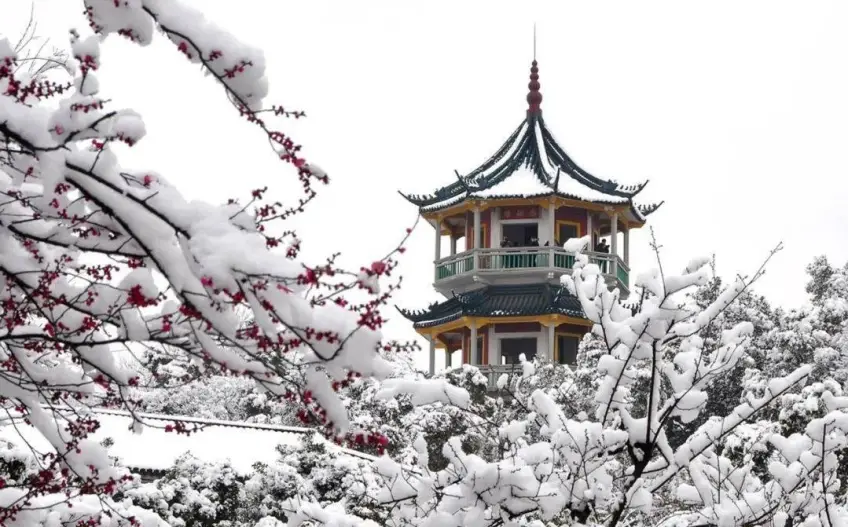
After a snowfall, red plum blossoms weigh down the branches while pavilions rise from fragrant white drifts—the winter scenery of the Plum Garden best explains its name, meaning "plums define the hill."
What should the garden be called?
Looking out over the hills covered in plum trees, Rong Desheng had a sudden insight: "Plant plums on the hill, and let plums define the hill." The barren hill gained a soul through the plums, and the plums found their roots in the hill—so it should simply be called the "Plum Garden."

Pale gold wintersweet blooms in the snow, filling the branches with fresh fragrance—a perfect reflection of the unyielding spirit behind the garden's name.
The name is simple yet profound. It not only captures the garden's theme but also embodies its founder's ideals: the plum blossom's ability to bloom in the cold, resist worldly vanity and fill the world with pure fragrance was a metaphor for the Rong family's own lives and the values they wished to share. Expanded year after year, the Plum Garden grew from Rong Desheng's personal dream of connecting with nature into a sea of fragrant blossoms along the shores of Lake Tai.
The open-door philosophy of Wuxi Plum Garden
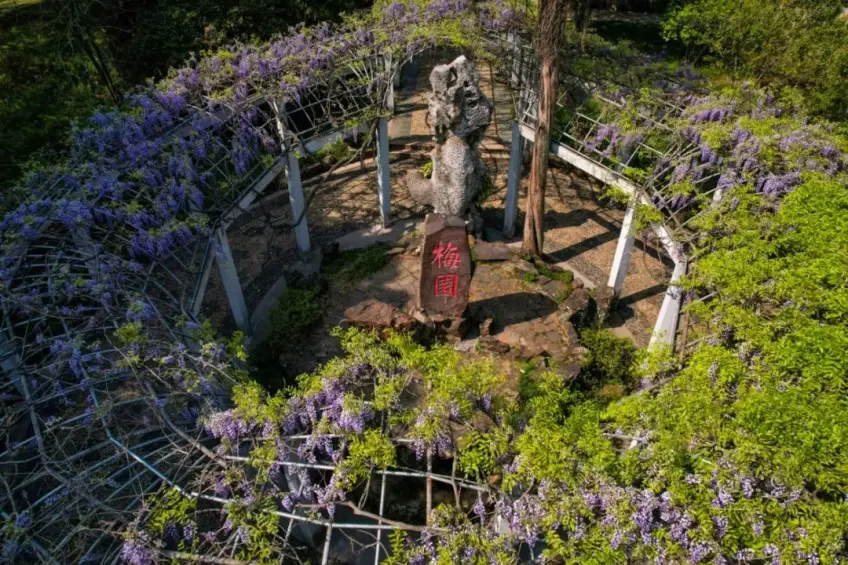
The openness of Plum Garden wasn't simply about leaving the gates unlocked—it reflected the spirit of the place. Since its founding in 1912, Wuxi Plum Garden had no enclosing walls and charged no admission. Visitors could enter at any time, in any season, which was extremely rare for that era.
Rong Desheng emphasized that Plum Garden should serve local residents, especially ordinary people who rarely had the chance to visit a garden, so they too could enjoy its beauty.
What makes Wuxi Plum Garden different from other gardens?
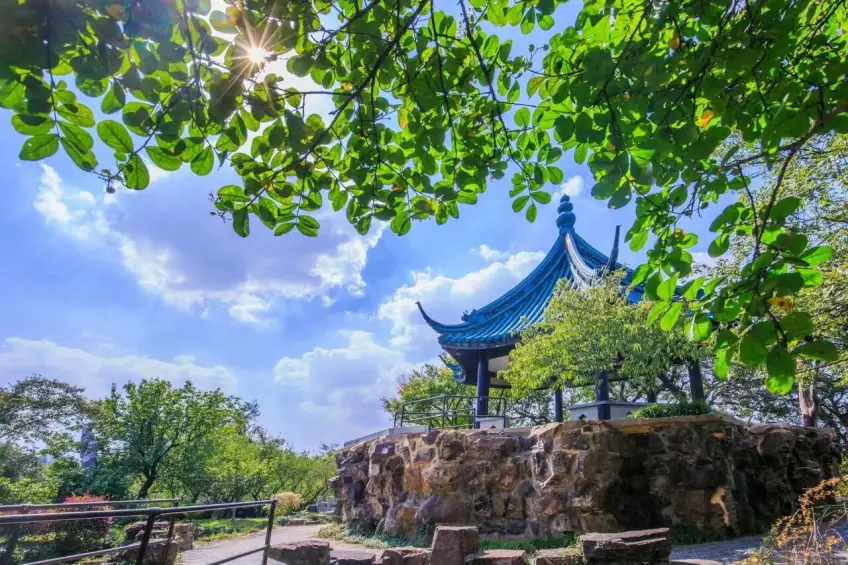
Rong Desheng once recalled that as a young man, he felt regret that none of Wuxi's private gardens were open for casual visits. That regret later inspired Plum Garden's open spirit: "so that the people of my hometown may share in this simple joy." It was never meant for personal enjoyment alone, but to be shared with everyone—that is the true soul of Plum Garden.
Scenery of Wuxi Plum Garden
Although Plum Garden is famous for its plum blossoms, Rong Desheng planned the plantings to cover all four seasons: plum blossoms in spring, lotus in summer, osmanthus in autumn and snow in winter, making the garden "suitable for a visit every single day." The park now also grows tulips.
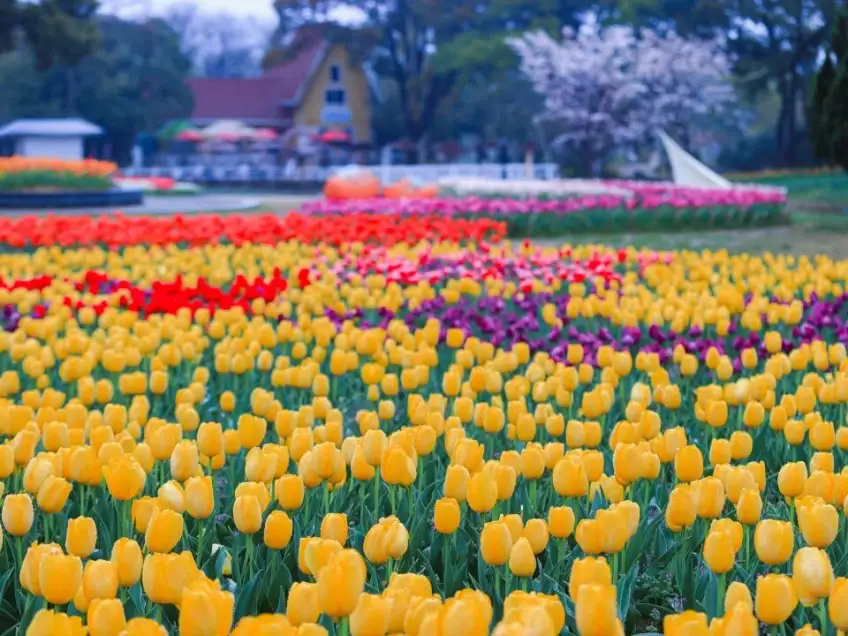
In spring, tulips form a colorful sea of flowers. Even if you miss plum blossom season, you can still enjoy Plum Garden as a year-round garden.
The Rong family's other contributions to the region
Plum Garden is the most famous public project of the Rong family, but by no means the only one.
The Rong family not only founded the Wuxi Public Welfare Industrial and Commercial Middle School, but also established the first comprehensive undergraduate university in Wuxi's history—private Jiangnan University. They also funded the construction of Tongyun Bridge, Wuxi's first modern bridge, along with several highways, greatly improving local transportation.

Old photos of bridges bear witness to improved local transportation—the Rong family's philanthropy went beyond Plum Garden to include roads, bridges, water conservancy and education.
The Rong family funded the dredging of the Liangxi River and built water conservancy facilities, benefiting tens of thousands of acres of farmland on both banks. During famine years, Rong enterprises always set up porridge kitchens to relieve disaster victims; in normal times, they ran homes for poor children and orphans to shelter those without family or support.
Rong Desheng spent a fortune founding Dagong Library, one of China's earliest rural public libraries. Its collection of nearly 100,000 volumes was entirely free to the public. He often said, "If you have the ability, do your best for society." These words are carved into the stones of Plum Garden and live on in the hearts of his descendants. Like Plum Garden itself, these charitable endeavors reflect a single philosophy: "Taken from society, used for society."
A gift: Wuxi Plum Garden, shared with all
In 1955, a decision stunned the city of Wuxi.
That autumn, Rong Desheng's son Rong Yiren formally donated Plum Garden to the state, fulfilling his father's dying wish.
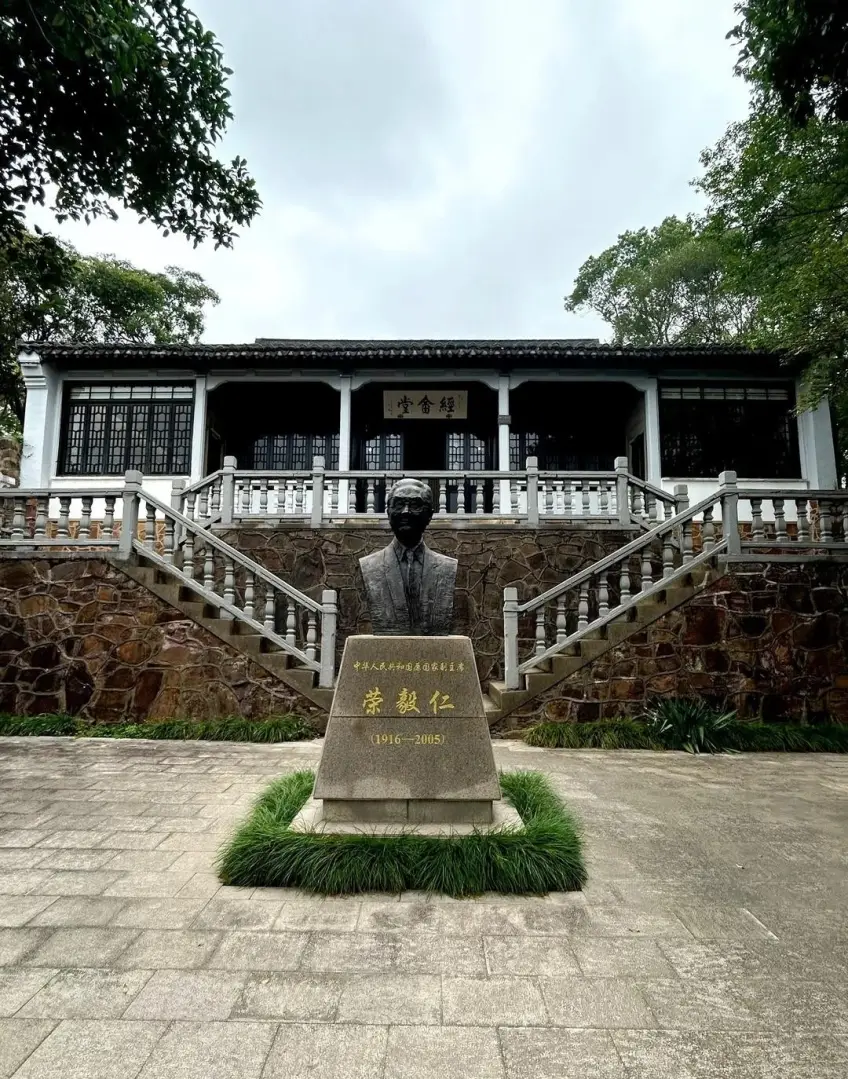
At the donation ceremony, Rong Yiren said only: "My late father built Plum Garden so people could enjoy it. Today I give it to the nation, so it may serve the people forever." It was a donation without conditions. Every plant, every brick and tile, along with the precious stone inscriptions and ancient books Rong Desheng had carefully collected, went to the state. Plum Garden thus became a public park, fulfilling Rong Desheng's lifelong belief that gardens should be open and shared rather than kept private.
The heirloom of Wuxi Plum Garden: a stone table
In the shade in front of Lenong Villa at Plum Garden, there are a few plain bluestone tables and round stone stools.
They look ordinary. When tired, visitors sit here to chat, drink tea, and admire the flowers. But if you look closely, you'll notice these stone tables are a bit special.
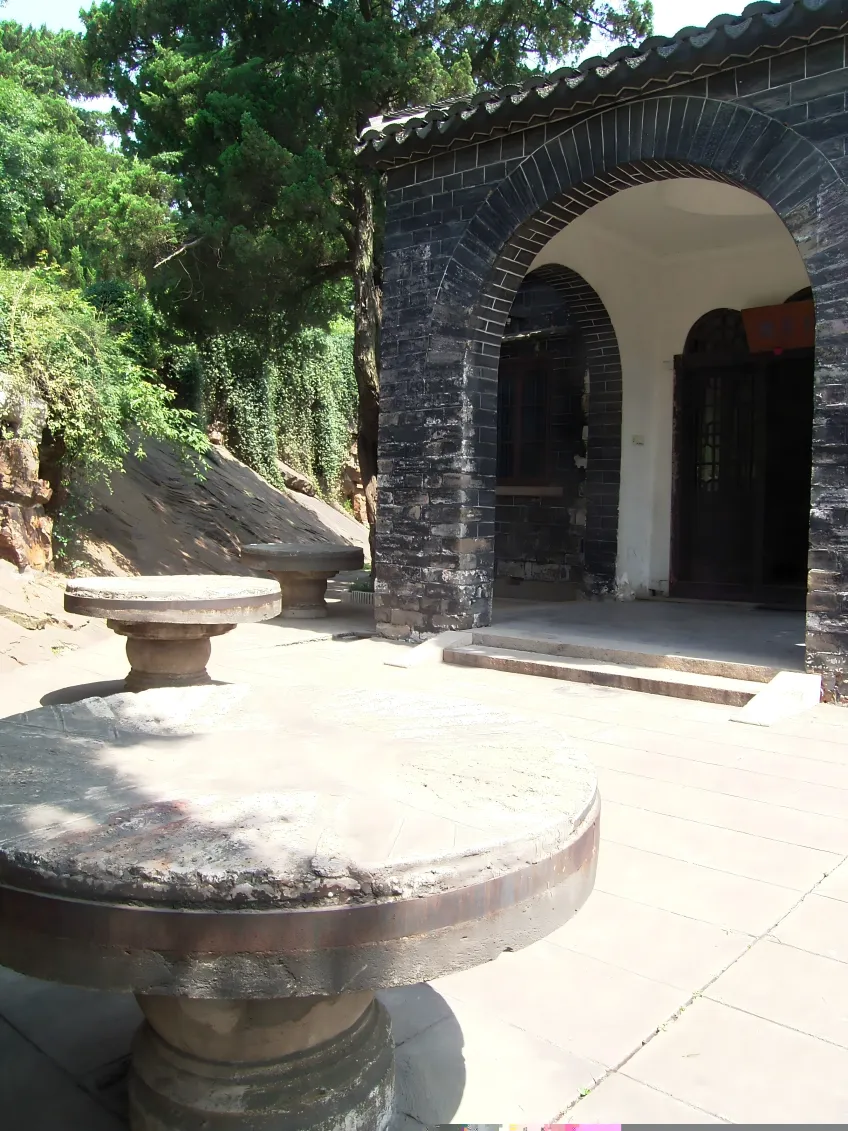
The tabletops are thick and heavy, and the stone differs from ordinary bluestone. More importantly, each tabletop has a round hole right in the middle. These were actually millstones imported from France for Baoxing Flour Mill, the first factory founded by the Rong brothers. Rong Desheng moved these four millstones into Plum Garden, converted them into round stone tables, and placed them in front of Lenong Villa. The millstones that once turned day and night, grinding countless tons of flour, now rest quietly here for visitors to take a break.
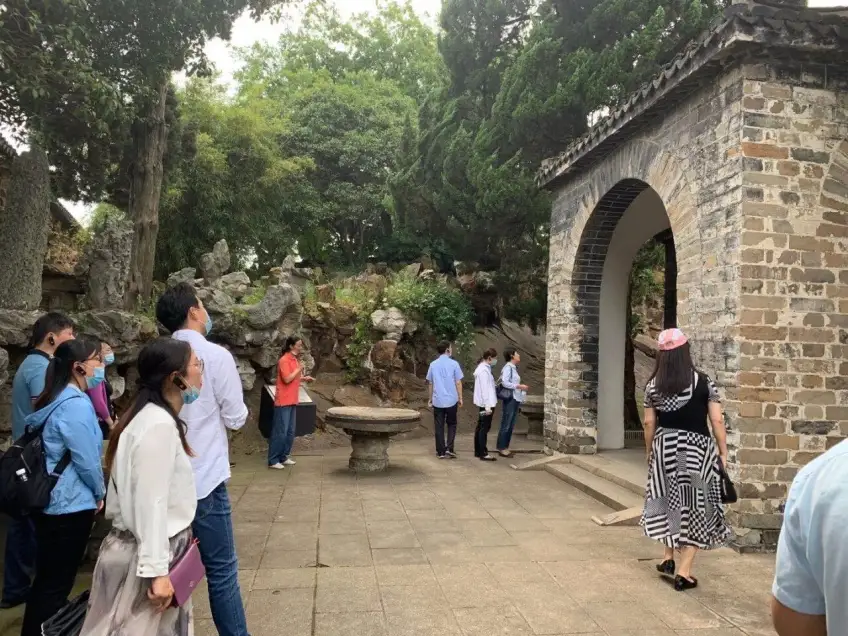
Visitors pause between the stone tables and the archway — this family heirloom isn't a distant museum exhibit, but an everyday place to sit and rest.
These stone tables became the "family heirloom" of the Rong family, a testament to their entrepreneurial beginnings a century ago and a monument to the development of China's national industry and commerce. Today, when you sit at one of these tables and run your fingers over the smooth stone, you're making intimate contact with history from over 100 years ago. You can set down a cup of tea, let your kids play around it, or lean against it to rest after admiring the plum blossoms — touched by generation after generation, this is the best way to remember.
Must-see spots at Wuxi Plum Garden
Next up are three must-see spots. If your time is limited, no visitor should miss them. They may look ordinary—a clear spring, a few unusual rocks, and a traditional hall—but each has its own story, together telling of the Plum Garden's seasonal beauty and century-old memories.
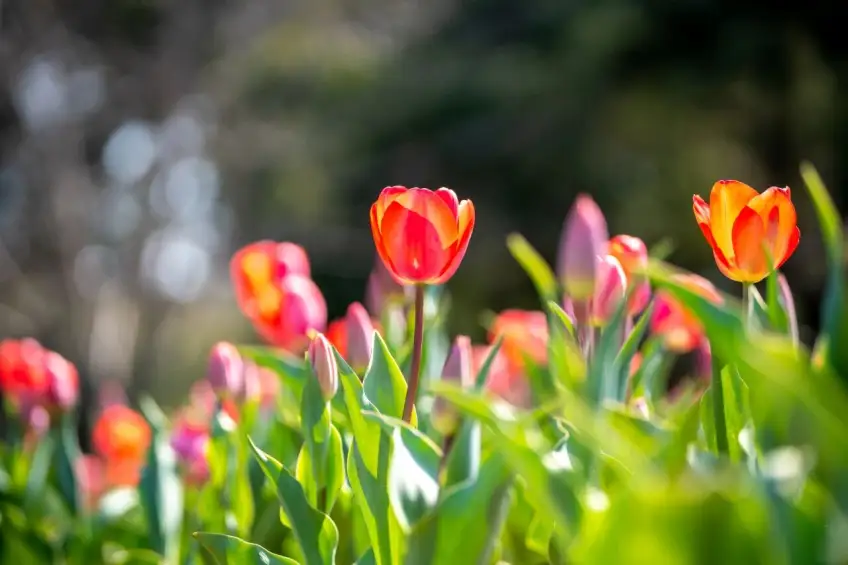
Orange-red tulips bloom in the spring sunshine—today, Wuxi Plum Garden has expanded to nearly 1,000 mu with many attractions, but its core story remains hidden in the historic area.
If you're short on time, don't miss these three spots:
Xixin Spring at Wuxi Plum Garden
The first must-visit spot in the Plum Garden is Xixin Spring. The spring is lined with yellow stones, its water crystal clear down to the bottom, flowing abundantly year-round as it rests quietly there.
Why is it called Xixin Spring?
The answer is carved into the garden's rock wall: "Wash an object and it becomes clean; wash the heart and it becomes pure."
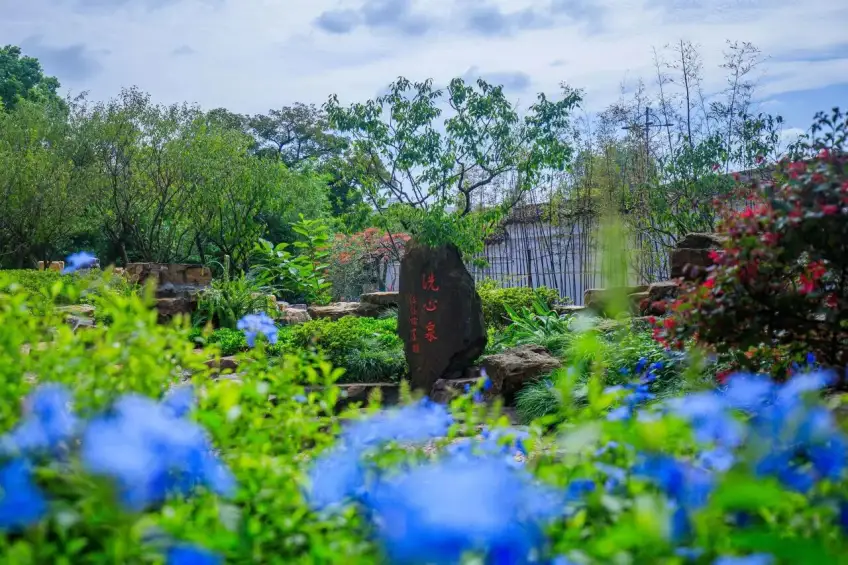
The owner once explained: "To cleanse the heart means to wash away the invisible stains within. A heart should be clear and open, just like this transparent spring water. I named it 'Xixin Spring' (Heart-Cleansing Spring) to remind myself, not to actually use spring water to wash people's hearts."
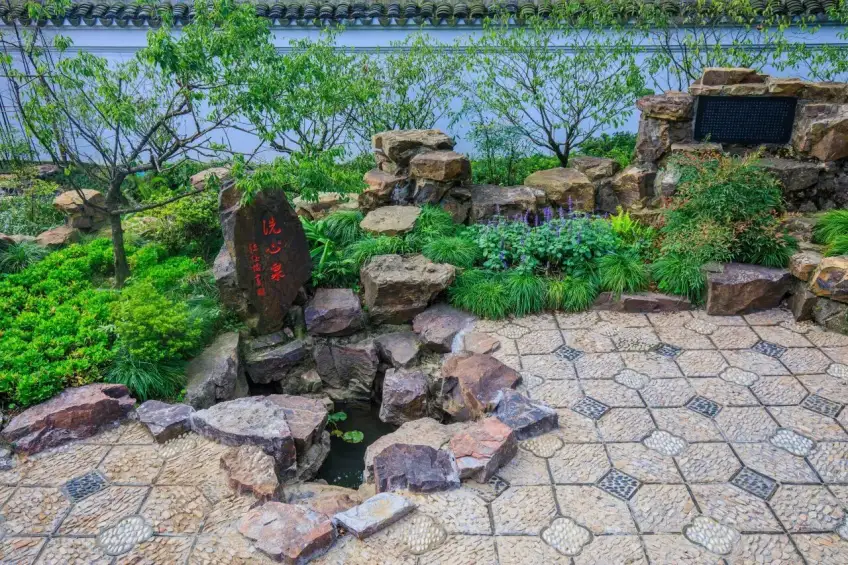
If you stand beside Xixin Spring and gaze at the clear water, we suggest reading the inscriptions on the rock face and pausing to reflect: in this noisy world, have our hearts also gathered dust? Do we still remember our original intentions? Sitting by the spring and listening to the murmuring water also helps you better understand the owner's philosophy in building the garden.
Tianxin Terrace and Three Stars Stones at Wuxi Plum Garden
Tianxin Terrace is one of the highest points in Plum Garden. From here, the entire garden unfolds below. In spring, the grounds become a fragrant sea of blossoms; at other times, you can look out over the misty waters of Lake Tai in the distance and enjoy the garden's finest views up close.
Below Tianxin Terrace stand three unusual stones, symbolizing the three simplest wishes in Chinese culture: fortune, prosperity, and longevity. Each stone has a unique shape, and they are said to have been carefully selected from Lake Tai by Rong Desheng.
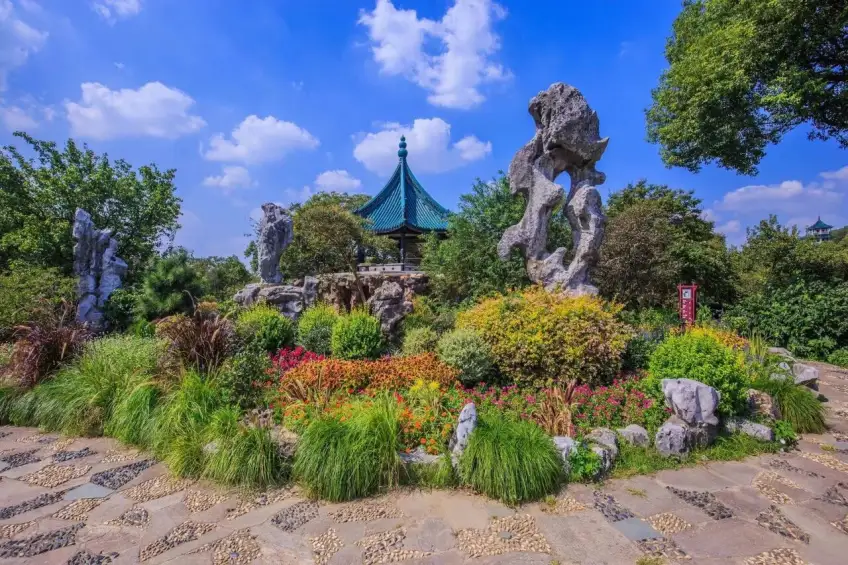
Tianxin Terrace pavilions framed with curious rocks and flower paths—view the garden from above, read the stones from below. The rhythm is just right.
Let's take a look at these three uniquely shaped stones, each with its own distinctive posture!
The first resembles a kind old man with a slightly hunched back — the "Star of Longevity," symbolizing health and a long life;
The second resembles a graceful woman cradling a baby. This is the Star of Prosperity, symbolizing career success and a happy family.
The third looks like an elegant young man with flowing robes. This is the Star of Fortune, symbolizing a lifetime of happiness and good fortune.
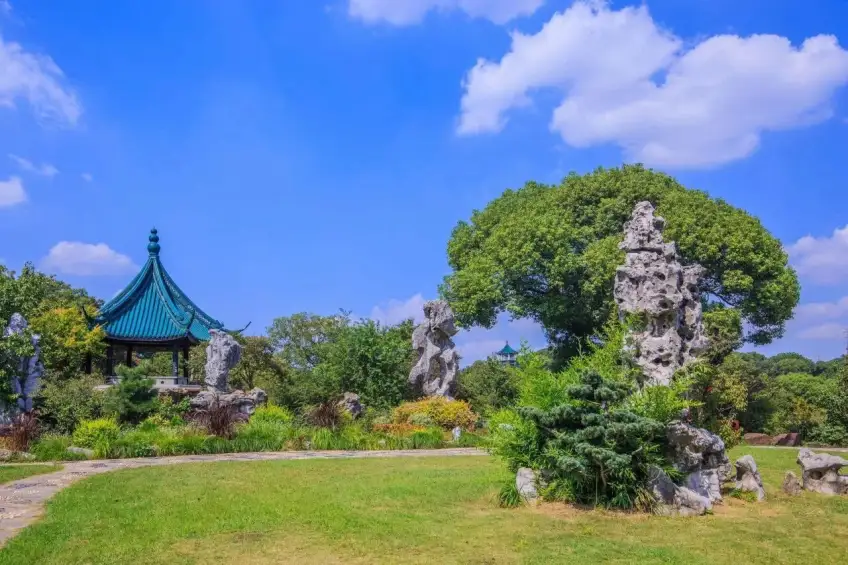
Chinese people often say "Three Stars Shining Bright," referring to these three stars. They are not distant deities, but the simplest human wishes: for health, success, and happiness.
Standing before the Three Stars Stones, you don't need to know Chinese mythology to feel their warmth. Whether you come from the East or the West, health, success, and happiness are universal desires.
Understanding the spirit of Plum Garden at Songbin Hall
Songbin Hall is the main building of Plum Garden. The name "Songbin" comes from the "Odes of Bin" in the Book of Songs, China's oldest poetry anthology.
"Bin Odes" is a collection of folk songs from the Bin region over 3,000 years ago during the Zhou Dynasty, describing farm work through the four seasons: plowing in spring, weeding in summer, harvesting in autumn, and storing in winter. People lived by nature's rhythm, sweating on the land and receiving its gifts in return.
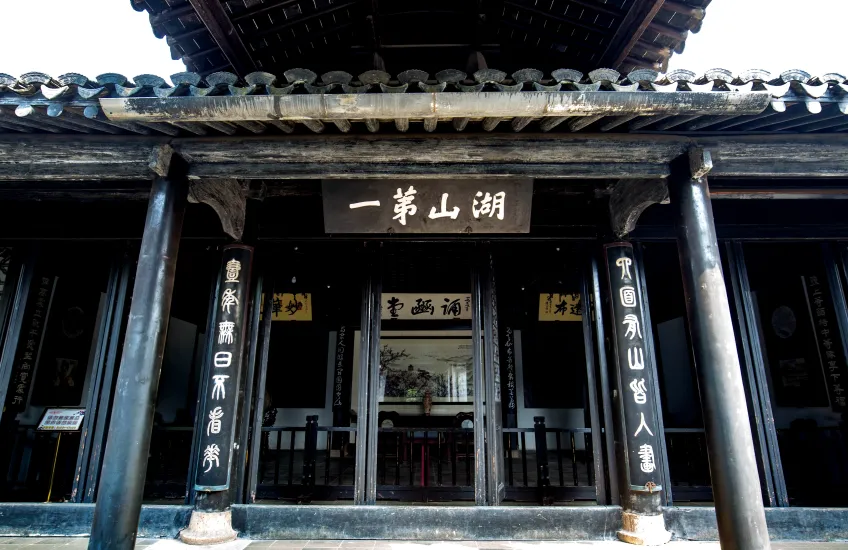
The plaque reading "First Among Lakes and Mountains" hangs high above the hall's entrance. Step into Songbin Hall, and you'll first understand the garden owner's reminder to himself never to forget his farming roots.
This also tells us: no matter how far we go, never forget our roots—and those roots are the land and farming.
Traditional Jiangnan gardens were mostly privately owned, with high walls and deep courtyards keeping outsiders at bay. Owners locked the beauty behind their gates for themselves, family, and friends alone. Rong Desheng did things differently. From the very first day of construction, he declared that "sharing joy is better than enjoying it alone," making clear this garden was built not for himself, but for everyone.
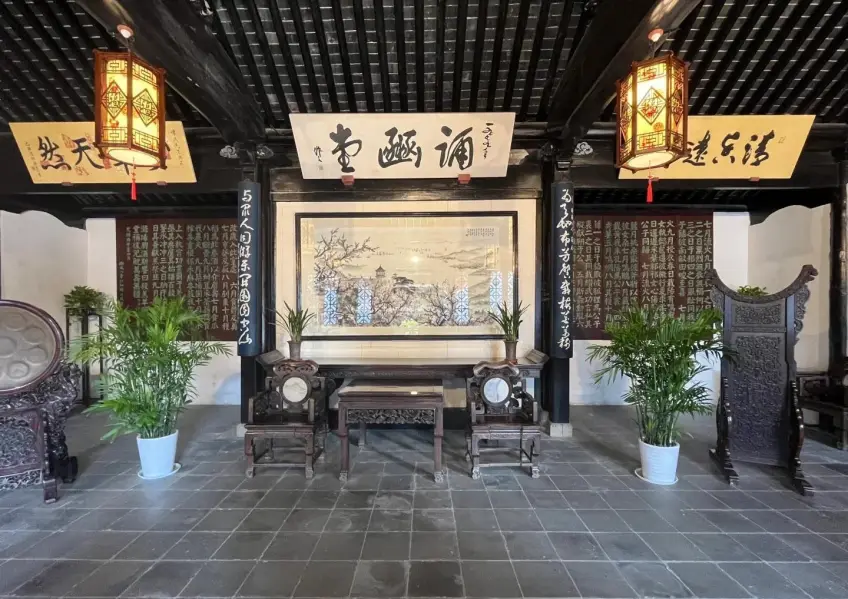
Inside the hall, plaques, calligraphy, paintings, and rosewood chairs are arranged in neat symmetry. A private garden transformed into a shared joy—its spirit is written right here in this hall.
This is the selfless spirit of Plum Garden: a small pastry tastes sweet when eaten alone, but share it with others and the sweetness multiplies. Beautiful scenery is lovely to one person, but when more people enjoy it together, that beauty takes on deeper meaning. Why are plum blossoms beautiful? Because they bloom in the bitter cold, bringing the earliest news of spring to everyone. Why was Plum Garden built? To share the most beautiful scenery with every ordinary person.
Wuxi, Yangzhou and Zhenjiang 4-day 3-night private tour | Yuantouzhu · Lingshan · Slender West Lake
A 4-day 3-night private tour starting in Wuxi and ending in Yangzhou: boat ride on Lake Tai at Yuantouzhu (Turtle Head Isle), Plum Garden, Nanchang Street and Nianhua Bay; after the Lingshan Grand Buddha, head to Dongguan Street in Yangzhou; Slender West Lake and Daming Temple; on the last day, Jinshan Temple and Beigu Mountain in Zhenjiang. Includes transport, guide, hotels and admission tickets. Foreign-language guides available.
The story of Nianqu Pagoda at Wuxi Plum Garden
In the northwest corner of Meiyuan stands a landmark building: Nianqu Pagoda. It is an octagonal brick pagoda, three stories tall and about 18 meters high, with gray bricks and dark tiles and upturned eaves that stand out vividly against the plum grove.
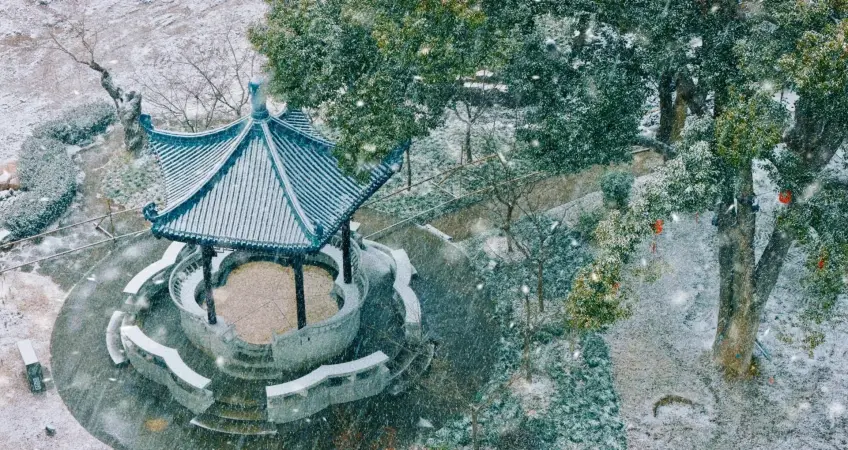
The blue-tiled pavilion is wrapped in white snow — before and after a winter climb, the garden's pavilions and pagoda silhouettes often frame the same picture.
The Rong brothers built this pagoda here to honor their parents. It is a simple yet deeply moving story.
That year marked the 80th anniversary of the birth of Mr. Rong Xitai and his wife, Madam Shi. Their parents had been gone for many years, but their sons' longing never faded.
The pagoda is named Nianqu, which in plain words means: "My dear parents, who gave me life and raised me, endured so much hardship."
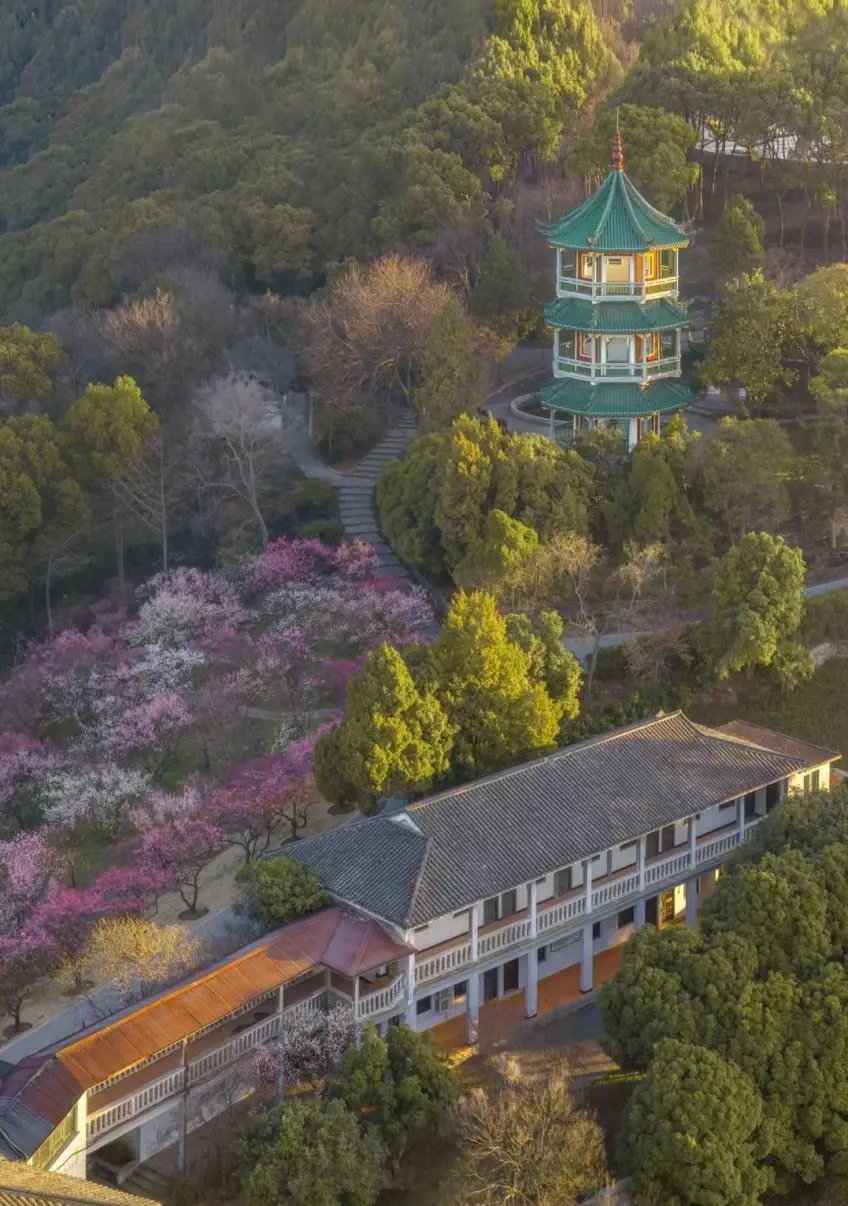
Nianqu Pagoda rises above the plum grove, offering a sunset view of the entire garden — remembrance was placed at the highest point of Plum Garden.
In Chinese culture, pagodas are often built to express reverence. The pagoda has windows, and as you spiral up its narrow interior stairs, the view opens up with every floor.
At the top, the panorama suddenly unfolds. That's when you understand why they built the pagoda here: to place their longing for their parents at the highest point of Plum Garden. Whenever they missed their parents, they could climb to the top, a little closer to the sky — and feel a little closer to them.
Welcome to Wuxi Plum Garden
Welcome to Plum Garden. Let me tell you the story of this place.
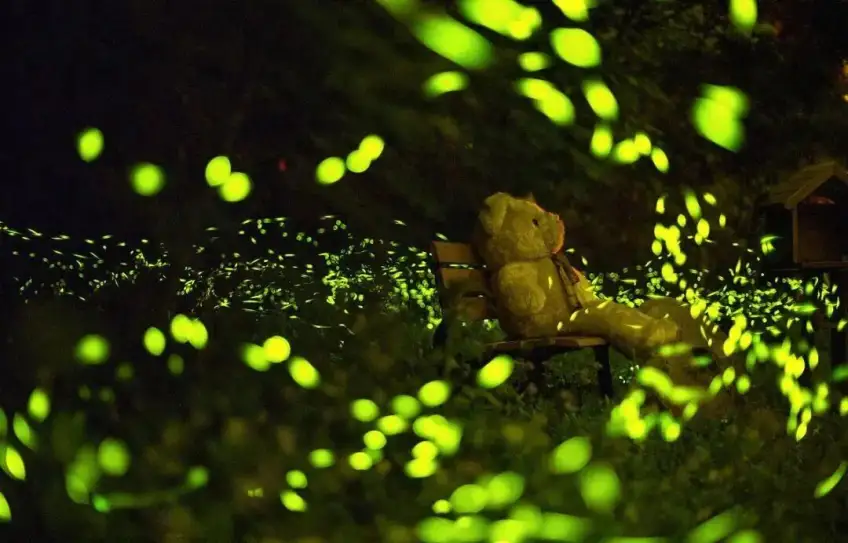
On summer nights, fireflies light up the garden paths—Plum Garden isn't just about winter plum blossoms; it has its own nighttime magic in summer too.