

Humble Administrator's Garden Travelogue: Stepping into a 500-Year-Old Garden from the Metro
The Humble Administrator's Garden is on Dongbei Street in Suzhou's old town. Take Metro Line 6 to Humble Administrator's Garden & Suzhou Museum Station, and it's about a 5-minute walk from the exit. The garden is divided into eastern, central and western sections, plus a southern residential area: the east is open and airy, home to Lanxue Hall and Furong Pavilion; the center revolves around a pond, where you'll find Yuanxiang Hall, Lotus Breeze Pavilion, Xiaofeihong Bridge and Xiangzhou Boat; the west is more compact, with Mandarin Duck Hall, Yushuitongzuo Pavilion and Liuting Pavilion. Adult tickets are ¥80 in peak season and ¥70 in low season. Below I'll follow my actual route from east to west.
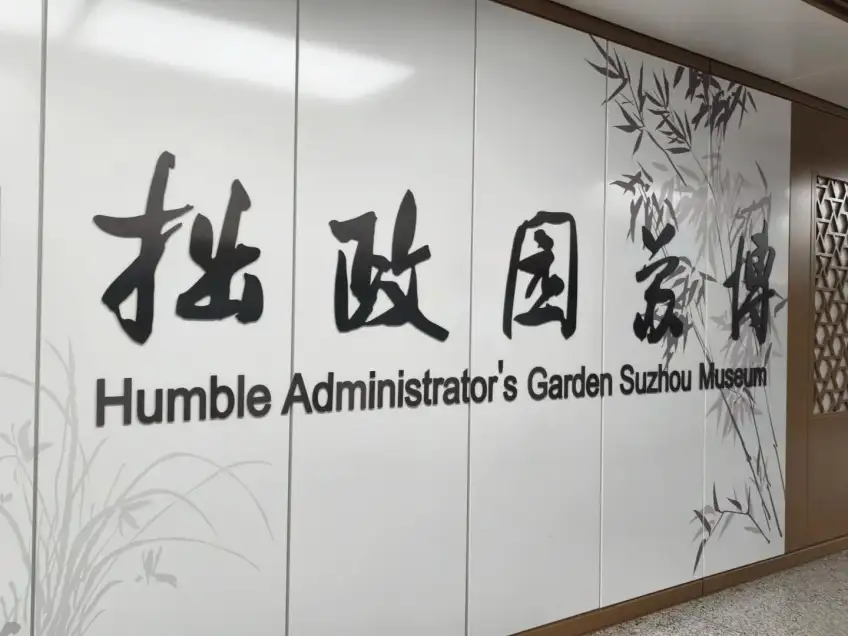
In the concourse, the characters for "Humble Administrator's Garden" and the bamboo-patterned walls immediately immerse you in Jiangnan culture; before passing through the gates, look up at the signs so you don't have to double back.
If you're worried about missing the stories behind the sights during independent travel, you can first ask about hiring a guide at the garden. For high-speed train or airport transfers, or getting between gardens, using a private car or station transfer is more hassle-free. To combine Humble Administrator's Garden with Lingering Garden and the museum in one day, check out private tours or go further with a custom private trip. Just send your group size, dates and departure city to customer service for an assessment.
A Gift from the Humble Administrator's Garden
Why do I recommend this route for visiting the Humble Administrator's Garden? Not only is it convenient, but this is also one of the most distinctive metro stations in China. Before you even step into the Humble Administrator's Garden—in fact, before you've even passed through the ticket gates—your Humble Administrator's Garden journey has already begun. Step out of Suzhou Metro Line 6 at "Zhuozhengyuan Subo Station," and the station's unique design becomes ancient Suzhou's first gift to you.
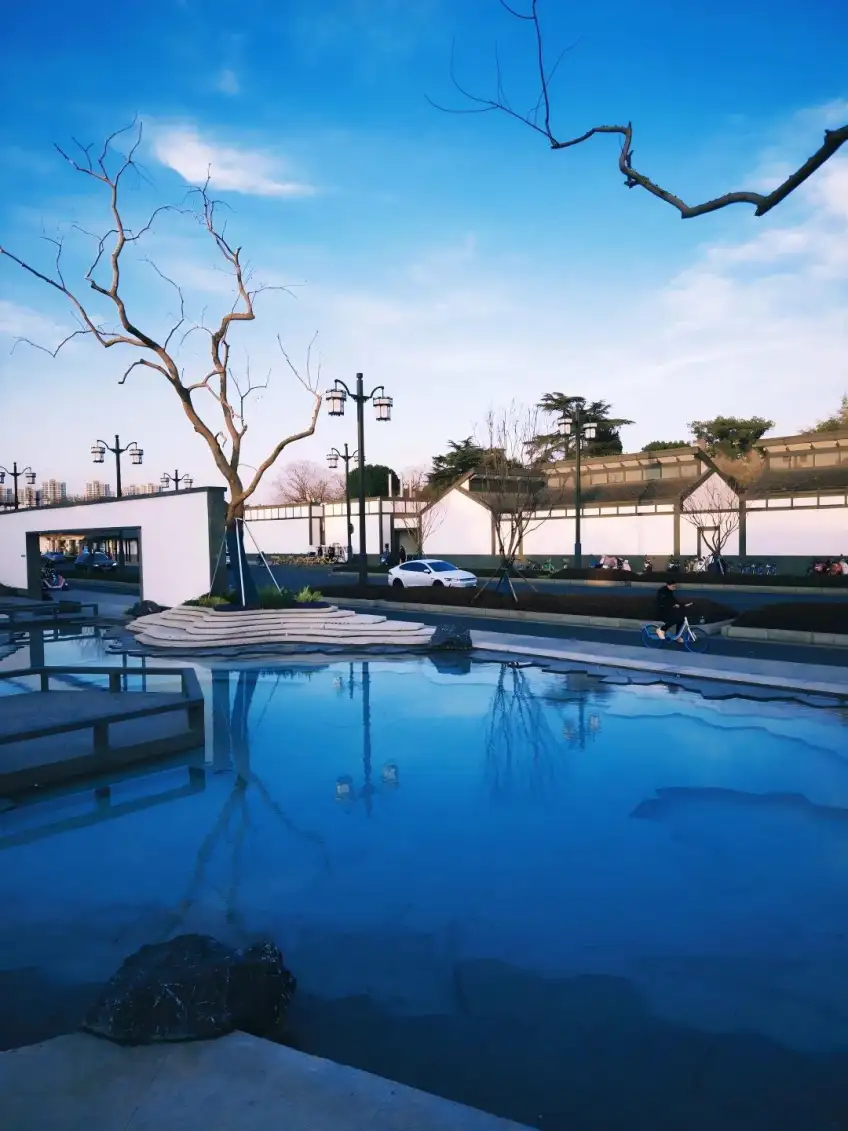
The moment the train doors open, you step straight into a Jiangnan ink painting. The highlight for me is the leisure water plaza outside the station. Its design cleverly borrows the iconic triangular rooflines of the Suzhou Museum and the ornamental window patterns of the Humble Administrator's Garden, creating a garden atmosphere of "four-season elegance" that blends modern and traditional art.
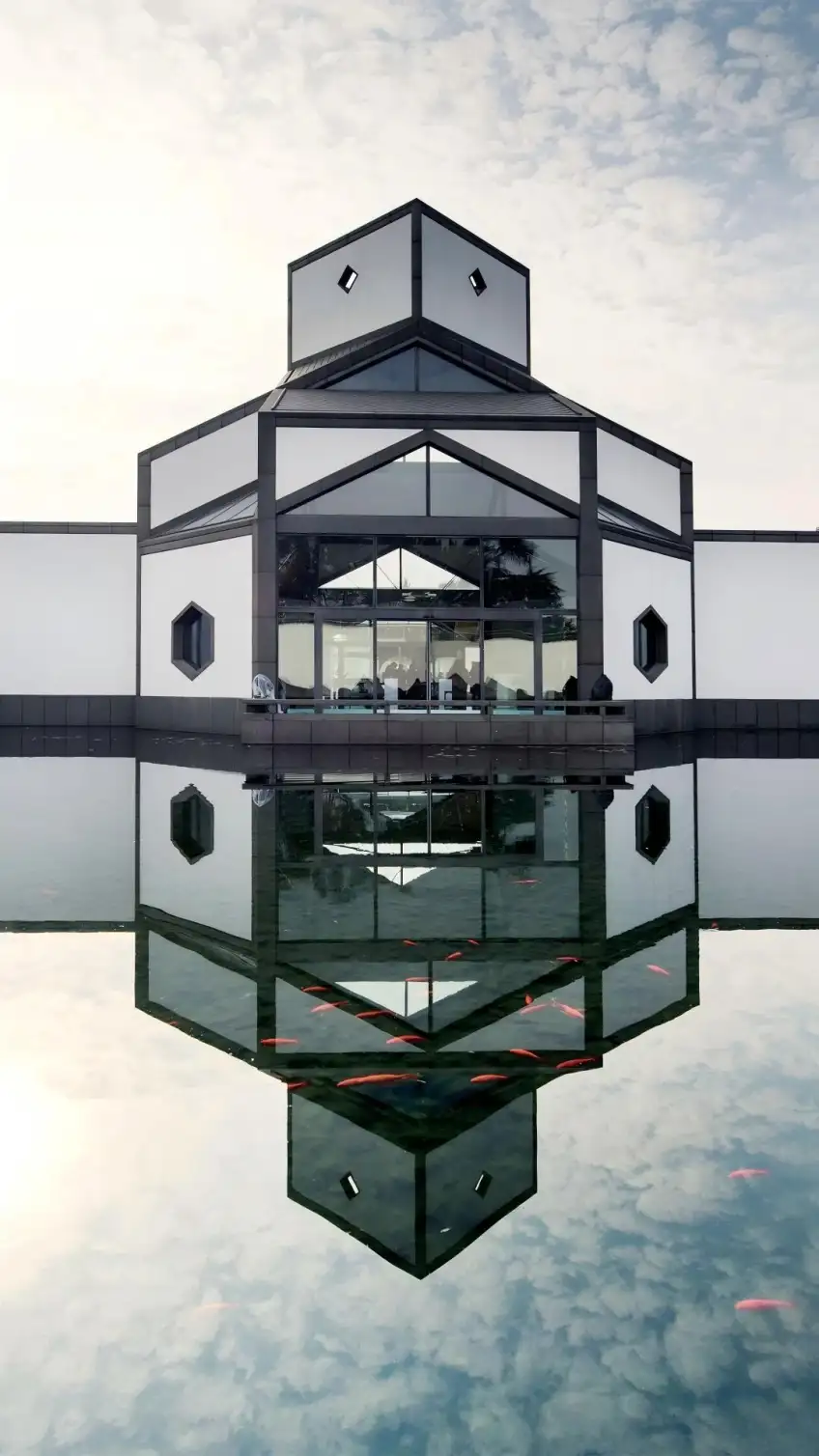
This isn't just a transit hub—it feels like stepping through time where modern design meets classical charm. As you leave the station, the fatigue of your commute quietly washes away in the classical aesthetics. Here's how to get to the Humble Administrator's Garden.
Suzhou Humble Administrator's Garden Transportation Guide
By Metro
The metro is the best option. Take Line 6 to Zhuozhengyuan Subo (Humble Administrator's Garden & Suzhou Museum) Station. We recommend using Exit 2 and walking about 5 minutes to the East Gate, which leads straight into the heart of the scenic area.
If you arrive in Suzhou by high-speed train, take Line 2 or Line 4 from Suzhou Railway Station and transfer once to Line 6 for direct access.
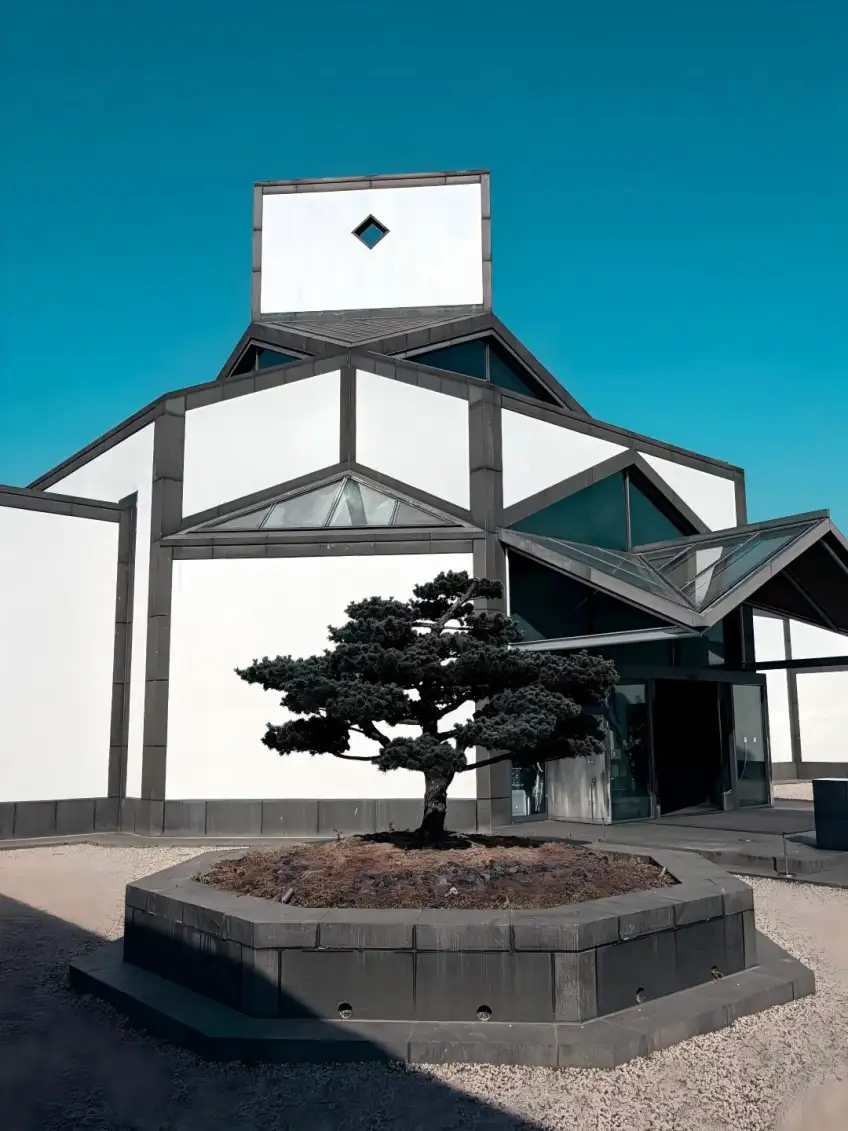
The right-angle composition of the bonsai pine and white walls out front is very "I.M. Pei." After taking your photos, turn around to find the East Gate of the Humble Administrator's Garden—don't let your visit end at the museum.
By Bus
By bus, take routes Tour 1, Tour 2, or 40 and get off at the "Humble Administrator's Garden" stop. Parking spaces are limited near the entrance, so driving directly to the gate and parking for long periods is not recommended.
If you're planning a trip to Suzhou, join one of our Suzhou day tours below to see all the highlights.
Suzhou private day tour | Suzhou North Station pickup and drop-off, Humble Administrator's Garden, Hanshan Temple
A private day tour with pickup and drop-off at Suzhou North Station: visit the Humble Administrator's Garden in the morning, then Hanshan Temple and Shantang Street, and return to the station in the evening. Ideal for travelers arriving in Suzhou by high-speed train. Includes transportation, a guide and admission tickets. English and other language guides available.
Humble Administrator's Garden Attractions
Entering from the south gate, you first step into the eastern section. This area is wide and open, with few buildings, but the sense of space stretches out, gently drawing your gaze deeper into the garden.
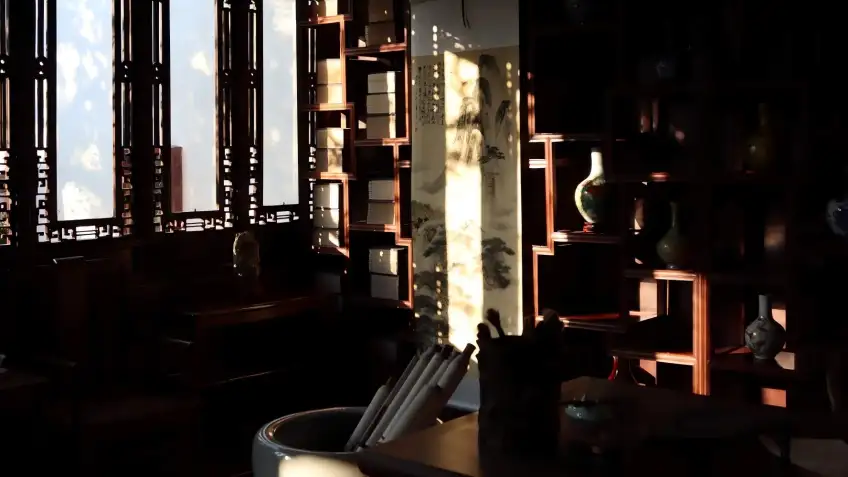
East Section of Humble Administrator's Garden – The Preface to a Book
The first hall you see after entering the garden is Lanxue Hall, named after Li Bai's line, "Standing alone between heaven and earth, a clear breeze scatters orchid snow." In China, orchids and snow have long been used as metaphors for the noble purity and refined elegance of a gentleman. This was the first statement of character the garden's owner set down.
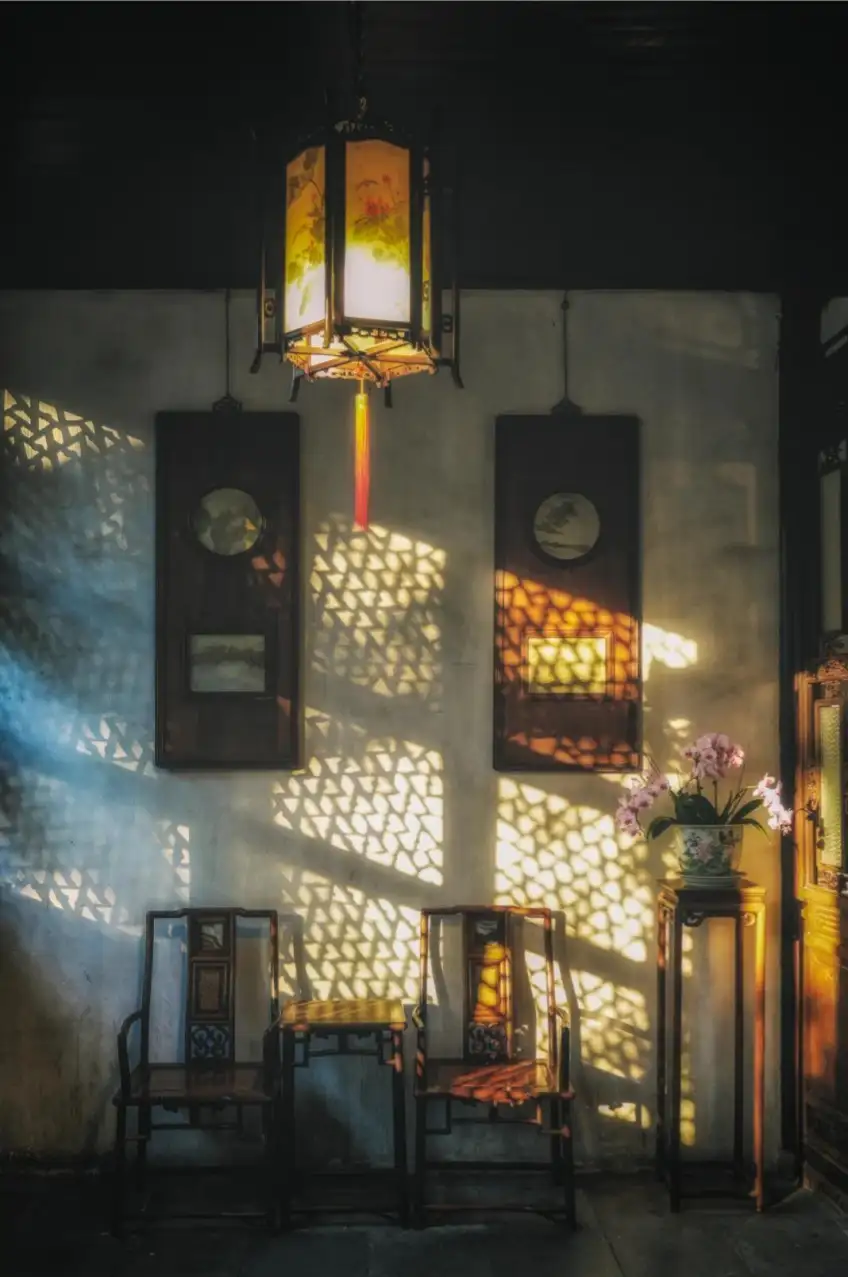
The interior is simply furnished with tables, screens and hanging scrolls. Pass through the hall—you still need to walk further to reach the real garden.
Follow the path northeast, and not far ahead you'll see Furong Pavilion.
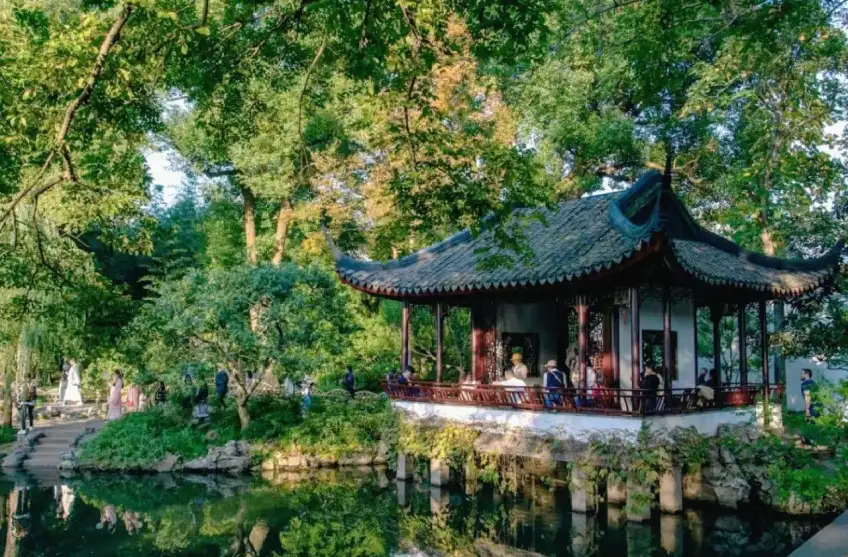
This is a small waterside structure. A pond lies before it, with a few red fish drifting lazily. Visit in summer and the lotuses bloom—Furong Pavilion lives up to its name. Come in other seasons and the broad water mirrors the sky and clouds, offering its own quiet pleasure in watching them drift by.
Continuing along the east bank, you can feel the spacious, pastoral blank space. Shuxiang Hall takes its name from the fragrance of ripening grain; it was once where the garden's owner gazed out over the fields and savored the joy of retreat. Today the city bustles outside, but the name remains a gentle reminder.
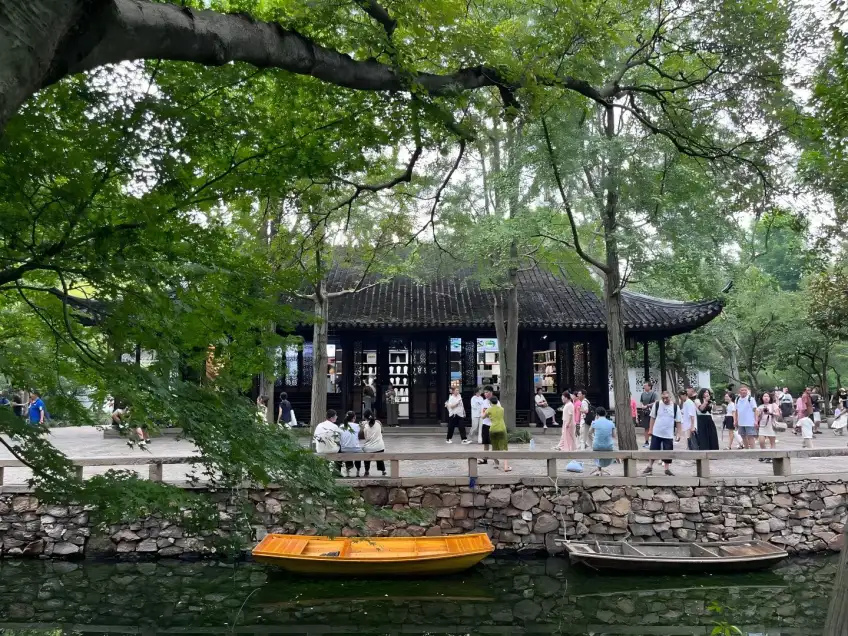
There's a covered corridor in front of the hall where you can sit and rest—the best spot to take a break in the eastern section. The east is like a book's preface: not too many twists, no rush to tell you the whole story. It simply opens the title page and says: turn the page, keep reading.
The central section is the soul of the Humble Administrator's Garden
Chinese garden design emphasizes the concepts of "gradually entering a better realm," "a new view with every step," and "introduction, continuation, transition, and conclusion." After experiencing the open space of the eastern section, your mind will gradually calm and your thoughts settle as you walk along. When you then enter the central section, you'll be instantly captivated by the emerald pool and the exquisite landscape of scattered pavilions and terraces.
This contrast of sparse and dense, open and secluded, shallow and deep reflects not only spatial transitions but also shifts in mood.
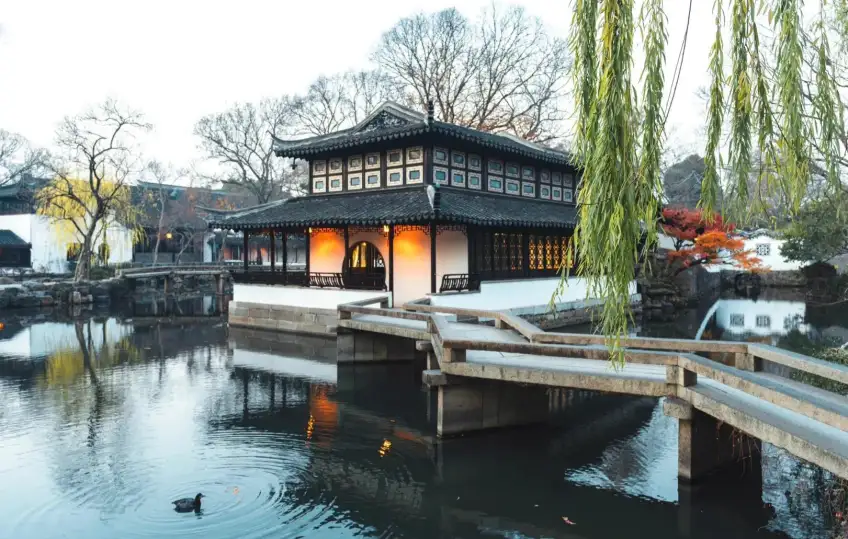
By now you should feel it. Past the open spaces of the eastern section and through a whitewashed wall, the view suddenly opens up—I've truly brought you into the Humble Administrator's Garden. The first thing you see is water. A clear pond fills most of your field of vision, with pavilions, terraces, and halls spread along its banks—some jutting out over the water, others set back a few steps, all arranged around this pool. Sunlight spills across the surface, shattering into dancing patches of light, and the garden instantly comes alive.
Hall of Distant Fragrance at the Humble Administrator's Garden
Directly facing the pond is Yuanxiang Tang (Hall of Distant Fragrance). Why the name Yuanxiang Tang? It comes from the line "fragrance travels far yet grows purer" in Zhou Dunyi's essay "Ode to the Lotus." Originally about lotus flowers, here it matches the lotus in the pond while hinting at the owner's wish for his reputation to spread. It reflects a scholar's self-proclaimed purity, dignity, and quiet strength that needs no boasting.
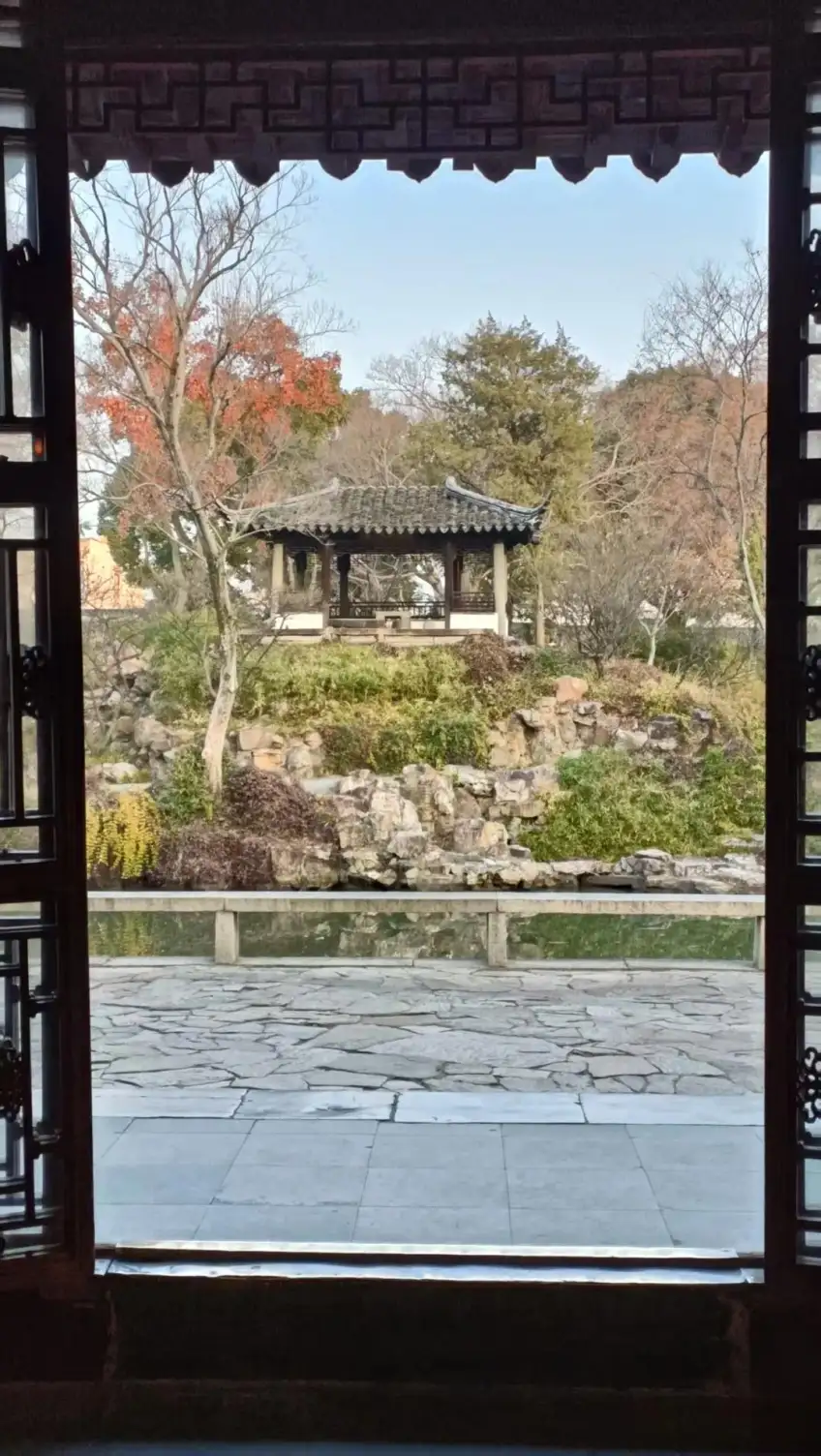
This is a four-sided hall with floor-to-ceiling lattice windows on all sides, unlike conventional halls that have a distinct front and back. It isn't tall or grand, yet it stands rock-solid, embracing the landscape in every direction. Standing in front of the hall, your gaze passes through the open windows straight to the wooded hills on the north bank; walk around to the back, and you'll see the southern courtyard. The entire hall is like an openwork box, framing scenery from every direction. This embodies the literati spirit of uprightness and an open heart—it is the "soul" of the garden.
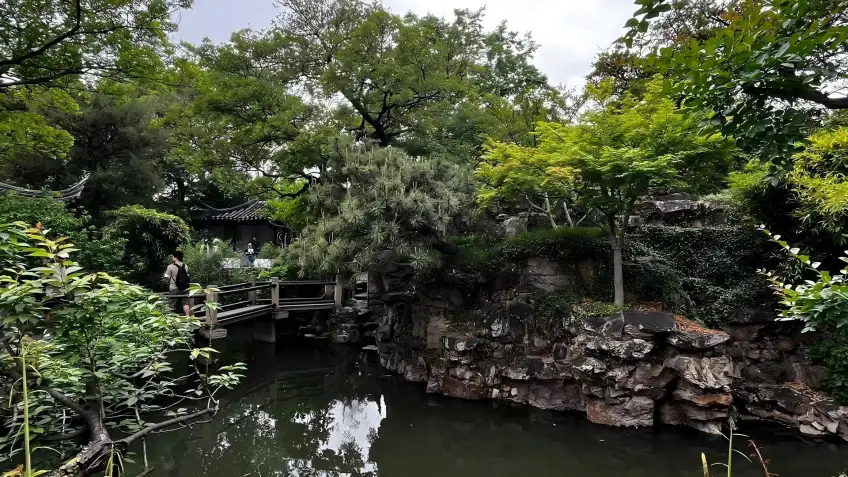
Looking out from Hall of Distant Fragrance, you can see islands scattered across the pond, pavilions peeking through the greenery, and hills embracing the water—the classic "one pond, three islands" layout.
You might think this is just simple scenery, but classical Chinese garden design was never one-dimensional. It represents an ideal world in the minds of the ancients—hills to lean on, water to rely on, views to admire, and moods to reflect upon. The central section truly blends architecture, landscapes, plants, and culture into one. Standing before the hall and looking north, you'll see lush trees on the island in the pond and a faintly visible small pavilion—that is Snow Fragrance and Cloud Lustre Pavilion, the most iconic view in the entire Humble Administrator's Garden.
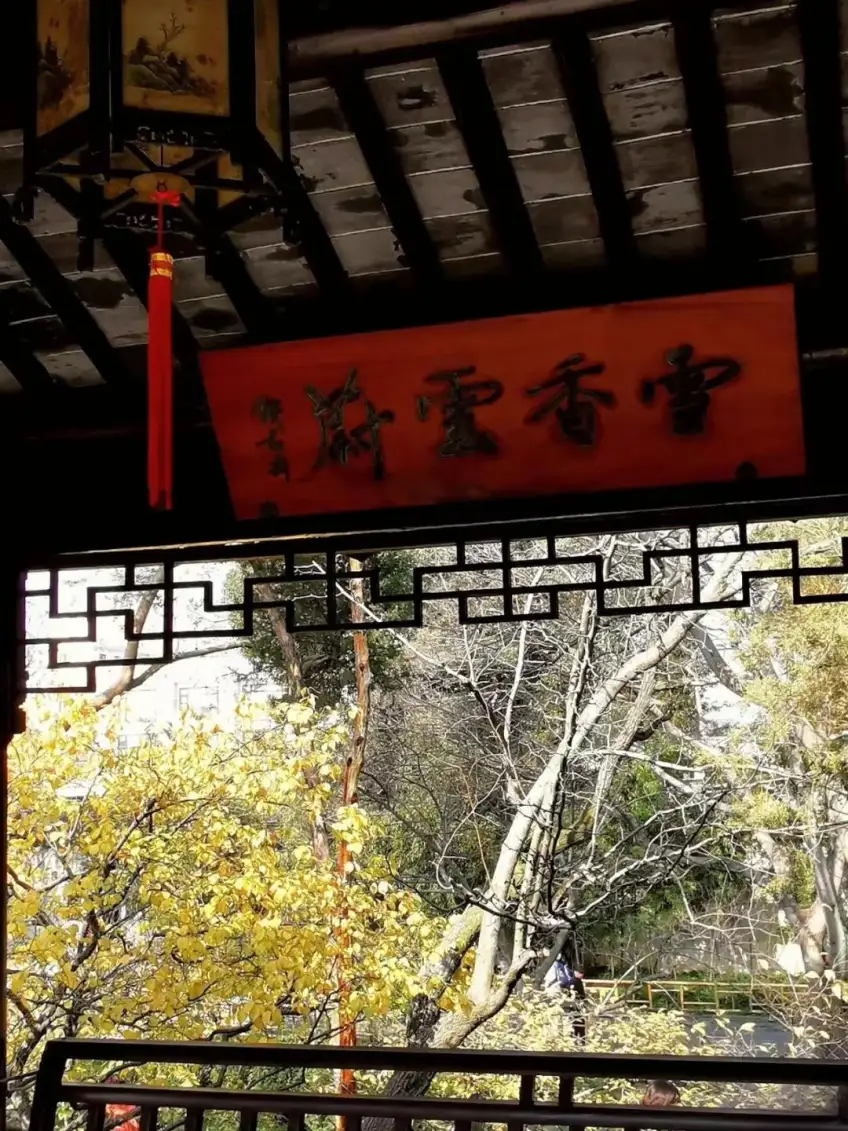
Lotus Breeze Pavilion, Humble Administrator's Garden
Walking west along the pond, you'll soon reach Hefeng Simian Pavilion.
This pavilion stands right in the middle of the water, connected to the shore by a few curving little bridges.
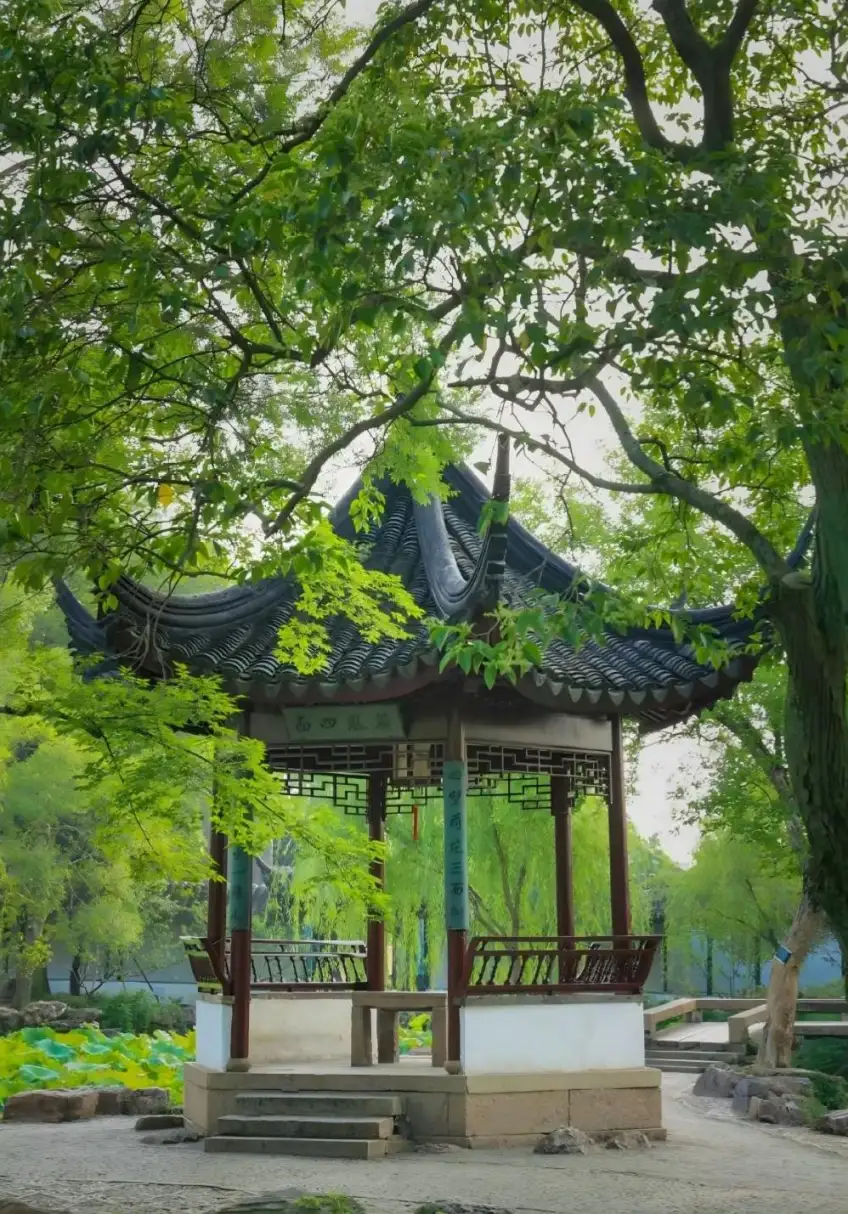
It's a small hexagonal pavilion, sitting perfectly where two embankments meet, as if suspended over the center of the lake. Standing inside, you see water in every direction—north, south, east and west. The surface is covered with lotus flowers, and a gentle breeze rustles the leaves, carrying a fresh fragrance. Wherever you look, it's lotus blossoms, cool breezes and green water.
Xiao Feihong Bridge at Humble Administrator's Garden
A little further on, the water narrows and a small bridge with red railings spans the pond—this is Xiao Feihong. It's more than just a bridge; it feels like a covered corridor. With a roof overhead and railings on both sides, it offers shade from the sun and shelter from the rain. The bridge arches gently, and its reflection ripples with the water, looking like a rainbow resting on the surface.
Even more cleverly, the bridge divides the water into two sections. Look ahead and you can see Xiangzhou in the distance; look down and you'll spot small fish swimming among the water plants beneath the bridge.
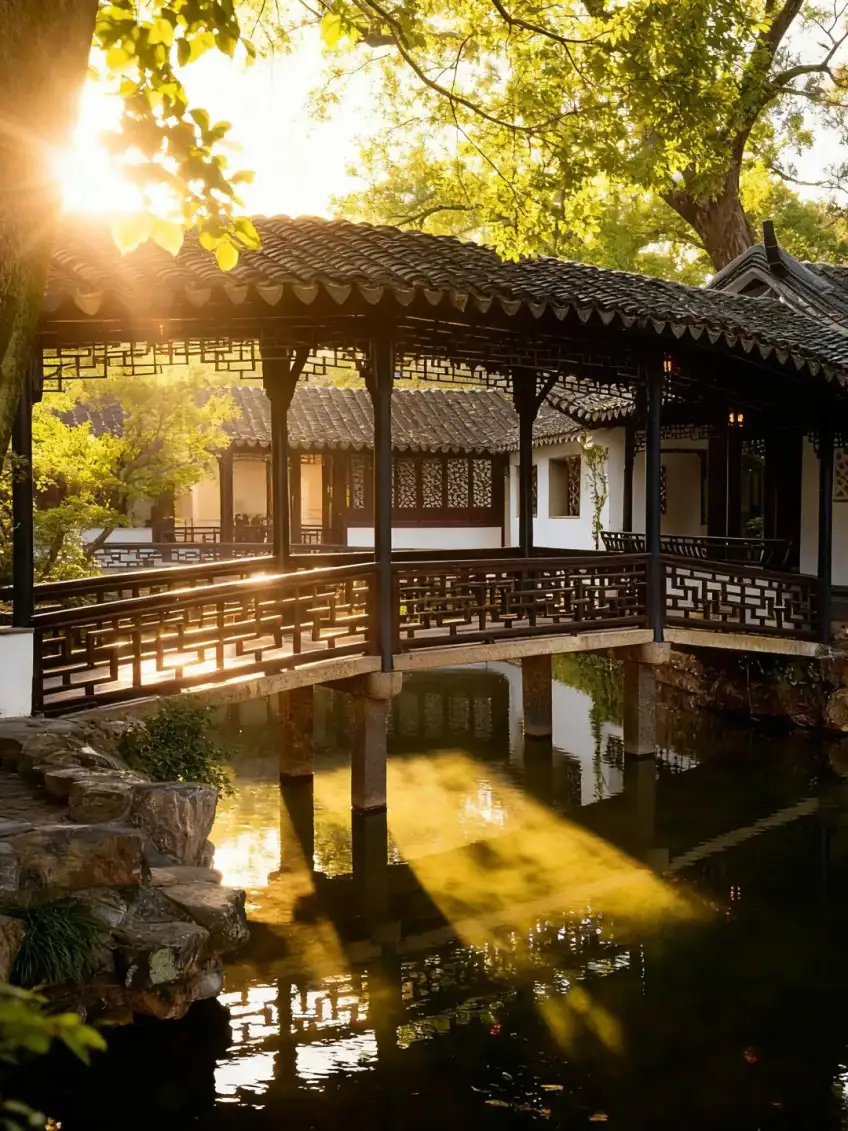
A small bridge divides the water into two sections, creating layers of depth—near and far, front and back, inside and out. Every step reveals a new view, and the more you look, the more charming it becomes. This is how ancient Chinese garden designers created depth in their landscapes.
Boat-shaped building - Xiangzhou at Humble Administrator's Garden
Past Xiao Feihong, you'll come face to face with Xiangzhou. Here you can see a building shaped like a small boat, known as a stone boat.
A terrace in front, something like a pavilion in the middle, and a small tower behind—each level higher than the last, looking like an ornate painted boat about to push off from shore. Its bow extends over the water, surrounded by the lake on three sides. Standing at the bow and looking back, Xiaofeihong Bridge arches over the water like a rainbow;
Hall of Distant Fragrance is tucked behind the trees, and all the finest scenery in the central section of Humble Administrator's Garden is in view. Although the boat rests quietly on the water, standing on it makes you feel as if it were slowly sailing forward.
I think building such a boat in the garden reveals the owner's state of mind—a desire to be free from restraint. Xiangzhou seems to quietly tell everyone: life is a journey, and there's no need to trap yourself in one place. The heart cannot be bound; the heart can be free. Even though this boat cannot sail, the river still flows quietly onward, just as time gently passes by.
A hidden world at Humble Administrator's Garden
Continuing west along the path beside Xiangzhou, you'll often come across circular moon gates. The plaque above the gate sometimes reads "Wancui" (Evening Green) and sometimes "Bieyou Dongtian" (Another World)—both are reminders that once you step through, the garden scenery and your mood will turn a new page.
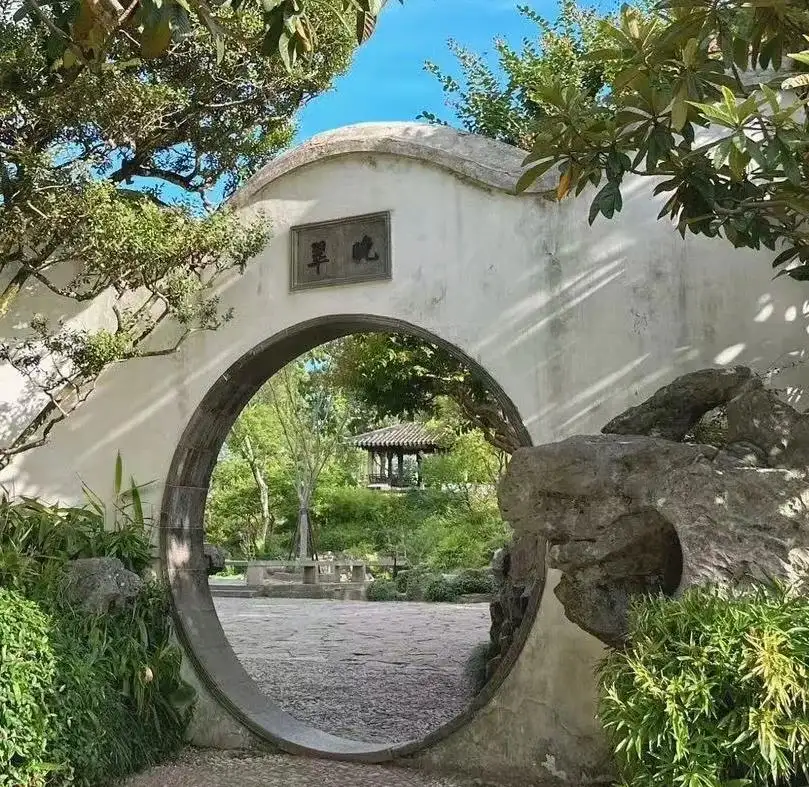
Step through that circular doorway and the visual experience changes completely. The central garden is open and bright, with pavilions and waterside terraces spaced generously apart—everything feels grand and welcoming. The western garden, however, is compact and refined, with buildings nestled together and corridors linking one to the next.
like shifting from a long, wide scroll painting to a delicate little picture book. The design here makes you slow your steps without realizing it; you have to look slowly and savor every detail to do justice to such meticulous craftsmanship.
How beautiful is the Mandarin Duck Hall in Humble Administrator's Garden?
The first thing that makes you stop is a unique "Mandarin Duck Hall." There's a hall on the south side and another on the north, separated in the middle by screens and latticework. The south hall is called "Hall of Eighteen Camellias," and the north hall is called "Thirty-Six Mandarin Ducks Hall." One building, two names, two distinct atmospheres.
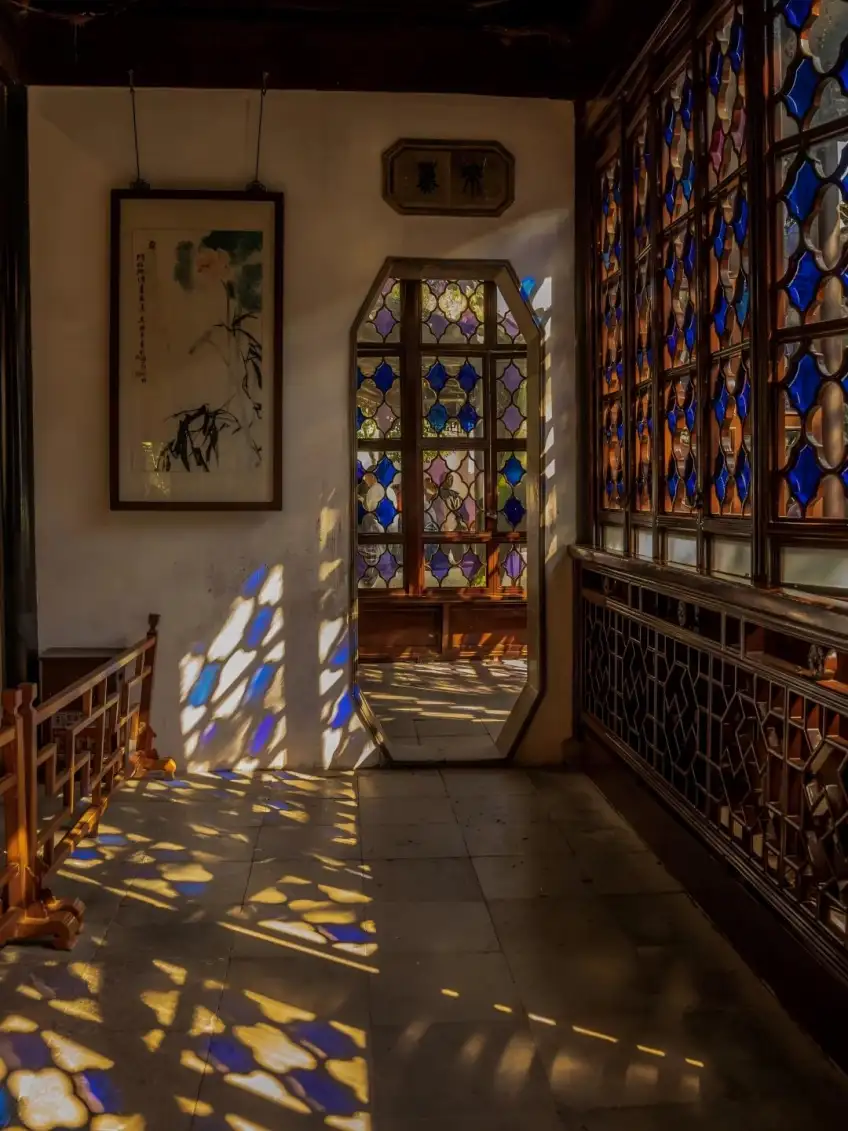
The most distinctive feature is the set of blue glass windows. When sunlight filters through, a faint blue glow falls on the floor. Looking outward through the glass, the flowers, plants, and rocks take on a cool tint, as if covered by a thin layer of snow that never melts. It's said the garden owner specially ordered these from abroad so he could enjoy a "snowy scene" even in winter. The north hall sits close to the water, and thirty-six pairs of mandarin ducks were once kept in the pond. Though they're gone now, the name still brings to mind that lovely line: better to be like mandarin ducks than immortals.
The cultural charm of the Humble Administrator's Garden
Walking east along the pond, there's a tiny, exquisite pavilion by the water that seems to lean gently outward, quietly gazing at the surface. It's called Yushui Tongzuo Pavilion (With Whom Shall I Sit Pavilion). With whom shall you sit?
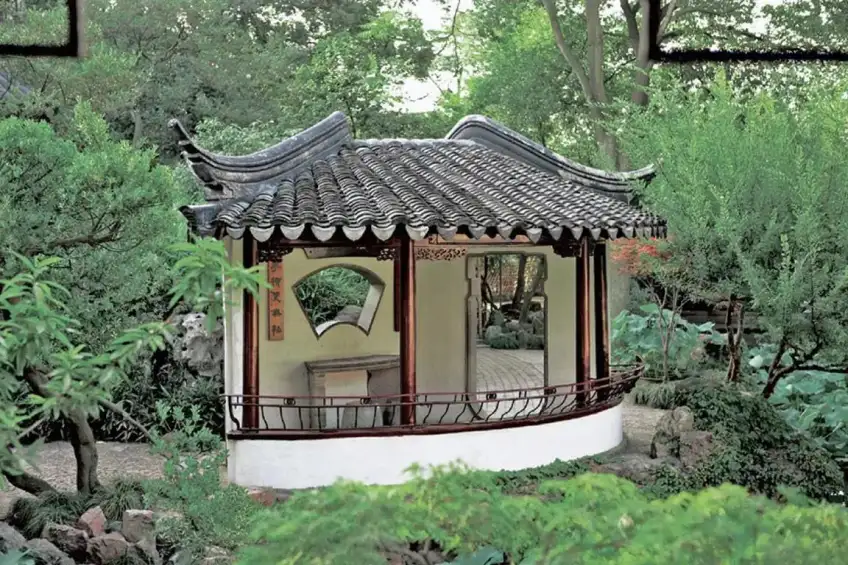
Ancient names always have a story behind them, and I found the answer in a poem by Su Shi: With whom shall I sit? The bright moon, the clear breeze, and me. It sounds like a question, but it's already answered: having the moon, the wind, and yourself is more than enough. This is my response to the garden's owner across five centuries. As for the pavilion itself, the fan-shaped structure resembles a folding fan—the doorway is fan-shaped, and even the stone table and stools inside are all fan-shaped.
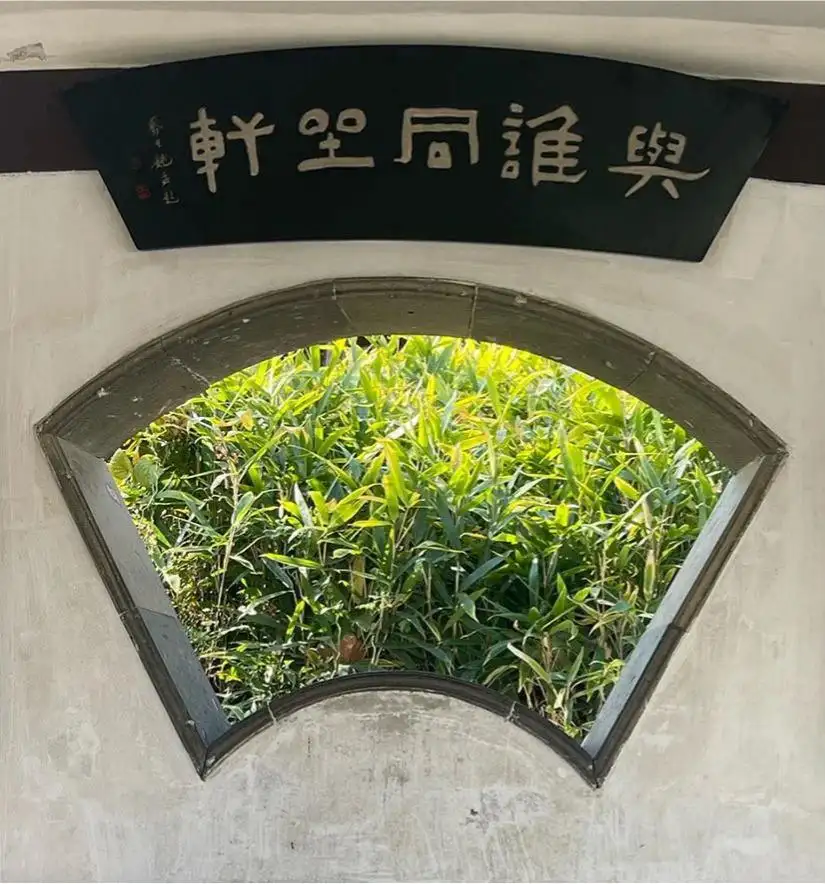
Walk to the other side of the pond and look back, and you'll notice that the small round-roofed pavilion behind it fits perfectly within the fan-shaped window, together forming a complete fan. Only ancient garden designers would put such thought into these details.
Liuting Pavilion at the Humble Administrator's Garden – Listening to the rain on withered lotus
Further north stands a small waterside pavilion called Liuting Pavilion. The pond in front is filled with lotus flowers. Its name comes from a beautiful line of poetry: "Leave the withered lotus to listen to the rain." In summer when the lotuses bloom, this spot is lively and bright;
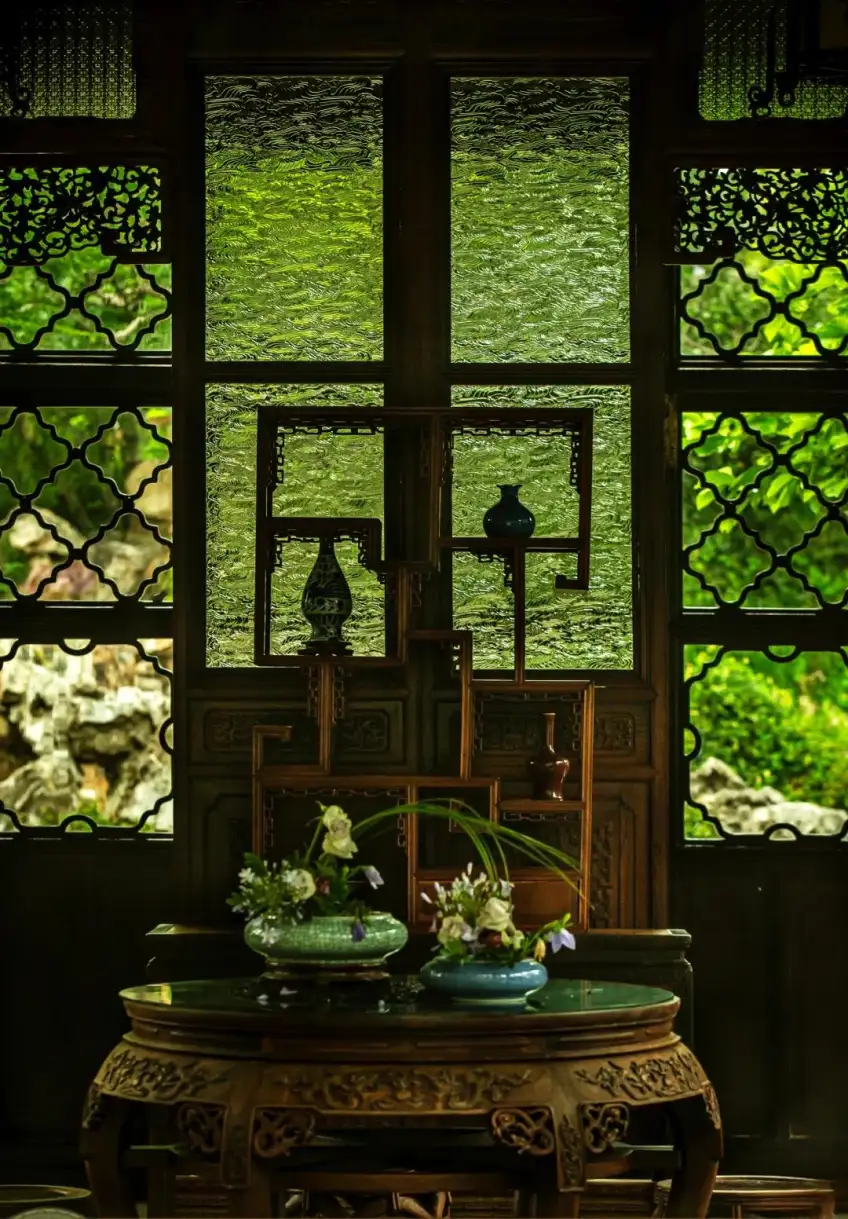
But the true magic happens in autumn. When the lotus leaves wither and the rain falls, the drops patter against the dry leaves—sparse, then dense, softly rustling as if whispering. Sitting inside the pavilion, you naturally grow quiet, slowly recalling the things on your mind.
Southern residential area of the Humble Administrator's Garden
That's all for the western section. Turning back, you walk along the long waterside corridor. Glance over your shoulder and the pavilions, towers and waterside halls stand quietly by the water like a freshly painted, serene and gentle picture. Exiting the western section and heading south brings you to the southern residential area of the Humble Administrator's Garden.
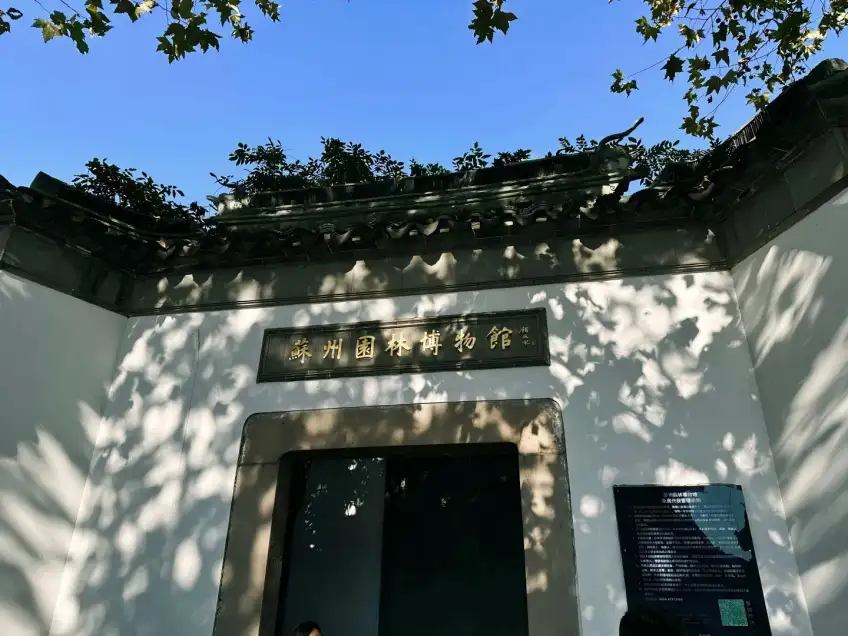
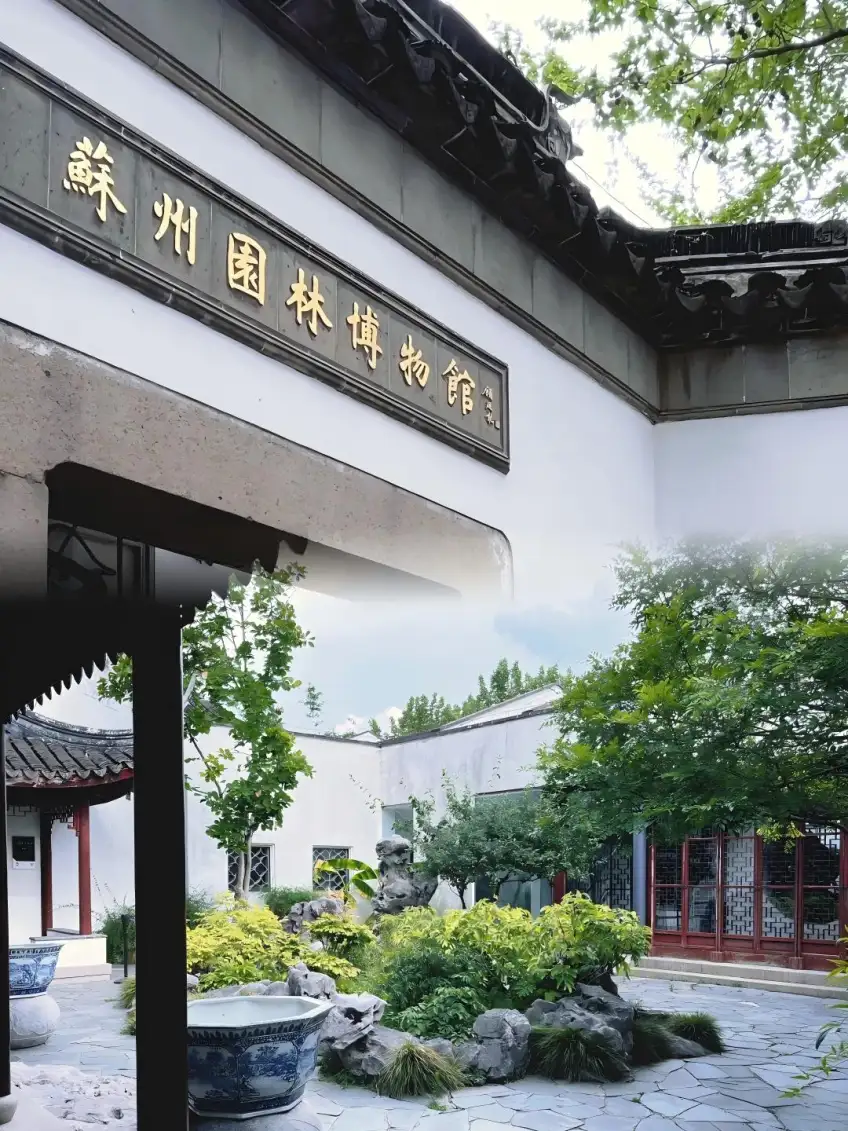
This area was once where the garden owner lived daily, and it has now been converted into the Suzhou Garden Museum. White walls and dark tiles, deep courtyards—the layout remains, only the residents have changed. Once a private residence, it is now a garden beyond the garden, open to everyone.
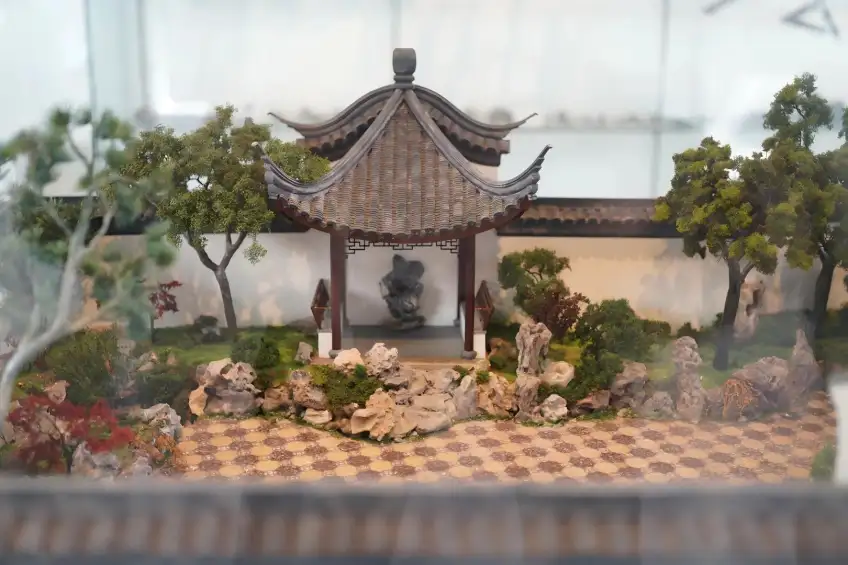
The museum displays the history of Suzhou gardens, traditional landscaping techniques, and models of famous gardens. If you still have time, it's worth stepping inside to see how the pavilions and towers you just admired were planned, built, and preserved through the generations. It's like reading an afterword after finishing the main text—you'll gain another layer of appreciation.
By the time I left the garden, dusk was approaching.
Most of the visitors had left, and the garden gradually grew quiet. Looking back, the pavilions, terraces, and corridors I had just walked through were now wrapped in twilight, like a faded ancient painting. In that painting were lotus-scented breezes from all directions, rainbow-like reflections, another world glimpsed through a moon gate, and an unanswered question lingering in the Fan Pavilion.
Visiting the Humble Administrator's Garden feels like finishing a book. Just send your departure city, group size, and travel dates to customer service for an assessment.
FAQs
How do I get to Humble Administrator's Garden in Suzhou?
The best option is Metro Line 6 to Humble Administrator's Garden & Suzhou Museum Station; take Exit 2 and walk about 5 minutes. From Suzhou Railway Station, take Line 2 or Line 4 and transfer once to Line 6 for a direct route. You can also take bus Tour 1, Tour 2, or No. 40 to the Humble Administrator's Garden stop. Parking near the entrance is limited, so driving isn't recommended.
How much are tickets for the Humble Administrator's Garden?
Adult tickets for Humble Administrator's Garden cost ¥80 in peak season and ¥70 in off-peak season, with advance real-name reservations required during peak season. Once inside, stroll slowly from east to west, and before leaving, check out the Suzhou Gardens Museum in the southern residential area.
How do I explore Humble Administrator's Garden without backtracking?
Walk through the eastern, central, and western sections in order, finishing at the southern residential area. The eastern section has Lanxue Hall, Furong Pavilion, and Shuxiang Pavilion; the central section has Yuanxiang Hall, Hexiang Pavilion, Xiaofeihong Bridge, and Xiangzhou; the western section has the Mandarin Duck Hall and Liuting Pavilion; the southern residential area now houses the Suzhou Gardens Museum.
What are the must-see spots in the central section of Humble Administrator's Garden?
In the central section, don't miss Yuanxiang Hall, Hexiang Pavilion, Xiaofeihong Bridge, and Xiangzhou. Yuanxiang Hall is an open hall on all four sides, named after the phrase "fragrance spreads far and grows purer" from Ode to the Lotus. Hexiang Pavilion stands in the middle of the water. Xiaofeihong is a covered corridor bridge with red railings, and Xiangzhou is a stone boat built to resemble a vessel.
What's worth seeing in the western section of Humble Administrator's Garden?
The western section is more compact and refined than the central section. The south hall of the Mandarin Duck Hall is called the Eighteen Camellias Pavilion, while the north hall is the Thirty-Six Mandarin Ducks Pavilion, which features blue glass windows. The fan-shaped "With Whom Shall I Sit" Pavilion takes its name from a poem by Su Shi. Liuting Pavilion (Pavilion for Listening to Rain) gets its name from the line "Leave the withered lotus to listen to the sound of rain," and it is most atmospheric in autumn when rain patters on the remaining lotus leaves.