

Humble Administrator's Garden is located on Dongbei Street in Suzhou's old town. First built during the Zhengde era of the Ming Dynasty, it is one of China's four great classical gardens and a UNESCO World Heritage Site, divided into eastern, central, and western sections. The best way to explore it is to understand its landscaping techniques: the obstructed view of Zhuiyun Peak at the entrance, the borrowed view of Beisi Pagoda through the lattice windows, the facing views between Yuanxiang Hall and Xuexiang Yunwei Pavilion, the framed view from Jiashi Pavilion, the pinched view along Xiaofeihong covered bridge, and the play of light through the stained glass of Sanshiliu Yuanyuan Hall.
First time in Suzhou? For a hassle-free trip, choose a group tour or a private custom trip. If you only need transportation and commentary, you can also book a private car, station transfers, or a private guide separately. Turn this Humble Administrator's Garden guide into an actionable one-day itinerary.
Only by visiting Suzhou can you truly appreciate the landscaping magic of the Humble Administrator's Garden: every window is a "framed view", every corridor creates a "corridor view", and every lattice window offers a peek into another scene. Next, I'll walk you through the garden to help you understand 500 years of landscaping aesthetics.
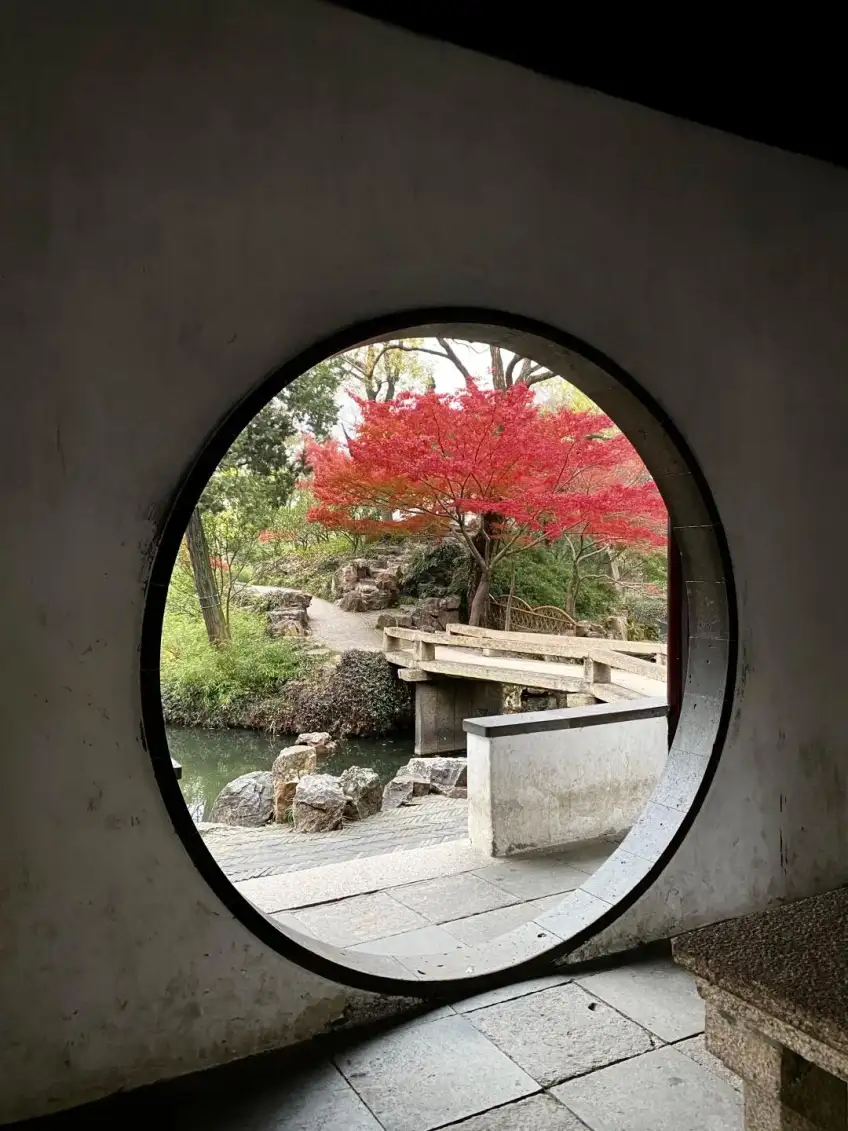
The circular moon gate turns the red maples, stone bridge and water inside into a painting. This is the most common framed view at Humble Administrator's Garden: stand inside the opening and the scenery looks cropped into a picture frame; step out and you enter another space entirely.
The underrated Humble Administrator's Garden in Suzhou
Think Humble Administrator's Garden is just rocks piled up as hills and water? Everyone says Suzhou is beautiful, but few realize that every inch of Humble Administrator's Garden is a three-dimensional literati painting left behind by the ancients. It is composed through "concealing" and "revealing", "borrowing" and "contrasting", "blocking" and "leaking".
This time, I set out with ten scenes I wanted to see, searching for ten of the most beautiful encounters. Along the way, stopping and starting, I came to understand six languages of garden design. Finally, I'll take you through Suzhou's old streets and alleys, trading the scenery before your eyes for a cup of tea, a piece of cake, and a tune.

[Suzhou & Zhouzhuang Day Tour] Humble Administrator's Garden + Zhouzhuang Water Town (no shopping stops)
[Water Town & Garden] Humble Administrator's Garden + Zhouzhuang—discover Suzhou's charm from every angle! [Thoughtful Service] Custom vehicles and experienced East China drivers for a worry-free trip! [No Shopping Stops] A no-shopping group tour for a truly relaxing journey you'll remember forever! [Bonus] One bottle of branded mineral water per person per day!
Humble Administrator's Garden - Entrance Screen View and Zhuiyun Peak
Walking through the gate of the Humble Administrator's Garden, I expected to see pavilions, terraces, and winding paths right away. Instead, this screen view blocked my way—you enter but can't see the garden, with a rockery standing right in front. It's a technique of holding back before revealing, a way of controlling your psychological rhythm.
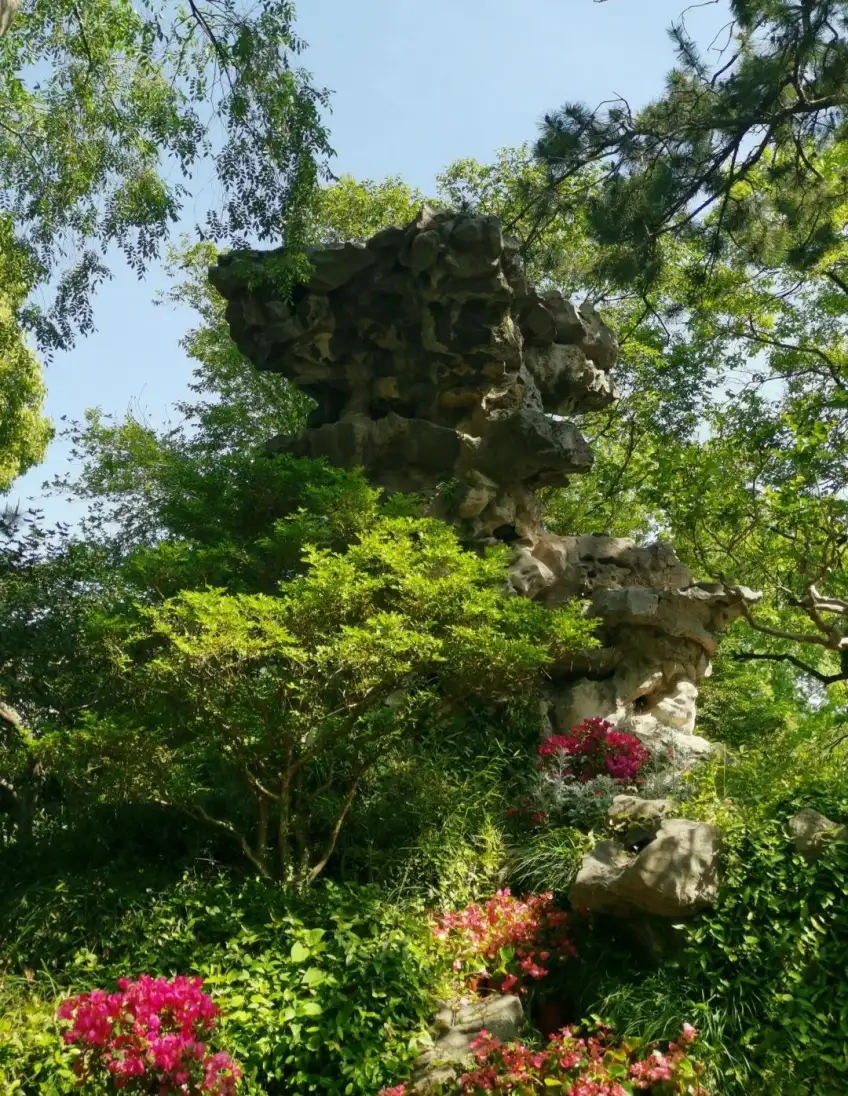
If everything beautiful were laid out right at the entrance, one glance would be enough and you wouldn't want to walk any further. The magic of obstructed scenery is that it doesn't let you see through at a glance—you have to wind around the rocks before the view suddenly opens up. Standing in front of the rockery, you feel curious and full of anticipation. The moment you round the rocks, the view unfolds and surprises you. This is the garden designer's first psychological hint: the best is yet to come. That's what makes Chinese gardens so brilliant—they don't just show you scenery, they guide your emotions.

Popular Photo Spots in Suzhou
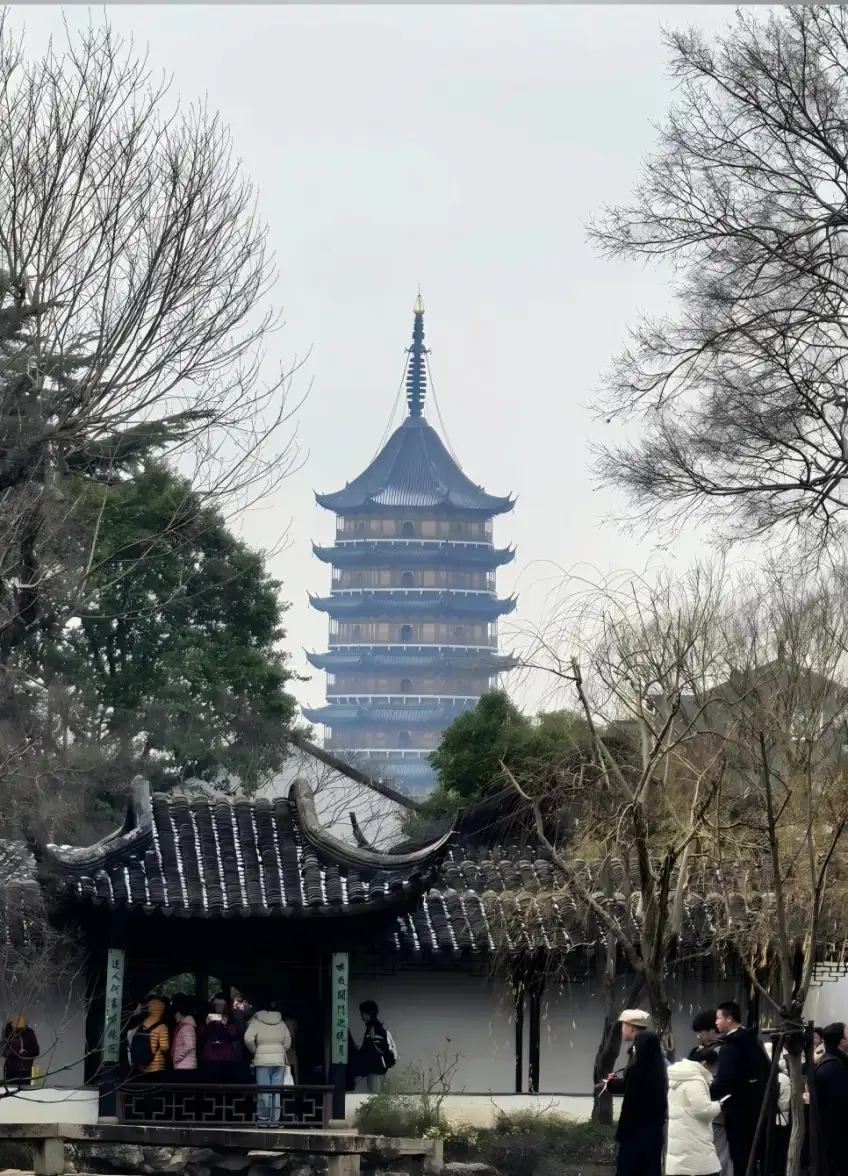
In the frame where the ornamental window and Beisi Pagoda appear together, the delicate lattice is the foreground while the distant pagoda silhouette forms the background. This is the most classic example of "borrowed scenery" in the Humble Administrator's Garden. Looking across the water and through the treetops, Beisi Pagoda—half a kilometer away—stands firmly at the center of the view. The garden's owner built no tall structures, yet managed to borrow the city's highest point and skyline into his own courtyard. It is the most celebrated act of "borrowing" in the history of Chinese gardens.
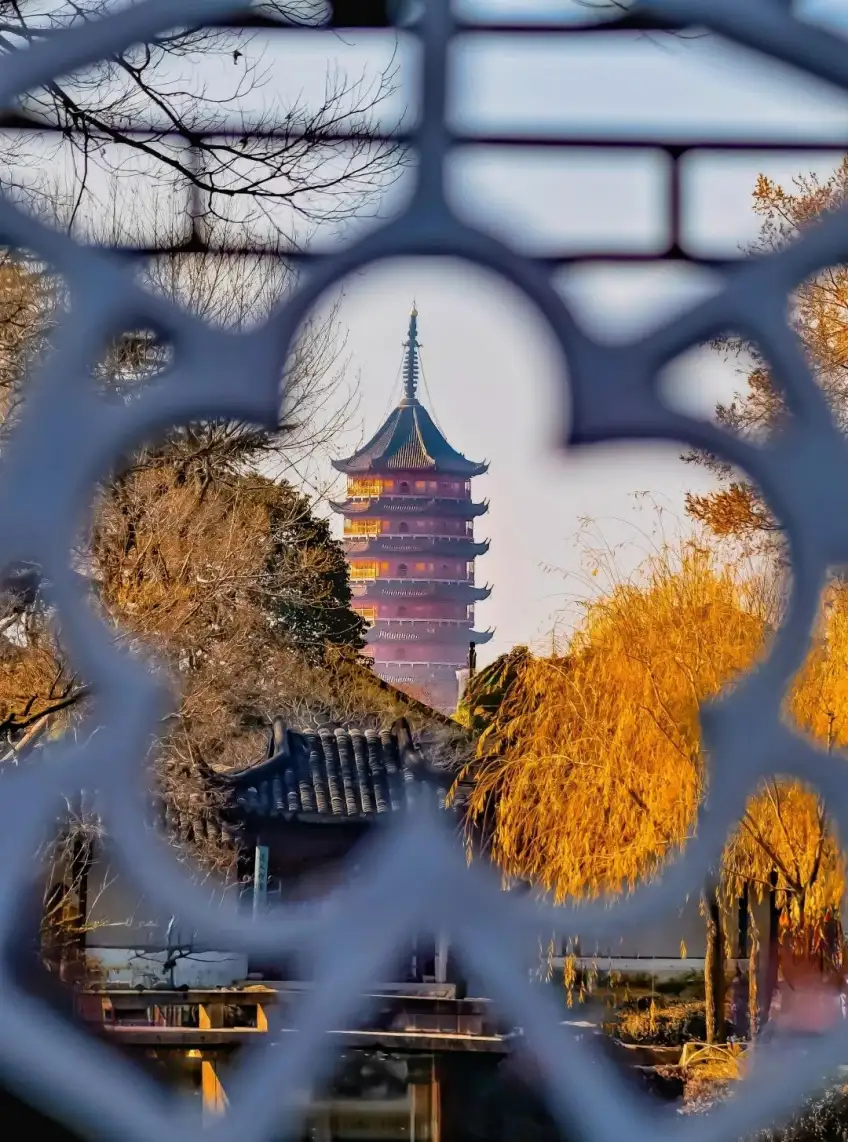
You have to admire how cleverly the ancients borrowed scenery. The garden's creator "borrowed" Beisi Pagoda, half a kilometer away, into his courtyard, then used a single window to frame it like a painting. The moment you press the shutter, you capture both the garden's intricacy and the ancient city's vastness.
The beauty of facing views in the Humble Administrator's Garden
In the central section of Humble Administrator's Garden, Yuanxiang Tang (Hall of Distant Fragrance) and Xuexiang Yunwei Ting (Snow Fragrance and Cloud蔚 Pavilion) face each other across the water. This is "separation" in garden design—only when things are separated do they become scenery, and separation makes you want to see more. It's precisely because of the water between them that they become a view. Standing inside Yuanxiang Tang and looking north, you can admire Xuexiang Yunwei Ting, creating the pleasure of gazing across. This is opposing scenery in garden design, where two spots face each other and become each other's view. You stand there looking at the scenery, while someone on the tower looks at you.
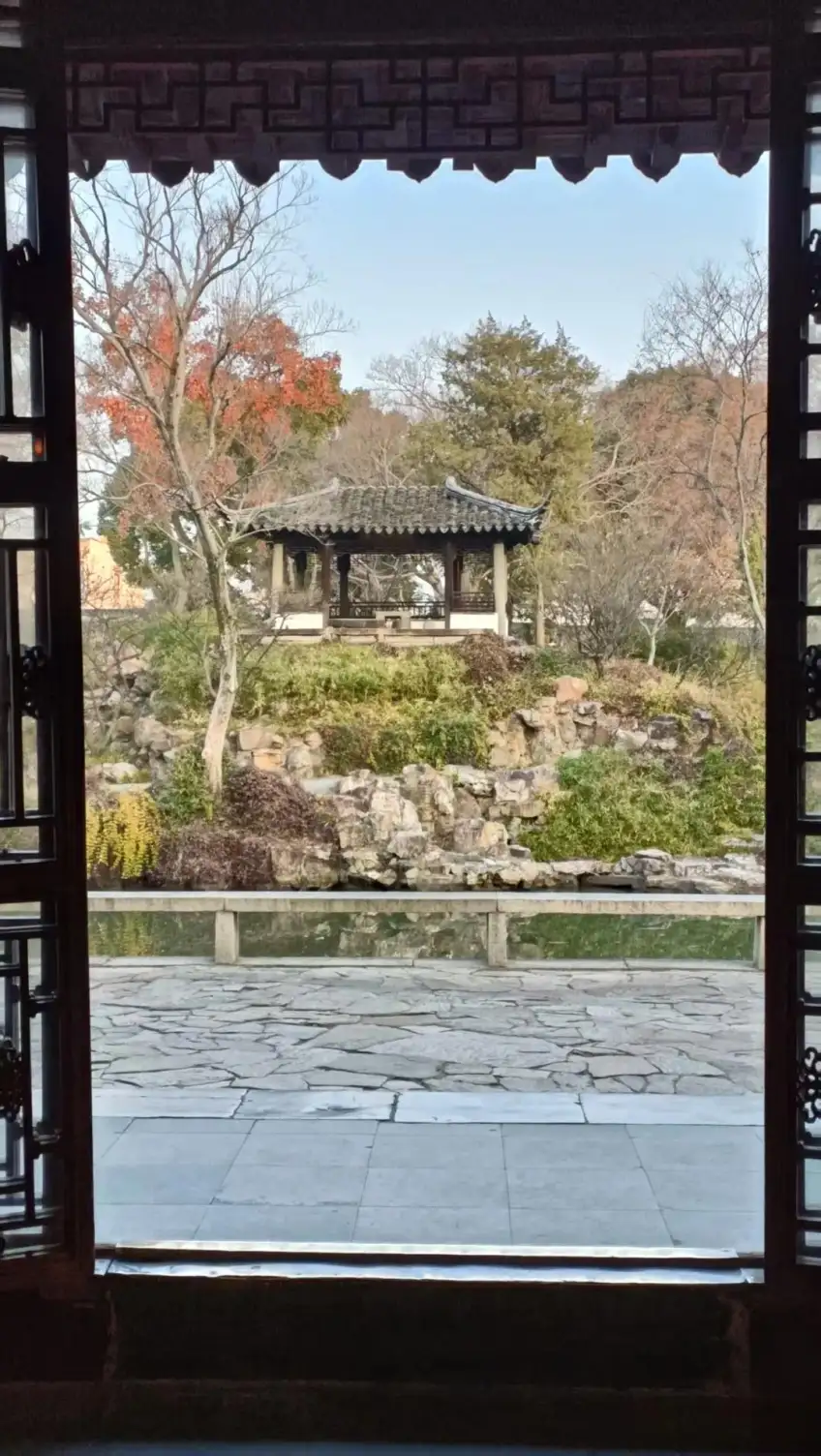
Mountain-in-View Tower panorama
Walk around Hall of Distant Fragrance, stand on the opposite bank of the pond and look west—there stands Mountain-in-View Tower. Surrounded by water on three sides, the two-story pavilion hides half within the tree shadows, revealing only the sweeping eaves of its hip-and-gable roof. The building isn't tall, yet it carries the presence of a mountain. Its name includes "mountain," and though there is no real mountain here, it borrows the spirit of distant peaks. Autumn afternoon light filters through the leaves, layering yellow foliage, dark tiles and vermilion railings in warm tones.
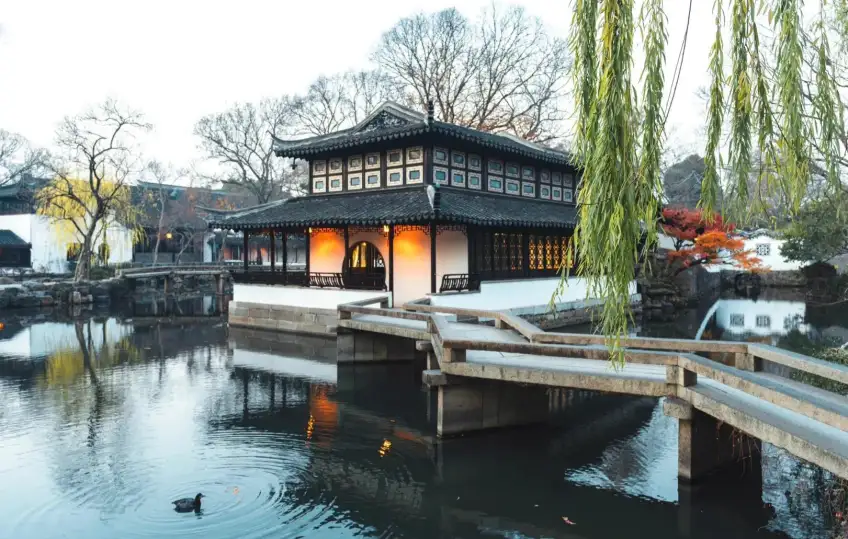
This is "facing scenery"—stand here and look over there, and that spot becomes the view. Where I stand is a scene, and where it stands is also a scene. Separated by a pool of autumn water, they gaze at each other, neither alone. The pavilion's name comes from Tao Yuanming's line, "Picking chrysanthemums beneath the eastern fence, leisurely I see the southern mountain." The garden builder couldn't borrow a real mountain, so he borrowed the one from this poem. A breeze ripples the water, shattering the pavilion's reflection. I suddenly realized that Jianshan Pavilion (Seeing-the-Mountain Pavilion) isn't looking at a mountain—it's looking at that sense of ease within.
Yushuitongzuo Pavilion
Looking through the moon gate of Bieyou Dongtian, Yushui Tongzuo Pavilion (With Whom Shall I Sit Pavilion) rests by the water like an open folding fan.
The roof of this "Fan Pavilion" is fan-shaped, its windows are fan-shaped, and even the stone table inside is fan-shaped. Looking out from the pavilion, each fan-shaped window acts as a picture frame; looking in from outside, the entire pavilion itself becomes a painting.
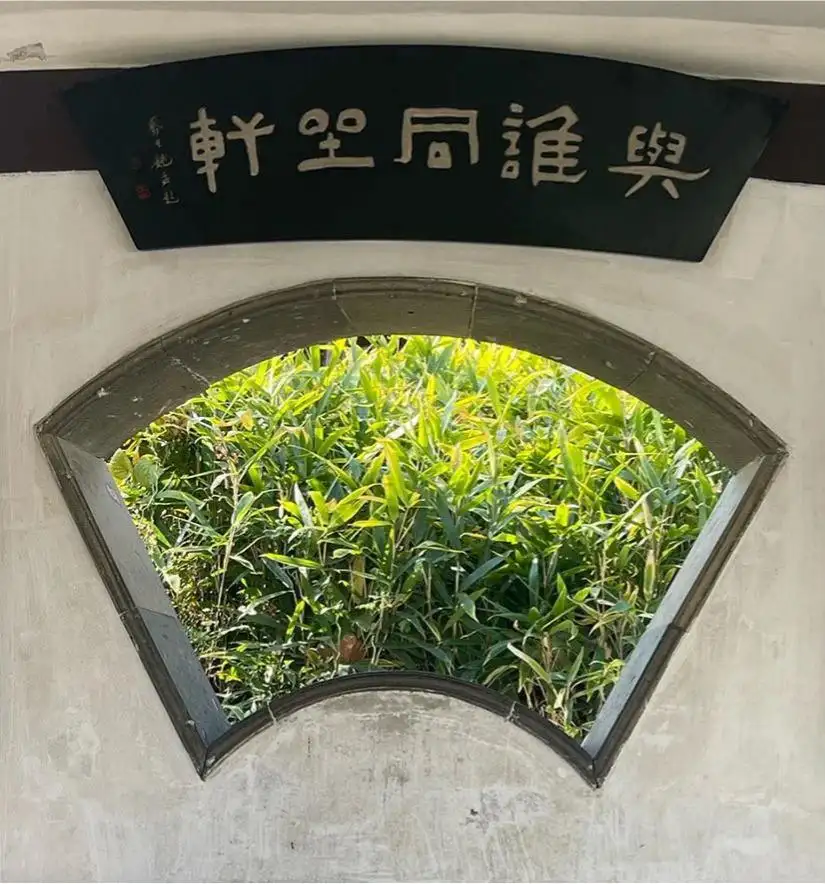
"With whom shall I sit? The bright moon, the clear breeze, and me." This line by Su Shi reflects the garden owner's proud solitude and refined spirit—clear breezes and bright moonlight are company enough. It's a perfect spot for "facing scenery" and a unique subject for "framed scenery." Standing inside this "fan," you can feel a thousand years of elegance framed within it.
Humble Administrator's Garden Top Photo Spot - Jiashi Pavilion Framed View
There's a spot in the Humble Administrator's Garden called Jiashi Pavilion, where a single window has always been everyone's favorite corner for photos.
The frame gives a rock and a few bamboo stalks their charm. Without it, they're just a rock and some bamboo; with it, the scene becomes a landscape painting with an ethereal aura.
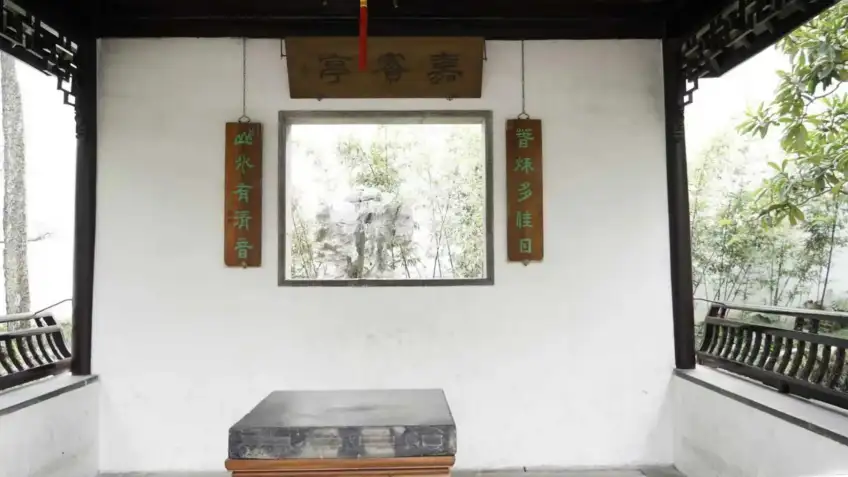
In fact, it's not just Jiashi Pavilion. As you stroll through the Humble Administrator's Garden, you'll notice these "picture frames" everywhere: circular doorways framing distant pavilions, vase-shaped windows framing lotus flowers in the pond, and lattice windows along the corridors, each capturing a different scene.
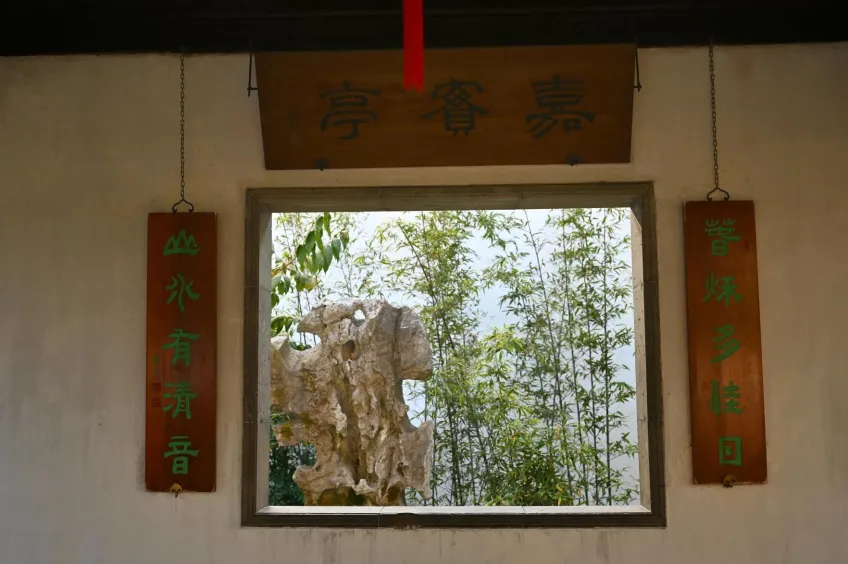
It turns out that in classical gardens, every door, window, and opening can serve as a "framed view" in daily life. The frame stays still, but the picture changes with the seasons. So when you visit the Humble Administrator's Garden, don't rush. Stop and look closely, and you'll see that every frame hides a painting.
To fully appreciate these traditional Chinese garden design techniques, we recommend contacting customer service to arrange a bilingual guide who understands classical Chinese garden architecture to accompany you throughout your visit.
The art of guided views at Humble Administrator's Garden
A vermilion covered bridge spans the water, its reflection swaying gently with the ripples. On sunny days, it really looks like a rainbow resting there. Stand at one end of the bridge and look across: the columns on both sides recede into the distance, naturally drawing your gaze toward Xiangzhou Isle and Lotus Breeze Pavilion. This is called a "guided view." With your sightline narrowed on both sides, your eyes can only follow the path forward. At the end, a pavilion, a stone boat, or a pond of lotus flowers awaits you.
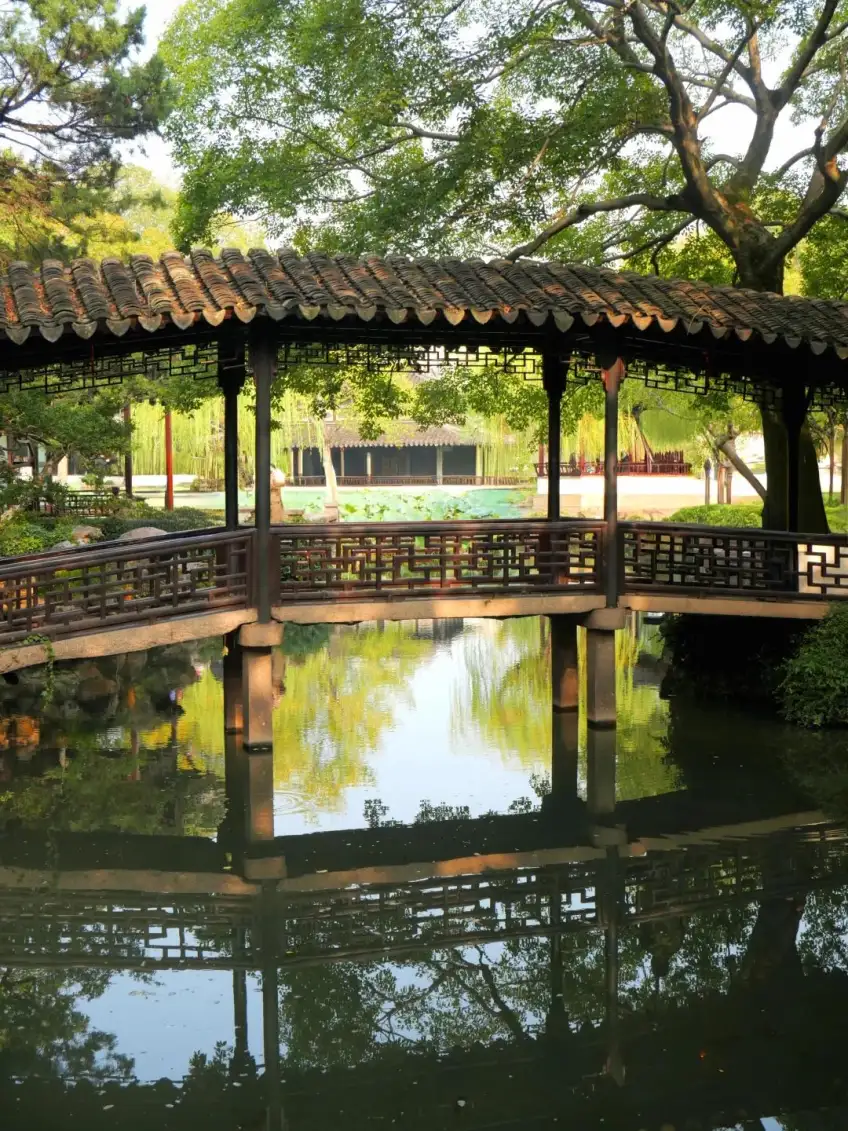
The Wavy Corridor in a Narrow Space
Walking from the western section to the central section, you pass through a long corridor. It rises and falls with the terrain like ocean waves, which is why it's called the wave-shaped corridor. What a perfect name. Not only does it undulate like waves, but walking through it truly feels like drifting with the current—your feet go up and down, your body sways, and your eyes open and close with the rhythm. You're walking, yet it feels like riding a boat. In this corridor, I spotted a narrow frame formed by rockeries and plants on both sides, creating natural depth that's perfect for photos.
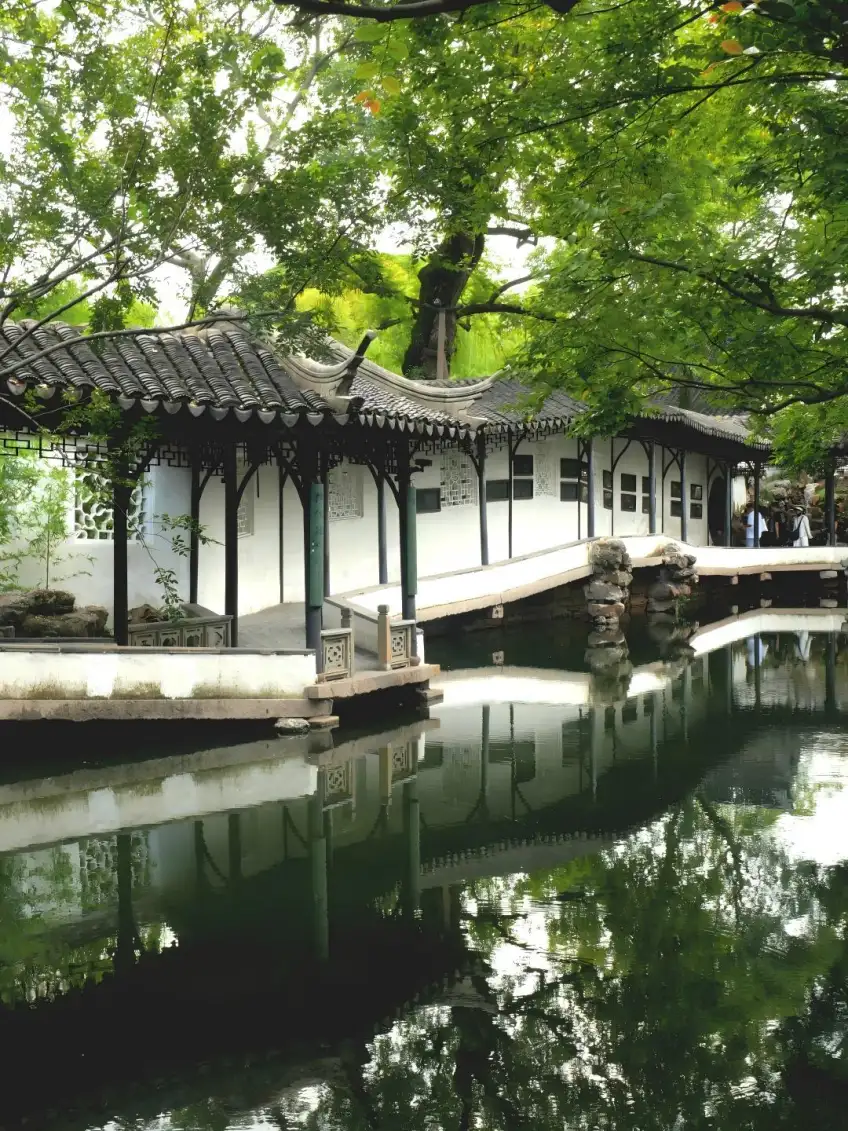
Light and shadow at Suzhou's Humble Administrator's Garden
Dappled Light and Shadow at Crabapple Spring Dock
This is a small, secluded courtyard tucked away in a corner of the garden. It isn't large—white walls, dark tiles, a few crabapple trees, some slender bamboos and a few Lake Tai stones. Just a few simple elements, yet you never tire of looking at them. It doesn't reveal the whole picture, only letting a few crabapple branches and bamboo leaves peek through the gaps in the lattice windows.
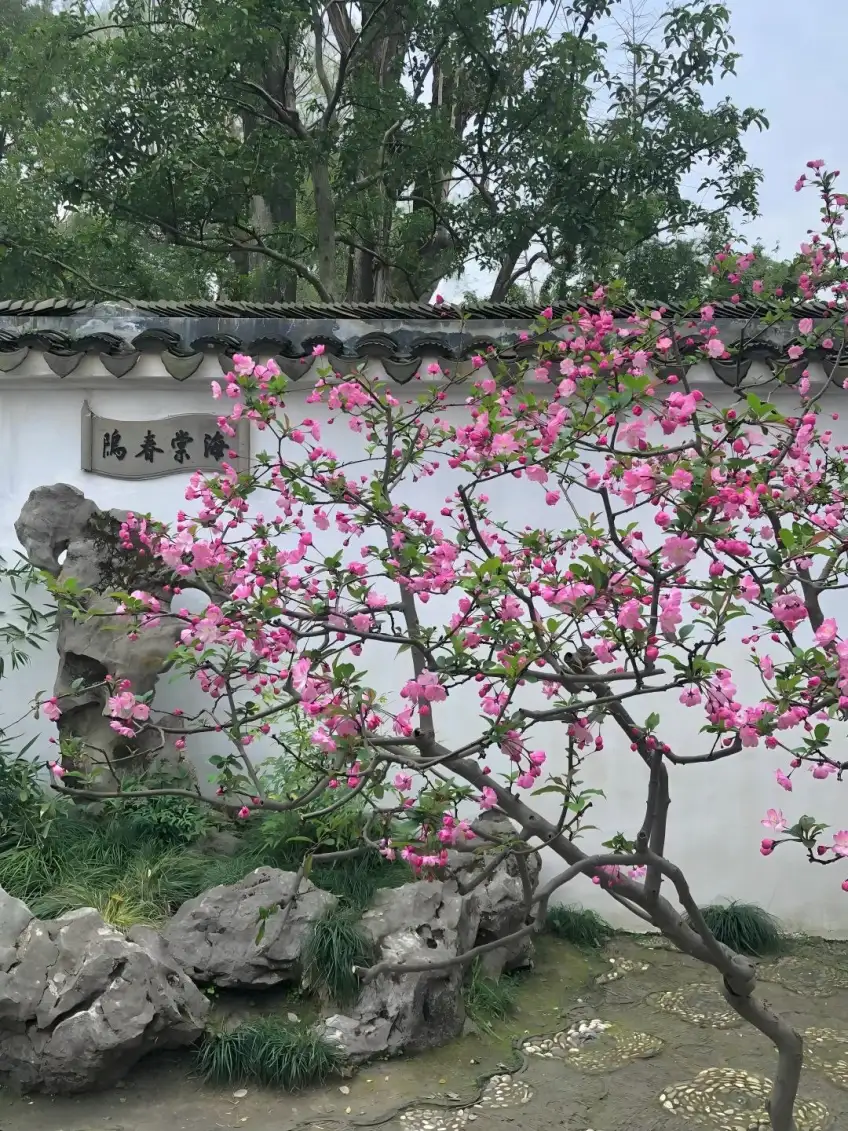
The less clearly you can see, the more you want to look. The garden's designer understood human nature—he knew that revealing everything would ruin the charm. Leaving room for imagination is far more appealing than showing it all.
Sunlight filtering through the lattice windows onto the floor is a painting that shifts with time.
Humble Administrator's Garden Exclusive Feature - Yiliang Pavilion Lattice Windows
Yiliang Pavilion is tucked away on the west side of the garden—low-key and almost easy to miss.
It opens for just 30 days a year. Unless you come looking for it, you'll likely miss it. I arrived around 3 or 4 p.m., when the slanting sunlight bathed the whole pavilion in warmth. Looking down, patches of light covered the floor—diamonds, begonia shapes, ice-crack patterns—all cast through the lattice windows.
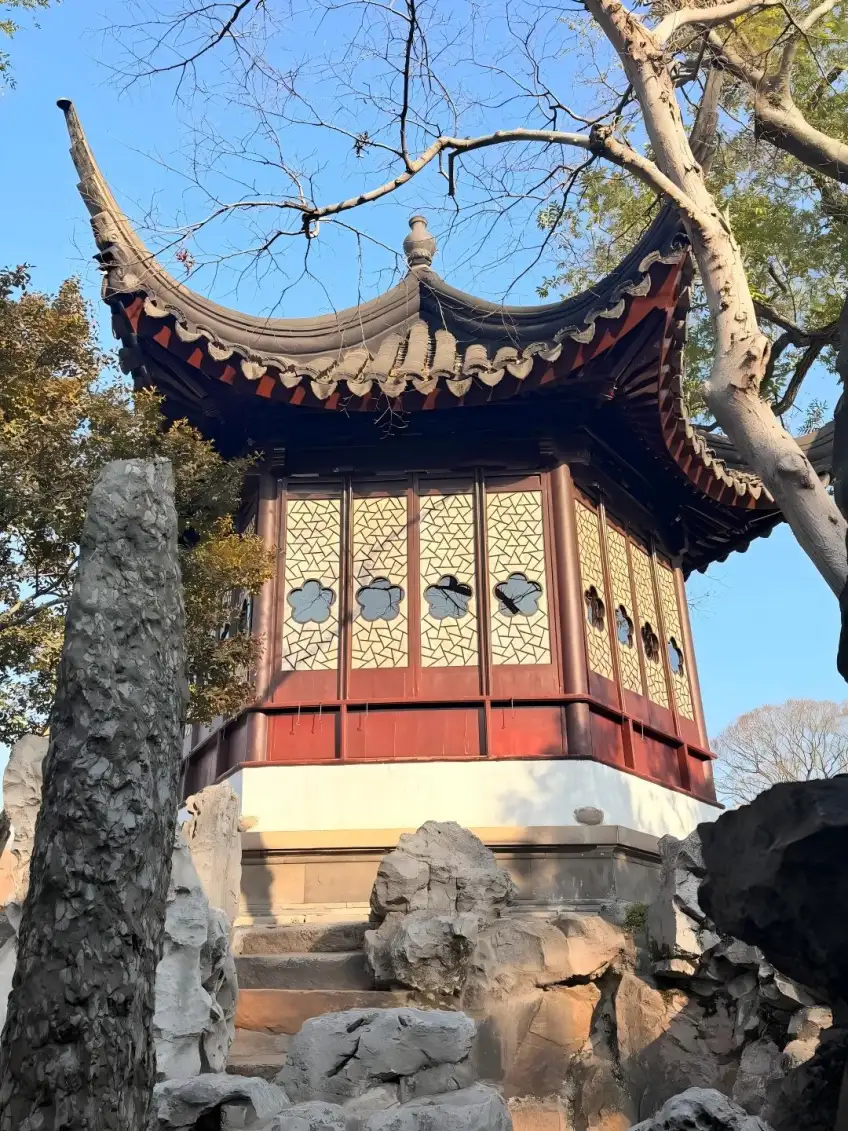
I think you have even more reason to come, if only to see the light and shadow filtering through these floral windows again. Every time the light pours through, it captures a different moment. The pavilion's name comes from a heartwarming story: "One pavilion suits two families' spring," reflecting neighborly harmony. When it was built, the two families were close friends, so the garden owner deliberately placed the pavilion on the rockery so it would belong to both gardens at once. Stand inside and look east to see the hills and waters of Humble Administrator's Garden; look west to see your neighbor's pavilions and terraces. One pavilion links two gardens and frames two views of spring.
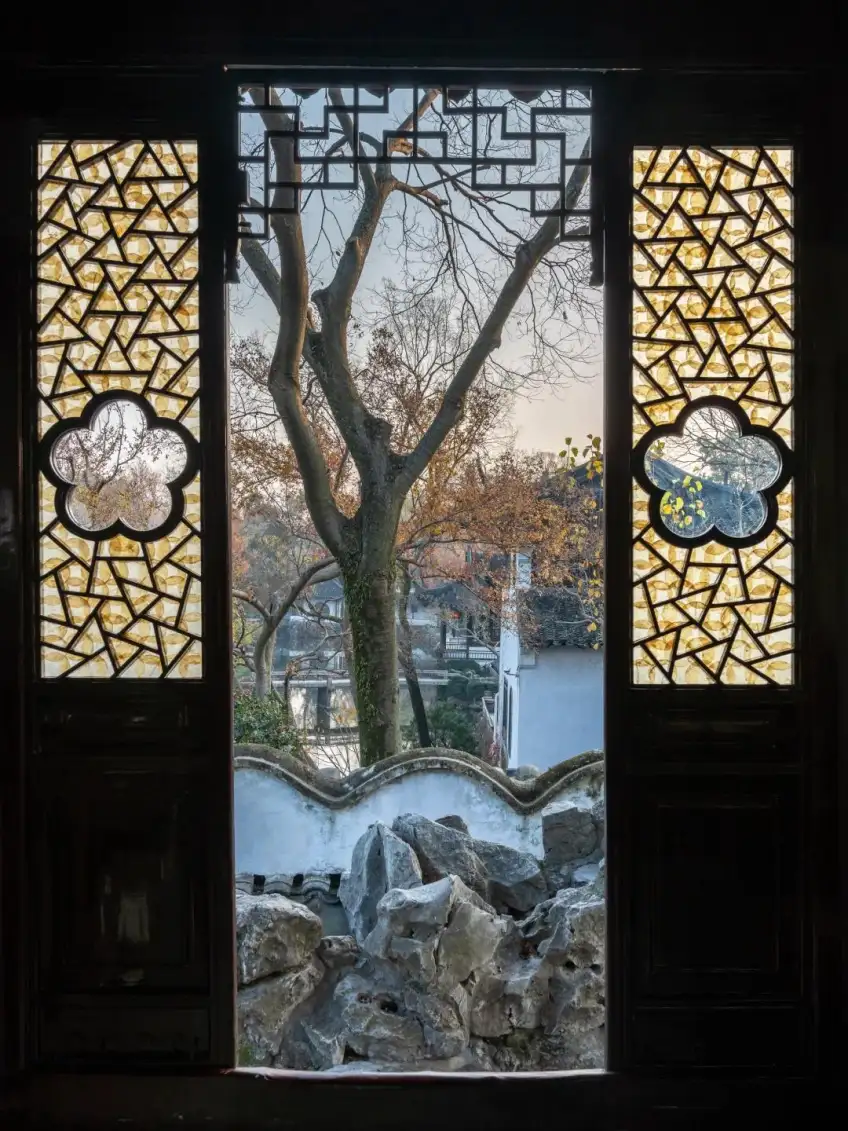
The name "Yiliang" (suitable for both) is truly fitting—it belongs to neither side alone, but to both. This spirit of sharing without rivalry benefits everyone. Instead of building a wall to hide the scenery, the garden owner used a single pavilion to connect two springs. That shows not just goodwill, but vision.
That was the moment I understood why people call it a "limited-edition view open only thirty days a year." It isn't just that the garden really keeps it closed for 300 days. It's that in an entire year, there are only about thirty days when you happen to catch this light, this stillness, and this state of mind.
A Century-Old Theater of Light in Suzhou
Pushing open the door of the Thirty-Six Mandarin Ducks Hall, I was stunned by that wash of blue light. The windows are wooden lattices, each pane set with pieces of colored glass. Blue dominates—shades deep and pale, as if an entire sky had been shattered and pieced back in. There's some purple too, though less of it, like a stray brushstroke of evening clouds slipping through.
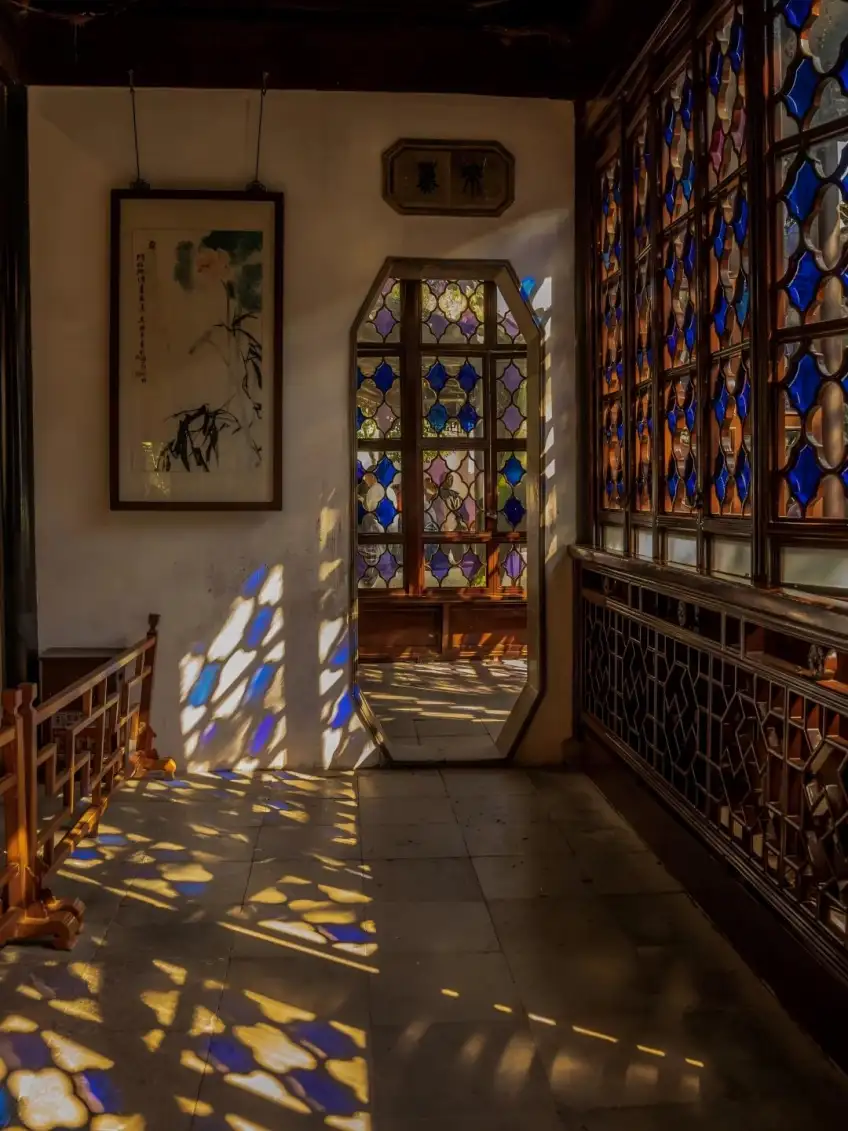
The hall's windows are set with alternating blue and white glass, said to have been imported from Europe by Hong Jun, who served as a diplomat at the time. Back then, this material was an extremely rare import, but only the light of Suzhou's Humble Administrator's Garden gave it greater value—because light is the world's most luxurious material, fleeting and impossible to hold.
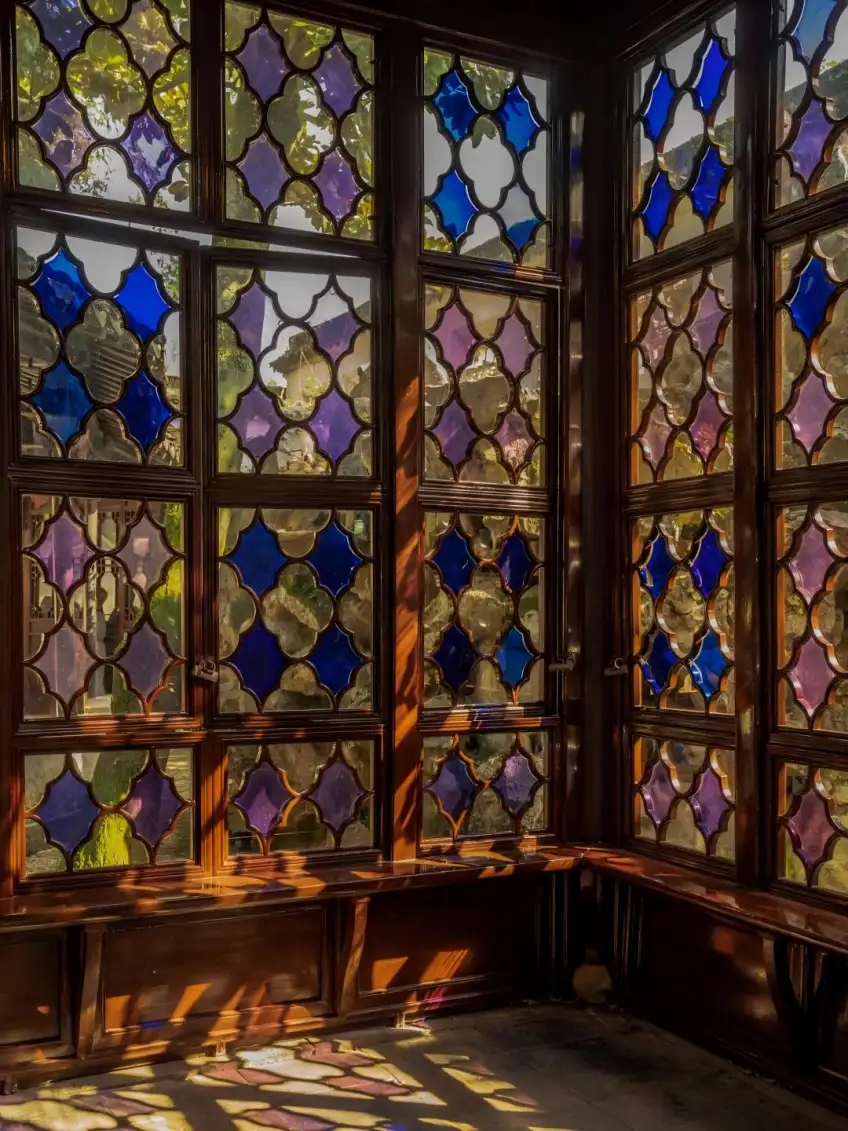
Here, though, the garden builders used colored glass to capture the light. Set into the wooden windows, it turns the entire hall into a flowing jewel box when the afternoon sun pours through—the East's most luxurious filter, and its gentlest way of waiting.
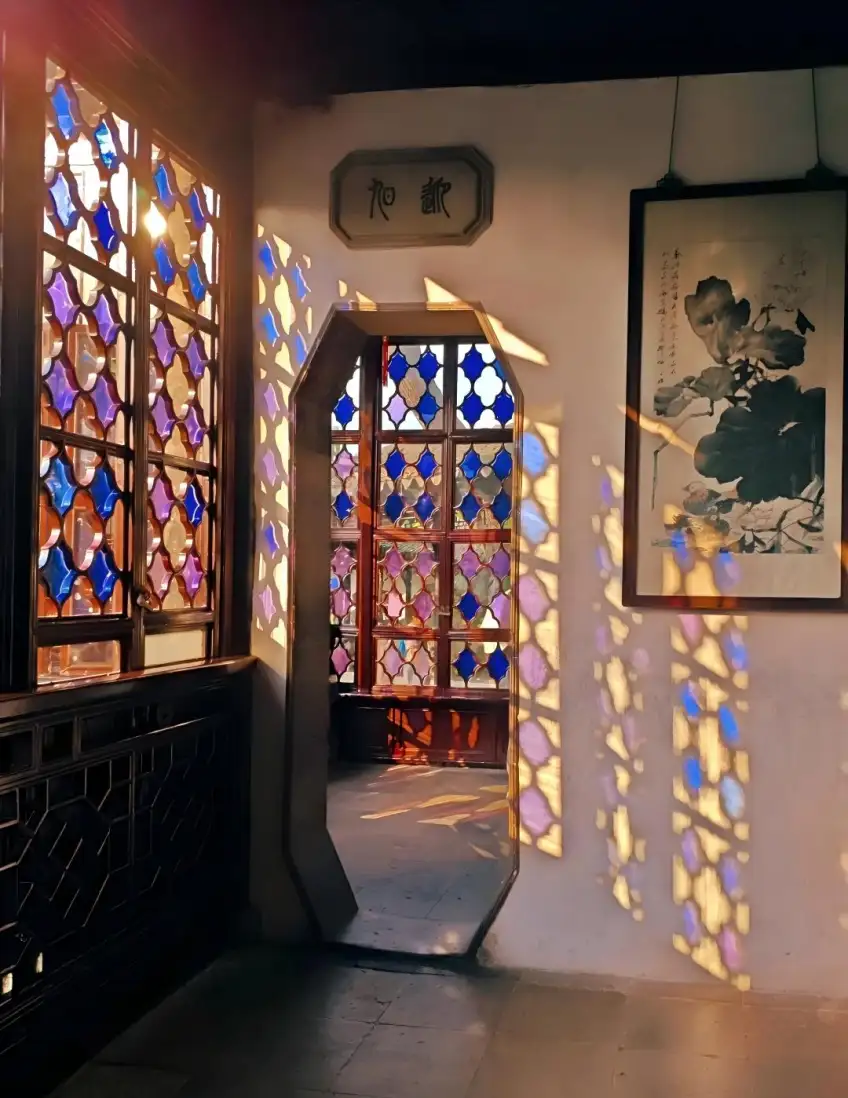
This is a Jiangnan hall that sings Kunqu Opera. Look up at the ceiling and you'll discover the secret: it is a natural theater, with the roof deliberately shaped into an arched dome. The curved surface is both decorative—concealing the beams behind it—and acoustic, reflecting sound to enhance the effect so that the clear notes of Kunqu Opera wrap around you in surround sound. Perhaps this is what the ancients meant by "lingering melodies drifting endlessly around the beams."
A Leisurely Moment in a Suzhou Teahouse
As I stepped out of Furong Pavilion, the setting sun cast its last golden light across the water.
I walked out of the garden gate, the wind fading behind me as voices grew louder. Heading east along Yuanlin Road, the moment I turned onto Pingjiang Road, Suzhou shifted into a different play of light and shadow. The canal looks just as it did a thousand years ago, only now lanterns and tea banners line both banks. I found a teahouse by the water—the second-floor window seat is best, where you can watch the river drift slowly by and see silhouettes passing back and forth on the flagstone street below.
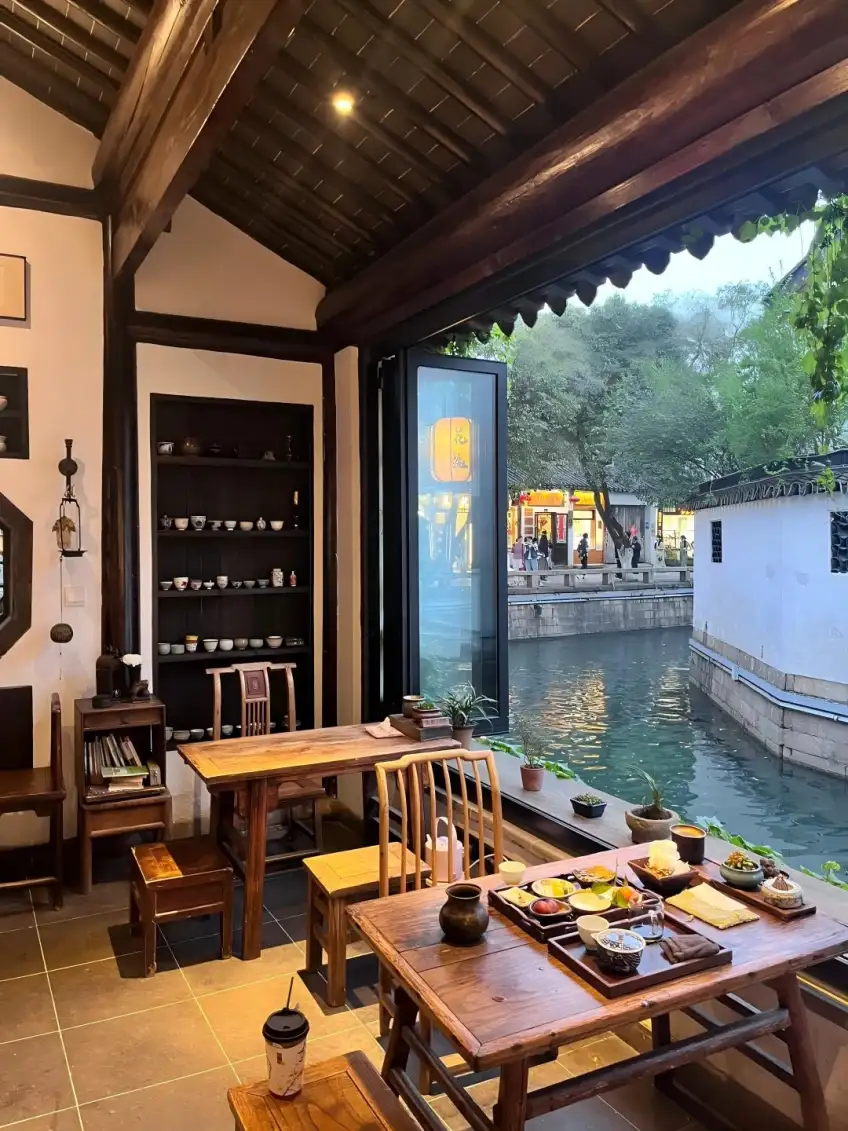
A cup of green tea, pale jade in color with a delicate fragrance, paired with a plate of hot osmanthus cake—soft, sweet, and sticky with every bite.
The owner smiled and asked, "Would you like to hear a performance?" Of course.
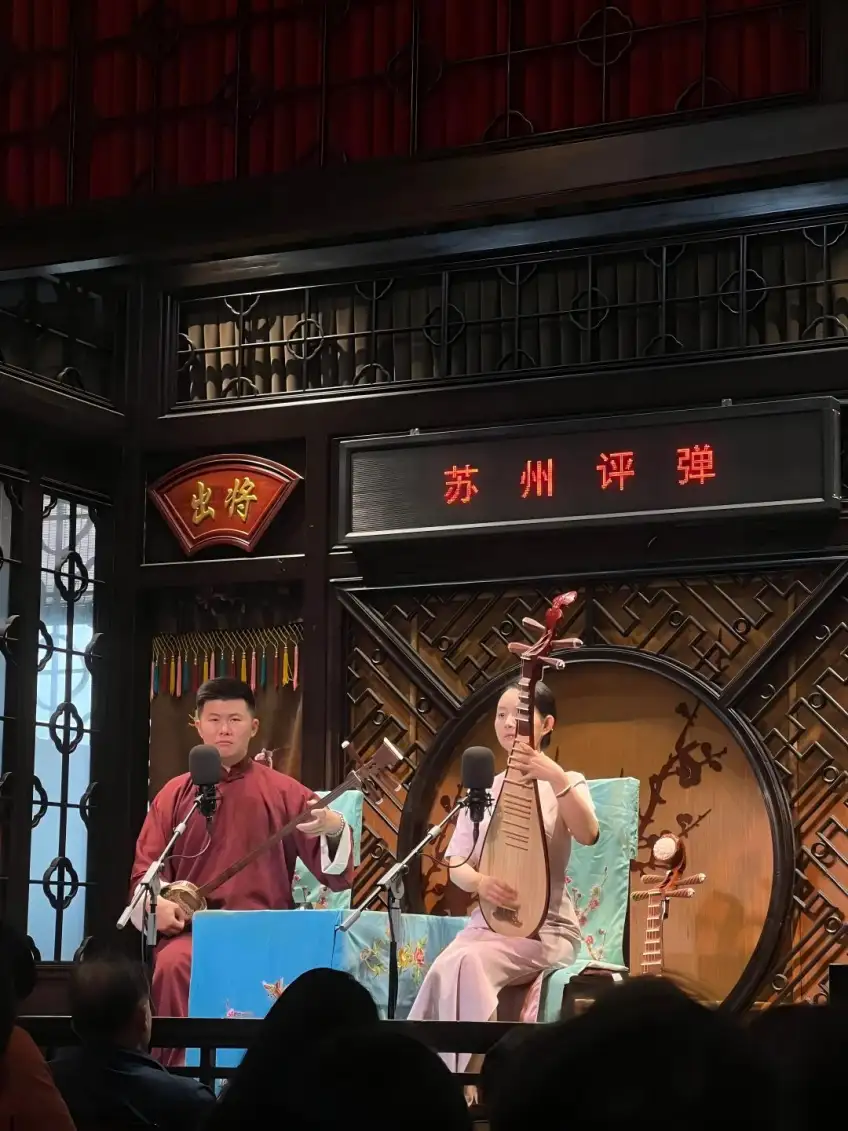
The sanxian strums and the pipa plucks softly for the Pingtan performance. I suddenly thought of the windows and corridors I saw in the garden that afternoon. It turns out classical gardens use walls to enclose elegance, while Pingjiang Road lays daily life out for everyone to see. Gardens are beauty "framed" within walls; Pingjiang Road is everyday life "leaking" through.
A cup of tea, a piece of cake, and a Pingtan performance are the perfect bridge between the two.
From Mountain-in-View Tower to Pingjiang Road, from borrowed scenery to listening to music, all the charm of Suzhou unfolds in the light and shadow of this single day.
I didn't rush through it. I took my time—sipping tea, listening to opera, and strolling through the gardens. This is how Suzhou is meant to be experienced.
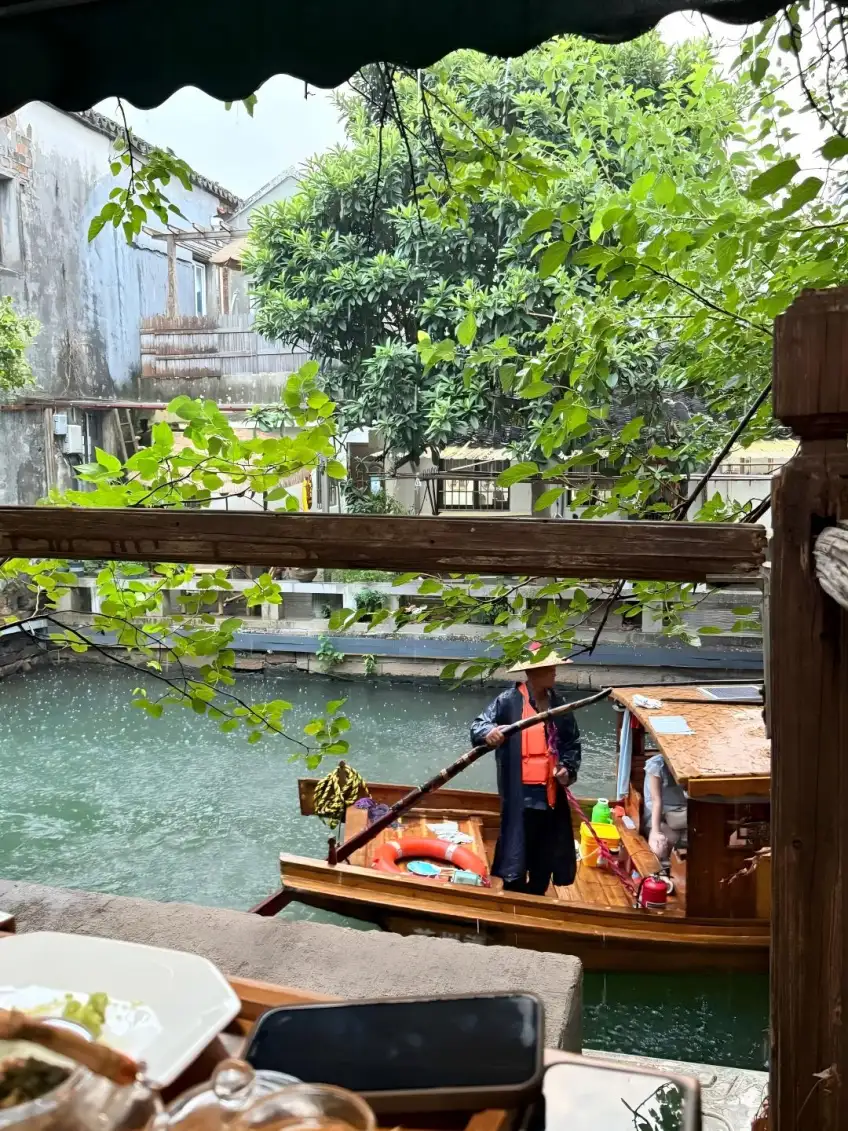
From the window, you can watch boatwomen slowly poling their boats across the river, with riverside houses and green shade reflected in the water.
FAQs
What are the must-see attractions at the Humble Administrator's Garden in Suzhou?
Highlights worth a closer look at the Humble Administrator's Garden include Zhuiyun Peak, the rockery screen just inside the entrance; Yuanxiang Hall and Xuexiang Yunwei Pavilion facing each other across the water; Jianshan Tower; the fan-shaped Yushui Tongzuo Xuan ("With Whom Shall I Sit" Pavilion); Xiaofeihong covered bridge; the wave-shaped corridor; Haitang Chunwu courtyard; and Sanshiliu Yuanyang Hall with its colored glass windows.
Where can you photograph Beisi Pagoda in the Humble Administrator's Garden?
The most classic borrowed scenery in the Humble Administrator's Garden frames an ornamental window with Beisi Pagoda: the delicate lattice window is the foreground, while the pagoda outside the garden forms the background. Your gaze crosses the water and treetops to find the pagoda standing steadily in the center of the frame—one of the garden's most popular photo spots.
What's special about Yushui Tongzuo Xuan in the Humble Administrator's Garden?
Yushui Tongzuo Xuan is commonly known as the "Fan Pavilion." Its roof, windows, and interior stone table are all fan-shaped, and from inside, every window acts as a picture frame. The name comes from Su Shi's poem: "With whom shall I sit? The bright moon, the clear breeze, and me." It is a classic example of opposite scenery and framed scenery in the garden.
What are the highlights of Sanshiliu Yuanyang Hall in the Humble Administrator's Garden?
The wooden lattice windows of Sanshiliu Yuanyang Hall are inlaid with colored glass, mostly blue, which looks stunning when afternoon light streams through. The ceiling inside is curved to reflect sound and enhance acoustics, giving Kunqu Opera singing a surround-sound effect—look up and take it in.
How much are tickets for the Humble Administrator's Garden in Suzhou?
Adult tickets for Humble Administrator's Garden cost ¥80 in peak season (April–May, July–October) and ¥70 in off-peak season. Advance real-name reservations are required during peak season. Framed views, borrowed scenery and opposing scenery are everywhere in the garden, so set aside a few hours to explore it slowly.