

Humble Administrator's Garden: the Mother of Chinese Gardens
Humble Administrator's Garden is located in the old town of Suzhou. Built in the Ming Dynasty over 500 years ago, its first owner Wang Xianchen invited painter Wen Zhengming to help design it. It is known as "the mother of Chinese gardens". Each season has its own highlights: spring for the magnolias framed by the flower windows at Haitang Chunwu, summer for listening to the rain and viewing the lotus pond from Liuting Pavilion, autumn for strolling the double corridor beside Sanshiliu Yuanyang Hall, and winter for watching snow fall on the waterside pavilions. Tickets cost ¥80 in peak season and ¥70 in off-peak season; advance real-name reservations are required during peak season.
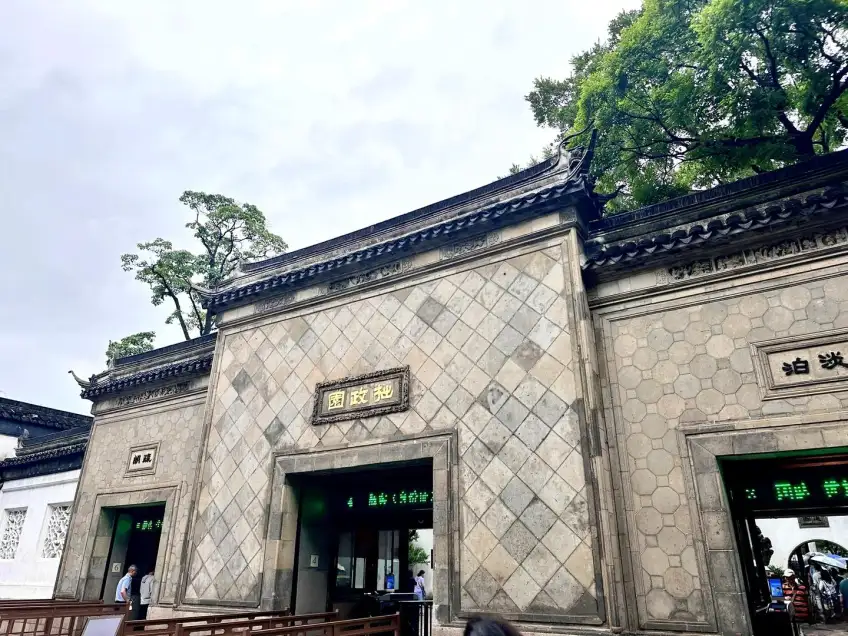
The three-arch stone gate at the main entrance is your first glimpse of the garden. From here, visitors enter the central garden's main scenic area and begin a dialogue with its pavilions, terraces, hills, and waters.
After it was built, the garden passed through many owners. The famous scholar and painter Wen Zhengming helped design it and painted its layouts. Legend has it that Cao Xueqin once lived here, and Daguanyuan (Grand View Garden) in Dream of the Red Chamber is said to have been inspired by it.
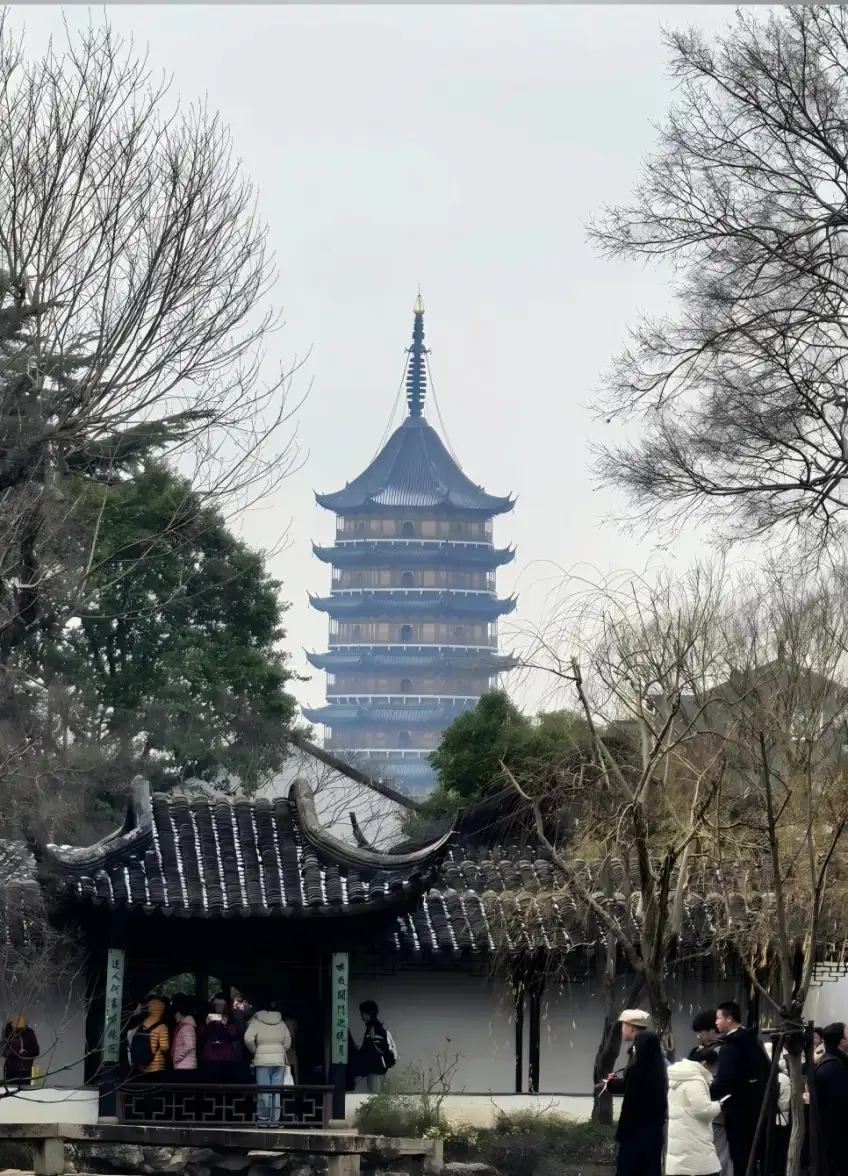
The garden's corridor eaves often "borrow" the distant Beisi Pagoda into view—one of the most classic examples of borrowed scenery at Humble Administrator's Garden.
To truly understand the Humble Administrator's Garden in Suzhou, start with a private tour that includes it (a full-day Suzhou tour linking gardens and the old town). If you want deeper insight into the yellowstone rockeries, lattice windows and local legends, we recommend hiring a guide to walk with you at your own pace. Need station or airport transfers, or want to visit several gardens in one trip? Book a private car. For an itinerary built entirely around your interests, choose a custom private tour. Just tell your travel consultant your travel dates, group size, departure city and garden preferences.
Suzhou's gardens are worth visiting in every season
I've stepped into this garden more than once, just to keep my date with the seasons. The soul of Humble Administrator's Garden lies in the rhythm of Suzhou life—if you rush through and see it as nothing more than a pile of pavilions and towers, you'll miss everything. There are no gilded halls or rigid symmetrical axes here; what matters is nature, winding paths, and scenery that changes with every step.
Watch a short video first to get a feel for the light, shadows and water sounds in the garden, then decide which season you'd most like to explore it in depth.
I visit four times a year to experience every vivid shade it has to offer. Each season brings a different kind of awe, and pushes me to ask: does the soul of Humble Administrator's Garden lie in its architecture or in its landscaping?
The best way into that soul is the imposing yellow stone rockery at the entrance. The garden's owner stacked these stones into walkable "stone veins"—you can weave through them like a miniature landscape maze.
The "bones" of the yellow stone at Humble Administrator's Garden in Suzhou
The large yellow stone rockery south of Hall of Distant Fragrance
The rockeries here aren't as dramatic as those in some other famous gardens, but the large yellow stone rockery south of Hall of Distant Fragrance is the one to see: it acts as an entrance screen, hiding the garden views so they aren't revealed all at once.
If Western gardens build rational order with straight axes and symmetrical flower beds, Humble Administrator's Garden uses stone to create an Eastern sanctuary. With sharp edges and clear layers, the yellow stone is the "backbone" and "skeleton" of the entire garden.
Compared with the translucent, rounded Taihu rocks, the yellow stone here is plainer, yet it underpins the confidence of being "crafted by human hands, yet born of nature." It stands quietly, watching over 500 years of dawns and dusks in the garden.
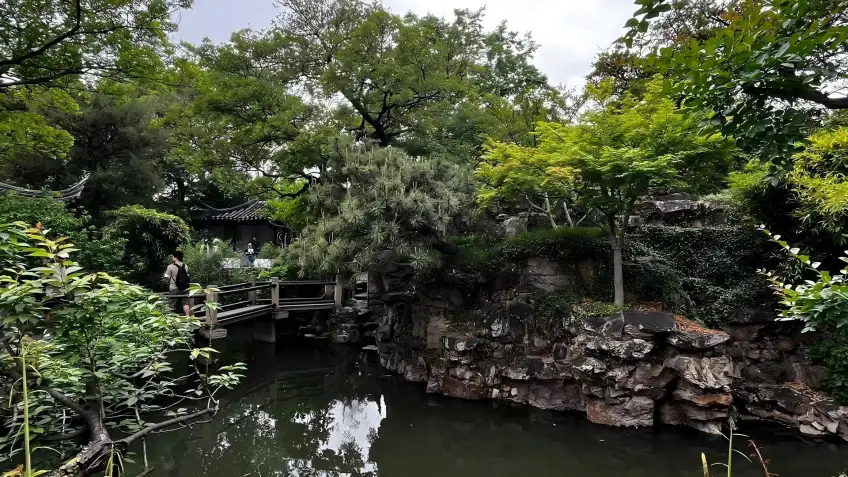
Standing between the yellow stone rockery and the pond bridge, you see the massive stone veins facing the small bridge on the water, as if in conversation with a garden designer from centuries ago—he wasn't just piling up rocks, but recreating a landscape painting in stone.
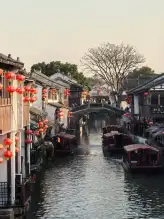
Suzhou private day tour | Suzhou North Station pickup and drop-off, Humble Administrator's Garden, Hanshan Temple
A private day tour with pickup and drop-off at Suzhou North Station: visit the Humble Administrator's Garden in the morning, then Hanshan Temple and Shantang Street, and return to the station in the evening. Ideal for travelers arriving in Suzhou by high-speed train. Includes transportation, a guide and admission tickets. English and other language guides available.
The owner's design philosophy at Humble Administrator's Garden
Only after coming to Suzhou do you realize: the garden's owner didn't show off with exotic stones, but used the most ordinary yellow stone to create a natural landscape mood. This "non-competition" is exactly the height of literati aesthetics—no carving needed, great skill looks clumsy.
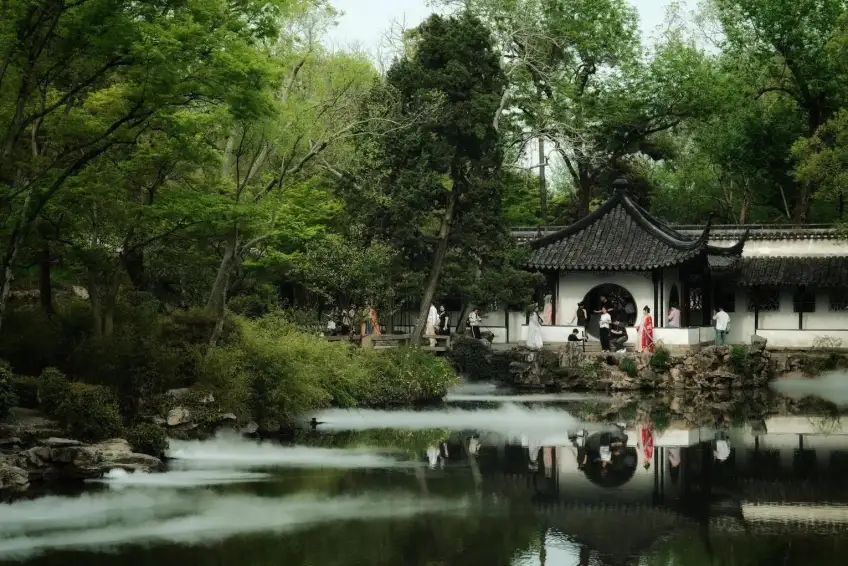
The moon gate, white walls and pond mist framed together embody the life philosophy behind the word "Zhuo" (clumsy): in a world full of cleverness, choosing a simple and sincere way to settle down.
"Zhuo" (clumsy) was not just the self-deprecating humor of Wang Xianchen, the garden's first owner. It reflects a sentiment passed down through generations of Chinese scholars: stepping away from the pursuit of fame to return to a simple, carefree pastoral life.
This garden, weathered by 500 years of wind and rain, has never been merely a collection of pavilions and terraces. It is a philosophy of life hidden within its landscapes. Unlike Western gardens that display human grandeur through symmetry and geometry, it quietly weaves nature, history, and culture into every step of the scenery.
Framing views at Humble Administrator's Garden in Suzhou
What truly moves people in this scenery is often the latticed window just beyond the rocks.
If yellow stone is the "bones" of the garden, the latticed windows are its "soul." These windows are more than decoration—they act as frames that capture all four seasons before your eyes. The beauty of Humble Administrator's Garden lies in how well it knows to "borrow" scenery.
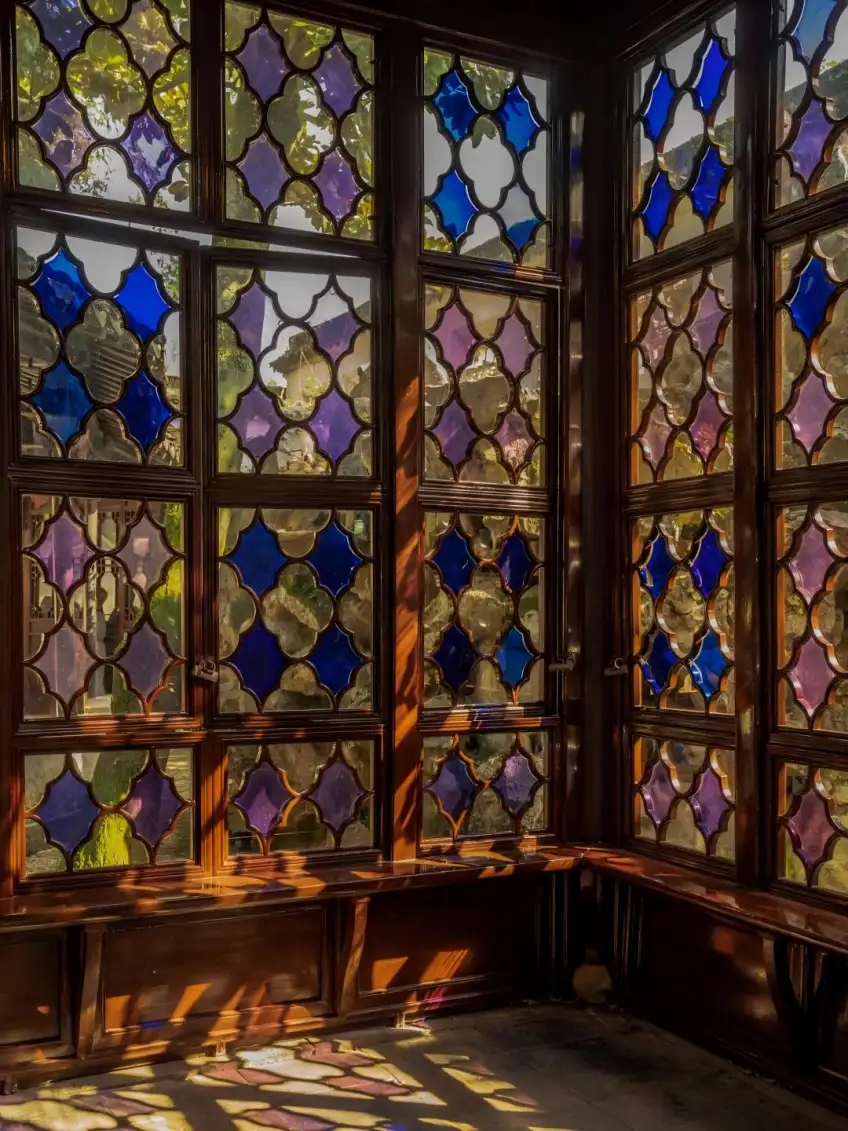
Inside the Mandarin Ducks Hall, the blue and purple stained glass windows crop the rockery and skylight into close-ups, like shifting picture frames—perfect for pausing and taking in the view.
Every latticed window is a gaze shared with the scenery: what you see isn't just the view outside, but how the ancients felt about the four seasons. Subtle, restrained and full of narrative—that's exactly what makes Chinese gardens so captivating.
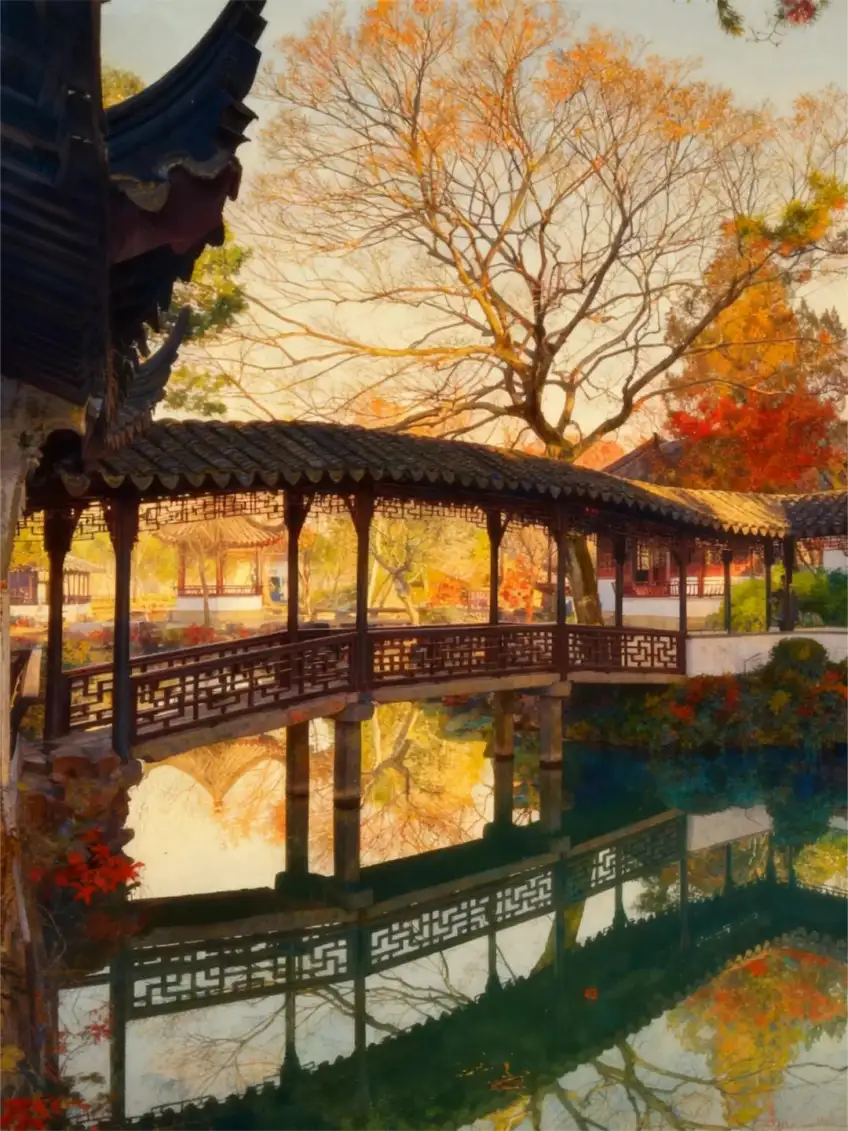
Shift your gaze from the lattice to the covered bridge and autumn colors, and you'll realize: Western gardens are like panoramic blockbusters, while Chinese gardens are close-ups meant for the soul.
The short seasonal videos help you predict bloom times and water levels, so you can follow the latticed-window route once you arrive.
Sights at Humble Administrator's Garden
Next, let's step into the flower corridor and uncover the secrets behind the lattice patterns—you'll see why visiting Humble Administrator's Garden four times a year is worth it.
Spring at Humble Administrator's Garden: vitality and dappled light
In spring, seek out the lattice windows around Crabapple Spring Dock (Begonia Spring Cove): their openwork patterns have soft, flowing lines. Looking through them at magnolias and crabapples, the blossoming branches appear half-hidden, like a wet ink painting. A spring lattice window frames the vitality that "leaks" in.
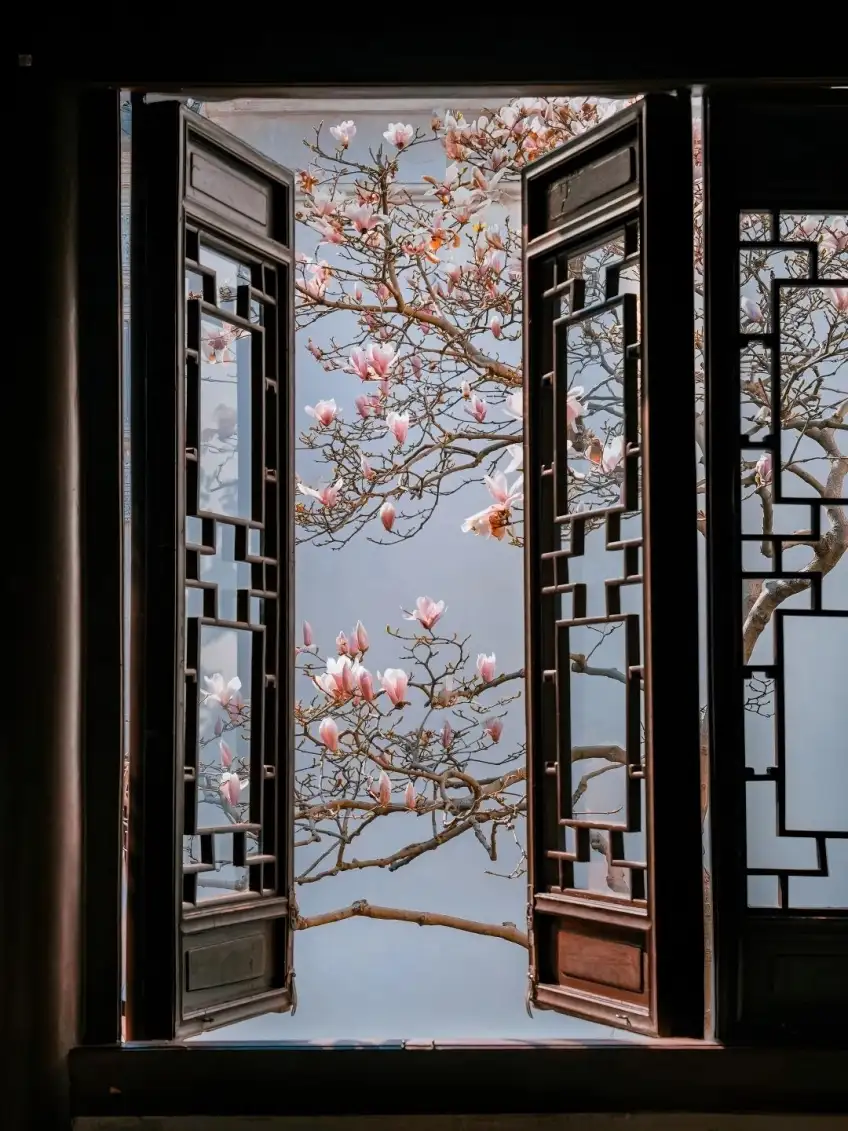
The open wooden lattice window perfectly frames the pink-white magnolias. Spring light and window mullions overlap—the most captivating moment at Crabapple Spring Dock.
Summer at the Humble Administrator's Garden: coolness and rain
In summer, turn your attention to Liuting Pavilion (Pavilion for Listening to Rain). Here, the lattice windows often meet the water, and they're even better on rainy days: rain taps the sills, green leaves blur charmingly in the mist, and looking through the window at the pond, the light and shadows feel cool.
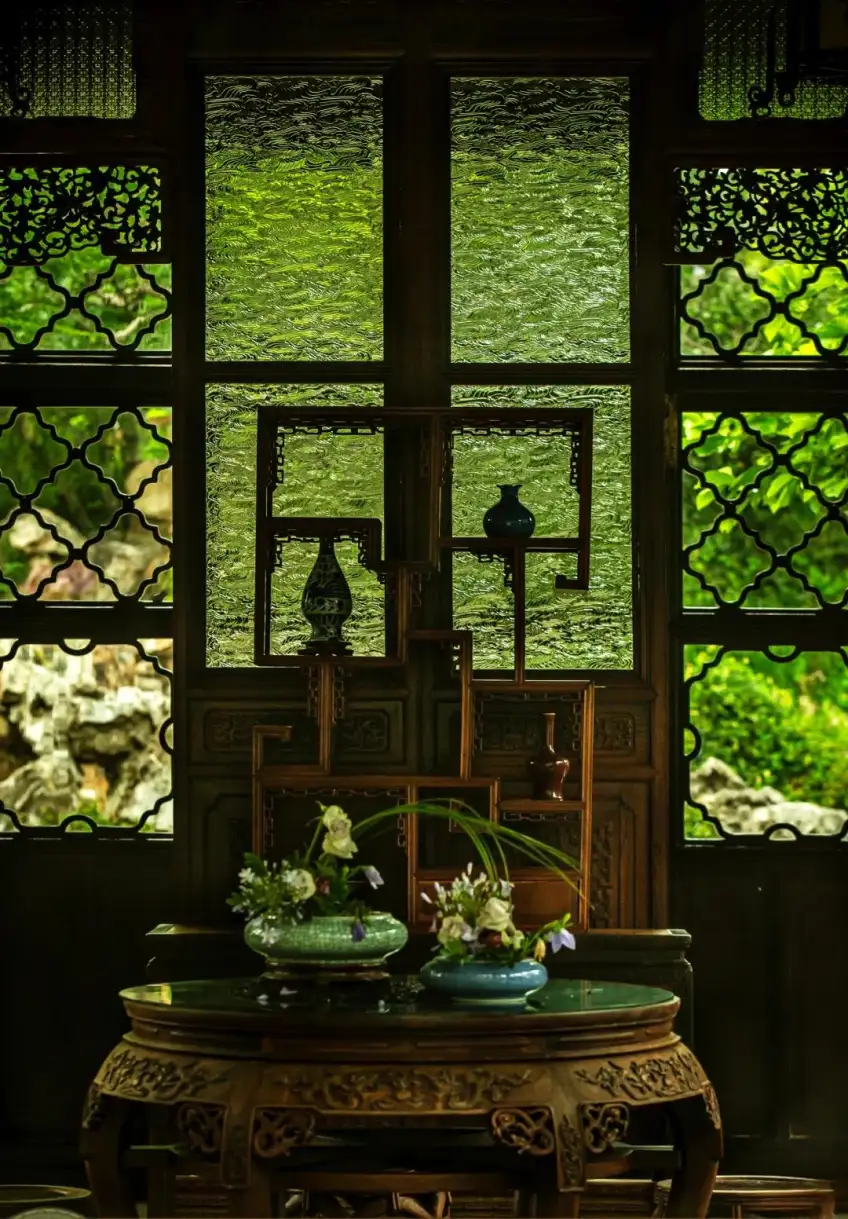
The table, flower vase and the patch of green visible through the lattice window inside Liuting Pavilion remind you that summer is also a time to sit down and listen to the rain, rather than rushing from one photo spot to the next.
Autumn at the Humble Administrator's Garden: layers and poetry
In autumn, I prefer the double corridor beside the Thirty-Six Mandarin Ducks Hall. The geometric or chrysanthemum-patterned lattice windows add a vintage filter to the ginkgo and maple leaves, creating distinct layers—a romance that "frames" splendor into a painting.
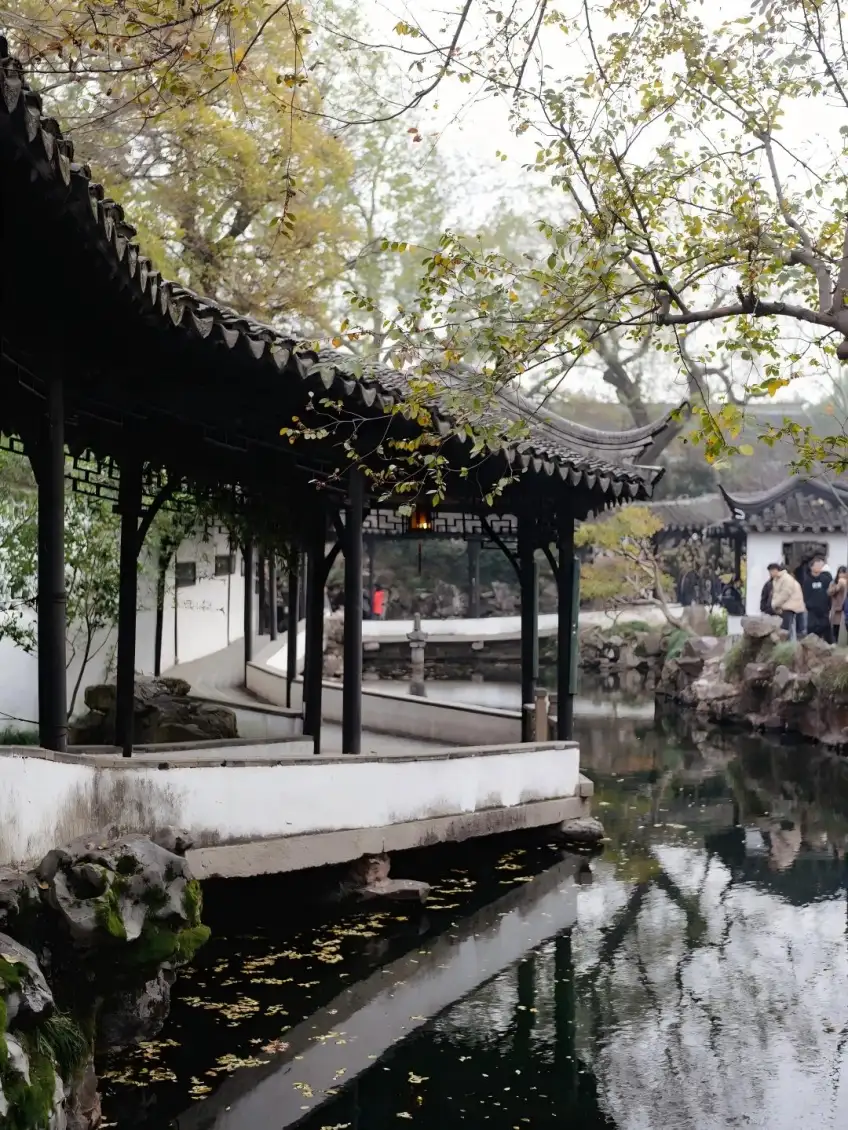
In autumn, the double corridor stretches close to the water, with yellow leaves floating on the reflections. A new view unfolds with every step—perfect for a slow, quiet stroll.
Yiliang Pavilion holds a special place in my heart: the four-season lattice windows are full of charm—from certain angles, looking left to right, you can sense the seasonal progression of spring peach blossoms, summer lotus, autumn maple, and winter plum blossoms.
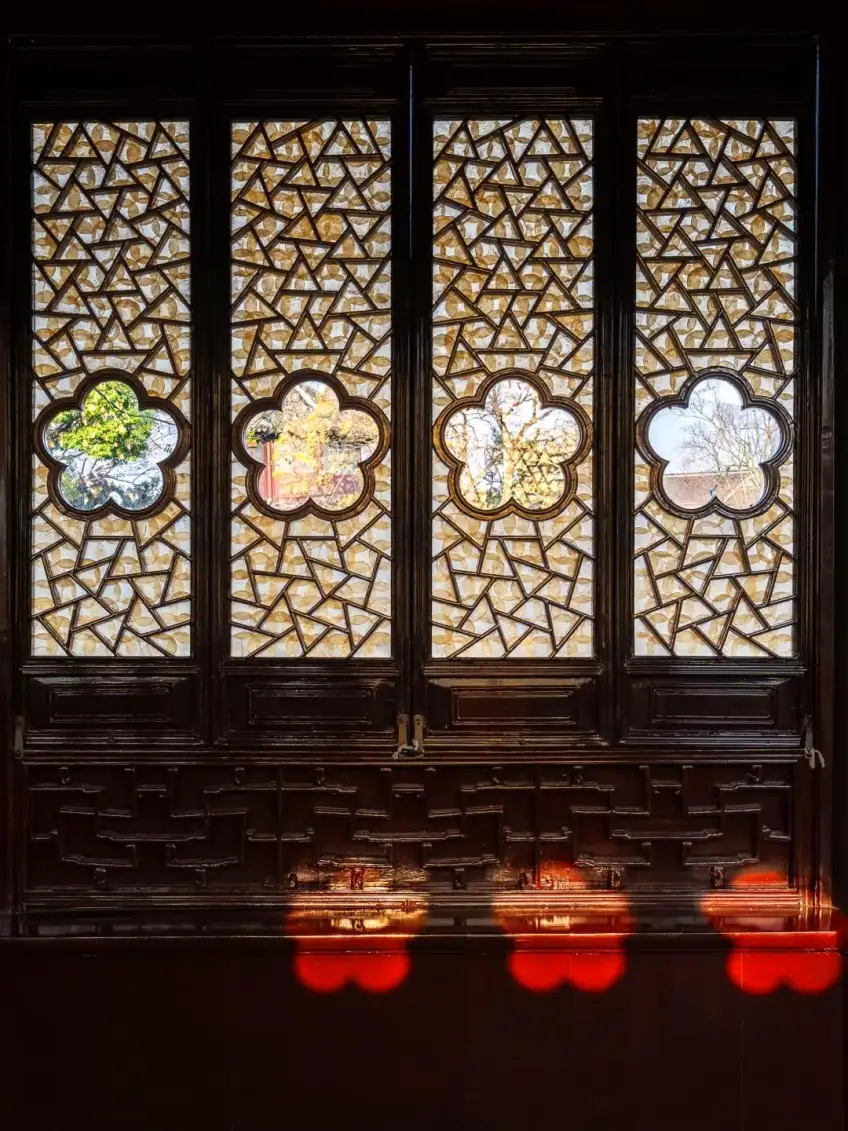
Each plum-blossom-shaped lattice window frames a different scene, dividing the garden's rooftops, branches, and skylight into four vignettes—ideal for studying the "framed scenery" technique.
The name Yiliang Pavilion refers to neighbors borrowing each other's views. When the middle and western gardens belonged to two families, the owner of the western garden built a rockery and pavilion so both gardens could enjoy the scenery. Look east for the lake views of Hall of Distant Fragrance, or west for the elegance of the Mandarin Ducks Hall—one spot to unlock two core areas.
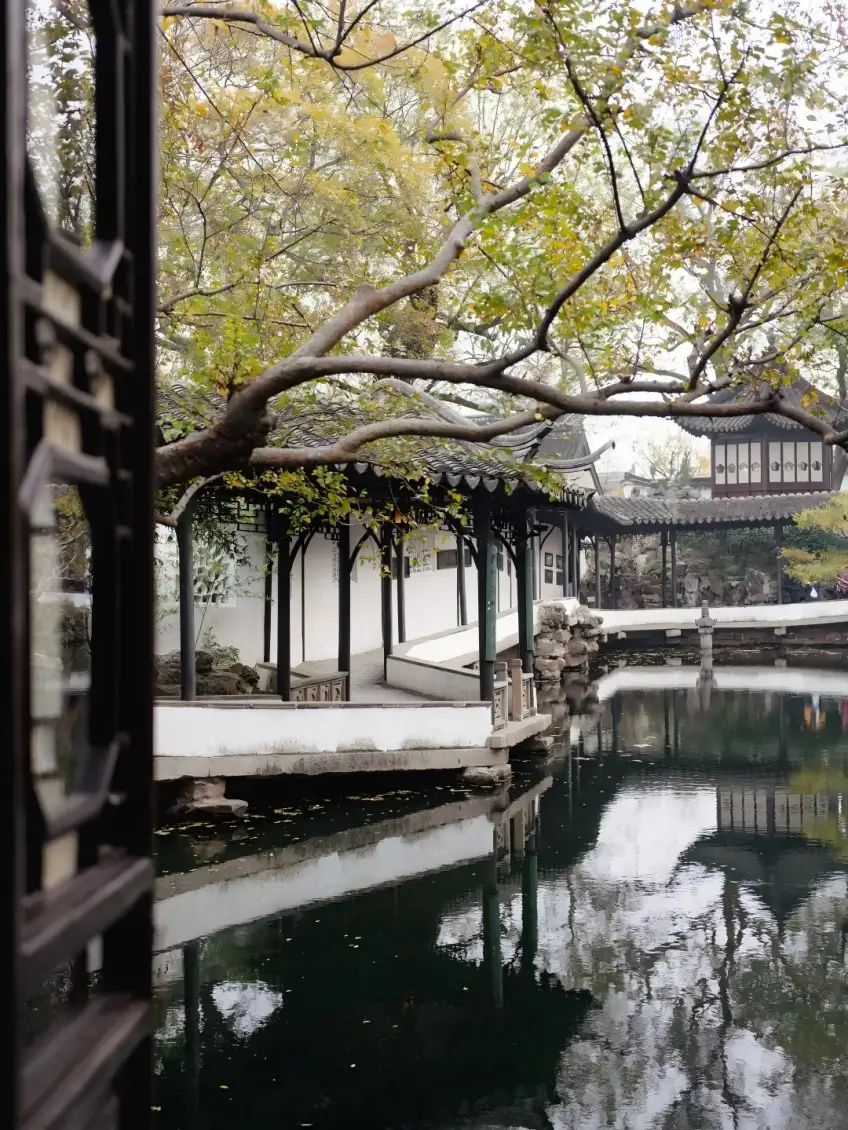
Looking at the water and the corridor's reflection from one side of the double corridor helps you understand how "borrowing pavilion views" turns a limited garden wall into an infinite vista.
The restored translucent shell windows are also frequently mentioned: made by thinning seashells, clamshells, mica and other materials through a complex process, they were once a luxury architectural feature in Jiangnan. For specific opening hours and display details, please refer to the on-site instructions.
Humble Administrator's Garden in winter: negative space and unique treasures
In winter, Humble Administrator's Garden becomes minimalist. The ornamental windows show their character best in this season; when watching the snow, don't chase vast white expanses—instead, notice how it outlines the curves of the eaves and lightly covers the lake surface.
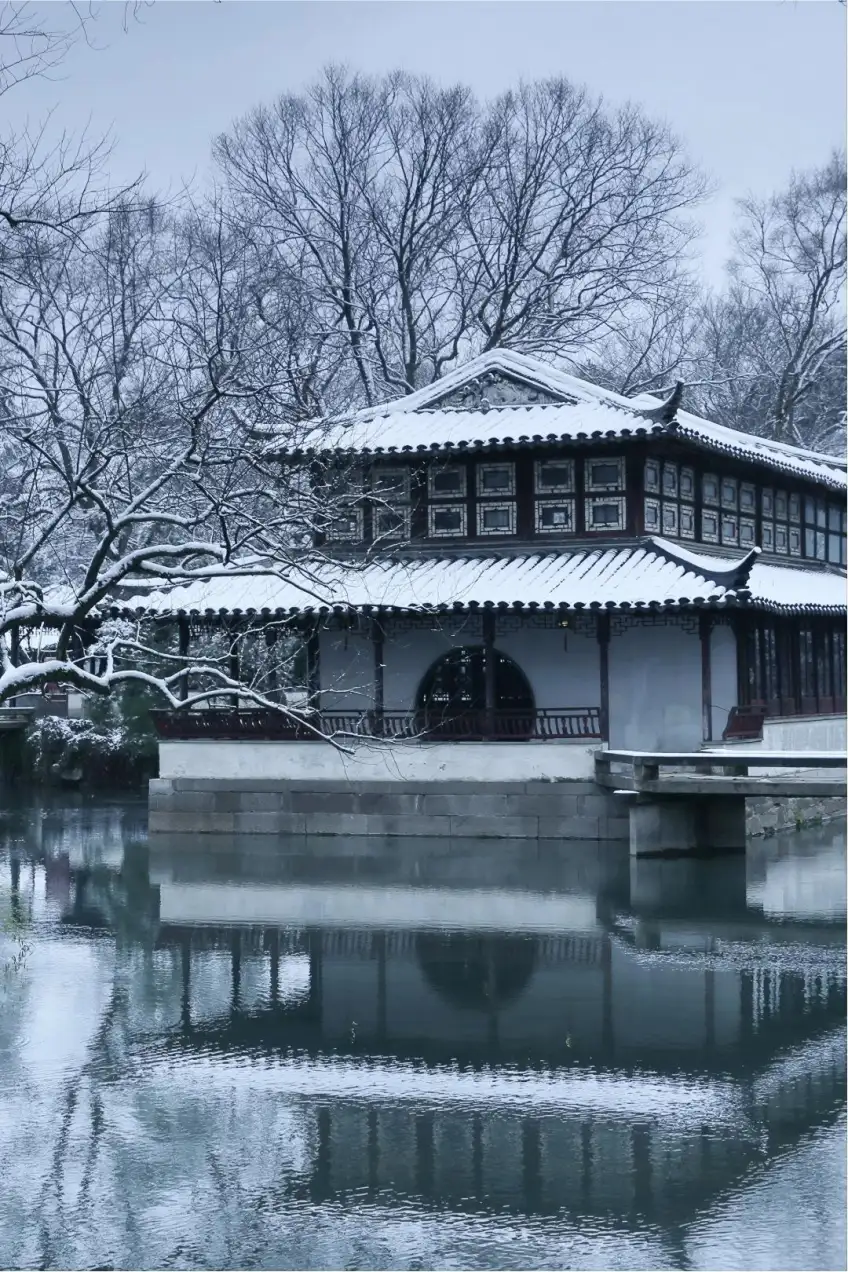
Snow covers the waterside pavilion, with the round window and railings reflected in the still water. Negative space and structure appear together—the perfect lesson for reading a garden in winter.
About the hidden corners of traditional gardens
Beyond the ornamental windows, Humble Administrator's Garden has three hidden corners—they're not just photogenic, but also the key to understanding Chinese garden landscaping philosophy.
First corner - Double corridor
That winding gallery is the double corridor. Why "double"? Because it's twofold: one corridor, two ways to walk; one wall, scenery on both sides.
This is the separated yet connected principle of Chinese gardens: you can see it but not touch it; it feels close, but it's actually far away.
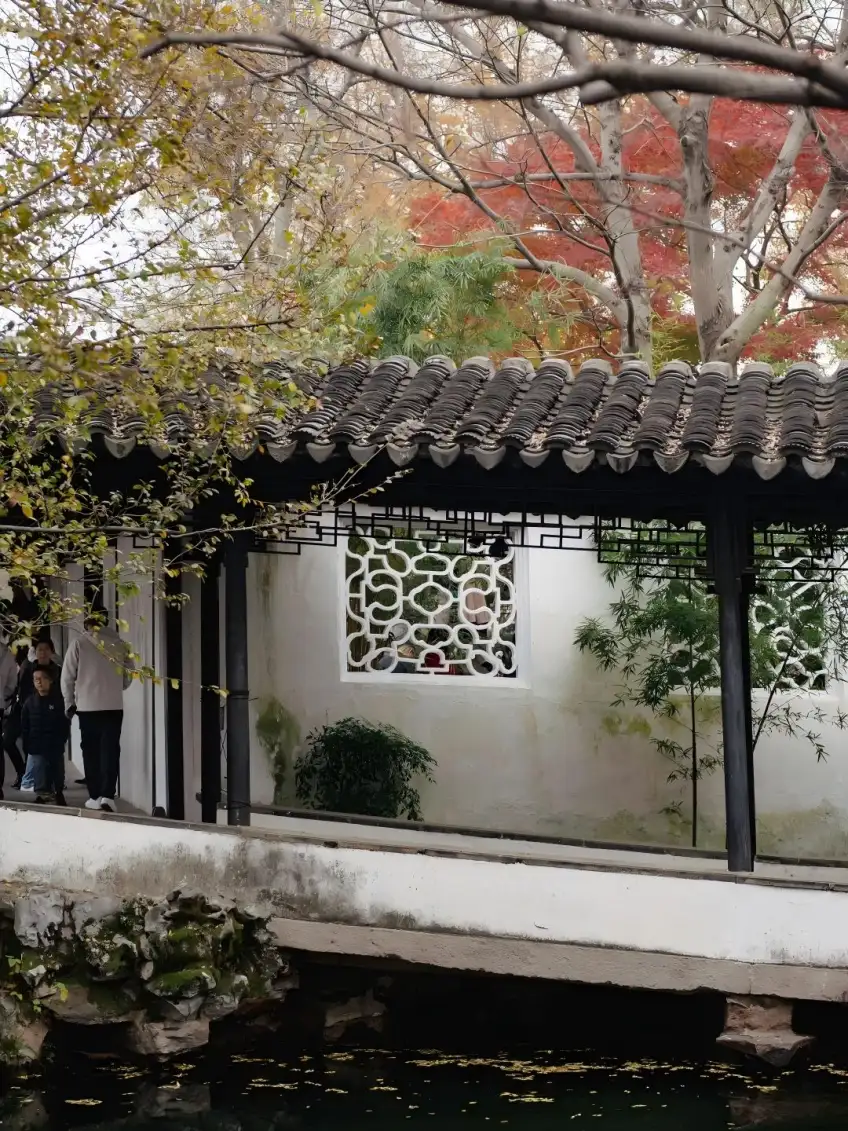
The lattice windows in the corridor wall frame the autumn maples against the white walls, and the "scenery on both sides" of the double corridor shifts from one opening to the next.
Second corner - Lattice windows
Walking along the corridor, peer through the lattice windows at the scenery: each window has a different shape—spring blossoms, summer green water, autumn falling leaves. You don't need to squeeze into crowded spots for a photo angle—every window has already framed the composition for you. This is how to explore Humble Administrator's Garden: stroll slowly along the corridor, pause, and take a look.
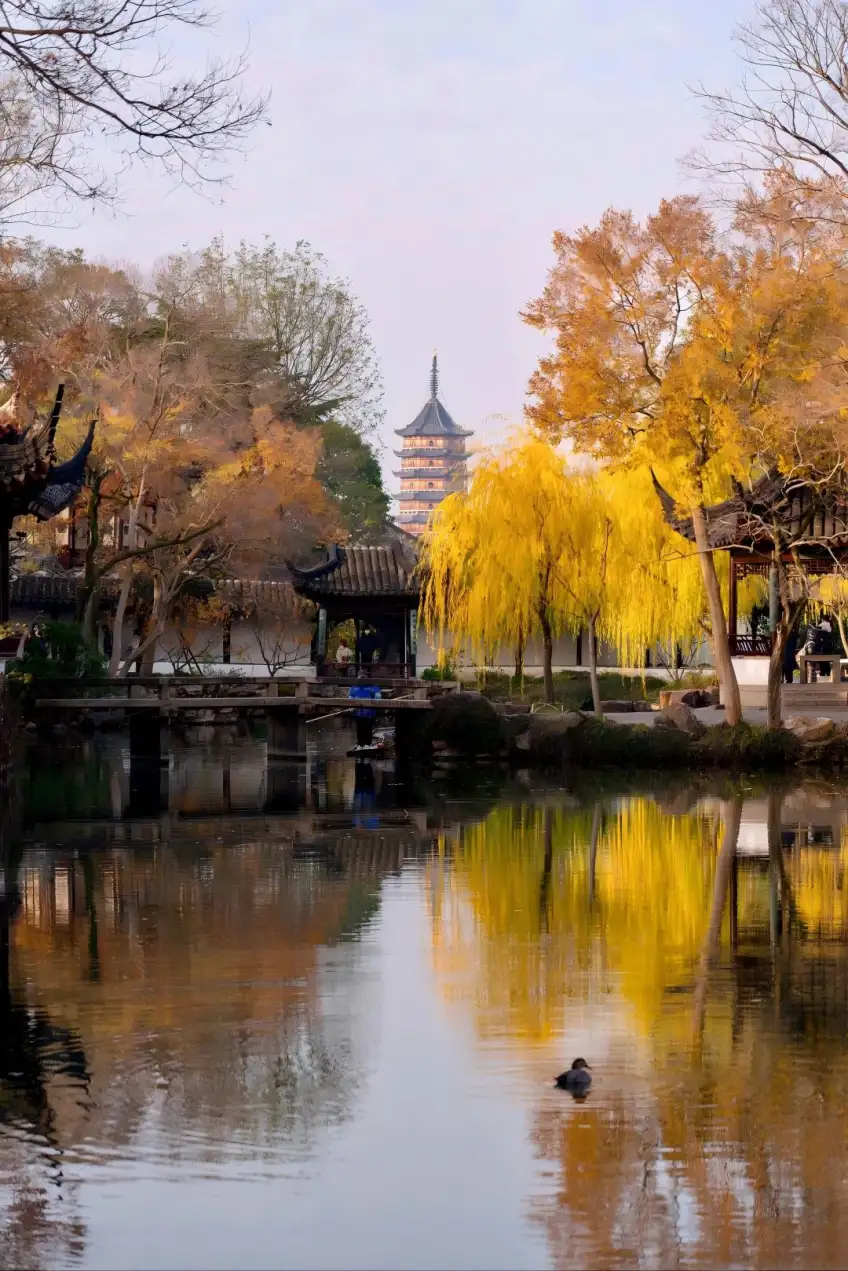
When the autumn pond and bridge share the frame with the distant pagoda, the latticed windows and borrowed scenery work together: up close is the bridge's reflection, in the distance the silhouette of Beisi Pagoda.
Third corner - Borrowed scenery
Humble Administrator's Garden is limited in size, yet through its covered corridors and windows it "borrows" the distant Beisi Pagoda, the nearby pond, and the sky overhead into your field of vision—like cutting a window in the wall of a small house that perfectly frames a distant mountain, a neighbor's tree, and the clouds.
Look again at the borrowed view of Beisi Pagoda: standing inside the garden and gazing at the pagoda, the space feels magnified. The buildings are small, but the view is vast. That is borrowed scenery.
Standing inside your own "garden wall" and looking out, you feel as if the whole world has become part of the garden—that is the secret behind why Chinese gardens feel boundless.
Bridges and water: inseparable in Humble Administrator's Garden
Humble Administrator's Garden has several bridges, and what makes them most captivating isn't their design alone, but how they interact with the water.
The charm of flat bridges: Take Xiao Feihong, for example—a covered bridge spanning the water, its deck built almost flush with the surface.
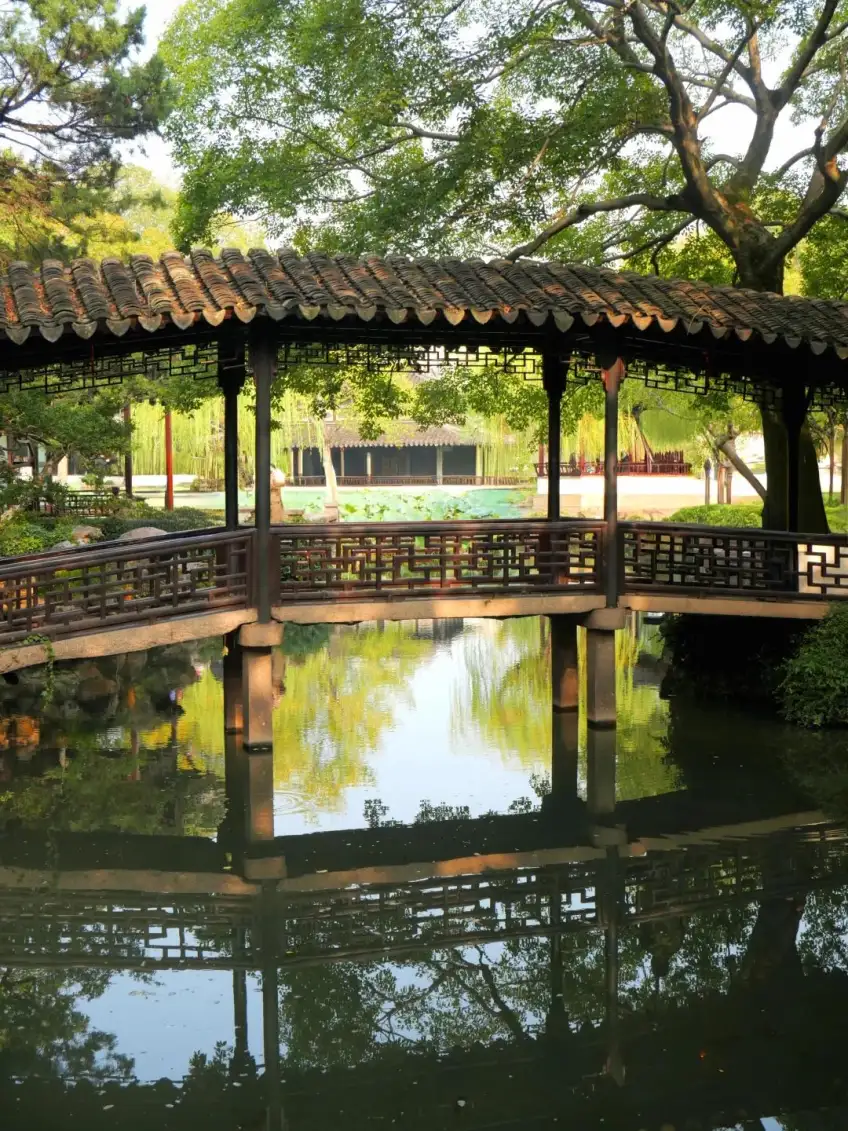
Standing on Xiao Feihong, the low deck skims the water, giving you the intimate feeling of walking on it: the water moves, the bridge stays still, and the view changes with every step.
The magic of the bridges in Humble Administrator's Garden lies less in their shapes than in how they interact with the water to create a new scene with every step.
Appreciating Suzhou garden scenery
Bridges divide the space into segments, and water gives those segments texture. Every step is a new frame, where stillness and motion blend shimmering light with corridor shadows. Cross a bridge and the opposite shore takes on a whole new look—this is Humble Administrator's Garden at its finest, where the scenery changes with every step.
In autumn, the covered bridge and the reflection of golden-red leaves share the same frame, reminding you that whether it's spring blossoms, summer lotus, autumn leaves or winter snow, what you take away is the unhurried ease of life in Suzhou.
This is the magic of Humble Administrator's Garden: it never shows you everything at once, but lets you walk, look and discover for yourself. Visit four times a year and you'll see more than changing seasons—you'll feel the depth of history, the spirit of the scholars, and a gentleness and strength unique to the East.
Understanding Humble Administrator's Garden and turning it into a real Suzhou trip
Tell our travel consultant your travel date, group size, departure city and preferences (guided tour needed, multi-city trip, seniors or kids), and we'll turn this travel guide into a real itinerary. Ticket prices and opening hours are subject to the garden's daily announcements.