
Panmen (盘门) stands in the southwest corner of Suzhou's old city. First built in the Spring and Autumn period, it is one of the few water-and-land city gates in China that survive intact. A daytime ticket is ¥40 (reference price as of November 2026; check official announcements). Here's how to spend the day: in the morning, see the Panmen gate tower, Ruiguang Pagoda and Wumen Bridge, then walk the moat trail to Xumen Gate (胥门) and Wannian Bridge. In the afternoon, visit the free Suzhou Urban Planning Exhibition Hall and Grand Canal Heritage Exhibition Hall. At dusk, take a canal cruise from Guxumen Pier (古胥门码头) to see the old city from the water.
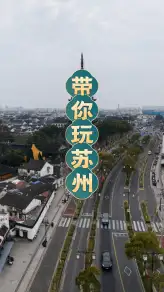
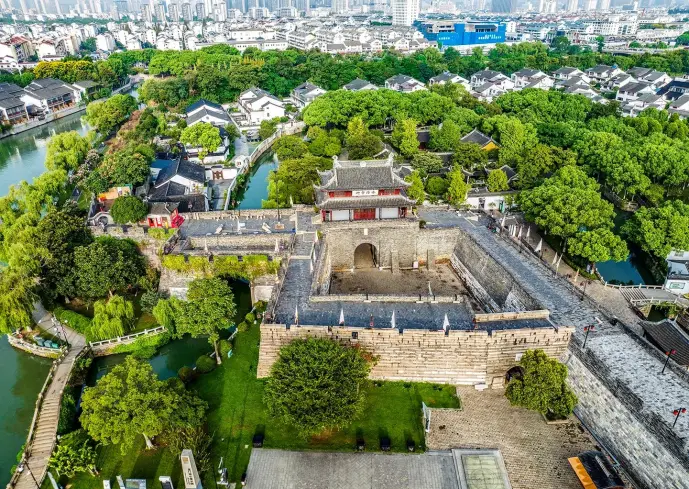
Suzhou Panmen day tour route
Panmen (morning) → moat trail, Panmen–Xumen section → Xumen Gate and Wannian Bridge (midday) → Suzhou Urban Planning Exhibition Hall and Grand Canal Heritage Exhibition Hall (afternoon) → canal cruise from Guxumen Pier (evening)
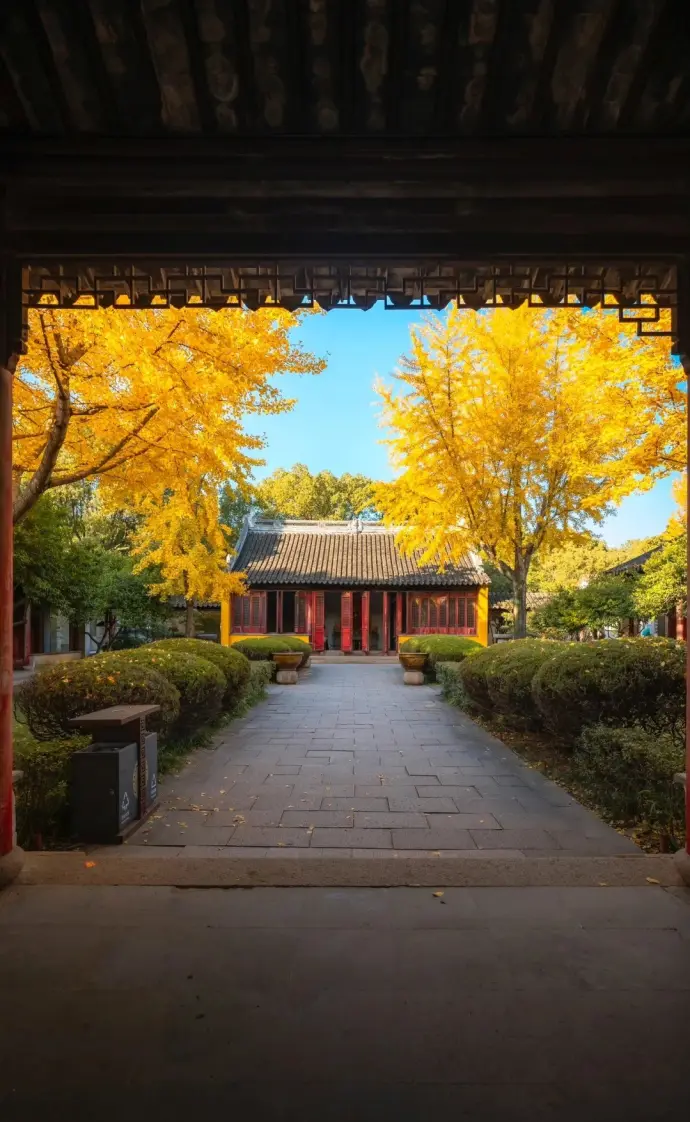
First stop: Panmen, Suzhou
Address: 49 Dongda Street, Gusu District, Suzhou, Jiangsu Province
Panmen tickets
Tickets: daytime admission is ¥40 per person, with entry from 8:30 a.m. to 4 p.m. For the evening "Night Garden," check the site's official announcements for prices; entry is 5–8:30 p.m.
Suggested route: enter by the south gate and follow the classic loop: Panmen gate tower → Ruiguang Pagoda → Wumen Bridge.
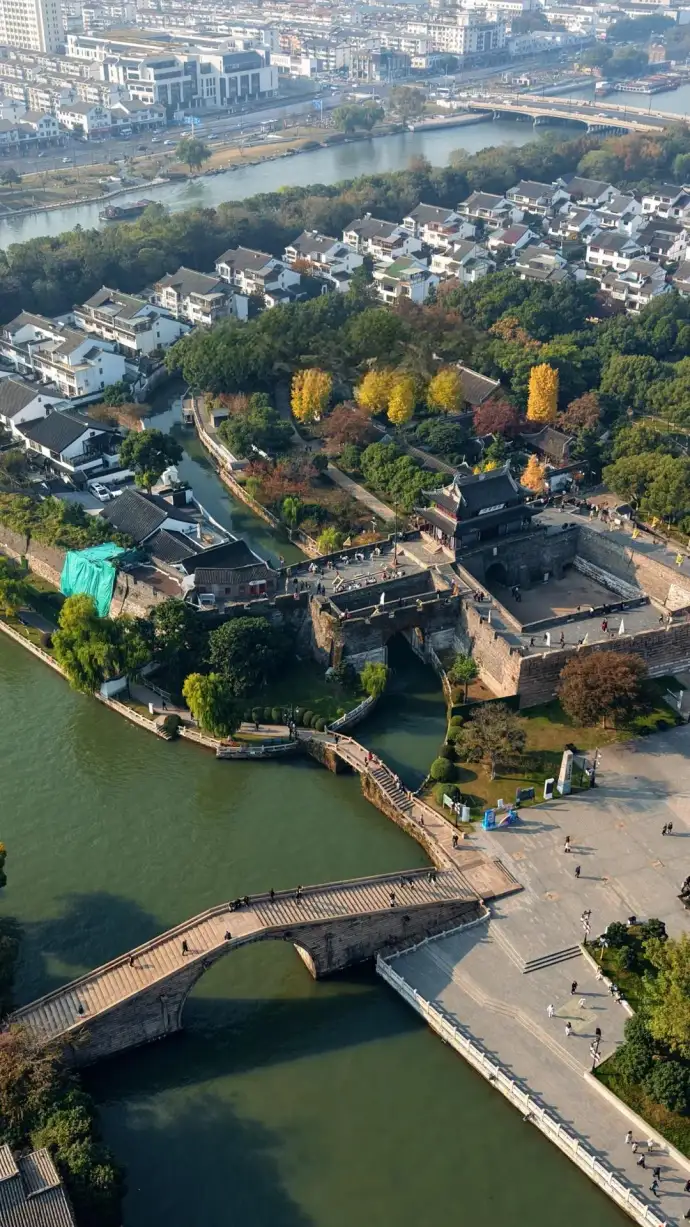
Exploring Panmen
If Suzhou were an ancient history book, Panmen would be its cover. Starting here, you can trace the city's 2,500-year history from ancient times to the present.
Panmen was first built in the Spring and Autumn period, more than 2,500 years ago. As the transport hub of southwest Suzhou, it was once a busy trading district. Its water-and-land gate layout survives intact, and a saying sums it up: "In the north, see the might of the Great Wall; in the south, see the grace of Panmen."
The site's layout and buildings largely keep their late Yuan and early Ming appearance. It includes the Panmen gate tower, Wuxiang Temple and the Three Scenes of Panmen.
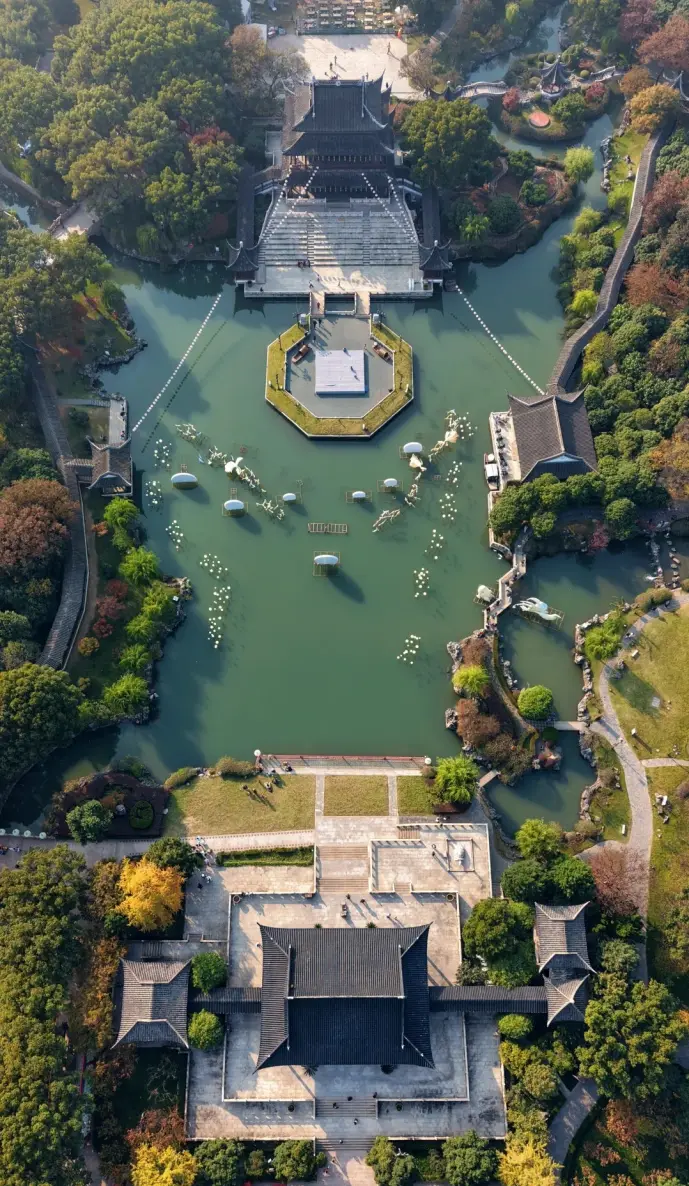
What to see at Panmen
The highlight is the water-and-land gate, the heart of the Three Scenes of Panmen. It was one of the eight gates of King Helü's capital, built by Wu Zixu, and is one of China's best-preserved city gates with water and land entrances side by side. From the gate tower you can clearly see the enclosed courtyard formed by two land gates, a trap for any enemy who got inside. The water gate sits beside the land gates and is wide enough for two boats at once. In wartime, lowering both sluice gates sealed off a watery trap of its own.
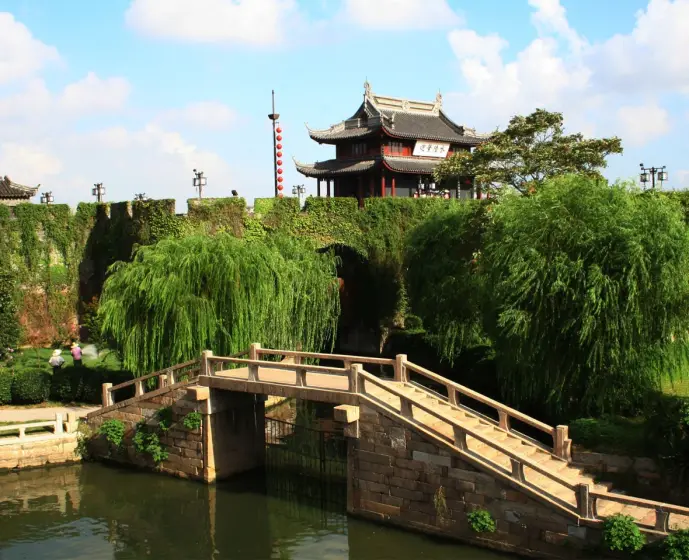
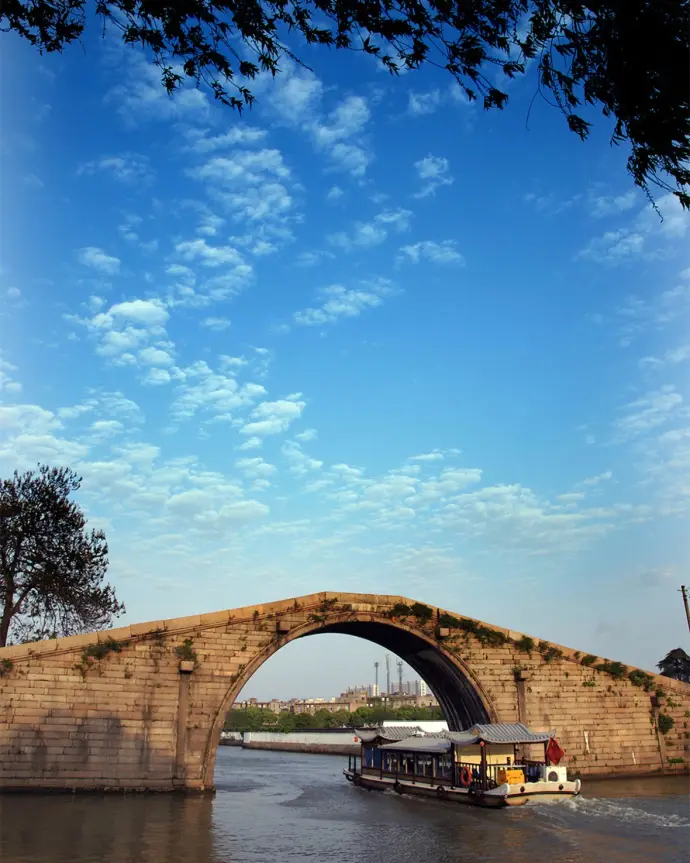
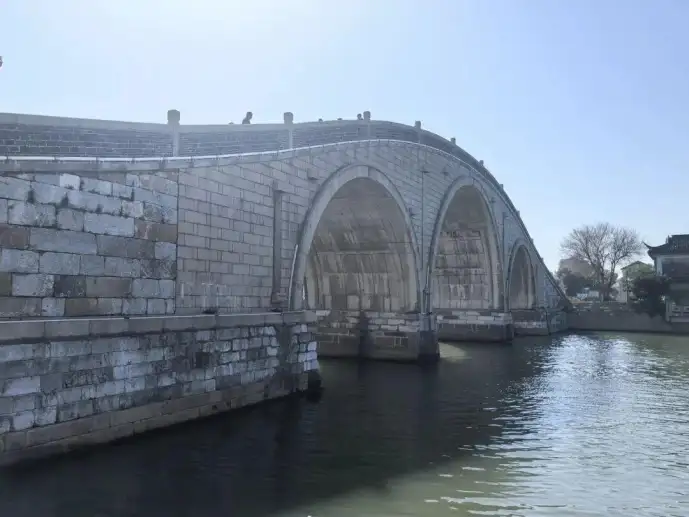
Wumen Bridge: the tallest surviving old stone arch bridge in central Suzhou. It was first built in the seventh year of the Northern Song's Yuanfeng era, and its completion ended the ferry crossing at Panmen. Today's bridge was rebuilt in the Qing dynasty. It's a small, finely made bridge, and its single arch is the highest of any old bridge left in Suzhou.
Ruiguang Pagoda: one of the few pagodas in the region you can climb for the view. It is a seven-story, eight-sided pagoda of brick and wood. Construction began in the first year of the Northern Song's Jingde era and was largely finished in the eighth year of the Tiansheng era. The pagoda became famous in 1978, when three children hunting for bird eggs found a national treasure inside: the pearl reliquary pillar. It is now one of the most prized pieces in the Suzhou Museum.
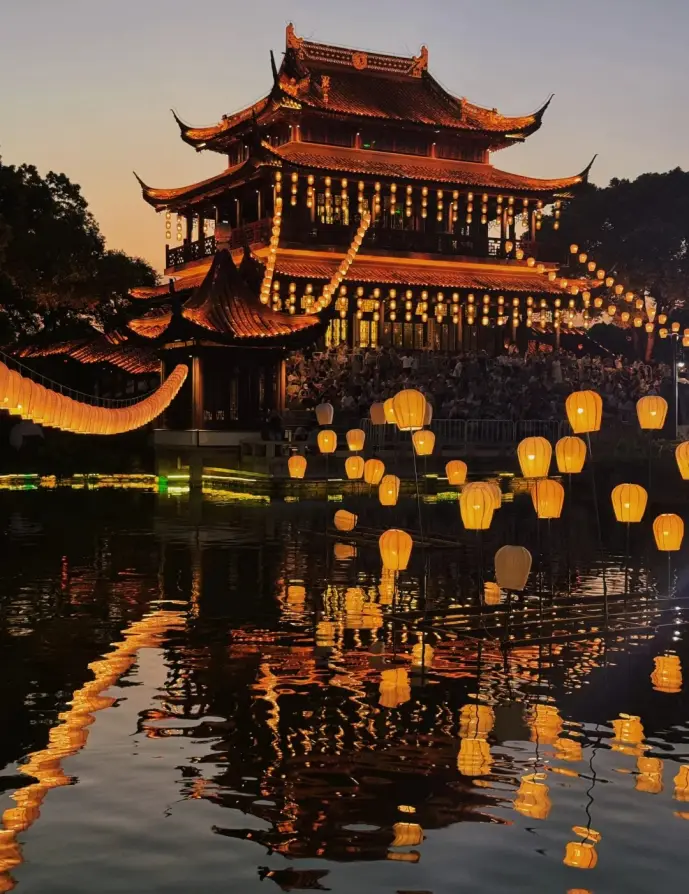
Stop 2: the moat trail to Xumen
Leave by Panmen's back gate and walk a few minutes to Shuyuan Lane (书院巷), where you'll find real Suzhou food. If you're hungry, stop here for lunch.
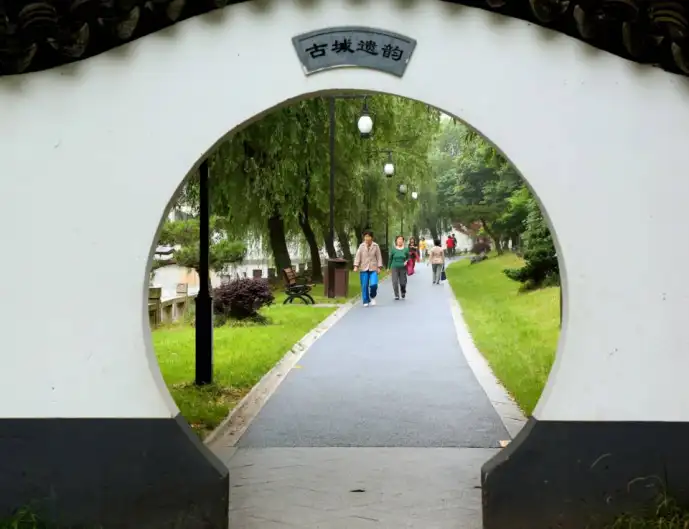
Where to eat on Shuyuan Lane
Shuyuan Lane is an old street with a scholarly past and plenty of local life. It's named after the Song-dynasty Heshan Academy and sits next to Suzhou High School, with many Suzhou snack shops and popular old eateries.
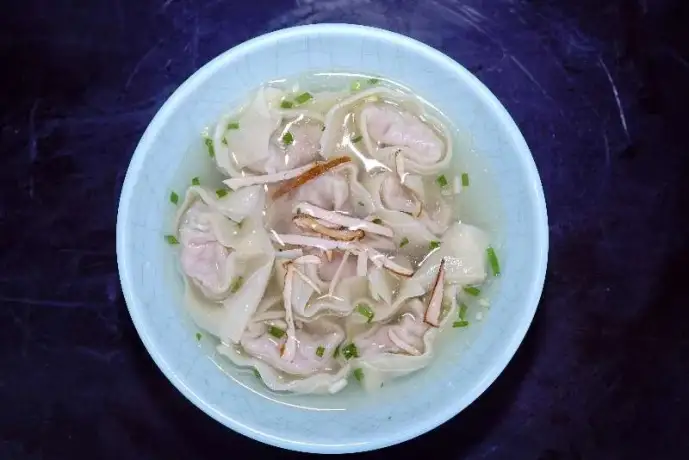
Aijiaolou Wonton Shop
Signature dishes: shepherd's purse wontons, three-filling wontons, pan-fried buns
Highlights: wrapped by hand to order, with thin skins, generous fillings and a clear bone broth; the shepherd's purse is very fresh in season
Hours: opens around 6 a.m. (go early)
Lao Wang Egg Pancakes
Signature: chive and egg pancake (add pork tenderloin or sausage)
Highlights: fried in rapeseed oil, crisp outside and soft inside, brushed with sweet bean sauce or chili sauce
Mingyuelou Rice Cake Shop
Signature: lard cake, mint cake, double-filled rice balls, red bean cake, qingtuan (green rice balls)
Highlights: made to order, soft and chewy but not heavy; expect a line when it's busy
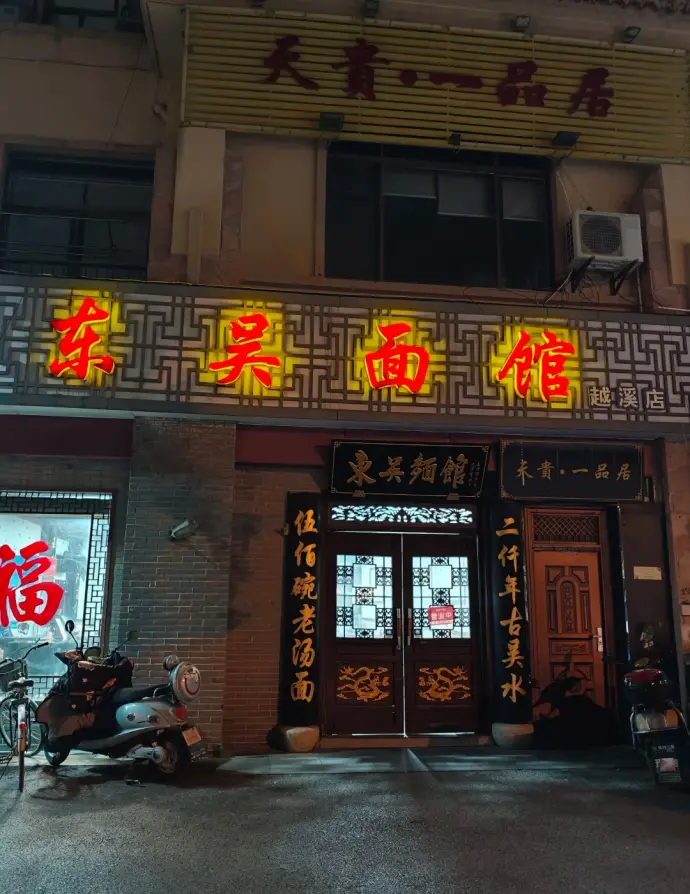
Dongwu Noodle House
Recommended: braised pork belly noodles, fried fish noodles, sweet-and-sour spare ribs with rice, pork liver noodles
Highlights: a long-established noodle shop, busy at lunch
Walking Suzhou's moat trail
From the back gate of Panmen, head north on the fitness trail around the old-city moat (the Panmen–Xinshi Bridge–Xumen section). The full trail is 15.5 km long, follows the water all the way and links the old city's historic sites.
Sights along the moat trail
Xinshi Bridge: Xinshi Bridge isn't old, but it's a popular photo spot. Plum trees line both sides of the path, and with the old pavilion, the old bridge and the moat, they make a classic Jiangnan scene.
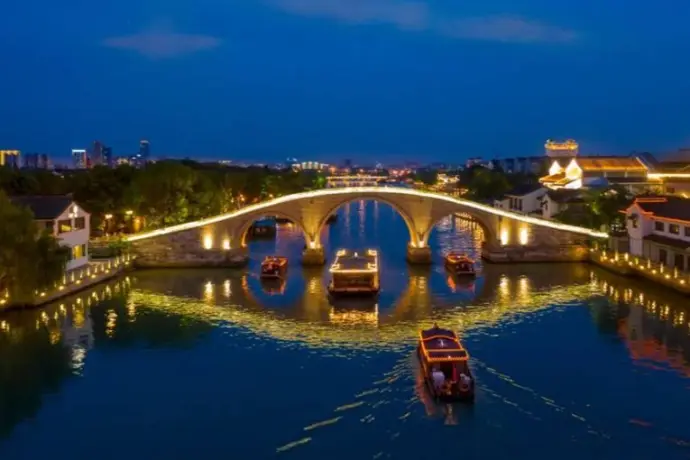
Xumen Gate: also called Guxumen, it was one of the gates of the capital that the Wu state built in the Spring and Autumn period. Like Panmen, it is one of Suzhou's surviving old city gates, and an important stop for understanding the city's history.
The current land gate was rebuilt in the eleventh year of the Yuan dynasty's Zhizheng era and restored again in the Ming and Qing. It was listed as a Suzhou cultural heritage site in 1982. Unlike Suzhou's other old gates, which have water and land gates side by side, Xumen is the only one without a water gate. In the Warring States period, Lord Chunshen found that Lake Tai sat higher than Suzhou. To protect the city from floods, he sealed Xumen's waterway, and only the land gate has remained since.
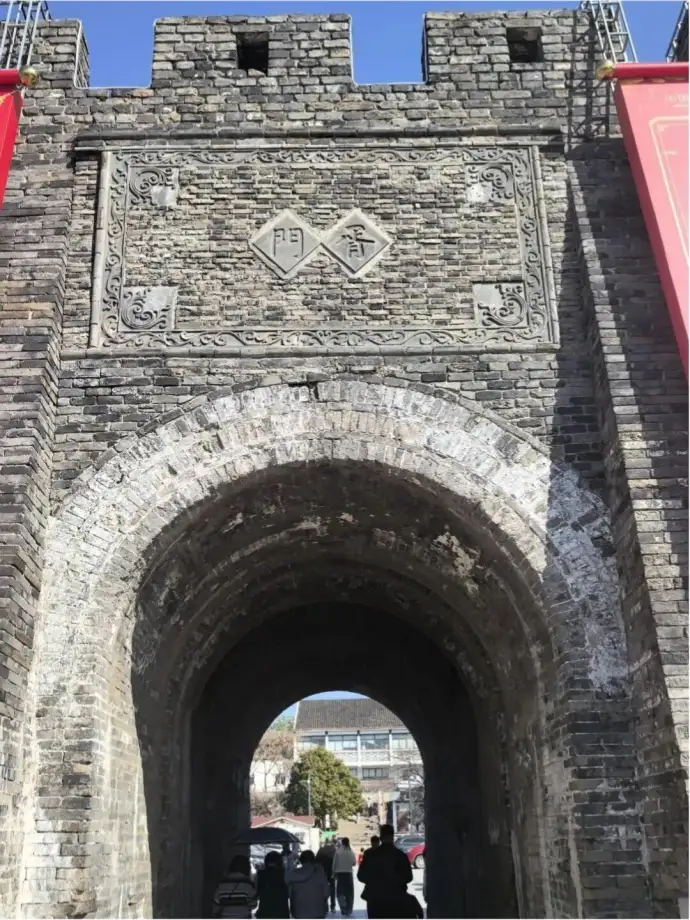
Wannian Bridge: outside Xumen Gate in Gusu District, it crosses the moat and links the two halves of Xumen Road. It's an important stop for the local custom of "walking three bridges." In the Ming and Qing, the bridge and Changmen Gate were the heart of a trading district summed up as "golden Changmen, silver Xumen." Today's three-arch stone bridge was rebuilt in 2004. It is 85 meters long and 6.2 meters wide and still carries its original Qing-dynasty couplets. From the bridge you can photograph Xumen Gate and the bridge together.
"Walking three bridges," also called "walking the bridges" or "you'an," is a traditional good-luck custom of the Wu region south of the Yangtze, and its name doesn't explain much on its own. It usually takes place on the Lantern Festival and the 16th day of the first lunar month. Local women walk across three bridges to ward off illness and misfortune and to pray for safety.
Stop 3: Suzhou Urban Planning Exhibition Hall
Admission: free
Hours: 9 a.m.–5 p.m., closed Mondays
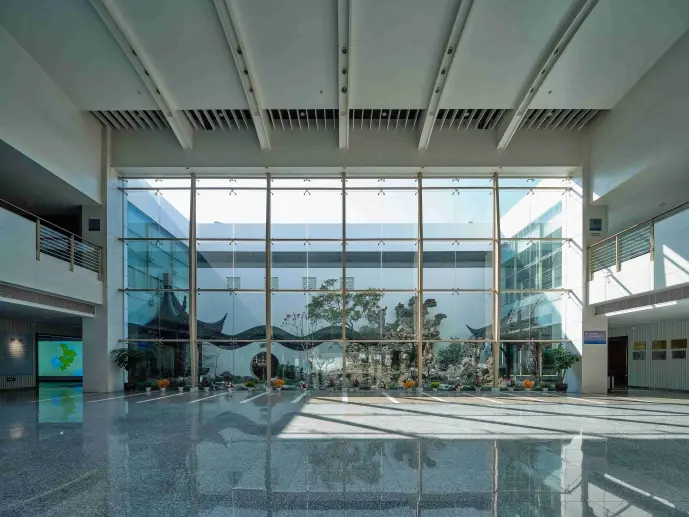
Cross Wannian Bridge, and the Suzhou Urban Planning Exhibition Hall is on the far side of the moat.
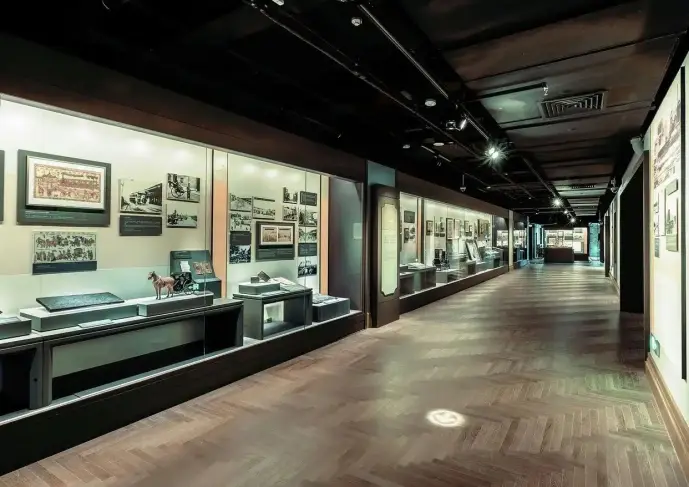
The hall adjoins Wannian Bridge to the east, borders the Xujiang River to the south and faces the moat to the east. It covers about 35,000 square meters and has three parts: a modern hall, a historical hall and riverside support buildings. Through photos and text, walk-through displays, interactive kiosks and an immersive CAVE projection room, it shows how Suzhou changed from the Spring and Autumn period to the Ming and Qing, its canal-city character, and its modern master plan.
A visit gives you a quick overview of how this thousand-year-old city has changed.
Stop 4: Suzhou Grand Canal Heritage Exhibition Hall
Admission: free
Hours: 9 a.m.–5 p.m., closed Mondays
The Suzhou Grand Canal Heritage Exhibition Hall is inside the Suzhou Urban Planning Exhibition Hall on Changxu Road, west of Wannian Bridge, with about 400 square meters of displays. The Beijing–Hangzhou Grand Canal runs from Beijing in the north to Hangzhou in the south. It is 1,782 kilometers long, links five river systems (the Haihe, Yellow, Huaihe, Yangtze and Qiantang) and is the world's longest man-made waterway and one of its oldest canals. The Suzhou section is 82.35 kilometers long, and the hall uses sound, light and other technology to show what makes this stretch special.
Stop 5: canal cruise
Pier: Guxumen Pier is about a 5-minute walk from the Suzhou Grand Canal Heritage Exhibition Hall.
Departures: about 10 a.m.–8:05 p.m., usually once an hour; check the schedule posted at the pier.
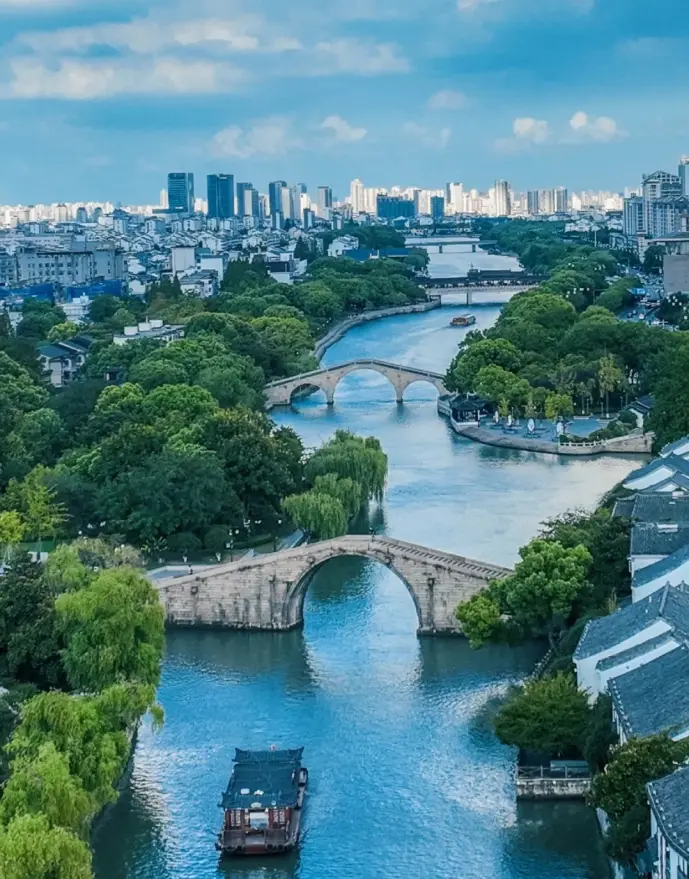
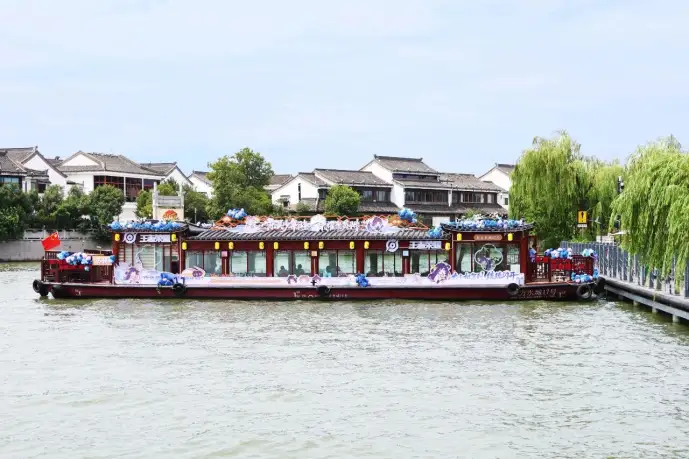
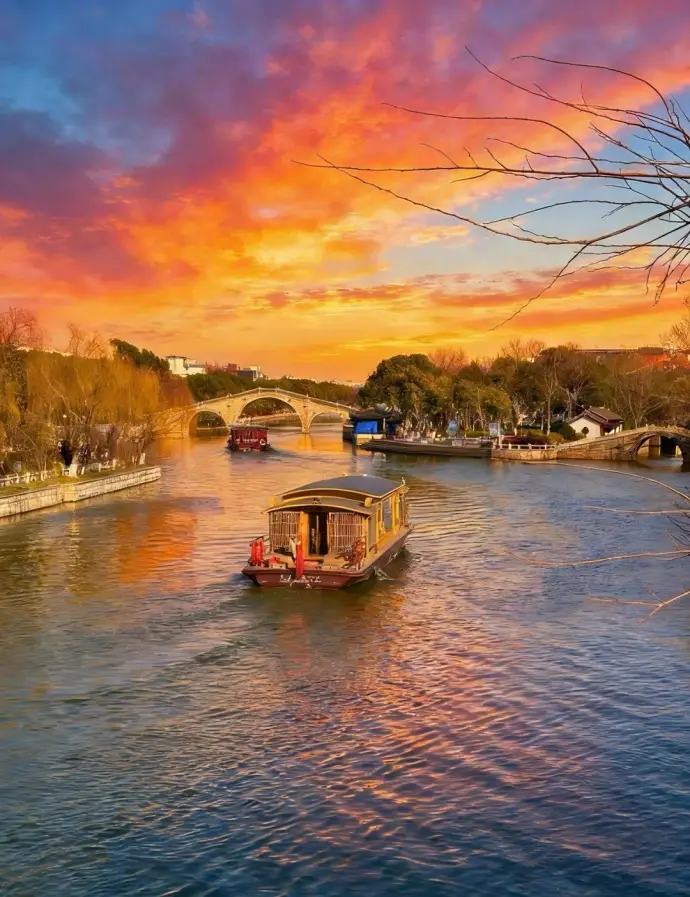
Suzhou's old canal is an important part of the Beijing–Hangzhou Grand Canal and circles the old city. Along its banks are 10 old city gates, including Panmen, Xumen, Jinmen and Changmen, and more than 20 bridges in different styles. A cruise on the canal is one of the classic ways to see the "Water City of the East."
We recommend the Ancient Canal sightseeing route (80 minutes), which passes Panmen, Xinshi Bridge, Bai Juyi Pier and more. Some sailings include a Pingtan performance of Suzhou storytelling and ballads.
Moat water bus
You can also take the water bus around the old-city moat.
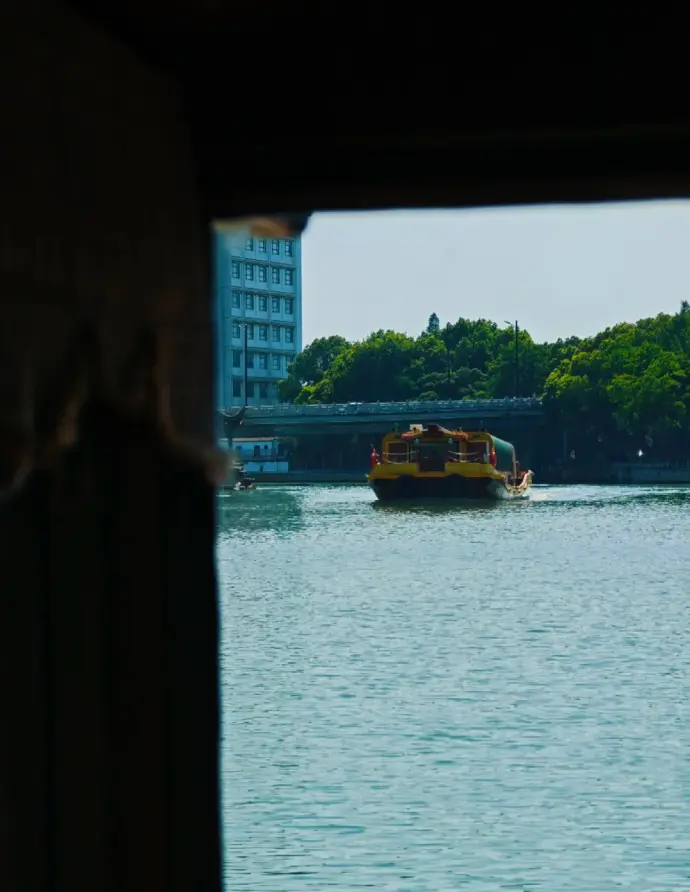
Suzhou has been building up its water bus network in recent years. Routes run along the old canal, the moat and Jinji Lake, linking the old city gates, popular sights and transport hubs. Unlike sightseeing cruises, it's meant mainly as practical transport.
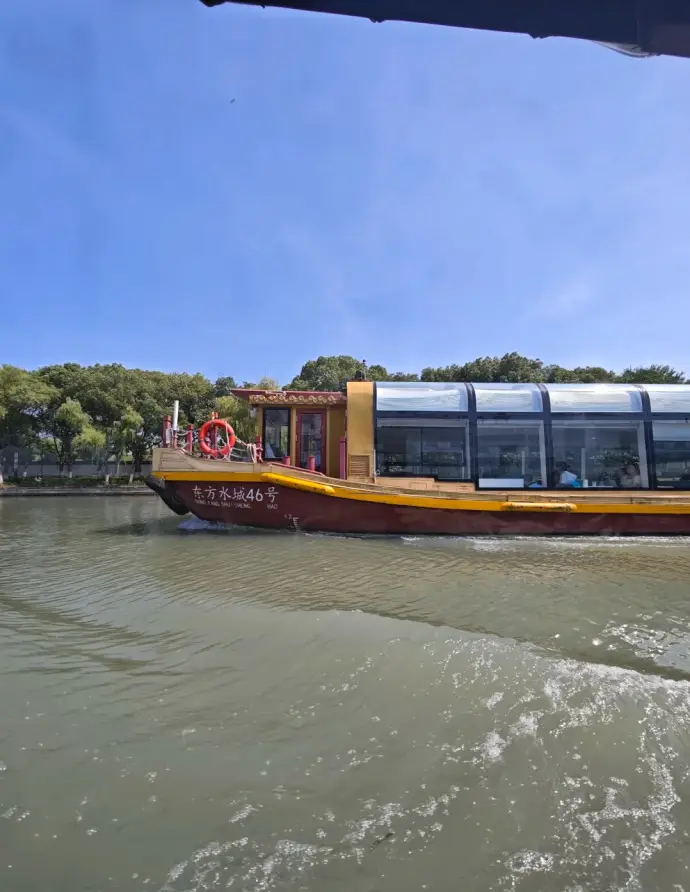
Suggested moat water bus route: Guxumen Pier → Panmen Pier → Xiangmen Pier (one way)
Distance: almost 7 km, about 1 hour
The water bus runs one way only, and the last boat leaves at 4 p.m. It doesn't come back from Xiangmen Pier. It's a good choice if you want a short ride on the water or are heading from Xumen toward Xiangmen. If you plan to return to Xumen, you'll need other transport.
Note: moat water buses are infrequent and the last one leaves early, around 4 p.m. Get to the pier early to confirm times.
Where to eat in the evening
After the cruise, end your day of walking and boating at a Suzhou noodle shop or another local restaurant near Xumen Square.
Xumen Square sits in the southwest corner of Suzhou's old city, right by the Xumen wall and the old canal. It mixes history with everyday local life.
Where to eat near Xumen Square

1. Xucheng Building: begun in 1985 and opened in 1988, it was Suzhou's first four-star hotel for foreign business guests. At 60.8 meters, it was briefly the city's tallest building in the late 1980s, and many locals know it for its food.
What to eat at Xucheng Building
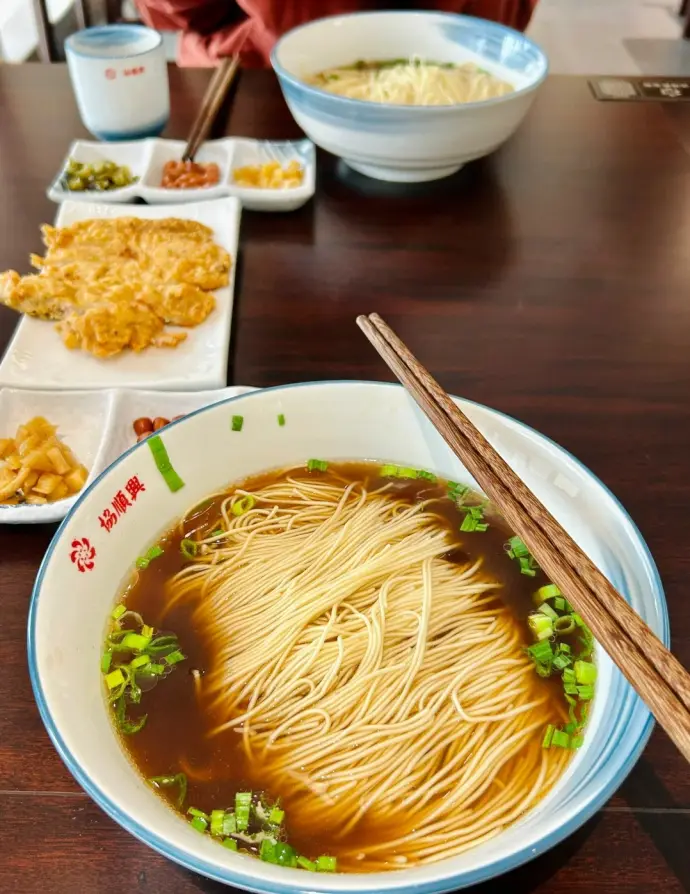
Aozao noodles: Xucheng Building's signature noodles
Location: 2nd floor; open 7 a.m.–9 p.m.
Aozao noodles come from Kunshan. Here they're served in thick earthenware bowls to stay piping hot. The dark red broth is savory and well balanced, a little less sweet than the traditional version, with a touch of pepper.
Pork mooncakes: a seasonal treat from a long-established shop
The Xucheng pork mooncake shop on the building's first floor is a well-known old Suzhou brand. The mooncakes have thin, flaky crusts and generous, juicy, firm pork fillings, lifted by sesame. Eat them hot.
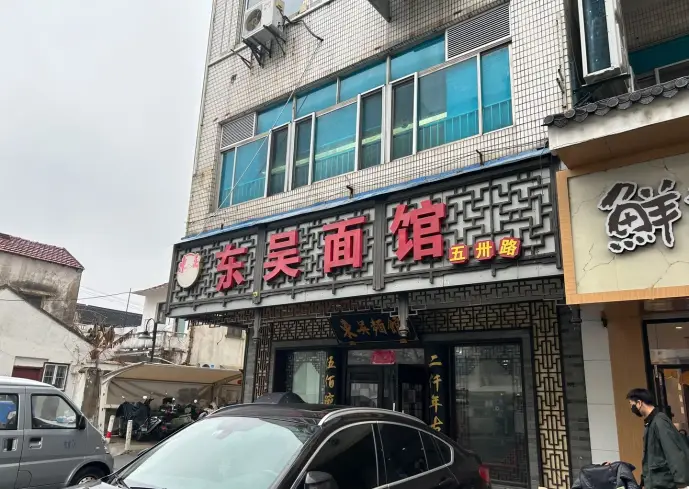
2. Dongwu Noodle House
Dongwu Noodle House is a well-known Suzhou noodle chain. This branch is at the west end of Wannian Bridge by Xumen, across the street from the Suzhou Urban Planning Exhibition Hall and a 2–3 minute walk from Xumen Square.
Try: braised pork belly noodles, stir-fried pork noodles, and braised pork chop and mushroom noodles
3. Jinshuitai Noodle House
Founded in 1926, Jinshuitai first opened at the corner of Yousi Lane on Wannianqiao Street outside Xumen, so it's about as old-Xumen as food gets.
Signature dishes: braised pork belly noodles, fried fish noodles, fried eel noodles
The best thing about this route: you spend the morning walking through history, the afternoon learning about Suzhou in the exhibition halls, and the evening seeing the old city again from a boat.
Should you join a tour in Suzhou?
If it's your first time in Suzhou and you'd like to try this route, consider joining a tour or hiring a professional guide to show you the highlights.
Less to organize: a professional guide arranges your route, transport, hotel, tickets and meals. You don't need to research or follow a map or worry about getting lost; just bring your luggage and passport.

Suzhou 2-day 1-night private tour | Lion Grove Garden, Hanshan Temple, Lingering Garden, Canglang Pavilion
A 2-day 1-night private tour with pickup at Suzhou Railway Station: Lion Grove Garden, Hanshan Temple, Shantang Street and Tianping Mountain on day one, then Canglang Pavilion and Lingering Garden on day two. Ideal for travelers who want to see several gardens. Includes transportation, a guide, 1 night at an upscale or luxury hotel, and admission tickets. An English-speaking guide is available upon request.
More depth: instead of rushing through, your guide explains the story of each sight in a language you understand, and Suzhou comes alive.
Have a great trip to Suzhou.
FAQs
What are Panmen's hours and ticket prices?
Panmen has two sessions, day and the evening "Night Garden." Daytime entry is 8:30 a.m.–4 p.m., and Night Garden entry is 5–8:30 p.m. A daytime ticket is ¥40 (reference price); check the site's official announcements for Night Garden prices. Enter by the south gate and follow the Panmen gate tower, Ruiguang Pagoda and Wumen Bridge.
What are the highlights at Panmen?
Panmen is an intact city gate with water and land entrances side by side; from the gate tower you can see the enclosed courtyard formed by two land gates. Wumen Bridge is the tallest surviving old stone arch bridge in central Suzhou. Ruiguang Pagoda is a seven-story, eight-sided pagoda of brick and wood, where the pearl reliquary pillar was found in 1978.
How should I plan a day around Panmen?
See Panmen in the morning, then walk the moat trail from Panmen to Xumen. Around midday, see Xumen Gate and Wannian Bridge. In the afternoon, visit the Suzhou Urban Planning Exhibition Hall and the Grand Canal Heritage Exhibition Hall. In the evening, take a canal cruise from Guxumen Pier. Both halls are free and closed on Mondays.
What's good to eat near Panmen?
A few minutes' walk from Panmen's back gate is Shuyuan Lane, with Aijiaolou Wonton Shop, Lao Wang Egg Pancakes, Mingyuelou Rice Cake Shop and Dongwu Noodle House. In the evening around Xumen, try Aozao noodles and pork mooncakes at Xucheng Building, or braised pork and fried fish noodles at Jinshuitai Noodle House.
Where do I board the canal cruise, and how long is it?
Board at Guxumen Pier, about a 5-minute walk from the Grand Canal Heritage Exhibition Hall. Boats run from about 10 a.m. to 8:05 p.m., usually once an hour; check the schedule posted at the pier. We recommend the Ancient Canal sightseeing route: the 80-minute trip passes Panmen, Xinshi Bridge, Bai Juyi Pier and more, and some sailings include a Pingtan performance.