
Visiting Panmen in Suzhou
Panmen (盘门) sits in the southwest corner of Suzhou's old city. It is a fully preserved city gate with both a water gate and a land gate, and together with Ruiguang Pagoda (瑞光塔) and Wumen Bridge (吴门桥) it makes up the "Three Scenes of Panmen." Take Metro Line 2 to Panmen Station (盘门站) and walk about 5 minutes. By day, see the gates, visit Wuxiang Temple and climb Ruiguang Pagoda; in the evening there's the night garden and a light show on the pagoda.
Suzhou has a saying: "In the north, see the grandeur of the Great Wall; in the south, see the grace of Panmen." The Great Wall is famous for its sheer scale, Panmen for its compact elegance.
Panmen tickets and hours
Daytime entry: 8:30 a.m.–4 p.m. Admission is ¥40 (reference price as of November 2026; check the official notice).
Night garden entry: 5–8:30 p.m. Check the official notice for ticket prices.
*Discounts for children, seniors and others follow the notices posted at the site.
Getting to Panmen
Panmen is located in the southwest corner of Suzhou's old town.
Public transit: Take Suzhou Metro Line 2 to Panmen Station (Exit 3) and walk 5 minutes to the main gate of Suzhou Panmen Scenic Area. Or take Suzhou Metro Line 4 to Nanmen Station Exit 7 and walk about 700 meters to the East Gate, the main entrance of Panmen Scenic Area. You can also take bus 900 or 923 to Panmen Scenic Area North Station—the entrance is right at the stop.
On the Suzhou Metro, you can buy tickets with a foreign bank card at station counters, and ticket machines take Alipay and WeChat Pay QR codes. Foreign cards generally can't be tapped at the gates.
Driving: There's a parking lot, but it can fill up on weekends and holidays, so the metro is usually easier. Foreign visitors generally can't drive in China on a home or international driver's license; to skip the transfers, book a private car in Suzhou.
Best time to visit Panmen
March–April: In spring, peach trees bloom along the moat, and the cherry trees below Ruiguang Pagoda start flowering in early March. The whole site fills with color, good for flower viewing and photos.
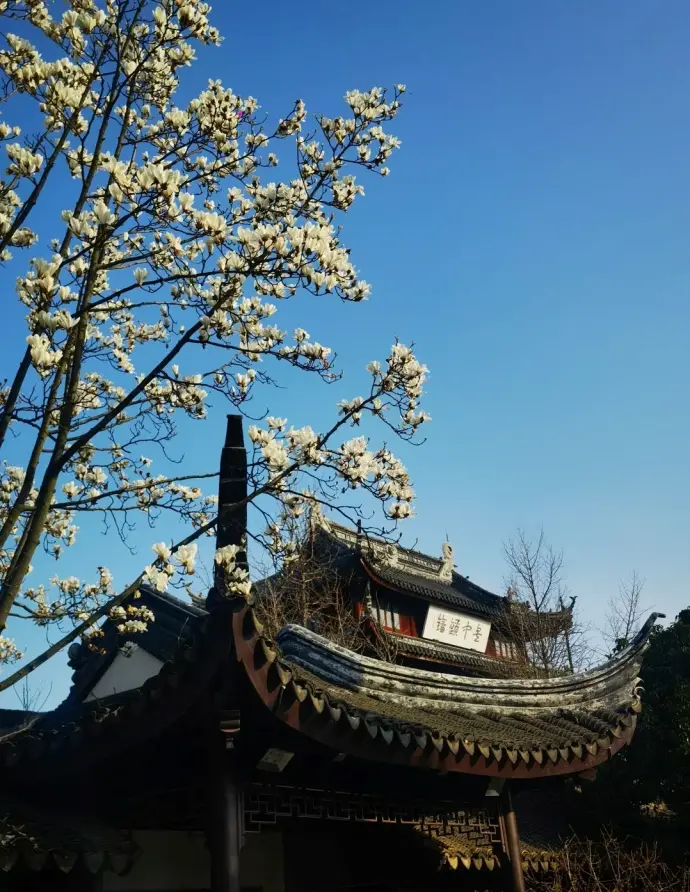
September–November: In autumn, the ginkgo trees along the city wall slowly turn yellow, and the wind scatters their leaves across the stone paths underfoot.
June–September: Suzhou summers are hot. If you visit then, go between 8:30 and 10:30 a.m. to avoid the strong afternoon sun.
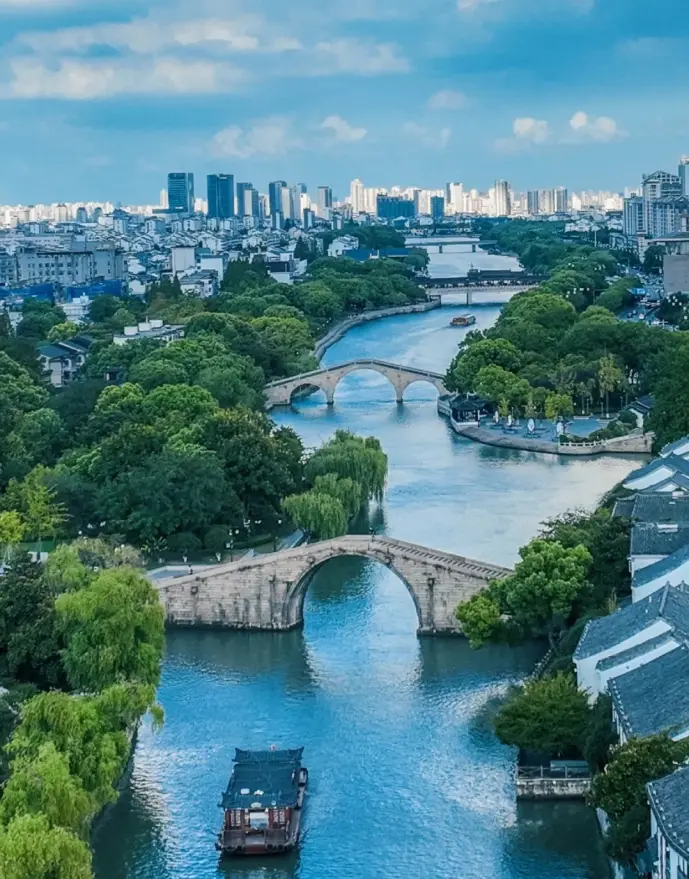
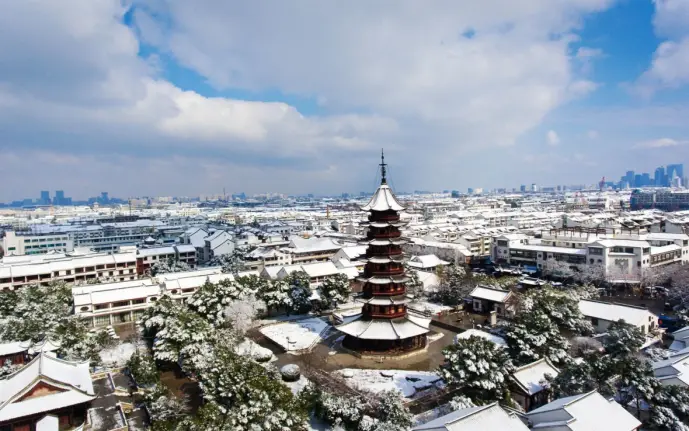
December–February: Suzhou has four distinct seasons, and winters are cold. If you don't like the cold, pick a sunny day; with the sun on the city wall, it's a nice place for a slow walk.
Suggested route through Panmen
The Panmen site is made up of the gate tower, Wuxiang Temple and the Three Scenes of Panmen. We suggest going from the outside in, and from history to scenery. But to get the most from Panmen, it helps to first understand what makes it special.
Panmen's water and land gates
In ancient China, the city gate was the heart of a city's defenses. Panmen is one of the cleverest examples of old fortification design, and unlike the massive, rugged gates of northern China, it has a finesse typical of Jiangnan.
Most old city gates had only a land passage, so defenders had to stop invaders head-on. Panmen took another approach and built in a trap to lure attackers inside.
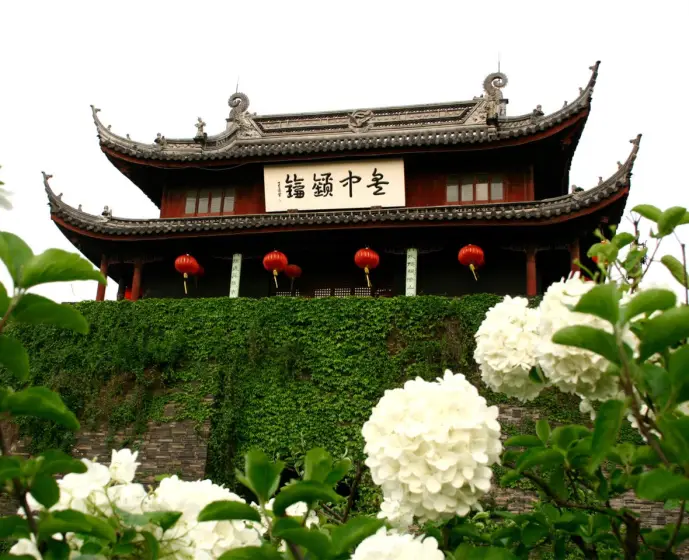
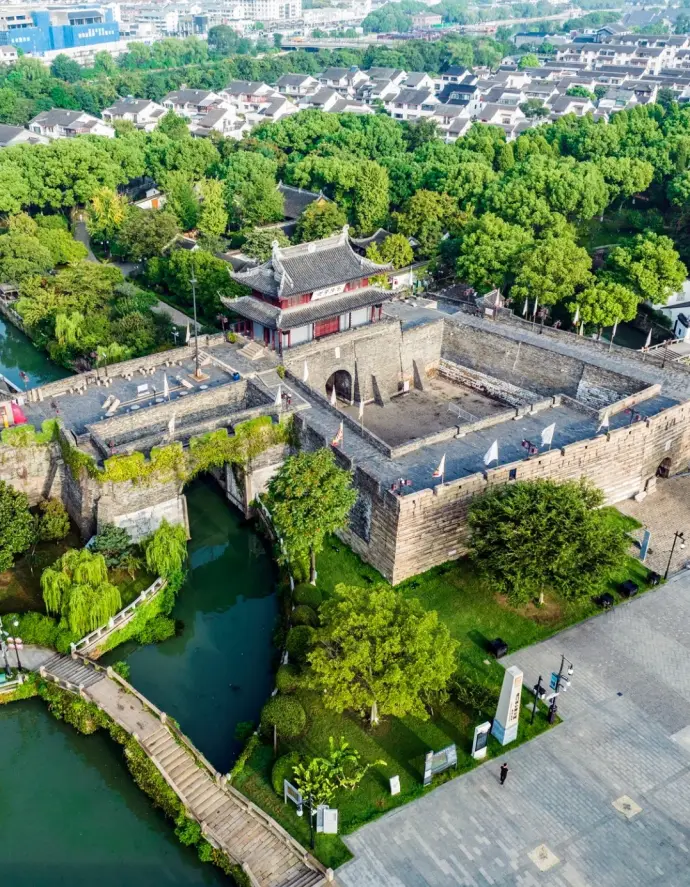
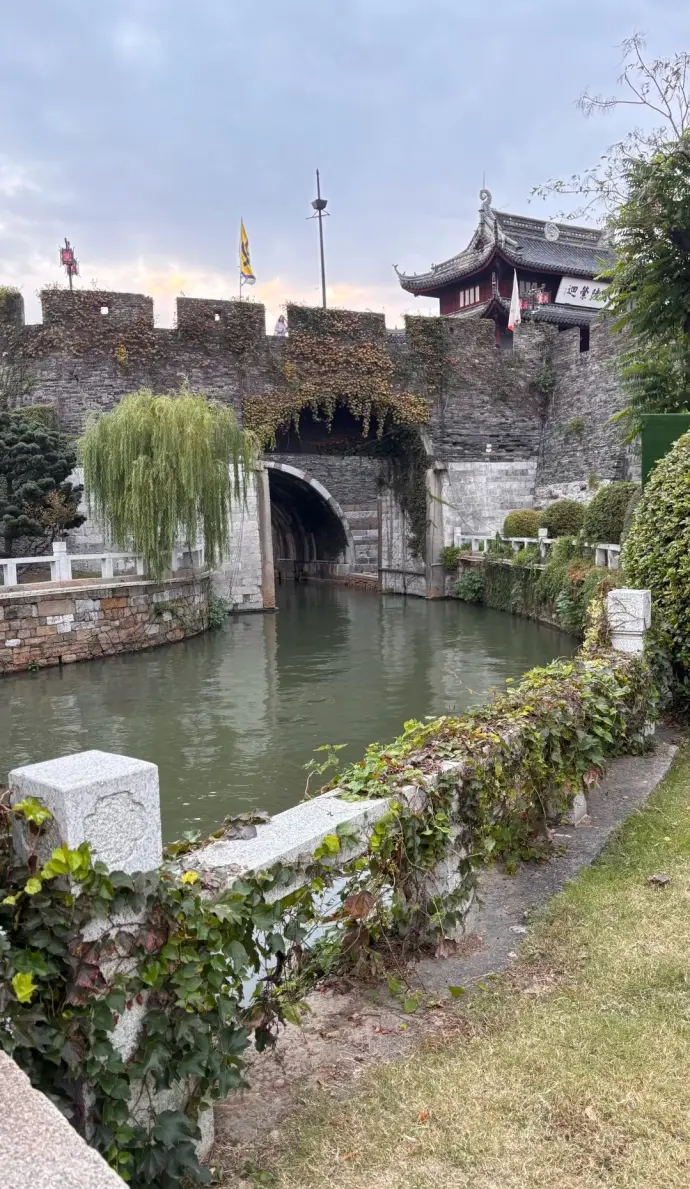
Panmen has both a water gate and a land gate. The water gate, on the south side, opens onto the canal for boats and was a key choke point on ancient Suzhou's waterways. It has two stone arches with a heavy portcullis between them that could be raised or lowered to control the water level and keep out enemies.
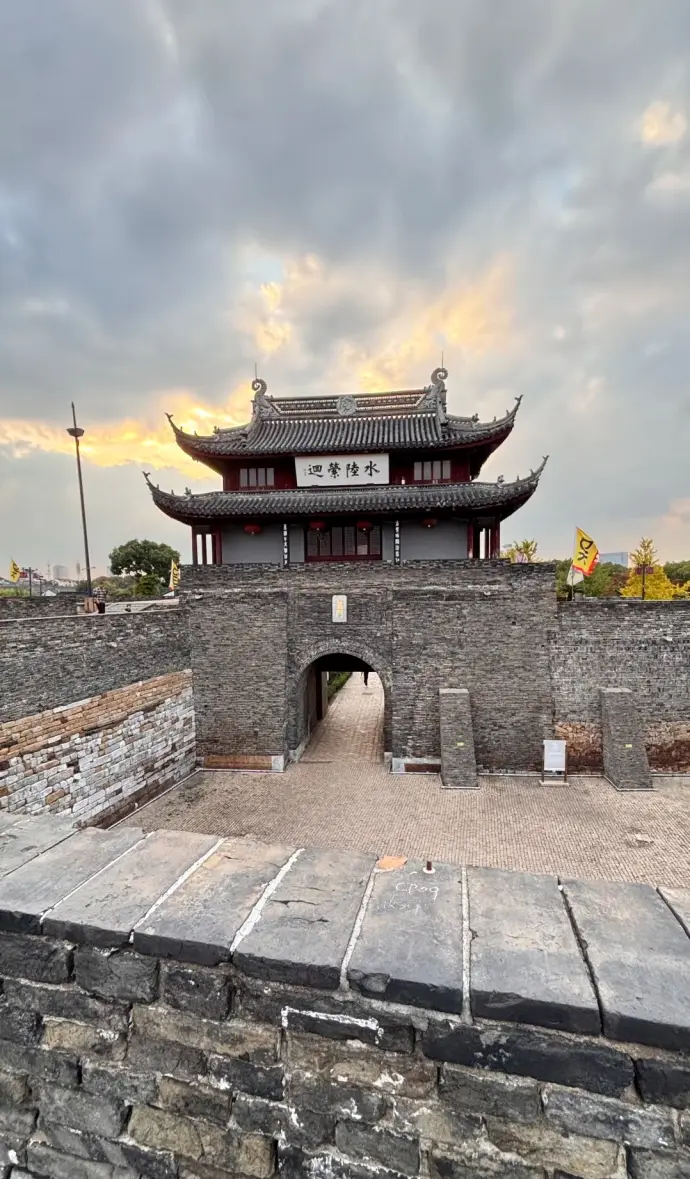
The land gate, on the north side, has an outer and an inner gate with a square enclosure (a barbican) between them. Any enemy who broke through the first gate would be trapped inside. Paired water and land gates like this are extremely rare among China's surviving city gates.
That's why this should be your first stop when visiting Panmen.
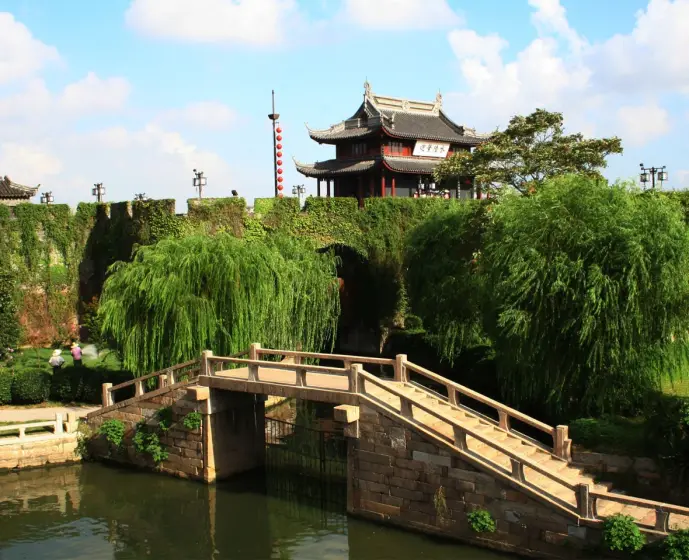
The gate tower
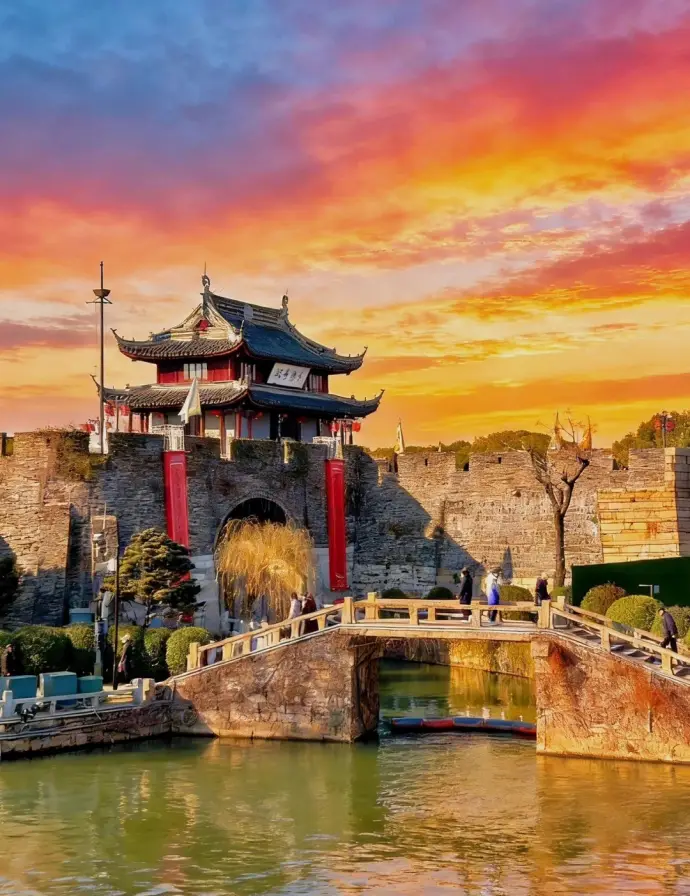
The Panmen gate tower is the scenic area's landmark building. Sitting atop the land gate with upturned eaves, gray tiles and red pillars, it is a classic example of Ming and Qing architecture.
Climb the stone steps to the viewing deck on the second floor for a clear view of both gates. To the east is the land gate's semicircular barbican, its walls weathered. To the south is the water gate with its two sluice gates, where the moat flows slowly under the arch. Now and then a Wupeng boat passes through, its boatman carrying passengers in hanfu (traditional Han clothing), a scene that recalls the old line of verse, "In Gusu (old Suzhou), every home rests on a river."
The land gate
Take the stone steps down from the north side of the tower to the land gate. Walk through the inner and outer gates and you'll feel how closed-in the barbican is, and can easily picture an ancient ambush. After you exit, look back: under the east eave hangs a large plaque reading "Winding Waters and Roads," written by the Suzhou-born calligrapher Gu Tinglong.
The water gate
From the land gate, turn right and follow the city wall for two or three minutes to reach the water gate.
The water gate has two stone arches side by side, with a sluice slot between them that is still clearly visible. If a boat happens to pass through, you can get the classic shot of a boat sailing through the water gate.
Wuxiang Temple
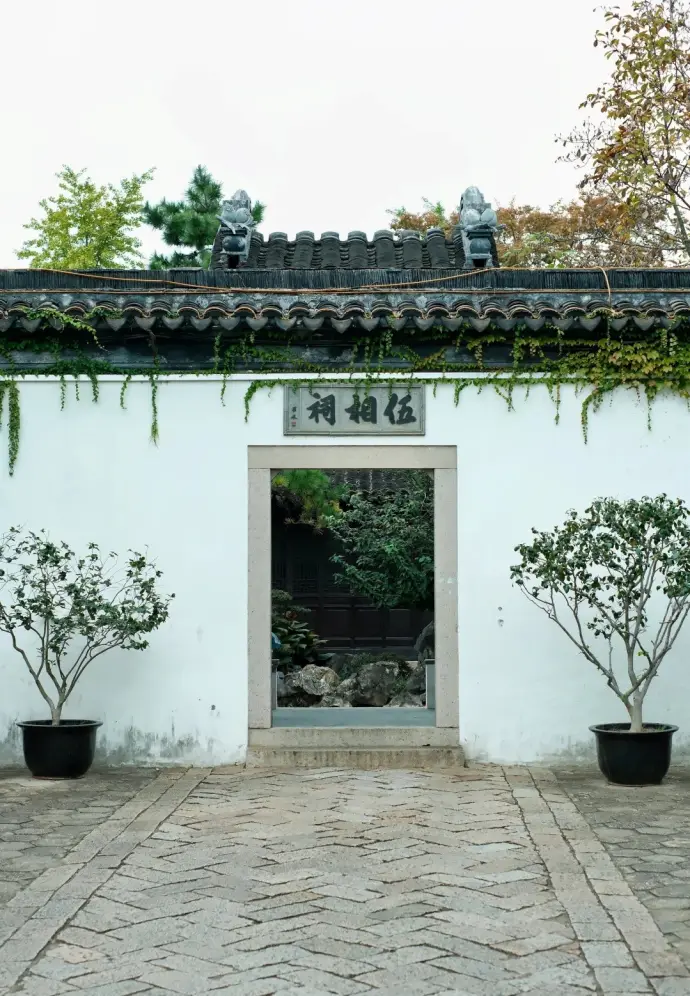
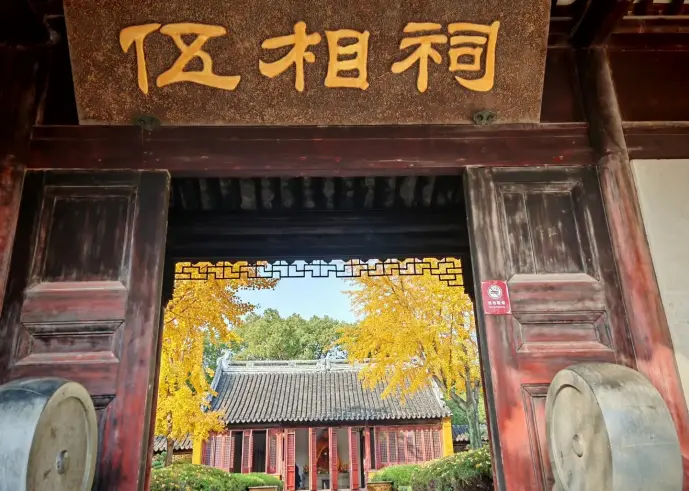
Keep following the city wall to Wuxiang Temple (伍相祠). First built in the Yuan dynasty, it's a quiet, solemn memorial hall that the people of Suzhou built to honor Wu Zixu, the city's chief planner. He oversaw the building of the great city of Helü, the forerunner of today's old city, but after giving unwelcome advice he was forced by King Fuchai of Wu to take his own life, and his body was thrown into the river. The temple reflects how deeply the people of Suzhou respect what he did.
The current hall was rebuilt in 1988 and has east and west courtyards. The east courtyard has a hall, covered walkways, pavilions and a garden with many ornamental lake rocks, laid out like a classic Suzhou garden.
The west courtyard is solemn and dignified. Inside the hall stands a painted statue of Wu Zixu about 4 meters tall, flanked by two couplets carved on the pillars: "The ancient city remains; climb this grand tower to gaze afar. The ruins restored; here even raging waves bow down," and "Deeds of old shine bright, passed down through countless ages. Unwavering loyalty endures among the people for a thousand years."
The temple also keeps thousand-year-old flagpole clamp stones (jiashi) from the temple that once stood here. During Buddhist ceremonies, a pole with banners was set between the stones by day, and an ever-burning lamp was hung at night. It was said that "all who entered the city bowed to it."
Every year on the eve of the Dragon Boat Festival, members of the Wu clan from across China travel to Suzhou to attend memorial ceremonies at Wuxiang Temple in the Panmen Scenic Area and Xuwang Temple in Xukou Town.
If you're interested, contact us. We can explain Wu Zixu's ties to Suzhou, the thousand-year story behind the jiashi stones, and the clan ceremony that still takes place today, so you don't just see the sites but understand the roots of a city more than 2,000 years old.
Wumen Bridge
After leaving Wuxiang Temple, continue along the path by the moat for a few minutes, and you'll see Wumen Bridge.
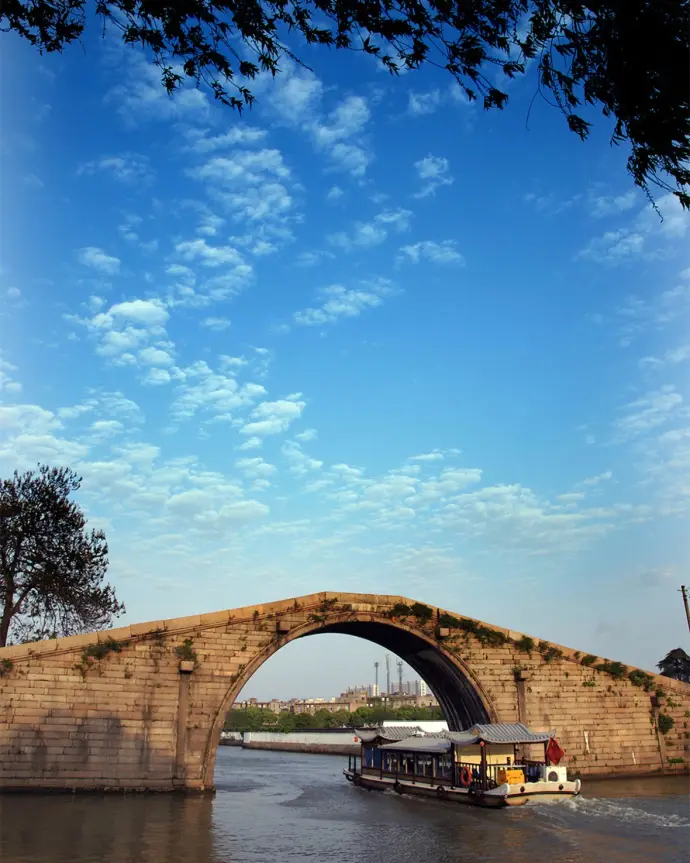
Built during the Northern Song Dynasty, Wumen Bridge is 66.3 meters long and 4.8 meters wide, making it the tallest and widest single-arch stone bridge still standing in Suzhou. It's often called "Suzhou's No. 1 Bridge." Together with the Panmen Gate Tower and the moat, it forms a classic trio of "bridge, gate, and water." Stand on the bridge and look north for a full view of the Panmen Gate Tower; look south and you'll see willows swaying in the breeze along both banks of the moat, locals strolling by the water, and others leisurely fishing—a perfect picture of Jiangnan life.
Ruiguang Pagoda
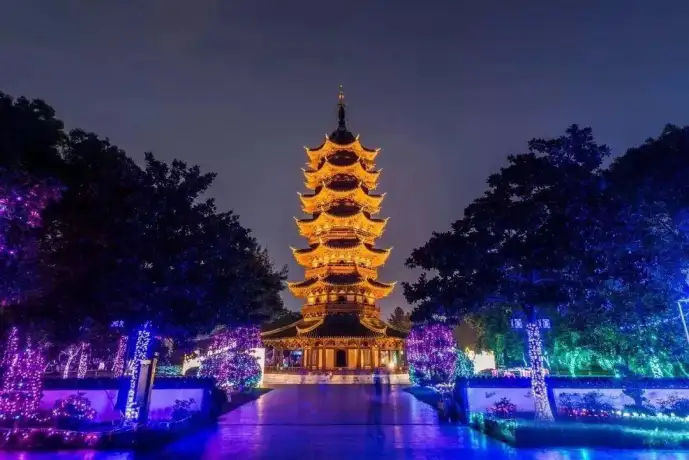
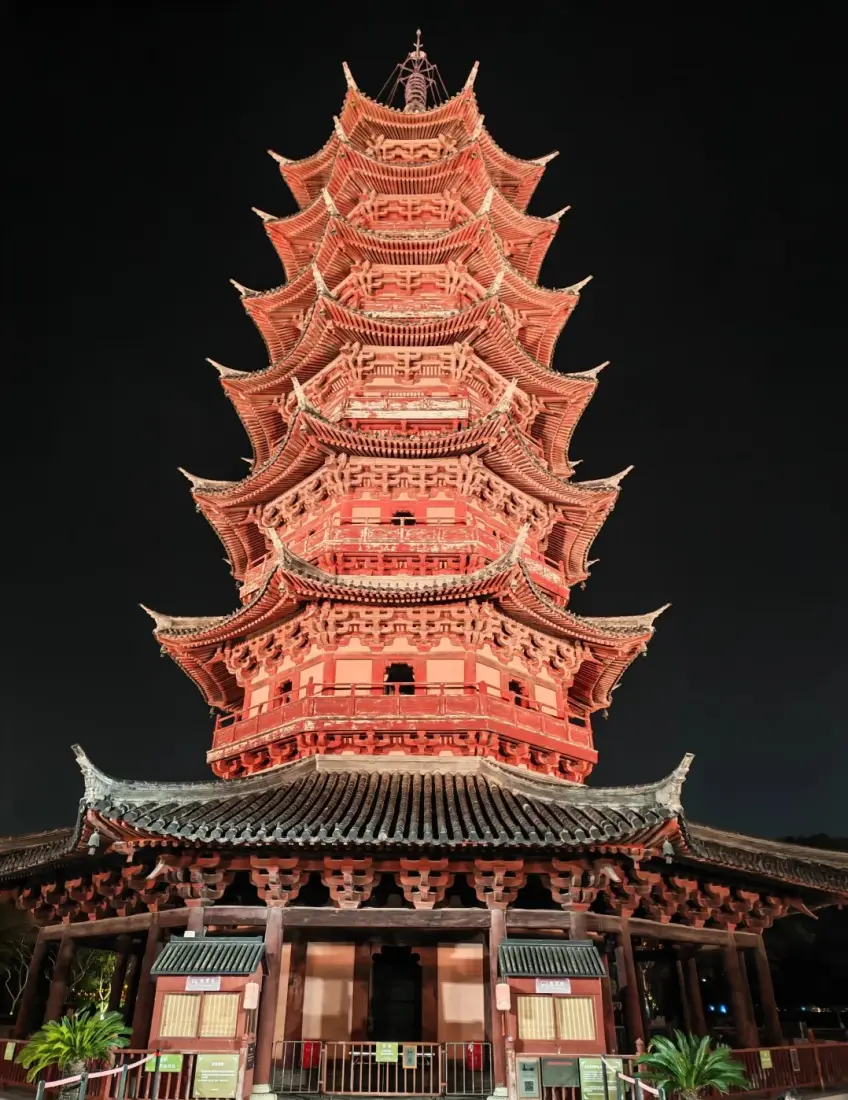
From Wumen Bridge, walk toward the south gate of the city wall to find Ruiguang Pagoda, a modest pagoda with a big story. It was first built in the Three Kingdoms period by Sun Quan of Eastern Wu to repay his mother's kindness, and originally had 13 stories. War later destroyed it, and the seven-story octagonal pagoda you see today was rebuilt in the Northern Song dynasty.
In 1978, an accidental discovery by three local schoolchildren made Ruiguang Pagoda famous worldwide. That afternoon, after school, the kids were playing around the Panmen Scenic Area and climbed into the then-abandoned, sealed pagoda to look for bird eggs. When they reached the third floor, they felt a loose brick in the central pillar. Curious, they pried it open and found a hidden chamber.
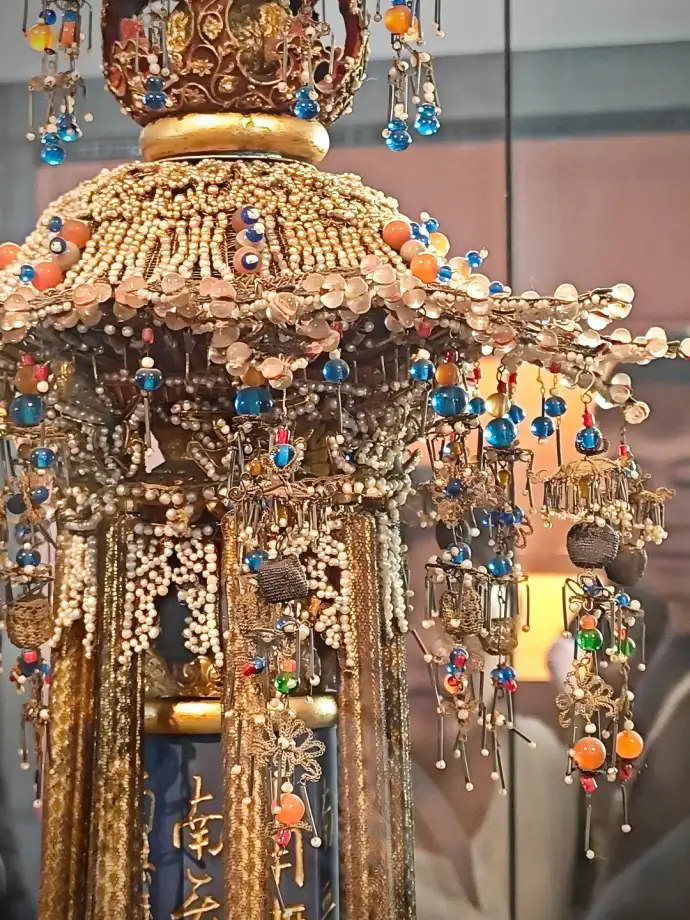
Experts who rushed to the scene later discovered a trove of national treasures inside the hidden chamber (known as a tiangong) in the core of the pagoda's third floor. The finds included a Northern Song pearl sarira pillar (a jeweled Buddhist reliquary), painted wooden cases, and bronze Buddha statues. Most of these artifacts are now housed in the Suzhou Museum.
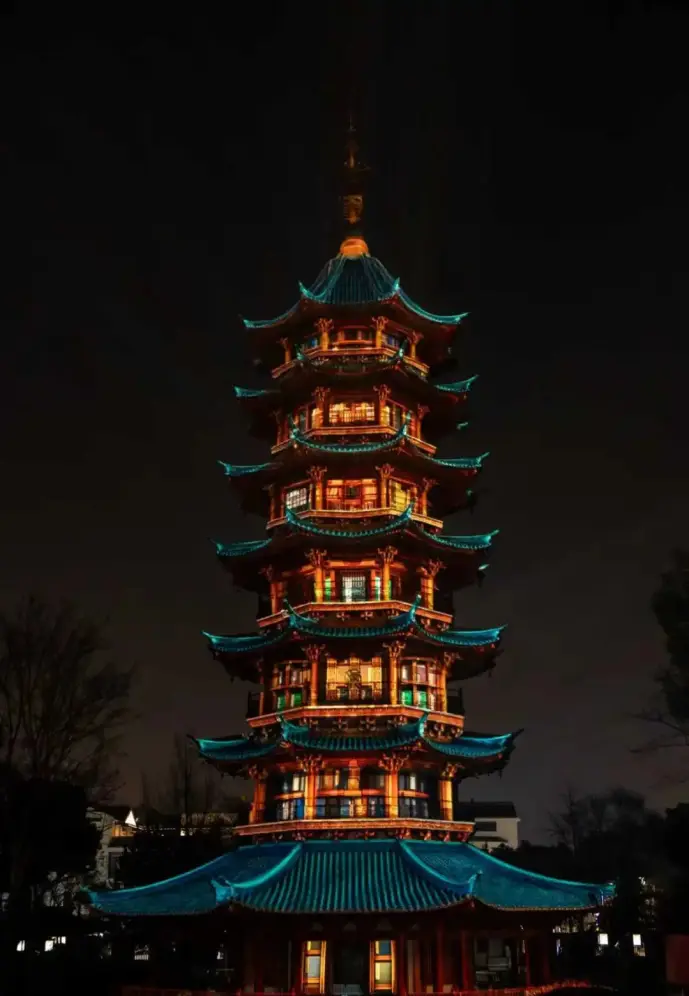
You can buy a ticket to climb Ruiguang Pagoda, but note that the interior staircase is narrow and only allows one person at a time. With each floor you climb, the view gets better. From the top, look around and you'll see Suzhou's stunning blend of old and new: up close are Panmen's gray-tiled walls and moat, while in the distance rise the skyscrapers of modern Suzhou. Past and present meet in this single moment.
A boat ride through the water gate
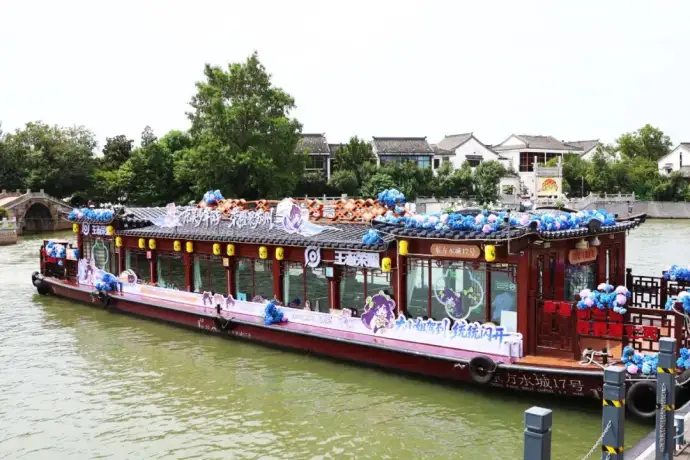
Once you're down from Ruiguang Pagoda, you've seen most of Panmen, but don't leave yet. There's one more thing to do: a boat ride through the water gate.
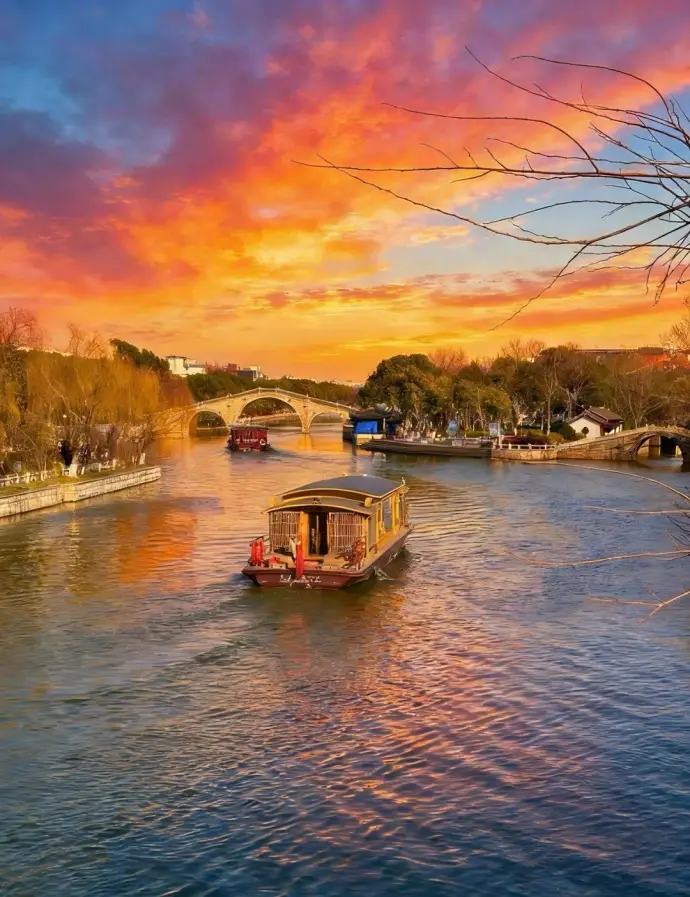
At the pier on the south side of Panmen Scenic Area, you can board a cruise that lasts about 20 minutes. Sitting on the boat, look up and you'll see the 8-meter-high walls flanking the Water Gate. As the boat glides through the archway, the sound of flowing water mingles with the boatman's oar strokes, transporting you back in time. You might feel like an ancient merchant arriving in Suzhou on a cargo-laden vessel. If it happens to rain that day, the patter of drops on the canopy adds even more Jiangnan poetry to the scene.
Where to eat near Panmen
After the boat ride, stay nearby and wander or grab something to eat. The streets around Panmen have plenty of authentic Suzhou food, from delicate snacks to classic Suzhou dishes.
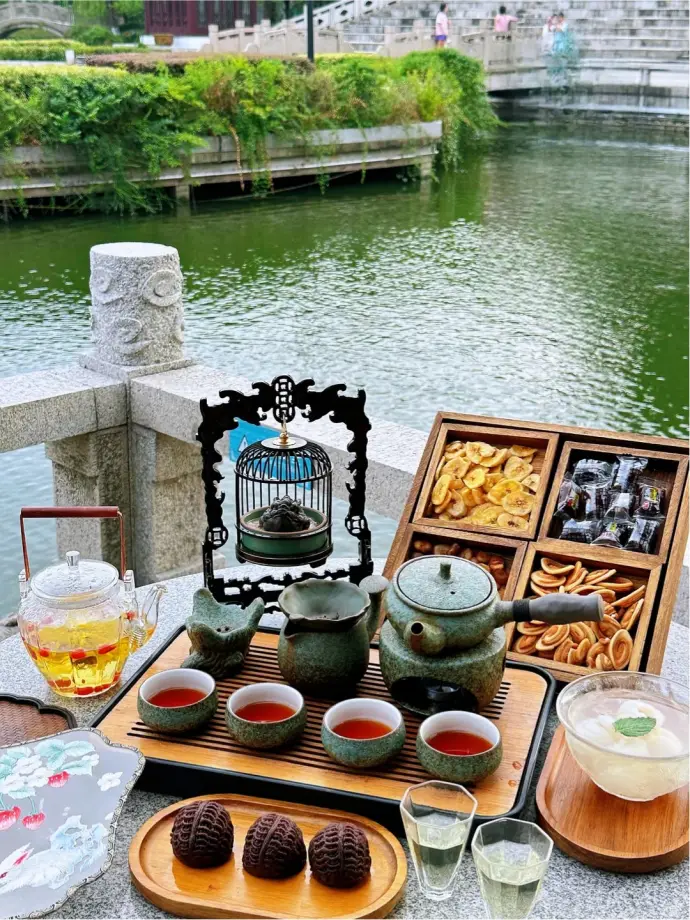
Try the "Rui Pagoda Cake" at Wenrui Pavilion, a lakeside teahouse billed as "the most beautiful teahouse in Suzhou." The signature dessert, called "Rui," is modeled on the Northern Song Ruiguang Pagoda in the Panmen grounds, and the detail is impressive.
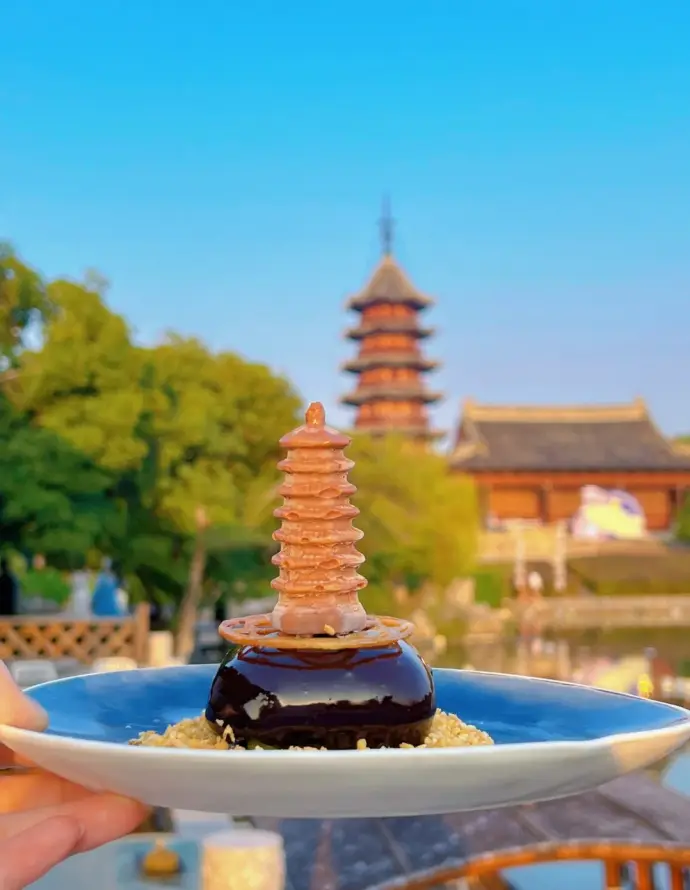
Tip: Some visitors say a paper ticket gets you a discount at Wenrui Pavilion. Ask the shop and the site whether this still applies and whether online tickets count.
The Panmen light show
Once you've eaten your fill, stay put and wait for nightfall.
When night falls, Panmen hosts the Ruiguang Pagoda light show. This isn't just turning on the lights—it's a projection performance using the pagoda itself as a screen. Through light and animation, it tells stories of Suzhou's thousand-year history, the legend behind the pagoda's construction, and the unearthing of its treasure, the Pearl Sarira Pillar.
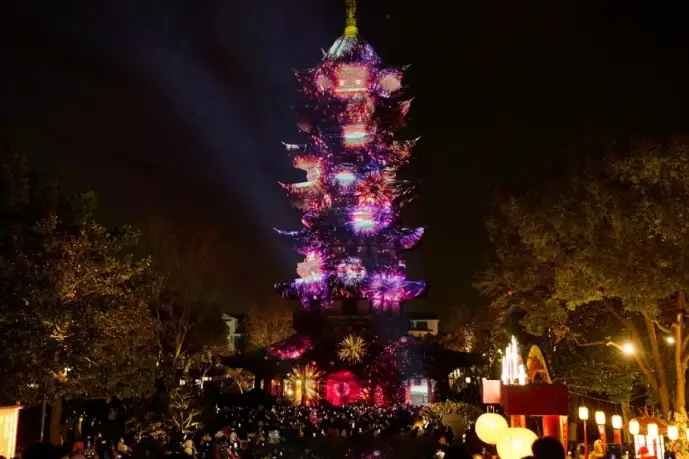
After entering for the evening session, the Ruiguang Pagoda light show runs at set times. We suggest checking the day's schedule once you arrive and getting there 10 minutes early.
Panmen also holds themed night events from time to time, with a different theme each season: lantern fairs at Chinese New Year, lantern displays in spring, possibly a night garden in summer and a Mid-Autumn special in fall. Check the site's official channels for the latest night-event notices before you go.
Unlike Suzhou's garden attractions, Panmen is neither crowded nor flashy, yet it quietly leaves you with a lasting impression of another side of Suzhou.
Where to take photos at Panmen
Panmen City Wall: Climb the wall of the Panmen water-and-land gate for a commanding panoramic view. From here, you can capture the classic composition of Wumen Bridge spanning the canal and Ruiguang Pagoda standing tall, along with scenes where canal boats meet the modern city.
Ruiguang Pagoda: Walk up to the base to photograph its weathered old structure. If the pagoda is open for climbing that day, the top gives a 360-degree view over the Three Scenes of Panmen and downtown Suzhou, another great photo spot.
Wumen Bridge: Standing at the top or side of Wumen Bridge lets you frame both the water-and-land gate and Ruiguang Pagoda together, creating the classic "three sights in one shot."
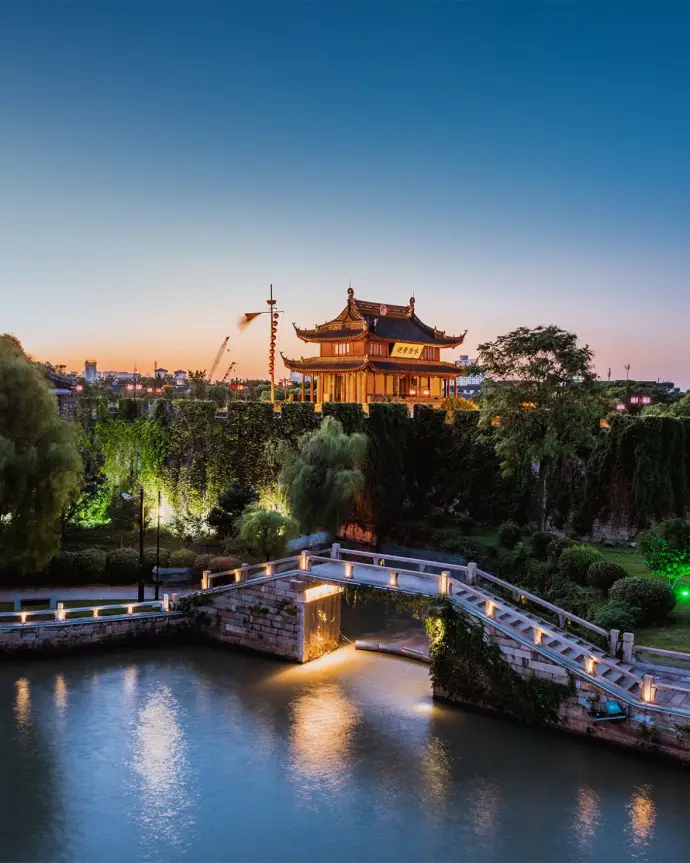
Best time: Afternoon into early evening gives the best light. From 3 to 6 p.m. the light is soft, and between 4 and 5 p.m. the low sun turns the old wall and pagoda gold. After dark, when the site lights up, it's a good time for night shots of the old gate, Ruiguang Pagoda and the lanterns.
If it's your first time in Suzhou and you want the history behind Panmen, or an easy way to combine it with nearby sights, consider a private tour that includes Panmen, such as the Yangzhou and Suzhou 3-day, 2-night tour (He Garden, Dongguan Street, Lingering Garden, Panmen), with a guide explaining along the way. Other routes include classic gardens such as Lingering Garden and the Humble Administrator's Garden, so choose by interest.
Suzhou 2-day 1-night private tour | Lion Grove Garden, Hanshan Temple, Lingering Garden, Canglang Pavilion
A 2-day 1-night private tour with pickup at Suzhou Railway Station: Lion Grove Garden, Hanshan Temple, Shantang Street and Tianping Mountain on day one, then Canglang Pavilion and Lingering Garden on day two. Ideal for travelers who want to see several gardens. Includes transportation, a guide, 1 night at an upscale or luxury hotel, and admission tickets. An English-speaking guide is available upon request.
On a group tour, a guide stays with you and explains Panmen's history as one of the eight gates of the Wu capital in the Spring and Autumn period, and the stories behind the relics found at Ruiguang Pagoda. We can also arrange the transportation, hotels and tickets within your itinerary. Flights and high-speed trains to and from the trip aren't included, but a travel consultant can help you plan your trains.
If you'd like to add Panmen to your trip, contact us.