
Hanshan Temple is located in the Fengqiao area west of Suzhou's old town. Admission is ¥20 (subject to temple announcements), and it usually opens at 7:30 AM. Closing times are based on the temple's daily announcements, and about 1.5 hours is enough to look around. It became famous thanks to a line by Tang Dynasty poet Zhang Ji: "Beyond the walls of Gusu, Hanshan Temple; at midnight, the bell sound reaches the passenger boat." The main sights here are the bell tower and its large bell, Puming Pagoda, and the "Night Mooring at Maple Bridge" poem stele in the stele corridor. Afterward, walk outside the temple to see Fengqiao Bridge and Jiangcun Bridge.
Many readers from Taiwan and Hong Kong memorized "Night Mooring at Maple Bridge" in school textbooks, and when they visit Suzhou, they make a point of going to Hanshan Temple to "listen to the bell." Below we cover everything you need to know about tickets, opening hours, history and highlights, how to get there, and the best time to visit, plus what to keep in mind if you want to hear the bell on New Year's Eve.
Tickets, Hours & Reservations
Item
Details
Admission
¥20 for adults (common price on ticketing platforms; subject to the temple's official notice)
Opening hours
Generally 7:30–17:30
Visit duration
About 1–1.5 hours inside the temple, or about 2 hours including Maple Bridge
Address
No. 24 Hanshan Temple Lane, Gusu District, Suzhou
Maple Bridge Scenic Area
Adjacent to the temple; free entry
It's usually not too crowded on weekdays, so you can buy tickets through official channels or at the gate. For holidays and weekends, it's best to book online in advance to shorten the line at the entrance. Opening hours and ticket prices are adjusted for special occasions like New Year's Eve. For example, on December 31, 2024, the temple only opened until 2:00 PM, and the evening bell-listening event required a separate ticket. It's always safest to check the latest announcements from the temple and the "Jun Dao Suzhou" platform before you go.
Hanshan Temple is an active Buddhist temple, and many people come to pray in the halls. Dress neatly when visiting, keep your voice down inside the halls, and look for any no-photography signs before taking pictures. Outside the gate, vendors occasionally try to sell overpriced incense or "blessed" trinkets—just ignore them, as sincerity matters most when praying.
The origins of Hanshan Temple: From Miaoli Puming Pagoda Courtyard to "Mooring by Maple Bridge at Night"
Hanshan Temple was first built during the Tianjian era of the Liang Dynasty (502–519) and was originally called the Miaoli Puming Pagoda Courtyard. Legend has it that the eminent Tang Dynasty monks Hanshan and Shide once served as abbots here, and the temple was later renamed Hanshan Temple. It isn't the largest among Suzhou's many temples—what truly made it world-famous is a seven-character quatrain by the Tang Dynasty poet Zhang Ji.
It's said that after failing the imperial examinations, Zhang Ji moored his boat at night by Maple Bridge outside Suzhou and wrote: "The moon sets, crows cry, frost fills the sky; by river maples and fishing lights, I sleep in sorrow. Beyond the walls of Gusu, Hanshan Temple's midnight bell reaches my boat." The poem was later included in textbooks across China, and the temple's bell became a cultural symbol. Over more than a thousand years, the temple has been destroyed and rebuilt several times, and most of the buildings you see today were reconstructed after the Qing Dynasty.
The debate over the "midnight bell"
This poem also sparked a famous debate. In his "Liuyi Poetry Talks," Northern Song scholar Ouyang Xiu remarked that while the lines were beautiful, "the third watch is no time to ring bells," implying temples wouldn't strike their bells at midnight. Later, many literati cited examples from Tang Dynasty poetry and prose to prove that the "midnight bell" was indeed a custom in the Suzhou area at the time. Who was right is hard to settle today, but the debate only made the "midnight bell" even more famous.
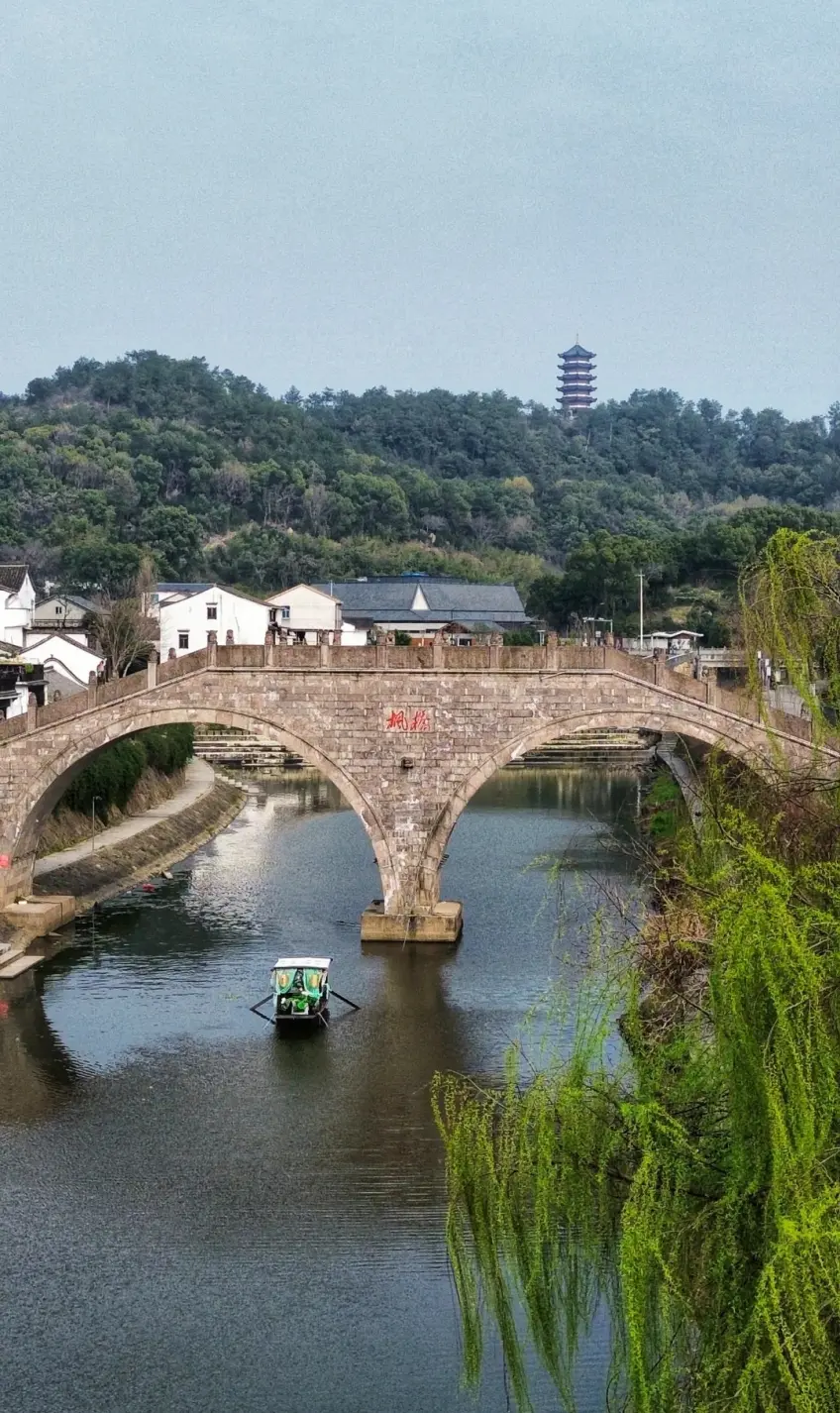
People still debate whether "Jiangfeng" actually refers to maple trees. One theory suggests that "Jiangfeng" in the poem refers to Jiangcun Bridge and Fengqiao Bridge in front of the temple, rather than red maples along the river. When you visit, stand between the two bridges, look out over the canal, and make up your own mind.
Hanshan and Shide
Hanshan, from whom the temple takes its name, was a reclusive poet-monk of the Tang Dynasty, often mentioned alongside his close friend Shide. In folk tradition, the two are revered as the "He-He Er Xian" (Immortals of Harmony), symbols of marital bliss. Their smiling figures frequently appear at weddings and in traditional New Year prints, and statues of both are enshrined inside the temple. Hanshan's poems are accessible yet deeply Zen-inspired. After being translated into English in the 20th century, they gained a wide readership in the US and Japan, which is why you'll often see foreign visitors who have come here specifically to pay homage.
What to see
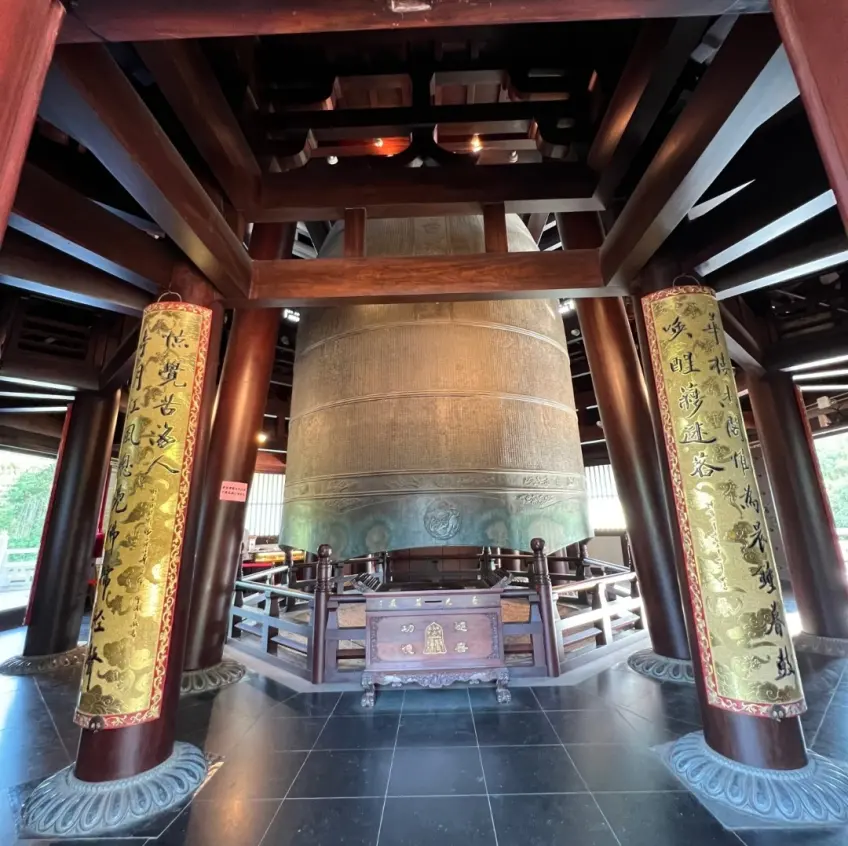
Bell Tower and Great Bell: No visit to Hanshan Temple is complete without seeing the bell. The great bell hangs in a tall pavilion, its heavy bronze surface imposing. Standing beneath it and looking up, you truly feel the weight behind the words "bell toll." The temple's Bell Tower symbolizes the "midnight bell tolls" from the poem "Mooring by Maple Bridge at Night," and many visitors pose for photos in front of it.
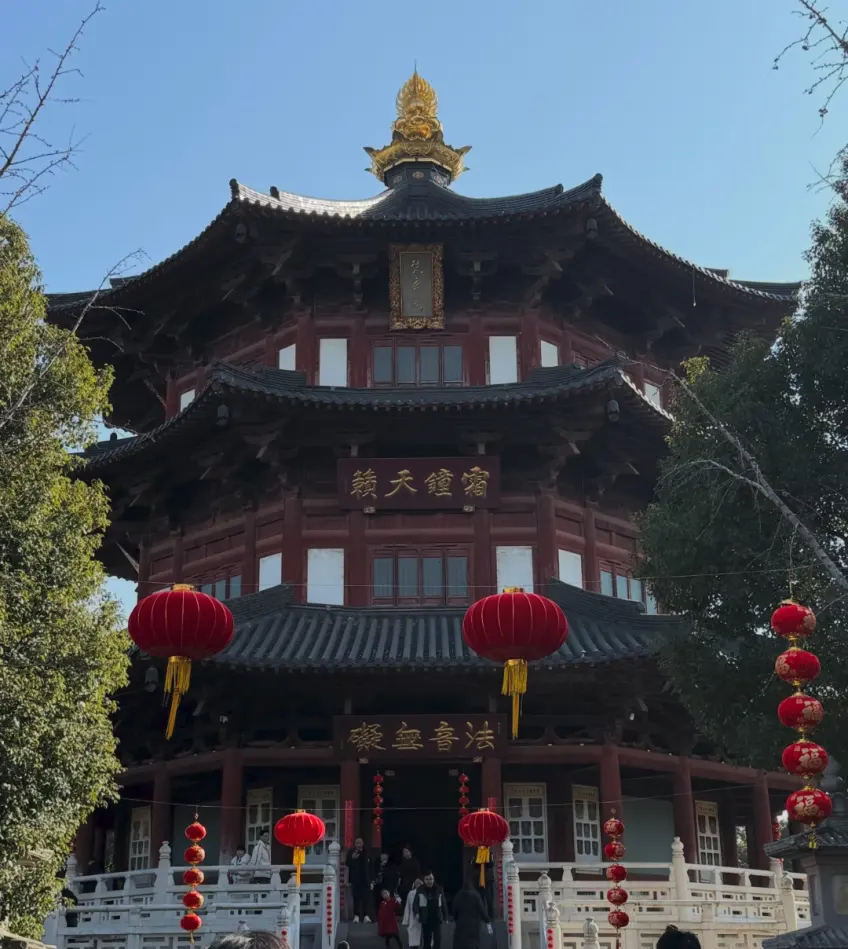
Puming Pagoda: The tallest structure in the temple, this multi-story pagoda is built in Tang Dynasty style. Its golden spire stands out above the treetops, making it the focal point for panoramic photos of Hanshan Temple. The pagoda's name comes from the temple's original name, Miaoli Puming Tayuan (Miaoli Puming Pagoda Courtyard).
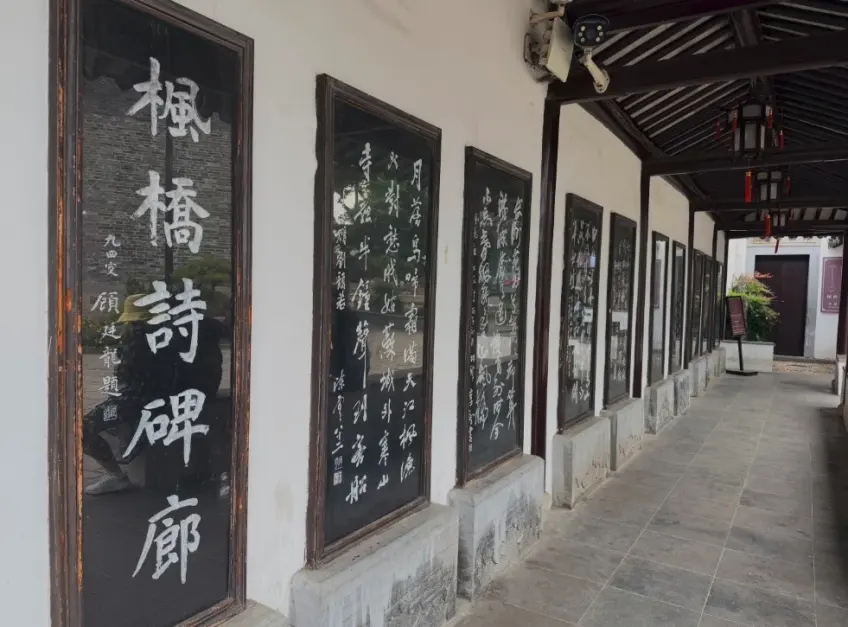
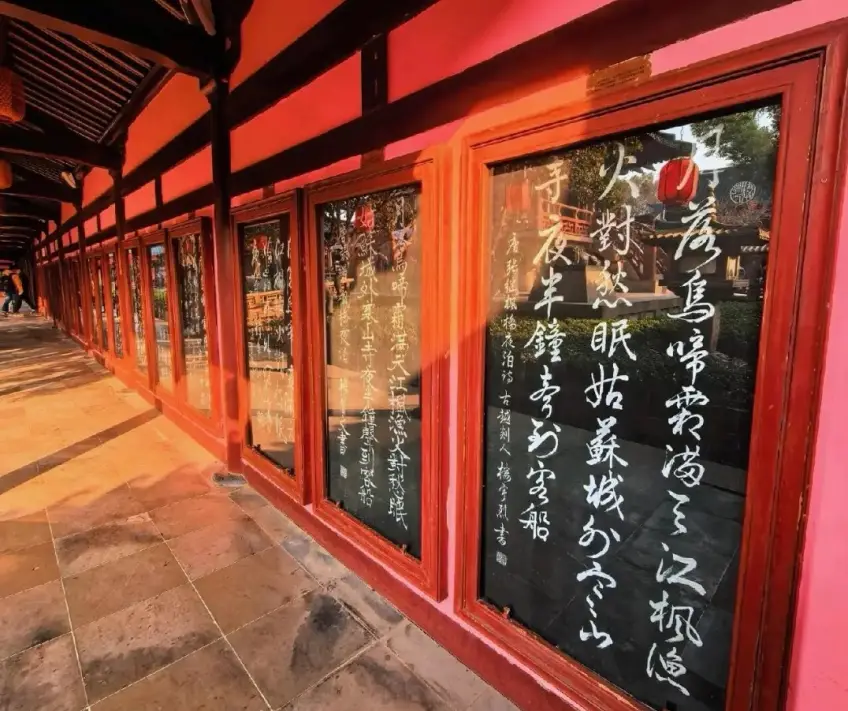
Stele Corridor: The corridor is lined with stone steles inscribed with poems by famous calligraphers from various dynasties. The most renowned is the "Night Mooring at Maple Bridge" stele written by late Qing scholar Yu Yue. Calligraphy lovers should linger here and examine them one by one—the scripts range from regular to running-cursive.
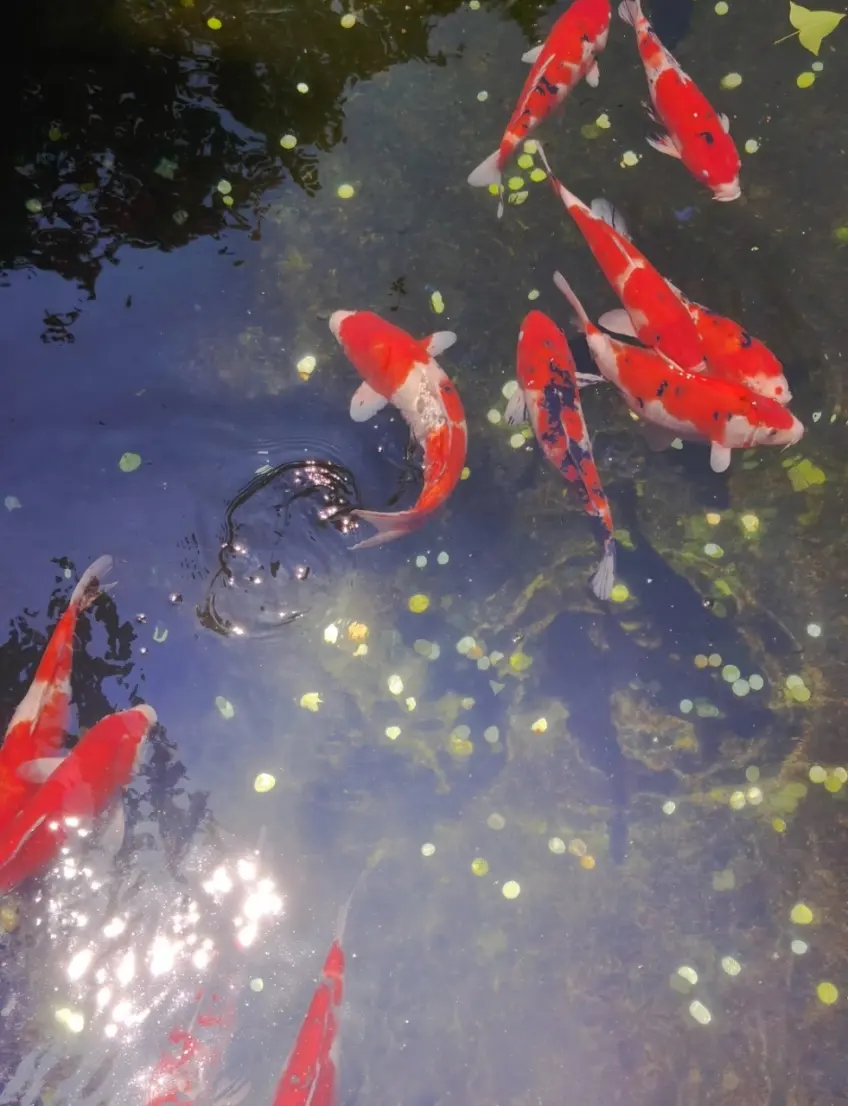
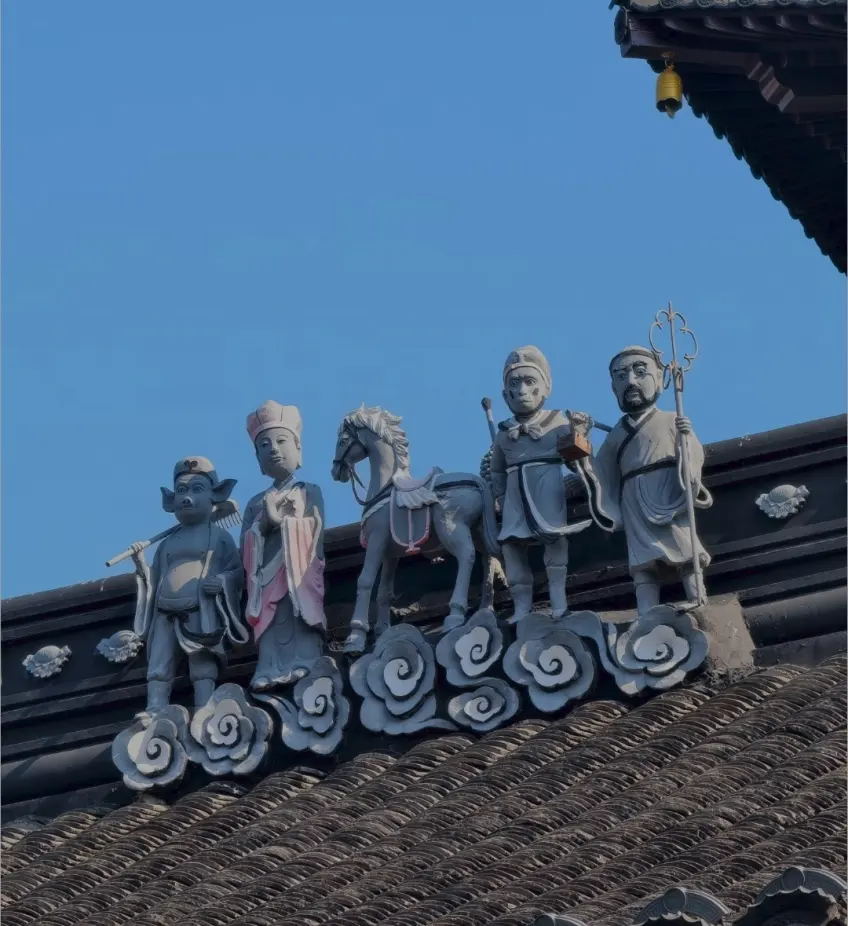
Mahavira Hall and Life Release Pond: The Mahavira Hall is the heart of the temple, and pilgrims often worship Buddha in front of it. The Life Release Pond is filled with koi, and the dense shade along its edge makes it a great spot to sit and rest. You can also spot a row of small ridge beasts and figurines on the roof ridges—looking up is far more interesting than squeezing through the crowds in front of the hall.
Fengqiao Bridge, Jiangcun Bridge, and Tieling Pass outside the temple
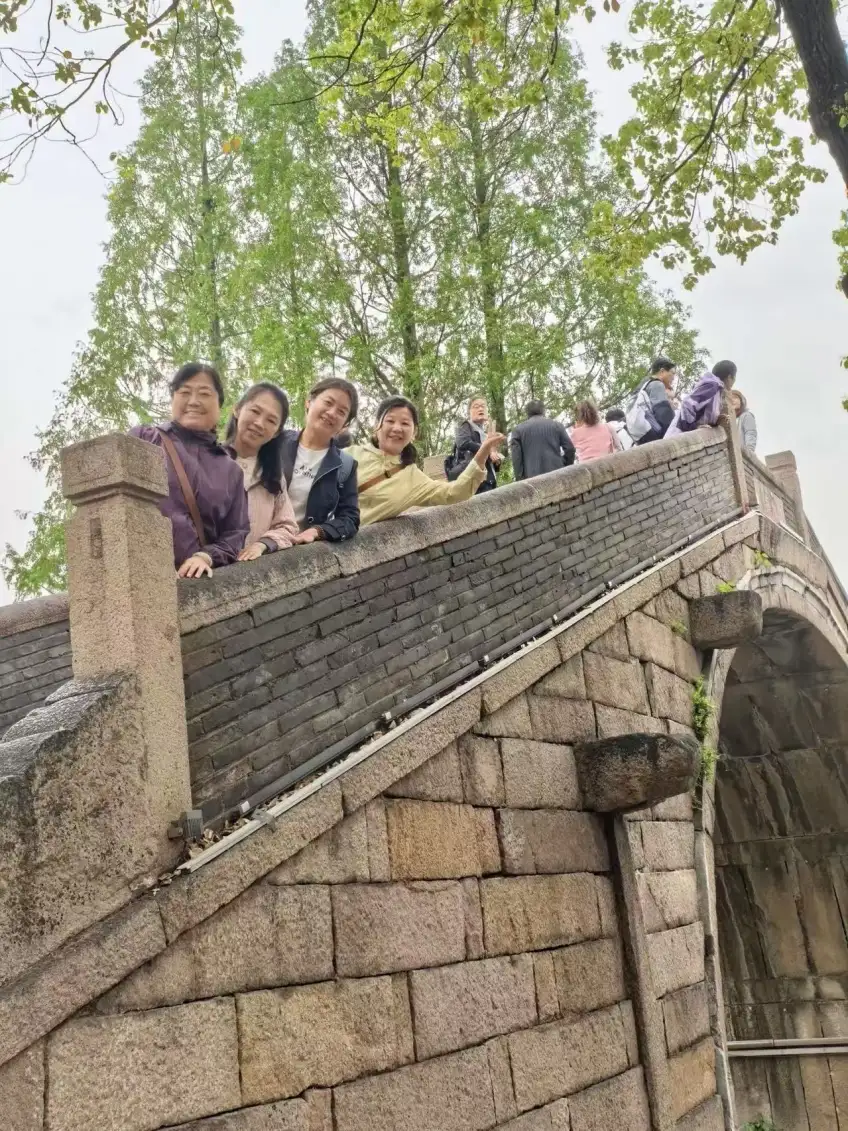
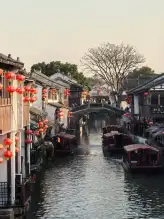
Just a few steps west of Hanshan Temple lies the Fengqiao Scenic Area, which is free to enter. Jiangcun Bridge sits right in front of the temple gate, while Fengqiao Bridge spans the ancient Grand Canal—the very spot where Zhang Ji moored his boat. Nearby Tieling Pass is a Ming dynasty fortress built to defend against Japanese pirates; climb the tower for views of the canal and stone bridges. This area is quieter than inside the temple, and the light along the river at dusk is perfect for a stroll and photos.
If you have plenty of time, start by viewing the bell and steles inside the temple, then stroll around the Fengqiao area, and finally walk along the canal to a nearby old town street for a cup of tea. You can easily spend a whole morning or afternoon here without rushing. The old streets along the canal are lined with teahouses and small shops—sit down and listen to the sounds of passing boats and locals for a while. It captures the mood of mooring at night in the famous poem far better than a quick photo stop. On an autumn or winter evening, when a thin mist rises over the river, the scene looks even more like the one described in the poem.
How to get to Hanshan Temple
Taxi: Hanshan Temple is in the western part of the old city, about 6–7 km from Guanqian Street and Humble Administrator's Garden. A taxi takes around 20 minutes and is the easiest option. It's also not far from Suzhou Railway Station.
Metro and bus: You can take the metro to a station near the temple, then walk or transfer to a bus. For exact routes, searching "Hanshan Temple" in a map app gives the most accurate results. There are also plenty of bus routes, which suit travelers who aren't in a hurry. Check your map app for real-time directions.
Combining with other attractions: Hanshan Temple, Lingering Garden, and Tiger Hill are all in the western part of the old city. A logical itinerary is Lingering Garden in the morning, then Hanshan Temple and Fengqiao in the afternoon—or Hanshan Temple in the morning and Tiger Hill in the afternoon. For directions to Lingering Garden, see the Lingering Garden page. If you're traveling with older family members or want to visit all three spots in one day, booking a Suzhou private car will save you a lot of waiting time.
Best time to visit
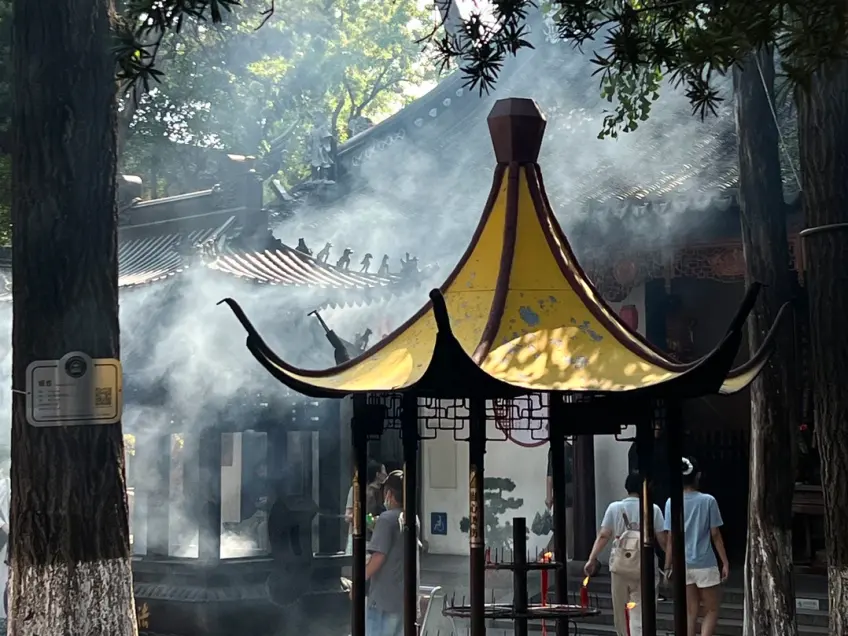
Right at opening: The first hour after the 7:30 opening is the quietest, with more worshippers than tourists. The incense smoke and morning light in front of the halls make for great photos. If you're staying in the old city, consider making Hanshan Temple your first stop of the day.
Afternoon to evening: After 3 or 4 PM, tour groups gradually leave and the temple quiets down again. Exploring the temple first and then heading to Fengqiao for the sunset over the canal makes for perfect timing. Note that the temple closes at 17:30, so it's best to enter before 4 PM.
Holidays: It gets extremely crowded around Chinese New Year, National Day, and New Year's Eve—especially on Lunar New Year's Eve and December 31. If you just want to see the temple architecture, try to avoid these dates.
New Year's Eve bell ringing
Hanshan Temple has held its New Year bell-ringing event since 1979; by 2024, it was the 46th edition. Late every December 31, the temple strikes the bell 108 times, with the final toll landing exactly at midnight to ring out the old year and welcome the new. Attending requires a separate ticket: in 2024, for example, tickets were ¥100, covering Hanshan Temple and the Great Bell Stele Garden, plus a souvenir. They must be purchased under your real name on the "Jun Dao Suzhou" platform, limited to one per ID, and even infants need a ticket.
Traffic controls are in place and crowds are huge around the temple on New Year's Eve, so think twice if you're traveling with seniors or children. It's best to book a nearby hotel in advance and walk there and back. Times, prices, and booking methods change each year, so check the official announcement for the current year.
Where to take photos
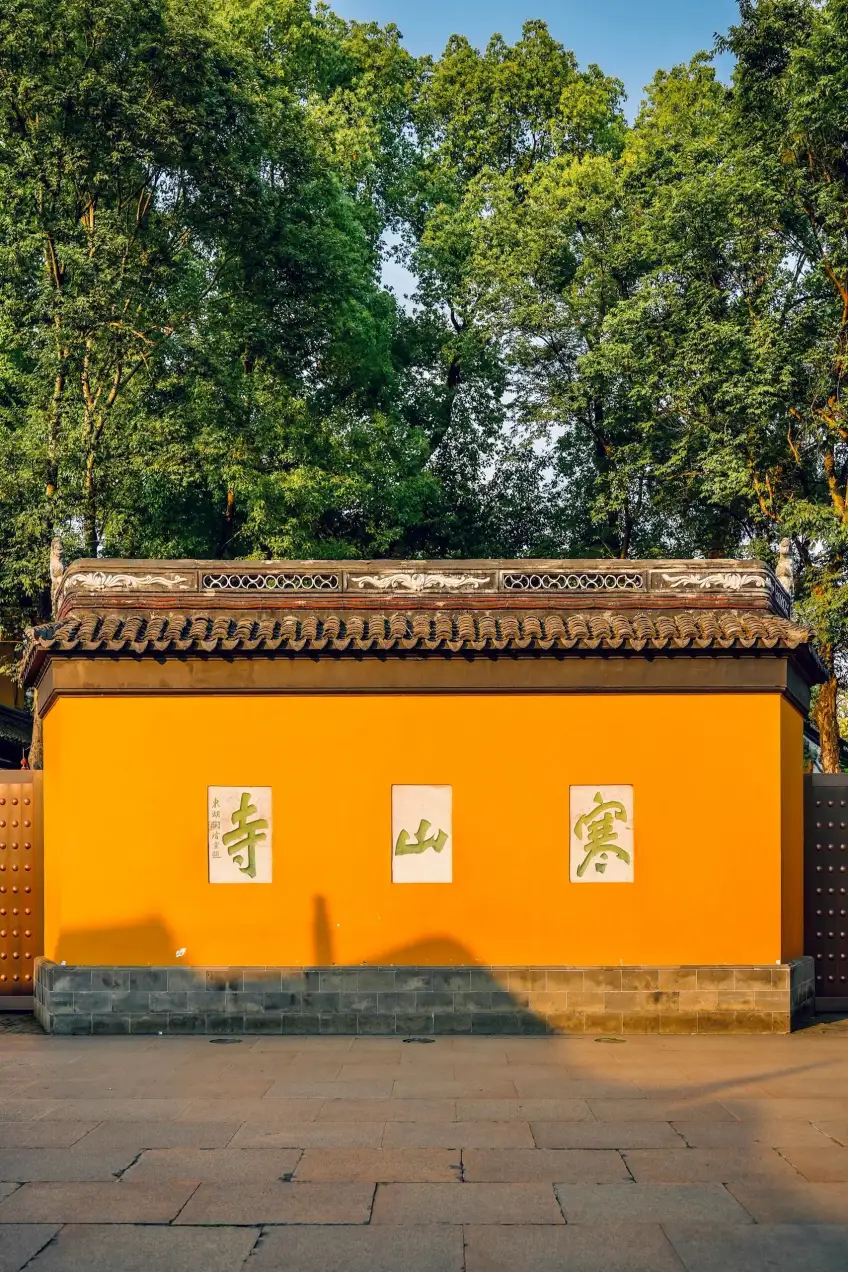
Yellow wall inscription: The yellow wall of the spirit screen outside the temple, inscribed with the three large characters for "Hanshan Temple," is where nearly every visitor stops for a photo. Morning sunlight hits it head-on, making the color brightest. When it's crowded, just wait a moment—a gap always opens up.
Jiangcun Bridge: Standing on Jiangcun Bridge in front of the temple gate and looking back, you can capture the yellow walls, the gate, and Puming Pagoda in a single frame. It's the best spot for a panoramic photo of Hanshan Temple.
Fengqiao Bridge and the Canal: At dusk, from Fengqiao Bridge or the Tieling Pass watchtower, you can photograph the ancient canal, the stone arch bridge, and the distant pagoda. The light is soft and there are fewer visitors.
Traveling with seniors and kids
Hanshan Temple isn't large, the ground is flat, and there aren't many steps, making it one of the few attractions in Suzhou well suited for a leisurely stroll with older visitors. There's shade and seating inside the temple, so you can rest whenever you get tired. If you're bringing kids, read the poem "Night Mooring by Maple Bridge" together at home first, then look for the bridge, bell, and temple mentioned in the poem when you arrive—they'll be much more interested.
Note that during holidays, the temple fills with worshippers. The area around the incense burners in front of the halls gets crowded and smoky, so keep children away from the burners to avoid burns. Crowds are extremely dense on New Year's Eve, so bringing very young children isn't recommended.
Weather and what to wear
Visiting Hanshan Temple involves mostly outdoor walking on stone paths and steps between the halls. Summers in Suzhou are hot and humid—you'll sweat even in the shade—so bring a hat and water. Winters are damp and cold, and the temple halls and stele corridors are semi-outdoor, so wear a windproof jacket. Stone paths get slippery in the rain, so wear shoes with good grip. For monthly weather details, see our Suzhou year-round weather and clothing guide.
A west Suzhou itinerary
Hanshan Temple, Lingering Garden, Tiger Hill and Shantang Street are all in the west and northwest of the old city, so you can string them together without backtracking: arrive at Hanshan Temple at 7:30 a.m. to see the bell tower and stele corridor before the tour groups; walk over to Fengqiao Bridge and Tieling Pass around 9 a.m. for canal views; take a taxi to Lingering Garden around 10:30 a.m. and stroll through it until noon; head to Tiger Hill in the afternoon to see the leaning pagoda and Sword Pool; reach Shantang Street by evening for a bite to eat while waiting for the riverside lights to come on.
You'll clock up plenty of steps on this route, but each ride is only 15–20 minutes. If you're traveling with older relatives, swap Tiger Hill for tea and a rest on Shantang Street, or split the itinerary into two half days. If it's your first time in Suzhou, spend another day on Humble Administrator's Garden, Suzhou Museum and Pingjiang Road in the east — two days is enough to cover the best of the old city.
Hanshan Temple through the seasons
Autumn is the most poetic season at Hanshan Temple. Around November, the trees along the canal outside the temple start to change color and the air turns cool, perfectly matching the "frost filling the sky" imagery from the famous poem. Winter brings the fewest visitors; mornings are chilly and the temple is especially quiet, though the days around New Year's Eve are the busiest of the year. Spring fills the grounds with blossoms, and summer offers thick shade, but Suzhou's muggy heat means you won't want to walk for long — mornings are best.
Fitting Hanshan Temple into your Suzhou trip
Hanshan Temple works well on a Suzhou day tour or 2-day tour: unlike Humble Administrator's Garden, it doesn't require booking far in advance, and it links neatly with Lingering Garden, Tiger Hill and Fengqiao Bridge into a west-side route. To see what a family visit with older parents looks like, read Visiting Hanshan Temple with Mom and Dad. For commentary on the poetry steles and temple history, hire a Suzhou guide; for hotel tips, see Where to stay in Suzhou. More ideas are on the Suzhou city page.
Jiangnan elegance 3-day 2-night tour: Hanshan Temple, Lingering Garden, Feilai Peak and Lingyin Temple, West Lake boat cruise, Flower Harbor Park, tea plantation photo shoot
A 3-day 2-night private tour starting in Suzhou and ending in Hangzhou: Hanshan Temple and Shantang Street, the Lingering Garden and Pingjiang Road, then Lingyin Temple and Feilai Peak in Hangzhou in the afternoon. On the last day, enjoy a West Lake boat cruise and a tea plantation photo shoot. Includes transport, guide, two nights at an upscale or luxury hotel, and admission tickets, with an English-speaking guide available.
Suzhou day tour: Humble Administrator's Garden and Hanshan Temple leisure tour
Private day tour with pickup and drop-off at Suzhou North Railway Station: visit the Humble Administrator's Garden in the morning, then Hanshan Temple and Shantang Street, and return to the station in the evening. Ideal for travelers arriving in Suzhou by high-speed train. Includes vehicle, guide and admission tickets. English and other language guides available.

Jiangnan Highlights 3 Days 2 Nights: Lion Grove Garden + Tianping Mountain + Hanshan Temple + Yuantouzhu (Turtle Head Isle) + Huishan Ancient Town + Ge Garden + Daming Temple
A 3-day, 2-night private tour starting in Suzhou and ending in Yangzhou: Lion Grove Garden and Tianping Mountain; Hanshan Temple, then a Lake Tai boat cruise at Yuantouzhu (Turtle Head Isle) in Wuxi and a stroll through Huishan Ancient Town; on the final day, Ge Garden and Daming Temple in Yangzhou. Choose from 4-star, 5-star or luxury 5-star hotels. Includes transport, guide and admission tickets, with English-speaking guides available.
FAQs
How much are Hanshan Temple tickets?
Regular adult tickets are ¥20. Listening to the bell on New Year's Eve requires a separate ticket, which was ¥100 in 2024. Prices are subject to announcements from the temple and official platforms.
What are the opening hours of Hanshan Temple?
Generally 7:30–17:30. Hours may change on special days such as December 31; for example, on New Year's Eve 2024, the temple was only open until 14:00.
Do I need to book Hanshan Temple in advance?
On regular days you can usually buy tickets on site, but during holidays it's best to purchase online in advance. For the New Year's Eve bell ringing, you must buy a real-name ticket in advance on the "Jun Dao Suzhou" platform.
Is Hanshan Temple worth visiting? How long does it take?
If you've read "Mooring by Maple Bridge at Night," it's definitely worth a visit. The temple is small—seeing the bell tower, pagoda and stele corridor takes just over an hour, or about two hours if you also include Fengqiao and Tieling Pass.
Do Hanshan Temple and Fengqiao Scenic Area require separate tickets?
They should be considered separately: Hanshan Temple requires an admission ticket, while the adjacent Maple Bridge Scenic Area outside the temple is free to enter. The two are just a few minutes' walk apart and are usually visited together—enter the temple first, then head to Maple Bridge.
Is Hanshan Temple suitable for seniors?
Yes. The temple grounds are flat with few steps, and there's plenty of shade and places to rest. Avoid holidays and New Year's Eve, and seniors can take their time exploring.
What other attractions are near Hanshan Temple?
Right outside the temple is the Maple Bridge Scenic Area, home to Maple Bridge, Jiangcun Bridge, and Tieling Pass. To the east is Lingering Garden and to the north is Tiger Hill—all can be combined into a single day.