
For Suzhou souvenirs, the best things to bring home are local crafts and tea: Suzhou embroidery, Song brocade and small silk items, Dongting Mountain Biluochun tea, sandalwood fans, Taohuawu woodblock New Year prints, and olive pit carvings. For elders, choose Biluochun or a small piece of Suzhou embroidery; for colleagues, pick lightweight items like silk scarves, bookmarks, or New Year prints; for yourself, a sandalwood fan makes a great keepsake. Pastries are fine for grabbing a box or two on the way out, but don't let them fill up your luggage.
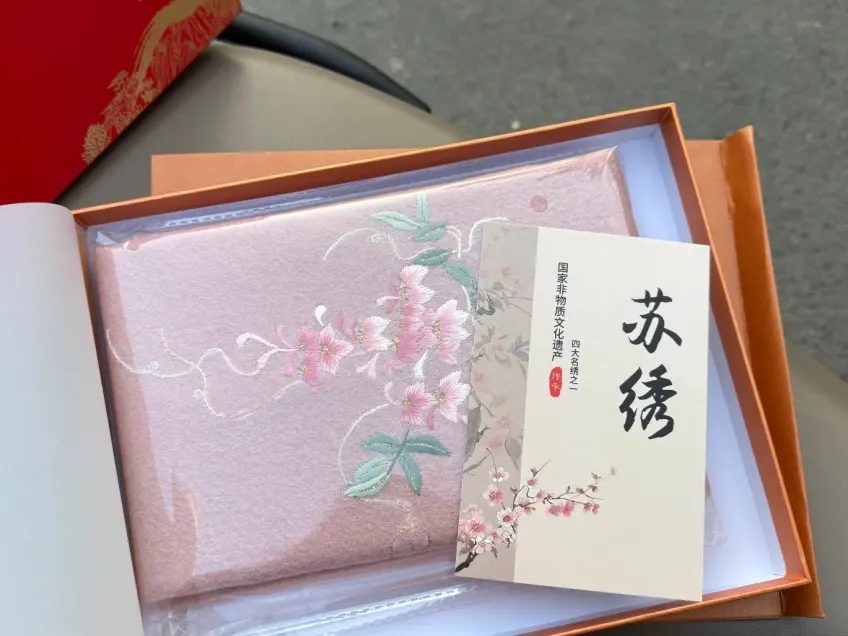
Suzhou handicrafts have one big advantage: many are small, light, and crush-proof, so they fit right into your carry-on, and you won't easily find the same quality in other cities. The tricky part is that authenticity and grade vary wildly—items both labeled "Suzhou embroidery" or "Biluochun" can differ in price by dozens of times. Below, we break down each category: what it is, how to choose, where to buy, and how to get it home. At the end, you'll find a half-day shopping route.
Decide who you're buying for first, then what to buy
Spending five minutes making a list before you head out saves far more money than browsing as you walk. You can roughly sort it using the table below:
Category
Who to give it to
Buying tips
Where to buy
Suzhou embroidery
Elders, important clients, personal collection
Check the back and stitches; ask whether it's hand-embroidered or machine-embroidered
Zhenhu Embroidery Street, Pingjiang Road
Song brocade and silk
Female friends and colleagues
Check the composition label and feel the scarf's texture
Silk Museum and Guanqian Street area
Biluochun tea
Elders who love tea
Look for the geographical indication and traceability labels
Dongshan or Jinting tea farmers, or reputable tea shops
Sandalwood fan
For friends or as a personal souvenir
Smell the fragrance and check if the fretwork is neat
Craft shops in the old town
Taohuawu New Year prints
Friends who love traditional culture
Distinguish hand-printed versions from machine-printed ones
Taohuawu area, Pingjiang Road
Olive pit carving
Collectors
Check the carving detail, don't chase cheap prices
Zhoushan Village, Guangfu
If luggage space is limited, prioritize like this: tea and small silk items are best to bring; round fans and small embroidery panels come next. Large framed pieces and ornaments take up the most room—unless you're buying for someone specific, don't buy them on a whim.
Suzhou embroidery: check the back before talking price
Suzhou embroidery is Suzhou's most famous craft, added to the first batch of national intangible cultural heritage in 2006. The real center of production is Zhenhu Subdistrict by Lake Tai on the west side of the city. According to research published by the China Intangible Cultural Heritage website, Zhenhu has about 8,000 embroiderers, with over 400 shops lining both sides of a roughly 1.7-kilometer-long embroidery street selling finished works, embroidery panels, silk threads, framing services and clothing. "Zhenhu Suzhou embroidery" received geographical indication protection in 2010.
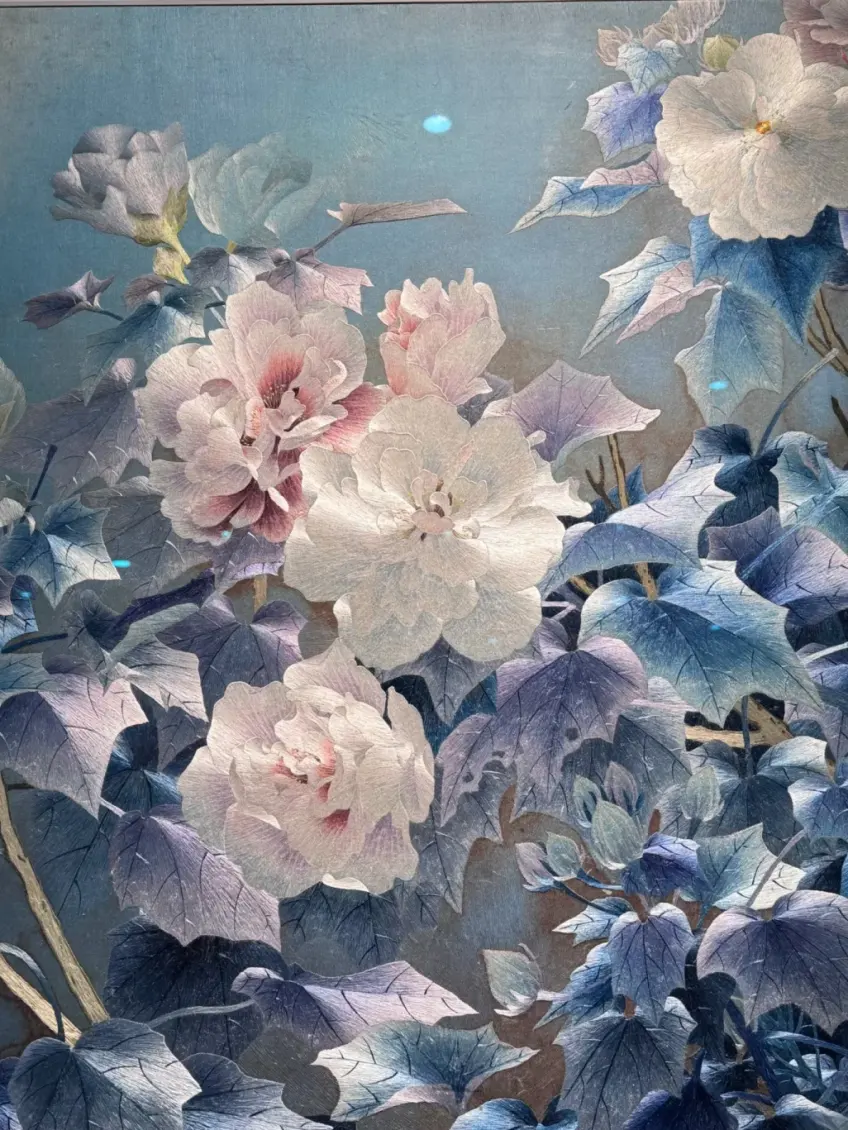
How to tell hand embroidery from machine embroidery: Flip the piece over and look at the back. Hand embroidery has slight unevenness and thread joins on the back, with colors blending gradually stitch by stitch. Machine embroidery usually has neat, uniform dense stitches on the back, obvious color blocks on the front, and a flatter sheen. There's also "printed fabric with partial embroidery," where the base image is printed and only a few stitches are added for details like flower centers or feathers—up close, you can see the line between the ink and the silk thread.
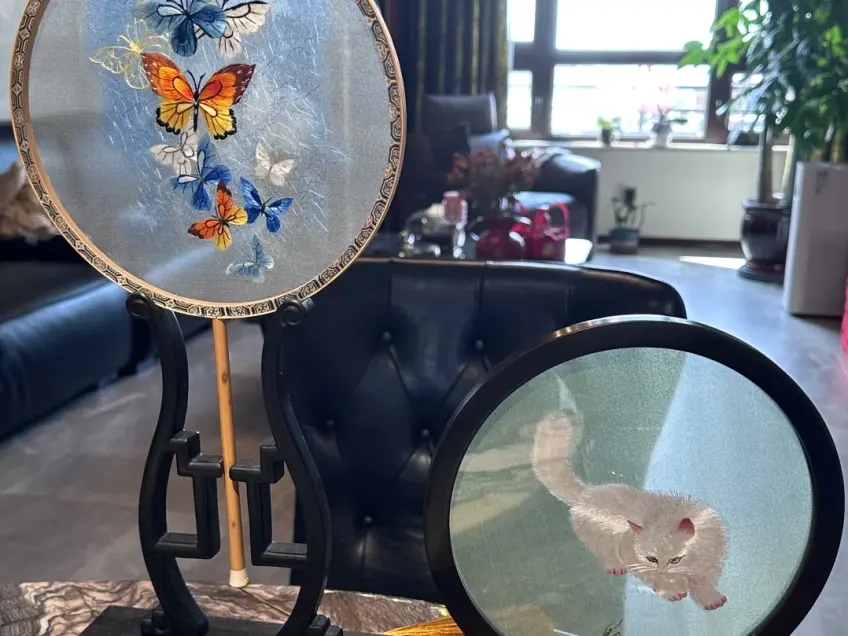
What size to buy: If it's your first time, start with round fans, small table screens, or palm-sized embroidered pieces—they're easy to carry and great as gifts. Small double-sided round screens show the same pattern on both sides and look lovely on a desk, making them a popular gift for older relatives. For large framed pieces, ask the shop to remove the frame so you only take the embroidery and have it mounted back home; otherwise, the glass and wooden frame will be heavy and fragile.
What determines the price: Suzhou embroidery prices depend mainly on stitch difficulty, size, color complexity, and time spent. Even with the same subject, coarse stitching and fine stitching differ greatly in price. Reputable shops list the artist, stitch type, and dimensions, and you can ask for an information card. Be cautious if someone claims a piece was "hand-stitched by a master, special price today" but can't provide any artist details.
If you'd like to try stitching yourself rather than just buying finished pieces, check out our Suzhou intangible cultural heritage experiences guide, which covers how to get started with Suzhou embroidery, Pingtan storytelling, New Year prints, and kesi silk weaving.
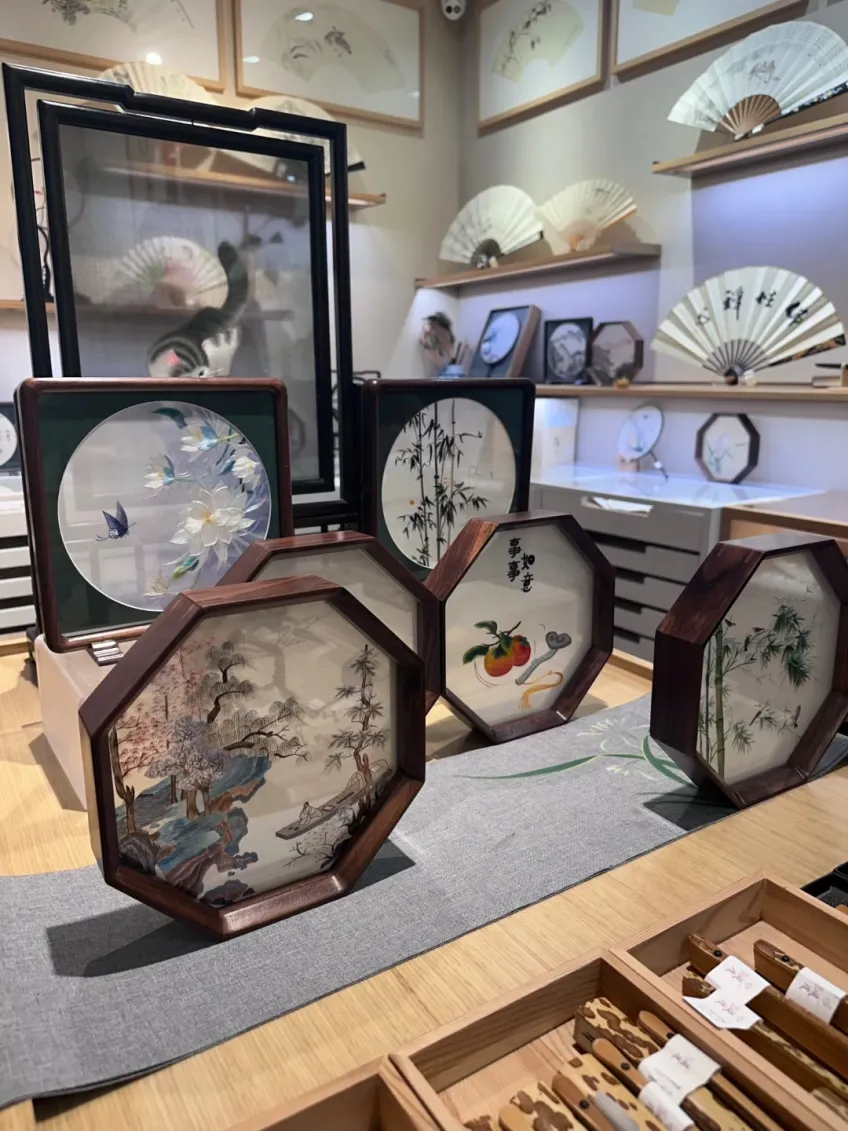
Song brocade, silk and kesi: start with small pieces
Suzhou's silk textiles fall into three tiers. The most everyday items are small pieces like silk scarves, pajamas, and eye masks. A step up is Song brocade, which along with Nanjing Yun brocade and Sichuan Shu brocade is known as one of China's "three famous brocades." It was traditionally used to mount calligraphy and paintings, and after the "new Chinese-style" outfits worn by leaders at the 2014 Beijing APEC summit featured Song brocade fabric, it began appearing more often on bags, notebook covers, and scarves. At the top is kesi silk, woven bit by bit using a "continuous warp, cut weft" technique—there's even a saying that "an inch of kesi is worth an inch of gold." It forms part of the "Chinese sericulture and silk craftsmanship" inscribed on the UNESCO Intangible Cultural Heritage list in 2009.
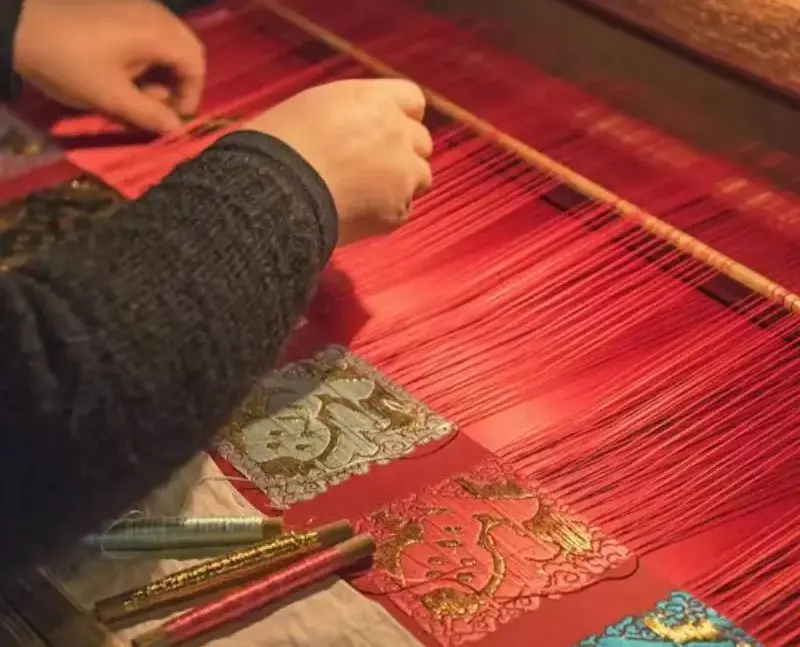
How to pick real silk: Check the tag first—only "100% mulberry silk" is genuine; labels that just say "silk" or "imitation silk" are usually synthetic. Real silk feels cool and smooth but not slippery, and leaves fine creases when you crumple it and let go. Scarf thickness is measured in "momme"—the higher the number, the thicker the fabric. Pick a heavier one for older relatives, as it's more durable.
Buying Song brocade and kesi silk: Small Song brocade items like card holders, bookmarks, and coasters are reasonably priced, featuring neat geometric patterns and auspicious motifs—great gifts for colleagues. For kesi silk, stick to small pieces like bookmarks and cards; full works are very expensive due to the labor involved. If you see suspiciously cheap "kesi," it's almost certainly just jacquard fabric.
To learn what to look for before buying, visit the Suzhou Silk Museum in the north of the city at 2001 Renmin Road, near Beisi Pagoda. General admission is free. Open 9:00–17:00, last entry at 16:00, closed Mondays (except public holidays). Check the museum's latest announcements for updates. Inside you can compare different silks and see working looms, and there's a gift shop near the exit.
Dongtingshan Biluochun tea: check the origin and label
Biluochun is Suzhou's most impressive tea—and the easiest souvenir to buy wrong. By regulation, only Biluochun grown in Dongshan Town and Jinting Town (Xishan) in Suzhou's Wuzhong District can be called "Dongtingshan Biluochun." Authentic packaging carries the national geographical indication protection mark and a certification trademark. Starting in 2026, every genuine box also has a new tea label with a traceability QR code. Scan it to see the producer, contact person, and phone number—the easiest way to spot fakes.
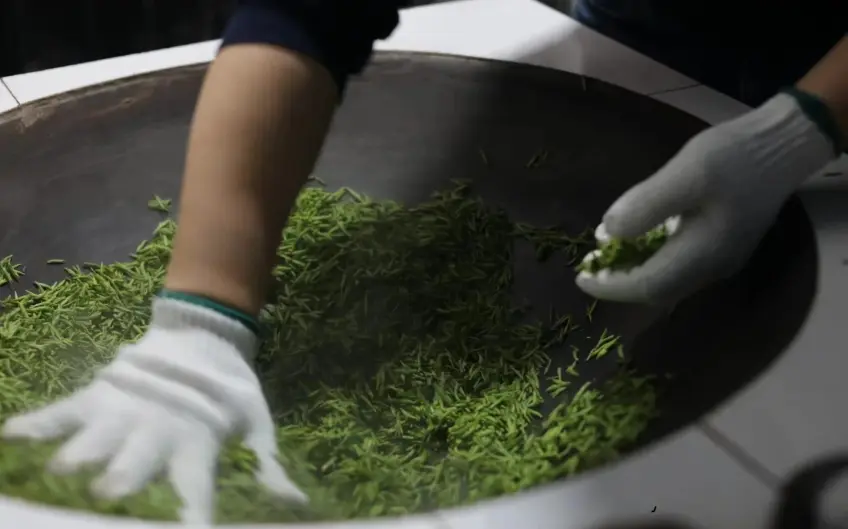
When to buy: The most sought-after Biluochun is "pre-Qingming tea," picked before the Qingming Festival, with the main harvest running from mid-to-late March through early April in recent years. Pre-Qingming tea must be picked and roasted the same day—a single jin of good dried tea takes about 70,000 buds, so yields are low and prices high. If you visit Suzhou in autumn or winter, you'll be buying that year's spring tea. As long as the shop refrigerates it, the quality stays consistent and prices are lower than during the new-tea season.
How to judge the tea: Good Biluochun has fine, tightly curled leaves shaped like snail shells, covered in a layer of white down. The color is tender green with silvery white tones, never a glossy bright green. Brew it with water around 80°C—you can pour the water first and then add the leaves, watching them slowly sink. The liquor should be clear with floral and fruity notes. Avoid tea that looks unnaturally bright or smells scorched or artificial.
Storage and gifting: Biluochun is an unfermented green tea sensitive to light, moisture, and odors. Divide it into small sealed packets and refrigerate; once opened, finish it within a month. For gifts, one or two small tins work better than a large box—the recipient gets fresher tea, and it's easier to take through customs.

If you want to visit the source, Dongshan and Jinting are both on the shores of Lake Tai, about an hour's drive from Suzhou's old town. You can combine a visit with Lake Tai scenery—see our guide on which side of Lake Tai to visit. Spring harvest season is the liveliest time, but tea farmers welcome visitors for tea tasting and purchases year-round.
Sandalwood fans, Taohuawu woodblock prints, and olive pit carvings
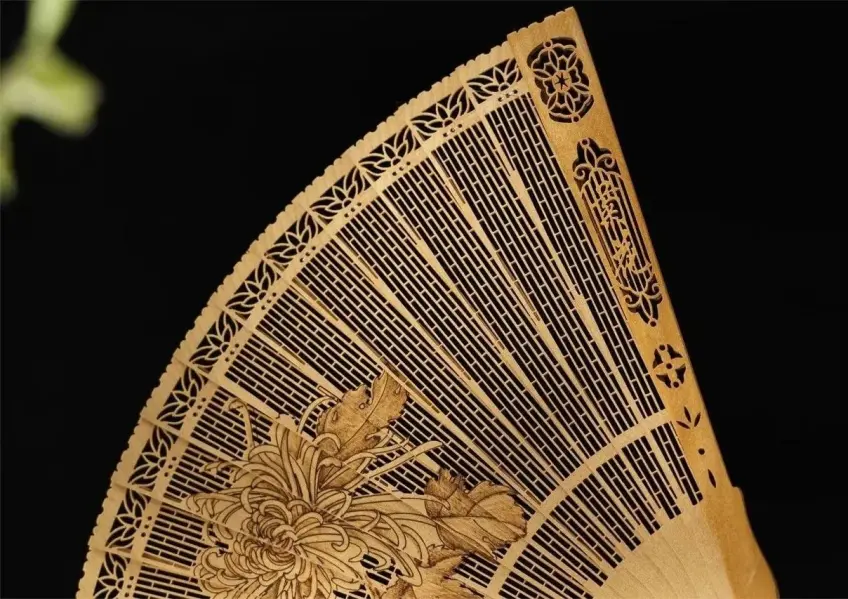
Sandalwood fans: Suzhou is the birthplace of sandalwood fans. Traditional techniques include fretwork, pyrography, carving, and painting. Fretwork uses a fine saw to cut openwork patterns into the ribs, while pyrography burns designs onto the fan surface with a heated iron pen. When choosing one, hold the open fan up to the light—the cutout patterns should be continuous with smooth edges, and the ribs should close tightly without gaps. The fragrance fades over time, so store the fan in its box away from moisture and heat to preserve the scent longer.
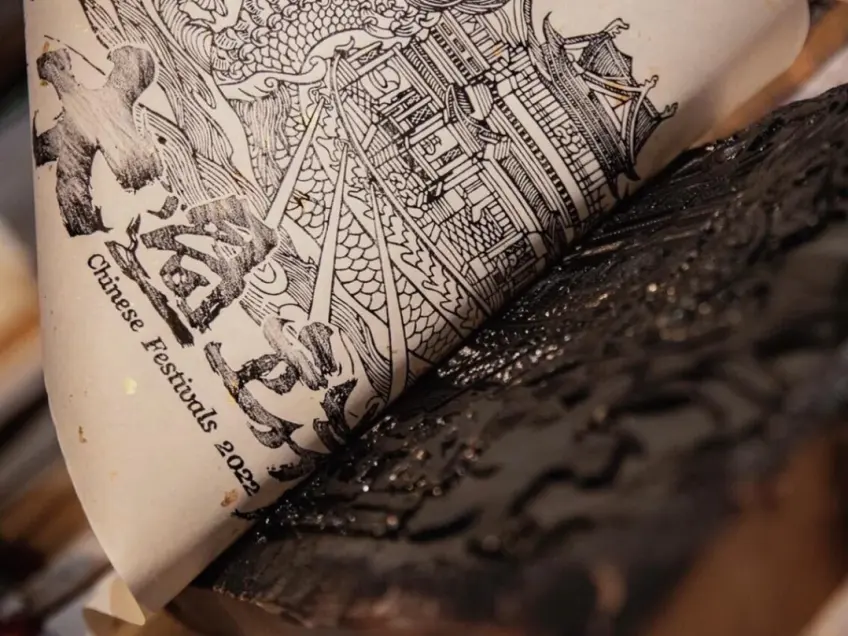
Taohuawu woodblock New Year prints: Named after Taohuawu Street in northern Suzhou where they were historically produced, these prints have over 400 years of history and are celebrated alongside Tianjin's Yangliuqing prints as "Taohuawu in the south, Yangliuqing in the north." Traditional prints use separate woodblocks for each color, producing vivid hues. Common subjects include door gods, the "Harmony" figure, and flowers and birds. Ask whether the print is hand-block-printed or machine-reproduced, as prices differ greatly. Paper prints travel safest rolled flat inside a sturdy cardboard tube.
Olive pit carving: Guangfu olive pit carving originated in Guangfu Town and Zhoushan Village in Xiangshan Subdistrict, Suzhou. It mainly uses black olive pits from Guangdong, keeping the pit's natural shape to carve bracelets, pendants and small ornaments featuring figures, landscapes and gardens. The Ming Dynasty essay "Record of the Nut Boat" describes carving the story of "Su Dongpo Visits the Red Cliff" onto a single fruit pit. Good carvings have clear facial features and distinct layers, while cheap machine-carved pieces have shallow lines and all look the same. Prices vary widely, so this is best for those genuinely interested who can take their time browsing in Zhoushan Village. We don't recommend it as a casual souvenir.
Garden and museum souvenirs: lightweight and unique
If you need gifts for many people but still want a touch of Suzhou, garden and museum gift shops are great options. There are usually souvenir shops near the exits of Humble Administrator's Garden, Lion Grove Garden and Lingering Garden selling bookmarks, fridge magnets, stamps and mugs printed with lattice window or rockery patterns, starting at just a few dozen yuan—lightweight and unbreakable. The main Suzhou Museum is on Dongbei Street right next to Humble Administrator's Garden, and many visitors come specifically for its souvenirs, but it's closed on Mondays, so plan accordingly.
The advantage of these souvenirs is that each garden has different designs, so you can tell people back home which garden's window inspired your piece—much more memorable than a generic keychain. Pick them up while touring the gardens so you don't need an extra trip. For tips on visiting the gardens themselves, see our Humble Administrator's Garden and Lion Grove Garden pages.
Just bring one or two boxes of pastries
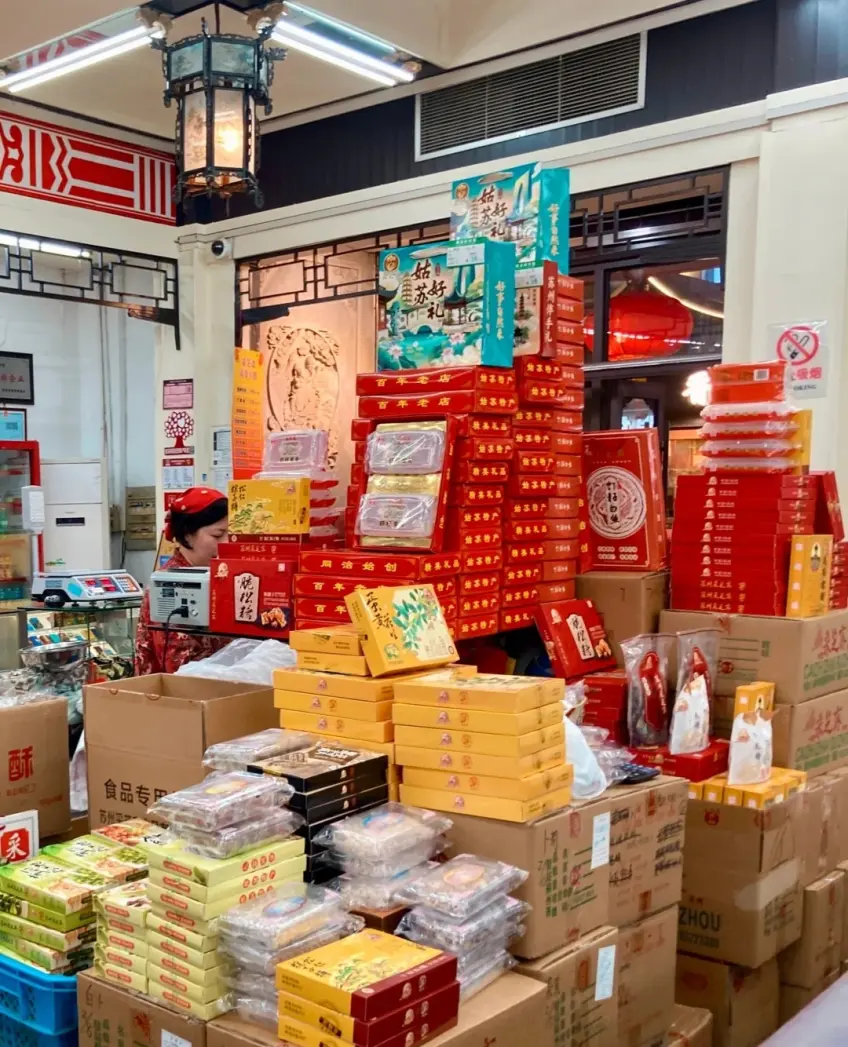
Suzhou also has plenty of time-honored pastry shops. Caizhizhai and Daoxiangcun around Guanqian Street sell traditional treats like pine nut candy, flaky sugar cakes and Suzhou-style mooncakes. They work well as small extras, but we don't recommend them as your main souvenirs: they have short shelf lives, get crushed easily, and many countries restrict bringing food across borders—especially meat-filled fresh pork mooncakes and braised meats, which are generally prohibited. To learn more about Suzhou's food scene, check out our Suzhou food travel guide.
Where to buy: A half-day route
Half day in the old town: Start your morning on Pingjiang Road, where small shops sell Suzhou embroidery, New Year prints, and fans—great for browsing small items and comparing prices. Around noon, head west to Guanqian Street for lunch and pick up some pastries along the way. In the afternoon, visit the Silk Museum on Renmin Road to see silk textiles, then take a taxi back to your hotel from near Beisi Pagoda. This entire route stays within the old town and can be covered on foot or via Metro Lines 1 and 4.
Half day in the west: For authentic Suzhou embroidery, it's best to make a dedicated trip to Zhenhu Embroidery Street, where you can talk face-to-face with the embroiderers about stitching techniques and motifs. On the way back, stop by Zhoushan Village in Guangfu to see olive pit carvings. Both spots are on the shores of Lake Tai west of the city, about 30 km from the old town, and require several public transit transfers. If you're traveling with older relatives or short on time, booking a private car in Suzhou makes things much easier. If you'd like someone to explain the crafts and help judge quality, consider hiring a Suzhou tour guide to join you.
Dongshan and Jinting: The best place to buy Biluochun tea is at its source. In spring you can watch the leaves being picked and roasted, and in other seasons you can still sample tea at local farmers' homes. It takes about an hour each way from the old town, making it ideal as a full-day Lake Tai itinerary. More things to do in Suzhou are listed on our Suzhou city page.
How to bring them home: Weight, packing, and customs rules
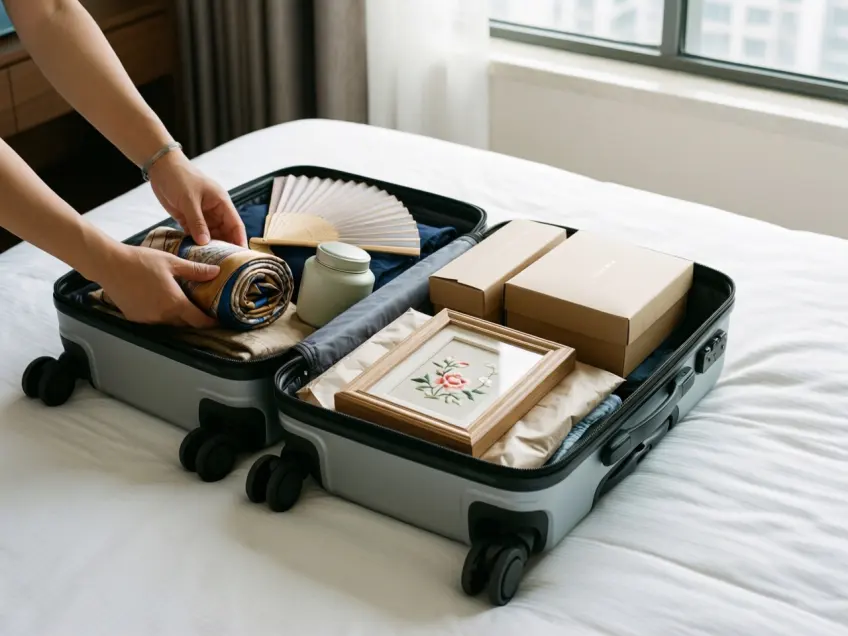
Silk scarves, embroidered panels, fans, and New Year prints can all go in your carry-on. Framed pieces and ornaments are better checked in—ask the shop to pack them in foam and a sturdy cardboard box. Tea is safest in your carry-on, where it won't get crushed or damp.
Travelers returning to Taiwan should note the import limits: according to the Customs Administration's published list, no more than 1 kg of each type of tea and a combined total of 6 kg for agricultural, livestock and aquatic products. Meat products are not allowed. Rules vary by destination, so check your local customs authority's latest announcements before departure. Keep your invoices or receipts when buying— they make things easier if you're inspected.
One last common trap to watch out for: don't rush to pay when you're enthusiastically ushered into a shop at a scenic spot entrance and hear "limited-time discount" or "last one left." Good things in Suzhou stand up to comparison. Check a couple more shops on the same street, ask about the materials, maker and craftsmanship, then decide.
Work shopping into your itinerary
If you haven't decided how many days to spend in Suzhou, consider these routes: spend one day exploring gardens in the old town and strolling Pingjiang Road and Shantang Street, and the second day visiting Lake Tai or an ancient town. Shopping fits naturally into this plan, so you won't need to set aside dedicated time for it.

Suzhou Dream 2 Days 1 Night: Lion Grove Garden + Shantang Street free time for food and strolling + Tianping Mountain + Canglang Pavilion + Lingering Garden
A 2-day, 1-night private tour with pickup at Suzhou Railway Station: Lion Grove Garden, Hanshan Temple, Shantang Street and Tianping Mountain on day one, then Canglang Pavilion and Lingering Garden on day two. Ideal for travelers who want to see several gardens. Includes transport, a guide, 1 night in an upscale or luxury hotel, and admission tickets. An English-speaking guide is available on request.

4 Days 3 Nights in Suzhou, Hangzhou and Beyond: Hangzhou (West Lake + Feilai Peak + Hu Xueyan's Former Residence) + Zhouzhuang + Wuzhen West Scenic Zone + Suzhou (Pingjiang Road + Shantang Street), no shopping stops
A 4-day, 3-night private tour starting and ending in Hangzhou, visiting both Wuzhen and Zhouzhuang. Spend the first night in Wuzhen to see the West Scenic Zone lit up at night, then explore Zhouzhuang, Pingjiang Road and Shantang Street the next day before touring the Humble Administrator's Garden. Back in Hangzhou, enjoy a boat ride on West Lake and visit Feilai Peak. Includes transport, guide, hotels and admission tickets. English-speaking guide available.

Jiangnan elegance 3-day 2-night tour: Hanshan Temple, Lingering Garden, Feilai Peak and Lingyin Temple, West Lake boat cruise, Flower Harbor Park, tea plantation photo shoot
A 3-day 2-night private tour starting in Suzhou and ending in Hangzhou: Hanshan Temple and Shantang Street, the Lingering Garden and Pingjiang Road, then Lingyin Temple and Feilai Peak in Hangzhou in the afternoon. On the last day, enjoy a West Lake boat cruise and a tea plantation photo shoot. Includes transport, guide, two nights at an upscale or luxury hotel, and admission tickets, with an English-speaking guide available.
FAQs
What are good Suzhou souvenirs for older relatives?
Biluochun tea and small Su embroidery pieces are the safest bets. For Biluochun, choose small tins with geographical indication and traceability labels; for Su embroidery, pick a double-sided embroidered round screen or fan. They look elegant, are easy to carry and have real local character.
What are the must-buy items in Suzhou?
In order of iconic status: Su embroidery, Dongting Mountain Biluochun tea, Song brocade and silk accessories, sandalwood fans, and Taohuawu woodblock New Year prints. If you're on a budget, the creative merchandise from the gardens and the Suzhou Museum also captures the flavor of Suzhou.
Can I buy Biluochun tea in Suzhou in fall or winter?
Yes. What you buy in fall and winter is tea harvested and processed that spring. As long as the shop has kept it refrigerated, the flavor is still good, and prices are lower than when new spring tea first hits the market. Just look for the Dongting Mountain Biluochun origin mark and traceability QR code.
How can I tell hand-embroidered Suzhou embroidery from machine embroidery?
Check the back: hand embroidery has uneven stitches and thread joins, with colors blending stitch by stitch; machine embroidery looks uniform on the back, while the front has blocky colors and a flat sheen. If you're unsure, ask the shop to write down the artist's name and stitching technique.
Are there restrictions on bringing tea from Suzhou back to Taiwan?
Yes. According to the Customs Administration's limits for inbound travelers, no more than 1 kg per type of tea, and no more than 6 kg total for agricultural, livestock and aquatic products combined. Rules may change, so check the latest official announcements before you travel.