
Lake Tai spans Jiangsu and Zhejiang provinces, with four cities along its shores: Suzhou, Wuxi, Changzhou, and Huzhou. Covering about 2,338 square kilometers, it is one of China's five largest freshwater lakes. With a lake this big, "visiting Lake Tai" means first picking a side: first-timers who want classic lake views should choose Yuantouzhu (Turtle Head Isle) in Wuxi; those looking for islands and lakeside ancient villages should pick Dongshan or Xishan in Suzhou; travelers wanting a lakeside resort stay at a slower pace should go to South Lake Tai in Huzhou.
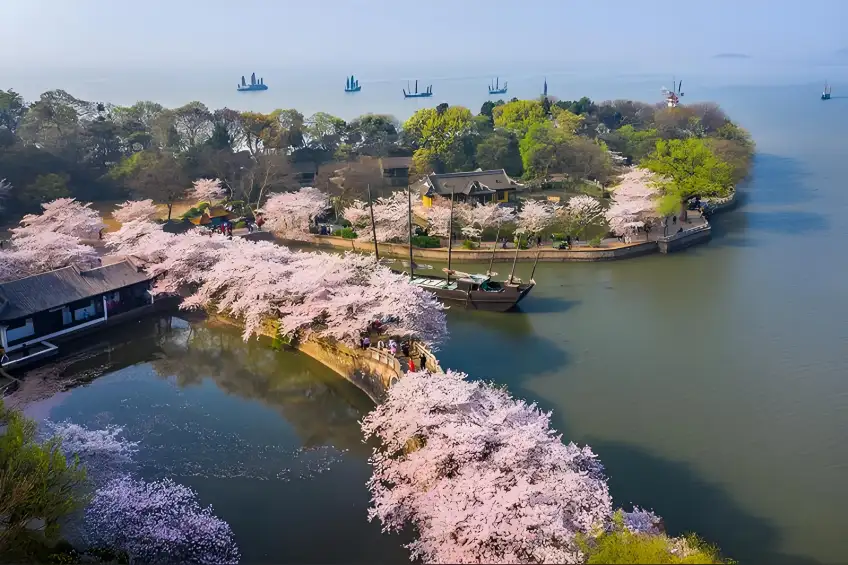
How big is Lake Tai and which cities share it?
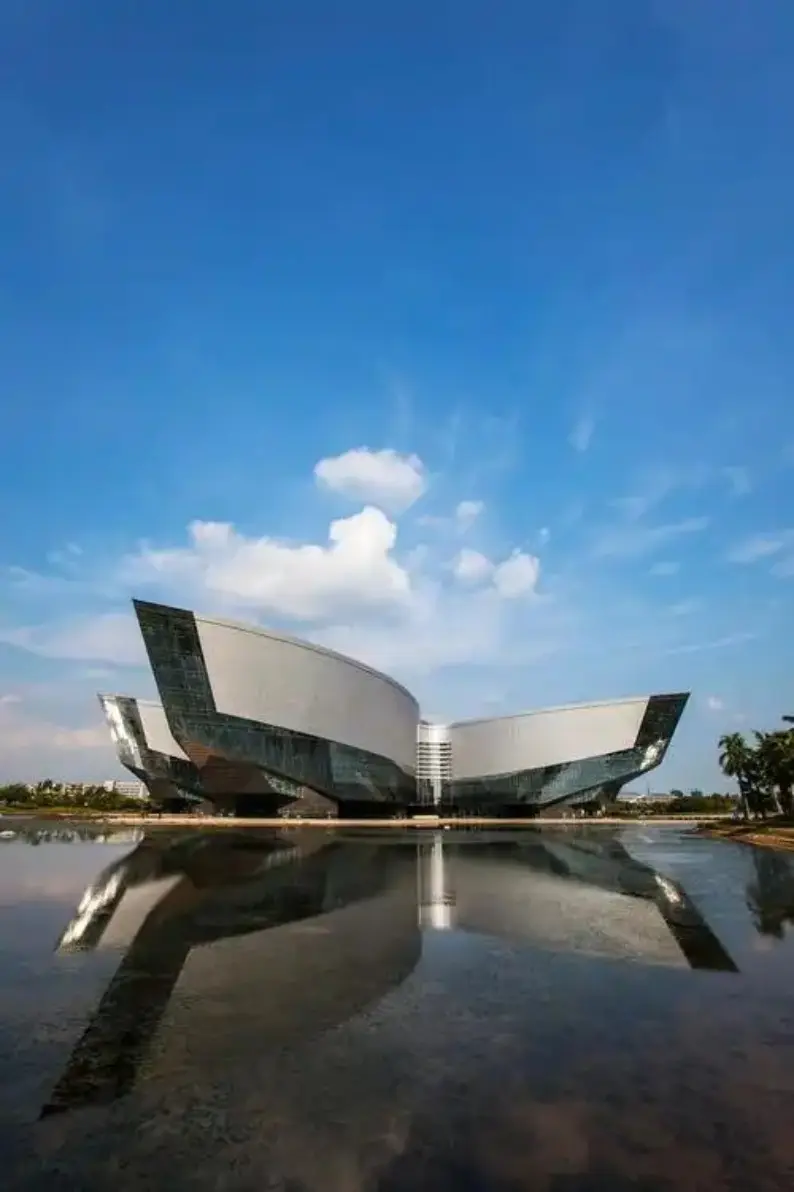
Almost all of Lake Tai falls under Jiangsu province: Wuxi sits on the north shore, Suzhou on the east and southeast, Changzhou on the northwest, while Huzhou in Zhejiang occupies the south shore. All four cities face the same lake, but their shorelines differ greatly. The Wuxi side has many peninsulas and hills, Suzhou features peninsulas jutting into the water plus large islands, and Huzhou offers a flat, open southern shoreline.
To put it in perspective: 2,338 square kilometers is about three times the size of Singapore. From many spots along the shore you can't even see the opposite bank, which is why Lake Tai is often described as "looking like the sea."
These differences shape how you experience each area. Wuxi is ideal for viewing the layers of peninsulas and open water, Suzhou for island hopping, ancient villages and orchards, and Huzhou for lakeside strolls and resort stays. Keep this in mind and you won't end up disappointed by "arriving at Lake Tai only to see a sheet of water." The Changzhou side focuses more on urban leisure and is a lower priority for international travelers, so we won't cover it here.
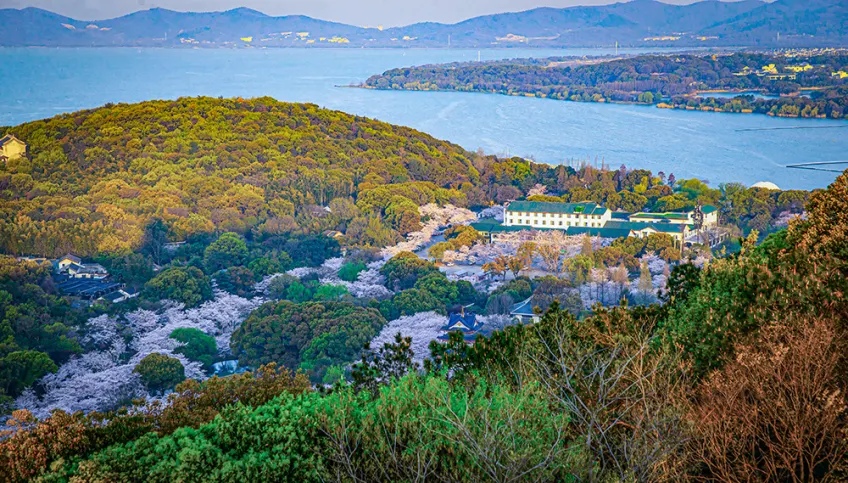
Yuantouzhu (Turtle Head Isle) in Wuxi: the safest bet for first-time visitors to Lake Tai
Yuantouzhu (Turtle Head Isle) is located at No. 1 Yuanzhu Road, Binhu District, Wuxi. It gets its name from a huge lakeside rock shaped like a turtle's head and is a national 5A-level tourist attraction. Built in 1916, the park covers about 5.39 square kilometers, bringing together mountains, water, peninsulas and modern-era garden architecture. It is the most developed and best-equipped scenic area around Lake Tai.
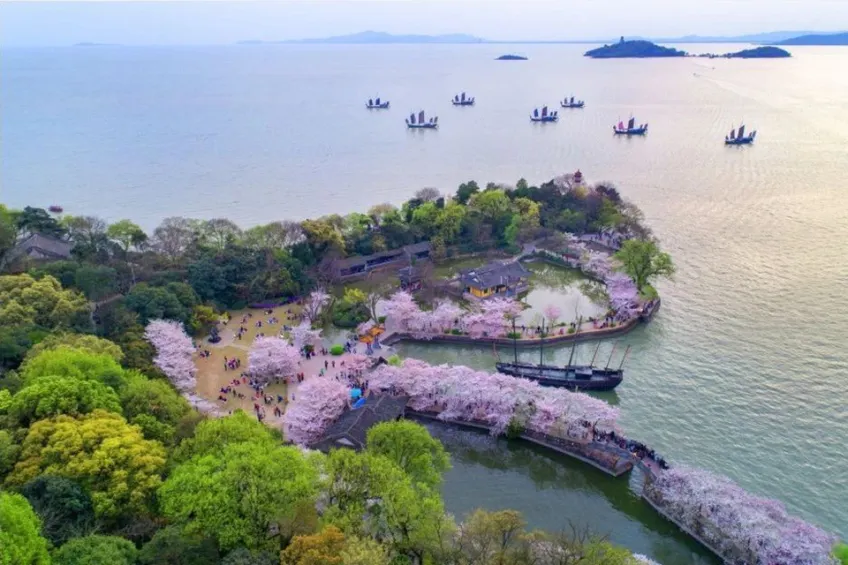
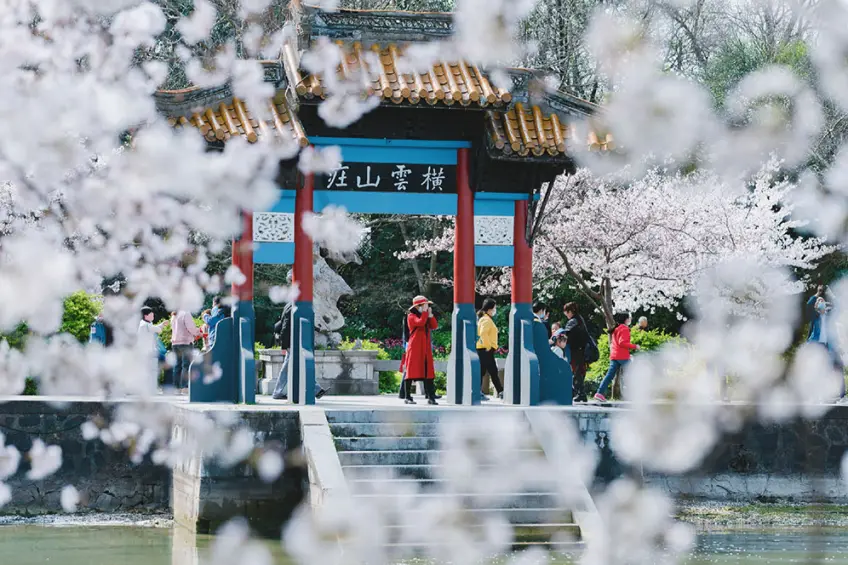
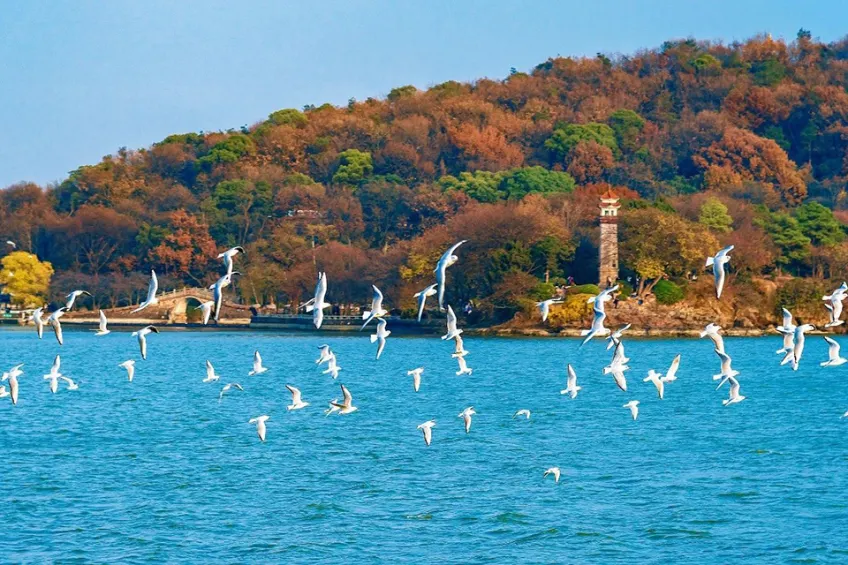
The park is most famous for its spring cherry blossoms. Cherry Blossom Valley has over 30,000 trees of 68 varieties, and the blooming season in March and April draws the biggest crowds of the year. Outside blossom season, the autumn colors on the peninsula and the flocks of gulls skimming the lake in winter are just as beautiful, with far fewer visitors.
The park is large and the sights are spread out, but there are sightseeing carts and ferries inside, so you don't have to walk the whole way if you're not up for it. One spot worth setting aside extra time for is Taihu Fairy Island. A ferry from the dock takes about 15 minutes to reach the island, where buildings climb the hillside and looking back offers wide-open views of the lake. For tickets, the adult price we verified is ¥90, including the round-trip ferry; opening hours are 08:00–17:00.
Between downtown Wuxi and Lake Tai lies Lihu Lake, said to be named after Fan Li of the Spring and Autumn period. Parks and walking paths circle the lake, making it an easy stop on your way back from Yuantouzhu (Turtle Head Isle). For transport, take Metro Line 4 to Xiajiabian Station and transfer to the scenic shuttle or Leyou Line 1, or simply take Bus No. 1. It's convenient from both Wuxi Railway Station and Wuxi East Railway Station, and a same-day round trip from Shanghai or Suzhou is entirely doable.
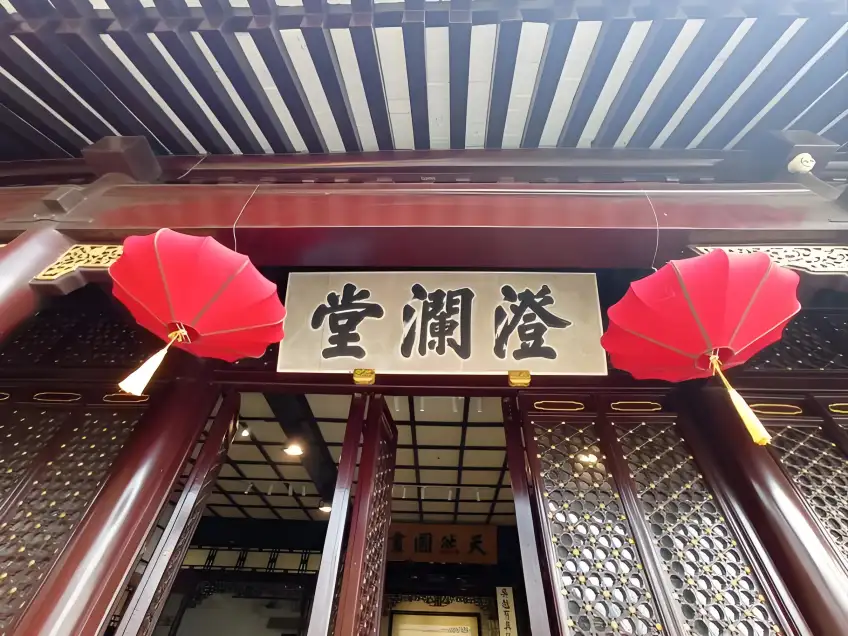
The lighthouse at the tip of the peninsula is the classic photo spot at Yuantouzhu (Turtle Head Isle). When the lake is clear, you can see sailboats and islands in the distance. For shots without the crowds, try to get here shortly after opening or after 3:00 PM. Another highlight is the Republican-era garden architecture, such as Chenglan Hall and Hengyun Villa. They make Yuantouzhu (Turtle Head Isle) more than just a place to "look at the lake," revealing how early modern Wuxi industrialists shaped these hills and waters.
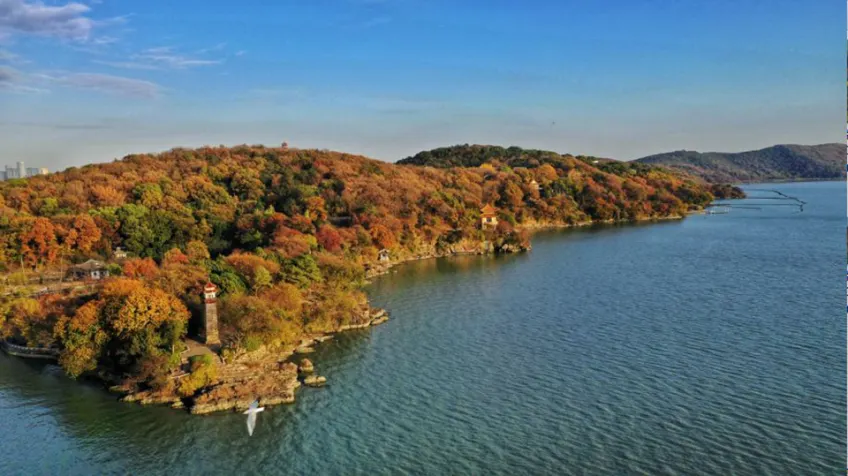
Suzhou's Dongshan and Xishan: Islands, Bays and Ancient Villages
On the Suzhou side of Lake Tai, the stars are Dongshan and Xishan. Dongshan is a peninsula jutting into the lake, while Xishan (Jinting Town) is Lake Tai's largest island. Reaching Xishan means crossing the Lake Tai Bridge, which has three sections linking the mainland, Changsha Island, Yeshan Island and Xishan Island. The drive across is a great chance to take in the lake.
Xishan's sights are spread out: Shigong Hill stands right on the water; Linwu Cave is a limestone cavern ranked as the ninth "cave heaven" in Daoist tradition; and Mingyuewan is a well-preserved lakeside ancient village. Dongshan also focuses on ancient villages, bays and orchards. Luxiang Ancient Village was the hometown of Wang Ao, a Ming dynasty grand secretary, and still preserves a Ming-era street, memorial archways and several ancestral halls. It is one of China's first national historic and cultural villages. Together, Dongshan and Xishan are known as Dongting Mountain, the home of Biluochun tea. In spring, the hillside tea plantations during picking season are one of the area's most distinctive sights. Both areas share one trait: attractions are far apart and public transit is infrequent, so driving or hiring a private car works best. Two or three stops a day is plenty—don't try to cram too much in.
If your itinerary centers on Suzhou's old town gardens, Dongshan and Xishan work better as a "lake escape" on day two or three. Trying to fit both the old town and Lake Tai into one day will be very tight. If needed, check out our Suzhou private car and Suzhou custom tour services.
Huzhou's South Lake Tai: Shoreline, Resorts and Bian Hill
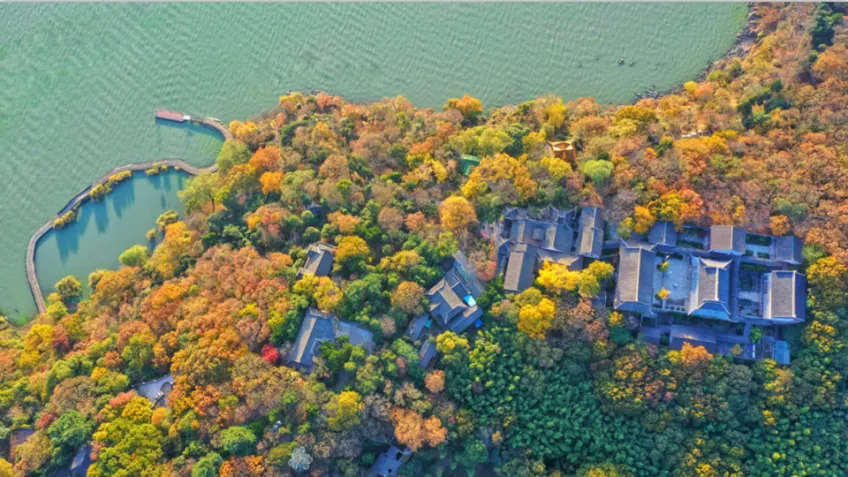
Huzhou sits on the south shore of Lake Tai. The core of this stretch is the Huzhou Lake Tai Tourist Resort, located north of downtown Huzhou. It was named one of China's first 17 national tourist resorts in 2015, and in 2019 Huzhou established the South Lake Tai New District here. Compared with Wuxi and Suzhou, this area feels more like a lakeside retreat where you settle in and take your time.
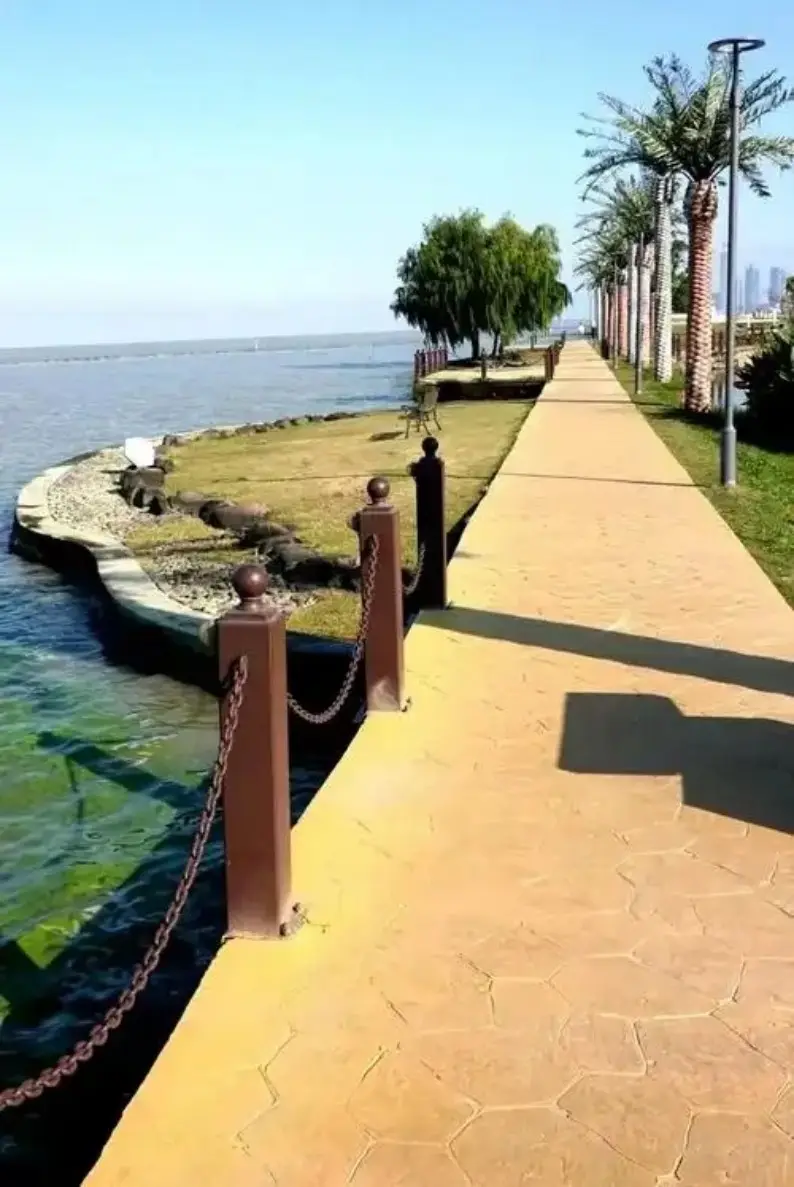
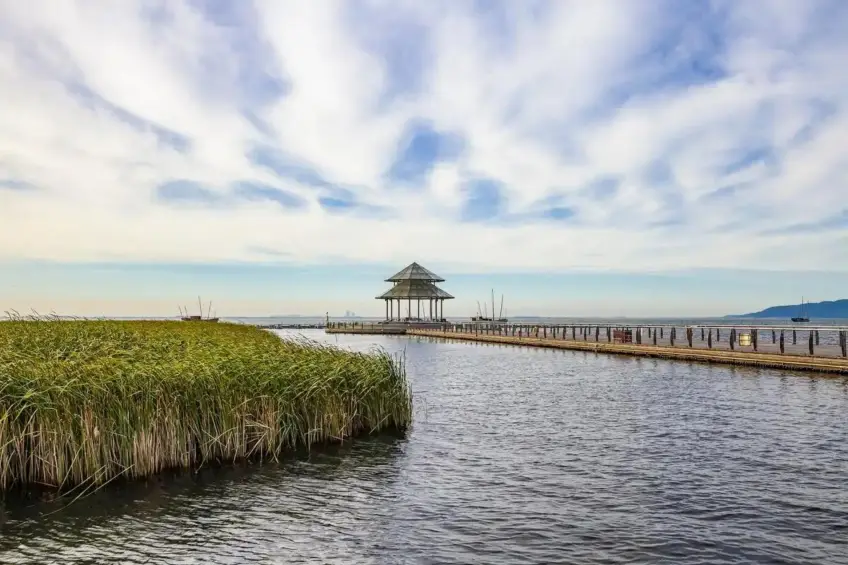
The resort has about 64 km of shoreline, and its landmark is the "Moon Hotel" (Sheraton Huzhou Hot Spring Resort), shaped like a crescent moon. Golden Lakeshore and Fisherman's Wharf along the lake are great for walking, cycling and watching the sunset; pick one or two from Lake Tai Ancient Town, Lougang Ancient Village and Tuying Wetland based on your interests. The resort's core area is free to enter.
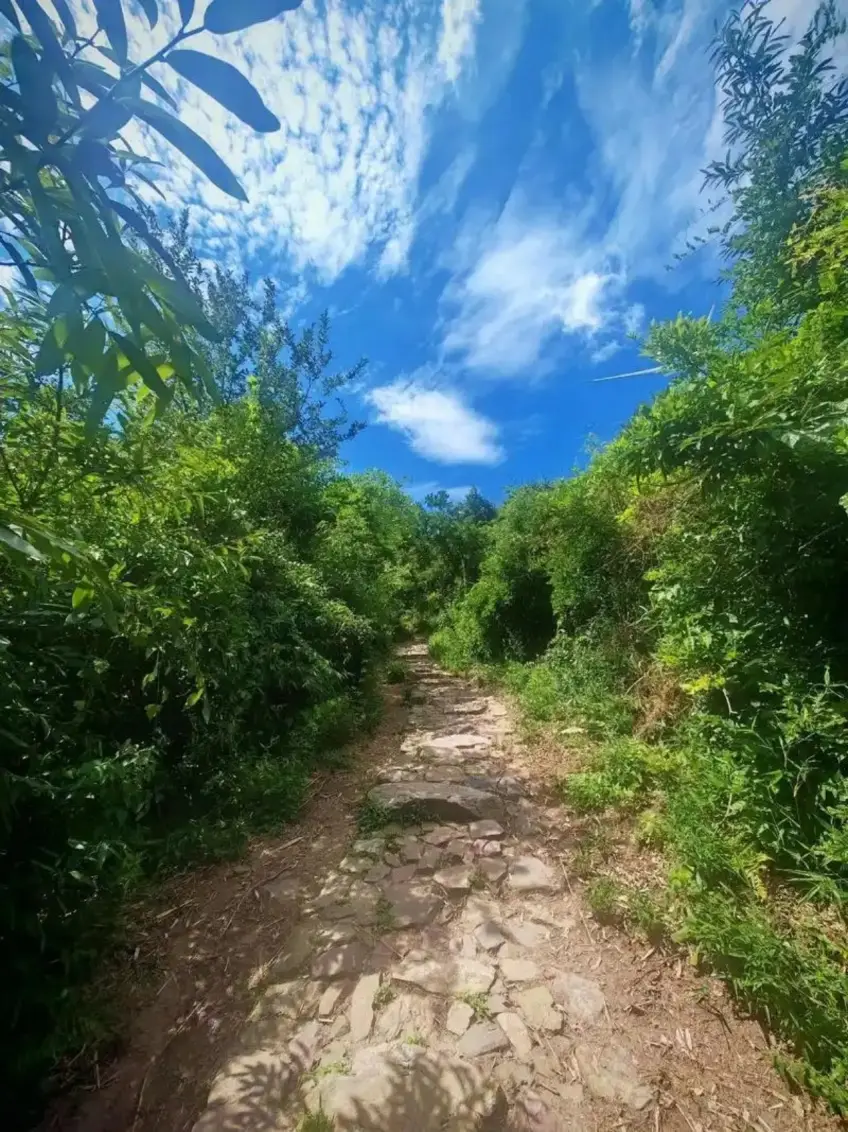
If you want to hike, head to Bian Mountain. Its main peak rises 521.6 meters and is known as the highest peak around Lake Tai, with ancient trails winding through the hills. Changtianyang Wetland covers about 7 square kilometers and is perfect for a quiet stroll. For transport, take the high-speed train to Huzhou Station and transfer to a local bus—it isn't far from Shanghai or Hangzhou. The south shore runs straight, with a ring road and trail built along the water, ideal for cycling or a scenic drive. This side of the lake faces north with an unobstructed view, so in the evening you can watch the sun slowly set over the western waters—exactly why many visitors choose to stay right by the lake.
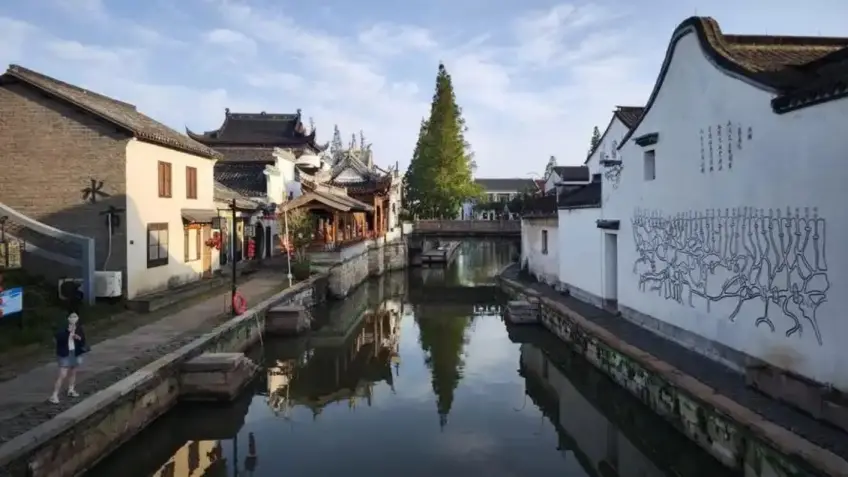
Beyond the resort, Huzhou's shoreline holds another sight that few tourists notice but carries real historical weight: the Lougang. These are an ancient water conservancy system unique to the Lake Tai basin—channels running perpendicular to the shore that connect the lake with inland polder fields. They date back to the Spring and Autumn period and matured during the Southern Song dynasty. Today, 66 Lougang channels remain well preserved within Huzhou, and the Lake Tai Lougang system has been listed as a World Irrigation Project Heritage site. The water lanes, stone bridges and whitewashed walls of Lougang Ancient Village show how this irrigation network and village life grew up together—a must for travelers interested in history and rural landscapes.
The "Lake Tai stones" often seen in Suzhou gardens also come from this lake. This porous, delicate limestone is quarried along the shores of Lake Tai, and generations of garden builders hauled it in to stack into rockeries. Suzhou's Lion Grove Garden is famous for its Lake Tai stone rockery. See Lake Tai first, then look at these stones in the gardens, and the Jiangnan garden ideal of "mountains and forests within a few steps" becomes much easier to grasp.

Two days around the lake: two ready-made routes
If you have two days and want to see both sides of Lake Tai, try one of these two routes. The shared rule is simple: spend each day on just one shore instead of crossing back and forth.
From Shanghai: one day in Wuxi, one day on Xishan Island in Suzhou. On day one, take the high-speed train to Wuxi, enter Yuantouzhu (Turtle Head Isle) in the morning, ride the ferry to Taihu Fairy Island, and optionally add Lingshan Scenic Area in the afternoon; stay overnight in Wuxi or Suzhou. On day two, depart from Suzhou, cross Lake Tai Bridge to Xishan Island, visit Shigong Hill and Mingyuewan Village, then return to Suzhou or head straight back to Shanghai in the evening. Public transport is limited on day two, so a private car is best.
From Hangzhou: one day on Huzhou's south shore, one day in Nanxun. On day one, head to Huzhou, stroll along Golden Lake Shore and Fisherman's Wharf, watch the sunset over the lake near the Moon Hotel in the evening, and stay lakeside overnight. On day two, visit Nanxun Ancient Town, then return to Hangzhou or Shanghai in the afternoon. This is the most relaxed itinerary, ideal for families traveling with older relatives.
Both routes work in reverse—just adjust based on your arrival and departure cities. The key is to stick to one shore per day and save intercity travel for mornings and evenings. A few practical tips: during cherry blossom season at Yuantouzhu (Turtle Head Isle), the first hour or two after opening is the least crowded, while ferry lines often build up in the afternoon. It gets windy by the lake, so bring a jacket in spring and fall. Roads on Xishan and Dongshan Islands are mostly rural lanes, so allow extra driving time on rainy days.
How to choose: by departure city, season and travel companions
By departure city: If you're coming from Shanghai or Suzhou with only one day, prioritize Yuantouzhu (Turtle Head Isle)—high-speed rail plus the metro will get you there. From Hangzhou, South Lake Tai in Huzhou is more convenient. If you're already staying in Suzhou's old town, Dongshan and Xishan are the closest parts of Lake Tai.
By season: Spring cherry blossom season makes Yuantouzhu (Turtle Head Isle) the top pick, but be prepared for crowds. In summer and fall, head to Dongshan and Xishan for lake coves and orchards, or book a lake-view room in Huzhou. Winter is quiet everywhere—watching gulls at Yuantouzhu (Turtle Head Isle) or sunsets in Huzhou are both great options. Mid-June to early July is Jiangnan's plum rain season, so expect damp, rainy weather around the lake and keep your outdoor plans flexible.
By travel companions: Traveling with seniors or kids and want to minimize walking? Yuantouzhu (Turtle Head Isle) has the best facilities, including sightseeing carts and ferries inside the park. If you love photography and self-driving, Dongshan and Xishan offer more room to explore. For a relaxing vacation without rushing between sights, South Lake Tai in Huzhou is the best fit.
By length of stay: Half a day is only enough for the core area of Yuantouzhu (Turtle Head Isle)—don't try to squeeze in anything else. With a full day, you can add Lingshan Grand Buddha after Yuantouzhu (Turtle Head Isle), or walk along the lake in Huzhou's resort area before visiting an ancient town. Two days or more make it worth considering Dongshan and Xishan, or seeing Lake Tai from two different cities.
By travel style: To visit just Yuantouzhu (Turtle Head Isle), either independent travel or joining a Wuxi day tour works fine. To hit multiple spots across Dongshan and Xishan, we recommend a private car. If you want to link the Lake Tai shores of Suzhou, Wuxi and Huzhou over two or three days, a custom private trip is ideal—we can arrange all station transfers, vehicles and guides for you.
Tips for international travelers: You can book Yuantouzhu (Turtle Head Isle) tickets in advance on our attraction page; avoid buying tickets on-site during holidays and cherry blossom season. Tickets, dining and ferries inside the park mostly accept QR code payments, so set up your payment apps before you go. Many spots around Dongshan, Xishan and Huzhou's lakeshore lack English signage, and ride-hailing apps may require Chinese addresses—saving your destinations' Chinese names in advance will save you a lot of hassle.

Yuantouzhu Scenic Day Tour: In-depth Wuxi tour of Lingshan Grand Buddha, Lake Tai, Yuantouzhu and Huishan Ancient Town
Private day tour with airport pickup in Wuxi: cruise Lake Tai from Yuantouzhu (Turtle Head Isle), visit Sanshan Island, pay respects at the Lingshan Grand Buddha, and stroll through Huishan Ancient Town. Adds Lake Tai scenery to a Lingshan-only trip. Includes transport, guide and admission tickets. English and other language guides available on request.

Yunye Jiaxing 3-day 2-night tour: Huzhou Lake Tai scenic area + Moganshan scenic area + Yucun + Anji Cloud Meadow
Private tour with pickup and drop-off at Huzhou high-speed rail station: Lake Tai Tourist Resort on day one, Moganshan and Yucun Cultural Market on day two, overnight in Anji, and Cloud Meadow on the final day. Unlike the "Stay in Moganshan" itinerary, the second night is spent in Anji. Includes vehicle, guide, hotel and admission tickets. English-speaking guide available.
FAQs
Which side of Lake Tai is most worth visiting?
There's no single right answer, but if it's your first visit and you only have one day, most people choose Yuantouzhu (Turtle Head Isle) in Wuxi: the sights are clustered together, transport is easy, and facilities are complete. If you like islands and ancient villages, go to Dongshan and Xishan in Suzhou; for a resort getaway, head to South Lake Tai in Huzhou.
Does the Yuantouzhu (Turtle Head Isle) ticket include Taihu Fairy Island?
The Yuantouzhu (Turtle Head Isle) adult ticket we verified costs ¥90 and includes the round-trip ferry to Taihu Fairy Island. Prices and policies are subject to the scenic area's announcements on the day of your visit. You can check details and book on our Yuantouzhu (Turtle Head Isle) page.
Which side of Lake Tai is closest from Shanghai?
In terms of travel time, Wuxi is the fastest: a high-speed train from Shanghai to Wuxi Station or Wuxi East Station usually takes 30 minutes to an hour, then you transfer to the metro and a connecting shuttle to Yuantouzhu (Turtle Head Isle). To reach Dongshan or Xishan, you first need to get to Suzhou and then transfer out of the city, which takes noticeably longer. For Huzhou, you can take a high-speed train to Huzhou Station, which works better for an overnight stay than a day trip.
What's the difference between Lake Tai and West Lake?
They're not even in the same league. West Lake sits in downtown Hangzhou, covers about 6.4 square kilometers, and is bordered by city streets—you can walk or bike around it. Lake Tai covers about 2,338 square kilometers, more than 300 times the size of West Lake, and its shores span four cities, so you can only explore one stretch at a time. Go to West Lake for a "lake in the city"; go to Lake Tai for open water, peninsulas, and lake islands.
Do I need tickets for Huzhou Lake Tai Tourist Resort?
The core area of the resort is free to enter, while some individual venues and activities inside charge separately. Please refer to the on-site notices for details.