

Which West Lake causeway to walk
In summer, Su Causeway (苏堤) is a shady avenue nearly 3 km long. It's planted "a willow, then a peach" all the way along, but by summer the peach blossoms are long gone, and willows and camphor trees form a thick canopy. Off the west side of its north end is the lotus pond at Quyuan Garden (Breeze-ruffled Lotus), best early in the morning when the water is still and few people are around. Bai Causeway (白堤) is about 1 km long and runs from the Broken Bridge (断桥) in the east to Gushan (Solitary Hill) in the west. Yanggong Causeway (杨公堤), on the west side of the lake, is shared by cars and walkers and is quieter than the other two.
For a half-day trip, start with Bai Causeway, then walk part of Su Causeway. To avoid the crowds, add Yanggong Causeway on the west side of the lake. All three causeways are free to enter; gardens and boat rides along the way cost extra, subject to the day's announcements. To combine West Lake with Suzhou and Wuzhen into a multi-day itinerary, check out our private tours.
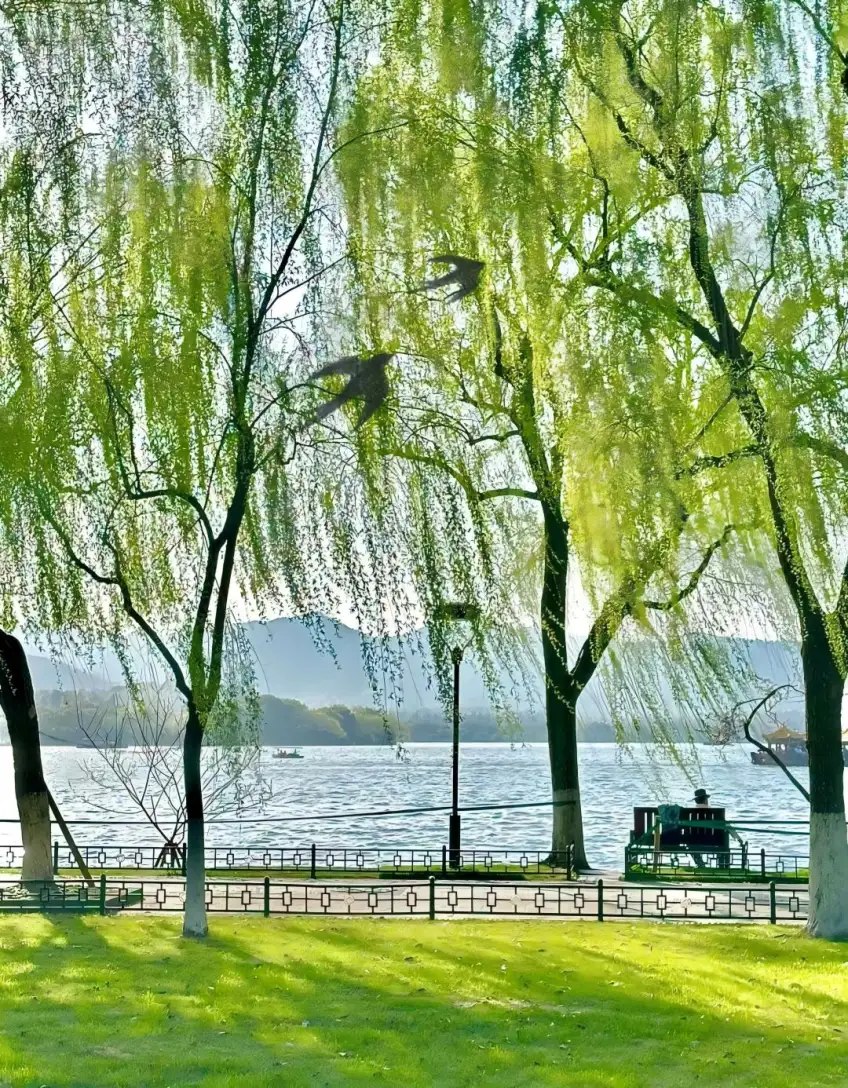
Su Causeway: six bridges and misty willows
After dark, the warm lights of the zigzag Nine-Turn Bridge and the glow of Leifeng Pagoda in the distance are a classic night view near Su Causeway. Framed through the bridge, it looks quite different from the six bridges by day, so it's worth a separate trip from dusk into blue hour.
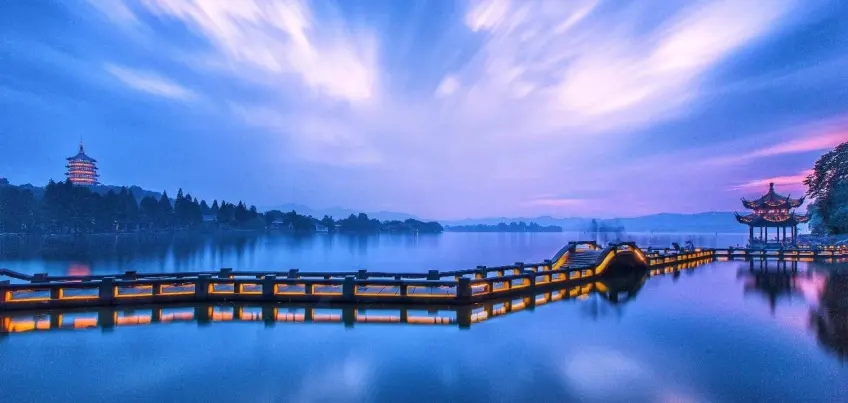
If you only come by day, focus on the six bridges and the peach and willow trees. Treat the night view as a bonus. Opening times and lighting depend on the day.
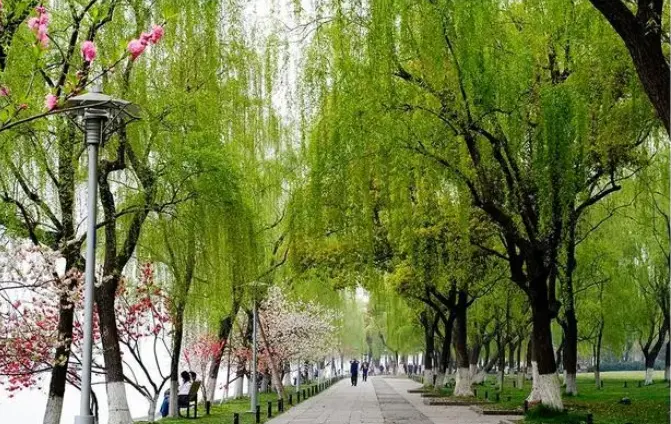

Su Shi's design: practical and scenic
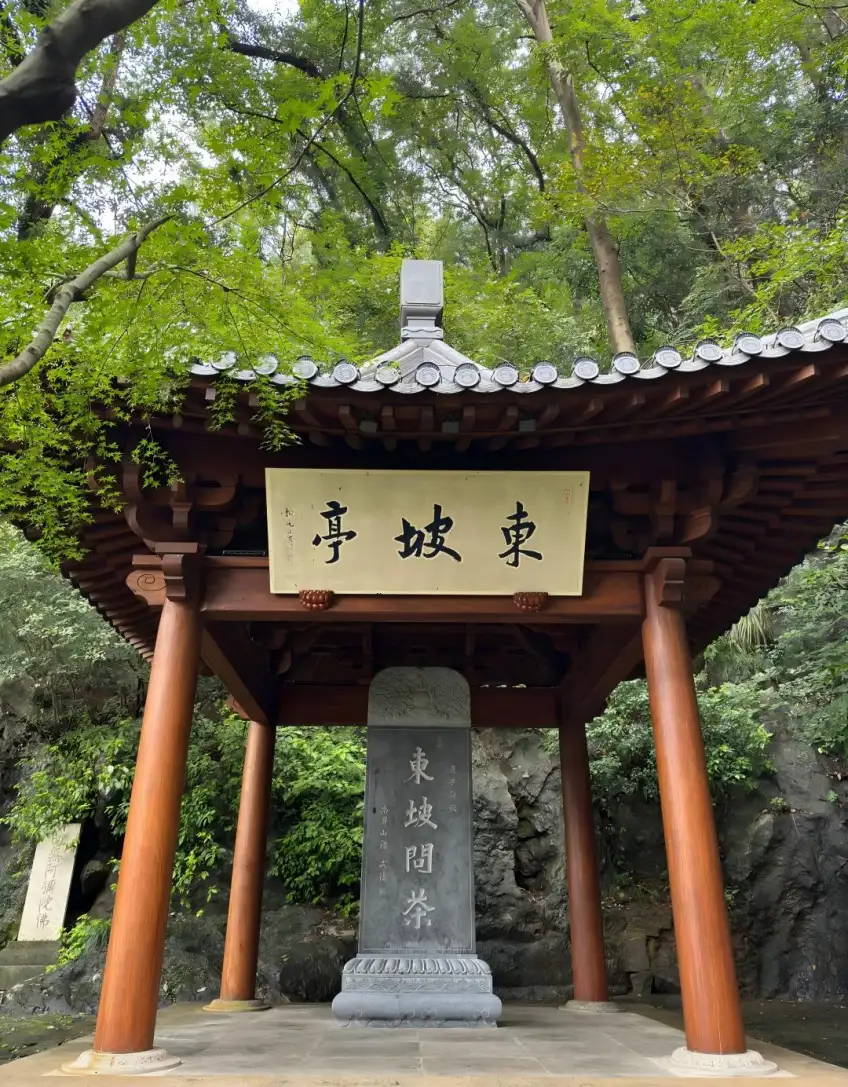
Along the causeway you'll pass Dongpo Pavilion. Under its plaque stands the "Dongpo Asks About Tea" stele, a reminder of Su Shi's work on the lake that gave the causeway its name.
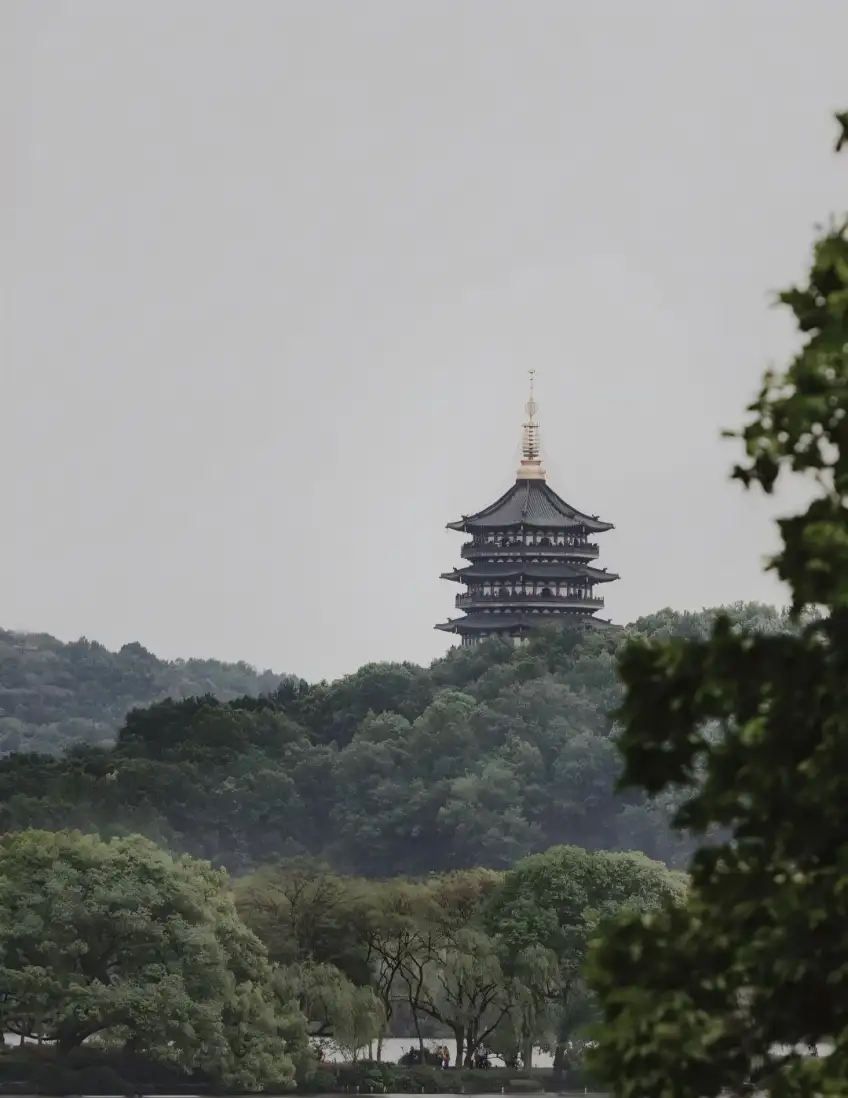
Looking out from the causeway to Leifeng Pagoda and Baochu Pagoda is a good way to grasp the size of West Lake. If you're short on time, pick one or two bridges and stand there a while. It's better than rushing the whole length.
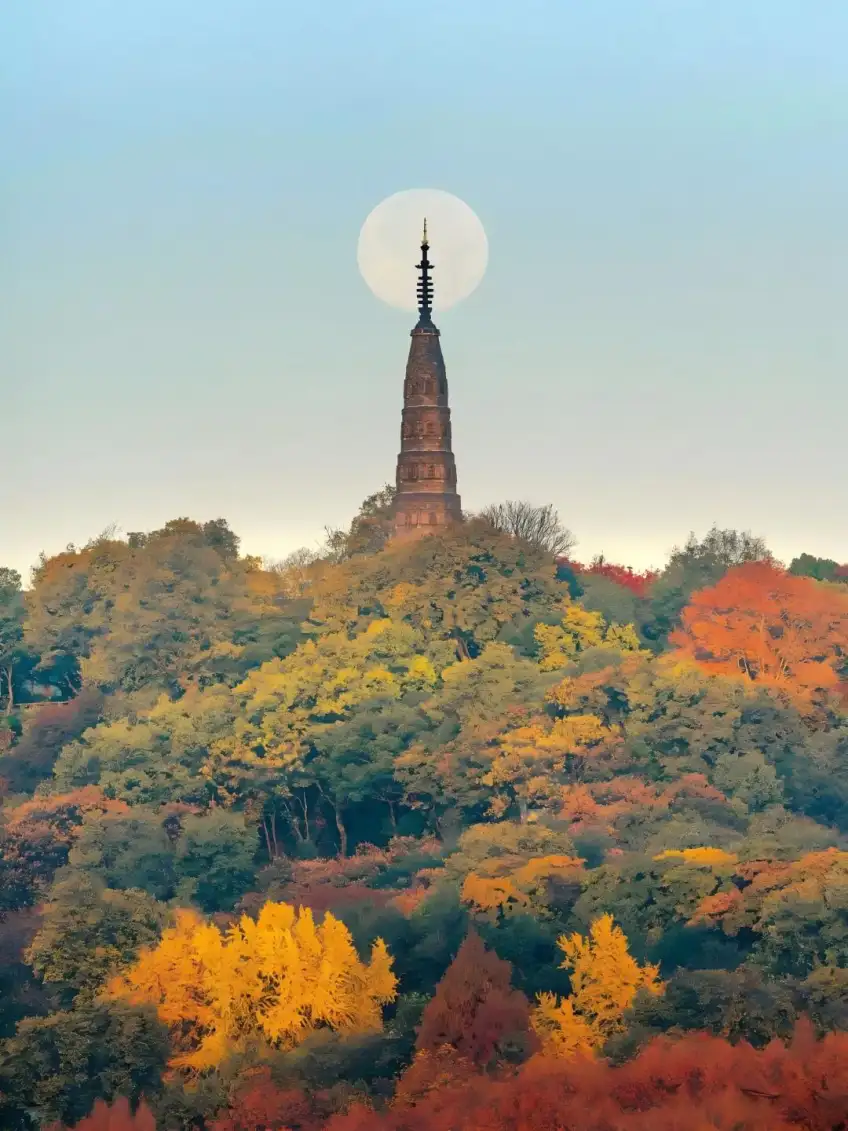
Toward the northern hills, Baochu Pagoda stands out most clearly against fall trees and the moon. It's a good place to stop and get your bearings.

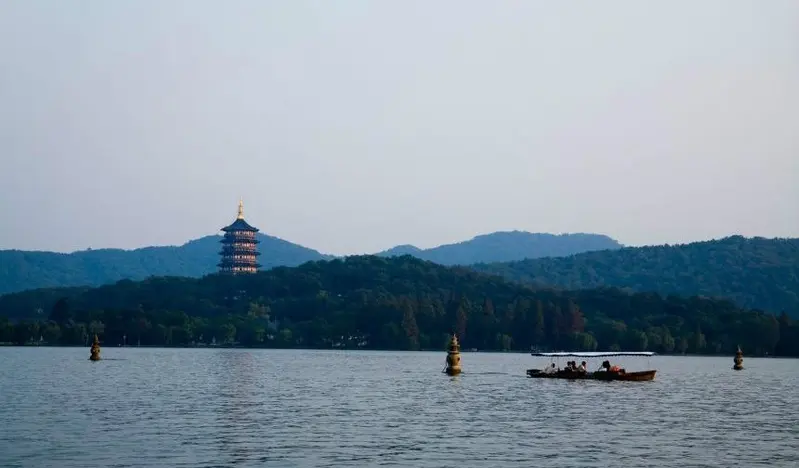
Three Pools Mirroring the Moon in the middle of the lake
The three stone pagodas in the middle of the lake also come from Su Shi's work on the lake. Three Pools Mirroring the Moon is most famous around the Mid-Autumn Festival, but on any day you can pick out the pagodas from a passing boat. Routes and fares depend on the day's boat schedule.

Hangzhou, Wuzhen, Zhouzhuang and Suzhou 4-day 3-night private tour | Stay in Wuzhen, two water towns
A 4-day 3-night private tour starting and ending in Hangzhou to see both Wuzhen and Zhouzhuang. Spend the first night in Wuzhen for the Xizha night view, then visit Zhouzhuang, Pingjiang Road and Shantang Street the next day before touring the Humble Administrator's Garden. Back in Hangzhou, enjoy a boat ride on West Lake and visit Feilai Peak. Includes transport, guide, hotels and admission tickets, with an English-speaking guide available.
Bai Causeway: Broken Bridge, Xiling Bridge and Autumn Moon over the Calm Lake
Bai Causeway runs roughly east–west, from the Broken Bridge in the east to Gushan (Solitary Hill) in the west, crossing the north–south line of Su Causeway. It's shorter, with wide-open views, and the willows stand out more here than on Su Causeway with its "a willow, then a peach" planting.
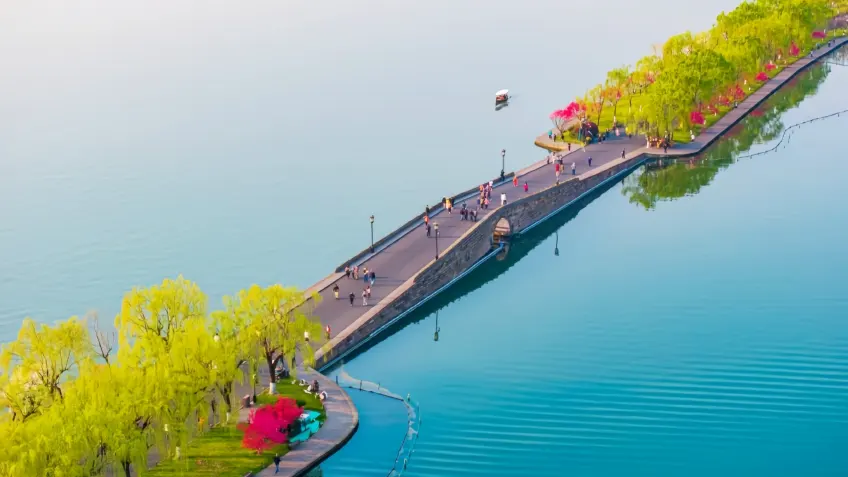
Lingering Snow on the Broken Bridge: a trick of the snow
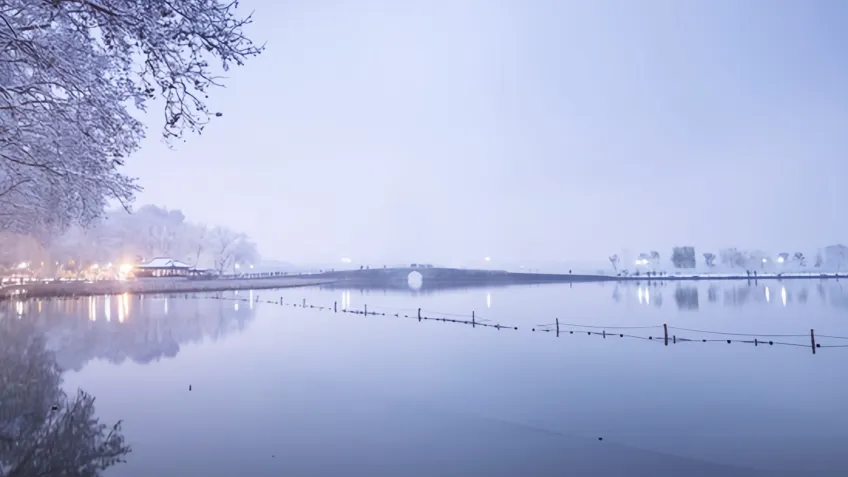
Many first-time visitors think the Broken Bridge is actually broken. After winter snow, the snow melts first on the sunny side while the shady side stays white, so from a distance the bridge looks split in two. That's where the name Lingering Snow on the Broken Bridge comes from. The lovers in the Legend of the White Snake are also said to have met here, so it makes a good start to Bai Causeway.
Near Xiling Bridge, at the west end of Bai Causeway, cars cross a stone arch bridge, buses pass and the city skyline rises behind. It feels very different from the walking-only stretches of willows and water. Watch for traffic when you cross.
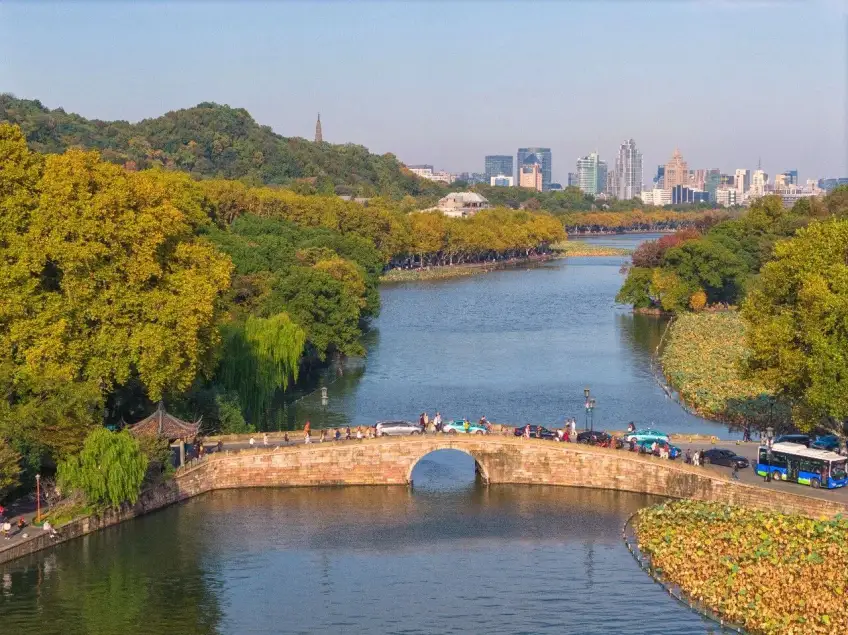
Keep going toward Gushan or the Autumn Moon over the Calm Lake terrace to leave the traffic behind.
Autumn Moon over the Calm Lake: open water and a moon-viewing terrace
Autumn Moon over the Calm Lake, at the west end of the causeway, has water on three sides and is a traditional place to watch the moon at the Mid-Autumn Festival. By day it's also a good place to stop and take in the size of the lake. For evening lighting and opening times, check the notices on site.
Yanggong Causeway: six western bridges and quiet bays
Yanggong Causeway is the third of West Lake's three causeways, along with Su and Bai. It was built in the Ming dynasty, when the Hangzhou prefect Yang Mengying had the lake dredged. Its six bridges, from north to south, are Huanbi, Liujin, Wolong, Yinxiu, Jingxing and Junyuan, facing the six bridges of Su Causeway to the east. Cars and walkers share it, and it feels more open than Bai Causeway or the north end of Su Causeway.

Western bays: toward Maojiabu and Yuhu Bay
West of Yanggong Causeway, around Maojiabu and Yuhu Bay, you'll find inlets, reeds and wetland boardwalks, with far fewer people than on the east side of the lake. Heading south toward Su Causeway, you'll pass Viewing Fish at Flower Harbor, easy to spot by the gold characters on a black plaque at the gate and, in fall, the red maples.
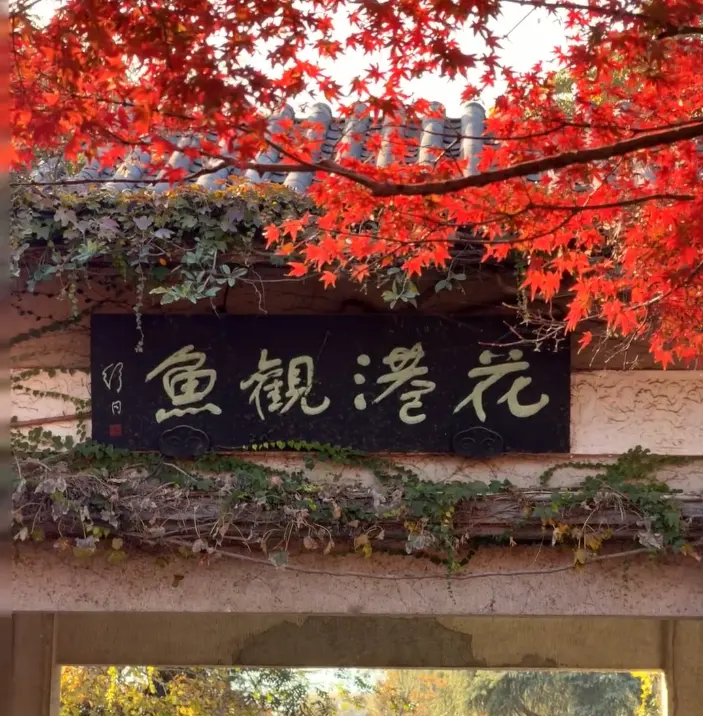
Once inside, look for the fish ponds and the covered walkways.
Guozhuang Garden and the West Lake State Guesthouse
Guozhuang Garden (郭庄), near Yanggong Causeway, is a well-preserved private garden from the Qing dynasty. Check official notices for tickets and opening times. Jingsu Pavilion looks across to Su Causeway and is a good spot for a quick photo.
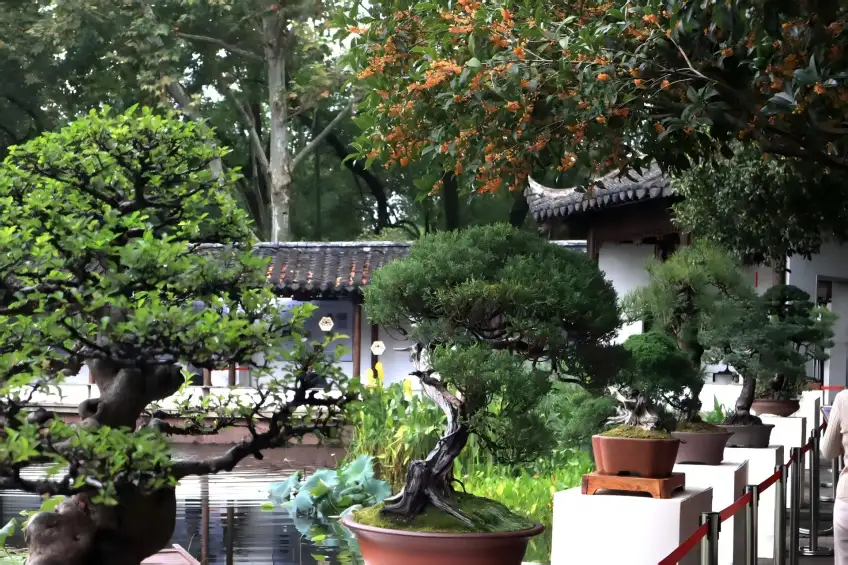
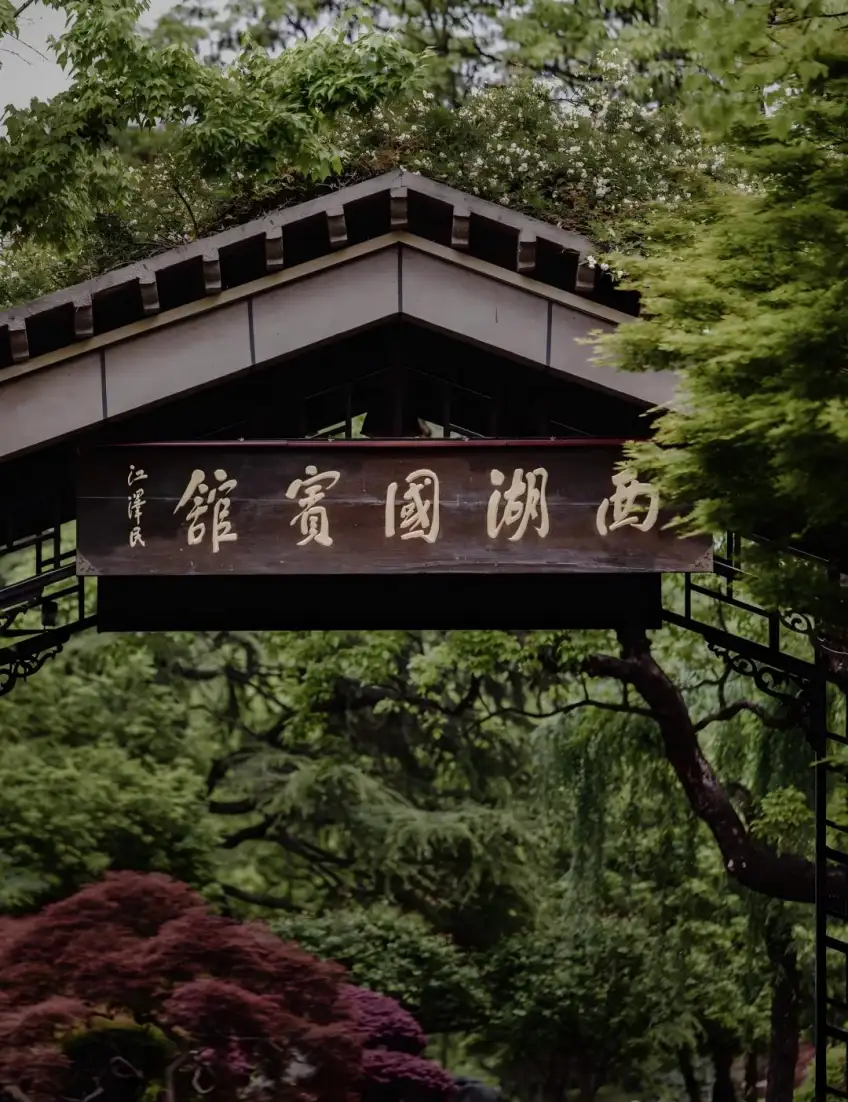
The Liuzhuang area is now part of the West Lake State Guesthouse. The gold plaque at the entrance is easy to spot, and you usually need to book ahead.
Linking the causeways: half-day and full-day routes
Half day, the classics: Broken Bridge → Bai Causeway → Gushan / Autumn Moon over the Calm Lake → one or two bridges at the north end of Su Causeway. Full day, the complete loop: Bai Causeway and Su Causeway in the morning, then the west side of Yanggong Causeway, Viewing Fish at Flower Harbor or Quyuan Garden (Breeze-ruffled Lotus) in the afternoon. Cut stops to suit your energy.
The lake loop bus is handy for hopping on and off at stops like Huagang and Quyuan. Check the day's schedules and fares. On Hangzhou buses and the metro you can scan the transit QR code from the "Transport" section of Alipay, and overseas visitors can get one too. Cycling works well from Yanggong Causeway to Quyuan, but keep to the bike lanes and watch for people on foot.
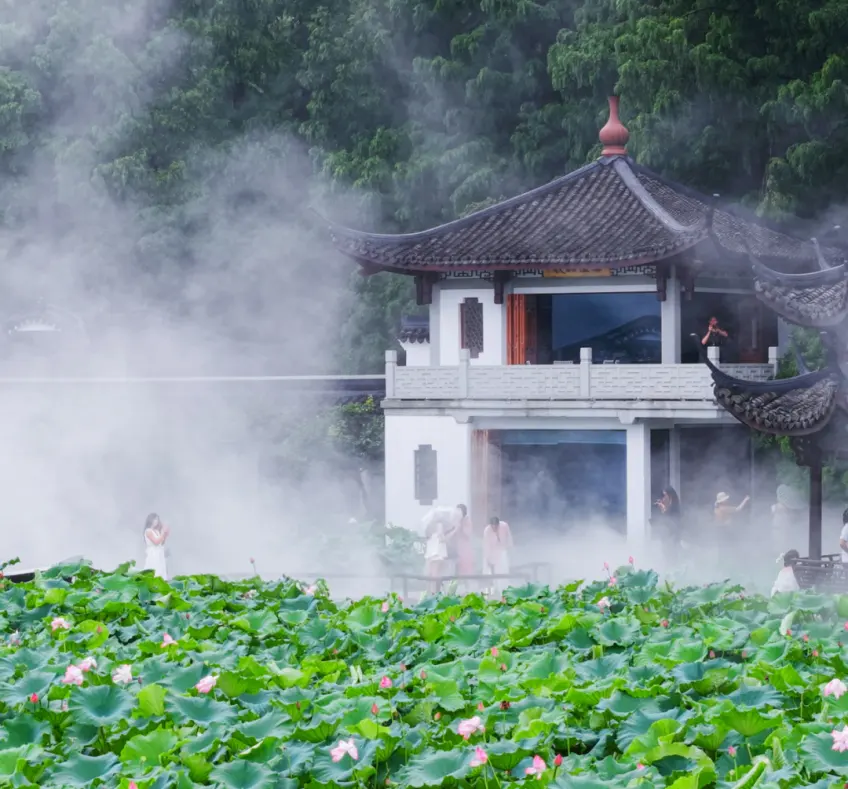
On a rainy or misty day, if you don't want to walk far, ride the lake loop bus for a stretch. The wet willow-lined shore looks lovely through the window.

Inside Viewing Fish at Flower Harbor there's also a glass goldfish tank, where orange-red fish swim right up against the glass. It's a very different shot from the red maples and plaque at the gate.
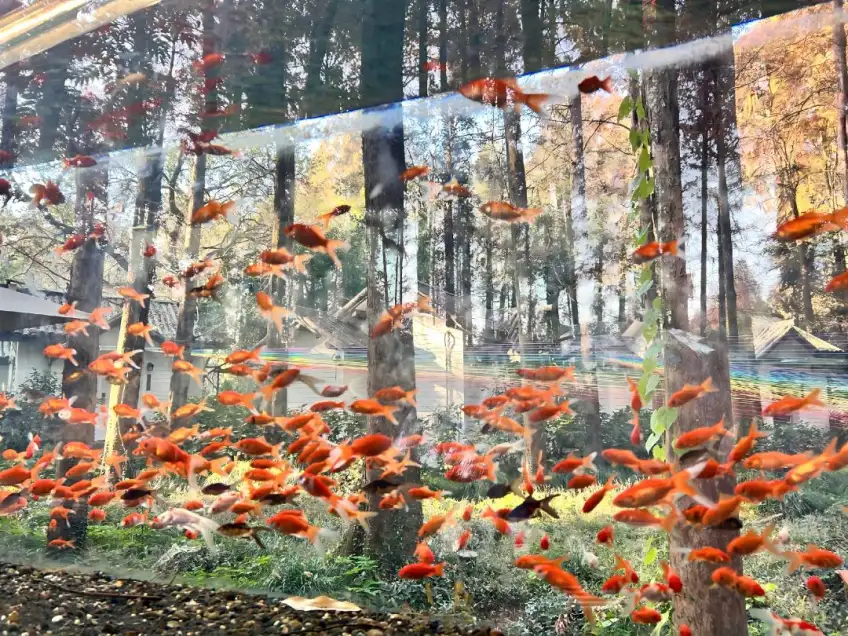
The tank is good for a quick close-up stop before you head back to the lakeside path or on to Quyuan Garden (Breeze-ruffled Lotus).
Photography and timing
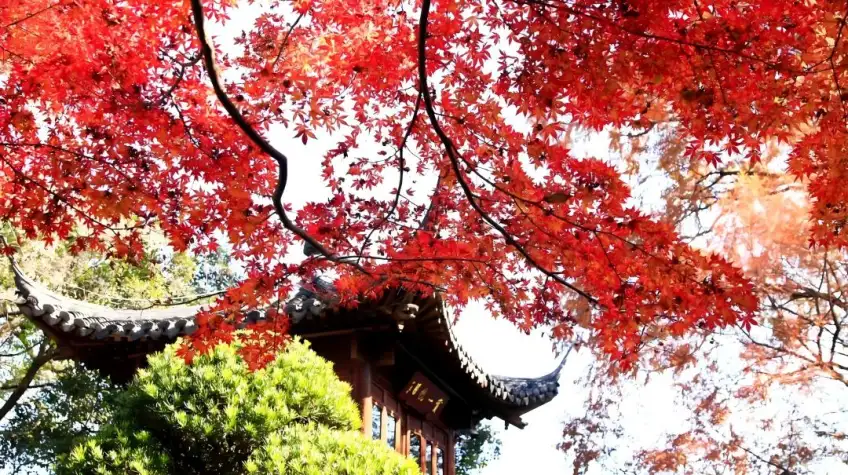
In fall, framing the upturned eaves of a pavilion with thick red maple leaves is a classic last shot of a walk around the lake. The fall color doesn't last long, so take the shot when you see it.
Group tour, private car or custom: how to choose
The causeways themselves are easy to walk. The hard part is getting between them and the airport or train stations, or onward to an overnight stay in Wuzhen or Suzhou.
Tell your travel consultant your dates, group size, starting point, and whether you want night views or places that need booking. That helps more than agonizing over a small or large group tour first.
FAQ
What's the difference between Su Causeway, Bai Causeway and Yanggong Causeway?
They face different ways and feel different. Su Causeway runs north–south and is best known for its six bridges and spring mornings. Bai Causeway links the Broken Bridge with Gushan and is rich in stories and views. Yanggong Causeway, farther west, is better for quiet bays and gardens. You don't need to walk all three. Just pick one main route for half a day or a full day.
If I only have half a day, which causeway should I choose?
For a first visit and a quick sense of West Lake, go for Bai Causeway and the Broken Bridge. If you'd rather take your time photographing bridges and willows, pick a stretch of Su Causeway. To avoid crowds and find some quiet, head to the west side of Yanggong Causeway.
Do I need tickets?
You can usually walk the three causeways for free, but parks, gardens (such as Guozhuang Garden) and boats along the way may charge separately. The Liuzhuang / West Lake State Guesthouse area often requires booking ahead. Check prices and opening times on the day.
How do I get from the train station to the lake?
Take a bus or the metro to Hubin or Beishan Road and walk onto the causeway from there. With lots of luggage, or with older relatives, we recommend a station transfer or a half-day private car with driver.
How can I visit West Lake, Wuzhen and Suzhou together?
First check whether the private tour "That Suzhou-Hangzhou" covers your number of days. If you want to change hotels or add or remove stops, a custom private trip is a better fit.
Once you know your dates and who's traveling, send your request to a travel consultant, or use the chat on this page to tell us whether you want an easy walk along the causeways or connections to other cities.