
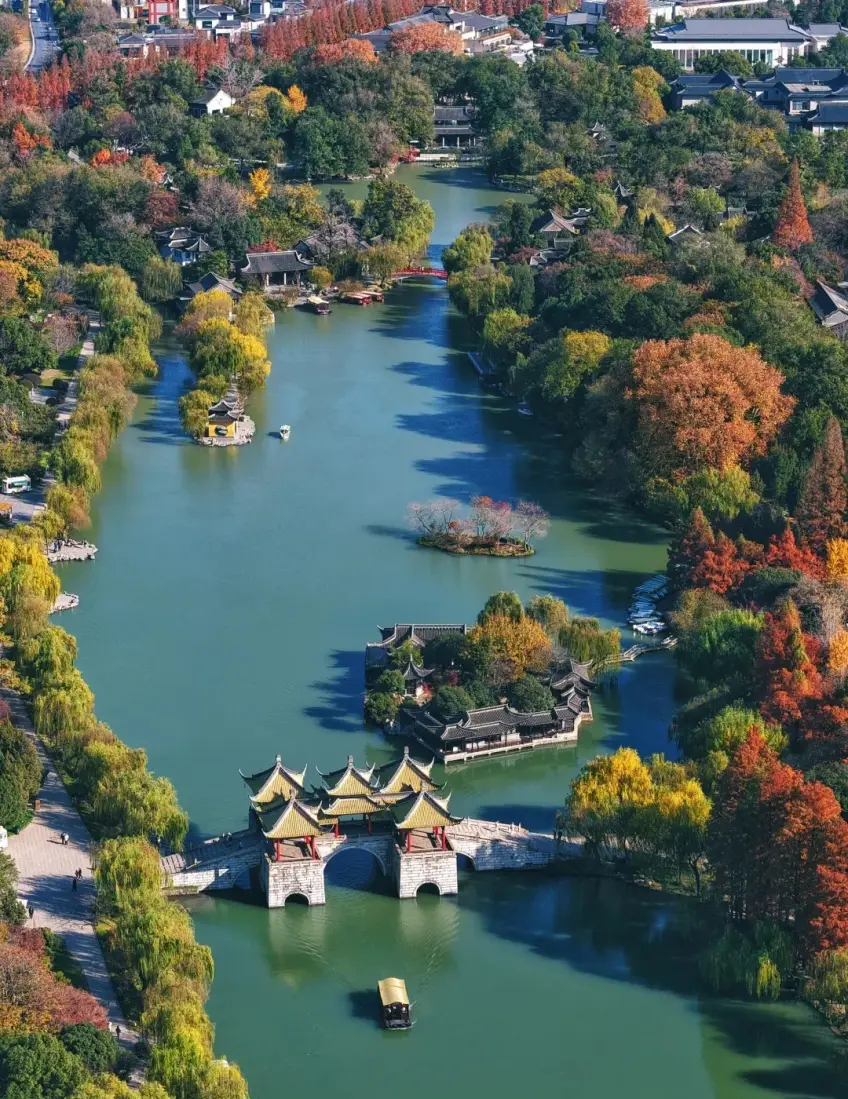
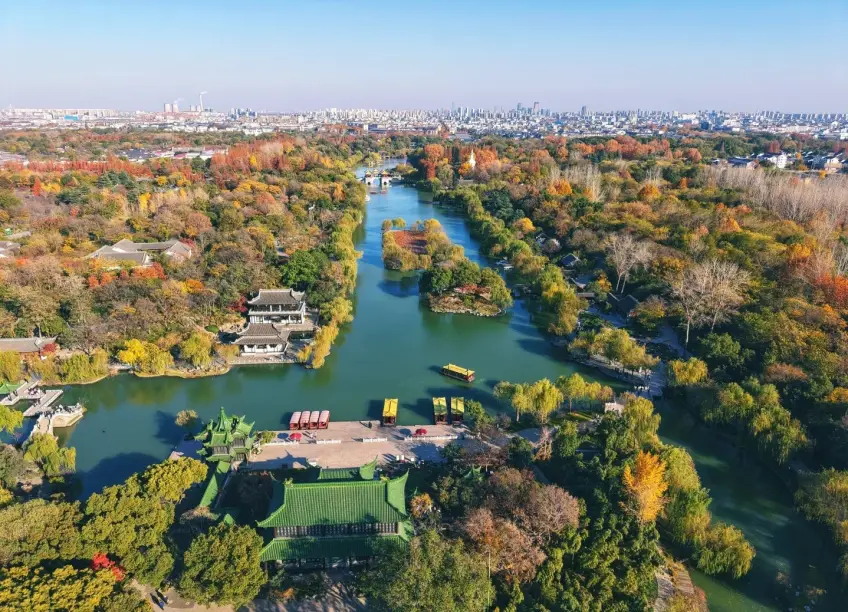
Slender West Lake lies northwest of Yangzhou city. Originally a canal tributary and moat system known as Baozhang River, its banks were lined with gardens built by Qing dynasty salt merchants. During the southern inspection tours of Emperors Kangxi and Qianlong, these scattered estates merged into today's long, winding "garden on the lake." The name "Slender West Lake" spread after Qing scholar Wang Hang wrote, "Why not call it a slender West Lake compared to Hangzhou?" The park's iconic Five-Pavilion Bridge was built in 1757, the 22nd year of the Qianlong reign.
Where the name Slender West Lake comes from: from Baozhang River to a famous lake
Slender West Lake was originally a canal tributary and moat system northwest of Yangzhou, historically known as Baozhang River and Paoshan River. It isn't famous for its size but for its narrow, winding shape—gardens unfold along both banks, and as a boat passes, the pavilions and towers seem strung together like a long gallery. Qing poet Wang Hang wrote, "Weeping willows lead on to Pingshan... it rivals Hangzhou's West Lake," comparing this Yangzhou waterway with West Lake in Hangzhou, and the word "slender" became widely known.
Understanding this matters more than memorizing dates: the "lake" you see in the garden is actually a landscaped waterway. Qing Dynasty salt merchants built gardens, rockeries and bridges along both banks, and Emperor Kangxi and Qianlong's southern tours spurred further development, gradually linking scattered private estates into the scenic belt known today.
Salt merchant gardens and imperial tours: where the garden boom came from
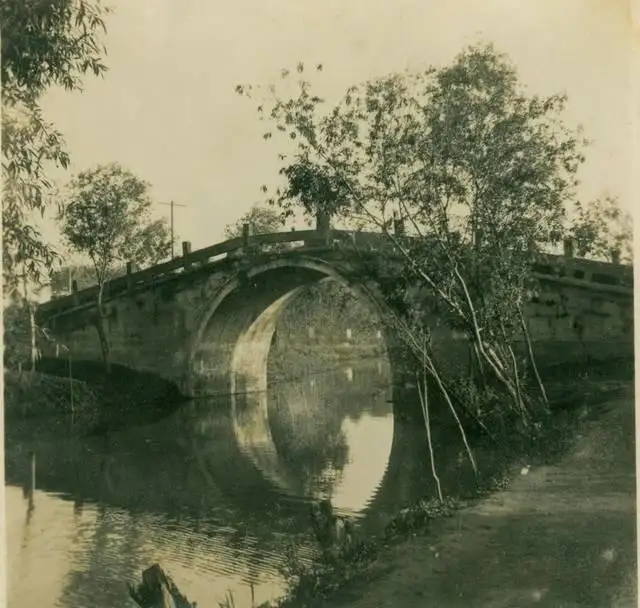
Yangzhou's salt trade thrived during the Qing dynasty, giving merchants the wealth to perfect their private gardens. When emperors stayed in Yangzhou during their southern tours, merchants competed to build gardens to welcome them, creating landmarks such as the Five-Pavilion Bridge, the White Pagoda and Xichun Terrace. These gardens weren't built overnight: some estates date to around the Kangxi era, while certain bridges and pagodas are recorded as Qianlong-era projects for the imperial visits. After 1949, repeated dredging and restoration linked the scattered sites into a complete touring route.
For travelers, just remember two threads: salt merchant funding determined the density and refinement of the gardens; preparations for the imperial tours inspired landmark structures like bridges, pagodas and terraces. Historical accounts differ on exactly which merchant did what and when, so rely on the on-site commentary and guides for details. If you're short on time and want the highlights, make Little Jinshan, Five-Pavilion Bridge and White Pagoda your must-sees.
First sights after entering: Changdi Chunliu and Xu Garden
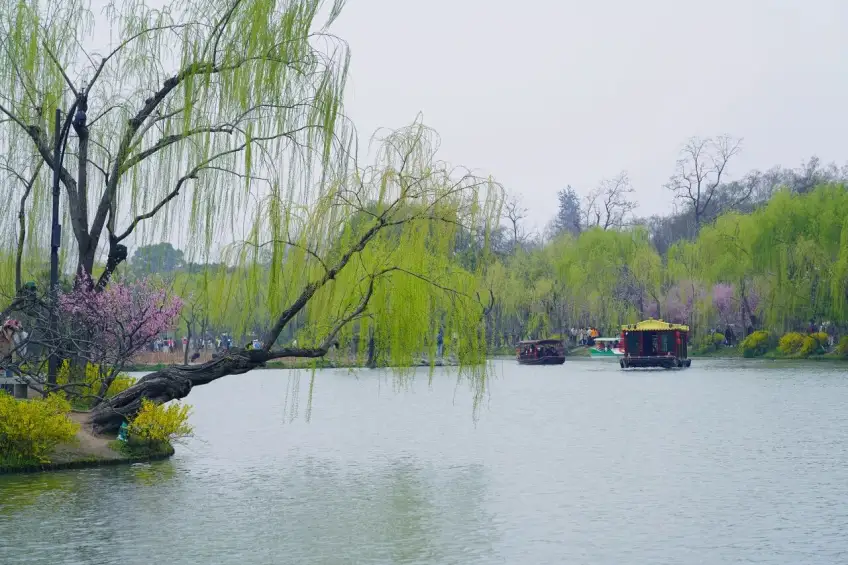
Most visitors enter near the south gate, where the first sight is Changdi Chunliu (Long Embankment with Spring Willows): peach and willow trees line the banks, peaking in spring, while painted boats glide past. It's your first impression of Slender West Lake as a "garden on the water." The embankment isn't just a walking path—it gradually leads you from the entrance to the deeper attractions, easing you into the moat-like waterway as you stroll.
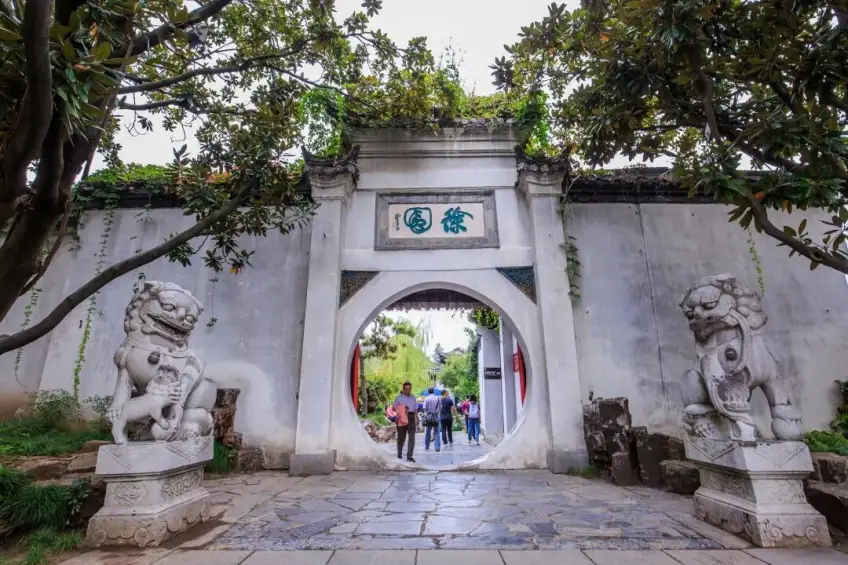
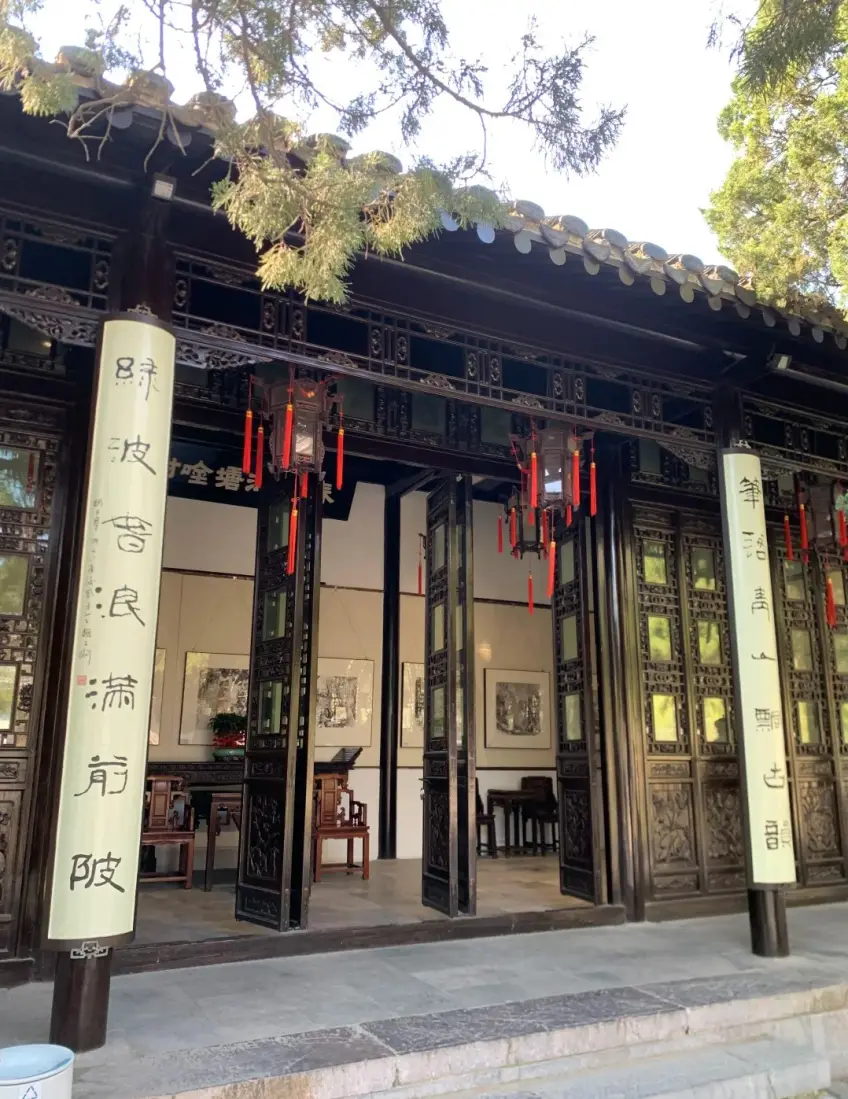
A short distance along the causeway is Xu Garden (rebuilt from the former Taohua Wu area), a Republican-era memorial garden honoring Xu Baoshan that was later incorporated into the scenic area. Its moon gate, stone lions and hall couplets retain the intimate scale of a private garden—perfect for slowing down and admiring the details.
Little Jinshan Island: a man-made island and framed-view photo spots
Continuing north, Little Jinshan Island (originally called Changchun Ridge) is a classic example of a Qing-dynasty earth-built island. Pavilions and terraces are scattered across the island, and from the top you can overlook the long, narrow lake to grasp the spatial concept of "the lake as a ribbon, the gardens as beads." Near Little Jinshan Island, Diaoyutai Terrace is famous for its moon-gate framing: one opening perfectly frames Five-Pavilion Bridge, while another frames the White Pagoda—a classic spot for photography and understanding garden composition.
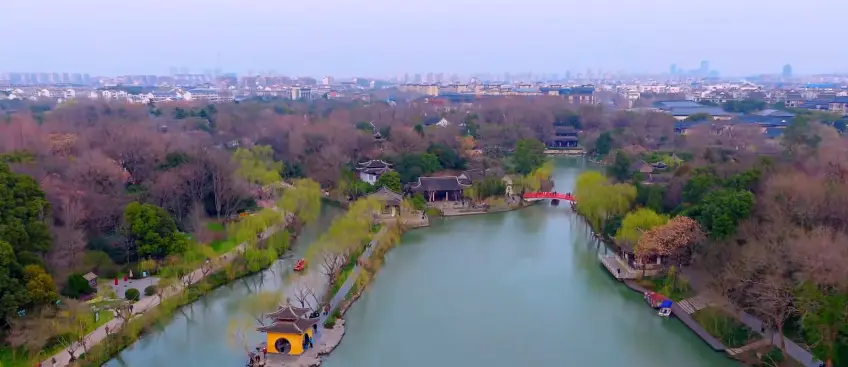
If time is tight, the stretch from Little Jinshan to Five-Pavilion Bridge to White Pagoda captures the peak of Kangxi-Qianlong garden design. When traveling with seniors or children, combine walking with a boat ride to minimize backtracking.
Five-Pavilion Bridge and the White Pagoda: imperial projects and local legends
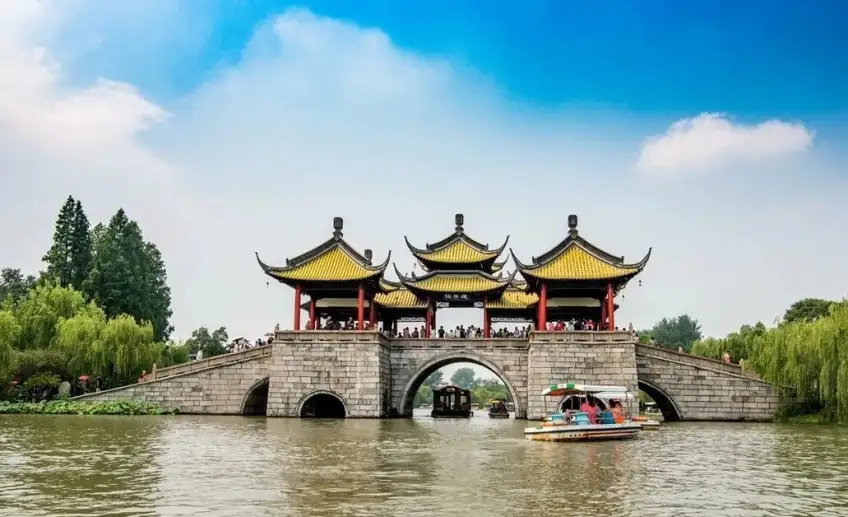
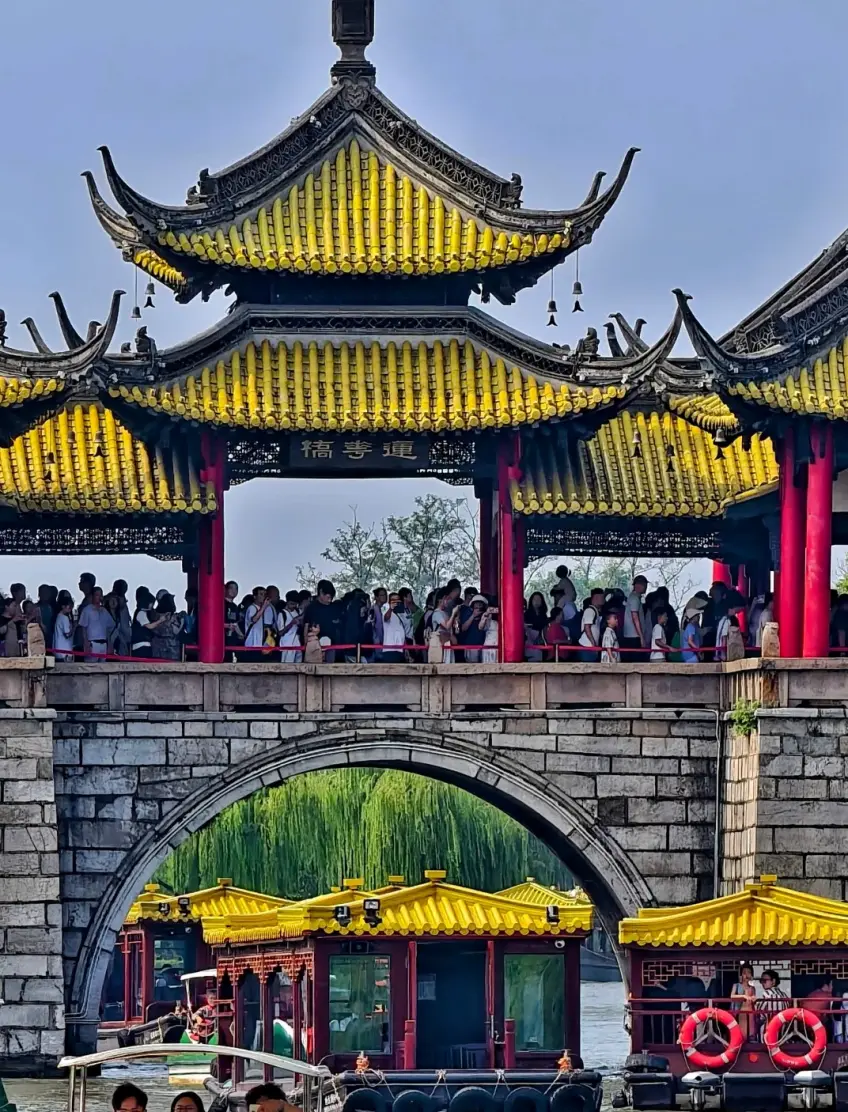
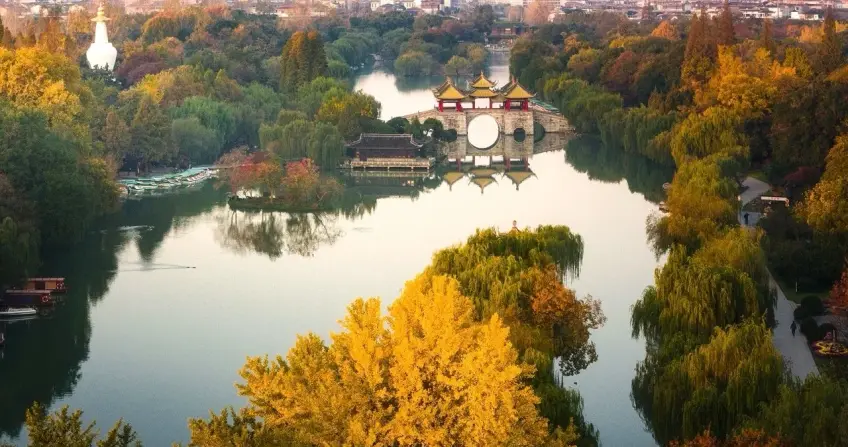
Five-Pavilion Bridge was built in 1757 (the 22nd year of the Qianlong reign of the Qing Dynasty) to welcome Emperor Qianlong's southern tour. It takes its name from the five connected pavilions on the bridge, and is also called Lotus Bridge—its piers and arches are said to resemble a blooming lotus. With yellow glazed roof tiles and red pillars reflected in the water, it forms the most recognizable skyline of Slender West Lake. Local legend says that during the Mid-Autumn Festival full moon, each of the 15 arches reflects a moon. Viewing spots and actual visibility vary with water levels and weather.
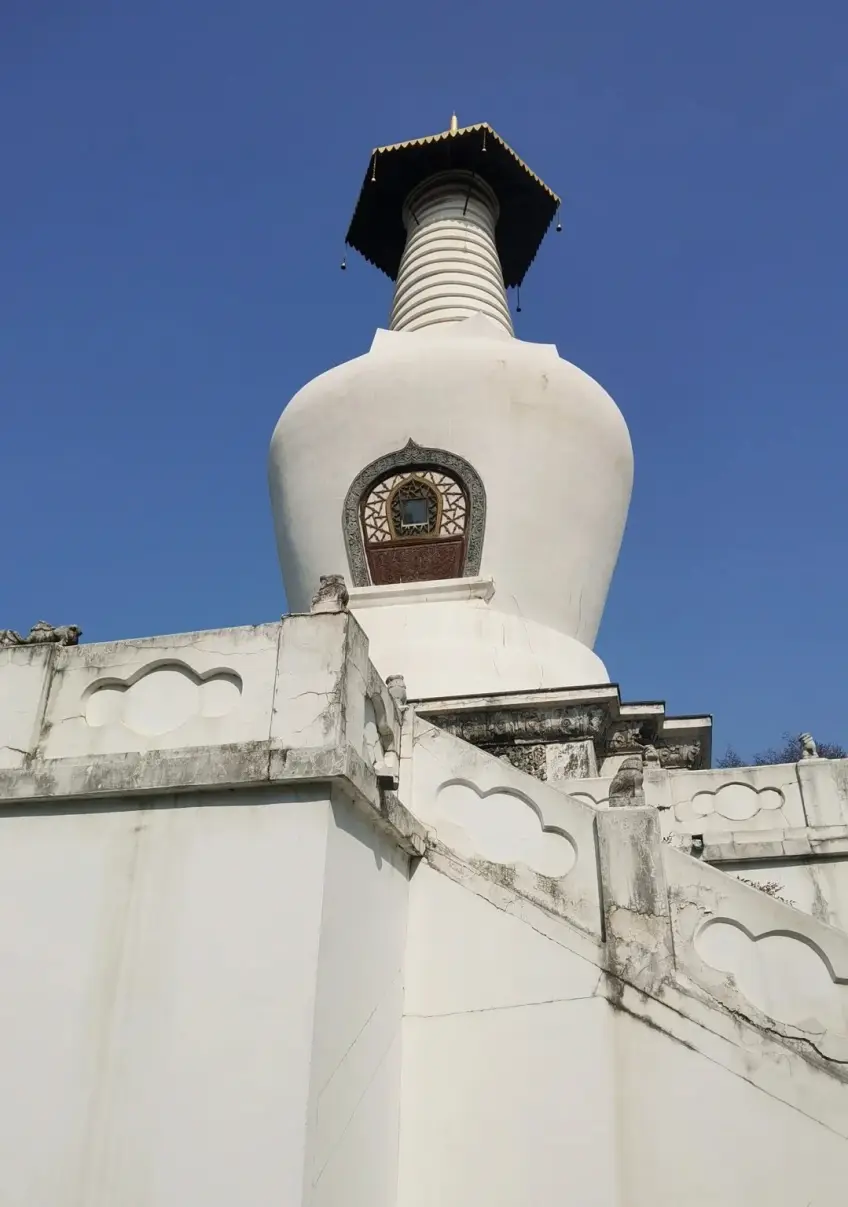
Across the water from Five-Pavilion Bridge stands the White Pagoda, styled after Tibetan Buddhist stupas. Legend has it that salt merchants, eager to please the emperor who remarked "there should be a pagoda here," built one overnight using salt or by rushing craftsmen together. Versions vary, but they all reflect the extravagant wealth merchants spent to welcome the emperor, along with local folklore. For architectural details and restoration history, refer to the on-site commentary.
Twenty-Four Bridge and Xichun Terrace: poetic place names, birthday celebrations and imperial welcomes
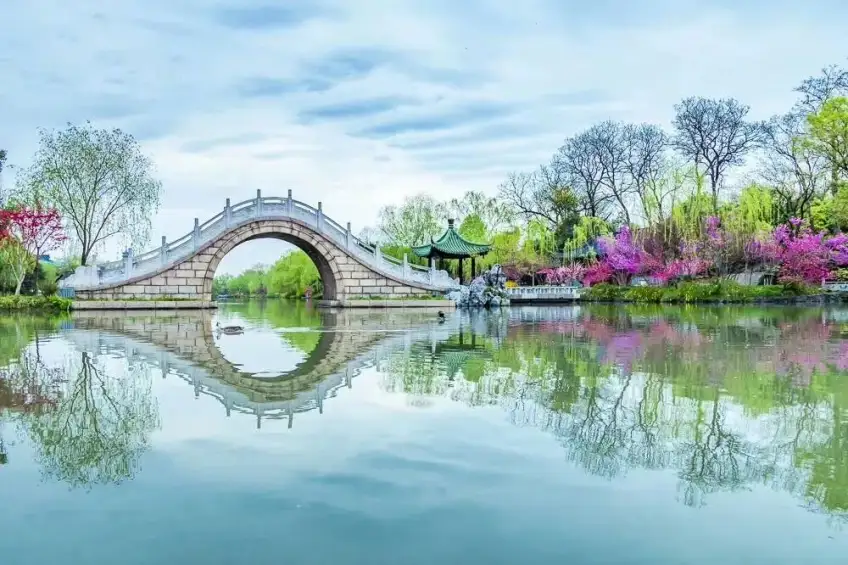
"On the Twenty-Four Bridge under the bright moon, where is the beauty teaching someone to play the flute?" Du Mu's famous line made Twenty-Four Bridge a cultural symbol of Yangzhou. Most bridges you see in the park today were rebuilt later, coexisting with scholarly debates over whether the Tang dynasty had "24 bridges" or "one bridge named Twenty-Four." When visiting, enjoy the poetry and the site separately: the bridge, water, moon and flute are cultural images, while opening hours and boarding rules follow posted notices.
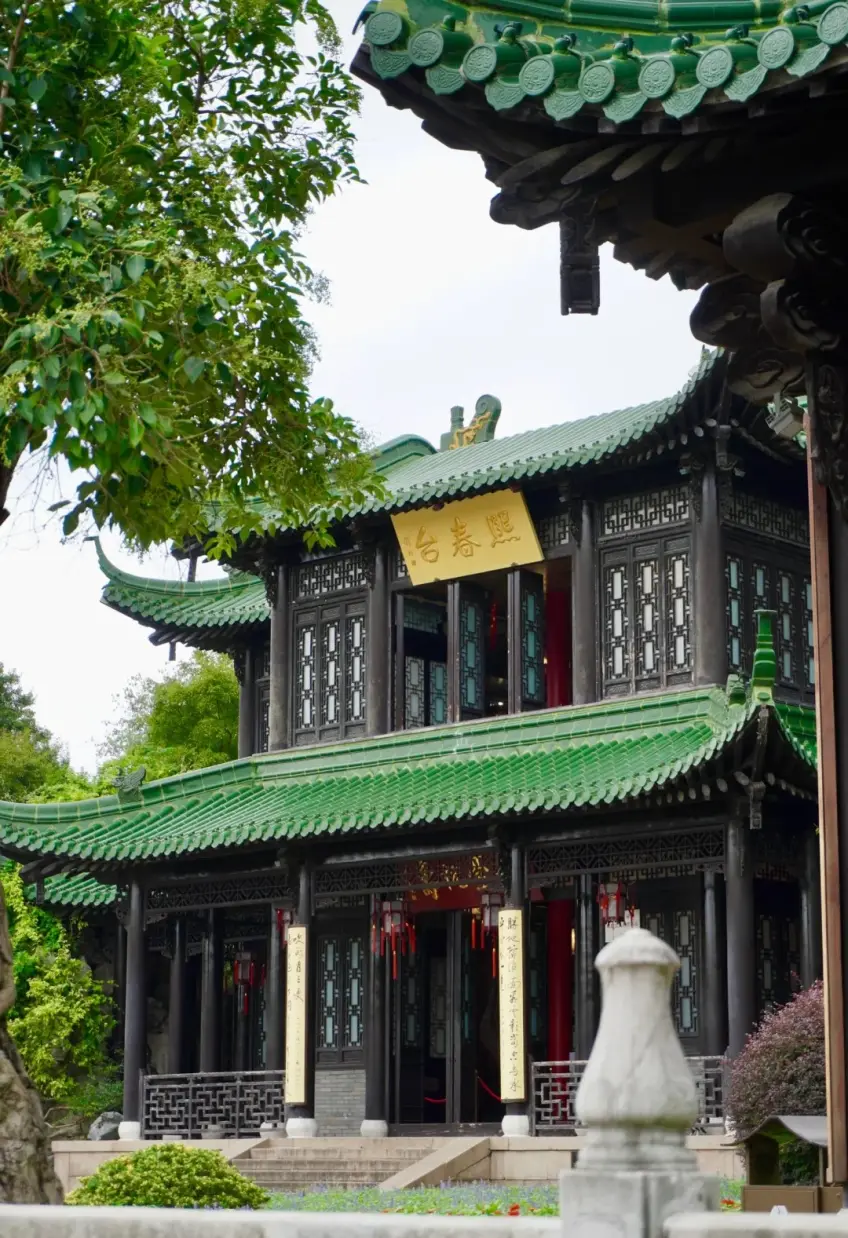
Nearby, Xichun Terrace is said to have been built by salt merchants for birthday celebrations and imperial receptions. With its green tiles and open hall, the terrace offers views over the narrow lake and distant bridges and pagodas. Together with Five-Pavilion Bridge and White Pagoda, it forms the second half of the imperial tour garden narrative.
Dredging, restoration and boat routes: how the sights connect
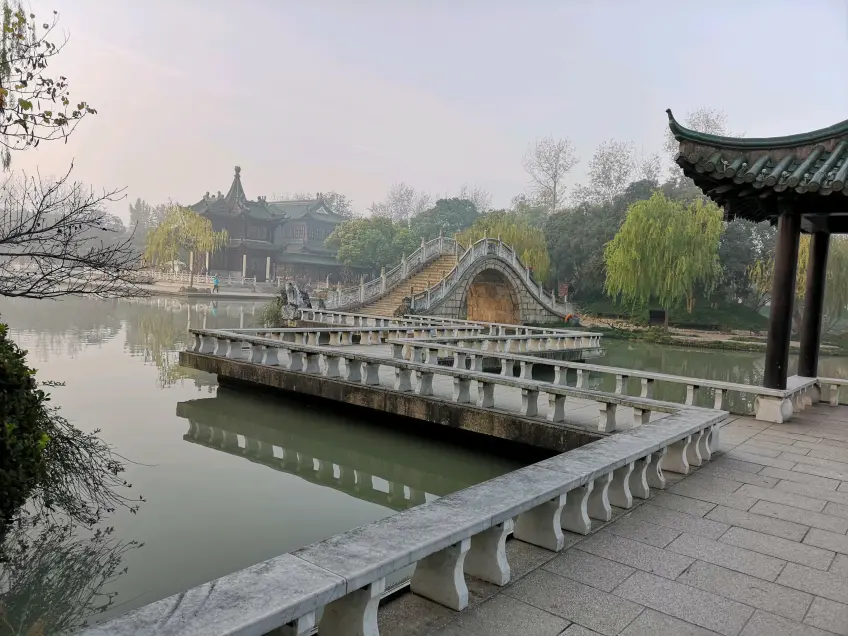
After 1949, Slender West Lake underwent repeated dredging, landscaping and pavilion restorations, linking once-scattered private gardens and imperial relics into a touring system you can explore on foot or by boat. Many of the zigzag bridges, arch bridges and newly built corridors you see in the park date from this period — these overlapping layers of history are what make exploring the lake so rewarding.
A boat ride is the best way to appreciate this long, narrow stretch of water. Painted boats and electric boats usually link the Long Causeway, Xu Garden, Little Jinshan and the Twenty-Four Bridges area; check the ticket window for that day's routes, schedules and fares. If you're not a strong walker or need to avoid the summer sun, try "one leg by boat, one on foot." With kids or older travelers, schedule the boat ride around noon.
How to plan a Yangzhou trip: group tours, custom trips and transfers
Half a day to a full day is enough to see the main sights at Slender West Lake. If you also want to visit Ge Garden, He Garden, Daming Temple and Dongguan Street, two days is more relaxed. If it's your first time in Yangzhou and you don't want to arrange your own rides and tickets, check whether the Huaiyang route private tour includes Slender West Lake and the classic city gardens. To adjust the sight order and meals to your family's pace, use custom private travel. For transfers between Yangzhou Railway Station and your hotel or attraction only, choose station transfer. For in-depth historical stories inside the gardens, book a private guide first. If you're visiting several attractions back to back with lots of luggage, add a private car.
Daytime tickets for Slender West Lake cost ¥100 in peak season (February to October) and ¥60 in low season (November to January). Opening hours, boat tickets, and reservation requirements are subject to the site's daily notices—please double-check before your visit.
Yangzhou and Huai'an 3-day, 2-night private tour | Slender West Lake, Ge Garden, Zhou Enlai Memorial Hall
A 3-day, 2-night private tour starting in Yangzhou and ending in Huai'an: Slender West Lake and Ge Garden, then He Garden and Pishi Street the next day before heading to Huai'an for the Canal Transport Museum, finishing with the Zhou Enlai Memorial Hall, Shen Kun Zhuangyuan Mansion and Hexia Ancient Town. Includes transport, guide, two nights' hotel and admission tickets. English-speaking guide available.
To see what a private car does and doesn't cover, read our guide to private cars and private guides in Jiangsu, Zhejiang and Shanghai.
FAQs
How to understand the history of Slender West Lake?
Keep three threads in mind: canal branches and the city moat system shaped this narrow waterway; Qing-dynasty salt merchants built gardens that thickened the scenery along both banks; and the southern inspection tours of the Kangxi and Qianlong emperors spurred projects like the Five-Pavilion Bridge and the White Pagoda to welcome them. Later dredging and restoration linked it all into today's scenic area.
What are the must-see highlights of Five-Pavilion Bridge and the White Pagoda?
Five-Pavilion Bridge (Lotus Bridge) was built to welcome Emperor Qianlong on his southern tour, with five pavilions linked across the bridge and arches shaped like lotus flowers. The White Pagoda follows Tibetan lama pagoda architecture, and local legend says it was built overnight. Together with Little Jinshan and the Fishing Terrace, they form a classic framed view. Tales like the Mid-Autumn moon reflected in 15 arches depend on water levels and weather; viewing conditions are subject to on-site notices.
Which boat route should I choose? How much are tickets?
The usual approach is to take a boat from the Long Causeway to the Twenty-Four Bridges area, then walk selected sections. Check the ticket window for that day's routes, schedules and fares; lines are longer in summer and on holidays, so stagger your boat rides and walks.
Do tickets and opening hours require reservations?
Daytime tickets cost ¥100 in peak season (February to October) and ¥60 in low season (November to January). Opening hours and reservation requirements are subject to the site's daily notices—please check again before your trip to avoid last-minute holiday changes.
How do I get to Slender West Lake from Yangzhou Railway Station?
From Yangzhou Railway Station and nearby transport hubs, you can reach the scenic area by bus, taxi or ride-hailing app. Routes and travel times vary by mode of transport.
Group tour, custom trip, private car, or guide: which should I choose?
For hassle-free coverage of the classic Huaiyang sights, look at the private tour. To change the order or add Ge Garden, He Garden or an evening tour, use custom private travel. For historical stories inside the gardens only, choose a private guide. For point-to-point transport, pick station transfer. Mix and match as needed—no need to book everything at once.
If you already have travel dates, send your group size, arrival train number, stories you'd like to hear, and whether you want a boat ride to customer service: prioritize a private guide with custom private travel or station transfer, plus a private car and private tour if needed. Asking questions isn't booking—confirm only when you're happy with the plan.