

Slender West Lake and Daming Temple are both located in the Shugang area northwest of Yangzhou, making them easy to visit in a single day: enter Slender West Lake through the South Gate in the morning and walk north along Long Causeway Spring Willows, Xu Garden, Little Jinshan, Fishing Terrace, Five-Pavilion Bridge, White Pagoda, Xichun Terrace, and Twenty-Four Bridges to the North Gate. After lunch, head to Daming Temple to see the Heavenly King Hall, Pingshan Hall, and the Jianzhen Memorial Hall, then climb Qiling Pagoda. Peak season daytime admission is ¥100 for Slender West Lake and ¥48 for Daming Temple.
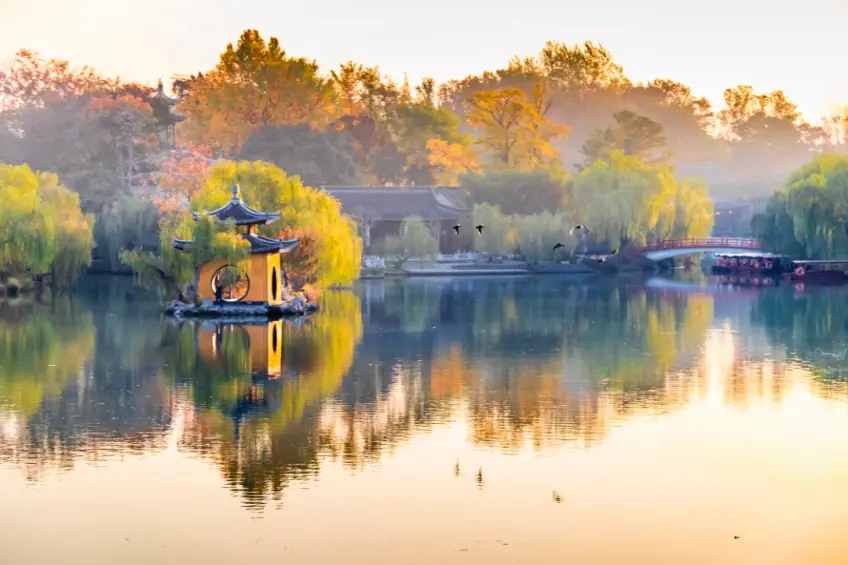
For your first time combining Slender West Lake and Daming Temple, plan your route before booking transport: the lake area has many stops while the temple is best explored on foot, so private car saves you from multiple transfers. For a hassle-free trip with commentary, choose a group tour or hire a private guide. Need pickup from the high-speed rail station to the attractions? Fill out the station transfer form. To adjust the pace for your family, use our custom travel service. Just leave your group size, dates, and departure city, and customer service will follow up.
Preparation for your Yangzhou day tour
Book the Slender West Lake + Daming Temple combo ticket in advance on the official platform. If you're a student, senior, etc., remember to bring the relevant ID for discounts.
Slender West Lake itinerary
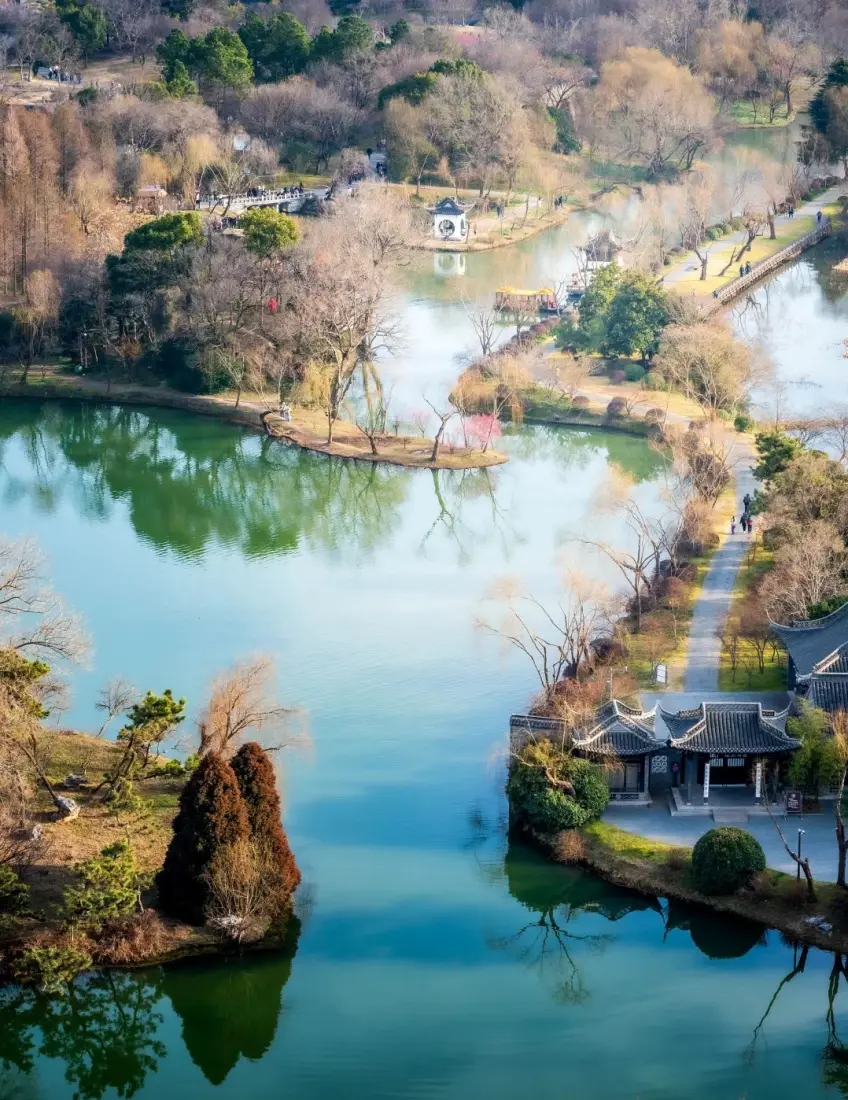
Slender West Lake may not be as vast as West Lake, but it has a refined elegance unique to Jiangnan. Follow this route starting from Changdi Chunliu (Long Causeway Spring Willows) to take in all the highlights of Slender West Lake.

First Glimpse of Poetry at Changdi Chunliu
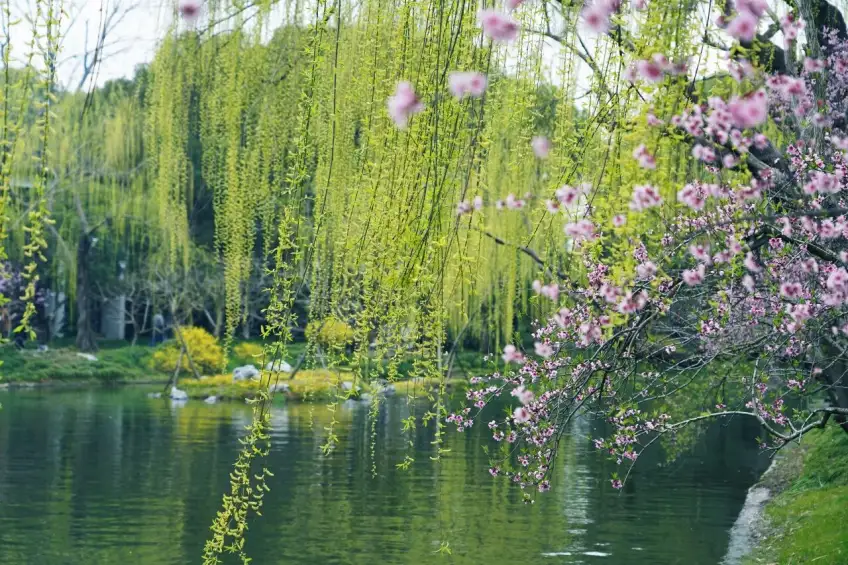
We start by entering through the south gate of Slender West Lake to reach our first stop—Changdi Chunliu (Long Causeway Spring Willows). This is a key point on the traditional Chinese costume parade route. The planting strictly follows the rule of "a peach tree every three steps, a willow every five," so in spring you'll see a stunning mix of pink blossoms and green willows. Stroll slowly along the lakeshore, where every step reveals a new view, and take in the Jiangnan scenery of "flowers and willows lining both banks of the water."
A Miniature Garden: Xu Garden at Slender West Lake
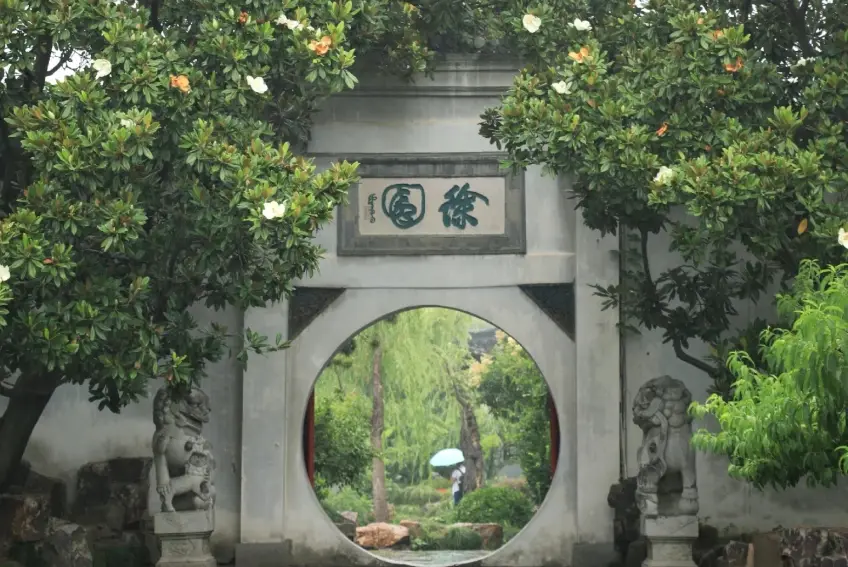
Strolling north along Long Causeway Spring Willows, we arrive at Xu Garden. Built in 1915 as a memorial garden for Republican-era general Xu Baoshan, it may be small, but every corner reveals the delicate elegance of Jiangnan gardens—a perfect miniature of classical garden design.
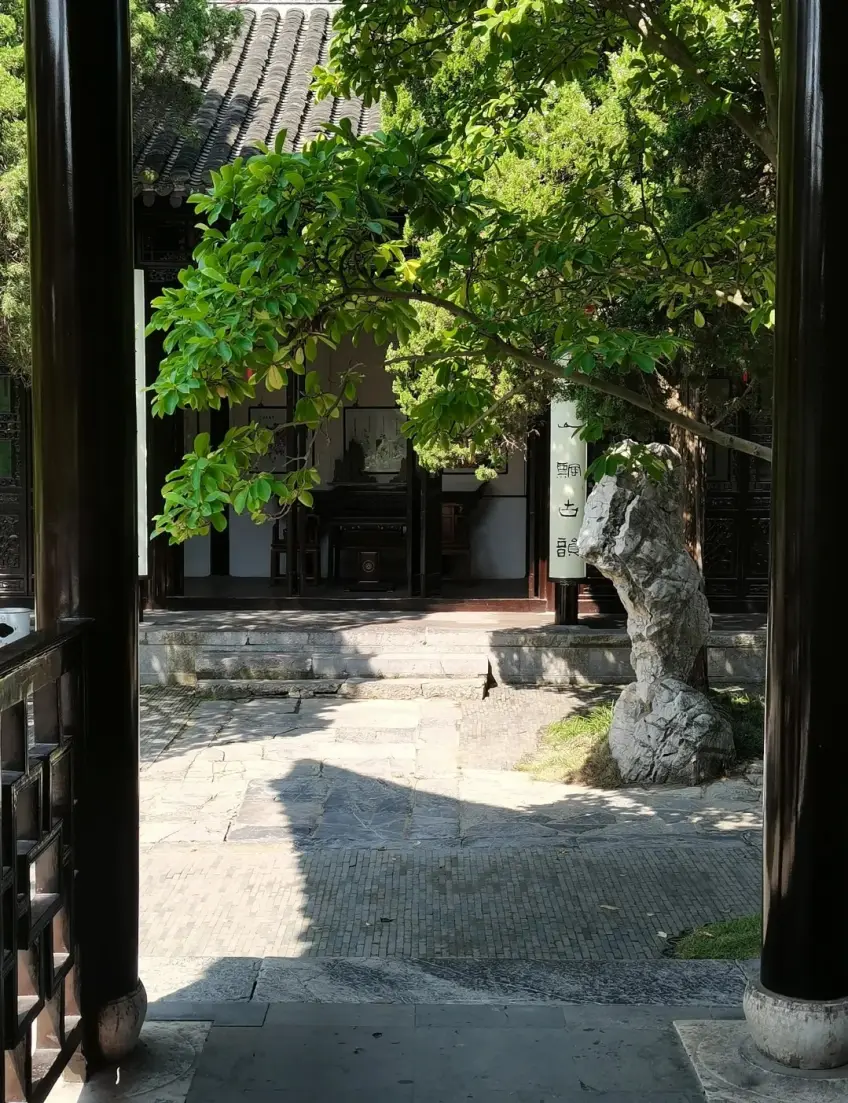
At the entrance, you'll see a Chinese-style gate tower. Its plaque reading "Deep in the Spring Waters" perfectly matches the garden's mood. The main hall is Tingli Hall (Oriole-Listening Hall). Standing at its door and admiring the two couplets on either side, you'll feel as if you've traveled back to Republican-era Yangzhou.
Island Hill: Little Jinshan at Slender West Lake
Leaving Xu Garden, cross a stone bridge to reach Little Jinshan. It is the highest point of Slender West Lake and the largest island on the lake, known as the "Penglai Isle on the Lake."
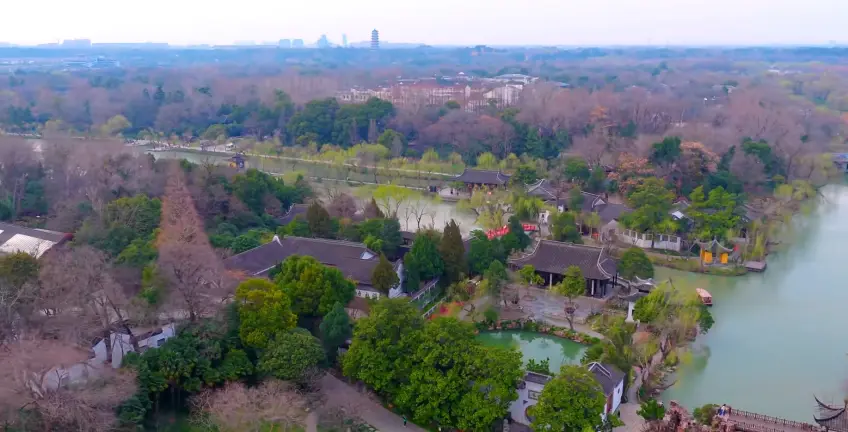
Though small, it distills every essential element of Jiangnan gardens. From the wind pavilion on the island, you can take in the entire scenery of Slender West Lake. In the distance, you can also spot Five-Pavilion Bridge and the White Pagoda. Framed by the lake water and weeping willows, it looks like a Jiangnan water town painting brought to life.
Ancient Craftsmanship in the Architecture of Slender West Lake
Master of Framed Views: Diaoyutai at Slender West Lake
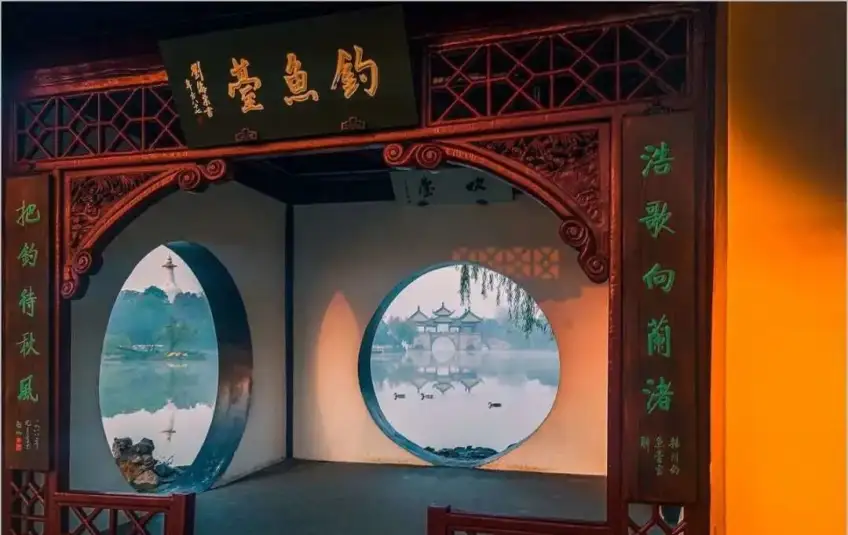
After enjoying the stunning scenery of Xiaojinshan (Little Golden Hill), we continued along the lakeside path to Diaoyutai (Fishing Terrace), known as the "master of framed views." This octagonal pavilion is surrounded by water on all sides and is one of the iconic attractions of Slender West Lake. It's a must-visit spot and a favorite place for photography enthusiasts to capture their work.
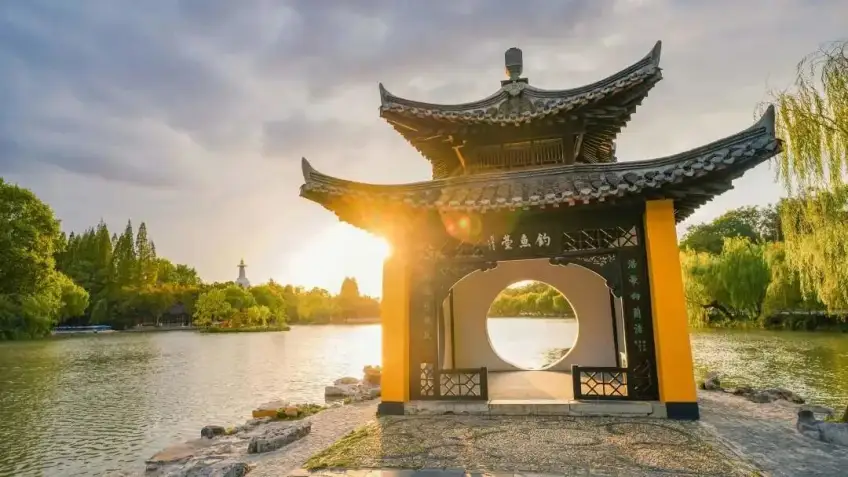
True to its reputation, its unique framed-view design is its greatest feature. When you stand in the middle of the pavilion, the three circular openings become natural frames for a landscape painting, turning Five-Pavilion Bridge, the White Pagoda and Chunbo Tower into pictures before your eyes. This "framed" scenery gives Diaoyutai its unique charm.
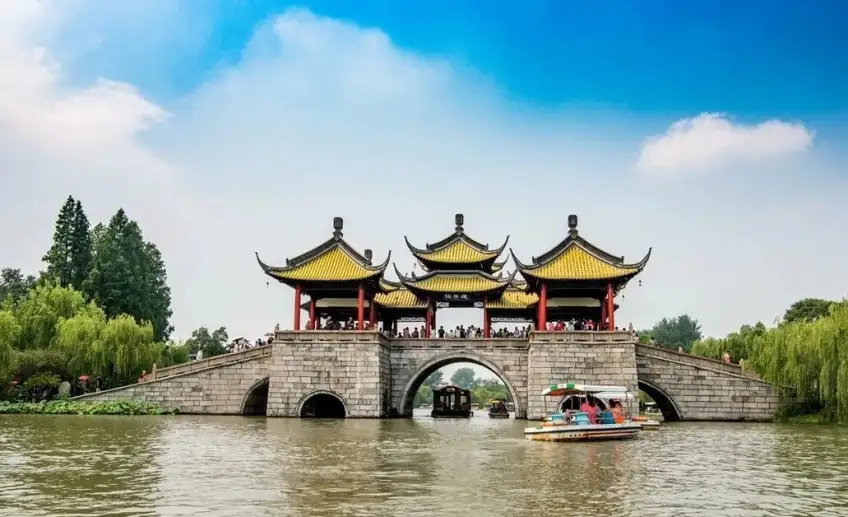
Five-Pavilion Bridge at Slender West Lake: The Most Beautiful Ancient Bridge
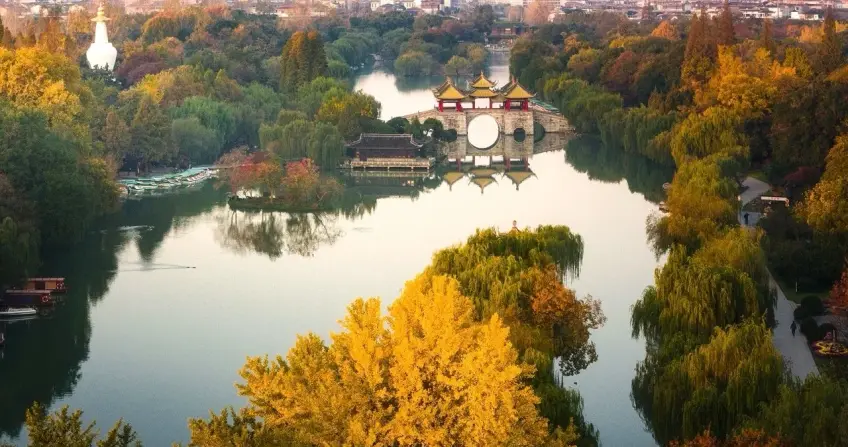
You can reach Five-Pavilion Bridge from Diaoyutai by boat or on foot. The bridge has 15 arches, each different in size and shape yet harmoniously unified. By the way, records say that someone once saw 15 moons reflected in the 15 arches when the full moon was directly above Five-Pavilion Bridge. If you happen to visit on a full moon night, give it a try yourself.
The Legend of the White Pagoda at Slender West Lake
A Legend Born Overnight: The White Pagoda of Slender West Lake
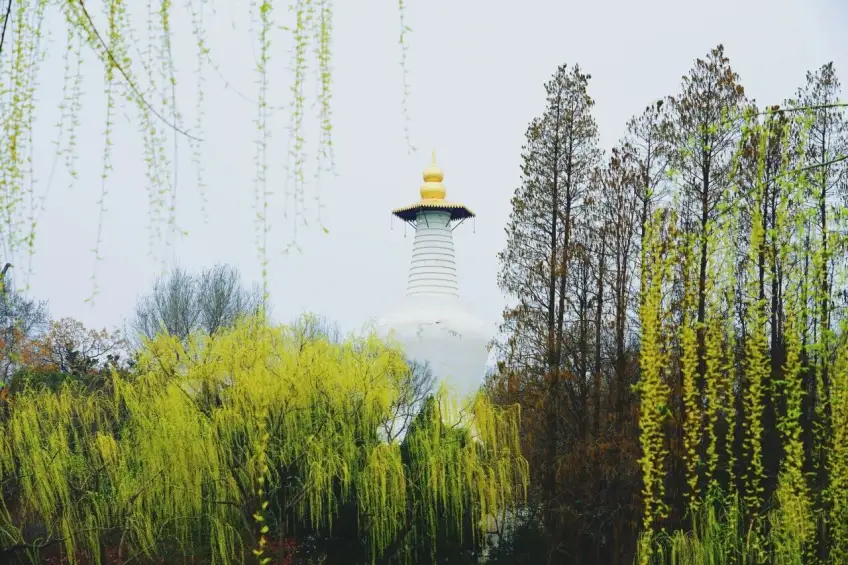
The White Pagoda faces Five-Pavilion Bridge across the lake. Its elegant design complements the bridge, creating the most classic view of Slender West Lake. It looks like a "miniature version" of the White Pagoda in Beijing's Beihai Park, but it has its own unique story.
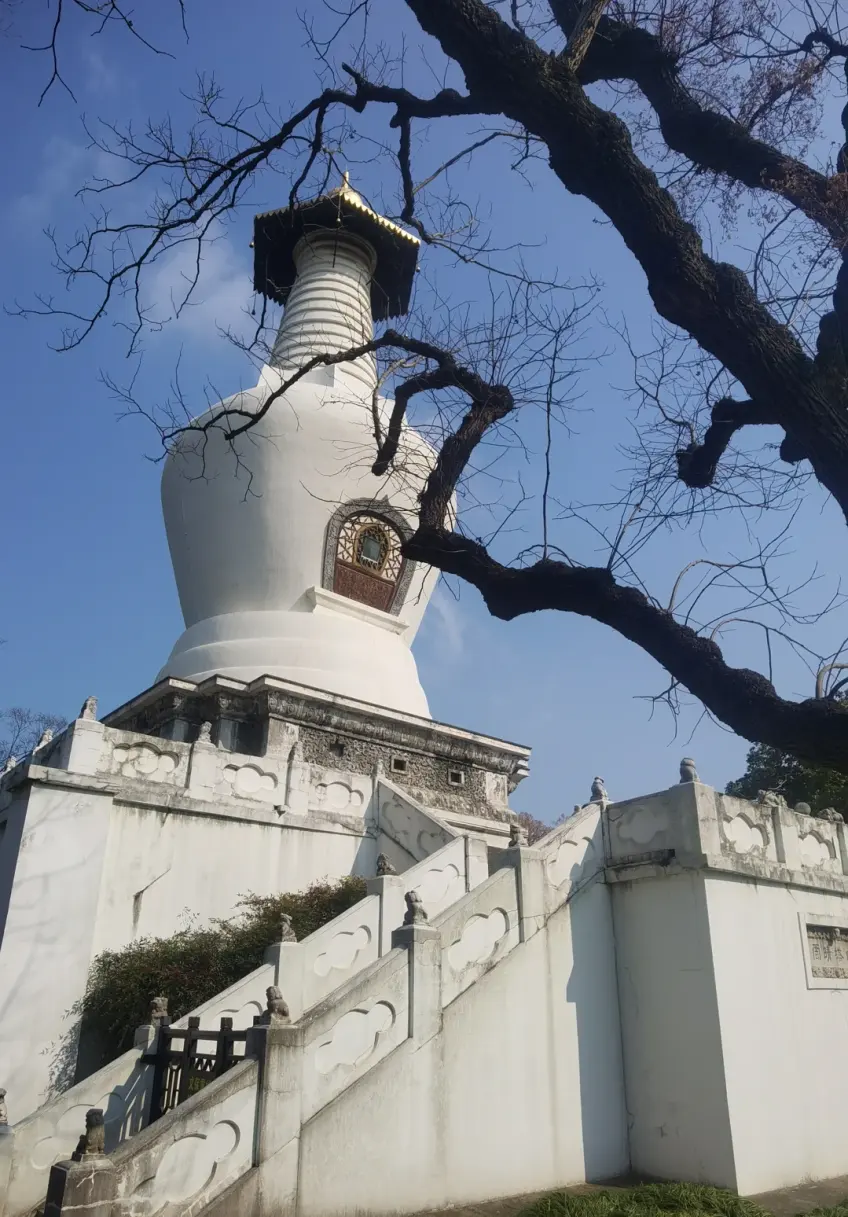
Legend has it that when Emperor Qianlong toured Jiangnan and visited Slender West Lake, he casually remarked, "This place is so much like Qiongdao Chunyin in Beijing's Beihai Park—what a pity there's no white pagoda." To please the emperor, Yangzhou's salt merchants piled up salt overnight to build a white pagoda, which was later rebuilt with brick and stone.
Literary Traces of Slender West Lake
Dreaming of Dream of the Red Chamber at Xichun Terrace
After hearing the story behind the White Pagoda, we continue westward to Xichun Terrace. This was one of the filming locations for Dream of the Red Chamber, and the stone tablet in front of the terrace is engraved with a poem handwritten by Chairman Mao.
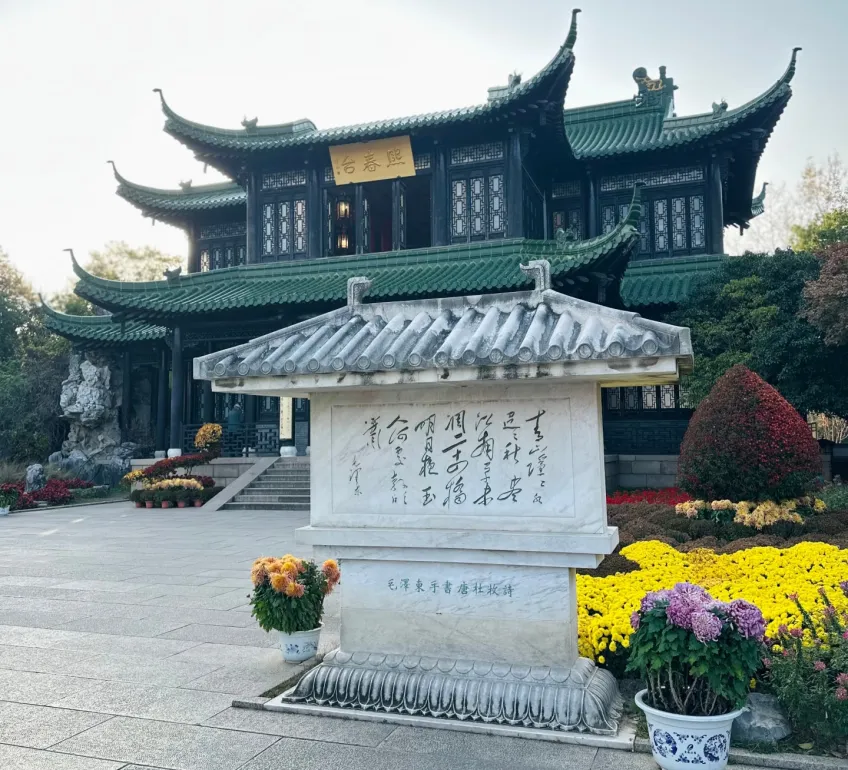
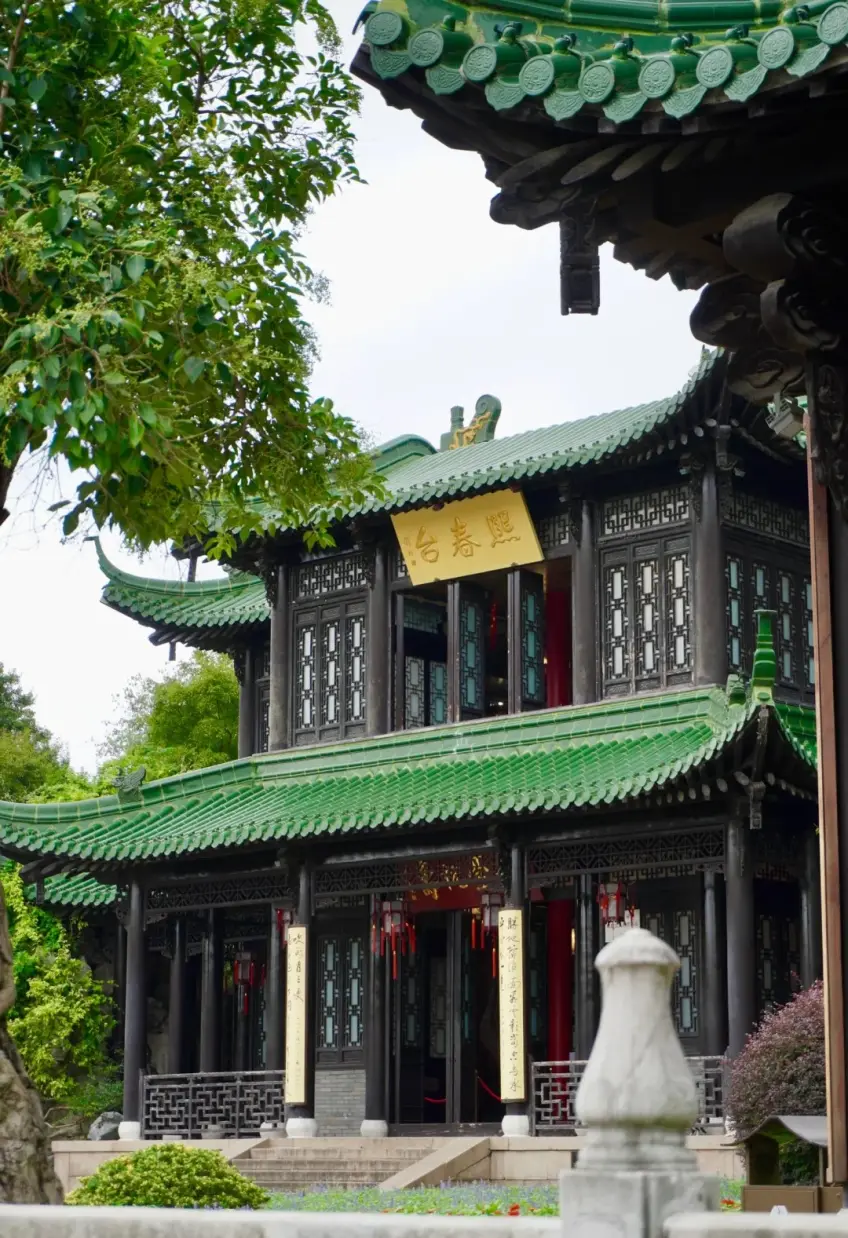
Xichun Terrace features a grand and imposing architectural style. Standing on the terrace, you can enjoy the widest stretch of Slender West Lake, with Twenty-Four Bridge faintly visible in the distance.
If you're interested in Yangzhou's traditional culture, linger here a while longer. Performances such as Yangzhou storytelling and Yangzhou opera are often held nearby, letting you soak up local traditions while enjoying the scenery. We can also recommend some worthwhile theaters in Yangzhou so your trip goes smoothly.
The graceful Twenty-Four Bridge
Leaving Xichun Terrace, we head to Twenty-Four Bridge, a single-arch bridge spanning Slender West Lake with white marble railings. The entire structure looks as elegant as a jade ribbon. Where the bridge meets the water, Taihu rocks are stacked into cloud-like shapes, and below lies a clear pool surrounded by osmanthus and magnolia trees—a truly refined setting.
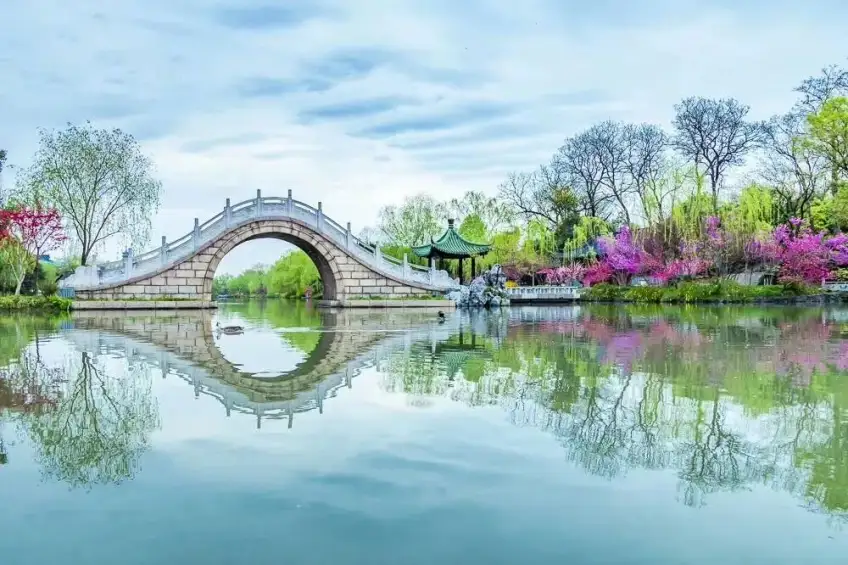
This jade bridge has 24 steps, each steeped in poetic charm. If you have time in the evening, come here to watch the sunset. Paired with Du Mu's famous line—"On a moonlit night at Twenty-Four Bridge, where is the beauty teaching someone to play the flute?"—the atmosphere is simply perfect.
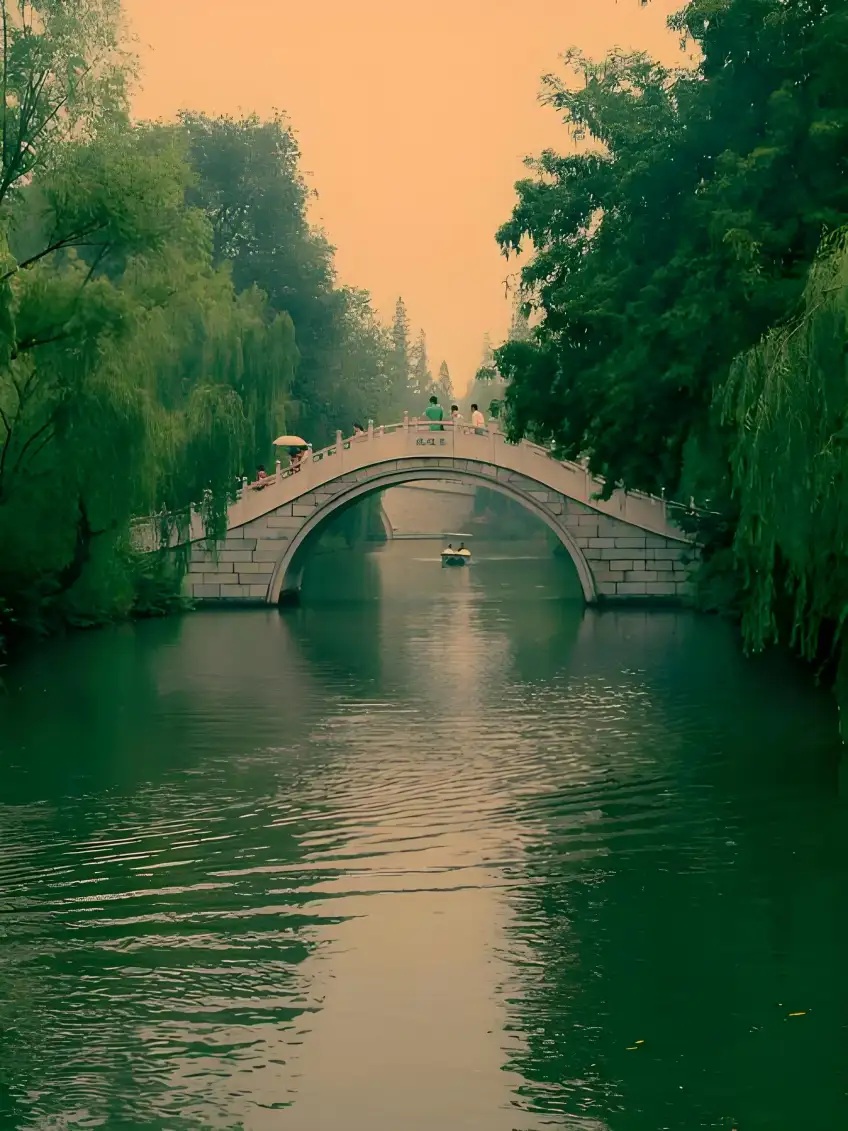
Jingxiang Shuwu: A Scholar's Retreat
Walking north past Twenty-Four Bridge and through a bamboo grove, we arrive at Jingxiang Shuwu (Tranquil Fragrance Study). Tucked deep within Slender West Lake, this serene and elegant spot is surrounded by green bamboo, pines and cypresses. It feels cut off from the world and was a favorite retreat for scholars and poets.
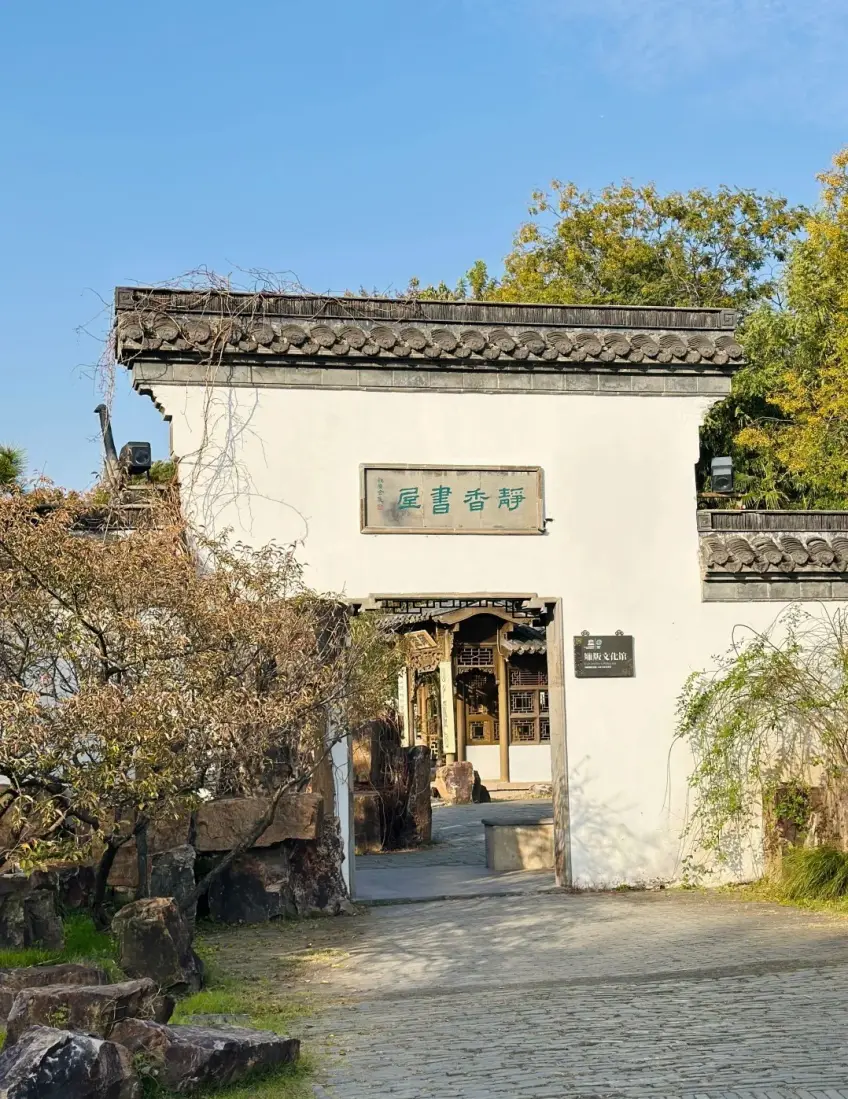
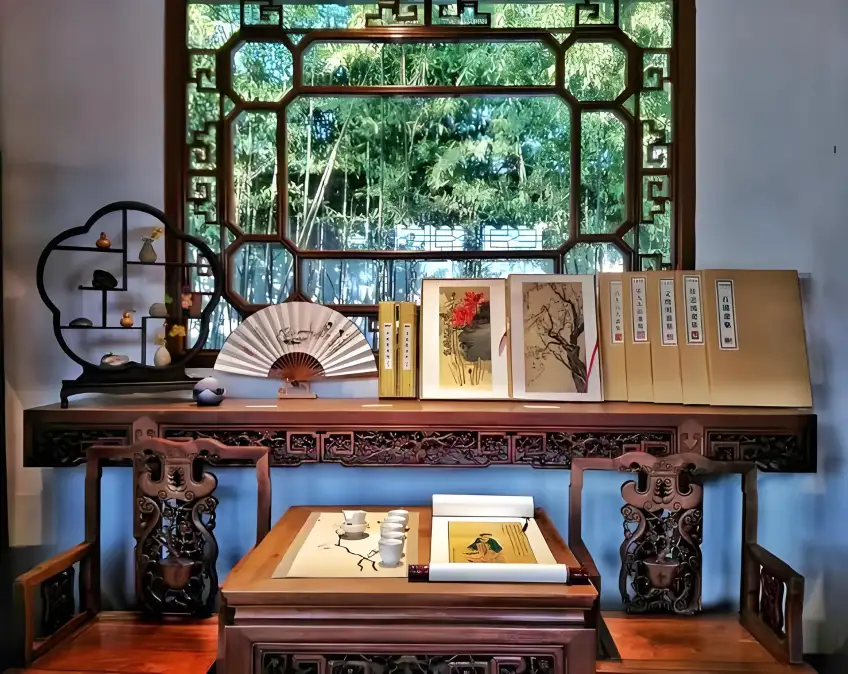
The rooms display ancient books, calligraphy and paintings, filling the air with a scholarly atmosphere. Today, visitors can view and try Yangzhou woodblock printing here, and the study regularly hosts cultural events such as calligraphy demonstrations and musical performances.
Wanhua Garden: The Backyard of Slender West Lake
Continuing north from Jingxiang Shuwu brings you to Wanhua Garden, the "backyard" of Slender West Lake. Over a thousand varieties of flowers grow here. In spring, peach blossoms, pear blossoms, cherry blossoms and more bloom together in a riot of color.
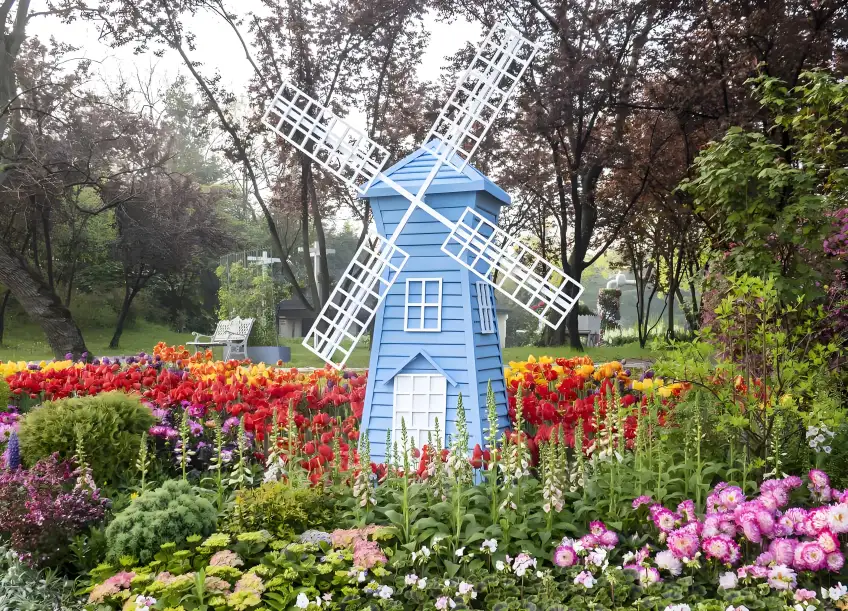
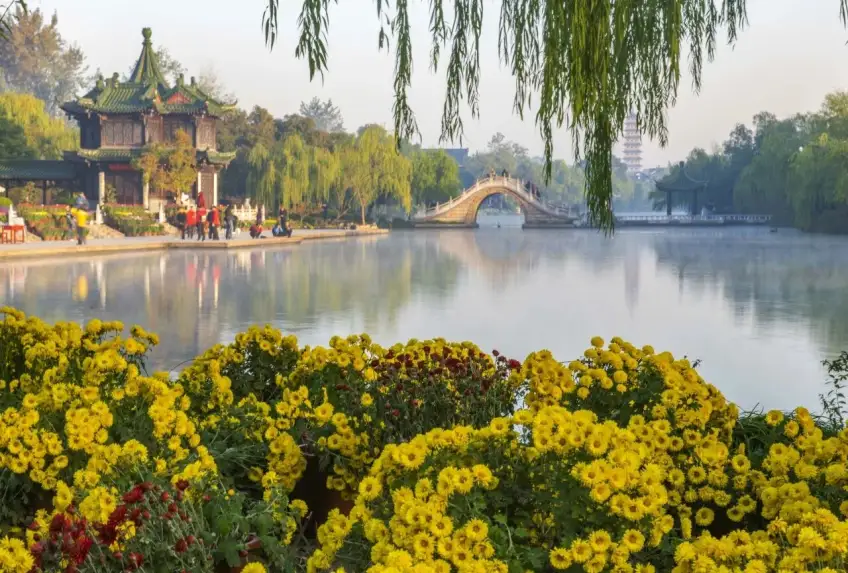
Wanhua Garden is lush and green in summer, making it the perfect time to admire lotus flowers. In autumn, the fragrance of osmanthus fills the air and the garden turns into a tapestry of colors. Even when blanketed in snow in winter, wintersweet blossoms still bloom. No matter what season you visit, there are always flowers to enjoy—flower lovers should definitely take their time here.
Slender West Lake food guide
Walking out of Wanhua Garden brings you to the North Gate of Slender West Lake. Let's grab a meal here.
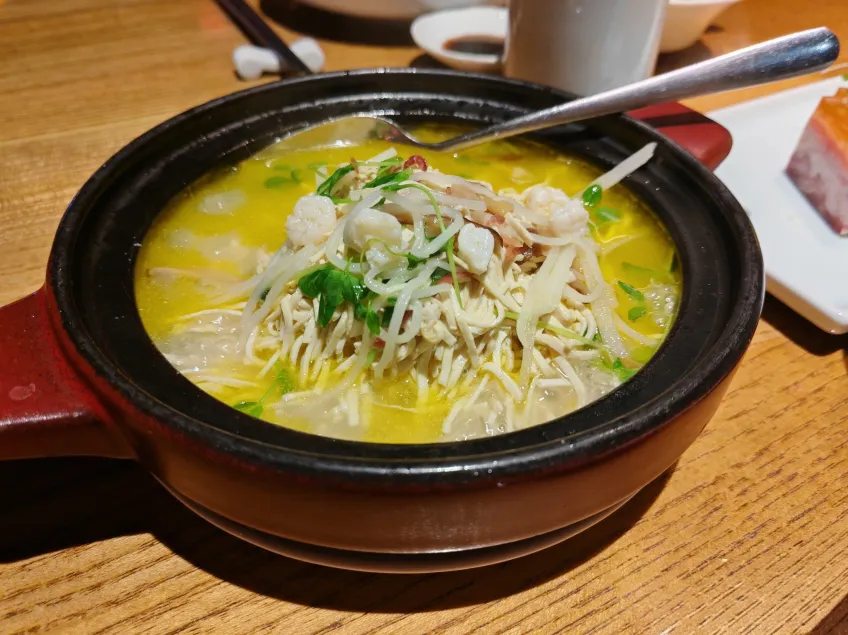
Just 50 meters east of the North Gate of Slender West Lake is Yangzhou Yan restaurant. We recommend the crab roe lion's head meatballs and braised shredded tofu—both authentic Huaiyang dishes. After a good rest, we'll continue on to Daming Temple.
Daming Temple tour route in Yangzhou
Daming Temple is one of the most storied places in Yangzhou. Join us in Yangzhou and hear its history.
[Wuxi & Yangzhou River Charm 4 Days 3 Nights] Yuantouzhu (Turtle Head Isle) + Plum Garden + Nanchang Street + Nianhua Bay + Lingshan + Dongguan Street + Slender West Lake + Daming Temple + Jinshan Temple + Beigu Hill
[Top Attractions] Yuantouzhu (Turtle Head Isle), Plum Garden, Nanchang Street, Nianhua Bay, Lingshan, Dongguan Street, Slender West Lake, Daming Temple, Jinshan Temple and Beigu Hill! [Comfortable Stays] Choose between 4-star and 5-star hotels! [Thoughtful Service] Dedicated custom vehicles and East China drivers with years of safe driving experience for a worry-free trip! [No Shopping Stops] Quality no-shopping group tour—enjoy a pure journey you'll remember for a lifetime! [Free Bonus] One bottle of branded mineral water per person per day!
Temple entrance archway
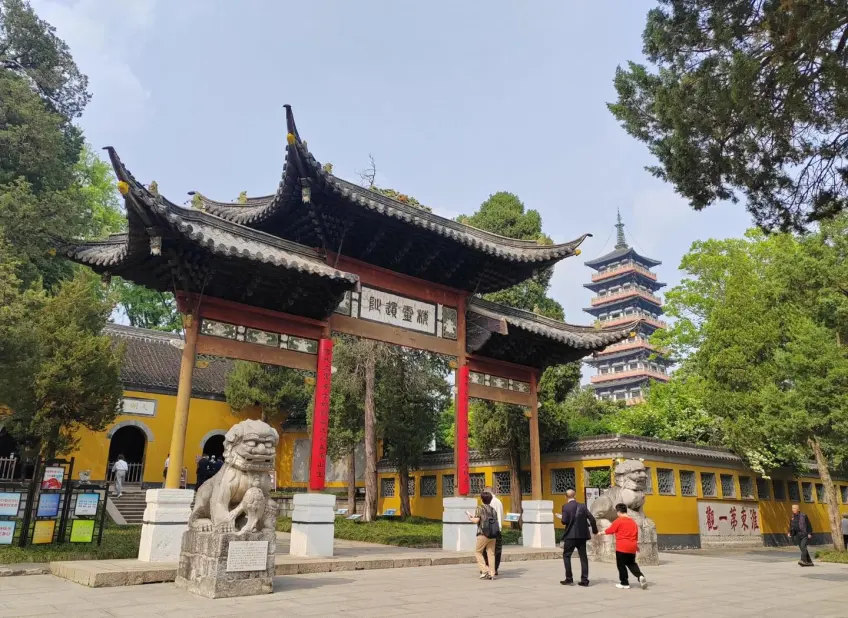
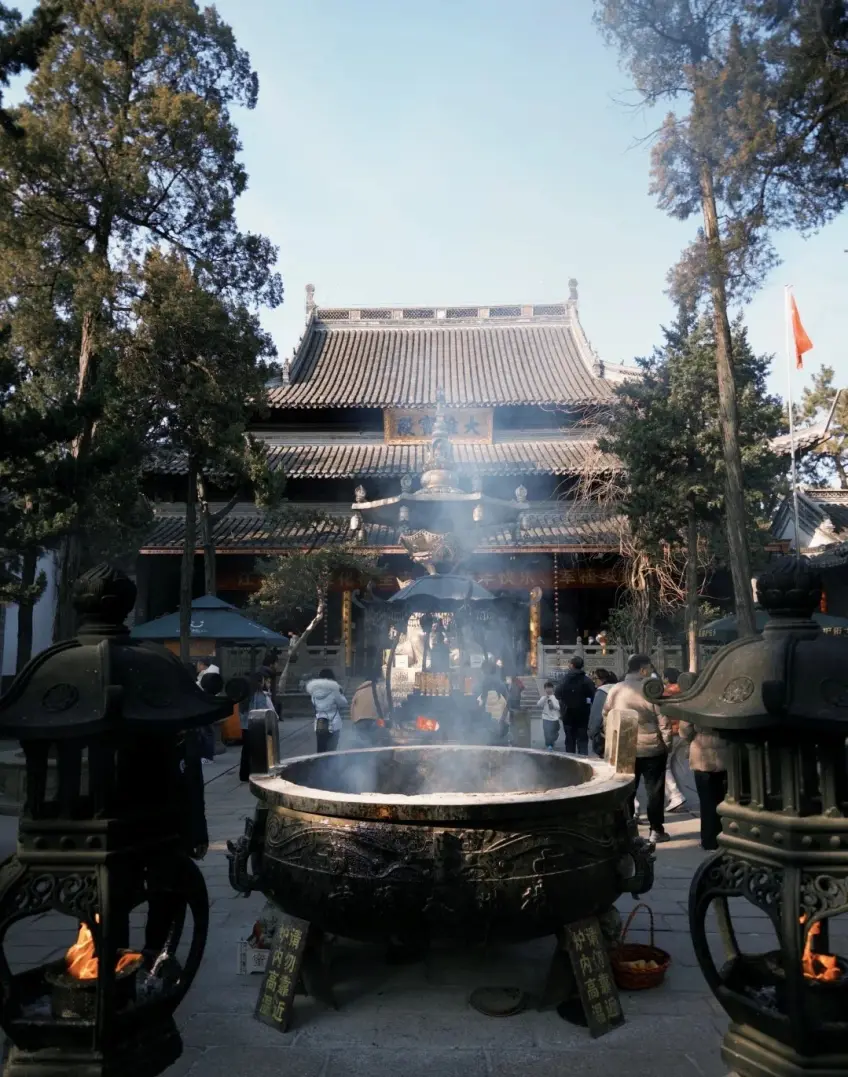
After your ticket is checked at the main gate of Daming Temple, the first thing you'll see is the archway. With four pillars and three bays, it has an imposing presence, and from here you can already feel a strong sense of Zen and history. Above the central gate are the four seal-script characters "Qiling Ruins," handwritten by Yao Yu, the salt transport commissioner during the Guangxu reign of the Qing Dynasty. The stone lions on either side of the archway are Ming Dynasty relics moved here from Chongming Temple, and they still look remarkably lifelike after all these years.
Guardian of the mountain gate: Hall of Heavenly Kings
After passing through the gate, we first arrive at the Hall of Heavenly Kings. Look up and you'll see the three characters for "Daming Temple" carved above the hall's door. They were assembled by Mr. Zhao Puchu using the calligraphy style of the Sui Dynasty Longcang Temple Stele, revealing the elegance of Sui Dynasty calligraphy.
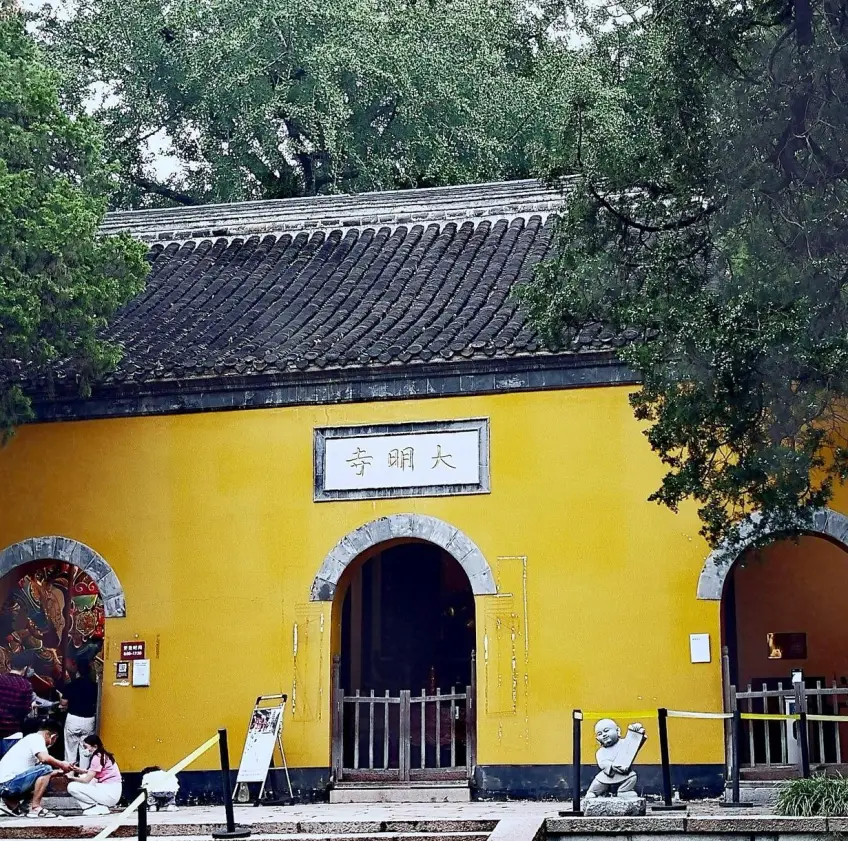
The Hall of Heavenly Kings enshrines Maitreya Buddha and the Four Heavenly Kings, symbolizing protection of the nation and its people, and favorable weather. Incense burns brightly here. Take your time to soak in the solemn atmosphere of the Buddhist architecture—standing before the hall, you can almost hear the echoes of history. Just note: if you want to take photos here, never use flash.
A Late Qing Masterpiece: Mahavira Hall
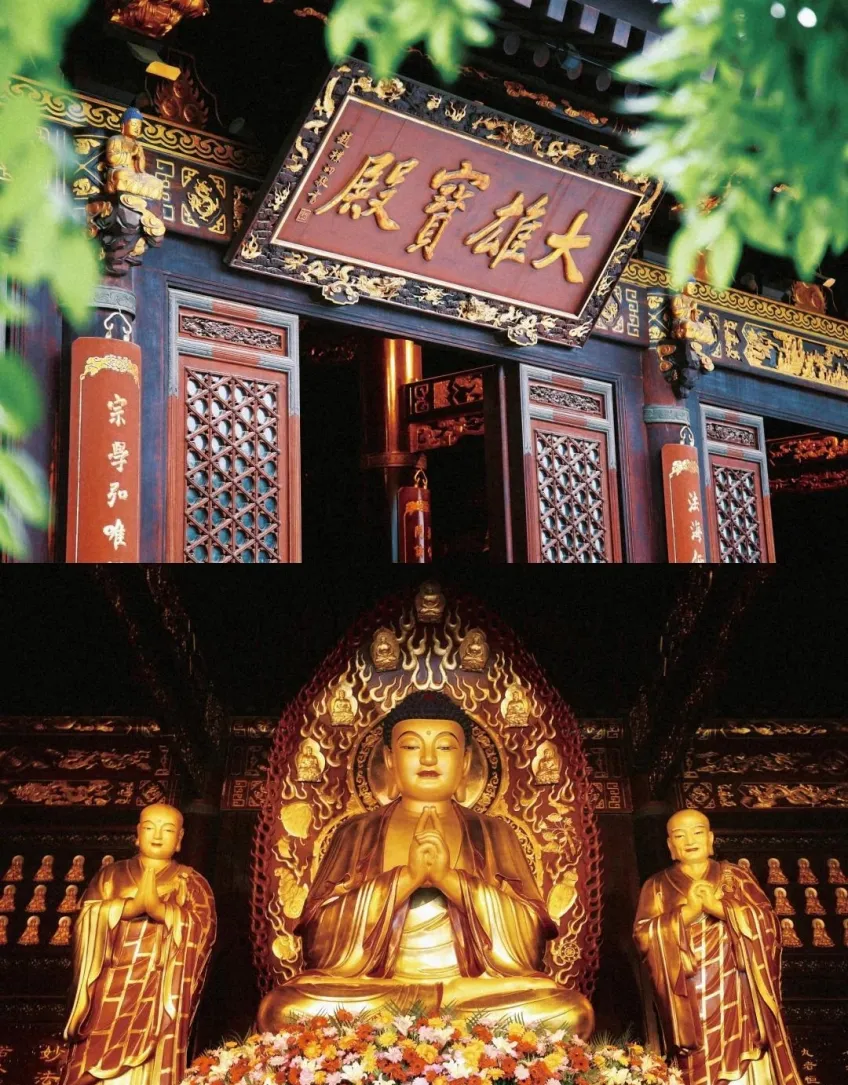
Pass through the back door of the Hall of Heavenly Kings and you'll reach the Mahavira Hall. As the core building of the entire temple, it is a nearly square hall five bays wide. Though compact in size, it holds an exalted religious status.
In the center of the hall, a golden statue of Sakyamuni Buddha sits on a lotus pedestal. On either side stand the Medicine Buddha and Amitabha Buddha, which together with Sakyamuni form the Buddhas of the Three Ages—tall and solemn figures all. Behind the altar is the "Island Guanyin" woodcarving group, the tallest ancient wooden sculpture of its kind in China, surrounded by Sudhana, the Dragon Girl, and the Eighteen Arhats. From the hall itself to the enshrined statues, every detail reveals the craftsmen's devotion.
Famous Figures of Daming Temple
Literary Elegance in Pingshan Hall
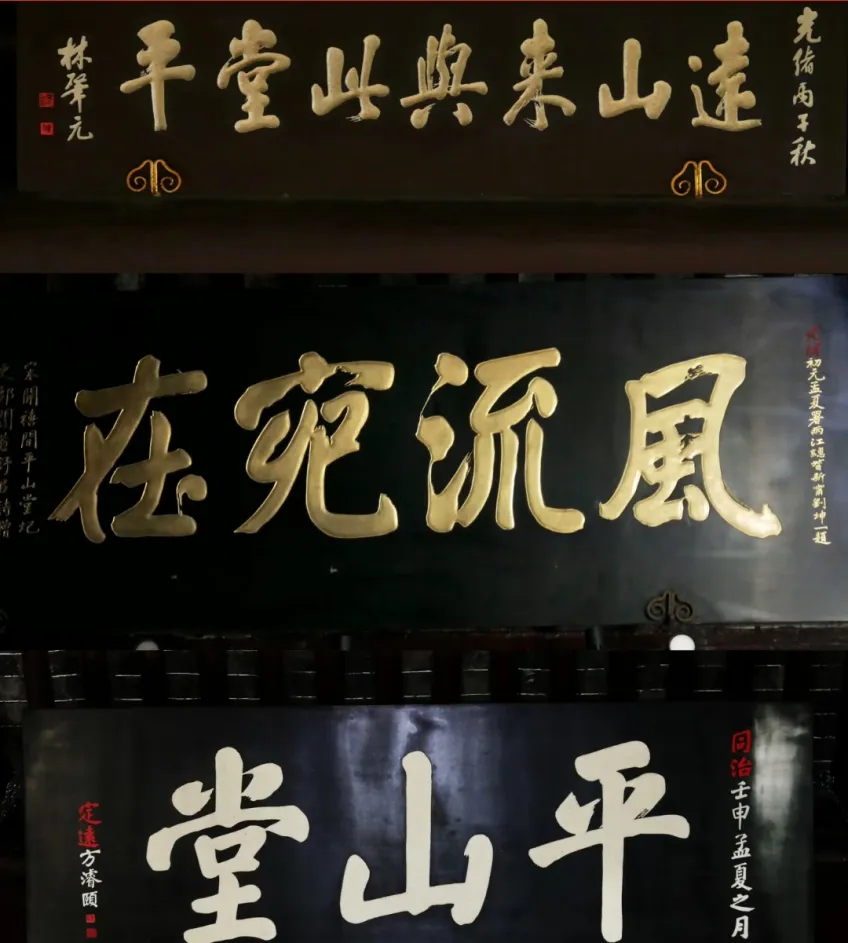
Next, walk out through the "Xianren Jiuguan" (Immortals' Old Lodge) gate on the west side of the Mahavira Hall to reach Pingshan Hall. When Ouyang Xiu served as prefect of Yangzhou, he often drank wine and composed poetry here with scholars and literati. He wrote the famous lines, "Leaning on the railing of Pingshan Hall under a clear sky, the mountains appear and fade in the distance," showcasing the elegance of this literary official.
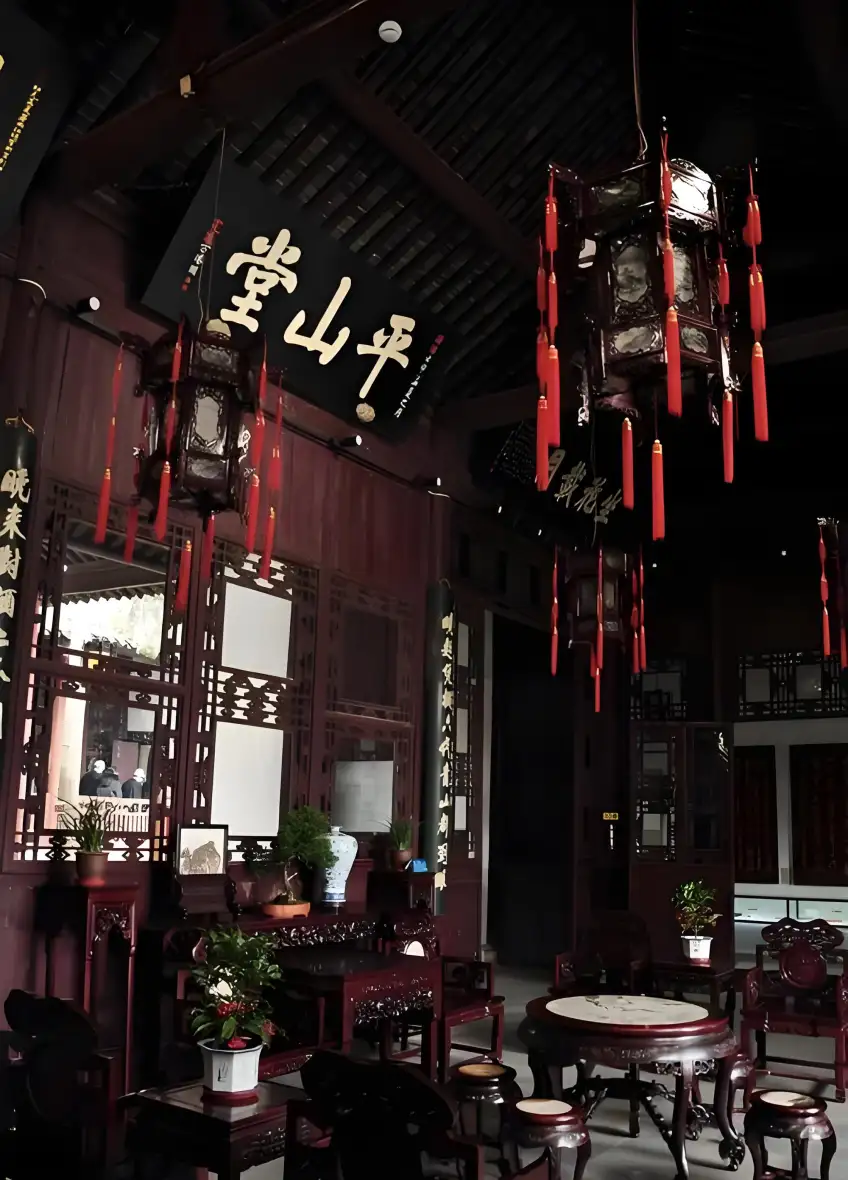
The "Fengliu Wanzai" plaque hangs inside the hall. Legend has it that Liu Kunyi, Viceroy of Liangjiang during the Qing Dynasty, wrote it to commemorate Ouyang Xiu. The character for "flow" is missing a dot while the character for "remain" has an extra one, implying "less frivolity, more substance." Peonies and Chinese herbaceous peonies are planted in front of the hall. Every spring, the classic scene of "sitting among flowers under the moonlight" comes alive again. Here, you can appreciate the spirit of ancient scholars while soaking in the beautiful scenery.
The bond between teacher and student in Gulin Hall
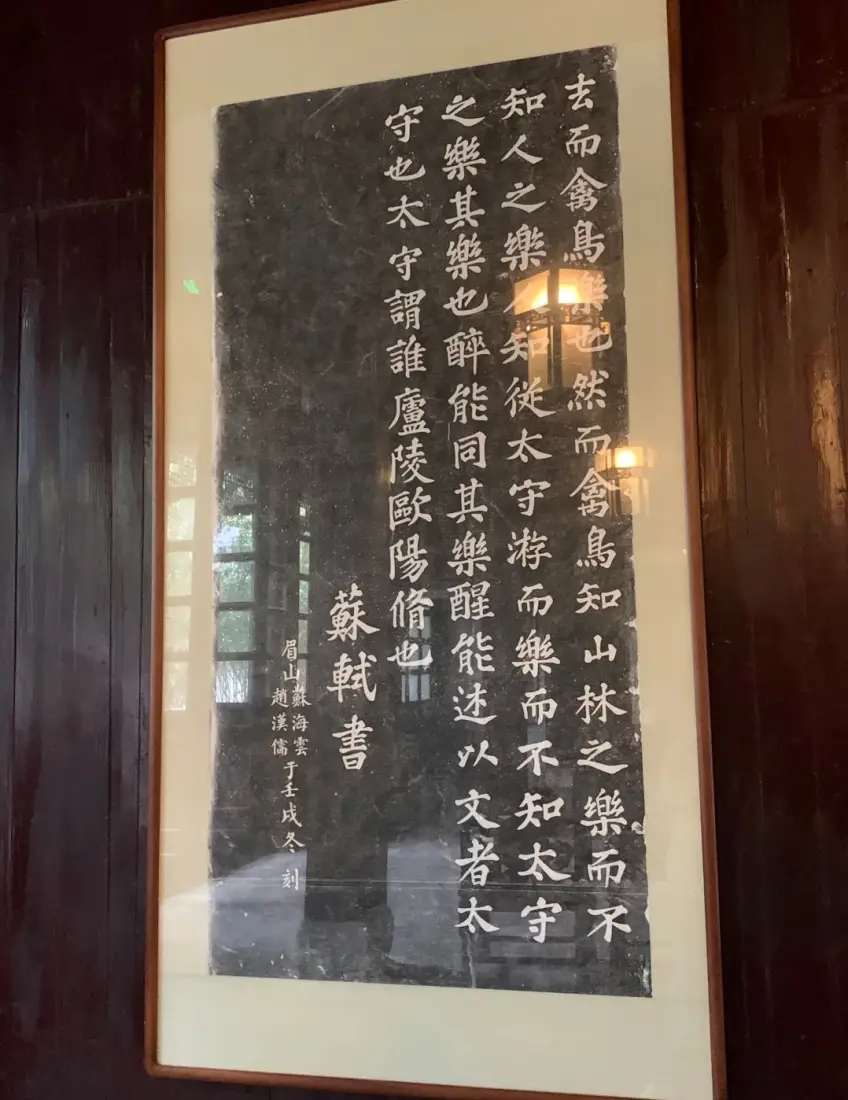
After visiting Pingshan Hall, head straight to the adjacent Gulin Hall, built by Su Shi to honor his mentor Ouyang Xiu. Su Shi passed through Yangzhou three times in his life, and each time he came here to pay his respects to Ouyang Xiu. The architecture is simple and elegant, with wooden railings paired beautifully against whitewashed walls. Inside the hall are many stone carvings of Su Shi's calligraphy, the most famous being the poem stele "Xijiangyue · Pingshan Hall." Just the line "Three times I passed beneath Pingshan Hall, half a lifetime gone in a snap of fingers" conveys how deeply he missed his mentor.
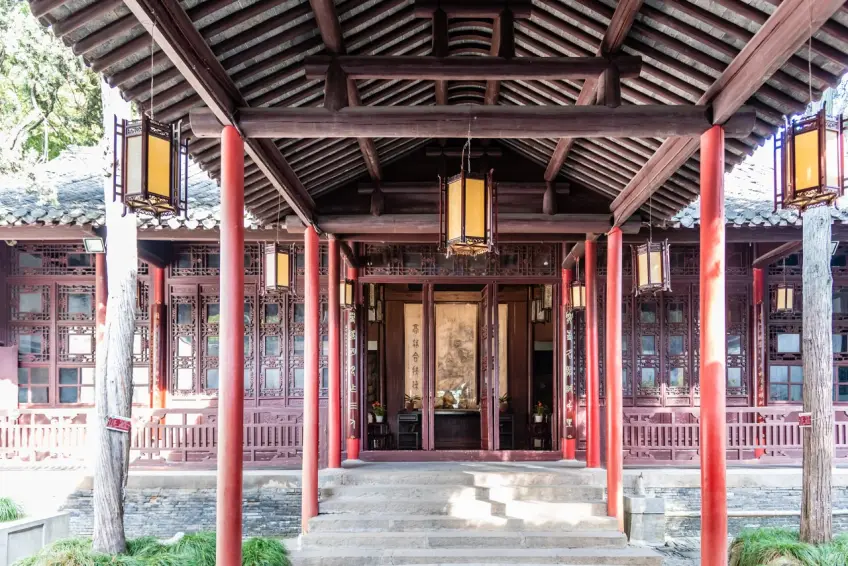
Learn about Ouyang Xiu's benevolent governance at Ouyang Shrine
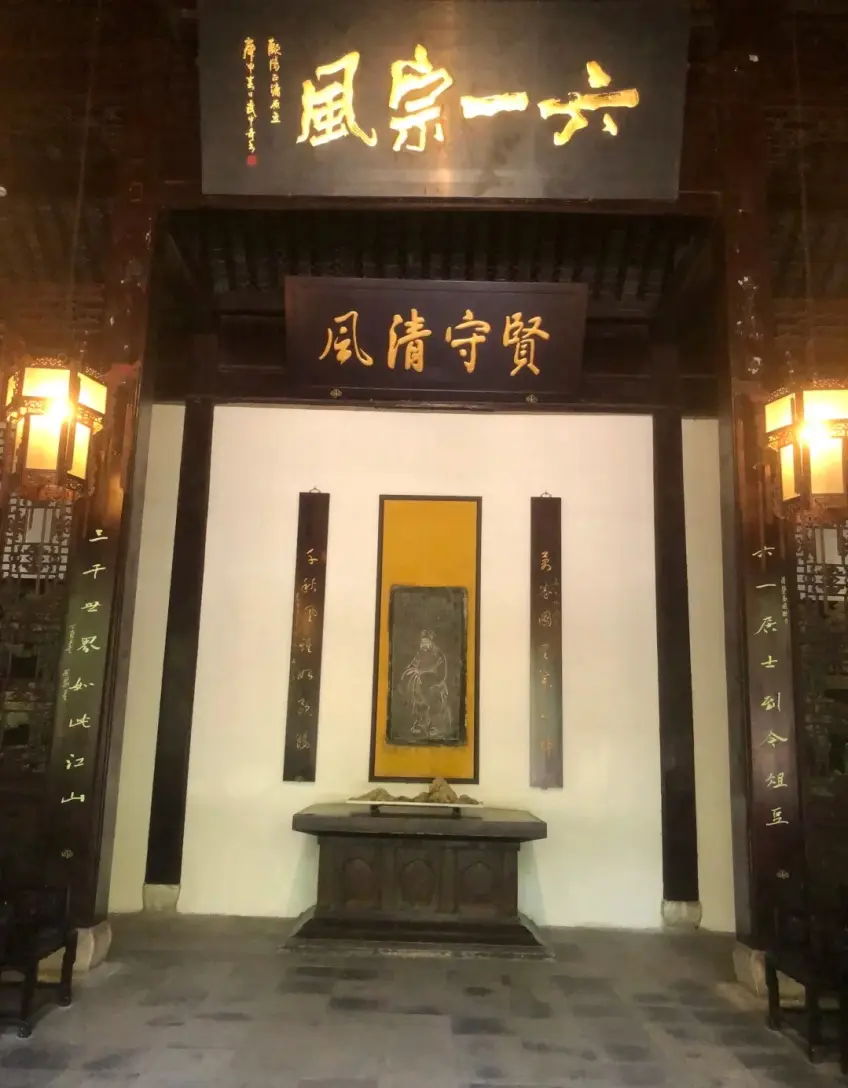
After experiencing the friendship between these scholars, continue walking north of Gulin Hall and you'll soon reach Ouyang Shrine. When Ouyang Xiu served as prefect of Yangzhou, he implemented a policy of leniency and simplicity that eased the burden on the people, earning him deep affection from the locals. This shrine was built by the people to commemorate him.
This grand shrine features square beams and pillars with upturned eaves. At its center stands a stone carving of Ouyang Xiu with an elegant, scholarly expression, while the side walls display his life story and achievements. The courtyard is planted with white magnolias, osmanthus, crape myrtles and other plants, full of classical charm. Linger here for a moment and you might feel transported back to when Ouyang Xiu still lived in Yangzhou.
Jianzhen Memorial Hall: A Spiritual Monument to Spreading Buddhism
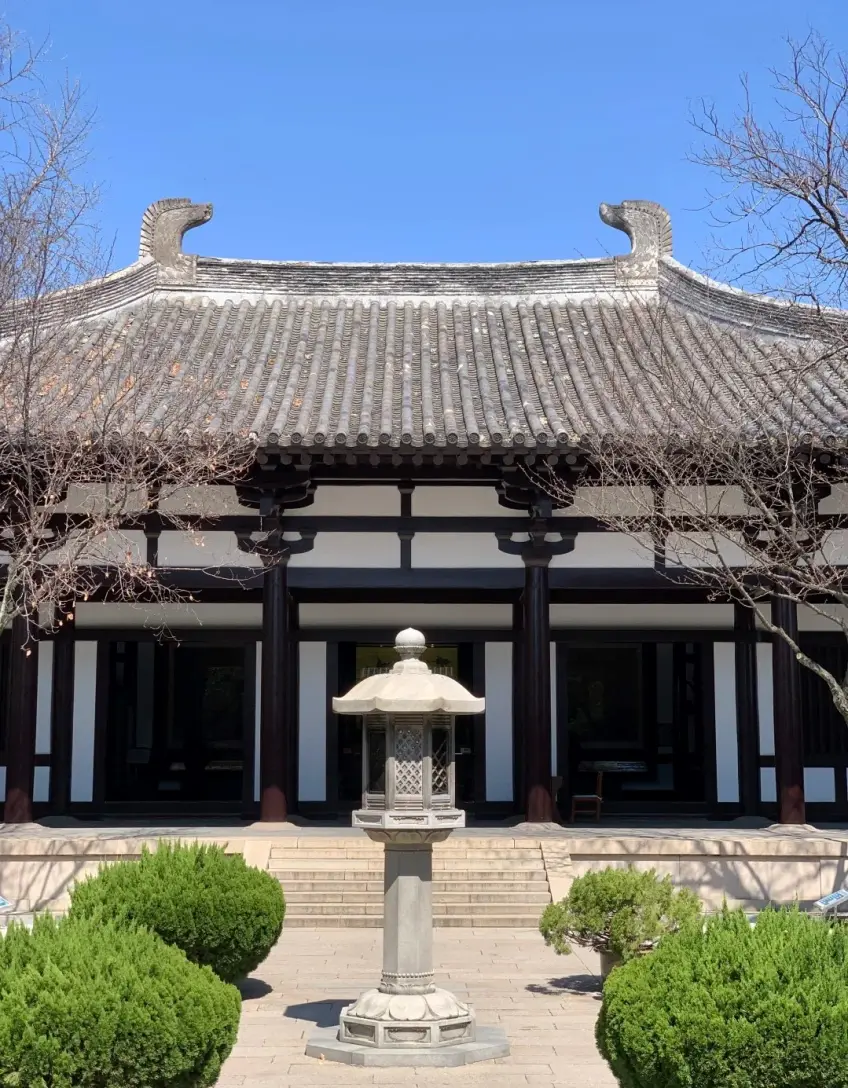
After visiting the shrine built to honor Ouyang Xiu at Daming Temple, follow the path east to the Jianzhen Memorial Hall. This was the final work of architect Liang Sicheng, modeled after the Golden Hall of Toshodai-ji Temple in Nara, Japan, which Jianzhen himself oversaw. The overall design follows Tang Dynasty architectural style, simple yet dignified.
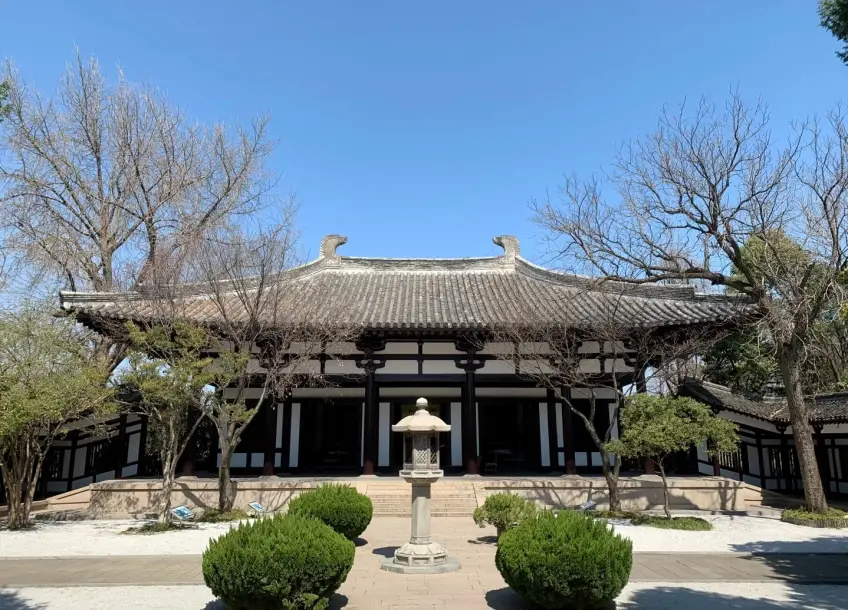
Not only does it face Toshodai-ji across the sea, symbolizing friendly cultural exchange between China and Japan, but it also displays historical artifacts and documents about Jianzhen's voyages to the east, commemorating the legendary life of Master Jianzhen.
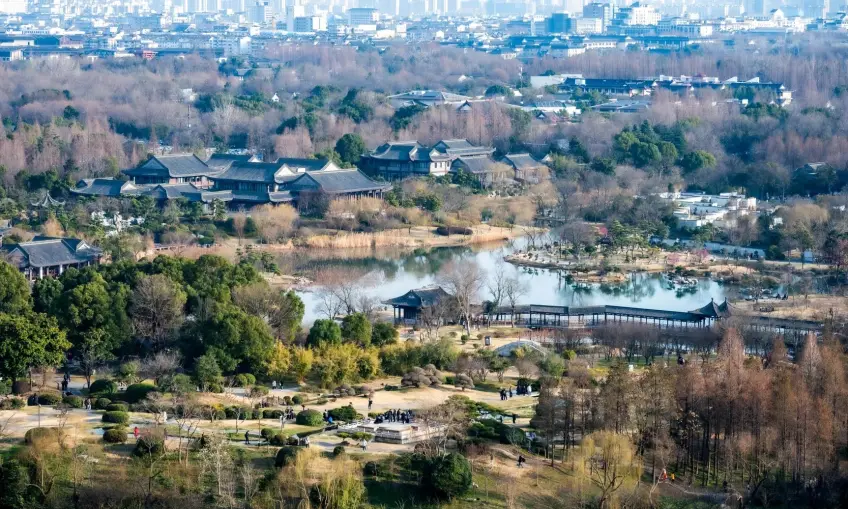
Panoramic Views of Yangzhou from Daming Temple
Climb Qiling Pagoda for a Bird's-Eye View of Yangzhou
Next, we head to Qiling Pagoda, one of the landmarks of Daming Temple. Located on the far eastern side of the temple, the pagoda is encircled by carved dragons and houses six precious Buddhist relics enshrined on different floors. From the top, you'll see Slender West Lake from a completely new perspective—it looks like a Jiangnan ink wash painting, truly mesmerizing.
Tea Tasting at the Fifth Spring Under Heaven
Finally, we visit Xiyuan Garden and the Fifth Spring Under Heaven. Surrounded by stone railings, the well curb is engraved with the words "Fifth Spring." Nearby is the Wuquan Teahouse, where brewing a cup of tea with water from the Fifth Spring is the perfect way to savor the taste of Yangzhou and wrap up the day. After your tea, follow the garden path east back to the main road, and follow the signs to exit through the front gate of Daming Temple.
If you're interested, please contact me. I can arrange a great guide to show you more of Yangzhou's scenery.
Before wrapping up, double-check: combo ticket prices, opening hours, and pagoda climb and show schedules are subject to official or on-site announcements. Send your travel date, group size, and departure point to customer service.
FAQs
How much are the tickets for Slender West Lake and Daming Temple in Yangzhou?
Daytime tickets for Slender West Lake cost ¥100 in peak season (Feb–Oct) and ¥60 in low season (Nov–Jan); Daming Temple tickets are ¥48 in peak season (Feb–Oct) and ¥30 in low season. Students and seniors should bring valid ID for discounts. Combo ticket prices for both sites are subject to the official announcement on the day.
What's the best route for visiting Slender West Lake in Yangzhou?
Enter from the South Gate and visit Long Causeway Spring Willows, Xu Garden, Little Jinshan, Diaoyutai (Fishing Terrace), Five-Pavilion Bridge, White Pagoda, Xichun Terrace, Twenty-Four Bridges, Jingxiang Shuwu and Wanhua Garden in order, then exit through the North Gate. About 50 meters east of the North Gate is Yangzhou Yan restaurant, where you can try crab roe lion's head meatballs and braised shredded dried tofu.
What are the highlights of Five-Pavilion Bridge at Slender West Lake?
Five-Pavilion Bridge has 15 arches, each different in size and shape yet harmoniously unified—it's the icon of Slender West Lake. Standing in front of the circular opening at Diaoyutai, you can frame both Five-Pavilion Bridge and White Pagoda in one view. You can reach Five-Pavilion Bridge from Diaoyutai by boat or on foot.
What are the must-see spots at Daming Temple in Yangzhou?
At Daming Temple, don't miss the Hall of Heavenly Kings, the Mahavira Hall, Pingshan Hall and Ouyang Shrine commemorating Ouyang Xiu, Gulin Hall built by Su Shi in memory of his mentor, Jianzhen Memorial Hall designed by Liang Sicheng, and Qiling Pagoda with its panoramic views of Slender West Lake. Wrap up your visit with tea at the Fifth Spring Under Heaven.
What is the best season to visit Slender West Lake in Yangzhou?
Spring is the most iconic season. Along the Long Causeway, peach trees and willows are planted "one peach every three steps, one willow every five steps," creating a beautiful scene of pink blossoms and green willows. Wanhua Garden has flowers year-round: peach, pear, and cherry blossoms bloom in spring; lotus flowers in summer; fragrant osmanthus in autumn; and wintersweet in winter.