
Lion Grove Garden: why everyone gets lost in the rockery
Lion Grove Garden (狮子林) is in the northeast corner of Suzhou's old town, a few minutes' walk from the Humble Administrator's Garden. Founded in 1342, in the Yuan dynasty, it began as a Chan (Zen) Buddhist monastery and belonged to the Bei family in the Republican era. It's best known for the Taihu rock maze at its center: three levels, about 9 paths and 21 openings, with caves linking up and paths crossing. First-timers get turned around easily.
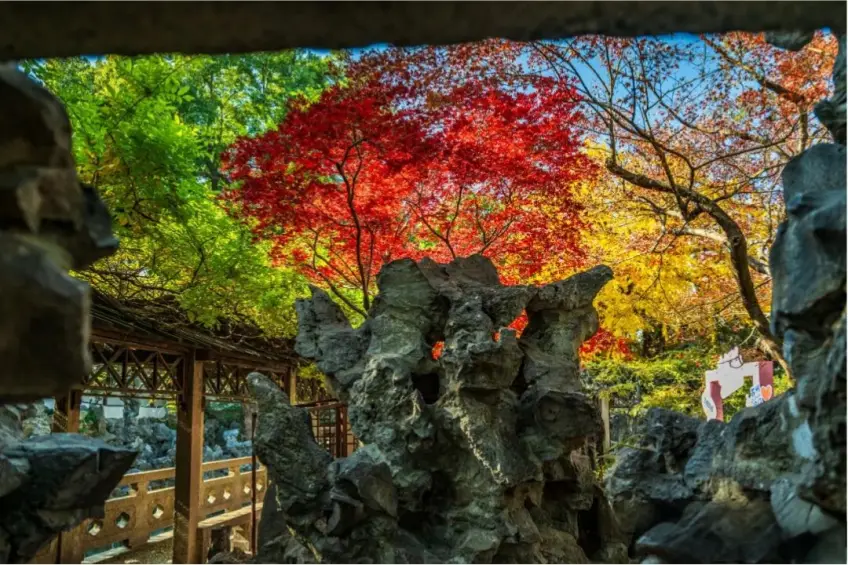
If you want the rockery paths and the stories behind them explained in one go, consider hiring a private guide. First, here's how to find your way through the rockery and what to look for.
The rockery kingdom: 9 paths and 21 openings
The garden isn't large. It's slightly wider east to west, with the ancestral hall and residences on the east side and a pond at the center. The southeast is mostly hills and the northwest mostly water. The real showstopper is the cluster of Taihu rock rockeries in the middle, often called the kingdom of rockeries—jagged peaks rise above the cave roofs, and the formations around Lion Peak are the most striking.
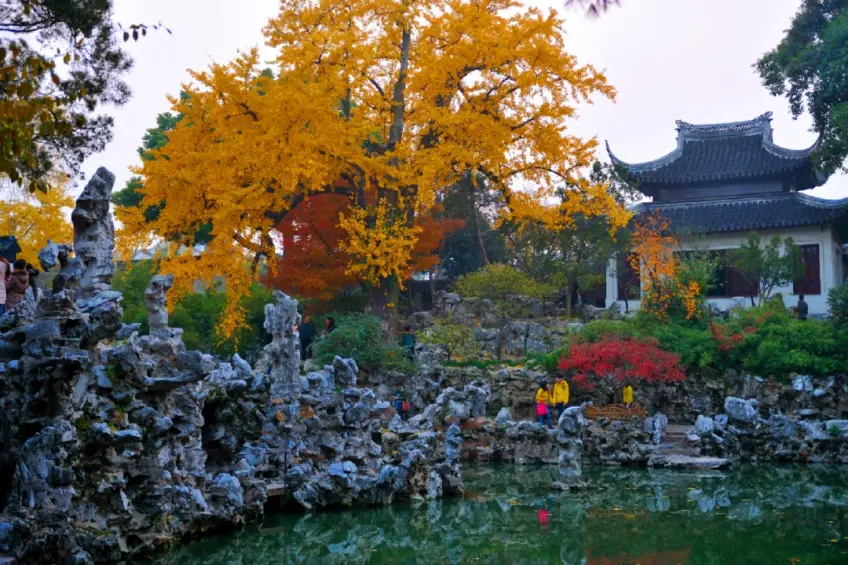
Published descriptions usually say the rockery covers about 1,153 square meters on three levels, with roughly 9 paths and 21 openings (exact counts vary; go by the garden's own information). Inside, it feels like a maze, and at busy times people back up in the narrow caves.
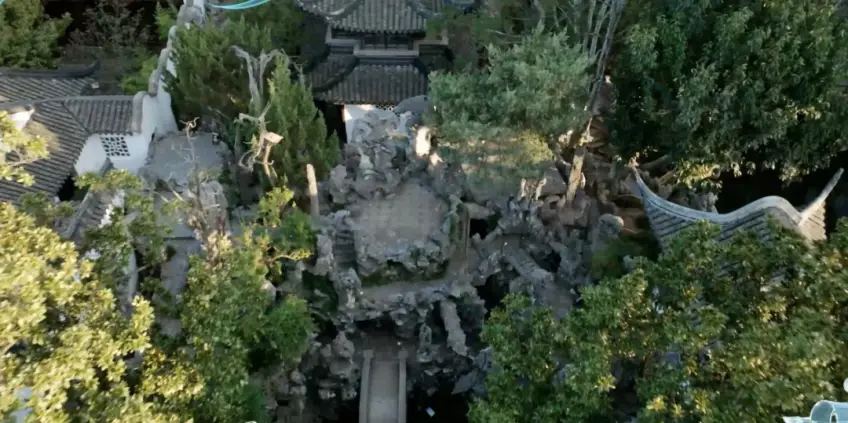
Tips: go slowly in the narrow caves and watch for slippery spots. With older travelers or kids, walk the outer corridors first to see the rocks, then pick a cave. Don't climb over railings to take shortcuts.
Halls, pavilions and the Stone Boat beyond the rockery
Yanyu Hall: a classic mandarin duck hall
Yanyu Hall (燕誉堂) stands behind a moon gate beside the Bei Family Ancestral Hall. It is the garden's best example of a mandarin duck hall: one building split into mirror-image north and south halves. The south side is more ornate and the north side plainer, and the two halves are often described as serving different purposes. Look up at the plaque first, then at the beams and lattice doors. You'll get far more out of it than by rushing through.
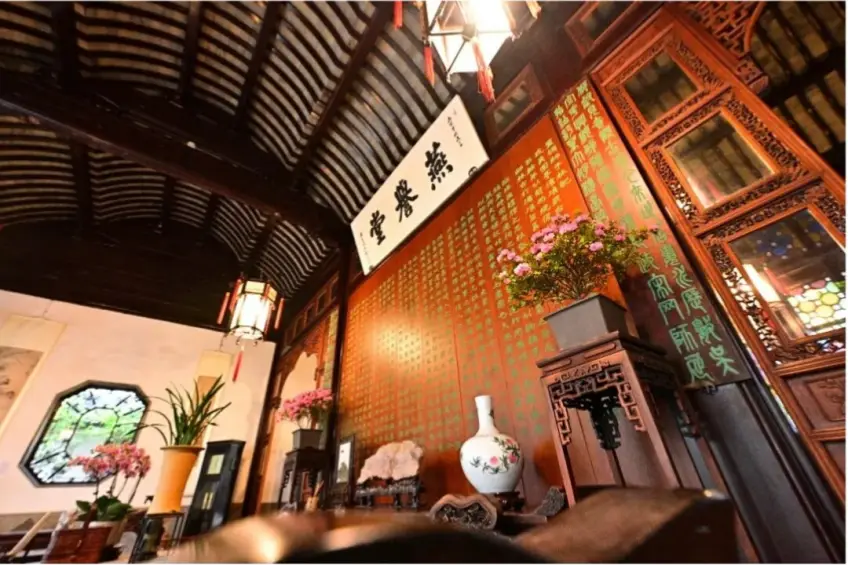
Take your time with the light inside the hall and the patterns on the lattice doors. When you're done with photos, go back out through the moon gate. The next stop, Zhenqu Pavilion, is right on the water and even better for pictures.
Zhenqu Pavilion: Emperor Qianlong's "True Delight"
Zhenqu Pavilion (真趣亭) sits by the water against a corridor. Legend links it to Emperor Qianlong: after getting lost in the rockery, he wrote an inscription, and the two characters "Zhenqu" ("true delight") became the pavilion's name. There are several versions of the story. The painted decoration and imperial grandeur stand out in a Jiangnan garden, and it makes a good rest stop halfway through.
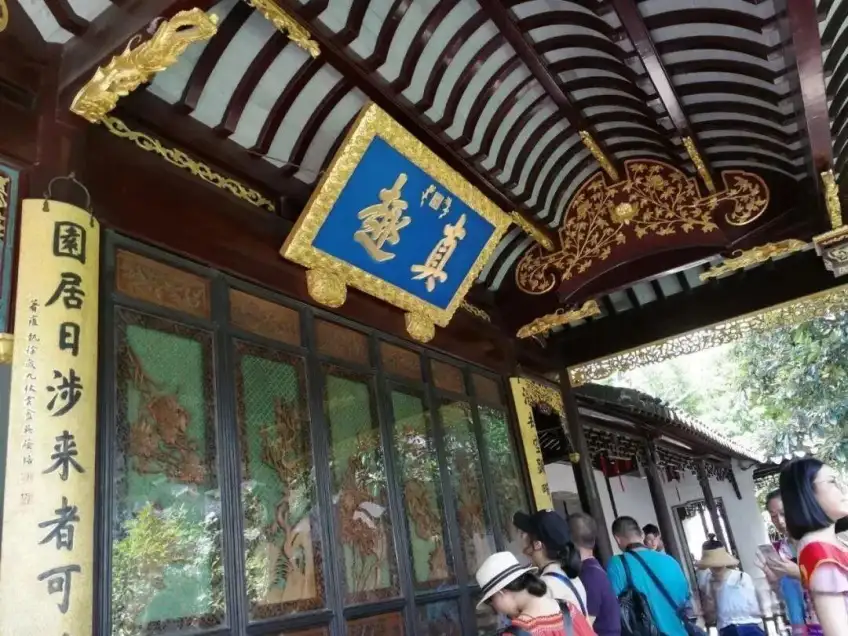
After the plaque, follow the corridor to the water. The Stone Boat sits on the far bank, a good place to compare the water views with the rockery.
Stone Boat: an East-meets-West rebuild from the Republic era
The Stone Boat stands on the northwest bank of the pond. The East-meets-West touch from the Bei family's rebuild shows clearly here: its clean lines make it look more like a Western yacht from a distance. Take it in on the same waterside loop as the rockery and the Mid-Lake Pavilion. There's no need for a separate detour.
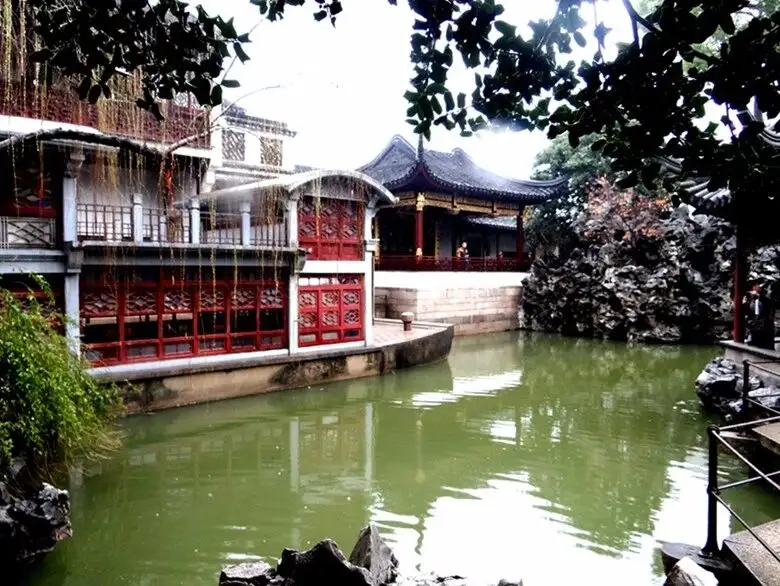
Other halls, such as Yifeng Zhibo Hall, often come up as film locations. On site, go by the signs and guides, not by movie stills.
How to visit: two routes and entry tips
Highlights route (about 1.5–2 hours): Entrance → Yanyu Hall → Nine Lions Peak and the outer rockery → Zhenqu Pavilion → Stone Boat → Mid-Lake Pavilion → one cave route through the rockery → Exit.
Full classic route (about 2.5–3.5 hours): The highlights route plus Xiaofang Hall, Yifeng Zhibo Hall, Mountain-in-View Tower, Wenmei Pavilion, Xiuzhu Pavilion, Lixue Hall and more. If you're not very fit, do just one level of the rockery rather than squeezing through every cave.
Tickets are ¥40 in peak season (April–May and July–October) and ¥30 in low season (reference prices as of November 2026). Booking and reservation rules follow the official notice on the day. Foreign visitors can check whether the booking page accepts passports; if not, ask at the ticket window on site. The garden is usually open about 7:30 a.m.–5 p.m., with last entry around 4:30 p.m., but check before you go. Take care in the rockery, and don't climb railings or carve on the rocks.
FAQs
Is it easy to get lost in the rockery at Lion Grove Garden?
Yes. There are many narrow caves and forks, and it gets congested at peak times. Look at the rocks from the outside first, then pick a cave.
How much are tickets? Do I need to book in advance?
Adult tickets are ¥40 in peak season (April–May and July–October) and ¥30 in low season. Book through the official Suzhou Gardens channels or follow the notices on site. On holidays, check visitor caps in advance.
What's the recommended route?
Start with the halls (Yanyu Hall), then walk around the outside of the rockery. Rest at Zhenqu Pavilion halfway, continue to the Stone Boat and the water, and finish by picking a cave into the rockery. Short on time? Just follow the highlights route.
How do I get to Lion Grove Garden from Suzhou Railway Station (苏州站)?
Metro, bus and taxi all work. On the Suzhou Metro, you can buy tickets with a foreign bank card at station counters, and ticket machines take Alipay and WeChat Pay. If you have lots of luggage or plan to see several gardens in a day, a station transfer or private car is the better choice.
How should I combine it with the Humble Administrator's Garden and Lingering Garden?
Lion Grove is about the rockery, the Humble Administrator's Garden about its water-and-hill layout, and Lingering Garden about architecture and shifting spaces. Squeezing all three into one day is rushed.
Final thoughts
Lion Grove is worth the trip for a simple reason: you get to wander through the rocks for a while and hear the echoes of a Zen monastery and rockery nearly 700 years old. Settle your route first, then sort out transport.
Tell us your travel dates and group size, and our travel consultant can help arrange your guide and round-trip transport.