
Lion Grove Garden (狮子林) is in the northeast corner of Suzhou's old city, not far from the Humble Administrator's Garden. It began as a Yuan dynasty Chan (Zen) temple and is known for its maze of Taihu rock, with 9 paths and 21 cave openings. Emperor Qianlong visited several times on his southern tours and left a plaque reading Zhenqu, "true delight." Tickets are ¥40 in peak season and ¥30 off-season. The highlights route takes about an hour, and Anxiang Shuying Tower in the garden now houses Shuying Coffee (疏影咖啡).
The rockery maze: what makes Lion Grove special
Suzhou has long been known as the "City of Gardens," and its classical gardens are listed as a UNESCO World Heritage Site.
Nine of Suzhou's classical gardens are on the World Heritage List, textbook examples of Chinese garden design. Each has its own lesson: the Humble Administrator's Garden shows open, airy space; Lingering Garden shows how the view changes with every step; the Master of the Nets Garden shows how much fits into a small space. Lion Grove's keyword is "fun." Its tangled rockery maze shows that Chinese taste can be playful as well as serious.
If Jiangnan gardens were books, Lion Grove Garden would be the chapter Emperor Qianlong read over and over again.
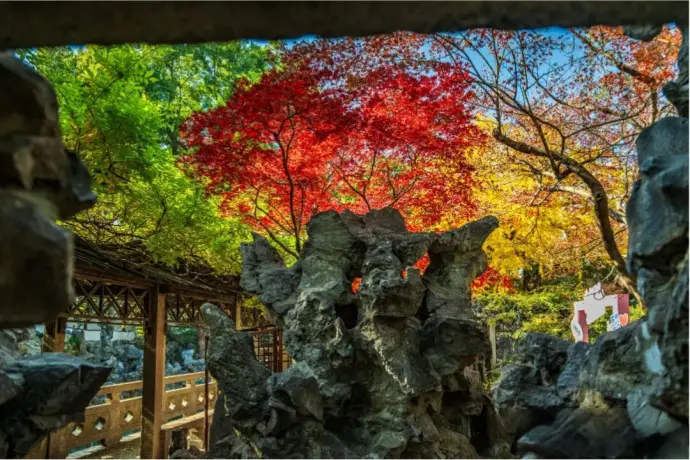
Lion Grove is a bit like an old-time escape room. The rockery takes up about a fifth of the garden, and its Taihu rock maze hides 9 paths and 21 openings, so it's easy to get lost. Legend says Emperor Qianlong wandered inside for two hours without finding the way out, and he later wrote the plaque Zhenqu, "true delight."
Emperor Qianlong's favorite garden
Why was Qianlong so fond of Lion Grove? Early in his reign he saw the Lion Grove painting by Ni Zan, a great painter of the late Yuan and early Ming, admired it, and wrote a poem on it. He assumed the garden had belonged to Ni Zan's family and that, after more than 400 years, it must be long gone.
So on his first southern tour in 1751 he skipped Lion Grove. Only on his second tour in 1757 did he learn the garden was in Suzhou. He had Ni Zan's painting brought from Beijing at once, toured the garden, and wrote a second poem on the painting, matching the rhymes of the first. From then on he carried the painting on every southern tour, and Lion Grove became a fixed stop each time.

Details worth finding
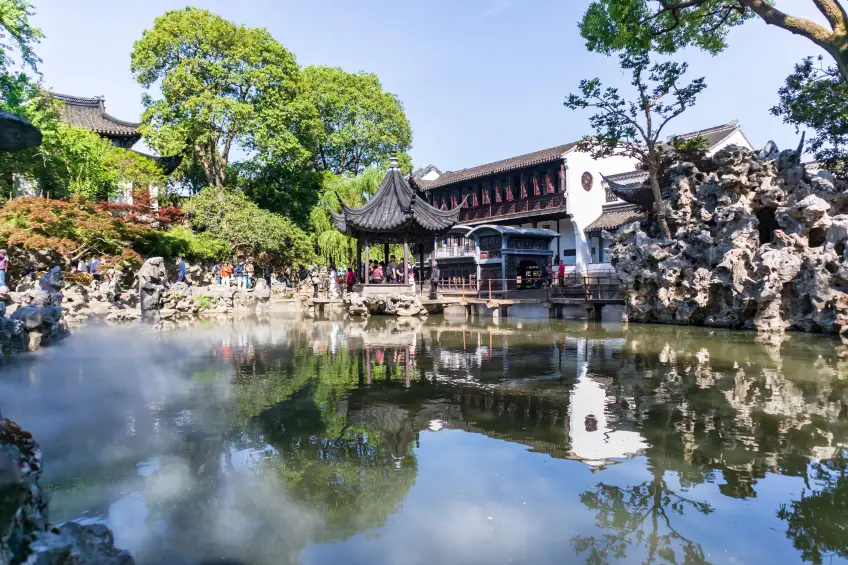
Lion Grove, the "kingdom of rockeries," has plenty of details that are easy to miss.

The rockery maze: get lost like Qianlong
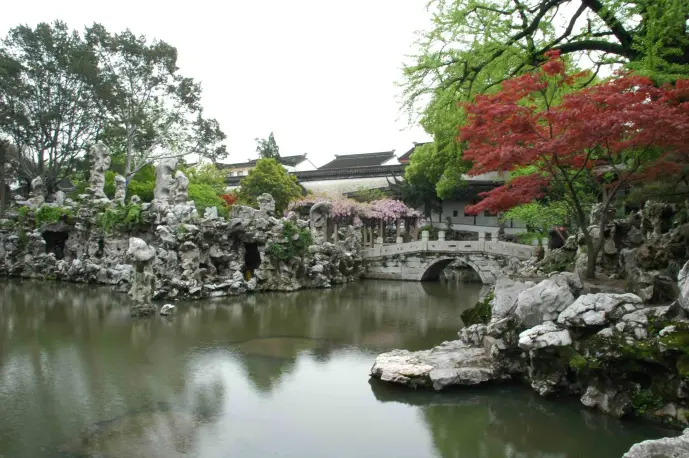
The rockery maze is a large group of old rockeries with 9 paths and 21 openings; finding your way through feels like a tricky escape room.
Photo tip: Wear hanfu and take silhouette portraits among the rock peaks for an old-China look.
Nine Lions Peak: find the hidden lions
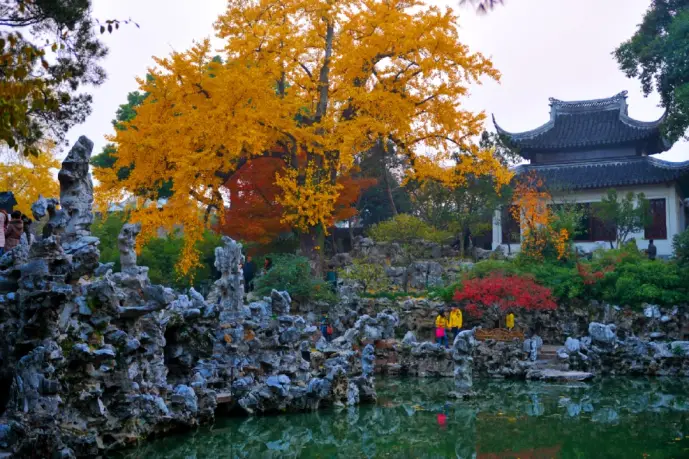
Nine Lions Peak, piled up from Taihu rock, is said to hide nine lions. Legend says only someone born to be emperor can count all nine; most people find five. See how many you can spot.
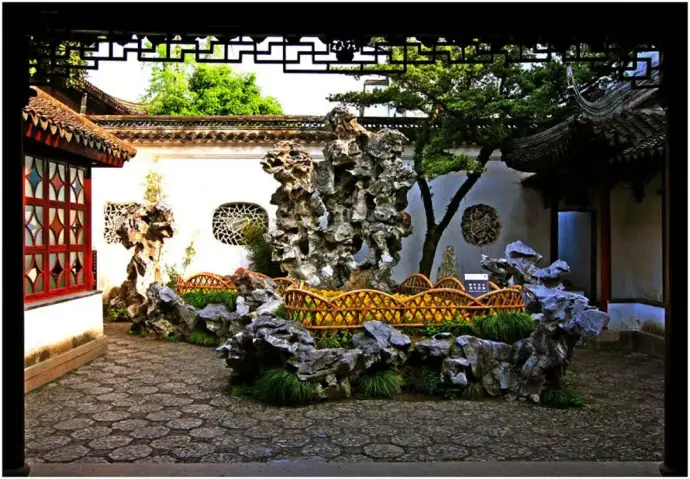
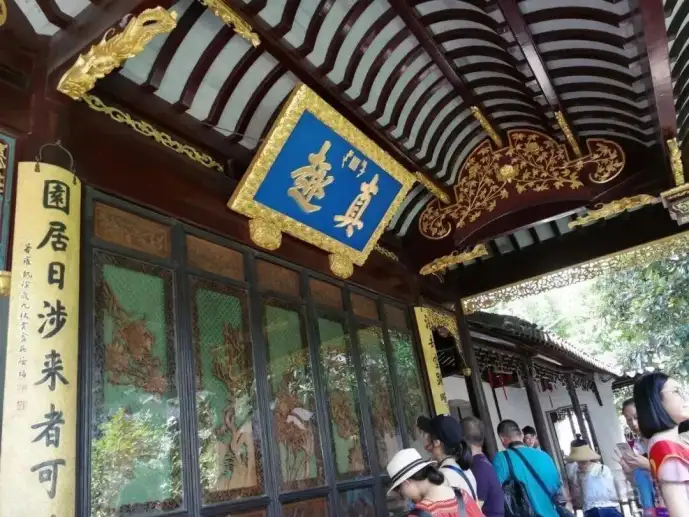
Zhenqu Pavilion: the emperor's own plaque
Zhenqu Pavilion holds the Zhenqu ("true delight") plaque in Qianlong's own hand. The pavilion is lavishly gilded, with an unmistakably imperial look.
Framed views, light and Taihu rock
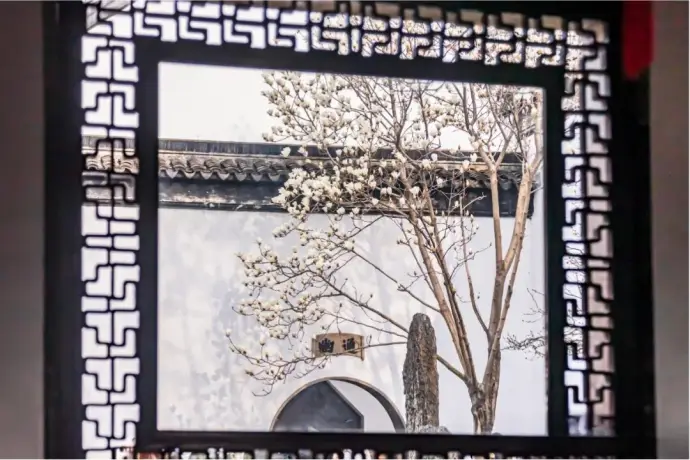
Look for the framed views, the soft Zen light and shadow, the word Amitabha carved into the rock, and the Taihu rock group at Lixue Hall known as "Ox Eating a Crab." All of them show classic Chinese taste.
East meets West: the Bei family's Jiangnan connection
Bei Runsheng, the "Pigment King" of the Republican era and great-uncle of the architect I.M. Pei, spent nearly seven years restoring Lion Grove. Besides returning the rockery to its original form, he added Yanyu Hall, Xiaofang Hall, the Mid-Lake Pavilion, the Nine-Turn Bridge, Lotus Hall and the Mountain-in-View Tower.
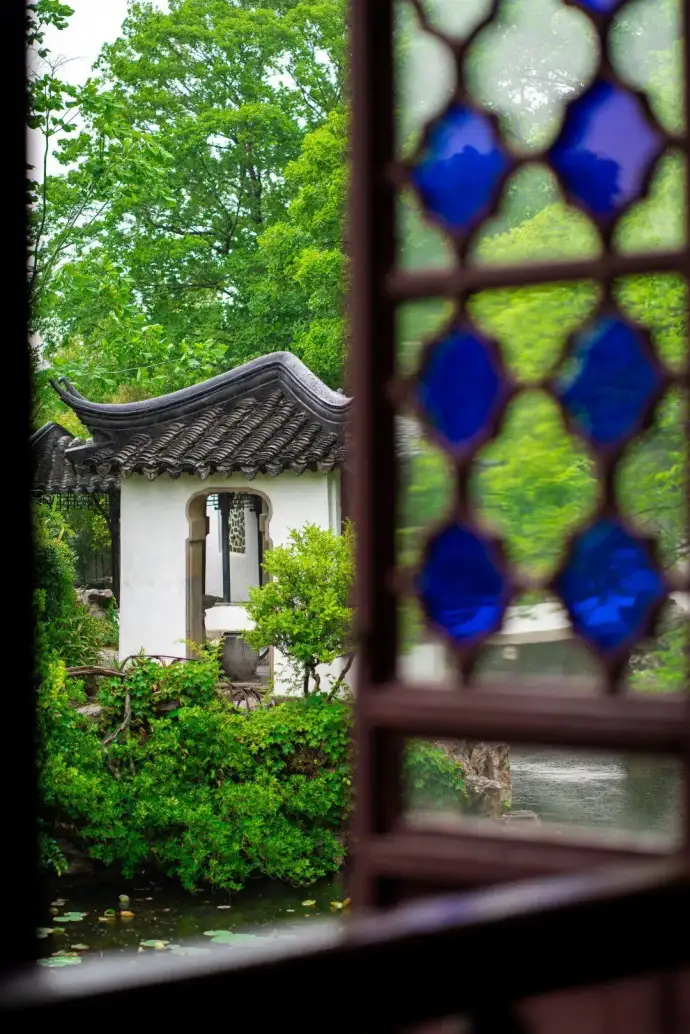
He also introduced Western elements like stained glass windows and a concrete stone boat, giving this classical garden an East-meets-West flavor. These details are also great for photos.
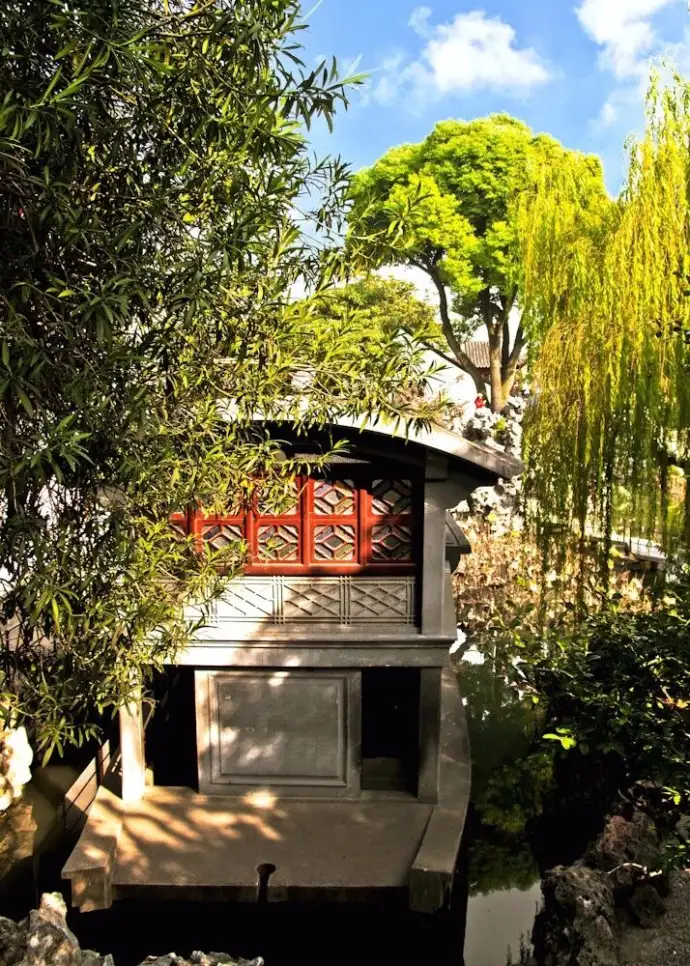
Find the little stone lions
On the roof ridges of the buildings in Lion Grove Garden, there are three small stone lion statues that some visitors jokingly call the "three rooftop guardians."
How to find them: stand near Zhenqu Pavilion and look up at the eaves; you'll see three little lions crouched on the ridge. Around 3–4 p.m., when the light is low, their shadows fall across the tiles, a very Chinese scene.
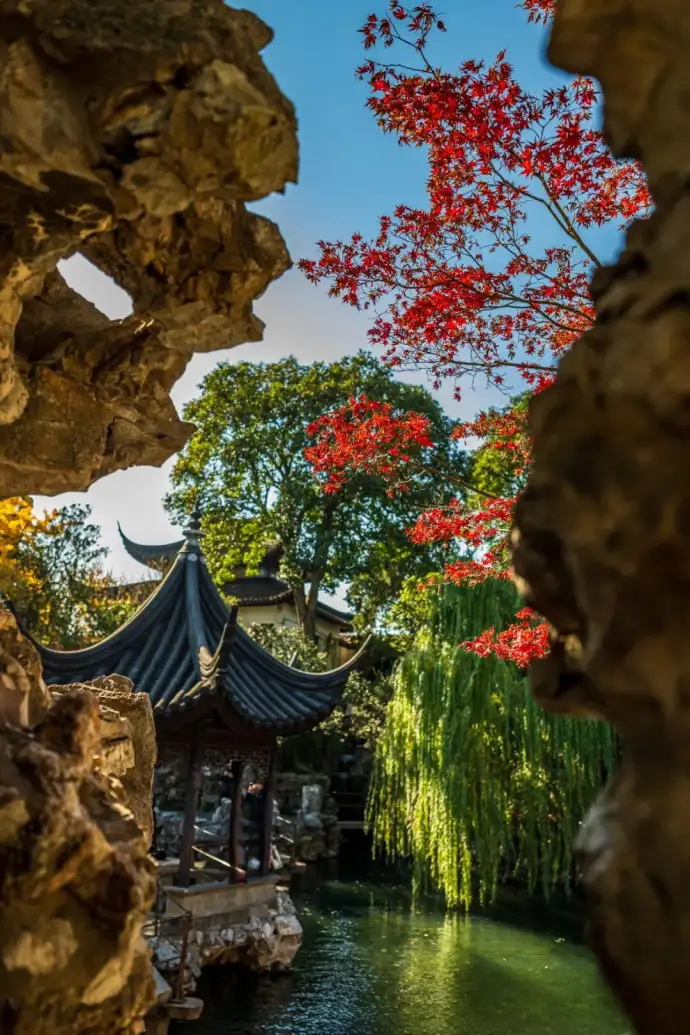
The water rockery: Crossing the River on a Reed
In the water rockery area, there's a unique solitary peak standing alone in the water, often called "Crossing the River on a Reed." The name comes from the Zen legend of Bodhidharma crossing the Yangtze River while standing on a single reed, echoing Lion Grove Garden's history as a former Zen temple.
Jiejia Bridge or the Mid-Lake Pavilion gives the best view; from there the lone rock seems to float on the water, a very Zen sight.
Lion Grove through the seasons
Plum blossoms in spring, lotus in summer, ginkgo in fall, snow in winter: each season shows Lion Grove in a different way, and whenever you come, you'll see a different Suzhou.
Spring: plum and cherry blossoms
March: plum blossoms at Wenmei Pavilion
Spring at Lion Grove begins with the plum trees around Wenmei Pavilion. The name alludes to the old story of soldiers forgetting their thirst at the thought of plums. The pavilion is ringed with plum trees, and in spring red and white blossoms open one after another. From the pavilion, the flowers soften the hard lines of the rockery below.
Photo spot: Shoot down from the second floor of Wenmei Pavilion with plum blossoms in front and the rockery behind for a layered picture.
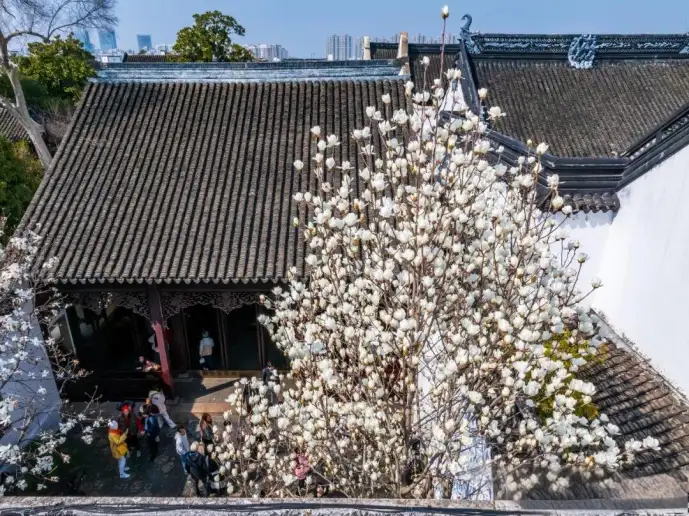
Late March to early April: cherry blossoms at Zhibai Hall
A few cherry trees stand in front of Zhibai Hall. They peak in late March, framed by the garden's old cypresses and rockery, which makes for good photos.
Tip: Cherry blossoms don't last long. Follow the official WeChat account of the Suzhou gardens, which run Lion Grove; it usually posts bloom updates.
Summer: lotus and rain
June–August: lotus at Flower Basket Hall
Flower Basket Hall stands at the water's edge over a pond full of lotus, and the terrace in front is a good place to see them. In bloom, the pink flowers and their reflections set off the rockery and pavilions beyond, and from your seat you can almost touch the leaves.
Best time: early morning when the lotuses first open, or at sunset when the light is softest and ideal for photos.
Rainy days: Listen to the rain at the Mid-Lake Pavilion
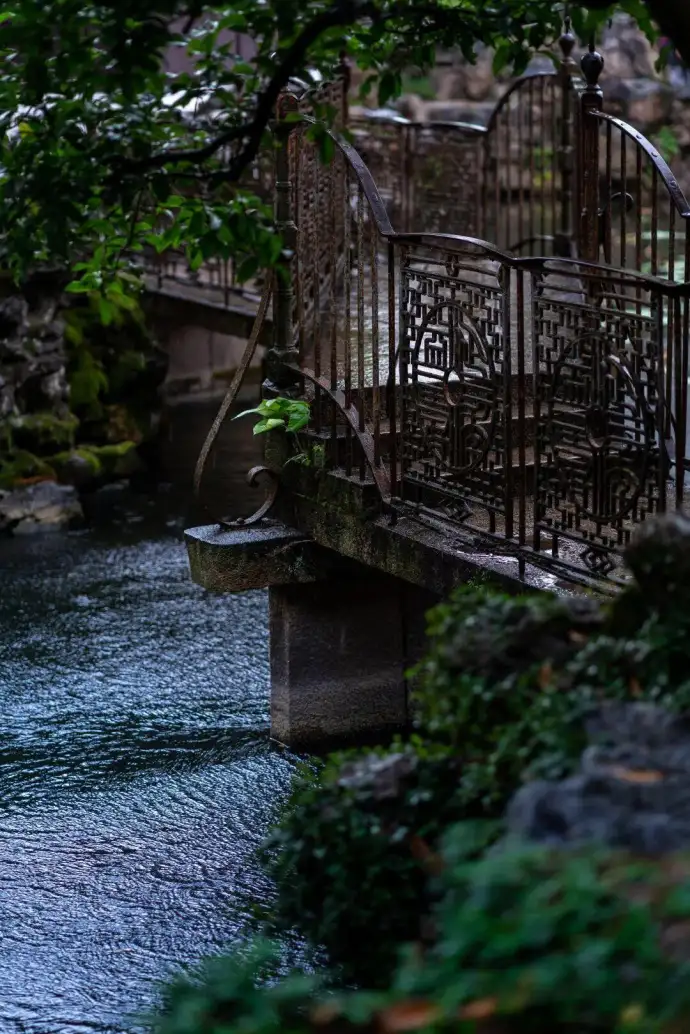
Summer rain shows a quieter side of Lion Grove. Sit in the Mid-Lake Pavilion and watch drops hit the lotus leaves and run down the cracks in the rockery while the rain patters around you. It's summer in Jiangnan at its most typical.
After the rain: When the sun comes out after a shower, the rocks shine, mist rises, and the whole garden looks freshly washed.
Fall: ginkgo and light
November: ginkgo at Nine Lions Peak
The ginkgo trees beside Nine Lions Peak are the stars of Lion Grove in fall. When the leaves turn fully yellow, sunlight through the branches dapples the ground.
Photo tip: Come around 3–4 p.m., when low sun makes the ginkgo leaves glow and gives photos a natural golden tone.
Winter: snow and wintersweet
December–January: snow at Lixue Hall
The name Lixue, "standing in the snow," comes from an old story about a student who waited in the snow outside his teacher's door. On a snowy day, the small courtyard in front of Lixue Hall is the most atmospheric spot in the garden, with snow on the roofs and the stone steps and the whole yard looking like an ink painting.
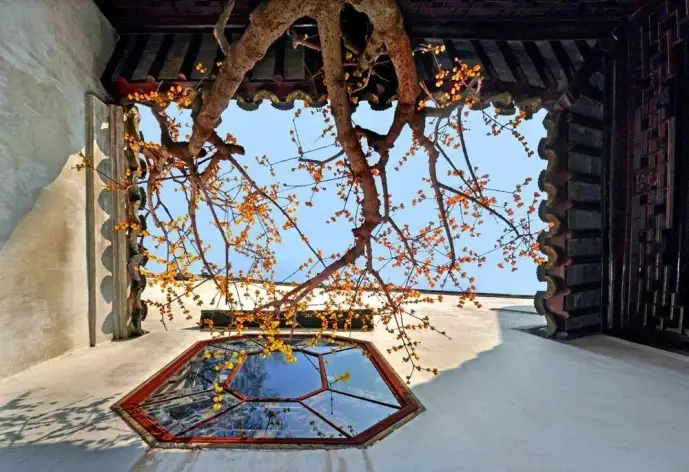
Late winter: wintersweet scent at Wenmei Pavilion
In winter, before the plum trees bloom, the wintersweet near Wenmei Pavilion is already scenting the air. It flowers on bare branches; the small yellow blossoms don't look like much, but their scent carries a long way. Closing your eyes and following it is a quiet pleasure of its own.
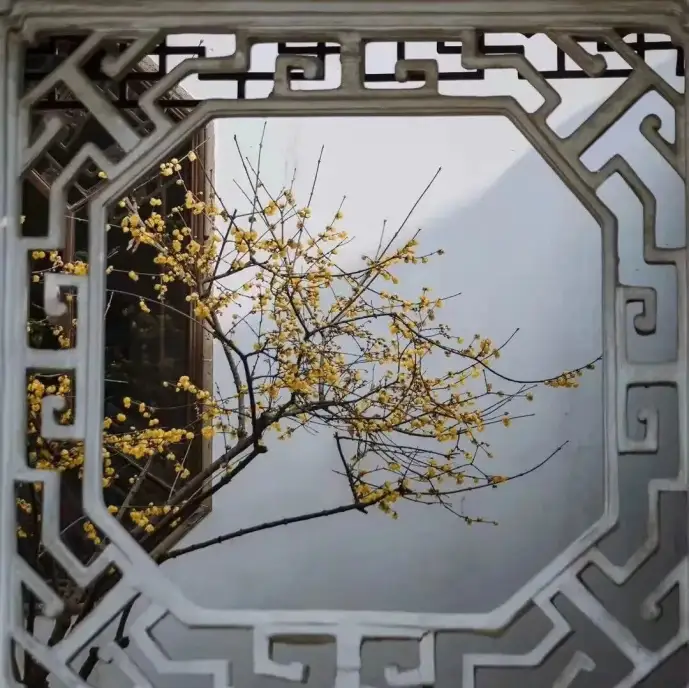
Tell us which season you'd like to visit, and we can help plan your itinerary based on that year's bloom schedule.
Top 3 photo spots at Lion Grove Garden
Yanyu Hall, the "mandarin duck" hall: a symmetrical old-style courtyard, perfect for photos in a qipao leaning on the carved doors.
Three-tier waterfall at Feipu Pavilion: A man-made waterfall, rare in classical gardens. Stand on the bridge and shoot the falling water against the rockery for a sense of movement.
Borrowed view from the Mid-Lake Pavilion: Through the curved eaves you can see Beisi Pagoda outside the garden, a classic "picture within a picture."
A café hidden in the garden
Most people spend their visit squeezing through the rockery, but it's worth saving an hour for Shuying Coffee inside the garden.
Shuying Coffee
Inside Lion Grove Garden stands Anxiang Shuying Tower, built along the water. Its name comes from the verse "Sparse shadows slant across clear shallow water; subtle fragrance drifts in the moonlit dusk."
Anxiang Shuying Tower, together with Wenmei Pavilion, Feipu Pavilion and the artificial waterfall beside it, forms the western scenic area of Lion Grove Garden. Rustic and tranquil, the tower is surrounded by red and green plum trees, making it one of the best spots in the garden to admire plum blossoms. Today, however, Anxiang Shuying Tower has been transformed into a coffee shop within the garden, fittingly named Shuying Coffee.
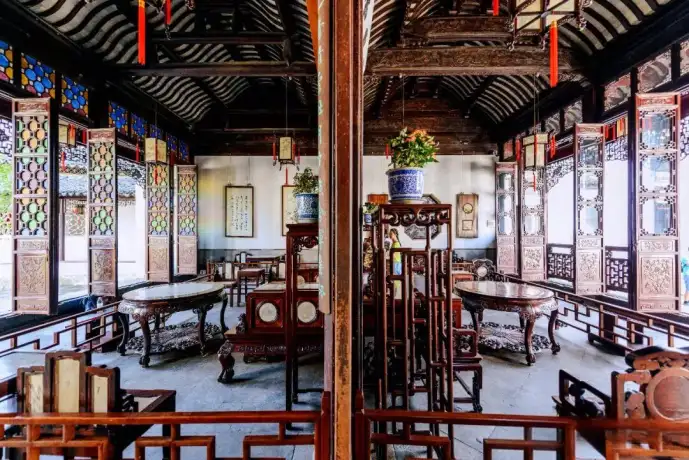
Rattan and wood furniture and bamboo blinds sit alongside the tower's original stained-glass windows, a mix of East and West that sets just the right mood.
Shuying Coffee is run by the garden together with the Suzhou coffee brand LIGHT LARK CAFE. The drinks follow the brand's style with twists drawn from Lion Grove's history, and each has its own name.
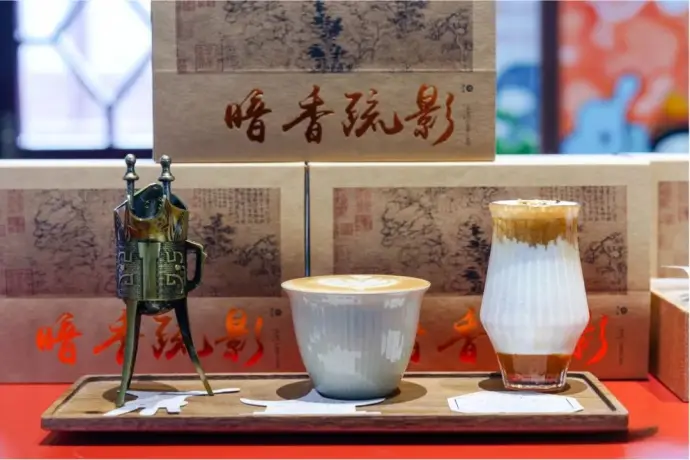
Lion Ode
Lion Ode (Shizi Gefu) is a pun on the Chinese phrase for poetry and verse, a coffee with a literary twist. It's a classic flat white blended with sweet-tart persimmon jam: smooth, with a fresh finish.

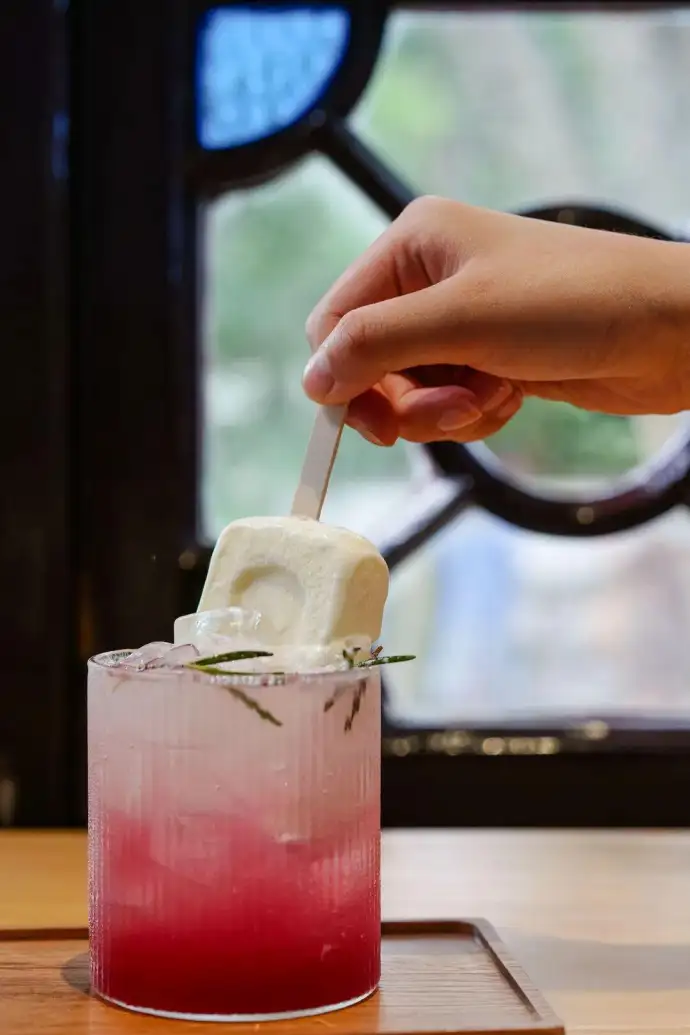
Plum in Snow (Wenmei Lixue)
Plum in Snow is named after Wenmei Pavilion and Lixue Hall. Fresh summer bayberries are pureed and served with sparkling water and house-made vanilla ice cream: sweet, refreshing and pink, a very photogenic drink.
The Coffee Bean's Garden Universe
The Coffee Bean's Garden Universe is Shuying Coffee's most unusual set. It's built on three themes from Lion Grove's history, Zen, garden and home, and imagines a coffee bean in a parallel universe traveling through 3,000 years at Lion Grove.
This set includes three coffees—cold brew, piccolo, and flat white—served in a bronze wine vessel, a rustic ceramic tea bowl, and a ribbed glass cup, symbolizing the Spring and Autumn and Warring States periods, the Song Dynasty, and modern times.

Shuying Coffee sells more than coffee: there's Suzhou-style ice cream in flavors such as bayberry and old-style Suzhou tofu, with ingredients that change with the seasons.
The café is tucked into a quiet corner of the garden with no obvious sign at the door. When you're tired of walking, go upstairs in the tower and sit for a while.
When is the best time to visit Shuying Coffee?
Right at opening in the morning: fewest visitors, making it easier to take photos at your own pace.
A rest after exploring: After navigating the rockery maze, head upstairs to relax and give your eyes and legs a break.
After the crowds thin out: Once the tourists and tour groups leave, it becomes exceptionally peaceful—perfect for zoning out.
Routes through Lion Grove Garden
Full classic route: Entrance → Yanyu Hall → Xiaofang Hall → Nine Lions Peak → Yifeng Zhibai Hall → Mountain-in-View Tower → Anxiang Shuying Tower → Mid-Lake Pavilion → Zhenqu Pavilion → Stone Boat → Wenmei Pavilion → Xiuzhu Pavilion → Lixue Hall → Exit
Highlights route (about 1 hour): Entrance → Yanyu Hall → Nine Lions Peak → Zhenqu Pavilion → Stone Boat → Mid-Lake Pavilion → rockery maze → Lixue Hall → Exit
Come to Lion Grove with us and take whichever route suits you.

Suzhou, Wuxi, Yangzhou and Zhenjiang 4-day 3-night private tour | Lingshan · Slender West Lake · Xijin Ferry
A 4-day 3-night private tour starting in Suzhou and ending in Yangzhou: Lion Grove Garden, Tianping Mountain and Pingjiang Road; Yuantouzhu (Turtle Head Isle), Lingshan Grand Buddha and Nanchang Street; Slender West Lake and Daming Temple; Ge Garden on the last day, then Jinshan Temple and Xijin Ferry in Zhenjiang. Includes transportation, guide, hotels and admission tickets. English-speaking guide available.
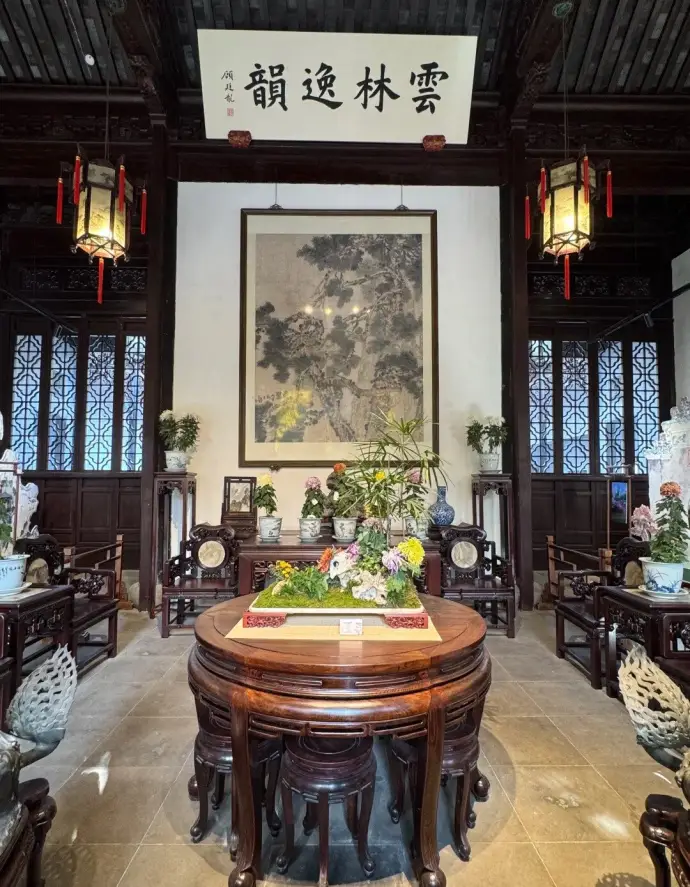
Tickets and visitor rules
Tickets: ¥40 in peak season (April–May and July–October) and ¥30 off-season (June and November–March). These are reference prices as of November 2026; check the garden's official notices.
You need a ticket. Book ahead on the "Suzhou Gardens Travel" (苏州园林旅游) WeChat account or at the self-service machines on site, and bring the ID you booked with. Foreign visitors should check whether the booking page accepts passports; if not, ask at the ticket window.
Rockery safety: Lion Grove Garden is famous for its rockery maze, with winding paths and many openings. Do not climb the rockeries or railings, and watch your step to avoid slipping, especially on rainy days or during peak hours.
Prohibited items: Flammable and explosive materials, pets, and other hazardous items are not allowed in Lion Grove Garden.
Maintain order: Please take care of the garden architecture, historical relics, furnishings, and other facilities. Carving or scribbling on buildings and structures is prohibited. Do not damage plants or trees, trample on lawns, or enter fenced areas.
If it's your first time in a Suzhou classical garden, consider a local guided tour of the Lion Grove Garden, half-day or full-day. From the Bei Family Ancestral Hall to the rockery maze, your guide will tell the stories behind the garden as you go. Chinese- and English-speaking guides are available; Japanese, Korean, German, French and Spanish guides need advance confirmation.