

More than a photo op: a century-old stroll along The Bund
The Bund is a stretch of riverfront on the west bank of the Huangpu River, running from No. 1 to No. 33 Zhongshan East 1st Road. It extends from Yan'an Road in the south to Waibaidu Bridge in the north, covering about 1.5 km. After Shanghai opened as a treaty port in 1843, foreign trading houses and banks built along the river here, creating the "Exhibition of World Architecture." Walking the length takes an hour or two; then take a ¥2 ferry across the river for a look back, and in half a day you can link up the historic buildings, Waibaidu Bridge and the Lujiazui skyline. For building names and architectural styles, see The Bund architecture guide; for piers, schedules and fares, see Shanghai Bund ferry; for connecting Nanjing East Road to the riverfront on foot, compare Nanjing Road to The Bund; for river-view Benbang cuisine and time-honored restaurants, also see Shanghai food. For half-day/day tour routes, start with Shanghai day tour; for a citywide attraction overview, see Shanghai travel. Opening hours and ticketing are always subject to on-site announcements.
Determined to "see all of Shanghai since I'm already here," I dove straight into The Bund, expecting to snap a few quick "postcard shots." But the moment the river breeze hit me, I slowed down completely. This Shanghai Bund travel guide takes you on a walking route linking the historic international architecture, Waibaidu Bridge, and the lively riverside atmosphere, while bringing the warm human history to life.
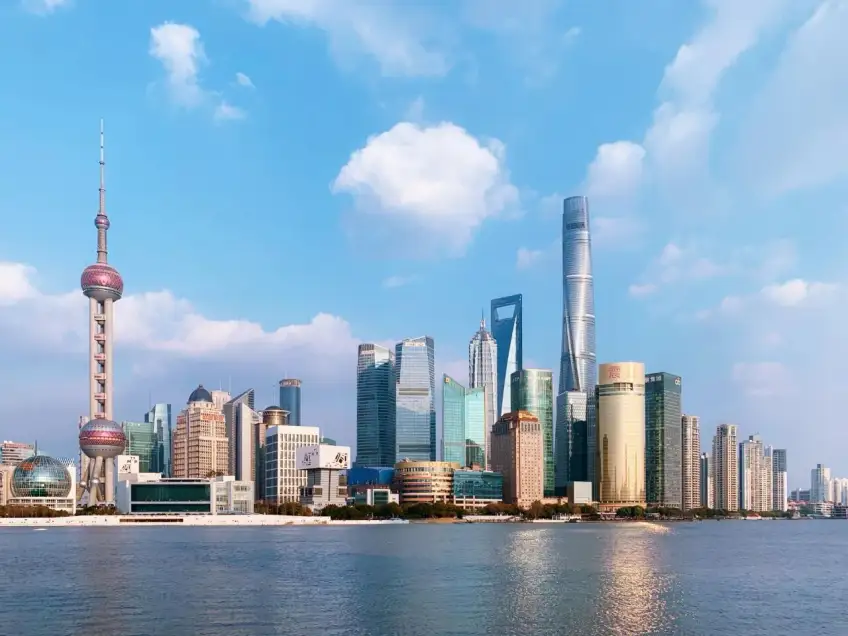
Standing by the Huangpu River, this kilometer-plus stretch of waterfront isn't just a backdrop for viral photos—it's a living century of modern Chinese history.
Arriving in Shanghai via Hongqiao, Pudong, or a train station? Book airport/train station transfers first to drop off your luggage, then head straight to The Bund for a walk. For cross-district trips or night tours, a private car saves your legs. To visit The Bund and Lujiazui in one day, check out our group tours. For stories about the city's opening as a treaty port and its architecture, add a private guide, or arrange a custom private tour to set your own pace. Just tell your travel consultant your dates, group size, arrival/departure points, and the stretches you want to walk.
The Bund's ¥2 "panoramic movie"
Many travel guides recommend The Bund sightseeing boats or luxury cruises, claiming the views are breathtaking. On my first visit, I spent over ¥100 on a boat ride, and the lights along both banks were indeed beautiful. This time, however, I chose the simplest option: the ¥2 ferry (ticket prices and schedules are subject to the notices posted at the pier).
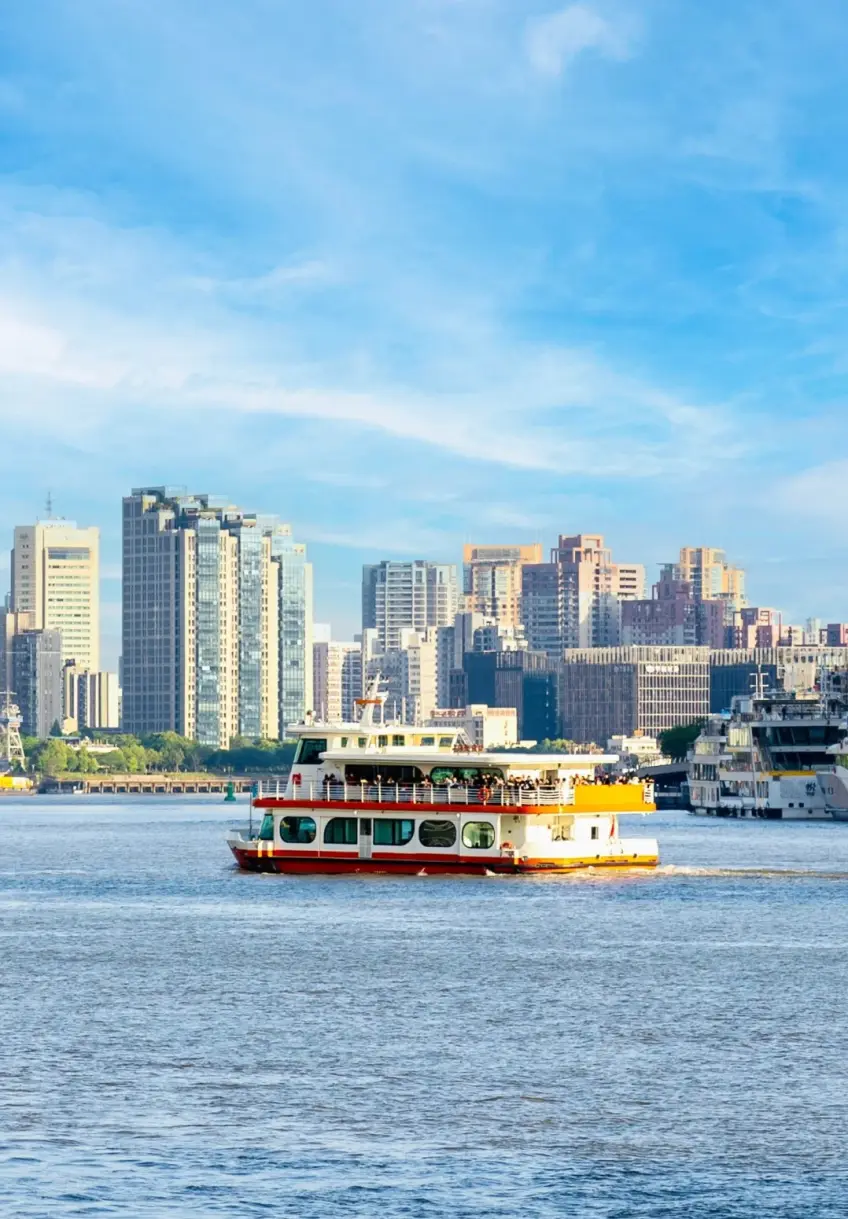
The moment you step aboard, it feels like a steal: the historic buildings of The Bund on your left, and the Lujiazui skyscrapers piercing the clouds on your right. As the boat rocks, the scenery on both sides suddenly comes alive.
Shanghai: From the riverbank to the world
Standing on the deck with the river breeze in your face, this crossing feels like a movie called "Shanghai: From the Riverbank to the World," with the scenery of The Bund as its opening scene.
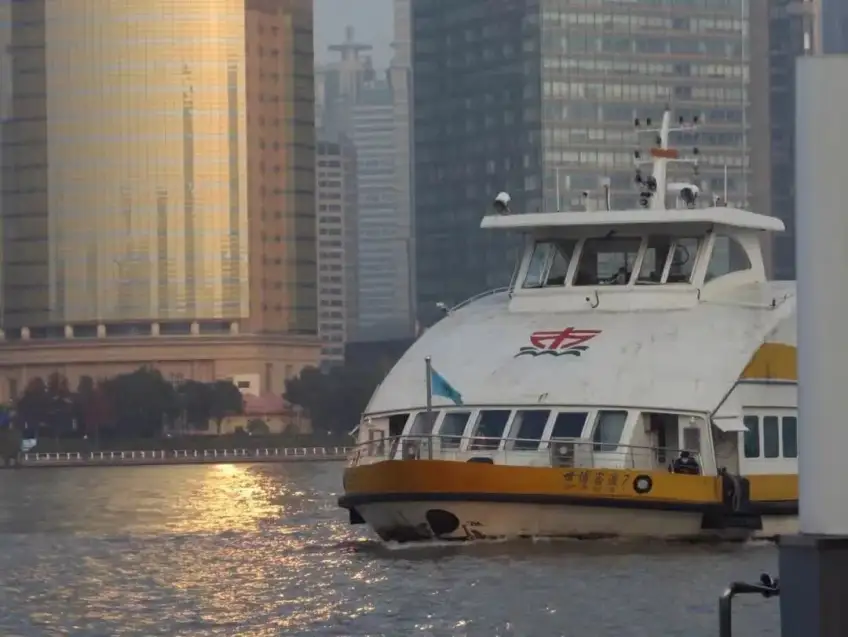
The ferry is cheap but far from shabby—perfect if you want to take in both banks slowly without paying for a sightseeing cruise. Hold on tight when boarding and disembarking; the deck can be slippery in the rain (follow on-site safety notices).
Shanghai's first mudflat, its first ship
This place was never a "golden beach" to begin with. Locals used to call this stretch of riverfront "Huangpu Tan"—the muddy banks of the Huangpu River. It was just a path worn by boat trackers through reeds taller than a man, where the receding tide left behind nothing but crabs and clam shells.
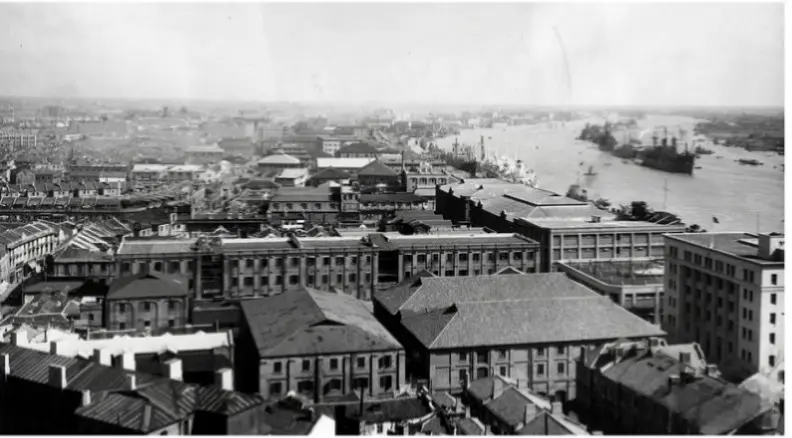
When the British arrived and peered through their telescopes, they saw a spot backed by the mouth of the Yangtze River—the key to unlocking China's interior. As the first ship docked, leather boots overlaid fishermen's footprints, and the riverbank ceased to be just a fishing village.
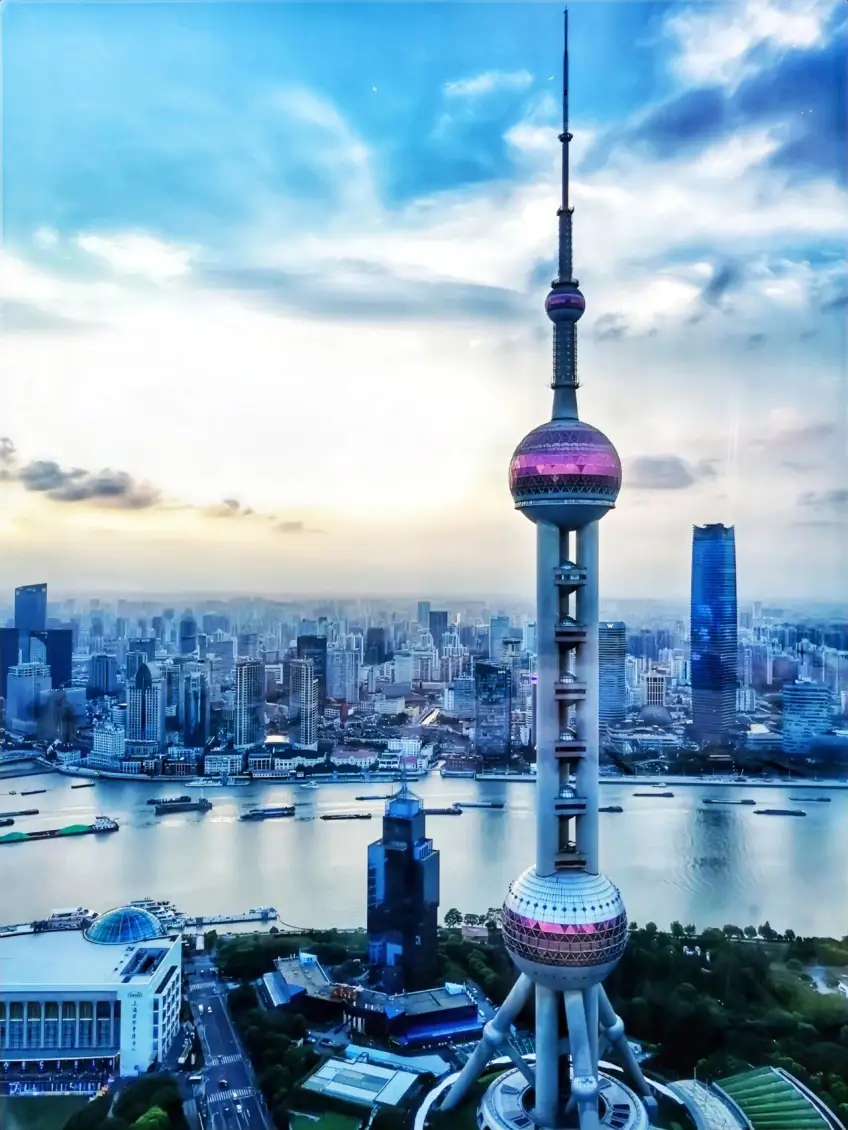
Seen from above at dusk, the spheres of the Oriental Pearl Tower reflect the fading light on the river while the buildings across the water light up one by one. The mudflat of over 180 years ago has long been rewritten by this glowing city.
The opening of The Bund in Shanghai
Many people's first impression of Shanghai is prosperity, a fast pace, and a financial hub. Over a century ago, it was a stretch of docks and ferry crossings—and the port where foreigners landed. Shanghai opened as a treaty port in 1843. Those few words may sound abstract, but they rewrote the fate of the Yangtze River basin and all of China.
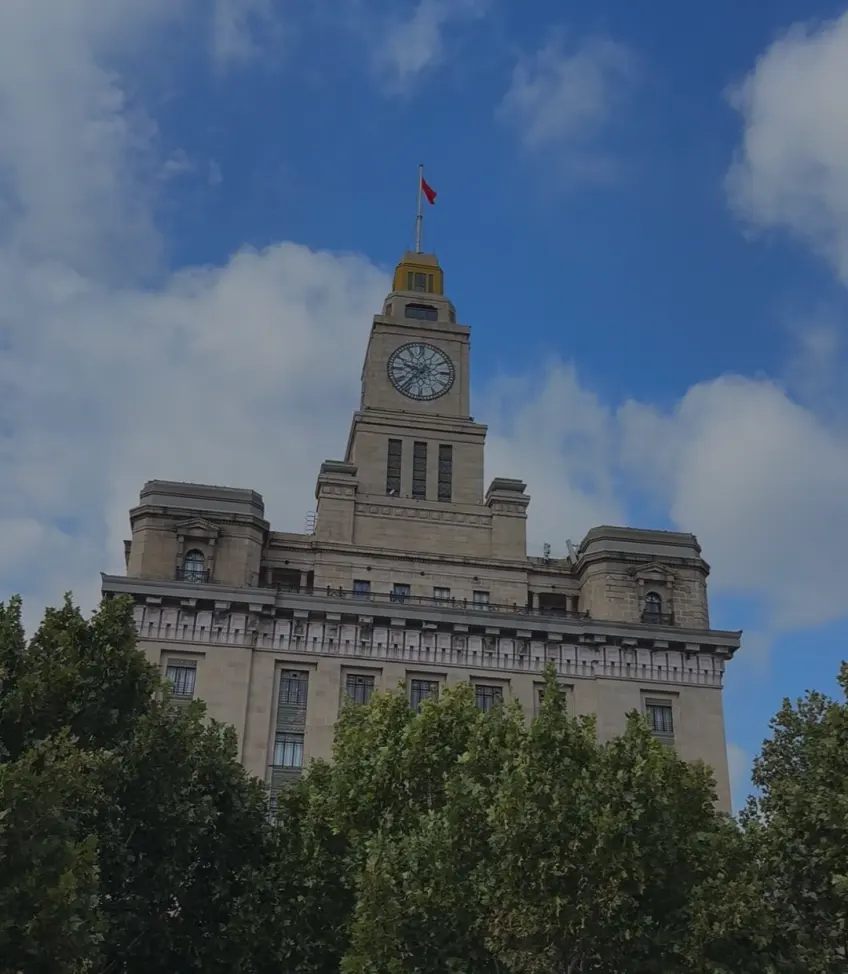
After the port opened, merchant ships arrived from every direction. Goods flowed from Shanghai to the rest of China, and from China to the world. Docks, warehouses, and foreign trading houses along the river never slept. Out of that chaotic waterfront slowly grew Shanghai's cosmopolitan flair, commerce, and modernity. The Customs House clock stands like a timestamp pinned to that era of port history.
The Bund, Shanghai: the glamour of the "Ten-Mile Foreign Quarter"
Mention the "Ten-Mile Foreign Quarter" and people picture qipao dresses, dance halls, and gold bars. During the Republic of China era, Shanghai was one of East Asia's most fashionable cities: The Bund area was the financial center, while Nanjing Road and Huaihai Road (then Avenue Joffre) were the commercial and social hubs, complete with dance halls, cinemas, cafes, and department stores.
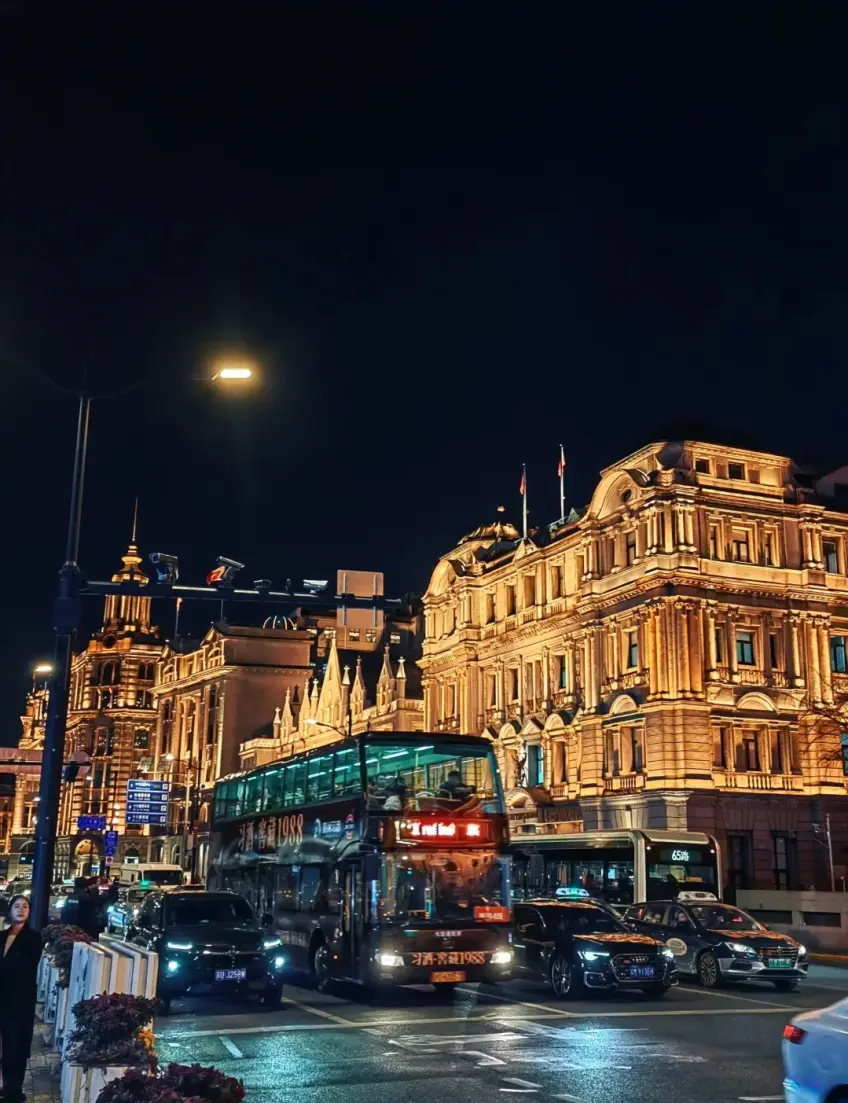
By day, men in suits brokered deals inside the bank buildings; by night, neon signs lit up as locals ate and chatted on small stools in the alleyways. This blend of glamour and everyday life is the true face of old Shanghai.
Day vs. night
Daytime is best for taking in the architectural facades, bronze lions, and portico details. At night, lights trace the domes and clock towers while crowds drift slowly along the pedestrian street, capturing the true evening atmosphere of the Ten-Mile Foreign Quarter.
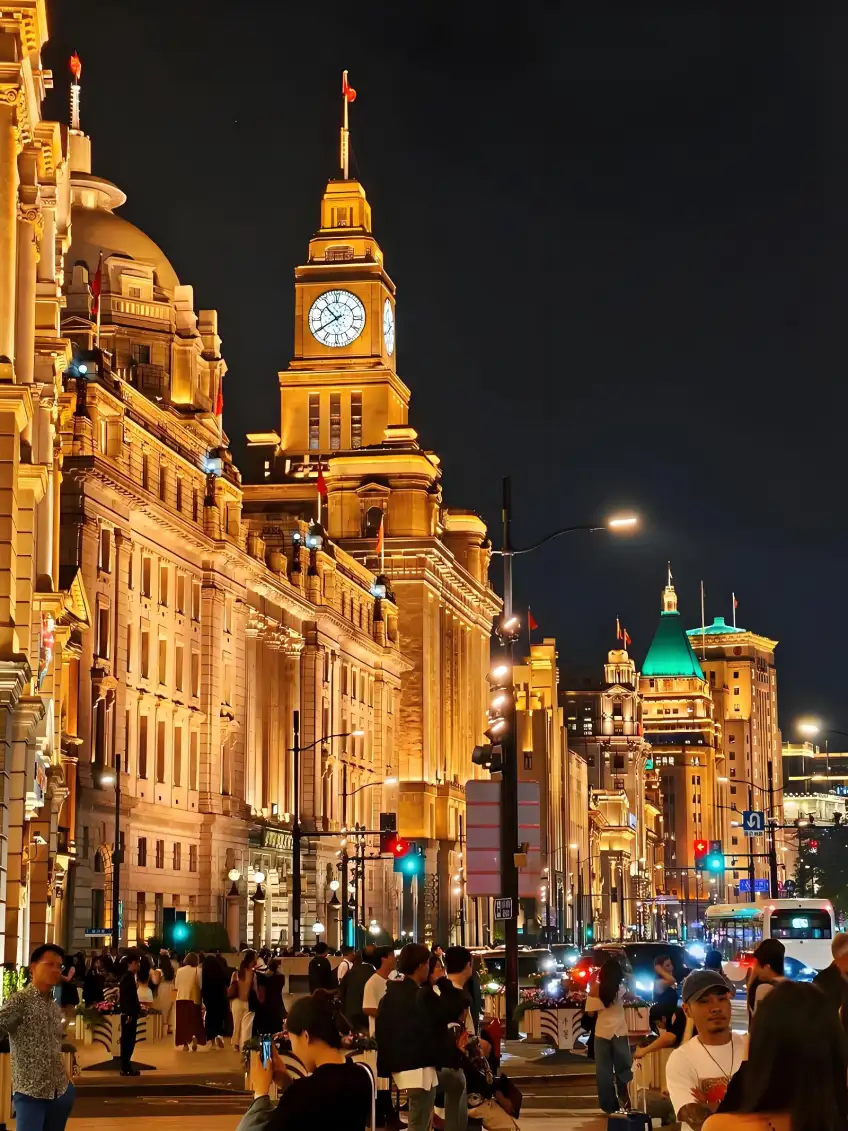
The Bund, Shanghai: From old town to stylish metropolis
No matter what happens, Shanghai has never lost its drive for business or its open, inclusive spirit. After Pudong was developed, Lujiazui went from a fishing village to a forest of skyscrapers. Looking up at the "Lujiazui Trio" at night feels almost overwhelming — that's the "new" side. Across the river, the historic international architecture is the "old" face, creating the unique dialogue between past and present you see today.
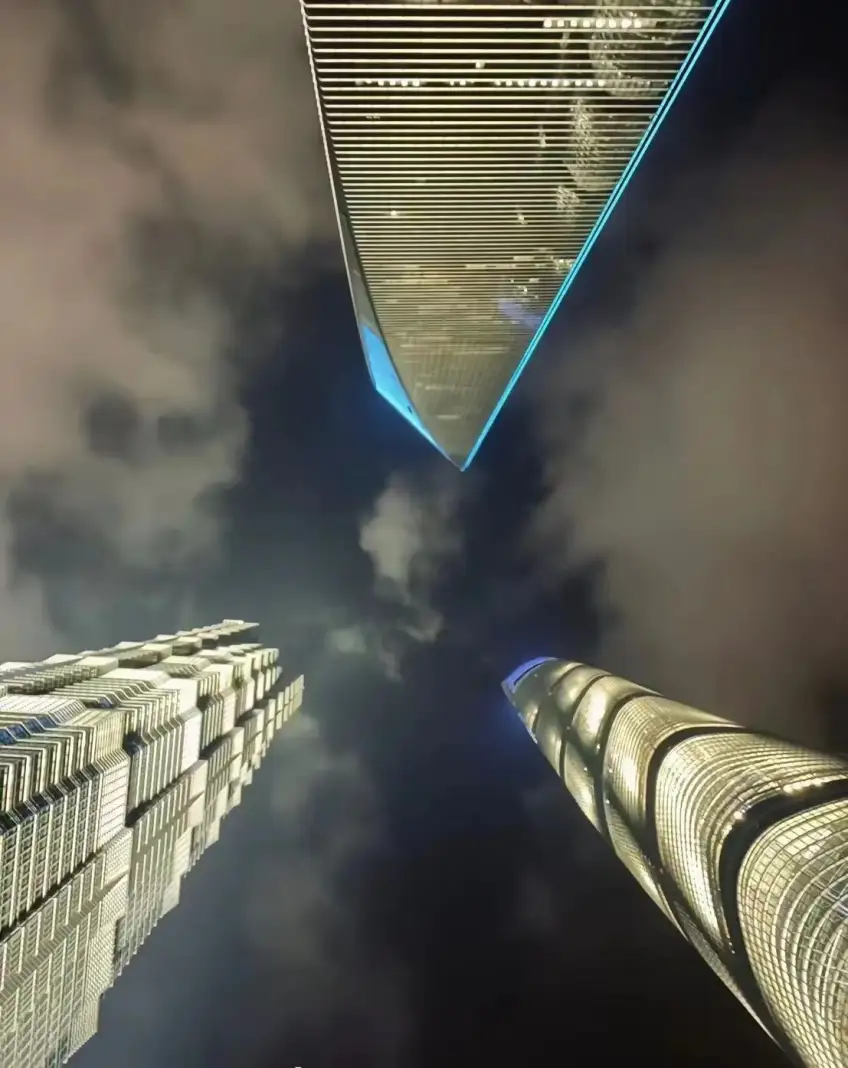
Standing at the base and looking up, it hits you: The Bund and Lujiazui aren't just scenery — they're the calling cards Shanghai has handed the world in different eras.
The Bund's "social circle": International architecture
If The Bund is a face, the long row of buildings along the river is its features. Walking along The Bund, each building feels like a different person: serious financial style, elegant classical style, understated chic. Crowded together on one embankment, they somehow blend perfectly.
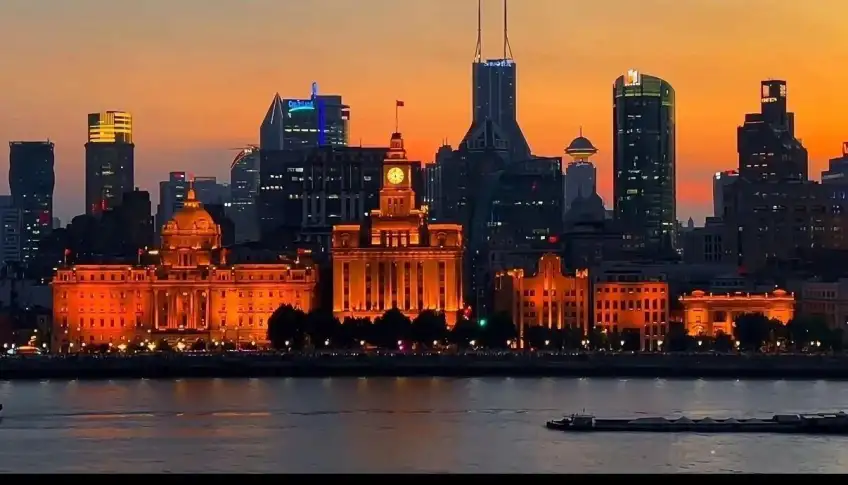
From No. 1 to No. 33 Zhongshan East 1st Road, this long stretch has been known for over a century as the "Exhibition of International Architecture." Turn around to face these giants — each in a different style, yet standing hand in hand to form a single skyline.
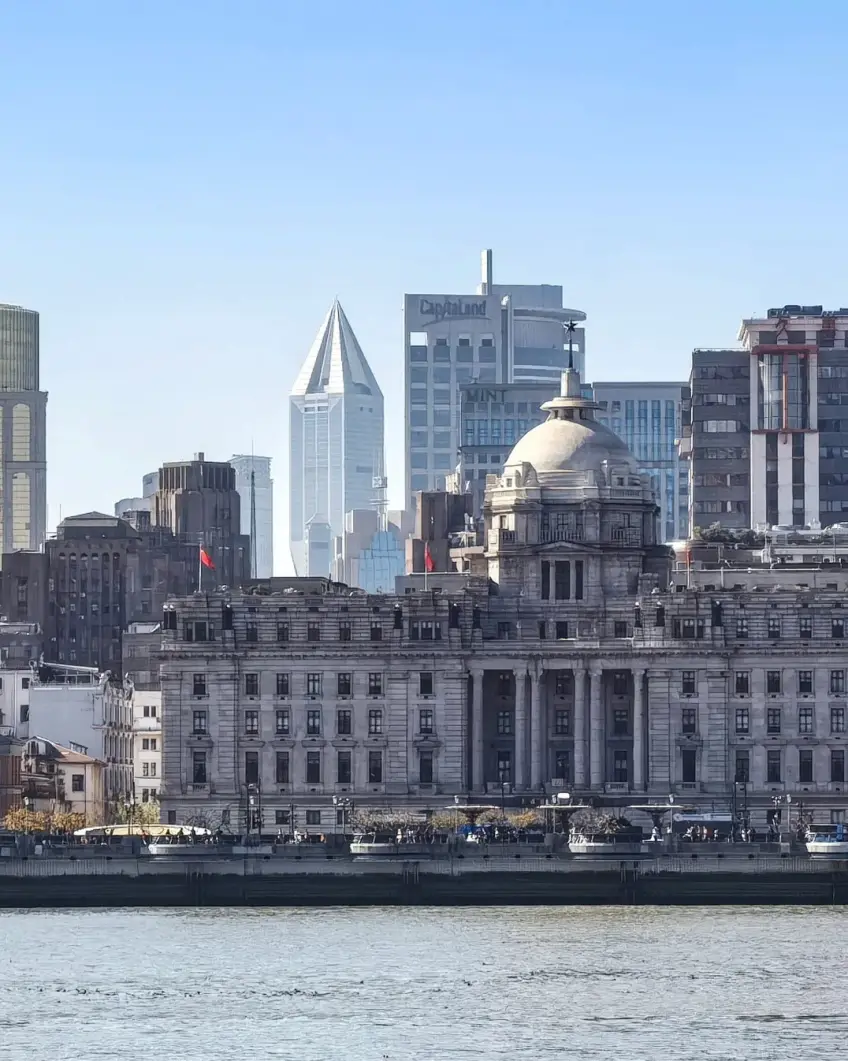
You don't need to memorize every building name at once—just get familiar with a few landmarks: HSBC, the Customs House, Bank of China, and the Peace Hotel. Compare their facade details as you walk.
Guide to the historic architecture of The Bund
The Asia Building is textbook Neoclassical, yet its corner features a Baroque dome—like an old gentleman in a sharp suit wearing a playful hat. Further along stands the former Shanghai Club, which reportedly once housed a bar counter over 30 meters long.
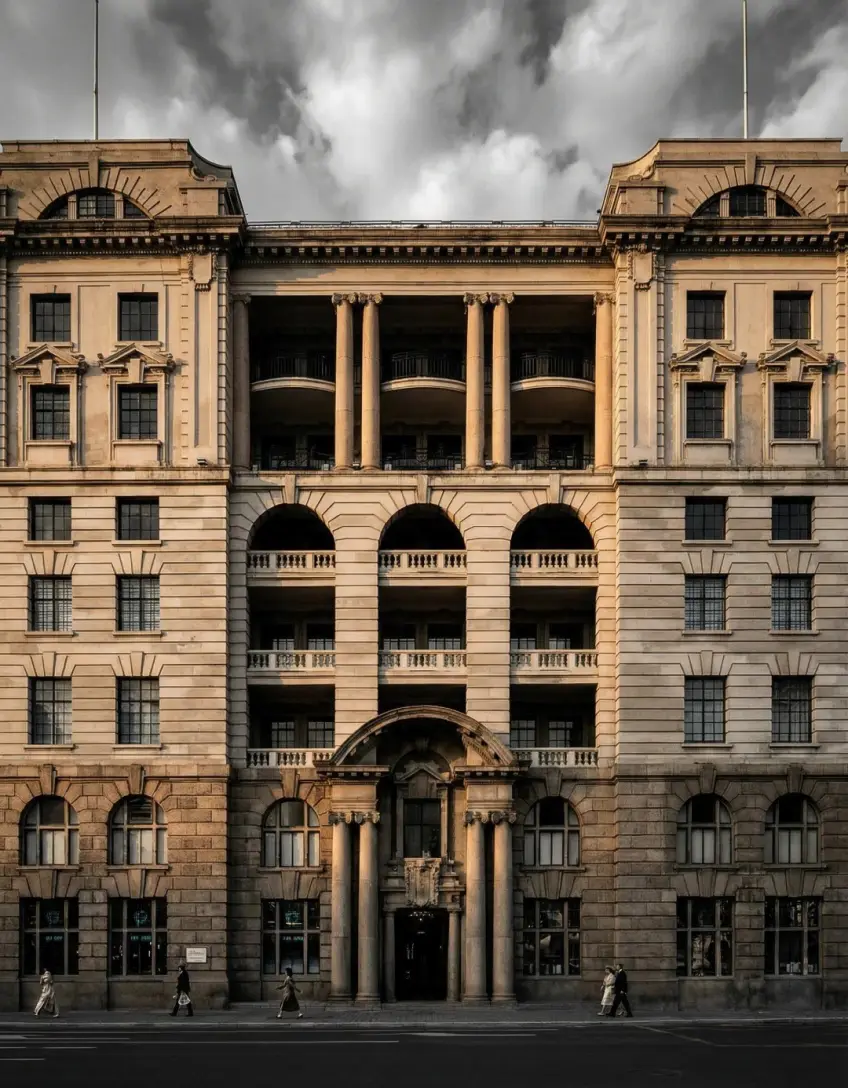
The magic of The Bund lies in the fact that no single person designed it. Over decades, architects from different countries placed their pieces one by one, ultimately creating a perfectly harmonious skyline.
HSBC Building, Shanghai
Walking along Zhongshan East 1st Road, you can't miss this building. With its ancient Greek-style dome and a portico supported by Italian marble columns, it looks like a temple transplanted to the Huangpu River—this is the former HSBC Building.
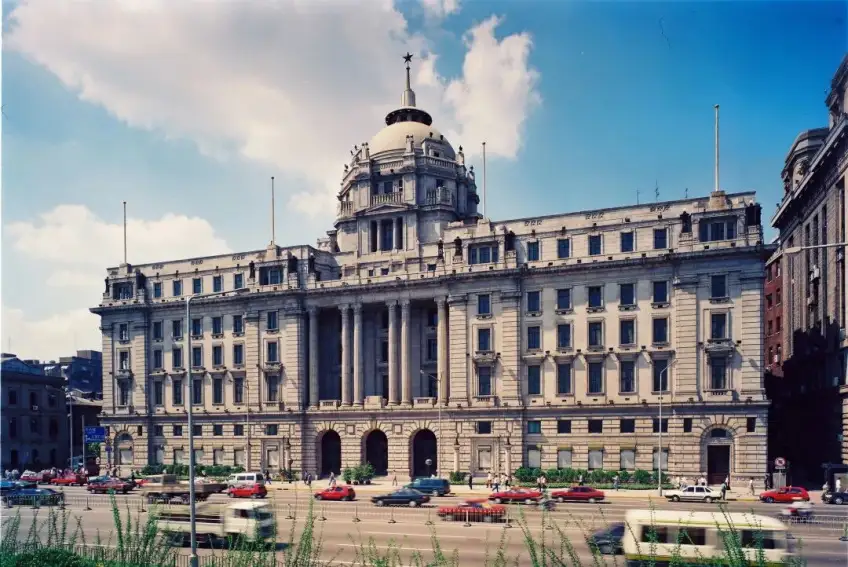
Today, it remains one of the focal points of The Bund skyline. Rules for visiting or entering the lobby are subject to on-site notices and management regulations.
HSBC Building, Shanghai: the bronze lions
The pair of bronze lions at the entrance sit with mouths open and eyes half-closed, as if dozing after a big meal, yet radiating an air of commanding pride. The open and closed mouths also symbolize money flowing in and out. Legend has it the originals are now in a museum and these are later recasts, but if you touch the polished lion legs, you can still feel their heft (please avoid excessive touching; follow on-site rules).
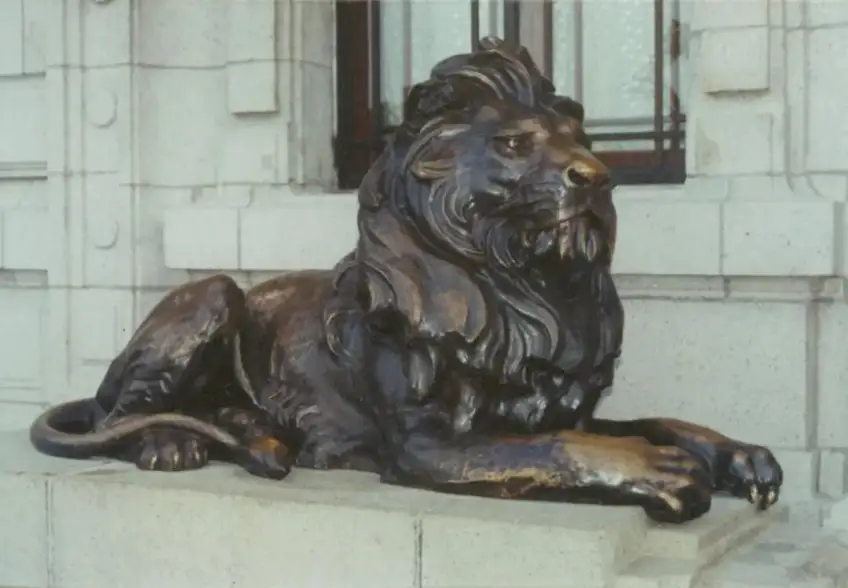
When photographing the lions, don't block the walkway. The light differs between morning and evening, and the metal texture looks cleaner in the morning light.
No. 12 The Bund today
Most legendarily, this building later served as the seat of the Shanghai Municipal People's Government. Now the headquarters of Shanghai Pudong Development Bank, the ceiling murals in its lobby still depict scenes from HSBC's branches in cities like London, New York, Tokyo, and Bangkok.
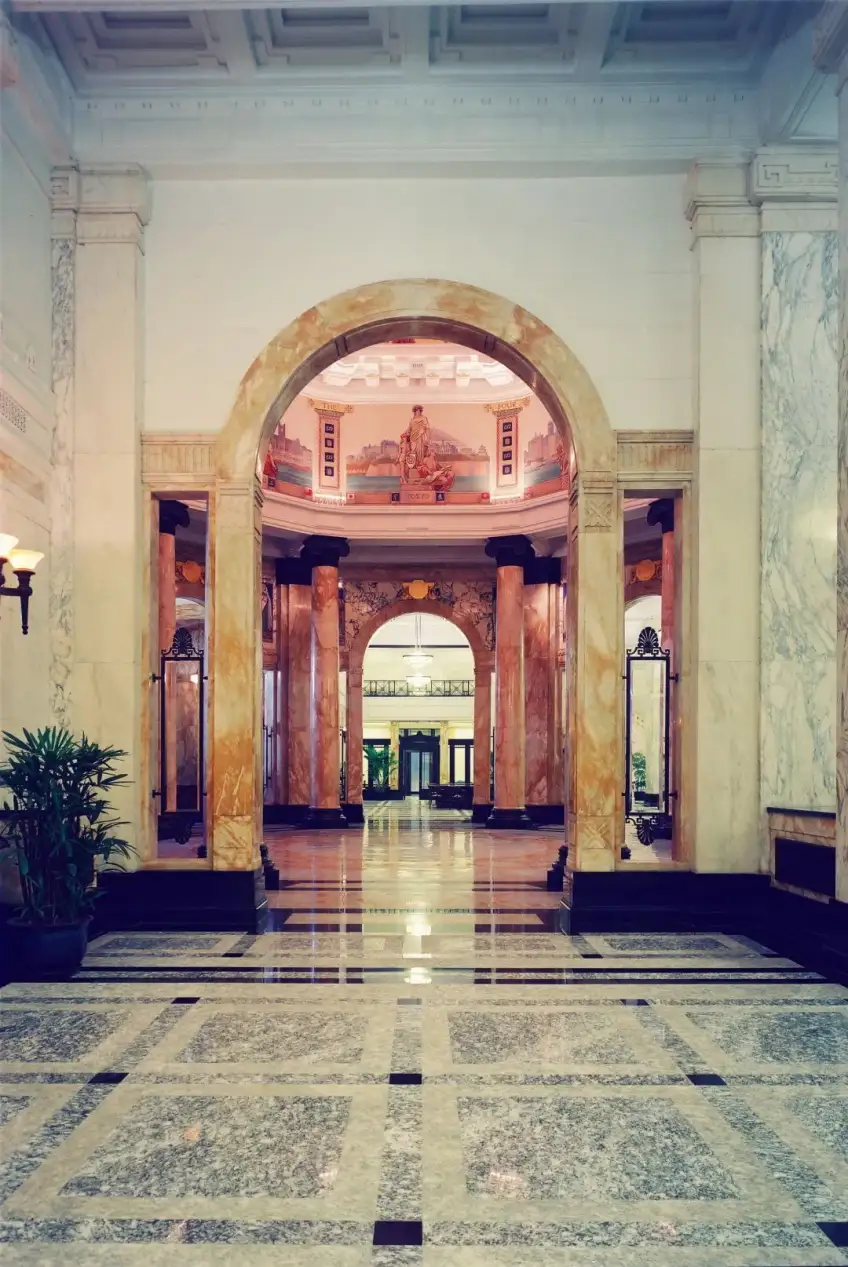
Look up at that breathtakingly beautiful dome—it's more than just decoration; it's a spatial memory left behind after one era gave way to another.
Bank of China Shanghai Branch and its neighbors
Next door to the Peace Hotel is the Bank of China Building. Amid all the Western facades, its flat roof, bracketed eaves, openwork "longevity" window grilles and stone lions make it the only building on The Bund designed with input from a Chinese architect to showcase national character.
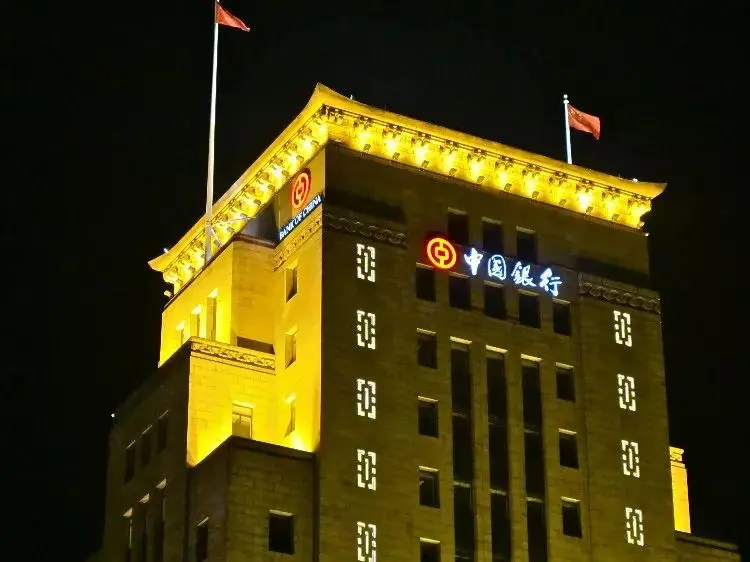
Standing alongside its suit-and-tie neighbors, it looks like a gentleman in a traditional long gown, radiating distinctive character.
A little story about the Bank of China
Legend has it that the Bank of China wanted to build slightly taller than the neighboring Sassoon House, but the neighbors objected, citing foundation safety concerns. Looking at it today, it is indeed a bit shorter than the Peace Hotel, but its defiance is written all over its facade—even if it had to be shorter, it would stand beside you in the most Chinese style possible (there are many versions of this story).
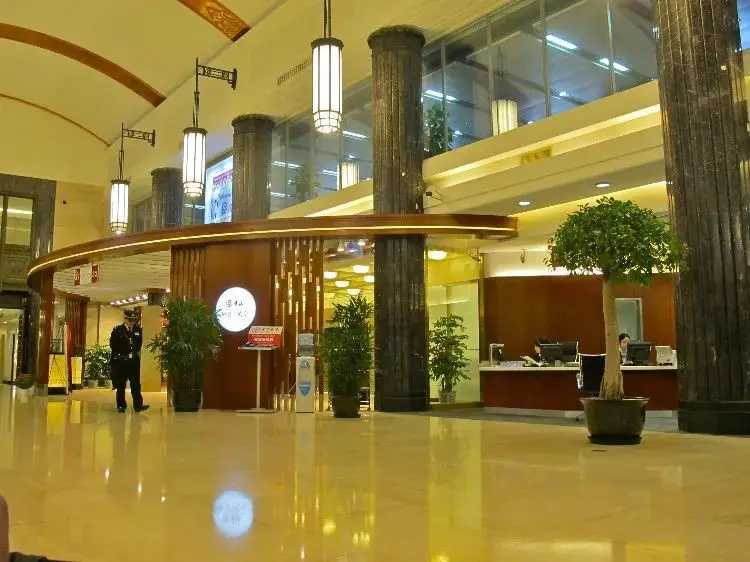
Step into the lobby, and the stone columns, counters, and chandeliers convey a heavier sense of history than the exterior facade. To compare it with its neighbor's skyline, head to the street corner and frame both the Bank of China and the Peace Hotel in a single photo.
Waibaidu Bridge: where Yiping jumped into the river
Waibaidu Bridge spans the point where Suzhou Creek meets the Huangpu River, marking the northern end of many travelers' walks along The Bund. Its steel truss structure gleams in the sunlight, and across the bridge, the Broadway Mansions and Lujiazui towers share the same frame—a classic photo spot.
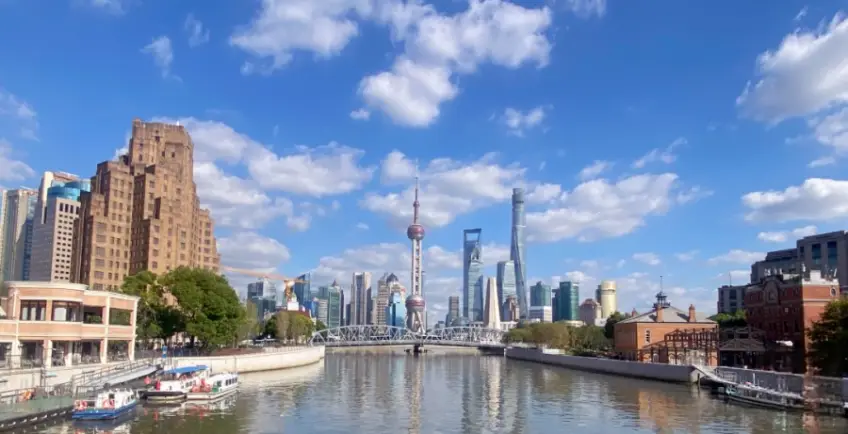
The bridge bustles with people, from wedding photographers to selfie-stick wielders. When crossing, watch out for pedestrians and non-motorized vehicles, as the bridge can get crowded during peak hours (traffic rules are subject to on-site signage).
Romance in the Rain
For many viewers, this bridge is familiar from the TV drama "Romance in the Rain"—someone always points at the railing and says, "This is where Yiping jumped into the river." On screen it carries a romantic, melancholy aura, but in real life the bridge feels solid and sturdy.
If you look further upstream along Suzhou Creek from the bridge, the clock tower of the General Post Office Building and the arched bridges often come into frame—a different expression of the same river that flows past the steel bridge at the mouth of the Huangpu River.
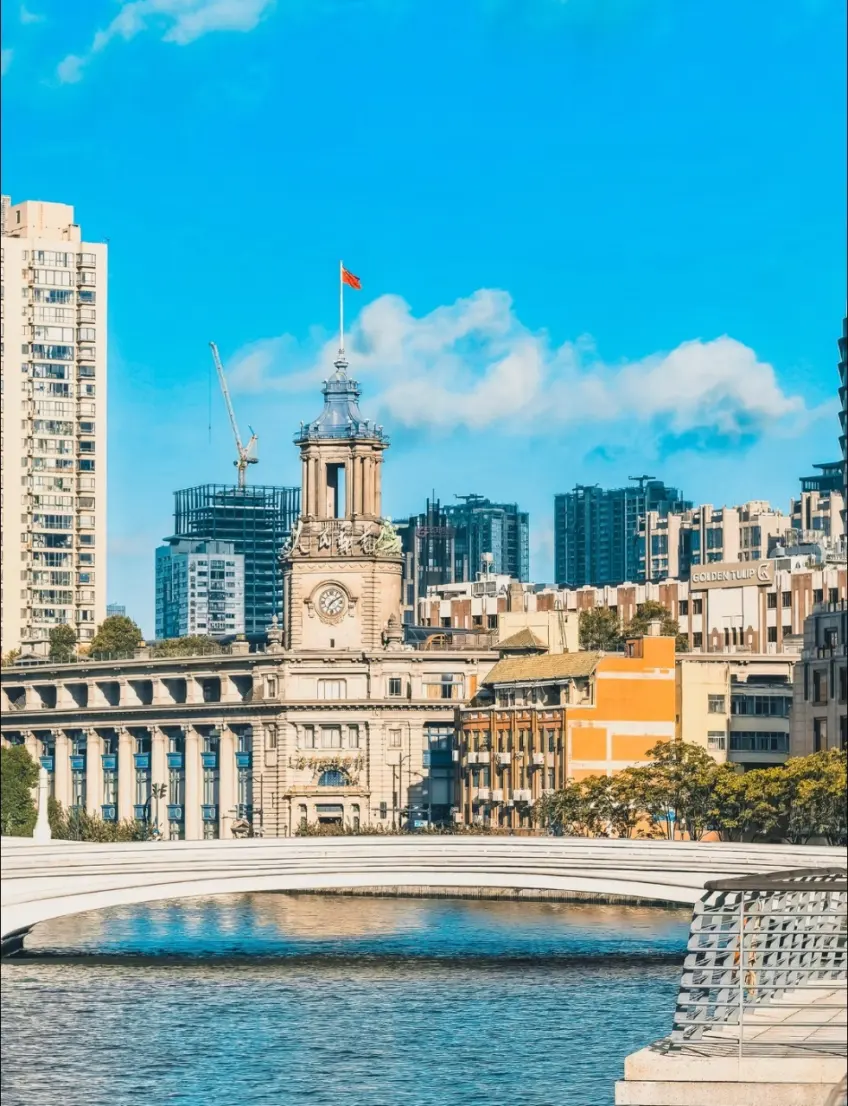
The post office clock tower and arched bridges along Suzhou Creek make a great extension to your Waibaidu Bridge itinerary—one river, two distinct vibes.
The first all-steel riveted bridge
This was China's first all-steel riveted bridge. The name "Baidu" means "free crossing"—in the past, people had to pay to cross the river, but this bridge was free, hence "Baidu." For over a century, it has carried fleeing refugees and carts loaded with goods, and witnessed countless vows of love.
Standing on the bridge and touching the cool steel beams (please don't climb) gives you a far better sense of its industrial-era weight than simply calling it an "Instagram-famous bridge."
Everyday life on The Bund in Shanghai
Turn off The Bund into a side alley and you instantly drop from a century of grandeur into the steamy rhythm of everyday life. The smell of coffee mingles with home-cooked meals and a modern vibe—no clash at all, just comfortable.
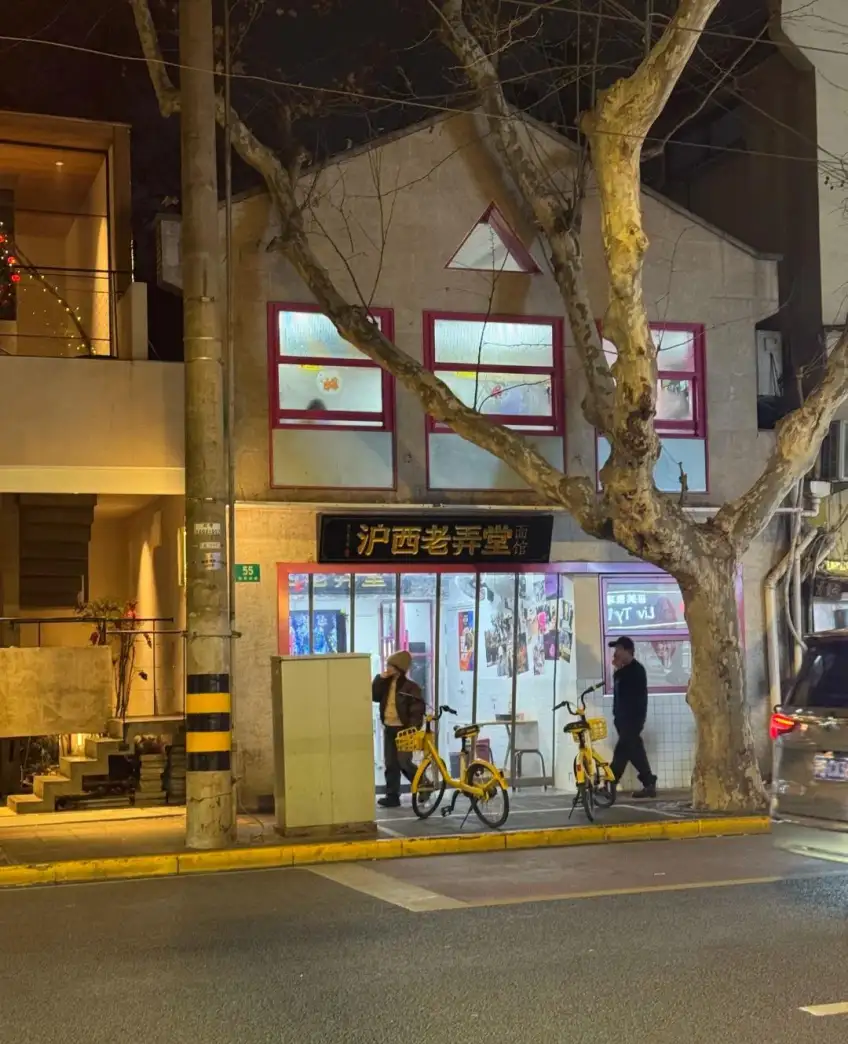
People chat slowly at the longtang entrance, a few potted plants sit by the windows, and laundry sways gently in the breeze. No crowds of tourists here—just locals going about their daily lives.
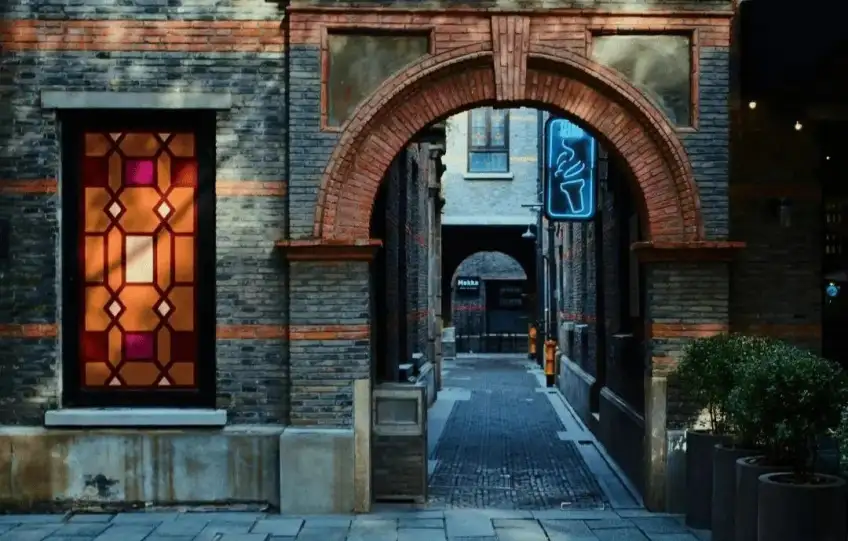
In the shikumen lanes, stained glass and neon signs coexist while convenience stores glow brightly. The splendor of The Bund is written on its buildings, but Shanghai's gentleness hides in these everyday scenes—one side international grandeur, the other neighborhood calm.
For ferry details, see also The Bund Ferry; for building names and details, see The Bund Architecture Guide.
[Shanghai Shanghai Day Tour] Shanghai, Oriental Pearl Tower
[Thoughtful service] Custom vehicles and East China drivers with years of safe driving experience for a worry-free trip! [Pure fun] A no-shopping group tour for a pure travel experience—one trip, lifelong memories! [Free bonus] One bottle of branded mineral water per person per day!
Itineraries like the "Magic City Shanghai 1-Day Tour" often link a walk along The Bund with stops like the Oriental Pearl Tower. They're great for first-timers, families with seniors or kids, or anyone who doesn't want to watch the clock. Specific attractions and closing days are subject to your confirmation voucher. For cross-river ferry details, see The Bund Ferry; for connecting on foot from East Nanjing Road, see Nanjing Road to The Bund.
FAQs
How do I explore The Bund without backtracking?
Classic half-day: Yuanmingyuan Road (Waitan Yuan) — the historic facades — Waibaidu Bridge, then add the night view if you have energy. For a full day, take the ferry across the river and look back. Building names and architectural styles are covered in The Bund architecture guide; piers and schedules are in The Bund ferry. To walk from East Nanjing Road to the waterfront, see Nanjing Road to The Bund. Families should keep stops short and plan rest breaks. If you're crossing districts or carrying lots of luggage, book a Shanghai private car; for history and stories, add a Shanghai tour guide.
What is the best time to take photos at The Bund?
Daytime is best for the facades, bronze lions and portico details; dusk through early evening frames the river and Lujiazui across the water; early morning brings fewer crowds and cleaner light. Night illumination times vary—check on site.
How do I connect with The Bund ferry?
After walking the facades and Waibaidu Bridge, head to the Jinling East Road ferry terminal to cross the river and look back. Fares, schedules and accessibility features are posted at the pier. For daytime Dongjin Line and evening Dongfu/Taigong routes, see Shanghai Bund Ferry. Tight connections or heavy luggage? Book Shanghai Airport Transfers. Linking stops across the river? Use a Shanghai private car.
What should I know when visiting The Bund with seniors and kids?
Shorten walking stretches and leave plenty of time for rest and restrooms. Watch out for crowds on bridges and along the embankment during peak hours. Start with the best facades, then decide on the ferry and night view based on everyone's energy. Seniors shouldn't stand in long lines, and kids should skip crowded hotspots. A Shanghai tour guide makes commentary easier, a Shanghai private car helps when crossing districts, and Shanghai airport transfers cover airports and stations. Families can also check our Shanghai day tour to turn a full day into a relaxed half-day.
What are my backup plans for visiting The Bund on a rainy day?
On rainy days, prioritize indoor spots or the covered arcades to admire facade details, and avoid standing on the open riverside promenade for too long. Save the river views and Waibaidu Bridge for after the rain stops. Ferry decks can be slippery, so follow on-site safety notices; for details, see The Bund ferry. For rainy-day dining, see Shanghai food. If you have a lot of luggage, Shanghai airport transfers are more reliable, and for hopping between multiple districts, use Shanghai private car.
How to link Nanjing Road, The Bund and Lujiazui?
A popular route: walk East Nanjing Road Pedestrian Street to the waterfront (see Nanjing Road to The Bund), then follow the historic buildings to Waibaidu Bridge. If you want to cross the river and look back, take The Bund Ferry to the Lujiazui side. For building names and details, see The Bund Architecture Guide; for river-view Benbang cuisine, see Shanghai Food. For a citywide index, see Shanghai Travel.
For building names, see The Bund Architecture Guide; for ferries, see Shanghai Bund Ferry; for walking, see Nanjing Road to The Bund.