
Mount Putuo Sea-Viewing Guide
The best spots for ocean views on Mount Putuo are concentrated on the east and south sides of the island: listen to the tides at Chaoyin Cave and Fanyin Cave, enjoy the beaches and sunsets at Baibu Beach and Qianbu Beach, climb Foding Mountain (about 300 meters above sea level, roughly an 8-minute cable car ride to the top) and Nantianmen for panoramic mountain-and-sea views, and catch the sunrise near Chaoyang Pavilion. If you only have one day, visit Baibu Beach, Zizhulin, and Chaoyin Cave in the morning, then head up Foding Mountain in the afternoon and walk past Fayu Temple to Qianbu Beach for the sunset.
Review the sea-viewing spots first, then decide how to get to the island. For your first visit, a group tour, private custom trip, private car, station transfer, or private guide can all be matched to your actual itinerary. A common pain point is connecting with the Zhoushan/Zhujiajian Pier ↔ Mount Putuo ferry. Just tell us your group size, dates, and departure city, and our customer service team will help you coordinate ferry tickets and the best order for viewing the sea.
Traveling in Zhoushan, you'll experience the waves at Chaoyin Cave, the sunset at Qianbu Beach, the sunrise at Chaoyang Cave, and the "Buddhist chants" at Fanyin Cave—every stretch of sea is different. When the sound of the waves intertwines with the chanting of sutras on Mount Putuo, and the silhouette of the Guanyin statue over the sea reflects on the water, the ultimate romance of this "Buddhist Kingdom of Sea and Sky" comes fully alive! That's why some visitors to Mount Putuo aren't in a hurry to pray or worship. Instead, they stroll, gaze at the sea, and simply zone out—on the mountaintop, on the rocks, or on the beach!


Listen to the Sea: Chaoyin Cave & Fanyin Cave
Chaoyin Cave
Location: Inside the Purple Bamboo Grove scenic area in southwestern Mount Putuo, east of Bukenqu Guanyin Temple.
Getting there: Take scenic bus No. 1 from Duangu Wharf to the Purple Bamboo Grove stop, then walk a few minutes along the seaside boardwalk.
Tickets: Included in the Mount Putuo entrance ticket (subject to on-site notices on the day).
Suggested time: 30–40 minutes. The waves are most dramatic at high tide.
Best time: Visit during high tide, when the waves are biggest and the tidal roar is loudest.
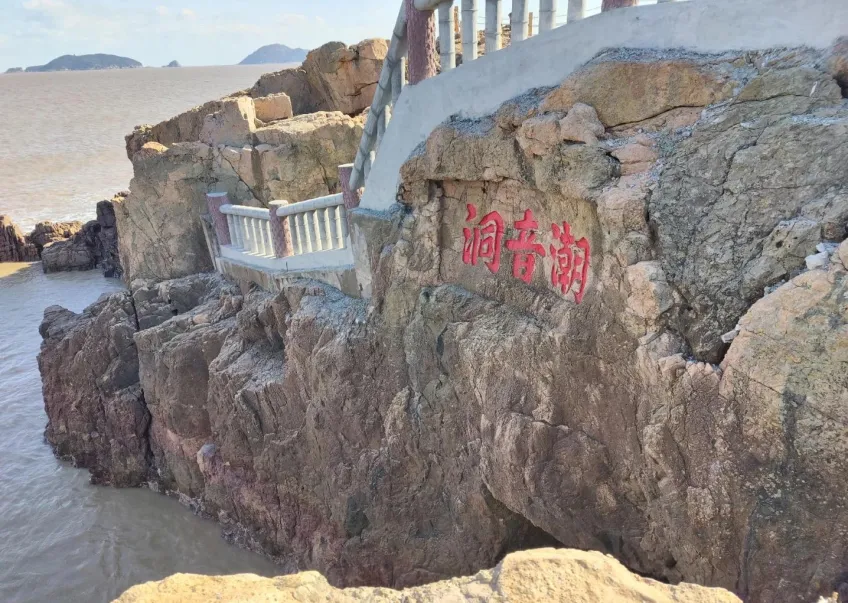
Chaoyin Cave is the most famous spot on Mount Putuo for listening to the sea. The cave is about 30 meters deep and half submerged, with two natural cracks in the ceiling forming "skylights." When the tide rushes in, it roars like thunder—hence the name "Chaoyin" (Tidal Sound).
Legend says Guanyin Bodhisattva attained perfect hearing by listening to the tides here, gaining the ability to hear all the world's suffering.
Beside the cave stands a stele from the Wanli era of the Ming Dynasty forbidding self-sacrifice and finger-burning. It's said that devotees once burned their fingers as offerings or leapt from the cliffs here, so officials erected the stone to stop them. Today, both the stele and the story remain.
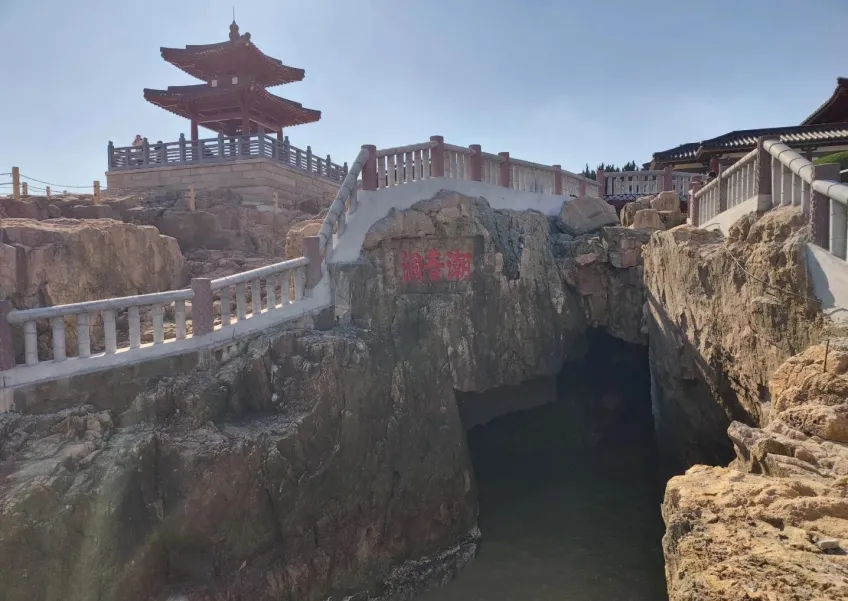
The stele remains, and so does the cave. Standing by the red pavilion and stone bridge on the cliff above Chaoyin Cave, listen to the tide first, then head east to Fanyin Cave to compare another kind of ocean sound.
Fanyin Cave
Location: Eastern Mount Putuo, near Shancai Tongzi Cave.
Getting there: Take scenic bus No. 2 and get off at Fanyin Cave stop.
Tickets: Included in the Mount Putuo entrance ticket.
Suggested time: About 40 minutes.
Tips: Visit it together with Shancai Cave — make your wish first, then listen to the tides inside the cave.
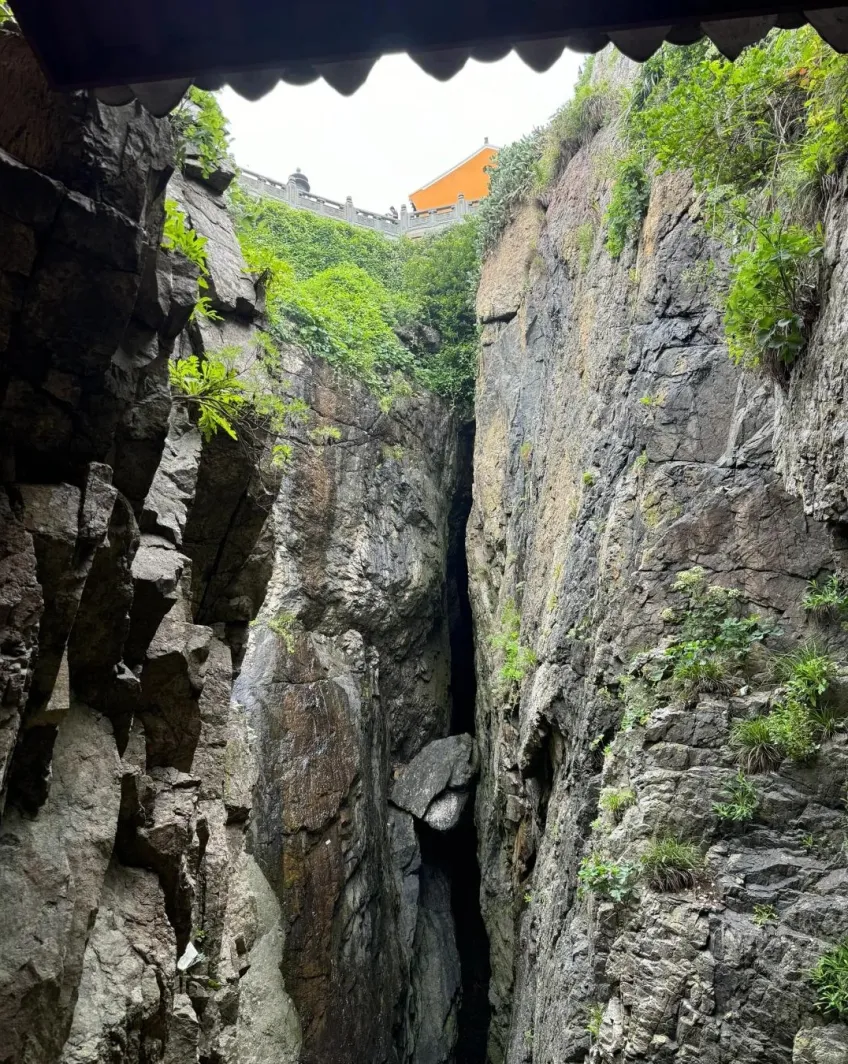
Fanyin Cave is on the other side of the island. Together with Chaoyin Cave, they are known as the "Two Caves of Tidal Sounds." The cave hangs between cliffs and opens to the sea; when the tide rushes in, it sounds like Buddhist chanting. Locals say that those with a karmic connection can see Guanyin manifest inside the cave—three parts eyesight, seven parts destiny.
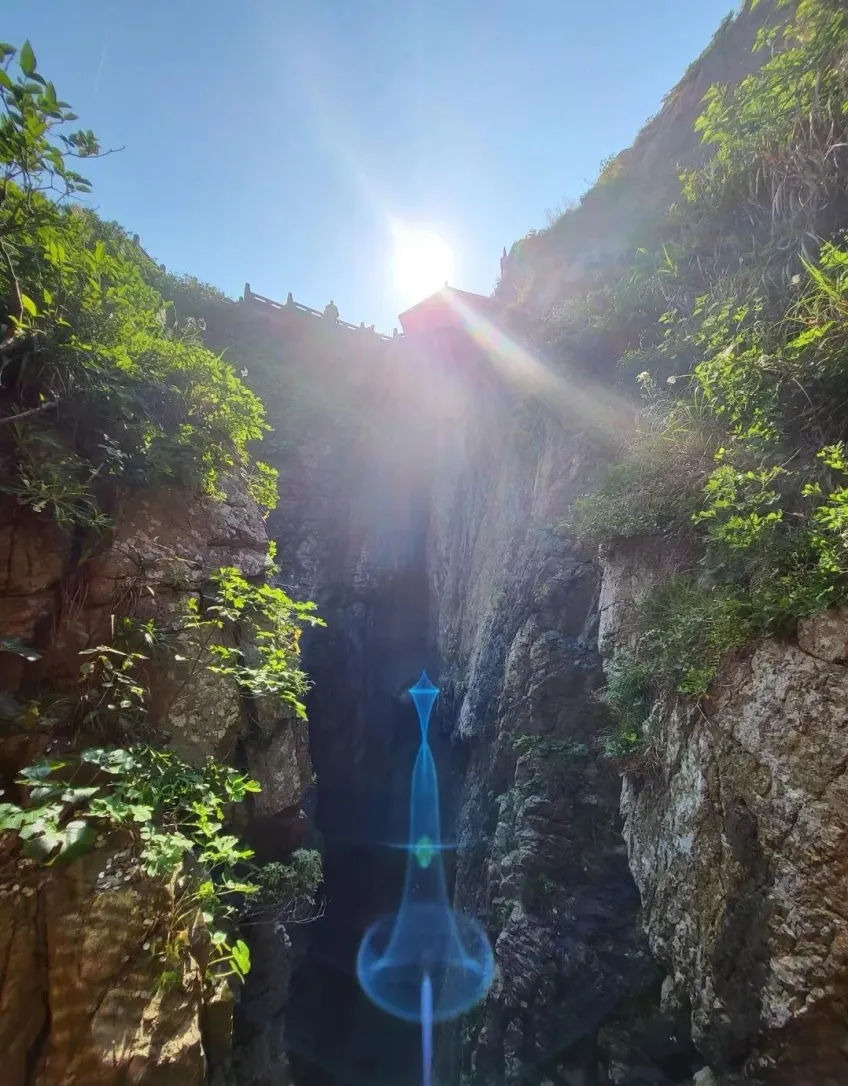
The light filtering through the narrow cliff opening is worth taking your time to enjoy. After listening to the chanting waves at Fanyin Cave, head to the beach to zone out—Qianbu Beach is quieter, while Baibu Beach is livelier.
Chill out: Qianbu Beach & Baibu Beach
Mount Putuo has two main beaches—one lively, one quiet. They are Qianbu Beach and Baibu Beach.
Baibu Beach
Location: About 100 meters east of Puji Temple.
Getting there: Take bus No. 1 or No. 2 and get off near Puji Temple stop; it's about a 200-meter walk to the Baibu Beach entrance.
Hours: Open all day (see separate notices for the beach swimming season).
Tickets: The beach is free; the island entry ticket is charged separately.
Photo spots: At sunset, capture the "rocky slope + ocean reefs + golden light on the sand." Scenes from the TV series Journey to the West were also filmed around here.
Best time: 16:00–18:00 for the most reliable sunset views.
Baibu Beach lies east of Puji Temple, stretching over 600 meters north to south and more than 200 meters wide. It gets its name because it pairs with Qianbu Beach.
This is a beach where you can swim in summer. It's usually busy, making it great for strolling, taking photos, and watching the sunset. A small slope extends into the sea from the middle of the beach, topped with Shishi Pavilion—a perfect spot to watch the sun, listen to the waves, and cool off.
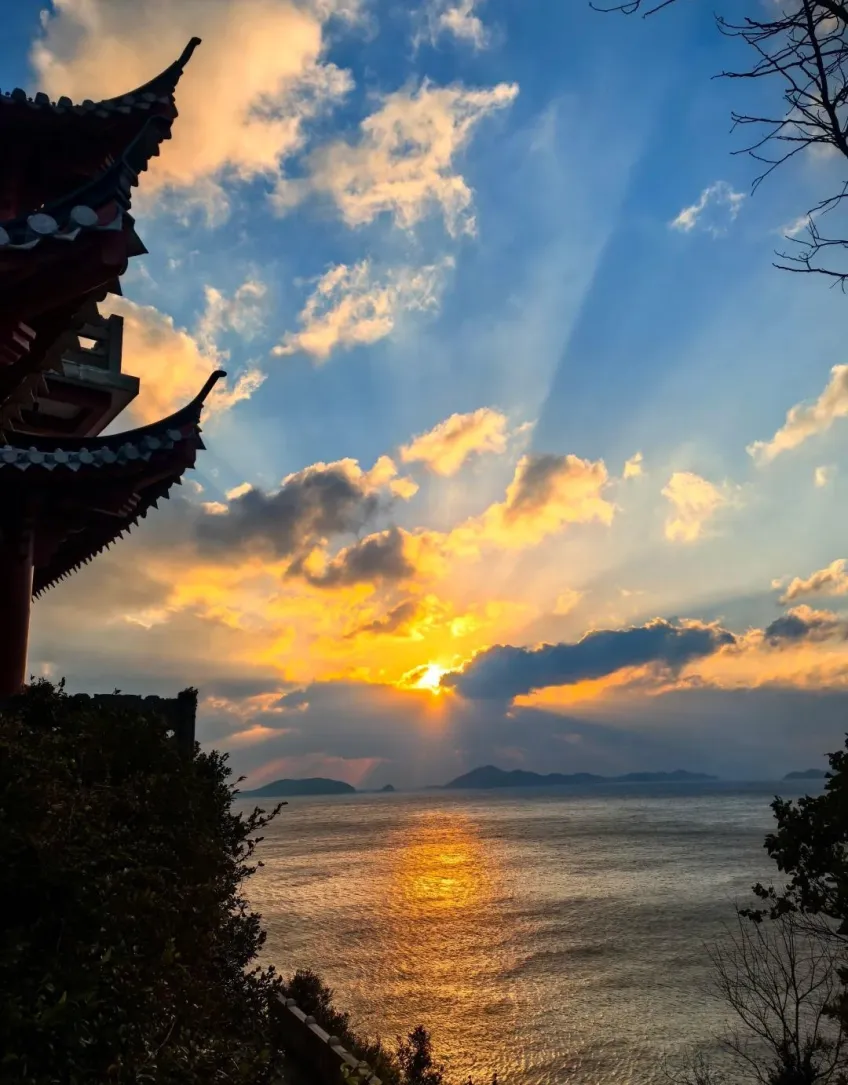
At dusk, sunlight spills across the water like scattered gold—the most beautiful moment at Baibu Beach.
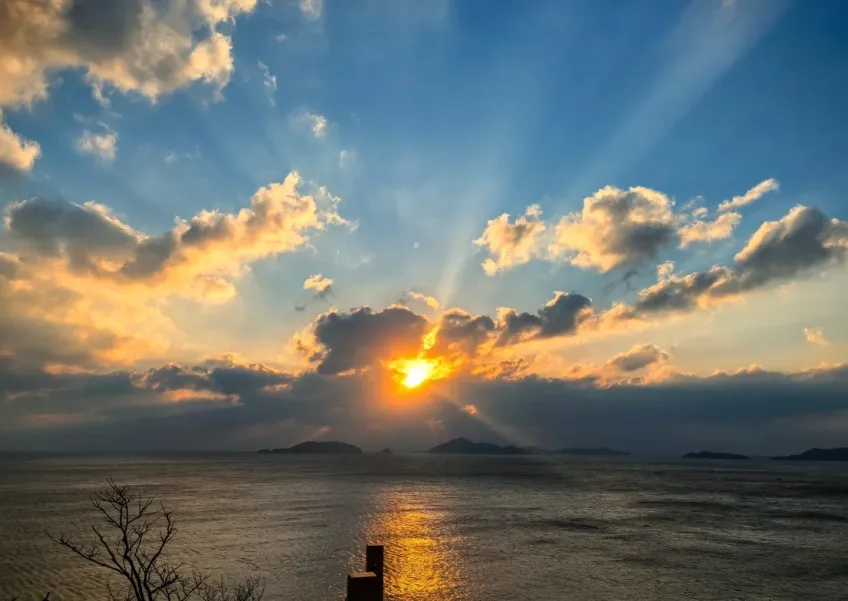
The sight of golden light spreading across the sea is common at Baibu Beach. For a more spacious stretch of golden sand, head to Qianbu Beach next to Fayu Temple.
Qianbu Beach
Location: Next to Fayu Temple, within walking distance from the temple.
Getting there: Take scenic bus No. 2 and get off near the Fayu Temple stop.
Hours: Open all day.
Tickets: The beach is free.
Photo spots: At dawn or dusk, capture the "golden sand ribbon + looking back from the middle of the beach"; the distant silhouette of Foding Mountain plus the sunset turns Qianbu Beach rose gold.
Hidden gem: Bring a flashlight on summer nights and you'll see tiny crabs scuttling sideways across the sand. Locals call them "sand crabs," and they're super fast!
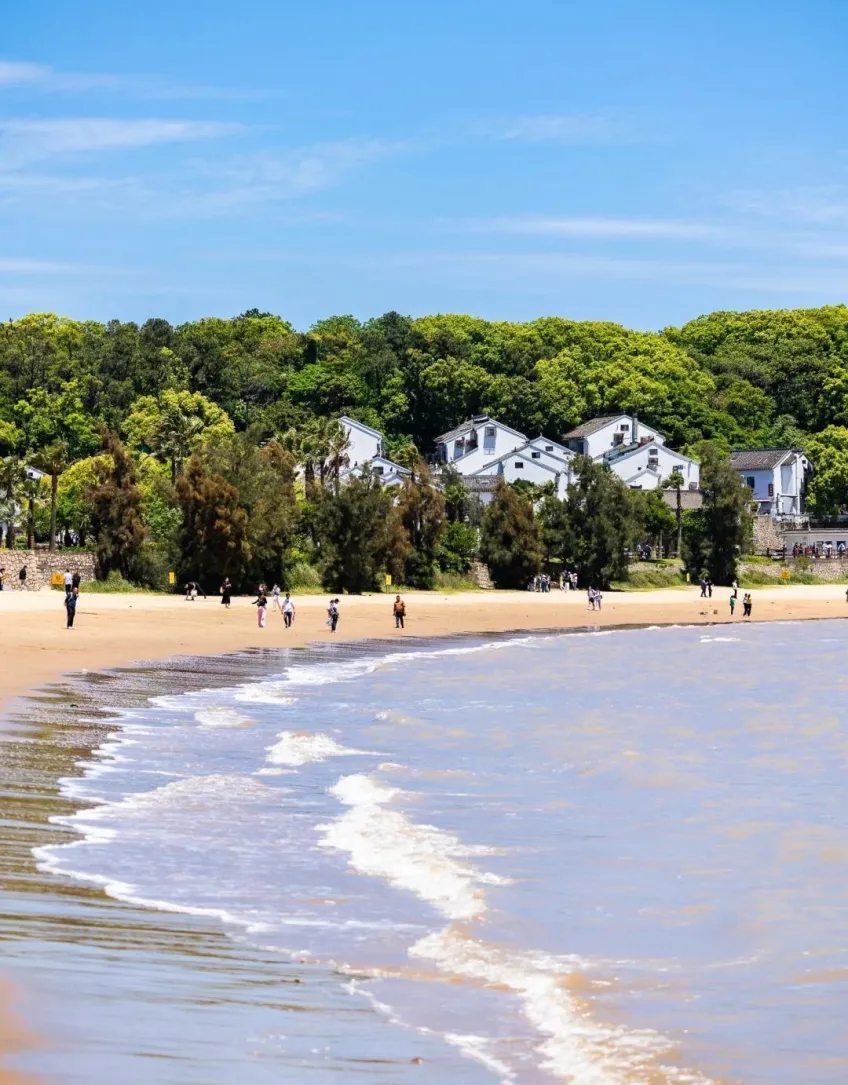
Safety note: Strong undercurrents run along the west side of Qianbu Beach, so do not swim here. If you want to swim, head to Baibu Beach — this spot is best for strolling and listening to the waves.
Right next to Fayu Temple, Qianbu Beach is the largest and most beautiful beach on Mount Putuo. About 1,750 meters long and 100 meters wide, its golden sand is pure and soft.
Qianbu Beach is much quieter than Baibu Beach. If you want to sit alone, listen to the waves, zone out, and gaze at the sea, this is the place. There's also a unique phenomenon here called "sea fire"—on windy days or at night, crashing waves glow blue, as if the Milky Way were pouring into the ocean. Locals call it "sea fire," while pilgrims refer to it as "divine fire."
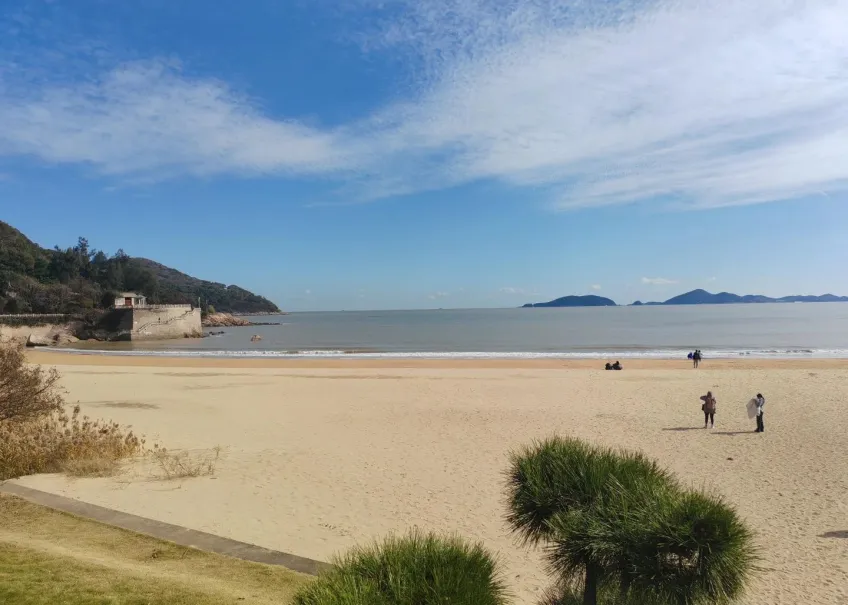
On a clear day, looking down from above frames the golden sands and distant islands together. After enjoying the beach, climb higher to Foding Mountain and Nantian Gate for sweeping views of the mountains and sea.
A bird's-eye view: Foding Mountain & Nantian Gate
To see where the mountains meet the sea on Mount Putuo, you need to head uphill.
Foding Mountain
Transportation: You can take the cable car up and down the mountain; ticket prices are subject to the rates posted at the ticket window that day. Alternatively, you can hike up via Xiangyun Road next to Fayu Temple.
Opening hours: Typically 6:00–17:30 (cable car and temple hours are subject to on-site notices for the day).
Best time to visit: Clear days with good visibility offer the sharpest views of the mountains and sea.
Tip: Walk down via Xiangyun Road — the stone carvings and forest clearings along the way are worth taking your time to enjoy.
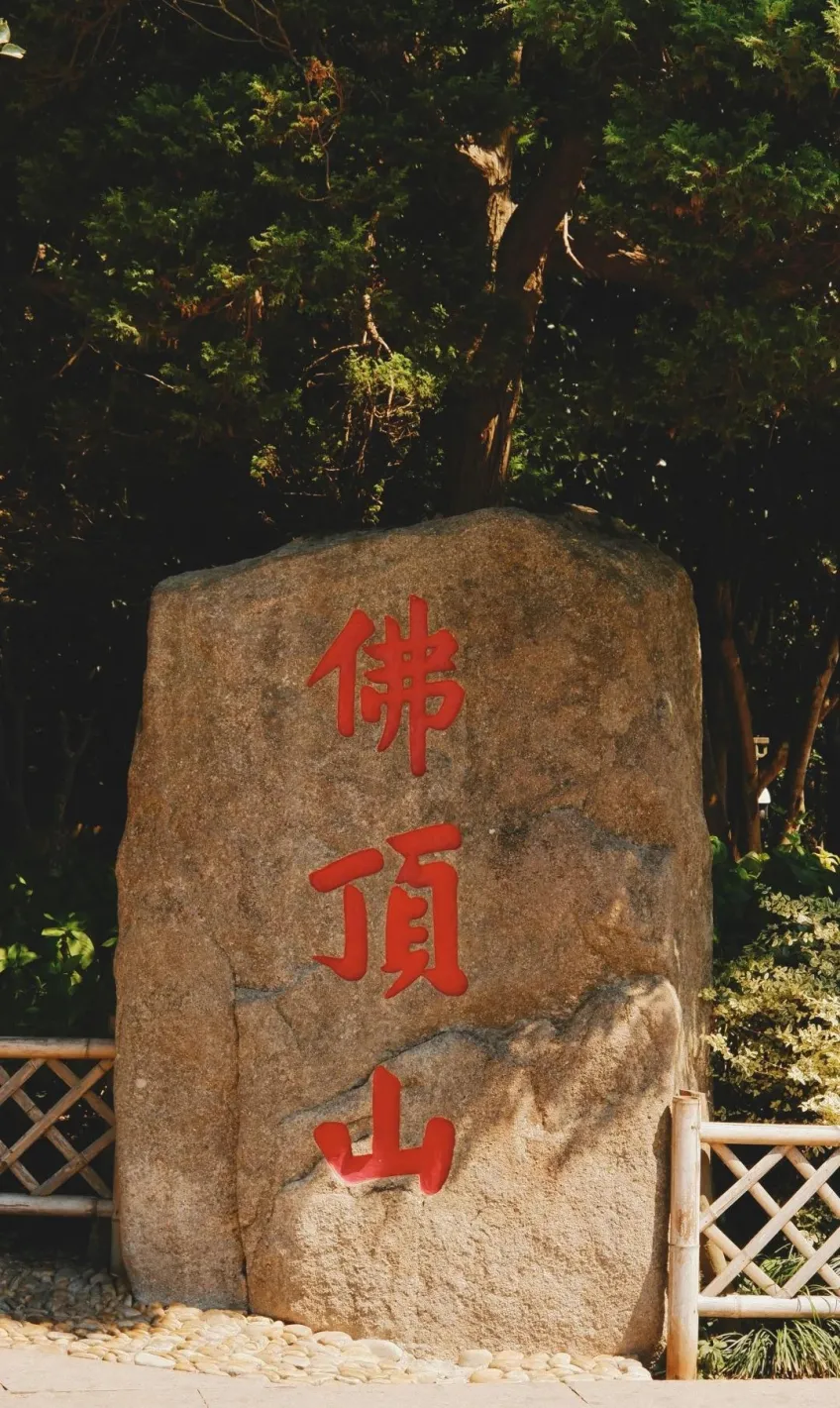
Foding Mountain is the highest peak on Mount Putuo, rising about 300 meters above sea level. Huiji Temple at the summit is tucked away among the trees, and a viewing platform nearby offers a panoramic view of the island—on one side, the undulating eaves of temples; on the other, an endless expanse of ocean.
Locals have a saying: "If you don't climb Foding Mountain, you haven't really been to Mount Putuo."
There are two ways up: cable car or on foot. The cable car takes 8 minutes to reach the top and saves energy. If you walk, take Xiangyun Road next to Fayu Temple—1,088 steps, 30–45 minutes, with stone carvings, shaded paths and cats along the way.
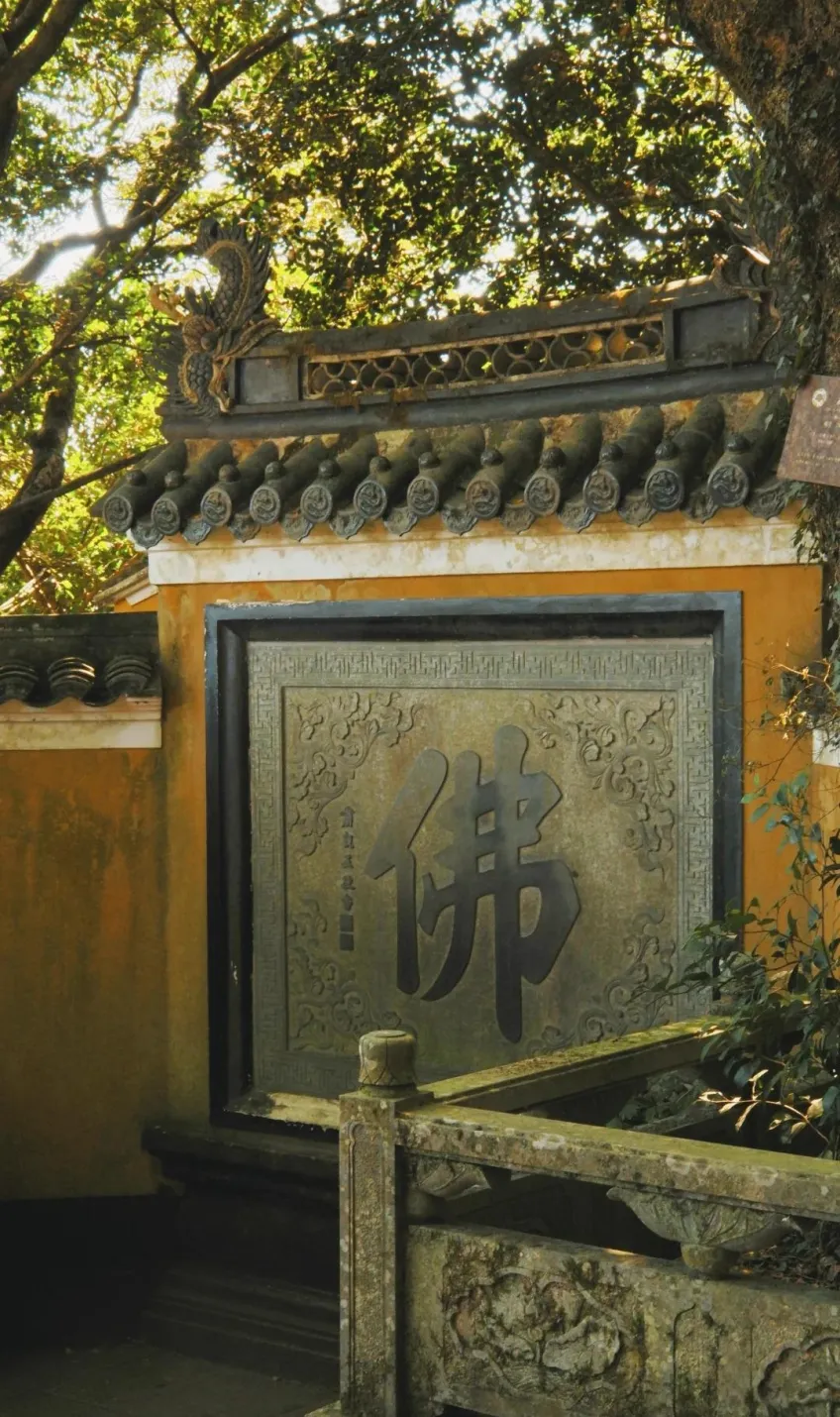
The stone carvings and steps along Xiangyun Road are perfect for resting as you walk. After taking in the panoramic view of the island, head south to Nantian Gate (South Heavenly Gate) to see the sea framed by the stone arch.
Nantian Gate
Location: The southernmost tip of Mount Putuo, east of Duangu Wharf.
Getting there: About a 300-meter walk along the coast from Duangu Wharf, or take scenic bus route 1 or 2 to a nearby stop.
Hours: Open all day.
Tickets: Included in the mountain entry ticket.
Suggested stay: 1–2 hours, ideal for leisurely photos of the stone arch and the sea.
Best time: Around high tide near the 15th day of the lunar month, when the "Heavenly Gate Waves" are easiest to see.
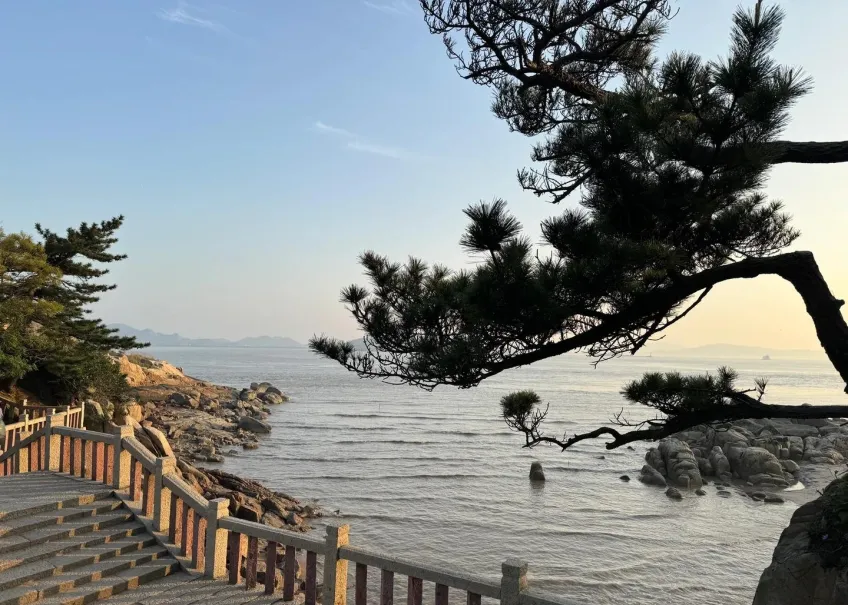
Nantian Gate (South Heavenly Gate) is another great spot to view the sea. Formed naturally by three massive boulders into a gate-like structure, it juts out over the ocean and connects to Mount Putuo via a stone bridge. The lintel bears the four characters "Shan Hai Da Guan" (Grand View of Mountains and Seas), inscribed by Lan Li, the Dinghai Garrison Commander during the Kangxi reign of the Qing Dynasty.
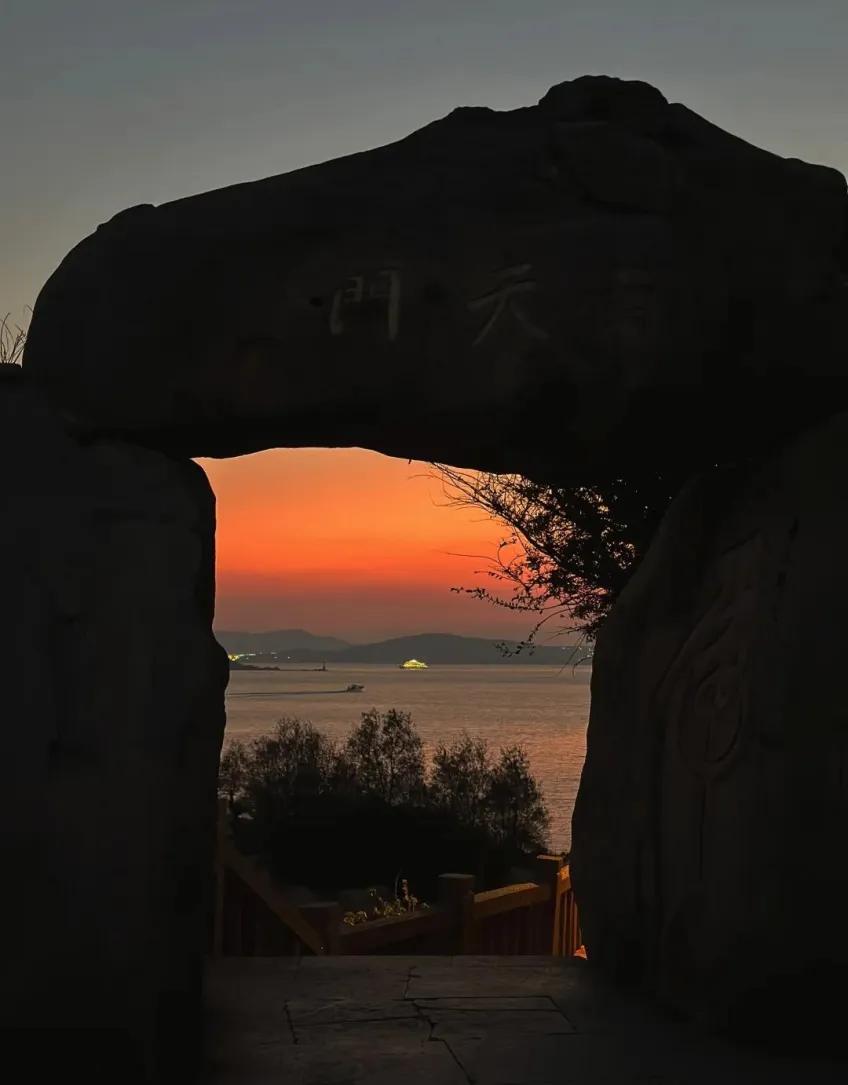
Fewer tourists come here, so it's very peaceful. During high tide, waves crash against the stone pillars, creating the spectacular sight known as "Tianmen Jilang" (Surging Waves at the Heavenly Gate).
Plan your Mount Putuo seaside trip with us—just tell us whether you'd rather listen to the sea caves, walk the beaches, or catch high tide at Nantianmen.
Sunrise viewing: Bubusha & Chaoyang Pavilion
Chaoyang Pavilion
Chaoyang Pavilion is the top spot for sunrise on Mount Putuo: Qianbu Beach to the left, Baibu Beach to the right, and the ancient pavilion beneath your feet. Beyond sunrise, head to the sun-viewing area in the evening to see the silhouette of the South Sea Guanyin statue against the sea—golden light spreading across the water makes for another stunning sight.
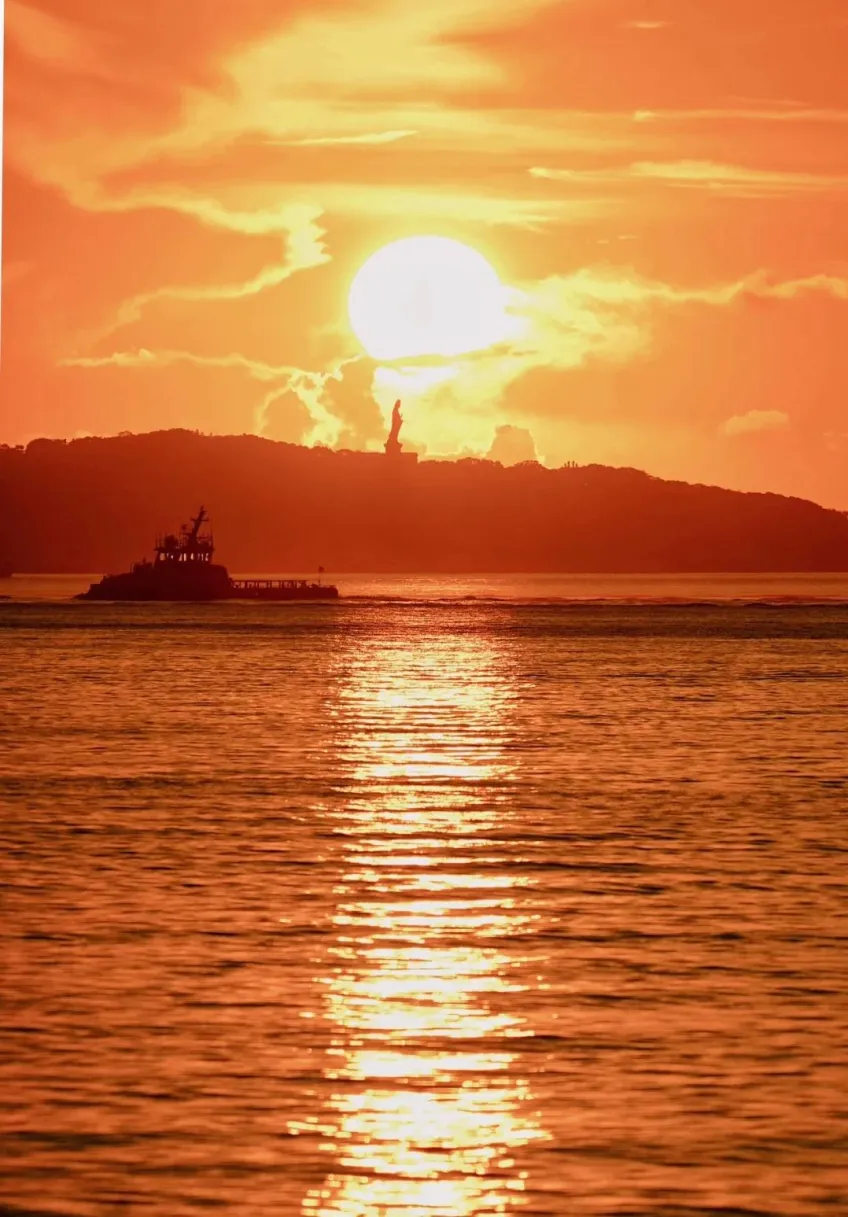
The Guanyin silhouette bathed in golden light makes for great photos. If you're only after the sunrise and prefer an easier walk, head to Baibu Beach to watch the sun leap above the horizon.
Baibu Sha
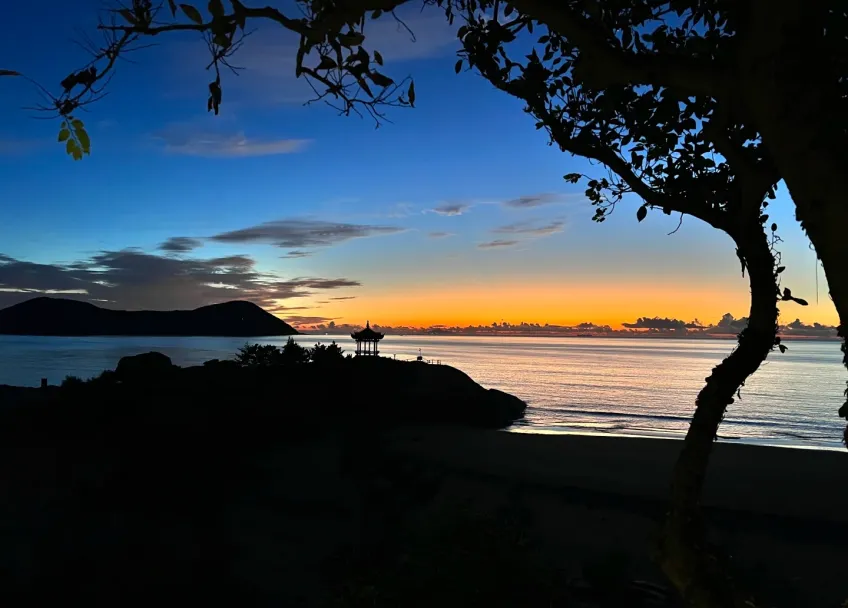
Located near the east coast of Mount Putuo, this beach is clean with a beautiful curve. You can watch the sun leap out from behind the horizon or distant islands, painting both the sky and the sea—a truly stunning visual experience. Many photography enthusiasts love to shoot here.
Sunrise time: The sunrise time on Mount Putuo changes every day, so check it before your trip.
What to wear: Mount Putuo is by the sea, so bring a jacket no matter the season! Wear comfortable, non-slip shoes, and if needed, bring a headlamp or flashlight for walking before dawn.
Respect local beliefs: Mount Putuo is a sacred Buddhist site. Please stay quiet and respectful after arriving on the island, and show reverence when photographing Guanyin statues.
Safety first: When watching the sunrise, don't linger near dangerous waters or cliff edges just to get a photo.
Mount Putuo Travel Guide
Day tour
Morning: Watch the sunrise at Chaoyang Cave → Stroll along Baibu Beach → Listen to the waves at Purple Bamboo Grove and Chaoyin Cave
Afternoon: Overlook the mountains and sea from Foding Mountain → Fayu Temple → Relax and watch the sunset at Qianbu Beach
2-day tour
Day 1: Arrive on the island → Nantian Gate (fewer crowds, great views) → Purple Bamboo Grove and Chaoyin Cave (listen to the waves) → Bukenqu Guanyin Temple → Watch the sunset at Baibu Beach → Stay overnight on the island
Day 2: Sunrise at Chaoyang Cave → Foding Mountain (cable car up, overlook from the viewing platform) → walk down via Xiangyun Road → Fayu Temple → relax on Qianbu Beach → Fanyin Cave (listen to the chanting echoes) → leave the island

[Riding the Waves at Nansha, 3 Days 2 Nights] Nansha + Mount Putuo 3-Day Tour
[Top Attractions] Zhujiajian Nansha Beach, Mount Putuo, Nantang Old Street and more! [Comfortable Stays] Choose from 4-star hotels! [Thoughtful Service] Custom vehicles and experienced East China drivers for a worry-free trip! [No Shopping Stops] No-shopping group tour for a truly relaxing journey—memories to last a lifetime! [Bonus] One bottle of branded mineral water per person per day!
Tell us your group size, dates, and departure city, and our customer service team can help you coordinate ferry tickets and the best order for sightseeing so you don't waste time backtracking.
Mount Putuo Ocean-View Accommodation Guide
Around Puji Temple (Front Temple / Meicen Road) — best for worshipers
Pros: The most central area, within walking distance of Puji Temple, Baibu Beach and Xianghua Street; easiest access to dining, buses and shopping; ideal if you're short on time, want to pray early in the morning, or prefer to keep things simple.
Price reference: Guesthouses about ¥300–600, hotels about ¥600–1,200; prices may rise 50%–100% during peak season and holidays (subject to the booking platform on the day).
Examples: Mount Putuo Hotel, Xilei Xiaozhuang, Zizai Villa, Yinyun Villa.
Around Fayu Temple / Qianbu Beach — Quiet getaway
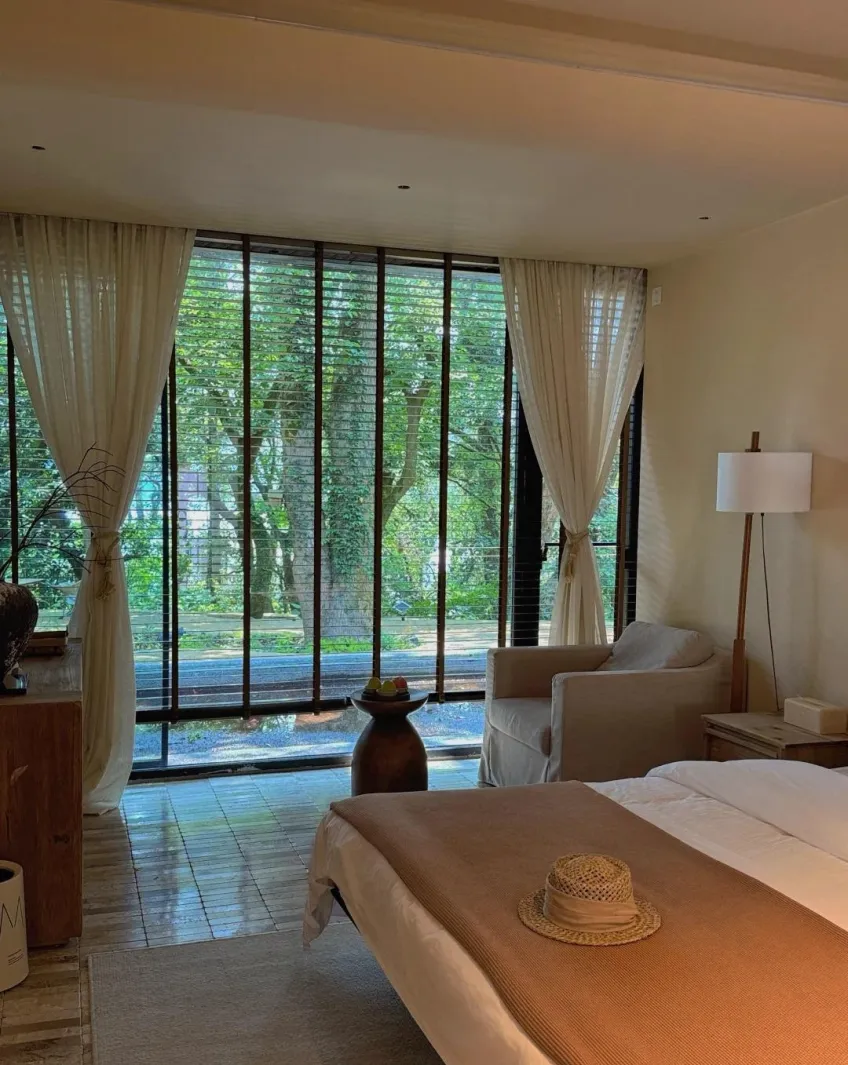
Pros: Peaceful setting close to Qianbu Beach; plenty of mid- to high-end lodging, ideal for quiet worship, ocean views and a slower pace.
Price reference: Guesthouses about ¥400–800, hotels about ¥800–1,500.
Examples: Xilei Baotuo Xingshe, Bihai Shanzhuang and Zen-style guesthouses.
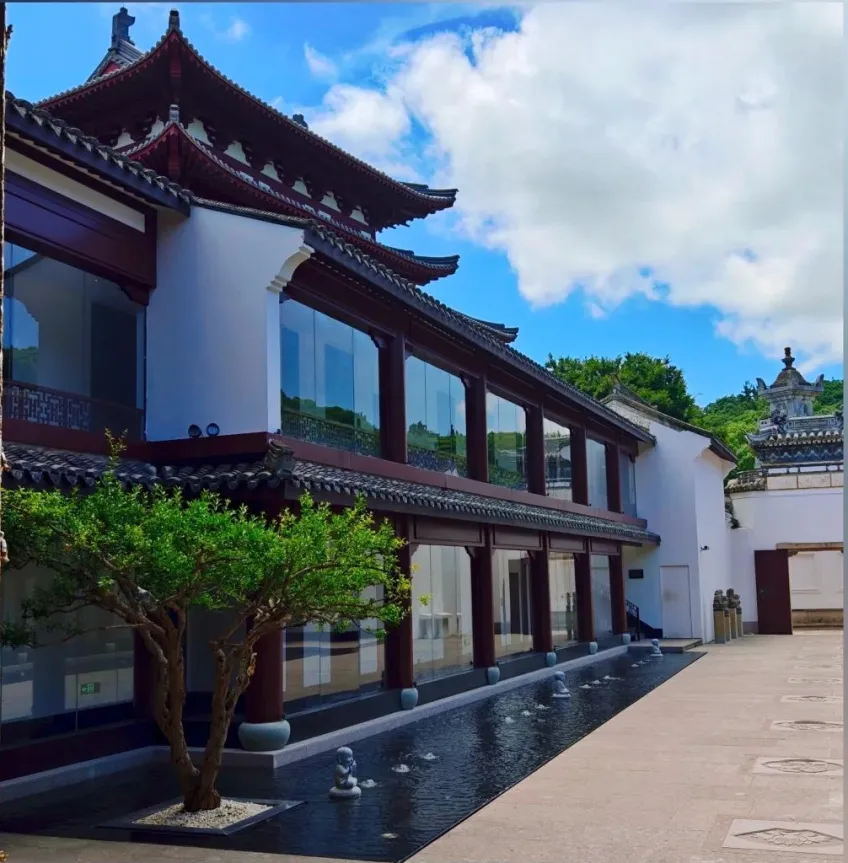
Longwan / Purple Bamboo Grove / South Sea Guanyin — Easy ocean access
Pros: Close to the pier, South Sea Guanyin and Purple Bamboo Grove; many ocean-view guesthouses, great for your first or last night on Mount Putuo.
Price reference: Guesthouses about ¥300–700; ocean-view rooms cost more.
Representative options: CITIC Putuo Hotel, Longwan Village homestay cluster.
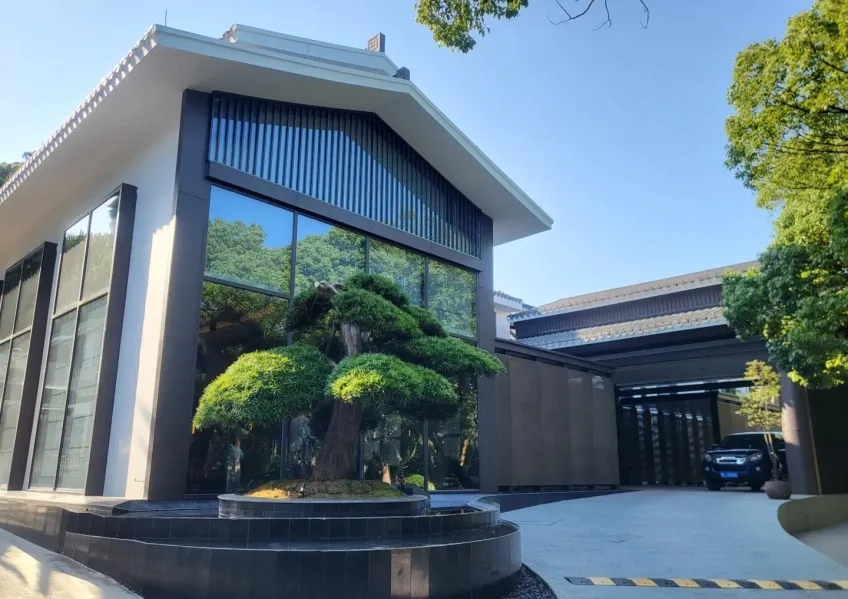
Xishan Area 2 / Longsha Area 1 — Best value
Pros: Guesthouses converted from residential homes are cheaper (often starting around ¥200); local markets and supermarkets make daily life convenient.
Cons: You need to walk 1–1.5 km or take a bus to Puji Temple; the surroundings are average.
Best for: Travelers on a budget who want to experience local life and don't mind walking a bit more.
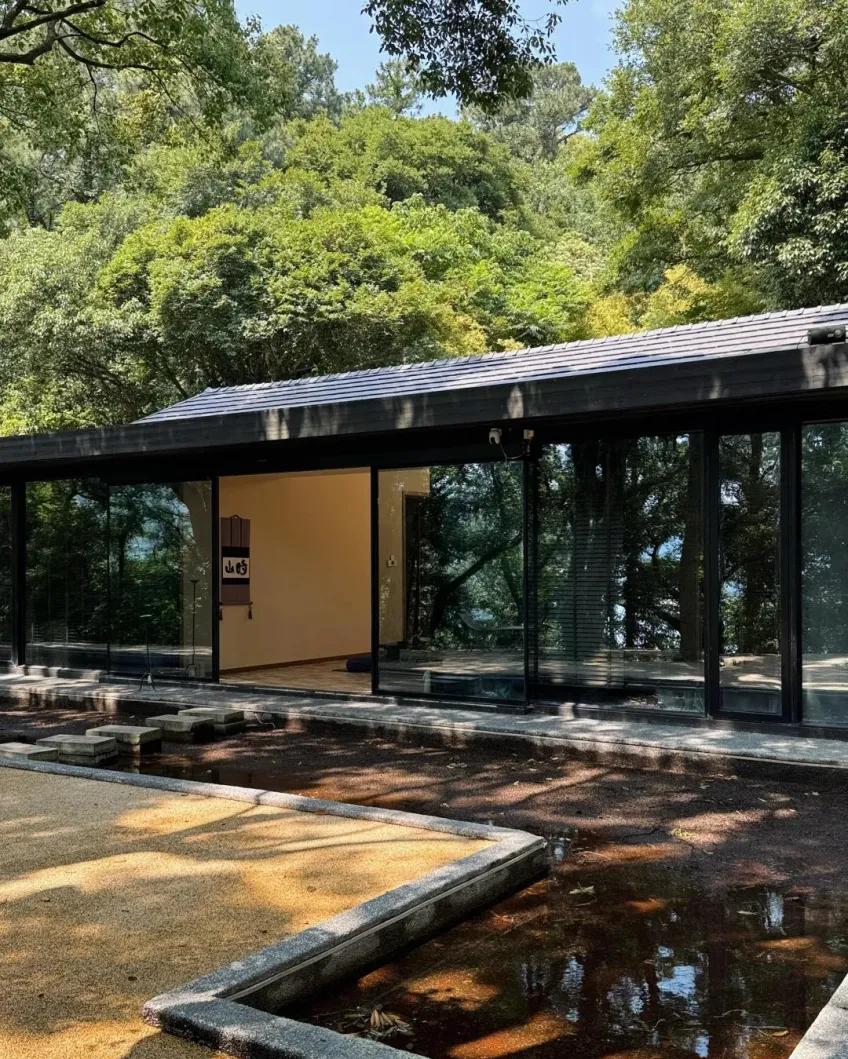
Foding Mountain (Huiji Temple) — Ultimate tranquility
Pros: Great views from the summit and a strong Zen atmosphere; ideal for in-depth Buddhist worship and watching the sunrise.
Cons: Very few lodging options and high prices; reliant on the cable car, so check operating hours.
Price reference: About ¥800–2,000 per night; limited availability, so watch out for the last cable car.
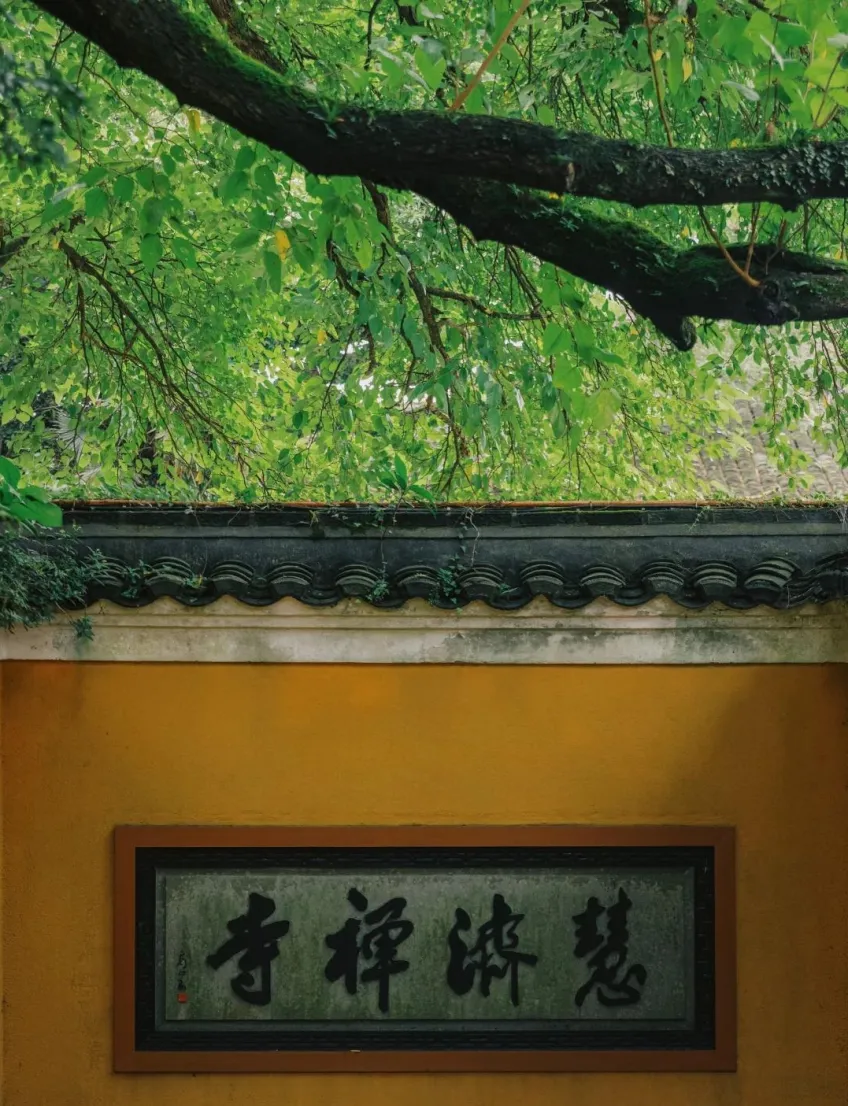
Mount Putuo Photography Tips
1. If you're shooting the sunrise, arrive half an hour early. The ten minutes before sunrise are the most beautiful, as the sky shifts from deep blue to orange-pink and the sea looks like a spilled palette. Wear light-colored clothes—they pair perfectly with the warm tones of the sunrise and make your photos pop.
2. Use the upturned eaves of ancient pavilions or coastal rocks as foreground elements to add depth to your shots.
3. Between 4 and 5 PM, the light is softest. With the sea breeze blowing through your hair, shoot portraits in backlight or rim light—even casual snaps will look incredibly atmospheric.
Special reminder
Watch the tides: Don't stand on the rocks at high tide—big waves are dangerous.
Respect pilgrims: If you see pilgrims bowing with every step, don't block their path or take photos of their faces.

Best seasons for sea views on Mount Putuo
Spring and fall (March–May, September–November)
Temperature: 15–25°C, neither too cold nor too hot.
This is the golden season for sea views on Mount Putuo.
In spring, sea mist swirls around the island, making it feel like it's floating in the clouds. Standing in front of Chaoyin Cave, waves surge out of the fog with a thunderous roar, and the sea before you looks like an ink wash painting.
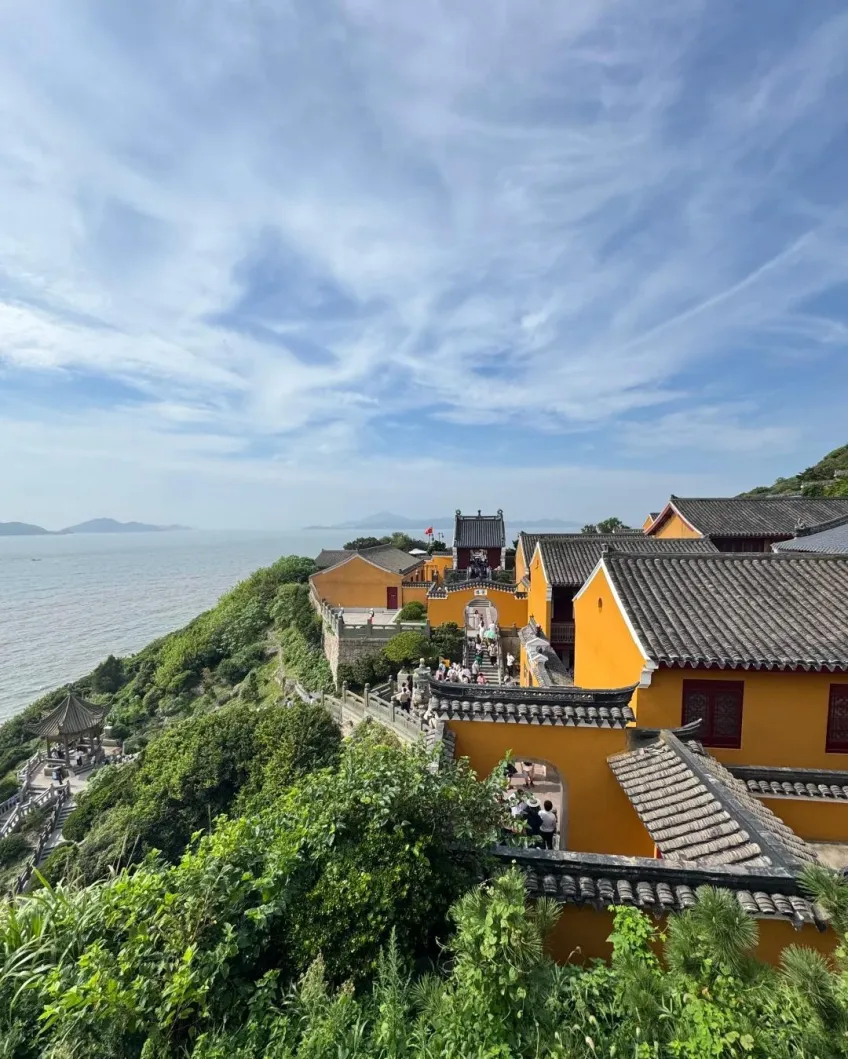
Autumn is the most comfortable season. The sky is high and clear, and the seawater visibility is excellent. Looking down from Foding Mountain, the azure sea and the temples' yellow walls and dark tiles frame each other perfectly in distinct layers. At Qianbu Beach in the evening, the sunset dyes the sea golden—you could sit there all afternoon.
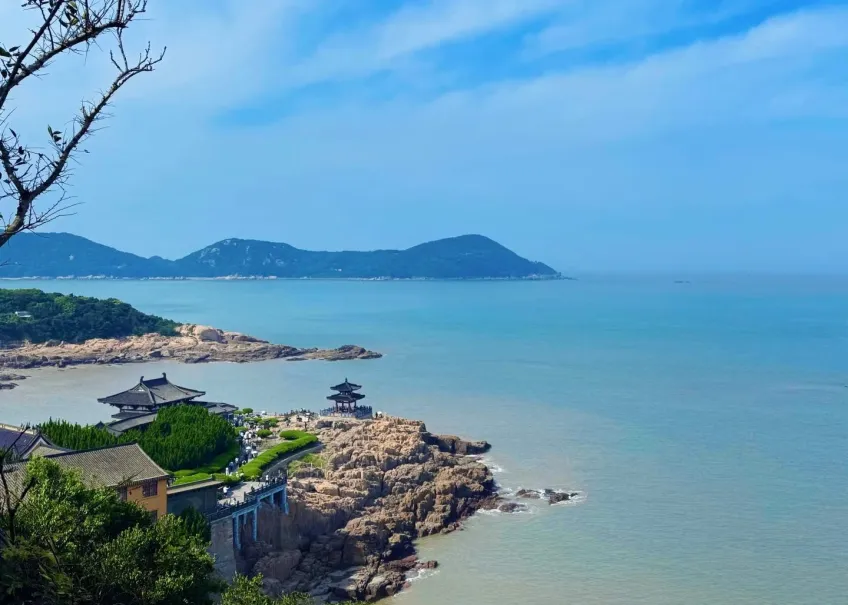
Summer (June–August)
Temperature: 25–30°C. The sea breeze keeps it from getting too hot.
Come to Mount Putuo in summer to get close to the sea. The beach at Baibu Beach opens for swimming, so you can jump right in; Qianbu Beach is only good for wading barefoot, strolling, and listening to the waves. The beaches are most crowded at dusk, buzzing like a festival.
But summer is also typhoon season. Sometimes the sea is calm one day, and all ferry services are suspended the next. Always check the weather before you set out.
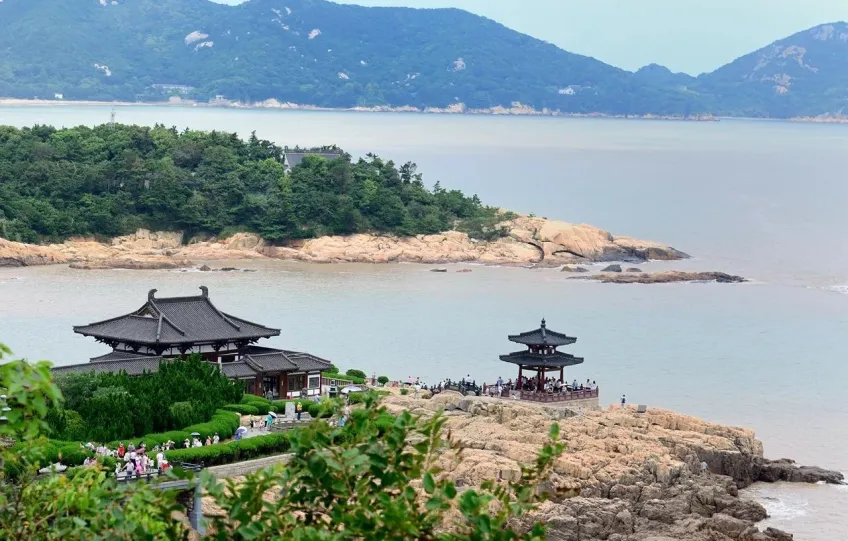
Winter (Dec–Feb)
Temperature: 5–10°C. Strong sea winds make it feel colder.
The sea is quietest in winter. With fewer visitors, the sound of the tide is clearer. Standing on the shore watching the sunset silhouette the distant mountains, your worries simply fade away.

Special tips for visiting Mount Putuo
Mount Putuo isn't an ordinary attraction—it's a sacred Buddhist site. Dress appropriately when visiting the island: wear modest clothing inside temples and avoid shorts, short skirts, tank tops, and flip-flops. Plain long pants or knee-length skirts are recommended, and flashy accessories should be kept to a minimum.
Photography tips: Except for the South Sea Guanyin statue (and even then, avoid shooting it head-on), photos are generally not allowed inside temple halls. Step over the threshold when entering a hall—never step on it.
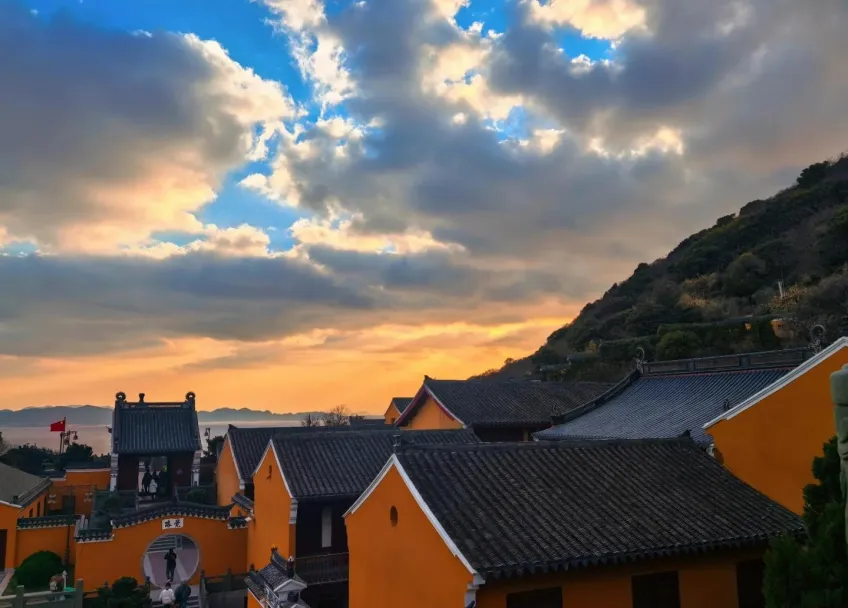
Opening hours & transport notes: Temples usually close around 17:30; scenic area buses and ferries typically stop running around 21:00 (subject to the day's ferry and bus schedules). Do not point at Buddha statues inside the halls. Buy incense as you wish, and don't be pressured into overpriced sales pitches.
Dining: The entire island promotes vegetarian food, and meat is banned in some areas. Vegetarian meals are recommended before and after paying respects to the Buddha.
Incense and religious items: Buy them at temple shops or licensed stores, and avoid overpriced roadside vendors.
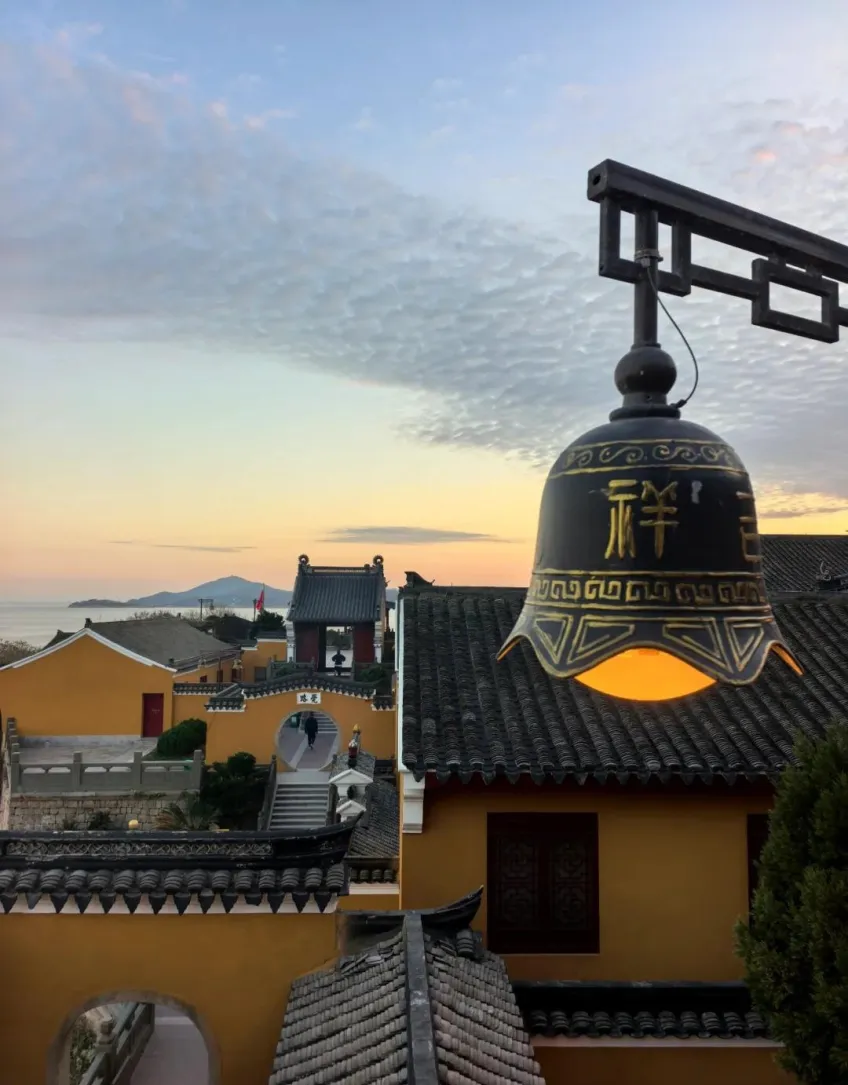
The most moving thing about Mount Putuo isn't just the Buddha—it's the sea.
The tide rises and falls like a chanted sutra. Sit on the rocks, with nothing to think about and nothing to ask for.
The sea listens for you; the wind remembers for you.

[Peaceful Journey 2 Days 1 Night] Mount Putuo 2-day tour – Devout pilgrimage
[Top sights] Mount Putuo, Puji Temple, South Sea Guanyin and more [Thoughtful service] Custom vehicle models and experienced East China drivers for a worry-free trip! [Pure travel experience] A no-shopping quality group tour for a pure journey—unforgettable memories! [Free bonus] One bottle of branded mineral water per person per day!
FAQs
Where to see the sea on Mount Putuo?
Viewing the sea at Mount Putuo falls into four categories: listening to the waves at Chaoyin Cave and Fanyin Cave, relaxing on the sand at Qianbu Beach and Baibu Beach, climbing Fotuo Mountain or Nantianmen for panoramic views of the mountains and sea, and watching the sunrise near Zhaoyang Pavilion. Each spot offers a different seascape, so plan your route based on your stamina and the tides.
What is the best season to view the sea at Mount Putuo?
The best seasons to view the sea at Mount Putuo are spring and autumn—March to May and September to November—when temperatures range from 15 to 25°C. The beach opens in summer, but it's also typhoon season, so ferry services may be suspended. Winter brings fewer visitors and clearer sounds of the waves, but strong sea winds make it feel cold.
How much are Mount Putuo tickets?
The peak-season entrance ticket for Mount Putuo is ¥160; off-season prices are subject to official announcements. Chaoyin Cave, Fanyin Cave, and Nantianmen are all included in the entrance ticket, while Qianbu Beach and Baibu Beach are free.
How should I plan a Mount Putuo day tour to see the sea?
On a Mount Putuo day tour, you can watch the sunrise at Zhaoyang Cave in the morning, then stroll along Baibu Beach and listen to the waves at Zizhulin (Purple Bamboo Grove) and Chaoyin Cave. In the afternoon, climb Fotuo Mountain for panoramic views of the mountains and sea, visit Fayu Temple, and end the day relaxing at Qianbu Beach to watch the sunset.
How do I get up Fotuo Mountain on Mount Putuo?
You can reach the top of Fotuo Mountain by cable car or on foot. The cable car takes about 8 minutes and saves energy. If walking, take Xiangyun Road next to Fayu Temple up the mountain—there are 1,088 steps and the hike takes about 30 to 45 minutes, with stone carvings and shade along the way. Fotuo Mountain is the highest peak on Mount Putuo, and Huiji Temple sits at the summit.