
Mount Putuo (普陀山) is an island of about 12.5 square kilometers in Zhoushan, Zhejiang. With Mount Wutai, Mount Emei and Mount Jiuhua, it is one of China's Four Sacred Buddhist Mountains, and the only one at sea. It is devoted to Guanyin, the bodhisattva of compassion. To get there, take a ferry from Wugongzhi Pier (蜈蚣峙码头) on Zhujiajian (about 15–20 minutes) or from Banshengdong Pier (半升洞码头) in Shenjiamen. Admission is ¥160 in peak season and ¥120 in low season (December–January). These are reference prices as of November 2026; check the official notice before you go. The main sights are the South Sea Guanyin statue and three great temples: Puji Temple (普济寺), Fayu Temple and Huiji Temple. If it's your first visit and you'd like a guide, see our group tours.
Mount Putuo: a Buddhist island at sea
There is a mystical island in the sea, drifting among the clouds and mist.
In Zhoushan, the "City of a Thousand Islands" in Zhejiang, China, there is a Buddhist kingdom floating on the sea.
Together with Mount Wutai in Shanxi, Mount Emei in Sichuan and Mount Jiuhua in Anhui, it is one of China's Four Sacred Buddhist Mountains. The other three sit deep inland among mountains. Only Mount Putuo rises from the sea.
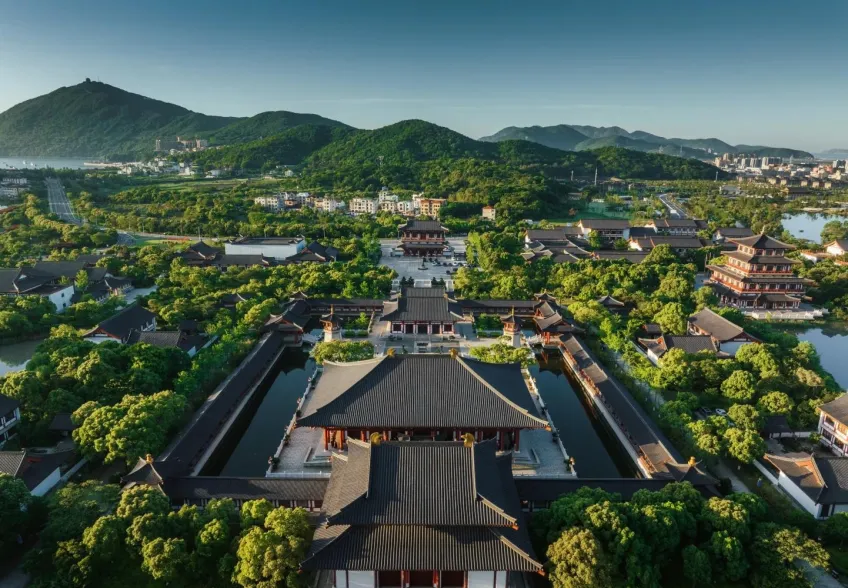
What makes it special is the way mountain, sea and temple come together. It is the only one of the four mountains that sits in the ocean, and the only island sanctuary of Guanyin.
The mountain rises from the sea, the temples rest on the mountain, and the ocean stretches before the temples. Mountain and sea embrace each other while temples and tides echo together. For centuries, people have crossed the water to this place simply to find peace of mind.
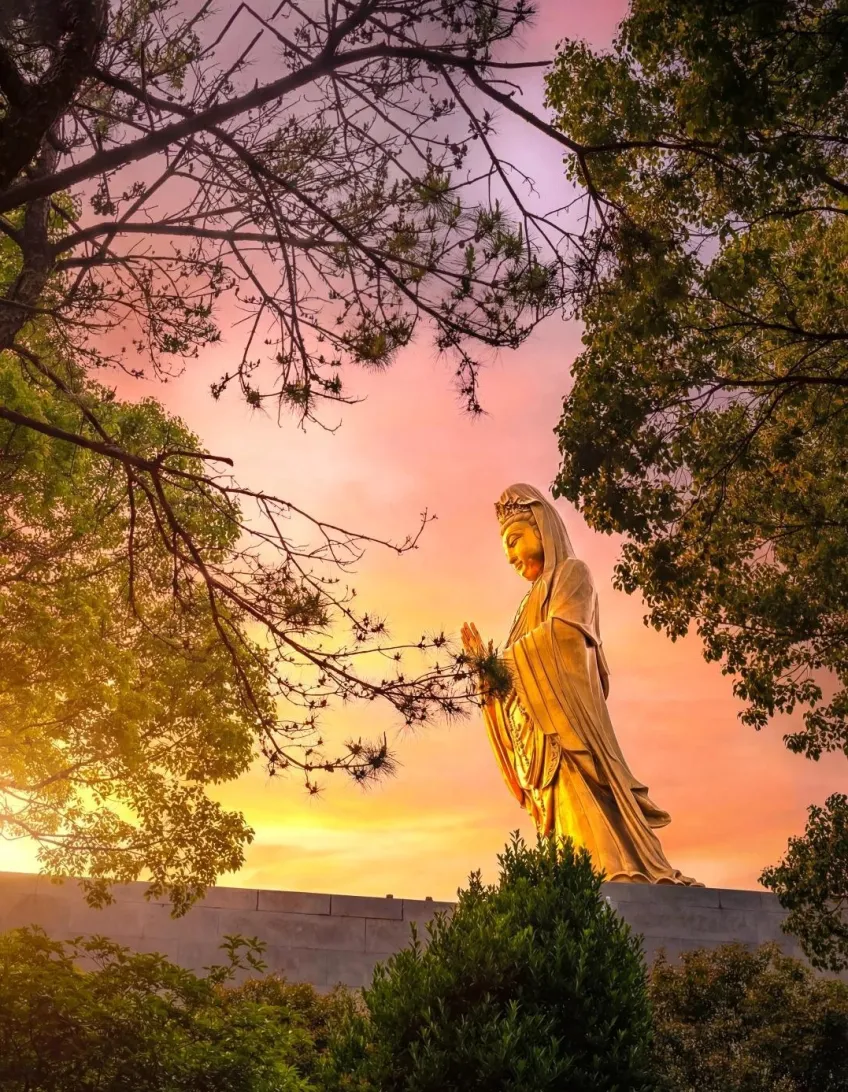
Mount Putuo is an interesting place. It's called a mountain, but it is really a small island of just 12.5 square kilometers, and a drive around it takes half an hour at most. Yet this small island has a lot to see.
Bukenqu Guanyin Temple
Before you go, it helps to know the story of Mount Putuo. It begins with a small temple called Bukenqu Guanyin Temple, "the temple of the Guanyin who would not leave."
Legend has it that during the Tang Dynasty, a Japanese monk obtained a statue of Guanyin on Mount Wutai and planned to take it home to Japan. But when his ship reached the Lotus Sea (Lianhuayang) near Mount Putuo, fierce winds and waves rose and the ship could not sail on. The monk understood that Guanyin did not want to go east and wished to stay. So he built a temple by the sea and named it Bukenqu Guanyin Temple.
This was the start of Mount Putuo as a center of Guanyin worship. At its height, the island had "three temples, 88 smaller monasteries, 128 hermitages and 4,000 monks," and it was called "the foremost Buddhist land in China." Incense has burned here ever since, for more than a thousand years.Faith on Mount Putuo has continued without a break for more than a thousand years. That is its history: a lonely island in the sea that became a holy place of Guanyin, where people come to find comfort.
Getting to Mount Putuo
Most first-time visitors learn one thing right away: you have to take a boat.
However far you've come, the last leg starts at Wugongzhi Pier on Zhujiajian or Banshengdong Pier in Shenjiamen, where you board a ferry out into the East China Sea. The 10-plus-minute crossing looks like any ferry ride, but many people treat it as a small ritual, a chance to leave their worries on the water. It may be Mount Putuo's first gift to visitors: you cross the sea, and your mind settles.
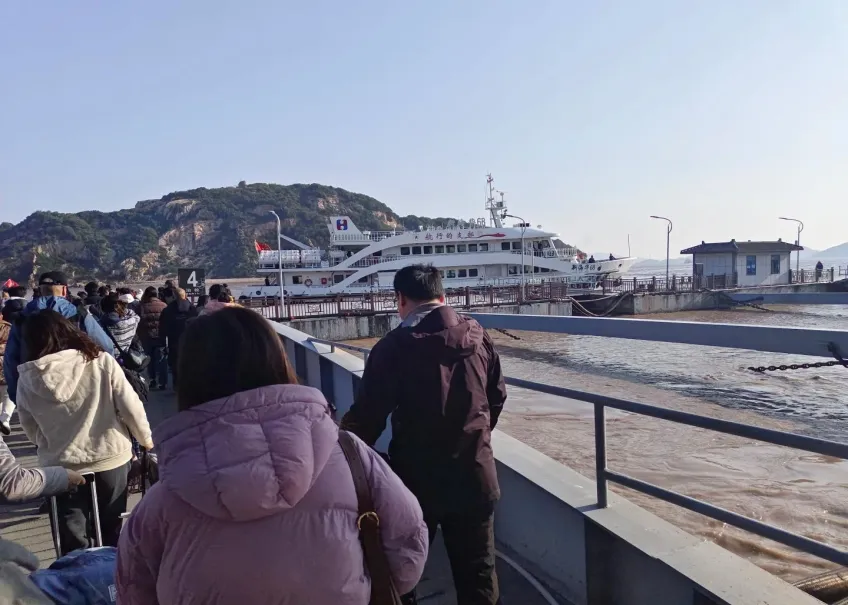
If you're aiming for one of the last ferries, leave extra time to wait. You haven't really reached the island until you're on the boat.
Wugongzhi Pier, Zhujiajian (recommended)
Zhujiajian Wugongzhi Pier (recommended):
Hours: 6:30 a.m.–9:50 p.m. The last ferry back from Mount Putuo leaves at 10:10 p.m. Check the day's official schedule.
Boat ride: about 15–20 minutes. Ferries run every 20–30 minutes.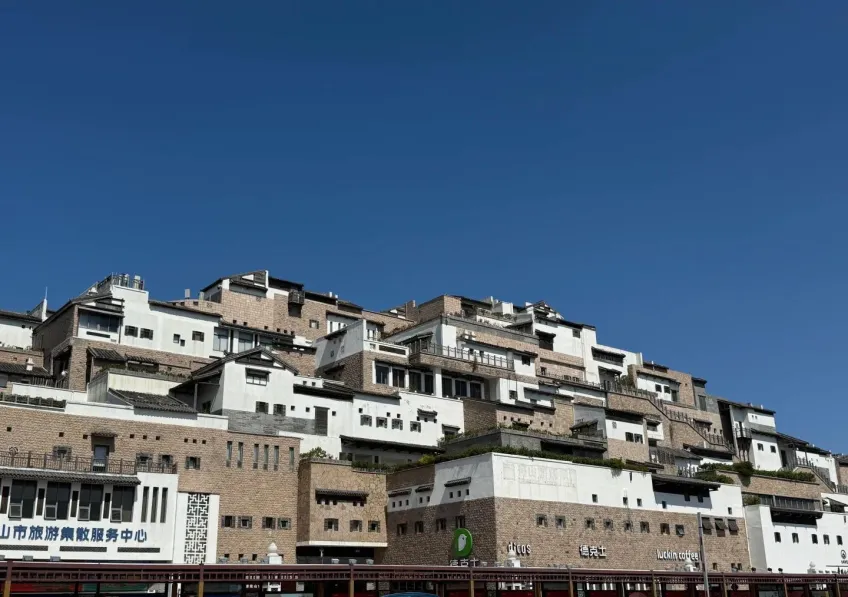
Most people change buses, buy tickets and wait at the Zhujiajian Tourist Transit Center before going on to Wugongzhi Pier to board.
Banshengdong Pier, Shenjiamen:
Hours: 7 a.m.–4:20 p.m. The last ferry back from Mount Putuo leaves at 4:50 p.m. Check the day's official schedule.
Ferry ride: about 30 minutes.
Ferry schedules and crossing times follow the notices posted at the pier on the day. Mount Putuo ferry tickets are sold by real name. Passport and Hong Kong, Macao or Taiwan permit holders usually can't get tickets online; buy them in person with your document at the service window of the Zhoushan Tourism Distribution Center.
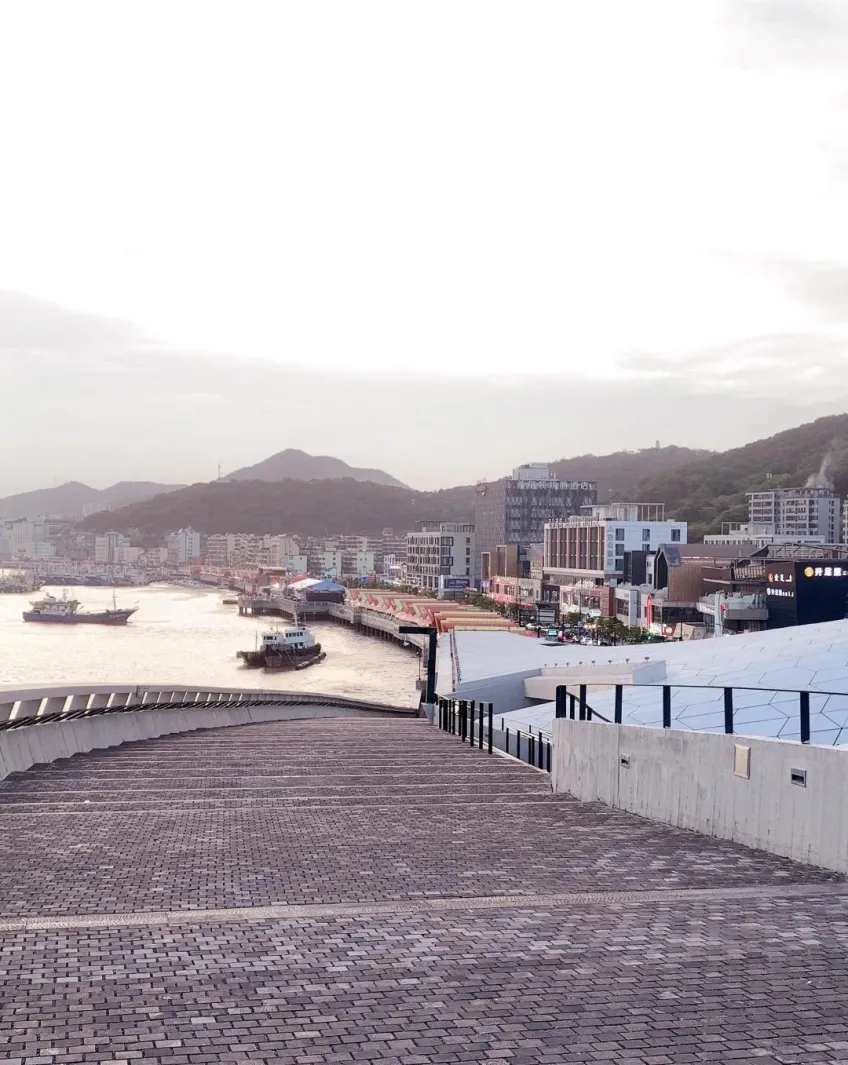
From the ramp you can watch the ferries come and go while you wait to board.
South Sea Guanyin bronze statue
Once you step onto the island, you'll notice there's no noisy traffic and none of the skyscrapers common in cities. Instead, your eyes are met with green hills, ancient temples, yellow walls, and black tiles.
Mount Putuo is China's best-known Guanyin sanctuary, and every temple on the island, large or small, is devoted to Guanyin. You could call it Guanyin's home. Crowds peak around the 19th day of the second, sixth and ninth lunar months, the three festivals for Guanyin's birthday, ordination and enlightenment (the Western calendar dates change each year). On those days the island is packed, and incense smoke fills the temples all day.
The sight most visitors remember is the South Sea Guanyin bronze statue by the shore. It stands 33 meters tall and weighs more than 70 tons, and its height stands for Guanyin's 33 manifestations. The gilded figure, with a calm and compassionate face, looks out over the East China Sea.
The statue is the spiritual landmark of Mount Putuo.
For many visitors, heading straight here is the first thing they do after getting off the boat.
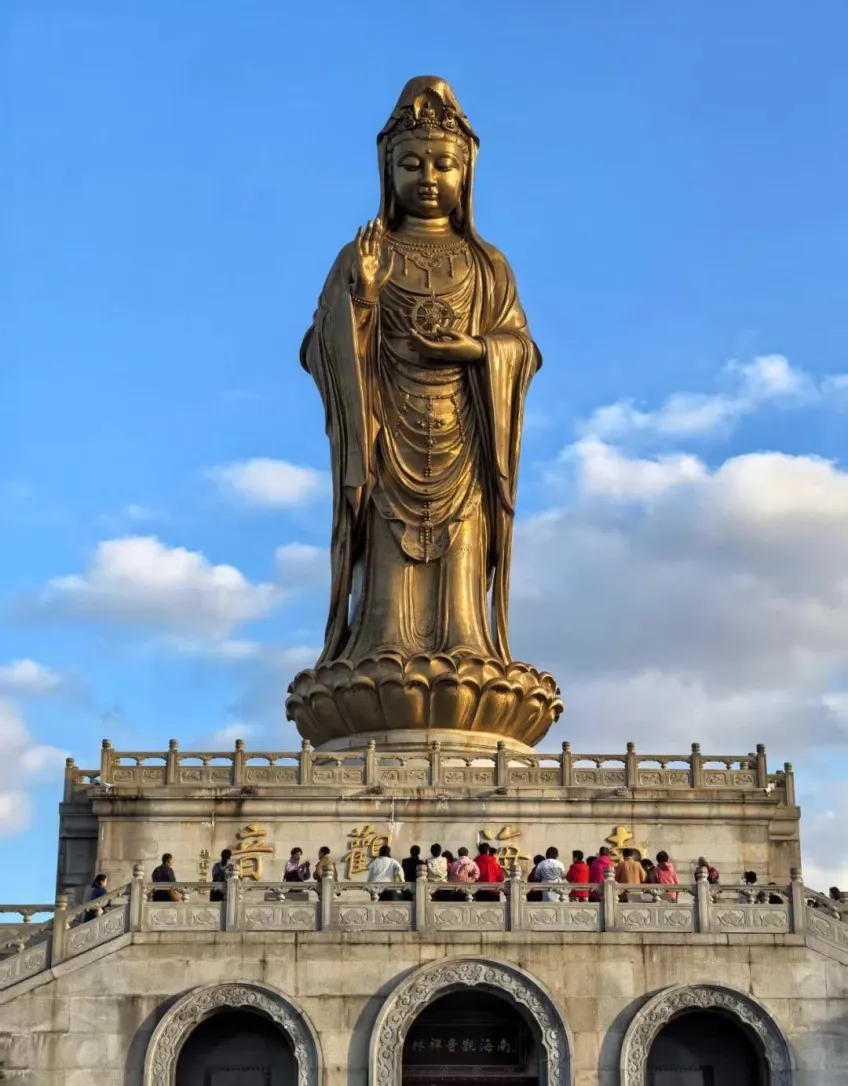
After the statue, it's time to head uphill.
Guanyin Dharma Realm
Beyond the three main temples and the South Sea Guanyin, the Guanyin Dharma Realm on the Zhujiajian side shows gilded thousand-armed and many-faced Guanyin statues in modern halls. Many pilgrims add it as an extra stop.
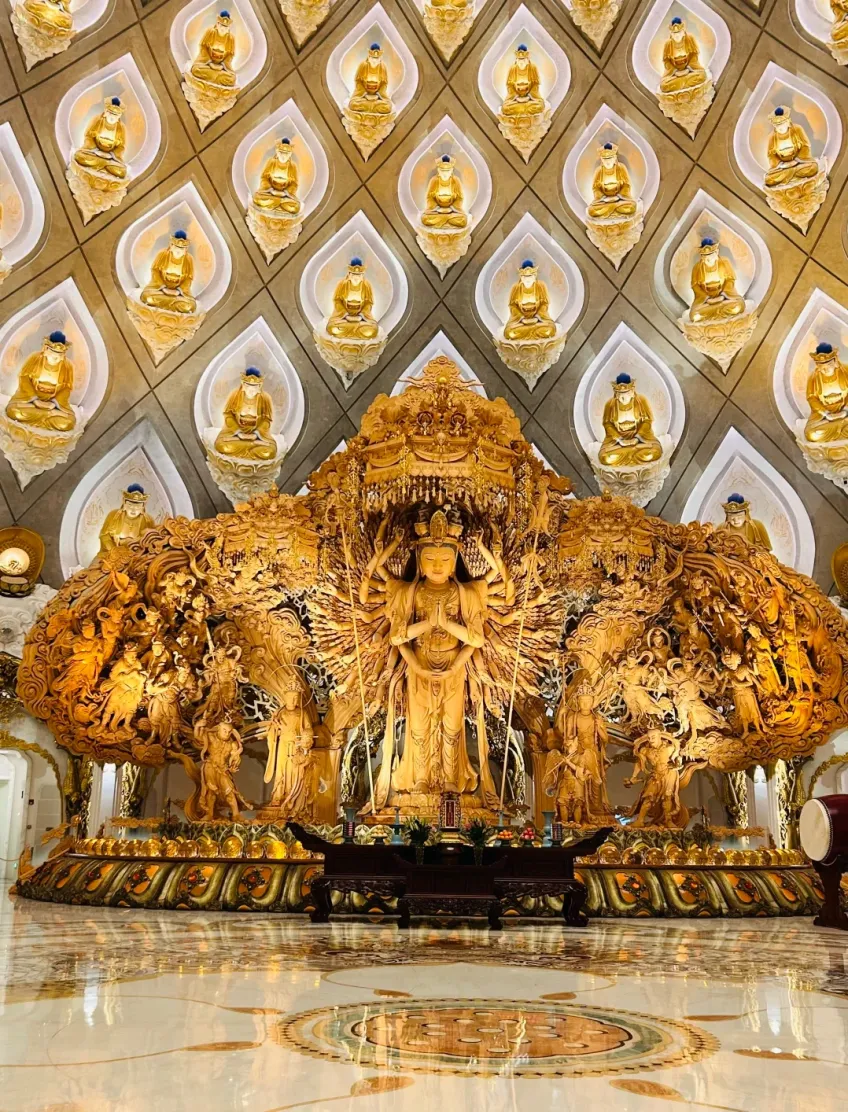
In the Thousand-Armed Hall, a modern dome lined with Buddha niches frames the gilded statue, quite unlike the traditional Yuantong Halls on the island.
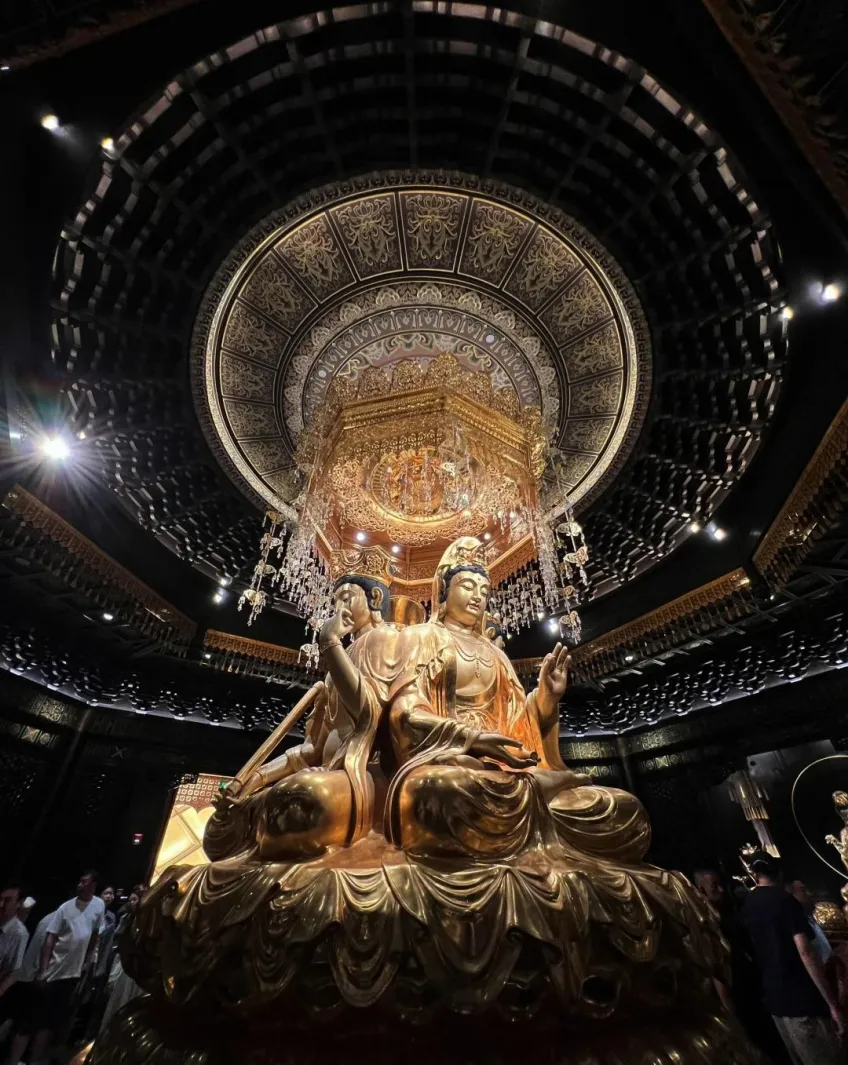
This hall, with its many-faced golden statue under an ornate coffered ceiling, is a regular stop for pilgrims.
The three great temples
Puji Temple, Fayu Temple, and Huiji Temple are the three most famous temples on Mount Putuo and form its core architectural complex. Located at the foot, the mid-slope, and the summit of the mountain respectively, they make up a complete pilgrimage route.
Puji Temple
Puji Temple, also known as the Front Temple, lies south of Baihua Peak and below Lingjiu Peak on Mount Putuo. It is the main temple dedicated to Guanyin Bodhisattva on the island, as well as the oldest and largest temple on Mount Putuo.
The temple was first built in 916 AD (the second year of the Zhenming era of the Later Liang dynasty) and has undergone several name changes and reconstructions. In 1699, during the 38th year of Emperor Kangxi's reign in the Qing Dynasty, it was granted the plaque "Puji Qunling" (Universal Salvation for All Beings), after which it was renamed Puji Temple.
The temple faces south and climbs the hillside in an orderly, imposing layout. The main hall, Yuantong Hall, houses a seated Vairocana (Pilu) Guanyin. It can hold more than a thousand people at once, which earned it the nickname "Living Great Hall."
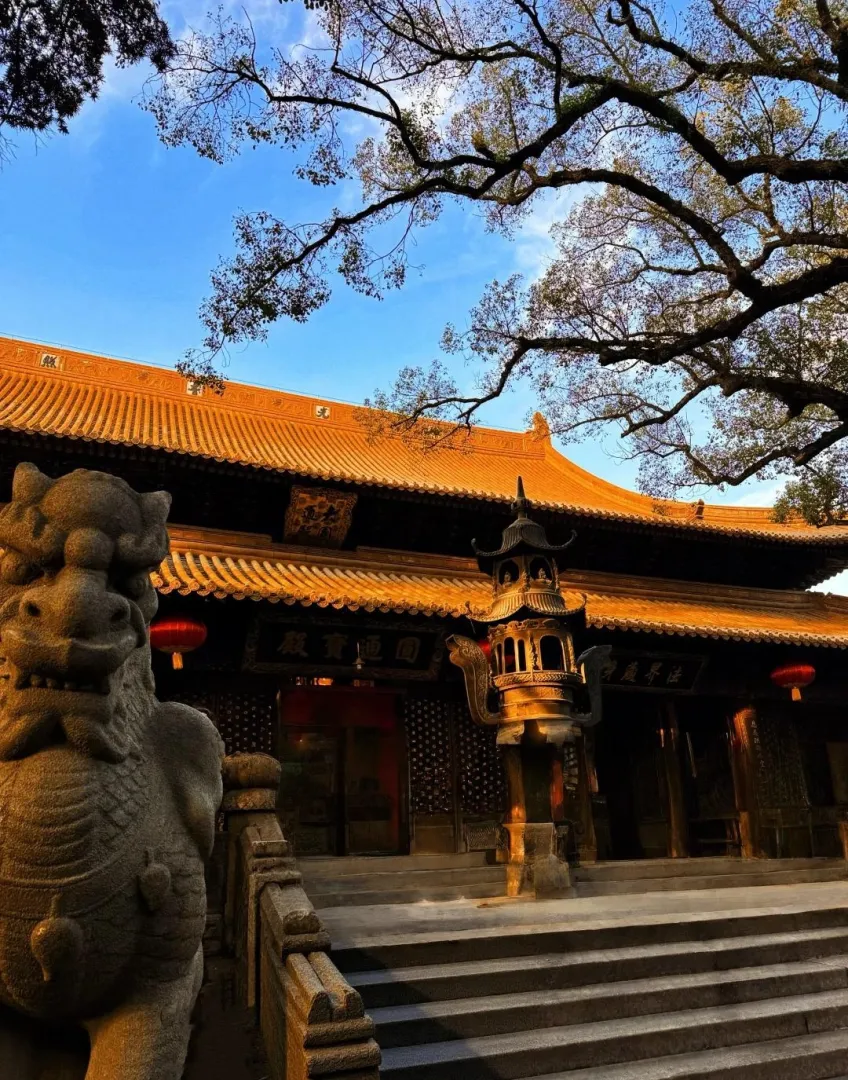
Layout: Puji Temple on Mount Putuo is built along the hillside, covering an area of 26,000 square meters. Along the central axis stand the main gate, Hall of Heavenly Kings, Yuantong Hall, the Sutra Library, and the Abbot's Hall. In front of the temple are a stone archway, a screen wall, the Imperial Stele Pavilion, an octagonal pavilion, Yaochi Bridge, and Haiyin Pool. On both sides of the main hall are a bell tower, a drum tower, side halls, and guest rooms.
Puji Temple highlights
Yuantong Hall: The main hall of Puji Temple, seven bays wide and six bays deep, can hold over a thousand people at once and is known as the "Living Great Hall." Inside stands an 8.8-meter-tall seated statue of Vairocana Guanyin, flanked by statues of Guanyin's 32 manifestations.
Haiyin Pool: A 15-mu (about 2.5-acre) lotus pond in front of Puji Temple. Built in the Ming Dynasty, it is also called the "Life-Release Pond." Three stone bridges cross it. The middle bridge links the mountain gate to the north with the Imperial Stele Pavilion to the south. The eastern one, Yongshou Bridge, has 40 stone lions carved on its railing posts. The western one is an arched bridge with dragon-head water spouts around it.
Duobao Pagoda: Located south of the eastern side of Haiyin Pool, it was built in 1334 (the second year of the Yuantong era of the Yuan Dynasty) and funded by Prince Xuanrang, the crown prince at the time, so it is also called the "Prince Pagoda." Built entirely of Taihu rocks, the pagoda has six square stories. Its exquisite carvings reflect a strong Yuan Dynasty style, and it is one of the three treasures of Mount Putuo.
Imperial Stele Pavilion: Inside the pavilion stands a 3-meter-tall stele inscribed by Emperor Yongzheng of the Qing Dynasty, recording the history of Mount Putuo. Take a closer look if you're interested.
Fayu Temple
Fayu Temple, also known as the Rear Temple, is located to the left of Baihua Peak and below Guangxi Peak on Mount Putuo. It sits 2.8 kilometers from Puji Temple and is the second largest temple on Mount Putuo.
The highlight of this temple is Jiulong Hall (Nine Dragon Hall), which features a nine-dragon caisson ceiling with exquisite carvings. Legend has it that this ceiling was relocated here intact from the Ming Dynasty Imperial Palace in Nanjing. In other words, the architecture you see at Fayu Temple on Mount Putuo is genuine Chinese Ming Dynasty royal architecture—a rarity anywhere in China.
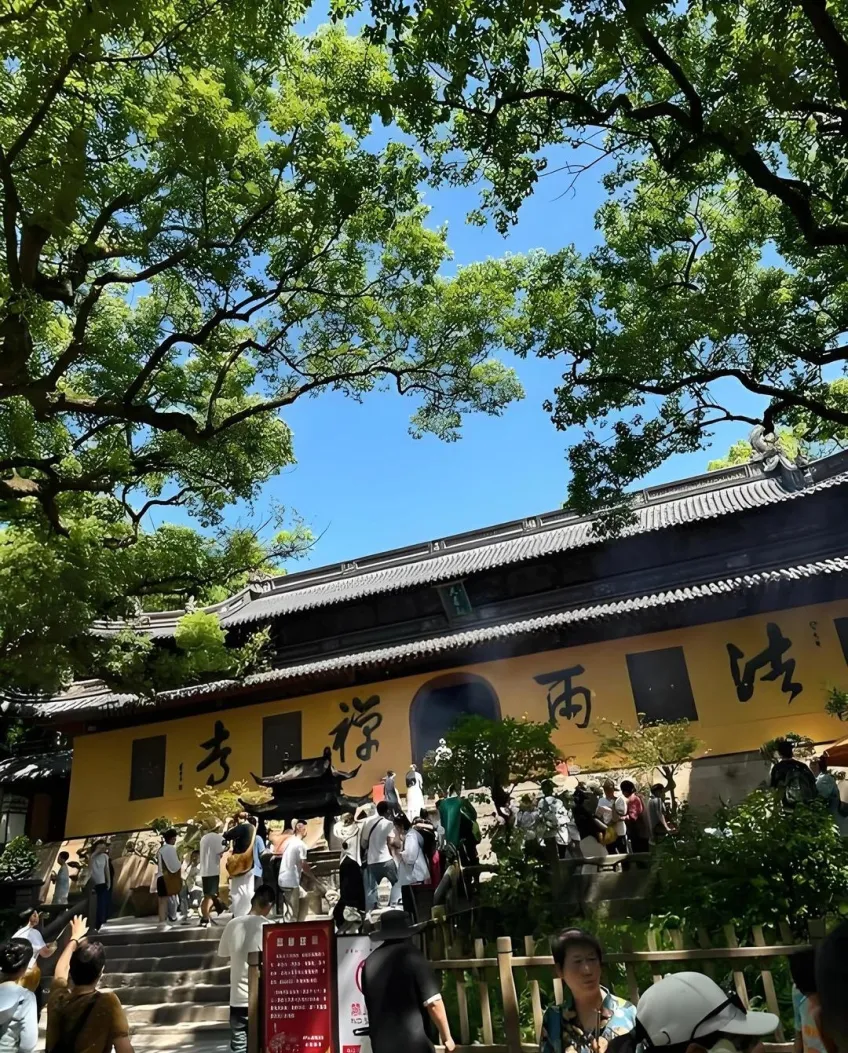
Fayu Temple was first built in 1580, the eighth year of the Wanli reign of the Ming Dynasty. Because the surroundings were tranquil and the rocks seemed imbued with spiritual energy, a temple was established here. Taking its meaning from "the sound of the dharma sea's tides," it was named Haichao Nunnery. In 1594, the 22nd year of Wanli, it was renamed Haichao Temple, and in 1606, the 34th year, it became Huguo Zhenhai Chan Temple, but it was later destroyed by war. It wasn't until 1689, the 28th year of the Kangxi reign of the Qing Dynasty, that an imperial order was issued to rebuild it. In 1699, the 38th year of Kangxi, the emperor bestowed the name Jinxiu Temple and presented plaques reading "Tianhua Fayu" and "Fayu Chan Temple." The name Fayu Temple has been used ever since.
Architectural layout: The temple covers 33,408 square meters and is built along the contours of the mountain. From the entrance gate, the halls rise step by step up the slope. Today, 294 well-preserved rooms remain, including Hall of Heavenly Kings, Jade Buddha Hall, Guanyin Hall, Imperial Stele Hall, Mahavira Hall, the Sutra Library, and the Abbot's Hall.
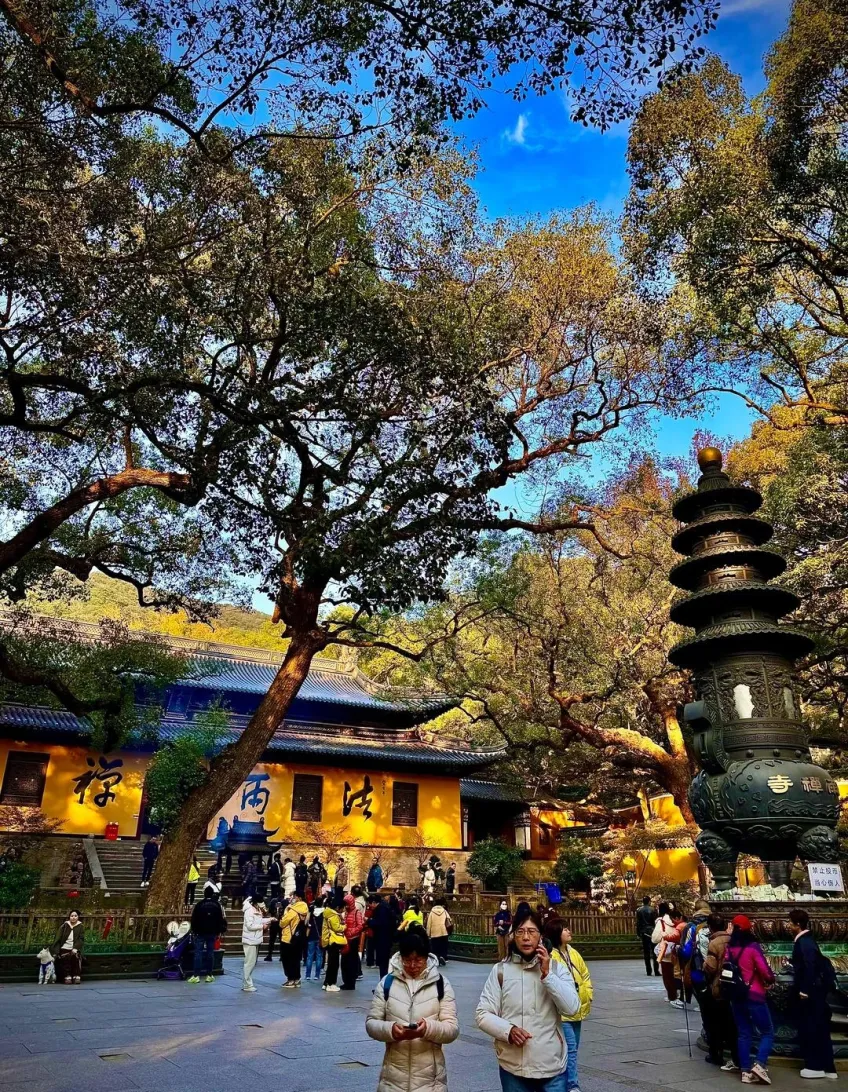
In the courtyard, the incense burner stands against the yellow walls, and smoke drifts among the visitors.
Fayu Temple highlights
Nine Dragon Hall: Also called Yuantong Hall, this is the main hall of Fayu Temple, seven bays wide. It was first built in the 38th year of the Kangxi reign of the Qing Dynasty and has 48 large pillars. The ceiling holds an exquisite nine-dragon caisson. On Emperor Kangxi's order, the caisson and some of the glazed tiles were moved from the Ming imperial palace in Nanjing, with parts rebuilt in the same style. When the hall was finished, the emperor named the temple Fayu Temple. A Buddhist hall of this rank is rare in Chinese temples.
Master Yinguang Memorial Hall: Located in the center of the Abbot's Courtyard at Fayu Temple on Mount Putuo. Master Yinguang (1861–1941) was the 13th patriarch of the Pure Land School. He practiced on Mount Putuo in the 19th year of Emperor Guangxu's reign (1893) and studied Buddhist scriptures at Fayu Temple for over 40 years.
Jade Buddha Hall: Three bays wide with a yellow glazed tile roof. Inside stands a 1.3-meter-tall jade Buddha statue, which was moved here from Yonghe Temple in Beijing in 1985.
Setting: The temple sits deep among old, shady trees. Qianbu Beach is a short walk away, and the surf there roars day and night, just as the Northern Song poet Wang Anshi wrote: "Autumn lifts the colors of the trees; bell tones answer the rolling waves."
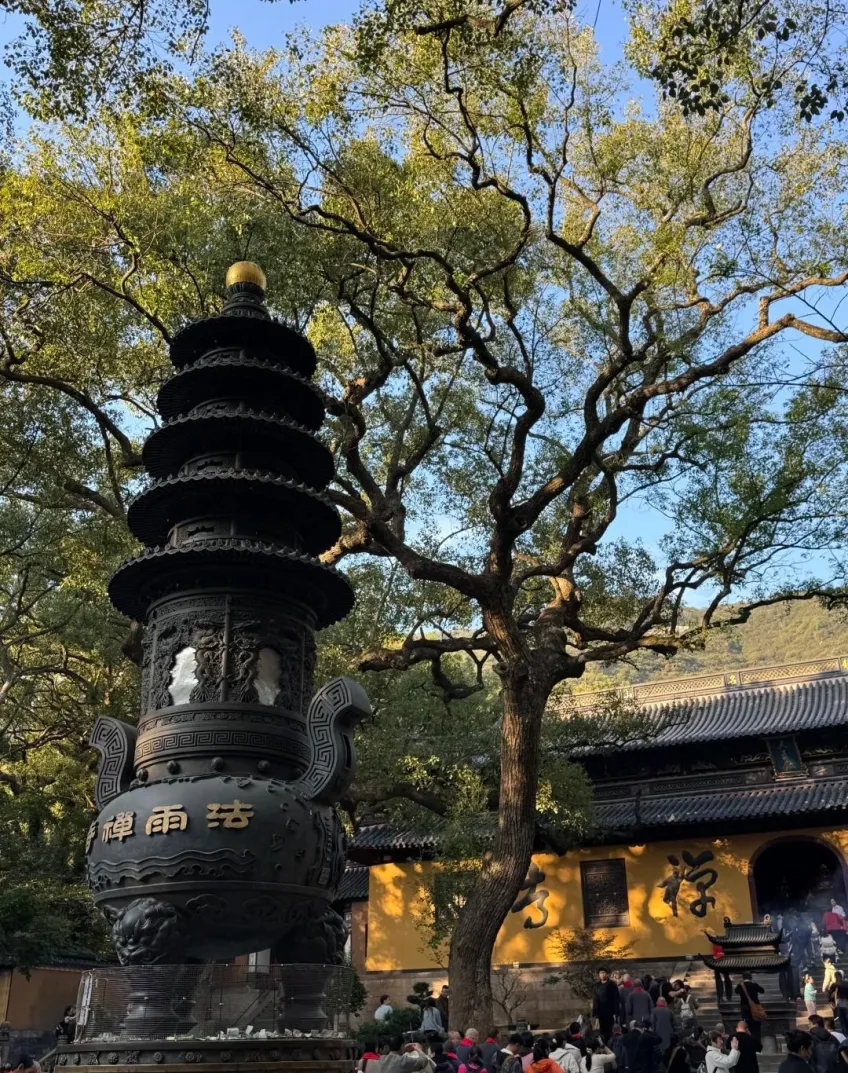
Up close, the bronze incense burner carries the temple's name. Much of Fayu Temple's charm is in details like this.
Huiji Temple
Huiji Temple sits at the highest point of Mount Putuo—the summit of Foding Mountain—so it is also called Foding Mountain Temple. The entire temple is hidden deep in lush green woods, giving it the secluded feel of an "ancient temple hidden in the mountains."
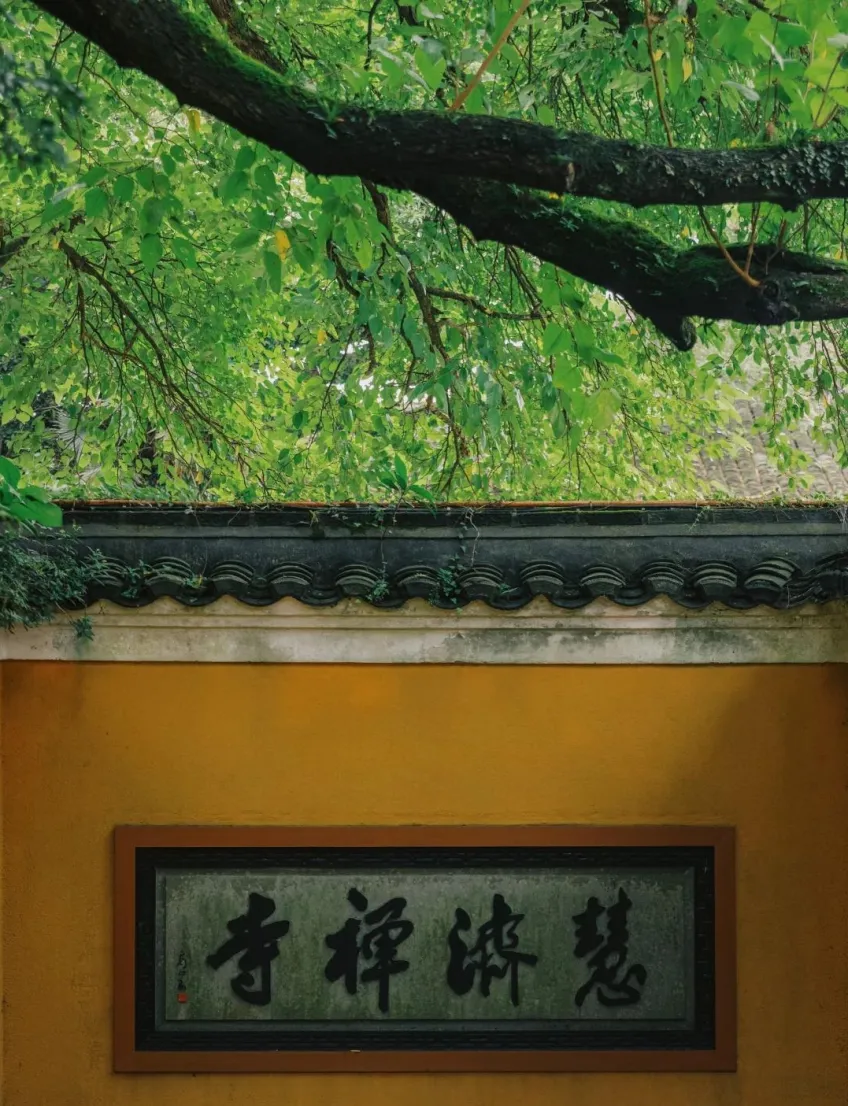
Huiji Temple's layout is rare among Chinese temples. The Hall of Heavenly Kings, Mahavira Hall, Great Compassion Hall, Sutra Library, Jade Emperor Hall, Abbot's Quarters and other buildings are set side by side in parallel, in a garden style typical of Zhejiang.
Unlike the other temples on Mount Putuo, Huiji Temple's main hall is the Mahavira Hall, which enshrines Shakyamuni Buddha. To its right, the Great Compassion Hall houses a Tang Dynasty Guanyin, the oldest Buddhist statue on Mount Putuo. West of the temple's back gate grows a tree found nowhere else: the Putuo hornbeam. It is the only wild parent tree left in the world, a Class I nationally protected plant, and one of the Three Treasures of Mount Putuo.
Architectural layout: Huiji Temple on Mount Putuo is built on flat ground at the summit of Foding Mountain. Its overall layout is rare among Chinese Buddhist monasteries—behind the Hall of Heavenly Kings, the main buildings such as the Mahavira Hall, Guanyin Hall, Sutra Library, Jade Emperor Hall and Abbot's Quarters are not arranged symmetrically along a central axis as in traditional Chinese architecture, but staggered along a single parallel line, blending the distinctive garden architectural style of eastern Zhejiang.
Huiji Temple highlights
Mahavira Hall: The main hall of Huiji Temple, enshrining Shakyamuni Buddha, unlike other major temples on Mount Putuo where Guanyin is the principal deity. Flanking the Buddha statue are Ananda and Kasyapa, while the "Three Saints of the West" are enshrined at the rear. Carved along both side walls are statues of the "Twenty Devas."
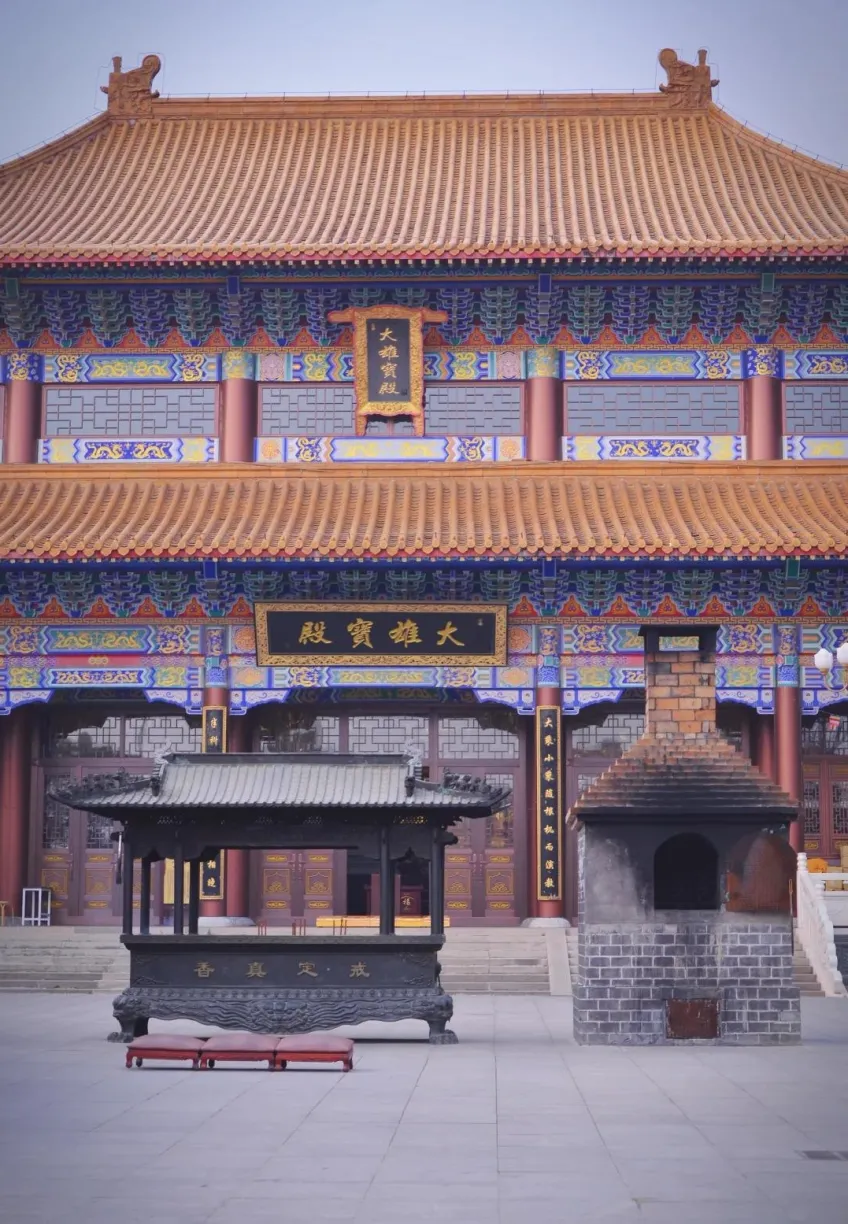
Guanyin Hall: Located west of the main hall, it enshrines a gold-leafed seated Guanyin statue carved from camphor wood in the center, with stone tablets bearing Guanyin images painted by famous Chinese artists through the ages inlaid on both sides.
Great Compassion Hall (Dabei Lou): Houses a seated Thousand-Armed Guanyin.
Putuo Hornbeam: A rare ancient tree southwest of the temple and a Class I nationally protected plant. It is the only wild specimen left in the world, earning it the nickname "Earth's Only Child." It is also one of the Three Treasures of Mount Putuo.
Historical steles: The spirit wall at the temple entrance is carved with "Namo Avalokitesvara Bodhisattva." The outer wall of the main hall features the "Huiji Temple Land Donation Stele," while the corridor displays the "Temple Rules" stele.
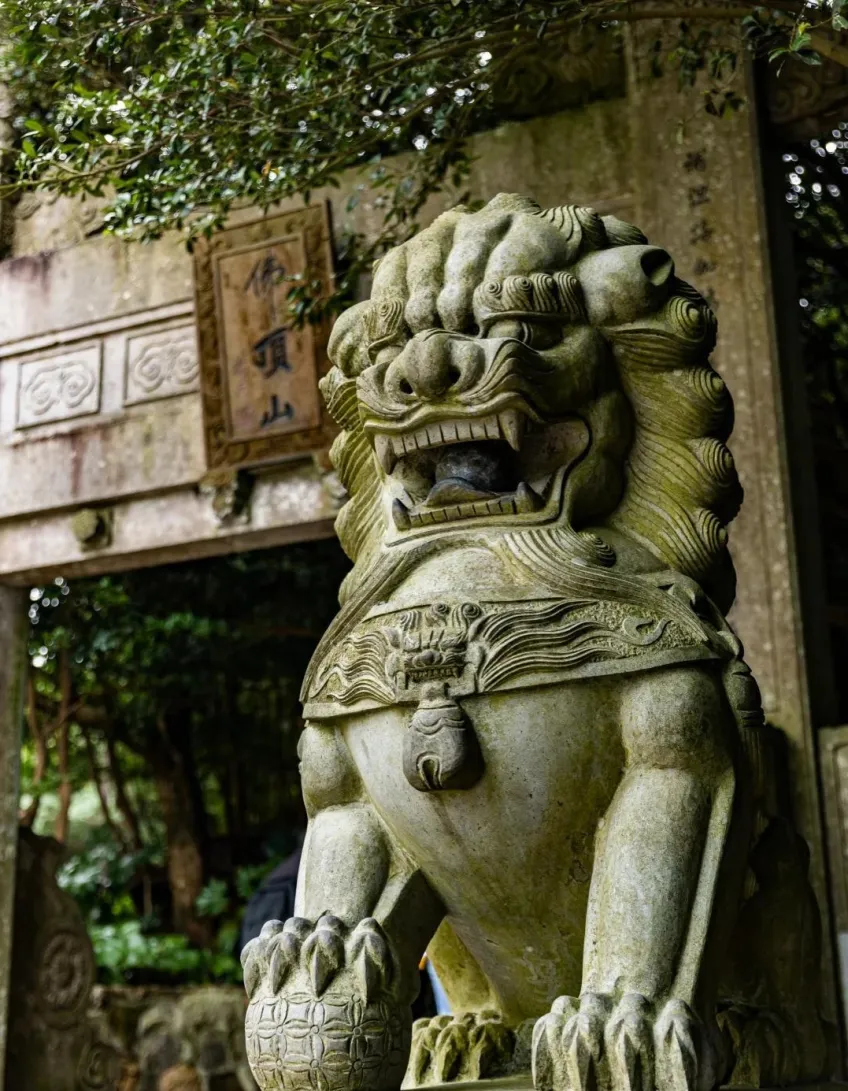
The stone lions at Foding Mountain guard the archway, and visitors often stop here for a group photo near the end of the climb.
Mount Putuo awaits
Though named after a mountain, Mount Putuo isn't actually large—you can explore it on foot in about half a day. Yet it isn't small either, holding a thousand years of faith as well as the joys and sorrows of the human world.

Zhujiajian and Mount Putuo 3-day 2-night private tour | Ningbo arrival and departure, Nansha Beach
A 3-day 2-night private tour with pickup and drop-off at Ningbo Railway Station: on day one, play in the sand and build sand sculptures at Nansha Beach in Zhujiajian, then stay overnight in Zhujiajian; on day two, take a speedboat to Mount Putuo to visit Puji Temple, Zizhulin and the South Sea Guanyin statue, returning to Ningbo in the evening; on the final day, explore Nantang Old Street. Transportation, guide, hotel and entrance tickets are included, and foreign-language guides are available.
If Mount Putuo appeals to you and you plan to visit Zhoushan soon, we recommend a one- or two-day Mount Putuo tour.
This is especially true on a first visit. The sights are close together and full of history. A professional guide can explain the stories behind each site and take care of transport, entry tickets and ferry tickets, so your trip to this "Buddhist Kingdom of Sea and Sky" goes smoothly.
FAQs
Do I need to book Mount Putuo tickets? How do I get in?
Mount Putuo entrance tickets cost ¥160 in peak season (Feb–Nov) and ¥120 in off-season (Dec–Jan of the following year), or ¥180 during the first to fifth days of Chinese New Year, Labor Day and National Day (reference prices as of Nov 2026; subject to official announcements). The all-in-one QR pass and reservation rules follow the site's official notices on the day. Check entry requirements before you go and bring your ID (passport or Mainland Travel Permit for Hong Kong, Macao and Taiwan residents).
Which ferry and pier should I choose? Are the schedules reliable?
Most visitors board at Wugongzhi Pier on Zhujiajian or Banshengdong Pier in Shenjiamen; schedules and crossing times follow the notices posted at the pier on the day. Mount Putuo ferry tickets are sold by real name. Passport and Hong Kong, Macao or Taiwan permit holders usually can't get tickets online; buy them in person with your document at the service window of the Zhoushan Tourism Distribution Center.
What should I know about offering incense?
Please keep quiet when paying respects inside the halls. Rules on incense and prohibited items follow each temple's posted notices.
Day tour or overnight? Which suits you?
If you're fit and don't mind racing for the ferry, one day is enough. To see the three temples and the South Sea Guanyin at an easy pace, stay overnight.
Should I hire a guide? How do I book transport?
For a first pilgrimage, or if you want to hear the stories of Guanyin's island, we suggest hiring a private guide or joining a group tour. For a pickup at the station or pier, book a transfer. To plan the whole trip at once, ask for custom private travel.
Before your pilgrimage, sort out transport and your route. Transfers plus a custom private trip is the easiest option. For several stops on the island, hire a private car; for a set route, join a group tour; for temple commentary, hire a guide. Ferry schedules and ticket bookings follow the official notice on the day.