

What makes Nanxun Ancient Town so unique?
Nanxun Ancient Town lies in eastern Huzhou. In the late Qing dynasty and early Republic era, it became China's center for silk trade thanks to Jili Lake silk. Wealthy silk merchants known as the "Four Elephants and Eight Bulls" returned home to build grand residences, tucking Western-style buildings into Jiangnan courtyards: Dongsheng Pavilion at Xiaolianzhuang (Little Lotus Manor), the French ballroom at the Former Residence of Zhang Shiming, and the "Red House" at the Liu Family Compound all came about this way. Nearby you'll also find Jiayetang Library and the Ming-dynasty Baijianlou (Hundred Rooms). Entry to the ancient town streets is free; a separate combo ticket is required for the gardens and mansions.
To see the East-meets-West architecture in Nanxun, choose based on your group size and number of days: for a hassle-free highlights tour, pick a private tour; for a flexible route and a closer look at the courtyards, custom private travel works best; for connections to train stations and docks, use a private car or station transfer; to hear stories about the silk merchants and gardens, you can hire a guide only. Just tell customer service your dates and travel companions before departure, and they will arrange everything.
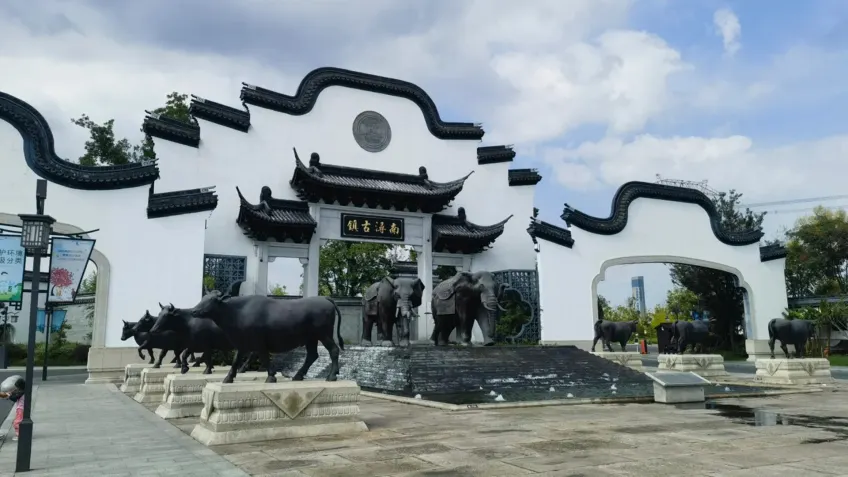

The story of Nanxun: Wealthiest in Jiangnan, built on silk
Nanxun's wealth has deep roots. As early as the Southern Song Dynasty, it was said that "its farming and sericulture wealth surpasses all of western Zhejiang." By the late Qing Dynasty and early Republic era, it had risen to become China's national silk trade center, enjoying unprecedented economic prosperity. The highly acclaimed "Jili silk" was the very symbol of Nanxun's wealth during that era. There was even a saying: "The entire city of Huzhou cannot match half of Nanxun town," which gives you an idea of just how affluent it was.
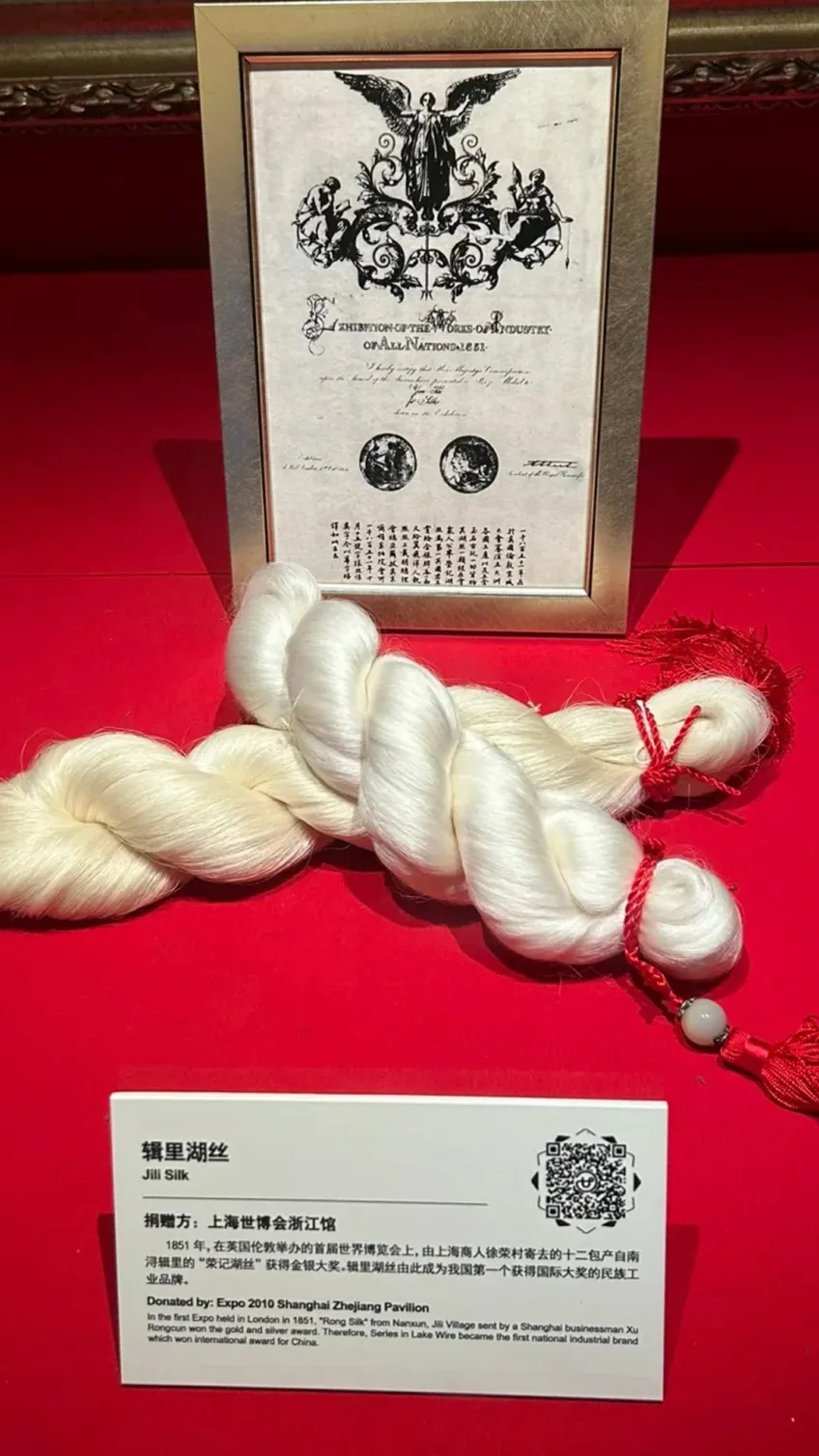
Royal Quality and a World Gold Medal
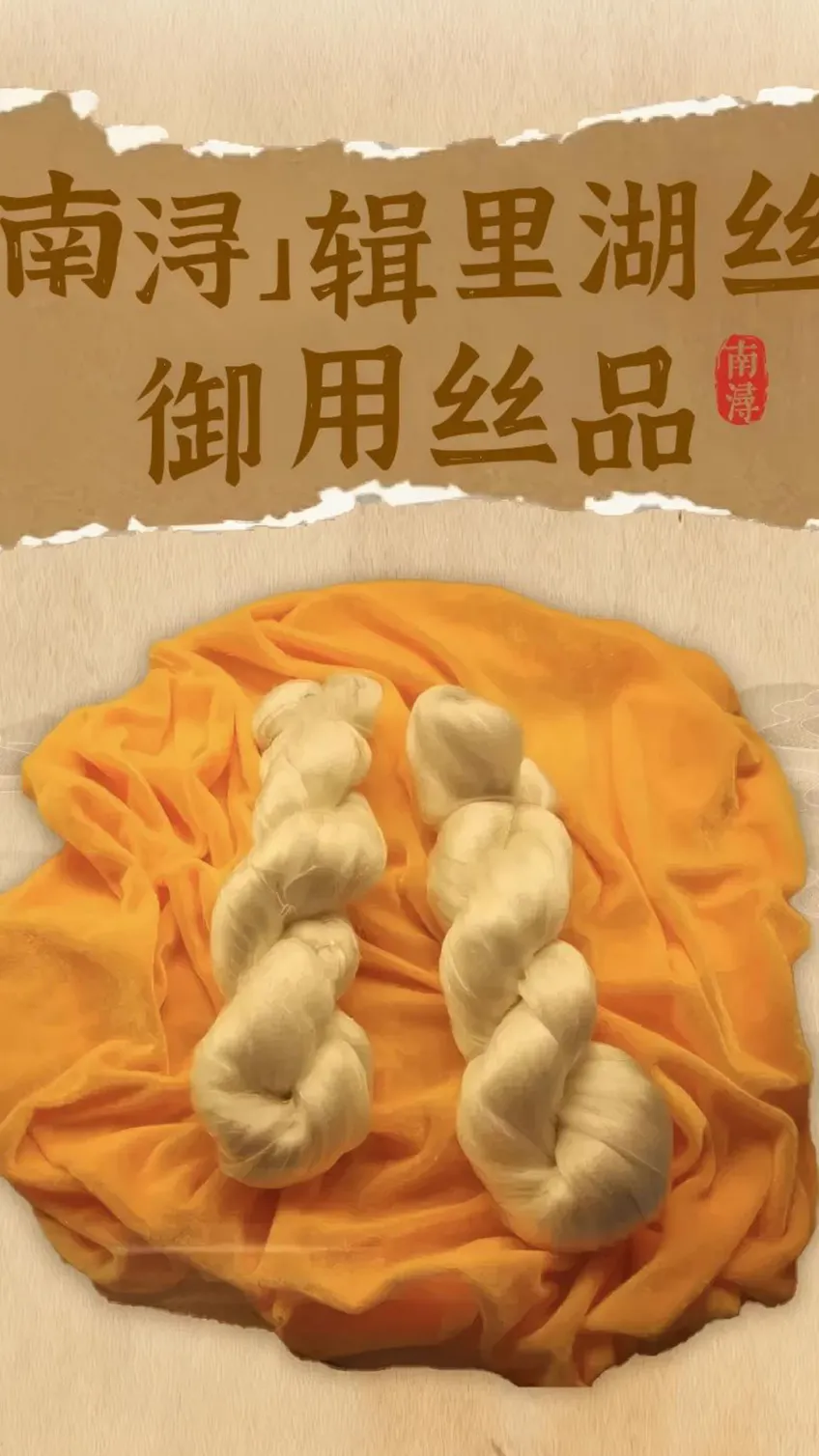
Jili silk gets its name from Jili Village in Nanxun Town, where it is produced. The silk here boasts eight defining qualities—fine, round, even, strong, white, clean, soft, and resilient—making it exceptionally high-grade. During the Ming Dynasty, it was already recommended to the imperial court, and by the Qing Dynasty, it became an exclusive material for the emperor. Nine of Emperor Kangxi's dragon robes were made from Jili silk.
Introduction to Nanxun: The Wealth Map of the "Four Elephants and Eight Oxen"
The massive export of Jili silk after Shanghai opened as a treaty port brought Nanxun unprecedented wealth. When visiting Nanxun, you can't miss the "Four Elephants of Nanxun." The "Four Elephants, Eight Bulls, and Seventy-Two Golden Dogs" represented modern China's largest group of silk merchants. The terms "elephant," "bull," and "dog" used the animals' sizes to symbolize the scale of the merchants' fortunes, making tiny Nanxun a remarkably wealthy town in modern Chinese history.
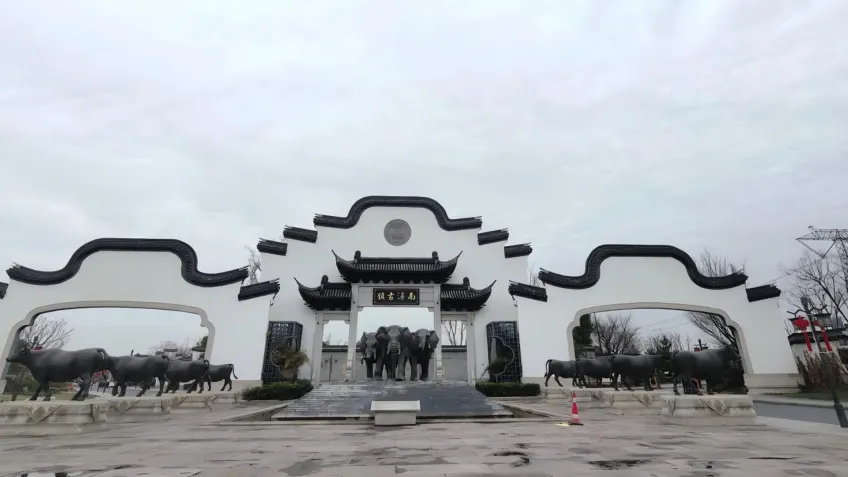
Several famous attractions in Nanxun Ancient Town (Xiaolianzhuang, Jiaye Library, Liu Family Red House, etc.) were once owned by the "Four Elephants" of Nanxun. In the late Qing dynasty and early Republic era, silk merchants gathered throughout the Nanxun district. A local saying went, "The whole city of Huzhou can't match half of Nanxun town." Nanxun thus rose to become a powerful town in Jiangsu and Zhejiang, home to hundreds of wealthy families.
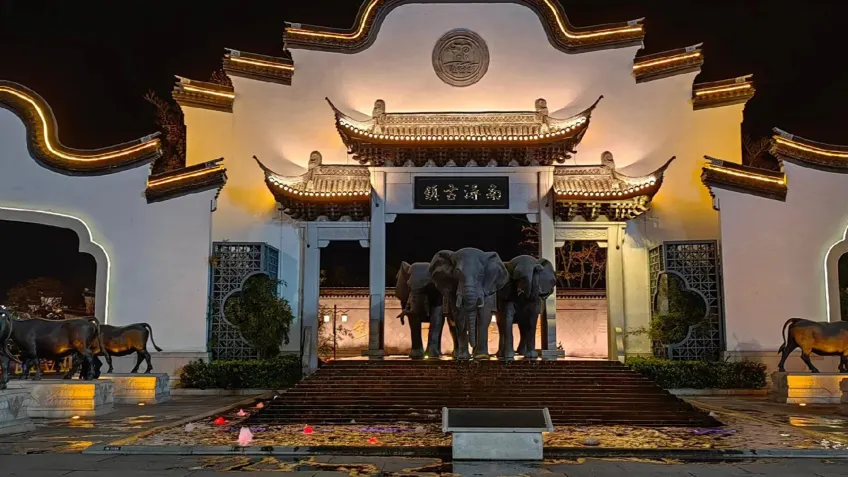
Nanxun Ancient Town Attractions: Two Worlds in One Town
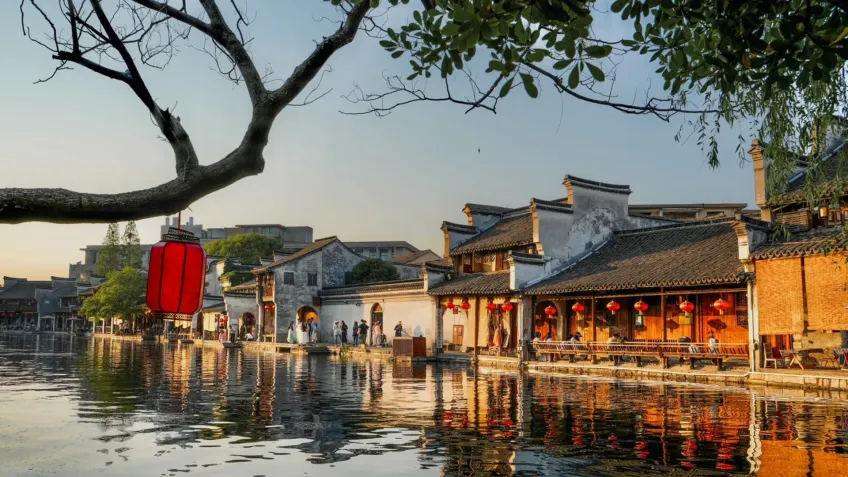
Like other Jiangnan water towns, Nanxun has its share of small bridges and flowing streams. But the true essence of Nanxun lies in the gardens and courtyards built by its tycoons. Rather than awkwardly mixing Chinese and Western styles, they let each hold its own space. Baijianlou (Hundred Rooms) sets the traditional tone. Legend has it that Dong Fen, Minister of Rites during the Ming dynasty, built over a hundred rooms along the river for his grandson's wife to house their servants. This tale of "building mansions for maids" lends these buildings a rare warmth and grandeur.
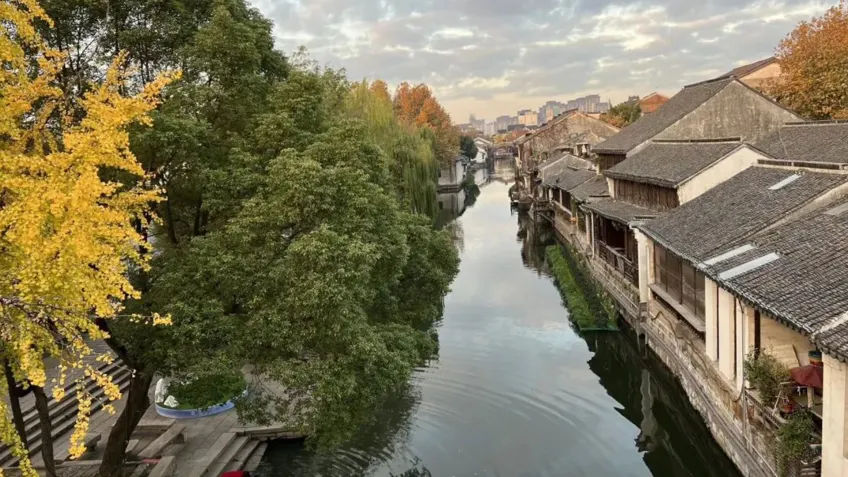
The Western-style mansions were the "window to the world" of their time. Coexisting with the Eastern charm of Baijianlou, they complete the story of Nanxun.
Recommended Nanxun Attractions - Western Traces at the End of the Silk Road
Hundreds of silk merchants made their fortunes in Nanxun. The booming silk economy and frequent business trips to Shanghai fostered cultural exchange with the West, and more and more Western elements were incorporated into the gardens as fashionable touches of the time.
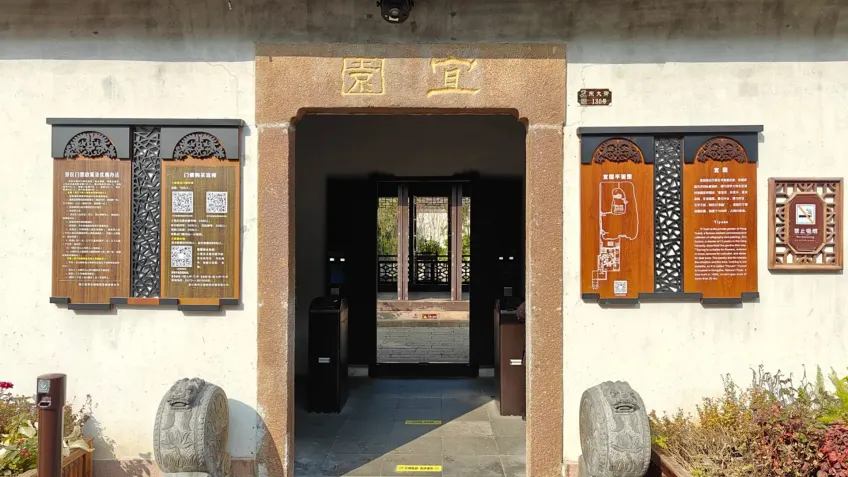
These merchants, who had made their fortunes in Shanghai and seen Western styles firsthand, began building on a grand scale once they returned home in glory. Yet inside their high-walled compounds, they quietly tucked away a few "foreign touches." So behind the walls stood elegant Western-style buildings, while outside remained the rustic Eastern water town. The two never clashed, yet unexpectedly combined to create Nanxun's one-of-a-kind hybrid scenery. This is how Nanxun's blend of Chinese and Western architecture came to be.
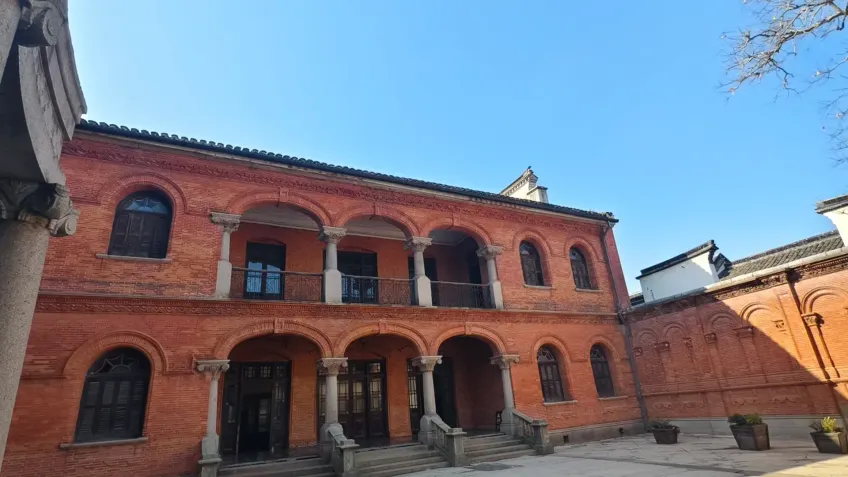
Xiaolianzhuang – The Ultimate Dream of Scholars
Xiaolianzhuang was built by the Liu family, the wealthiest of the "Four Elephants." Admiring Lianhuazhuang, the estate of Yuan dynasty calligrapher and painter Zhao Mengfu, they modestly named theirs "Xiaolianzhuang" (Little Lotus Villa).
Cost of Building Xiaolianzhuang in Nanxun
Building Xiaolianzhuang cost as much as 1 million taels of silver. How much was that? Based on the annual salary of 180 taels of silver for a first-rank official at the time, one million taels could have paid a first-rank official for over 5,500 years. That gives you an idea of just how wealthy the Liu family was.
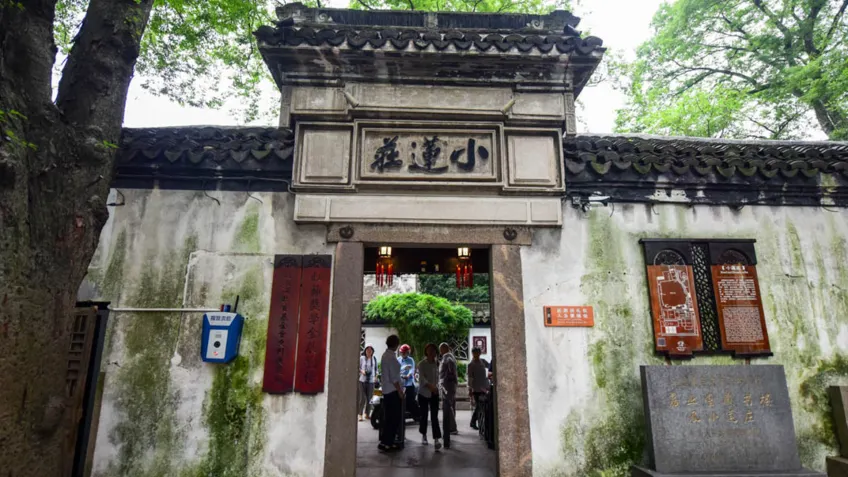
Xiaolianzhuang: 40 Years of Construction Across Three Generations
The construction of Xiaolianzhuang spanned the late Qing Dynasty and the Republic of China era, making it a multi-generational family project.
First generation: Liu Yong built Xiaolianzhuang (Little Lotus Manor), establishing the garden's basic layout. He named it "Xiaolianzhuang," laying the foundation.
Second generation: Liu Yong's son, Liu Jinzao, inherited his father's work, continued expanding the garden, and refined its landscapes.
Third generation: Liu Yong's eldest grandson, Liu Chenggan, finally completed all construction at Xiaolianzhuang. This third-generation heir later spent 120,000 silver dollars to build the famous Jiaye Library next to Xiaolianzhuang.
A private garden built with the dedication of three generations—a rarity even in the history of Jiangnan gardens.
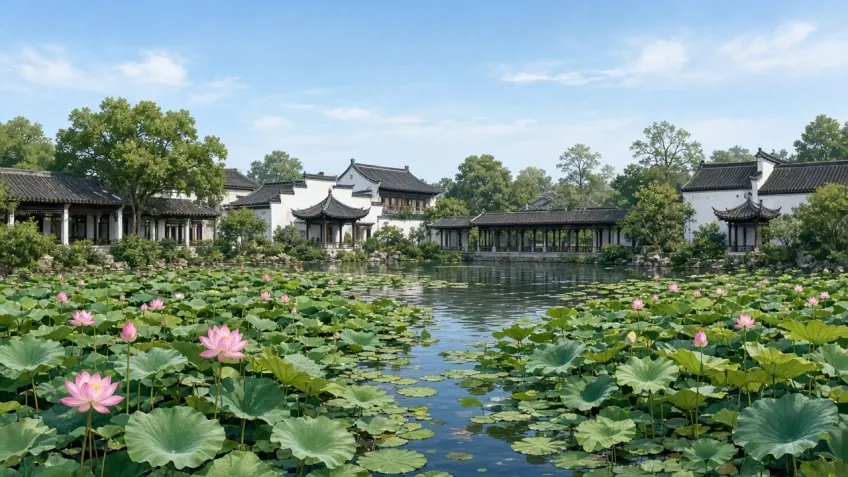
Outer Garden: The Poetic Charm of Jiangnan in a 10-Mu Lotus Pond
The outer garden centers on a ten-mu lotus pond, creating an expansive Jiangnan water town atmosphere. The inner garden features Lake Tai rockeries, forming an exquisite mountain-and-forest landscape that carries on the classical Chinese garden principles of "changing scenery with every step" and "a thousand miles within inches." July and August are the most beautiful seasons at Xiaolianzhuang, when the pond bursts into bloom. Through the scattered ancient trees, you get an unobstructed view of the entire lotus pond and the pavilions and terraces across the water.
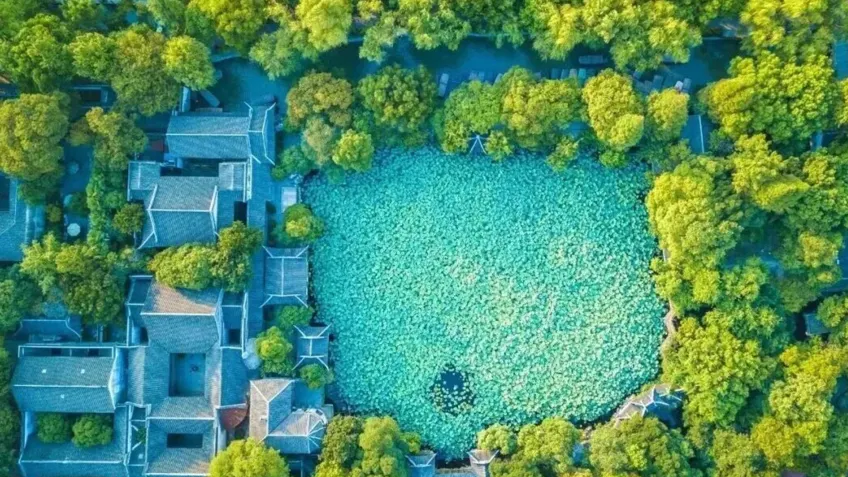
The landscape design of the outer garden is full of Jiangnan water town charm. On the north bank, hidden among weeping willows and green bamboo, stands a hexagonal pavilion, and on the willow-lined embankment is the brick archway inscribed "Xiaolianzhuang," one of the earliest structures in the garden. On the south bank of the lotus pond sits Tuixiu Pavilion, built right along the water's edge with exquisite design, hailed as a masterpiece of Jiangnan waterside architecture.
If you want to quickly check off Nanxun Ancient Town and get familiar with the layout of its attractions in advance, follow this route:

Dongshengge: A model of East-meets-West
From within the garden, you can clearly see a Western-style building called Dongshengge. Its window design blends Chinese and Western features: glass windows inside let in plenty of light, while exterior shutters allow shade adjustment. It is a Sino-French fusion building brimming with French flair. Because you can watch the sunrise from the upper floor in the morning, it was named Dongshengge ("Pavilion of the Rising Sun"). It also served as a resting place for the women of the household and was commonly known as the "Ladies' Tower." This East-meets-West window design cleverly ensures a bright, airy interior while maintaining privacy and light control.
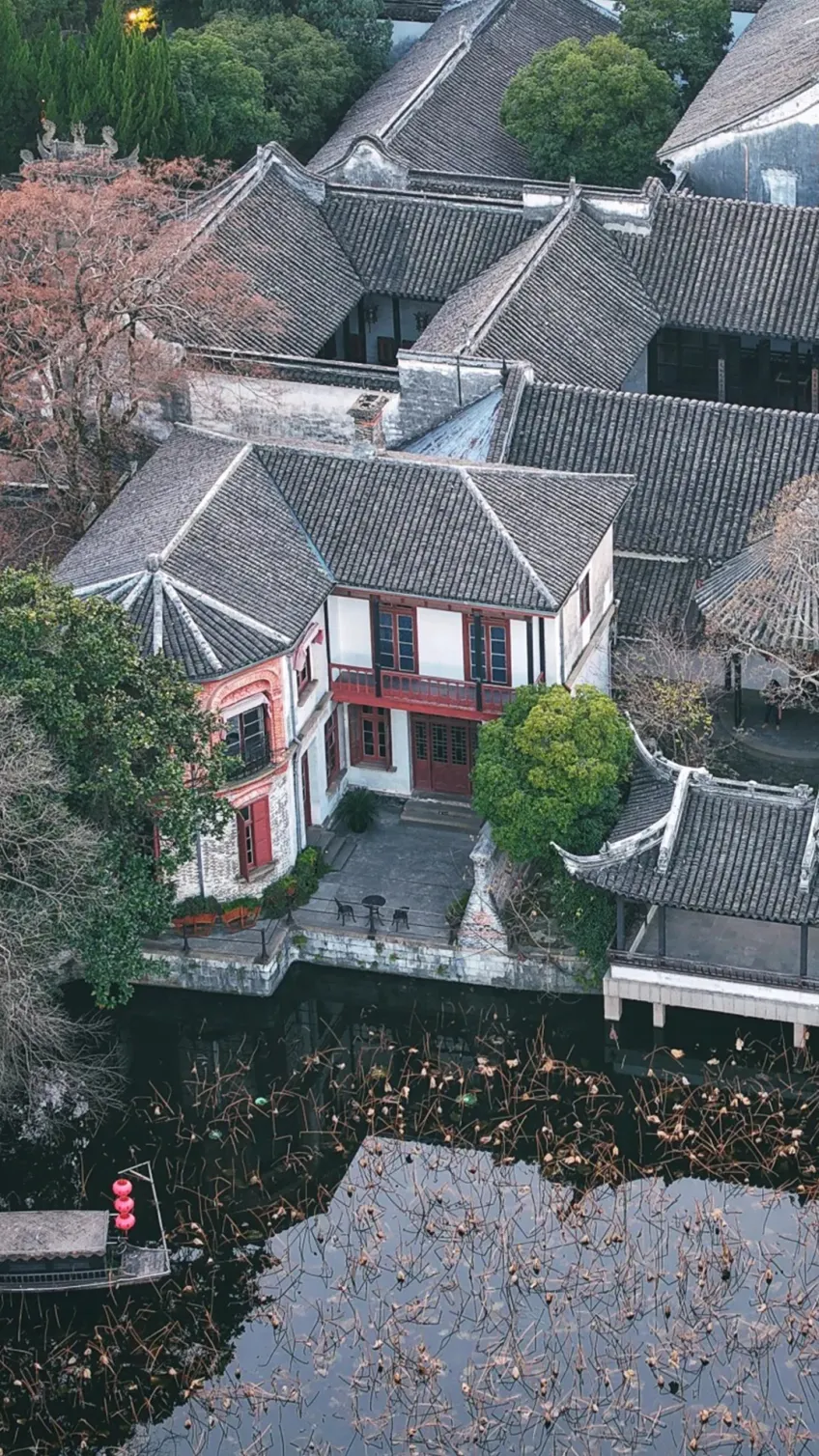
Cultural Fortress - Jiaye Library
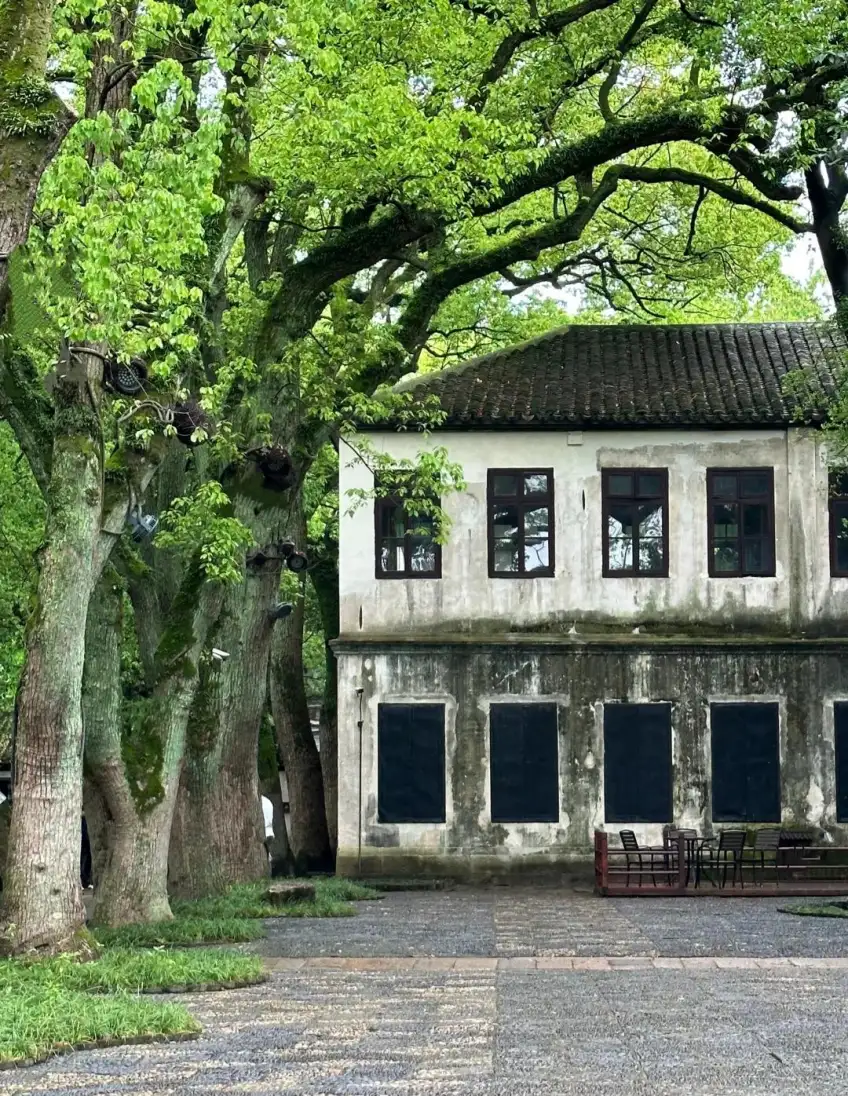
This is one of the three great libraries of Jiangnan. The library is a square, corridor-style brick-and-timber structure shaped like the Chinese character "kou." It's a two-story building blending Chinese and Western styles, with its original iron railings still intact around the perimeter. All exterior windows are double-layered with sheet metal and glass to prevent fire and block light. Beneath the blue bricks on the first floor, clay pots and fine sand were laid to keep out moisture.
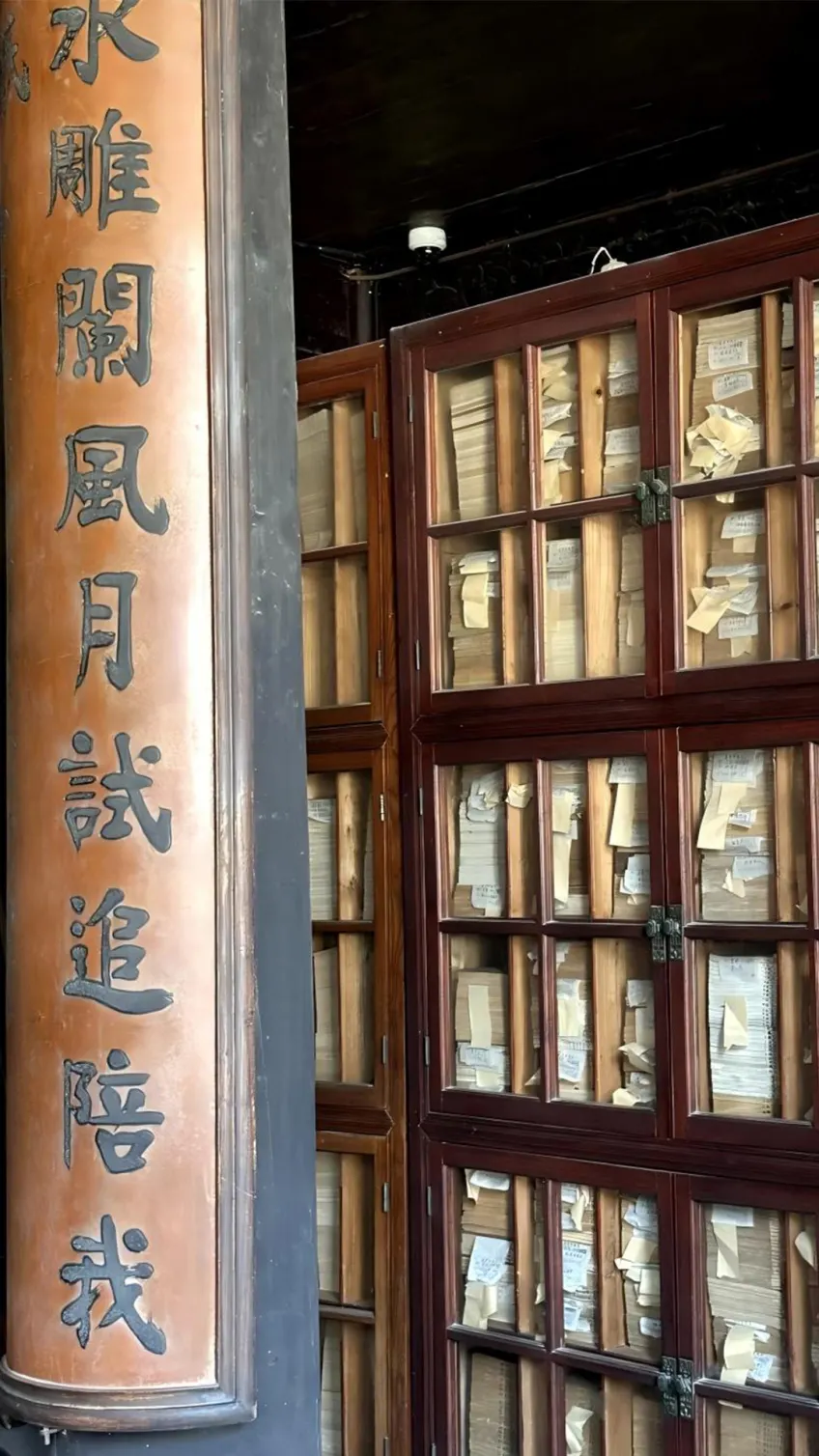
Jiaye Library is not just a building for storing books, but a meticulously designed "fortress" built to protect culture. From the double-layered windows with glass and sheet metal to the fire-resistant reinforced concrete structure, every detail serves its core purpose. More importantly, it embodies true cultural preservation. Its owner, Liu Chenggan, spent a fortune collecting and printing ancient texts, allowing readers free access and donating books to scholars and institutions so that culture could spread widely.
Jiaye Library Visitor Guide
Address: Inside Nanxun Ancient Town, No. 51 Renrui Road, Nanxun Town, Nanxun District, Huzhou
Getting there: Enter through the south gate of the ancient town and walk about 5 minutes. Xiaolianzhuang Garden and Jiaye Library are next to each other, connected by a wooden bridge, so you can pass directly between them.
Opening Hours & Tickets
Opening hours: The library closes at 5 PM, but Xiaolianzhuang is open for evening visits until 21:00.
Tickets: Entry to the ancient town streets is free. Prices for a standalone Jiayetang ticket and the ancient town combo ticket (covering multiple paid attractions) are subject to the notices posted at the site on the day of your visit.
Tips for Visiting Jiaye Library
Xiaolianzhuang and Jiaye Library are next to each other, so it's best to visit both together. You can walk directly between them via a wooden bridge.
Photography lovers should allow extra time—the courtyard, floor-to-ceiling windows, and lotus pond are all great photo spots.
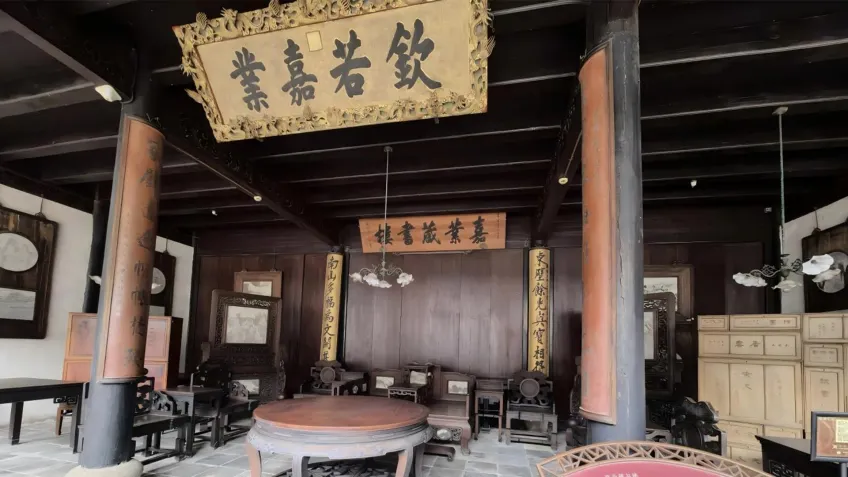
Don't miss the "Song Si Shi Zhai" room and the nine-dragon gold plaque inscribed with "Qin Ruo Jia Ye" inside the library.
Take a Wupeng boat to Xiaolianzhuang Wharf and experience the feeling of "sailing on emerald waves, drifting through a living painting."
The No. 1 Residence in Jiangnan – Zhang Shiming's Former Residence
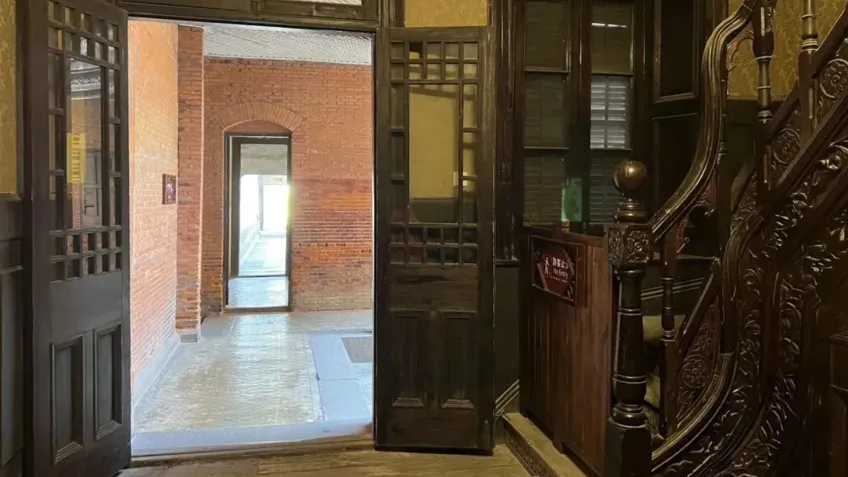
This former residence covers a vast area with five sections and four courtyards. Its front half features typical Jiangnan Ming and Qing dynasty architecture, while deep within this classic Jiangnan mansion lies a luxurious ballroom in French Renaissance style. It has European columns, wrought-iron balconies, stained glass, French tiles, and European fireplaces... The brick carvings, wood carvings, stone carvings, and glass carvings imported from France are all exquisitely crafted, earning them the name "Four Wonders."
The oil paintings and floor tiles in the ballroom, and even the materials for the adjoining changing rooms and dressing rooms, were all originally imported from France. Its purely European style once amazed visiting French architects, who called it an architectural miracle straight out of Toulouse, France, hidden away in a distant eastern water town.

Location & Getting There: Zhang Shiming's Former Residence
Address: Nanxi Street, Nanxun Town, Nanxun District, Huzhou, inside the Nanxun Ancient Town scenic area
Getting there: Enter through the south gate of the ancient town and walk about 10 minutes.
Opening hours & tickets
Opening hours: Summer 8:00-17:30; Winter 8:00-17:00
Tickets: Zhang Shiming's Former Residence is one of the attractions included in the ancient town combo ticket. Combo ticket prices and included attractions are subject to the on-site announcements of the day.
Tips for visiting Zhang Shiming's Former Residence
Zhang Shiming's Former Residence is close to Jiaye Library and Xiaolianzhuang Garden, so it makes sense to visit them together.
The residence is quite large, so allow 1-1.5 hours for your visit.
The French ballroom, the stained glass in the Women's Hall, the banana-leaf windows in the Banana Hall, and Eagle Rock are must-sees.
If you love photography, allow extra time. The brick-carved gate towers, corridors, and Western-style ballroom are all great spots for photos.
Take a closer look at the French blue cut-glass panels here—each one is a unique work of art.
Red House - Liu Family Red House
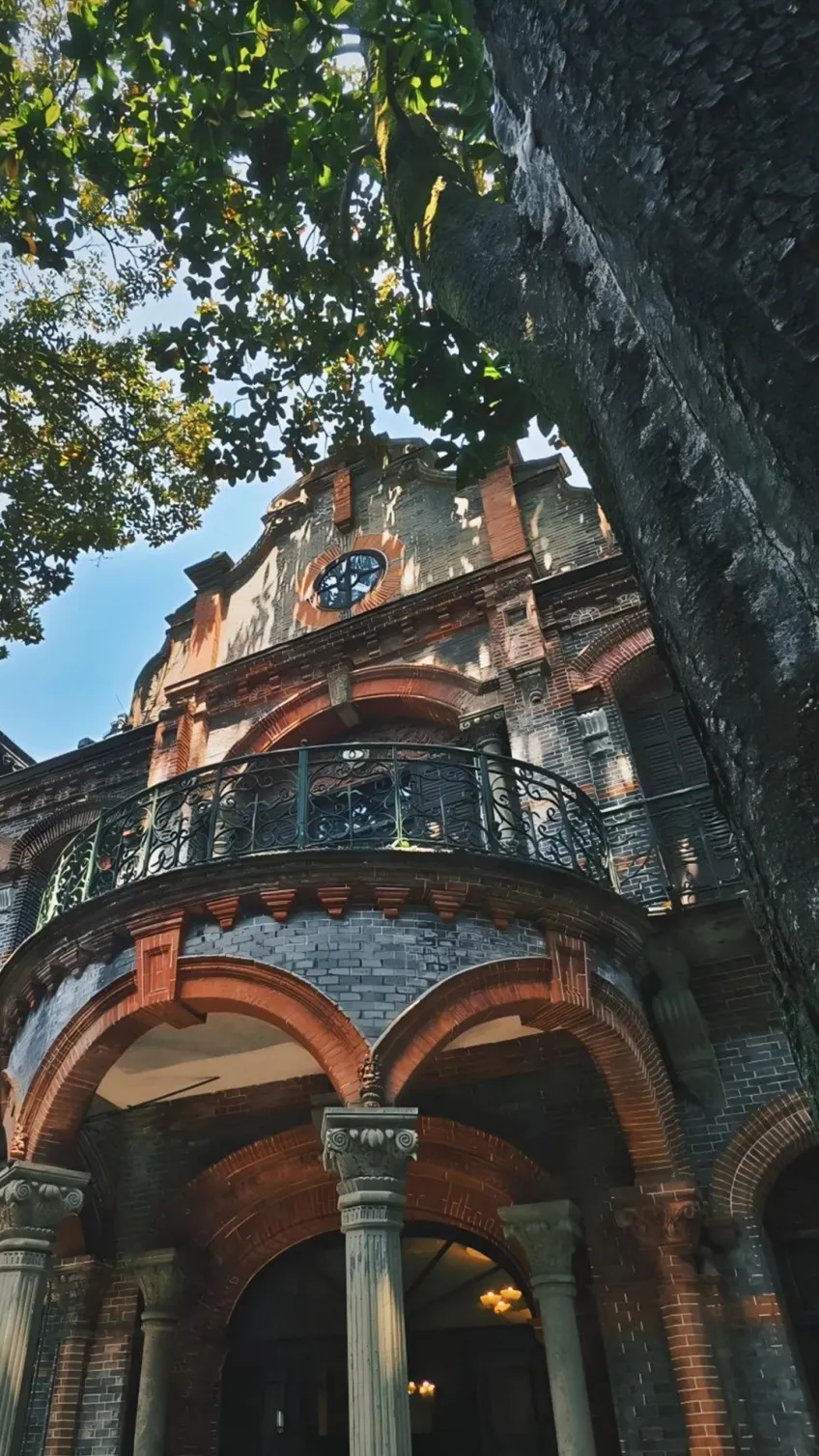
The Liu Family Red House was the home of Liu Tiqing, the third son of Liu Yong, Nanxun's wealthiest man. Because the Western-style buildings within the compound were built entirely of red brick—a striking contrast to the white walls and dark tiles common in Jiangnan—locals simply call it the "Red House."
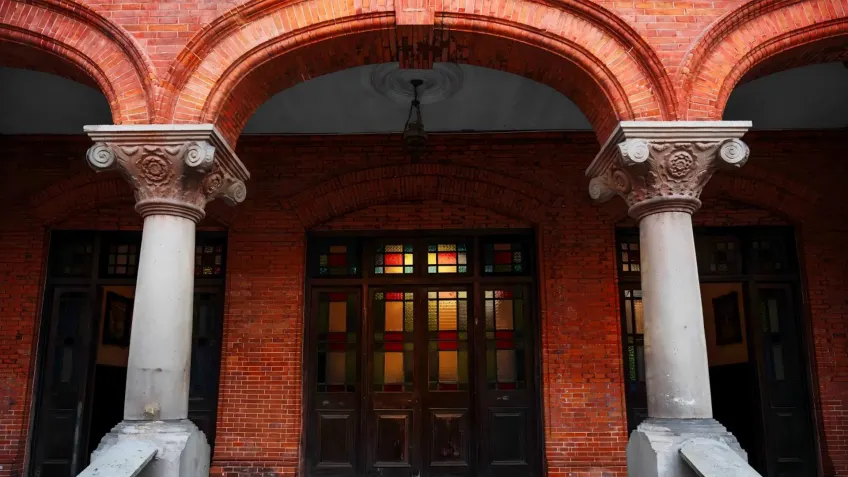
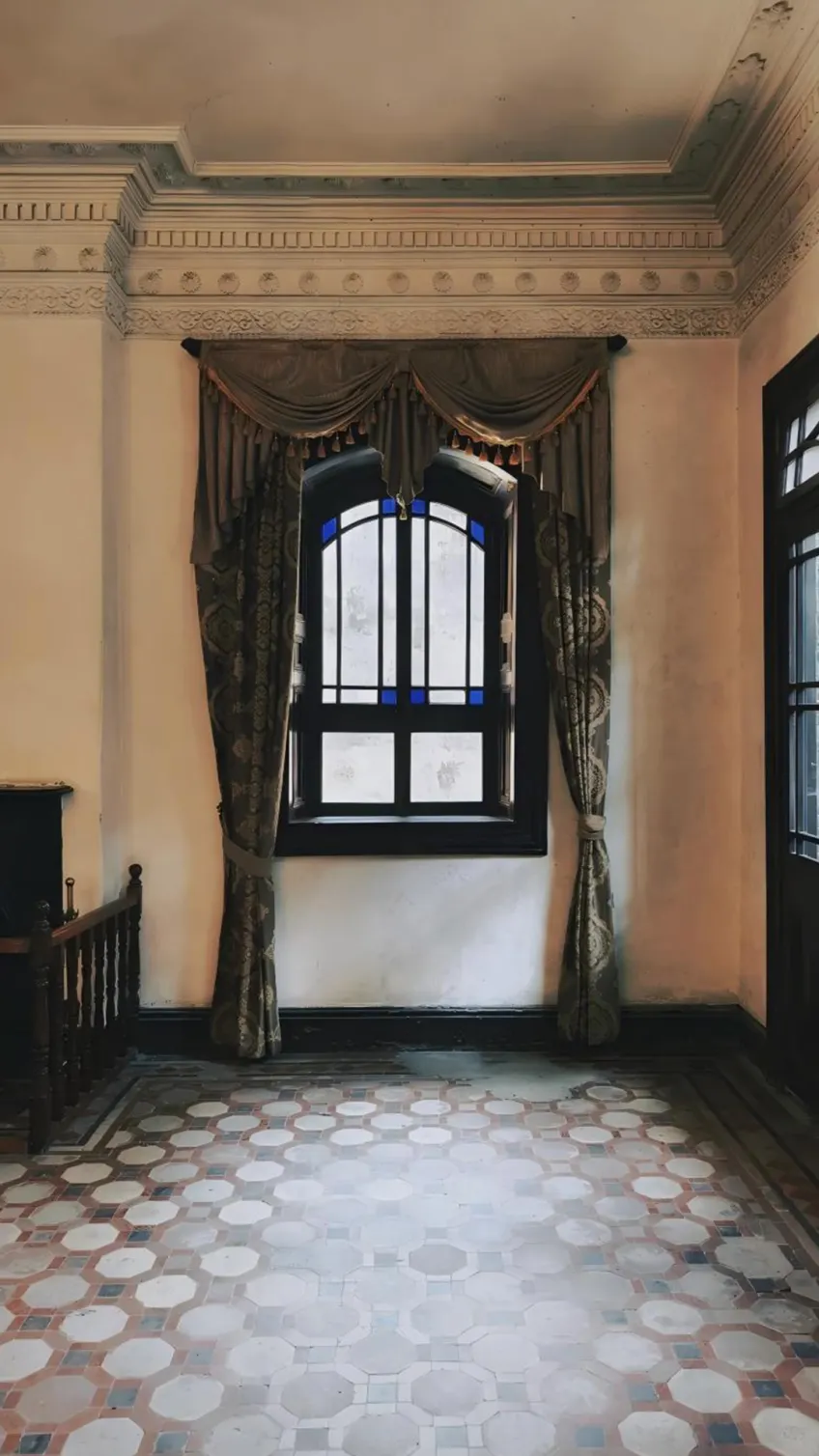
This grand residence is tall and imposing, blending Romanesque European styles. Step inside and look up to see Western plaster ceilings; the rooms feature upholstered chairs and a Western phonograph, while century-old mosaic floor tiles remain perfectly preserved. All of this reflects the owner's progressive, Western-influenced outlook. Wealth and culture have left Nanxun with a rich historical legacy. As you wander here, any bluestone slab beneath your feet may hold a long story behind it.
Shen Yinmo Art Museum: A New Landmark in Nanxun
The Shen Yimo Art Museum is the newest cultural landmark in Nanxun Ancient Town and a new addition to the Nanxun Ancient Town combo ticket. Starting in February 2026, this art museum officially joined the core attractions of Nanxun Ancient Town. The museum has curated three themed exhibitions showcasing Shen Yimo's profound achievements in education, poetry, calligraphy, and painting.
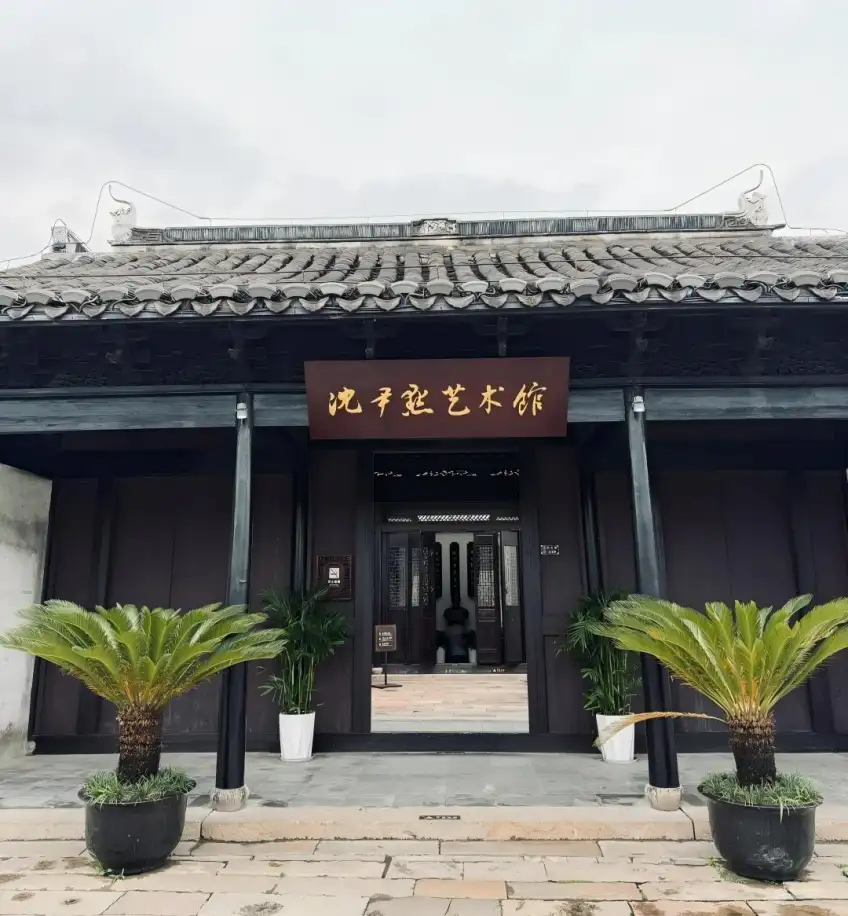
A major highlight of the Shen Yinmo Art Museum is its innovative use of AI technology. Tech features include multimedia displays of Shen Yinmo's life story, an immersive touchscreen for interactively writing his representative poems, electronic browsing of vintage poetry books, and light-and-shadow technology that creates a poetic atmosphere.
The essence of Nanxun - Baijianlou
The Eastern essence of Nanxun is deeply rooted in its traditional social structure and wisdom of daily life.
The best example of this is the Ming Dynasty Baijianlou (Hundred Rooms). It wasn't built to show off wealth, but came from a clan's promise to solve a real housing problem: building 100 riverside rooms for servants, creating a unified, 400-meter-long water town panorama. Every household here has its "front door on the street and back door on the river," taking the convenience and order of water town living to the extreme.
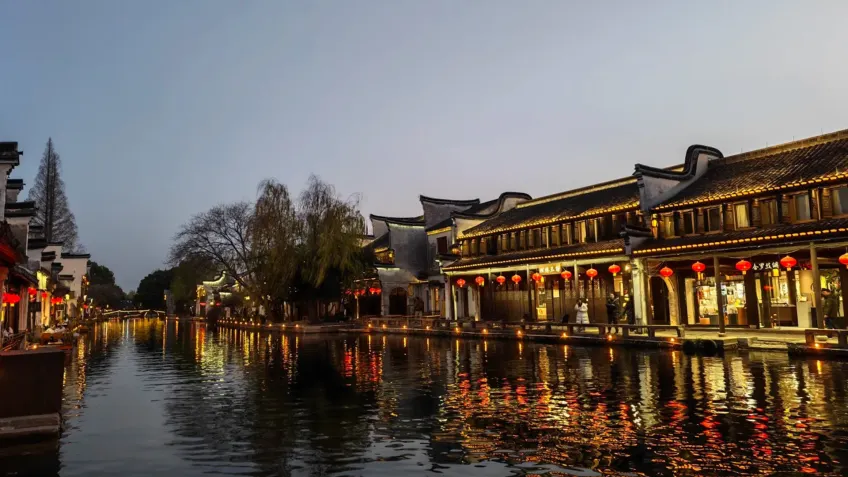
Predating the silk merchant era, this architecture reveals another source of Nanxun's wealth—strict clan ethics, a reserved tradition of farming and scholarship, and a simple pursuit of a peaceful life—which form the most fundamental essence of the ancient town. The gardens and private libraries built later were all extensions of these scholarly ideals and family values.
Nanxun Travel Booking Guide
Leave us your group size, dates and departure city, and we'll put together a workable itinerary for you.