
In Nanxun (南浔), the dishes people recommend most are three-course tea (三道茶), a set of fengxiao tea, smoked bean tea and plain tea; double-topping noodles (双交面) with crispy pork and fried fish; and Xunti, the local braised pork knuckle. Add Shanlian chili-oil wontons and xiuhuajin, a leafy green grown only around Nanxun. The old-town streets are free to enter, but sights such as Xiaolianzhuang Garden (小莲庄) and Zhang Shiming's Former Residence need tickets. Ticket, transport and water bus details are at the end.

Nanxun
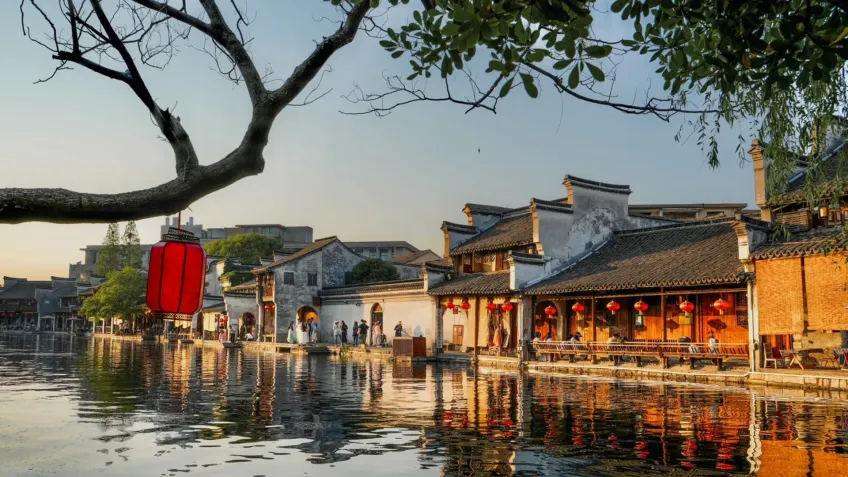
Nanxun Ancient Town is located in Huzhou, Zhejiang. Known as the "cover of Jiangnan, China," it was the first Jiangnan water town added to the World Cultural Heritage list.What to eat in Nanxun
Nanxun grew up along its canals, and eating here follows the rhythm of the water town.

Local specialties are easy to find. Start with Nanxun's three-course tea, the traditional way of welcoming guests and a good introduction to the town.
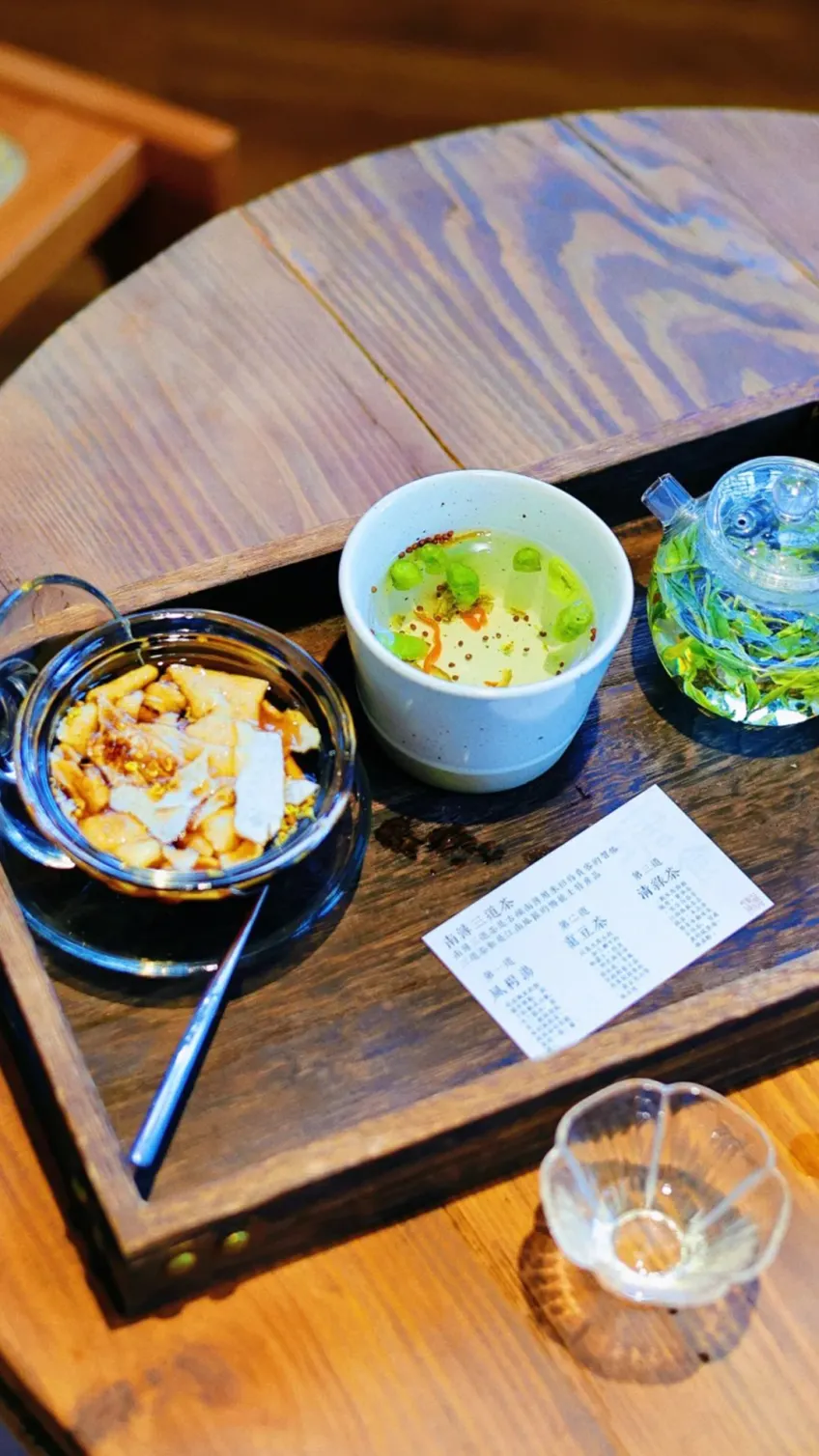
Nanxun three-course tea
Three-course tea, also called three-bowl tea, is what Nanxun families serve their most honored guests.
Said to date back to the Tang dynasty, the set has fengxiao tea, smoked bean tea and plain tea. They stand for the sweet, salty and plain flavors of life, the "three tastes of life."
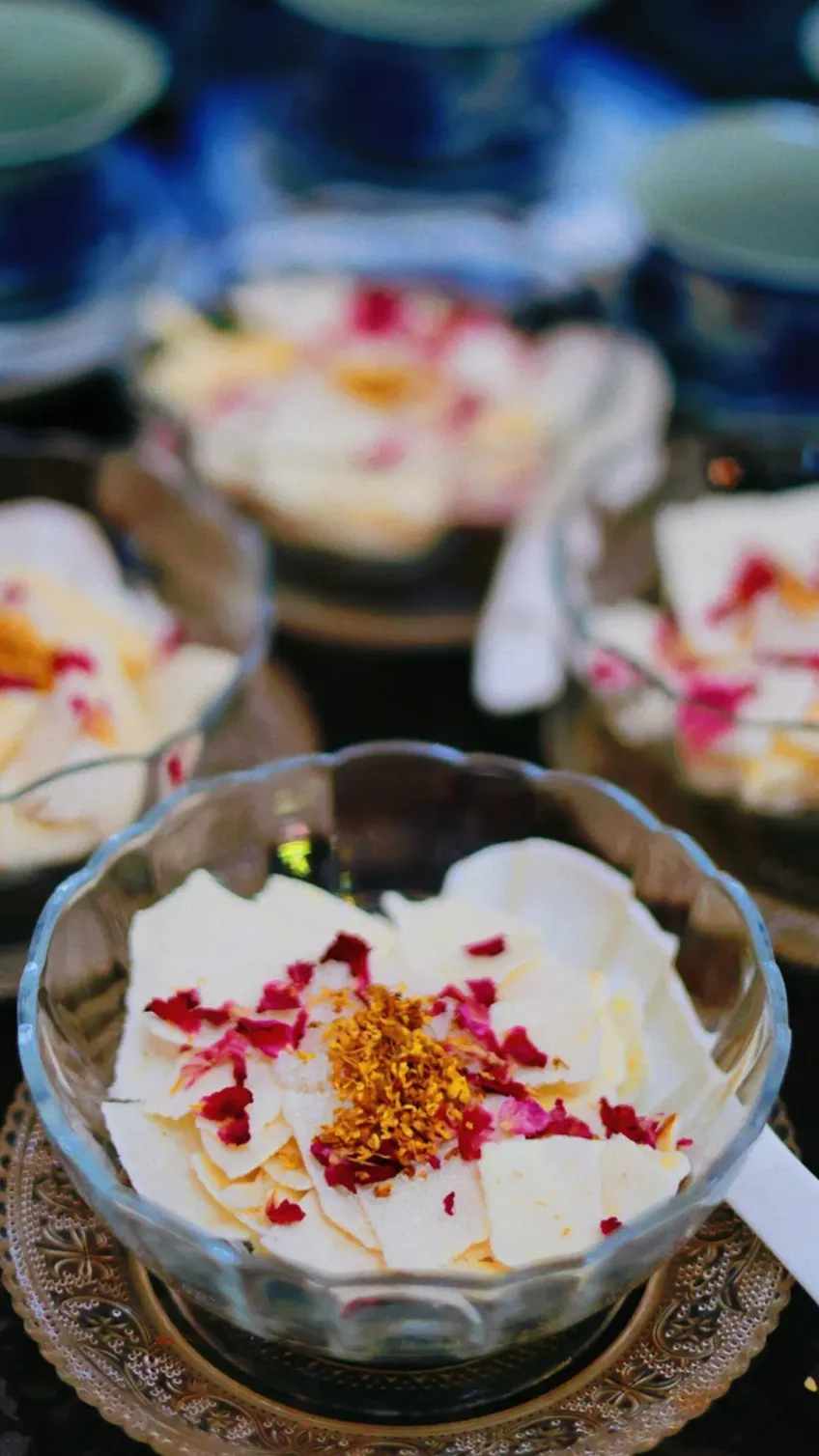
First course: fengxiao tea
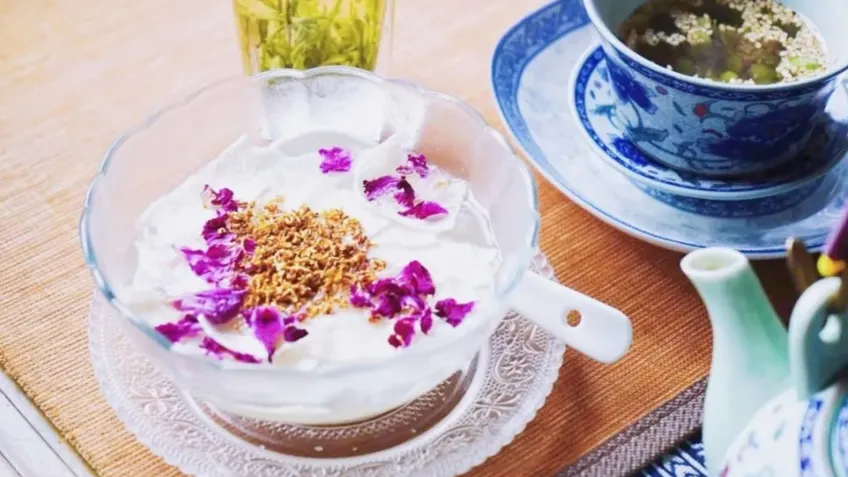
Fengxiao tea is sweet and made mainly from glutinous rice crisps. The rice is steamed, pounded to a paste and spread thin in a pan to make crisps. When guests arrive, the crisps go into the cup with sugar and osmanthus, topped with boiling water. It's sweet and smooth, with a strong rice aroma, and the crisps melt in your mouth.
Fengxiao tea stands for a sweet start in life and good luck from the moment you open the door, a wish for a good future.
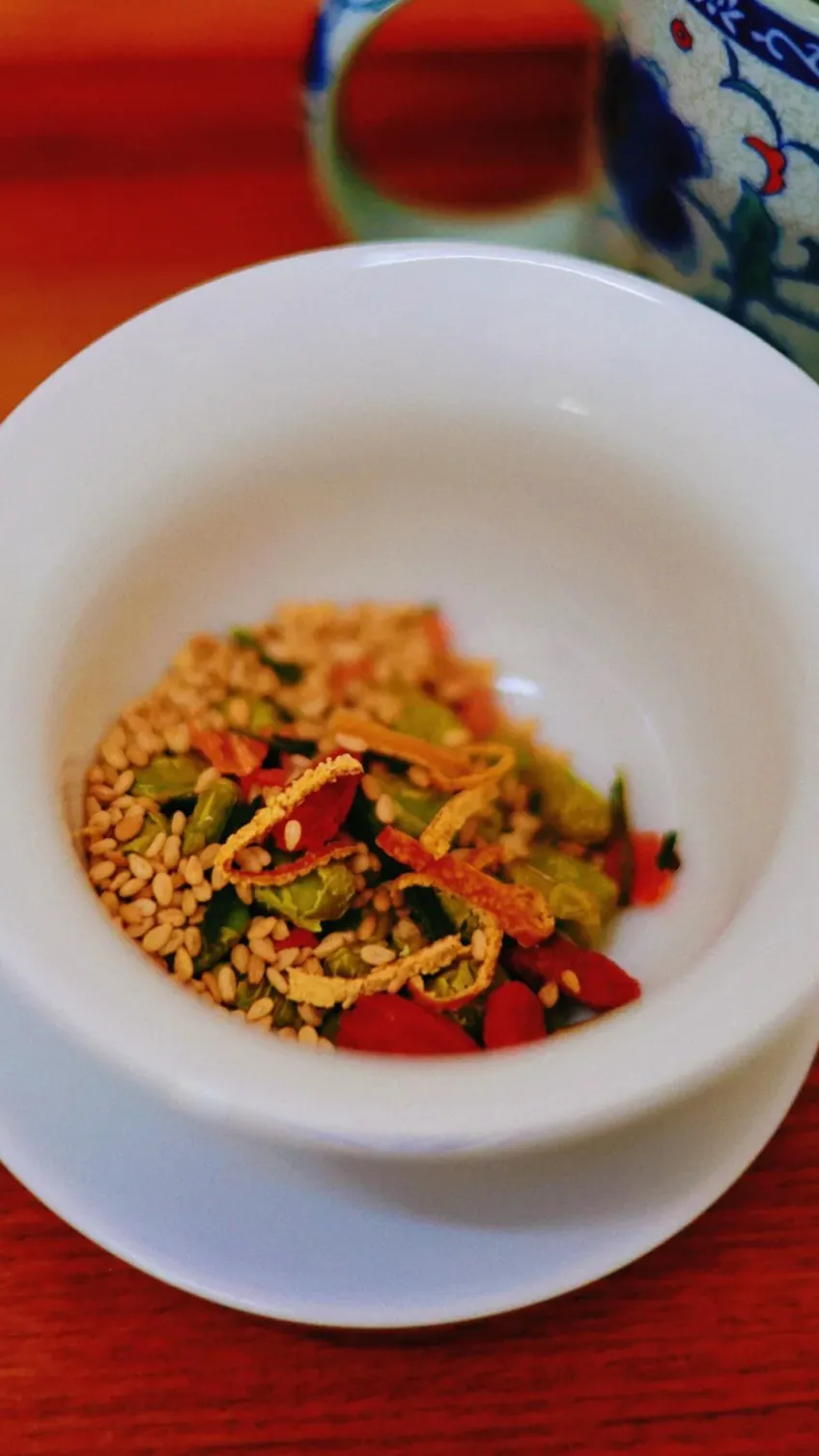
Second course: smoked bean tea
Smoked bean tea is savory, made mainly from smoked green soybeans. The beans are salted, smoked and sun-dried, then brewed with tea leaves and seven other ingredients such as shredded carrot, dried tangerine peel, sesame, pickled osmanthus or orange peel. The bean and tea flavors build on each other. You don't just drink this one; you eat the beans and sesame too.
Smoked bean tea stands for harvest and plenty, and for the idea that hard work pays off.
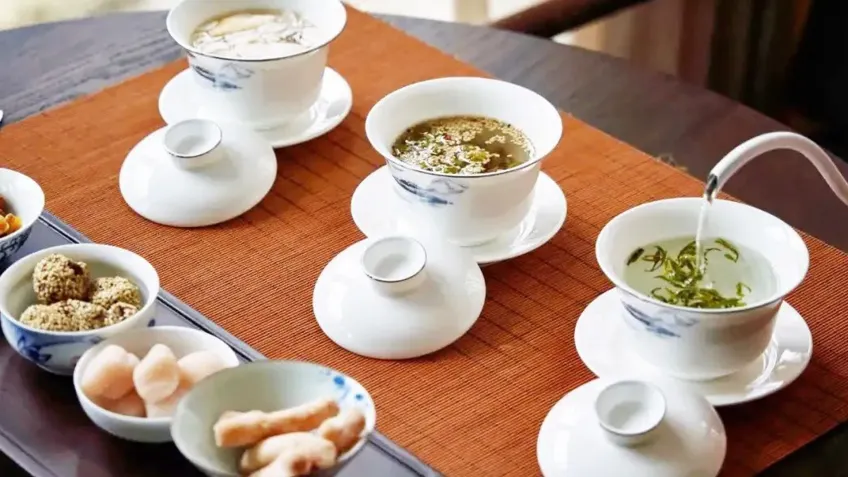
Third course: plain tea
Plain tea uses well-known local teas such as West Lake Longjing, Anji white tea, Zisun tea and Moganshan Huangya, or a farmhouse's own hand-roasted leaves. It's usually brewed in celadon or clear glass cups. The taste is clean and fragrant with a sweet finish, and it cuts through rich food.
Plain tea stands for a return to simplicity: the calm and contentment that come once life settles down.
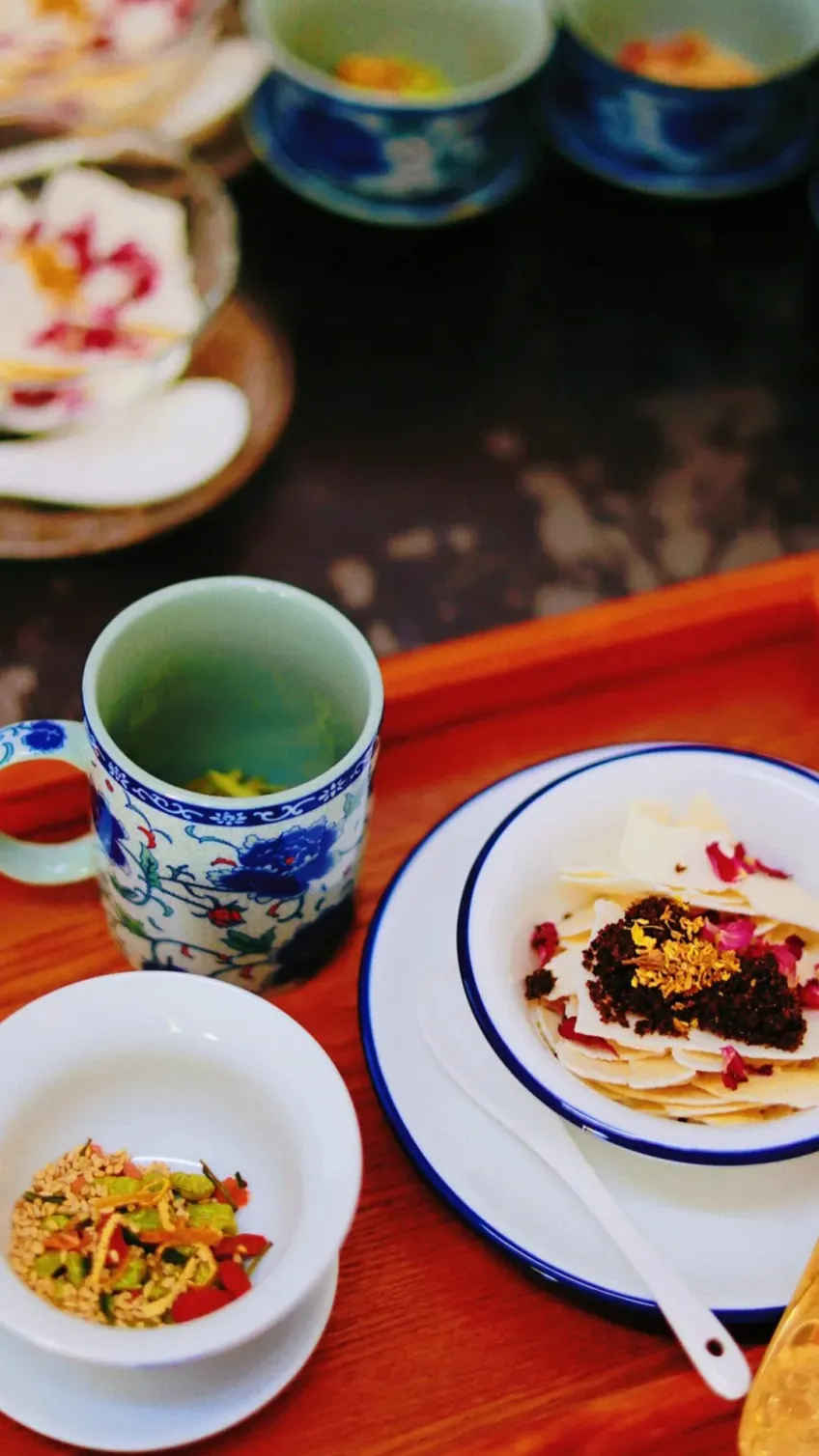
The teas always come in the order sweet → salty → plain, never the other way around. The first cup is filled less than halfway, a small taste of life's sweet and bitter. The second you drink freely, for enjoying life's good fortune. The third you sip slowly, looking back on life.
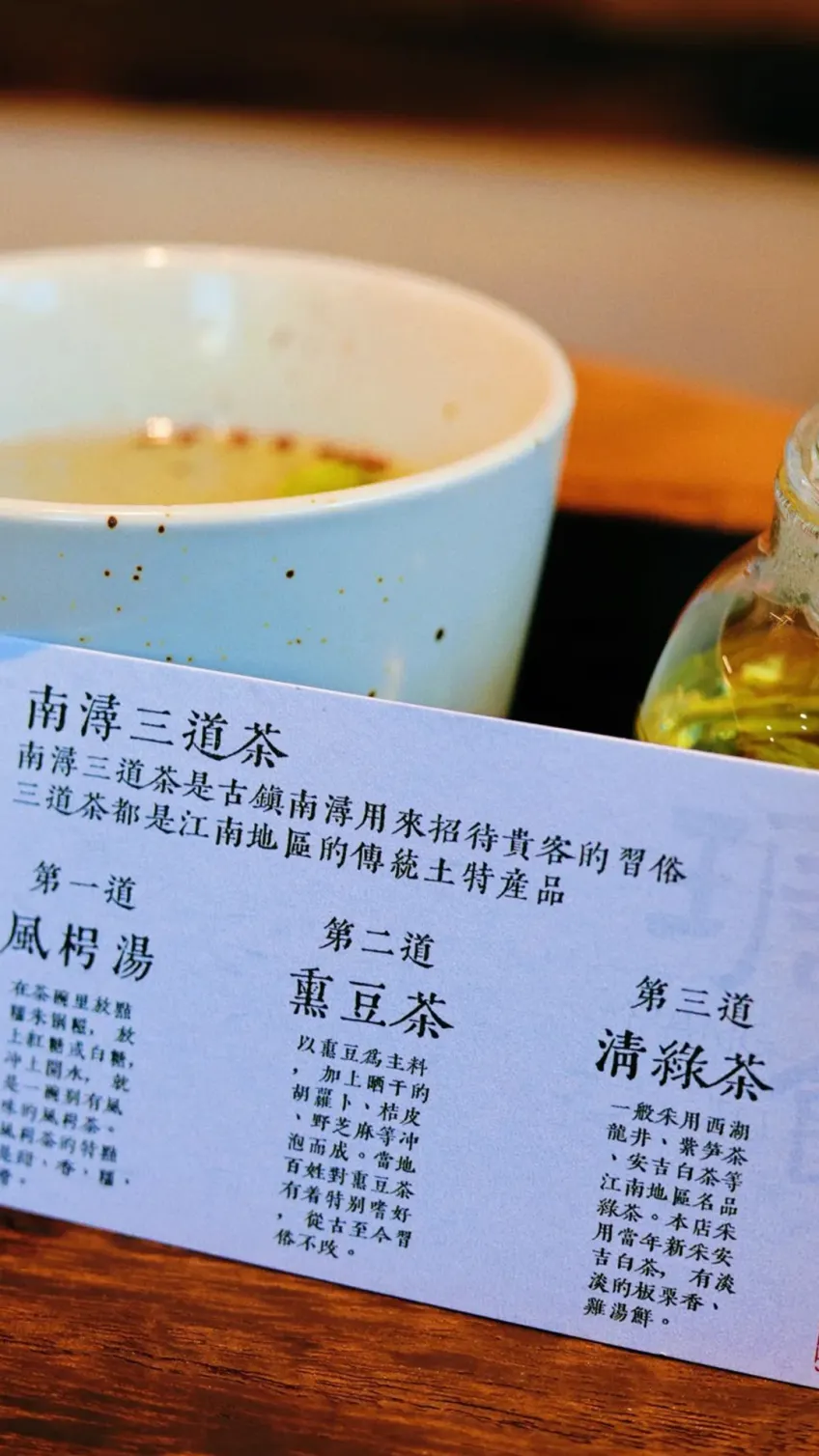
Locals reason that guests from far away must be thirsty and hungry, and in winter cold as well. The host may not have dinner ready yet, so the three teas come first. They take the edge off hunger and cold, and give guest and host a chance to get to know each other.
As a local signature, three-course tea is served almost everywhere in Nanxun. If it's the first thing you want, walk in through the entrance; nearly every café and drink shop has it on the menu.
Shuangjiao (double-topping) noodles
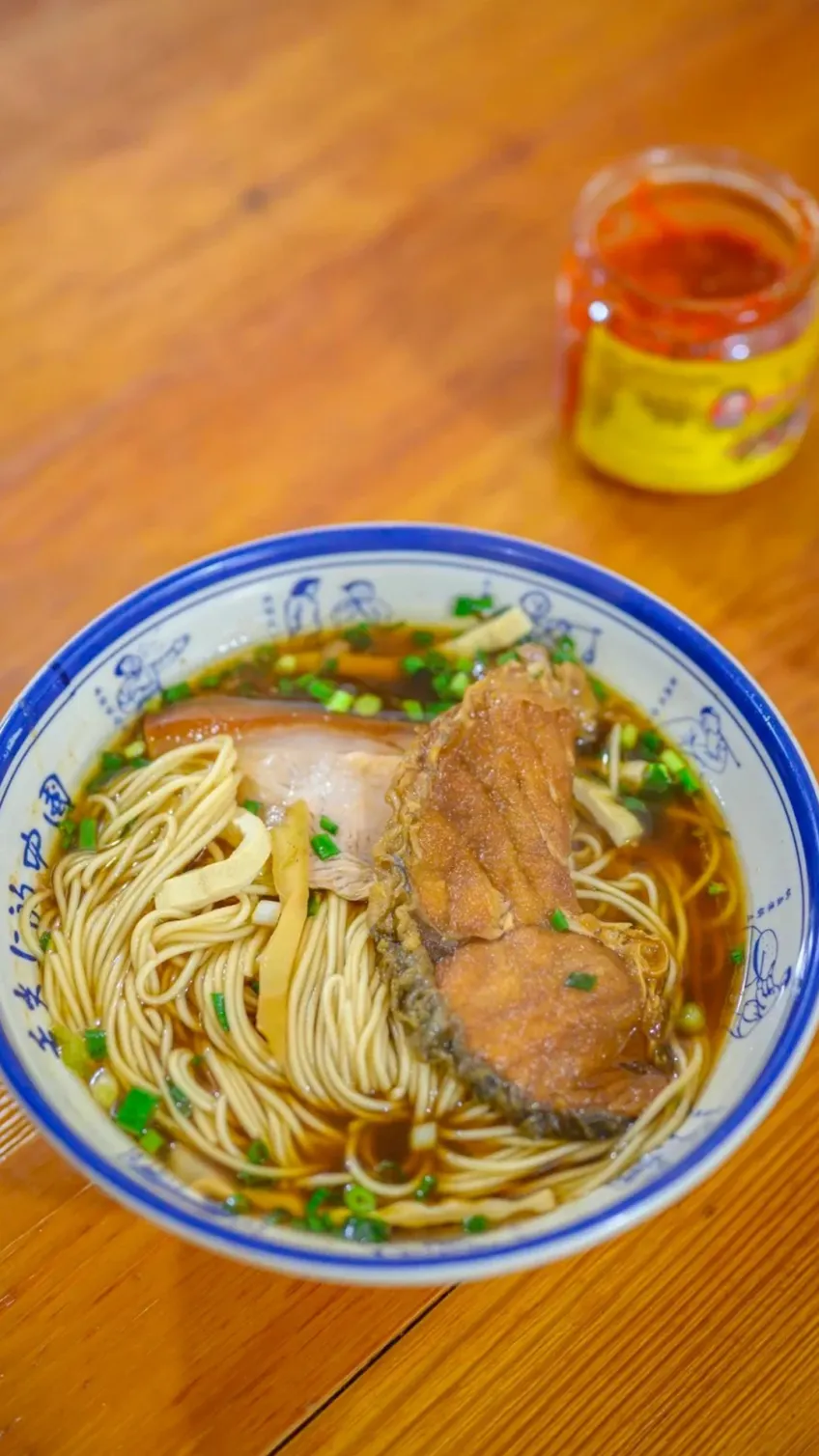
After the tea, a steaming bowl of shuangjiao noodles will set you up for the next stop. It's one of the dishes locals love most, and "shuangjiao" means the two toppings hidden under the noodles.
Shuangjiao really means "double toppings." In southern China, the dishes placed on noodles are called jiaotou (toppings). The usual pair in Nanxun is crispy pork and fried fish.
Fresh grass carp is marinated and deep-fried over high heat, which takes away any muddy taste and leaves it fragrant and tender. Pork belly braised until very soft is cut into big pieces. Then the cooked noodles and hot broth go in over the toppings. It all takes about 5 minutes, and the bowl smells of both fish and pork.
*Try long-running shops such as Zhuangyuan Lou or Longfeng Noodle House. Some shops in town close early, so plan ahead and go early.
Xunti (Nanxun pork knuckle)
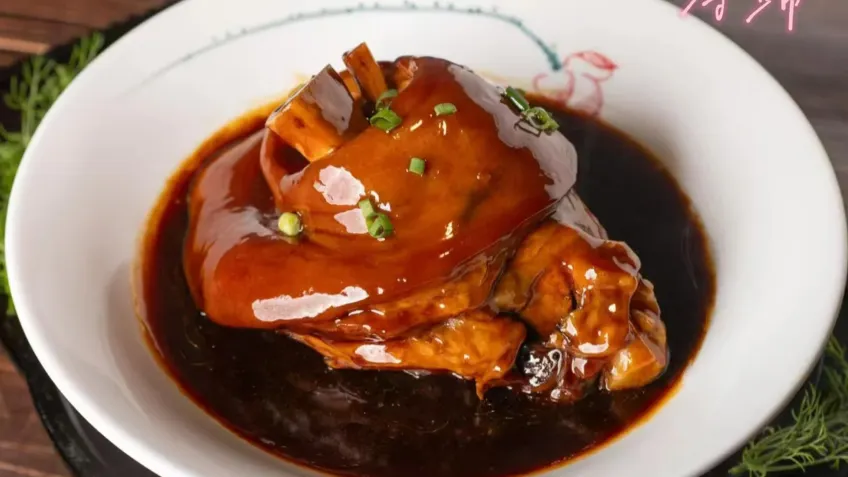
Xunti, also called Liu family pork knuckle, is one of Nanxun's best-known dishes.
It didn't start in a street kitchen. It came from the Liu family, one of the "Four Elephants," as Nanxun's four richest merchant clans were known. Somehow the recipe slipped out from behind the Liu family's walls into ordinary homes. Soft, rich and savory, it became a fixture of Nanxun families' New Year's Eve dinners.
At home, Xunti is usually a whole knuckle stewed until tender but not falling apart. It simmers over low heat with the broth barely bubbling, so the fat melts slowly. When chopsticks slide easily into the skin and meat, the heat goes off and it soaks for another 1-2 hours to take on the flavor.
Good Xunti has jelly-soft skin, tender lean meat and soft tendons, with a sweet-and-salty flavor and notes of yellow rice wine and spices. Locals eat it with Zhenjiang vinegar or a bowl of fine Nanxun noodles.
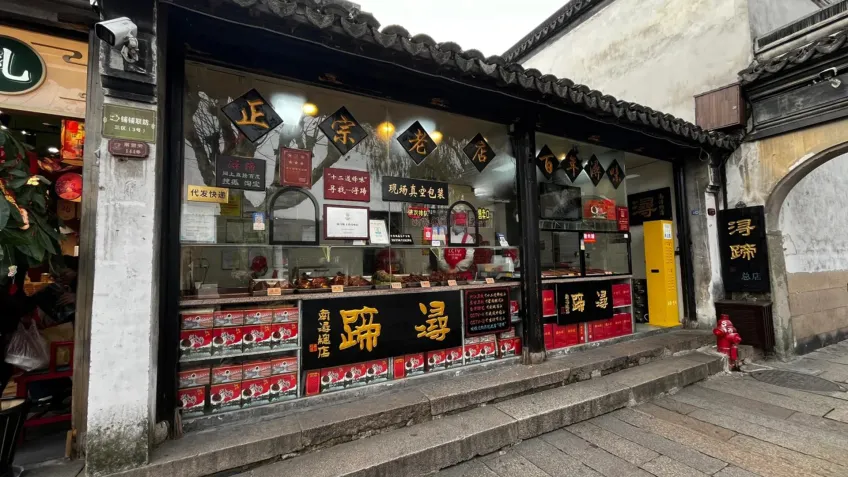
*Try it at the Xunti workshop by Guanghui Bridge or at the old shops on Dongda Street. Vacuum-packed knuckles are sold to take home as gifts.
Shanlian chili-oil wontons
There's a local saying in Nanxun: if you haven't tried Shanlian chili oil wontons, you haven't really been to Nanxun.
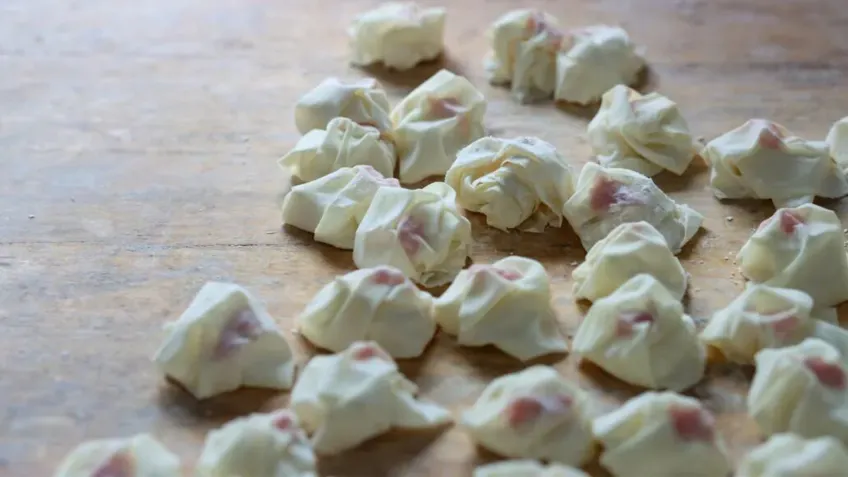
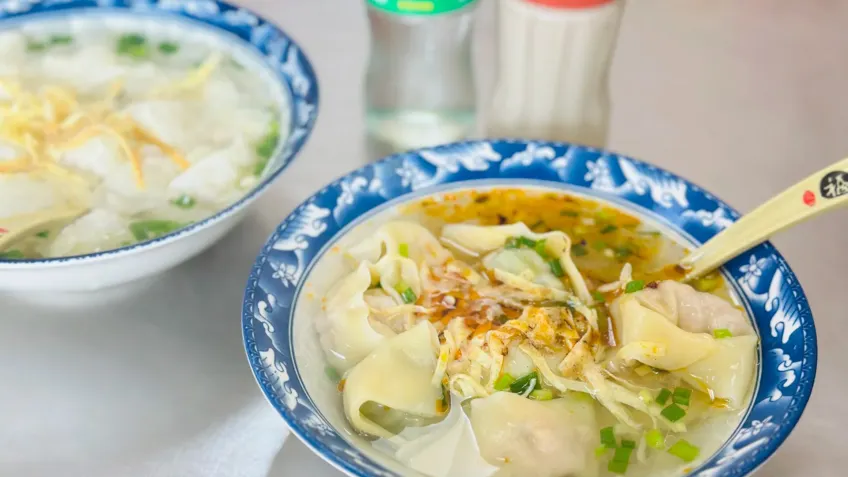
Shanlian chili-oil wontons are on Nanxun's intangible cultural heritage list: a light-looking Jiangnan dish that takes real skill.
The rule is "rolling, full, clear": the broth at a rolling boil, a generous filling and a clear soup. The wrappers must be paper-thin, so the cooked wontons float like bubbles and you can see the red filling through them.
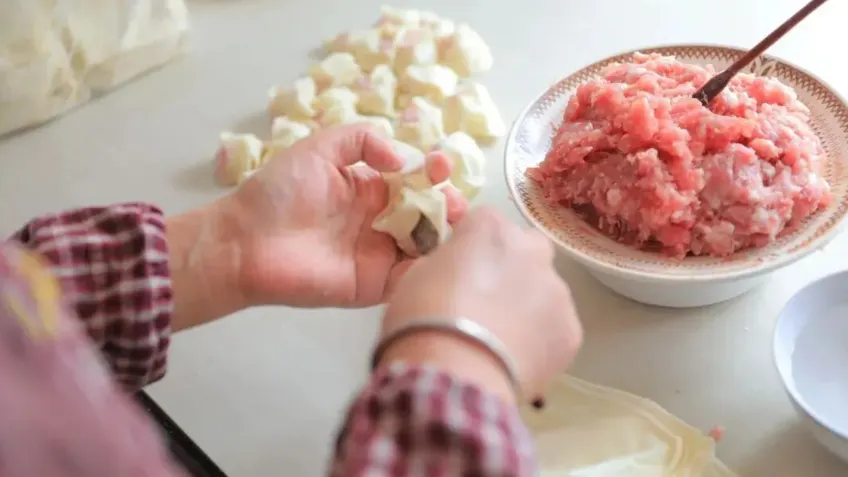
The key is the chili oil, made with rapeseed oil and more fragrant than hot. Stirred into the bone broth, it gives the soup a savory kick right away.
Shanlian chili oil wontons aren't exactly filling, and the seasoning is nothing complicated, but for locals in Nanxun, it's all about that comforting warmth.
Xiuhuajin greens
If you had to pick one dish to represent Nanxun, xiuhuajin greens would be on the list.
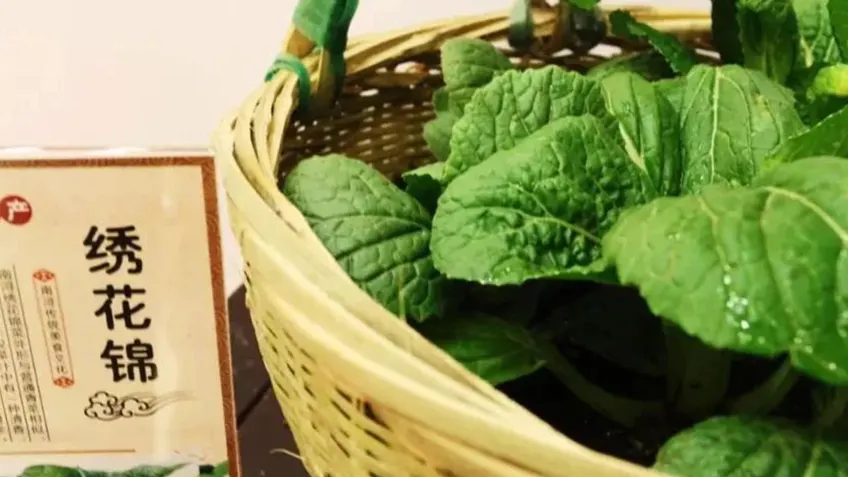
Xiuhuajin is a leafy green found only in Nanxun.
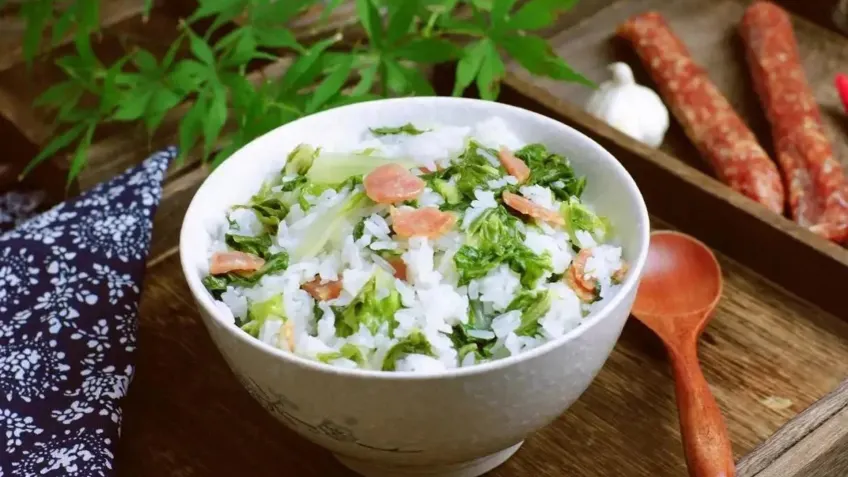
Xiuhuajin looks much like ordinary bok choy, but tastes completely different. It's juicy and fragrant, with a tender, refreshing texture. A simple stir-fry brings out its flavor, and best of all, it stays bright green even after cooking.
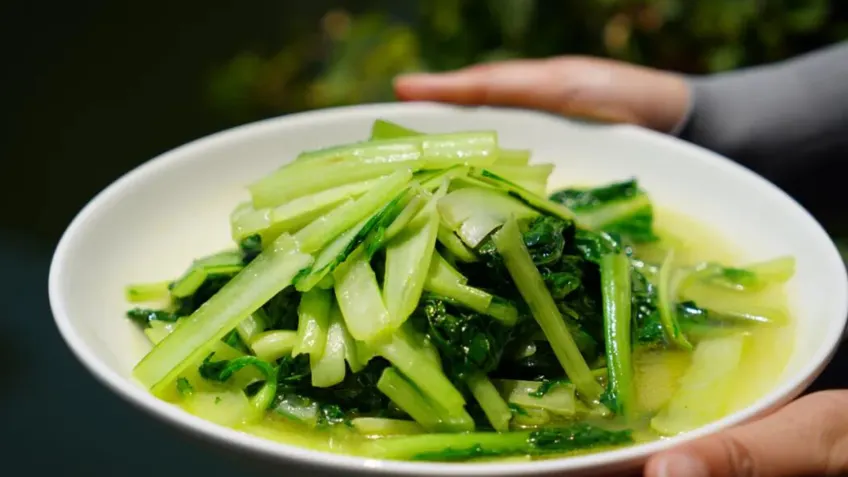
Xiuhuajin has been grown in Nanxun for a very long time. It's planted in spring, fall and winter, and is said to taste best after a hard winter frost.
Locals say that if xiuhuajin is grown anywhere else, it loses its aroma and flavor, so "once you leave this village, there's no more of this vegetable." If you visit Nanxun, try it.
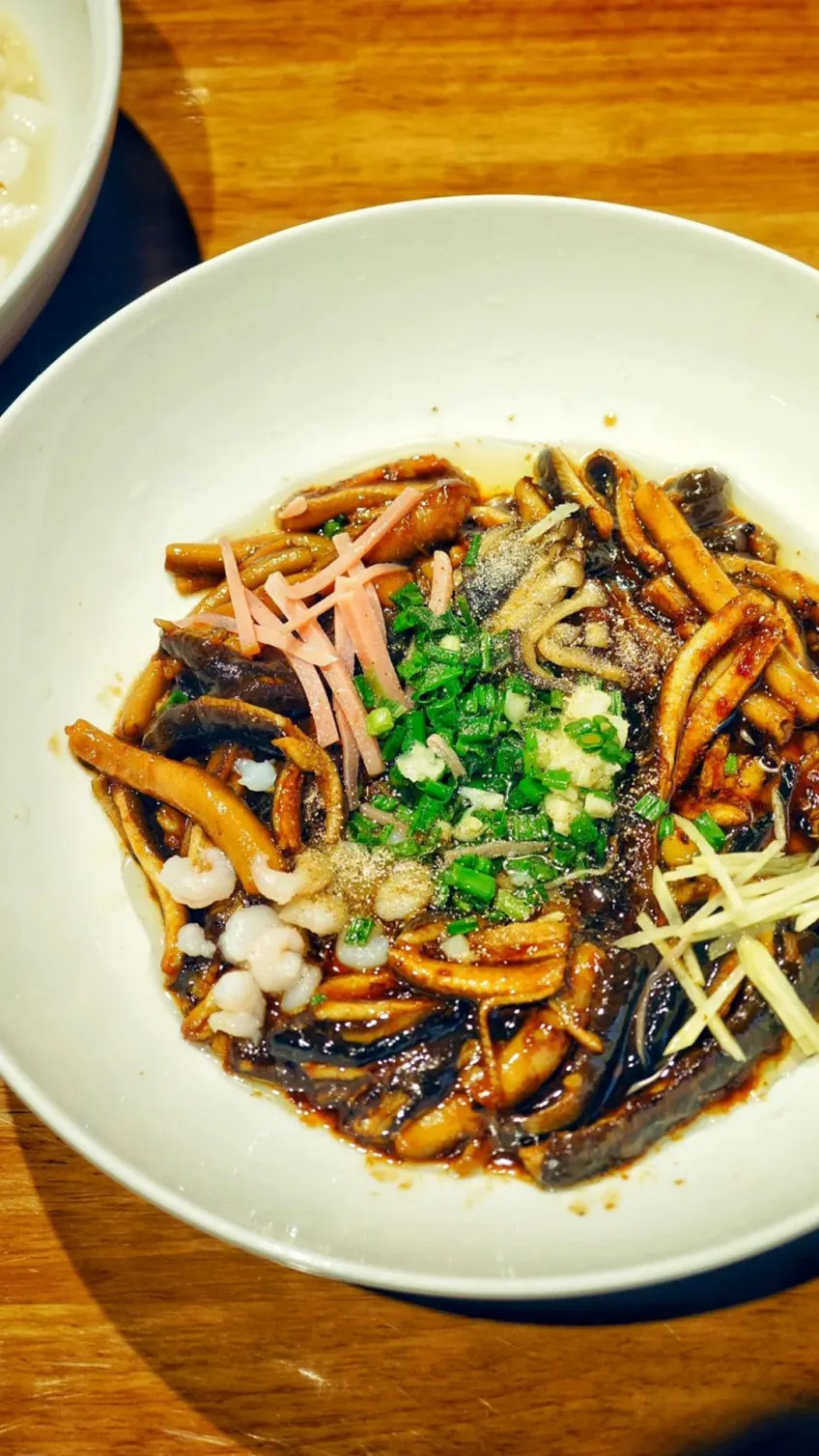
Lanhu shansi (braised shredded eel)
Lanhu shansi is the Nanxun dish that best shows off a cook's skill.
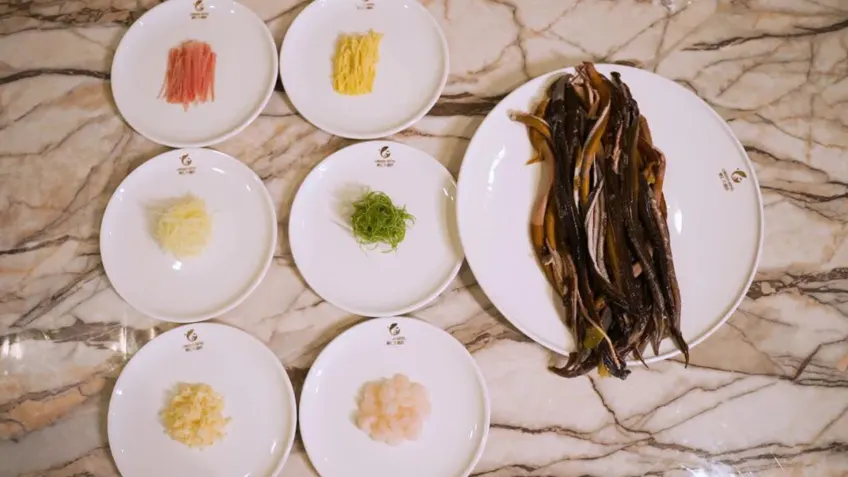
Lanhu shansi is a classic Nanxun dish.
The story goes that the Qianlong Emperor of the Qing dynasty, touring the Jiangnan region, tasted this dish by chance while passing through Nanxun. He loved it at first bite and made it a palace dish. It became famous and is now a signature dish of Huzhou and of Zhejiang more widely.
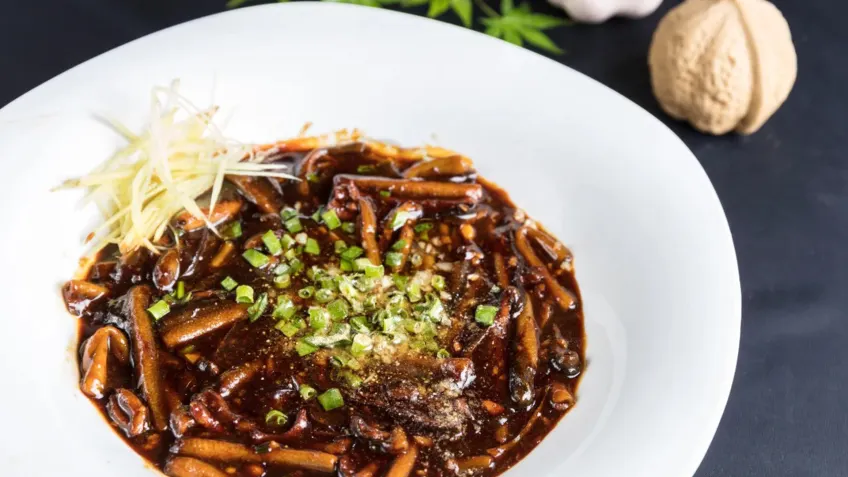
Lanhu shansi uses thick, fresh Asian swamp eels, and the cooking takes care.
Scallion, ginger and garlic are first fried in lard, then the eel strips go in over high heat, and the sauce is thickened at the end. The eel comes out soft and silky, and a house sauce makes it even more savory and rich in gelatin.
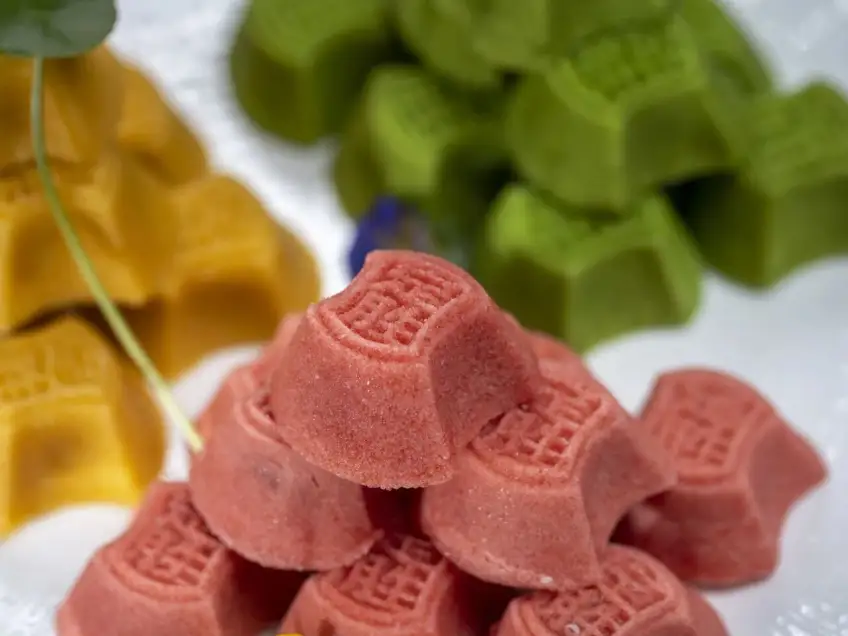
Dingsheng cake
Dingsheng cake is one of Nanxun's best-known heritage pastries, and the version from the old brand Ye Biqi is the most famous.
Unlike most pastries, dingsheng cake has a distinctive shape. It's made from glutinous rice and red bean paste, pressed into the shape of a gold ingot, and pale pink. It's soft and sweet, and its name wishes you success. Locals serve it at celebrations, and it's one of Nanxun's most popular souvenirs.
Nanxun has plenty of authentic delicacies, but you'll have to come taste them yourself to find out which one is the best.

A Nanxun food walk
Recommended food route: three-course tea at the South Gate entrance → shuangjiao noodles at Zhuangyuan Lou or Longfeng Noodle House → Xiaolianzhuang Garden → Jiaye Library → dingsheng cake → Zhang Shiming's Former Residence → Liu Family Red House → Guanghui Palace → Xunti pork knuckle → Jili Silk Museum → three-course tea at Chunlan Teahouse → Zhang Jingjiang's Former Residence → Yiyuan Garden → Baijianlou → braised shredded eel near Baijianlou.

*Tip: Walk from south to north and you'll go from morning to evening.

FAQs
Which Nanxun dishes should I try?
Most often recommended: three-course tea, shuangjiao noodles, xunti (braised pork knuckle), Shanlian chili-oil wontons, xiuhuajin greens, braised eel strips and dingsheng cake. Tastes vary, so on a first visit start with the three-course tea, shuangjiao noodles and xunti.
Where can I try Nanxun Three-Course Tea? Does the order matter?
Most cafés and drink shops near the entrance serve three-course tea (fengxiao tea → smoked bean tea → plain tea). The order never changes: sweet, then salty, then plain. The first cup is poured less than half full, the second you drink freely, and the third you sip slowly. Check each shop's hours on the day.
How much are Nanxun Ancient Town tickets? Which spots require separate tickets?
The streets of Nanxun Ancient Town are free to enter. Attractions such as Xiaolianzhuang Garden, Jiaye Library and Zhang Shiming's Former Residence require separate tickets; you can buy a combo ticket or individual attraction tickets. Prices and inclusions are subject to official announcements by the scenic area.
What's the easiest way to get to Nanxun? How do I get there from the train station?
Taking the high-speed train to Huzhou Nanxun Station is the most convenient option. The station is about 6 km from the ancient town, and you can take a taxi or a local bus after exiting. Foreign visitors generally cannot drive in China using a home-country or international driver's license, so take a taxi or book a private car. Once in the ancient town, water buses run roughly every 30 minutes from 9 a.m. to 4 p.m.; check on site for fares.
Group tour or private trip for eating in Nanxun?
To cover both Huzhou and Nanxun in one trip with less planning, a private tour that includes Nanxun (such as the Slow Huzhou route) is the easiest option. If you just want to rearrange restaurants and pacing to suit your taste, go with a custom private trip. Need someone to explain the intangible cultural heritage dishes on site? You can hire a guide separately. Just tell your travel consultant your dates, group size and departure city to get started.
Are Xunti and dingsheng cake good souvenirs?
Xunti comes vacuum-packed to take home; look for the workshop by Guanghui Bridge and the old shops on Dongda Street. Dingsheng cake is a popular festive treat, and the old brand Ye Biqi is the best known. Eat the cakes the same day or carry them only short distances, away from heat and crushing. Check in store for shelf life and prices.
Visiting Nanxun: practical tips
Tickets
There's no entry fee for the old town, but major sights inside such as Xiaolianzhuang Garden and Zhang Shiming's Former Residence need tickets. If you plan to visit them, buy a combo ticket online in advance.
A combo ticket covers the smaller sights: Xiaolianzhuang Garden with Jiaye Library, Zhang Shiming's Former Residence, Liu Family Red House, Zhang Jingjiang's Former Residence, Yiyuan Garden and more. Single-site tickets are also sold (check official or on-site information for prices and what's included).
Getting there
By high-speed train: Huzhou Nanxun Station, on the Shanghai–Suzhou–Huzhou line, is about 6 km from the old town; take a taxi or a bus from the station. From Huzhou Station you need to change to a bus, about 1.5 hours in all (check the day's bus routes and times).
Driving: navigate to "Nanxun Ancient Town South Gate Parking Lot," about 2.5 hours from Shanghai and 1.5 hours from Hangzhou. Foreign visitors generally can't drive in China on a home-country or international license, so take a taxi or book a private car.
Motor vehicles are not allowed inside the town. Park outside and enter on foot.
Intercity buses: Direct coaches run from Shanghai, Hangzhou and other cities, taking about 2–3 hours.

Water bus
The water bus is cheap and runs 9 a.m.–4 p.m., every 30 minutes. Stops include Silk Wharf, Zhang Jingjiang, Lianjie Bridge and Shizigang (check official or on-site information for fares and times).
*Buy tickets in advance and check when the last boat leaves.
Where to stay
Nanxun Ancient Town has many distinctive guesthouses and inns, such as Yunhe Yuanzi Guesthouse, Lixiang Sanxun Guesthouse (Baijianlou branch), Nanxun Yuanshe Waterside Guesthouse, Luohua Laowu Guesthouse, Nanxun Pingzhong Shiguang Inn, Mao Xiaoyuan Guesthouse, Nanxun Hetang Yue Se Guesthouse, Nanxun Yunqi Lanting Guesthouse and Xunxi Zhi Pan Guesthouse. For waterside rooms, look near Baijianlou first. Foreign travelers should confirm with the property before booking whether they accept international guests.

Good to know
Cash: some old teahouses and craft stalls may take cash only, so carry a few small bills. Most other shops take Alipay or WeChat Pay QR codes, and visitors can link a Visa, Mastercard or other foreign card directly in the app, with no Chinese bank account needed.
Respect local life: Many original residents still live in Nanxun Ancient Town. Please don't enter private courtyards that aren't open to the public. If you'd like to photograph locals going about their daily lives, politely ask for permission first.
To make the most of Nanxun's food, contact us for a custom tour. Our guides will take you on an easy food walk at a gentle pace.
Don't want to research restaurants yourself and risk a bad meal? A private tour that includes Nanxun Ancient Town is the most hassle-free choice. Use station transfers or a private car for arrival, departure and getting to restaurants. If you want to hear about intangible cultural heritage and local insider tips, you can hire a guide separately. To turn food, hotels and transport into a multi-day itinerary, go with a custom private trip. Just send your dates, group size and departure city to a travel consultant.