
How to explore Nanxun Ancient Town
Nanxun Ancient Town (南浔古镇) is in Nanxun District, Huzhou, Zhejiang, on the south side of Lake Tai. It's a 5A-rated water town with no entry ticket for the town itself, and its fortune came from Jili silk, the trade behind the famous "Four Elephants and Eight Oxen" silk families. Baijianlou (百间楼), the cross-shaped canals and silk merchants' estates such as Xiaolianzhuang (小莲庄) and Zhang Shiming's Former Residence are all in town. On foot plus one water-bus ride, you can see it in a day.
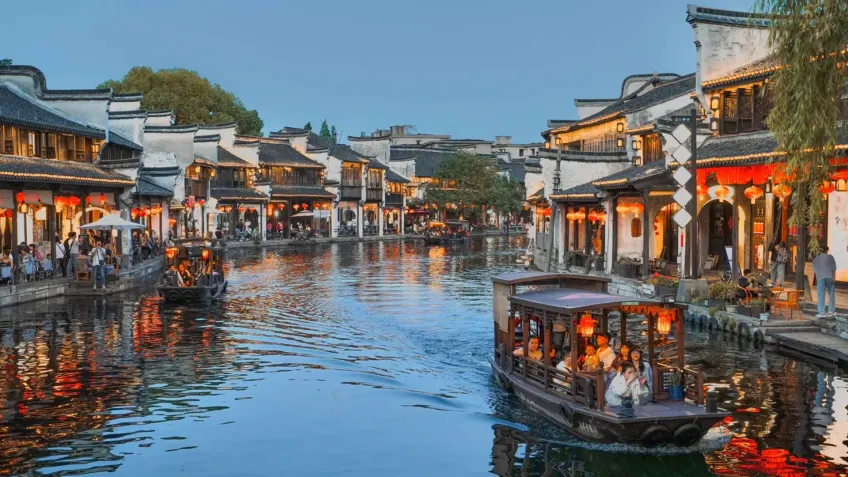
To understand the stories behind the silk merchants' mansions and Huzhou silk, you can hire a private guide. For cars, transfers and multi-day trips, see the FAQ at the end.
A single silk thread: Jili silk and the merchants' fortune
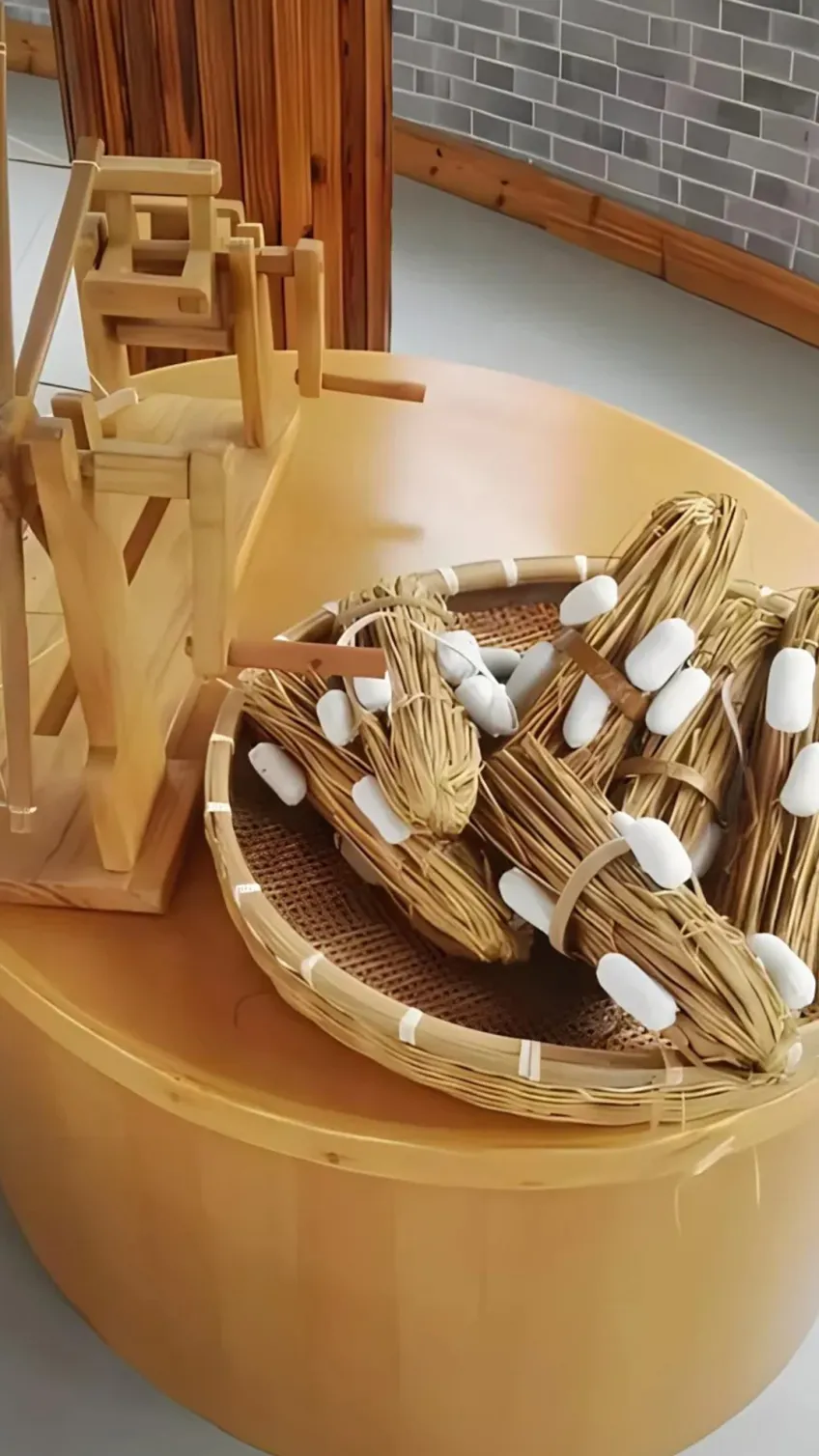
Nanxun sits on the Hangzhou-Jiaxing-Huzhou Plain, where the soil and water are ideal for mulberry trees. The leaves are rich in protein, giving the local silk its distinctive luster and strength. By the Southern Song Dynasty it was already a major producer of premium raw silk, and during the Ming and Qing dynasties it rose to become a key silk hub in Jiangnan. Jili silk long served as the raw material for imperial weaving workshops (for details, refer to historical records and museum exhibits).

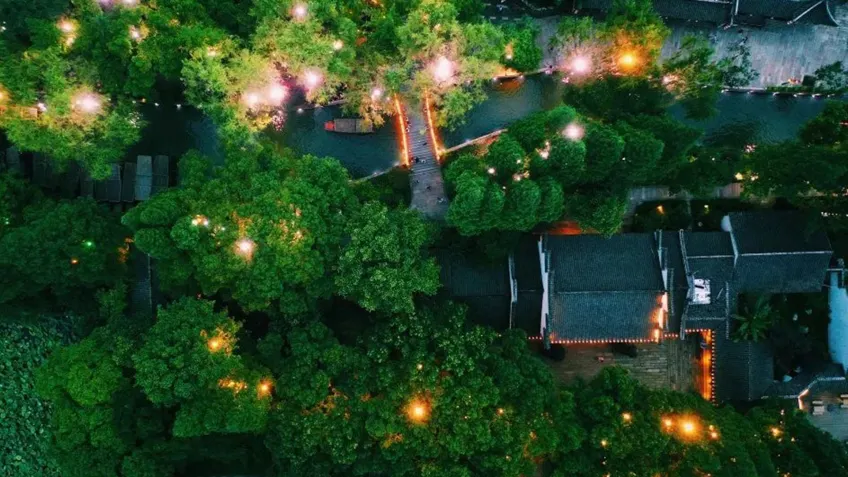
From above, the canals and rooftops interweave: historically, this is exactly how silk was shipped along these waterways to Lake Tai and The Bund in Shanghai.
In the late Qing and early Republic eras, wealthy merchants were ranked by family assets, with those worth over 10 million taels of silver called "Elephants." The most prominent were the Four Elephants: the Liu, Gu, Pang, and Zhang families. A local saying—"Liu's silver, Zhang's scholars, Pang's prestige, Gu's houses"—perfectly sums up these silk tycoons.
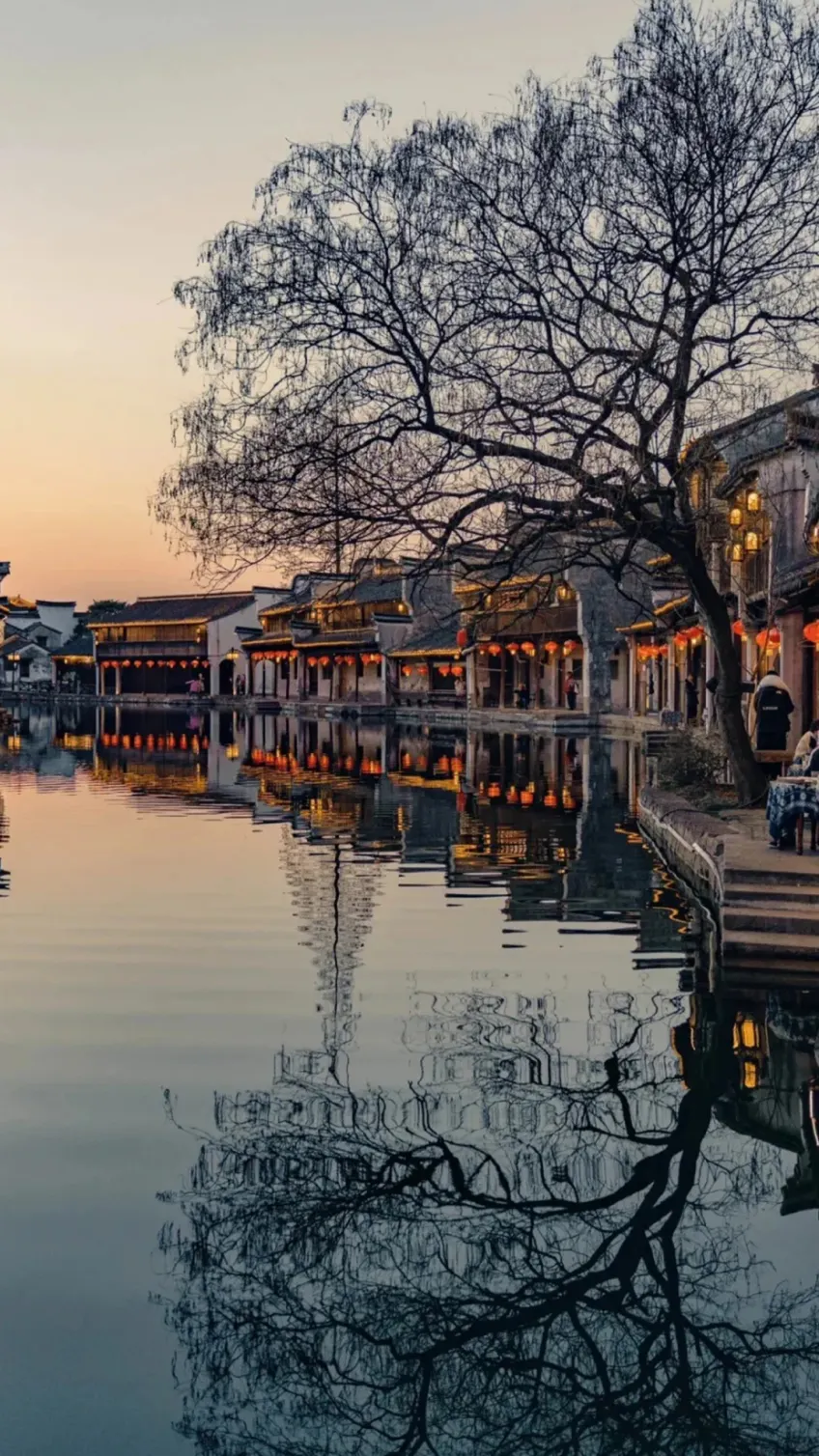
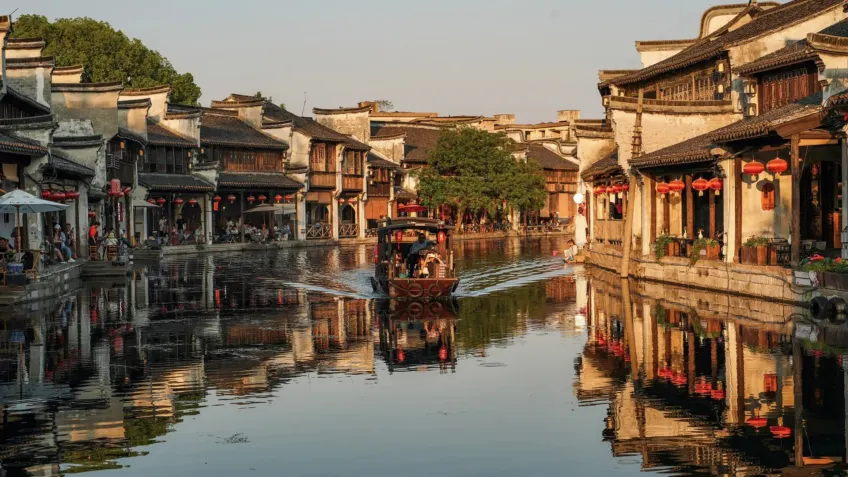
Baijianlou's riverside lights look lovely reflected in the water at dusk. Go by the signs on site for bridge and shop names.
Built on water: Ditang Canal and the water town layout
The ancient town is laid out around a cross-shaped network of four rivers: Nanshi, Dongshi, Xishi, and Baoshan. Streets run along the water in a classic "front street, back river" pattern. The northern Ditang Canal, dug over a thousand years ago, links Lake Tai with the Qiantang River system and historically connected to water routes toward The Bund in Shanghai.
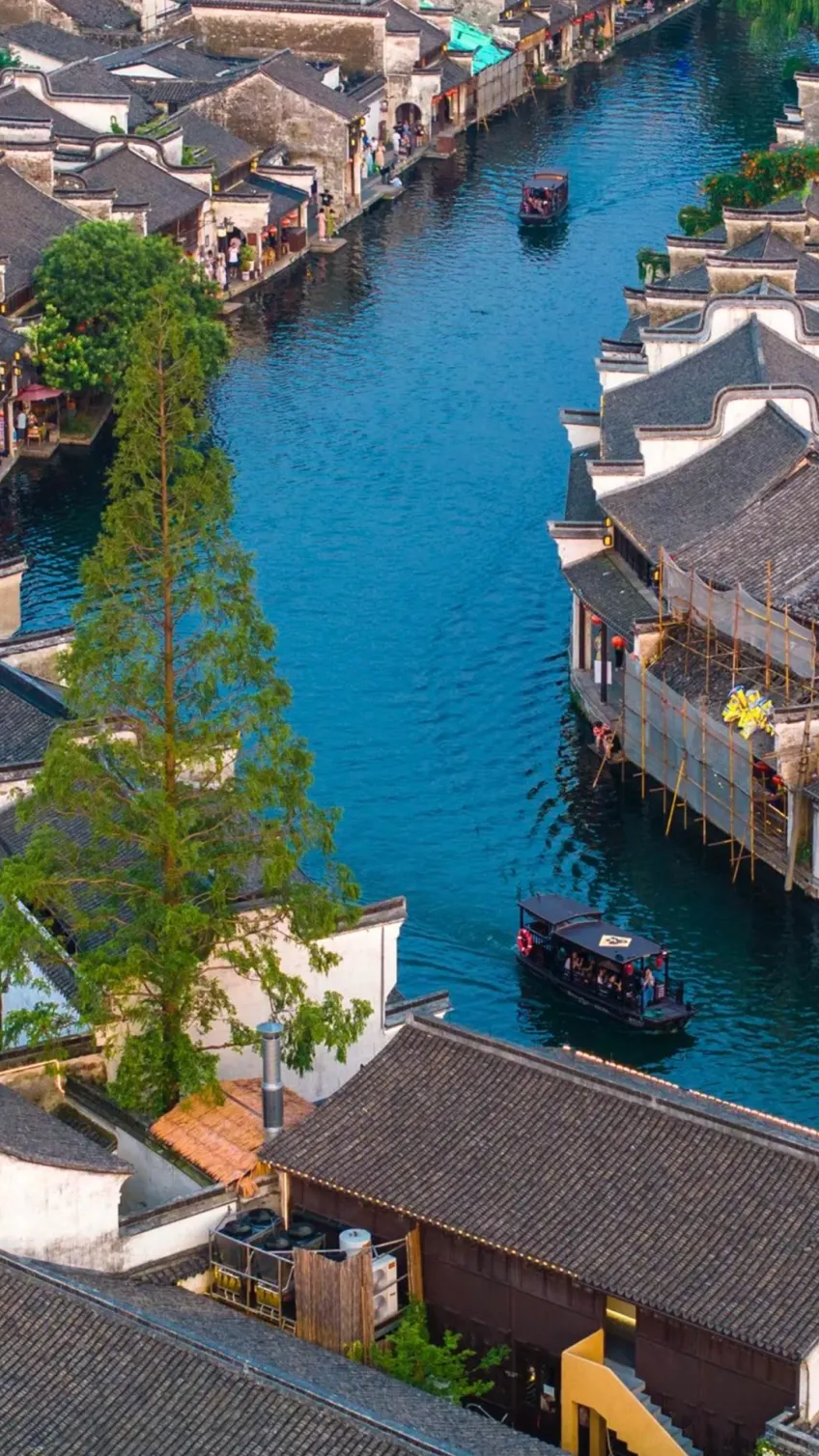
In the days before modern roads, Sixingdai Wharf was a busy hub for boatmen and silk merchants. Today, shops and teahouses still line the waterways, while Dragon Boat Festival races, water buses, sculling boats, and evening light shows turn the canals into an experience.
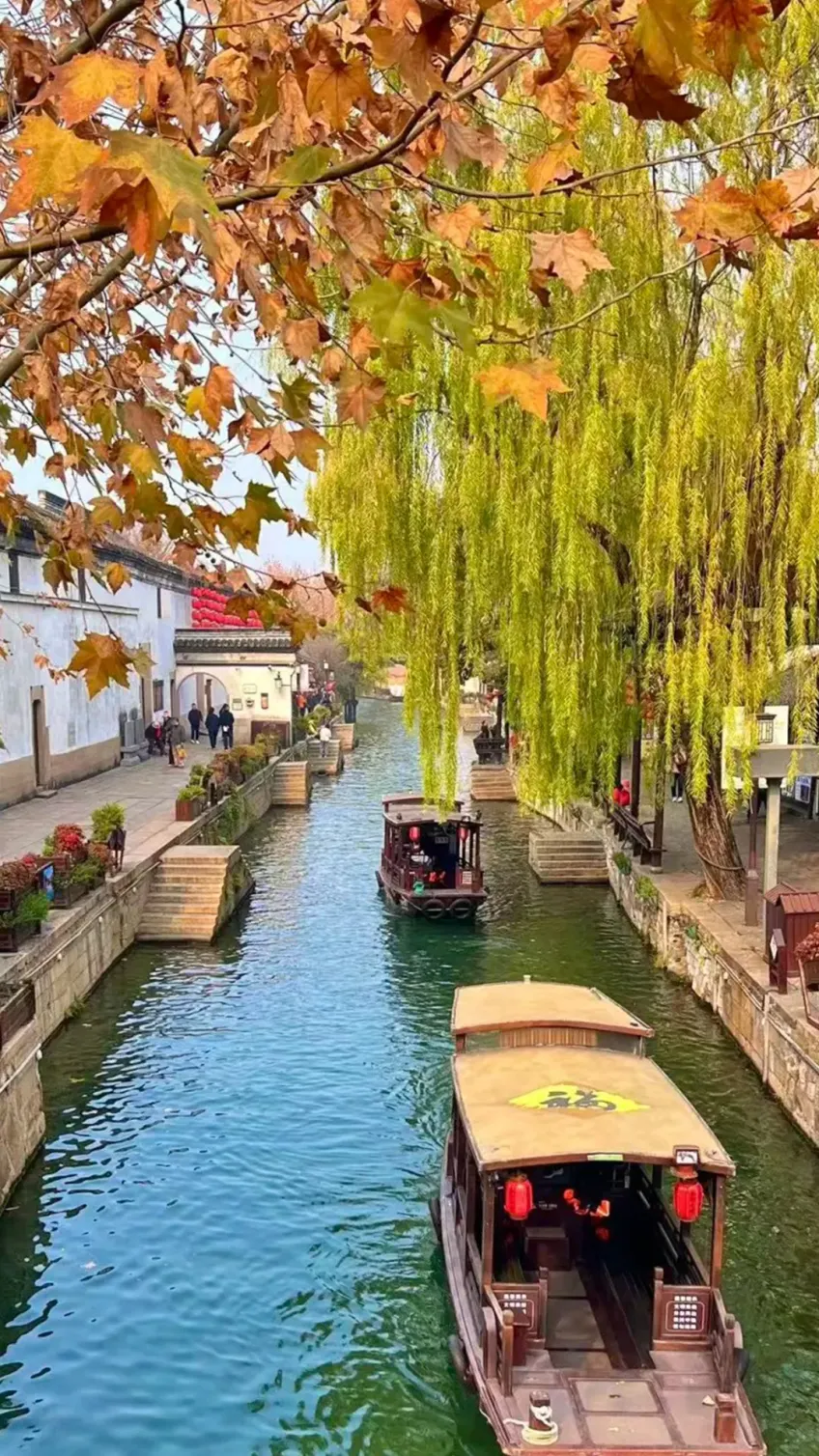
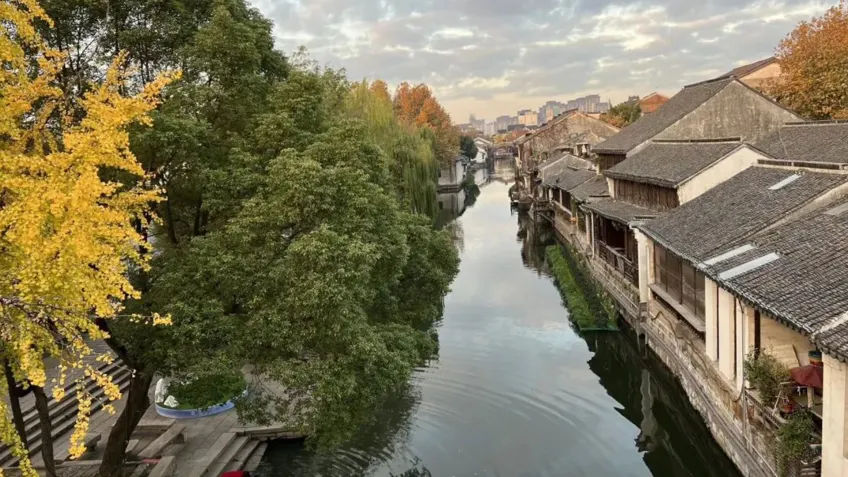
In spring and fall, the trees along both banks are at their best, and both the water bus and sculling boats offer a leisurely view of the traditional horse-head walls.
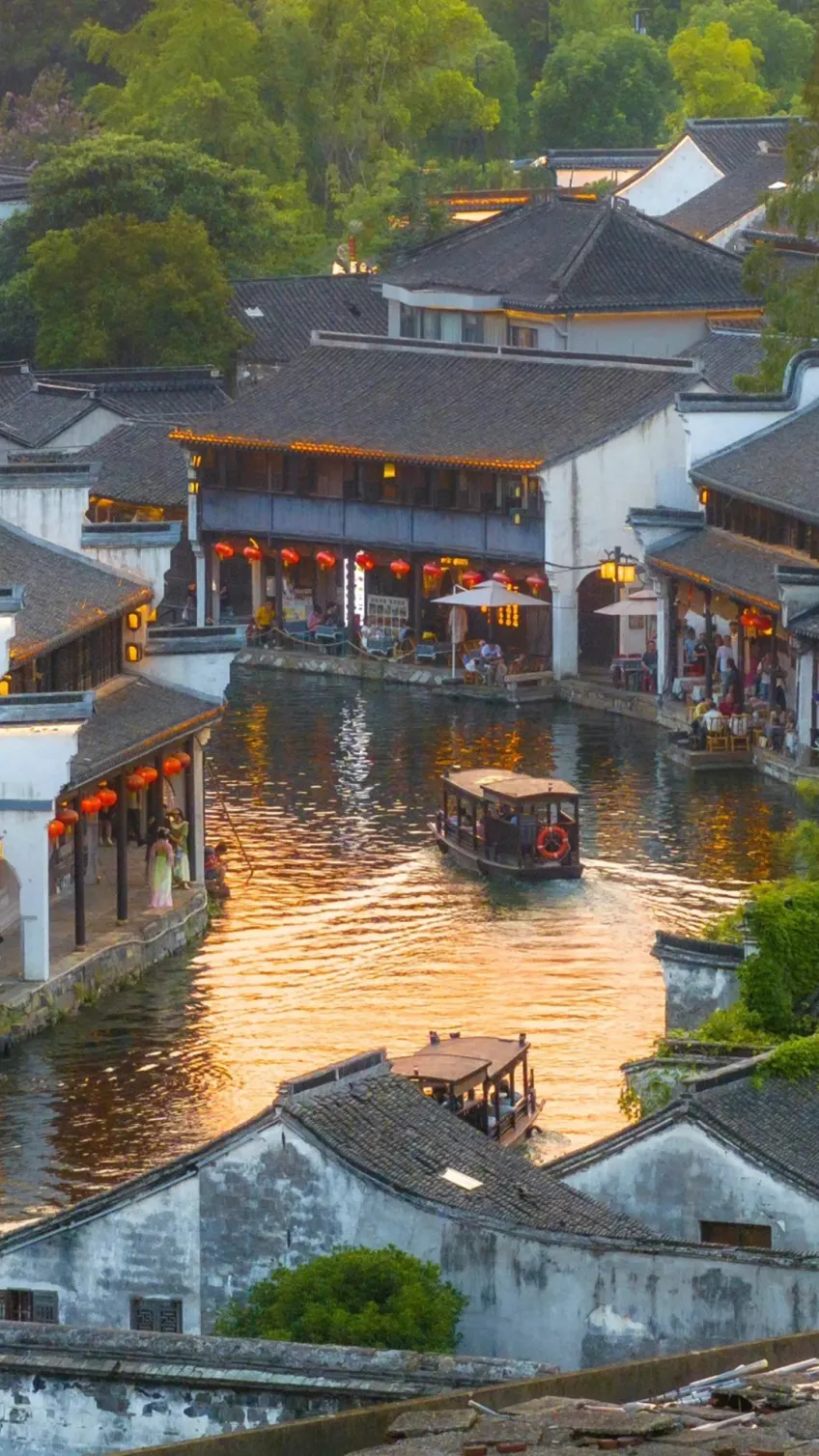
Night cruises and light shows usually run on Fridays and Saturdays. Check the current schedule, and ask about the last boat in advance.
Water bus and ticket tips
The water bus has become popular in recent years. It runs between Shizigang Wharf (十字港码头) and Silk Wharf (丝绸码头), a ride of about 10 minutes, roughly every 30 minutes from 9 a.m. to 4 p.m. Tickets are valid for the day, and fares are posted on site. Buy at the ticket window and plan to queue about 10 minutes early. Check the site's notices for the last boat and holiday schedules.

We recommend getting off at Silk Wharf, which is near the East Gate and just a short walk from Baijianlou.

Baijianlou, the hundred-room riverfront
A long riverside row of houses
Nanxun has small bridges over flowing streams and everyday local life, as well as grand family mansions and gardens. The most striking sight is Baijianlou—not a single building, but a complex stretching about 400 meters along the river, from Diaoqiao Bridge in the east to Shazhuang Bridge in the north.
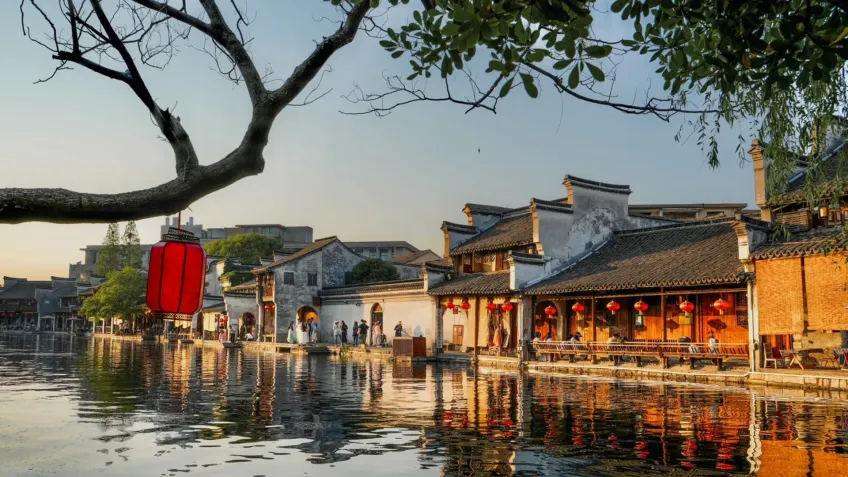
The dowry legend and everyday river life
Legend has it that Ming Dynasty Minister Dong Fen built 100 rooms along the river as dowry quarters for his grandson's bride and her 100 maids. The tale may be folklore, but the architecture is real: mostly two-story buildings featuring both triple-stepped horse-head walls and pipa-shaped gables, arched gateways between partition walls, and stone embankments with river landings once used for loading and unloading goods.

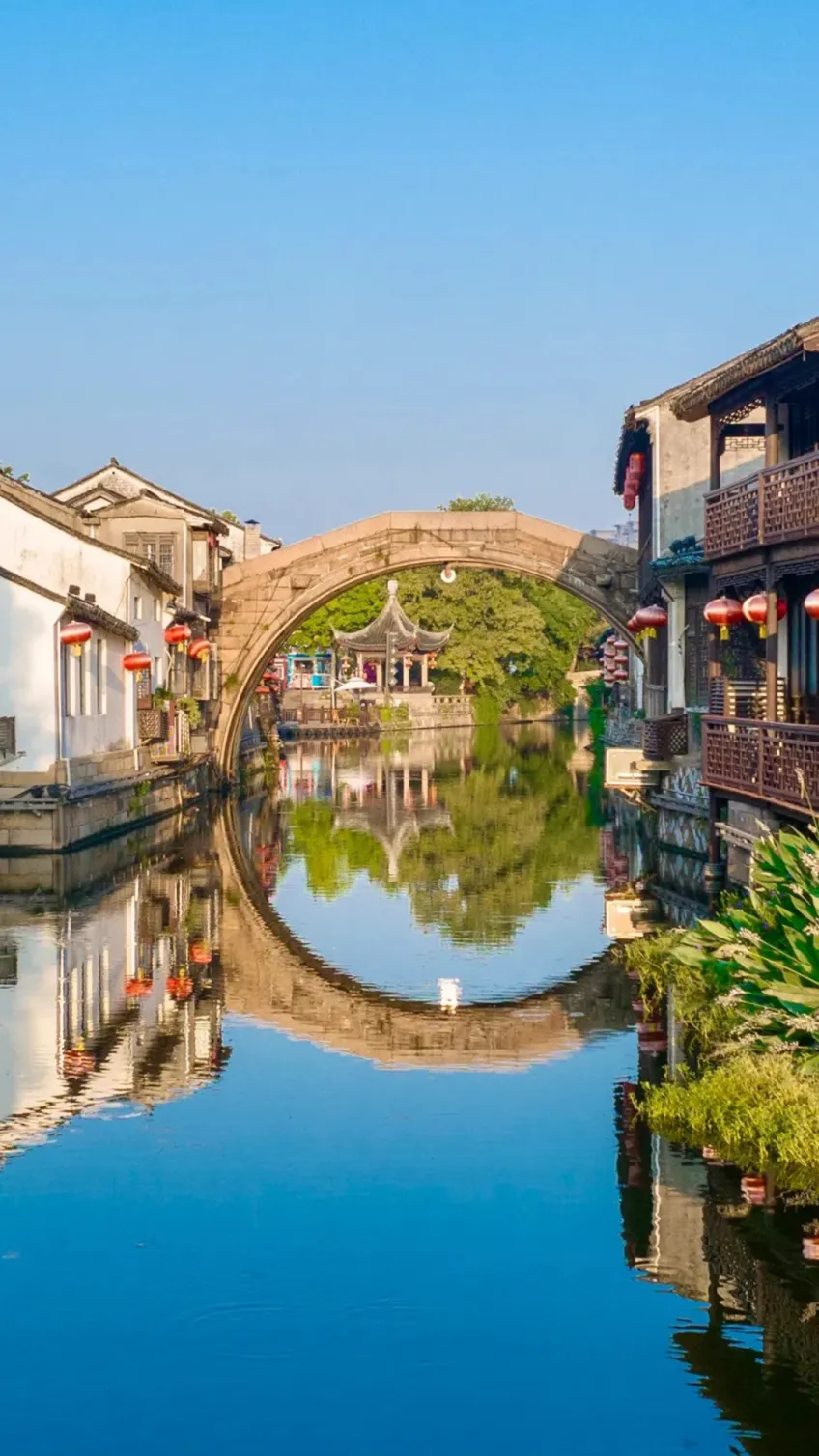
The canal once connected Huzhou, Wuzhen, and Suzhou. The reinforced concrete Changban Bridge on the east bank is one of the early modern bridges in Nanxun.
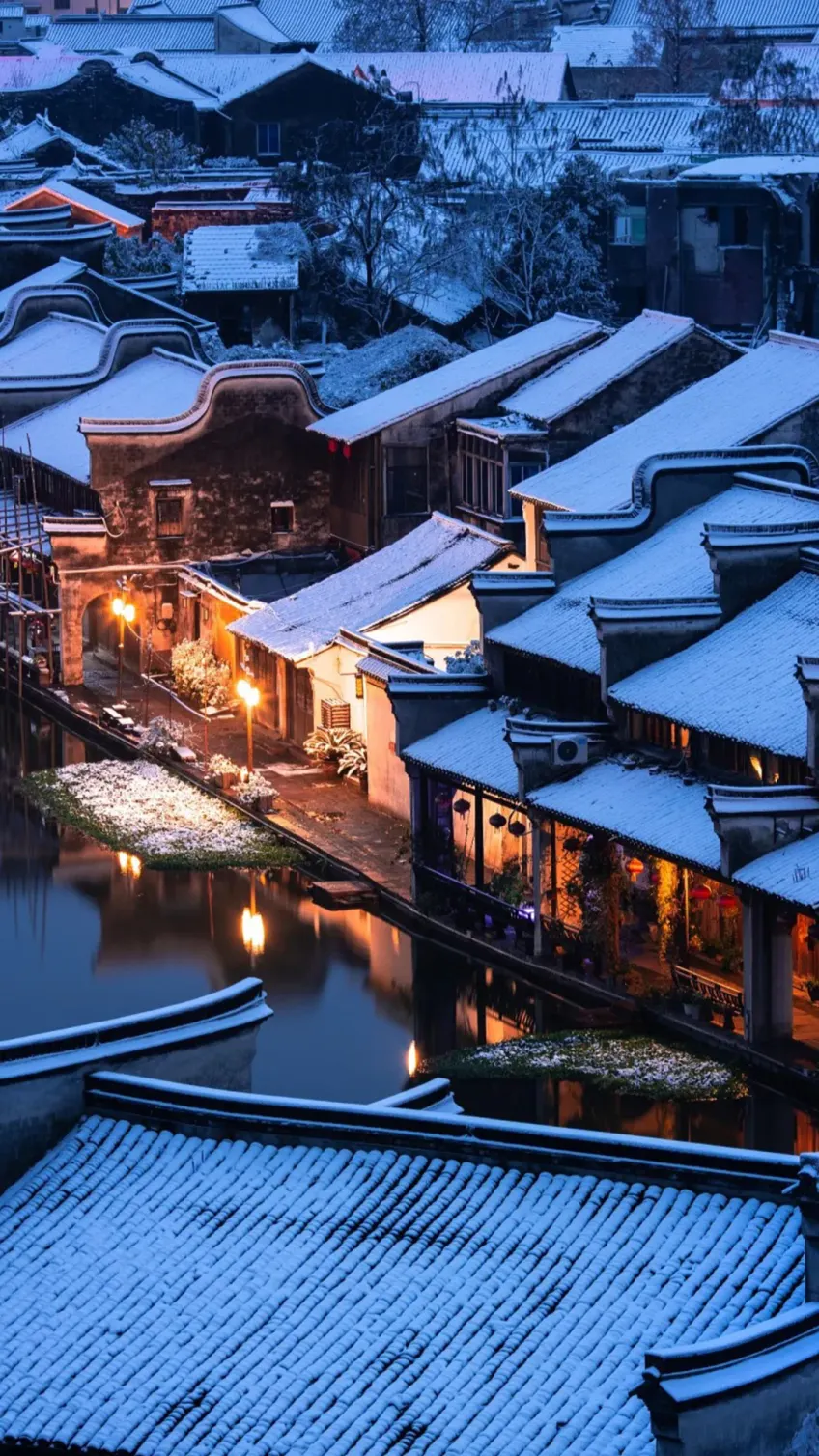
After a winter snowfall, the water lanes grow even quieter, and the lantern light reflecting off the snow makes for great night photography. Watch out for slippery flagstone paths—seniors and children should take it slow.
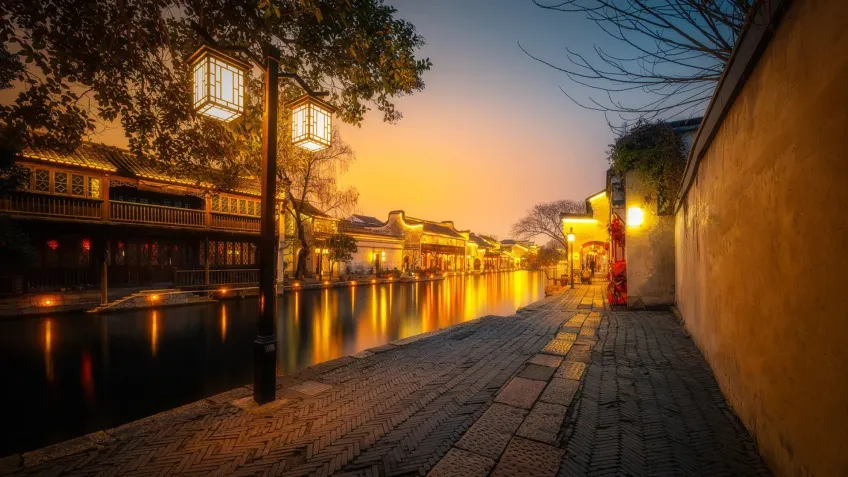
Sit by the stone dock at dusk and watch the boats come and go—it captures the pace of life in this Huzhou merchant town far better than rushing through stops during the day.
Huzhou silk experiences and special activities
The town highlights its canal, silk and Huzhou merchant heritage with "Jiangnan Silk Charm" exhibits and digital displays. You can watch Jili silk being made and try it yourself, or look for intangible-heritage and leisure spots such as Suzhou embroidery, Pingtan storytelling and teahouses (check on site which venues are open).
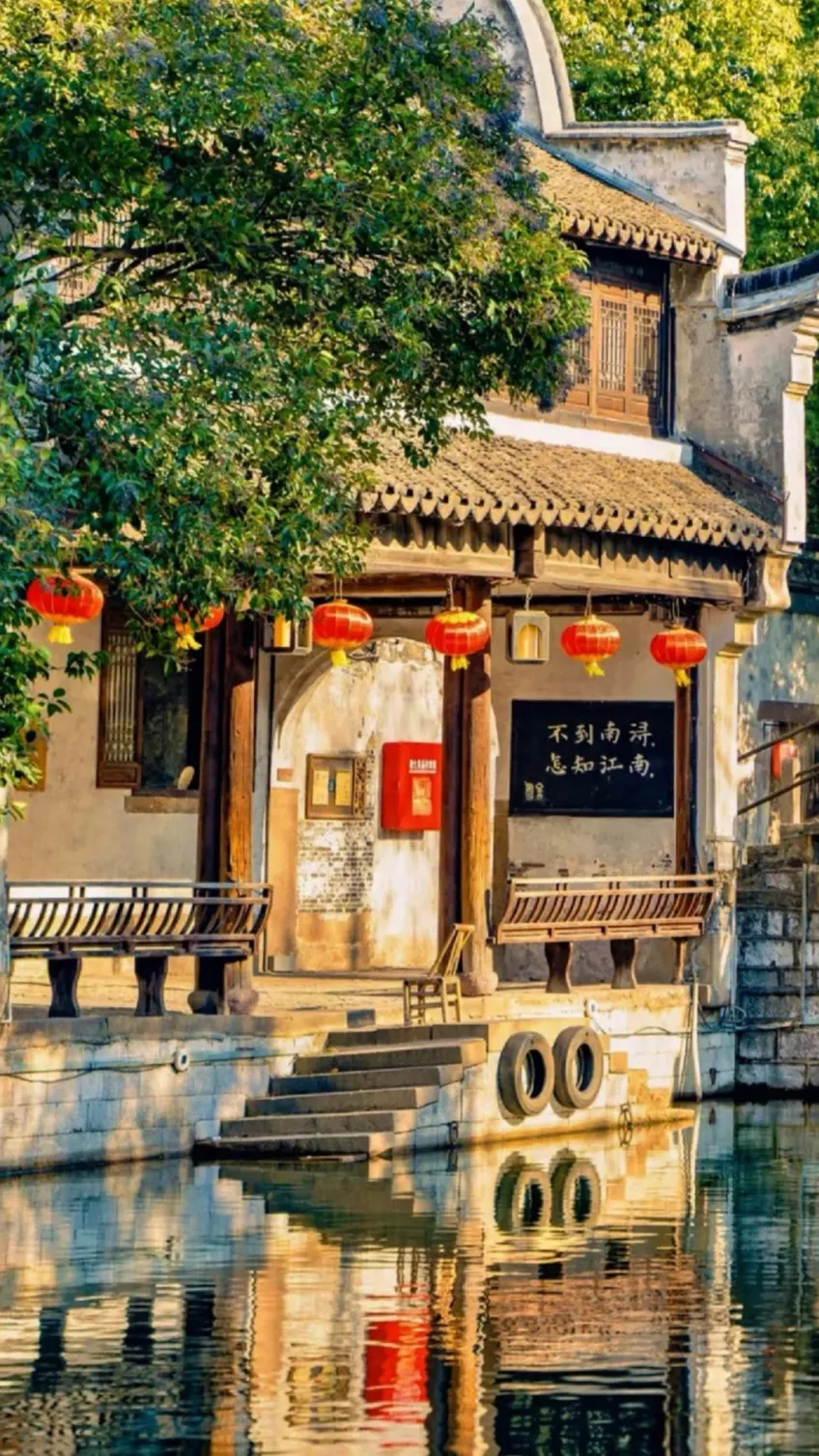
You'll often see the slogan "Without visiting Nanxun, how could you know Jiangnan" in the pavilions and corridors—a perfect spot to rest, snap a photo, and continue your day tour.
A classic one-day route
Suggested route: Jiayetang Library → Xiaolianzhuang Garden → Liu Family Red House → Zhang Shiming's Former Residence → Guanghui Palace → Shizigang Pier → Xiatang East Street → Covered Bridge → Zhang Jingjiang's Former Residence → West Street → Tongjin Bridge → Baijianlou Houses. Ticketed attractions and opening hours are subject to current announcements.
Other experiences: the water bus is good value, and sculling boats feel more traditional. Nanxun night tours often include Kunqu opera on the water or light shows on Fridays and Saturdays. At the Jili Silk Museum you can make your own silk bookmark.
End with an evening boat ride to see the lights on the river, then plan the next day: on to Wuzhen or Huzhou, or back to Shanghai or Hangzhou.
FAQs
Do I need a ticket for Nanxun? What's free?
The core streets have long been promoted as a permanently free 5A site. Xiaolianzhuang, Jiayetang and some of the mansions may still charge separate or combo tickets, so check at the ticket office or with official sources for current prices. Start with Baijianlou and the water lanes for free, then buy tickets for the gardens that interest you.
How do I take the water bus? How much is it and when does it run?
Boats run between Shizigang Wharf and Silk Wharf about every half hour from roughly 9 a.m. to 4 p.m., and the ride takes about 10 minutes. Buy tickets at the window on site and check the posted fares. Get off at Silk Wharf for Baijianlou, and always double-check the notices for the last boat and holiday times.
How should I plan a Nanxun day tour? Who is it best for?
It suits travelers who like water-town architecture, silk-merchant history and photography. Most people can follow the day route above. With seniors or kids, cut a few stops and take more boat rides.
How do I get to Nanxun from Shanghai or Hangzhou? Should I book a transfer?
A common route is to take a high-speed or regular train toward Huzhou or Jiaxing, then transfer (check the railway timetable for specific trains). Tickets can be booked with a passport on the English 12306 website or app. Bring the ID used for booking when entering the station. If you have lots of luggage, are traveling with seniors, or plan to end with an evening tour, choose station transfers or a private car straight to the visitor center.
Group tour, private guide, or custom trip—which should I choose?
For a hassle-free itinerary plus the overnight vibe of Nanxun → private tour "Hucheng Slow Travel"; for in-depth commentary on the mansions and Huzhou silk only → hire a guide; to fully customize the number of days and interests → custom private trip. Just tell your travel consultant your dates, group size, departure city, and whether you want a guide.
Need a car or a guide?
Feel free to share this Nanxun Ancient Town travel guide with your travel companions. Need a car or a guide? Just click the service links above and tell us what you need.