
How to plan your Nanjing independent travel without the pitfalls
When planning your first independent travel trip to Nanjing, the biggest mistake is cramming Zhongshan, Qinhuai, and Niushou Mountain into a single day, or applying the pace of Suzhou's gardens to Nanjing's city walls. This guide focuses solely on Nanjing: how many days you need, how to link three classic routes, and when to swap walking for a private car or hand the commentary over to a private guide. If you'd rather skip the research, check out our group tour covering the Six Dynasties ancient capital and Niushou Mountain. Traveling with heavy luggage or arriving by high-speed rail? Book station transfers first, and if you want to adjust the pace later, opt for a custom private tour. This is an independent travel itinerary template for Nanjing—don't mix it up with a Yangzhou Slender West Lake or Zhenjiang Jinshan Temple day tour.
The point of independent travel isn't to tick off every attraction on a list, but to choose routes based on your energy and interests. The Zhongshan route suits first-time visitors who want to see Sun Yat-sen Mausoleum and Ming Xiaoling Mausoleum; the Qinhuai South City route is ideal for alleys and city walls; and the East City Lake route offers a relaxed half-day covering Presidential Palace, Xuanwu Lake, and Jiming Temple. Below, we start with day-count templates, then break down each route, and finally explain how to combine private cars, guides, and group tours—without drowning you in sales pitches right away.
How many days do you need: 2-day, 3-day, and 5-day templates
2-day version: Day one covers the Zhongshan route (Sun Yat-sen Mausoleum – Music Stage – either Ming Xiaoling Mausoleum or Linggu), and day two covers Qinhuai South City (Confucius Temple – Wuyi Lane area – Laomendong – climbing the wall at Zhonghuamen Gate). The pace is tight, perfect for a weekend round-trip by high-speed rail. 3-day version: Add a half-day for Presidential Palace and Xuanwu Lake to the 2-day plan, leaving the other half-day for Jiming Temple or a museum. If you're more interested in modern history, you can stretch Presidential Palace to most of a day. 5-day version: Slot in a full day for Niushou Mountain and leave flexibility for exploring the city wall in sections—ideal for families traveling with seniors or kids who don't want a packed schedule every day.
When deciding how many days you need, ask yourself three things: Are the steps at Sun Yat-sen Mausoleum a must-do? Can you handle the crowds along the Qinhuai River night scenery? Do you specifically want to visit Niushou Mountain? If two of these are "musts," three days is safer than two. If you have seniors or lots of luggage, prioritize booking a private car for getting around instead of saving on fares only to waste time transferring between subway lines.
If you only have two days and must choose, prioritize Sun Yat-sen Mausoleum plus Confucius Temple and Laomendong, and shorten the Sacred Way at Ming Xiaoling Mausoleum to a quick stop. With three days, add Presidential Palace and Xuanwu Lake. A five-day trip doesn't need to be fully booked every day: spend one day strolling different sections of the city wall, or keep museums and the Yihe Road neighborhood as flexible options so your independent travel doesn't turn into a checklist race. Where you stay also affects your route: staying in the south makes it easy to enjoy the Qinhuai night scenery, while staying near Xuanwu Lake or Xinjiekou is better for reaching Presidential Palace and catching the subway. On your Zhongshan route day, enter the park as early as possible and save the afternoon for the Sacred Way or Linggu.
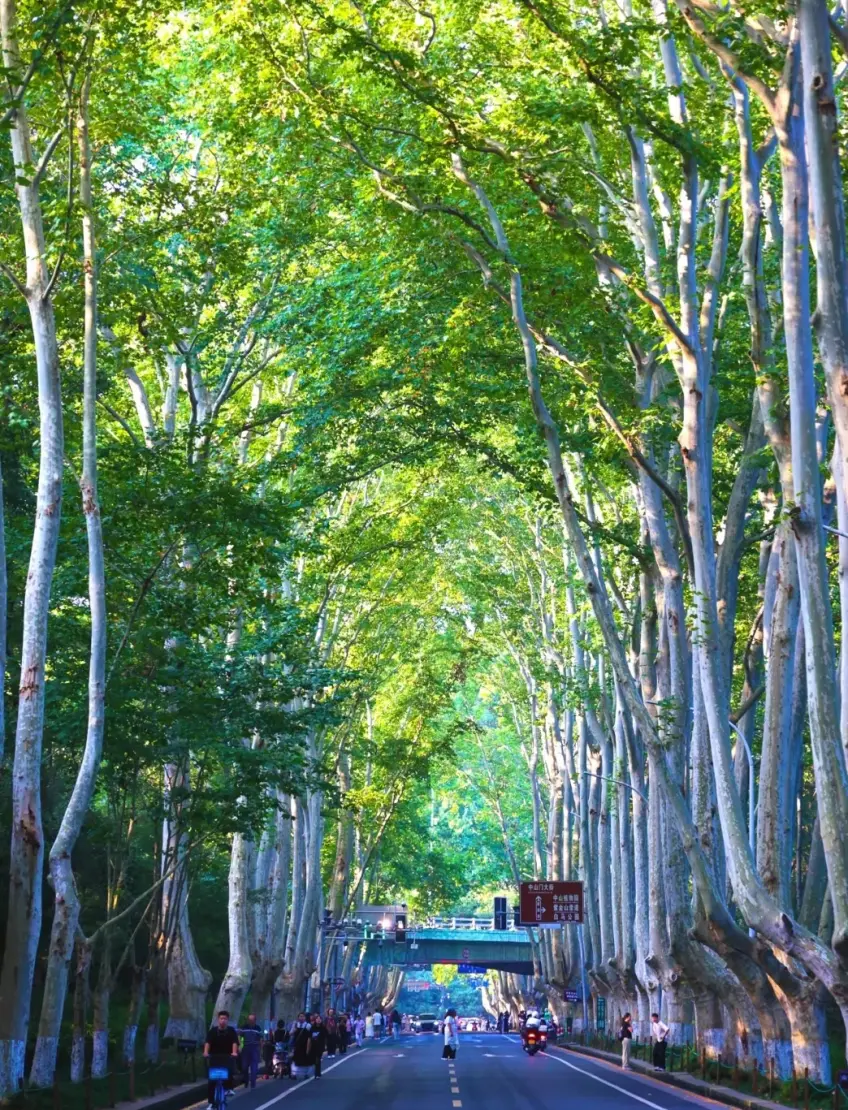
Illustration of the shaded plane tree avenue in the Zhongshan scenic area. These tree-lined paths are common when entering the Zhongshan scenic area, part of Nanjing's Zhongshan Scenic Area—do not confuse them with the osmanthus lanes of Manjuelong in Hangzhou.
Classic Route 1: Zhongshan Line (Sun Yat-sen Mausoleum · Ming Xiaoling Mausoleum · Linggu)
The Zhongshan Line is day one for most Nanjing independent travel itineraries. We recommend visiting Sun Yat-sen Mausoleum in the morning—there are many steps and heavy crowds, so allow extra time for security checks and a slower pace. After a quick break around noon inside or outside the scenic area, head to the Sacred Way at Ming Xiaoling Mausoleum in the afternoon to see the stone statues, or stroll the shaded stone paths at Linggu Temple. The Music Stage makes a good buffer stop after coming down from Sun Yat-sen Mausoleum; its open lawn is perfect for resting and photos, so don't cram in too many more stops.
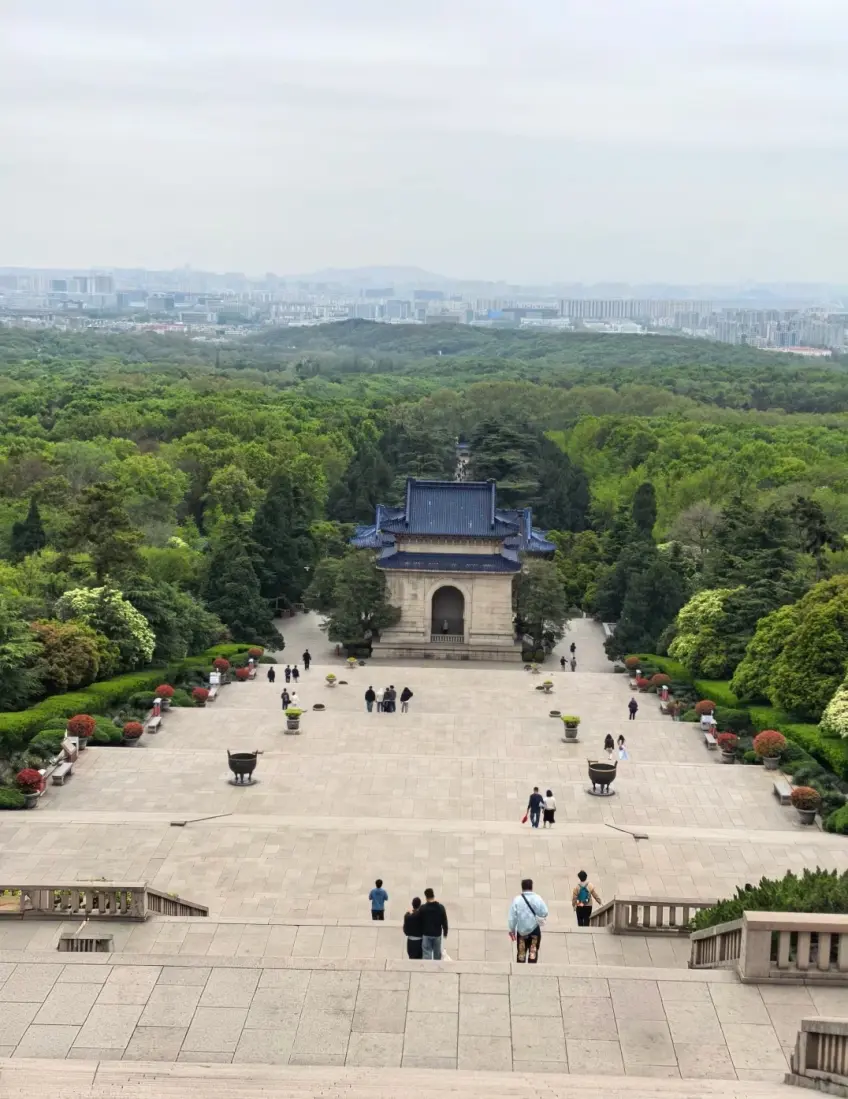
A view of Mount Zhongshan from Sun Yat-sen Mausoleum, with the mausoleum steps and distant mountains in the same frame. This is Sun Yat-sen Mausoleum in Nanjing—don't confuse it with Fragrant Hills in Beijing or the former residence in Zhongshan County.
The Sacred Way route at Ming Xiaoling Mausoleum includes the stone archway gates and the section lined with stone statues: the archway gates are great for photos, and you can walk slowly between the stone statues. When the light is right, the shots come out clean. If anyone in your group has limited mobility, the Sacred Way is easier than the steps at Sun Yat-sen Mausoleum, but still watch for uneven ground. The Linggu Temple and Beamless Hall area draws fewer crowds, making it ideal if you want to avoid peak times. It shares Mount Zhongshan with Sun Yat-sen Mausoleum, so getting between sites relies mostly on scenic area shuttles or walking—factor that transit time into your afternoon schedule. Don't try to squeeze Sun Yat-sen Mausoleum, Ming Xiaoling Mausoleum, Linggu, Meiling Palace, and the Music Stage all into one day on the Zhongshan Line. If you want photos at all five, we suggest cutting back to three for a deeper visit and saving the rest for next time or for a group tour comparison route.
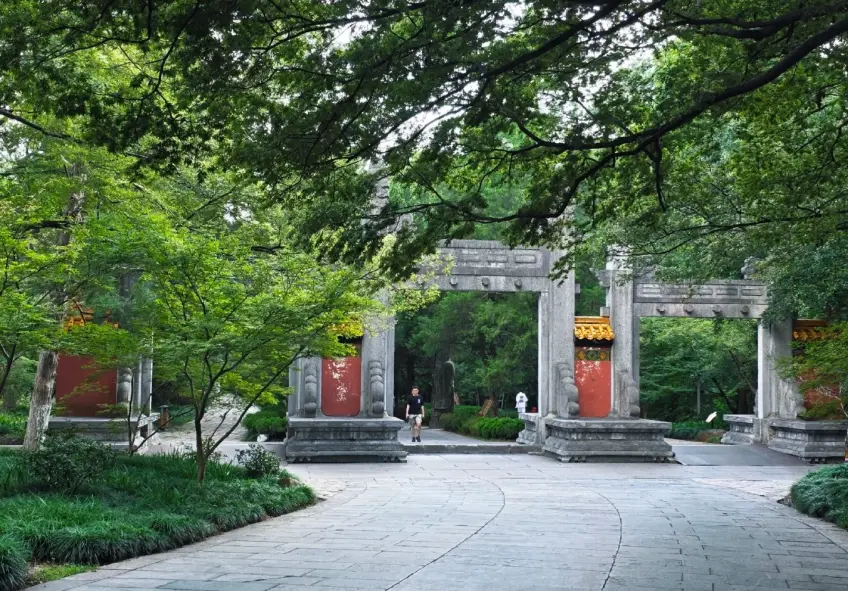
A photo of the three-arch stone gateway at Ming Xiaoling Mausoleum, showing the path flanked by the three arches. This is Ming Xiaoling Mausoleum in Nanjing—don't confuse it with the stone statues on the Sacred Way at the Ming Tombs.
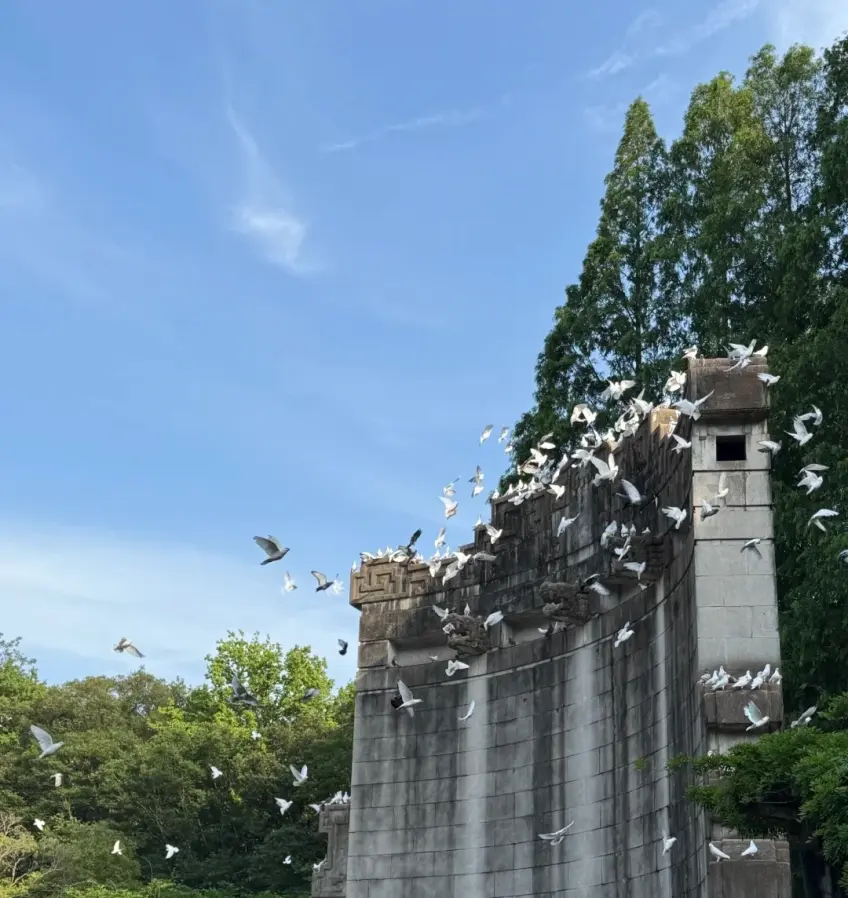
The stone stele and flying doves at the Zhongshan Music Stage. The dragon-head stele and white doves are located near the Sun Yat-sen Mausoleum Music Stage; do not mistake them for an outdoor theater lawn elsewhere.
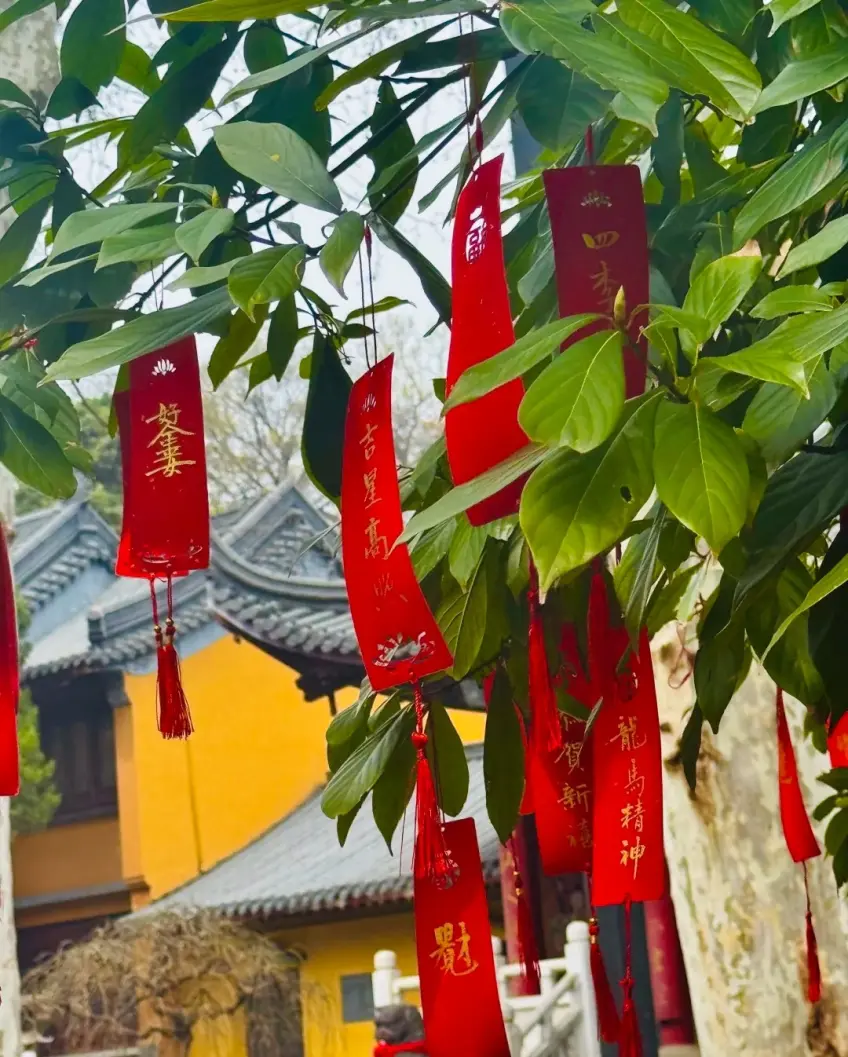
Prayer tags and yellow walls at Linggu Temple. The red prayer tags and yellow-walled halls belong to Nanjing's Linggu Temple scenic area; do not mistake them for the mountain path of Guoqing Temple on Mount Tiantai.
Classic Route 2: South City & Qinhuai (Confucius Temple · Laomendong · Zhonghua Gate)
The South City route works well for day two: spend the daytime at Confucius Temple and its surrounding alleys, head to Laomendong in the evening, and if you still have energy, climb Zhonghua Gate to see the barbican. The banks of the Qinhuai River get crowded, so for independent travel, plan a quick pass-through option—stick to the main street and skip the shops—to avoid letting the commercial pace ruin your whole day.
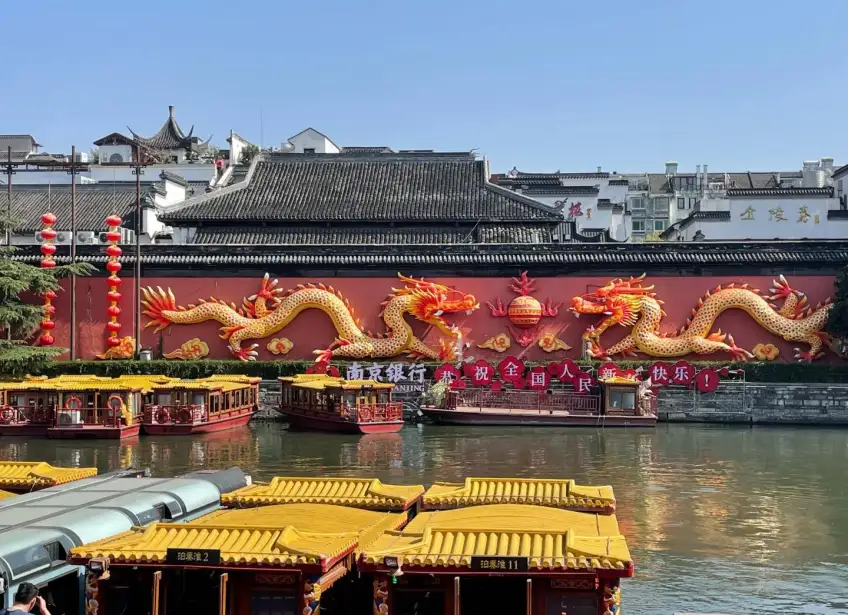
Daytime view of the Qinhuai River at Confucius Temple. The riverbank and shops by day belong to Nanjing's Confucius Temple–Qinhuai Scenic Belt; do not mistake them for Shantang Street in Suzhou or a close-up inside a Qinhuai River night cruise boat.
Laomendong is full of gray-brick alleys by day, but comes alive at night with lantern-lit trees and bustling squares—perfect for a leisurely stroll. Don't try to squeeze it into the same peak hours as the Confucius Temple night market crowds. The Zhonghua Gate barbican is one of the signature sections of the Nanjing City Wall; climbing up to study the fortification structure is far more rewarding than just snapping a quick photo. In summer, remember sun protection and watch your step on the stairs.
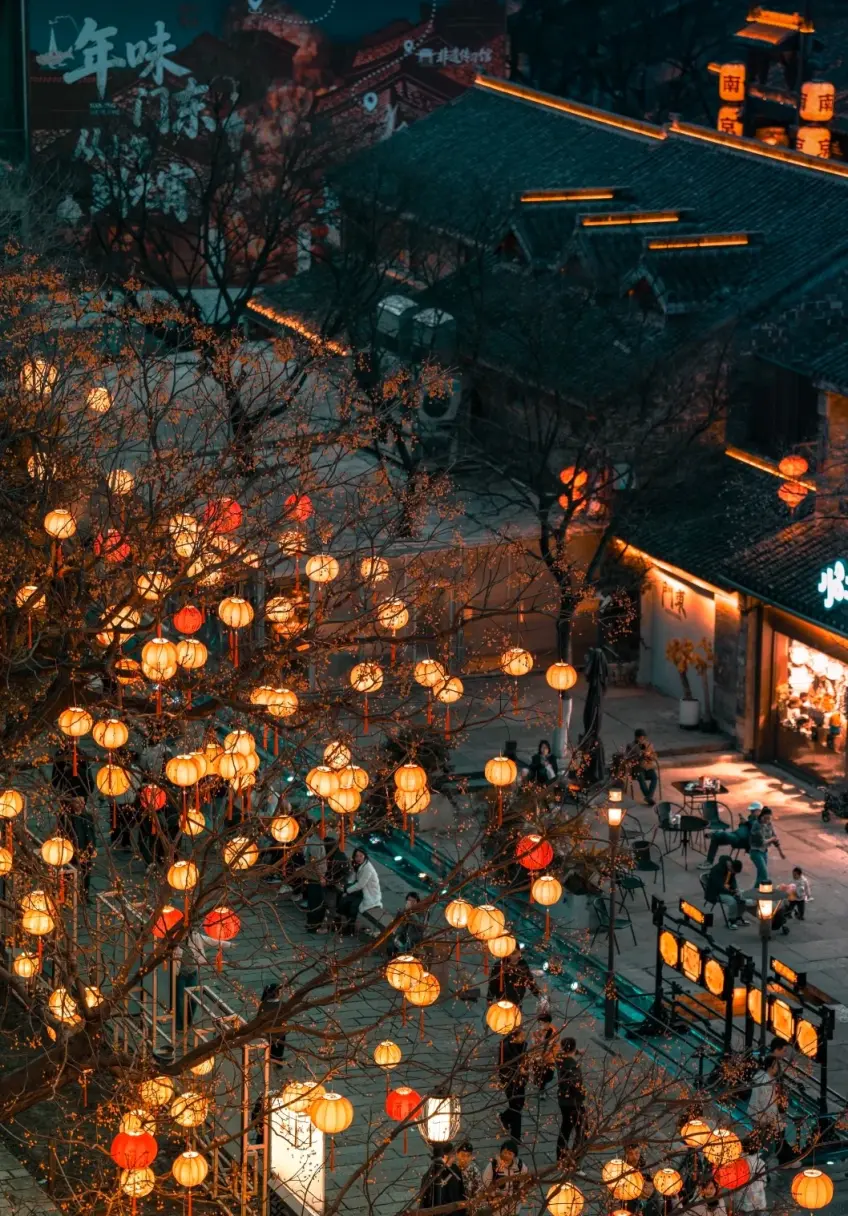
Illustration of the lantern tree in Laomendong at night. The lantern tree and night market plaza are part of Laomendong in Nanjing—do not confuse them with Tianzifang in Shanghai or Kuanzhai Alley.
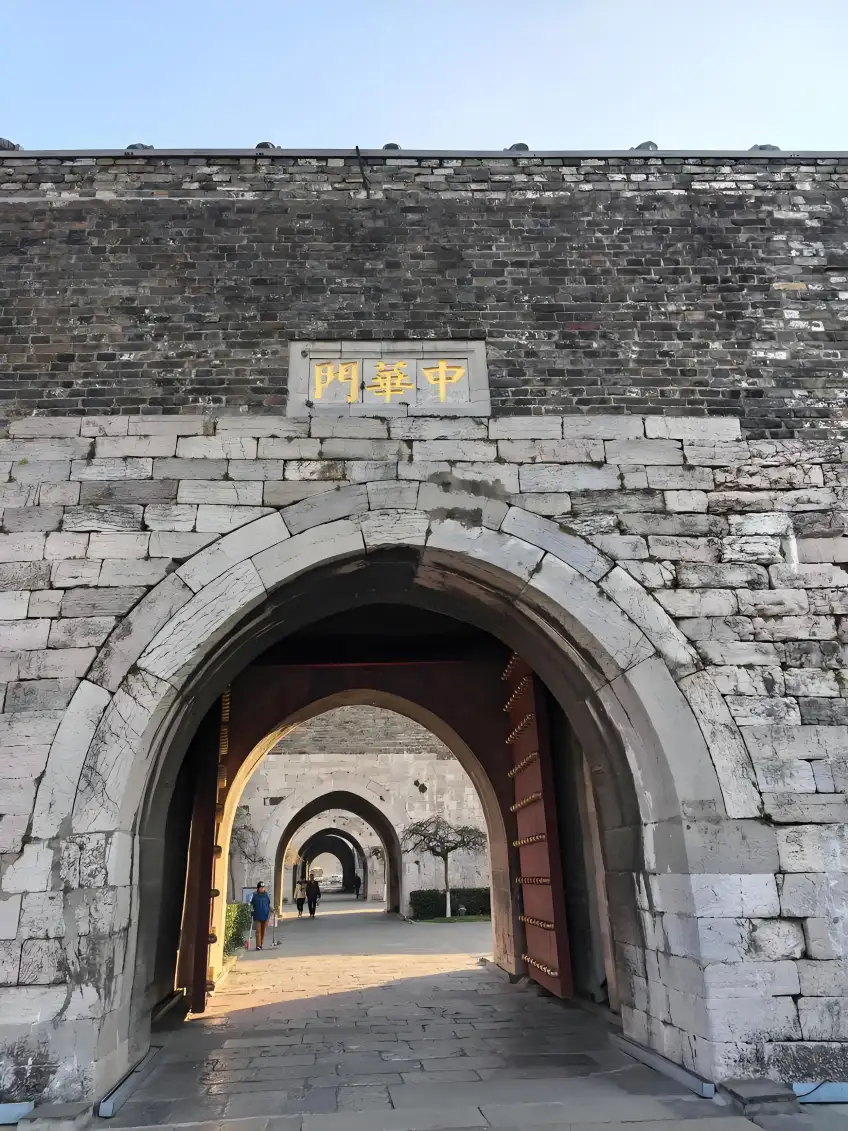
A corner of the Zhonghua Gate barbican wall, showing the high walls and barbican structure. This is Zhonghua Gate Fortress in Nanjing—do not confuse it with the Xi'an City Wall or other ancient gates.
Classic route 3: East side & lake views (Presidential Palace · Xuanwu Lake · Jiming Temple)
The 3-day version usually saves the Presidential Palace for the morning of day 3: the architecture and exhibits take time, so a quick glance isn't worth it. In the afternoon, walk around Xuanwu Lake or visit one of its islands—the pace is noticeably more relaxed than climbing the steps on Purple Mountain. Jiming Temple works well as an evening finale; its pagoda and yellow walls are perfect for a short stop and a distant view, so there's no need to squeeze in another long outing.
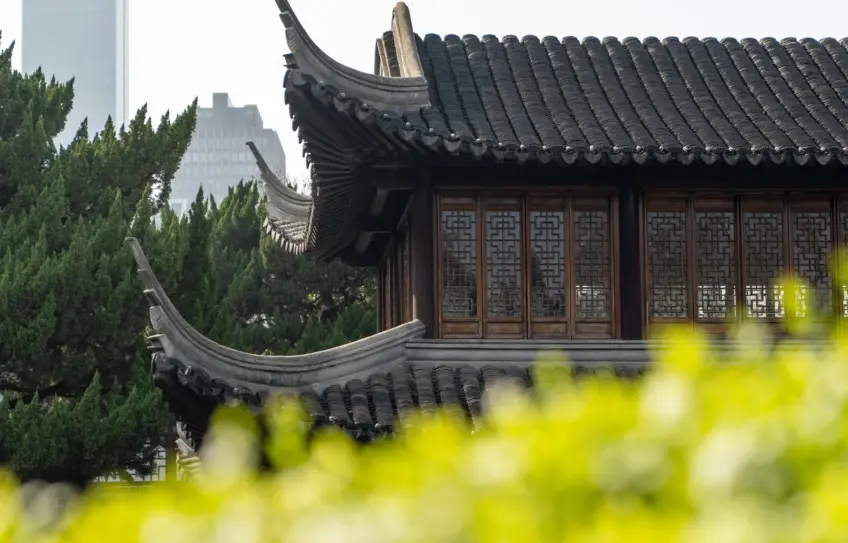
Roof ridges and buildings inside the Presidential Palace courtyard. These courtyards and structures belong to the Presidential Palace scenic area in Nanjing—do not confuse them with exterior shots of gate towers or military flag plazas.
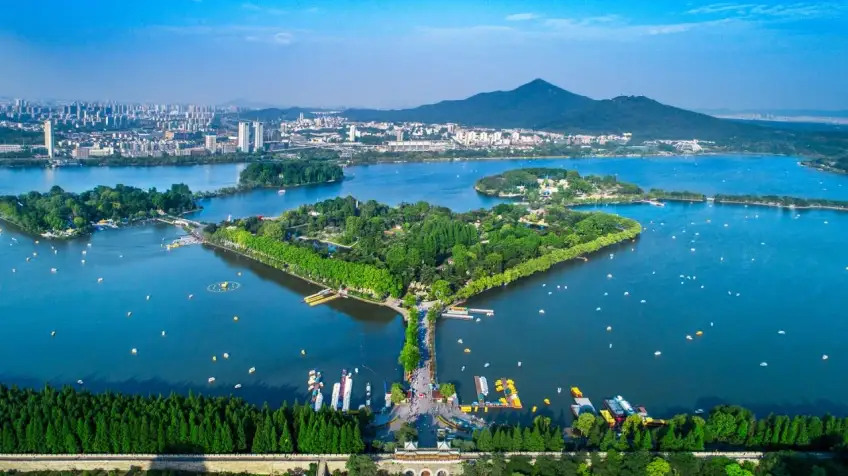
Panoramic photo of Xuanwu Lake and the distant mountains, showing the open water and skyline. This is Xuanwu Lake in Nanjing—don't mistake it for Broken Bridge on West Lake in Hangzhou or East Lake in Wuhan.
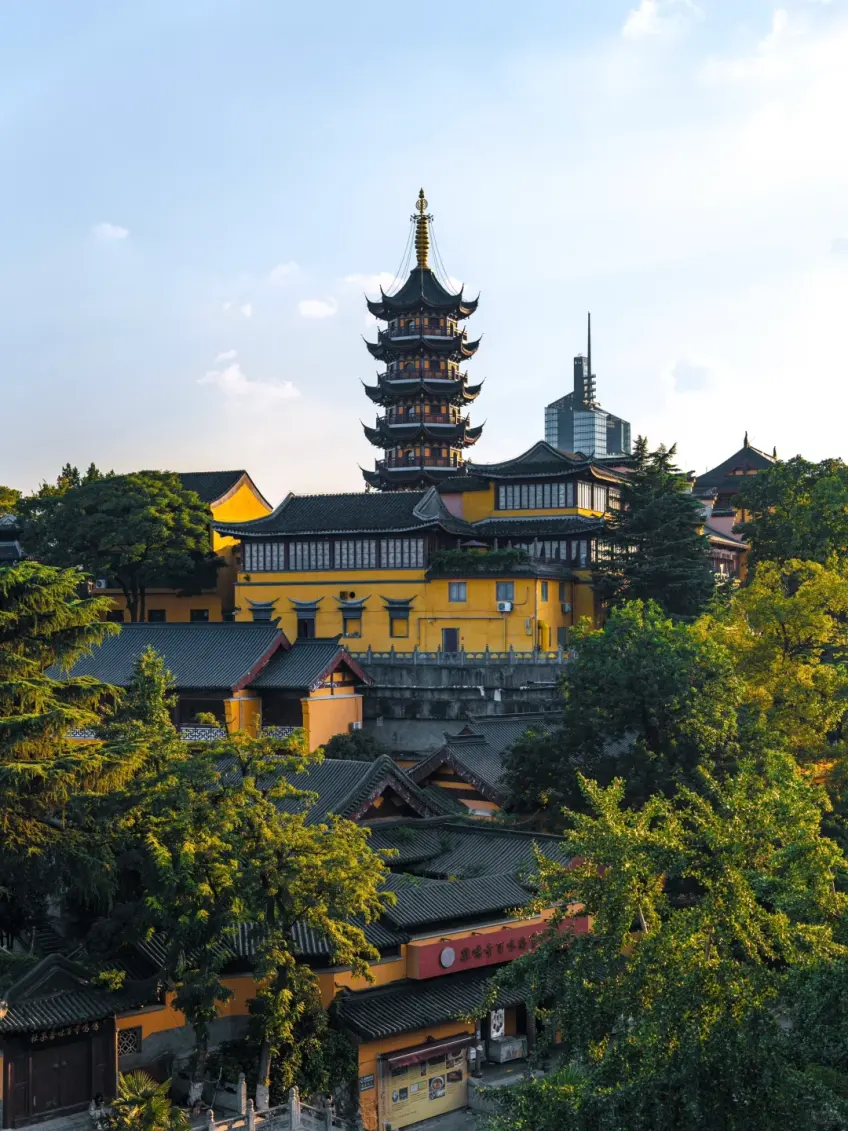
Panoramic view of Jiming Temple's pagoda and yellow walls, featuring the pagoda and yellow-walled halls. This is Jiming Temple in Nanjing—don't mistake it for the gate of Lingyin Temple or Yonghe Temple.
Should you add Niushou Mountain to your independent travel itinerary?
Niushou Mountain deserves a full day on its own: both the exterior of the Buddha Top Palace and the interior route take time, so squeezing it into a Zhongshan or Qinhuai day means rushing through everything. On a five-day trip, or if you're interested in contemporary architecture and Buddhist themes, make Niushou Mountain a standalone stop. For a two-day trip, skip it, or compare it with a group tour that already includes Niushou Mountain rather than overloading your independent travel schedule.
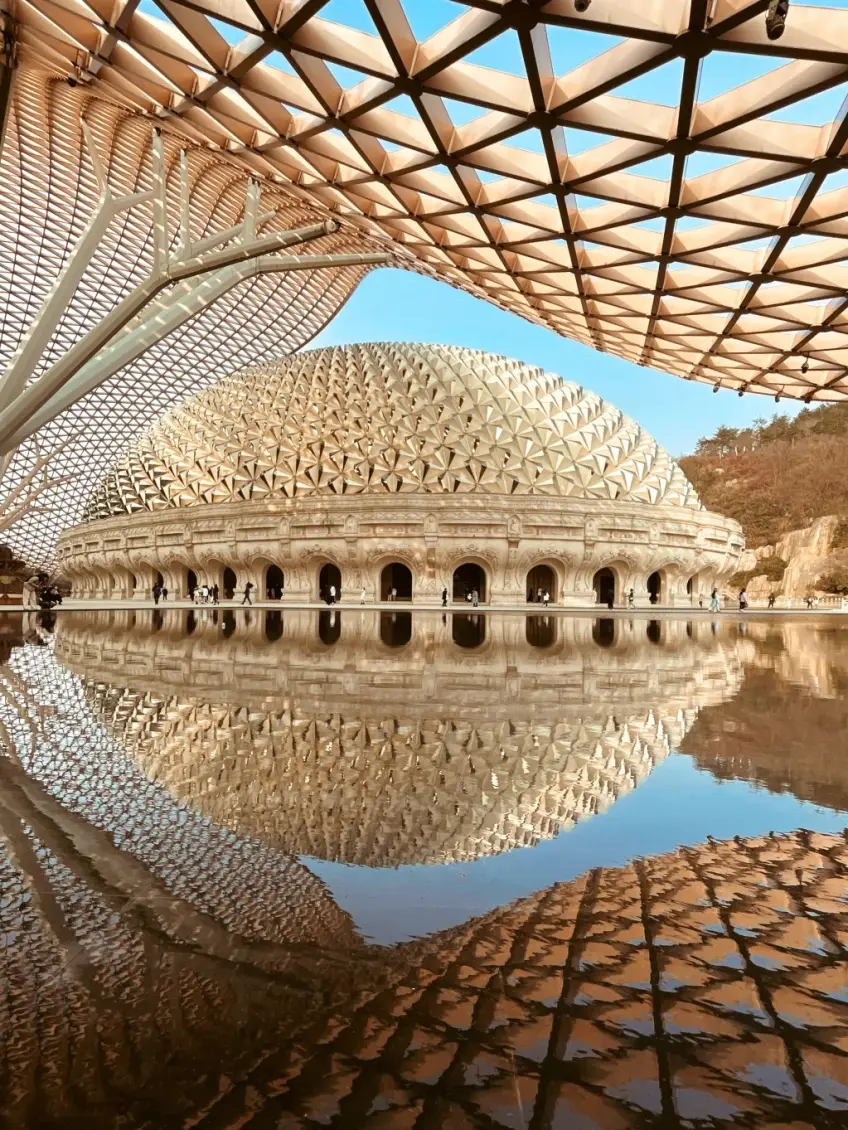
Exterior of the Buddha Top Palace at Niushou Mountain, showing the building's golden dome. This is the Niushou Mountain Cultural Tourism Area in Nanjing—don't mistake it for a golden-roofed temple elsewhere.
When to upgrade to a private car and private guide
Independent travel doesn't mean relying on the subway for everything. Consider upgrading to a private car if you're traveling with seniors or kids, have lots of luggage, plan to visit both Zhongshan and southern Nanjing in one day, or have tight connections between the high-speed rail station and attractions. Once transit time is under control, save your walking for inside the scenic areas—the experience will be much smoother.
Consider adding a private guide for sites with dense historical context like the Presidential Palace, Sun Yat-sen Mausoleum, and Ming Xiaoling Mausoleum, where researching on your own often means missing key details—or if your family prefers less planning and clearer storytelling. A private car handles getting between sites; a private guide handles the information within them. You can book them separately or combine them on the same day based on your group size and interests—a full package isn't automatically more professional.
If you'd rather not piece together daily itineraries yourself, check the stops and pacing of our group tour covering Nanjing's Six Dynasties ancient capital and Niushou Mountain. If you only need station transfers, book a station pickup/drop-off. If your itinerary needs major changes to fit your family's pace, go with custom travel. All service links are in this article's form and verified itinerary pages, so you won't accidentally click into products for other cities.
How to compare station transfers, group tours, and independent travel
The comparison is simple: independent travel provides the route template and trade-offs; group tours offer ready-made one- or two-day options with minimal research; private cars and station transfers handle transit and luggage; private guides handle on-site commentary; custom travel reshuffles things when templates don't fit. Pick a two- or three-day framework from this article first, then decide which segments to upgrade—this fits Nanjing better than stacking packages from the start.
A heads-up before you land: internal transport in the Zhongshan scenic area, Qinhuai security measures, and city wall opening hours change seasonally, so always follow the site's announcements on the day of your visit. This article skips internal process notes and unverified ticket prices; for quotes and vehicles, just use the private car, guide, and form links provided here.
Independent travelers commonly make three mistakes: cramming Niushou Mountain into a Zhongshan day and rushing between both; doubling up on the Qinhuai night view and daytime Confucius Temple without a rest break; and insisting on subways all day when crossing between southern Nanjing and Zhongshan, wasting time on transfers. The fixes are straightforward: give Niushou Mountain its own day or compare it with a group tour; leave room for rest and a light dinner on your southern Nanjing day; prioritize a private car on cross-area days and save your energy for walking inside the sites. If your group exceeds a sedan's comfortable capacity or you need point-to-point service over several days, note your group size and schedule in the form for a daily private car quote—you aren't limited to single-day bookings.
If friends or relatives are arriving from out of town, station transfers can be booked separately: the driver waits for your flight or train and takes everyone straight to the hotel or first attraction, connecting with that day's private car or walking district. Custom travel works well for adapting a two-day template into a version where "seniors climb fewer stairs and kids get more hands-on fun"—note the steps at Sun Yat-sen Mausoleum, the Sacred Way pavement, and open city wall sections, and our planners will rearrange the route by stamina. Access all these services via the links in this article—no need to look elsewhere. This guide gives you a workable independent travel route first, then lets you upgrade vehicles and guides as needed.
FAQs
How many days is ideal for independent travel in Nanjing?
If you're taking the high-speed train round-trip over a weekend, go with two days: one for Zhongshan and one for Qinhuai and the southern city. To add the Presidential Palace and Xuanwu Lake, you'll need at least three days. For Niushou Mountain, add another day—don't try to squeeze it into a two-day trip.
How do you arrange a classic route to avoid backtracking?
Dedicate one day to the Zhongshan route, one day to Qinhuai in the south of the city, and half a day to a full day to the Presidential Palace and lake views in the east. If you're crossing routes on the same day, book a private car first to cut down time spent transferring between subway lines.
When should you upgrade to a private car?
Traveling with seniors or kids, carrying lots of luggage, covering both Zhongshan and the southern city in one day, or facing tight connections at the high-speed rail station? Upgrading to a private car usually pays off more than saving on transport costs. If you love walking and are only exploring the Confucius Temple and Laomendong walking area, you can hold off.
When is hiring a private guide worth it?
Sites rich in history like the Presidential Palace, Sun Yat-sen Mausoleum, and Ming Xiaoling Mausoleum—or when your family wants less prep work and a clear historical narrative—are perfect for hiring a private guide. For quick photo ops or a rushed half-day visit, self-guided works fine.
How do I book station transfers if I only need a pickup or drop-off?
For trips from the high-speed rail station or airport to your hotel and then to your first attraction, you can book station transfers separately—no need to default to a full-day private car. Please note the number of passengers, train/flight number, and luggage count in the form.
Group tour or private custom tour—which should I choose?
If you're comfortable with the stops and pace and want to do less planning, choose a group tour such as the Ancient Capital of Six Dynasties and Niushou Mountain route. If the template doesn't fit, your group size is unusual, or you want major changes to the order, go with custom travel to rearrange it instead of forcing someone else's two-day itinerary.