
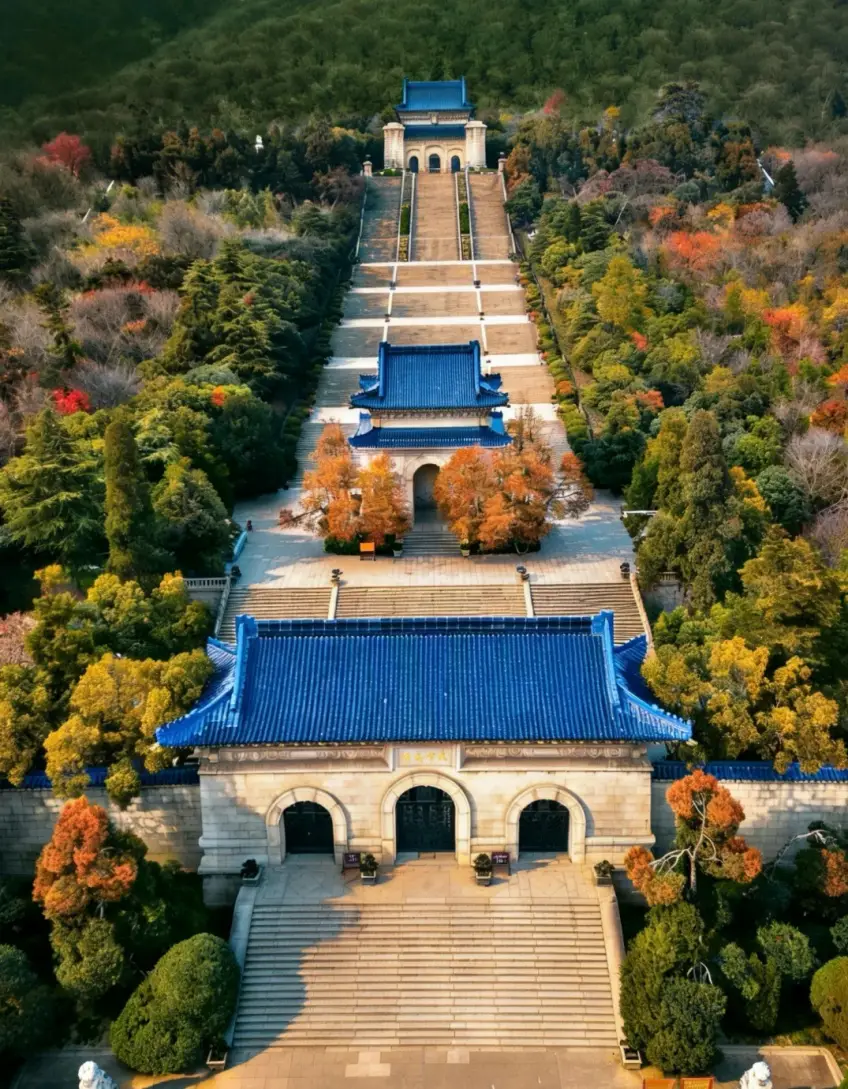
Sun Yat-sen Mausoleum (中山陵) sits on the southern slope of Purple Mountain (紫金山) in Nanjing. Entry is free, but you must book ahead under your real name on the park's WeChat official account or mini-program (钟山风景区). The mausoleum closes for maintenance on Mondays, except on public holidays. From the Bo'ai Archway (博爱坊), the central axis climbs past the Mausoleum Gate, the Stele Pavilion and 392 steps to the Memorial Hall. Walking the axis takes about 2 to 3 hours, and adding the Sun Yat-sen Memorial Museum and the Music Stage makes it a half day. To avoid crowds, come on a weekday or early in the morning.
To skip the hassle of planning routes and arranging guides, check out the private tour "Meeting in Jinling" 2-day tour that includes Sun Yat-sen Mausoleum; for a more relaxed pace or to avoid the crowds, use our custom private travel service. To visit multiple spots on Mount Zhongshan with fewer transfers, book a private car, and add a standalone guide for commentary at the Sacrificial Hall and memorial hall.
Getting to the Purple Mountain (Zhongshan) Scenic Area
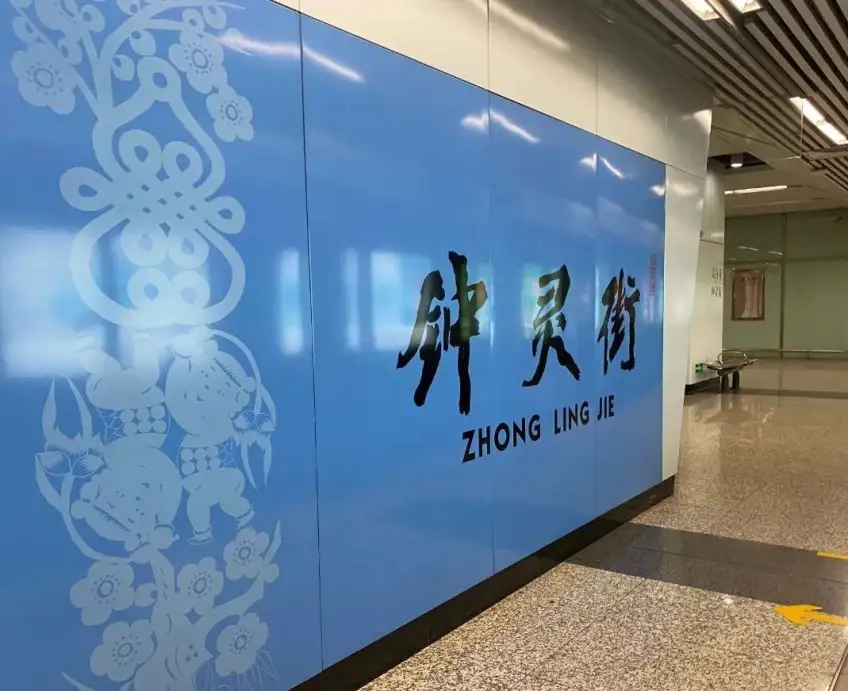
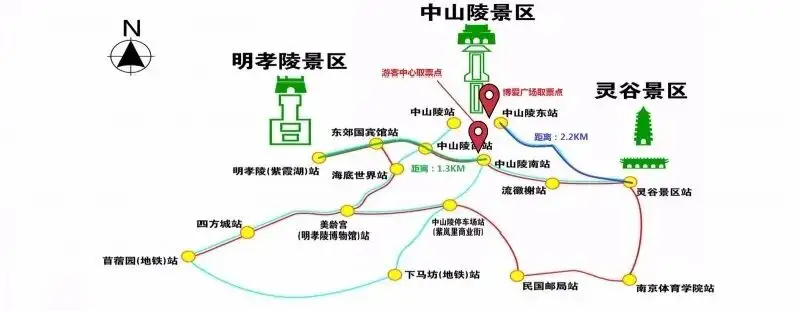
Take Metro Line 2 to Xiamafang (下马坊站), Muxuyuan, Xiaolingwei or Zhonglingjie Station, where park shuttles run straight to the main sights. To ride the Nanjing Metro, open "Citizen Center" (市民中心) in Alipay, choose Nanjing and activate the Nanjing Metro e-card to scan in by QR code, or buy a Jinlingtong transport card at any station.
Suggested route through the mausoleum
Entrance → Bo'ai Archway → approach path → Mausoleum Gate → steps → Memorial Hall → photos and views from the Memorial Hall terrace → Sun Yat-sen Memorial Museum → a stroll and dove feeding at the Music Stage
6-day 5-night private tour of Shanghai, Yangzhou and Nanjing | Slender West Lake, Sun Yat-sen Mausoleum, Ming Xiaoling Mausoleum
A 6-day 5-night private tour starting and ending in Shanghai: Slender West Lake, Dongguan Street, Ge Garden and Daming Temple in Yangzhou; Confucius Temple, Sun Yat-sen Mausoleum, Linggu Temple, the city wall and Xuanwu Lake in Nanjing; and finally Ming Xiaoling Mausoleum and Meiling Palace. Includes airport transfers, vehicle, guide, 5 nights' hotel and admission tickets. An English-speaking guide is available on request.
For longer Nanjing trips, compare the multi-day tour cards below.
The front plaza and the Xiaojing Tripod
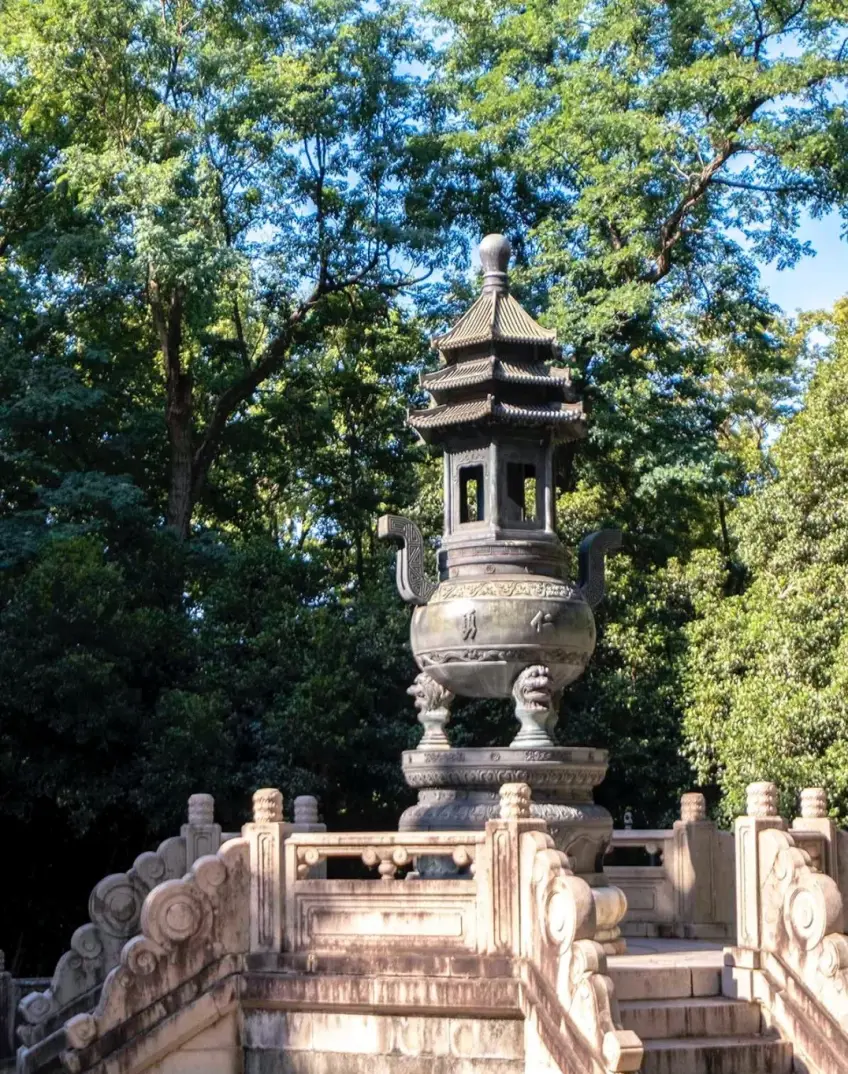
The first thing you see on entering is the wide plaza in front of the mausoleum. At the center of its south end stands the Xiaojing Tripod (Classic of Filial Piety Tripod). This bronze vessel was donated in 1933 by the teachers and students of Sun Yat-sen University and their president, Dai Jitao, and was made by the Jinling Arsenal. One side is cast with the characters for "wisdom, benevolence, courage" and the eight virtues "loyalty, filial piety, benevolence, love, trust, righteousness, harmony, peace," reflecting traditional Chinese values and Dr. Sun's ideas on government. Inside is a hexagonal bronze plate engraved with the full Classic of Filial Piety in the handwriting of Dai Jitao's mother, which gave the tripod its name.
The Bo'ai Archway
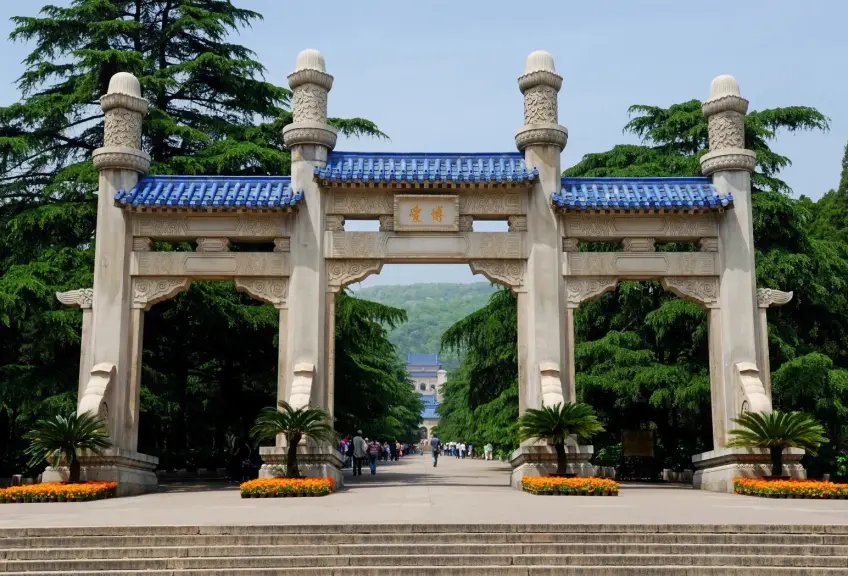
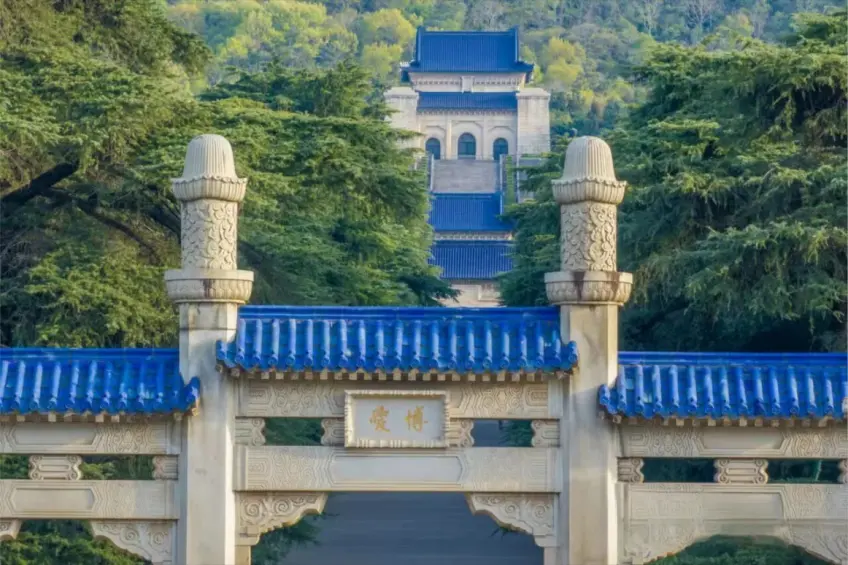
Walk on across the plaza to the Bo'ai Archway, a granite gateway that marks the start of the mausoleum's central axis. It has four columns and three openings and is built of solid granite without a single nail, which makes it both sturdy and imposing. Across the top are two large characters, "Bo'ai" (universal love), in Dr. Sun Yat-sen's own handwriting. The tall, plain stone pillars give it a solemn look that suits the pines and cypresses around it. Past the archway are the approach paths, three in all: a wide one in the middle and two matching side paths, lined with cedars and junipers that stay green all year.
"The World Belongs to All" at the Mausoleum Gate
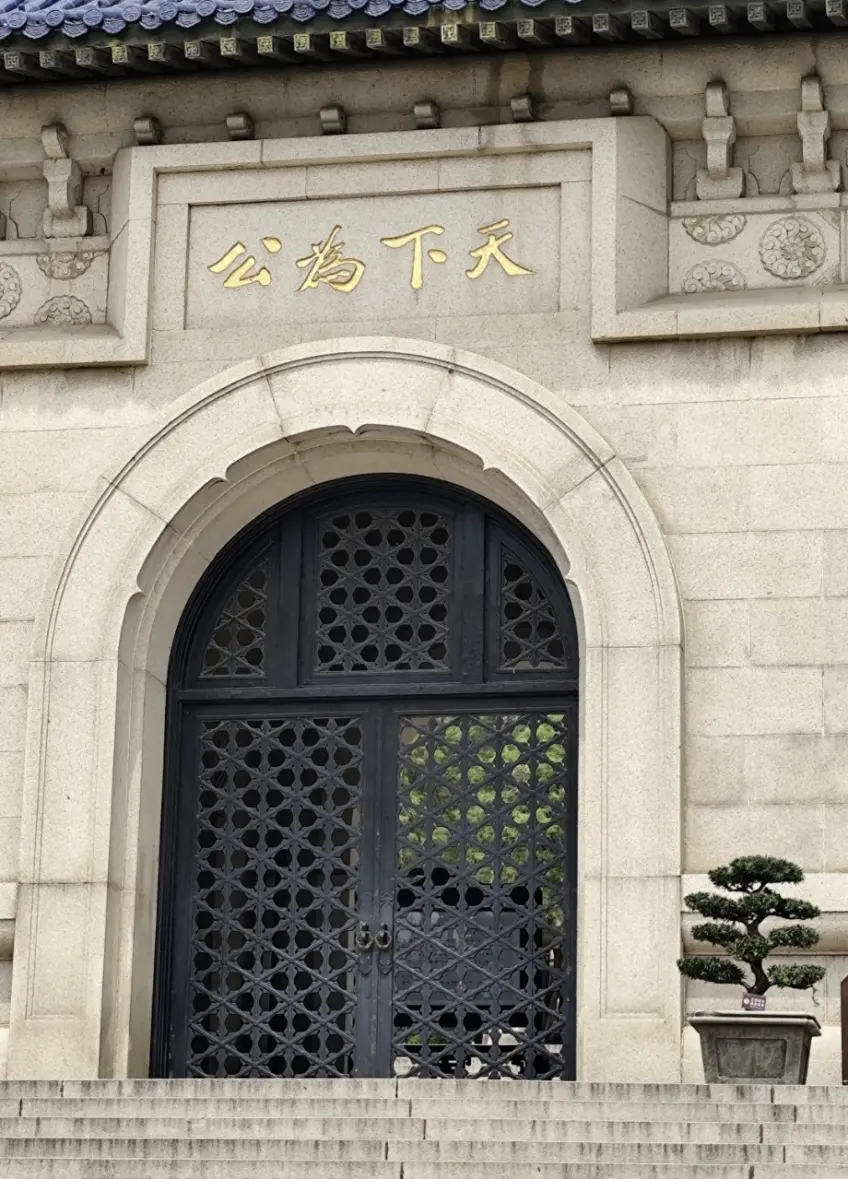
Follow the approach path to the Mausoleum Gate, the main entrance. Its roof is covered in bright sapphire-blue glazed tiles that stand out from far away. The front has three arched doorways, and above the middle one are four gold characters in Dr. Sun Yat-sen's calligraphy: "Tian Xia Wei Gong" (The World Belongs to All). A pair of white marble lions stands on either side of the platform in front, guarding the mausoleum.
The 392 steps
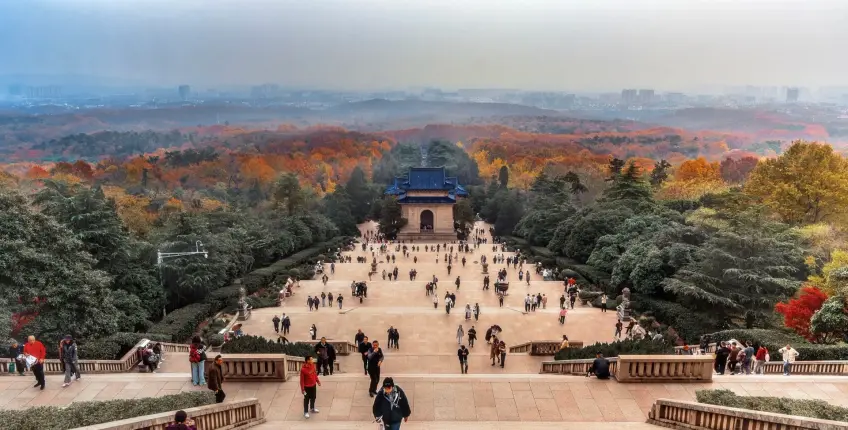
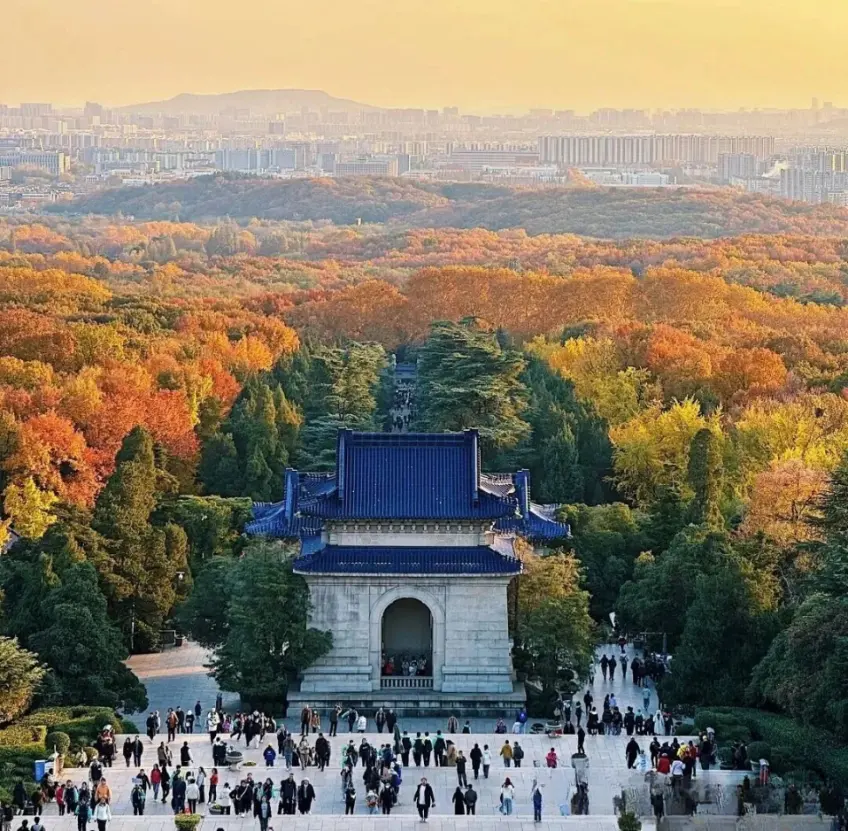
Through the gate you reach the mausoleum's best-known feature: the 392 steps. Made of granite, they climb the hillside from the Bo'ai Archway to the Memorial Hall in ten flights, with a landing between each. The number stood for China's population at the time, 392 million people. The design plays a visual trick: looking up from the bottom, you see only steps and no landings, while looking down from the Memorial Hall terrace, you see only the flat landings. Visitors sum it up as "rising step by step on the way up, flat as a plain on the way down." The climb also brings to mind Dr. Sun's words: "The revolution is not yet complete; comrades, keep striving."
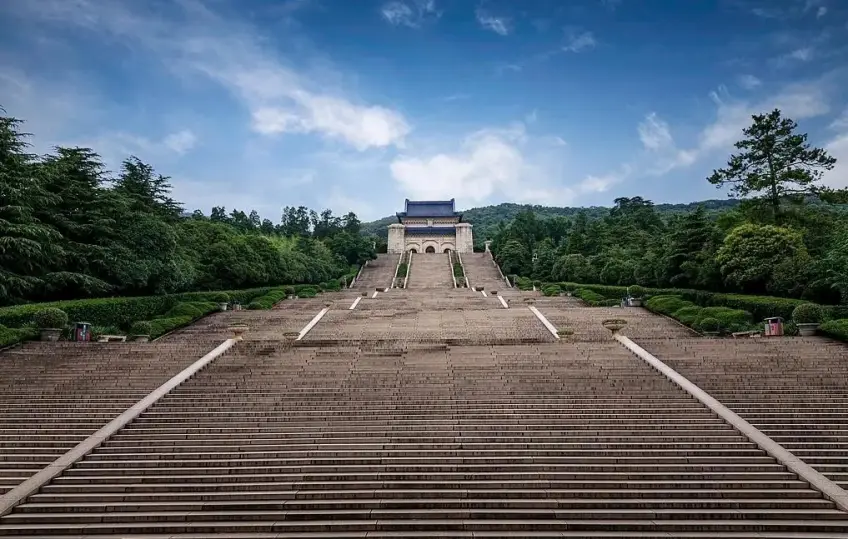
The steps come in flights with landings where you can rest. There are no elevators on site, so wheelchair users should check in advance whether the visit will work for them (conditions on site apply).
The Wordless Stele
The Stele Pavilion is a square building with a double-eaved roof, again covered in sapphire-blue glazed tiles to match the rest of the complex. Each of its four sides has an arched doorway, so it's open all around and neatly symmetrical.
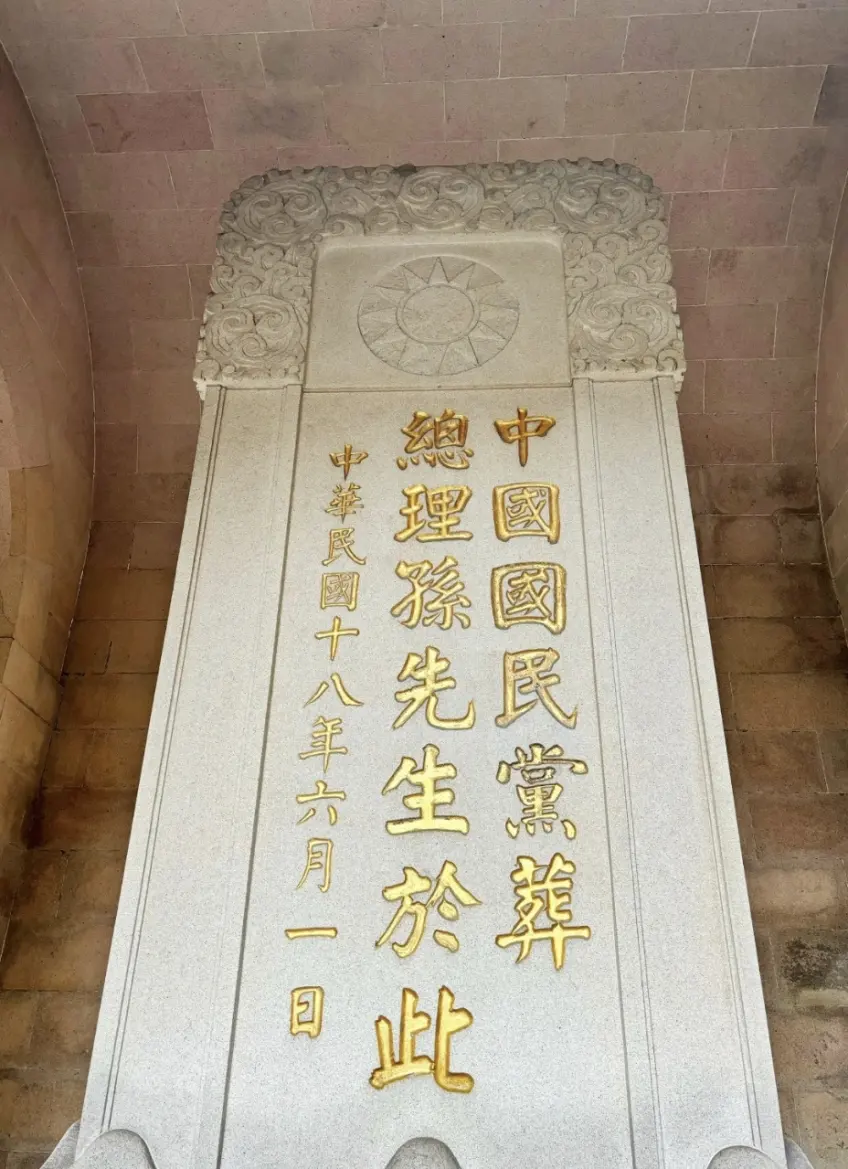
Inside stands a huge granite stele. Its front is carved in large characters: "The Kuomintang of China buried Premier Sun here, June 1, 18th year of the Republic of China". The back is completely blank. This is the famous Wordless Stele.
There are many theories about why the stele is blank. The most popular says that Dr. Sun Yat-sen's achievements, overthrowing the imperial system and founding the Republic, were too great for any words to capture. As the saying goes, "no words say more than words," and the blank stone leaves it unsaid.
The Memorial Hall: Chinese and Western styles combined
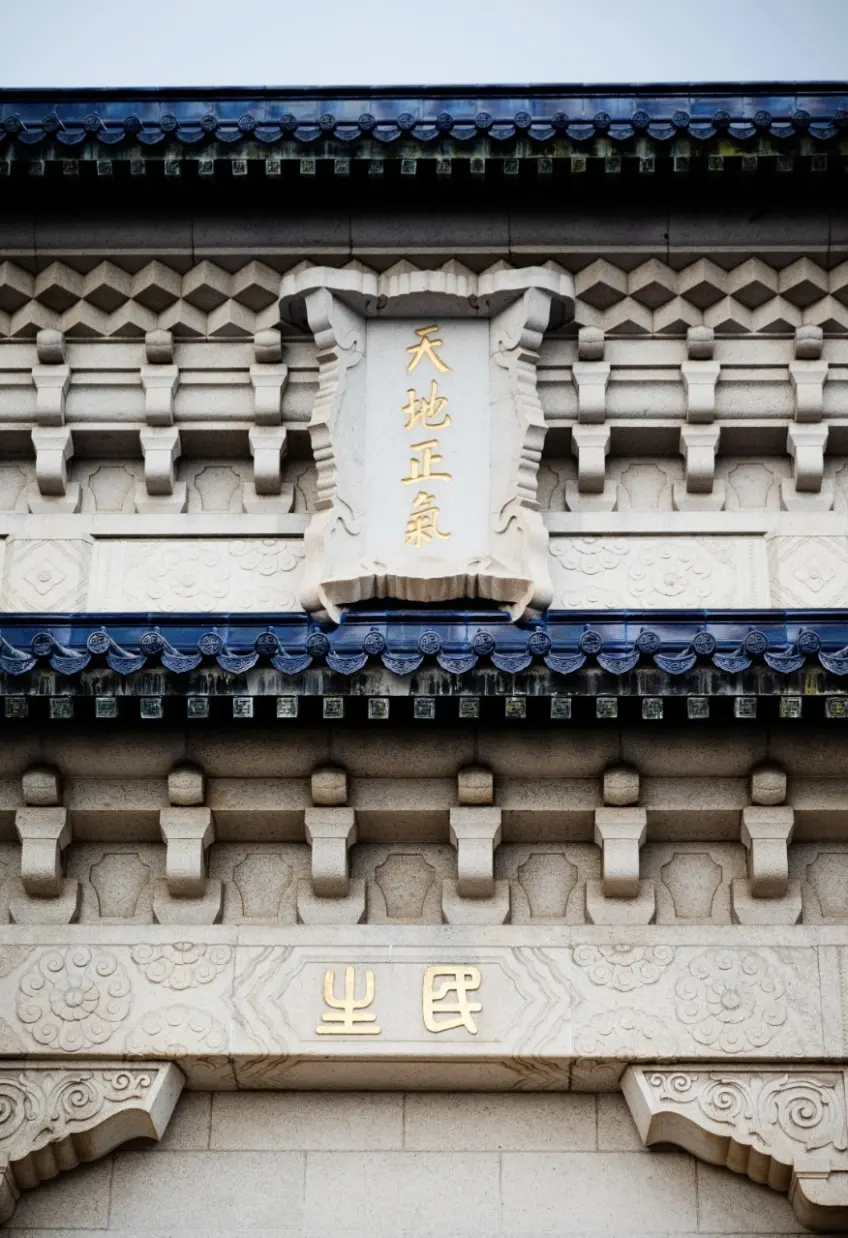
Past the Stele Pavilion is the heart of the complex, the Memorial Hall. It's a palace-style building that blends Chinese and Western architecture in fresh blue, white and gray. Across the front lintels are six large characters meaning "Nationalism," "Democracy" and "People's Livelihood," the ideals Dr. Sun pursued all his life. Above the central door hangs his calligraphy "Tian Di Zheng Qi" (the noble spirit of heaven and earth), which adds to the building's solemn feel.
Inside the Memorial Hall
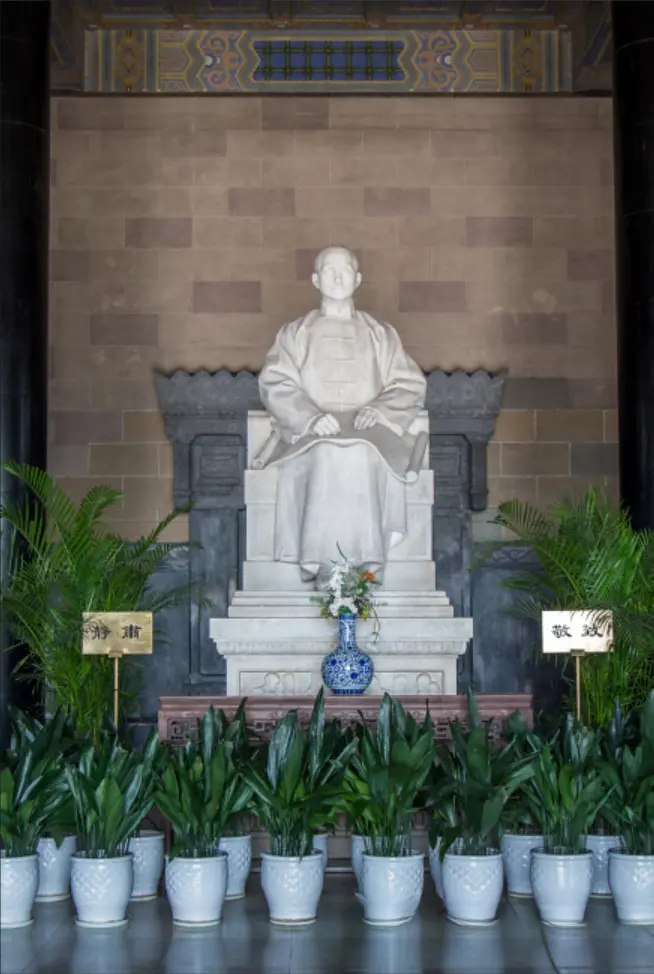
Inside the Memorial Hall, the floor is marble, and the black marble walls are carved with the full text of Sun Yat-sen's Fundamentals of National Reconstruction in his own handwriting. In the center is a seated marble statue of Dr. Sun by the French sculptor Paul Landowski, showing him in a traditional long robe and jacket. Six reliefs around the base tell the story of his revolutionary life. The ceiling is a mosaic coffered dome.
Beyond the Memorial Hall is the burial chamber, a closed, domed building. In the middle is a round marble vault ringed by white marble railings. At its center lies a white marble statue of Sun Yat-sen reclining in a Western suit, his face calm, carved by a Czech sculptor known in Chinese as Gao Qi. His remains are buried about 5 meters below the statue.
The "freedom bell" seen from the top terrace
The Memorial Hall terrace is the highest point of the mausoleum, with long views over Purple Mountain. The whole complex is laid out symmetrically along its central axis, and from the air it looks like a "freedom bell" lying flat: the bronze statue at the foot of the hill is the top of the bell, the half-moon plaza its rim, and the burial chamber its clapper, a symbol of a bell that wakes the world. Bronze tripods on both sides of the terrace commemorate the 1929 state burial.
Sun Yat-sen Memorial Museum
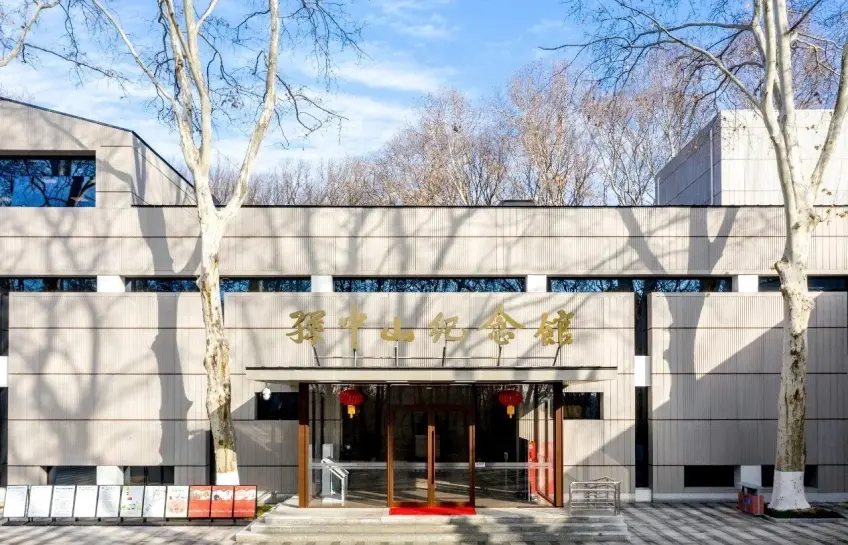
Leaving the Memorial Hall, follow the path to the Sun Yat-sen Memorial Museum. The building was originally a sutra library, designed by architect Lu Shusen and finished in 1935 as a palace-style hall with a double-eaved hip-and-gable roof. It has three parts: the main building, a memorial plaza and a stele corridor. The main building displays documents, photos, handwriting, books and personal belongings that trace Dr. Sun's life.
The stele corridor
The museum's stele corridor runs 125 meters, laid out symmetrically on both sides. Set into its walls are dark Songshan stone tablets carved with the full text of Dr. Sun Yat-sen's Three Principles of the People. The neat script makes them prized as both calligraphy and historical relics. Walking the corridor and reading his words is a good way to understand what the Three Principles meant and why they still matter.
The Music Stage on Purple Mountain
Walk downhill from the museum to the Music Stage (音乐台), the most relaxed corner of the mausoleum grounds. It was designed by the noted architects Yang Tingbao and Guan Songsheng and built in 1932 as part of the mausoleum complex. It's considered a classic of modern Chinese architecture.
How the Music Stage was designed
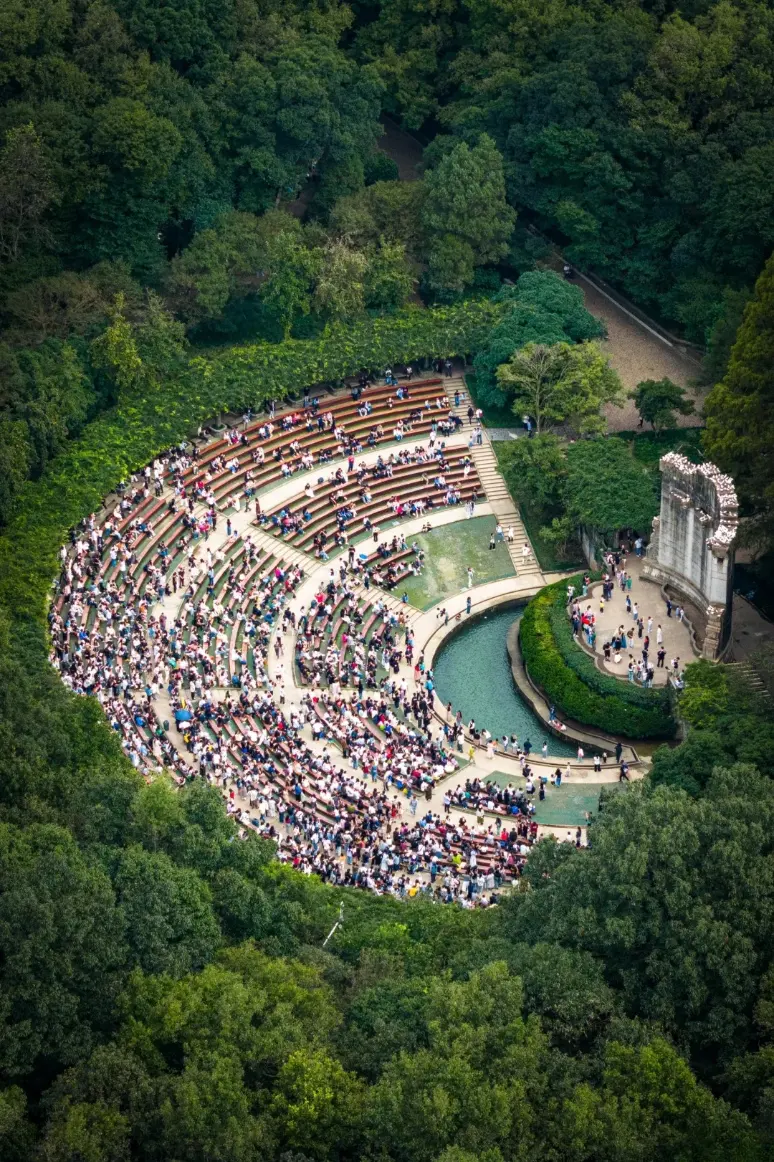
The Music Stage follows the slope of the hill and covers a large area in a half circle, like an open fan. It borrows the layout of an ancient Greek open-air theater but feels like a classical Chinese garden, a mix of East and West.
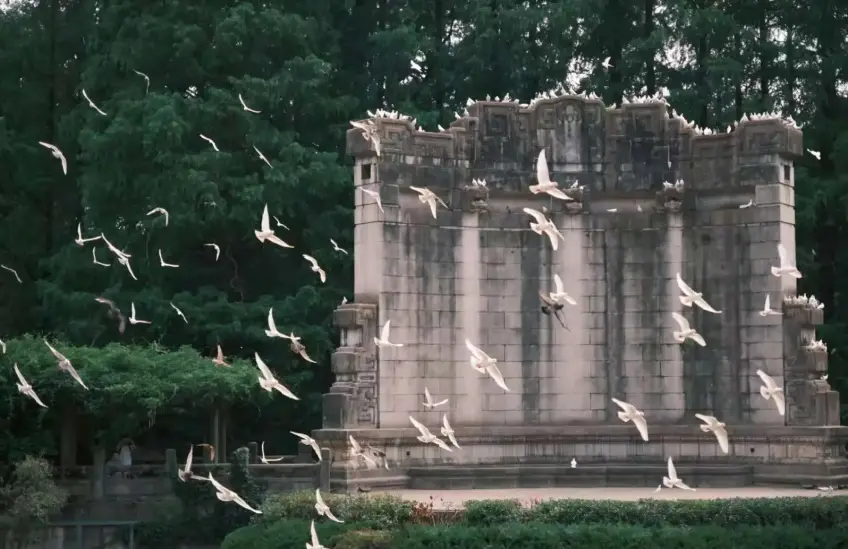
At its center is the stage, backed by a curved screen wall modeled on a traditional five-peak screen. The wall is about 16 meters wide and 11 meters high, finished in a hand-chiseled artificial stone and carved with cloud patterns and other traditional motifs. It's more than a backdrop: it reflects and spreads sound, so music carries clearly to every corner without amplification.
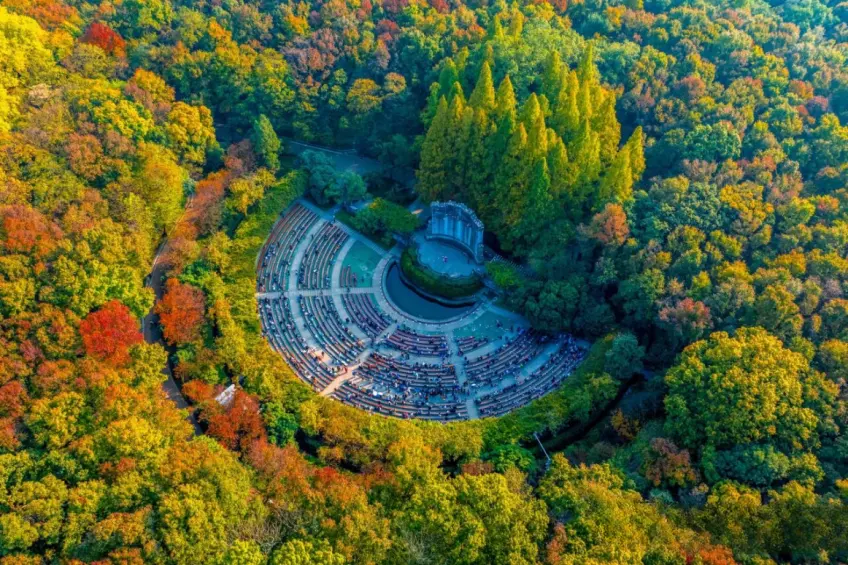
The audience sits on a half-circle lawn facing the stage, with room for more than 3,000 people. Paths fan out from the stage and split the lawn into wedges, with the woods of Purple Mountain behind. The lawn drains well, so it rarely puddles after rain. The Music Stage still hosts concerts and cultural events such as the Nanjing Forest Music Festival.
Feeding the doves at the Music Stage
Flocks of white doves gather on the Music Stage plaza. They're used to people, and you can buy feed for them. When they take off together and circle between the sky, the trees and the screen wall, many visitors sit down for a while to watch.
What makes the mausoleum special
From the Bo'ai Archway to the Memorial Hall, and from the Xiaojing Tripod to the Music Stage, every part of the mausoleum shows its designers' care and reflects Dr. Sun Yat-sen's ideals. The layout follows the traditional Chinese plan of a symmetrical central axis climbing a hillside, but it uses modern Western materials, techniques and design ideas. Instead of the closed, somber feel of an imperial tomb, it creates an open, dignified memorial space, and it's regarded as a landmark of modern Chinese architecture.
Nanjing 3-day 2-night private tour | Sun Yat-sen Mausoleum, Niushou Mountain, Nanjing Museum
Three days to explore Nanjing at a relaxed pace: the Porcelain Tower of Nanjing and Sun Yat-sen Mausoleum, Niushou Mountain, Confucius Temple, Presidential Palace, Six Dynasties Museum and Laomendong, with the final half day at the Nanjing Museum. This private tour includes airport transfers, vehicle, guide, 2 nights' hotel and admission tickets, with an English-speaking guide available.
Tips for visiting
Sun Yat-sen Mausoleum is free, but you must book in advance under your real name. Without a booking you can't enter the mausoleum. Search WeChat for the park's official account or mini-program (钟山风景区) to book; there are four time slots. The park's official guide lists passports among accepted IDs. If you hold a Hong Kong, Macao or Taiwan travel permit, check whether the booking page lets you choose it. Each ID can be booked once per day, so if you pick the wrong slot, you'll have to wait for a cancellation.
Staff check your ID or booking QR code at the entrance, so bring the original ID you booked with. Last entry is 4:30 p.m., and the site closes at 5 p.m. If you miss your time slot, ask staff whether you can still get in that day. The mausoleum is closed for maintenance on Mondays, except on public holidays.
Expect a lot of steps, so wear comfortable flat shoes and pack light. There are no elevators, so the visit isn't recommended for wheelchair users.
FAQ
Is the mausoleum crowded, and how can I avoid the crowds?
The central axis up to the Memorial Hall is busiest on weekends and public holidays. Come on a weekday or early in the morning, and finish your real-name booking before you head to the Bo'ai Archway.
How do I get there by metro? Do I need a transfer or a private car?
Most people take Metro Line 2 to Xiamafang, Muxuyuan or Zhonglingjie Station and then catch the park shuttle. If you have a lot of luggage, are traveling with older relatives or kids, or are adding Ming Xiaoling Mausoleum or Linggu Temple, a station transfer or private car is easier. Shuttle times vary, so check on site.
How hard are the 392 steps, and how much time do I need?
The steps are split into ten flights with landings for rest, so you can take them slowly. The main axis (Bo'ai Archway → Mausoleum Gate → Memorial Hall) takes about 2–3 hours. Add the museum and the Music Stage for a more relaxed half day.
Can I visit in the rain?
Yes. The steps get slippery, so wear non-slip shoes and bring rain gear. Spend less time outdoors and focus on the indoor displays in the Memorial Hall and the museum. Feeding the doves at the Music Stage depends on the weather.
Is it good for older travelers and families with kids?
Yes, at a slow pace, but there are many steps and no elevators, so it's hard going in a wheelchair. Older travelers and families should avoid peak times, rest on the landings and wear flat shoes.
How do tours and private trips handle station transfers?
For itineraries including Sun Yat-sen Mausoleum, we recommend the private tour "Meeting in Jinling" 2-day tour; if you only want the highlights along the central axis or need to adjust your hotel to avoid crowds, choose custom private travel. Use station and airport transfers for point-to-point rides, book a private car for multiple stops on Mount Zhongshan, and arrange a standalone guide separately for commentary. Just let us know your dates, group size and departure city.
Plan your visit with us
A trip to Nanjing feels complete once you've walked the mausoleum's central axis and watched the white doves at the Music Stage. Tell us your dates, group size and where you're starting from.