

There are three main Zen experiences at Lingyin Temple: watching the monks' morning chanting outside the Mahavira Hall at dawn (starting around 4:30), copying the Heart Sutra for free at Yunlin Library west of the Yaoshi Hall from 9:00 to 14:30 (the temple provides brushes, ink, paper and inkstones; no reservation needed), and the Laba porridge offering from the 1st to the 8th day of the 12th lunar month. Since December 1, 2025, the Feilai Peak–Lingyin Temple scenic area has been free of charge and the Lingyin Temple incense fee has also been abolished, but you still need to make a real-name timed reservation via the "Hangzhou Lingyin Feilai Peak" mini program to enter.
Planning to visit Lingyin Temple in Hangzhou for sutra copying, morning chanting or meditation and blessings: start by checking the itineraries of our private tours that include Feilai Peak and Lingyin Temple. To rearrange the schedule around morning chanting and sutra copying, choose a custom private tour. Use station transfers for arrivals and departures at Hangzhou East Railway Station or the West Lake scenic area, a private car to connect attractions, and hire a guide for temple etiquette and sutra copying instructions. Just send your travel dates, group size, departure city and whether you plan to attend morning chanting to a travel consultant for an assessment.
Hangzhou Lingyin Temple morning chanting guide
The Buddha said: The calmer your mind, the deeper your blessings.
If you're seeking inner peace or relief from stress and fatigue, a temple is the perfect place to quiet and cultivate your mind.
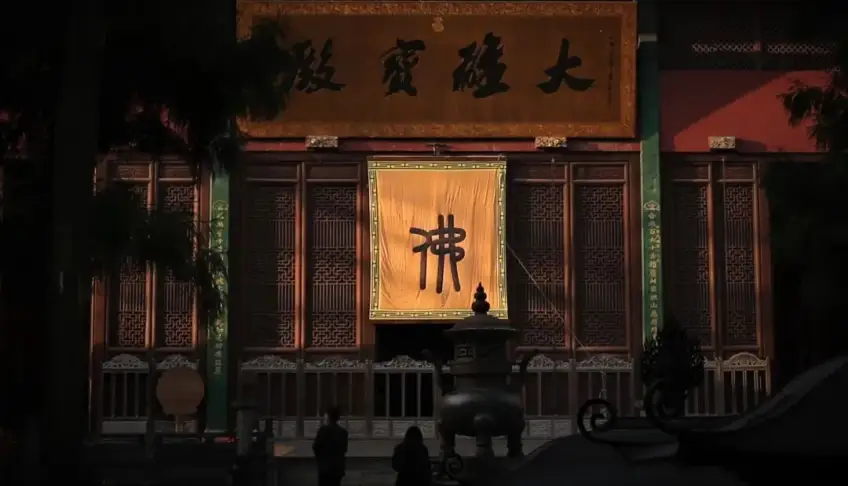
With the yellow banners and incense burner right before you, slow down. Book through the mini program before entering Feilai Peak and Lingyin Temple, keep conversation low, and silence your phone once inside.
Hangzhou Lingyin Temple morning chanting time
Lingyin Temple morning prayers are usually open to the public early every day.
Morning chanting time: Starts around 4:30 AM (slightly earlier in summer, slightly later in winter). It typically lasts about an hour, so if you'd like to join, be sure to arrive roughly 30 minutes early.
Location: Inside the Mahavira Hall of Lingyin Temple (you must first enter the Lingyin Temple scenic area and pass through Feilai Peak to reach the temple's core area).
Notes on morning prayers: This is a daily religious practice for the monks of Lingyin Temple, not a tourist performance. Participants should be respectful and observe in silence (no shouting or loud talking—just take part quietly).
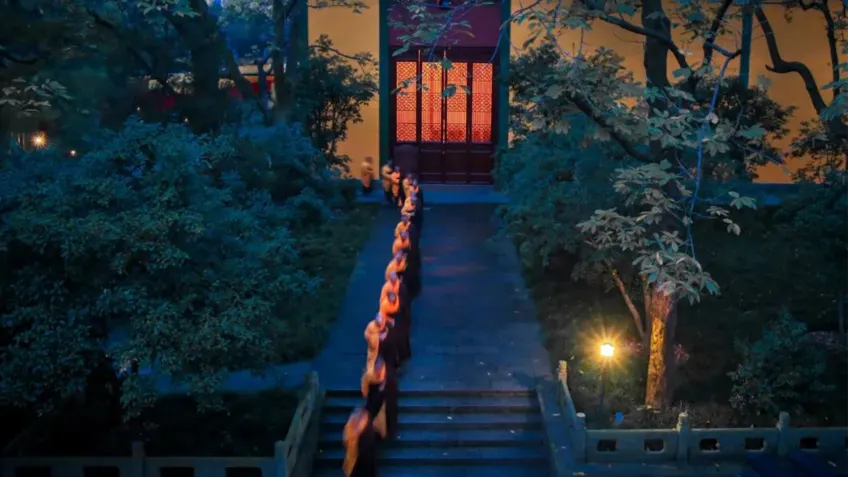
In the twilight, monks walk in a line across the courtyard's stone steps, their footsteps blurred into streaks of light by a long exposure. Whether observing the morning or evening chanting service, please remain silent and stay within the designated area.
Tips for the Morning Chanting at Lingyin Temple in Hangzhou
1. Arrive early: We recommend reaching the Lingyin Temple entrance before 4:00 AM. You'll first pass through the main gate of the Hangzhou Lingyin Temple scenic area (there are few people at this hour, so entry is quick), then walk to the Lingyin Temple ticket gate to have your ticket checked and enter.
2. Keep quiet: After entering the temple, follow the signs or quietly ask a monk for directions to the Mahavira Hall. Visitors may observe silently from outside the hall or in designated areas. Do not enter restricted zones, and keep your phone turned off or on silent throughout your visit.
3. Dress appropriately: Lingyin Temple is an important Buddhist site, so dress simply, neatly, and modestly. Shorts, short skirts, sleeveless tops, and other revealing clothing are strictly prohibited.
4. Let your mind settle: The true value of the morning chanting lies in listening and feeling. You aren't expected to understand the scriptures. Try closing your eyes and listening to the peaceful sounds of the sutras, bells, drums, and wooden fish, or watch the monks' solemn rituals, letting your mind fully calm down in this setting.
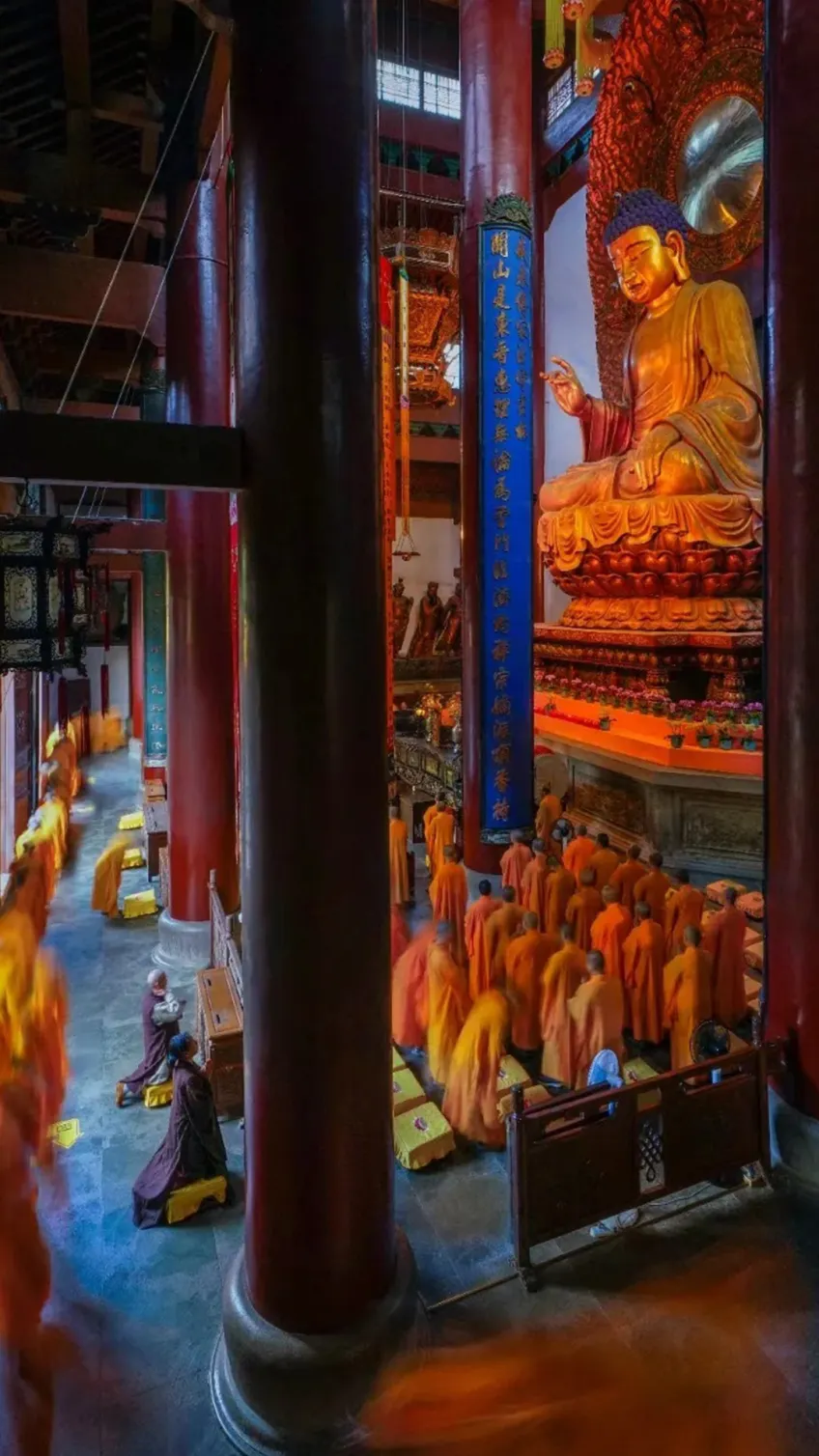
Monks stand with palms pressed together before the golden Buddha in the main hall. During the morning chanting session, don't push forward for photos or walk through the rows—just follow the on-site instructions and stay where you are.
Hangzhou Lingyin Temple reservation guide
1. Search for the official "Hangzhou Lingyin Feilai Peak" mini program on Alipay or WeChat to access the reservation page.
2. Select your visit date and time slot: Lingyin Temple offers morning and afternoon sessions with limited reservations per time slot. The morning session runs from 7:30 to 12:00, and the afternoon session from 12:00 to 17:00. Reservation slots are updated daily at 8:00 AM. You can book up to 7 days in advance, and reservations must be made at least one day ahead.
3. After booking successfully, you can view your reservation details under "My Reservations" in the mini program. To enter, present the original valid ID used during booking and scan it at the gate.
* To cancel a reservation, submit your request before 24:00 on your scheduled entry date; otherwise it will count as a no-show. If the same account accumulates 3 no-shows within 30 days, you will be unable to reserve entry slots for the Lingyin Feilai Peak scenic area for 30 days starting the day after the third no-show.
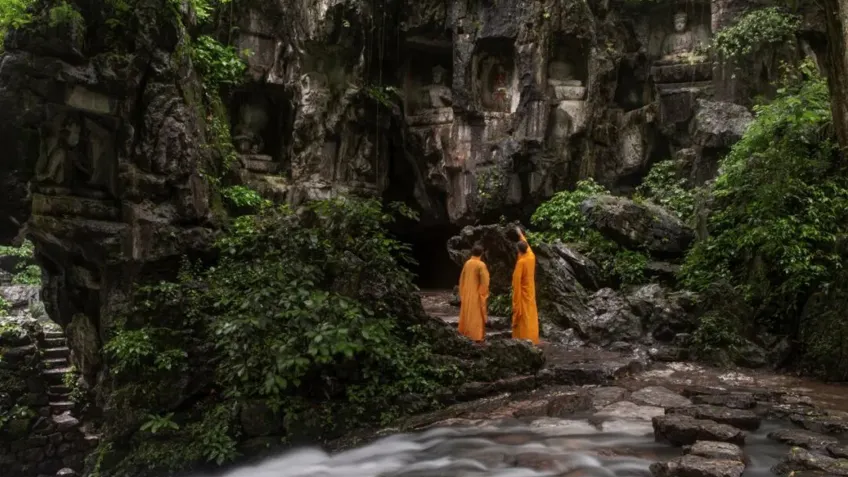
Pause for a moment before the Feilai Peak grottoes, where the cliff niches blend into the surrounding forest. Within your reserved time slot, you can visit Feilai Peak first and then enter the temple for a smoother route.
Lingyin Temple sutra copying guide
Buddhist scriptures say that writing even a line or half a verse of a sutra can help fulfill great vows. In China, people often visit temples to copy sutras when their minds feel unsettled.
Hand-copying the Heart Sutra is a way to ease inner turmoil, and even more so, a lasting path to self-cultivation amid the bustle of the world.
The Heart Sutra (Prajñāpāramitā Hṛdaya Sūtra), known simply as the Heart Sutra, is the most widely circulated of all Chinese-translated Buddhist scriptures and, within the Mahayana canon, the shortest and most profound. Its text runs to just over 200 characters, yet it distills the essence of the 600-fascicle Great Prajñāpāramitā Sūtra.
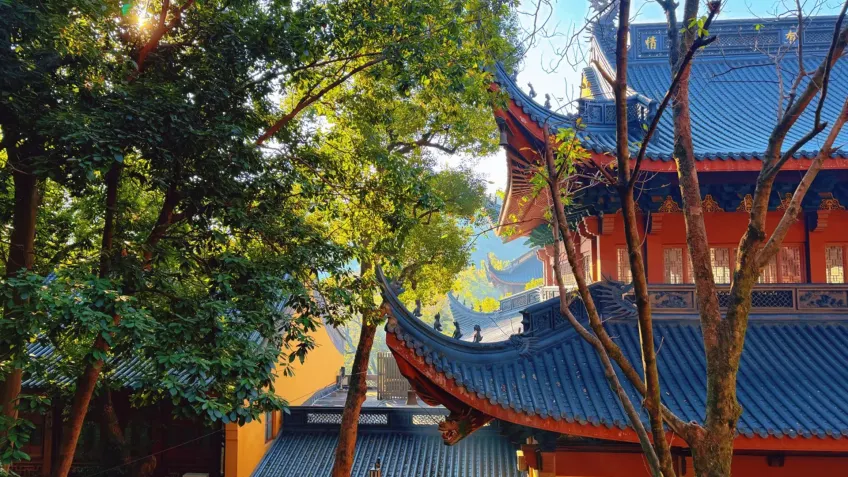
Lingyin Temple offers a free Heart Sutra copying experience, complete with brushes, ink, paper and inkstones, letting you fully immerse yourself in the Zen atmosphere of this thousand-year-old temple.
Sutra-copying location: the Yunlin Library at Lingyin Temple, west of the Medicine Buddha Hall.
Hours: 9:00-14:30
No reservation is required—just walk in and start copying. The 200-plus-character Heart Sutra takes about 30 minutes to an hour to copy. If you'd like to try sutra copying at Lingyin Temple, go in the morning when it's less crowded and there's no line.
During the Daoguang reign of the Qing Dynasty, to give Buddhist followers a place to study the scriptures, Ruan Yuan, Governor of Zhejiang and renowned scholar, established the Lingyin Book Collection at Lingyin Temple in Hangzhou. In 2003, building on the restored Lingyin Book Collection, Lingyin Temple founded the Yunlin Library, which officially opened that same year. The library's holdings are divided into three main categories—books, periodicals, and audiovisual materials—with 30,000 volumes in total. The collection focuses primarily on Buddhism, supplemented by social sciences. It holds rich resources on Buddhist sects, temple gazetteers, Buddhist historical records, Buddhist history, and biographies of eminent monks.
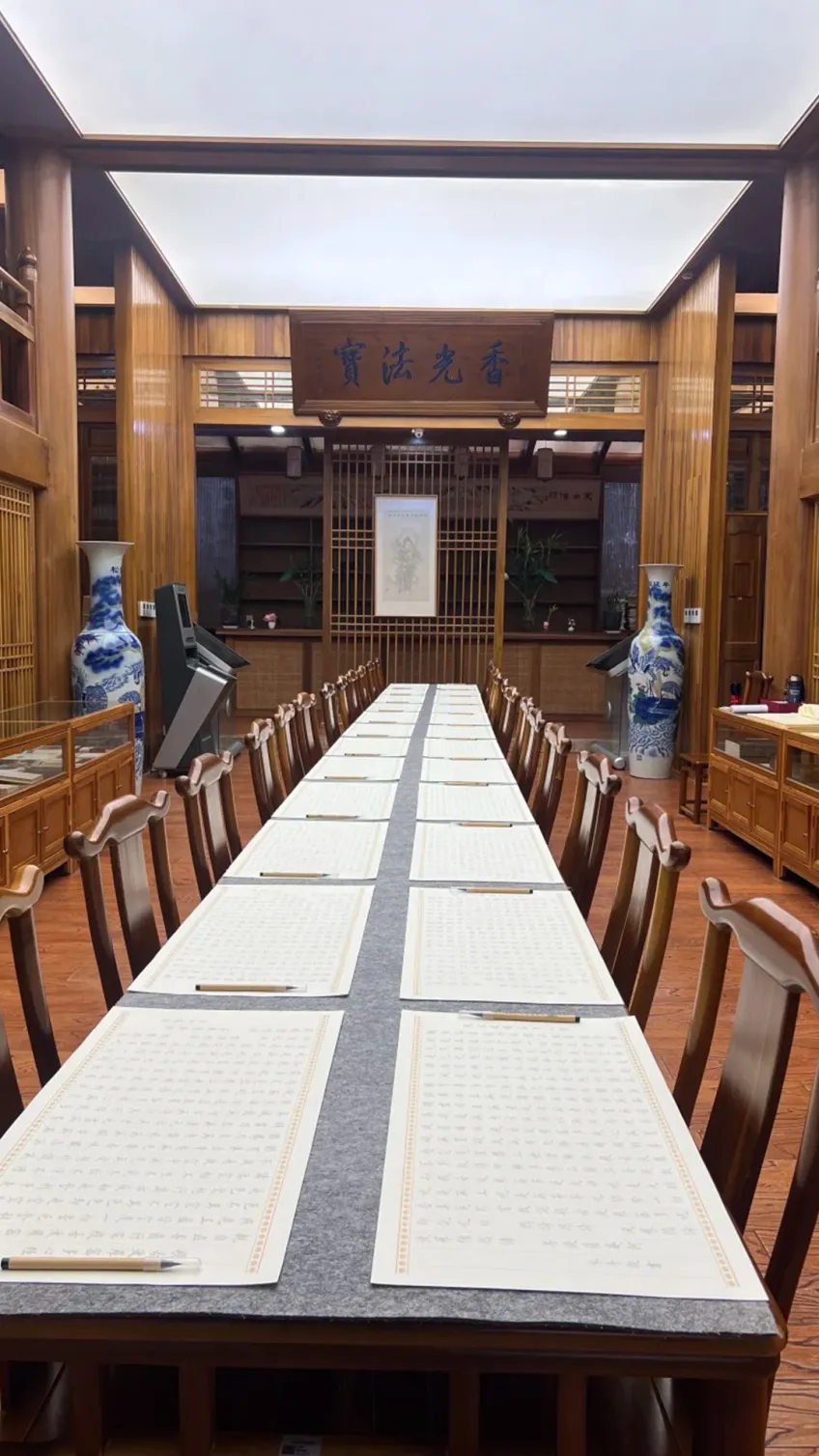
Brushes and ink are neatly laid out on the long sutra-copying table. The temple provides Heart Sutra paper and brushes—grab a seat by the window, finish writing, then head out to explore.
Sutra Copying Ceremony at Lingyin Temple
1. Before copying: Turn off your phone, clean the desk, straighten your clothes, wash your hands, and light incense. Sit quietly for three to five minutes to calm your mind.
Invocation: Press your palms together (leaving a small space at the base), and recite the Sutra Opening Verse: "The unsurpassed, profound, and wondrous Dharma is hard to encounter in millions of kalpas; now that I can see, hear, and uphold it, I vow to understand the Tathagata's true meaning."
2. While copying: Sit up straight, write each stroke carefully with full concentration, follow your own pace, and experience the focus of a clear mind.
3. After copying: Read the sutra aloud one to three times, and make a vow to uphold and spread its teachings.
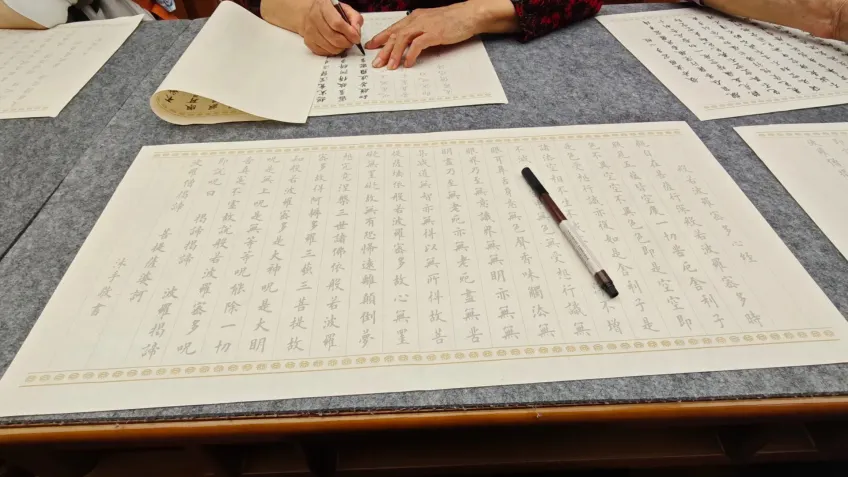
The above are the daily Zen practice opportunities available at Lingyin Temple in Hangzhou.
Beyond this, Lingyin Temple also hosts blessing and meditation events at certain times of the year, such as Laba Festival congee distribution, Guanyin's birthday, the refuge ceremony, and the Ullambana Festival—traditional ceremonies that reveal the deep, living bond between the temple and its devotees.
Suzhou and Hangzhou 3-day 2-night private tour | Lingering Garden, Hanshan Temple, West Lake boat cruise
A 3-day 2-night private tour starting in Suzhou and ending in Hangzhou: Hanshan Temple and Shantang Street, Lingering Garden and Pingjiang Road, then Feilai Peak at Lingyin Temple in Hangzhou in the afternoon. On the last day, enjoy a West Lake boat cruise and a tea plantation photo shoot. Includes transportation, guide, two nights at an upscale or luxury hotel, and admission tickets. English-speaking guide available.
If you only want the half-day morning chanting + sutra copying session or the Laba Festival route, ask a travel consultant to adjust your itinerary based on that day's reservation and opening hours.
Lingyin Temple Laba Festival porridge distribution
The eighth day of the twelfth lunar month each year marks the enlightenment day of Shakyamuni Buddha. In Buddhism, this day is also known as the Dharma Treasure Festival or Thanksgiving Day, while in folk tradition it is called the Laba Festival. Buddhist temples usually cook porridge on this day as an offering to the Buddha and distribute it to devotees from all directions, hoping that those who enjoy it will share in the joy of the Buddha's enlightenment and grow in blessings and wisdom. For this reason, Laba porridge is also called "Buddha porridge" or "blessed porridge."

Lingyin Temple is the most popular spot for Laba porridge in Hangzhou, and its Laba porridge event has now run for 18 consecutive years.
Initially, 100,000 servings of Laba porridge were distributed each year, but that number has now grown to over 400,000. The porridge is simmered starting at midnight on the first day of the twelfth lunar month and continues until noon on the eighth day.
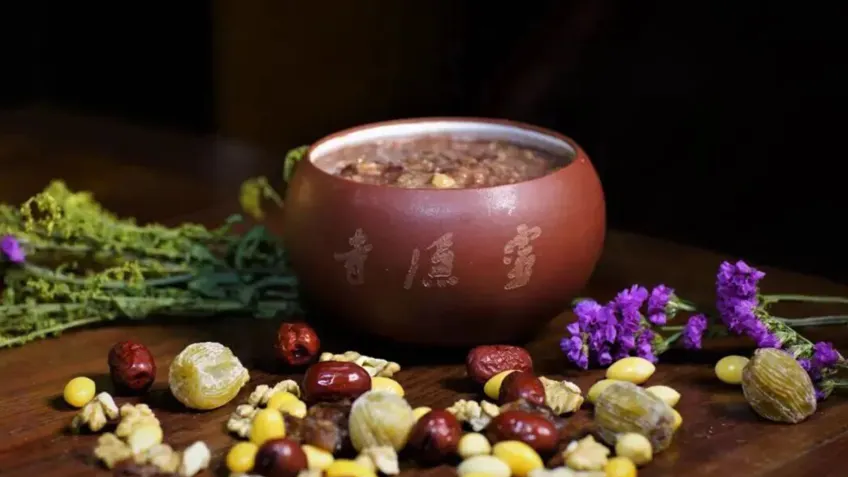
The outside of the ceramic bowl is engraved with "Lingyin Temple," and the porridge is topped with red dates and walnuts. Visit the temple on Laba Festival, bring this taste of everyday life home with you, and remember to dress modestly.
Guide to the Lingyin Temple Laba porridge event
Lingyin Temple distribution dates: 1st to 8th day of the twelfth lunar month
Distribution locations: On-site at Lingyin Temple (open to the public after the first bowl is offered to the Buddha); designated distribution points in several communities including Sandun Town and Zhuantang Subdistrict in Hangzhou.
Lingyin Temple Laba Festival Blessing Ceremony
Offerings and prayers: On Laba Festival, the temple places the first bowl of porridge before the Buddha statues in each hall. You can visit the Mahavira Hall and the Medicine Buddha Hall to make sincere wishes, letting the spiritual energy of this intangible cultural heritage porridge bless your prayers for your family's health and a smooth year-end;
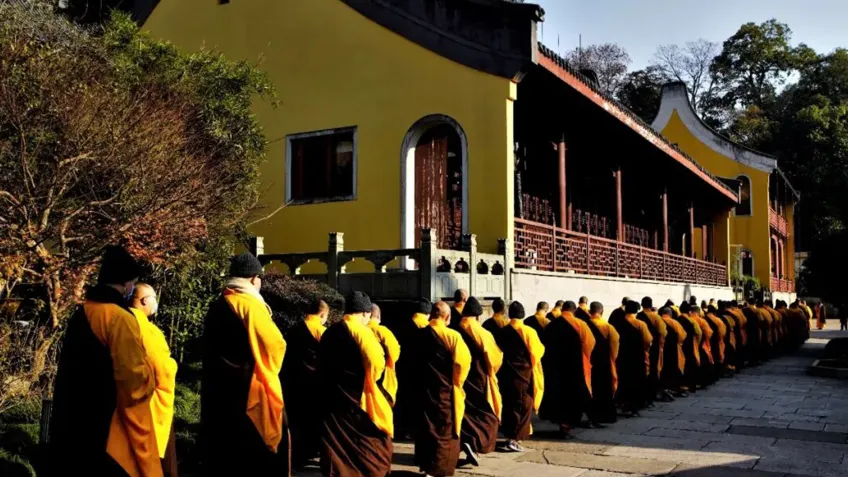
Offering procession ceremony: Lingyin Temple usually holds the offering procession around 10:00 AM. Monks and devotees line up to pass porridge, flowers, and fruit to the statue of Sakyamuni Buddha. You can stand aside and quietly observe the ceremony, reflecting on the Buddhist meaning of "gratitude and sharing" (remember to follow the on-site protocols and keep quiet).
Sutra lectures: On Laba Festival, a sutra lecture ceremony is held in the plaza of the Mahavira Hall, where the temple's monks explain the origins of the festival and the story of the Buddha's enlightenment. After listening, you can walk around the hall once to pray for health and peace and to clear away worries;
Eating etiquette: After receiving the blessed porridge, silently recite words of gratitude before eating it slowly. Do not waste the Laba porridge you receive—it's best to share it with your whole family so everyone receives the blessings. Leave a little porridge at the bottom of the bowl to symbolize abundance year after year.
Tips to Avoid Pitfalls with Lingyin Temple Laba Porridge
Don't miss out on the free porridge: Lingyin Temple has a designated spot for picking up blessed Laba porridge. Individuals must go to the official pickup point rather than the main hall or other buildings, so you don't waste your trip;
Don't buy overpriced "blessed" porridge: The ingredients for Lingyin Temple's Laba porridge are fully transparent—there's no secret recipe, and the temple doesn't sell any special porridge mixes. During the Laba Festival, vendors outside the Lingyin Temple scenic area may claim to sell exclusive temple porridge ingredients, but these are not official;
Ceremony etiquette: When attending offering ceremonies or sutra lectures at Lingyin Temple, dress modestly and neatly. Avoid revealing clothing such as tank tops and shorts. Photography and loud talking are strictly prohibited on-site—please respect the religious rituals;
Transportation tips: It gets very crowded on Laba Festival day, so we recommend taking public transit. Take Metro Line 3 to Lingyin Station and use Exit A—it's a 5-minute walk to the scenic area. If driving, arrive at the parking lot before 8:00 AM, as spaces fill up extremely fast that day.
Special reminder: The Laba porridge is freshly made each day with no preservatives, so it keeps for no more than 2 days at room temperature. It's usually served in eco-friendly aluminum foil bowls, which cannot be microwaved directly.
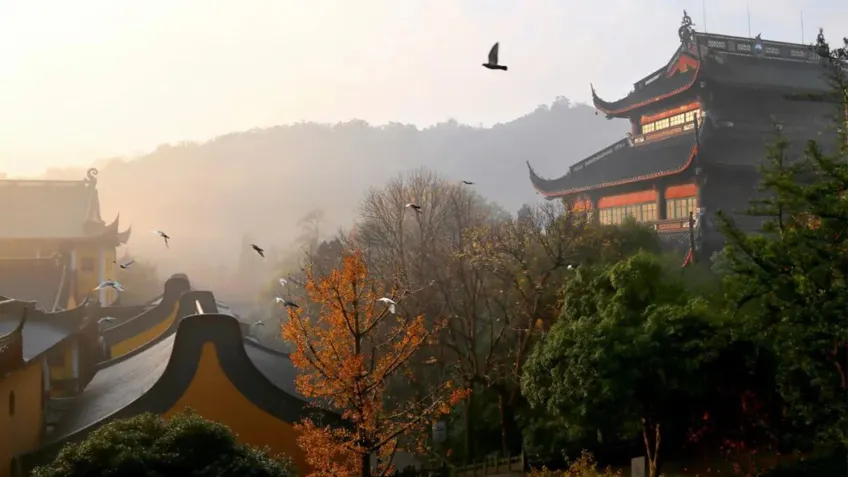
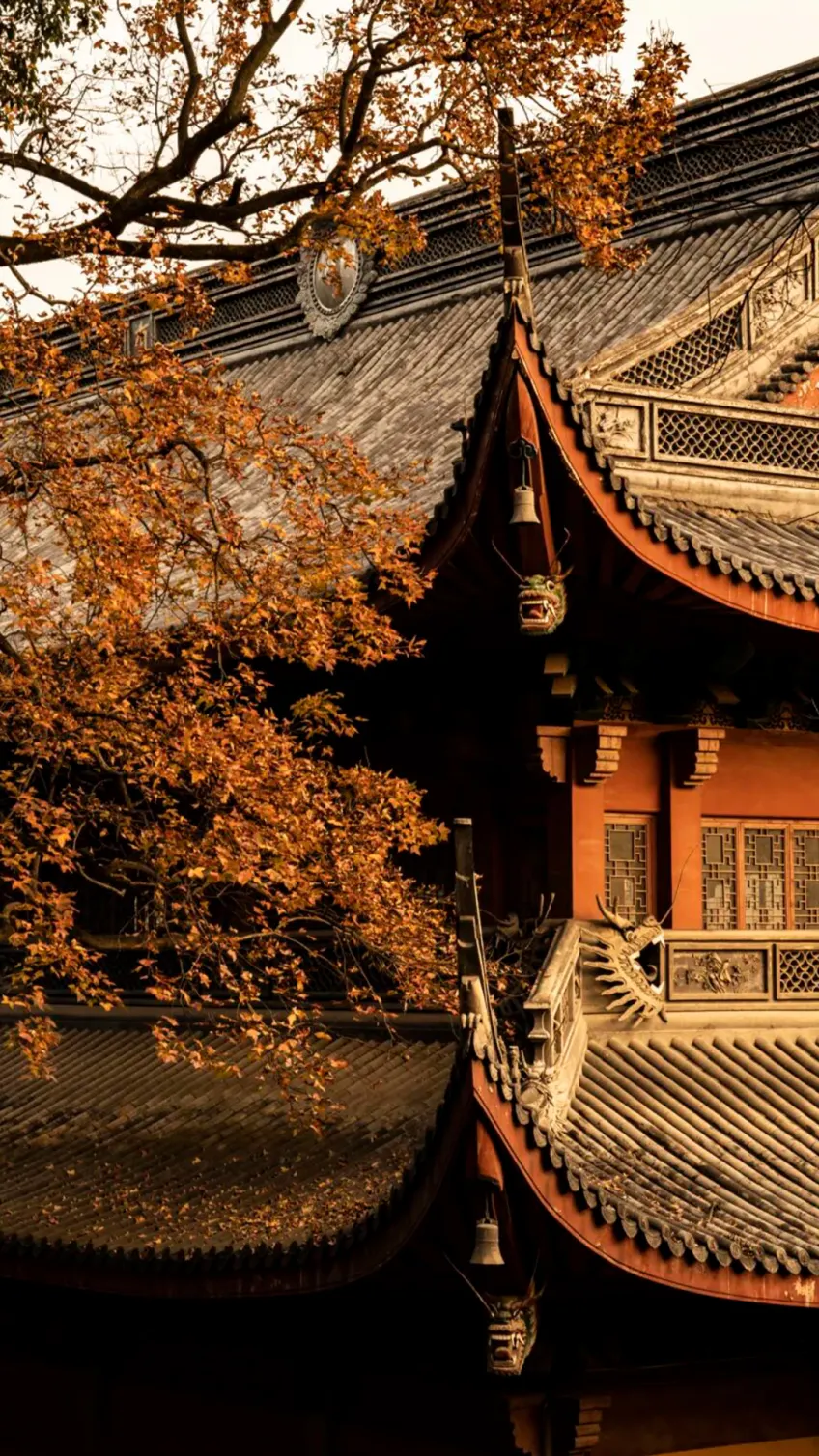
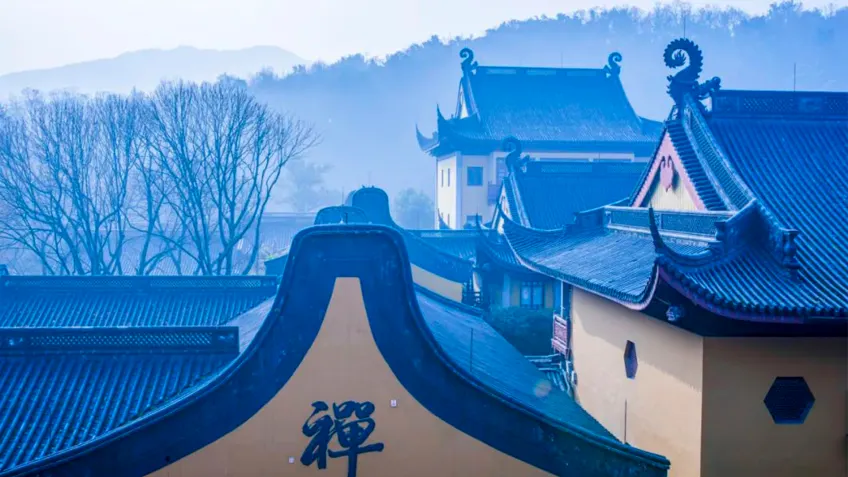
In the morning mist, the roof ridges and flying birds share the frame—a reminder for those heading to morning chanting: arrive at the entrance about half an hour earlier than the start time to allow for security checks and walking.
Refuge Ceremony at Lingyin Temple
To give everyone a chance to connect with the Three Jewels of Buddhism—the Buddha, the Dharma, and the Sangha—Lingyin Temple also regularly holds refuge ceremonies. In Buddhism, taking refuge means turning to or relying upon something. It is the starting point of becoming a Buddhist, and it means making the Three Jewels the foundation of our lives.
Lingyin Temple holds refuge ceremonies on specific Buddhist holidays such as the birthday, enlightenment day, and renunciation day of Guanyin Bodhisattva, performing a refuge ritual for devotees.
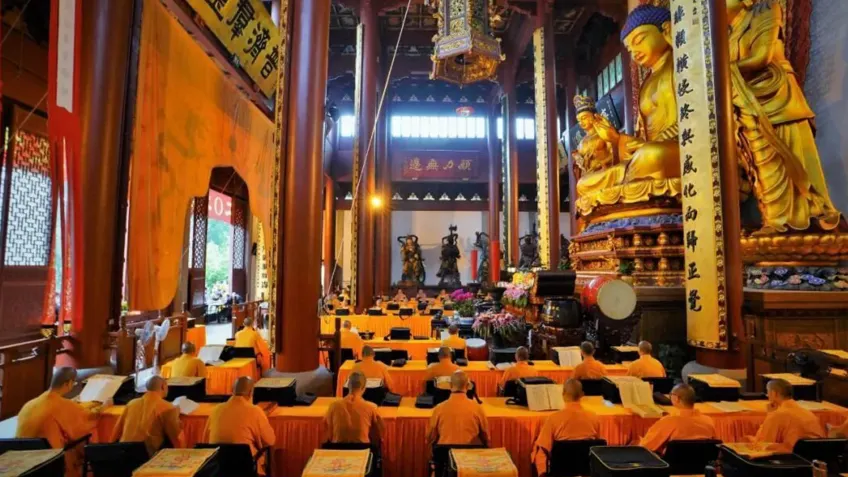
In the main hall, monks in orange robes chant together beside neatly arranged yellow tables. Morning prayers are a daily ritual, not a performance—visitors should stay silent and observe quietly, with phones on silent mode.
Motivation for taking refuge
True refuge comes from understanding and accepting Buddhist teachings, not blind following or superstition. It is an inner commitment made after deeply comprehending the Dharma.
The essence of refuge
Buddhism emphasizes that the essence of taking refuge matters more than the form. True refuge is not just an external ceremony or certificate, but an inner transformation and real action.
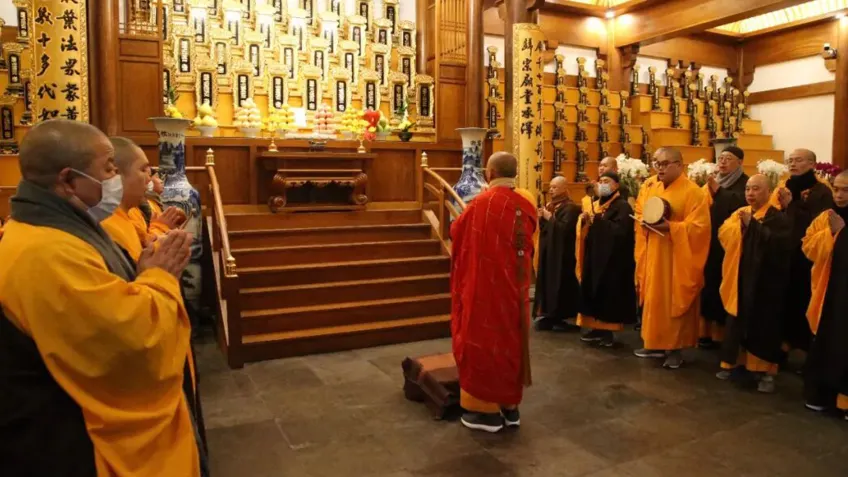
A red-robed master prays before the altar, and ceremonies call for even greater solemnity. If taking refuge or making offerings is part of your itinerary, confirm the day's schedule with your travel consultant in advance.
Objects of refuge
Taking refuge is not about pledging allegiance to a particular monk or temple, but to the Buddha, the Dharma, and the Sangha—a commitment to the teachings of Buddhism as a whole.
Practicing refuge
After taking refuge, Buddhists should embody the Dharma in daily life, treating all people and things with sincerity, purity, equality, and awareness. This is how Buddhist teachings are practiced every day.
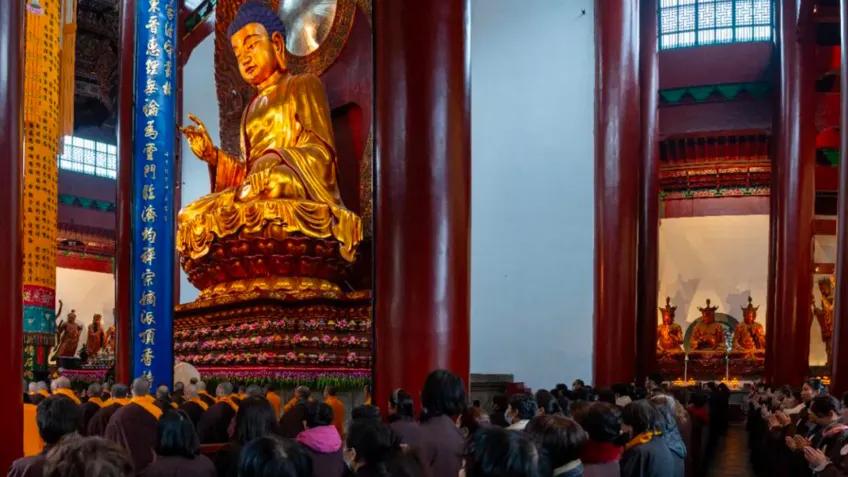
If you rush through Lingyin Temple, you might miss its most precious offering: a practice that unites body and mind. These experiences leave you with more than just photos—they give you a vivid memory of Zen.
If you want to fully take part in activities like morning chanting and sutra copying while learning about the culture and etiquette behind them, the easiest option is to book a private Hangzhou tour that includes Lingyin Temple. Guides are available in Chinese or English; Japanese, Korean, German, French and Spanish guides require advance confirmation. Your guide will explain the key points and help with arrangements, so you can relax and immerse yourself more deeply in this unique Eastern Zen experience.
Lingyin Temple travel tips
When to visit Lingyin Temple: For the quietest experience, arrive before 7:30 AM on a weekday to avoid the crowds. On the day before the 1st and 15th of each lunar month, the temple stays open until 1:30 AM, giving you the chance to experience Lingyin Temple at night.
Dining guide for Lingyin Temple: Free drinking water is available inside Lingyin Temple, so you can bring a water bottle to fill up. Near Feilai Peak at Lingyin Temple, there are restaurants serving vegetarian noodles at reasonable prices. They taste great too—highly recommended!
Incense at Lingyin Temple: At the entrance of Lingyin Temple, there is a dedicated incense burner where staff hand out free incense sticks. Each visitor may take three sticks, representing the three studies of precepts, meditation, and wisdom—just the right amount. After making your wish, place them in the incense burner; incense is not allowed inside the main halls.
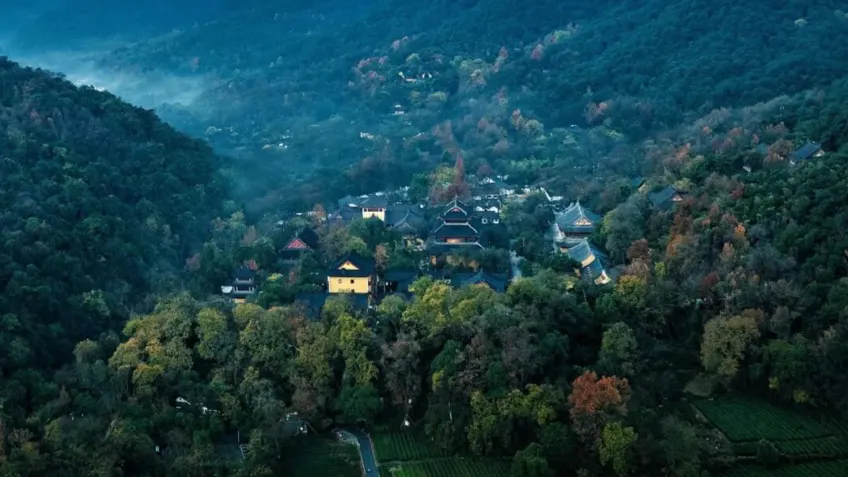
The temple halls nestle among the trees in the misty valley. If you only have half a day, choose either the morning chanting or sutra copying first, then visit Feilai Peak for a more relaxed trip.
Lingyin Temple night visit guide
Night visit hours at Lingyin Temple: Lingyin Temple opens for night visits two days each month—the 14th day of the lunar month and the night before the 1st day of each lunar month.
Night visit time at Lingyin Temple: 7:30 PM–1:30 AM
Travel tips for night visits: During Lingyin Temple's night visits, buses still run until 9:00 PM. For convenience, however, many visitors choose to take a taxi. There are plenty of taxis near Lingyin Temple, all running on the meter for a safe and reliable ride.
During Lingyin Temple's night visits, nearby shops also stay open. After touring Lingyin Temple, you can stop by these shops to buy cultural souvenirs or Lingyin Temple-themed keepsakes.
FAQs
What time does the morning chanting start at Lingyin Temple? Can visitors join?
Morning chanting at Lingyin Temple usually begins around 4:30 AM (slightly earlier in summer, later in winter) and lasts about an hour. Visitors are welcome to observe, but this is the monks' daily practice, not a performance. We recommend arriving about 30 minutes early and going to the designated area outside the Mahavira Hall. Please remain silent, turn off your phone ringer, and dress modestly.
Do I need to book in advance to copy the Heart Sutra at Lingyin Temple? Where is it done?
No reservation is usually needed for daily Heart Sutra copying. It takes place in the Yunlin Library (west of the Medicine Buddha Hall) from about 9:00–14:30. The temple provides brushes, ink, paper, and inkstones. The full text has over 200 characters and takes about 30 minutes to an hour. Mornings are best, as it's quieter with fewer people.
How do I book entry to the scenic area for morning chanting or sutra copying at Lingyin Temple?
Admission to the Feilai Peak–Lingyin Temple scenic area has been free since December 1, 2025, but you still need to book a time slot (morning/afternoon) via the official "Hangzhou Lingyin Feilai Peak" mini program and enter by scanning your original booking ID. For the morning chanting session, arrive at the entrance early according to that day's opening and security check schedule. Quotas and cancellation rules are subject to real-time notices in the mini program.
What should I know about getting Laba porridge at Lingyin Temple?
Laba porridge is usually distributed from the 1st to the 8th day of the 12th lunar month. There are designated pickup spots inside the temple—don't waste a trip to the main hall. Dress modestly and keep quiet; no photos during offerings or sutra lectures. The porridge is freshly made each day and doesn't keep well at room temperature. When crowds are heavy, take the metro or bus; if driving, arrive at the parking lot even earlier.
How can out-of-town visitors best arrange transport for the morning chanting and sutra copying?
Check our private tours that include Feilai Peak and Lingyin Temple. If you need to time your visit around morning chanting and sutra copying, rearrange the itinerary with a custom private tour. Use station transfers for arrivals and departures at Hangzhou East Railway Station or near the scenic area, a private car for point-to-point travel between attractions, and hire a guide for temple etiquette and sutra copying steps.
Ready for an in-depth experience of morning chanting and sutra copying at Lingyin Temple: choose a private tour for a hassle-free linked itinerary, or a custom private tour to rearrange the schedule around your meditation pace. Use a private car to connect attractions and station transfers for station pick-ups and drop-offs. You can also hire a guide for temple etiquette and sutra copying tips. Just let a travel consultant know your travel dates, group size, departure city and whether you plan to attend morning chanting.