

What to pray for at Lingyin Temple?
Lingyin Temple (灵隐寺) has Beigao Peak behind it and faces Feilai Peak (飞来峰). Founded in 326 AD, the first year of the Xianhe era of the Eastern Jin dynasty, it is one of Hangzhou's busiest thousand-year-old temples. Each hall answers a different wish. Pray in the Mahavira Hall for things to go well, and to the Guanyin statue behind it for children and love. In the Qielan Hall, people pray to Guan Yu for wealth and protection from backstabbers. The Medicine Buddha Hall is for health and the Jigong Hall for a change of luck. In the Huayan Hall, pray to Manjushri for studies and to Samantabhadra for career. Since December 1, 2025, the site has been free to enter, but you need a timed, real-name reservation.
Book in the "Hangzhou Lingyin Feilai Peak" (杭州灵隐飞来峰) mini-program in Alipay or WeChat. You can book up to 7 days ahead and no later than the day before; same-day booking isn't available. Passports and Mainland Travel Permits for Hong Kong, Macao and Taiwan residents are both accepted. Show the original document at the entrance.
Tips for burning incense at Lingyin Temple
Once inside Lingyin Temple, you'll receive three incense sticks for free. Bringing your own incense or candles is not allowed. Note that you should enter through the side gate, as the main gate is normally kept closed — in the past, it wasn't even opened for an emperor. It's said to open only on two occasions: when the temple appoints a new abbot, and once every sixty years. This tradition continues to this day.
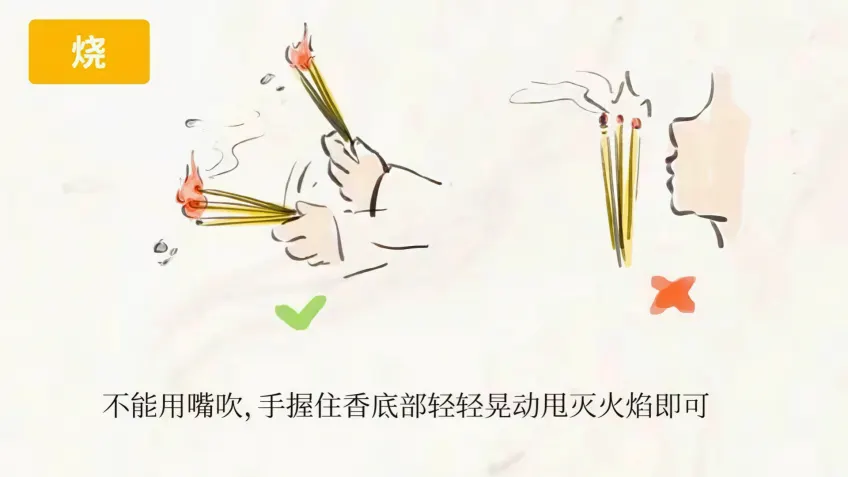
Incense has its own etiquette. Hold the sticks in your left hand and support the base with your right. If the flame is big, don't blow it out; wave the sticks gently up and down until it goes out. People usually offer three sticks, for the "Buddha, Dharma and Sangha." Raise the incense above your head.
Lingyin Temple is busy with worshippers. When you pray for safety in the Hall of Heavenly Kings, you can quietly say your name. Step over the threshold "men on the left, women on the right," and don't kneel on the middle cushion, which is for monks. Incense rules follow the temple's notices for the day.
Two prized pieces in the Hall of Heavenly Kings
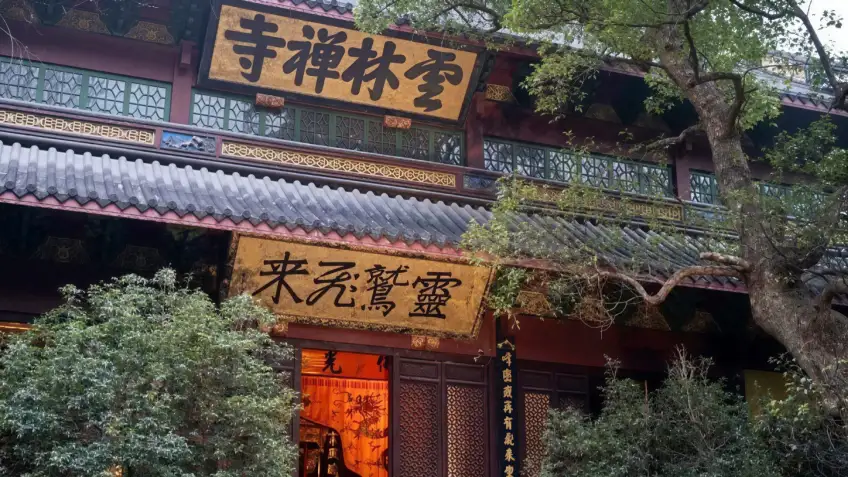
The first is the plaque reading "Yunlin Chan Temple" above the main entrance, written by Emperor Kangxi himself. He traveled to Jiangnan six times and visited Lingyin Temple on four of those trips. Struck by the scenery, he borrowed the words "Yunlin" (cloud forest) from a poem by Du Fu and gave the temple that name. Locals still call it Lingyin Temple, though.
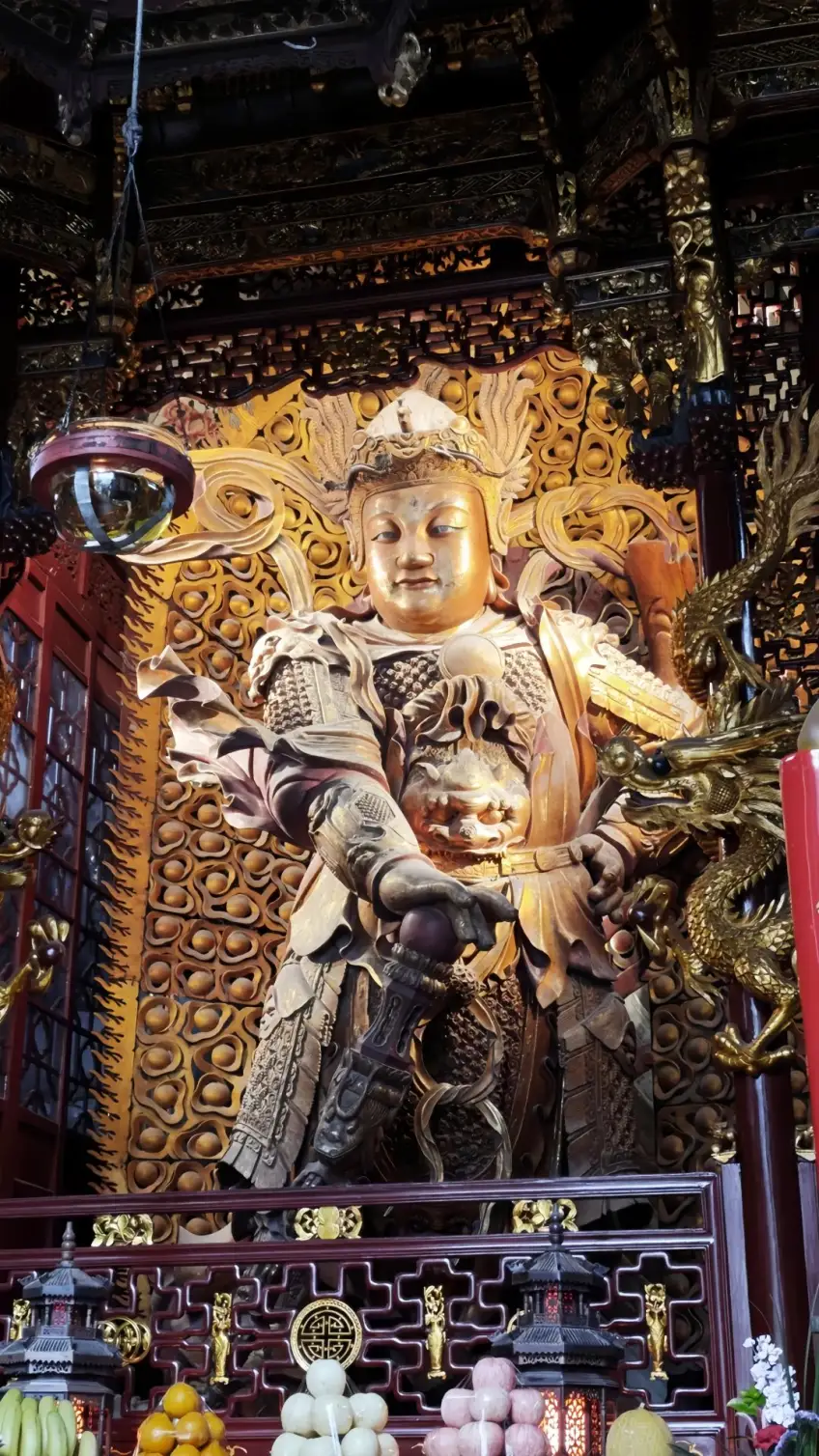
The second is a Southern Song statue of Skanda (Weituo), believed to ward off evil and misfortune. It's carved from a single camphor tree. In the past, whether a wandering monk could stay the night depended on how Skanda's vajra staff was positioned. The statue has stood here for more than 700 years, and although it's wood, it has survived the many fires in the temple's history.
The incense burner and ancient pagodas
Behind the Hall of Heavenly Kings is the Mahavira Hall. In front of the hall stands a large round incense burner donated by Sun Rong, a eunuch of the Wanli era of the Ming Dynasty, as penance for his sins. We don't recommend touching it.
No one knows today what he was atoning for, but the burner itself is a witness to that history. Touching it won't change the past, and it isn't considered good luck either. From a conservation point of view, the burner, the Northern Song stone pagodas in front of the Mahavira Hall and the Five Dynasties sutra pillars in front of the Hall of Heavenly Kings are precious relics of great historical and artistic value, so please don't touch them.
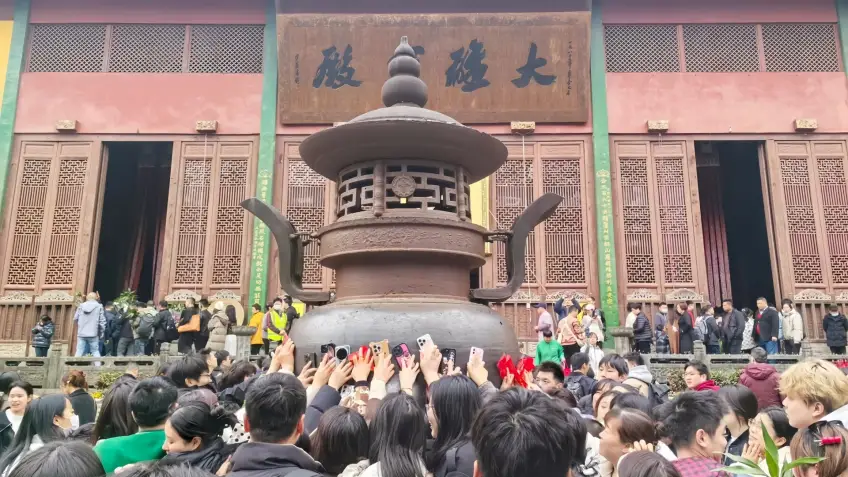
Lingyin Temple and the TV drama "Taiping Nian"
The stone pagodas on either side are more than 1,000 years old. They lead us to Qian Hongchu, the last king of Wuyue, who appears often in the TV drama "Taiping Nian." A devout Buddhist, he built many pagodas and temples, and a number of them are now landmarks of the Jiangnan region, such as Leifeng Pagoda and Liuhe Pagoda in Hangzhou and the Tiger Hill Pagoda in Suzhou.
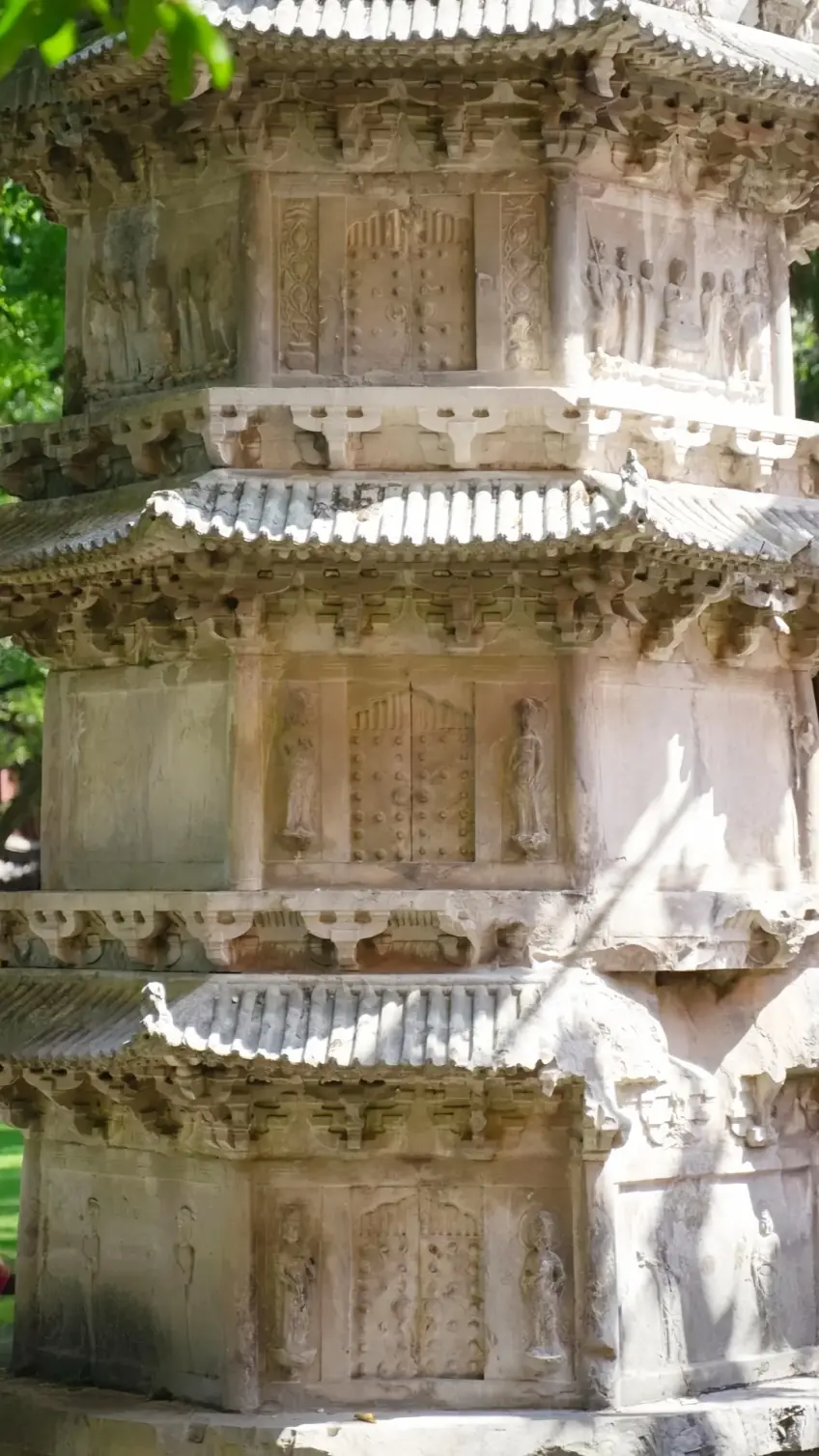
So when you stand before these old stone pagodas, you're looking at more than stones from 960, the first year of the Northern Song's Jianlong era. You're looking at the real history that "Taiping Nian" draws on. Through buildings that still stand, this last king left his faith and his kingdom's mark on the Jiangnan landscape. Under Wuyue rule, Qian Hongchu greatly expanded Lingyin Temple, and at its peak it had nine towers, eighteen pavilions and seventy-two halls.
The Mahavira Hall
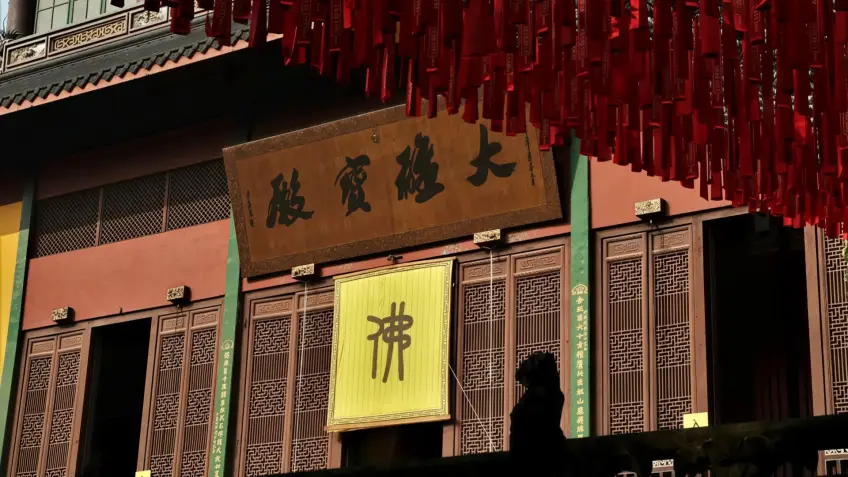
Next, head to the heart of Lingyin Temple: the Mahavira Hall. Don't rush inside—first look up at the huge plaque above the entrance. The four golden characters for "Mahavira Hall" were written by Sha Menghai, a master of modern Chinese calligraphy. This is one of the tallest Mahavira Halls in China, standing a full 33.6 meters high. Inside sits a statue of Sakyamuni Buddha 24.8 meters tall, carved in 1956 from 24 blocks of camphor wood, making it one of the largest camphor wood Buddha statues in China.
How to pray here
So how do you pray? The Mahavira Hall is mainly for asking that everything goes well and your wishes come true. On the back of the hall's rear wall is a statue of Guanyin, the place to pray for children and love, and it's always busy. After the Mahavira Hall, go to the Qielan Hall on the right, where Guan Yu is worshipped for wealth and protection from people who wish you harm.
The "advanced" route
To sum up this "advanced" route: Pray to Lord Guan at Qielan Hall (for wealth and protection) → Pray to the Buddha at the Mahavira Hall (for everything to go smoothly) → Pray to Guanyin behind the hall (for children and romance). Having a clear goal makes your prayers more sincere.
The Medicine Buddha Hall
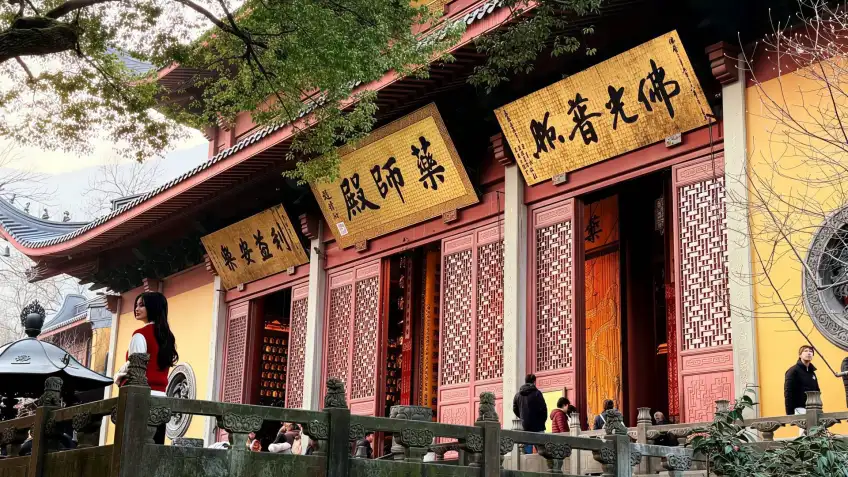
Past the incense smoke and the grand Mahavira Hall, continue north along the central axis to the Medicine Buddha Hall. Its main figure is the Medicine Buddha, Bhaisajyaguru in Sanskrit, who frees people from illness and suffering, wards off disaster and lengthens life. Visitors come here to pray for health and safety.
The Jigong Hall
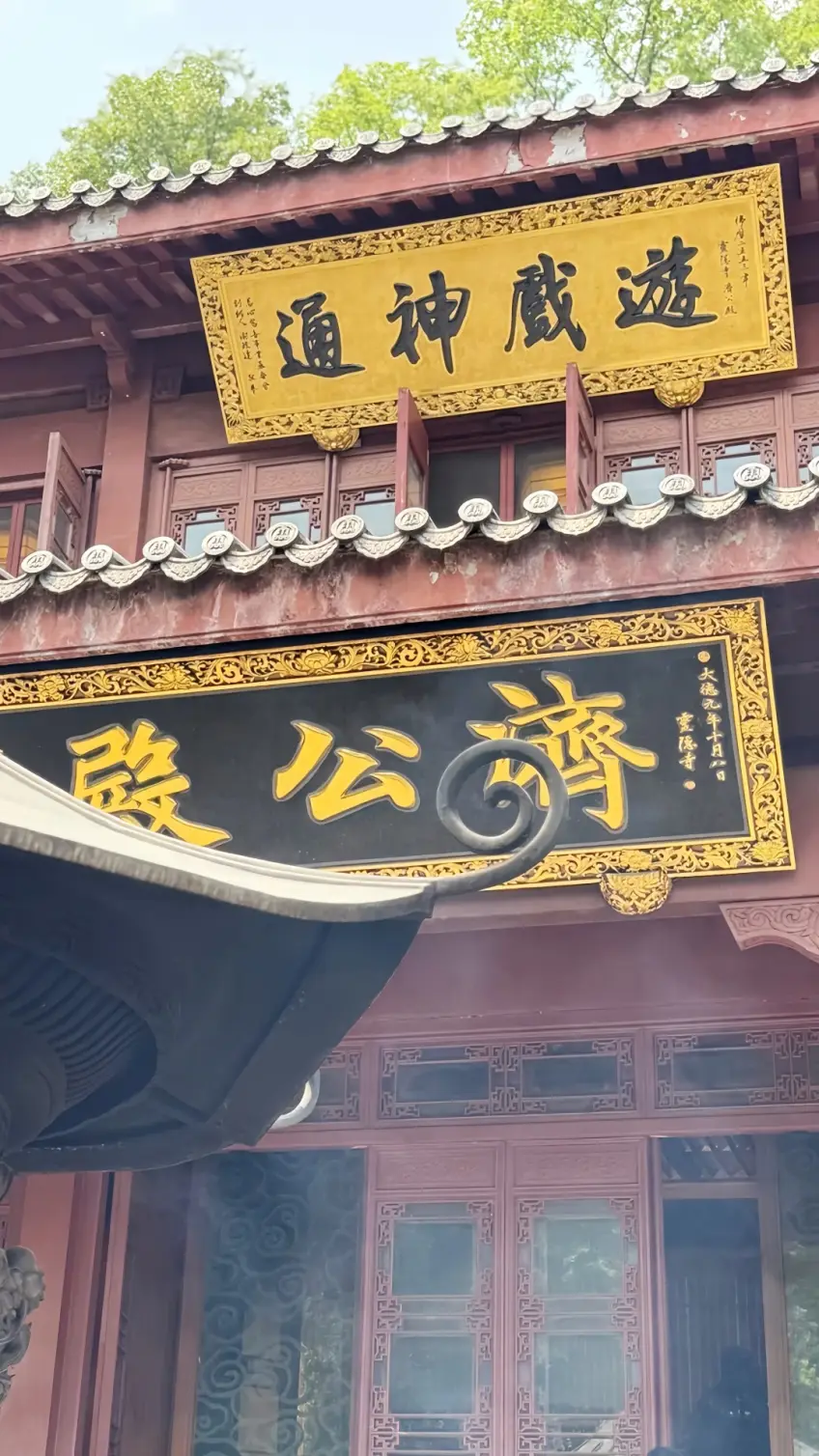
In the Jigong Hall to the east, people pray to turn their luck around and avoid misfortune. Yes, this is Jigong, the "living Buddha" in torn shoes and a battered hat who seemed mad but had a big, kind heart. Legend says he became a monk at Lingyin Temple. He lived in the Southern Song, helped the poor, mocked the powerful, ignored strict rules and dressed in rags, so people called him "Mad Ji." Today visitors come to change their luck, settle quarrels and keep bad things away. He never played by the rules, so it's fine to visit him in a relaxed spirit.
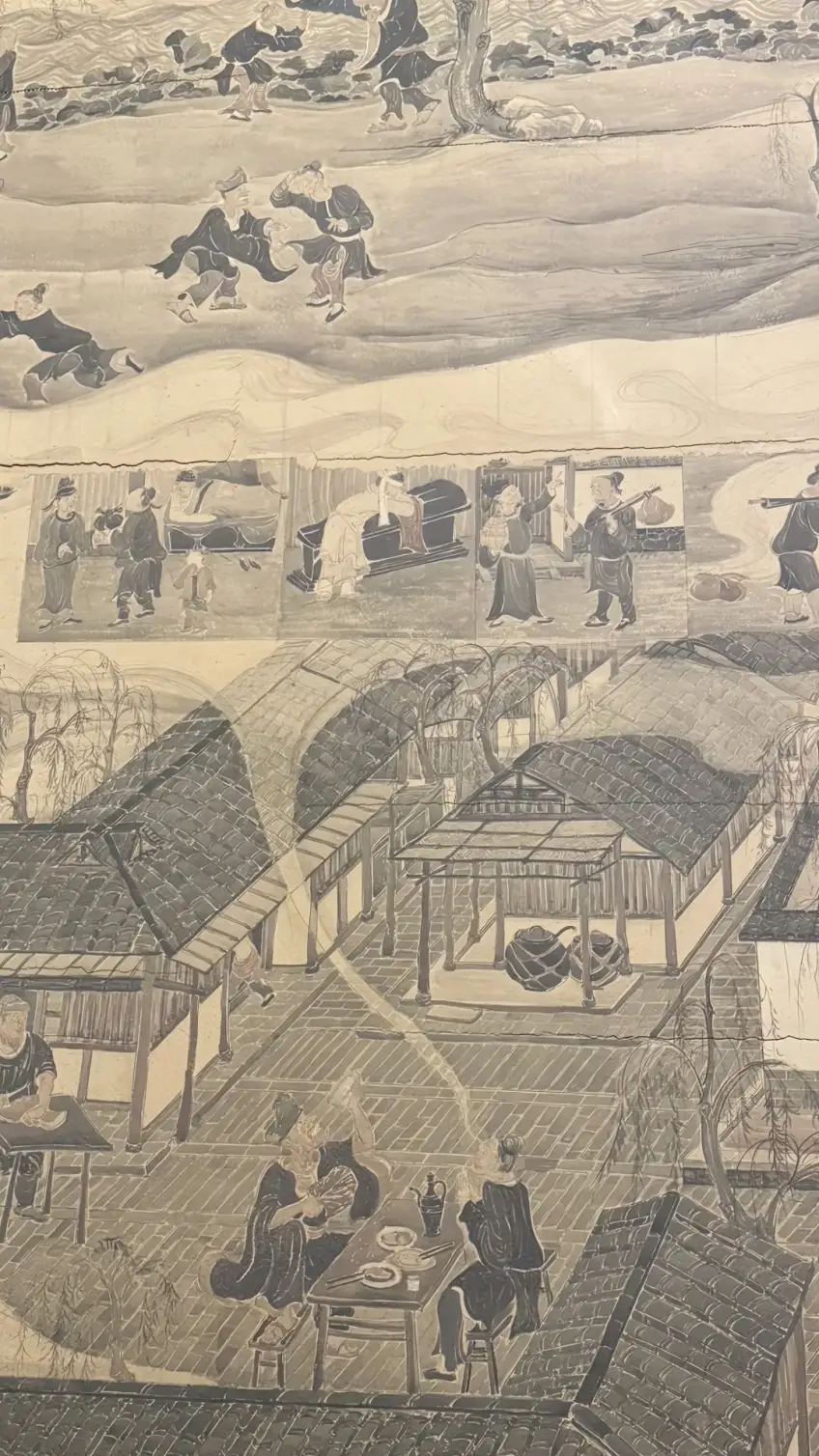
A quick tip: if time allows, take a closer look at the carvings inside Jigong Hall—many vividly depict his well-known legendary tales.
The story of Jigong at Lingyin Temple
Legend says Jigong foresaw a mountain peak flying toward the village. Thinking quickly, he snatched up a bride and ran off, prompting the entire village to chase after him—thus saving everyone from being crushed by the falling peak. This is the legend of Feilai Peak, one of Jigong's most famous stories.
The carvings also show the story of the "ancient timber well." When Jingci Temple was being rebuilt, it had no large beams. Jigong, very drunk, said the timber had already arrived through a well. The builders looked in, and logs were indeed rising out of it. The carving shows him bringing the timber up from the well.
Chancellor Qin was powerful and heartless. Jigong used his wit and magic powers to mock and punish him on behalf of ordinary people, and the carvings capture these funny moments. This is the story of "Teasing the Qin Mansion."
Another series of carvings shows him using his powers to heal the sick, solve problems and settle disputes for the poor.
The Sutra Library
After passing through the prayer halls, if you're still curious about Buddhist teachings and culture, the Sutra Library behind the Mahavira Hall is worth a visit. There's no swirling incense smoke here, but it holds the true cultural treasures of Lingyin Temple.
What's inside the Sutra Library?
This is Lingyin Temple's "Dharma library," and its collection is large. It holds more than 20 rare editions of the Buddhist canon (Tripitaka) from different periods, along with rare pieces such as a copy of the Diamond Sutra written by the Ming dynasty calligrapher Dong Qichang.
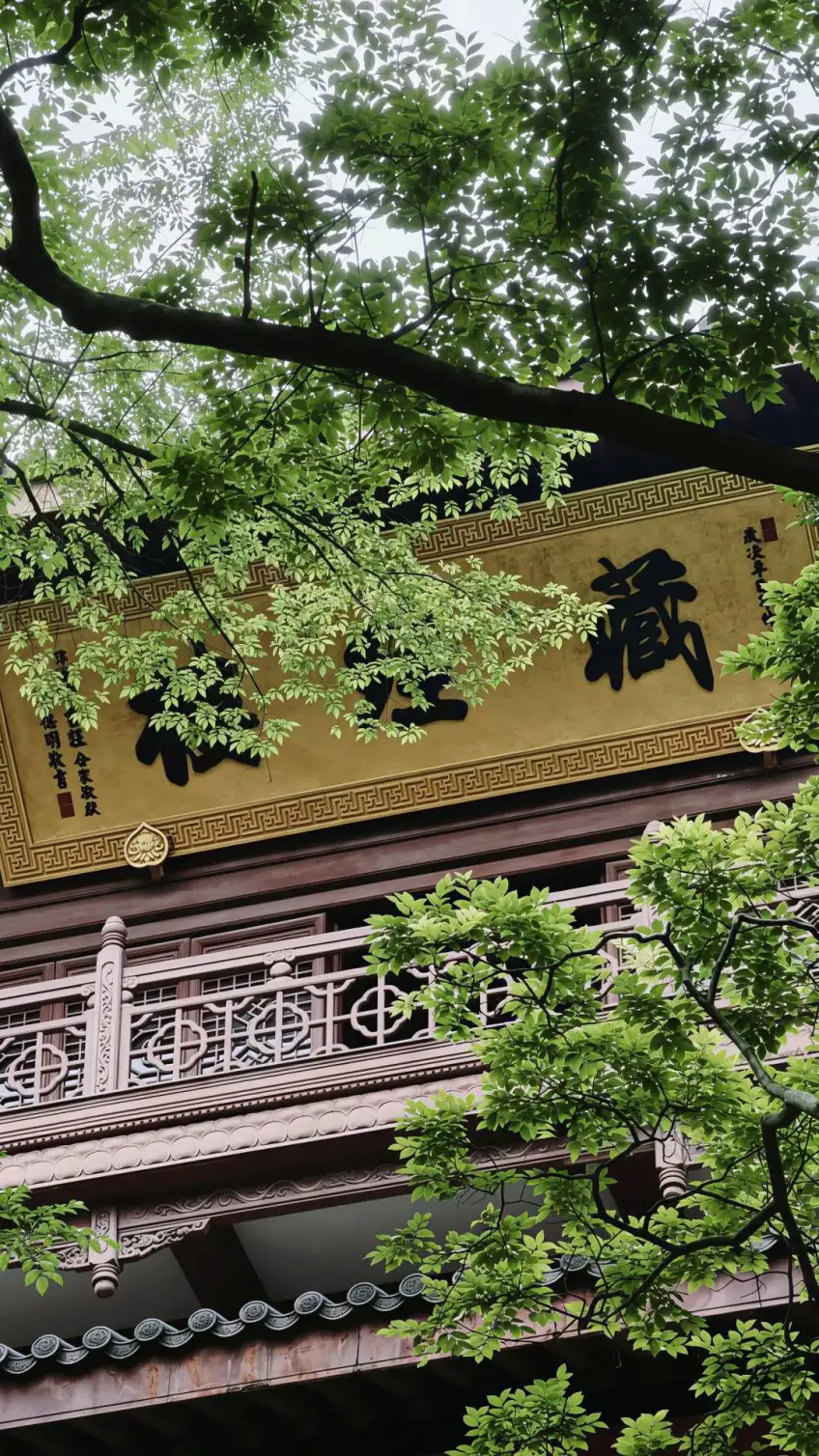
You'll also find Southern Song Dynasty Buddha statues here, along with palm-leaf scriptures that haven't decayed in a thousand years. These scriptures were written by ancient Indians on the leaves of the talipot palm.
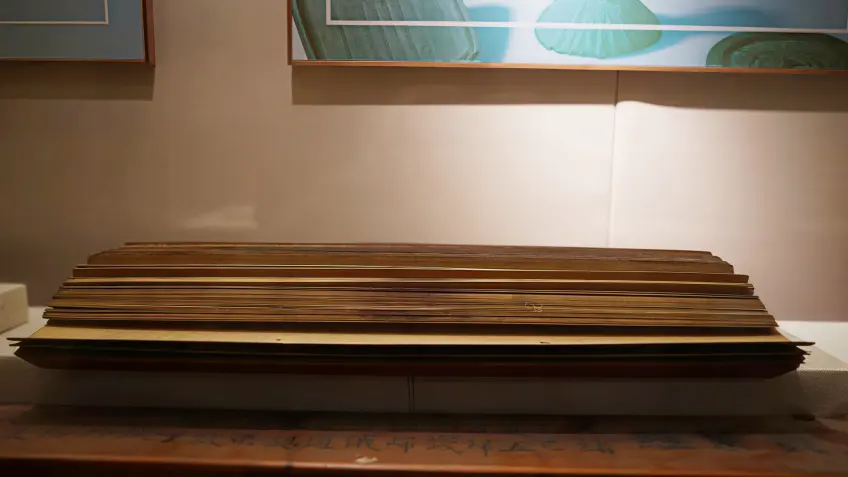
A thousand-year tradition: airing the scriptures
The Sutra Library houses countless ancient texts, and Hangzhou's summers are humid. To prevent mold and insects, Lingyin Temple maintains the tradition of "airing the scriptures," which has continued for hundreds or even thousands of years.
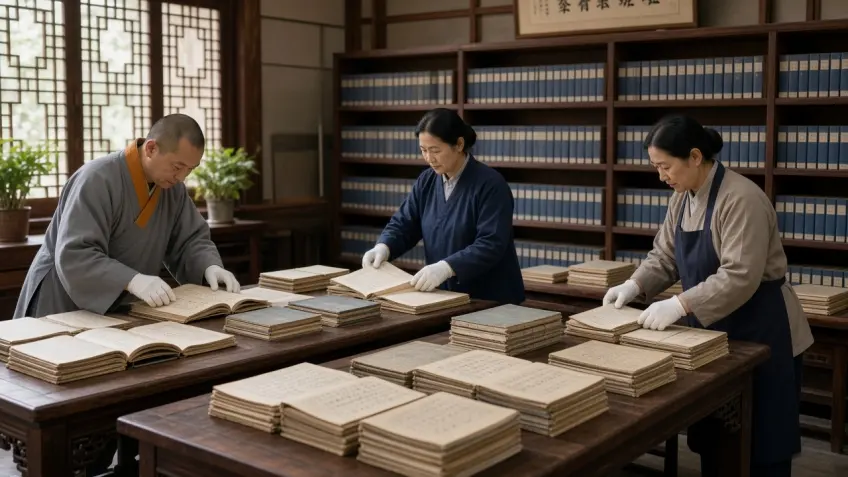
Every year after the plum rain season ends, the temple's monks and volunteers wash their hands, light incense, and carefully bring out the precious ancient texts from the Sutra Library. They gently turn the pages one by one to air out the moisture. Buddhist scriptures are hard to come by and deeply treasured. This is not only a way to preserve cultural relics but also a spiritual practice, reminding future generations to respect the Dharma and cherish this hard-won wisdom.
The Huayan Hall
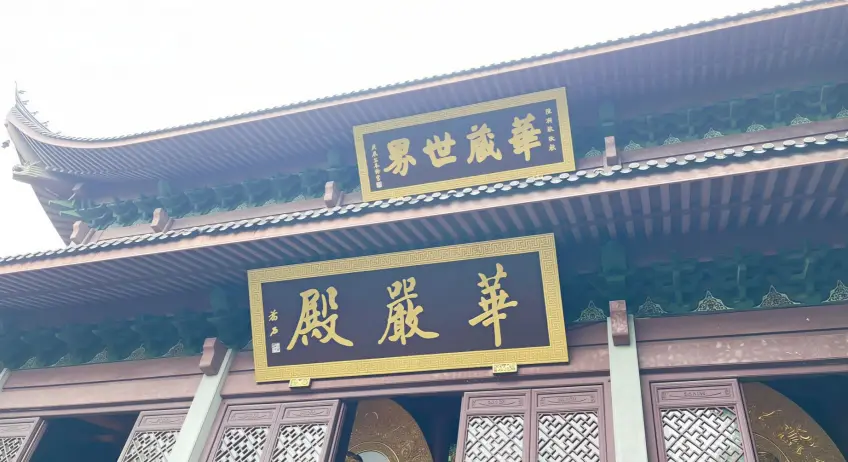
Next, go straight to the Huayan Hall, where people pray for success in school. Pray to Manjushri, who rides a lion; he's said to "cut off" a child's urge to skip studying. For career success, a promotion or a raise, pray to Samantabhadra, who rides an elephant.
The Five Hundred Arhats Hall
A fun way to tell your fortune
The arhats all have different faces, and many visitors say they can find one that looks just like them. You can get a free fortune reading here, since counting arhats is itself a form of divination. The bronze hall inside depicts China's four sacred Buddhist mountains. It's quite large and well worth stepping inside to see.
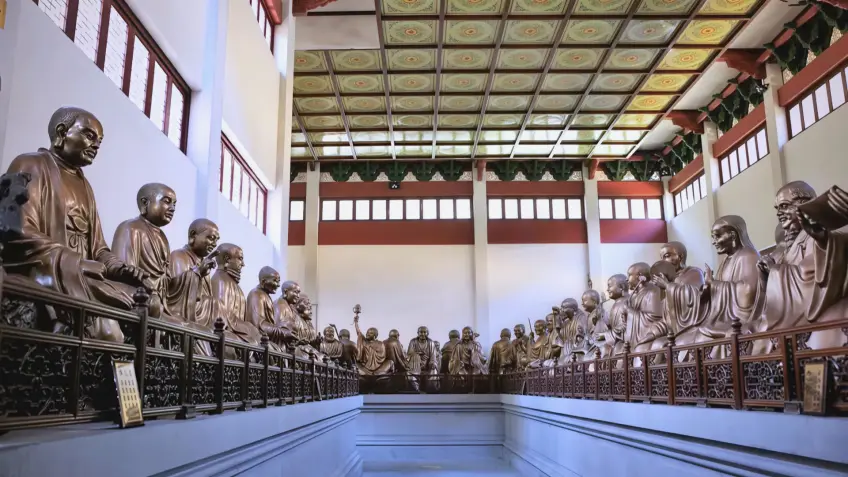
How do you count? Here are a few methods:
Count by age: Pick any arhat that catches your eye, then count left or right one by one according to your nominal age (xu sui). The last one you land on is your "guardian arhat" for the year.
Men left, women right: Start counting from whichever side matches the foot you stepped in with first. Others follow the traditional "men left, women right" rule to decide the direction.
Suzhou and Hangzhou 3-day 2-night private tour | Lingering Garden, Hanshan Temple, West Lake boat cruise
A 3-day 2-night private tour starting in Suzhou and ending in Hangzhou: Hanshan Temple and Shantang Street, Lingering Garden and Pingjiang Road, then Feilai Peak at Lingyin Temple in Hangzhou in the afternoon. On the last day, enjoy a West Lake boat cruise and a tea plantation photo shoot. Includes transportation, guide, two nights at an upscale or luxury hotel, and admission tickets. English-speaking guide available.
Where can I get vegetarian noodles at Lingyin Temple?
After the halls, your legs will be tired and you'll probably be hungry. Head back to Shifang Yuan (十方苑), near the entrance, for a bowl of light, comforting vegetarian noodles. Go early to get in line and take a number.
How do I get to Shifang Yuan?
Keep walking from the Hall of Heavenly Kings toward the exit. Shifang Yuan is on the right just inside the Lingyin Temple ticket gate—go up the steps to the row of small buildings. The sign isn't very conspicuous, but just follow the crowd and you can't go wrong. At mealtimes, the longest line marks the spot.
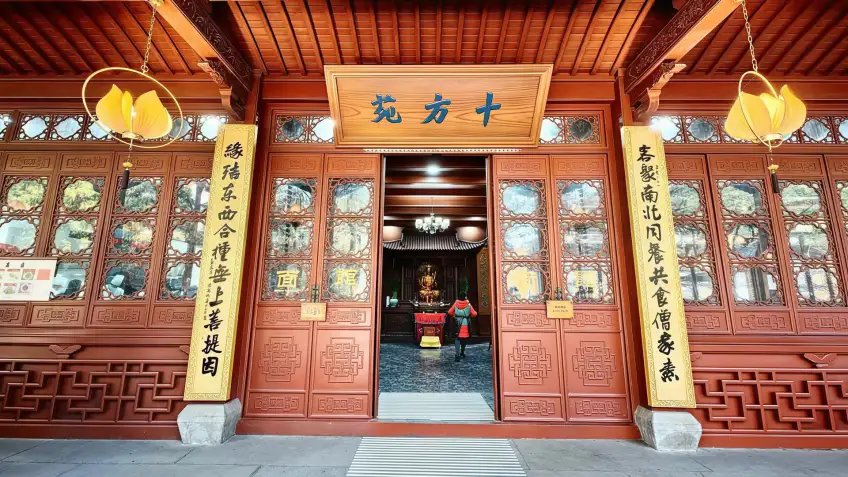
What are the vegetarian noodles at Lingyin Temple like?
Shifang Yuan offers several noodle dishes, all with auspicious names. The most common is longevity noodles, typically topped with braised wheat gluten, wood ear mushrooms, cordyceps flowers, peanuts, and greens in a light, savory broth. On busy holidays, the classic lucky noodles always sell out first. Fulu noodles, Yunlin noodles, and others differ mainly in flavor and toppings.
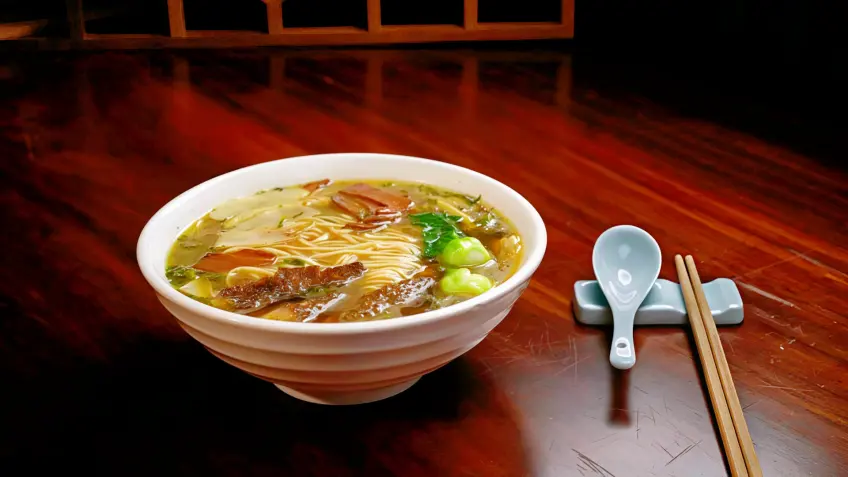
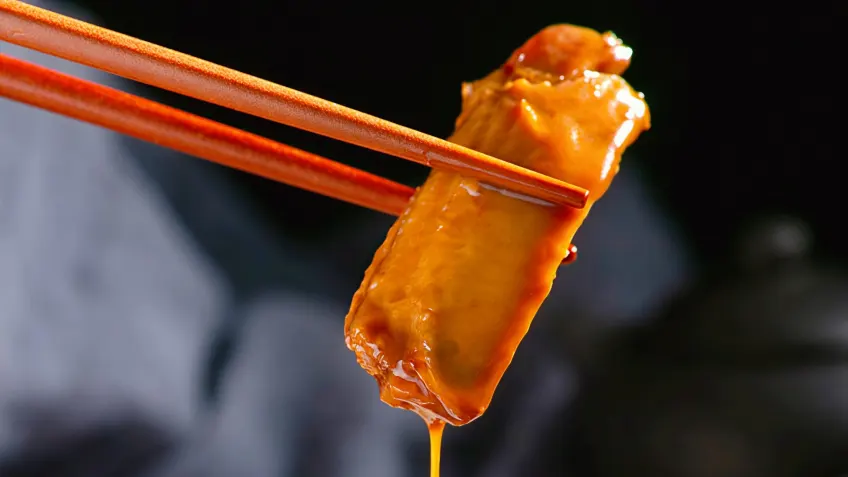
Besides noodles, there are cold dishes to go with your meal, such as vegetarian roast goose, braised bamboo shoots, shredded vegetable salad, and house-style dried tofu. These are all authentic Hangzhou dishes at reasonable prices. Please refer to the menu posted in the restaurant for current pricing.
Don't rush off when you leave Lingyin Temple. There are two more sights outside worth seeing: first, the pair of stone sutra pillars over 1,000 years old at the entrance, said to have been built by Qian Hongchu, the last ruler of the Wuyue Kingdom, to ward off disaster during turbulent times; second, Feilai Peak Scenic Area, home to one of the largest groups of grotto carvings in the Jiangnan region.
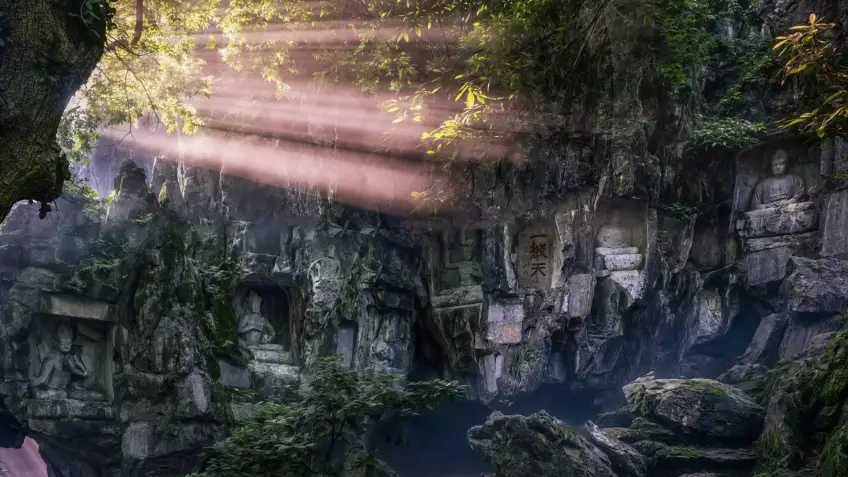
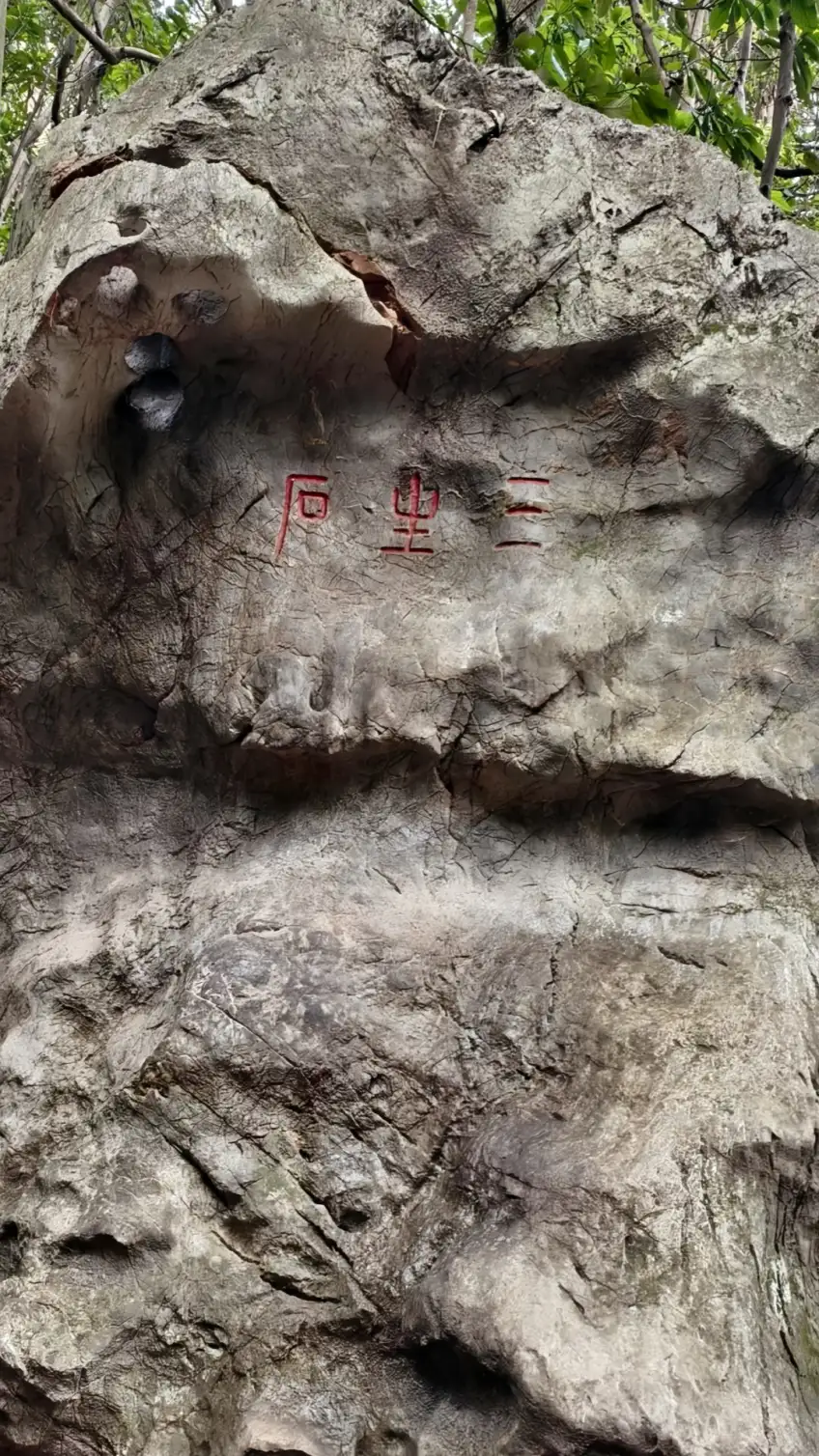
If you still have time, keep going. Taoguang Temple, Yongfu Temple, Faxi Temple and the Three Lives Stone (Sansheng Stone) are nearby and make for a slow day of exploring.
If navigating the halls and their stories feels overwhelming, send your dates, group size and departure point to a travel consultant: private tours are great for a hassle-free temple route; hiring a guide focuses on hall-by-hall commentary. For cross-city arrivals and departures, add station transfers; for getting around inside the scenic area, book a private car; and for maximum flexibility, choose a custom private trip. If opening hours or incense rules change, always follow the on-site and official information for that day.
FAQs
What to pray for at Lingyin Temple?
Pray in the Mahavira Hall for things to go well, and to Guanyin behind it for children and love. In the Qielan Hall, Guan Yu looks after wealth and protects against backstabbers. The Medicine Buddha Hall is for health and safety, and the Jigong Hall for better luck. In the Huayan Hall, Manjushri is for studies and Samantabhadra for career. The Lingyin–Feilai Peak area has been free since December 1, 2025, with timed, real-name reservations required.
What's inside the Sutra Library?
The Sutra Library holds more than 20 editions of the Tripitaka from different eras, plus relics such as a Ming-dynasty handwritten Diamond Sutra by Dong Qichang, Southern Song Buddha statues, and sutras written on pattra palm leaves.
Where can I eat vegetarian noodles at Lingyin Temple?
Shifang Yuan near the entrance mainly serves vegetarian noodles, including longevity noodles and auspicious noodles. Lines get long at mealtimes, so it's best to arrive early and grab a number.
How do I get to Shifang Yuan?
Shifang Yuan is on the right after you pass the Lingyin Temple ticket gate — just walk up the steps to the row of small buildings. The sign isn't very noticeable, but you'll recognize it by the longest line at mealtimes.