
Lingyin Temple sits at the foot of Lingyin Mountain, west of West Lake in Hangzhou, facing Feilai Peak. It was founded in 326 AD (the first year of the Xianhe era of the Eastern Jin Dynasty) by the Indian monk Huili, making it about 1,700 years old. The name "Lingyin" comes from his exclamation upon seeing Feilai Peak. Starting December 1, 2025, admission to the Lingyin-Feilai Peak Scenic Area is free, but entering the temple requires a real-name, time-slot reservation via the "Hangzhou Lingyin Feilai Peak" mini program.
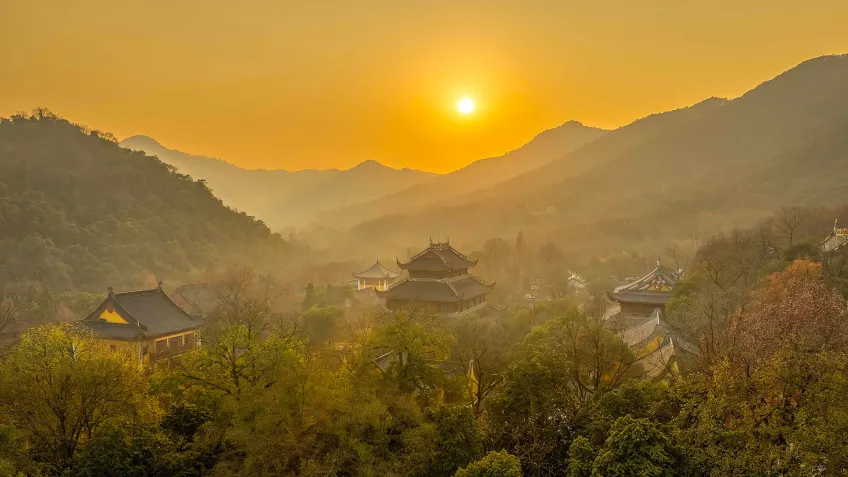
First-time visitors to Hangzhou who want to pray, pay respects to the Buddha, and understand the relationship between Feilai Peak and the temple can spend half a day exploring the central halls in depth, or take a full-day tour combining West Lake, Lingyin Temple, and Taoguang. If you're unfamiliar with local transport, book station transfers first; for deeper historical context, choose a private guide; if you're short on time, look at a group tour that includes Lingyin Temple; and if your schedule is flexible, opt for a custom private trip or a private car to link multiple stops.
Origins and legends of Lingyin Temple in Hangzhou
Lingyin Temple is Hangzhou's most iconic Buddhist sanctuary and cultural landmark. To many international visitors, it ranks alongside the Forbidden City and Dunhuang as a key to understanding Chinese culture.
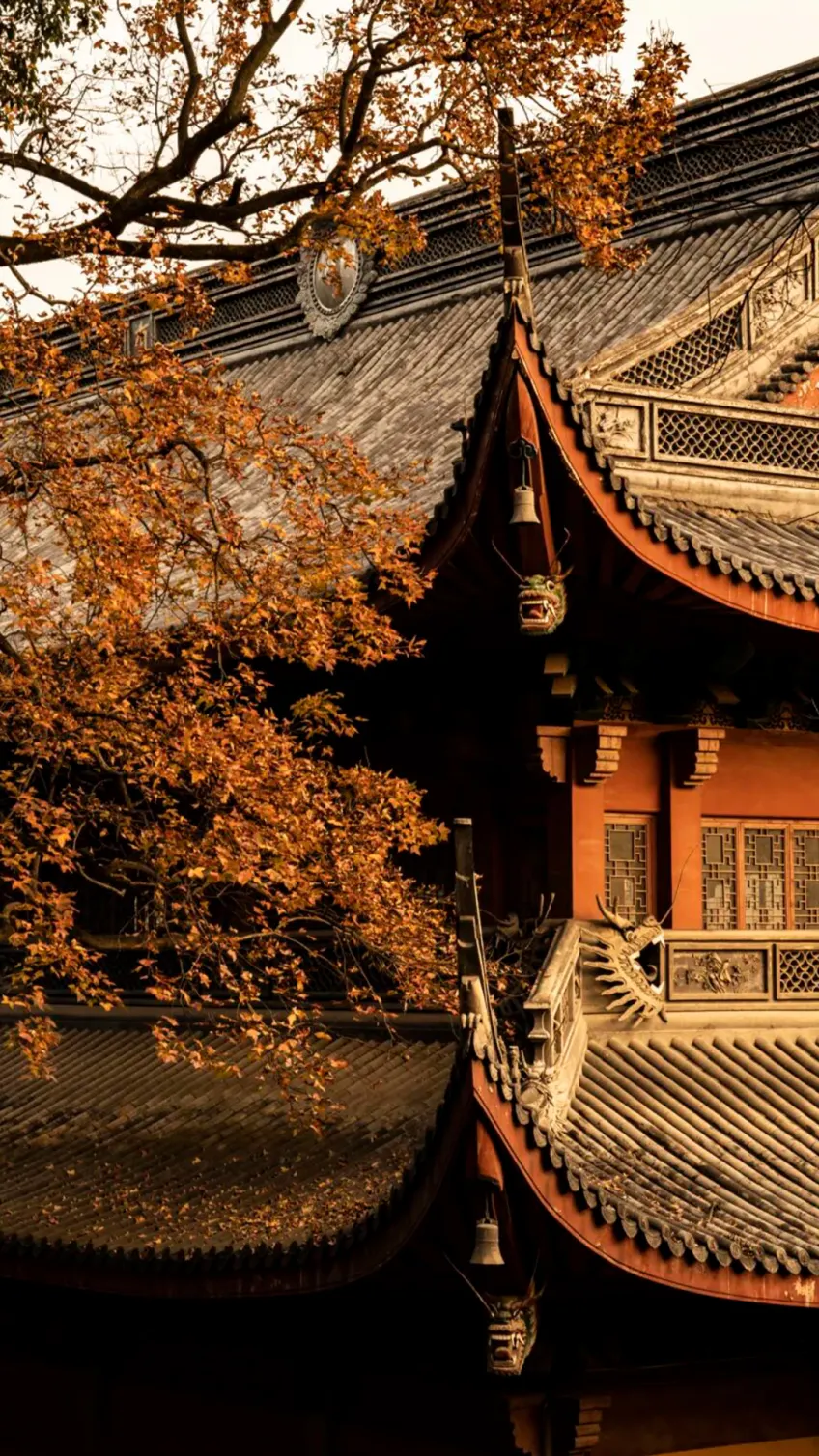
The temple sits opposite Feilai Peak, and its origins are closely tied to this "flying" mountain.
How old is Lingyin Temple?
Lingyin Temple lies at the foot of Lingyin Mountain west of West Lake, backed by Beigao Peak and facing Feilai Peak. Founded in the first year of the Xianhe era of the Eastern Jin Dynasty, it has a history of about 1,700 years. It is one of the oldest famous temples in Hangzhou and one of the ten great ancient Chan Buddhist temples in China.
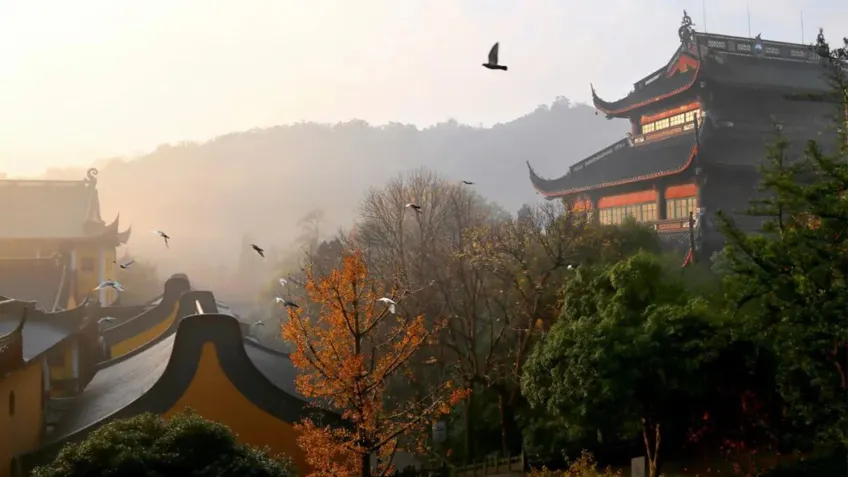
The "hidden" feel of this thousand-year-old temple comes from the forest and mist tucking the halls into the valley.
Origins of Lingyin Temple in Hangzhou
The temple's founding master was the monk Huili from western India. During the Xianhe era of the Eastern Jin Dynasty, he traveled to Hangzhou and, struck by the beauty of the rocks on Feilai Peak, exclaimed: "This is a small ridge of Vulture Peak in Central India—I wonder when it flew here? In the Buddha's time, it was mostly hidden by immortals and spirits." He then built a temple before the peak and named it Lingyin ("Hidden by Spirits"). Over time, more temples, a sutra translation hall, Longhong Cave and other structures were added, giving rise to the widely known phrase "the eighteen temples of Lingyin."
The original temple was small. Emperor Wu of the Liang Dynasty during the Southern Dynasties granted land for expansion. In the Five Dynasties period, Qian Hongchu, King of Wuyue, invited Master Yongming Yanshou to rebuild it and named it Lingyin New Temple. During the Jiading era of Emperor Ningzong of the Song Dynasty, it became one of the "Five Mountains" of Chan Buddhism in Jiangnan. In the Shunzhi era of the Qing Dynasty, Abbot Jude led an 18-year reconstruction that laid out today's basic structure. Emperor Kangxi once renamed it "Yunlin Chan Temple," and the plaque still hangs above the mountain gate, though most people still call it Lingyin Temple.
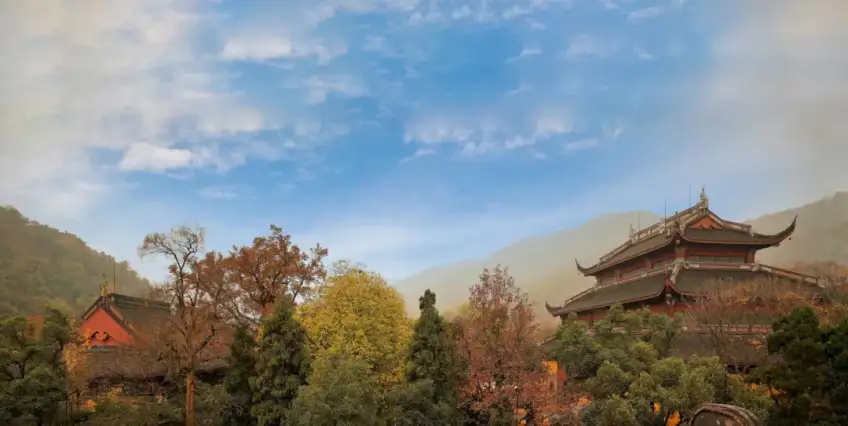
Once you understand the temple's founding story, walking along the central axis makes it easier to see why each hall stands where it does.
Why is Lingyin Temple so "miraculous"?
The "spirit" of Lingyin Temple comes not only from legend, but also from its location and layout: the story of immortals hiding here, the thousand-year-old incense at the Feilai Peak stone carvings, and the rhythm of worship through the five halls along the central axis all create a tangible sense of solemnity.
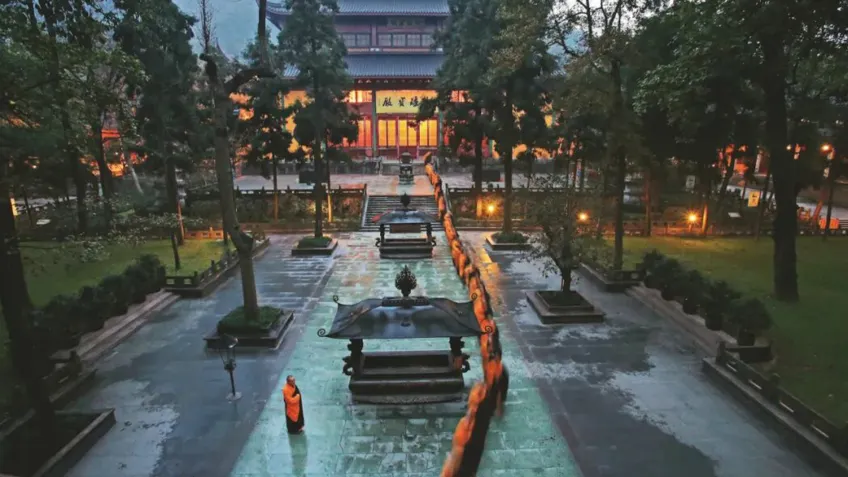
Please stay quiet during morning prayers and do not interrupt the ceremony.
Layout of Lingyin Temple
The central axis runs roughly: Hall of Heavenly Kings → Mahavira Hall → Hall of the Medicine Buddha → Sutra Library → Huayan Hall; the side wings include the Arhat Hall, Jigong Hall, Ancestral Hall, and Dabei Pavilion. The grounds also feature a Heart Sutra wall, a hundred-lion sculpture group, and a clear spring. We recommend walking the central axis first, then exploring the wings if you have the energy.
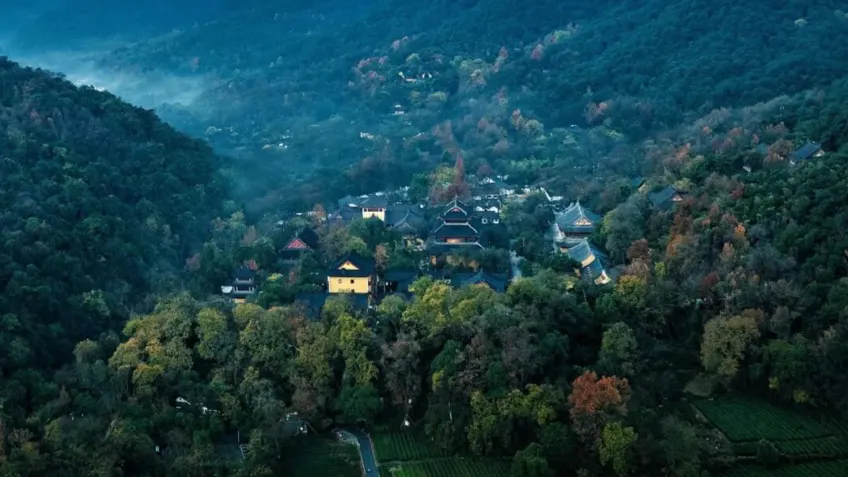
The layout of a temple hidden in the valley perfectly echoes the word "hidden" (yin).
Top sights at Lingyin Temple in Hangzhou
Lingyin Temple is famous not only for its ancient charm, but also for the Feilai Peak grottoes and the art created by the statues, plaques and couplets inside the halls. Below is a breakdown following the typical visiting route.
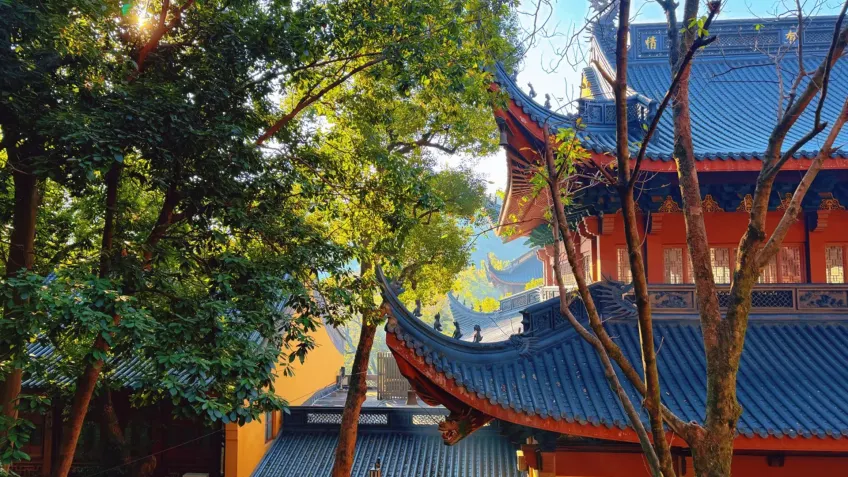
Feilai Peak at Lingyin Temple
Feilai Peak isn't tall, but it's packed with Buddhist stone carvings dating from the Five Dynasties to the Yuan Dynasty. Estimates of the total number of statues and how many remain intact vary; you'll often see over 470 statues / about 335 well-preserved. Caves like Qinglin Cave are tied to legends of the monk Ji Gong. Most visitors go to Feilai Peak first, then Lingyin Temple, but follow the on-site route.
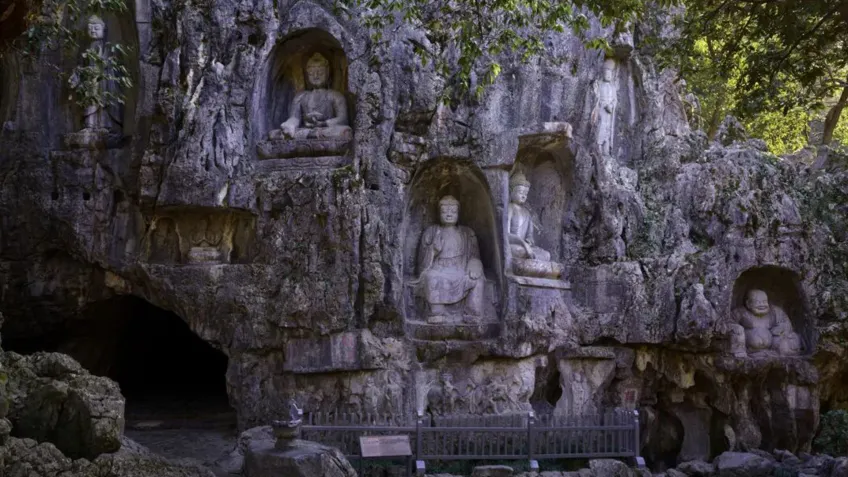
Viewing the stone carvings takes longer than touring the halls, so set aside 40–60 minutes.
Hall of Heavenly Kings at Lingyin Temple
The Hall of Heavenly Kings is the first hall on the central axis, enshrining Maitreya, the Four Heavenly Kings, and Skanda. The camphor wood statue of Skanda is said to date back to the Southern Song Dynasty and is one of the key highlights. Please mind your manners when entering and leaving the hall, and check the on-site signs for photography rules.
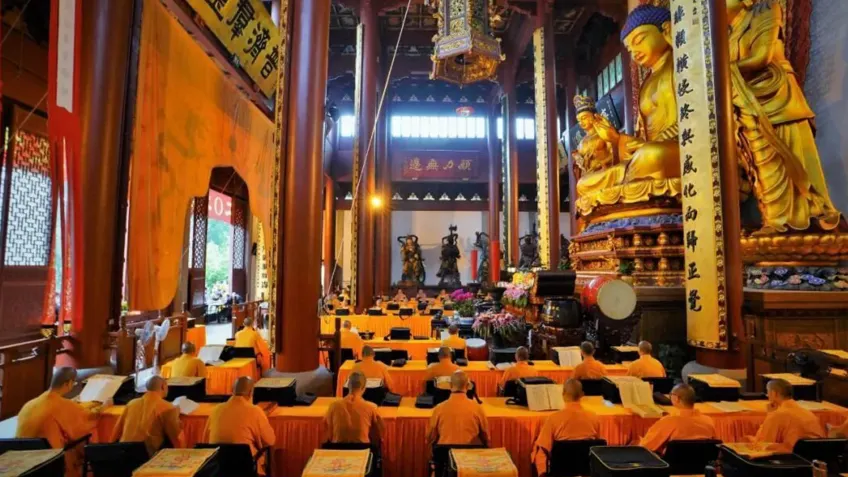
If you happen upon morning or evening chanting, please stop and observe quietly.
Mahavira Hall at Lingyin Temple
The Mahavira Hall is the core building, featuring double eaves and a spacious interior. The massive seated Sakyamuni Buddha on a lotus throne in the center is the focal point for worship and photos (if permitted). Most plaques and couplets were inscribed by renowned calligraphers—feel free to appreciate them, but don't disturb others who are praying.
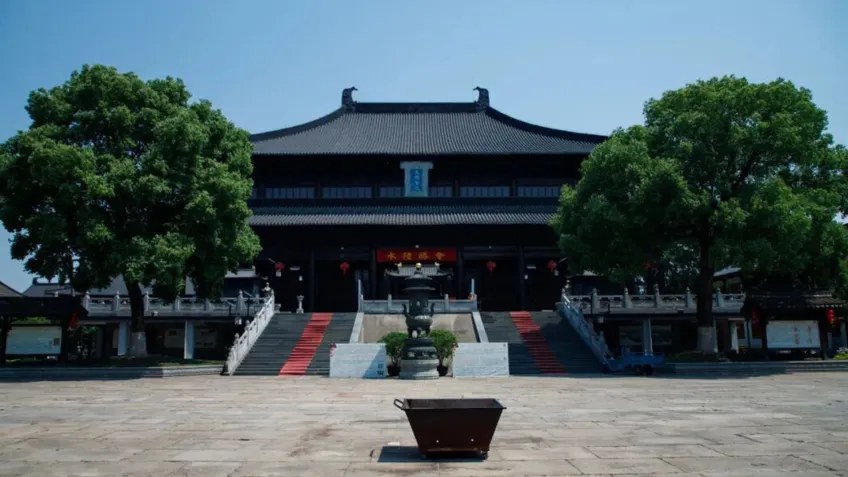
Take in the grandeur of the central axis from the courtyard first, then enter the halls to view the statues.
Medicine Buddha Hall at Lingyin Temple
The Medicine Buddha Hall is the third hall along the central axis, enshrining the Three Sages of the East: Bhaisajyaguru (Medicine Buddha) and the Sunlight and Moonlight Bodhisattvas. Visitors praying for health and safety often stop here. Rules for incense and donation boxes follow the temple's notices—don't be pressured into buying overpriced incense.
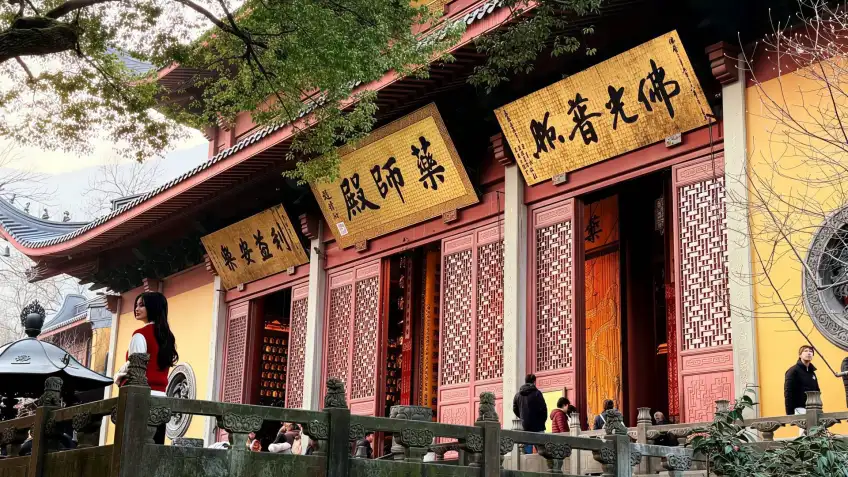
Lingyin Temple and its literary legacy
Tang Dynasty poet Song Zhiwen's lines "Cassia seeds fall from the moon, heavenly fragrance drifts beyond the clouds" perfectly capture the scent of osmanthus at Lingyin Temple. Emperors Kangxi and Qianlong left inscriptions during their southern tours, and the name "Yunlin" has been passed down ever since. Reading the stories before looking at the plaques and couplets is far more rewarding than just photographing the exteriors.
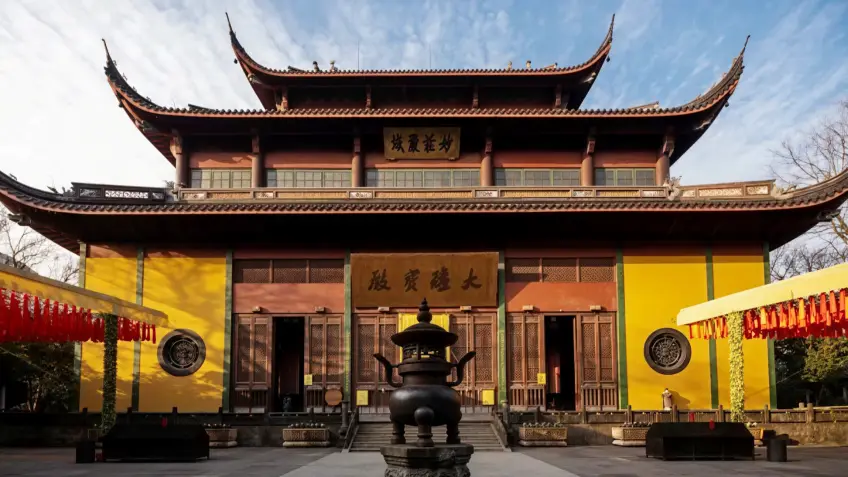
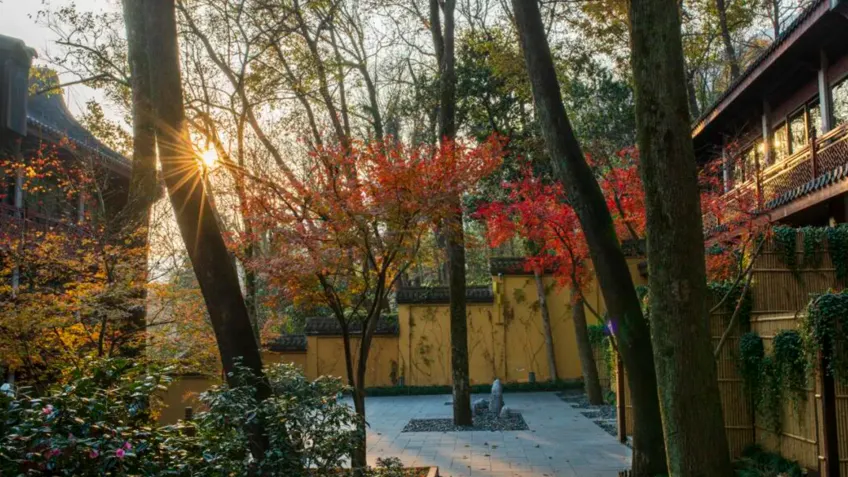
Osmanthus season is the best time for a leisurely stroll through the side corridors and courtyards.
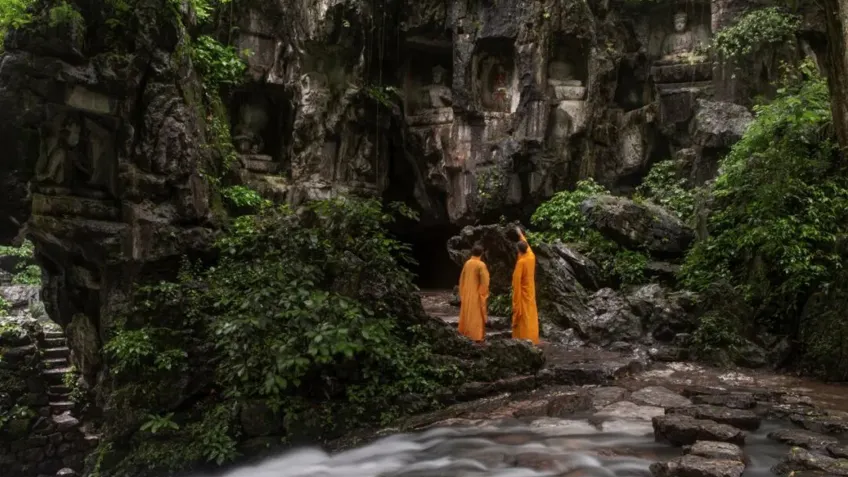
The Buddhist culture of Lingyin Temple
Events such as Laba porridge offerings, Buddha bathing ceremonies, and Guanyin's birthday celebrations are held from time to time. Check reservation and dress code requirements before attending. First-time visitors to China may want someone experienced to walk them through temple etiquette (keeping quiet, which direction to walk around shrines, not stepping on thresholds, etc.).
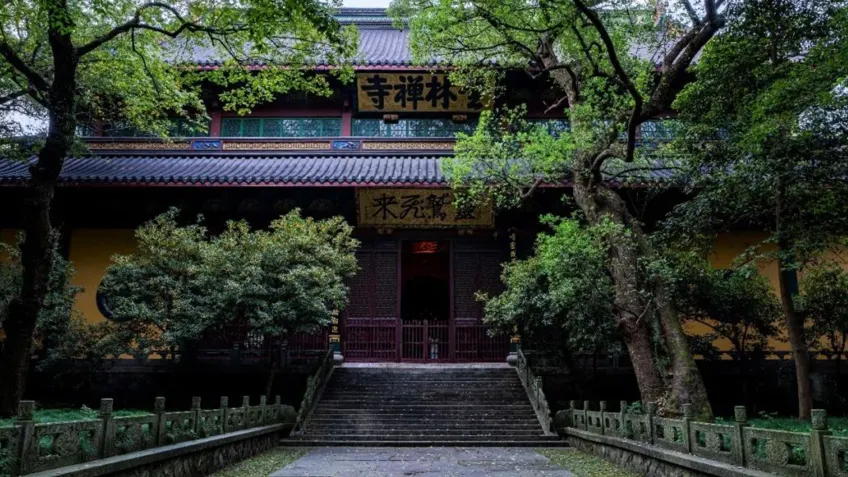
The plaque reading "Yunlin Zen Temple" above the mountain gate was bestowed by Emperor Kangxi, but locals still commonly call it Lingyin Temple.
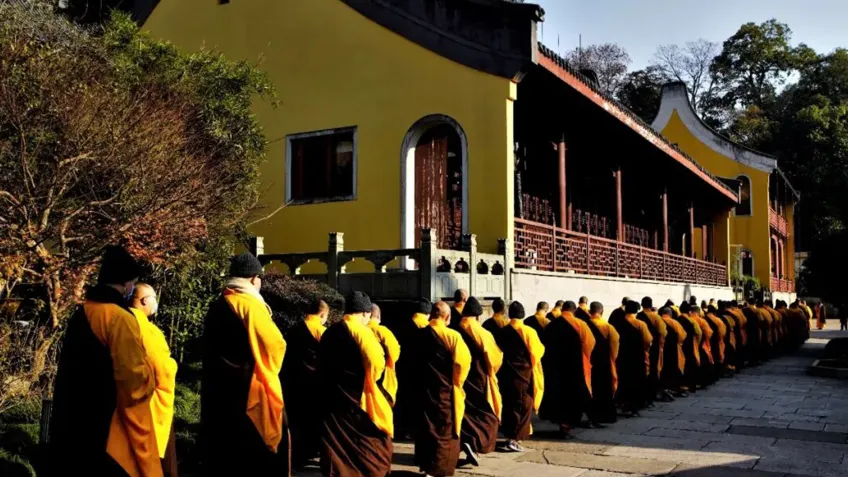
If you see monks walking in line, please step aside and stand quietly—this is part of their daily practice.
[Jiangnan Elegance 3 Days 2 Nights] Hanshan Temple + Lingering Garden + Feilai Peak & Lingyin Temple + West Lake Boat Tour + Viewing Fish at Flower Harbor + Tea Plantation Photo Shoot
[Top Attractions] Hanshan Temple, Lingering Garden, Feilai Peak & Lingyin Temple, West Lake boat tour, Viewing Fish at Flower Harbor, tea plantation photo shoot! [Comfortable Stays] Choose between 4-star and 5-star hotels! [Thoughtful Service] Dedicated custom vehicles and East China drivers with years of safe driving experience for a worry-free journey! [No Shopping Stops] No-shopping quality group tour for a pure travel experience—one trip, memories for a lifetime! [Bonus] One bottle of branded mineral water per person per day!
Recommended Lingyin Temple routes
Highlights route: Scenic area entrance → Feilai Peak stone carvings → Mountain Gate / Hall of Heavenly Kings → Mahavira Hall → Medicine Buddha Hall → Huayan Hall / Jigong Hall → Exit.
Sightseeing route: Entrance → Feilai Peak → Lengquan Stream → Yongfu Temple → Taoguang → Lingyin main halls → Fayun Ancient Village (requires more stamina).
Tickets and reservations: Starting December 1, 2025, admission to the Lingyin Feilai Peak Scenic Area (including Lingyin Temple, Yongfu Temple, and Taoguang Temple) is free, and the former Lingyin Temple incense ticket has been abolished. You must make a real-name timed reservation via the "Hangzhou Lingyin Feilai Peak" mini program on WeChat/Alipay. Open daily from 7:30–17:30, with last entry at 17:00. Do not trust ticket scalpers.
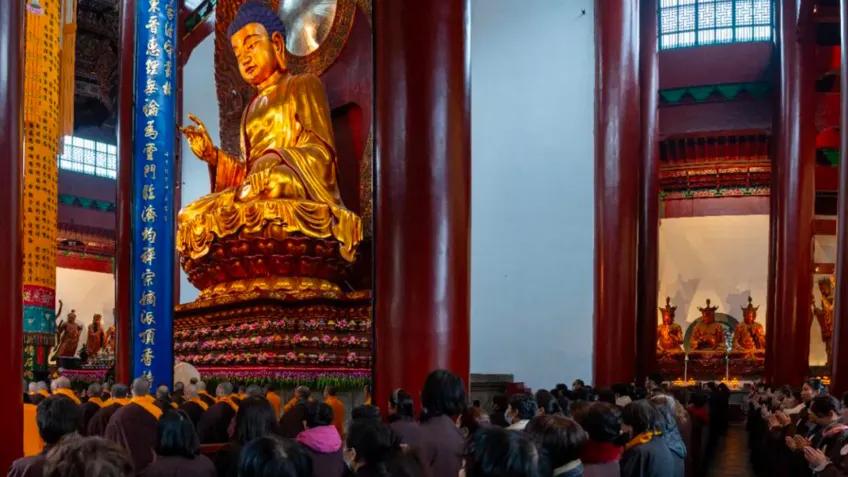
Before entering the hall to pay respects, check whether photography is allowed and set your phone to silent.
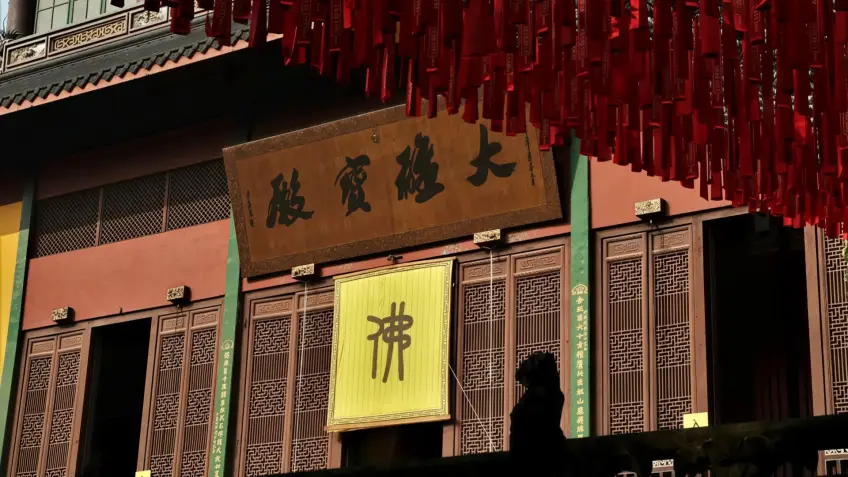
Check the on-site signs for rules on purchasing and hanging prayer ribbons. Just do what feels right within your budget.
FAQs
Why is Lingyin Temple in Hangzhou called "Lingyin"? What's the origin?
According to temple legend, when Huili saw that Feilai Peak resembled a ridge of Vulture Peak in Central India, he sighed, "When the Buddha was alive, this place was mostly hidden by immortals," hence the name Lingyin ("Hidden Immortals"). Although Emperor Kangxi bestowed the name "Yunlin Zen Temple," locals still commonly call it Lingyin Temple.
Does Lingyin Temple require a ticket now? How do I book?
Starting December 1, 2025, admission to the scenic area is free and the Lingyin Temple incense ticket has also been abolished, but a real-name, time-slot reservation via the "Hangzhou Lingyin Feilai Peak" mini program is still required. Slots fill up fast during holidays. Vegetarian meals, the Beigaofeng Cableway and other services are charged separately; check on site for details.
What's the relationship between Feilai Peak and Lingyin Temple? Should I visit both?
Feilai Peak sits right in front of the temple, and its stone carvings and "flying here" legend set the scene geographically. Most visitors see the peak first, then the temple. Skipping the peak means missing half the story. If you're short on time, spend less time at the carvings, but still make sure to see the main niche.
How do I get to Lingyin Temple from the airport or train station? How should I arrange transport?
You can get there by bus or metro plus a connecting shuttle, but transfers and lines take time. If you have lots of luggage, are traveling with seniors or kids, or need an early morning visit for worship, choose door-to-door station transfer service. To combine multiple stops like West Lake and Songcheng, consider a private car. When you can't use Chinese navigation apps, a pre-booked station transfer is usually more reliable than hailing a taxi on the spot.
Which is better: a group tour, a guided tour, or a private custom trip?
For a hassle-free trip covering West Lake and Lingyin Temple, pick a group tour that includes Lingyin Temple. For in-depth commentary on legends and temple etiquette, hire a guide. Need to customize the number of days, stops, and language? Go for a private custom tour. You can submit your group size and dates via the links in the text or the customer service card at the bottom.
Now that you know the history and routes, leave your date, group size, departure point, and whether you want Feilai Peak commentary, and our travel consultant will help you choose the easiest option among a group tour, a private car, a station transfer, or hiring a guide. May you understand the meaning of "Lingyin" and enjoy a peaceful journey through this ancient temple.