

Wuxi Lingshan Brahma Palace: why is it called the "Louvre of the East"?
Lingshan Brahma Palace (灵山梵宫) stands inside the Lingshan Scenic Area (灵山胜境) in Wuxi, at the foot of the Lingshan Grand Buddha (灵山大佛). The Second World Buddhist Forum opened here in 2009. The building has about 72,000 square meters of floor space. Its entrance hall, corridor hall, pagoda hall and altar are covered in Dongyang wood carvings, Dunhuang-style murals, liuli glass art and vaulted ceilings of golden nanmu wood. Buddhist art becomes a palace you can walk through, which is why people often call it the "Louvre of the East."
Short on time? A Wuxi group tour covers Lingshan's main sights in one day.
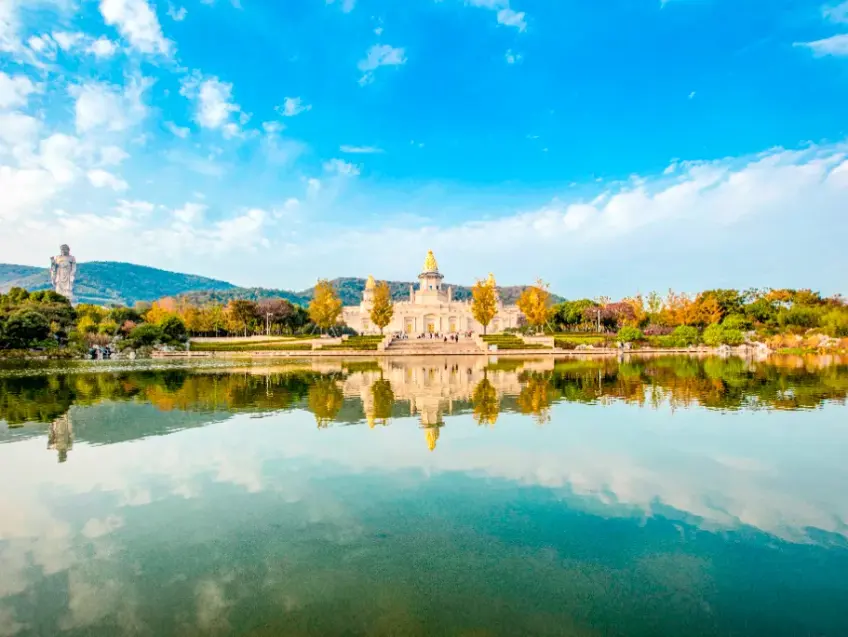
The palace is reflected in the water, with the Lingshan Grand Buddha in the distance. A Lingshan Scenic Area ticket is listed at ¥210 (reference price, November 2026), and a temporary price applies while the show is being upgraded. Check the site's notices on the day for prices, opening hours and show times.
A hall of art, not a mock-antique shell
Lingshan Brahma Palace has about 72,000 square meters of floor space on stepped terraces. The entrance hall, corridor hall, pagoda hall, altar and conference hall are separate spaces that open into one another. Dongyang woodcarving, Dunhuang-style murals, lacquer art and modern light and sound effects all sit along one route, so it feels more like a walk-through exhibition of contemporary Buddhist art.
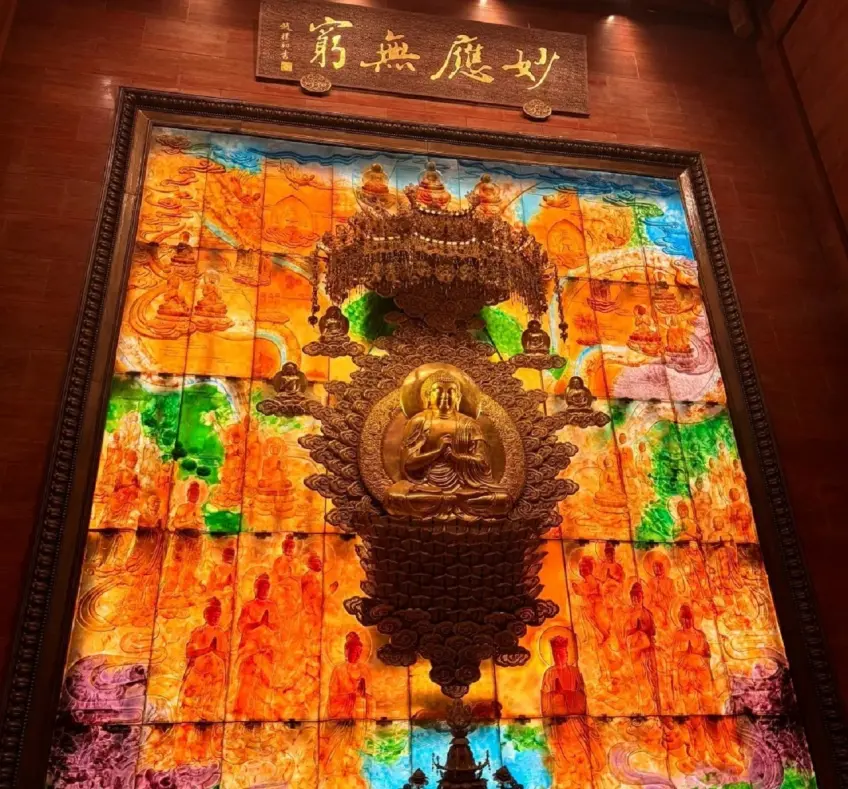
The haloed Buddha mural under the "Infinite Wondrous Response" plaque is the first scene in the story the building tells. Please keep your voice down and don't touch the exhibits.
Layout: from the entrance hall to the altar
The entrance hall opens with white marble and welcoming figures. Next comes the corridor hall, nearly 80 meters long under a vaulted ceiling of golden nanmu wood, then the pagoda hall and the altar, which seats about 1,500 people. Check the site's notices to see whether the large show *Ode to Auspiciousness* has resumed.
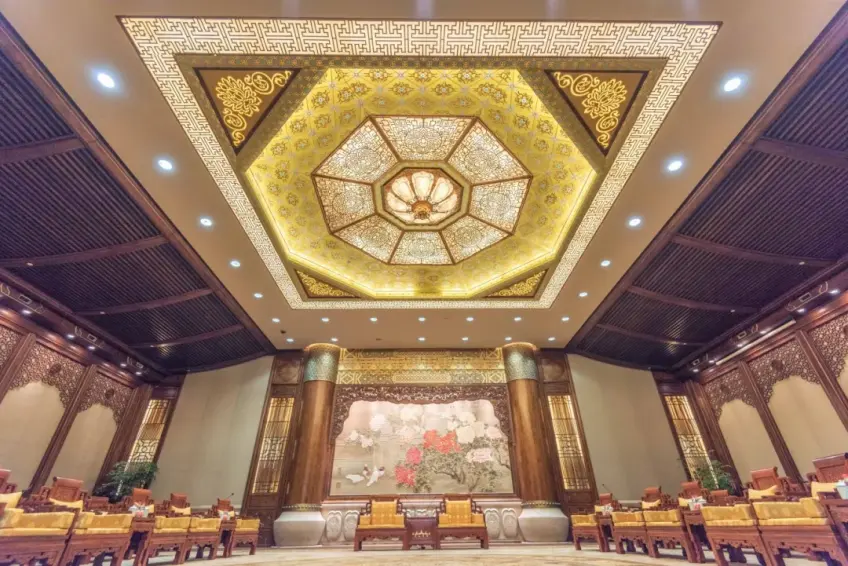
The halls in the conference area are wide and open, and the woodwork and lighting draw your eye along the central axis. It's a good place to get a sense of the whole building first.
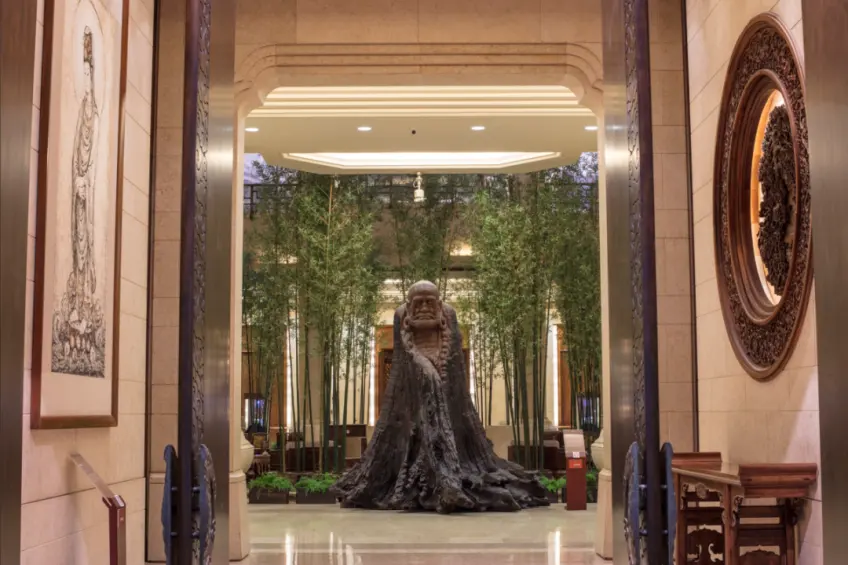
In the entrance hall, root-carved arhats stand against the shadows of bamboo. It sums up the palace's approach: the craftwork itself is the exhibit.
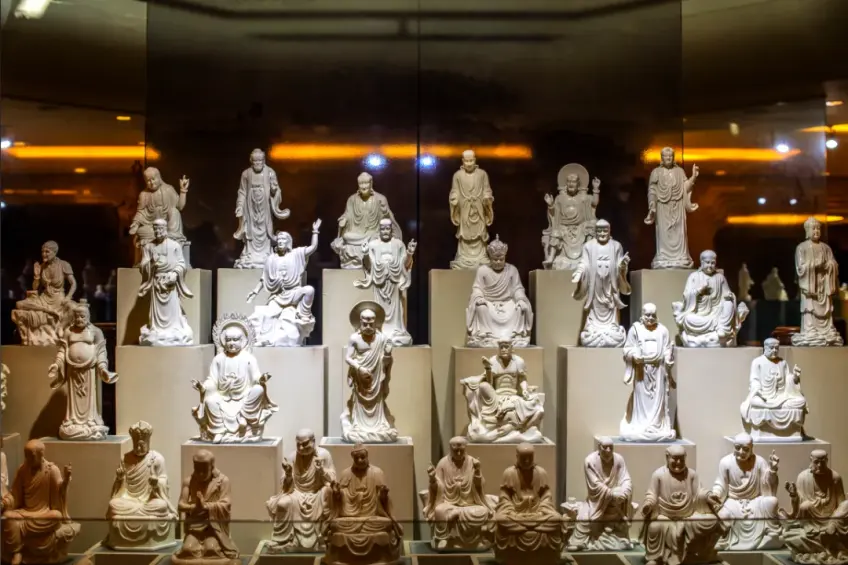
The white porcelain figures stand at different heights, a quick sample of how many crafts the hall brings together.
Inside the hall: looking up at the wooden dome
Step through the portico and the ceiling suddenly soars. Look up and the multi-tiered wooden dome narrows toward the center, where cool light shines through. It's the first piece of craftsmanship that stops people inside.
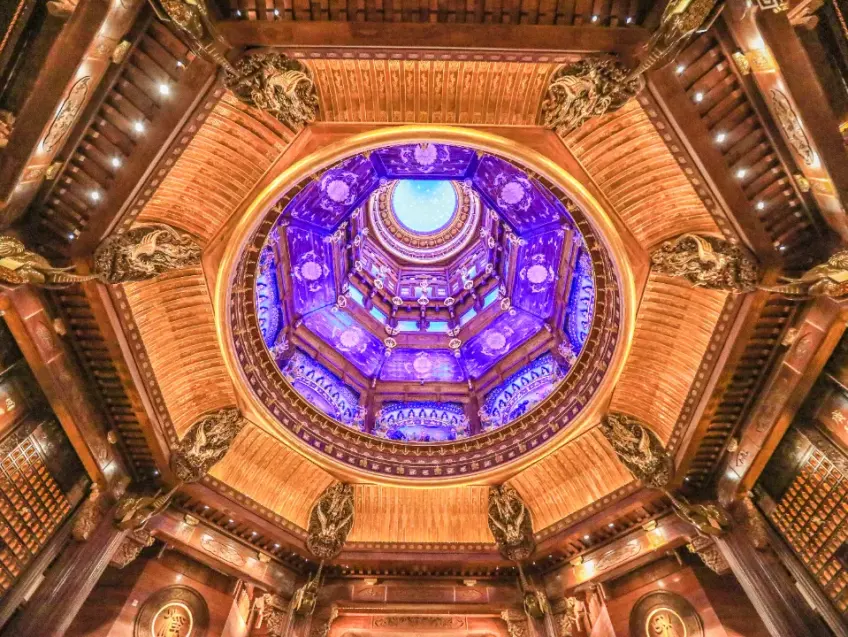
Looking up at the dome, you feel the space rise layer by layer. If you stop for photos, watch your step and the crowd, and don't walk against the flow or block the way.
Hidden lighting in the corridor hall and altar
The corridor hall is wide and densely carved. Its lamps are tucked into the coffered ceiling and pierced carving, so you see the light but not the lamps. On the altar dome, more than a thousand lotus lamps can change patterns, and this is the emotional high point of the building.
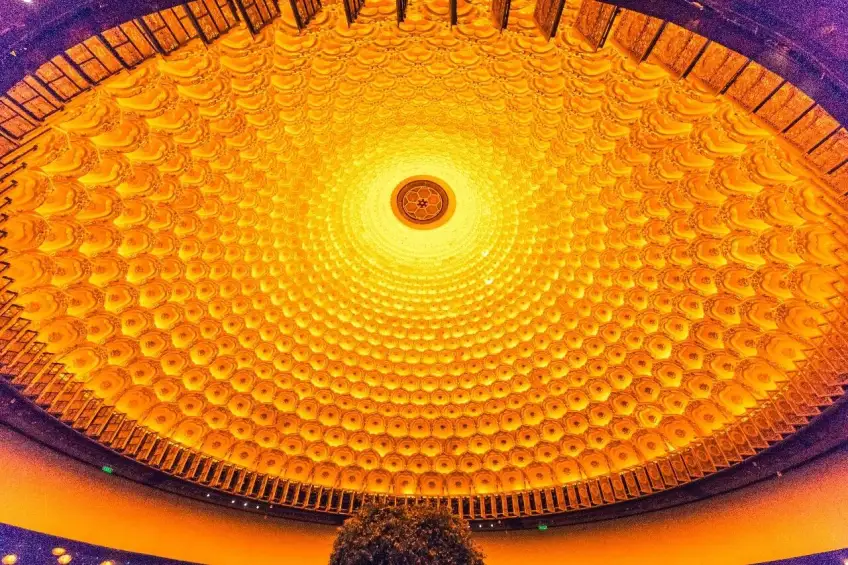
The lotus lamps spread out in rings across the altar dome. Shoot from below to capture the scale, and don't use a flash, which bothers other visitors.
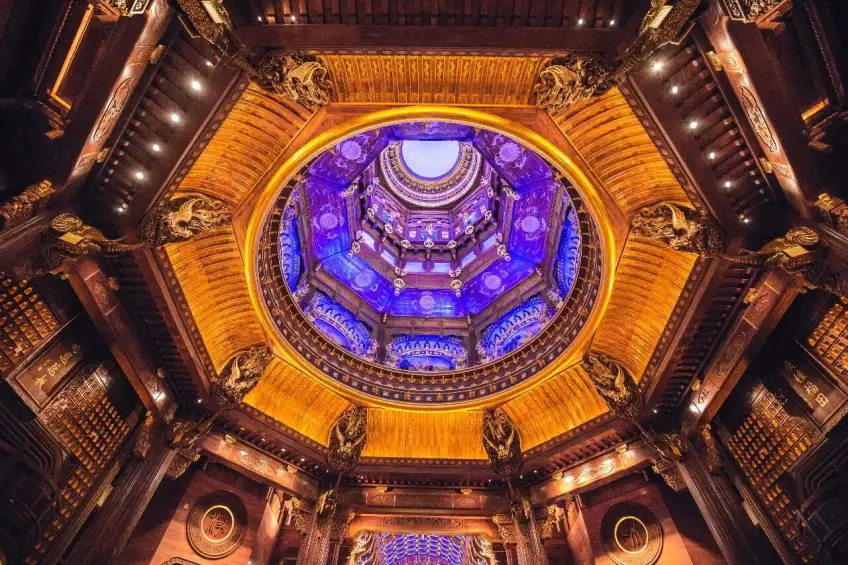
The golden nanmu vault runs the full length of the corridor hall. Walk slowly and look up at the beams and pillars.
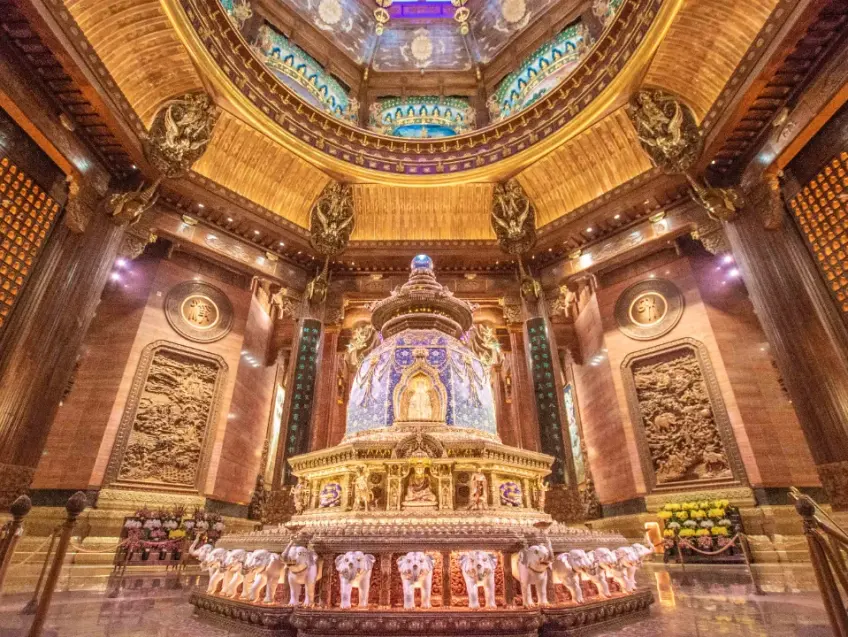
The blue-and-gold face of the relic stupa, with white elephants circling its base, is the centerpiece of the pagoda hall. Use it to get your bearings.
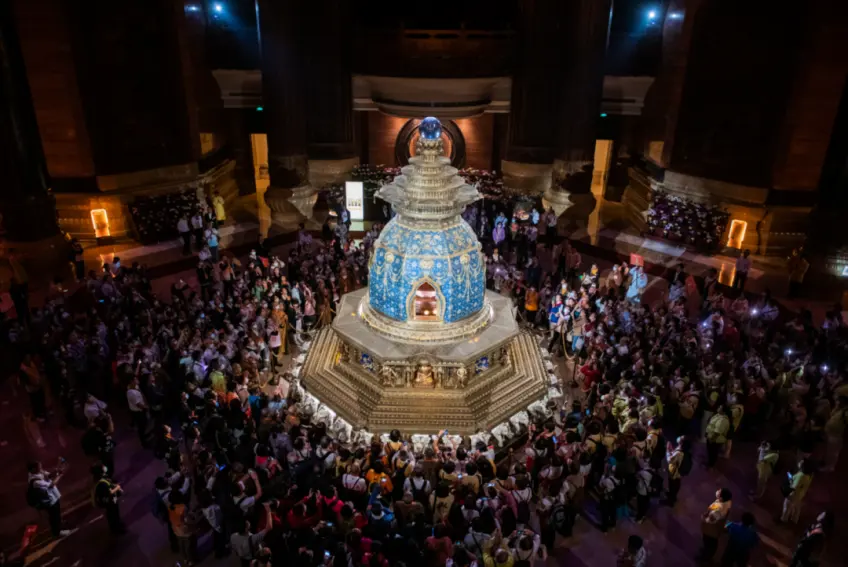
Visitors often crowd around the blue-and-gold stupa to shoot it from below. Take in the whole structure first, then move closer for the details.
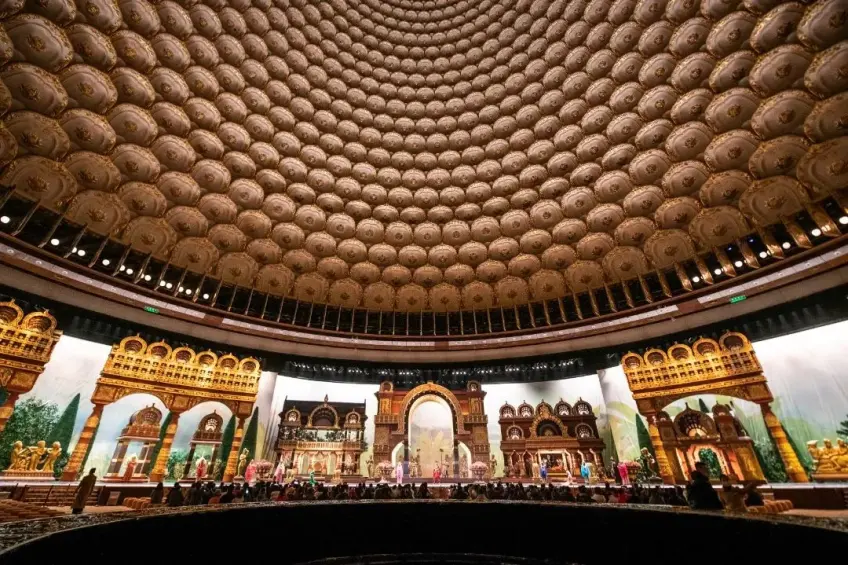
The golden dome of the altar theater covers both the stage and the seating, on a scale far beyond an ordinary hall.
Illuminated dome, stupa and woodcarving details
Panels on site describe exhibits such as Huazang World (华藏世界); check them for its size and the details of its seven-treasure inlay. Inside, the colored light dome, the relic stupa and the painted wood carvings all deserve a slow look.
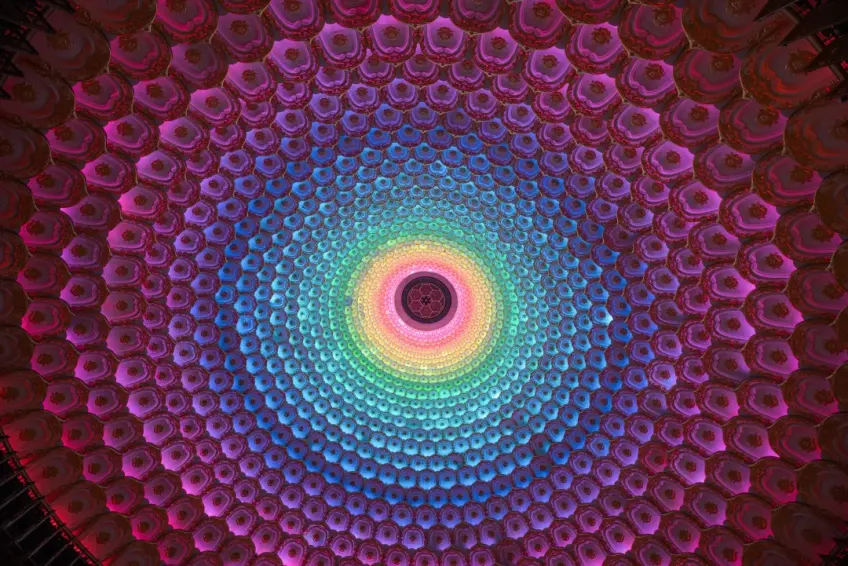
Seen from below, the lotus petals on the dome shift in color from the center outward. Please stay behind the barrier.
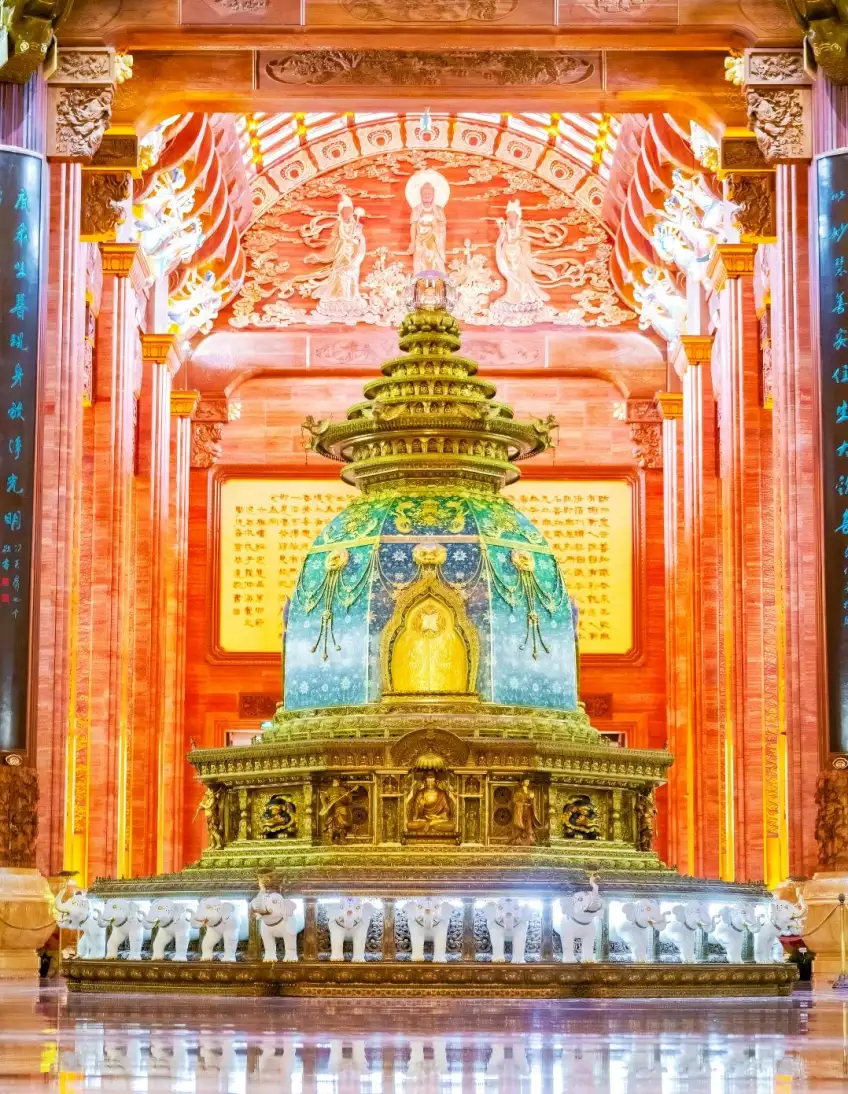
Up close, the blue-and-gold stupa shows the patterns on its face and the tiers of its base. It rewards a slow look.
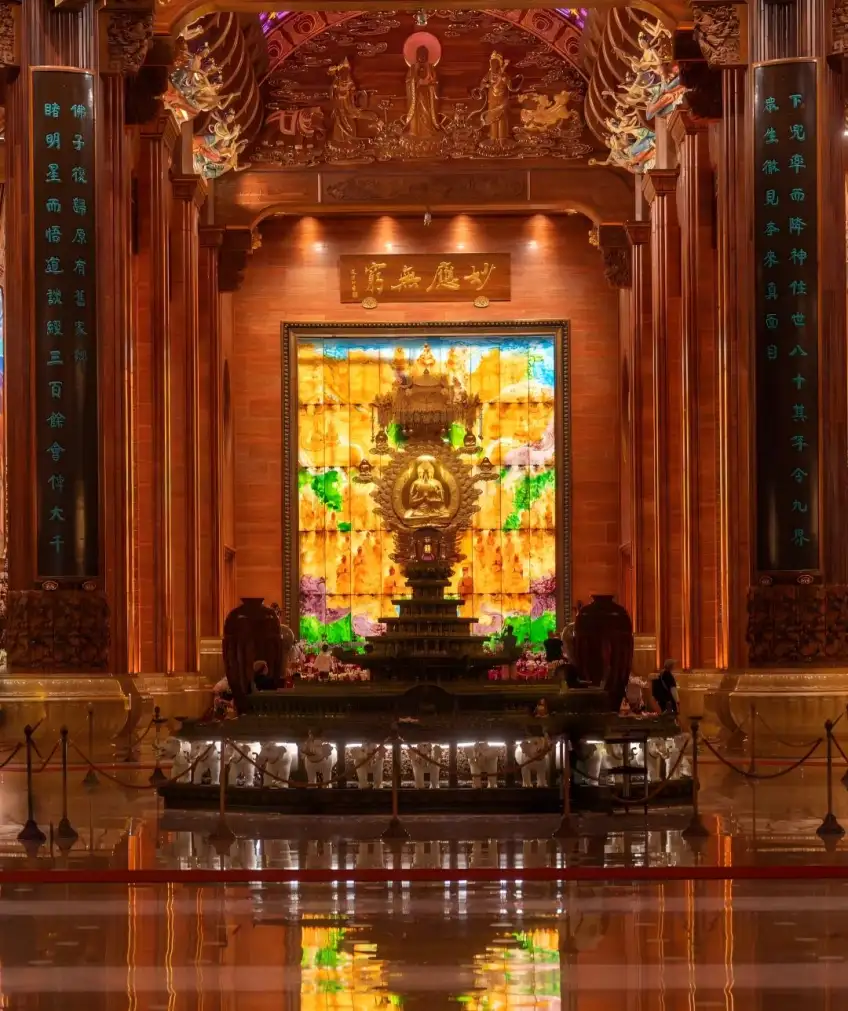
The haloed Buddha and the pillars beside it show that the displays and the building were designed as one.
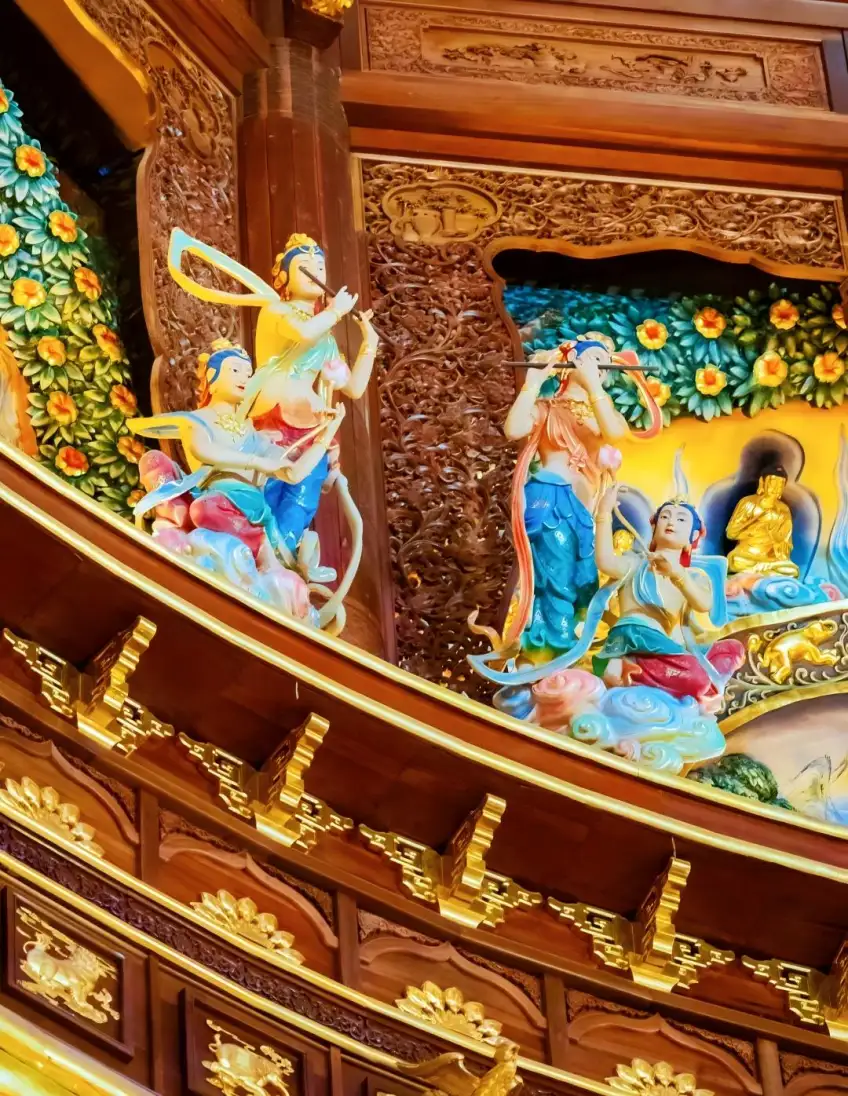
These richly colored wood reliefs of flying apsara musicians are often held up as an example of the craft behind the "palace of Eastern art."
White figure groups inside, statues outside
Inside, groups of white figures rise tier by tier up the steps, a clear example of how ritual scenes are displayed. Outside the palace, the park has more statues, such as Hundred Children Playing with Maitreya. Photograph it with the Grand Buddha behind it to round out your day at Lingshan.
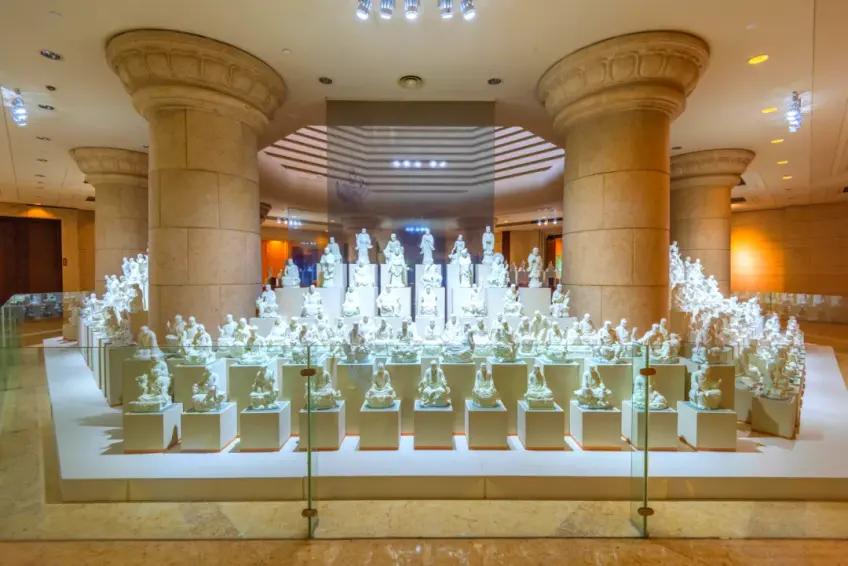
The tiered white figures form a closed circle, a natural place to pause before moving on through the exhibits.
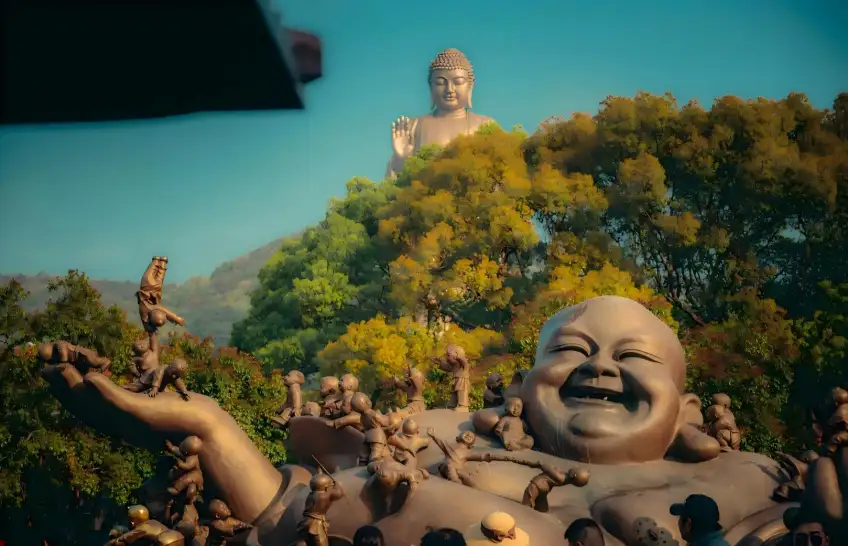
Hundred Children Playing with Maitreya, with the Grand Buddha in the distance, is one of the park's classic photo spots. Expect a line, and stay safe in the crowd.
Reception hall, lakeside and heading back
Some halls are used for meetings and receptions, and they are just as richly carved. On the way out, walk along the stone railings by the lake to end your visit.
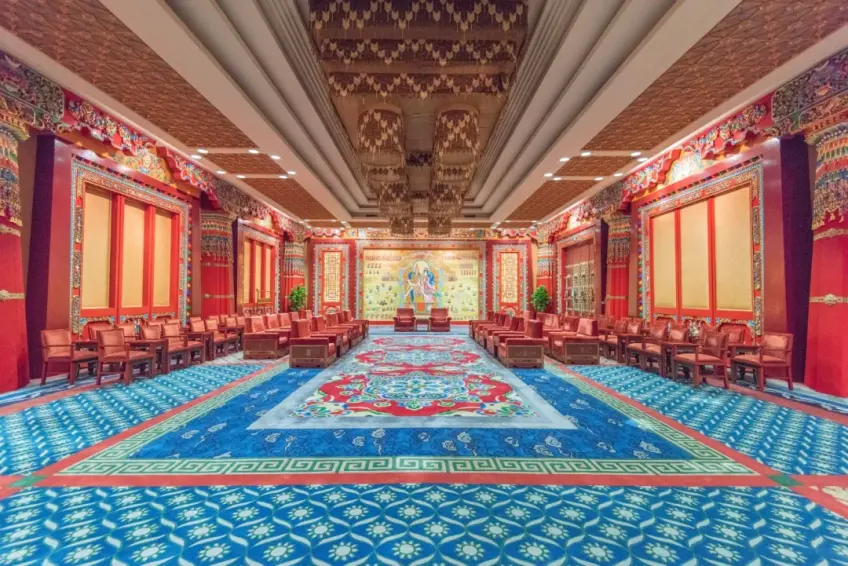
The carved reception hall shows how the palace is built to be used as well as admired.
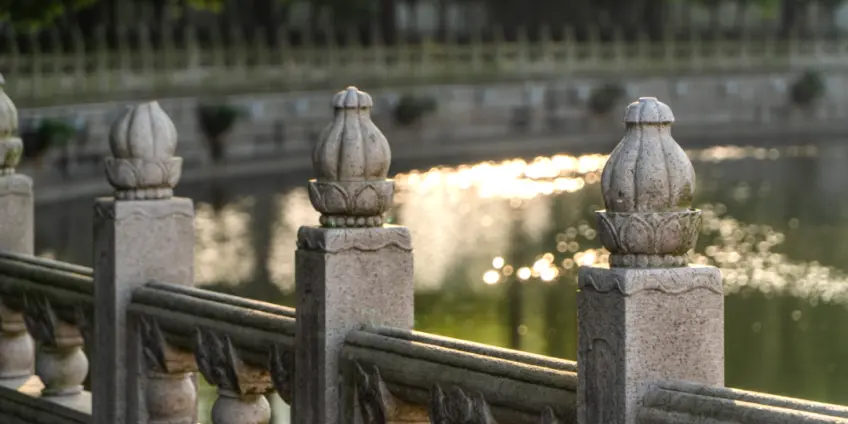
The lotus-carved stone railings and the light on the water make a fitting last view of a day at Lingshan.
How to book: group tours, custom trips, private cars and transfers
When you contact us, tell us your group size, dates and departure city, and whether you want the Grand Buddha or the show included, and our travel consultant will put together a plan. If you only need a car, book a private car. To hear the stories behind the halls, add a private guide. Tickets and shows follow the site's own rules.