
Hu Xueyan's Former Residence is located at 18 Yuanbao Street, Shangcheng District, Hangzhou. It was the home of Hu Xueyan, a prominent late-Qing dynasty merchant-official, covering about 2,000 square meters and known as the "No. 1 mansion in Jiangnan." The compound is divided into three sections: the central ceremonial axis with the sedan chair hall and Baishi Tower, the eastern residential courtyards including Nanmu Hall built from golden nanmu wood, and Zhi Garden in the west, featuring rockeries and water features. Adult admission is ¥20, and it's about a 700-meter walk from Jiangcheng Road Metro Station.
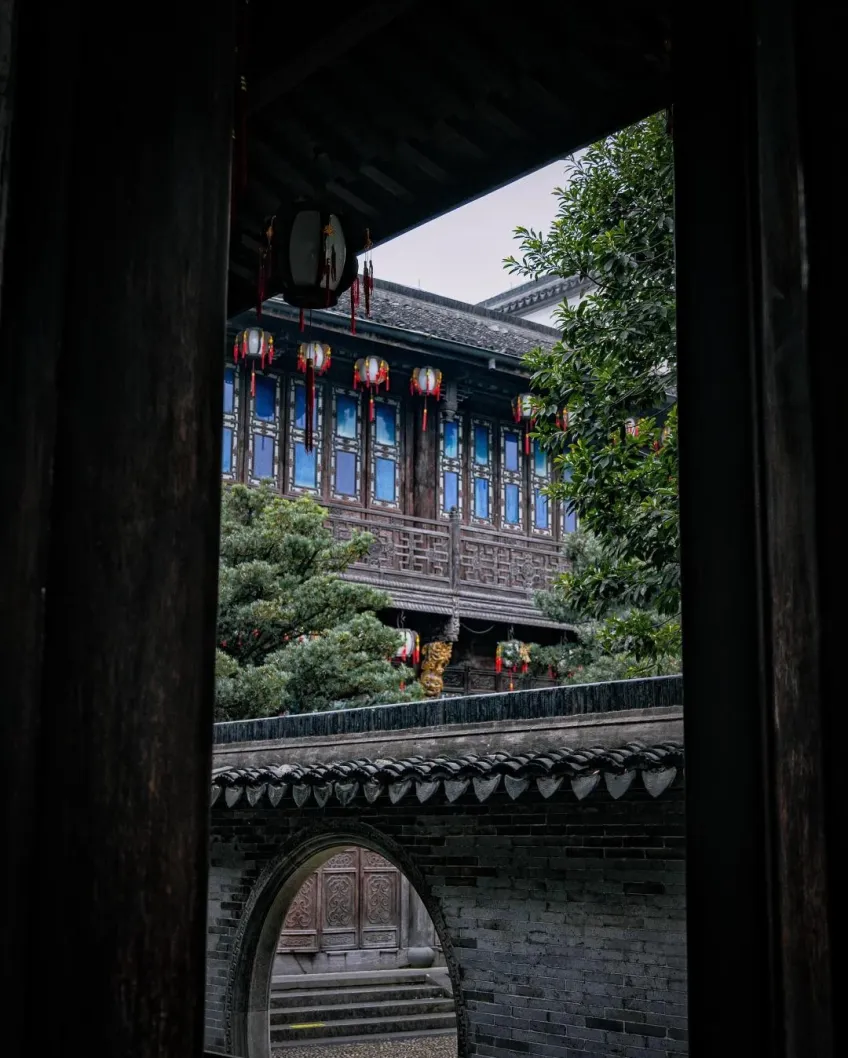
How did a cowherd become a red-topped merchant with wealth rivaling a nation? And why, after reaching the peak of his life, did he lose his entire fortune and die in despair within just ten years? No. 18 Yuanbao Street, Hangzhou — this famous Jiangnan mansion that Hu Xueyan spent half his life building witnessed it all.
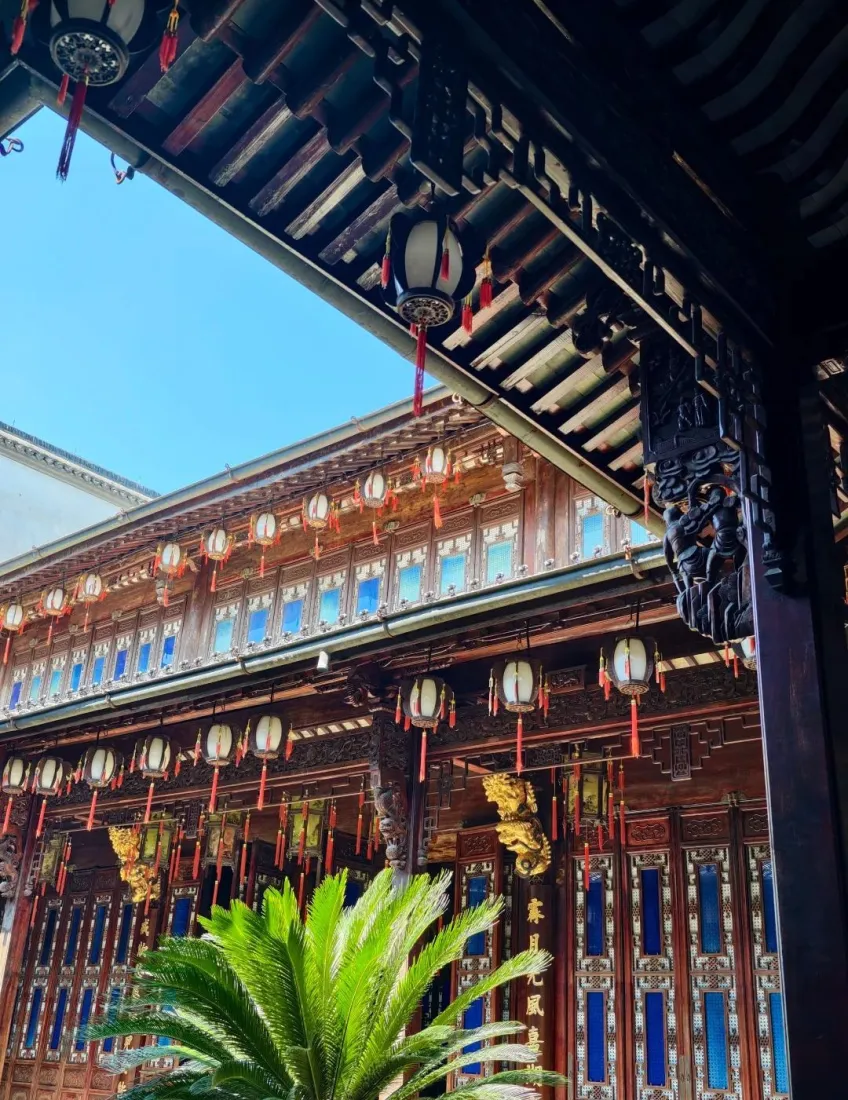
For a Hangzhou Hu Xueyan's Former Residence day tour, sort out tickets, transport and the courtyard route first, then book your car and guide: for an in-depth tour of the residence, hire a private guide; if you arrive in Hangzhou by high-speed train or flight and need to reach downtown, fill out the station transfer form; to link Qinghefang, Drum Tower and other spots, choose a private car or custom private trip; for a hassle-free itinerary, check out a group tour. Just leave your group size, date and departure city and we'll connect you.
Tickets for the Hu Xueyan's Former Residence
Address: No. 18 Yuanbao Street, Shangcheng District, Hangzhou.
Opening hours: Typically opens daily around 08:00, with last entry at 16:30. Whether it closes on Mondays or adjusts hours for holidays is subject to on-site or official announcements.
Admission: Adult tickets are ¥20; concession tickets for children, seniors, students, etc. are ¥10. Whether advance reservations are required and guided tour fees depend on the booking channel on the day.
Time needed: Allow 3–6 hours, including Zhi Garden and snacks in the surrounding streets.
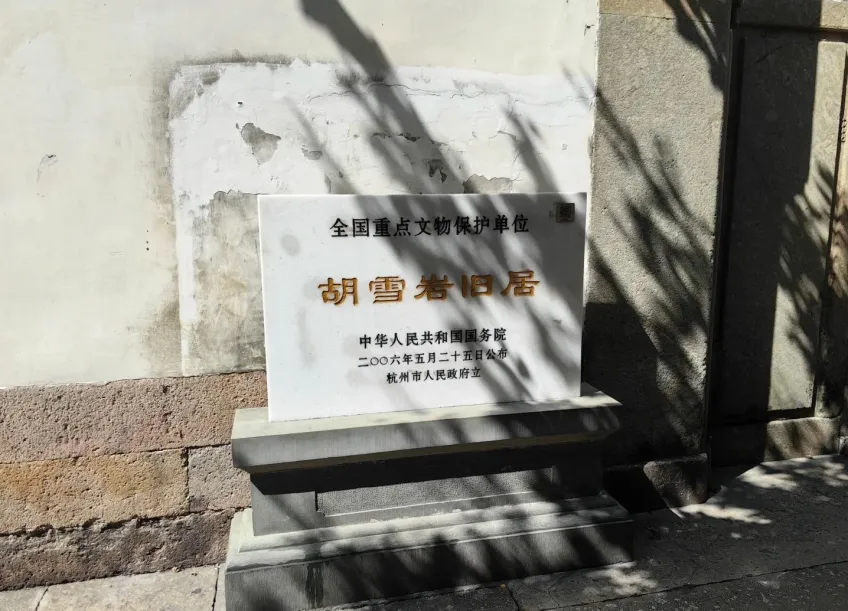
The residence is a Major Historical and Cultural Site Protected at the National Level, marked by a heritage plaque just inside the gate.
How to Get to Hu Xueyan's Former Residence (Transportation Guide)
Metro: Take Metro Line 5 or Line 7 to Jiangcheng Road Station, exit from Exit E or H, and walk about 700 meters to arrive.
Bus: Take bus 71, 127, etc., to the "Huxueyan Former Residence" stop; or take bus 8, 13, 308, etc., to the "Gulou" stop, then walk a few minutes. Routes and schedules are subject to change on the day.
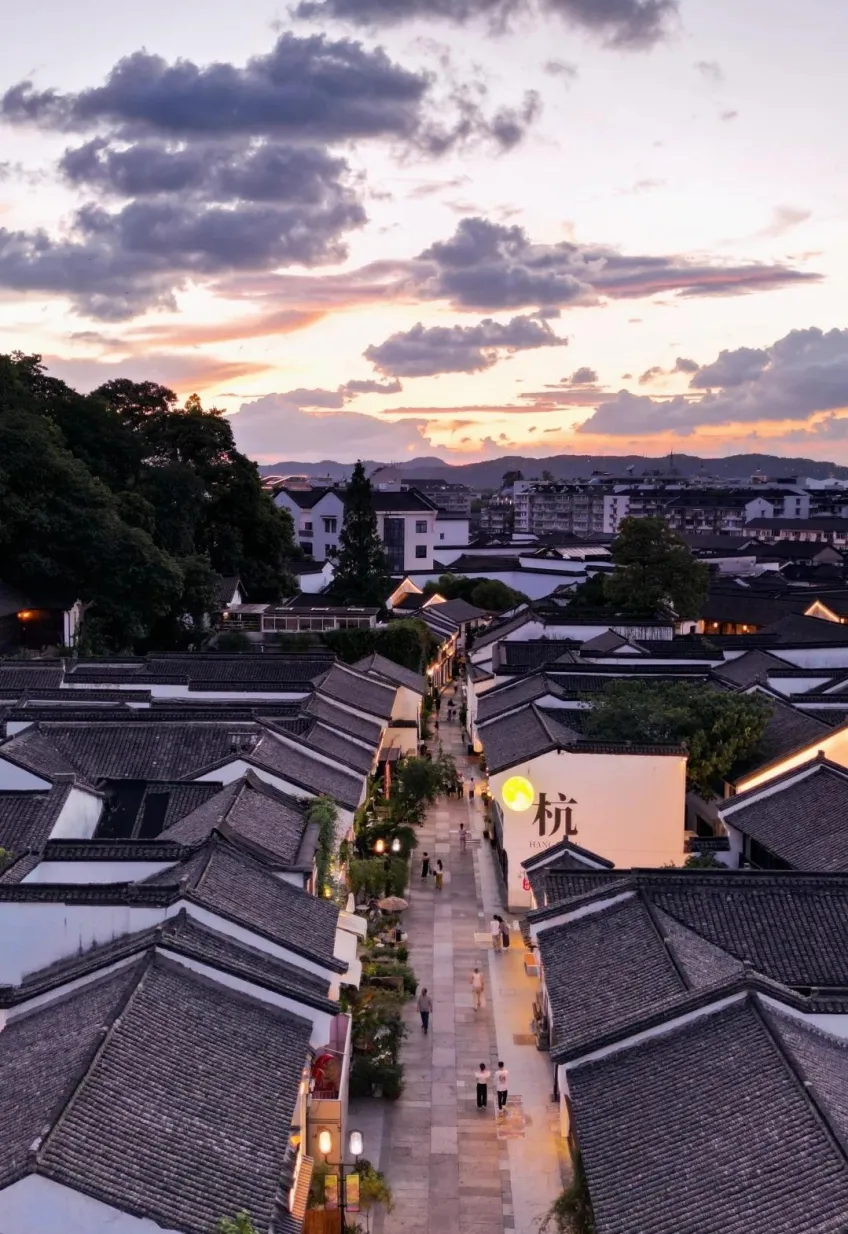
After exiting the metro, walk along the old neighborhood. The streets around Gulou and Dajing Alley are within walking distance of the former residence.
Recommended Tour Routes for Hu Xueyan's Former Residence
Combined Routes Around Hu Xueyan's Former Residence
Start by eating and shopping along Qinghefang Street → walk through Shiwukui Lane to experience the everyday charm of old Hangzhou → pass by the Drum Tower for some stunning traditional-style photos → stop by the red walls of Deshou Palace → finally, a 5-minute walk takes you straight to the Hu Xueyan's Former Residence.
Qinghefang is the largest and best-preserved Southern Song dynasty market street in Hangzhou. Antique-style shops line both sides of the street, along with authentic local snacks, handicrafts and souvenirs. Here you can taste Hangzhou specialties like Dingsheng cake and Congbaohui (scallion pancake wraps), and shop for silk, tea, fans and other local goods. If you're planning to visit Hu Xueyan's Former Residence, it's easy to add Qinghefang to your itinerary.

[Beautiful Qiandao Lake 6 Days 5 Nights] Hangzhou (Hu Xueyan's Former Residence + Xixi Wetland + West Lake) + Qiandao Lake + Soong Ching Ling's Former Residence, No Shopping Stops
[Quality Promise] Private customization, butler service, enjoy an exclusive journey! [Famous Attractions] Top-rated attractions: West Lake island visit, Qiandao Lake, Xixi Wetland, Hu Xueyan's Former Residence, Soong Ching Ling's Former Residence! [Comfortable Stays] Choose between 4-star and 5-star hotels! [Thoughtful Service] Custom vehicles and experienced East China drivers for a worry-free trip! [No Shopping Stops] A no-shopping group tour for a pure travel experience—one trip, lifelong memories! [Bonus] One bottle of branded mineral water per person per day!
Hu Xueyan's Former Residence Tour Route Guide
Hu Xueyan's Former Residence covers about 2,000 square meters and is divided into a central axis area, an eastern courtyard and a western garden.
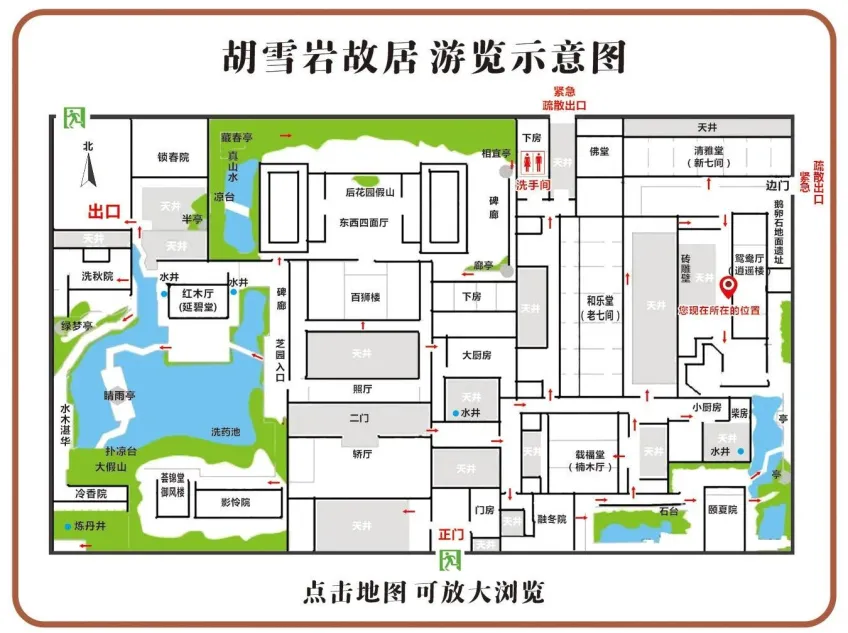
The central axis is the ceremonial area, consisting of buildings such as the Sedan Chair Hall and Baishi Tower. It forms a symmetrical and solemn courtyard where Hu Xueyan mainly received guests and held ceremonies.
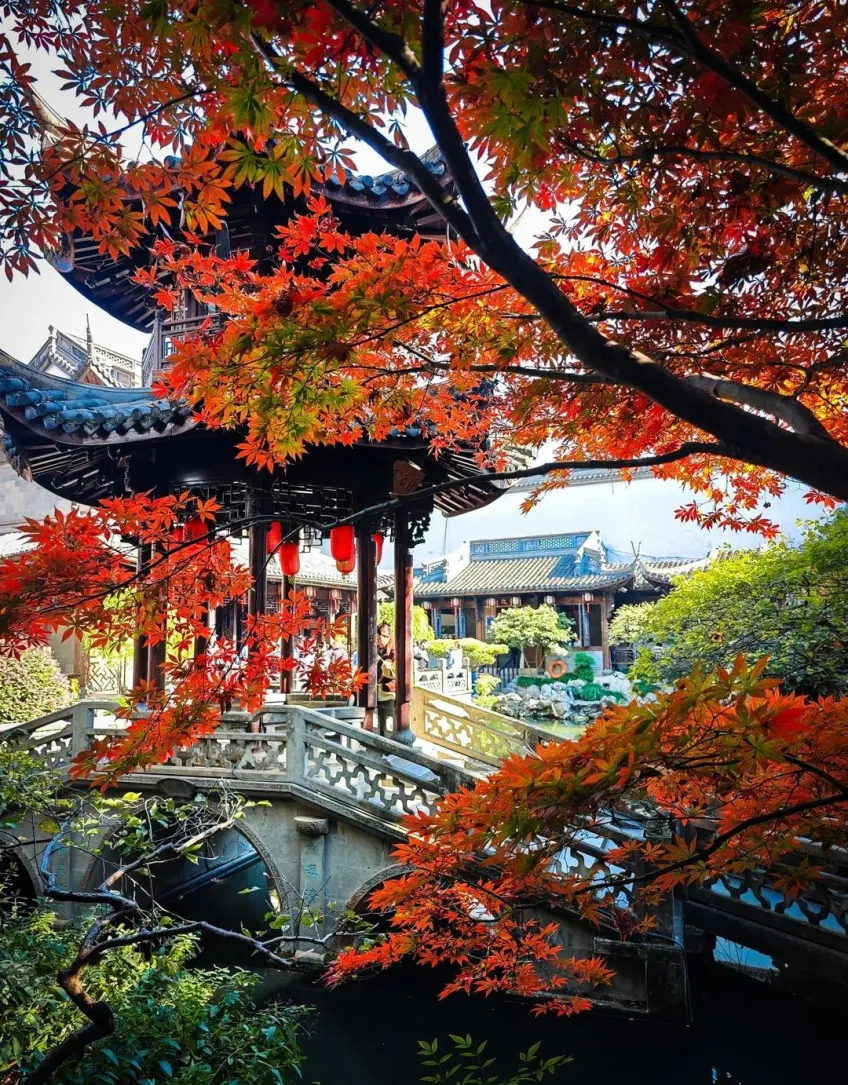
The west garden is the garden area within the residence, also known as "Zhi Garden," and it is the highlight of the Hu Xueyan's Former Residence. Named after the garden designer Yin Zhi, it brings together the finest elements of Jiangsu and Zhejiang gardens. Inside, rocks are stacked into hills and water is shaped into ponds, with pavilions and towers arranged in perfect harmony—a rare and elegant gem among Jiangnan gardens.
The eastern courtyard is the residential area, consisting of courtyards such as Hele Hall, Qingya Hall and Nanmu Hall, where Hu Xueyan's family lived. The architectural layout here differs noticeably from the first two areas, shifting from dense to open and from formal to relaxed.
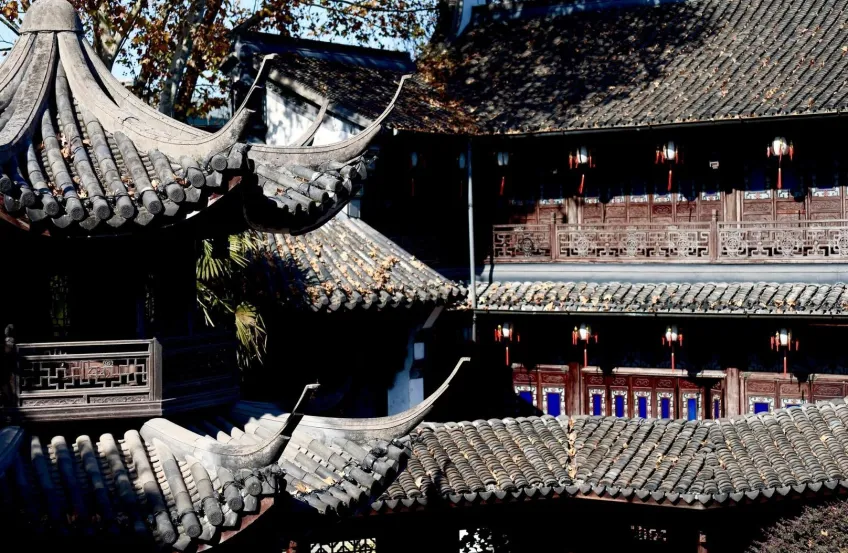
Zhi Garden on the west side, with its pavilions and gray tiles, is the garden area of the former residence most worth slowing down for.
Recommended Route for Hu Xueyan's Former Residence
To avoid backtracking, we recommend this route: Sedan Chair Hall → Baishi Tower (central axis) → Nanmu Hall (eastern courtyard) → Zhi Garden (rockery, zigzag bridge, Yufeng Hall) → Exit.
The best time to visit is usually spring or autumn: spring blossoms and autumn leaves, when Hangzhou's weather is most comfortable. Summer offers shady greenery, while winter brings a serene garden atmosphere. Exact bloom and foliage times depend on that year's weather.
If you're not satisfied with the routes above, contact customer service to customize a one-on-one itinerary based on your needs.
The unassuming Hangzhou-style Shikumen gate
Step through the unassuming Hangzhou-style stone gate, and you officially enter Hu Xueyan's Former Residence. Following the central axis, the sedan chair hall, main hall, and Simian Hall are arranged in sequence—symmetrical and orderly, strictly adhering to traditional Chinese etiquette.
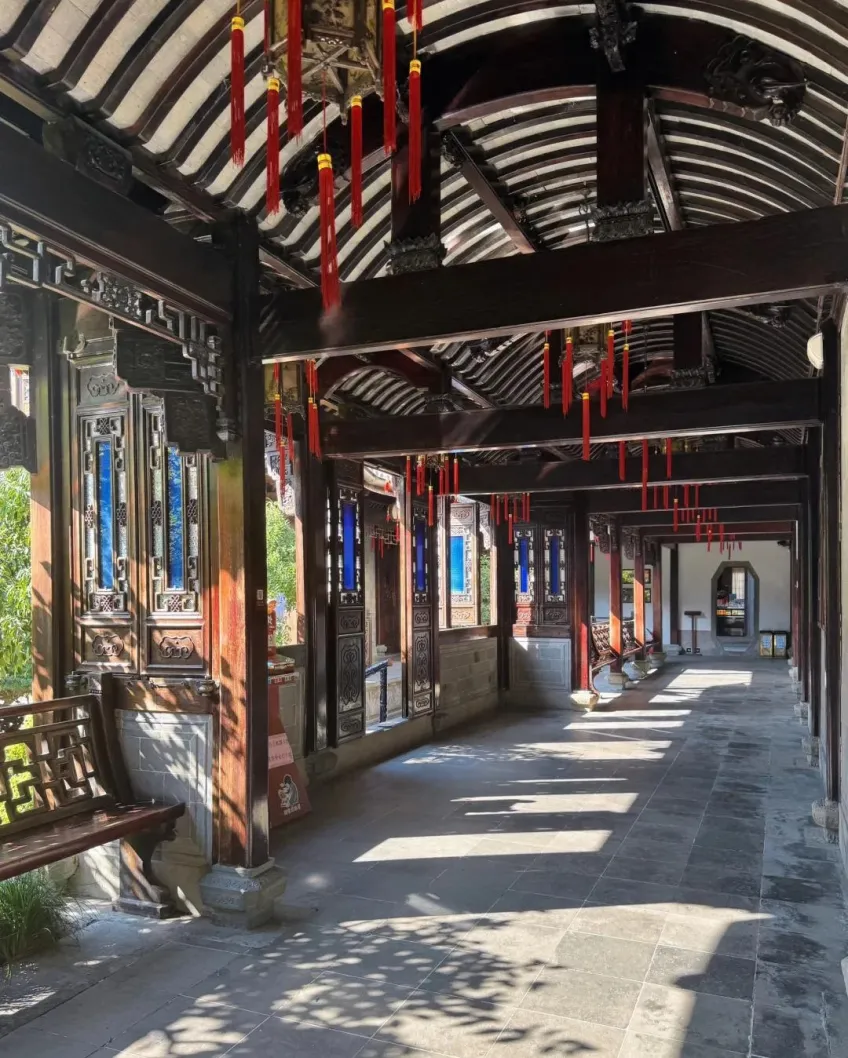
Inside the Shikumen gate, symmetrical corridors unfold. Moving inward along the central axis, the ceremonial and living areas appear one after another.
Sedan Chair Hall
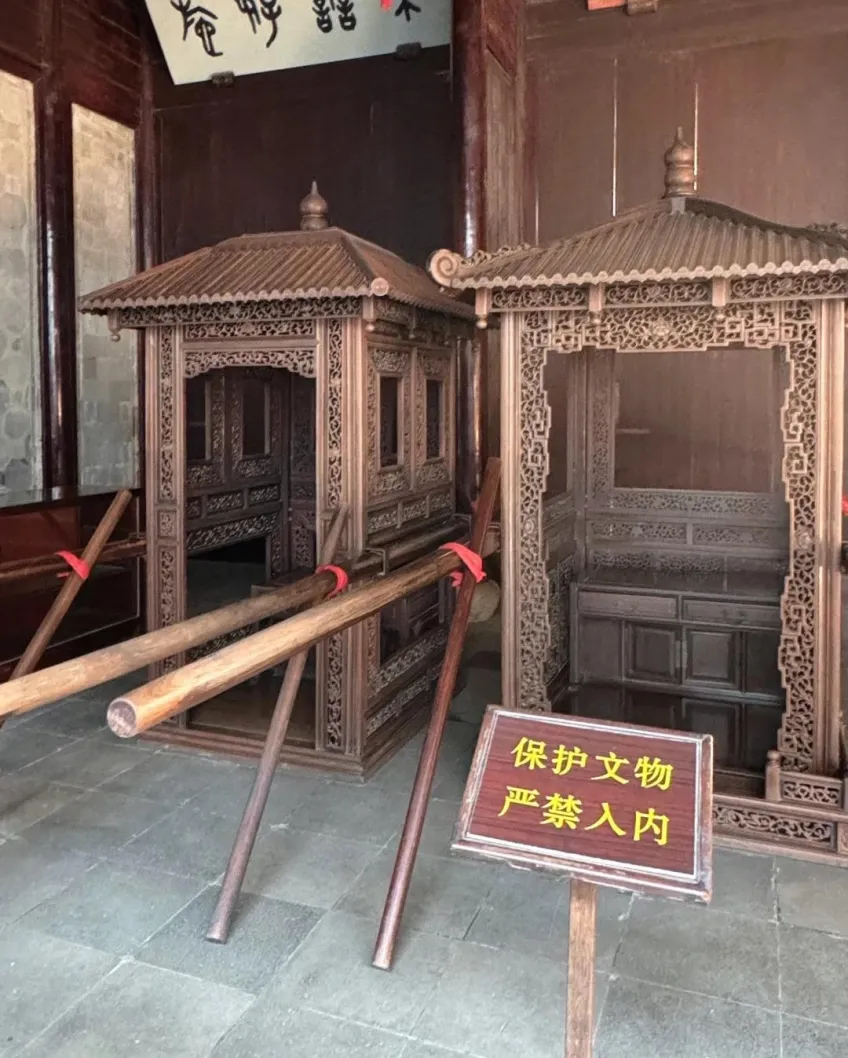
The sedan chair hall served as the residence's front facade, where the host greeted and saw off guests and where visitors boarded and alighted from their sedan chairs. The sedan chair hall of Hu Xueyan's Former Residence covers about 218 square meters and consists of five courtyards, making it spacious and imposing. On the left side of the hall stand two redwood official sedan chairs, their bodies carved with exquisite openwork patterns in delicate craftsmanship that exudes elegance and grandeur. In modern terms, these two redwood sedan chairs were the "luxury cars of ancient times."
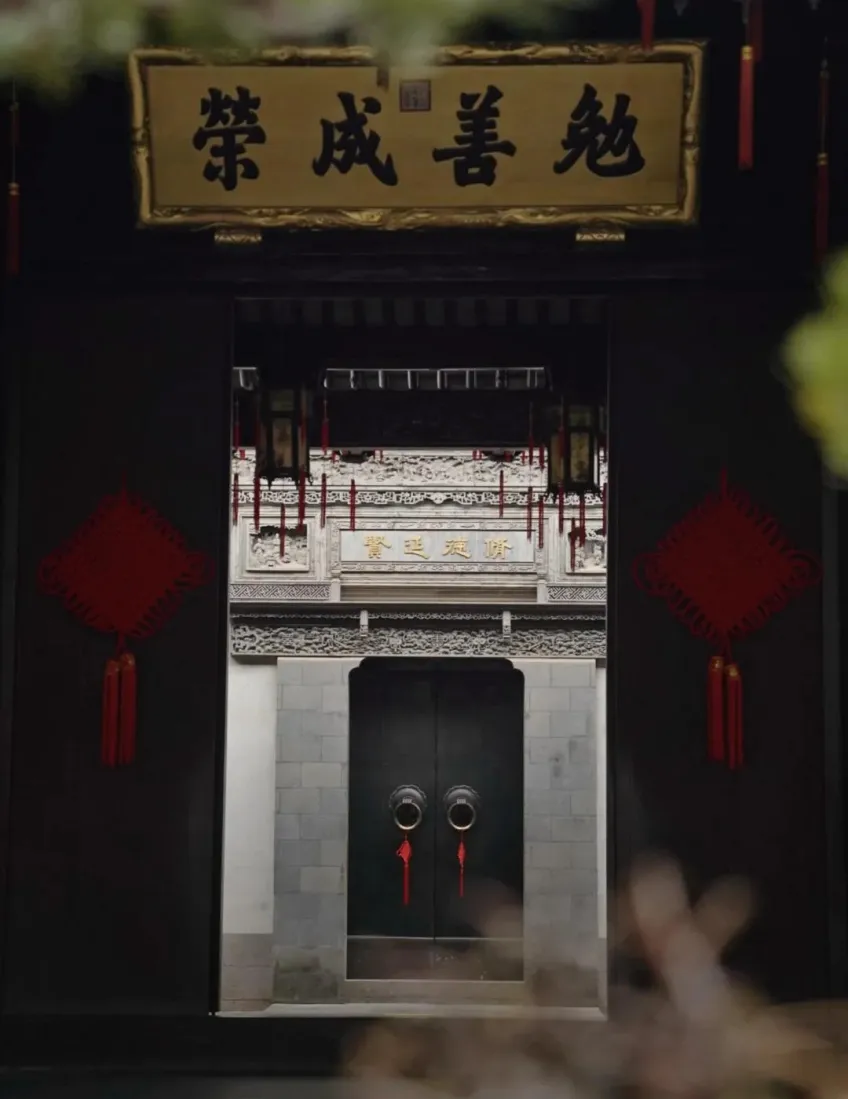
Five plaques hang high above the sedan chair hall. From left to right, they read "Joy in Charity," "Spreading Benevolence," "Strive for Goodness, Achieve Honor," "Blessed by Heaven," and "Mastering Commerce," revealing Hu Xueyan's life experiences, his attitude toward the world, and his character.
Among them, the "Strive for Goodness, Achieve Honor" plaque was bestowed by Emperor Tongzhi of the Qing Dynasty. Look closely and you'll notice the Chinese character for "goodness" is missing two strokes. This implies that "good deeds have no limit," reflecting Emperor Tongzhi's wish to encourage the Hu family to do more good. It also demonstrates the status and importance Hu Xueyan held in the eyes of the imperial court at the time.
When visiting Hu Xueyan's Former Residence, most people are used to looking ahead, behind, left, and right—but in the sedan chair hall, you need to look up.
On the ceiling of the sedan chair hall, paintings depict bats clutching copper coins. The brushwork is delicate and the colors elegant, still faintly visible even after a century. They serve not only as architectural decoration but also carry the auspicious meaning of "fortune right before your eyes."
Main Hall "Baishi Tower"
Pass through the sedan chair hall and you'll see a two-story pavilion—the ceremonial heart of the residence: Baishi Tower (Hundred Lions Tower). This is where Hu Xueyan once received visiting dignitaries and discussed important matters.
Heading up the stairs of Baishi Tower, you'll notice rosewood lions carved into the second-floor railings. Legend has it that 100 lions were carved in total—some crouching, some squatting, some playing, some roaring—each unique and lifelike. Their eyes were said to be inlaid with gold. Time has taken its toll, and only a handful remain on the railings today, but they still hint at the luxury and craftsmanship of the past.
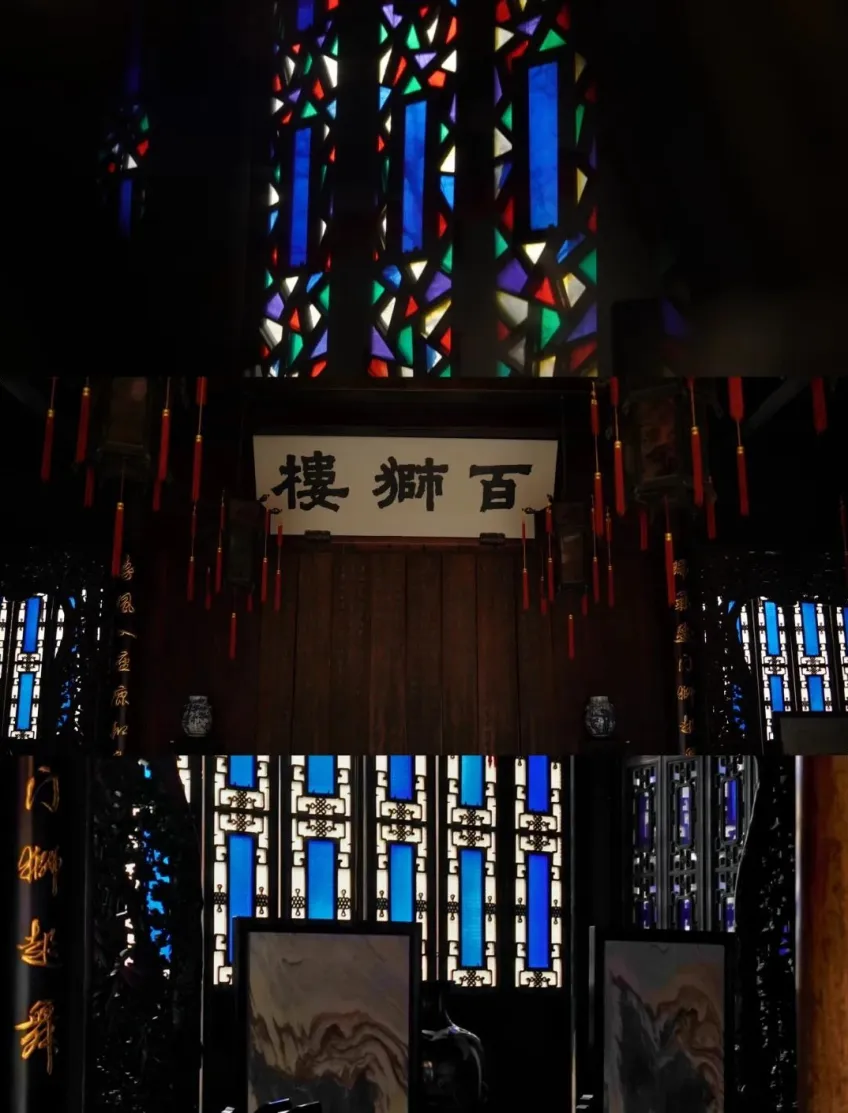
Baishi Tower is the ceremonial heart of the residence. You have to look closely at the rosewood lions and gold-thread details to grasp just how extravagant it once was.
Simian Hall
A few steps further brings you to Simian Hall. Don't miss the wooden "ox leg" carvings on the roof. These eave-supporting brackets were meticulously carved by craftsmen into scenes of figures and stories, with clean lines and lifelike expressions that reveal the ingenuity behind every cut.
Continuing along the corridor, pause to admire the "Phoenix Among Peonies" brick carving beneath the eaves. Crafted using an openwork technique with blue coloring at the base, it depicts two phoenixes weaving through three peony blossoms amid auspicious clouds. The workmanship is so fine that even the feather patterns are clearly visible. Symbolizing marital harmony, wealth and prosperity, this carving represents Hu Xueyan's best wishes for his family—and remains one of the most romantic blessings left by Jiangnan craftsmen for future generations.
Nanmu Hall
Leaving the corridor, you enter Nanmu Hall, a two-story pavilion facing east. What's truly breathtaking is that every beam, pillar, window lattice, carving, and even the floorboards are made entirely of premium golden nanmu wood. Even today, it remains an exceedingly rare architectural marvel.
Golden nanmu wood has been reserved for imperial use in China since ancient times. It has a warm texture, fine grain and naturally emits an elegant, lingering fragrance that repels insects. This scent keeps the entire hall cool and comfortable even in the peak of summer—a comfort no air-conditioned room can match.
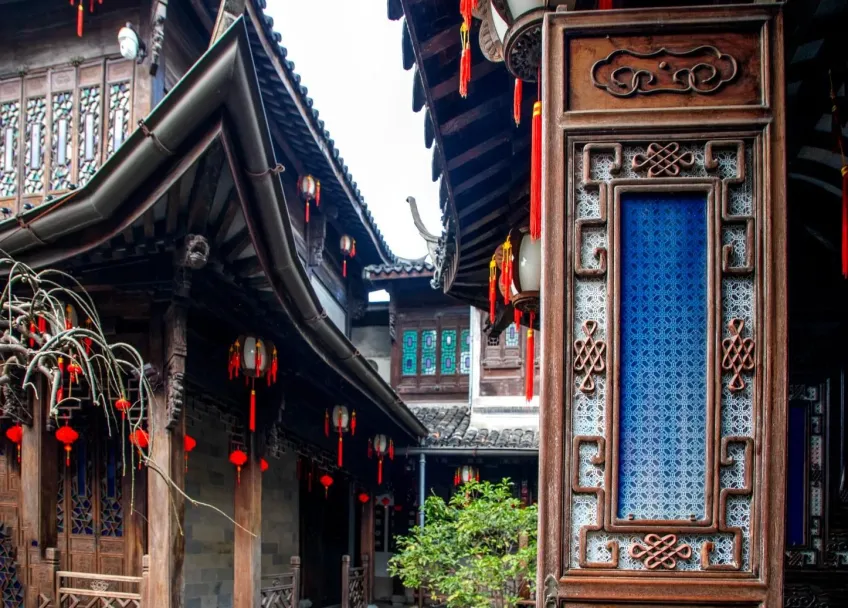
The beams, pillars, and window lattices of Nanmu Hall are all golden nanmu wood. It stays cool even in midsummer, making it a must-stop on the east courtyard tour.
Zhi Garden
Pass through the main hall to the western courtyard, where you'll find Zhi Garden, Hu Xueyan's favorite retreat. Named after its designer, the garden architect Yin Zhi, it showcases the very essence of Jiangnan garden art.
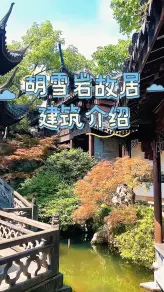
The garden is dotted with pavilions, terraces, and towers arranged in pleasing variety; small bridges and winding corridors lead to secluded spots; and rockeries and strange stones stand row upon row. One artificial cave is said to be the largest man-made grotto in China, built entirely from Lake Tai stones. Inside, dense stalagmites create a twisting, deep passage, with chambers closely connected in exquisite detail.
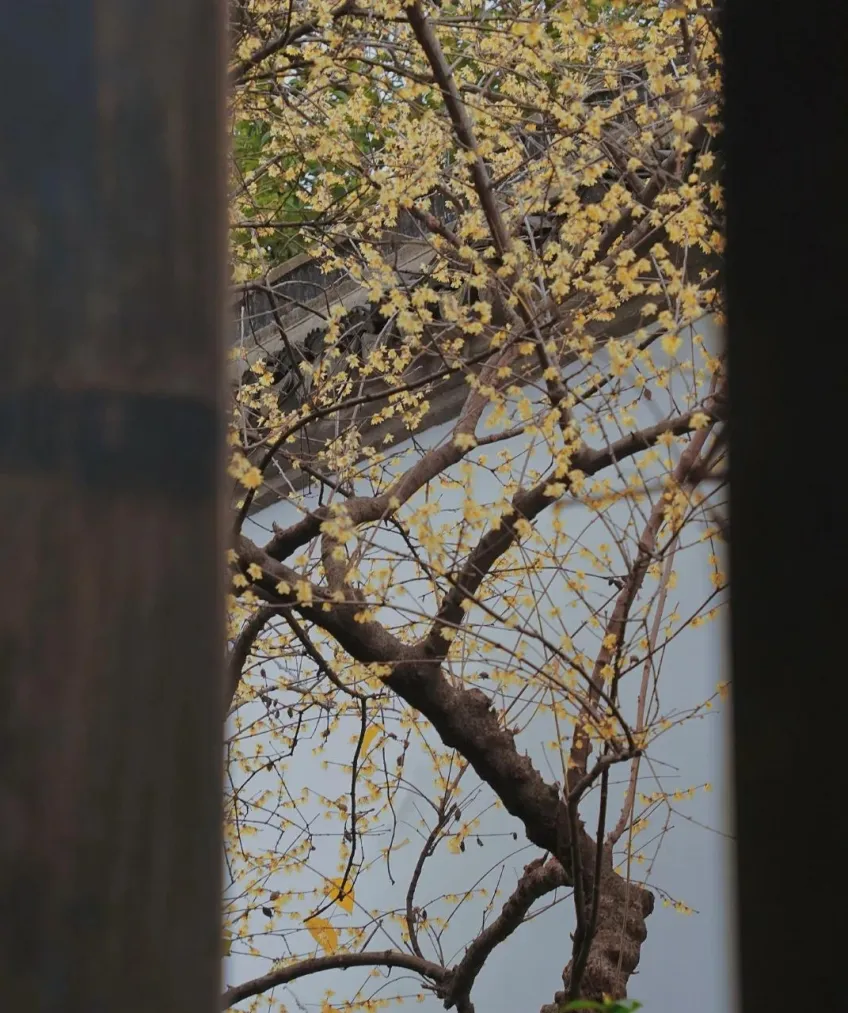
The entire rockery in Zhi Garden reportedly cost over 100,000 taels of silver. Yufeng Hall, perched atop the rockery, was the tallest structure in Hangzhou at the time. From inside the hall, you could take in the whole garden and even see West Lake clearly. It's easy to imagine how triumphant Hu Xueyan must have felt standing here, gazing out over such prosperity.
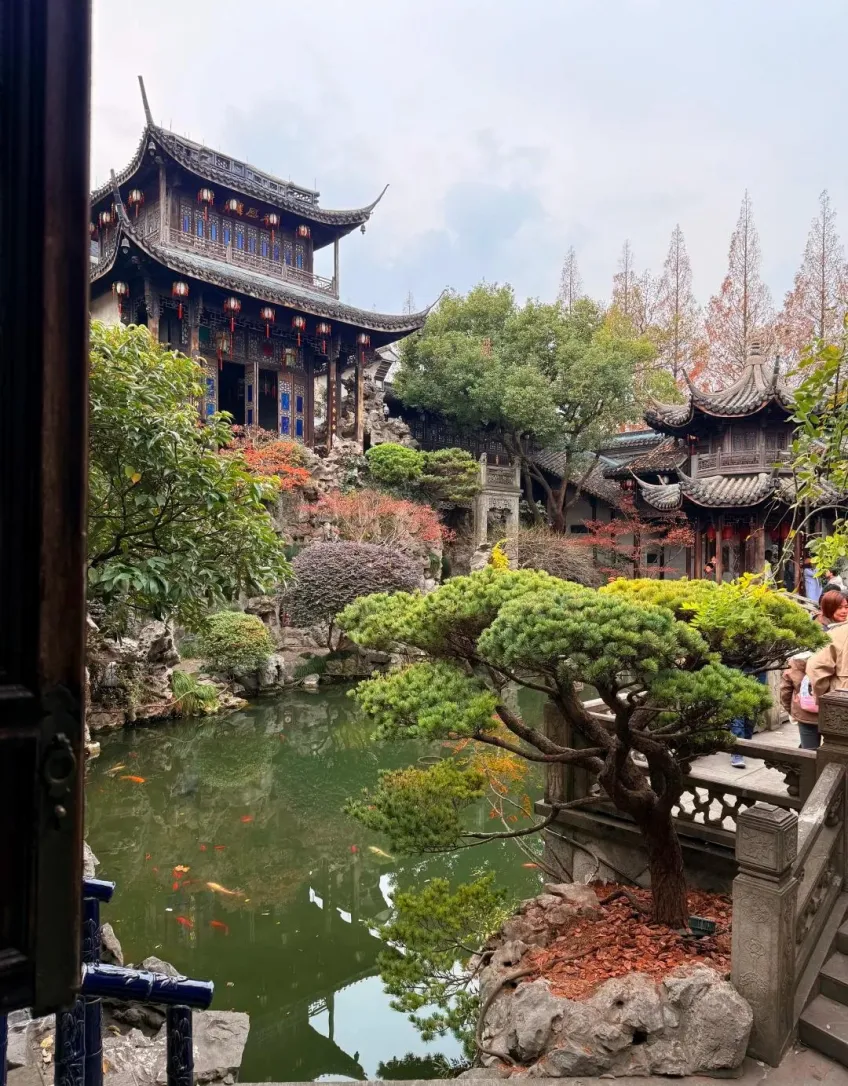
With reflections in the pond, rockeries and pavilions, standing near Yufeng Hall lets you take in the entire garden.
Professional visitor service center
Today, the Hu Xueyan's Former Residence has weathered the years yet still greets every visitor at its finest. The residence is thoughtfully equipped with complete facilities, a visitor service center and advanced security systems. Rest areas, dining areas and other amenities are also available throughout the site, ensuring every guest enjoys a comfortable and relaxing visit.

[Dream of Jiangnan 6 Days 5 Nights] Hangzhou (West Lake + Xixi Wetland + Hu Xueyan's Former Residence) + Suzhou Zhouzhuang + Wuzhen East & West Scenic Zones, no shopping stops
[Water Towns & Gardens] Full access to Wuzhen's East and West Scenic Zones with small bridges, flowing water, and traditional homes; Humble Administrator's Garden + Zhouzhuang let you admire the beauty of Jiangnan from every angle! [Top Attractions] Humble Administrator's Garden, Zhouzhuang, West Lake, Wuzhen, Xixi Wetland, Hu Xueyan's Former Residence, and more! [Comfortable Stays] Choose between 4-star and 5-star hotels! [Thoughtful Service] Dedicated vehicles and experienced drivers across East China ensure a worry-free journey! [Pure Travel] A quality group tour with no shopping stops—enjoy a pure travel experience and memories that last a lifetime!
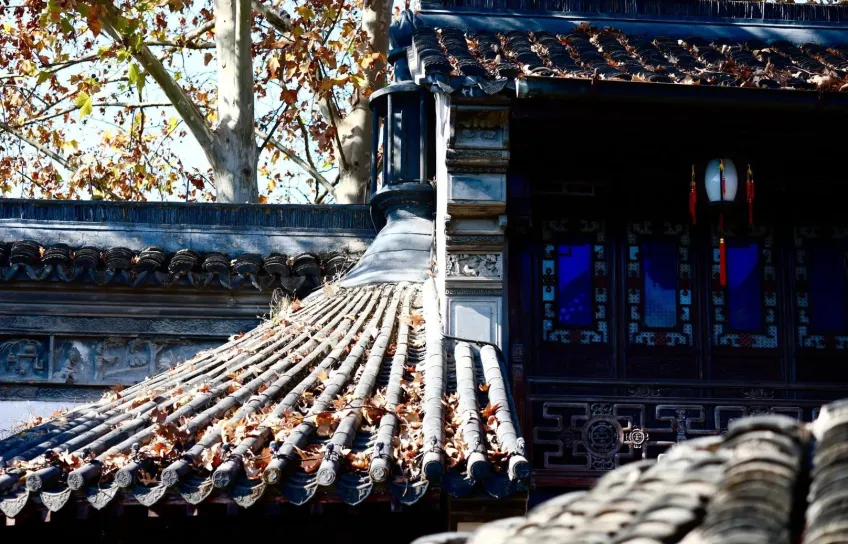
Amid Hangzhou's landscapes, Hu Xueyan's Former Residence is just a small courtyard, yet it holds the lifelong ambitions and dreams of a merchant who rose from humble beginnings as a cowherd.
Food map around the Hu Xueyan's Former Residence
The Former Residence of Hu Xueyan is located in Hangzhou's biggest food hub: the Gulou, Hefang Street, and Shiwukui Lane area. These streets are packed with authentic Hangzhou-cuisine restaurants and lively local snack stalls.
Southern Song Imperial Street is a long north-south avenue stretching from Gulou Drum Tower to Phoenix Mosque, once the imperial route used by emperors for ceremonies. Today the street retains much of its historic architecture, flanked by water channels and punctuated by memorial archways. A stroll along this ancient road reveals Hangzhou's rich history and culture.
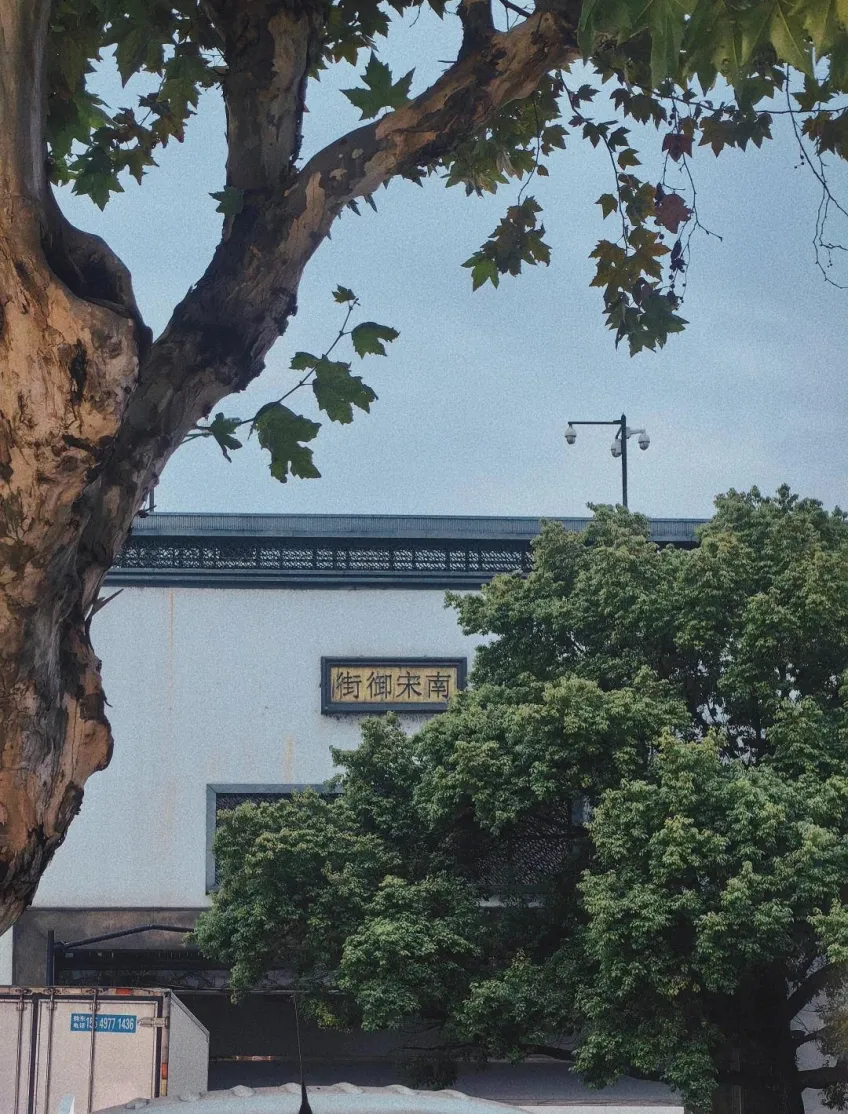
Crossing Southern Song Imperial Street, Hefang Street runs east-west. It is truly Hangzhou's snack street, bustling with shops and brimming with the sizzle and aroma of local street food.
At the intersection on Hefang Street stands Wanlong Ham Shop, a heritage-listed building dating back to 1864 and one of Hangzhou's most famous food stores. It's a great spot to pick up some local souvenirs to take home!
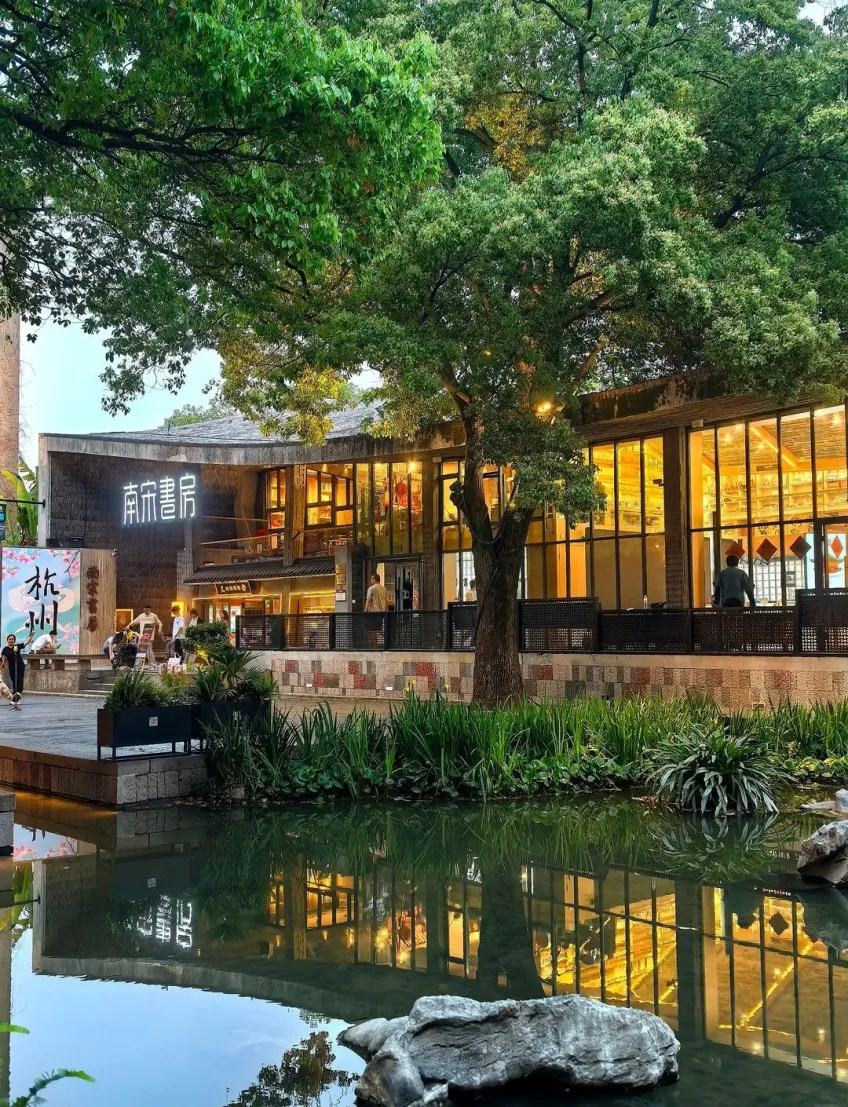
Dajing Lane is located at the foot of Wushan Hill in Shangcheng District, Hangzhou. It starts from Zhongshan Middle Road in the east and turns north to Hefang Street in the west, with a total length of 275 meters. Dajing Lane gets its name from the Wushan Well dug during the Wuyue Kingdom period of the Five Dynasties. It was called Wushan Well Lane during the Southern Song Dynasty and renamed Dajing Lane in the Qing Dynasty, a name still used today. Though not a long lane, it attracts many visitors thanks to the "No. 1 Well of Qiantang," and it's also Hangzhou's most famous coffee street.
Shiwukui Lane is a quieter alley in the Drum Tower scenic area. It's mainly an old residential neighborhood filled with daily goods shops and snack stalls. Local Hangzhou residents love chatting on bamboo chairs by the roadside, making this a great place to experience the authentic everyday life of old Hangzhou.
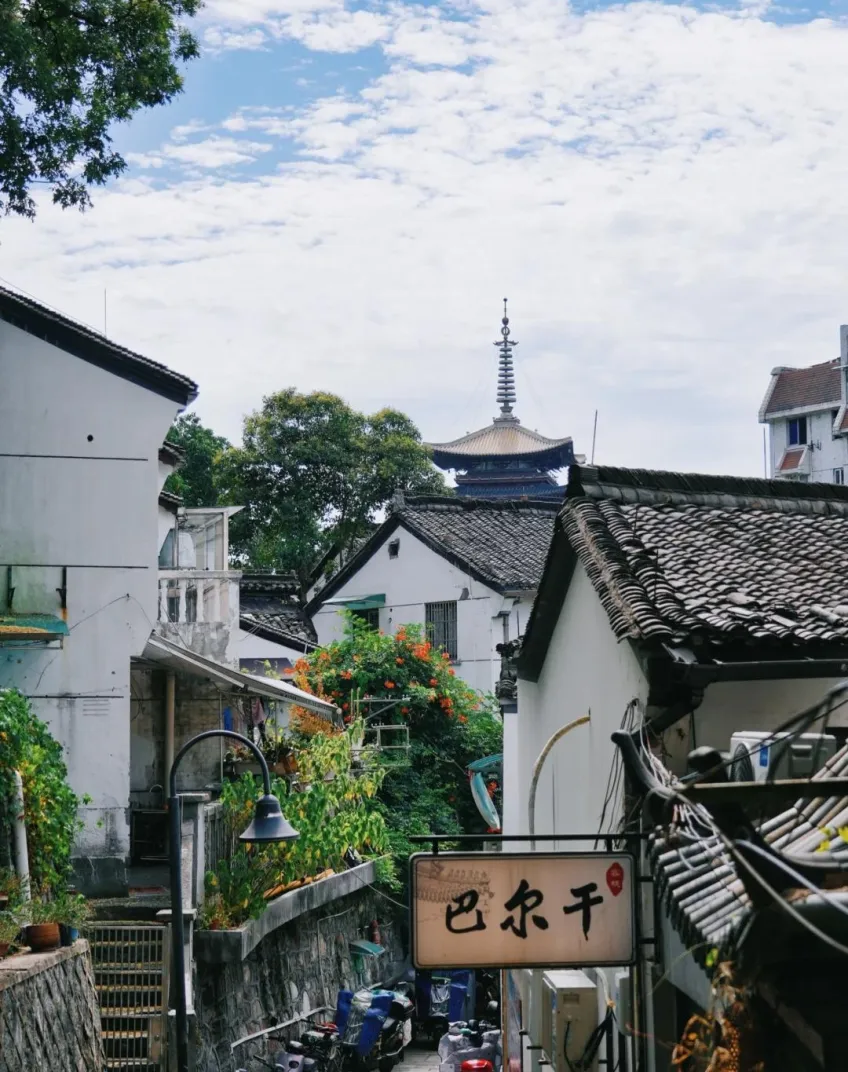
Dama Lane is a traditional alley in Ziyang Subdistrict, Shangcheng District, Hangzhou. It runs about 200 meters from Taimiao Lane in the south to Chenghuang Pailou Lane in the north. This is Hangzhou's most popular street for trendy local snacks, and its wet market is especially worth a visit. You'll find all kinds of authentic Hangzhou food here—Zhang's Beef Shop's sweet fermented rice wine, Master Jiang's crispy fish, crystal cakes, and more—all delicious and affordable. It's a street you won't want to leave.
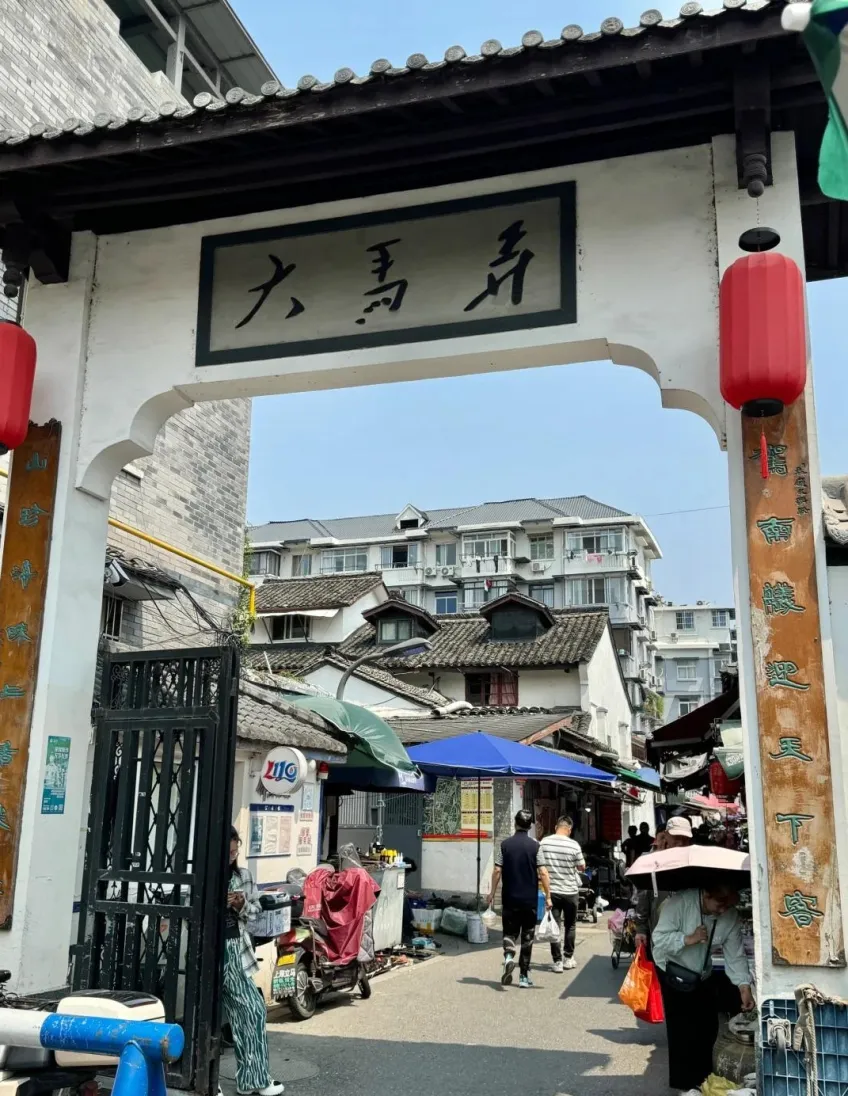
After exploring Hu Xueyan's Jiangnan dream, don't forget to wander into these old lanes for a taste of everyday Hangzhou life.
If this is your first time in Hangzhou and you want to see the legendary home of Hu Xueyan, the wealthiest man of the Qing Dynasty, consider joining a local guided tour in English. We can arrange everything in one go—flights, hotels, attraction tickets, itineraries and restaurant reservations—while a professional guide joins you from Hu Xueyan's Former Residence to the entrance of Dama Lane, from antique scenery to authentic Hangzhou flavors, telling you the stories of Hangzhou in a language the world understands! All you need is your passport, your luggage and a good mood. Set off from your hometown, and we'll pick you up at the airport right on time!
FAQs
How much are tickets to Hu Xueyan's Former Residence? Do I need to book in advance?
Adult tickets cost ¥20; concession tickets for children, seniors, students, etc., cost ¥10. Whether advance reservations are required and whether guided tours cost extra depend on the booking platform or ticket window on the day. During peak season, we recommend checking ticket availability in advance.
What are the opening hours of Hu Xueyan's Former Residence?
Typically opens around 08:00, with last entry at 16:30. Any adjustments for Mondays or holidays are subject to on-site announcements. Allow 3–6 hours for a more relaxed visit.
What's the easiest way to get to Hu Xueyan's Former Residence by metro?
Take Metro Line 5 or 7 to Jiangcheng Road Station, exit via Exit E/H and walk about 700 meters.
What's the best route through the residence to avoid backtracking?
Suggested route: Sedan Chair Hall → Baishi Tower (central axis) → Nanmu Hall (east courtyard) → Zhi Garden (rockery, zigzag bridge, Yufeng Hall) → exit.
What to eat near the former residence?
Drum Tower, Hefang Street, Southern Song Imperial Street, Shiwukui Lane and Danong Lane are all within walking distance. Dingsheng cakes, scallion pancakes and sweet fermented rice wine are easy to find.
Final reminder: ticket reservations, opening hours and guide fees are subject to official or on-site information on the day. Send your travel date, group size and departure city to customer service.